Wednesday, August 20, 2025


Russian Drones Damage Tanker During Attack on Oil Terminal in Izmail

oil terminal attack Ukraine
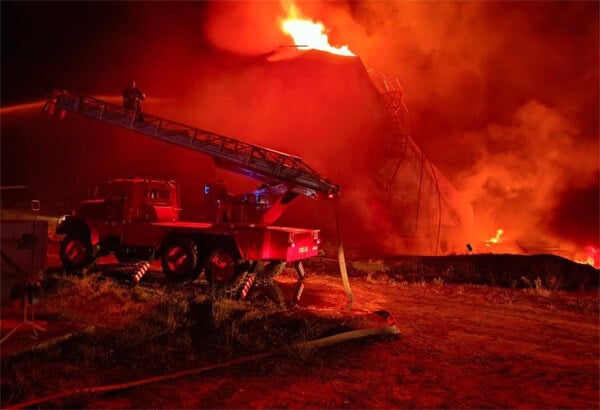
Oil terminal in the Izmail port was heavily damaged along with a tanker that was offloading (State Emergency Service of Ukraine)

Published Aug 20, 2025 11:50 AM by The Maritime Executive


Russia appears to have intensified its attacks on the Ukrainian fuel logistics infrastructure with a series of attacks, including targeting the largest terminal in southern Ukraine. The Triton Oil Depot came under fierce drone attacks overnight, inflicting heavy damage and catching a tanker during its offloading operations.

The product tanker Excellion (7,842 dwt) had arrived from Sulina, Romania yesterday, August 19, reporting it was fully loaded, likely with diesel fuel. Built in 2008, the vessel is registered in Panama and listed as being operated by Makoil Group of the UK and managed from Estonia.

According to the Russian accounts, the tanker was alongside and unloading when the drone attack began on the Port of Izmail on Tuesday evening. The reports are saying the attack was staged with drones and that there were at least 20 direct hits. Reports said there were at least 30 explosions and a large-scale fire. It went on for approximately one and a half hours.

The tanker was at the Eastern Berth and sustained significant damage in part because the lines were pressurized for the ongoing offloading of fuel. Ukrainian media accounts are saying the starboard side of the vessel sustained damage, along with the pumping equipment, valves, and lines. 

Local officials confirmed the attack on the terminal facility in the port, but only announced one injury.  A total of 54 rescuers and 16 units were dispatched to respond to the fires and subsequent explosions.
 

(photo SSE)


Russian accounts are saying there were six large storage tanks in the depot. Two of them, each with a capacity of 5,000 cubic meters, were preliminarily reported as destroyed. A third tank was also reported damaged, with reports of a fire as it depressurized.

Other parts of the facility are also being reported as heavily damaged. This includes the fuel transfer infrastructure, high-pressure pumping station, and other controls.

Triton is a critical asset for Ukraine. It is reported to handle up to 20,000 tons of fuel and products each week. It is a key transfer station with the Russians claiming it was being used to supply Ukraine’s troops in the disputed eastern regions.

Last night saw a widespread series of attacks across Ukraine, including in the Kharkiv and Donetsk regions. The city of Okhtyrka in eastern Ukraine, north of Kharkiv, was reportedly targeted with a heavy barrage, injuring 14 people.

The attacks have increased on the fuel infrastructure, including a repeated series of attacks on the SOCAR facility near Odesa. Russia also struck the oil refining and gas transportation infrastructure in the Poltava region in central Ukraine.


New Video Shows Rare Drone-on-Drone Boat Collision off California
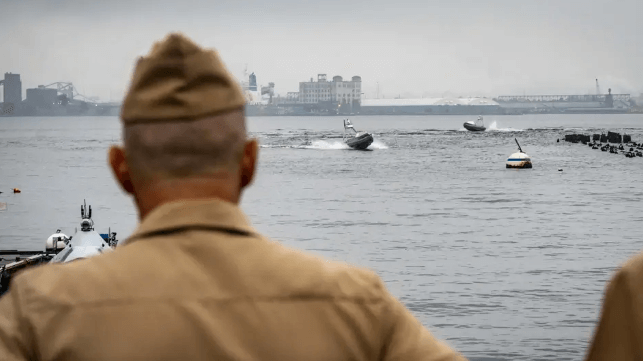
Acting CNO Adm. Jim Kilby watches BlackSea GARC boats in Baltimore, weeks before the collision (USN)

Published Aug 20, 2025 5:42 PM by The Maritime Executive


Reuters has released video footage of a collision between two cutting-edge drone boats off the coast of California last month. The incident appears to be the first high profile case of an accidental drone-on-drone vessel casualty. 

The brief clip comes from a trial exercise involving multiple unmanned systems. The footage shows an immobile gray drone adrift, and a black drone approaching from starboard at high speed. The black drone hit a wave, rode up out of the water, struck and rode over the foredeck of the immobile drone, and appeared to continue on its course. 

Reuters reports that prior to impact, the gray drone had stopped moving unexpectedly, and that Navy operators were attempting to diagnose a software issue with it when the black drone hit it. 

The outlet identified the drones involved as models produced by Saronic and BlackSea Technologies. By visual identification, the drifting drone appears to be a Saronic Corsair, and the drone that hit it appears to be a BlackSea Technologies GARC. Both firms have been contacted for confirmation. 

It was the second such incident in two months. On June 23, a BlackSea boat that was under tow accelerated unexpectedly after a human participant sent "an inadvertent command that turned the engine on." It hit a support boat, capsizing the vessel and tossing the skipper into the water. The skipper was unhurt. 

The GARC is a widely fielded unmanned boat designed for high speed operation in combat. It is in full production and more than 100 units have been delivered. With a 1,000-pound payload, its mission sets include ISR, strike, survey work and interdiction. It supports both autonomous and remote-control operation.

Human-induced collisions occur regularly, but the unmanned incidents have attracted extra attention. Reuters reports that they are part of a string of setbacks that have prompted Pentagon leaders to question the success of Naval Sea Systems Command's Program Executive Office Unmanned and Small Combatants (PEO USC). The NAVSEA division is home of the troubled Constellation-class frigate program, the scaled-back Littoral Combat Ship program, and the Navy's various unmanned-ship initiatives, like the newly-announced Modular Attack Surface Craft (MASC) program. PEO USC chief Rear Adm. Kevin Smith was removed from command of the division in May. 

The reported shakeup at PEO USC comes as the Navy prepares to deploy more funding than ever for unmanned vessel acquisition. The One Big Beautiful Bill Act allocated $1.5 billion for small USVs, $2.1 billion for medium USVs, $188 million for unmanned vessel R&D, and $174 million for an autonomy test center.

 

New Law Paves the Way for Abandoned Vessel Removal in Charleston

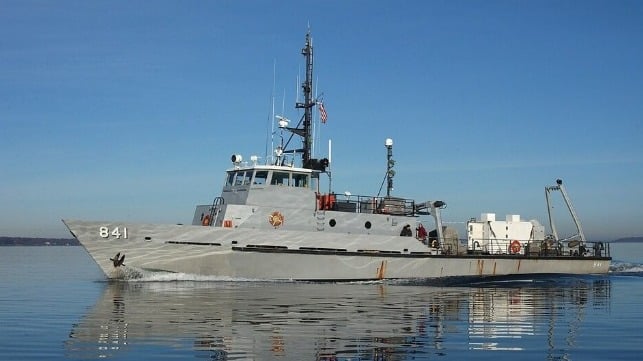
TWR-841 in better days (USN file image)

Published Aug 20, 2025 2:29 PM by The Maritime Executive


A contractor working for the South Carolina Department of Natural Resources has extracted a former U.S. Navy torpedo recovery vessel from a marsh outside of Charleston, South Carolina, the first boat recovered under the state's new statute on vessel abandonment. 

Four years ago, private citizen Mohamad "Sam" Kodaimati bought the torpedo retriever TWR-841 from a surplus auction, paying a total of $86,000 for the disused 120-foot vessel. TWR-841 was purpose-built for the needs of torpedo R&D at Naval UnderSea Warfare Center Newport in 1986, one of a series of 10, and was decommissioned in 2019. The vessel had useful attributes for a general-purpose coastal survey or research boat - CTD sensors, twin Cat 3512 engines, a stern U-frame, a deck winch with 5,000 feet of wire, a knuckle crane, berthing for 10 scientists or techs, and a max science payload of 17 tonnes. 

Kodaimati renamed TWR-841 as the Hazar and got under way to relocate the vessel. Hazar was boarded in New York on June 24, 2021 and cited for hazardous conditions and unsafe operation. The citation was lifted, and Hazar arrived in Charleston, South Carolina the following month. On July 16, 2021, the Charleston Captain of the Port ordered Kodaimati not to operate Hazar any further because the vessel lacked appropriate federal documentation. That order was never fully resolved, and Hazar remained in the backwaters of Bohicket Creek, southwest of Charleston.

Over the years, Hazar took on water and settled to the bottom at her anchorage. The Coast Guard pumped off the boat's tanks to remove oily water and minimize environmental harm, but the vessel remained. Residents complained to state and local officials about the environmental hazards and unsightliness of the wreck, and petitioned for its removal. The state obliged: Earlier this year, South Carolina's legislature passed a new, stringent law to impose penalties for abandonment and create state procedures for removing derelict vessels, paving the way for a refloat operation. 

This week, Stevens Towing Company mobilized to the wreck site and began preparations to remove Hazar under contract to the South Carolina Department of Natural Resources. The wreck was pumped out, refloated and extracted from the mud on the bank of the creek. A tug relocated the vessel to a nearby boat yard for disposal; it is as yet undetermined whether the Hazar will be reefed or cut up for scrap. 

The new law also provided for Kodaimati's arrest. He was detained in July and charged with two counts of abandoning a watercraft; if convicted of these misdemeanor charges, he faces potential fines in the five figures, plus restitution for the state's removal costs, which were in excess of $200,000.  


Salvors Refloat Tour Vessel That Was Caught By High Waves off Honolulu

State of Hawaii / Daniel Dennison

Published Aug 20, 2025 3:16 PM by The Maritime Executive


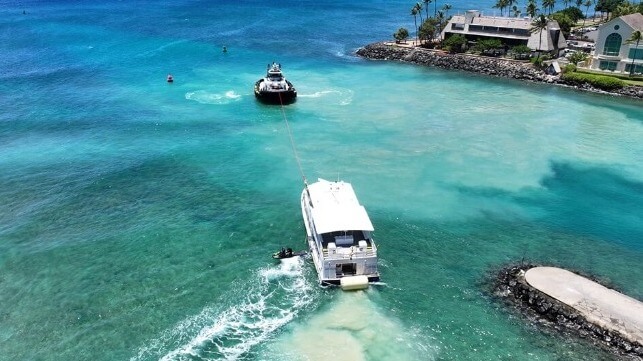
Salvors have refloated and removed the tour vessel that was pushed off course by heavy wave action near Kewalo Basin, Honolulu earlier this month. 

On the morning of August 9, the 75-foot passenger vessel Discovery was inbound for the Kewalo Basin, a small-craft harbor in Honolulu. High waves of 10-12 feet were rolling towards the beach, and a high surf advisory was in effect. In these conditions, Discovery's master attempted to make a run through the narrow channel into the harbor. 

As the boat approached the channel entrance, it was overtaken by a wave. The vessel then veered sharply to starboard, broadside to the wave. Luckily Discovery was large and stable enough that it did not capsize, but the boat was disabled by impact and drifted aground on a nearby reef. 

Initial efforts to refloat Discovery were unsuccessful, but the boat had drifted up next to a seawall, and it was secured for easy access for pollution abatement crews. Oil and diesel were pumped off swiftly, reducing risk while awaiting a salvor. 

On August 19, a contractor working with the Coast Guard and the State of Hawaii's Division of Conservation and Resources conducted a careful refloat and removal operation. During the run-up, dive teams from the division explored the reef and determined a route that was least likely to result in harm to the coral. Larger coral colonies were documented and their coordinates were passed on to the salvor. 

“What we found so far is mostly damage to live rock with a couple of coral colonies that had some fragments,” said DAR Aquatic Biologist Jake Reichert in a statement. “For the removal we tried to give them a corridor that had the least amount of coral.”

Now that the removal is complete, the division's biologists will conduct further assessments of the reef to evaluate any damage from the grounding and the refloat. 


UK Funds Project to Combine Carbon and Emission Capture in Southampton

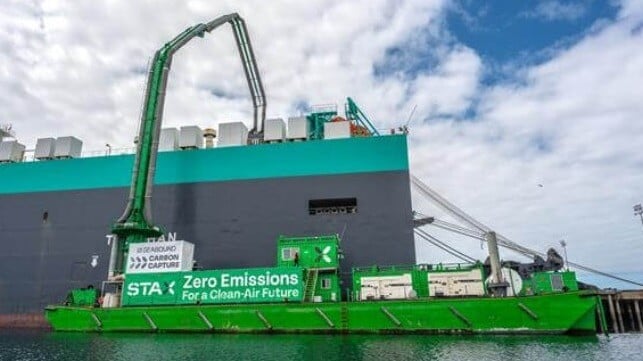
emission capture barge alongside in-service vessel
Program will demonstrate the barge combining the carbon and emission capture technologies for Port of Southampton (Seabound)

Published Aug 20, 2025 5:39 PM by The Maritime Executive


The UK is supporting the next step in emission capture systems that can be deployed in ports as a cost-effective means of reducing emissions. The new project will combine the emissions capture capabilities of STAX Engineering with the carbon capture technology of Seabound.

The project, which also involves Associated British Ports, is receiving an award of £1.1 million ($1.48 million) as a grant under the UK Government’s Clean Maritime Demonstration Competition. They were selected as one of the recipients in the recently completed Round 6 of the competition.

“This project is a breakthrough moment for ports and for the maritime decarbonization landscape,” said Stylianos Papageorgiou, Managing Director of lomarlabs, a maritime venture lab which is also supporting Seabound’s expansion. “By integrating carbon and emissions capture in a scalable, barge-based system, we’re unlocking a practical path to cleaner port operations without retrofitting ships.”

The new project will be the first opportunity to integrate the two technologies and deploy them at the Port of Southampton. The companies had previously announced their plan to deploy three emission capture barges in collaboration with ABP, and will now expand the effort with the integration of carbon capture technology.

STAX launched its operation in California and won the recognition of the California Air Resources Board as the state moved to stop in-port emissions from docked vessels. STAX’s uses barges that are placed alongside the ship and cap the funnel, capturing emissions. It removes up to 99 percent of particulate matter and 95 percent of nitrogen oxides.

Seabound’s modular carbon capture units, sized to match standard 20-foot containers, will be integrated onto STAX’s barge-based emissions capture and control system. The purified gas coming from the STAX system will then flow into Seabound’s compact capture unit, which isolates and stores up to 95 percent of carbon dioxide and 98 percent of sulfur (SO?), before releasing cleaned exhaust.

The project positions Southampton as the first UK port to host a fully-integrated solution that captures both CO2 emissions and criteria pollutants, including sulfur oxides (SO?) and nitrogen oxides (NO?), while ships are docked. The companies assert that the solution provides maritime operators with an immediate, practical path to meet tightening environmental regulations and decarbonization requirements without requiring vessels or ports to undergo retrofits and costly structural changes.

ABP, as the largest port operator in the UK, is supporting efforts to advance the new technologies. In 2024, the company launched its Energy Ventures Accelerator program to aid a variety of early-stage clean energy innovators. In addition to providing support to STAX and Seabound, other initiatives supported by the accelerator include the UK’s first investment in shore power facilities at scale being developed for the Port of Southampton.

For Seabound, this is its second award from the UK Clean Maritime Demonstration Competition. It received support in Round 3 for the demonstration of its carbon capture technology on an in-service vessel. Working with Lomar Shipping and lomarlabs, they demonstrated the system on the Sounion Trader, achieving 78 percent CO2 capture efficiency and over 90 percent SO2 removal. Lomar Shipping plans to deploy its carbon capture solution across the company’s fleet.

 MONOPOLY CAPITALI$M

CMB.TECH Completes Merger of Golden Ocean, Creating 250 Ship Fleet

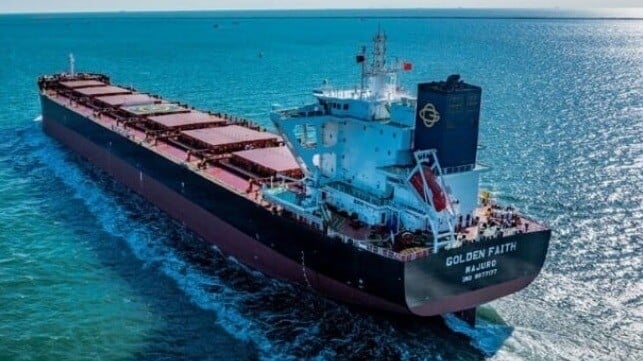
Golden Ocean bulker
Golden Ocean's fleet combined with CMB.TECH creates an industry giant (Golden Ocean)

Published Aug 20, 2025 6:10 PM by The Maritime Executive


After the shareholders of Golden Ocean Group officially ratified the proposed merger, CMB.TECH completed the merger, assuming the operations of the dry bulk carrier into its fleet. The resulting company is an industry giant that further diversifies CMB.TECH’s overall fleet and setting the stage as it continues to push forward with a strategy tied to the energy transformation of the shipping industry.

Golden Ocean confirmed that August 19 was the last day of trading for its stock in the United States on NASDAQ and the Euronext Oslo Børs. Under the terms of the merger agreement, each outstanding common share of Golden Ocean was exchanged for nearly 96 million newly issued CMB.TECH ordinary shares at an exchange ratio of 0.95 ordinary shares of CMB.TECH for each common share of Golden Ocean. CMB.TECH also launched a listing on the Euronext Oslo Børs, as well as continuing to trade on the New York Stock Exchange and Euronext Brussels.

“Today, we are delighted to close the merger between CMB.TECH and Golden Ocean,” said Alexander Saverys, CEO of CMB.TECH. “In less than 18 months, we have transformed a pure play crude oil tanker company into a large and leading diversified and future-proof maritime group.”

Plans for the merger were announced in April with Saverys calling the transaction “another great step forward” in building a diversified maritime group. CMB.TECH, which was formed by the 2024 takeover of Euronav, owns and operates more than 160 seagoing vessels in the crude oil tankers, dry bulk, containership, chemical tanker, offshore wind, and workboat sectors. CMB.TECH’s dry bulk fleet before the merger included 28 Newcastlemax vessels as well as two smaller coasters operating under the Bocimar brand.

Saverys said in April, explaining the rationale for the merger, “The value of our fleet would reach more than $11 billion and, combined with our public listings and enhanced liquidity in our shares, we will have all the necessary firepower to continue to invest in our fleet and seize opportunities. Our focus on decarbonization is starting to generate meaningful long-term contracts, and the recent IMO decisions on limiting greenhouse gas emissions from shipping give us even more wind (and ammonia) in our sails.”

The combined fleet numbers approximately 250 vessels with Saverys an average age of vessel of just over six years. Dry bulk becomes the largest portion of the group’s operations.

The transaction in effect brings Golden Ocean and the bulker fleet full circle 20 years after the company emerged as an independent operator. Originally part of Frontline, Golden Ocean was spun off in 2005 to create a pureplay bulker company separate from Frontline’s tanker operations. The company grew to a leading position in the dry bulk.

The Golden Ocean fleet consisted of 89 dry bulk vessels, with an aggregate capacity of approximately 13.5 million deadweight tonnes. The ships are now being reflected as part of CMB.TECH’s Bocimar brand with a combined fleet of 119 ships. Analysts have speculated that a portion of the dry bulk fleet might be sold now that the merger is completed.


HD Hyundai Buys Manufacturer as it Seeks Expansion in Vietnam Shipbuilding

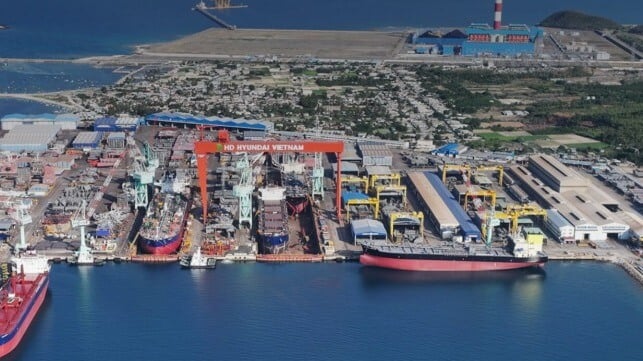
Vietnam shipbuilding
HD Hyundai is expanding its operations in Vietnam (HD Hyundai Vietnam)

Published Aug 20, 2025 4:45 PM by The Maritime Executive


South Korea’s HD Hyundai is continuing to pursue opportunities to grow its shipbuilding business and increase its competitive position against the Chinese.  It is acquiring a Vietnamese manufacturing business for components, including tanks and cranes, while also moving to expand its Vietnamese shipbuilding and being linked to other international deals.

HD Korea Shipbuilding and Offshore Engineering has agreed to acquire Doosan Vina from Doosan Enerbility, a Vietnamese offshoot of the Korean industrial company Doosan. HD KSOE will pay $207 million for full ownership of the Doosan Vina business, which was established in 2006. The industrial manufacturer is located south of Da Nang in central Vietnam.

Doosan Vina is a manufacturer of tanks and other components for LNG plants as well as port cranes, thermal power plant boilers, and other industrial components.  HD KSOE highlights the growing need for tanks that can be used with LNG and other gas carriers, as well as the next generation of eco-friendly shipping.

The acquisition comes as the company is also expanding its shipbuilding capacity in Vietnam. Its Vietnamese operations were launched as a joint venture in 1996, focused on ship repair and conversion. It completed work on over 900 ships and, starting in 2008, entered into shipbuilding. Since 2011, the operations have been totally focused on shipbuilding, with the yard mostly delivering product/chemical tankers and bulkers.

Last year, HD Hyundai announced plans to expand its shipbuilding operations in Vietnam. It has a capacity to build 12 vessels a year, which it said would be increased to 15 ships per year. It is working to improve the efficiency of the shipbuilding operation. It also said it would review the possibility of expanding the capacity in Vietnam to 23 ships per year by 2030.

Elsewhere in its international operations, HD Hyundai is in the process of restarting the former Hanjin shipbuilding operation at Subic Bay in the Philippines. Product work will resume by the start of next year, with the Philippine yard ramping up to a capacity of 10 ships per year. The company has also been linked to a bid for a developmental shipyard in Morocco, and it recently signed partnership agreements in the United States and India. 

Already the largest shipbuilder in South Korea, HD Hyundai’s shipbuilding group is focused on eco-friendly future ships and is also looking to develop new capacity and capabilities to keep up with demand and competition. The Korean shipyards have lost business in recent years to the Chinese shipbuilders, who pose strong price competition.


Urban civilization rose in Southern Mesopotamia on the back of tides


Woods Hole Oceanographic Institution
The Great Ziggurat of Ur 

image: 

The Great Ziggurat of Ur dedicated to the Moon god. Ziggurats were massive structure typical for Mesopotamia. Sumerians believed that the gods lived in the temple at the top of the ziggurats.

view more 

Credit: (Photo credits: Reed Goodman, Clemson University)


Woods Hole, Mass. (August 20, 2025) -- A newly published study challenges long-held assumptions about the origins of urban civilization in ancient Mesopotamia, suggesting that the rise of Sumer was driven by the dynamic interplay of rivers, tides, and sediments at the head of the Persian Gulf.

Published today in PLOS ONE, the study, Morphodynamic Foundations of Sumer, is led by Liviu Giosan, Senior Scientist Emeritus in Geology & Geophysics at the Woods Hole Oceanographic Institution (WHOI), and Reed Goodman, Assistant Professor of Environmental Social Science at Baruch Institute of Social Ecology and Forest Science (BICEFS), Clemson University.

The research introduces a novel paleoenvironmental model in which tidal dynamics influenced the earliest development of agriculture and sociopolitical complexity in Sumer. Results are a contribution to the long-running Lagash Archaeological Project, a collaboration led by Iraqi archaeologists and Penn Museum at the University of Pennsylvania.

“Our results show that Sumer was literally and culturally built on the rhythms of water,” said Giosan. “The cyclical patterns of tides together with delta morphodynamics -how the form or shape of a landscape changes over time due to dynamic processes - were deeply woven into the myths, innovations, and daily lives of the Sumerians.”

Sumer was an ancient civilization located in southern Mesopotamia, in what is now modern-day Iraq. It is often considered the cradle of civilization due to its numerous innovations, including the invention of writing, the wheel, and organized intensive agriculture. Sumerian society was structured into city-states like Ur, Uruk, or Lagash, each with its own ruler and religious institutions.

The study shows that from about 7000 to 5000 years ago, the Persian Gulf extended farther inland, and tides pushed freshwater twice daily far into the lower reaches of the Tigris and Euphrates. The scholars propose that the early communities must have harnessed this dependable hydrology using short canals to irrigate crops and date groves, enabling high-yield agriculture without the need for large-scale infrastructure.

As rivers built deltas at the head of the Gulf, tidal access to the interior was cut off. The resulting loss of tides likely triggered an ecological and economic crisis—one that required an ambitious societal response. The extensive works for irrigation and flood protection that followed ultimately came to define the golden age of Sumer.

“We often picture ancient landscapes as static,” says Goodman. “But the Mesopotamian delta was anything but. Its restless, shifting land demanded ingenuity and cooperation, sparking some of history’s first intensive farming and pioneering bold social experiments.”

Beyond the environmental drivers, the study also explores the cultural impacts of this watery foundation, connecting the flood myths of Mesopotamia and the water-centered Sumerian pantheon.

“The radical conclusions of this study are clear in what we’re finding at Lagash,” adds Holly Pittman, Director of the Penn Museum’s Lagash Archaeological Project. “Rapid environmental change fostered inequality, political consolidation, and the ideologies of the world’s first urban society.”

Using ancient environmental and landscape data, new samples from the archaeological site of ancient Lagash, and detailed satellite maps, the authors were able to recreate what the coast of Sumer looked like long ago and imagine how its inhabitants responded to its shape-shifting nature.

“Our work highlights both the opportunities and perils of social reinvention in the face of severe environmental crisis,” concluded Giosan. “Beyond this modern lesson, it is always surprising to find real history hidden in myth — and truly interdisciplinary research like ours can help uncover it.”

This research was funded by the National Science Foundation (NSF), the National Ocean Sciences Accelerator Mass Spectrometry Facility (NOSAMS), the Woods Hole Oceanographic Institution (WHOI) and the Penn Museum. Additional support for Giosan was provided by STAR-UBB and ICUB in Romania. Goodman finalized his contribution to this study as a part of his postdoctoral studies at the Institute for the Study of the Ancient World of New York University.

###

About Woods Hole Oceanographic Institution

Woods Hole Oceanographic Institution (WHOI) is a private, non-profit organization on Cape Cod, Massachusetts, dedicated to marine research, engineering, and higher education. Established in 1930, its mission is to understand the ocean and its interactions with the Earth as a whole, and to communicate an understanding of the ocean’s role in the changing global environment. WHOI’s pioneering discoveries stem from an ideal combination of science and engineering—one that has made it one of the most trusted and technically advanced leaders in fundamental and applied ocean research and exploration anywhere. WHOI is known for its multidisciplinary approach, superior ship operations, and unparalleled deep-sea robotics capabilities. We play a leading role in ocean observation and operate the most extensive suite of ocean data-gathering platforms in the world. Top scientists, engineers, and students collaborate on more than 800 concurrent projects worldwide—both above and below the waves—pushing the boundaries of knowledge to inform people and policies for a healthier planet. Learn more at whoi.edu.

About Clemson University’s Baruch Institute of Coastal Ecology and Forest Science

The Baruch Institute of Coastal Ecology and Forest Science (BICEFS) is based at Hobcaw Barony, a 16,000-acre undeveloped coastal reserve near Georgetown, South Carolina, owned by the Belle W. Baruch Foundation. Located on Waccamaw Neck between Winyah Bay and the Atlantic Ocean, the site provides a living laboratory encompassing diverse ecosystems such as high-salinity estuaries, tidal marshes, freshwater swamps, coastal forests, rivers, and streams. Founded in 1968 through an agreement with Clemson University, BICEFS addresses critical environmental challenges including climate and land-use change, coastal processes, forest and watershed ecology, water resources, and biodiversity conservation. The institute’s researchers collaborate at local, national, and international scales, influencing conservation strategies, resource management, and environmental policy. Its work is structured around three integrated themes: "Living Coasts," promoting resilient coastal ecosystems and communities; "Watersheds, Wetlands & Wildlife," linking water and biodiversity conservation from mountains to estuaries; and "Tomorrow’s Forests," fostering ecologically and economically sustainable forests. Through interdisciplinary research, strategic partnerships, and educational outreach, BICEFS translates scientific insights into practical solutions, enhancing environmental stewardship across multiple scales.

About the Penn Museum

The Museum was established in 1887 with a groundbreaking act of archaeological field research—the first American expedition to ancient Mesopotamia to excavate the site of Nippur (then within the Ottoman Empire, now in modern-day Iraq). Since then, the Penn Museum has been one of the world’s leading archaeology and anthropology active research museums, sponsoring over 300 research projects around the world. The Museum has worked in nearly every country in the Middle East at dozens of different sites, with research including not only archaeological surveys and excavations, but also ethnographic studies. The collections housed in its Babylonian and Near East Sections derive mostly from its early excavations in the region, including nearly 30,000 clay tablets inscribed in Sumerian and Akkadian cuneiform, and nearly 90,000 artifacts housed in three main geographic areas—Mesopotamia, the eastern Mediterranean, and Iran—with another sub-section focused primarily on materials from the Islamic world. Its archives house the records of those excavations, which are the primary source for interpretation of the collections on display in the Museum’s Middle East and Eastern Mediterranean Galleries. The Penn Museum’s mission—to be a center for inquiry and the ongoing exploration of humanity—is advanced today by the research work of 44 faculty-curators, teaching specialists, field project directors, and collections keepers, as well as by graduate and undergraduate students and almost 200 affiliated consulting scholars.


Iraqi Marsh Arabs poling mashoofs, traditional canoes, loaded with freshly cut reeds.


In the Mesopotamian Marshes, southern Iraq.

Credit

(Photo credits: Reed Goodman, Clemson University


Unlocking the benefits of building with nature


New $3 million grant will help University of Oklahoma ecosystems and watersheds lab quantify the effectiveness and value of incorporating natural elements in critical infrastructure planning


University of Oklahoma

CREW TC wastes 

image: 

CREW researchers M’Kenzie Dorman and Justine McCann (L to R) program an automatic water sampler at the Tar Creek Superfund Site in Ottawa County, Oklahoma. CREW has conducted natural infrastructure research at this site for nearly three decades.

view more 

Credit: University of Oklahoma


NORMAN, OKLA. – For structural engineers, nature has always held a magnetic appeal. From Singapore’s towering Supertree Grove to Oklahoma City’s Skydance Bridge, the architectural pull of the natural world is evident in the glass, bricks and beams that shape our built environment.

But for Robert W. Nairn, Ph.D., director of the Center for Restoration of Ecosystems and Watersheds at the University of Oklahoma’s Gallogly College of Engineering, nature offers something even greater to infrastructure planners: itself.

“Infrastructure isn’t just roads and bridges and dams; it’s also wetlands, rivers and forests,” Nairn said. “We’re working to understand the services that these types of natural infrastructure provide to society.”

A new five-year, $3 million grant from the U.S. Army Corps of Engineers aims to expand that understanding. Awarded through the corps’ Engineering with Nature program, the funding will help researchers evaluate the long-term value of integrating natural systems into infrastructure planning.

Sometimes called nature-based solutions, natural infrastructure systems like grasslands and wetlands can provide flood control, improve water and air quality and enhance biodiversity – often in more sustainable and cost-effective ways than traditional solutions, such as concrete dams or levees.

“Aligning naturally occurring or restored ecosystems with engineering processes can unlock significant benefits,” Nairn said. “But what’s been missing are the tools and techniques to monitor and quantify those advantages.”

That’s where the new grant comes in. The project will focus on three main areas: ecosystem processes, geotechnical engineering and water resources modeling of different natural infrastructure practices. The goal is to advance natural infrastructure applications by developing and monitoring technologies.

For example, researchers plan to deploy unoccupied aerial systems equipped with advanced sensors to collect environmental data at very fine scales. “We can fly drones to collect information on native vegetation, telling us how healthy plant communities are – with resolutions down to centimeter-level grids,” Nairn said.

Other work will examine root structures to understand how plant varieties stabilize soil, and whether natural systems might support processes from biodiversity conservation to carbon cycling.

Designing with nature is not a new idea. From the Hanging Gardens of Babylon to turf roofs in ancient Norse settlements, civilizations have long understood the rewards of incorporating natural elements in building.

This concept has since evolved to include economic, ecological and social benefits intentionally aligned with modern engineering processes. In his 2001 book, A Prosperous Way Down, the pioneering ecosystem ecologist H.T. Odum even argued for rethinking economic and societal structures to align more closely with ecological realities.

Recognition of these ideas on a larger scale, however, has only recently gained momentum. As extreme weather events intensify and infrastructure systems age and fail, there is growing political and economic support for integrating natural infrastructure solutions.

Nairn’s research will focus on natural, engineered and hybrid applications in inland rivers and streams of the Great Plains, as well as small and large multipurpose reservoirs and associated wetland ecosystems. Performance will be quantified by generating spatially and temporally explicit data, produced through field- and laboratory-scale experiments and models.

Dayton M. Dorman, an environmental engineering postdoctoral researcher in Nairn’s lab, said the timing is critical. “In the U.S., a lot of our infrastructure is at a point where it needs to be replaced. The question becomes: do we keep doing what we’ve been doing, or do we try to find new ways to apply natural solutions to augment these failing systems?”

She added: “Building resilience is at the core of this work.” 

The new grant extends prior support, including a $2.25 million award in 2021. Nairn hopes the expanded research will help push natural infrastructure further into the mainstream of engineering and infrastructure planning.

“We need to find a better way,” he said. “We need to find a prosperous way down – a way to work with nature rather than against it.”