Wednesday, August 20, 2025


Mozambique on a knife’s edge

Cabo Delgado

First published at Zabalaza for Socialism.

The armed conflict in Cabo Delgado between Islamic State–aligned fighters and mercenary forces led by the Rwandan military has escalated sharply in recent weeks. This surge in violence coincides with efforts to reopen the region’s lucrative gas facilities. At the same time, the Frelimo-controlled state is moving to prosecute popular opposition leader VenĂ¢ncio Mondlane on trumped-up terrorism charges. Mondlane has been a key figure in mobilising mass protests since October last year — protests that have, according to credible sources, already claimed some 600 lives.

From liberation to neoliberal capture

Mozambique won its independence 50 years ago through the determined struggle of the people, led by Frelimo. Liberation was not just a change of flags — it brought real, tangible gains. In the first decade after 1975, the new state launched a mass literacy campaign that reduced illiteracy from over 90% to under 50% in a few short years. A national health service was established, with rural clinics and hospitals built in areas the colonial regime had abandoned. Vaccination programmes sharply reduced infant mortality. Land reform ended the settler plantation system, redistributing land to peasant communities and boosting food production in the countryside. For the first time, millions had access to education, healthcare, and land — the basic means to live with dignity.

But liberation was quickly sabotaged. A breakaway faction—armed and backed by apartheid South Africa, white-minority Rhodesia, and Western powers — plunged the country into a devastating 15-year war. The human toll was immense: a million dead, millions more displaced. The dream of breaking the extractive colonial model was strangled in its infancy.

By the late 1980s, the war-weary state was kept afloat by Western aid — aid tied to International Monetary Fund (IMF) and World Bank conditions. These institutions dictated a neoliberal restructuring programme: mass privatisation, cuts to social spending, and an open invitation for the political elite to enrich themselves. From the late 1990s to 2016, foreign capital flooded in, driving high GDP growth, but the benefits were monopolised by politically connected elites. The IMF and World Bank froze public sector wages at poverty levels, entrenching inequality. Corruption became endemic — glaring at the top, corrosive at the base.

Resistance and repression

The trade union movement, shackled to the state, offered little resistance. But ordinary Mozambicans took to the streets — spontaneously — over rising food and transport costs. In 2013, tens of thousands marched in Maputo against the resumption of armed conflict between Frelimo and Renamo. The roots of that conflict lay in electoral fraud, corruption, and the plunder of natural resources.

Renamo’s demand to “depoliticise the state” was vindicated when the 2016 “hidden loans” scandal broke — $2 billion in secret, illegal loans from Credit Suisse, enriching scores of Frelimo officials while bankrupting the country. The state could no longer pay public sector wages. Millions were driven deeper into poverty. The crisis remains unresolved.

Cabo Delgado: Imperial plunder in the 21st century

In Cabo Delgado, local communities’ resistance to resource grabs by Frelimo politicians and multinational corporations has been met with ruthless violence. The region is rich in gas, rubies, graphite, and other resources, but the people see none of the wealth. Instead, they face displacement, militarisation, and deepening poverty. In this vacuum, armed groups have taken root, feeding off legitimate grievances.

South Africa plays its part in this plunder. Sasol has exploited Mozambican gas for two decades, leaving the country with a pittance of the revenues, while displaced communities and fisherfolk have received little or no compensation. The same scenario looms in Cabo Delgado.

Now, Total demands $4.5 billion be deducted from its taxes to pay for security, insisting on a fully militarised zone around its operations. Portuguese oil giant Galp refuses to pay taxes on the sale of its stake in a gas consortium to a UAE buyer. This is neo-colonialism laid bare — imperialist capital dictating terms to a captured state.

A country on the boil

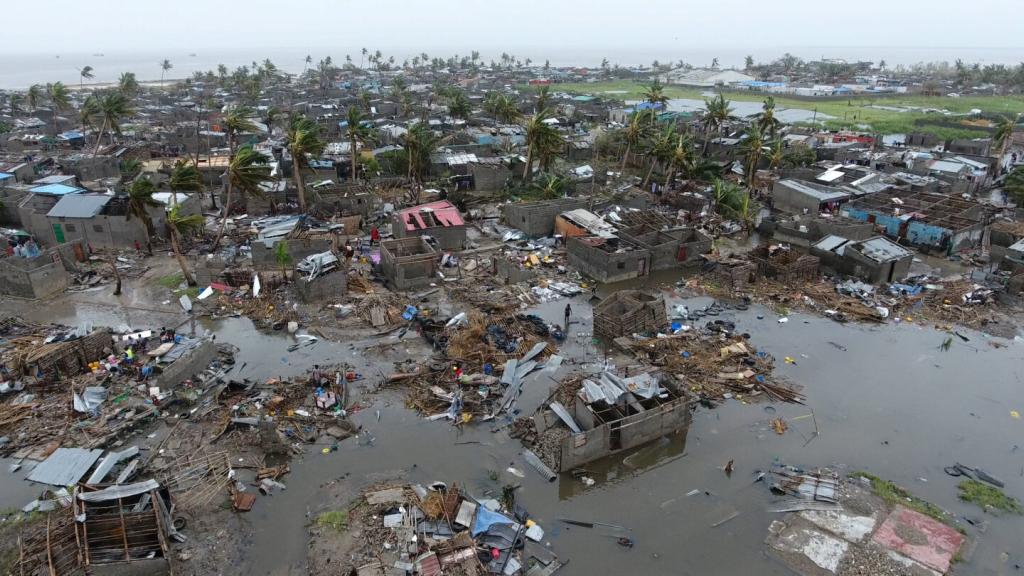
Across Mozambique, the naked extraction of wealth — from coal to forests to fisheries — without benefit to the people is fuelling nationwide anger. Environmental destruction undermines food sovereignty. Climate disasters, especially cyclones battering the coastal provinces, deepen rural misery.

In the cities, “jobless growth” has given way to outright recession since 2016. Youth unemployment is exploding. The 2023 murder of Azagaia, a prominent political rapper, brought thousands onto the streets. The blatant electoral theft against Mondlane in the presidential and national elections became the spark for the largest protest movement since independence.

The struggle ahead

This movement is not only about stolen elections — it is rooted in an economic crisis that has crushed livelihoods and futures. The revolt has spread from the cities to the extractive zones, uniting urban youth with rural communities in defiance of the neoliberal order.

Frelimo is rattled. It is moving to crush dissent through arrests, militarisation, and intimidation. But its ability to do so will depend on whether the opposition — rallying around Mondlane — can link the fight against electoral fraud to the broader struggle against the plunder of Mozambique’s wealth, the domination of foreign capital, and the capture of the state by a corrupt elite.

The stakes are clear: either the people take control of their resources and their democracy, or imperialism and its local agents will continue to drain the lifeblood of the nation. The people have awoken. The question is whether this awakening will grow into an organised, revolutionary movement capable of breaking the chains that still bind Mozambique 50 years after independence.

With this Putin-inspired attack, Trump crossed a line no president ever dared touch


Thom Hartmann
August 20, 2025 
COMMON DREAMS

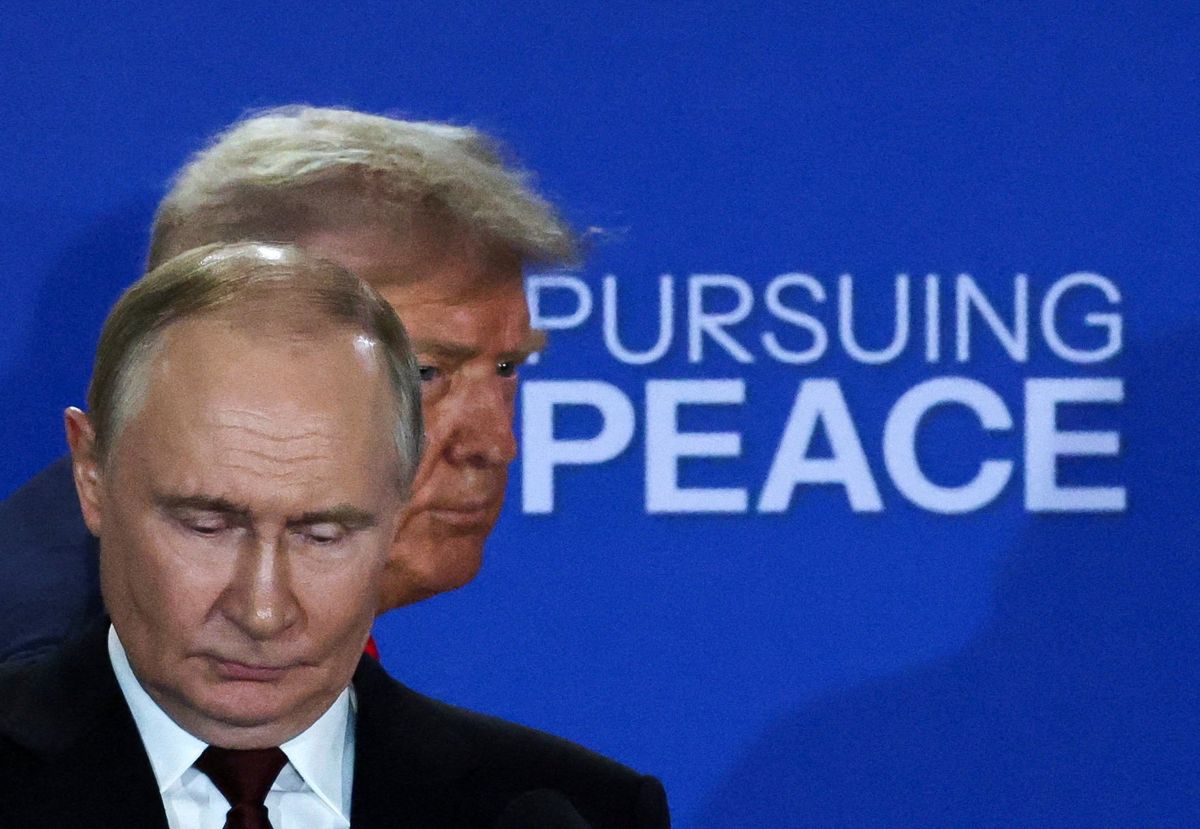
Donald Trump and Vladimir Putin hold a press conference in Anchorage, Alaska. REUTERS/Jeenah Moon

On Monday, Donald Trump crossed another line that no president in our history has ever dared to touch. With the echo of Vladimir Putin’s whisper in his ear, in front of President Volodymyr Zelensky and seven other European leaders, Trump announced he’s preparing an executive order to ban mail-in ballots and even outlaw voting machines across America ahead of the 2026 midterm elections.

Sitting in front of the Chancellor of Germany and the Prime Minister of Great Britain — both nations that allow and even encourage mail-in voting — Trump said:
“Mail-in ballots are corrupt mail-in ballots. You can never have a real democracy with mail-in ballots, and we as a Republican Party are gonna do everything possible that we get rid of mail-in ballots. We're gonna start with an executive order that’s being written right now by the best lawyers in the country to end mail-in ballots because they’re corrupt. And, you know that we’re the only country in the world, I believe, I may be wrong, but just about the only country in the world that uses it because of what’s happened.”


This is not just a partisan maneuver. It’s an open assault on the Constitution, a grotesque power grab, and a direct threat to the foundation of democracy itself. And it’s happening in real time, in broad daylight, with a criminally compliant Republican Party cheering him on.


Republicans hate mail-in voting for multiple reasons.First, for people who’re paid by the hour, mail-in voting increases participation because they can fill out their ballots at the kitchen table after work. Republicans don’t want people to vote, and have introduced more than 400 pieces of legislation in the past three years nationwide to make voting more difficult.
Second, mail-in voting makes voters better informed and less vulnerable to sound-byte TV ads because, while perusing that ballot at the kitchen table, they can look up candidates on their laptops and get more detail and information. Republicans hate informed voters and rely heavily on often-dishonest advertisements to swing voters.
Third, mail-in ballots — because they arrive in the mail weeks before the election — give voters an early chance to discover if they’ve been the victim of Republican voter-roll purges, one of their favorite tactics to pre-rig elections.
Fourth, mail-in ballots end the GOP trick of understaffing and under-resourcing polling places in minority neighborhoods, leading to hours-long lines. Hispanic voters generally wait 150 percent longer than white voters, and Black voters must endure a 200 percent longer wait; mail-in ballots put an end to this favorite of the GOP’s voter suppression efforts.


Trump, knowing all this, couldn’t help himself yesterday, finally blurting out his real reason for wanting to end mail-in voting in America:

“We got to stop mail-in voting, and the Republicans have to lead the charge. The Democrats want it because they have horrible policy. If you [don’t] have mail-in voting, you’re not gonna have many Democrats get elected. That’s bigger than anything having to do with redistricting, believe me.”


Once again, Trump is ignoring the law and the Constitution, which explicitly delegates the administration of elections to the states and Congress, not presidential executive orders.

That’s not some vague norm or debatable tradition: it’s written into the very DNA of our system of government. States set the rules, unless Congress — not the president — overrides them. States decide how their citizens vote, as the Constitution’s Article I, Section 4, Clause 1 dictates:
“The Times, Places and Manner of holding Elections for Senators and Representatives, shall be prescribed in each State by the Legislature thereof; but the Congress may at any time by Law make or alter such Regulations, except as to the Places of chusing Senators.”


Yet here we have a president declaring that he alone will dictate the terms of elections nationwide, in direct violation of two centuries of law and precedent. This is not only unconstitutional, it’s tyrannical.


When a president asserts powers he does not have, with the full knowledge that they aren’t his to wield, he’s announcing to the country that the rule of law no longer constrains him. That’s the definition of dictatorship.

And what makes this even more obscene is the source of Trump’s inspiration. According to multiple reports, Trump’s sudden rant on mail-in ballots followed a private conversation with Putin, who reportedly told Trump that mail-in voting was the reason he lost in 2020.

The man occupying the Oval Office is now taking advice about how to rig American elections from the very dictator who has spent his career poisoning journalists, jailing opponents, and staging sham referendums to annex entire countries.


It’s bad enough that Trump has always been Putin’s toady, but now we see the Kremlin effectively writing U.S. election law. If Jefferson, Madison, or Lincoln were alive to hear this, they would spit.

Mail-in voting is not a scam. It’s not a trick. It’s how tens of millions of Americans — Republicans, Democrats, independents — exercise their right to vote.

Seniors rely on it. People with disabilities rely on it. Military service members overseas rely on it. Hourly workers who can’t take a day off rely on it. Parents with young children rely on it. Rural voters, who often live miles from polling places, rely on it.


And every study, every audit, every bipartisan commission has found mail-in voting to be secure, safe, and reliable. Five states do it exclusively; we’ve had it more than two decades here in Oregon with nary a single scandal or problem. To call it fraudulent is a lie. To ban it is voter suppression on a scale this country has never seen.

And voting machines? Trump is openly declaring that he’ll return us to mind-numbingly slow hand-counting of ballots, a tactic straight from the authoritarian playbook designed to create chaos, delays, and endless opportunities to dispute the results in 2026 and 2028.

I’ve had concerns about voting machines and Windows-based tabulators for decades, but my solution isn’t to end them. Instead, we should use machines owned by the government itself, generating paper ballots and operating transparently on open-source software with every election subject to sample audits.


Instead of trying to make elections more secure, Trump’s laying the groundwork for election theft in plain sight. This isn’t subtle: it’s the loud declaration of a man preparing to overturn the will of the voters, with the blessing of a foreign adversary, and with a Republican Party too craven to object.

If Trump succeeds in outlawing mail-in ballots and voting machines, millions of Americans will simply not be able to vote. Seniors in nursing homes, service members abroad, people with disabilities, single parents, rural citizens: they will all be disenfranchised overnight. And make no mistake: that’s the point.

This is not about integrity. This is not about security. This is about shrinking the electorate to a size that Republicans believe will guarantee them victory forever.


Republicans know they can’t win free and fair elections in much of America. They know their policies are unpopular. They know their agenda is toxic.

So they cheat. They gerrymander districts into grotesque shapes that make a mockery of representative government. They purge voters from the rolls. They criminalize voter registration drives. They intimidate voters at the polls.

And now, at Trump’s command and Putin’s urging, they want to ban the very methods by which millions of Americans vote. This is not politics as usual. This is the slow-motion strangulation of democracy.

Every American who believes in self-government must rise up against this. Governors must prepare to defy such an executive order in court and in practice. State legislatures must assert their constitutional authority.


Attorneys general must be ready to sue. And ordinary citizens must take to the streets, the phones, the ballot box, and every civic space available to declare that this will not stand. Because if it does, we’ll have surrendered the very essence of the American experiment.

We’ve been here before in spirit if not in form.

Ronald Reagan’s campaign cut a deal with the Iranian Ayatollahs to hang onto the hostages until after the election. Richard Nixon tried to sabotage our democracy by killing Lyndon Johnson's peace negotiations with Vietnam and followed-up with burglaries and cover-ups when he thought Democrats were onto him. He was forced to resign. George W. Bush and the GOP stopped the counting of votes in Florida and handed the presidency to themselves. That assault has scarred our politics for decades.


But never — not once in 250 years — has a president openly declared that he will strip states of their constitutional right to run elections, end mail-in voting, and ban voting machines altogether. This is unprecedented, authoritarian, and it must be stopped.

It’s also just one in a broad spectrum of attacks Republicans have launched against your right to vote, with the SAVE Act — which will prevent women from voting if their birth certificate and drivers’ license have different names on them and they’ve never had an official change-of-name in the courts — teed up in the US Senate. All while millions are being purged from the voting rolls as you read these words.

This is the moment when the American people must decide whether they still believe in democracy. If we shrug, if we accept this as just more noise from a corrupt and broken con man, we will lose it. If we wait for someone else to act, we will lose it. If we tell ourselves the courts will save us, we may be bitterly disappointed.

The survival of democracy has never been guaranteed. It has always required vigilance, courage, and action. Now it requires all three from each of us.

Trump’s promised executive order is not just a legal maneuver. It’s a declaration of war against the American people. It’s the dream of every tyrant: to control who votes and who does not, to dictate the rules of elections so that the outcome is predetermined.

What Putin and Trump are proposing is not democracy. It’s not freedom. It’s not America.

And the Republicans who are enabling this treachery are as guilty as Trump himself. They’re betraying their oaths, their constituents, and our country. History will remember them not as conservatives or patriots, but as the gravediggers of our Republic.

This is the line. This is the moment. We cannot let Trump and his cronies bulldoze democracy into the ground at Putin’s command. Every patriot, every progressive, every independent, every honest conservative who still believes in the Constitution must join together and say no.

No to dictatorship. No to disenfranchisement. No to treason.

If we fail now, there may not be another chance.


Bloody Amputation: Trump’s “Peace” for Ukraine

Wednesday 20 August 2025, by David Finkel


THE TRAJECTORY WAS always clear to anyone who was paying attention, and knew how to filter out the noise of Donald Trump’s empty threats of “severe sanctions to destroy Russia’s economy,” let alone 500% tariffs on Russia’s oil customers, if there weren’t an “immediate cease-fire” in the Ukraine war.


When Trump met Vladimir Putin at the Munich-in-Anchorage summit, the agenda was the betrayal of Ukraine. This was ordained from the moment of the Trump-Vance ambush of president Zelensky in their infamous February White House encounter, if not even earlier.


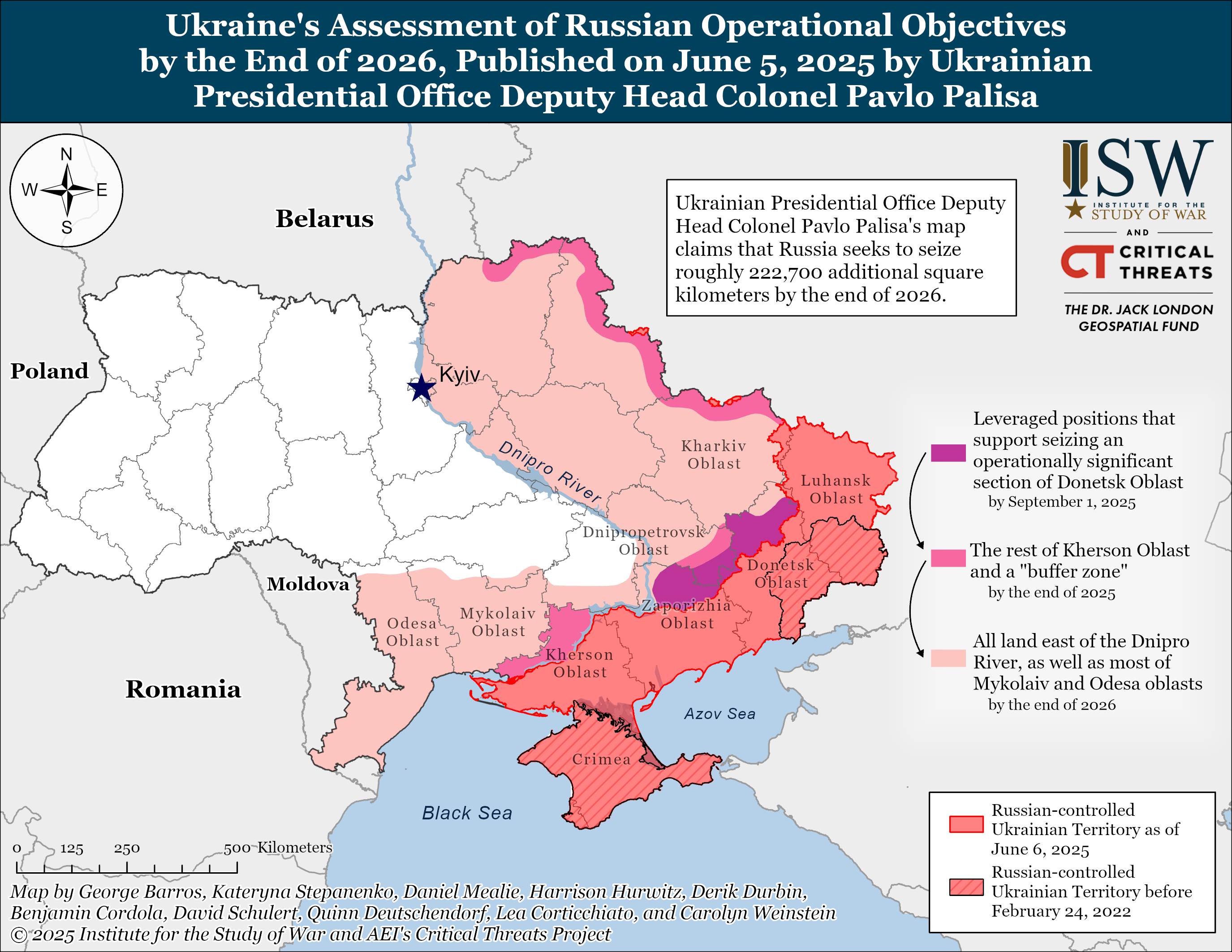
A nation targeted for carveup. (Source: Institute for the Study of War)

It was always Trump’s view, along with the Christian-nationalist far-right sector of the MAGA cult, that the war was Ukraine’s fault from the beginning and that its only option is to surrender on whatever terms Russia’s superior power imposes.

So Trump flew to Alaska blathering cease-fire, while Putin arrived with the proposition for working out a “permanent solution addressing the root causes of the conflict.” That sounds statesmanlike, except for the detail that for Putin’s Russia, the basic “root cause” is Ukraine’s existence as an independent country with the capacity to set its own course and defend itself.

That independent Ukraine is what needs to be eliminated, beginning with the amputation of a fifth of its territory and continuing on to impose a vassal regime. That’s Moscow’s “comprehensive peace” — and Trump of course folded like the cheap empty suit he really is when facing a situation he can’t dominate.

As a bonus, according to Trump, Putin advised him that getting rid of mail-in voting is necessary to guarantee “free elections,” an area in which the Russian president-for-life is a leading expert.

Meanwhile, every day in Gaza dozens of people die of starvation — soon to be hundreds at least — as unrestricted U.S. weapons, not available to Ukraine, flow to Israel’s genocidal slaughter.
European Rescue?

Following the Alaska debacle, European leaders scrambled to Washington to protect the Ukrainian president from a repeat of the February catastrophe. They came deploying the mixture of flattery that Trump requires, with proclamations of solidarity with president Zelensky and phrases of “security guarantees” for Ukraine.

It’s entirely unclear what these hypothetical commitments might mean. Putin immediately responded with 270 drones and missiles hitting Ukrainian civilian and energy infrastructure targets. As The Economist online (August 18) explains:


What Russia cannot get by fighting it is demanding to be given on a plate through the pressure that Donald Trump can put on Ukraine and on America’s European allies. At the top of Vladimir Putin’s shopping-list is the western part of Donetsk province, which is still firmly in Ukrainian hands. But it is not just the symbolism that is important to him. The real prize is to force Ukraine to abandon its strategically critical “fortress belt,” a 30-mile (50km) line that comprises four cities and several towns, which stands in the way not only of Russia’s goal of gaining the whole of Donbas, but also of its ability to threaten other regions.

Not a problem for Trump, evidently. But how then can he get away with perpetrating this treachery?

Truthfully, in the final analysis the fate of Ukraine — like that of Palestine —is not of first-rate importance for the strategic interests of U.S. imperialism. Trump’s buffoonery in the face of a sharp operator like Putin is an American embarrassment, but nothing fatal.

What about the Russian threat? Three years of war have actually demonstrated its relative weakness. If it could not overrun Ukraine, much less could it challenge a middle-rank military state like Poland. What happens to Donetsk, Luhansk and the rest of eastern Ukraine is hugely important for that country and the region, but not for Washington so long as there is no threat of a Europe-wide war.

Since Russia’s all-out invasion in 2022 the United States, first under Biden and now Trump, gave Ukraine’s heroic resistance the weapons and crucial intelligence to prevent Ukraine’s defeat but not to win the war (which would also have been a terminal crisis for the Putin regime).

Today, the greatest dangers for Ukraine and its people appear to be exhaustion and demographic crisis, as the current population of 39 million is sharply down from 52 million at the point of independence in 1991.

For Trump’s family and cronies, Putin’s Russia now appears to present opportunities for business deals and enrichment — on far grander scales than his previous absurdist Mar-a-Gaza resort fantasy.

Meanwhile the genocider Netanyahu has given Trump the gift of a nomination for the Nobel Peace Prize. Little chance of that (unless the peace prize committee can be bought), but perhaps a special “Neville Chamberlain Peace in Our Time” medal could be struck in the president’s honor.

The small consolation in this episode is that Donald Trump, with all his bullying of people without the power to fight back, is exposed as a blustering fool on the world stage when there’s even a second-tier adversary. To some limited extent, U.S. “world leadership” is also weakened. These are good things, but not worth the sacrifice of Ukraine on the altar of cynicism and expediency.

[The Ukraine Solidarity Network (U.S.) is raising funds for urgently needed medical diagnostic equipment needed by front-line nurses.]

19 August 2025

Source Against the Current.


Attached documentsbloody-amputation-trump-s-peace-for-ukraine_a9137.pdf (PDF - 998.3 KiB)
Extraction PDF [->article9137]

David Finkel is an editor of Against the Current, published by the US socialist organization Solidarity (www.solidarity-us.org)

Trump-Putin

No Deals with War Criminals on Alaska Soil


Tuesday 19 August 2025, by Alaska Native Movement


““Alaska’s history teaches us the devastating cost of imperialism and fascism. From the Russian occupation of our lands to Putin’s war in Ukraine and the ongoing oppression in Palestine, we see the same pattern of violence and erasure. We stand with all who resist, because true freedom is collective—none of us are free until all of us are free.” – Enei Begaye, Executive Director Native Movement ”


Anchorage, Alaska – As President Donald Trump prepares to meet Russian President Vladimir Putin in Alaska on August 15 to discuss the Ukrainian crisis, Native Movement stands with Alaskans and those across the country who condemn any attempt to legitimize Russia’s war crimes on Alaskan lands.

Alaska knows the cost of Russian imperialism. For over a century, Russian colonizers stole and exploited land, decimated Alaska Native populations through violence, disease, and enslavement, and erased cultures with religious supremacy. Today, we see the same imperial playbook in Ukraine: annexation of territory, targeting of civilians, and the forcible deportation of over 20,000 Ukrainian children—a war crime under international law.

Alaska’s history with Russian rule doesn’t make us neutral — it makes us witnesses.

The decision to host Putin, a war criminal, on Alaskan soil is a betrayal of our history and the moral clarity demanded by the suffering of Ukraine and other occupied peoples.

Native Movement voices opposition to any deals that force Ukraine to cede territory, reward aggression, or silence the voices of those whose lives are at stake. We stand against the rise of fascism and violent occupation everywhere—whether in Ukraine, Palestine, or here in Alaska. None of us are free until all of us are free.

Alaska’s own experience with resource-driven governance shows how oil wealth erodes democracy and empowers authoritarianism, just as we see in Russia’s war on Ukraine. Hosting war criminals in Alaska is a betrayal of our communities and our future.

Petro-states like Russia and the U.S. have built empires on extractive violence. Oil wealth correlates with increased crime and political corruption. Alaska’s large military presence is tied not to community safety but to protecting oil and gas infrastructure, resource extraction, and broader U.S. economic and military interests.

Meanwhile, Russia floods global markets with hatchery-raised salmon, undercutting Alaska fisheries, destabilizing prices, and threatening wild stocks. These hatcheries, concentrated in Sakhalin and Kamchatka, release hundreds of millions of juvenile salmon annually. Indigenous communities, who have long relied on salmon for food, culture, and spiritual practice, are disproportionately affected. Bycatch isn’t just waste, it’s a symptom of broken systems. Current regulations in the U.S. and Russia ignore the compounding ecological harm and force Indigenous communities to bear the full burden on conservation while outside investors reap the profits.

Therefore, we reject deals that reward extractive violence, whether through war, occupation, or climate destruction. Resource-driven regimes not only silence dissent; they deepen gender inequality and erode community well-being. Petro-states often build national pride around oil wealth, masking inequality and environmental harm. In contrast, Indigenous cultures emphasize stewardship, reciprocity, and sustainability.

We reject any deals that:

Reward extractive violence, whether through war, occupation, or climate destruction

Reward territorial conquest through violence

Legitimize ANY war criminal’s crimes

Ignore the voices of those whose land and lives are at stake

We demand:

No legitimization of war criminals on our soil

Justice for every child stolen from their families

Recognition that territorial sovereignty cannot be negotiated away by outside powers

Accountability for war crimes, not rewards for aggression

Alaska was never Russia’s to sell

The 1867 Treaty of Cession between Russia and the United States is often depicted as a sale of Alaska for $7.2 million. But this narrative erases the sovereignty of Alaska’s Indigenous nations and misrepresents the nature of Russian presence in the region.

Russia’s colonial footprint in Alaska was limited, they never controlled or occupied the whole of Alaska. Defeated in battles with the Tlingit and Ahtna nations, Russian settlers were confined to a few trading posts and some parcels of land. They never fully colonized or controlled the vast territory they claimed.

The Treaty of Cession did not transfer ownership of Alaska; it transferred Russia’s claim to the land, not legal title. Indigenous nations have long-standing governance systems and did not recognize Russian sovereignty. Captain Charles Bryant of the U.S. Treasury Department reported in 1870, the Tlingit "never recognized the Russians as owning their land" and believed Russia had no right to sell it.

Many Alaska Native leaders protested the sale, asserting that they were rightful stewards of the land. The treaty classified Native peoples as "uncivilized tribes," denying us citizenship and legal recognition unless we abandoned our cultures and assimilated to "white man ways." When it should have been settler colonialists assimilating to our way of life, as we thrived and cared for these lands for millennia. This racist framework laid the foundation for genocide, land theft, and cultural erasure.

The sale of Alaska was not a legal transfer of land, but a colonial transaction that ignored Indigenous sovereignty. The U.S. government assumed control without consultation, and Alaska Native peoples were left in legal limbo, denied rights to our own traditional lands and territories, resources, and self-determination.

Today, we reject the legacy of this illegal and unethical sale. We honor the original nations of Alaska, whose stewardship predates colonization and whose rights remain unceded.

Alaska’s Indigenous communities, survivors of Russian colonialism, speak from hard-earned moral authority. We know the pain of land treated as a commodity, people as expendable, and children as property to be seized. Our history makes us witnesses to the struggles of Ukraine, Palestine, and all peoples fighting for their sovereignty and justice for their future generations.

We call on Alaskans and the global community to join us in saying: Not again. Not in Ukraine. Not in Palestine. Not anywhere. Alaskans stands with Ukraine and all oppressed peoples because we know the true cost of imperialism and fascism. No deals with war criminals.

14 August 2025

Source: Native Movement.


Attached documentsno-deals-with-war-criminals-on-alaska-soil_a9134.pdf (PDF - 911.1 KiB)
Extraction PDF [->article9134]


Alaska Native Movement is dedicated to Movement building for social justice and healing. https://www.nativemovement.org/


International Viewpoint is published under the responsibility of the Bureau of the Fourth International. Signed articles do not necessarily reflect editorial policy. Articles can be reprinted with acknowledgement, and a live link if possible.


Self-Determination for Eastern Ukraine?


Completely absent in any of the governmental efforts for the last three and a half years to end the war in Ukraine is the issue of self-determination as it relates concretely to where the on-the-ground war and the huge percentage of casualties are primarily happening.

The principle of nations having the right to make decisions about the form and nature of their governments goes back over 100 years and has long been upheld by the United Nations and most of the world’s governments.

When it comes to the Russia/Ukraine war, this principle clearly applies to Ukraine’s efforts to defend its territory, economy, and form of government from Russia’s 2022 military invasion, intended to extinguish Ukraine as a self-determining country.

But so far, neither the United Nations nor any other country has applied the concept of self-determination to the reality that it is in eastern Ukraine, the four provinces of Donetsk, Luhansk, Zaporizhzhia, and Kherson, where the path to a just and peaceful end to this terrible war lies. Following a ceasefire and other necessary steps to prepare for them, there should be binding referendums under United Nations supervision so that each of these four provinces can decide whether they want to be part of Russia or part of Ukraine.

It would be essential that these referendums be under the auspices of a neutral entity, which is why the United Nations is the logical choice.

Is this point of view pro-Ukrainian or pro-Russian? It seems to me it is neither. Neither side wants to risk losing territory it considers to be its own via a popular vote, which would put the stamp of political legitimacy on the results. Of course, the alternative seems to be a continuation for years, if not decades, of destructive and dangerous military conflict, tens, if not hundreds, of billions of dollars wasted, and tens, if not hundreds, of thousands of additional deaths.

Would the implementation of such a deal set a precedent for situations elsewhere in the world where there is conflict over territory between more-or-less distinct peoples? It probably would, but is such a precedent a bad thing? In a world where democracy is under threat by fascists and authoritarians, a successful application of the democratic principle of self-determination would be a ray of light, a hopeful development.

Is there an alternative that is more just, more likely to succeed, more likely to end this brutal, destructive, and dangerous war and allow for positive economic and social rebuilding? That must be the objective.

Ted Glick works with Beyond Extreme Energy and is president of 350NJ-Rockland. Past writings and other information, including about Burglar for Peace and 21st Century Revolution, two books published by him in 2020 and 2021, can be found at https://tedglick.com. He can be followed on Twitter at twitter.com/jtglickRead other articles by Ted.


The Sinking Ship of Liberal Zionist Ideology


For nearly two years now, we have been waiting for that moment when the dam bursts and the true horrific reality of the Gaza Holocaust comes crashing through into the mainstream. Yet every time an atrocity occurs that should fully open everyone’s eyes to the unfolding Holocaust, it becomes obfuscated. Our news media can be relied on to provide cover for Israel because they are deeply compromised at the highest levels. However, there are signs that the system of Israel apologetics is fragile. Zionist ideology has become rigid, and cracks are showing.

Until now, reality has been fighting an uphill battle against a very expensive campaign of propaganda using all of the sophistication and complexity of modern communications. Much of this seems to have been aimed at blunting and confusing opposition rather than winning converts to the cause of genocide and the hatred of Palestinians. By nature, this creates a building tension, a collective cognitive dissonance between the horrors we see and the bland mumbling concerns expressed by our politicians and pundits. The more expert they are in muting the natural alarm and outrage, the more pressure mounts.

I do not want to understate the capacity in the current media ecology for creating complacency and confusion. Still, the great weakness of pro-genocide voices is that they cannot take any criticism whatsoever. When UEFA put out a banner reading “Stop Killing Children – Stop Killing Civilians,” they were accused of “blood libel” by a wide range of Zionists. The highly respected journalist Stephen Pollard posted the sign “They might as well have gone the whole way and written ‘Fuck you, Jews’”. This sort of response may consolidate the siege mentality of their base, but it is not going to reflect well on them around the water cooler or in the pub. Most people tend to lack the nuanced understanding of antisemitic tropes that this hasbara effort relies on. In their vulgar ignorance, they are liable to think that if someone feels personally attacked by a sign saying “stop killing children”, they might have something to hide.

This is coming at a time when liberal Zionists are under pressure to be more critical of what is happening. Simply saying that you don’t like “Netanyahu and the current right-wing government of Israel” Ă  la Bernie Sanders is not going to cut much ice. This situation creates the potential for an explosive end to pro-genocide apologism. For example, the amoeboid creature that, for some inexplicable reason, is currently the Prime Minister of Aotearoa, said that things were bad and that Netanyahu has “lost the plot”. This caused considerable brouhaha, yet in reality, he was adhering strictly to the liberal Zionist party line that this is all a Netanyahu problem of allowing Israel’s perfectly reasonable need to massacre at least some Palestinians after October 7 to go too far.

The amoeba in question was guilty only of using undiplomatic language to say exactly the thing that the US wants its pets to say, yet Israel’s Deputy Foreign Minister responded angrily by suggesting that the greatest threat faced by Aotearoa is a possum. In contrast, Israel has to deal with a “jihadi death cult”. I personally would like for her to come to Christchurch and tell that to the survivors of the massacre committed by a fanatical, murderous, racist, Islamophobe just like her. I would like her to explain how she justifies labelling her enemies a “death cult” when the government she is part of has killed at least 500 Palestinian children for every Israeli child killed on October 7.

Racist double-standards aside, the reaction to the Prime Minister’s comment shows that some anti-Palestinian pro-genocide people cannot tolerate any deviation from a very narrow script. They are genuinely angry at the controlled opposition of Western leaders whose job is to gaslight people with their wildly understated reactions and tepid criticisms. This has been a great strength in the past, with liberal Zionists able to burnish their credibility with the condemnations from zealots, but reality is starting to intrude.

The current fashionable liberal Zionist exit strategy from their past embrace of genocide is to become suddenly concerned over starving children and to reiterate that they have always been for a two-state solution, but is that a defensible position?

The best way I can illustrate the problem facing Zionists is with a hypothetical example featuring a true liberal’s liberal. Pete Buttigieg (a man, incidentally, who once took great personal umbrage at a random sign saying “don’t be a shitlib”) was interviewed on Pod Save America. Matt Lieb of the Bad Hasbara podcast summarised his inauthentic rodent vibes on this occasion by dubbing him “Rat-GPT”, which seems reasonable.

On Pod Save America, Buttigieg, the former Mayor of South Bend (and first openly gay rodent to be US Transport Secretary) said that the US shouldn’t support things that are “unconscionable” and that “…[We are] Israel’s strongest ally and friend. You put your arm around your friend when there’s something like this going on and talk about what we’re prepared to do together.” The host’s reaction to this was not the nausea and rage that it should have provoked. He was as calm as if they were talking about a neighbour who was over-watering the houseplants but prickly about accepting advice. I do not know this Pod Save America guy from any other context. Still, I don’t need to because on the screen I can see two disgusting racists who would never use these words or maintain this casual chatting demeanour if the same atrocities were happening to a less demonised group.

Imagine, though, if Buttigieg had been pressed on the details of what is “unconscionable”.

We don’t live in a world where anyone that Buttigieg would agree to talk to would question why the starving of children is somehow worse than shooting them, burning them, and burying them alive. Nor would we expect any interviewer to contextualise the current starving children (that so troubles the liberal conscience) with the mountains and mountains of evidence that Israelis have targeted and killed children in systematic ways for many years. We might, however, see someone asking for specifics about what is “unconscionable”, and for the liberal Zionist, there is no right answer for that.

Clearly, if you say that Israel is deliberately starving children, you will be attacked violently for “blood libel”. In fact, if you don’t endorse the claim that starvation is all the fault of the Khamas jihadi death cult, you are clearly a self-hating Zionist, a Zionist-in-name-only, and an as-a-Zionist. A single sound-bite to the effect that Israel means to do all the terrible things it does is sufficient to send the Israel lobby money stampeding away from you and into the arms of the ratfuckers (which admittedly would be a fitting and amusing end for Buttigieg’s political career).

Liberal Zionists are trying to walk an impossible line. They want to condemn Israel in the abstract only, while avoiding any mention of what they are condemning so as not to bring down the wrath of AIPAC-on-high that will smite them with ineluctable finality and having smit move on. Whether it is from a media interrogation or from public pressure, some of them will be forced into breaking with the genocidal project. They will be rejected from the Israel supporters club because if you can’t handle the Jewish state at their mass-slaughtering holocaust worst, you don’t deserve them at their Western liberal yoga-loving gay-person-accepting settler-colonial apartheid slow-genocide creeping annexation best.

Wembley Stadium is booked in September for Brian Eno’s “Together for Palestine” one night and a Kneecap gig the next night. This is a sure sign that opposing genocide is becoming pretty mainstream all of a sudden. In these circumstances, we can truly hope that people like Rat-GPT will be forced to flee the sinking ship of the Jewish-supremacist state.

In the meantime, there is a lesson for humble believers in the Palestinian cause, even those not able to get Pete Buttigieg to agree to come on their podcast, because there are implications for the liberal Zionists, the philo-semitic apologists, the Israel exceptionalists, the casual racists, and the Islamophobes in our day-to-day lives. If you find someone wavering in their commitment to “Israel’s right to defend itself from Khamas,” encourage them to express what it is that they are concerned about in Israel’s behaviour. They have lived in an environment where, despite the real-world asymmetry, it is the crimes of Palestinians that have been emphasised and given the weight of emotion and essential meaning. Israel, for them, is only reacting. Once they start to see Israel go beyond any justification, even in the fantasy they have been immersed in, then they may start to think of Palestinian resistance as the justified response. The more they start to think about these things, the sooner they will realise that this is not an occasion for mild or partial criticisms. Some might even admit that they were wrong and it wasn’t all legitimate self-defence until some arbitrary time when they personally deigned to stop making excuses for the death and suffering in Gaza. Stranger things have happened.

Remember that things that can’t go on forever don’t. Palestine will be free.

Kieran Kelly can be found at ongenocide.com; Bluesky @krkelly.bsky.social; Youtube @smashingpolitics; UpScrolled @ongenocide. Read other articles by Kieran.

Pulling the Levers of Power: How the Trump Administration Hijacked Public Broadcasting


Once a bipartisan resource, public media is now cast as an ideological threat under the Trump administration’s efficiency campaign.


On May 1, 2025, President Donald Trump signed an executive order titled “Ending Taxpayer Subsidization of Biased Media,” instructing the Corporation for Public Broadcasting (CPB) to cease nearly all federal funding for National Public Radio (NPR) and Public Broadcasting Service (PBS). The order prohibited local public radio and television stations, and any other recipient of CPB funds, from using federal grants to purchase programming from these public media organizations and mandated a review of existing grants for compliance with the administration’s ideological priorities. The Trump administration’s attempt to cut public media funding is part of their “rescission” strategy—a process to roll back previously appropriated budgets.

The House gave final approval on July 18, 2025, to the Trump administration’s plan to rescind approximately $9 billion in previously allocated funds. This measure included a $1.1 billion cut to the CPB, effectively eliminating all federal support for NPR, PBS, and their member stations. Following this, the CPB announced on August 1, 2025, that it would begin an orderly shutdown of its operations after the Senate-Labor-HHS-Education appropriations bill excluded its funding for the first time in nearly sixty years. These actions are part of a broader initiative spearheaded by the newly established Department of Government Efficiency (DOGE), which aims to streamline the federal government, eliminate programs deemed unnecessary by the administration, and reduce bureaucratic inefficiency.

While the administration claims its efforts are motivated by fiscal responsibility and safeguarding taxpayer dollars, critics argue that these moves are politically motivated attempts to silence dissent and reshape the media landscape to favor partisan narratives. Clayton Weimers, Executive Director of Reporters Without Borders USA, told Project Censored, “The administration frames the cuts as ‘efficiency cuts,’ but that is not necessarily the case. They frame it that way because they decided that’s a more palatable way to sell it to the American people. But at the end of the day, public media broadcasting costs the American taxpayer, on average, $1.60 per year, and the level of value that Americans get out of that $1.60 per year is tremendous.”

The CPB, established in 1967 as a private nonprofit corporation, was specifically designed to insulate public broadcasting from political interference, with its charter expressly forbidding government control over broadcasting content while ensuring that over 70 percent of federal appropriations flow directly to more than 1,500 local affiliate stations rather than centralized bureaucracies.

“It’s really important that people understand how public media is funded in this country,” Weimers shared with Project Censored. Local affiliates have the freedom to purchase programming from NPR and PBS that caters to their audiences’ preferences. He explained how Trump’s executive order essentially bans affiliate stations from buying this programming, thereby infringing on their First Amendment rights. Weimers emphasized that “it is up to the individual local independent stations what they want to show their audience on air, and they should make that decision based on what their audiences want to see and what their audience wants to hear, not based on what politicians in Washington think they ought to hear.” He challenged the Trump administration’s claim that public media is a biased tool of his political opponents, “Some of the editorial coverage might lean left and the audience might lean left, but it’s a complete mischaracterization. Public media in this country has over a thousand different broadcast, television, and radio stations. It’s not just any one thing. There isn’t one political line across all of public media.”

Other voices in the media industry echo Weimers’s statements regarding the motivations behind the Trump administration’s CPB rescissions. Victor Pickard, Professor of Media Policy and Political Economy at the University of Pennsylvania’s Annenberg School for Communication, explained to Project Censored that public media was created to address gaps in commercial broadcasting and to ensure that all audiences, especially low-income communities and communities of color, would have access to high-quality, trusted content. Pickard warned that defunding public media will force communities to “learn that lesson once again” about the limitations of commercial broadcasting, which “will never provide all of the information and communication needs of a democratic society.”

Lisa Graves, founder and Executive Director of True North Research, told Project Censored that the Trump administration’s cuts to the CPB are a systematic effort to undermine independent journalism, not address legitimate concerns about bias or fiscal policy. Graves explained that the targeting of NPR and PBS stems from coordinated and widespread disinformation and propaganda being perpetuated by the Trump administration. “These entities are important public investments that help bring national, international, as well as local news into our communities,” Graves told Project Censored. “The administration claims that there is political bias or partisan bias at these outlets, when in fact they are just covering the news. … The attack on public broadcasting is an attack on facts, truth, and journalistic independence. It has to be seen as such.”

This strategy poses an Achilles’ heel: While the rhetoric employed by the Trump administration targets elite, national outlets, the most damaging impact will fall on the hyperlocal media infrastructure already struggling to survive. Many small-town, rural, and tribal affiliates rely on CPB funding and syndicated content from NPR and PBS to fill gaps in local coverage, provide educational programming, and serve communities with little to no other media access, otherwise known as news deserts. Eliminating this support could crater regional journalism ecosystems—leading to programming losses, station closures, and widespread layoffs that ripple down the media supply chain. In many conservative and underserved communities, where public broadcasting often remains the only consistent source of local and noncommercial news, the cuts could unintentionally harm the very constituencies that the defunding narrative claims to serve.

Noting that public media receive only paltry funding from federal sources, Pickard called the defunding of the CPB a “tragic irony,” because it will “hurt individual stations, especially in rural and conservative areas in states such as Alaska, Wyoming, Idaho, and Texas.” He explained to Project Censored that some stations depend on CPB funding for 25–50 percent of their budgets and “will likely go under if federal subsidies are entirely cut, leaving news deserts in their wake.”

The Trump administration frames these funding cuts as fiscal responsibility, but smaller local news outlets view them as politically motivated attacks and part of a campaign to delegitimize public media and the services they provide. NPR and three Colorado public radio stations filed a lawsuit alleging that the May executive order is “textbook retaliation and viewpoint-based discrimination” in violation of the First Amendment. PBS, along with Lakeland PBS in rural Minnesota, also filed a similar lawsuit, disputing claims of bias and asserting that the Constitution forbids the President from arbitrating content. These lawsuits suggest Trump has far exceeded the expansive powers of the presidency, usurping congressional prerogatives and eroding free speech rights.

Seth Stern, Director of Advocacy at Freedom of the Press Foundation, told Project Censored that the Trump administration has adopted what he calls a “throw-it-at-the-wall approach,” where they challenge the Constitution despite knowing most cases will fail on constitutional grounds. However, Stern explained that the strategy behind this approach is to find any legal opening the administration can exploit. “They are looking for the case they win, looking for the one instance where the courts give them an opening, and once they have that opening, they are going to barge through it.”

The Trump administration has adopted a multifaceted strategy to politicize public media by portraying these institutions as adversaries rather than recognizing them as informational resources or allies. Through rhetorical attacks, the administration frames public media and their content as ideologically biased, financially irresponsible, and increasingly unnecessary. This approach is implemented through executive orders and policies that employ loaded language such as “woke propaganda,” citing questionable fiscal justifications like “cost efficiency,” downplaying societal value, and implementing disruptive measures that create instability for essential broadcasting programs, ultimately exploiting public media rather than leveraging its potential for effective public communication.

Experts like Reporters Without Borders’ Weimers contend that the Trump administration has “shown a very strong disposition towards using whatever levers of power they have to punish those who oppose their agenda in any way.” Weimers emphasized to Project Censored that this targeting can affect public media outlets simply for “accurately reporting on what they’re doing.” The implications of these executive actions extend far beyond public media, he cautioned. “There is no reason that that would not also impact nonprofit media that publish content that the Trump administration does not like, even for-profit media.”

Weimers warned of a troubling escalation, characterizing the Trump administration’s campaign against public media as “a slippery slope.” Once the government gains control over public media and broadcast licensees, he argued, “they are one step closer to getting their hands on the rest of the media as well.”

Pickard told Project Censored that while the federal funding cuts will have a “chilling effect” on an already compromised media system, they also open the possibility of “building something entirely new out of the wreckage.” That wreckage is not merely financial—it is the collapse of a decades-old compact between government, media, and the public.

But from that imminent destruction comes a rare opportunity to reimagine public media not as a government-funded institution vulnerable to political whims, but as a truly community-owned resource, insulated from both partisan interference and commercial pressures. Rebuilding cannot depend on Washington reversing course or a future administration restoring support. Instead, citizens must take action: establishing community-supported journalism cooperatives, developing hyperlocal news networks sustained by their audiences, and building media infrastructures accountable to neighbors rather than distant politicians or corporate shareholders. The Trump administration may have dismantled decades of public media investment, but it cannot destroy the fundamental human need for trustworthy, bipartisan information and community connection.

Originally published on https://www.projectcensored.org/trump-admin-hijacked-public-broadcasting/

Jackie Vickery served as a summer 2025 intern for Project Censored. She is currently pursuing a Bachelor of Arts in Journalism at Ithaca College’s Roy H. Park School of Communications and is expected to graduate in May 2026. Read other articles by Jackie.

Digging Deeper on Community Radio: Triple R and Indispensable Airwaves


To get to the venue involves a calming, if early, ritual. Uneasy sleep beforehand, given the morning slot. Eagerness to prepare for the topic to be discussed in the global affairs segment, accompanied by that childish sense of worry that approval means something. Then, getting on a tram to the venue, which, as luck would have it, is positioned just at the end of the tramline in East Brunswick. This is Melbourne, and the destination is one of the city’s most heart-throbbing venues of community radio, Triple R.

The trio of radio hosts on the program Breakfasters has already grown callouses of experience, managing multiple tasks as they go through the music listings and guests with placid ease. Before heading to the green room, the scene is welcoming. Wooden floors, slightly worn, charmingly tatty, with brochures prominently displayed as you enter the building, a solid, expansive structure that accommodates generous space for live music and studios.

Triple R or 3RRR, depending on preference, is one of those community radio stations that sports an influence far beyond the plutocrats of the traditional or commercial radio scene. There are no demagogues to be found, no celebrity functionaries to be lauded. You are not handed a list of forbidden topics or words, much as you would be if running a program for the national broadcaster. The programming is also distinctly free of the venom and spite trafficked on the airwaves of the shock jock stations. While the arterial flow of the station is music, the mix of news and discussions on international and local affairs adds a rich sauce. Those with omnivorous tastes will be hard to disappoint.

Across the vast expanse of Australia, some 450 community radio stations hum away, hoping to offer their listeners alternative platforms with varied content. That very fact is almost singular. The development of such radio, observes David Melzer, himself having had lengthy experience at the helm of Melbourne’s polyglot 3ZZZ, had its roots in a number of factors: those dealing in education, activists inspired by anti-Vietnam War protests, increasing numbers of migrants, and enthusiasts of classical music. “Each of these four groups had one thing in common. They challenged how broadcasting operated in Australia. They wanted control of the airwaves, and they lobbied for it, leading to the establishment of the third tier of broadcasting in Australia.” With the advent of community broadcasting came the increasing role of Indigenous communities and those reluctant to use print media.

Globally, such stations face the corrosive effects of not so much digital disruption as digital appropriation, a process that is also shaping listening habits. Be it such internet-based giants as YouTube and Spotify, and the personalised, podcasting format, where tastes become bespoke affairs, the very idea of the radio as an important part of a day’s routine is being challenged. Not only does this alter the nature of what content is being offered, but it has had behavioural effects. As a co-authored article in the Electronic Journal of Education, Social Economics and Technology published this year contends, “Today’s listeners, especially younger generations, prefer interactive, mobile-accessible content and often participate in content production themselves via social media”.

That said, there is room for some sunny optimism. Community radio in the United Kingdom, for instance, is burgeoning. In September 2024, the country had over 350 licensed community radio stations, a marked increase from the 200 stations broadcasting in 2014. Data from Radio Joint Audience Research published in July this year also finds that over 50 million adults (86% of the UK population) tune in to radio every week, which augurs well for the more specific programming offered by community radio outlets. The streaming behemoths have created an odd sense of detachment, even estrangement, and certain listeners are seeking grassroots comforts. The significance of this is hard to exaggerate, given the nourishment such radio outlets provide in terms of language, cultural pursuits, and the arts.

During those necessary radiothons, when money is sought from the subscribers, the staff place themselves into the hands, ears, and pockets of the listeners, trying to sweetly convince them that another year of financial loyalty is needed. The theme this year for Triple R is “Digging Deeper”, described by the radio station as representing the labours of volunteer presenters who “work hard to dig deeper every single day, uncovering musical gems and unearthing important issues that often do not find airtime anywhere else.” The names of subscribers are read out with hearty enthusiasm and a tease. Renewals are emphasised with pride.

It is almost impossible to believe that an institution such as Triple R has been around for some three decades. The brooding fear is that such a scene will cease before the thieving systems of artificial intelligence or be chewed up by the ghastly listening habits of “influencers” and curated streaming services. Let us hope there is still ample time before that ghastly universe triumphs. Till then, best appreciate the admirable exploits of digging deeper by those able staff in community radio.
Binoy Kampmark was a Commonwealth Scholar at Selwyn College, Cambridge. He lectures at RMIT University, Melbourne. Email: bkampmark@gmail.comRead other articles by Binoy.