Friday, August 22, 2025

SHADOW TRADE

Scrap copper traders redirect metal to sidestep China levies
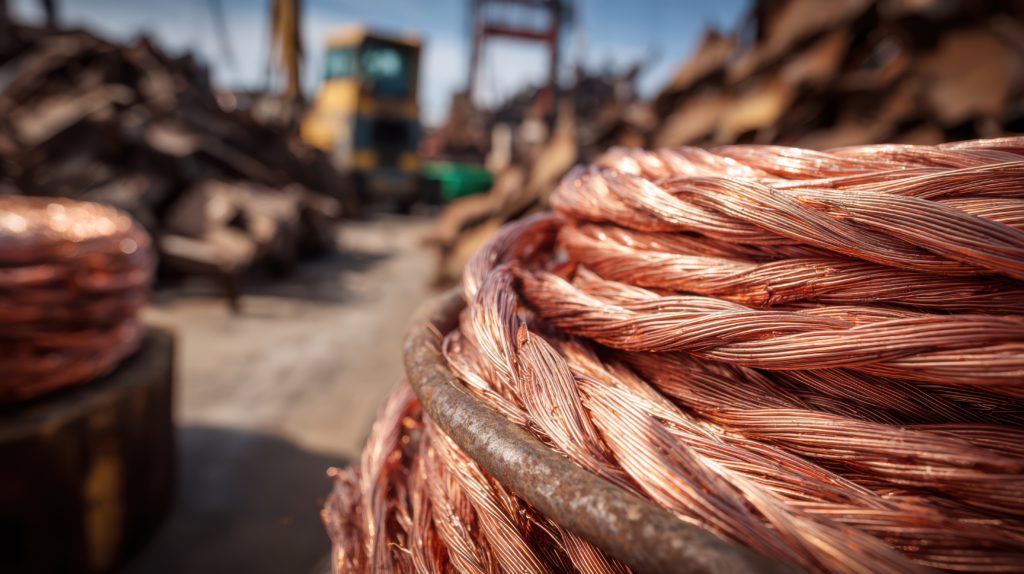

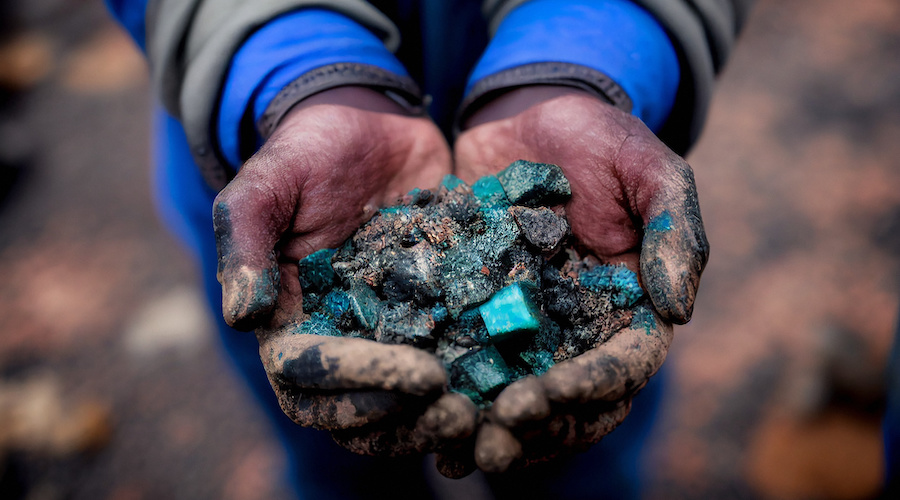
Stock image.

Some US metal dealers are redirecting China-bound shipments of scrap copper through countries including Canada, Mexico and Vietnam in a risky move to avoid 10% import tariffs, according to people familiar with the matter.

The rerouting underscores growing stress building up in the global metals supply chain due to the trade war between the US and China. US scrap is a vital source of raw material for China’s copper smelters and refiners, which account for about half of the world’s output of the finished metal. Prolonged disruption to that supply threatens to ripple across global markets.

While the full extent of the transshipments remains unclear, the rerouting shows how creative metals dealers are getting to avoid higher costs from trade barriers to find a home for America’s surplus scrap. The US is the world’s largest supplier of waste copper — metal recovered from auto parts, electric wires and electronics — but the domestic market consumes just 40% of that output, according to BMO Capital Markets.


“It’s not surprising that these companies come up with clever ways to move materials around,” said Xiaoyu Zhu, a trader at StoneX Financial Inc. “The 10% tariff has put the scrap companies at a disadvantage in terms of pricing, not to mention the financing pressure from high interest rates.”

China was typically the largest export destination for the US until Washington’s trade war with Beijing disrupted flows. Beijing has imposed 10% counter-tariffs on all American imports, including copper scrap, since May.

Officially, Chinese imports of copper scrap from the US have plunged this year, falling from 39,373 metric tons in January to below 600 tons in July, the lowest monthly total according to Chinese customs data going back to 2004. Shipments from other nations have largely filled the gap, since China’s overall imports of 190,000 tons last month was little changed from the start of the year. Shipments from Japan and Thailand have more than doubled since January, while imports from Canada climbed 29%.

US export data, meanwhile, shows that Thailand, India and Canada were the top three destinations for American scrap copper in the second quarter.
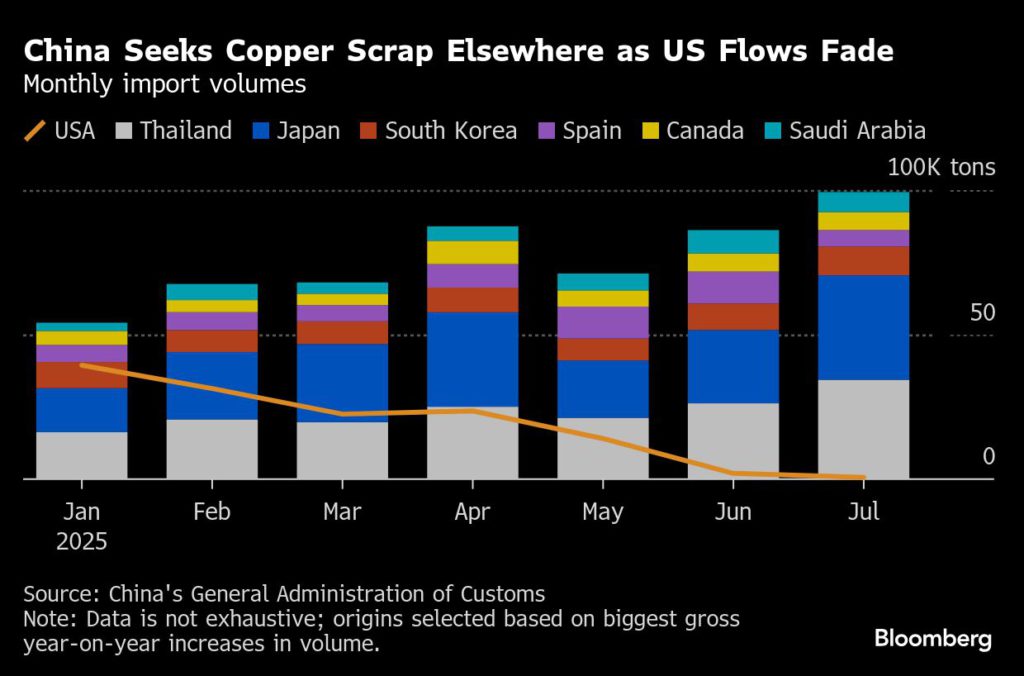
The sudden, large increases in Chinese imports from countries other than the US suggests at least some rerouting, according to the people familiar with the workaround, who asked not to be identified because they weren’t authorized to publicly discuss the practice.

To dodge Chinese tariffs, US scrap copper is put in containers, tagged with the owner’s name, and shipped out to a third country, the people said. When the cargo reaches its stopover, the owner tag is switched with another carrying a different name and country of origin, and the container then continues its journey to China, they said.


Risky business

Reloading shipments en route and changing the origin is fraud, as is importing into a country and declaring it the origin before sending on to the final destination, according to Emmanouil Xidias, managing director at ship-broking firm Ifchor North America LLC. The party involved in changing the origin and re-exporting is liable, he said.

“Whether the buyer or the seller shoulders the risk depends on the contract terms,” Xidias said. For example, if terms cover cost of goods, insurance and freight, the risk is transfered to the buyer when goods are unloaded at their destination. “If it’s Free on Board, then the buyer takes the risk the moment the materials are loaded to the container.”

Chinese importers caught engaging in illegal transshipping or origin fraud — across a range of goods — have faced hefty fines and criminal charges in the past decade. During US President Donald Trump’s first term, when China also imposed tariffs on US goods, some copper scrap importers were fined when Chinese customs detected their efforts to buy rerouted cargoes.

For American scrap traders, they’re left with a choice between sitting on the material or shipping it overseas to get cash. Some choose to take their chances on foreign buyers, though moving the metal is slow and traders still face so much secondary copper they can’t find a market for.
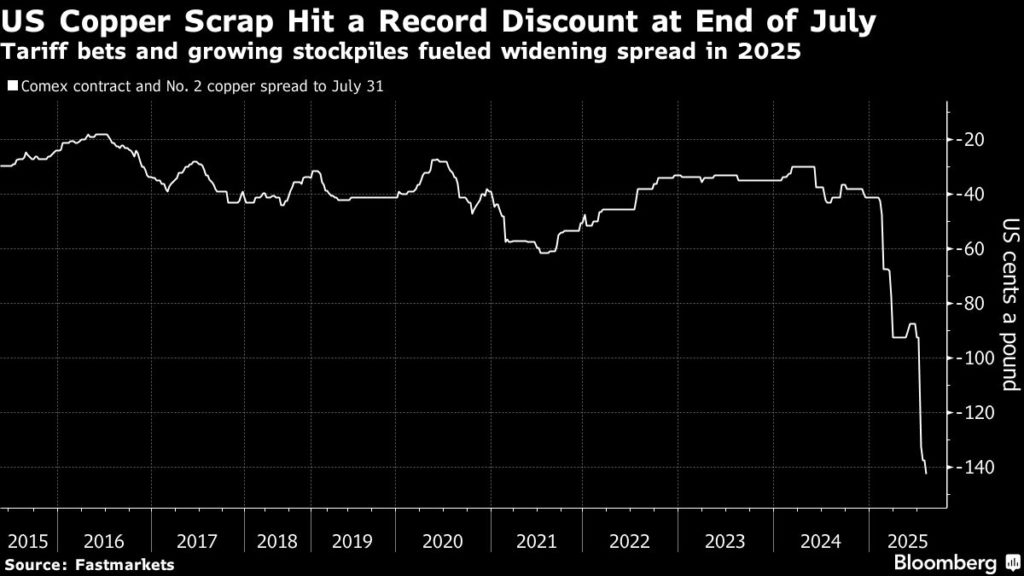
The situation is reflected in the price of so-called No. 2 copper — a grade of recycled material that can be cheaper substitute for the primary metal — which at the end of July touched the largest discount relative to futures contracts in data going back to 2015, according to Fastmarkets. The discount has faded this month after Trump’s copper tariffs excluded cathode and caused the Comex contract to plunge, narrowing the price differential. The discount was 47.50 cents a pound as of Wednesday, according to Fastmarkets.

“The disruptions in mined supply and loss-making processing fees makes scrap more valuable, so I wouldn’t be surprised if the industry is getting creative on trade routes,” Bloomberg Intelligence analyst Grant Sporre said.


Sandvik to supply 32-unit underground equipment fleet for Botswana copper mine
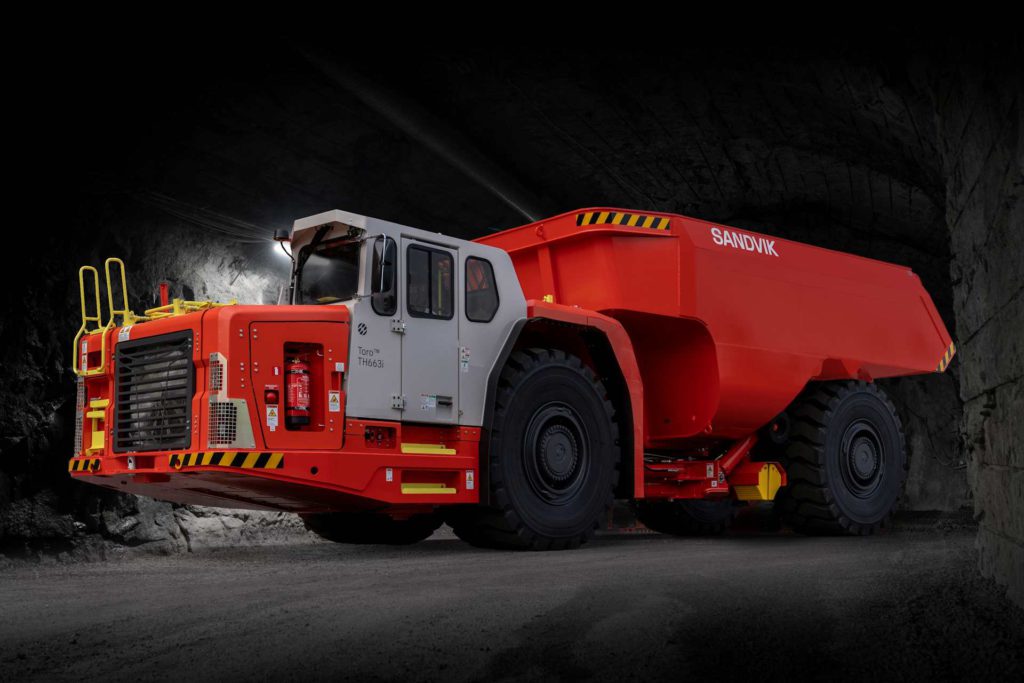

Sandvik is supplying 12 Toro TH663i trucks like this one, plus 20 more pieces of underground equipment, to Khoemacau copper mine in Botswana. Credit: Sandvik Mining.

Chinese mining contractor JCHX has selected Sandvik Mining to supply a 32-unit underground equipment fleet at MMG’s Khoemacau copper mine (KCM) in Botswana.

The order includes 12 Toro TH663i trucks, 10 Toro LH621i loaders, eight Sandvik DD422i development drills, one Sandvik DL432i longhole drill, and one Sandvik Rhino 100 raise borer. Deliveries will continue through the second quarter of 2026.

The contract also includes remote monitoring service, providing critical information to improve fleet performance.

Located in Botswana’s Kalahari copper belt, Khoemacau is a major underground operation with significant expansion underway. Since acquiring the mine in March 2024, operator MMG has advanced plans to increase annual copper production from current levels to 60,000 tonnes within two years, leveraging the existing 3.7 million t/y process plant and targeting higher-grade zones through improved mine access and flexibility.

Longer term, MMG aims to increase total output to 130,000 tonnes of copper in concentrate per year by constructing a new 4.5 million t/y process plant, expanding Zone 5 production and developing nearby deposits. Early works for the expansion project have commenced, with construction expected to begin in 2026 and first concentrate anticipated in 2028.

“We’re proud to partner with Sandvik for this important contract,” said Xiancheng Wang, chair of JCHX. “Sandvik’s reputation for high-performance equipment and strong aftermarket support was key in our decision. This fleet will play a vital role in helping us deliver operational excellence and meet the ambitious production targets set for the Khoemacau site.”

“Our advanced underground technologies and digital solutions will help enable efficiency and performance as the site ramps up production in the coming years,” Mats Eriksson, president of Sandvik, said in a news release.

  Tailings could meet much of US critical mineral demand – study


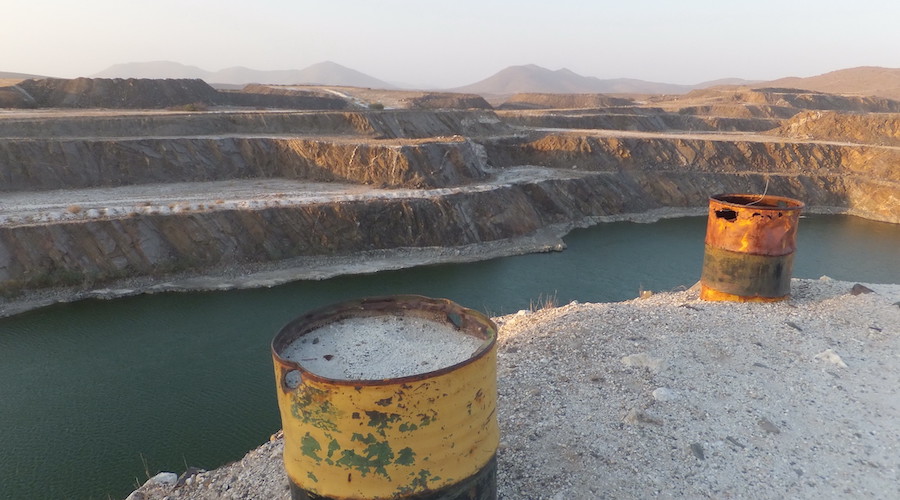
Tailings dam. (Reference image by Ian Cochrane, Flickr.)

new study from the Colorado School of Mines has found that the United States could meet much of its demand for critical minerals by recovering materials currently discarded in mining waste.

Published this week in Science, the analysis shows that nearly all critical minerals used in clean energy technologies, electronics, and defense applications are already present in ore processed at US mines. However, the majority of these materials end up in tailings and other waste streams rather than being refined for use.

The analysis highlights cobalt and germanium as prime examples. Recovering less than 10% of the cobalt already mined and processed but lost to waste streams would be sufficient to supply the entire US battery market, the authors assert. For germanium, reclaiming under 1% from existing zinc and molybdenum operations would eliminate the need for imports altogether.

The study examined 70 elements across US mining operations. Aside from platinum and palladium, the researchers found that all could theoretically be sourced domestically with improved recovery methods.

Elizabeth Holley, associate professor of mining engineering at Colorado School of Mines and lead author of the study, described mine tailings as a significant untapped resource. “We’re already mining these materials,” she said.

“The question is whether we capture them or throw them away.”

The team combined production data from federally permitted US mines with ore concentration data from the US Geological Survey and other international sources to estimate the amount of critical minerals lost in waste streams.

The findings highlight both a strategic opportunity and a challenge. While recovering minerals from tailings could reduce US dependence on foreign sources and lower the environmental footprint of mining, the researchers note that current market conditions often make byproduct recovery uneconomic. They suggest that additional research, development, and policy incentives will be needed to make large-scale recovery viable.

The study comes as the Trump administration is seeking to secure supplies of critical minerals needed for the energy transition, amid concerns about China’s dominant position in mineral production and processing.


US seeks to stockpile cobalt for first time in decades


Cobalt is used in rechargeable batteries, particularly lithium-ion ones, and in superalloys for high-performance applications. (AI generated Stock image by Ai Inspire.)

The US Defense Department is seeking to buy cobalt for its strategic stockpiles for the first time in decades, the latest move to bolster domestic supplies of critical metals.

The Defense Logistics Agency is seeking offers for up to 7,500 tons of cobalt over the next five years in a contract worth up to $500 million, according to tender documents published this week. It’s the first time the DLA has sought to buy cobalt since 1990, according to a person familiar with the purchase.

Demand for cobalt has risen dramatically in recent years because of its use in batteries, but it is also crucial for a range of applications in military systems. Cobalt-based alloys are used in munitions and jet engines, while the metal is also critical for making magnets used in flaps, landing gear and the flight control surface on an airplane.

The Pentagon’s purchase highlights a shift in government thinking about such metals and would be a major intervention in the cobalt market, accounting for about one sixth of non-Chinese supply of alloy-grade cobalt, according to a Bloomberg calculation. It comes after prices have already been driven higher by an export ban from the metal’s top producer, the Democratic Republic of Congo.

For many years, the DLA was a seller rather than a buyer of cobalt, as budget cuts in the 1990s and 2000s led it to sell off what had once been a giant stockpile of the metal built up during the Cold War.


In recent years, however, securing supply chains for metals like cobalt has become a political priority, as officials seek to reduce reliance on China. Beijing dominates processing of cobalt and other battery metals, and has built up a significant state stockpile of its own through the National Food and Strategic Reserves Administration, more commonly known as the State Reserve Bureau.

The Pentagon did not immediately respond to a request for comment.

In its tender documents, which were first reported by Fastmarkets, the DLA said it was seeking offers for alloy-grade cobalt supplies from only three producers: units of Vale SA in Canada, Sumitomo Metal Mining Co. in Japan, and Glencore Plc’s Nikkelverk plant in Norway. It asked suppliers to propose fixed prices for the supplies over five years.

Traders said the move was likely to drive prices of cobalt higher, particularly for alloy-grade metal, which is a small subset of the overall market. Cobalt has jumped 42% this year after the government of the Democratic Republic of Congo imposed an export ban to prop up prices.


Still, it wasn’t clear whether the DLA would be successful in buying the full 7,500 tons. Traders said there were very few suppliers that would be able to meet the DLA’s requirements. The tender documents stated that the government was intending to spend a minimum of $2 million and a maximum of $500 million on the contract. At current prices, 7,500 tons of cobalt is worth about $313 million.

The solicitation for cobalt comes amid a flurry of published tenders by the Pentagon in less than a month, an indication that the department’s arm that handles critical supply chain purchases is charging ahead with its newly minted spending power authorized under President Donald Trump’s signature tax-and-spending legislation. That fiscal package appropriated about $2 billion for the Defense Logistics Agency to purchase materials the US deems essential and critical to national security.

The Biden administration had also sought to bolster procurement of critical minerals, and in late 2023 Congress passed a new National Defense Authorization Act which gave the DLA greater freedom to make long-term purchases without the congressional approval it had previously needed. It also guaranteed $1 billion a year in funding.

The cobalt tender is one of more than a half a dozen tenders for critical materials published since July 30, and includes niobium, graphite and antimony — industries dominated by China.

The Defense Department has published more tenders to acquire materials this fiscal year than during any since the Cold War ended.

(By Jack Farchy, Joe Deaux and Annie Lee)

Vulcan Elements enters US rare earth magnet manufacturing race 


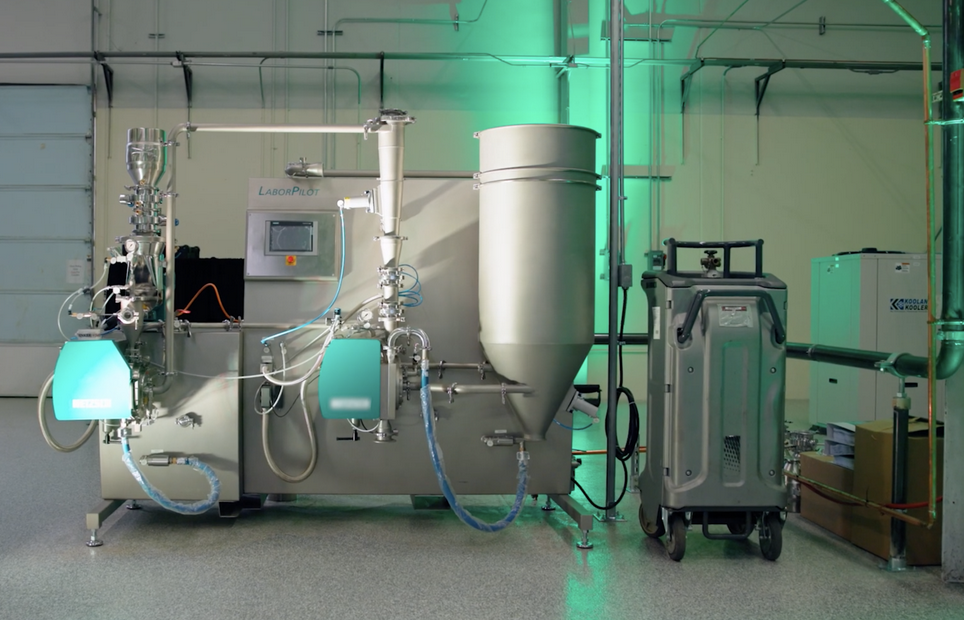
Image from Vulcan Elements.

When US-based rare earth magnet manufacturer Vulcan Elements announced this week it signed a supply deal with ReElement Technologies, the financial terms were undisclosed, but the companies said that the price is “significantly below” the floor of $110 per kilogram that the US Department of Defense guaranteed to MP Materials last month.

Rare earth metals are essential in heavy magnets that power electric vehicles, consumer electronics and military applications, and MP Materials is the only US producer, out of its Mountain Pass mine in California. 

While China dominates the global rare earth industry, controlling the vast majority of the world’s rare earth processing and refining capacity, Vulcan Elements’ vision is to provide domestic supply with pricing viable in the US market and beyond.    

“This pricing will enable Vulcan to be competitive in global markets,” Vulcan CEO John Maslin told Reuters. “We wanted to make sure the unit economics made sense.”

Last week, the privately-held North Carolina-based start up  unveiled it has raised $65 million in Series A funding to scale up its planned buildout of a commercial-scale facility in Durham. 

That announcement came only a day after Vulcan posted on its website that its domestic rare earth magnet manufacturing capability  won the Advanced Manufacturing Innovation for Maritime Readiness Challenge with support from the US Department of Defense’s Defense Industrial Base Consortium. 

Over 400 manufacturing companies competed for the award, but Vulcan has, until now, avoided the spotlight.  

“We’ve been fairly quiet intentionally, and that’s because we want to put our money where our mouths are,” Vulcan Elements CEO John Maslin told MINING.com in an interview. 

“We want to execute. And now that we’re doing that, we have a lot of additional work to do where we have to execute much further at a much larger scale,” he said. “We want to show and not just tell. So now is the right time.” 

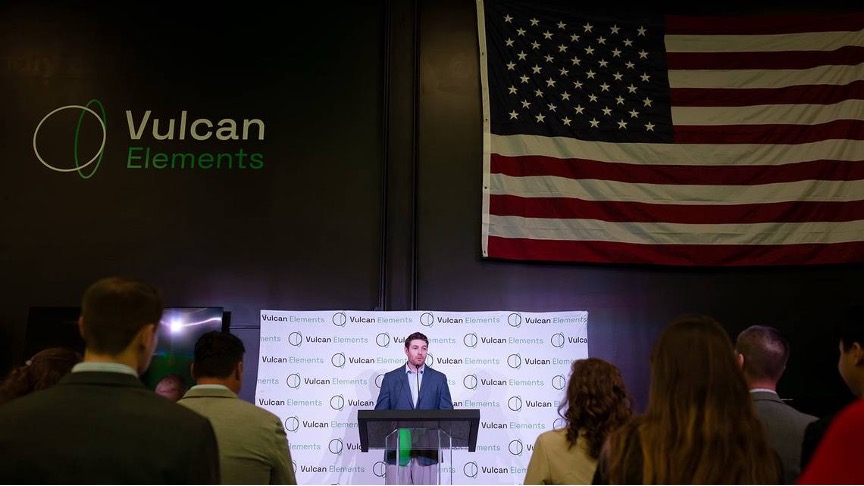
Vulcan Elements CEO John Maslin at the opening of Vulcan’s small-scale facility. Credit: Brighid Uddyback | Ox Images Photography. 

The company is specifically producing neodymium iron boron magnets – and boron is a big blind spot in the US market.  As with many other critical minerals, efforts are underway to re-shore supply to the US.

Maslin, a former supply chain officer with the Navy’s nuclear energy program, saw the gap working across nuclear shipbuilding and submarine programs. 

“My job was effectively working with the government and appropriations and then taking that and helping finance and procure materials and components for nuclear reactors,” Maslin said.  

“I was thinking a lot about the critical components that were going to be fundamental, not just for defense, but for critical economic industries, the 21st century technology race –  semiconductors, batteries, rare earth magnets,” Maslin remembered. 

“The way that we think about it internally is if you think about your own body, a semiconductor is like your brain, a battery is like your heart, and a rare earth magnet is like your spine. It converts electricity into motion. Everyone was focused on semiconductors and batteries at the time.

“No one was thinking about the third leg of that stool, which is a rare earth magnet. The next generation technologies, either commercially or defense related, drones, data centers that enable AI, robotics, hybrid electric vehicles, et cetera, satellites, aerospace applications, you need all three.”

“But functionally, we knew that China made over 90% of the global supply and that the US made less than 1% and that the demand for these magnets was going exponential, and there needed to be diversity and resiliency in the West.” 

Maslin said that all of Vulcan Elements’ materials, whether rare earths or the electrolytic iron or the boron or ferroboron, have traceability down to the mine where that’s coming from, and that feedstock is sourced from US and allied partners.

One of the first rare earth magnetics labs in the US in decades 

Maslin met Vulcan’s co-founder, Peter Kulik, who had opened one of the first rare earth magnetics labs in the US in two decades at the University of Central Florida. 

“We said, this is a problem that is too important not to address. We went to the Department of Energy, and we validated our own chemistries with their scientists,” Maslin said. “We made several different grades of magnets, then built a pilot facility.” 

The plan was to have the plant online by Q1 2025, fully decoupled from China down to the equipment, software, and material level. 

“We opened our doors on March 31st of this year,” Maslin said. “It is a blend of defense and commercial across several different verticals and industriesWe have started to deliver and qualify magnets with customers. 100% of our material is US or allied. We either get it from recycled end-of-life magnets, or directly from miners in the US and Canada and Australia, parts of Africa, parts of South America. Nothing from an entity of concern.” 

The company is now moving to large-scale commercial, doing a multi-state site search.

“We’re going to go to several hundred tons over the next 18 to 24 months. The goal is to have several thousand tons online by the end of this decade,” Maslin said. 

Vulcan is currently producing a mix of samples and low-volume production.

“A lot of it right now is qualification, making sure that we’re hitting the grades that we’re actually delivering the products that customers need.  We’re at the point where we’re getting to actually do that with our customers who are very eager to have resilience in their supply chain.

“We have a lot of work to do to deliver even higher performing grades – but we’re moving with the speed and seriousness that this mission and this moment need.”


Royal Navy Tracks Russian Destroyer Through the English Channel

THEY TOOK THE SHORT CUT

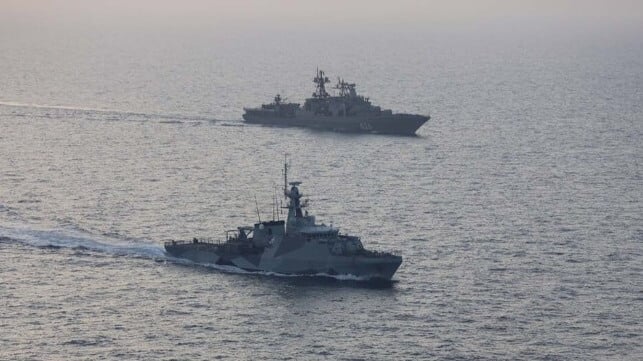
HMS Trent (foreground) escorts Vice Admiral Kulakov (Royal Navy)

Published Aug 21, 2025 11:21 PM by The Maritime Executive


The Royal Navy has tracked a Russian destroyer and two accompanying vessels through the English Channel, its latest mission to keep an eye on Russia's frequent naval movements in British waters.

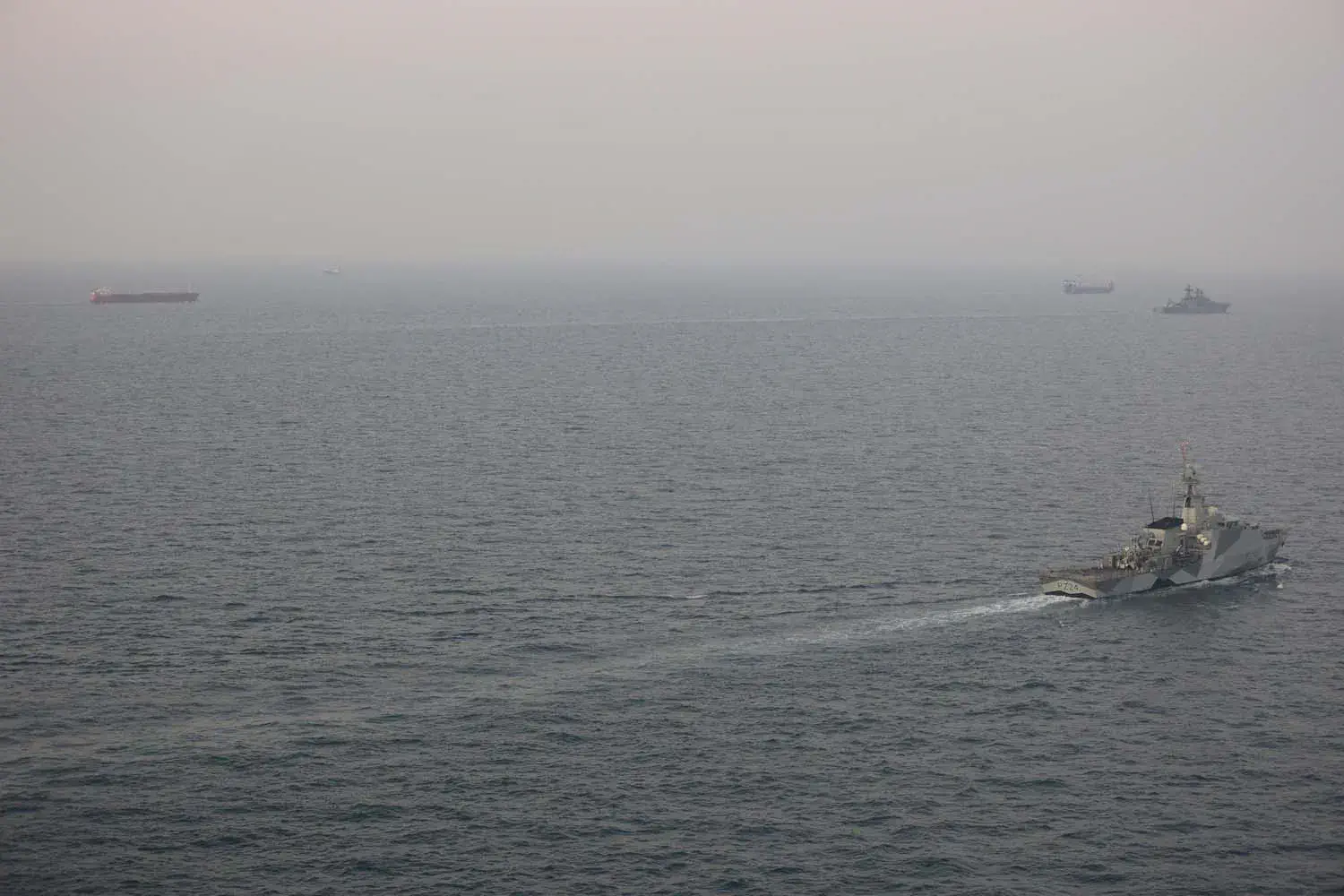
The mission began when patrol ship HMS Trent picked up the trail of the Russian destroyer Vice Admiral Kulakov off Great Yarmouth. On August 10, Trent was seen following Kulakov westbound through the English Channel, bracketed by a steady stream of "shadow fleet" tankers. Ship spotter Dover Strait Shipping identified more than a dozen Russia-linked tankers passing through during a 24-hour time period around Kulakov's transit. 

Clockwise from upper left: Skobelev, Sparta, Vice Admiral Kulakov, HMS Trent (Royal Navy)
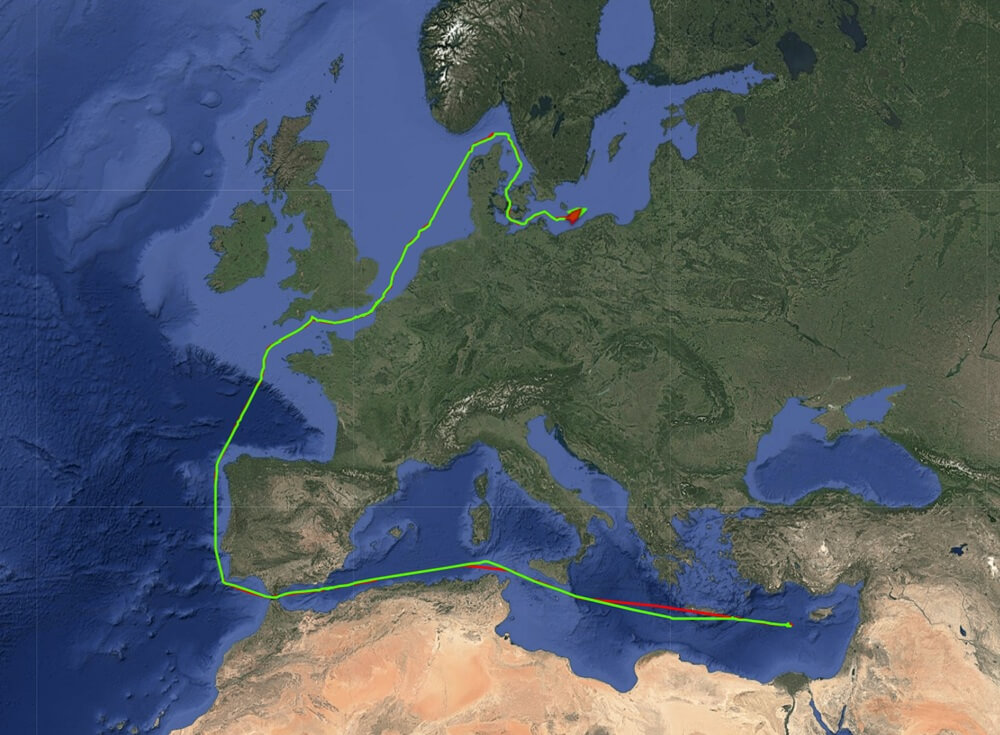
Kulakov continued onward to waters off Ushant, where the destroyer met up with the Russian military ro/ro cargo ship Sparta, a well-known and heavily-sanctioned vessel. AIS data suggests that Sparta was on a return voyage from the former Russian naval base at Tartus, where Russian forces have been demobilizing equipment. The tanker General Skobelev - often used by Russian forces as a fleet oiler - was sailing with Sparta and joined the convoy. Together, they turned and headed eastbound to go back through the channel. After a brief pause in Lyme Bay, off Britain's southern coast, they made the transit into the North Sea, then north to the Kattegat and into the Baltic. 

Sparta (green) and General Skobelev (red) on the long voyage from the Eastern Mediterranean to the Baltic (Pole Star)

HMS Trent followed Kulakov throughout the round-trip voyage through the English Channel, according to the Royal Navy, as is standard practice when Russian warships transit UK waters. 

Vice Admiral Kulakov is an Udaloy-class antisubmarine warfare destroyer, built to challenge the U.S. Navy's sub fleet in the late years of the Cold War. She was commissioned in 1981, entered a refit period in 1991, and returned to active duty 19 years later. A dedicated antisubmarine warfare platform, Kulakov carries a missile-launched torpedo system as her primary weapon, not a purpose-built anti-ship missile system.  


Navy Fighter Pilot Rescued From the Sea Off Virginia

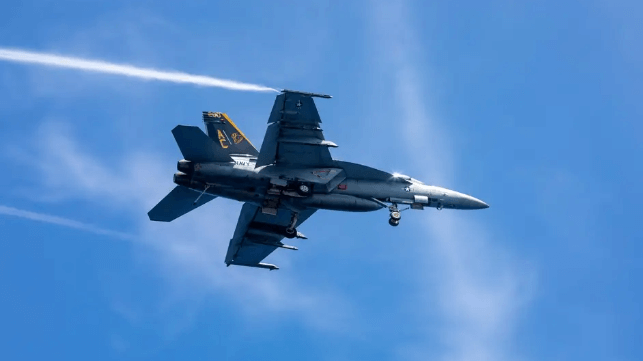
Super Hornet
USN file image

Published Aug 21, 2025 4:56 PM by The Maritime Executive


On Wednesday morning, a U.S. Navy strike fighter went down during a routine training flight off the coast of Virginia, and the pilot was rescued from the sea after spending about an hour in the water. 

A Navy spokesperson confirmed that an F/A-18 Super Hornet from Virginia Beach-based Strike Fighter Squadron 83 was operating off the coast that morning, and at about 0950 hours, the pilot had to eject. The pilot survived, went into the water, and was found by Coast Guard SAR crews at 1121 hours. The rescuee was delivered to a hospital for a medical evaluation; the Navy has not provided further details on the pilot's condition. Given the rough surface conditions caused by Hurricane Erin in the mid-Atlantic, the pilot could have faced serious danger - and a challenging SAR scenario - if the timing or location had been different. 

The wreck of the aircraft remains on the bottom, the Navy said. The service often recovers downed fighters from the seabed in order to investigate crashes and deter espionage. 

It is the fourth Super Hornet that the Navy has lost since December. Three fighters assigned to the carrier USS Harry S. Truman were lost due to accidental causes during the Red Sea campaign in late 2023 and early 2024. 

At $67 million per unit, the Super Hornet is about 30 percent less expensive than the stealthy F-35C; the Hornet's heavy payload and long range make it the mainstay of the service's carrier strike capabilities. The platform is older and non-stealth, but the Navy expects to keep it for decades, and it ordered 17 more Super Hornets in 2024 to offset attrition in the fleet. 

ECOCIDE

Semi-Autonomous Barge Spills Fuel on Belgium's Albert Canal

Barge traffic on the Albert Canal (Michielverbeek / CC BY SA 3.0)

Published Aug 21, 2025 9:45 PM by The Maritime Executive


A semi-autonomous barge has spilled fuel oil into a canal near Antwerp, prompting a cleanup operation and temporarily shutting down marine traffic on the waterway. 

On Tuesday evening, the barge River Drone 4 passed through the Olen lock complex on the Albert Canal. Soon after, it began to leak fuel, and it released an estimated 10,000 liters into the water before the leak stopped. 

Antwerp's municipal water utility draws drinking water from the canal, downstream of the spill site, and the city's mayor told Belgian broadcaster VRT that the damage from fuel contamination in the water system would be "incalculable." Luckily, the Olen lock complex was between the spill and the city, and there was no risk of transfer across the lock (so long as it remained out of operation). The waterway was closed, both to enable cleanup and to keep the lock complex shut. 

A marine services company responded to the scene and began removing the fuel slick, first by containing it and then by absorbing it with sorbent booms. Work proceeded through the night, and marine traffic resumed at 1400 hours on Wednesday. 

The Mars Food factory in Olen - which makes prepackaged rice for the Ben's Original label - temporarily shut down production because of the strong fumes from the spill. "To protect our employees and products from the odor, we preemptively halted all production," spokesperson Kathy Heungens of Mars Food told VRT. 

The vessel itself reportedly sustained a puncture in a fuel tank above the waterline while transiting the Olen lock, Mayor Gebruers told HLN, and it should be easily repaired. The circumstances of the leak are under investigation, and the master of the barge has been questioned by Belgian authorities.

River Drone 4 is a 3,800-tonne inland barge with semi-autonomous capability, according to operator Naval Inland Navigation. Naval's fleet is fitted for remotely controlled navigation with the use of SEAFAR technology, a system that allows an offboard crew to operate the vessel from a shore control center. It is not yet established whether the vessel was being operated by an onboard master or an offboard control operator at the time of the spill.

Last December, sister vessel River Drone 5 had a collision with another inland vessel near Rotterdam. At the time of that collision, River Drone 5 was under the control of the onboard master, not Seafar's navigation system.  

Top image: Barge traffic on the Albert Canal (Michielverbeek / CC BY SA 3.0)


New Zealand Looks to Future for Troubled Interisland Ferry Service

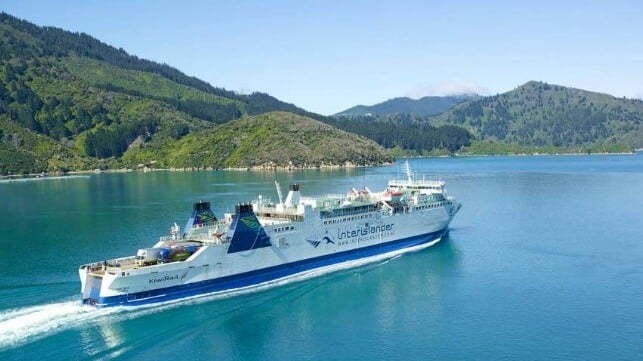
New Zealand interisland ferry
KiwiRail hopes the end of the iReX project with a settlement with Hyundai Mipo will mark a new beginning for the troubled ferries (KiwiRail file photo)

Published Aug 22, 2025 2:12 PM by The Maritime Executive


August has marked what many hope will be a turning point and the start of a new beginning for New Zealand’s KiwiRail and its troubled interisland ferry service. It reports that the previous iReX ferry program has been brought to a close with a final settlement with the shipyard, and this week it retired its oldest vessel as the first step in the modernization program.

The company provides a vital passenger and freight operation running RoRo ferries between the North and South islands. According to company data, each year it moves US$8.5 billion in freight, making more than 4,000 crossings. The company says it transports nearly 800,000 passengers and 250,000 cars annually on three vessels, the oldest of which was built in 1988, while the others were built in 1995 and 1998. 

With government support, in 2020, it announced plans for two much larger ferries to enter service in 2025 and 2026. Each would have been 50,000 gross tons with a capacity for more than 1,900 passengers, versus the current ships, which have a maximum capacity of 650 passengers. They would also have accommodated 650 passenger cars versus the current 250. Contracts were signed in 2021 with Korea’s Hyundai Mipo Dockyard to build the vessels, which were to be hybrids with battery-electric power.

A new government elected in 2023 was critical of the project and reported it was canceling funding in part due to runaway cost estimates. KiwiRail terminated the order and began settlement negotiations with Hyundai Mipo. Last week, it was reported that a final settlement was completed at a cost of NZ$144 million (US$84.6 million). Along with a previous payment, KiwiRail reports the total cost was NZ$222 million (US$130 million) to Hyundai Mipo and an additional NZ$449 million (US$264 million), including costs of landside infrastructure.

“Doomsayers said cancelling the contract would cost the taxpayer the full NZ$551 million contract value, but these are some of the same people who accepted Project iReX ballooning from NZ$1.45 billion when approved in 2021 to Treasury warning it was on course to NZ$4 billion in 2023 thanks to eyes-bigger-than-their-mouths ambitions and absentee management,” said Ministers Nicola Willis (Finance) and Winston Peters (Foreign Affairs), in a joint statement on the settlement agreement.

They contend that there was not sufficient consideration given to the port infrastructure requirements for the two massive ferries. After winning the election, they allege they were confronted with “billion-dollar blowouts” due to the mismanagement by the prior government of the infrastructure projects.

“KiwiRail remains focused on working with Ferry Holdings Limited and the port companies to deliver two new rail-enabled ferries and the required infrastructure upgrades in Wellington and Picton by 2029. We’re looking forward to ensuring the safe and smooth transition of the new fleet into service for our people and customers when the time comes,” said Jason Dale, KiwiRail Chief Financial Officer.

The service has also experienced breakdowns, reports of poor maintenance, and management issues. In 2023 regulators said they would prosecute the company over maintenance issues which caused one of the vessels to black out during its crossing. In 2024, another one of the ferries went aground departing port with the investigation saying the crew did not know how to turn off the autopilot.

This week, the company began its plan by officially retiring the Aratere after its final sailing on August 18, a three-hour crossing between Picton and Wellington. The retirement of the vessel, which had been commissioned in 1999, is designed to permit the development of new port infrastructure. Aratere was the company’s only rail-enabled ferry, meaning freight cars were moved to the vessel and across the Cook Strait.

Aratere’s wharf in Picton is due to be demolished later this year as part of the new ferry project. Aratere required specialized wharf infrastructure to load and unload, including integrated rail tracks, so it cannot use Interislander’s other berths. Until the new ferries are delivered, freight will have to be transferred into trailers and trucks for the trip between the islands.

The ferry was laid up in Wellington with KiwiRail reporting it is considering options for its sale with a shipbroker. It says the plans for the new ferries are on schedule. Due for delivery by 2029, they will be larger, replacing all three current ships, and will reintroduce rail freight capabilities to the route.


Port of Auckland Gets Greenlight for Expansion Under New Fast-Track Regime

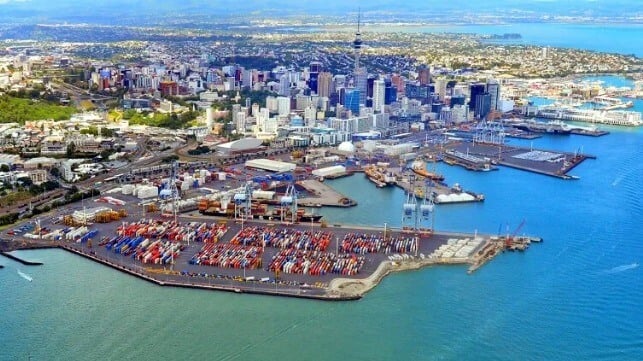
Auckland, New Zealand
The expansion project will enhance Auckland and support growth for the port in cruise, container, and RoRo operations (file photo)

Published Aug 22, 2025 6:58 PM by The Maritime Executive


The Port of Auckland in New Zealand is finally set to embark on major infrastructure expansion projects aimed at enhancing its competitiveness. It is proceeding after getting a government greenlight under a new law designed to cut red tape in the approval process for huge infrastructure and development projects.

Under the Fast-track Approvals Act, Auckland’s wharf expansion project has become the first mega project to be granted consent. The greenlight now allows New Zealand’s main import terminal to proceed with the implementation of the Bledisloe North and Fergusson North projects, as well as the construction of a cruise passenger terminal and other upgrades.

The consent was granted by an expert panel set up under the Act, which was introduced in Parliament in March last year and enacted in record speed as part of the coalition government’s plan for its first 100 days in office. The Act, which received Royal Assent in December and became effective in February, establishes a permanent fast-track regime that makes it easier and quicker for large projects to gain approvals. The decision came just 66 working days after the panel was convened.

“The Act helps cut through the tangle of red and green tape and the jumble of approvals processes that have, until now, held New Zealand back from much-needed economic growth,” said Chris Bishop, New Zealand Infrastructure Minister.

Having become the first to get approval under the act, the Port of Auckland will, starting next month, embark on implementing key projects that are critical to future growth. The Bledisloe and Fergusson wharves expansion forms the core of the projects that will not only allow berthing of larger containerships but also make Auckland a hub for cruise shipping.

The Bledisloe North wharf project will include a new reinforced concrete-piled wharf at the terminal, giving it enough depth for large cruise ships and RoRos. For Fergusson North, the project involves a wharf extension that will enable the port to handle 10,000 TEU ships in the future. Currently, the port can only handle ships with a 5,000 TEU maximum capacity.

Auckland has termed the projects as once-in-a-generation infrastructure that is needed to serve the city for decades to come, not only by making the port “big ship capable” but also by providing long-term fit-for-purpose infrastructure. In February, the port that is owned by the Auckland Council revealed it intends to invest NZ$120 to NZ$150 million (US$70 to $88 million) over the next three to four years in infrastructure expansion.  

“The Bledisloe North wharf extensions will enable larger cruise ships to berth, and increase New Zealand’s importing and exporting capacity,” said Bishop. The project will deliver lasting economic benefits by boosting the efficiency of a critical part of Auckland’s economy and supporting long-term growth.

Auckland’s infrastructure investments come when the port, the second largest after Port of Tauranga, is recording growth in container throughput to hit the 900,000 TEU mark in 2024.

The Auckland project was among a total of 149 projects on the fast-track list, with others involved in mining, power, and residential development, among others, being under consideration.


APM Terminals Plans $1B Investment to Develop Indian Ports

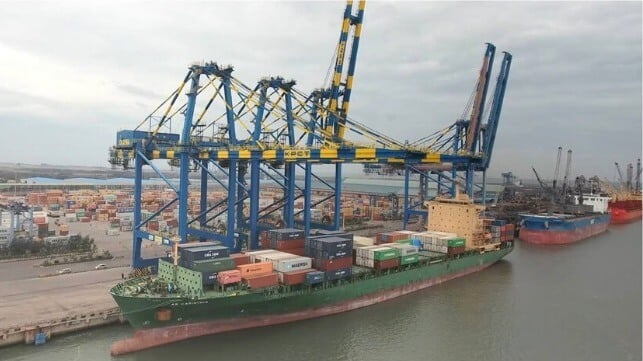
Indian port
With Maersk's investment, India looks to develop new logistic hubs at the East Coast ports on the Bay of Bengal (Andhra Pradesh)

Published Aug 22, 2025 6:40 PM by The Maritime Executive


APM Terminals, the terminal operations for AP Moller-Maersk, has entered into an agreement with the authority overseeing ports on India’s east coast along the Bay of Bengal. Under the Memorandum signed in India on August 22, they plan to explore the development of ports to create an “Eastern Gateway” as part of India’s plan to expand trade.

According to officials, the agreement while help realize the vision of creating Andhra Pradesh as the logistics hub of the east. The region has more than 620 miles of coastline. The vision is to develop marine infrastructure such as ports, fishing harbors, and fish landing centers every 30 miles. 

The region is currently home to Visakhapatnam, a port city and industrial center, which is the third-largest port by volume in India and one of the country’s 12 major ports. However, it is mostly a bulker port with smaller container operations in the region. The coast currently hosts a total of 15 ports in eight coastal districts, with five operational non-major commercial ports and four green field projects, which will be operational by 2026.

Working with APM, the goal is to accelerate port and terminal development in the state. APM has expressed its intent as part of the MoU to invest approximately $1 billion to modernize ports and terminals. They will focus on the development of the Machilipatnam, Mulapeta, and Ramayapatnam ports and infrastructure. 

These are three of the ports currently being developed by the authority in the region. In June, the local authorities reported that Ramayapatnam Port was the most advanced with Phase 1 work nearly two-thirds (64 percent) completed. Both Machilipatnam and Mulapeta have completed more than 40 percent of their Phase 1 development.

APM is seen as a logical partner for the next phase of development, with the local officials noting that it is at the forefront of introducing advanced cargo handling technologies, promoting sustainable operations, and enhancing efficiency in container and bulk handling. APM Terminals has been present in India since 2004 and operates two key assets. The Gujarat Pipavav Port is located 152 nautical miles (10 hours steaming time) from Nhava Sheva in Mumbai. It was India’s first public-private port operation and has a capacity for 1.35 million TEU annually.

APM is also in partnership with India for the operations of APM Terminals Mumbai (Gateway Terminals India), which is the largest container facility in the country. Efforts are currently expanding its capacity above 2 million TEU annually.