Tuesday, August 26, 2025


Black Power Move


In late August 1968, one of the largest military protests in American history took place at Fort Hood in Central Texas. You’ve never heard of it.

Why?

The year before, on April 4, 1967, Martin Luther King, Jr. spoke out for the first time against the Vietnam War. He was assassinated one year to the day later. Just three weeks after MLK was assassinated, World Heavyweight Boxing Champion Mohammad Ali appeared in Houston, Texas, before a Vietnam War draft board. He was called for induction four times, but refused to answer his summons. He was immediately arrested and stripped of his boxing titles.

Fifty-seven years ago on August 23, Black soldiers staged a peaceful protest at Fort Hood—but not against taking up arms in Southeast Asia; they refused to take up arms against American citizens. You’ve never heard of them because political pundits and the American military didn’t want you to. The Vietnam War was fiasco enough, and the powers that be largely squelched coverage of the protest.

After Martin Luther King Jr. was assassinated on April 4, 1968, thousands of Fort Hood troops were sent to Chicago for riot control duty. A number of Black civilians were killed.

In mid-August 1968, another large group of soldiers stationed at Fort Hood was scheduled to return to Chicago in late August to control potential rioters at the Democratic National Convention. At midnight on Friday, August 23,1968, sixty Black troops staged a nonviolent sit-in on base to protest their deployment to Chicago. The majority of these Black soldiers were uncomfortable with being placed in situation where they might be asked to “police” other Black Americans. Several of the demonstrators said they had grown up in low-income neighborhoods and could empathize with the folks in those areas who might feel civil unrest was necessary. At 5 a.m. that morning, the division commander and members of his staff met with the protesters and discussed their grievances. Seventeen of the demonstrators got up and left, but forty-three continued to protest. The protesters were placed in the Fort Hood stockade for failing to report for morning reveille.

The protesting soldiers became known as the “Fort Hood 43,” and their refusal to deploy to Chicago for riot-control duties was one of the largest acts of dissent in the annals of United States military history. Over the next few weeks and months, a number of the Fort Hood 43 were court-martialed and punished, receiving sentences of three to six months of hard labor, a partial forfeiture of their wages and reductions of rank.

For the last six decades there has been much made about the hippie movement and white Vietnam War protests. But, arguably, a disproportionate amount of the most significant activist stances involved young black men. And we have drifted into comparably grave straits.

President Trump and his legion of cretinous nimrods have turned the nation into a ludicrous gameshow, and three-quarters of the country is knackered or deeply despondent. Mortgage rates are approaching adult male shoe sizes, masked federal agents are goose-stepping over civil rights, prominent politicos are spread-eagle or face-down (and lubed) passing Big Beautiful Bills and crapping away their last remnants of human decency, moral compass and political conscience. There’s nothing bonny about Donny, and anyone half-awake is on edge or ready to crawl out onto a ledge (or simply devoid of humanity altogether).

Something has to give, or at least give us an excuse for not thinking about our vile betrayal at the ballot box, and the fatuous, sausage-vat we elected to the highest office on the planet.

We need a distraction.

We need a reason to ignore our staggering cluelessness and somehow take our minds off the dumpy cunt (thanks, Jim Jefferies) that flatulates across our eye- and ear-waves every day in increasing states of derelict flamboyance and inane kakistocracy.

Enter Blandman.

Or, in this case, bland men.

Or, even better said, whole leagues of bland men, addicted to pro, college and high school football.

Nothing brings hand-wringers and mouth-breathers together like football season.

There’s nothing important or relevant about American football, football players or football games in the current moment, but they give us a great escape from our election-day belligerence and the blithering of our titty-baby ignoranus-in-chief. We can pour ourselves into the “big” game, join fantasy football leagues, gamble big, or gamble small (on quarter-by-quarter football pools). We can forget about nepo Einstein visas, porn star payoffs, pissing parties, and Donny’s predatorial behavior around prepubescents. We can tune out Ukraine and Gaza, tranny terror, 10-Commandment commandants, asinine tariffs, and the Kennedy Center Commode Awards.

But who does this sanity-saving distraction ride largely on the backs of?

Young Black men.

It’s certainly not fair to put young Black men on the spot, here—they’re not treated very well or trusted, especially if they aren’t carrying, catching, or cradling a pigskin, but.

Paul Robeson

What would happen if young Black men became more Paul Robeson, or collectively pulled a Muhammad Ali, denying us our beloved distractions? And not just taking a knee, but actually refusing to play … at the pro, college and high school level? What would happen if young Black men went all Fort Hood 43?

That’s easy.

The January 6 insurrection would be a footnote compared to the “Football Riots.”

President Donny would be out of office in 60 days.

And fascist goons like Greg Abbott would be unceremoniously dumped headfirst in a downtown Austin port-a-poddy—by conservative Longhorn boosters themselves.

 Albion Stupidities: Palestine Action and Anti-Terrorism Laws


Protest in Britain has become dangerous of late. Shaky lawmakers minding their elected positions, displaying decorative ignorance, have been criminalising protests against the war in Gaza, branding certain groups “terrorist” in inclination. While the laws dealing with criminal damage to property and such are already more than adequate, the government of Sir Keir Starmer thought it wise to enlarge them. There are people dying in large numbers in Gaza, and those protesting that situation have become a nuisance.

The keen obsession of this government – and a majority of the cerebrally softened legislators in the House of Commons – is that a group called Palestine Action is somehow worthy of being bracketed as a terrorist group under the Terrorist Act 2000. On June 20, members of the outfit broke into a Royal Airforce base at Brize Norton, Oxfordshire and spray painted two military aircraft alleged to be aiding US and Israel in refuelling tasks. This seemingly minor display of indignation by the organisation was enough to warrant its proscription by Home Secretary Yvette Cooper three days later under section 3 of the Terrorism Act.

United Nations experts linked to the UN Human Rights Office of the High Commissioner, among them Francesca Albanese, Ben Saul and Irene Khan, issued a press release on July 1 calling the labelling of a protest movement as “terrorist” an unjustified measure. “According to international standards, acts of protest that damage property, but are not intended to kill or injure people, should not be treated as terrorism.” Despite there being no binding definition of terrorism in international law, the experts were of the view that it would be limited to such acts as would cause death, serious personal injury, or involve the taking of hostages “in order to intimidate a population or compel a government or an international organisation to do or to abstain from doing any act.”

Were a national law to criminalise property damage in democracies, it would have to exclude acts of advocacy, protest, dissent or industrial action not causing death or serious injury, an approach approved by the UN Security Council’s Counter-Terrorism Executive Directorate. In the case of banning Palestine Action, individuals would be needlessly “prosecuted for peacefully exercising their rights to freedom of expression and opinion, assembly, association and participation in political life.”

leaked report by the Joint Terrorism Analysis Centre (JTAC), obtained by human rights activist and former diplomat Craig Murray, further showed the decision to proscribe Palestine Action under the Terrorism Act as one marked by mendacity and panic on the part of the Starmer government. While JTAC is not sympathetic to Palestine Action, it did note that “The majority of the group’s activity would not be classified as terrorism under Section 1 of the Terrorism Act 2000.” While it assesses the group as having “promoted terrorism”, the primary focus of the direct action, according to the sanitised version of the report, is on inflicting property damage. Serious damage to property could bring the group within the legislation, but even then, as the UN experts have noted, that would not meet necessary international standards to warrant the label of terrorism.

According to Murray, had Palestine Action, as claimed or implied by the government, deliberately attacked individuals, received foreign funding from Iran or any hostile power, attacked Jewish-owned businesses based on racism, or planned a “future unspecified appalling terrorist acts”, then JTAC’s report would have made mention of it. “Palestine Action,” insists Murray, “is what it says it is: a non-violent direct action group which targets the Israeli weapons industry and its support and supply line.”

The High Court has granted Palestine Action co-founder Huda Ammori judicial review regarding the proscription of the organisation on two grounds: that it arguably amounts to a disproportionate interference with Article 10 and 11 rights of the claimants, which guarantee free speech and peaceful assembly under the European Convention on Human Rights; and that the proscription was made in breach or natural justice and/or contrary to article 6 the ECHR, which entitles all to a fair and public hearing within a reasonable time by an independent and impartial tribunal established by law. The Home Secretary, it was noted, had failed to even consult PA in making the decision.

The decision by the Starmer government was astonishing and, as with all bad laws, the foundry of astonishingly stupid results. It has made the police imbecilic enforcers; it has turned prosecutions into a dismal circus. Protesters otherwise regarded as very English and very middle class have found themselves facing arrests and charges. Over the course of one weekend this month, section 13 of the Terrorism Act 2000 was used to arrest over 500 people, most of them carrying a placard supporting PA. That provision criminalises the wearing of clothing items or the wearing, carrying or displaying of any article, and the publishing of an image of an item of clothing or any other article “in such way or in such circumstances as to arouse reasonable suspicion that he is a member or supporter of a proscribed organisation.” Sentences range from six-month imprisonment to a fine.

One particularly absurd arrest was that of retired head teacher John Farley, who was carrying a placard making reference to Palestine Action. Farley was eventually released on bail pending charges, which were never pressed. The incident last month did not even involve the proscribed organisation but was connected with another organised protest group.

The protest held in Leeds began as a solemn, silent march. Two police caught sight of Farley holding the placard. They proceeded to drag Harley away, and, typical of those types of recruits, refused to listen to any explanation: that the cartoon on the placard was a replica from the satirical magazine Private Eye, commenting on the banning of Palestine Action. The Private Eye piece, brutal, grim, and apposite, sought to explain what “Palestine Action” entailed: “Unacceptable Palestine Action” involved “spraying military planes with paint”; “Acceptable Palestine Action” entailed “shooting Palestinians queuing for food”.

Binoy Kampmark was a Commonwealth Scholar at Selwyn College, Cambridge. He lectures at RMIT University, Melbourne. Email: bkampmark@gmail.comRead other articles by Binoy.
Syria’s future won’t be secure through Israel normalisation

Sunday 24 August 2025, by Joseph Daher


As al-Sharaa leads Syria further towards normalisation with Israel, Joseph Daher argues that alignment with the US & its allies won’t bring lasting stability.


Since the fall of the Assad regime in December, the new Syrian ruling authorities led by Hay’at Tahrir Sham (HTS), have been steering Syria towards a US axis in order to consolidate their power. This would also include some form of normalisation with Israel, whether direct or indirect. However, when armed groups affiliated with Damascus recently launched a military offensive on the southern province of Suweida, tensions have heightened between Damascus and Tel Aviv.

The Israeli airstrikes on Syria that took place in mid-July were reported to have been the result of a misunderstanding following discussions between Syrian and Israeli representatives. Syria’s leaders had allegedly requested Israel’s approval for the reintegration of Suweida. However, whilst Israel expressed openness to limited reintegration—that is, the restoration of state services and the deployment of a limited local security force—Damascus understood this as authorisation for a full-scale military operation.

Regardless of the details, this revealed a persistent tendency by the Syrian authorities to rely on external validation and support to justify certain policies, including coercive measures against their local populations.

A few days after the strikes on Damascus, Washington pressured Israel to cease its and to conclude a truce.

Senior officials from the US, Israel, and Syria (including Syrian Foreign Minister Asaad Al-Shibani) met on July 24, with the aim of addressing the security situation in southern Syria and preventing further crises. Whilst the meeting did not result in any final agreements, talks were expected to continue.

Nevertheless, following the events in Suweida, wider sections of the population in the southern province have been calling for Israeli intervention. Whilst the Syrian President Ahmed al-Sharaa rightly responded by saying that Israel’s actions undermine Syrian unity and weaken the state, it is his actions that have led to this point. Indeed, his leadership’s authoritarian and exclusionary policies have paved the path towards the crimes committed against Druze communities, and as a consequence appetite for intervention for the purpose of ‘protection’, has grown in Suweida.

This feeling has only strengthened due to the lack of mass national and democratic alternatives.

No threat to Israel

Al-Sharaa’s “tough words” to Israel have been severely weakened over the news that the Syrian foreign minister met with an Israeli delegation (including the Minister of Strategic Affairs Ron Dermer) in Paris a few days ago to discuss de-escalation and security in the region. Moreover, for the first time in decades, the meeting was officially announced on the Syrian Arab News Agency (SANA) in a clear attempt to appease Tel Aviv.

This is unsurprising given the president has reiterated on numerous occasions since the beginning of the year that his rule is not a threat to Israel and apparently also declared to president Trump his readiness to join the Abraham Accords under the “right conditions”.

Furthermore, he confirmed the existence of indirect negotiations with Israel who he said Syria shares “common enemies” (Iran and Hezbollah) with. And, in reference to this, that Syria can “can play a major role in regional security”.

Notably, Damascus also did not condemn the massive Israeli strikes against Iran as they see any weakening of the Islamic Republic (and Hezbollah in Lebanon) as a positive thing. This position is not only connected to Iran’s violent role in supporting Assad during the Syrian uprising, but it is also reflective of the political orientation of the new ruling elite which is aligned with US policies.

Syria has even increased control of its border with Lebanon where weapons destined for Hezbollah are now regularly seized.

Ultimately, all signs point to Syria’s normalisation with Israel…

Whilst there have been no official changes regarding the lifting of US sanctions on Syria, it is clear that this only became a possibility once negotiations and concessions were made regarding the controlling of Palestinian political and armed actors, and normalisation with Israel. In fact, several Palestinian officials in Syria have already been arrested, including members of the Palestinian Islamic Jihad movement and the leader of the Popular Front for the Liberation of Palestine – General Command, who was an ally of the former Assad regime. Some leaders of Palestinian armed factions, mostly connected to the former Syrian regime, were also forced to leave the country.

Officials from both countries have held direct talks, reportedly facilitated by the United Arab Emirates, which established a backchannel for contact. And recently, Israel’s foreign minister publicly declared openness to diplomatic ties with Syria, alongside Lebanon, whilst clearly avoiding any discussion on the Golan Heights, which Israel has been occupying since 1967.

To make matters worse, in a clear show to promote normalisation, the former hospital director from Aleppo and long-time normaliser Shadi Martini, travelled to Israel directly from Syria in July to participate in a session at the Knesset. Prior to his trip, Martini had met with al-Sharaa who he said had described the event as a “once-in-a-century opportunity for the Middle East”.

No guarantees for Syria’s future

Rooting the new Syria in a strong alliance with US led axis (and its regional allies) also serves the purpose of attracting foreign investments, which have already multiplied in the past few months, particularly from Gulf investors. This is part of a larger policy to further liberalise the economy, including through privatisation of state assets and austerity measures.

However, contrary to the rhetoric of the new ruling authority and supporters of its orientation, there are no guarantees that alliance with Western powers and normalisation with Israel will improve the country’s economic and political situation.

Just look at Egypt’s evolution following the peace agreement with Israel in 1981. Despite an average of around $1 billion in US financial assistance since then, the socio-economic situation only worsened in the past decades. The wealth gap has considerably widened amongst the population, and poverty has continuously increased to the point that it reached over one third of the population in 2024.

At the beginning of the year, Egyptian authorities cut millions of people from accessing the national bread subsidy program and national food rationing system, as well as increasing the price of subsidised bread in order to “unburden” the state budget. These latest austerity measures came after repeated devaluations of the Egyptian national currency and a radical slashing of electricity, fuel and drinking water subsidies. The situation has created rising frustration and criticism among Egyptian popular classes who are being made to pay.

More generally, Egyptian economy is in deep crisis, with an external debt that has surged from $55.8 billion in 2016 to $164.5 billion in 2023, fuelled by reliance on foreign loans and high interest rates.

At the same time, Egypt increasingly lost its sovereignty to US and Israeli interests. Its role in the blockade of the occupied Gaza Strip (especially throughout the recent genocide), as well as violent repression of supporters and demonstrators in solidarity with Palestine during the Gaza March, has demonstrated this.

If this is all that awaits ‘new Syria’, the trajectory taken by the current HTS-led leadership is deeply worrying.

It seems simple to state, but a political and economic model rooted in democracy, equality and social justice, and in solidarity with Palestinian people and other regional populations against all forms of oppression should be the path to follow. Every other concession won’t save the people from the poverty and repression that has long been imposed on them. In the words of a Syrian revolutionary who wrote in the summer of 2014 from the Israeli-occupied Syrian Golan Heights: “Freedom – a shared destiny: Gaza, Yarmouk, and the Golan.”

Source: The New Arab 21 August 2025

Attached documentssyria-s-future-won-t-be-secure-through-israel-normalisation_a9141.pdf (PDF - 918.6 KiB)
Extraction PDF [->article9141]

Syria
Suweida Under Fire: The Consolidation of Power in Damascus, and Sectarianism
Syria and the Dangers of Playing with Fire
Three Requisites for Syria’s Reconstruction Process
Syria: Fishing in Troubled Waters
Syria’s Economic Transition: From Kleptocracy to Islamic Neoliberalism in a War-Torn Economy
Israel
The “Day After” in Gaza
Our Genocide — Executive Summary
“War supports reactionary, capitalist and fascist forces and destroys lives, hopes and nature”
European Union/Israel: Time to choose on trade agreements
A Terrifying Abyss for the Iranian People and the Region


Joseph Daher is a Swiss-Syrian academic and activist. He is the author of Syria After the Uprising: The Political Economy of State Resilience (Pluto, 2019) and Hezbollah: The Political Economy of Lebanon’s Party of God (Pluto, 2016), and founder of the blog Syria Freedom Forever. He is also co-founder of the Alliance of Middle Eastern and North African Socialists.


International Viewpoint is published under the responsibility of the Bureau of the Fourth International. Signed articles do not necessarily reflect editorial policy. Articles can be reprinted with acknowledgement, and a live link if possible.


Israel’s Bulldozers of Mass Destruction


(BMDs)


Several people have been writing recently about the use the Israeli military has been making of Bulldozers of Mass Destruction (BMDs) in its erasure campaign in Gaza. On Tuesday, Haaretz published a wide-reaching investigation into the topic by Hagai Amit. It starts like this:

In the week that has passed since I began working on this story – until the time you are reading it – hundreds of pieces of heavy engineering equipment from Israel have demolished hundreds, if not thousands, of homes in the Gaza Strip, with the Defense Ministry spending millions of shekels for this work.

Never in Israeli history have so many homes and buildings been demolished consecutively, in what is also one of the most expensive engineering projects the country has ever took on. The excavators, bulldozers and huge D9 Caterpillar tractors in Gaza never stop working, even for a moment – and this is not expected to change.

Amit provides many details about the costs, the logistics, and the environmental impact of the Israeli BMD program. He also interviews Lior Karadi, owner of the Talor Karadi group, one of the key Israeli companies carrying out the program on a contract basis. “Every team has at least five pieces of heavy equipment,” Amit reports.

He quotes Karadi as saying,

“For example, we go in with eight to 12 pieces of equipment. Such a team demolishes almost 100 buildings in a day. And they work all the time. We have an operational branch for Gaza, with foremen and skilled workers. All the teams enter with IDF security. The demand means that importers currently have no heavy equipment in stock. If you order a piece of heavy equipment from a company like Volvo, you’ll wait six to seven months for it to be delivered…”

The Columbia U historian Adam Tooze also recently published a lengthy reflection on the history and cultural “meaning” of Israel’s current strong reliance on BMDs. He cited a recent work in which British historian Ralph Harrington noted that the term “bulldozing” was first used, in or before the 1870s, to describe “the violent methods… employed to disfranchise the negroes, or compel them to vote under white dictation, in many parts of Louisiana and Mississippi.”

As for Tooze he noted the (widely self-publicized) glee with which many of Israel’s BMD operators in Gaza go about their task of erasure. And he sketched a quick Venn diagram, shown here, to convey the mix of motivations of the Israeli military commanders and contractors involved in the program…

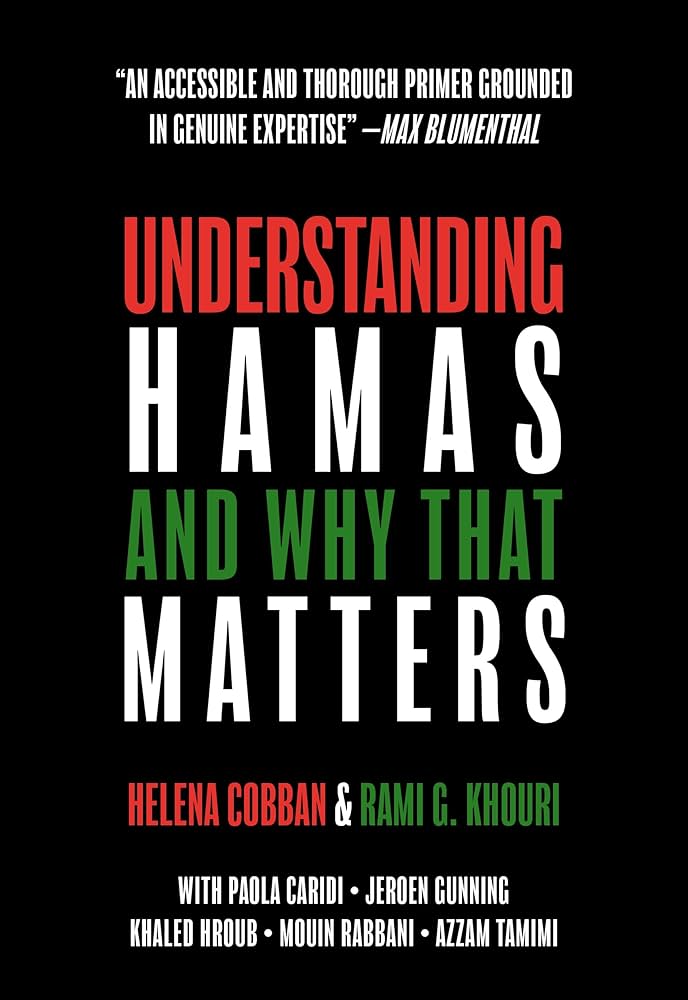
Helena Cobban is a writer on, and analyst of, international affairs. For two decades she contributed regular columns on global affairs to, respectively, the Christian Science Monitor and Al-Hayat (London). Of her seven books, four deal with Middle Eastern issues and the remainder with other international issues. In 2010, she founded Just World Books LLC, which has published 40 titles on Middle Eastern and global issues. Since 2015, she has been Executive Director of the Just World Educational Foundation. Ms. Cobban continues to write on her 19-year-old blog Just World NewsRead other articles by Helena.

  The Poor Bear the Brunt of the Pain

In the theatre of global conflict, where empires clash and ideologies contend, one truth remains tragically constant: it is not the architects of war who suffer its consequences, but the poor. The dispossessed, the voiceless, the expendable—these are the true casualties of geopolitical ambition. Their pain is not incidental; it is structural. It is the very currency by which power is transacted.

Ukraine: A War Between Blood Brothers and Colonial Ghosts

The war in Ukraine is often framed as a struggle for sovereignty, democracy, or territorial integrity. Yet beneath these abstractions lies a more intimate tragedy: a fratricidal conflict between peoples bound by history, language, and blood. Slavic brothers now spill each other’s blood—not for ancient grievances, but for the ambitions of post-imperial actors manipulating borders and allegiances from afar.

This war is not merely a regional dispute—it is a symptom of unresolved colonial legacies. The descendants of former colonizers, now cloaked in the garments of liberal democracy, stoke the flames of division while the poor—Ukrainian and Russian alike—are conscripted, displaced, and buried. The pain is not evenly distributed. It is the peasant, the pensioner, the factory worker who pays the price through lost sons, shattered homes, and economic ruin.

Gaza: A Fire Ignited by Promises and Betrayals

The tragedy of Gaza is not an accident of history—it is the consequence of deliberate design. The Balfour Declaration of 1917 was not a gesture of goodwill but a colonial maneuver that set in motion a century of dispossession. Palestinians were displaced to make room for Jewish refugees—many of whom were themselves victims of European persecution. Thus, the persecuted were resettled through the persecution of another people, not by moral necessity but by imperial convenience.

Today, Gaza is ablaze. Not metaphorically, but literally. Homes reduced to ash, families annihilated in seconds, children buried beneath rubble. And yet, much of the world hesitates. It equivocates. It attempts to rationalize genocide with the language of security and self-defense. The perpetrators, led by Netanyahu and his coterie of war profiteers, are shielded by a U.S.-led order that privileges power over principle.

The Moral Logic of Emergency

In moments of crisis, humanity instinctively prioritizes the most imperiled:

• In a burning building, evacuation begins with the floor most engulfed in flames.
• In a hospital, triage dictates that the most grievously wounded receive immediate attention.

This is not ideology—it is moral logic. So why, when Gaza is engulfed in fire, does the world avert its gaze? Are Palestinians not human enough to warrant the same compassion? Has our moral compass been so thoroughly colonized that we no longer recognize suffering unless it is politically convenient?

The Architecture of Global Oppression

The so-called “rules-based order” is not a neutral framework for peace and prosperity. It is an architecture of oppression, meticulously designed to preserve the privileges of the powerful and diminish the aspirations of the poor. It criminalizes resistance, monetizes suffering, and pathologizes poverty. It is a system in which the pain of the Global South is treated not as a crisis, but as a constant—an ambient hum beneath the cacophony of global capital.

This order does not merely fail the poor; it feeds upon them. It is sustained by their labor, their displacement, their silence. And when they speak—when they resist—they are labeled as threats, extremists, or terrorists.

Conclusion

The poor bear the brunt of the pain. Because they have no lobbyists, no media machines, no seats at the table. But they have graves. They have scars. They have stories. And those stories must be told—not as footnotes to history, but as its moral center.

Let us not be seduced by the ill-conceived language of diplomacy while children are incinerated. Let us not mistake silence for neutrality. In the face of systemic violence, silence is complicity.

Sammy Attoh is a Human Rights Coordinator, poet, and public writer. A member of The Riverside Church in New York City and The New York State Chaplains Group, he advocates for spiritual renewal and systemic justice. Originally from Ghana, his work draws from ancestral wisdom to explore the sacred ties between people, planet, and posterity. Read other articles by Sammy.


Bolivia: Unprincipled Left Split Causes Electoral Debacle


A man looks at newspapers front pages the day after presidential and legislative elections in La Paz, Bolivia

At the general election on August 17 2025, Bolivia’s right wing scored a greater electoral and political victory than expected, bringing 20 years of MAS-IPSP government to an end.

Christian Democrat (PDC) candidate Rodrigo Paz Pereira surprisingly won the first round with a robust 31.32 per cent, followed closely by hard-right candidate “Tuto” Quiroga with 27.35 per cent. Another right-wing candidate, Samuel Doria (Unity), came third with 20.63 per cent, with yet another right-wing candidate, Manfred Reyes Villa (APB, Autonomy for Bolivia), in fifth place with 6.31 per cent. That is, overall, right-wing, anti-MAS candidates obtained over 85 per cent of the votes cast. There will be a second round between Paz and Quiroga on October 19 2025, with Doria already expressing support for Rodrigo Paz.

The left-wing candidate with the most votes was Andronico Rodriguez (AP, Alianza Popular), who split from Evo Morales’s own splinter group; he got a paltry 7.76 per cent. He was followed by Eduardo del Castillo, the Arce government’s candidate, who obtained a humiliating 3.18 per cent. Morales, who was barred from being a candidate, called for people to spoil their ballots, which accounted for 19 per cent.

At the parliamentary level the left got no seats in the Senate (out of 36) and six in the Chamber of Deputies (out of 130), that is, compared to 2020 the MAS-IPSP lost 21 and 69 seats in the Senate and Chamber, respectively. In 2025 the right-wing parties combined obtained 36 seats in the Senate and 123 in the Chamber of Deputies.

To understand the MAS-IPSP crisis leading to the split, the history behind the November 2019 coup d’etat is essential. Morales was elected president in 2005 (under the 1967 constitution), re-elected in 2009 and 2014 and, controversially, stood as a presidential candidate again in 2019. The controversy arose because Article 168 of the new Bolivian constitution stipulates that the president “may be re-elected once for a continuous term.”

In February 2016, Morales organised a national referendum to reform Article 168 so that he could “be re-elected twice continuously.” The opposition went ballistic, as they had hoped to confront a less formidable MAS candidate than Morales. They waged a nasty, mendacious media campaign that focused on Morales having fathered a child out of wedlock (the child did not exist) but which did the trick: Morales lost the referendum (51.30 per cent to 48.70 per cent).

Morales and MAS lawmakers resorted to the Constitutional Court, arguing that limits on re-election violated constitutional political rights. This led the court to nullify the 2016 referendum, thus making the plebiscite irrelevant and allowing Morales to run again in 2019. These manoeuvrings not only discredited him — one of the most formidable revolutionary political leaders of Bolivia and Latin America — but also emboldened a disgruntled opposition. They announced protests and launched a national campaign of motorway roadblocks aimed at disrupting internal commerce.

Faced with the oligarchy’s lethal threat of subversive violence, Morales sought to legitimise his candidacy and restore calm by inviting the Organisation of American States (OAS) not only to observe the election but to audit it, making its report legally binding. On a visit to Bolivia, the infamous OAS secretary-general, Luis Almagro, affirmed Morales’s right to run again, causing an uproar among government opponents. However, Almagro then presented an audit before the final vote count, falsely alleging irregularities that triggered charges of election fraud, which ended in the violent overthrow of Morales.

After a year of heroic struggles involving repression, imprisonment, torture, massacres and exile, against the de facto government of Jeanine Anez, the MAS nominated Luis Arce as its presidential candidate. Arce won the election with a handsome 55 per cent (in 2019, Morales got 47 per cent). By 2022, President Arce had managed to recover the country’s economy, which had been left in a parlous state by the incompetence and corruption of the Anez dictatorship and the dreadful effects of the pandemic. By 2023, Bolivia had one of the region’s highest rates of economic growth, reaching a historic high GDP of $45 billion.

In October 2023 Morales is proclaimed the “only presidential candidate” for the 2025 election and leader of the party by a highly dubious MAS national congress. The congress was marred by expulsions and the non-participation of Arce and Bolivia’s vice-president, David Choquehuanca. Many individuals and mass organisations affiliated with the MAS questioned the congress and the validity of its decisions, declaring it to be illegal. Morales responded by saying he was to lead the recuperation “of the revolution and save the nation again.”

The Supreme Electoral Tribunal did not recognise the congress, ruled that the MAS should hold another congress to elect its national committee, and disqualified Morales from being a candidate. From there on, everything went downhill.

Morales’s candidacy two years in advance led to incredibly intense polarisation within the party, which reached levels of insanity. For two years, both factions (Arce and Morales) traded insults and accusations that ranged from treacherously selling out to imperialism to narcotrafficking, in an ever-degenerating crescendo of manoeuvre and counter-manoeuvre. It reached its peak with the Morales faction staging national mobilisations in 2024, blocking motorways and aiming to cause the country’s economic collapse. The Arce faction unleashed repression and countless legal and political schemes against Evo.

By 2024 Bolivia’s economy was in trouble, had suffered a drastic fall in exports from $2.175 billion in 2022 to $1.256bn in 2024. This particularly affected energy export revenues, turning Bolivia from a net exporter into a net importer of petrol and diesel. This additionally involved maintaining state subsidies for oil and diesel, which by 2025 cost US$2 bn.

To maintain an enlarged state apparatus (involving substantial public expenditure on health, education, infrastructure, pensions, and plenty of other social benefits) — which produced a yawning gap between earnings and spending — the Arce government used international reserves. These declined from about $11bn in 2017 to a catastrophic $1.98bn by 2024, with the central bank financing 80 per cent of the deficit.

By the end of 2024, public debt was 95 per cent of GDP. The economy had an acute shortage of dollars, of diesel, petrol, and other items of daily consumption, leading to a spike in inflation. Due to speculation, black-market and contraband, food inflation was about 25 per cent.

Even worse, Morales’s supporters, being dominant in the Senate, torpedoed all government projects to get credits to alleviate the harsh economic situation. Arce had no option but to apply austerity while seeking macroeconomic stability in an economy in meltdown, which led to mass discontent. The right-wing opposition put all the blame on Arce’s government and sought to capitalise on the growing social discontent, as did the Morales faction.

Rodrigo Paz has promised to liberalise Bolivia’s system to overcome the MAS government’s “statist” model. Quiroga, a hard-right politician who played a central role in the 2019 coup against Morales, proposes an IMF-supported stabilisation programme and constitutional reform.

What the split in the MAS has brought about is granting Bolivia’s powerful oligarchy an auspicious context to dismantle the plurinational state, allowing it to attempt to roll back 20 years of social gains introduced under MAS rule: it has the presidency, the Chamber of Deputies, the Senate, an immensely weakened and fragmented MAS, and is the least worried about Morales’s spoiled ballots.

The most depressing feature is the self-inflicted nature of the left defeat as there were no substantive political or programmatic basis for the MAS split that caused it. The two factions shared a set of beliefs stemming from principles enshrined in the constitution. Both profess a strong affirmation of national sovereignty and the right to self-determination; the public ownership of the country’s key natural resources (gas, oil, minerals); the central economic role of the state to bring about social justice and a fair redistribution of national income aimed at reducing inequalities; and the recognition of the identity, cultural, linguistic, political, and social rights of 36 indigenous nations; and much more.

All principles which both factions genuinely uphold and defend — principles far more important than any personal ambitions. These are the bases for unity and, above all, for organising the struggle to defend Bolivia’s plurinational state constitution.

To top it all off, the unprincipled split infected all the mass organisations that had made the plurinational state possible. The MAS-IPSP is a construct halfway between a federation of social movements and a political party, in which the rich social universe of indigenous, peasant, women’s, miners’, workers’ organisations, and so forth, belong to the party in a corporatist fashion.

The split spread like wildfire from the top down through all the MAS social organisations, fracturing their unity. Bringing about unity in Bolivia’s left will therefore be very complex because there is no authoritative body that can adjudicate on conflicts or differences.

Nevertheless, unity is the sine qua non precondition to confront what the coming right-wing government has in store. The people of Bolivia have a long history of resistance and struggle; it will not be easy for the oligarchy to roll back the plurinational state. We, in the international field, must prompt ourselves to organise solidarity with the coming heroic struggles of the people of Bolivia.

Francisco Domínguez is a member of Executive Committee, Venezuela Information Centre. Read other articles by Francisco, or visit Francisco's website.
South Africa

Goodyear closure demands a paradigm shift: Workers must take over factories


Monday 25 August 2025, by Siyabulela Mama


The closure of Goodyear in Kariega (formerly called Uitenhage) is more than just another company shutting its doors. It is a brutal reminder of the structural crisis facing South Africa’s working class. Factories, once held as pillars of stability, are now abandoned shells, as corporations chase profits across borders, discarding workers like disposable tools.

For decades, people have been told to welcome foreign investment, to plead with multinationals to stay, and to tie their futures to the whims of corporate boardrooms in Detroit, Frankfurt, or Shanghai. Yet the Goodyear closure shows again that loyalty begins and ends with the bottom line.

When profit margins shrink, workers are retrenched, factories are closed, and communities are left with despair. This cycle has played out not only in Kariega but across Gqeberha, East London, and beyond. It is a cycle of devastation, and it will not stop until workers themselves chart a new course.

The moment demands a paradigm shift. Instead of fighting for corporations to maintain their grip, workers and communities must demand control over production itself. This means reclaiming abandoned factories and putting them to use for socially useful reindustrialisation.

Worker-controlled factories are not a utopian dream. They are a concrete necessity. The skills, technical knowledge, and experience are already present in the workforce. What is missing is the political will to support workers in reclaiming these spaces and repurposing them for human need rather than shareholder profit. And now there are many examples of this in Argentina, the United States itself, and elsewhere, where workers have done exactly that — ‘recovered’ factories and built communities around them.

A paradigm shift also means rejecting the false promise of capitalist economies of scale — the idea that bigger is always better, that centralised corporate power leads to efficiency. In reality, economies of scale concentrate wealth and decision-making into fewer and fewer hands, leaving workers disempowered. A socially useful reindustrialisation, rooted in worker control, can break this cycle by prioritising community needs over corporate returns.

This struggle cannot be separated from global politics. The rise of Trump and the return of US mercantilism signal a new era of corporate nationalism, where powerful economies seek to dominate weaker ones through aggressive trade wars, resource grabs, and financial coercion.

For South Africa, this means intensified pressure to serve as cheap labour for US and European multinationals, while communities bear the costs of closures and retrenchments whenever global markets shift. The rejection of Trumpism, therefore, is not only a political question in the US. It is a material struggle here at home.

One of the most effective ways to reject US mercantilism is for South African workers to put their skills into socially useful transitions beyond the capitalist path of economies of scale. By doing so, we break dependency on foreign corporate monopolies and create industries that serve our needs directly.

This is not isolationism, but international solidarity — workers in Kariega linking arms with workers in Detroit, São Paulo or Guangzhou to demand a global economy built on cooperation and mutual survival, not competition and profit.

Transformation fund: a test for the working class

The Goodyear closure also raises pressing questions about South Africa’s Transformation Fund. The newly introduced fund has been spoken of as a vehicle for transformation, but it should not be channelled into narrow empowerment deals that reproduce elite accumulation.

Now is the time to test it for what it should be: a weapon for the working class. The Transformation Fund must be redirected to support worker takeovers of factories, provide capital for cooperative reindustrialisation, and finance projects that generate socially useful production.

If it fails this test, then it will be exposed as yet another tool for elite enrichment. If it succeeds, it could become a cornerstone in building a new economy — one where abandoned factories become hubs of democratic ownership, where unemployment is fought through collective enterprise, and where the dignity of work is restored.

The Goodyear closure should not be remembered as another chapter of industrial decline. It must be remembered as the moment workers began to take back control, rejecting both local corporate plunder and global mercantilist domination, and paving the way for a future built on solidarity, justice, and worker power.

Amandla

Attached documentsgoodyear-closure-demands-a-paradigm-shift-workers-must-take_a9142.pdf (PDF - 909.1 KiB)
Extraction PDF [->article9142]

South Africa
Free State – a province in crisis, and Botshabelo – the symbol of broken promises
South African Union Responds to White House Debacle
Climate sanctions against fossil-addicted capitalists
The state of Africa in the new world order
Government policies to blame for SAs’ chronic mass unemployment

Siyabulela Mama
Siyabulela Mama is a resident book reviewer of Amandla! Magazine and Researcher at the Centre for Integrated Post-School Education and Training, Nelson Mandela University.


International Viewpoint is published under the responsibility of the Bureau of the Fourth International. Signed articles do not necessarily reflect editorial policy. Articles can be reprinted with acknowledgement, and a live link if possible.