Thursday, August 28, 2025


Lynas flags uncertainty over Texas rare earths plant, posts profit slump
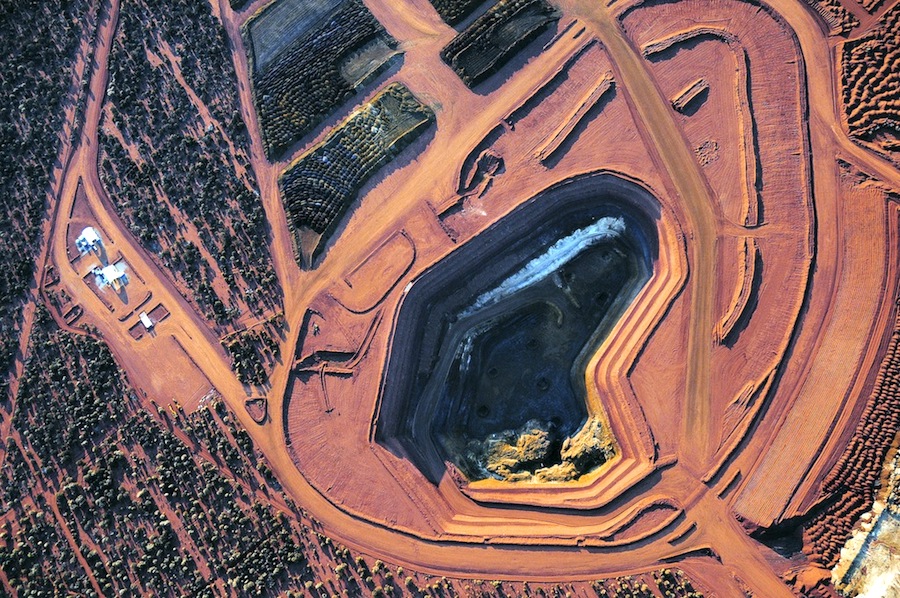
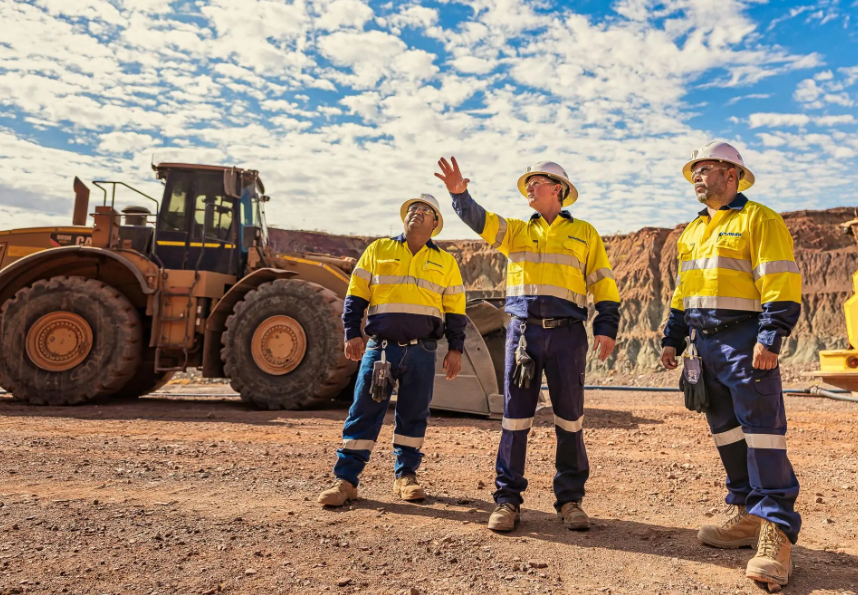
Lynas’ Mount Weld rare earths mine in Western Australia. (Image courtesy of Lynas Rare Earths.)

Australia’s Lynas Rare Earths warned of considerable uncertainty over the future of its heavy rare earths processing plant in Texas and also reported a steeper-than-expected drop in its annual profit on Thursday.

Lynas, the world’s largest rare earths producer outside China, said it is in negotiations with the US Department of Defence (DoD) to reach a mutually acceptable offtake agreement for production from the Texas-based Seadrift facility.

“While there can be no certainty that offtake agreements will be agreed, any offtake agreements would need to be on commercial terms acceptable to Lynas,” the miner said.

Lynas has been developing the facility under a contract with the US DoD, with plans to begin operations in fiscal 2026. However, the company indicated that construction of the plant may not move forward.

“We are big supporters of continued investment in development of outside-China’s supply chains,” CEO Amanda Lacaze told an investor call.

“But just remember … Lynas is the lynchpin of (the) outside-China supply chain, and it is important that policy development is done in such a way that continues to protect that, because, as I said before, development of new plants can be long and uncertain,” she said.

Her comments came after the US government last month agreed a multibillion dollar deal to become the top shareholder in Lynas’ biggest rival outside China, MP Materials, provide a floor price for its key rare earth product, and lend it $150 million to expand in heavy rare earths separation.

Lynas also wants to be involved with new rare earth magnet makers in the US and other countries outside China and is open to taking an equity stake.

“There are seven magnet projects coming to market in the US, many of which actually have some form of government funding, which de-risks them,” Lacaze said, adding there are probably more magnet projects in the US than in the rest of the world combined.

“We want to be able to participate either on an operational or a supply or an equity basis in this part of the supply chain,” she said.

The miner last month signed an agreement with Korea’s JS Link to develop a magnet facility in Malaysia where it has processing operations.

Lynas’ net profit after tax came in at A$8 million ($5.20 million) for the year ended June 30, a sharp decline from an A$84.5 million reported a year earlier.

The annual figure also missed the Visible Alpha consensus estimate of A$30.4 million.

Lynas attributed the drop in profit to depreciation costs from its Kalgoorlie and Mt. Weld facility expansion, noting that production at Kalgoorlie fell short of nameplate capacity.

It expects its fiscal 2026 capital expenditure to be around A$160 million.

The miner announced an A$750 million equity raising to “pursue new growth opportunities”. The new shares will be issued at A$13.25 apiece, a discount of 10% to Lynas’ close on August 27.

Its shares were placed on a trading halt ahead of the equity raising.

($1 = 1.5389 Australian dollars)

(By Shivangi Lahiri and Shruti Agarwal; Editing by Vijay Kishore, Sherry Jacob-Phillips and Sonali Paul)


Critical Metals, Ucore ink 10-year offtake deal to supply rare earths to US plant  
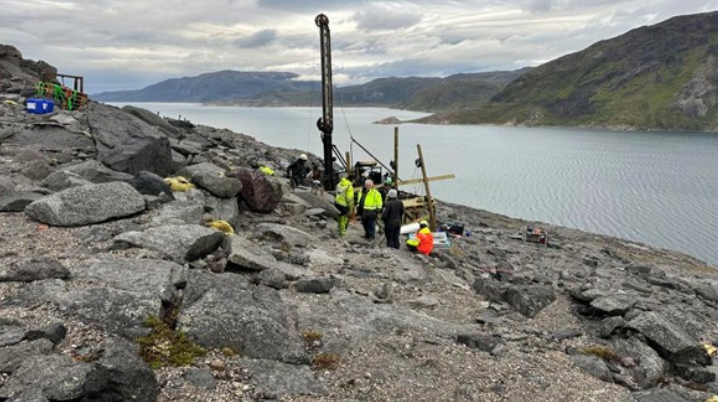

Drilling this month at the Tanbreez project in Greenland. Credit: Critical Metals

Critical Metals Corp. (Nasdaq: CRML) has signed a ten-year offtake agreement to supply heavy rare earth concentrate Ucore Rare Metal’s US processing facility. 

Under the terms, Critical Metals expects to supply up to 10,000 metric tons of the concentrate annually from its Tanbreez project in Greenland, ranked one of the biggest rare earth projects in the world.  

The deal connects the massive rare earth project with Ucore’s Department of Defense (DoD) funded processing facility in Louisiana—a key step toward reducing US reliance on foreign sources for heavy rare earths.  

The concentrate, the company said, will be providing critical feedstock for high-purity rare earth oxides used in advanced tech and defense applications. 

After hydro-metallurgical processing, the concentrate will be used as feedstock for Ucore’s rare earth element processing facility, which broke ground in May, in Alexandria, Louisiana and at Ucore’s facility in Kingston, Ontario.  

The Louisiana facility will produce high-purity rare earth oxides from mixed rare earth carbonates or oxides, which Critical Metals expects to produce at Tanbreez. It aims to produce 2,000 tonnes per annum (tpa) of high-purity rare earth oxides next year, with the capacity expected to be scaled up to 7,500 tpa in 2028, the company said. 

“Critical Metals Corp’s Tanbreez offers tremendous opportunities for Ucore given the significant concentration of heavy rare earths it contains, which are essential for our processing facility in Louisiana, and our downstream partners,” Ucore CEO Pat Ryan said in a statement.  

“Both Critical Metals Corp and Ucore share a vision to lessen China’s grip of the rare earth ecosystem in the West, and we look forward to our partnership, positioning us both to meet the growing demand for rare earths while addressing national security challenges.” 

“Securing this offtake provides Critical Metals Corp both with our first buyer and the flexibility to supply other US based rare earth facilities in the future, given the immense size of our Tanbreez deposit,” Critical Metals CEO Tony Sage added.   

The deal was brokered by GreenMet, a Washington-based advisory firm acting as a conduit between private capital, government and critical minerals industry.  

In an email to MINING.com, GreenMet CEO Drew Horn called the agreement “a landmark achievement and a powerful example of strategic partnerships building a resilient, domestic supply chain.” 


Newmont plans sweeping job cuts in cost-cutting drive – report

Image: Newmont

Newmont (NYSE: NEM), the world’s largest gold miner, is preparing a major cost-reduction plan that could lead to thousands of job losses, Bloomberg reported on Wednesday, citing people familiar with the matter.

The Denver, Colorado-based miner is said to be targeting a reduction of as much as $300 per ounce in all-in sustaining costs (AISC). That would represent a cut of about 20% and bring Newmont closer in line with its lowest-cost peers.

Rising costs

Newmont’s costs have surged in recent years, climbing more than 50% over the past five years due to higher energy, labor, and material prices. The situation reportedly worsened following its $15 billion acquisition of Newcrest in 2023, which expanded the mining portfolio to about 20 operations, including copper assets.

In the second quarter of 2025, Newmont reported an AISC of $1,593 per ounce, nearly 25% higher than Agnico Eagle Mines, one of the industry’s lowest-cost producers. The Lihir mine in Papua New Guinea and the Cadia operation in Australia, both legacy Newcrest assets, continue to struggle with cost overruns and underperformance.

Job cuts, structural changes

According to Bloomberg, Newmont has already begun notifying staff of redundancies, with executives and division managers holding calls to discuss job cuts and other measures. Alongside workforce reductions, the miner is considering scaling back long-term incentives as part of the restructuring.

At the end of 2024, Newmont employed 22,200 people and had an additional 20,400 contractors. While the company has not disclosed how many positions may be eliminated, sources told Bloomberg the cuts could affect “thousands” of employees.

The miner has hired Boston Consulting Group to assist with the cost-cutting plan, though no final decisions have been announced. A Newmont spokesperson said the company is executing on a cost and productivity program launched earlier this year.

The cost-cutting push comes even as the gold sector is benefiting from record bullion prices. Gold reached an all-time high of $3,500 an ounce in April and has mostly traded above $3,300 since, lifting gold equities. Newmont’s stock has surged 95% year-to-date.

“The bigger challenge for Newmont was that all the Newcrest assets were at a tough part of their life-cycle,” Bloomberg Intelligence analyst Grant Sporre said.

“They were and are still under-producing versus their employee base and need a lot of sustaining capex to catch up.”

“Moves to reshape our structure reflect one of several steps we are taking in 2025 to reduce our cost base and improve productivity — positioning Newmont to deliver on our commitments to shareholders and partners across a range of gold price environments, and for the long-term success of the business,” Newmont said in a statement.

(With files from Bloomberg and Reuters)


Rio Tinto overhaul cuts to three units, axes execs, reviews mines

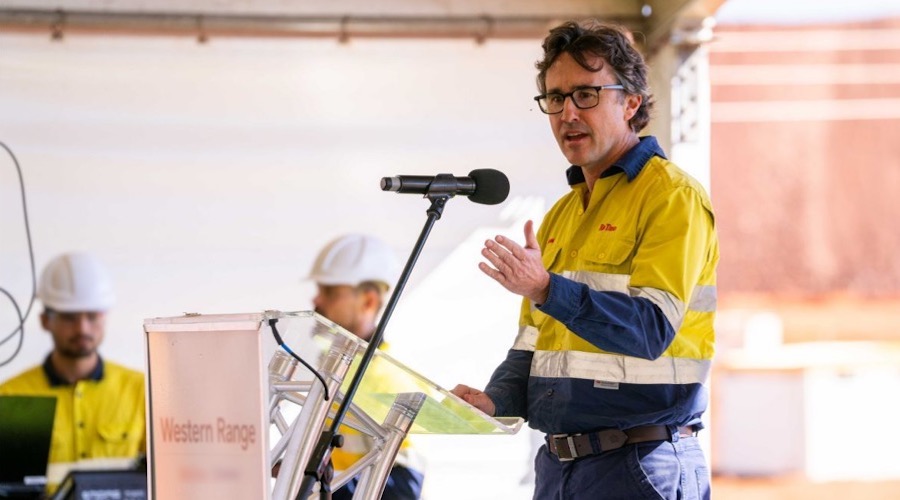
Simon Trott has reorganized the business into three main units. (Image: Simon Trott’s LinkedIn.)

Rio Tinto’s (ASX, LON: RIO) new chief executive Simon Trott has launched a sweeping overhaul of the miner’s structure, consolidating operations into three core divisions while placing several non-core assets under review.

Trott, who took the helm on Monday after leading the company’s iron ore business, said the restructuring would simplify Rio Tinto’s portfolio into iron ore, copper, and aluminium–lithium units.

Matthew Holcz has been appointed chief executive of iron ore, Rio Tinto’s biggest profit driver. The newly unified division will combine Western Australian operations with Iron Ore Company of Canada (IoC) and, once operational, the Simandou project in Guinea.

Some mineral assets are moving to a different portfolio for review. Richards Bay Minerals in South Africa, Canada’s iron and titanium operations, and US borates mines will be transferred to Chief Commercial Officer Bold Baatar, who will oversee a strategic assessment that could lead to sales.

Rio Tinto is merging its lithium business with aluminium under the leadership of French national Jérôme Pécresse, based in Montreal. That group will comprise Atlantic Operations Aluminium, Pacific Operations Aluminium, and Lithium.

Executives exit

The shake-up also brings leadership changes. Kellie Parker, the chief executive of Australia who played a key role in rebuilding Rio’s reputation after sexual assault claims and the 2020 destruction of a sacred Indigenous site, is leaving the company. Minerals head Sinead Kaufman, who had been considered for the top job, is also departing.

The revamp comes as Rio Tinto grapples with falling iron ore and lithium prices and rising costs. Its July half-year profit of $4.8 billion was the lowest since 2020 and 16% lower than a year earlier.

The minerals division under review has been under pressure. It generated $143 million in underlying earnings in 2024, down from $312 million in 2023, and remained cash-flow negative for two straight years as growth spending outpaced revenue. Borates, used in glass and industrial cleaners, and titanium dioxide, a pigment for paints and ceramics, have both faced weak demand and prices.

Analysts at RBC Capital Markets said the scope of the review appeared limited, noting they had expected possible divestments in aluminum, iron ore and lithium. They described the review of borates and titanium as “low-hanging fruit” in a portfolio facing competing demands for lithium investment.

Wednesday, August 27, 2025


Höegh Autoliners Orders 1st Ammonia Engines for Pure Car & Truck Carriers

Everllence

Published Aug 27, 2025 7:55 PM by The Maritime Executive


[By: Everllence]

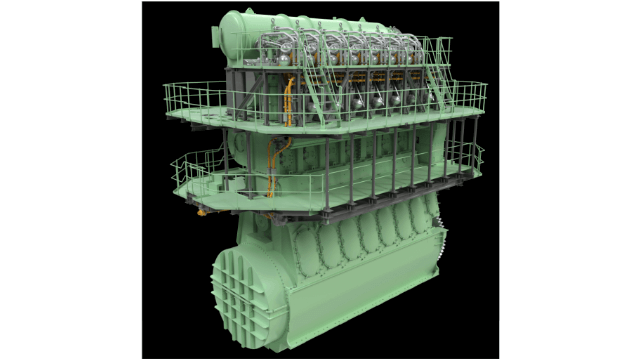
In a major leap for maritime decarbonisation, Höegh Autoliners has placed a landmark order for ammonia-burning Everllence B&W ME-LGIA engines. Accordingly, 4 × 7S60ME-LGIA (Liquid Gas Injection Ammonia) dual-fuel engines will be delivered to an undisclosed Asian shipyard in connection with the construction of 4 × 9,100 CEU (Car Equivalent Unit) ‘Aurora’-class Pure Car/Truck Carriers (PCTCs).

Everllence views the order as signalling a new era for clean propulsion within global shipping. The newbuildings are bound for Höegh Autoliners, the major PCTC operator and part of the Leif Höegh & Co. shipping company. HD Hyundai Heavy Industries Co. Ltd. will build the engines in South Korea.

Sebjørn Dahl, Chief Operations Officer, Höegh Autoliners, said: "The engines are the beating heart of our vessels, and we take it as a clear mark of confidence that Everllence has chosen us to install some of the world’s first two-stroke ammonia engines on our final four Aurora Class vessels. With nearly 100 years of industry experience, Höegh Autoliners is proud to be among the first companies selected to pioneer this important transition together with Everllence. This collaboration underscores their trust in us as a reliable frontrunner in the shift to zero-emission shipping. Reaching zero is a shared ambition, and Everllence plays a vital role in helping us realize our goal of operating our large PCTC vessels on zero-carbon fuels from 2027."

Bjarne Foldager – Head of Two-Stroke Business – Everllence, said: “This order – one of several ammonia pilot-projects we have in China, Japan and South Korea – gives us encouragement that we are on the right path, as does the widespread industry interest in our progress. We have adopted a responsible, safety-first approach to developing this engine on account of ammonia’s particular risk-profile, and are confident that ammonia will ultimately become one of three major, alternative fuels in the market along with methanol and methane.”

Christian Ludwig – Head of Two-Stroke Sales and Promotion – Everllence, said: “We have now been running our two-stroke ammonia test engine since 2023 and can confirm that the ME-LGIA’s combustion is right where we want it. Using the Diesel principle, the ME-LGIA engine concept has many of the same merits as our existing dual-fuel engines that already entered operation over a decade ago. Inspired by these engines, we are – among other innovations – using the same sealing-oil design for the fuel-booster injection valves as this has proven to be particularly important and efficient. By end-2026, we tentatively expect to have a small number of demonstration projects on the water to enable a commercial market introduction of the G50-, S60-, G60-, G70- and G80-bore ME-LGIA engines based on positive service experience.”

Aurora class
Höegh’s Aurora Class will be the largest and most environmentally friendly PCTC ever built, further accelerating Höegh Autoliners’ decarbonisation efforts and setting a new standard for more sustainable deep-sea transportation. Being the first in the PCTC segment to receive DNV’s ammonia-ready and methanol-ready notations, the Auroras will also be the first to be ready to operate zero-carbon ammonia propulsion with the main engine designed by Everllence.

The products and services herein described in this press release are not endorsed by The Maritime Executive.


Shearwater to Undertake Ghana’s First Deepwater Ocean Bottom Survey

Shearwater Geoservices AS

Published Aug 27, 2025 8:40 PM by The Maritime Executive


[By: Shearwater]

Shearwater Geoservices AS (“Shearwater”) has been awarded a deepwater Ocean Bottom Node (OBN) seismic survey in Ghana’s Jubilee and TEN fields, operated by Tullow and its partners.
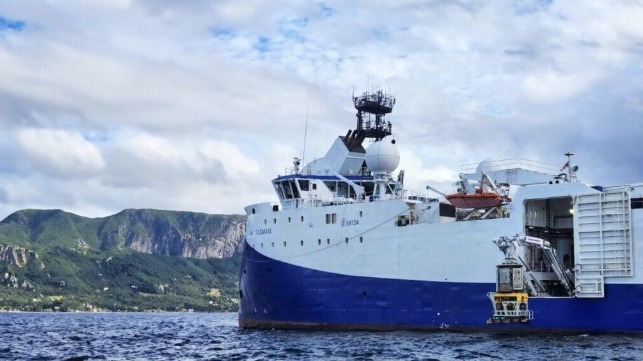
It will be the first deepwater OBN project offshore Ghana, following Shearwater’s successful recent deployment of the SW Tasman vessel and Pearl node OBN platform in Côte d’Ivoire and Angola. The two-month survey is scheduled to begin in the last quarter of 2025.

The SW Tasman and Pearl node platform have been continuously deployed offshore West Africa since late 2024, first executing the inaugural OBN survey offshore Côte d’Ivoire before mobilising to consecutive surveys offshore Angola.

“These projects demonstrate Shearwater’s role in pioneering new technology in new regions, delivering operational excellence and industry-leading survey efficiency and data quality. By delivering the first OBN project in Ghana and other surveys across this part of Africa, we are opening new geophysical frontiers – combining precision, innovation and commitment to responsible resource exploration,” said Irene Waage Basili, the CEO of Shearwater.

The Jubilee and TEN fields have been central to Tullow’s operations for nearly two decades. This first OBN survey is expected to further enhance reservoir imaging, helping unlock deeper insights to inform field development and production strategies. It follows a streamer survey executed by Shearwater over the Jubilee and TEN fields in early 2025.

The products and services herein described in this press release are not endorsed by The Maritime Executive.


Corvus Energy Battery System Powers Latin America’s First Electric Tugboat

Corvus Energy
Image Credit: SAAM

Published Aug 27, 2025 8:48 PM by The Maritime Executive


[By: Corvus Energy]

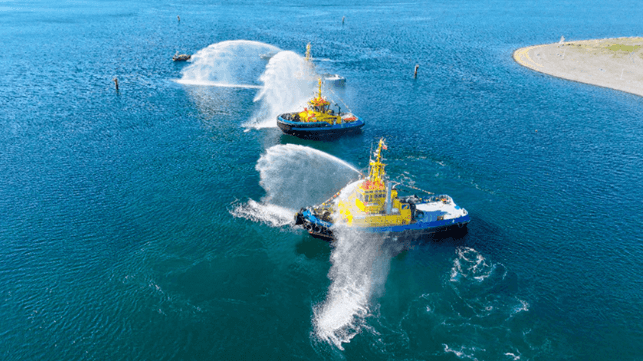
The first electric tugboat in Latin America, the result of a collaboration between the largest towage services operator in the Americas, SAAM, and Chilean national oil company, Enap, is powered by a lithium-ion marine battery system from Corvus Energy.

Based on an exclusive design from naval architects Robert Allan Ltd (RAL) and built by SANMAR Shipyards for SAAM, the battery-electric tug supports ship berthing and deberthing maneuvers in one of the southernmost terminals in the world—Puerto Chacabuco in the Aysén Region of Chile in South America. 

About the electric tugboat
The battery-powered vessel, named “Trapananda” in honor of the Chilean Patagonia region where the tug operates, measures 25 meters in length, 13 meters in beam and boasts 70 tons of bollard pull capacity, enabling it to assist large vessels under challenging harbor conditions. 

Third electric tug in the SAAM fleet
SAAM, including its division SAAM Towage, operates more than 200 tugboats around the Americas. Notably, the Trapananda is the third battery-electric tug to join the SAAM fleet. In May 2024, SAAM launched two electric tugboats in the Port of Vancouver in Canada, making SAAM among the first zero-emission tug operators in North America. All three tugs are RAL-designed, SANMAR Shipyards-built and equipped with a Corvus Energy battery system. 

Environmental and operational benefits
According to SAAM, battery-powered tugboats are an important part of the Company’s 2030 Sustainability Strategy, which includes a goal to neutralize 65% of greenhouse gas emissions from the operation of their fleet through reduction and offsetting initiatives. (Source).

Fully battery-powered operations produce zero emissions and are almost completely silent. This results in significant environmental benefits, including reduced carbon footprint and less noise pollution, both in port and underwater, protecting coastal communities and marine life alike. Compared to diesel-powered tugs, electric tugboats also offer operational advantages including reduced fuel and maintenance costs. 

After its first year operating electric tugs in Canada, SAAM reported its “carbon intensity index [had] fallen 72% compared to diesel-powered units with similar features, and a further 90% reduction is projected for the second year of operation. In addition, the electric tugs’ operating costs were reported to be 70% lower than its diesel-powered peers.” (Source).

Corvus Energy involvement
The Trapananda is equipped with a Corvus Orca ESS, the most installed marine energy storage system, used onboard over 700 maritime vessels worldwide. Like the SAAM electric-powered tugs operating in Vancouver, the Trapananda is outfitted with a 3,616-kWh capacity battery system. 

“We are proud to support SAAM, RAL and SANMAR by supplying the battery system for the first electric tugboat to operate in Latin America, as well as for the Vancouver-based tugs,” said Tor-Gunnar Hovig, Head of Region Americas at Corvus Energy. He adds, “SAAM is leading the way towards more sustainable port operations in the Americas and beyond with these RAL-designed, SANMAR-built tugs.”

"The arrival of the Trapananda is a turning point for our industry. It signals our decisive move toward cleaner, more efficient, and environmentally friendly operations. This project represents our vision for the future: we're developing solutions that not only assist and tow ships but also help mobilize a shift toward a truly sustainable logistics chain. We consider Corvus a strategic partner in this journey,” said Pablo Cáceres, Sustainability and Development Director of SAAM Towage.

The products and services herein described in this press release are not endorsed by The Maritime Executive.


Owners of Ex-Bouchard ATB Fleet Tussle in Court, Sidelining Vessels

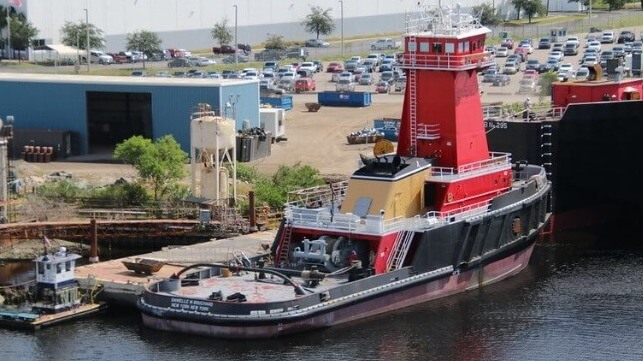
The giant ATB tug Danielle M. Bouchard, since renamed Rebekah Rose under Pennantia's ownership, 2017 (Corey Seeman / CC BY NC SA 2.0)

Published Aug 26, 2025 9:19 PM by The Maritime Executive


Pennantia, the JV company that acquired eight ATBs out of the former Bouchard fleet, has paused its operations amidst a legal fight between its majority owner and its operator. One of the vessels has been arrested in Panama on a lien filed by the operator, and another of the idled ATBs may have attracted Coast Guard attention over manning levels, according to court filings

The shipowning JV, Pennantia, is majority-owned by Contrarian Capital, with minority owner Rose Cay handling maritime operations under contract (the Rose Cay name is the fleet's operating brand). Rose Cay alleges that Pennantia - controlled by Contrarian Capital - has stopped paying in full for operating expenses, and it has suspended shipmanagement services while demanding repayment. In response, Pennantia sued Rose Cay and accused it of trying to shut down operations on a false pretext in order to scuttle the pending sale of the ATB fleet. Both parties deny each others' allegations. 

The fallout is a new speed bump for the remnants of the Bouchard empire. The Pennantia partnership bought eight ATBs from the former Bouchard Transportation fleet when Bouchard was dissolved and its assets split up in 2021. Pennantia's acquisition includes younger Jones Act vessels, ranging from 4,000-horsepower tugs up to the tanker-sized ex-Kim M. Bouchard / RCM 270. 

After purchase, the fleet was initially operated by Foss under contract, but Rose Cay took over management in 2022. At that time, it took crewing and operations under its own umbrella and subcontracted these tasks to a new subsidiary, named Dove Cay LLC. In December 2024, Rose Cay claimed that Pennantia owed about $9.5 million in unpaid expenses and interest to Dove Cay, and in February it escalated with a declaration that Pennantia was in default. (Pennantia denies these claims.) 

Dove Cay then filed liens against the entire Pennantia fleet totaling about $29 million, including $13 million for repayment of a loan. In response, Pennantia called Rose Cay's claims "fabricated" and last month it filed for a court injunction to prevent Rose Cay and Dove Cay from idling the fleet or pursuing their maritime liens. 

In an order signed on August 18, Judge Sidney H. Stein denied Pennantia's motion for an injunction in the case, allowing Dove Cay to pursue its liens against the vessels while litigation continues. The judge also allowed Rose Cay to terminate its shipmanagement contract with Pennantia, on the understanding that minimum safety and manning requirements would continue to be met. 

The two parties are in mediation and have discussed possible terms for a settlement; in the meantime, AIS data shows that the firm's active tugs are all at berth or at anchor in New York, Panama and Port Arthur. 

Top image: Corey Seeman / CC BY NC SA 2.0


Typhoon Drives Cargo Ship Ashore and Causes Widespread Damage in Vietnam

vessel aground in typhoon
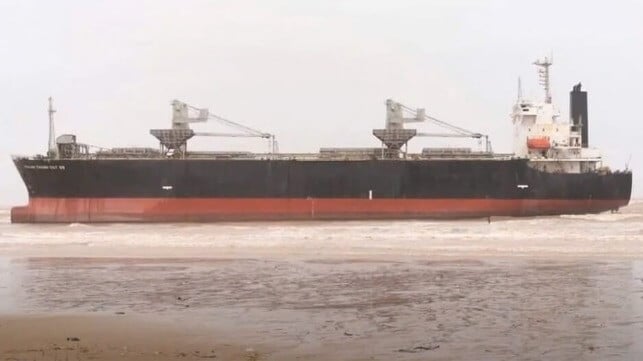
Typhoon drove the wood chip carrier ashore and left widespread damage in Vietnam (TV from YouTube)

Published Aug 27, 2025 1:29 PM by The Maritime Executive


Vietnamese officials are reporting widespread damage as the 14th named storm of the 2025 season, Typhoon Kajiki, slammed ashore Monday night into Tuesday morning, August 25-26. A large cargo ship was driven onto the shore, and at least four people have died from injuries and flooding during the powerful storm.

The storm was traveling west across the Pacific, encountering the Philippines as a tropical depression and dropping large amounts of rain on portions of China. By the time it reached Vietnam, it had strengthened with maximum sustained winds of 100 mph, according to NASA. Other parts of Vietnam were reporting sustained winds of 82 mph.

Vietnam had been preparing for the storm. At least half a million people had been evacuated before Kajiki reached the coastline.

The wood chip carrier Thanh Thanh Dat 99 (22,300 dwt) had been anchored at the northern port of Ninh Binh, but on the evening of August 25, during a lull ahead of the storm attempted to sail south toward Nghi Son port. The ship, which is 495 feet (151 meters) in length, was traveling only with ballast as it was due to load in Nghi Son.


The captain reported that by the time they reached the anchorage, the winds and waves were too strong to drop anchor. They were attempting to hold the ship in position as the storm approached. At 11:30 p.m. local time on August 25, they notified the authorities that the vessel was drifting from a position approximately two nautical miles offshore. Two hours later, they reported that the ship was dangerously close to shore.

The cargo ship came to rest approximately 70 to 100 meters (230 to 325 feet) from shore. The authorities reported the ship was stable and that the crew was uninjured. They will explore refloating the ship after the storm has passed.

The country is continuing to deal with widespread flooding and damage to structures. At least 13 people were reported injured in addition to the four confirmed deaths. The storm continued west, weakening with winds of 38 mph as it reached the border with Laos.