Thursday, August 28, 2025


Greenland’s Energy Stakes Trigger Denmark-U.S. Diplomatic Clash

Denmark has summoned the U.S. envoy after intelligence reports of suspected influence operations in Greenland, a mineral-rich Arctic territory central to offshore oil prospects and critical minerals, Reuters reported on Wednesday, describing the effort as an attempt to promote secession

The development adds urgency to oversight of exploration and mining policy, with Danish officials saying the case could impact licensing timelines and control of future export routes.

According to media reports, at least three Americans tied to U.S. President Donald Trump engaged with Greenlandic politicians and figures and compiled lists of locals deemed supportive or hostile to U.S. aims. The foreign ministry called the activity unacceptable. The U.S. mission in Copenhagen is led by chargé d’affaires Mark Stroh.

Greenland contains significant deposits of rare earths and uranium alongside prospective offshore hydrocarbons that are undeveloped. Its position near emerging Arctic shipping lanes is elevating its value for energy trade and mineral exports as sea ice thins. The resource profile positions Greenland to supply permanent-magnet materials for wind turbines and EV motors, while uranium lends a dual energy role. Western planners also eye Greenland for catalysts and grid storage feedstocks.

Earlier this year, U.S. officials pressed the Tanbreez project to bypass Chinese buyers, highlighting how competition over critical minerals is shaping Arctic policy and procurement strategies. The island’s proximity to the Arctic makes it a logical focus for President Trump’s transactional approach to securing energy and minerals. Investors note Arctic corridors that could shorten voyages for crude and LNG. Seasonal access windows remain limited but widening.

Local leaders have maintained a cautious posture toward large-scale extraction. Environmental and social concerns have slowed efforts to transform the territory into a mining superpower, even as demand grows for materials used in wind turbines, batteries, and defense systems. Officials in Nuuk and Copenhagen continue to state that the island is not for sale. Greenland’s cabinet continues to weigh environmental baselines, hiring, and revenue-sharing before advancing projects.

By Charles Kennedy for Oilprice.com


German Gas Traders Turn to Canadian LNG for Swap Deals

German energy traders have developed an interest in Canadian liquefied natural gas to boost supply via swap deals, Canada’s natural resources minister said this week.

According to Tim Hodgson, as quoted by CBC, many German companies were interested in trading Canadian LNG on the global market. “They can take advantage of our production on the West Coast to supply German needs in the Atlantic,” by selling the Canadian cargoes on the spot market and buying cheaper LNG to deliver to Germany.

The previous government led by Justin Trudeau had said there was no business case for liquefied natural gas in Canada during a visit of then-Chancellor Olaf Scholz, who had gone to Canada looking for alternatives to Russian pipeline gas.

“The previous government made its decision based on the situation at the time. What we've been elected to do is respond to the realities today, taking into account what Canadians expect of us,” the current natural resources minister said.

Canada only has one operational LNG plant, the LNG Canada facility in Kitimat, British Columbia, which produced its first batch for sale in June. For now, production capacity from the first train of LNG Canada is 5.6 million tons per year, but this should go up to 14 million tons when all planned trains are completed.

Backed by Shell, Petronas, PetroChina, Mitsubishi, and Kogas, LNG Canada will help redirect a portion of Canadian gas exports—currently flowing almost entirely to the U.S.—toward global markets. The price tag of the project is $40 billion. The most logical target market for LNG Canada’s product is Asia because of geography, but with a pretty well-developed global spot market for liquefied gas, bargains could probably be made with German energy buyers as well. No spot-market LNG bargain would be as good as pipeline gas in terms of price, but it may help bring down the exorbitant cost of energy in Europe’s biggest—and struggling—economy.

By Irina Slav for Oilprice.com

Canada and allies to explore funding critical mineral projects, minister says

Canada’s Energy and Natural Resources Minister Tim Hodgson. Credit: NRCan

Canada is working with its allies to potentially fund critical mineral transactions, similar to what the US government did with MP Materials to diversify the supply chain from China, Energy and Natural Resources Minister Tim Hodgson told Reuters on Tuesday.

The key target, Hodgson said, would be minerals subject to China’s export restriction, which is challenging the production of important types of mineral products in G7 and NATO countries.

“I think you’ll see us looking at similar types of transactions, working with our allies,” Hodgson said.

“The difference between the MP Materials deal is all of the output goes to the United States there. We are interested in doing these sorts of deals in partnership with our allies to share the output with our allies,” he said.

MP Materials said on July 10 that it had entered into a public-private partnership with the US Department of Defense to build out a domestic rare earth magnet supply chain and reduce foreign dependency.

(By Riham Alkousaa and Divya Rajagopal; Editing by Leslie Adler)

Russia’s Arctic LNG 2 Hits Record Output as Ice Conditions Ease

Russia’s Arctic LNG 2 project lifted production to record levels in late August as summer ice conditions opened the Northern Sea Route, allowing additional cargoes to reach Asia, according to Bloomberg data reported by LiveMint. Output topped 25 million cubic meters on August 25-26, averaging nearly 15 million cubic meters for much of the month. The figures mark the strongest operational run since the facility began trial shipments earlier this year.

The Novatek-led facility, located on the Gydan Peninsula, has faced U.S. and EU sanctions that block Western financing, shipping insurance, and liquefaction technology. Despite these restrictions, Train-1 has ramped up throughput and dispatched multiple cargoes on specialized Arc7 ice-class carriers. Reuters tracking data earlier this month showed the Christophe de Margerie and other sanctioned vessels continuing liftings, demonstrating Russia’s reliance on its limited fleet of Arctic-class tankers.

Arctic LNG 2 is designed for three trains of 6.6 million tons per year each for a total planned capacity of 19.8 million tons annually. Sanctions on Russian shipyards and technology suppliers have delayed deliveries of additional carriers, creating a shortage that caps export flexibility. Analysts note that ship-to-ship transfers near Murmansk are being used to free Arc7 capacity for Arctic liftings. 

The logistics challenge has forced Novatek to expand marketing outreach to Asia. Recent efforts to place cargoes in China and India suggest a pivot away from Europe. Russian officials promote the Northern Sea Route as a strategic corridor capable of cutting sailing times to the Pacific during ice-free months, reinforcing Moscow’s broader LNG export strategy.

August’s higher run rate followed earlier commissioning stages when limited tanker capacity and storage constraints forced temporary cutbacks, with shipments now moving more regularly on Arc7 carriers.

By Charles Kennedy for Oilprice.com

Việt Nam Gov't to eliminate state monopoly on gold production

August 26, 2025 - 


The change aims to foster a more competitive environment and enhance the transparency of gold trading in the country.


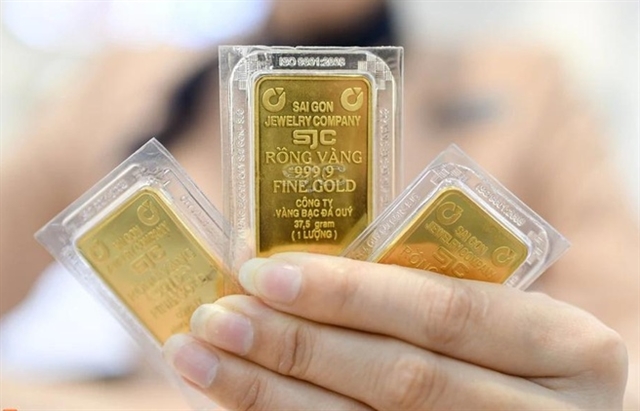
SJC gold bars are trading at a record high. — Photo vietnamplus.vn


HÀ NỘI — Việt Nam has officially removed the state monopoly on gold bullion production, marking a significant shift in the country’s gold market dynamics.

On August 26, the Government issued Decree 232/2025/ND-CP, repealing Clause 3, Article 4 of Decree 24, thereby eliminating the state monopoly on gold bullion production, raw gold exports, and raw gold imports for bullion production.

Accordingly, the decree regulates gold trading activities, including the production and processing of gold jewellery and art, trading of gold jewellery and art, production of gold bullion, trading of gold bullion, export and import of gold, as well as other gold trading activities such as account-based gold trading and gold derivatives.

The decree also revises the definition of gold bullion. Gold bullion is now defined as a gold product stamped into bars, marked with weight and quality, and bearing the trademark of enterprises and commercial banks authorised by the State Bank of Vietnam (SBV) to produce it.

Additionally, the SBV will organise gold bullion production during specific periods.

To align with the operational scope of commercial banks under the Law on Credit Institutions, the term “credit institution” has been replaced with “commercial bank.” This restricts gold bullion production and export/import activities to commercial banks only, excluding other types of credit institutions.

The decree also amends Clause 6, Article 4, stipulating that gold bullion production is a conditional business activity requiring a licence from the SBV. This amendment shifts the framework from a monopoly to a licensing system.

Payment regulations

The decree introduces new rules on payments for gold transactions.

Any gold purchase or sale worth VNĐ20 million (US$758.58) or more per day must be made via the customer’s payment account and the account of the gold trading enterprise at a commercial bank or foreign bank branch.

This provision ensures customer information verification while avoiding additional obligations, as verification is already completed when accounts are opened and used. The regulation aims to enhance transparency in gold trading.

Additionally, Decree 232 sets out the responsibilities of enterprises involved in gold jewellery and art production. When selling raw gold purchased from businesses, commercial banks specified in Article 11a must issue and use electronic invoices as required by law, properly store transaction data for raw gold sales, and connect with the SBV to provide information as requested by the SBV Governor.

These additions underscore the responsibility of enterprises in ensuring transparency and control in raw gold trading.

On the market, SJC gold bars were quoted at VNĐ125.7 million per tael for sellers and VNĐ127.7 million for buyers on August 26 — the highest prices in history. — BIZHUB/VNS


Zijin Mining sees ‘unprecedented’ global risks


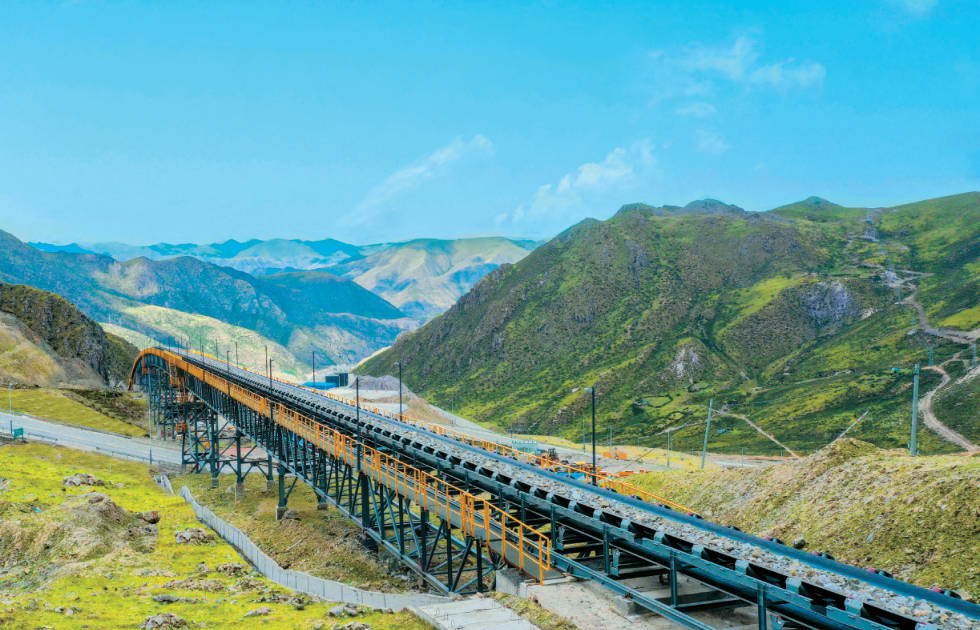
Zijin’s operations in DRC. Credit: Zijin Mining Group

China’s Zijin Mining Group Co., the world’s third-biggest metals miner by market value, said geopolitical confrontation and resource nationalism will pose challenges to its overseas projects.

“Global uncertainties have become unprecedented,” the copper-gold giant said after reporting record quarterly earnings. “The competition for critical minerals among major powers has entered a high-intensity confrontation phase” that could affect the company’s revenue, profits and new overseas projects, it said.

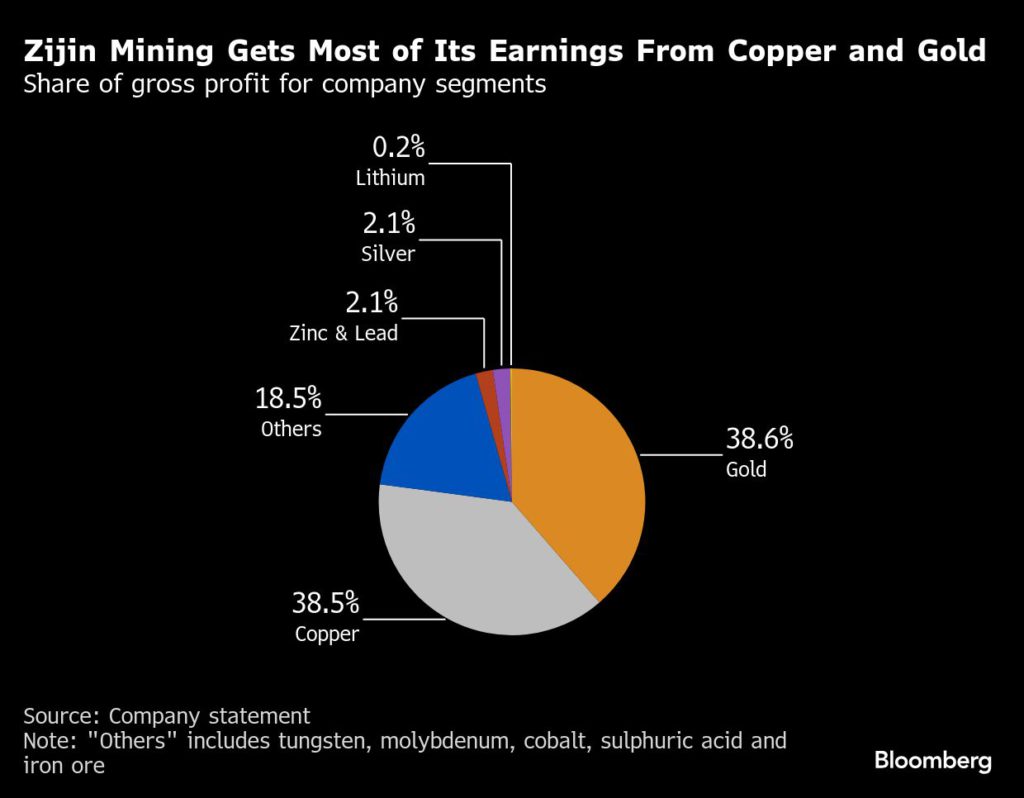
Zijin has become one of the world’s most important mining companies thanks to rapid growth — largely in Africa — and a focus on two lucrative metals, copper and gold. Its first-half net income went up 54% to 23.3 billion yuan ($3.3 billion) thanks to higher output and prices, and its shares rallied to a record in Hong Kong on Wednesday.

The US under President Donald Trump has begun a push to secure American control of resources around the world, with an eye to tackling China’s dominance. For example, a peace deal brokered by Trump between Rwanda and Democratic Republic of Congo was seen as a way to ease US access to the region’s mineral riches.

Critical minerals include a wide range of materials deemed vital to national security because of their important industrial or defense applications. But moves to reshape supply chains risk subjecting prices to volatility and supply disruption, as was the case with Trump’s introduction of copper tariffs earlier this year.

Zijin also highlighted other challenges for the mining industry, from rising costs to trade upheaval and nations seeking to protect their own resources. “Differences in politics, policies and laws among various countries and regions, as well as resource nationalism sentiments, may pose certain challenges to construction and production operations,” Zijin said.

The comments on geopolitics and jurisdictional risks offered a note of caution in an otherwise upbeat earnings report for Zijin, which is now valued at more than $80 billion — behind only Rio Tinto Group and BHP Group in the ranks of global metals miners. Its shares are up more than 75% this year.

On copper, Zijin noted “extremely strong demand resilience” in China, with apparent consumption rising more than 10% in the first half. Demand has been boosted in China by the country’s waves of investments in renewable energy and electrification.

The roll-out of US tariffs on copper, combined with low global inventories, “may trigger market volatility in the short term as trade flows are reshaped,” it said. Copper is up about 12% on the London Metal Exchange this year.

Zijin said its first-half copper output from mines that it owns or part—owns rose 9% from a year earlier to 566,853 tons.

(By Annie Lee)


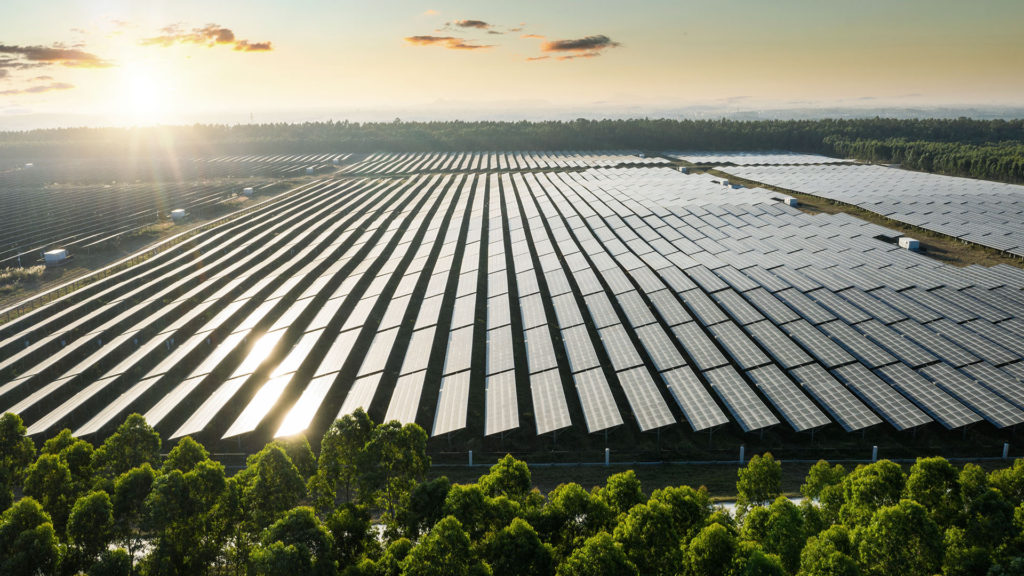
From brown to green: Historical German lignite site converted to solar park  


Solar park Harbke in Germany. Image from RP Global.

The construction of RP Global’s first German solar PV park has begun on one of Germany’s oldest lignite mining areas. The 50MWp solar project is located in Harbke, an historic location on the former East-West border. 

In its first phase, the PV plant Harbke, located on the border between Saxony-Anhalt and Lower Saxony, will reach a capacity of 50 MWp. This is the first German project by RP Global, developed in collaboration with EPC MaxSolar.  

Following completion of an extensive approval process, construction work has now begun on the former Wulfersdorf spoil tip in the district of Börde.  

The Harbke PV plant is one of the most significant energy projects in the area. The district of Börde actively promotes the expansion of solar power and has been included in the ‘Global Sustainable Municipality nationwide’ initiative as one of five model municipalities.  

The aim is to systematically integrate Agenda 2030 and its 17 global sustainability goals (SDGs) into administrative structures.  

The solar park Harbke is being built on an area that has been shaped by humans for a long time and is already crisscrossed by two existing power lines. Thanks to this infrastructure, the electricity generated in future can be fed into the grid efficiently and without the need for additional power lines. 

Harbke is of historical significance when it comes to energy production – lignite has been mined there for decades. After the Second World War, the open-cast mine was divided and used as an important source of energy on both sides of the border. Following a decision by the municipality of Harbke to repurpose the area, green electricity will now be generated there. 

A special circumstance is being considered in the construction: access to the project site runs along the former border, the so-called “death strip”. The border strip, left behind by the GDR border guards in 1989 and better known as the “Kolonnenweg”, is a listed historical monument.  

Rigorous precautions are therefore taken to preserve the historical elements when delivering the park components to the construction site, the company said, adding that an expansion of the project is in the works.  


Rock Tech inks German renewable energy deal for lithium plant

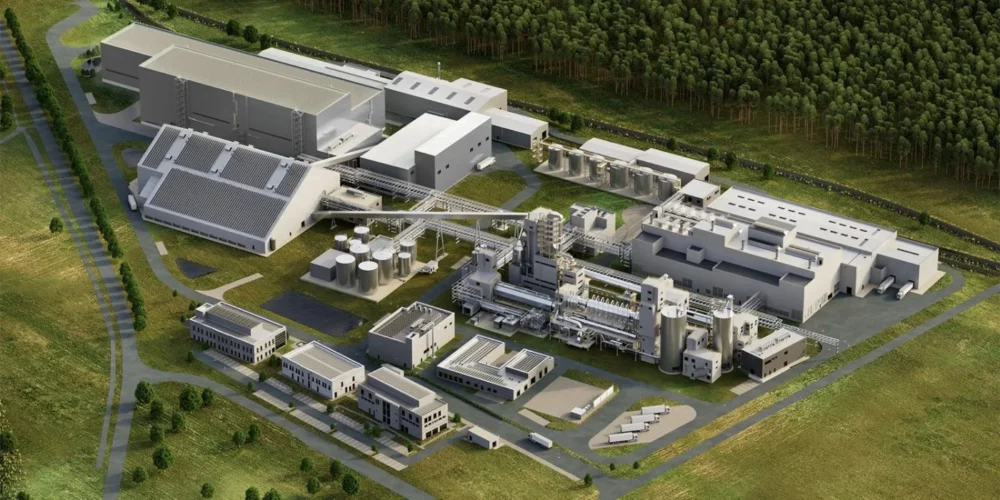
Rendering of Rock Tech’s Guben lithium converter. PHOTO: Rock Tech Lithium.

Rock Tech Lithium (TSXV: RCK) has secured a long-term supply of renewable energy from Germany’s ENERTRAG to power the company’s planned lithium hydroxide converter in Guben.

The companies inked the power supply agreement on Tuesday, in the presence of key government figures including Canadian Prime Minister Mark Carney and Katharina Reiche, Germany’s Federal Minister for Economic Affairs and Energy.

The agreement was signed during the German-Canadian critical minerals roundtable, where the countries formally announced a partnership focusing on the development of lithium and other critical minerals to break China’s monopolistic control in the supply chain.

Rock Tech’s proposed plant is designed to produce battery-grade lithium hydroxide, with an annual production capacity of 24,000 tonnes. The facility, situated on the German-Polish border, about 60 km away from Tesla’s plant in Grünheide, is slated for commissioning this year. First output is expected in 2026.

The converter project, the company notes, is recognized as a strategic initiative under the European Commission’s Critical Raw Materials Act and serves as a model for the decarbonization of European industry through cross-border cooperation. The concept also serves as a template for building a resilient supply chain for critical minerals in Canada.

Rock Tech Lithium traded 7.4% higher at $1.02 apiece by 1:50 p.m. ET, giving the company a market capitalization of $109.4 million.

Decarbonized supply chain


Regarding the ENERTRAG partnership, the Toronto-based lithium developer said it would provide “a sustainable and competitive electricity supply” with planning security for the converter’s operating costs.

A core element of the renewable energy initiative, it says, is the direct supply of electricity from new wind and photovoltaic plants in the neighboring Polish municipality of Gubin.

From the start of commissioning, a significant share of the converter’s electricity demand is to be covered by renewable sources. From 2030 onwards, at least 50% of the total electricity demand will be met by renewables, which the company says could lead to a 25% reduction in indirect CO2 emissions.

“With the planned direct supply of our converter with renewable energy, we are setting an important milestone for the sustainable and competitive production of lithium hydroxide in Europe,” Rock Tech Lithium CEO Mirco Wojnarowicz said in a news release.

“The partnership with ENERTRAG is an important example of how industry and energy producers can work together in a practical way to decarbonize the value chain. This not only creates planning security for our project but also contributes to achieving European climate targets,” he added.

In addition to the Guben converter, Rock Tech is also looking to build a similar facility in Red Rock, Ontario, which is expected to produce 32,000 tonnes of lithium carbonate equivalent using company and third-party feedstock.


Hudbay resumes operations in Snow Lake after evacuation orders lifted

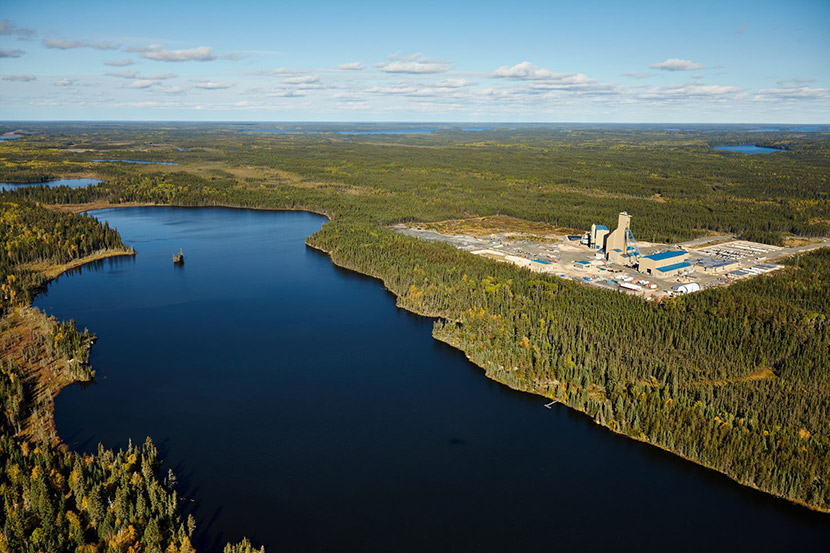
Aerial view of Hudbay’s Lalor mine in Manitoba. Reference image by: Hudbay Minerals

Canadian mining company Hudbay Minerals on Wednesday said it has resumed operations in Snow Lake, Manitoba, following the decision made by the authorities to lift the mandatory evacuation order on August 22.

The company said that there has been no structural damage to its onsite surface infrastructure and facilities in Snow Lake.

Hudbay had temporarily suspended Snow Lake operations in early July due to a wildfire in northern Manitoba.

Manitoba declared a state of emergency late in May and urged thousands of people in northern and eastern parts of the province to evacuate, as wildfires spread in central and western Canada.

Canada’s second-worst wildfire season on record has already burned 7.8 million hectares and could continue for weeks, federal government officials said last week.

The company added it has completed an infrastructure safety review, including inspection of the shaft, and restarted the underground electrical infrastructure, since lifting of the evacuation order.

Snow Lake operations is expected to reach full production levels by early September and Hudbay remains on track to achieve its 2025 annual forecast in Manitoba despite the wildfire impacts.

(By Pooja Menon; Editing by Vijay Kishore)