Thursday, August 28, 2025

These men's fitness groups are hives of white supremacist rage

The Conversation
August 27, 2025 


Active Clubs are small local organizations but have spread across the world. Picture: Shutterstock

By Art Jipson, Associate Professor of Sociology, University of Dayton.


Small local organizations called Active Clubs have spread widely across the U.S. and internationally, using fitness as a cover for a much more alarming mission. These groups are a new and harder-to-detect form of white supremacist organizing that merges extremist ideology with fitness and combat sports culture.

Active Clubs frame themselves as innocuous workout groups on digital platforms and decentralized networks to recruit, radicalize and prepare members for racist violence. The clubs commonly use encrypted messaging apps such as Telegram, Wire and Matrix to coordinate internally.

For broader propaganda and outreach they rely on alternative social media platforms such as Gab, Odysee, VK and sometimes BitChute. They also selectively use mainstream sites such as Instagram, Facebook, X and TikTok, until those sites ban the clubs.

Active Club members have been implicated in orchestrating and distributing neo-Nazi recruitment videos and manifestos. In late 2023, for instance, two Ontario men, Kristoffer Nippak and Matthew Althorpe, were arrested and charged with distributing materials for the neo-Nazi group Atomwaffen Division and the transnational terrorist group Terrorgram.

Following their arrests, Active Club Canada’s public network went dark, Telegram pages were deleted or rebranded, and the club went virtually silent. Nippak was granted bail under strict conditions, while Althorpe remains in custody.


As a sociologist studying extremism and white supremacy since 1993, I have watched the movement shift from formal organizations to small, decentralized cells — a change embodied most clearly by Active Clubs.

White nationalism 3.0


According to private analysts who track far-right extremist activities, the Active Club network has a core membership of 400 to 1,200 white men globally, plus sympathizers, online supporters and passive members. The clubs mainly target young white men in their late teens and twenties.

Since 2020, Active Clubs have expanded rapidly across the United States, Canada and Europe, including the U.K., France, Sweden and Finland. Precise numbers are hard to verify, but the clubs appear to be spreading, according to The Counter Extremism Project, the Anti-Defamation League, the Southern Poverty Law Center and my own research.

The clubs reportedly operate in at least 25 U.S. states, and potentially as many as 34. Active U.S. chapters reportedly increased from 49 in 2023 to 78 in 2025.

The clubs’ rise reflects a broader shift in white supremacist strategy, away from formal organizations and social movements. In 2020, American neo-Nazi Robert Rundo introduced the concept of “White Nationalism 3.0” — a decentralized, branded and fitness-based approach to extremist organizing.

Rundo previously founded the Rise Above Movement, which was a violent, far-right extremist group in the U.S. known for promoting white nationalist ideology, organizing street fights and coordinating through social media. The organization carried out attacks at protests and rallies from 2016 through 2018.

Active Clubs embed their ideology within apolitical activities such as martial arts and weightlifting. This model allows them to blend in with mainstream fitness communities. However, their deeper purpose is to prepare members for racial conflict.

'You need to learn how to fight’


Active Club messaging glorifies discipline, masculinity and strength — a “warrior identity” designed to attract young men.

“The active club is not so much a structural organization as it is a lifestyle for those willing to work, risk and sweat to embody our ideals for themselves and to promote them to others,” Rundo explained via his Telegram channel.

“They never were like, ‘You need to learn how to fight so you can beat up people of color.’ It was like, ‘You need to learn how to fight because people want to kill you in the future,’” a former Active Club member told Vice News in 2023.

These cells are deliberately small — often under a dozen members — and self-contained, which gives them greater operational security and flexibility. Each club operates semi-autonomously while remaining connected to the broader ideology and digital network.
Expanding globally and deepening ties

Active Clubs maintain strategic and ideological connections with formal white supremacist groups, including Patriot Front, a white nationalist and neofascist group founded in 2017 by Thomas Rousseau after the Unite the Right rally in Charlottesville, Virginia.

Active Clubs share extremist beliefs with these organizations, including racial hierarchy and the “Great Replacement” theory, which claims white populations are being deliberately replaced by nonwhite immigrants. While publicly presenting as fitness groups, they may collaborate with white supremacist groups on recruitment, training, propaganda or public events.

Figures connected to accelerationist groups — organizations that seek to create social chaos and societal collapse that they believe will lead to a race war and the destruction of liberal democracy — played a role in founding the Active Club network. Along with the Rise Above Movement, they include Atomwaffen Division and another neo-Nazi group, The Base — organizations that repackage violent fascism to appeal to disaffected young white men in the U.S.

Brotherhood as a cover

By downplaying explicit hate symbols and emphasizing strength and preparedness, Active Clubs appeal to a new generation of recruits who may not initially identify with overt racism but are drawn to a culture of hypermasculinity and self-improvement.

Anyone can start a local Active Club chapter with minimal oversight. This autonomy makes it hard for law enforcement agencies to monitor the groups and helps the network grow rapidly.

Shared branding and digital propaganda maintain ideological consistency. Through this approach, Active Clubs have built a transnational network of echo chambers, recruitment pipelines and paramilitary-style training in parks and gyms.

Club members engage in activities such as combat sports training, propaganda dissemination and ideological conditioning. Fight sessions are often recorded and shared online as recruitment tools.

Members distribute flyers, stickers and online content to spread white supremacist messages. Active Clubs embed themselves in local communities by hosting events, promoting physical fitness, staging public actions and sharing propaganda.

Potential members first see propaganda on encrypted apps such as Telegram or on social media. The clubs recruit in person at gyms, protests and local events, vetting new members to ensure they share the group’s beliefs and can be trusted to maintain secrecy.
From fringe to functioning network

Based on current information from the Global Project Against Hate and Extremism, there are 187 active chapters within the Active Club Network across 27 countries — a 25 percent increase from late 2023. The Crowd Counting Consortium documented 27 protest events involving Active Clubs in 2022-23.

However, precise membership numbers remain difficult to ascertain. Some groups call themselves “youth clubs” but share similar ideas and aesthetics and engage in similar activities.

Active Club members view themselves as defenders of Western civilization and masculine virtue. From their perspective, their activities represent noble resistance rather than hate. Members are encouraged to stay secretive, prepare for societal collapse and build a network of committed, fit men ready to act through infiltration, activism or violence.

Hiding in plain sight


Law enforcement agencies, researchers and civil society now face a new kind of domestic threat that wears workout clothes instead of uniforms.

Active Clubs work across international borders, bound by shared ideas and tactics and a common purpose. This is the new white nationalism: decentralized, modernized, more agile and disguised as self-improvement. What appears to be a harmless workout group may be a gateway to violent extremism, one pushup at a time.



'Worst case': Conservative fears Trump will never 'vacate the White House'

 AlterNet
August 27, 2025

One conservative journalist recently laid out his case for why he believes President Donald Trump will continue to entrench himself in the Oval Office in spite of the Constitution — and with the blessing of the other two branches of government.

In a Wednesday essay for anti-Trump conservative website The Bulwark, editor Jonathan V. Last laid out a bleak picture for readers about both the power and influence Trump is wielding in his second term and the complicity of both the government itself and the electorate. Last pointed to "the pace at which we are moving" and "how Trump employs a mix of the ridiculous and the dangerous" to illustrate his point that Trump has already assumed a significant level of control over both politics and even culture that previous presidents have never had.

"He is the living embodiment of the leviathan, the totalized state," Last wrote of Trump. "No sector of American life exists beyond the reach of this president. There is no private sphere or civil society he feels should be outside his influence or control. There is only the dear leader, whose views must be considered in all matters."

Last observed several key differences between Trump's first term and his current administration. Namely, that he has "learned to operate outside the world of legislation and purely through executive power," and that his White House is "staffed with button-men who are willing to do whatever he demands, regardless of legality."

He also lamented that the private sector has "accepted subservience" that the GOP-controlled Congress "has also completely submitted" to Trump's will, along with the American people. Last noted that polls today show Trump with a higher approval rating today (approximately 40 percent) than he enjoyed in August of 2017 (roughly 38 percent).

"The clear lesson is that a consistent share of about 44 percent of Americans want this," he wrote. "And [44 percent + dictatorial control of the government] should be enough to retain power for quite some time."

"I realize the last two weeks have seemed interminable. But you haven’t seen anything yet. We’ve got three and a half years left under the best-case scenario," he continued. "In the worst case our present condition will persist indefinitely. I keep saying this, but: Trump is not behaving like a man who intends to ever vacate the White House."

Click here to read Last's full essay in The Bulwark (subscription required).
CHAOS AT CDC

CDC head's lawyers deny firing after vaccine clash — and vow 'she will not resign'

Robert Davis
August 27, 2025 7:43PM ET
RAW STORY


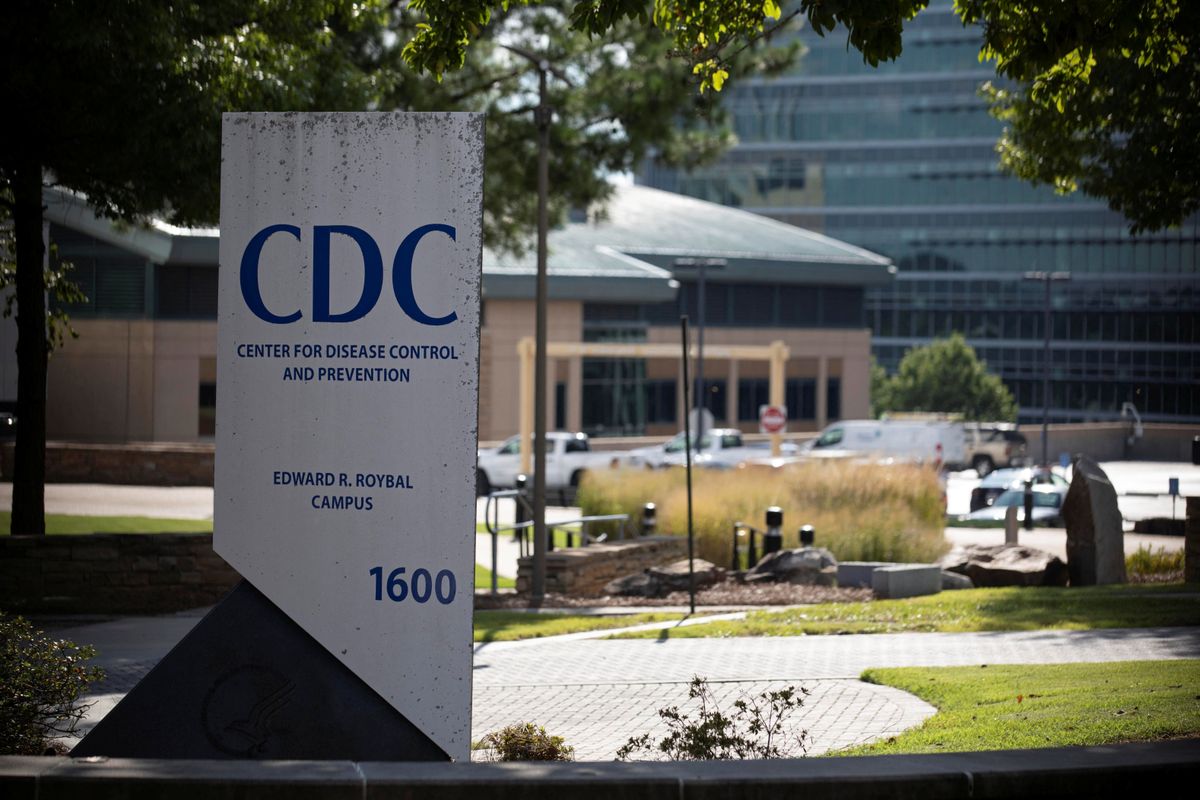
The exterior of the Center for Disease Control and Prevention (CDC) main campus in Atlanta, Georgia, U.S., August 27, 2025. REUTERS/Alyssa Pointer

Lawyers who represent the Centers for Disease Control and Prevention's director responded on Wednesday to allegations that their client had been fired from her job.

Earlier in the day, the Department of Health and Human Services posted on X saying that Dr. Susan Monarez was "no longer" CDC director. The Washington Post followed up on the post and reported that Monarez was removed because she refused to change the CDC's vaccine standards without consulting advisors.

Attorneys Mark Zaid and Abbe Lowell, who represent Monarez, replied to the news in a statement posted on social media.

"First, it was the independent advisory committees and career experts," the joint statement reads. "Then it was the dismissal of seasoned scientists. Now, Secretary Kennedy and HHS have set their sights on weaponizing public health for political gain and putting millions of American lives at risk."

"When CDC Director Susan Monarez refused to rubber-stamp unscientific, reckless directives and fire dedicated health experts, she chose protecting the public over serving a political agenda," the statement continued. "For that, she has been targeted."

"Dr. Monarez has neither resigned nor received notification from the White House that she has been fired, and as a person of integrity and devoted to science, she will not resign," it adds


Top CDC scientists resign after Trump fires agency head: report

Robert Davis
August 27, 2025
RAW STORY


FILE PHOTO: A sign sits as the Center of Disease Control and Prevention (CDC) is pockmarked by bullet holes in the background, following a deadly shooting incident in Atlanta, Georgia, U.S. August 9, 2025. REUTERS/Megan Varner/File Photo

Multiple scientists at the Centers for Disease Control and Prevention submitted their resignations on Wednesday afternoon after President Donald Trump fired the recently confirmed CDC director.

The Department of Health and Human Services posted on its official X account that Susan Monarez is "no longer director" of the agency, which happened about one month after she was confirmed for the job. The Washington Post reported that HHS Secretary Robert F. Kennedy Jr. asked Monarez to leave because she would not change the agency's vaccine policies.

Ali Rogan, journalist for PBS NewsHour, reported on X that three other high-ranking scientists from the agency also resigned, and more departures could follow.

The other departing scientists are Dan Jernigan, director of the National Center for Emerging and Zoonotic Infectious Diseases; Deb Houry, the agency's chief medical officer; and Demetre Daskalakis, director of the National Center for Immunization and Respiratory Diseases.


'Wow': CDC director's shock ouster sparks internet frenzy and fears of 'big net negative'

Robert Davis
August 27, 2025  
RAW STORY


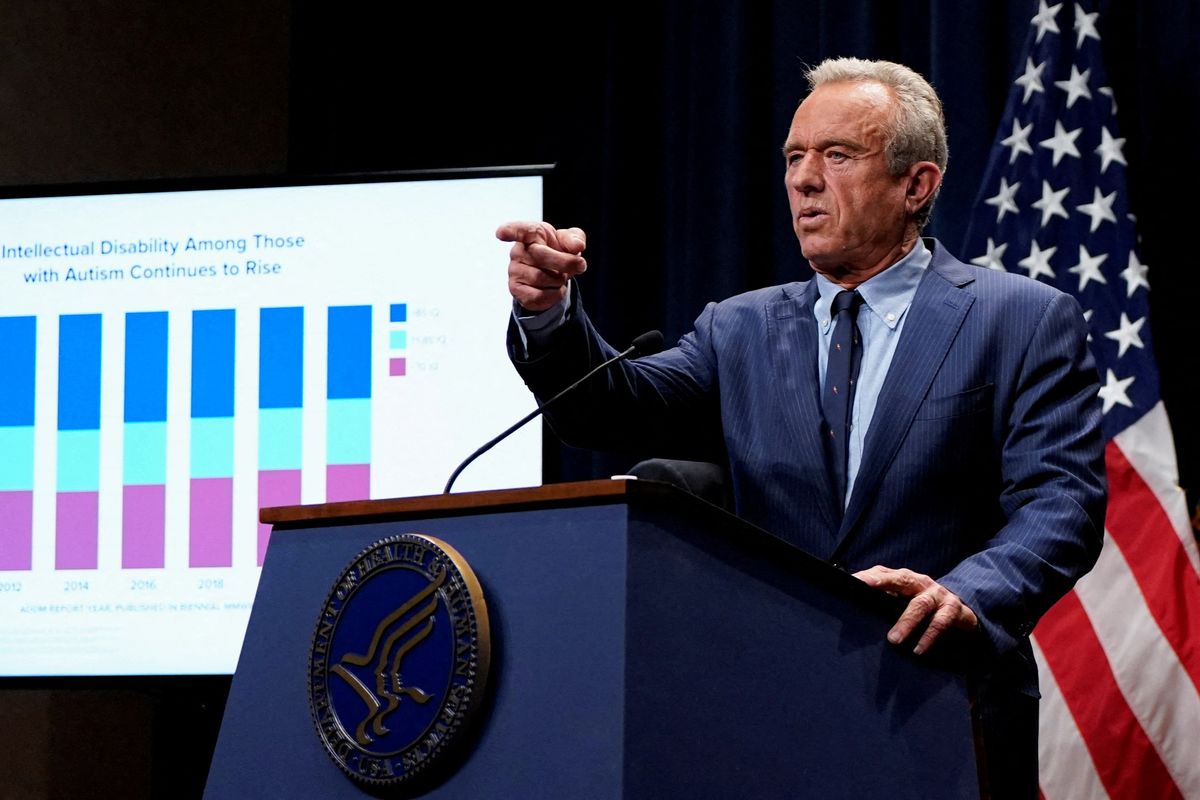
U.S. Health and Human Services (HHS) Secretary Robert F. Kennedy, Jr. discusses the findings of the Centers for Disease Control and Prevention’s (CDC) latest Autism and Developmental Disabilities Monitoring (ADDM) Network survey, during a press conference at the Department of Health and Human Services in Washington, D.C., U.S., April 16, 2025. REUTERS/Elizabeth Frantz TPX IMAGES OF THE DAY

The firing of Centers for Disease Control and Prevention Director Susan Monarez on Wednesday set off an internet frenzy as scientists roundly condemned the move.

Monarez was confirmed as the CDC director on July 29 after President Donald Trump withdrew a nominee who faced significant pushback due to his skepticism about vaccines. Some advocates hoped Monarez, a career public health professional, would be a check on Health Secretary Robert F. Kennedy Jr.

Several of the CDC's top scientists also left the agency after Monarez was fired, according to reports.

A number of scientists and observers reacted to the news on social media.

"Wow," Jonathan Reiner, a medical professor at the Georgetown University School of Medicine, wrote on X.

"This is possibly related to the aftermath of the shooting at the CDC and subsequent silence of the president," Reiner added. "But its net effect now is to put full operational control of vaccine policy back in RFK’s hands. This is a big net negative for the country."

"Susan Monarez is a career scientist with a history of integrity and evidence based leadership," Dr. Nisha Patel wrote in a post on her personal X account. "She was confirmed as CDC Director less than a month ago. And RFK Jr. has already forced her out. Not because she failed the job, but because she follows the science, not the grift. His 'radical transparency' is a sham. This is about control, not truth. Step out of line, and you’re gone."

"She was competent and an advocate for public health, both of which are liabilities in this administration," Ed Belongia, an infectious disease epidemiologist, posted on Bluesky.

"RFK Jr. is really out there 'building trust.'" Dr. Elizabeth Jacobs, professor emerita of epidemiology at the University of Arizona, wrote on Bluesky.

And for those of you keeping track, Monarez lasted 2.4 Scaramuccis, according to a post on Bluesky from Steve Benen, a producer for MSNBC's 'The Rachel Maddow Show."

'Cowardice of a leader': CDC official hits Trump and RFK with blistering rebuke on way out

Daniel Hampton
August 27, 2025 
RAW STORY


The main campus of the Center for Disease Control and Prevention (CDC) in Atlanta, Georgia, U.S., August 27, 2025. REUTERS/Alyssa Pointer

A top official at the Centers for Disease Control and Prevention announced his resignation in a lengthy social media post in which he delivered a blistering rebuke of the Department of Health and Human Services under Secretary Robert F. Kennedy Jr. for undermining science and endangering public health.

Dr. Demetre Daskalakis, director of the CDC’s National Center for Immunization and Respiratory Diseases, announced on X his resignation effective end of day Thursday. His announcement came amid an exodus of top scientists from the CDC following the ouster of its director, Susan Monarez.

"This decision has not come easily, as I deeply value the work that the CDC does in safeguarding public health and am proud of my contributions to that critical mission," he wrote. "However, after much contemplation and reflection on recent developments and perspectives brought to light by Secretary Robert F. Kennedy Jr., I find that the views he and his staff have shared challenge my ability to continue in my current role at the agency and in the service of the health of the American people. Enough is enough."

Daskalakis said his exit was necessary to ensure he could align his ethics and knowledge of infectious disease and immunology with his principles and obligation to Americans.

Daskalakis added that he could no longer serve in “an environment that treats CDC as a tool to generate policies and materials that do not reflect scientific reality and are designed to hurt rather than to improve the public’s health.”

He pointed specifically to the Trump administration's recent overhaul of immunization schedules for children and adults as a decision that "threaten[s] the lives of the youngest Americans and pregnant people.”

Daskalakis expressed alarm over the administration's scientific integrity and accused HHS of sidelining CDC experts and manipulating data for political ends.

“Having worked in local and national public health for years, I have never experienced such radical non-transparency, nor have I seen such unskilled manipulation of data to achieve a political end rather than the good of the American people,” he wrote.

He also denounced the administration’s changes to COVID-19 vaccine policy, saying the new Advisory Committee on Immunization Practices structure “puts people of dubious intent and more dubious scientific rigor in charge of recommending vaccine policy to a director hamstrung and sidelined by an authoritarian leader.

"Their desire to please a political base will result in death and disability of vulnerable children and adults. Their base should be the people they serve not a political voting bloc,” he added.

Daskalakis took a shot at RFK, writing, "I must agree with him, that he should not be considered a source of accurate information."

He then took a shot at Trump, declaring his resignation was aimed at making his grandfather proud, who died fighting fascism.

"I am resigning because of the cowardice of a leader that cannot admit that HIS and his minions’ words over decades created an environment where violence like this can occur," wrote Daskalakis, referring to the shooting near the CDC's headquarters in Atlanta. "I reject his and his colleagues’ thoughts and prayers, and advise they direct those to people that they have not actively harmed."

'No Public Lands Are Safe': Trump USDA Moves Forward With Gutting Roadless Rule


"The Trump administration's move to gut this bedrock protection is nothing more than a handout to logging interests at the expense of clean water, wildlife, and local communities," said one advocate.


A truck carrying old-growth trees that were recently cut drives on N Island Rd in the Tongass National Forest on Prince of Wales Island, Alaska on July 2, 2021.
(Photo by Salwan Georges/The Washington Post via Getty Images)


Julia Conley
Aug 27, 2025
COMMON DREAMS


The U.S. Department of Agriculture on Wednesday moved to rescind a conservation policy dating back nearly 25 years that has protected more than 45 million acres of pristine public lands, as the Trump administration announced a public comment period of just three weeks regarding the rollback of the "Roadless Rule."

The rule, officially called the 2001 Roadless Area Conservation Rule, has protected against the building of roads for logging and oil and gas drilling in forest lands including Alaska's Tongass National Forest, the nation's largest national woodland.


Agriculture Secretary Brooke Rollins said in June as she announced her intention of repealing the rule that the administration aims to "get more logs on trucks," in accordance with President Donald Trump's executive order calling for expanded logging in the nation's forests. The president has asserted more trees must be cut down to protect from wildfires, a claim that's been rejected by environmental groups that note fires are more likely to be ignited in areas where vehicles travel.

The public comment period on rescinding the Roadless Rule is set to open this week and end September 19.

The environmental legal firm Earthjustice, which has fought to defend the Roadless Rule for years, including when Trump moved to exempt the Tongass from the regulation during his first term, noted that roadless forests provide vulnerable and endangered wildlife "with needed habitat, offer people a wide range of recreational activities, and protect the headwaters of major rivers, which are vital for maintaining clean, mountain-fed drinking water nationwide."

"If the Roadless Rule is rescinded nationally, logging and other destructive, extractive development is set to increase in public forests that currently function as intact ecosystems that benefit wildlife and people alike," said the group.

Gloria Burns, president of the Ketchikan Indian Community, said the people of her tribe "are the Tongass."

"This is an attack on Tribes and our people who depend on the land to eat," said Burns. "The federal government must act and provide us the safeguards we need or leave our home roadless. We are not willing to risk the destruction of our homelands when no effort has been made to ensure our future is the one our ancestors envisioned for us. Without our lungs (the Tongass) we cannot breathe life into our future generations."

Garett Rose, senior attorney at the Natural Defenses Resource Council, said Rollins and Trump have declared "open season on America's forests."

"For decades, the Roadless Rule has stood as one of America's most important conservation safeguards, protecting the public's wildest forests from the bulldozer and chainsaw," said Rose. "The Trump administration's move to gut this bedrock protection is nothing more than a handout to logging interests at the expense of clean water, wildlife, and local communities. But we're not backing down and will continue to defend these unparalleled wild forests from attacks, just as we have done for decades."

The Alaska Wilderness League (AWL) noted that 15 million acres of intact temperate rain forest, including the Tongass and the Chugach, would be impacted by the rulemaking, as would taxpayers who would be burdened by the need to maintain even more roads run by the US Forest Service.

The service currently maintains more than 380,000 miles of road—a system larger than the US Interstate Highway System—with a "maintenance backlog that has ballooned to billions in needed repairs," said AWL.

"More roads mean more taxpayer liability, more wildfire risk, and more damage to salmon streams and clean water sources," added the group.

"No public lands are safe from the Trump administration, not even Alaska's globally significant forests," said Andy Moderow, senior director of policy at AWL. "Rolling back the Roadless Rule means bulldozing taxpayer-funded roads into irreplaceable old growth forest, and favoring short-term industry profits over long-term, sustainable forest uses. The Roadless Rule is one of the most effective, commonsense conservation protections in U.S. history. Scrapping it would sacrifice Alaska's public lands to the highest bidder."

Drew Caputo, vice president of litigation for lands, wildlife, and oceans at Earthjustice, emphasized that the group "has successfully defended the Roadless Rule in court for decades."

"Nothing will stop us," he said, "from taking up that fight aga
Anti-Trump protesters plan mass Labor Day demonstrations: "Enough is enough"

Story by Khaleda Rahman
AUGUST 27, 2025
NEWSWEEK


An aerial view shows demonstrators marching toward downtown protesting the policies of President Donald Trump and showing their support for union labor on May 1, 2025 in Chicago, Illinois.© Scott Olson/Getty Images

Protests against President Donald Trump and his administration—billed as "Workers Over Billionaires"—are set to take place across the country on Labor Day.

Jackson Potter, the vice president of the Chicago Teachers Union who is among the organizers, told Newsweek that organizer May Day Strong teamed up with the American Federation of Labor and Congress of Industrial Organizations (AFL-CIO) to "bring a Labor Day that's representative and reflective of best parts of our tradition.


He said the day of action is aimed at "fighting against the oligarchs and challenging the militarization of our cities while working people are falling further behind and billionaires are getting windfalls."

Why It Matters

The protests are to be the latest nationwide demonstrations against the Trump administration.

On June 14, millions rallied in cities across the country for "No Kings" protests while a military parade rolled through Washington, D.C, marking the Army's 250th anniversary, which coincided with Trump's 79th birthday. More recently, "Rage Against the Regime" demonstrations took place in hundreds of cities across the U.S. on August 2.


What To Know

Potter said more than 900 events are planned in all 50 states and Washington, D.C.

He said that hundreds of thousands, or even millions, of people could take to the streets across the country.

Potter believes Trump's threats to deploy the National Guard to cities including Chicago and his attacks on Chicago Mayor Brandon Johnson could motivate more people to turn out.

"We suspect this could become a much more massive and historic as a result of his threats, the attack on our Black mayor," he said.

Potter said Labor Day celebrations have been "largely apolitical" in the past, but "this year is very different."

"I'm an educator, I'm a Chicagoan. I've been going to Labor Day since I was a kid, and it's been beer and barbecues and, you know, maybe one rousing speech from the Labor Federation president," he said.

"Well, this year is very different. We have bricklayers, dockworkers, carpenters, teachers, service workers, health care workers, university professors coming together and saying, enough is enough. The message is clear and consistent, and it's not all fun and games, and it is solidarity in the best sense of our history."

What People Are Saying

A statement posted on the May Day Strong website says: "Labor and community are planning more than a barbecue on Labor Day this year because we have to stop the billionaire takeover. Billionaires are stealing from working families, destroying our democracy, and building private armies to attack our towns and cities.

"Just like any bad boss, the way we stop the takeover is with collective action. We are May Day Strong, working people rising up to stop the billionaire takeover—not just through the ballot box or the courts, but through building a bigger and stronger movement. On September 1st we will continue the movement we launched on May 1st. Thousands of communities across the country are taking a stand on Labor Day, join us!"

Trump told reporters on Friday: "Chicago is a mess. You have an incompetent mayor, grossly incompetent."

Chicago Mayor Brandon Johnson told CNN's Anderson Cooper on Monday that what Trump "is proposing is a military occupation of the city of Chicago and cities across America. Our city is not calling for that... This is clearly unconstitutional. It's illegal, and it's costly. The fact of the matter is, is that we're doing really a good work in the city of Chicago. Community safety is my top priority, and that's why I've worked hard to bring people together to drive violence down in Chicago."


He added: "This president has demonstrated that he is not willing to cooperate with cities in America to ensure that the federal government actually shows up for working people. That's what we're doing in Chicago. That's what many of our mayors are doing across this country. The President really should be working with us to develop safe communities and affordable communities."

What's Next

The protests are set to take place on September 1.

Jackson Potter Full Interview

Can you tell me about your role in organizing the protests planned for Labor Day?

I'm part of the national coordination team. I currently serve as vice president of the Chicago Teachers Union. And in March, we initiated this effort to bring together labor and community to fight attacks on workers rights, immigrant rights and civil rights, and promote the interests of workers over billionaires for May Day '25 and that led to the largest number of May Day protests in American history. And now we have teamed up with the AFL-CIO to bring a Labor Day that's representative and reflective of best parts of our tradition. And you know, fighting against the oligarchs and challenging the militarization of our cities, while working people are falling further behind and billionaires are getting windfalls. So you know this Labor Day is going to emphasize those dynamics and really see a much greater representation of workers and their unions and their community alliances coming out in full force.


Tell me more about what the demonstrations are protesting against?

Definitely labor is seeing that despite the Trump regime's promises to center the needs and interests of working people, the opposite is happening. Despite record highs of support for unionization, this administration has started an unprecedented attack on the unionized federal workforce and eliminated rights for a million workers to have a union.

So that runs directly against his promises, kicking 17 million people off Medicaid. And we're a movement that fights for the human rights, health care for all, having a living and adequate wage, having access to paid parental leave, childcare. Those things are slipping away from most people that can't afford the rising cost of living, rising cost of health care and don't have access to a deferred pension plan and need one. So that's what we are fighting for.

And we are also going after the billionaires who make up Trump's kitchen cabinet, like Elon Musk, Antonio Gracias [CEO of Chicago-based growth equity firm Valor Equity Partners]. We're going after Target that has eliminated its DEI programs while blocking the ability of its workforce to unionize. So we see them as part of the billionaire cabal trying to dismantle democracy and destroy the basic rights that we have.

How many demonstrations are planned across the country at the moment?

We are now at 905 total events. There are the top five states are states that are being targeted by Trump, like California. New York, Illinois, and then we've got Florida and Ohio that are also running up the score in terms of the number of events.

How many people do you think will take to the streets on Labor Day?

I think it will be hundreds of thousands, and perhaps millions, depending on conditions. So Trump has said that he wants a direct confrontation with the Chicago Teachers Union, our former union member and educator Brandon Johnson, who's the mayor, on Labor Day. So we suspect this could become a much more massive and historic as a result of his threats and the nature of the attack on a Black mayor.

You think that more people are likely to come out to protest because of these threats against Chicago and other cities?

I think that will motivate people to defend our rights, to fight against bad bosses like Trump and his billionaire buddies. You know, we are not willing to relinquish our First Amendment rights, our right to organize. Those are really fundamental. And why be in a union if we are just going to sit down or stand on the sidelines?

And what we have found, too, is when you look at the last 100 years, when there are authoritarians trying to get rid of democratic rights and impose their will on the population that the resistance, without a labor movement mobilized, is only successful at fighting back that effort 29 percent of the time, but with the labor movement, that goes up to 83 percent success rate. This is from Jonathan Pickney and Claire Trilling, who wrote a piece in 2024 about this.

So what we're seeing like me personally, I'm an educator, I'm a Chicagoan. I've been going to Labor Day since I was a kid, and it's been beer and barbecues and maybe, you know, one rousing speech from the Labor Federation president. But apart from that, it's been largely apolitical. Well, this year is very different. We have bricklayers, dockworkers, carpenters, teachers, service workers, health care workers, university professors coming together and saying, Enough is enough. The message is clear and consistent, and it's not all fun and games, and it is, you know, solidarity in the best sense of our history. So I do think it's waking up a sleeping giant in many ways, that it's starting to get mobilized again.

What else do you want people to know ahead of these protests?

Well, that they can join one near their town, village or city, and they can go to maydaystrong.org and there's a map that will show you the AFL-CIO sponsored events, in addition to ones that different labor leaders and activists have decided to host. And if they don't see one and would like to host something that's certainly welcome. It's organized similar to the Indivisible model in no kings. And my understanding is that, Indivisible, and many of the organizations, you can see all the partnering organizations on the website that were responsible for "Hands Off" and "No Kings" and "May Day" have joined forces again to make sure that this Labor Day is one to remember.
'Crackpot economics': Paul Krugman details chaos in countries that followed Trump's path

Matthew Chapman
August 27, 2025 

NY Times columnist Paul Krugman. (Shutterstock)

President Donald Trump's increasingly tight leash on the Federal Reserve — most clearly exemplified by his efforts to remove Federal Reserve governor Lisa Cook on unproven fraud allegations — is a massive threat to the stability of the dollar and the economic system generally, Nobel laureate economist turned political analyst Paul Krugman told MSNBC's Ari Melber on Wednesday evening.

"We actually quoted you the very night this news broke and your comparison to other countries that have done what Trump wants to do and why it's backfired for the economy," said Melber. "Explain what you meant by that."

"Okay, so the Federal Reserve, loosely speaking, they control the rate at which money flows into the economy," said Krugman. "And we know that it's important to have some flexibility in doing that. You need to fight things like the financial crisis of 2008. You need to fight things like the inflation of 2022. But we also know that it's a very — it's an easily-abused power. It's way too easy for an autocratic head of state to say, you know, rev up the printing presses because I want to, I want to push up my standing in the polls, just, you know, and you say it's going to cause inflation, well, I've got these guys that I like, and my favorite crackpots tell me it won't be inflationary."

"So we have a system which is that this extremely important but dangerous power is vested in an independent agency," Krugman continued. "It's not free of political accountability. The board of governors is chosen ... by the president and approved by Congress. But they have 14-year terms and we've done — you know, they aren't perfect, but they've done pretty well."

A recent example of a country that seized control of monetary policy for political gain, Krugman noted, is Turkey.

"You had the president, who is an autocrat, first of all, just wanting to see the printing presses roll to make himself more popular, and then bought into crackpot economics and said actually, raising interest rates increases inflation, so I want to cut them instead," said Krugman. "And he didn't change course until inflation hit 80 percent."


"I wouldn't give any president control over monetary policy," he added. "There are very good reasons not to do that. And I definitely wouldn't want to see Donald Trump do that. This is, you know ... he's talking nonsense about all of this stuff. And then the way of it just to say it's not just that he's trying to install, you know, cronies, loyalists at the Fed, but he's also doing this personal attack. It's basically saying, it's not just about Lisa Cook. It's a message to everybody else at the Fed: get in my way and I will ruin your life. And this is not, this is not the America that I want to live in."

Watch the video below or at the link here.


'Fascist capitalism': DC insider says Trump's push to 'control everything' will backfire


Story by Adam Lynch
ALTERNET
AUGUST 27, 2025

Former Labor Secretary Robert Reich warned in a new essay that President Donald Trump’s growing control over the U.S. economy may cause his downfall as the economy follows the dictates of numbers and value over the whims of a president.

Reich, who served under former President Bill Clinton, ticked down a list of examples of Trump trying to strong-man math like he bullies government officials

“He’s trying to control the Federal Reserve Board, threatening Jerome Powell with unflattering stories about his expenditures on the Fed’s building. He has fired Fed governor Lisa Cook on dubious legal grounds,” Reich said. “He’s imposing his will on key industries, from semi-conductors to steel. He’s given the chip giants Nvidia and Advanced Micro Devices export licenses to sell their semiconductors to China on condition that they pay the U.S. government 15 percent of what they make on those sales.

Not incidentally, Reich adds, Trump has reported substantial personal holdings in Nvidia.

Reich noted that Trump is also converting nearly $11 billion in Biden-era investment grants to Intel “into a 10 percent stake in the company, worth $8.9 billion, held by the government. Presumably, this would let Trump decide on its CEO."

Big tech corporations that were facing federal investigations and enforcement actions suddenly found their federal lawsuits dropped after they poured money into Trump’s initiatives and PACs, paving the way for further malpractice.

Meanwhile Trump’s import taxes (tariffs) “are the results of individual deals between Trump and particular countries, as well as between Trump and big American corporations,” said Reich. “So far, America’s trading partners have agreed to invest over $1 trillion in the American economy. Who will oversee such investments? Trump.”

READ MORE: 'It’s a real gut punch': Rural voters 'stunned' by Trump’s damage

“I don’t know the proper term for this. State capitalism? Fascist capitalism?” Reich wrote, and added that the problem with basing an economy on one man’s deals rather than supply and demand will soon become obvious to every American.

“Authoritarian regimes rely on vast bureaucracies to control industry, as does China’s Xi Jinping. But the new order being imposed on American industry doesn’t come from a vast authoritarian bureaucracy. It’s personal and arbitrary. A single so-called ‘strongman’ is seeking to control everything,” said Reich, adding that this is upsetting business interests who respond to market trends, not a president.

“Arbitrary and mercurial decisions are making the private sector nervous about investing in the U.S. economy, causing global lenders to demand a higher risk premium for lending to the U.S., and pushing the economy toward both inflation and recession — so-called ‘stagflation,’” Reich warned. And stagflation has already ended the careers of presidents.

Read the full essay on Robert Reich’s Substack at this link.


Is Lithium's Reign as Battery King Coming to an End?

  • Despite lithium-ion batteries powering 70 percent of rechargeable devices, issues with environmentally damaging extraction and China's control over supply chains are pushing for alternatives.

  • Solid-state batteries are a highly anticipated alternative, offering potential benefits in safety, energy density, and charging speed, while also reducing reliance on graphite.
  • Sodium-ion batteries are another promising contender due to sodium's abundance, lower cost, and less water-intensive extraction process, contributing to a more diversified and resilient battery economy.

Lithium-ion batteries power the world around us. Their prevalence in our daily life is growing steadily, to the extent that lithium-ion batteries now power a whopping 70 percent of all rechargeable devices. From electric vehicles to smartphones to utility-scale energy storage, lithium-ion batteries are increasingly forming the building blocks of innumerable sectors. But despite its dominance in battery technologies, there are some serious issues with lithium supply chains that make it a less-than-ideal model upon which to base our world.

Not only is extracting lithium often extremely environmentally damaging, it’s deeply intertwined with geopolitical pressure points. China controls a huge portion of global lithium supply chains, rendering markets highly vulnerable to shocks and the political will of Beijing. China’s control is particularly strong in the case of electric vehicle batteries, thanks to a decade-long strategy to outcompete the globe. 

“For over a decade, China has meticulously orchestrated a strategic ascent in the global electric vehicle (EV) batteries market, culminating in a dominance that now presents a formidable challenge to Western manufacturers,” reports EE Times. The resulting effect functions as “almost a moat” around Chinese battery production, buffering the sector against international competition. 

The multiple downsides and risks associated with lithium and lithium-ion battery sourcing is pushing EV companies to research alternative battery models to power the electric cars of the future. There are a litany of lithium alternatives in research and development phases, including – but not limited to – lead, nickel-cadmium, nickel-metal hydride, sodium nickel chloride, lithium metal polymer, sodium-ion, lithium-sulfur, and solid state batteries. 

Solid state batteries seem to be the biggest industry darling. Solid-state batteries use a solid electrolyte as a barrier and conductor between the cathode and anode. These batteries don’t necessarily do away with lithium, but they can eliminate the need for graphite – another critical mineral under heavy Chinese control. Plus, solid state batteries are purported to be safer, have higher energy density, and recharge faster than lithium-ion batteries. 

While solid-state batteries are still in development, they’re already being tested in some applications by car companies. Mercedes and BMW claim that they are already road-testing vehicles powered by solid-state batteries, but it will likely be years before we see them in any commercial context. Subaru is on the verge of testing solid-state batteries within its vehicles, but is already employing a smaller form of the technology to power robots within its facilities.

However, while solid-state batteries are being hailed as a sort of holy grail for battery tech, some think that the promise – and progress – of solid-state batteries is overblown. “I think there’s a lot of noise in solid state around commercial readiness that’s maybe an exaggeration of reality,” Rivian CEO RJ Scaringe said during an interview on this week’s Plugged-In Podcast.

Sodium ion batteries are also a promising contender to overtake lithium-ion batteries in the EV sector. Sodium is 1,000 times more abundant than lithium. “It’s widely available around the world, meaning it's cheaper to source, and less water-intensive to extract,” stated James Quinn, the CEO of U.K.-based Faradion. “It takes 682 times more water to extract one tonne of lithium versus one tonne of sodium. That is a significant amount.” Bloomberg projections indicate that sodium-ion could displace 272,000 tons of lithium demand as soon as 2035.

But even this does not signal the death of lithium. Lithium is simply too useful in battery-making. It’s energy-dense and performs well in cold weather, making it “indispensable for high-performance applications” according to EV World. “The future isn’t lithium or sodium—it’s both, deployed strategically across sectors…the result is a diversified, resilient battery economy.”

By Haley Zaremba for Oilprice.com


U.S. Oil Powerhouse Chevron Is Back In Iraq, But Will It Be Different This Time?

  • Chevron signed an agreement in principle with Iraq’s Oil Ministry to develop the giant Nasiriyah field and other assets.

  • Chevron's deal is part of a broader Western return that includes TotalEnergies’ $27B and BP’s $25B deals, with ExxonMobil also in talks.

  • The re-entry is driven by Baghdad’s assurances on transparency, contract stability, and security after years of corruption and governance risks that previously pushed majors to exit.

U.S. oil and gas supermajor Chevron signed an agreement in principle last week with Iraq’s Oil Ministry for the development of the huge Nasiriyah oil field, plus other oil producing fields and exploration sites. This is the latest in a recent line of top-tier Western firms that have announced a return to Iraq following a collective exodus from the country beginning around seven years ago with ExxonMobil’s withdrawal from the crucial Common Seawater Supply Project (CSSP). ExxonMobil itself is currently in discussions with Iraq’s authorities for a new opportunity in the oil sector, according to a recent comment from the Oil Ministry, while several other U.S. firms have also signed exploration and development agreements in recent days. Supermajor oil and companies from the U.S.’s key political, economic, and security allies have also secured strategically vital energy deals in Iraq this year, including France’s TotalEnergies US$27 billion four-pronged deal (including the CSSP) and Great Britain’s BP’s US$25 billion five-oilfield deal. So, why have they all decided to return to the country now, and will they stay this time around?

Iraq had just as much oil and gas potential back when these firms left the country as it does now, and it had just as much geopolitical significance then as it does currently, so these are not the key catalysts for the mass re-entry of these Western energy heavyweights to the country. Instead, as seen in the microcosm of the potential return of ExxonMobil, it all comes down to assurances made by the Iraqi authorities that things will be different this time around when it comes to transparency. According to several senior energy, legal, and security sources exclusively spoken to by OilPrice.com in 2018/2019, ExxonMobil walked away first from the CSSP and then from subsequent projects in Iraq because of the threat to its reputation and to that of the U.S. more broadly from continuing to do business in the country was simply too great. Independent non-governmental organisation Transparency International (TI) in its ‘Corruption Perceptions Index’ neatly encapsulated the problem when it described Iraq at that time as: “Among the worst countries on corruption and governance indicators, with corruption risks exacerbated by lack of experience in the public administration, weak capacity to absorb the influx of aid money, sectarian issues and lack of political will for anti-corruption efforts.” TI added: “Massive embezzlement, procurement scams, money laundering, oil smuggling and widespread bureaucratic bribery that have led the country to the bottom of international corruption rankings, fuelled political violence and hampered effective state-building and service delivery.” It concluded: “Political interference in anti-corruption bodies and politicization of corruption issues, weak civil society, insecurity, lack of resources and incomplete legal provisions severely limit the government’s capacity to efficiently curb soaring corruption.”

Related: Saudi, Argentina, and China Push to Tap Giant Shale Reserves

Having reached an impasse on the CSSP, ExxonMobil attempted to redress the key practical issues relating to the risk/reward balance of its other projects in Iraq, which included the supergiant West Qurna 1 oilfield, as analysed in full in my latest book on the new global oil market order. “There were three key elements that formed the basis of these negotiations [between ExxonMobil and Iraq’s Oil Ministry for the U.S.’s continuation in other projects in the country] -- ‘cohesion’, ‘security’ and ‘streamlining’,” said one of the senior energy sources based in Baghdad. Cohesion related to ensuring that building the facilities connected to projects were completed in full and in order. Security related not just to the on-the-ground security of personnel but also to the soundness of the basic business and legal practices involved in the agreement. Streamlining meant that any deal should continue as had been laid out in the agreement, regardless of any future changes to the government of Iraq. According to the source who worked very closely at the time with Iraq’s Oil Ministry, the authorities agreed to these ideas in principle but the practical implementation of them fell short of ExxonMobil’s expectations. Subsequent to this, a senior legal source in Washington exclusively told OilPrice.com that any major agreements signed by big U.S. oil and gas firms in Iraq would have to be agreed in full by U.S. lawyers, all accounts will have to be checked by U.S. accounting firms, working processes will have to be checked by U.S. project consultancy firms, and security issues of any nature will have to be worked through and then monitored on an ongoing basis with U.S. security organisations.

It is difficult to believe that such safeguards will not be in place for any future project in which ExxonMobil becomes involved and equally so for Chevron, because Chevron has also been here before. Back in 2021, the guy and gals from Houston had the distinct misfortune to find themselves dealing directly with the now rightly-buried Iraqi National Oil Company (INOC) -- widely regarded as one of the most corrupt organisations to operate in any field anywhere in the world ever. And the subject of these Stetson-curling negotiations? Exactly the same project as now. Discovered in 1975, the site’s original develop plan was shelved in the lead-up to the Iran-Iraq war that began in 1980 and lasted until 1988. The field eventually came on-stream in 2009 and was listed on the 2009-2010 fast-track development plan, which aimed to raise its output to at least 50,000 barrels per day (bpd) in the first phase. In the first half of 2009, Chevron was one of four international oil companies, along with Italy’s ENI, Japan’s Nippon Oil, and Spain’s Repsol, to be invited to submit bids to develop the field on an engineering procurement construction (EPC) contract basis. The Japanese consortium led by Nippon Oil, and comprising Inpex, and JGC Corporation, then looked set to win the contract before negotiations broke down again.

In 2014, a serious push was made to resuscitate the development of the Nasiriyah field within the broader scope of the ‘Nasiriyah Integrated Project’ (NIP) that also included the development of adjunct lesser oil sites to the main Nasiriyah site and the construction of a 300,000-bpd refinery. Bids for this wider project were encouraged by the government-ordered changes to the original Iraq technical service contract (TSC) that were aimed at addressing the concern of many oil firms that saw the original contract model as falling short of the production sharing contracts model that they preferred. Unlike the previous contracts, the new TSC variant offered investors a share in project revenues, but only when production began, and the Oil Ministry would pay recovery costs from the date of commencement of work. This differed from the previous contract where the costs were only paid when the contractor raised production by 10%. This said, investors would still have to pay 35% taxes on the profit they made from the Nasiriyah project, the same amount as in previous deals. That said, deep concerns among many of the bidders on issues connected to legal, accounting, and financial transparency led to the Nasiriyah project being shelved yet again.

Following China’s relaxing in 2017 of its earlier to all state-owned hydrocarbons companies to cut budgets, Sinopec and PetroChina proposed a deal that would see the NIP being rolled into part of the broader ‘Integrated South Project’ (ISP), later rebranded as the ‘South Iraq Integrated Project’. This aimed to boost output across Iraq’s southern oilfields, and to build out related infrastructure, including pipelines, transport routes, and the construction of the CSSP. In an interesting manifestation of karma, it transpired that even Iraq was surprised by the trickiness of China’s demands to work on the project. One example was that Beijing said it would spend US$9 billion on the NIP-related refinery and the first phase of developing Nassiryah, but that Iraq would have to pay back this cost to the Chinese from the value of oil recovered, the Oil Ministry source told OilPrice.com at the time. It also said that it should be given US$9 billion of Iraq government-backed bonds for the entire amount that could be cashed in if the development did not start to generate large amounts of oil quickly. Iraq’s view was that all this should cost no more than US$4 billion, which was the more accurate figure. China also wanted much more of their upfront costs paid back in a much shorter time than in other similar projects. This effectively meant a per barrel remuneration fee at a 15% premium to the highest maximum fee being paid at that stage to any company in Iraq for a regular crude oil producing field, which was US$6 per barrel to PetroChina for al-Ahdab. Given the alternative on offer for Beijing, then, it may be that this time around Iraq sticks to the more transparent way of doing business that Chevron has no doubt demanded for the Nasiriyah project.

By Simon Watkins for Oilprice.com