Thursday, August 28, 2025


New AI tool identifies 1,000 ‘questionable’ scientific journals


University of Colorado at Boulder


A team of computer scientists led by the University of Colorado Boulder has developed a new artificial intelligence platform that automatically seeks out “questionable” scientific journals.

The study, published Aug. 27 in the journal “Science Advances,” tackles an alarming trend in the world of research.

Daniel Acuña, lead author of the study and associate professor in the Department of Computer Science, gets a reminder of that several times a week in his email inbox: These spam messages come from people who purport to be editors at scientific journals, usually ones Acuña has never heard of, and offer to publish his papers—for a hefty fee.

Such publications are sometimes referred to as “predatory” journals. They target scientists, convincing them to pay hundreds or even thousands of dollars to publish their research without proper vetting.

“There has been a growing effort among scientists and organizations to vet these journals,” Acuña said. “But it’s like whack-a-mole. You catch one, and then another appears, usually from the same company. They just create a new website and come up with a new name.”

His group’s new AI tool automatically screens scientific journals, evaluating their websites and other online data for certain criteria: Do the journals have an editorial board featuring established researchers? Do their websites contain a lot of grammatical errors?

Acuña emphasizes that the tool isn’t perfect. Ultimately, he thinks human experts, not machines, should make the final call on whether a journal is reputable.

But in an era when prominent figures are questioning the legitimacy of science, stopping the spread of questionable publications has become more important than ever before, he said.

“In science, you don’t start from scratch. You build on top of the research of others,” Acuña said. “So if the foundation of that tower crumbles, then the entire thing collapses.”

The shake down

When scientists submit a new study to a reputable publication, that study usually undergoes a practice called peer review. Outside experts read the study and evaluate it for quality—or, at least, that’s the goal.  

A growing number of companies have sought to circumvent that process to turn a profit. In 2009, Jeffrey Beall, a librarian at CU Denver, coined the phrase “predatory” journals to describe these publications.

Often, they target researchers outside of the United States and Europe, such as in China, India and Iran—countries where scientific institutions may be young, and the pressure and incentives for researchers to publish are high.

“They will say, ‘If you pay $500 or $1,000, we will review your paper,’” Acuña said. “In reality, they don’t provide any service. They just take the PDF and post it on their website.”

A few different groups have sought to curb the practice. Among them is a nonprofit organization called the Directory of Open Access Journals (DOAJ). Since 2003, volunteers at the DOAJ have flagged thousands of journals as suspicious based on six criteria. (Reputable publications, for example, tend to include a detailed description of their peer review policies on their websites.)

But keeping pace with the spread of those publications has been daunting for humans.

To speed up the process, Acuña and his colleagues turned to AI. The team trained its system using the DOAJ’s data, then asked the AI to sift through a list of nearly 15,200 open-access journals on the internet.

Among those journals, the AI initially flagged more than 1,400 as potentially problematic.

Acuña and his colleagues asked human experts to review a subset of the suspicious journals. The AI made mistakes, according to the humans, flagging an estimated 350 publications as questionable when they were likely legitimate. That still left more than 1,000 journals that the researchers identified as questionable.

“I think this should be used as a helper to prescreen large numbers of journals,” he said. “But human professionals should do the final analysis.”

A firewall for science

Acuña added that the researchers didn't want their system to be a "black box" like some other AI platforms.

“With ChatGPT, for example, you often don’t understand why it’s suggesting something,” Acuña said. “We tried to make ours as interpretable as possible.”

The team discovered, for example, that questionable journals published an unusually high number of articles. They also included authors with a larger number of affiliations than more legitimate journals, and authors who cited their own research, rather than the research of other scientists, to an unusually high level.

The new AI system isn’t publicly accessible, but the researchers hope to make it available to universities and publishing companies soon. Acuña sees the tool as one way that researchers can protect their fields from bad data—what he calls a “firewall for science.”

“As a computer scientist, I often give the example of when a new smartphone comes out,” he said. “We know the phone's software will have flaws, and we expect bug fixes to come in the future. We should probably do the same with science.”


Co-authors on the study included Han Zhuang at the Eastern Institute of Technology in China and Lizheng Liang at Syracuse University in the United States.


Lukashenko offers to release 1,300 political prisoners – if they leave the country

Lukashenko offers to release 1,300 political prisoners – if they leave the country
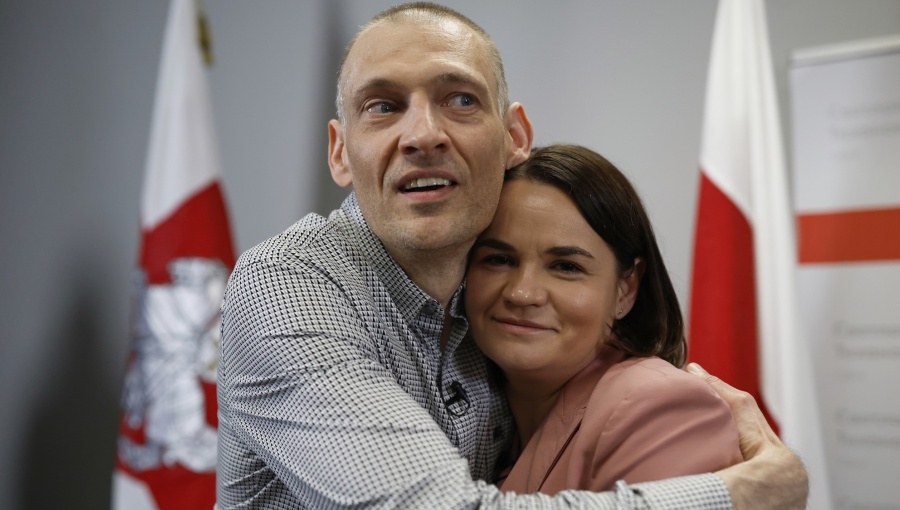
Belarusian President Lukashenko has proposed to release another 1,300 political prisoners, if they leave the country, as he plays to improve Belarusian-US ties further after releasing prominent prisoner Sergey Tikhanovsky (pictured) last month. / bne IntelliNews
By Ben Aris in Berlin August 28, 2025

Belarusian President Alexander Lukashenko has offered to release 1,300 political prisoners, but only if they leave the country, as he seeks to improve ties with the Trump administration further, The Kyiv Independent reported on August 28.

The latest proposal comes after he released 14 political prisoners last month, including Sergey Tikhanovsky (Siarhei Tsikhanouskiy), the husband of Belarusian opposition leader Svetlana Tikhanovskaya (Sviatlana Tsikhanouskaya) who contested the 2020 presidential elections in his stead after he was arrested before the poll.

Tikhanovsky's dramatic release follows a trip to Minsk by US Special Envoy to the Middle East Steve Witkoff to broker a pardon for the popular blogger who challenged Lukashenko in the flawed 2020 presidential elections that ended in the largest mass protests the country has ever seen.

Lukashenko said that he may pardon up to 1,300 political detainees, many of whom were arrested during the protests five years ago, but only if Western nations “take them away.”

As bne IntelliNews reported, relations between the US and Belarus have warmed recently, as Lukashenko tries to develop some leverage in his one-way relation with Russia since the war in Ukraine started and at the same time is seeking some sanctions relief. Trump last talked to Lukashenko in a phone call from Air Force One on his way to the Alaska summit on August 15 to meet with Russian President Vladimir Putin. Lukashenko made the offer to release more prisoners during that call, The Kyiv Independent reports.

During the call, Trump reportedly thanked Lukashenko for releasing 16 prisoners and expressed hope for the release of the remaining 1,300, calling Lukashenko “a highly respected president” in posts on Truth Social.

Trump is keen to improve relations with Russia and style himself as a peacekeeper in a bid to win a Nobel Prize, according to many commentators.

Despite Tikhanovsky’s release, several of the other most prominent political prisoners remain in detention, including Viktor Babariko, who was on track to defeat Lukashenko in the 2020 elections.

This is not the first time that Lukashenko has tried to expel political dissidents. Maria Kolesnikova also remains in jail serving a long sentence on charges of trying to organise a coup d'état, who was previously Babariko’s campaign manager, before she teamed up with Tikhanovskaya to run for president in the race.

While Tikhanovskaya fled into exile in Latvia with her children shortly after the elections were over, Kolesnikova remained in Minsk and continued to openly demonstrate against Lukashenko until she was snatched from the street by the local KGB and jailed.

The authorities tried to secretly expel her by driving her to the Ukrainian border, but she famously ripped up her passport in front of the officers, making it impossible to cross the border, and she was returned to a jail in Minsk and eventually tried and convicted. Since then she has rarely been seen in public and is reportedly suffering from failing health.

In comments to Belarusian state media on August 22, Lukashenko said: “Take them away. We release them, just for them to wage war against us again? Society won’t support me on that.”

“Forced deportation from the country is a continuation of political terror and unjust punishment of innocent people,” said exiled Belarusian opposition leader Svetlana Tikhanovskaya (Sviatlana Tsikhanouskaya from her base in Latvia, as cited by The Kyiv Independent. “The regime must stop the repression completely, not simply replace one (form of) pressure with another.”

Lukashenko was re-elected in a landslide for his seventh five-year term in January during largely peaceful polls after he ratcheted up his repression and drove most of the opposition into exile.

The new offer to Trump for more releases comes after more than a year of backchannel diplomacy and three mid-level US delegations to Minsk.

The Kyiv Independent reports that the broader deal under discussion could include lifting sanctions on Belarus’s national airline Belavia and on potash producer Belaruskali, a major source of foreign exchange earnings for the Belarusian government. Both were sanctioned following the forced landing of a commercial Ryanair flight in Minsk in 2021, when another political dissident, founder and editor in chief of the Nexta Telegram channel, Roman Protasevich, was arrested. AS bne IntelliNews reported, Nexta played a key role in coordinating the 2020 mass demonstrations.

Protasevich was tortured and remains in Minsk where the KGB has tried to co-op him into supporting the regime.

Lukashenko has never publicly acknowledged the existence of political prisoners, instead accusing opponents of economic crimes or abusing freedoms of speech and assembly. Notably, the term “political prisoners” was absent from the recent Trump-Lukashenko exchange, The Kyiv Independent reports.

The task of processing the potential releases lies with a pardon commission formed by Lukashenko in February 2023. In an effort to improve his image with his base of blue-collar workers and pensioners, who remain grateful to the strong man, as his neo-Soviet system shielded the majority of working-class Belarusian from the worst pain of the collapse of the Soviet Union in the 1990s, Lukashenko has been releasing knots of political prisoners in the last year.

The pardon commission includes senior law enforcement figures and state media personalities accused of participating in political repression.

Belarus’s Viasna Human Rights Centre estimates that more than 4,000 people have been recognised as political prisoners since May 2020, with over 1,100 still imprisoned.

Opposition activist Anatol Kotau disappears

The talk of more political prisoner releases comes amidst fresh reports of the disappearance of Belarusian opposition figure Anatol Kotau, who has gone missing after leaving European Union territory and entering Turkey, independent Belarusian media reported on August 26.

Kotau was last seen on August 21 after arriving in Istanbul, Turkey, for personal reasons. Kotau stopped responding to calls shortly after his arrival in Istanbul and failed to board his scheduled return flight to Warsaw on August 24, Nasha Niva reports. His family has since reported his disappearance to Turkish police and informed the Polish consulate in Istanbul.

Kotau is a former Belarusian diplomat and mid-level government official, but publicly resigned his post in protest of the disputed 2020 presidential election. He later joined the opposition team of Pavel Latushka, a former minister and one of the opposition leaders.

In 2021, he parted ways with the group amid allegations of embezzlement and subsequently became a public critic of Belarus’s exiled democratic forces, Radio Free Europe/Radio Liberty reported.

Sentenced in absentia by a Belarusian court to 12 years in prison on conspiracy and coup d'état charges, he has been living in exile in Poland since.

Kotau is the second opposition figure to vanish after leaving EU territory this year, The Kyiv Independent reports. In March, Anzhalika Melnikava, speaker of the exiled Coordination Council, disappeared after allegedly withdrawing $150,000 from a pro-democracy fund in Poland. Investigative journalists later identified a Belarusian secret service agent who had reportedly accompanied her on several trips. Her whereabouts remain unknown.

The KGB regularly organises snatch operations of opposition figures in other countries. The most dramatic was in Protasevich’s case when the authorities sent a MiG fighter jet to force the landing of his Ryanair flight, on its way back to Riga where he was living in exile. Protasevich reported his suspicion that members of the KGB were in the airport in the crowd before his departure. He was in Athens for a conference and reportedly Tikhanovskaya was supposed to be on the same flight, but changed her plans at the last minute.

ORBAN'S PAL

Poland doubles down on opposing Ukraine’s EU bid over WW2-era massacres

Poland doubles down on opposing Ukraine’s EU bid over WW2-era massacres
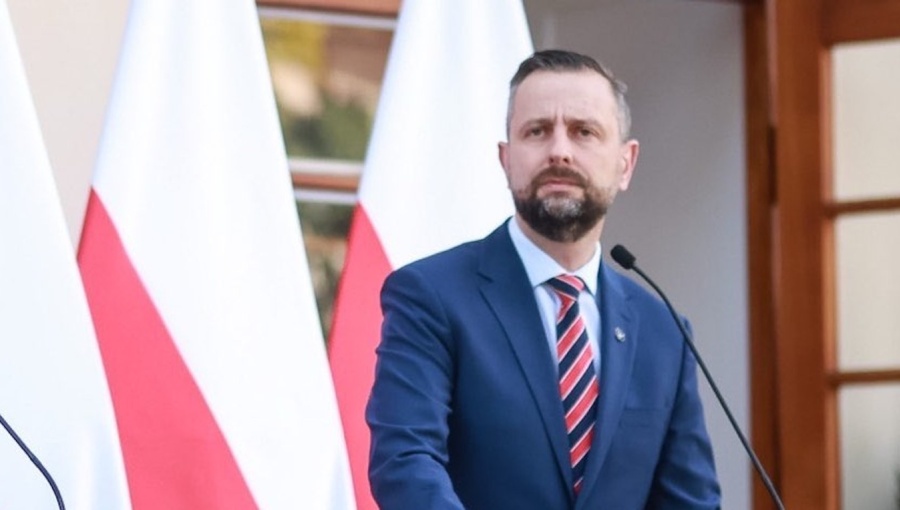
Wladyslaw Kosiniak-Kamysz said Ukraine “will have no chance" of joining the European Union without acknowledging the atrocities committed in Volhynia in 1943. / Wladyslaw Kosiniak-Kamysz via X
By bne IntelliNews August 28, 2025

Ukraine will not be able to join the European Union unless it recognises the World War 2 Volhynia killings as genocide, Polish Deputy Prime Minister Wladyslaw Kosiniak-Kamysz said on August 26.

At a press briefing, Kosiniak-Kamysz said Ukraine “will have no chance" of joining the European Union without acknowledging the atrocities committed in Volhynia in 1943. 

“The genocide in Volhynia is one of the most terrible acts of terror against a nation in the history of our civilisation, Ukraine must answer for this, there must be monuments, exhumation, a dignified burial. We will never back down from this," Kosiniak-Kamysz said.

At the same time, he stressed that withholding support from a neighbour at war “is contrary to the security interests of the Polish state” and that helping Ukraine “also means building a secure Poland.”

The Volhynia massacres, in which the Ukrainian Insurgent Army killed tens of thousands of Polish civilians in 1943, remain the most contentious chapter in relations between the two countries. 

Estimates suggest between 60,000 and 90,000 Poles were killed, while reprisals by Poles claimed 10,000 to 20,000 Ukrainian lives. Warsaw classifies the events as genocide. Kyiv, however, regards the nationalist movement responsible for the killings as central to its own statehood narrative, making an official apology politically fraught.

Polish President Karol Nawrocki has also pressed the issue. In July, he urged Ukrainian President Volodymyr Zelensky to authorise large-scale exhumations of Polish victims, a process that has been ongoing since earlier this year. 

On August 25, Nawrocki vetoed a bill extending assistance for Ukrainian refugees, arguing that benefits should be limited to those working in Poland. His draft proposals also included tougher penalties for illegal border crossings, longer waiting times for citizenship, and criminalising Ukrainian nationalist symbols alongside Nazi and Communist ones.

Ukraine said it would “react” if the symbols were banned.

The Polish government, which is locked in a fierce political battle with Nawrocki, said the veto was a gift to Russian propaganda trying to weaken Poland’s resolve to help Ukraine, as it is fighting for independence.

Nawrocki, a conservative aligned with the opposition Law and Justice party, narrowly won Poland’s presidential election on June 1. A historian by training, Nawrocki has pledged solidarity with Ukraine against Russia while at the same time highlighting disputes over wartime history and signalling opposition to Ukraine’s EU and Nato ambitions.

Polish resistance to Ukraine’s accession is not new. In September last year, Prime Minister Donald Tusk said Kyiv would not receive Warsaw’s backing for EU membership until it “meets Poland’s expectations” on dealing with the Volhynia atrocities. 

Reconciliation over history is part of the “cultural-political standards” of the EU, comparing the process to Franco-German rapprochement after the Second World War, Tusk said at the time.

Ukraine’s then-foreign minister Dmytro Kuleba countered that debates over past atrocities should be left to historians, as digging into history while fighting Russia risked souring relations, and instead urged both nations to focus on the future. His comments drew a negative reaction in Warsaw.

The dispute over history feeds into wider political battles. The EU is not united on Ukraine’s membership bid. Hungarian Prime Minister Viktor Orban, who has long opposed the move, has faced fresh pressure since a call from US President Donald Trump last week, nurturing hopes - both in Brussels and Kyiv - that he might back down.

Still, Orban posted online that “Ukraine’s membership in the European Union does not provide any security guarantees” and warned that linking the two was “unnecessary and dangerous.”

UKRAINIAN NATIONALIST ARMY OUN–UPA AND THE NAZI GENOCIDE

GUNS OF AUGUST 

Rheinmetall to invest over €1.5bn in Balkan munitions factories

Rheinmetall to invest over €1.5bn in Balkan munitions factories
/ Facebook/Rumen RadevFacebook


By Tatyana Kekic in Belgrade August 28, 2025

German defence giant Rheinmetall plans to invest more than €1.5bn in new munitions factories in Romania and Bulgaria, part of a broader European effort to boost defence production amid Russia’s war in Ukraine.

Romania signed a framework agreement with Rheinmetall on August 27 to build a €535mn munitions ignition powder plant in Brașov County. Romanian Industry Minister Radu Miruță said the factory could become “the most advanced ammunition powder factory in the world”.

Earlier this week, Rheinmetall announced plans for two additional plants in Bulgaria, including a gunpowder factory and a separate site for Nato-standard 155mm artillery shells. Total investment in Bulgaria is estimated at over €1bn.

“The gunpowder factory will be as large as two German plants – the biggest in Europe,” said former Bulgarian prime minister Boyko Borissov, who was in Germany this week.

The new facilities will mark a shift in Bulgaria’s arms industry from Soviet-standard to Nato-compatible munitions, reflecting growing regional demand for Western-calibre weapons.

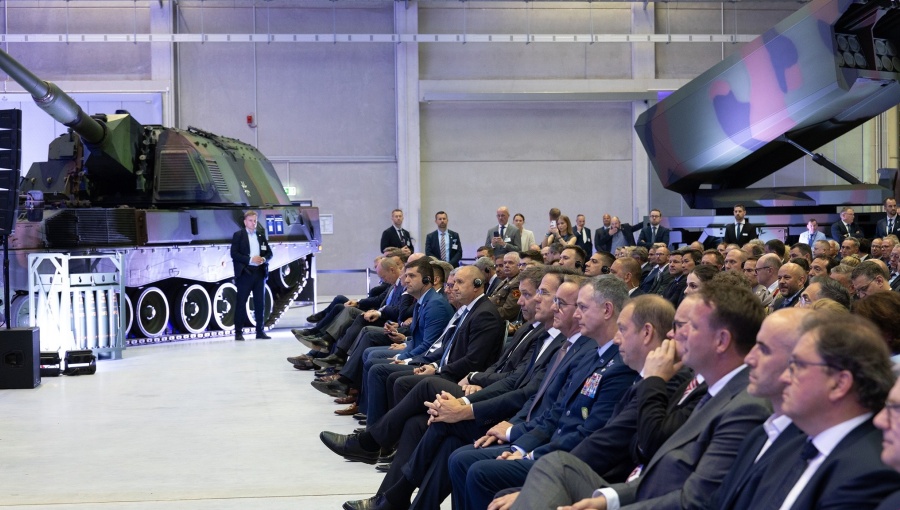
Bulgarian President Rumen Radev, who visited Rheinmetall’s new ammunition factory in Germany on August 27, said the country is “becoming part of the European defence ecosystem”.

Europe’s defence sector has expanded rapidly since Russia’s invasion of Ukraine in 2022. As bne IntelliNews has reported, shares of European defence companies have tripled over the past year, and the Europe STOXX Total Market Aerospace & Defence Index is up about 46% year-to-date.

Rheinmetall, one of Europe’s largest defence manufacturers, reported record operating profits of nearly €1.5bn in 2024, a 61% increase from the previous year. On August 27, the company opened a new ammunition plant in northern Germany, which CEO Armin Papperger said will be Europe’s largest at full capacity.

With Serbia and Bosnia & Herzegovina already hosting significant defence industries, Romania and Bulgaria’s new plants will cement the Balkans as a hub for European arms production.

LA REVUE GAUCHE - Left Comment: Search results for PERMANENT ARMS ECONOMY


ExxonMobil held secret Kremlin talks on a return to the Russian market

ExxonMobil held secret Kremlin talks on a return to the Russian market
US-Russian relations are warming slowly and both Trump and Putin are interested in restarting business relations. ExxonMobil is the first US company to meet with the Kremlin to discuss a road map towards re-entering the market. / bne IntelliNews
By Ben Aris in Berlin August 28, 2025

US oil major ExxonMobil held secret talks earlier this year with the Kremlin on a possible return to working in Russia, the Wall Street Journal reports

The US company was previously involved in the flagship Sakhalin-1 oil project but quit Russia following the invasion of Ukraine in 2022. The revelation comes as US President Donald Trump again recently repeated his desire to do business with Russia and admitted that he discussed joint oil and gas projects at the Alaska summit on August 15. He also suggested jointly developing Alaska’s mineral resources.

Trump has been remarkably lenient on Russia since taking office, imposing no new sanctions or tariffs, despite repeated threats to hit Russia hard with new measures as part of the ongoing peace negotiations.

"The Wall Street Journal reported that Exxon has been in contact with Rosneft since 2022 about its Russian assets, with quiet backing from the White House—even under President Joe Biden," The Bell reports. "By 2025, following Donald Trump’s inauguration, these conversations intensified."

Exxon’s interest is not hard to understand. Sakhalin-1, in which Exxon held a 30% stake and operated since 1995, was one of the company’s largest international projects. Before the war, Sakhalin-1 accounted for around 3% of Exxon’s global production. Exxon’s exit in 2022 forced the company to write off $4.6bn. Attempts to sell its stake were blocked by the Kremlin, which later transferred the project to a new operator controlled by state-owned oil major Rosneft.

Now, following the closed doors meeting, the project appears to be back on the table. Negotiations began in earnest after Trump’s return to office.

In February, Exxon Vice President Neil Chapman met informally with Rosneft CEO Igor Sechin in Qatar, the WSJ reports and Exxon’s Chief Executive Darren Woods discussed the issue directly with Trump. By the time of the Alaska summit, the two sides had reportedly drawn up a "roadmap" for re-entry.

Putin has also been tempting Trump with deals. He opened the door to the return of Western companies in February ordering the government to draw up rules for those that wanted to re-enter the Russian market. He has also invited US companies to jointly develop Russia’s vast critical mineral and rare earth metals (REMs) deposits, the second largest in the world after China’s. Trump has shown a lot of interest in winning mineral mining deals in all the conflicts he has gotten involved with and forced through a minerals deal on Ukraine as part of the ceasefire talks that started in February.

The talks have extended beyond oil. The Wall Street Journal reports that both parties "discussed not only Sakhalin-1, but also the supply of American equipment for Russian LNG projects, as well as the possibility of purchasing Russian nuclear icebreakers." On the same day as the summit in Anchorage, Putin signed a decree enabling the return of foreign partners under improved terms that will directly affect Exxon and smooth its re-entry if it takes the plunge.

While no formal agreement has yet been announced, the overtures point to a broader willingness by some US corporations to engage with Russia. While only 9% of foreign companies working in Russia before the war decided to leave after its outbreak, polls of those that did leave have found none have concrete plans so far to re-enter the market.

"Russian officials have been talking about the desire of foreign businesses to return to Russia since Trump's victory in the 2024 elections," The Bell observed. "But the WSJ article is the first confirmation that big business is not just considering this possibility but is also conducting substantive negotiations."


Deathonomics: Russia’s war in Ukraine creates a new kind of middle class

Deathonomics: Russia’s war in Ukraine creates a new kind of middle class
Heavy military spending by the Kremlin is transforming the social income profile and lifted Russia's poorest out of poverty. The only problem is you might be dead at the end of the process. / bne IntelliNewsFacebook
By Ben Aris in Berlin August 28, 2025

Some economists have dubbed it “deathonomics”. Russia’s heavy military spending is transforming the country’s income profile out of all recognition and has lifted millions out of poverty. It has created a new kind of middle class. The only problem with the transformation is you might be dead at the end of it.

The war in Ukraine has created a new kind of middle class in Russia out of the country’s poorest inhabitants. And it is flourishing. Savings are up. Families are leaving run down villages and buying nice apartments in the regional capital and wages are multiples of the national average. The problem is to tap into this prosperity you have to go and fight in the war in Ukraine where you run a high chance of being killed.

The extraordinarily high sign-up payments regional governments are shelling out to persuade Russian men to sign up to meet their quotas and the even larger payments made to the families of those killed in action are feeding to the far flung regions in Russia’s impoverished hinterland. These towns and villages largely missed out on the economic boom that lifted the country after Russian President Vladimir Putin took over in 2000 and outdoor toilets are common and a kitchen garden to grow potatoes and fruit are essential.

Russia's economy has enjoyed a military Keynesianism boost following the invasion of Ukraine in 2022 as the state poured billions of dollars into military spending. Instead of collapsing under the weight of the most extreme sanctions regime ever imposed on a country, after an initial modest dip in 2022, Russia’s economy became the fastest growing major economy in the next two years expanding by 4.3% in both years.

The chronic labour crisis caused by military recruitment pushed up wages to new highs and unemployment down to all-time lows driving up real incomes for everyone left at home. Until recently, Putin successfully shielded the bulk of the population from the effects of the war, except for growing inflation, and bne IntelliNews interlocutors in Moscow report that many Russians say the last three years has been amongst the most pleasant and prosperous years since the Soviet Union fell in 1991.

As bne IntelliNews reported, the rising wages and full employment has created a new war middle class across society in general, but it has also eroded some of high income equality that plagued Russia before hostilities broke out. Russia’s poorest regions have been the biggest winners from the conflict as the government has recruited the most soldiers from these places. Separately, a survey of regional retail banking account deposits, conducted by the Bank of Finland Institute for Emerging Economies (BOFIT) also showed that deposits in the poorest regions have soared in the last few years as soldiers send their wages home, or the family receives very large payments if they are killed or wounded.

The sums on offer are mindbogglingly large by local standards. A Siberian bus driver can expect to double or quadruple his pay. Contract soldiers now earn up to $90,000 a year, compared with average local wages of $8,000. Defence factories run around the clock on three shifts a day, while wages in metalworking have surged by 78 per cent since 2021.

Tymofiy Mylovanov, president of the Kyiv School of Economics, argued that “Putin turned idle workers and jobless men into cannon fodder and channelled their wages and death payouts into local economies.” Families once living on the margins “now buy apartments in regional cities,” he wrote on X.

Compensation for casualties further deepens the effect. An estimated million men have been killed or wounded in the war so far. Families of fallen soldiers receive up to $120,000 in payouts, alongside gifts from local officials “— anything from fridges to meat grinders.” For many households in Tuva, Altai and the North Caucasus, Mylovanov noted, “war deaths bring more money than years of regular work.”

Previously depressed industrial towns that never recovered after the collapse of the Soviet Union are experiencing a boom. Munitions and uniform factories hire thousands, while new cafés, gyms and salons open their doors. Families supported by “war money” are also fuelling domestic tourism, which was up by 8% this year and tours to Europe up by 30-50%, according to Russia’s tourism union.

The Kremlin is reinforcing the trend by reserving 50,000 university places in 2025 for soldiers and their children, bypassing competition. Nearly 15,000 enrolled in 2024, up from 8,000 a year earlier.

The balmy economic conditions Russians have enjoyed for the last two years may be coming to an end soon as Russia’s economic problems are getting worse after the regulator decided to artificially slow growth to take the edge off sticky inflation and so bring down sky high interest rates.

Russia’s economy contracted in the first quarter of this year in real terms and narrowly missed a technical recession in the first half of this year. But even if growth falls to nothing, the Kremlin will still pay those extraordinary wages as it digs into its vast reserves of capital, built up over a decade in the run up to the war. Putin has been planning for this conflict since 2012 when he switched economic policy from investment to modernising the military and ordered the Central Bank of Russia (CBR) to accumulate cash and gold.

The massive largess that has been lavished on the population in the form of extraordinarily high wages may come back to bite Putin should the war in Ukraine end. Demobilised soldiers returning home to their impoverished regions and low-paying jobs could be socially disruptive.

“Peace would undo it,” Mylovanov warned. Hundreds of thousands of veterans would return to low-wage towns and rapidly exhaust their savings. The result, he suggested, could be a “social disaster like Germany in the 1920s, when embittered veterans destabilised politics.”

Analysts say that the Kremlin will keep military spending high in the first years after the war as Russia needs to rebuild its military and restock after burning through its Soviet-era stockpile of materiel, to be able to defend itself against a possible Nato attack. But, Putin may have no choice other than to continue to invest into unproductive military hardware, as cutting wages back could quickly lead to protests by the newly employed veterans that served in Ukraine but have a bleak future in the run down regions of Russia. And economists are already warning of the dangers of recession or even stagflation if Russia goes down that road.

Argentina’s Milei flees rally as corruption scandal fuels violent protests

Argentina’s Milei flees rally as corruption scandal fuels violent protests
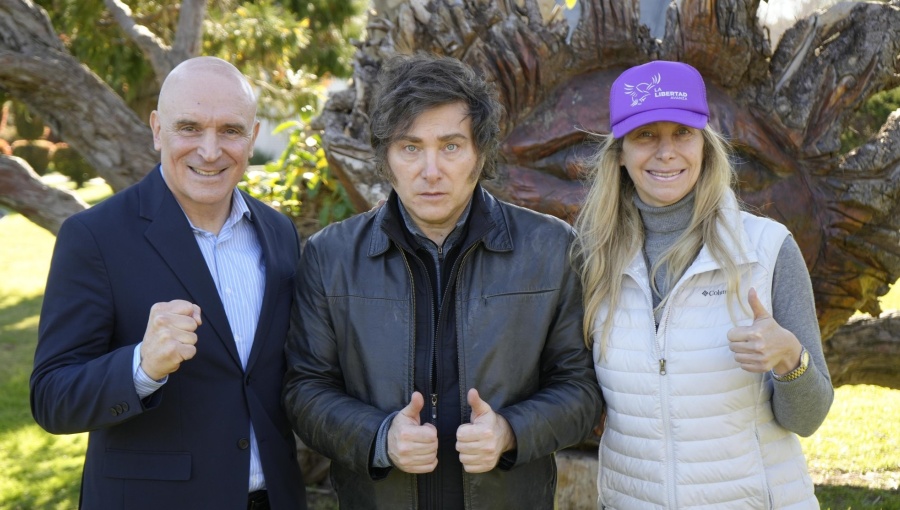
From the safety of the presidential residence, Milei later posted a defiant photograph with his thumbs up, blaming "Kukas" — Kirchnerist supporters — for "throwing stones empty of ideas, turning once again to violence."
By bnl editorial staff August 28, 2025

Argentina's political tensions spilled into violence on August 27 when President Javier Milei was forced to abandon a campaign rally in Buenos Aires province after protesters pelted his motorcade with rocks, eggs and branches, in yet another sign of the growing backlash against his radical economic reforms.

The dramatic scenes in Lomas de Zamora, a Peronist bastion where opposition sentiment runs deep, saw the libertarian leader evacuated under police shields whilst his congressional candidate José Luis Espert escaped on the back of a supporter's motorcycle. The confrontation left at least three injured and resulted in two arrests, according to local media.

More troubling for the self-styled anarcho-capitalist may be the timing. With Buenos Aires provincial elections on September 7 and national midterms on October 26, Milei's right-wing La Libertad Avanza party can ill afford the twin challenges of street violence and a burgeoning corruption scandal that threatens to undermine his anti-establishment credentials.

Federal authorities raided 15 luxury properties last week, including the national disability agency headquarters, as part of an investigation into Diego Spagnuolo, the president's former personal lawyer and disability agency head, who was subsequently fired. Leaked audio recordings allegedly capture Spagnuolo describing how pharmaceutical companies paid kickbacks to secure government contracts, with claims that Karina Milei — the president's sister and chief of staff — received 3% of an 8% bribery scheme.

"Everything [Spagnuolo] says is a lie. We're going to take him to court and prove he lied," Milei told reporters on August 27, his first public comment on the scandal that has dominated Argentine headlines for over a week.

The convergence of political violence and corruption allegations does not bode well for an administration that swept to power promising to take a "chainsaw" to Argentina's bloated state apparatus. Whilst Milei has succeeded in slashing inflation from 289% at year's start to an expected 36.6% annually in July, the reckless spending cuts have sparked widespread anger.

Recent polling by Synopsis showed the president's negative image jumping six percentage points to 54.2% in August. Perhaps more damaging, a nationwide survey revealed that 67.4% of Argentines distrust official inflation statistics, suggesting a credibility gap that could prove electoral poison.

The chaos on August 27 unfolded as Milei's convoy moved through central Lomas de Zamora, where protesters had gathered since morning. Witnesses cited by La Nacion described rocks striking the bonnet of the president's pickup truck whilst other projectiles flew overhead. The crowd chanted "Get out, Milei" as clashes erupted between government supporters and demonstrators.

From the safety of the presidential residence in Olivos, Milei later posted a defiant photograph with his thumbs up, blaming "Kukas" — Kirchnerist supporters — for "throwing stones empty of ideas, turning once again to violence." Yet witnesses reported the protesters included diverse opposition groups and self-organised citizens, not merely partisan activists.

Government officials rallied to condemn the violence. "Kirchnerism organised an attack on the president," Security Minister Patricia Bullrich declared on social media, whilst spokesman Manuel Adorni dismissed the attackers as "activists of the old politics" and "cavemen of the past."

The opposition, however, paints a different picture. The protest reflected genuine fury over austerity measures that have gutted public services, from disability benefits to education funding. That Milei chose to campaign in opposition territory ahead of crucial votes suggests either political bravado or miscalculation.

According to EFE, Chief of Staff Guillermo Francos struck a more conciliatory tone, telling deputies: "Argentineans, in politics and perhaps in political activism, have reached such a point of confrontation that we should all work to overcome it."

Such appeals for calm may ring hollow given the stakes. The upcoming elections will determine whether Milei can expand his congressional power to push through further reforms or face an emboldened opposition capable of blocking his agenda. His alliance with the centre-right PRO had commanded 43.8% support nationally, maintaining a 15.6% lead over the leftist Peronist-Kirchnerist coalition — before the corruption scandal emerged.

"It's very hard to imagine this won't affect Milei's approval rating," noted Lucas Romero of Synopsis consultancy, as quoted by Bloomberg Linea. "This episode strikes at the core of his public image, that of an outsider who came to correct the corrupt practices of politics."

The government has attempted damage control, dismissing Spagnuolo "as a preventive measure" whilst blaming political opponents for weaponising the scandal. But with Congress moving to overturn Milei's veto of increased disability spending — the very agency at the centre of the corruption scandal — the optics could hardly be worse.

The latest violence may prove a watershed moment. Argentina's history is littered with leaders whose economic shock therapy foundered on public resistance. Whether Milei's promise of free-market transformation survives the potentially lethal concoction of austerity-fuelled street protests and corruption allegations will be tested in the coming weeks.

Argentina's Milei pelted with stones on campaign trail amid corruption protests