Sunday, August 31, 2025


Fukushima Recovery Plagued with Setbacks


 August 29, 2025

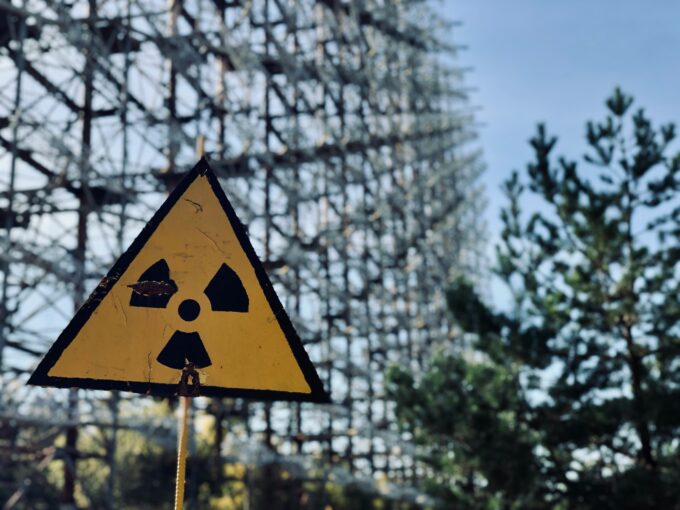
Image by Vladyslav Cherkasenko.

Fukushima Workers Flee Site After Tsunami Scare

Japan is one of the most earthquake-prone areas in the world, and the regular quakes raise traumatic memories of the March 11, 2011, record-breaker that left 19,000 dead and smashed the six-reactor Fukushima-Daiichi site. A magnitude 5.5 quake struck just off Japan’s southeast Tokara coast on July 3; a mag. 4.2 quake hit east of Iwaki, in Fukushima Prefecture July 12; and a mag. 4.1 quake shook the same area July 25.

In late July, a mighty 8.8-magnitude quake struck Avacha Bay in Russia’s Far East, triggering tsunami warnings and evacuations across the entire Pacific Rim. The U.S. Geological Survey said the earthquake was one of the strongest ever recorded.

The owner/operator of the wrecked reactor complex, Tokyo Electric Power Co., evacuated its entire staff of 4,000 in response to warnings of a possible nine-foot tsunami, after first halting its pumping of radioactive wastewater into the Pacific.

Elsewhere in Japan, over 1.9 million people were urged to evacuate the eastern seaboard, and a 4-foot tsunami wave did strike north of Fukushima at Iwate Prefecture, some 1,090 miles from Avacha Bay, site of the major Russian earthquake.

China partially lifts ban on Japanese seafood imports

China “conditionally resumed” the importation of Japanese seafood products June 30 ⸺ except the 10 prefectures closest to the Fukushima disaster site ⸺ after conducting water sample inspections off the coast of the site. Beijing had banned all such imports from Japan as a protest and precaution, following the 2023 start of deliberately discharging large volumes of radioactively contaminated cooling water into the Pacific Ocean. The 2023 ban was imposed to “comprehensively prevent the food safety risks of radioactive contamination caused by the discharge of nuclear wastewater from Fukushima into the sea,” China’s General Administration of Customs said then. Shocked by Japan’s action, Beijing’s Foreign Ministry added that the discharge was an “extremely selfish and irresponsible act,” which would “push the risks onto the whole world (and) pass on the pain to future generations of human beings,” the Agence France-Presse reported.

Chinese customs officials said June 30 the seafood import ban would continue for ten prefectures, namely Fukushima and its nine closest neighboring states. Products from other regions will need health certificates, radioactive substance detection qualification certificates, and production area certificates issued by the Japanese government for Chinese customs declarations, the government said.

Relatedly, Hong Kong announced that it will maintain its ban on Japanese seafood, sea salt, and seaweed imports from the same ten prefectures still targeted by mainland China ⎯ Fukushima, Gunma, Tochigi, Ibaraki, Miyagi, Niigata, Nagano, Saitama, Tokyo, and Chiba ⎯ citing ongoing concerns about the risks associated with the discharge of radioactive wastewater.

Tepco Lost $6 Billion as Meltdown Recovery Falters

Tokyo Electric Power Co. Holdings corporation (Tepco) lost $5.8 billion (903 billion yen) between April and June this year as the owner and operator of the triple reactor meltdown at Fukushima, overrun with the costs of inventing, designing, building, and testing robotic machines with which to remotely extract the ferociously radioactive melted reactor fuel from deep inside the earth-quake and tsunami-wrecked reactors. There are a total of over 880 metric tonnes of “corium” or melted and rubblized uranium and plutonium fuel in three reactors that Tepco claims it will extract. Nikkei-Asia reported August 1st that Tepco says it has $4.7 billion “earmarked for future demolition work” (700 billion yen), which doesn’t even cover this spring’s one-quarter loss. Tepco has said that its preparations for the extraction are “expected to take 12 to 15 years.”

The quarterly financial loss makes a mockery of announced plans by the government and TEPCO to fully complete decommissioning of the rubbished reactors by 2051.

Two out of 14-to-20-million tonnes of radioactive soil buried on PM’s office grounds, in “safety” parody

In a surreal display of political slapstick on July 19th, the office of Japan’s Prime Minister Shigeru Ishiba buried on his office’s garden grounds two cubic meters of radioactive soil scraped up during Fukushima clean-up operations (in which some 14-to-20 million cubic meters of topsoil and debris were collected) ⎯ “to show it is safe to reuse.”

Nippon Television reported that “The radioactive cesium concentration in the soil being buried is 6,400 Becquerels per kilogram” (Bq/kg). “Becquerels” are a standard measuring unit of radioactivity. The 6,400 is below the legally permitted limit of 8,000 Bq/Kg.

The radiation emitted by the soil originates from cesium-137, which was released in large amounts by Fukushima’s melting and exploding reactors and subsequently fell to the ground as fallout. Cesium fallout continues to contaminate vast areas of forest and farmland in the region.

The millions of tons of collected soil now in storage are being tested and sorted to identify material with cesium at 8,000 Bq/Kg or less. Several million tons of it may then be used as fill in construction projects, road-building, and railway embankments all around Japan. Asphalt, farm soil, “or layers of other materials should be used to seal in the radioactivity,” Akira Asakawa, an Environment Ministry official with the soil project, told the Agence France-Presse.

The PM’s demonstration plot is the first “reuse” of the poisoned waste, while experiments elsewhere have been halted due to public protest. The PM’s contaminated dirt was covered up with about eight inches of normal soil to provide some radiation shielding.

Any radiation exposure is unsafe, but adverse effects like radiation sickness, immune disorders, or cancers caused by contact with the radioactive soil would take years or decades to appear, owing to the latency period between radiation exposure and the onset of induced health problems. The joke seems to be that since Prime Minister Ishiba hasn’t dropped dead after walking by, low-dose exposure must be harmless.

Readers may remember a very similar high-level comedy sketch performed by former President Barack Obama, who traveled to Flint, Michigan in May 2016. Drinking water supplies there had been contaminated with lead and to calm the public uproar, Obama sat before the cameras and theatrically downed a glass of water. The straight-faced routine was proof positive and rock-solid confirmation beyond a doubt that Flint’s tap water was safe to drink. Bottom’s up!

Fukushima Disaster Response to Last Eons

Countless dilemmas and setbacks have plagued the now 14-year-long emergency response to the triple reactor meltdown and widespread radiation releases that began on March 11, 2011, at Fukushima on Japan’s northeast coast.

Perhaps the most significant stumbling block, acknowledged by Tepco on July 29, is the “unprecedented” technical complexity of locating, contacting, removing, and containerizing 880 tonnes of highly radioactive melted reactor fuel still smoldering at the bottom of the three devastated reactors.

Unprecedented is the key word here, since the industry has never before had to contain such a large mass of wasted and unapproachable radioactivity. All the work of dealing with the wasted fuel must be done robotically and remotely, since the waste’s fierce radioactivity kills living things that come near. Just planning and preparing to remove the “corium” material will take at least another 12 years.

Toyoshi Fuketa, head of a regulatory body overseeing the site, said at a press conference earlier that “The difficulty of retrieving the first handful of debris has become apparent,” the Kyodo News agency reported.

In 14 years’ time, engineers managed to design, build, test, and rebuild a one-of-a-kind robot that removed less than one-gram of the waste fuel from reactor No. 2 last year. That November “breakthrough” was three years behind schedule, “and some experts estimate that the decommissioning work could take more than a century,” CBS News and Mainichi Japan reported.

The torturously slow process has made Tepco’s early prediction of complete cleanup by 2051 (40 years’ time) appear to have been made up for PR reasons.

Tepco said July 29 that it would need another 12 to 15 years’ worth of preparation ⎯ until 2040 ⎯ “before starting the full-scale removal of melted fuel” at the No. 3 reactor. Tepco earlier claimed that “full-scale” extraction would begin four years ago, in 2021 according to the daily Asahi Shimbun August 1.

Of an estimated 880 tons of debris, only 0.9 grams have been recovered to date. With one million grams in a tonne, Tepco has only 879 million-plus grams to go, and “A simple calculation based on the time since the accident suggests the removal process could take another 13.6 billion years to complete,” the Asahi Shimbun smirked.

China’s reactor report card omits embarrassing emission info’

China issues annual reports on its extensive nuclear power operations known as “China Nuclear Energy.” The 2024 edition, its latest, made headlines by omitting for the first time information on the routine radioactive gases and liquids released from its operating reactors.

Kyodo News reported that the omission may be a way to avoid accusations of hypocrisy, as China has strenuously condemned Japan’s discharge of radioactively contaminated wastewater into the Pacific. At the same time China’s domestic reactors in 2022 reportedly “released wastewater containing tritium at levels up to nine times higher than the annual discharge limit” set by Japan’s discharge authorities. ###

John LaForge is a Co-director of Nukewatch, a peace and environmental justice group in Wisconsin, and edits its newsletter.

Self-Determination for Ukraine, Not a Deal Between Trump, Putin, and European Leaders


August 29, 2025

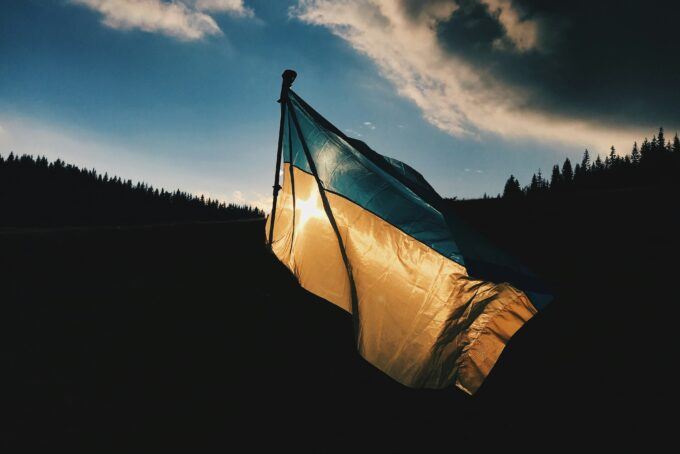
Image by Max Kukurudziak.

We are spitting mad about the meeting between Trump and Putin to decide how to divide up the land and minerals of Ukraine for the benefit of the rich people who dominate their own countries and attempt to dominate the world. Who are they to make decisions for Ukrainians?

Trump uses the police and military to arrest or brutalize people who disagree with him, whether Black people in Washington, Chicanos in Los Angeles, or a “renegade” member of the right like John Bolton. Meanwhile, his actions are killing millions of Africans from disease, closing hospitals in the United States, and threatening small businesses and workers with bankruptcy and homelessness. Putin is just as bad. He rules Russia by terror, assassinates his political enemies, and is driving Russia toward hyperinflation and insolvency to pay for his war in Ukraine.

We are just as mad about the meeting between Trump and the European “allies” of Ukraine, who also met with Trump along with Ukrainian President Zelensky. They should have discussed how to help Ukraine defend itself from Russia’s imperial invasion and get Russia’s army to withdraw back to Russia. Instead, the European leaders and Trump discussed how to provide security guarantees to police a deal that would partition Ukraine with “land swaps” and population transfers. Self-determination for Ukraine — independent for little more than 30 years after centuries of colonization by Russia — was never on the agenda.

Are these the kinds of people who should decide the fates of Ukrainians? When they talk of “land swaps,” Ukrainians know they are talking about making the lives of Ukrainians in the Donbas even worse than they are now during the war. Ukrainians have seen how Russia beats, rapes, and kidnaps kids in the land it has taken over during the last eleven years.

Why do they do this? Because capitalism depends on profits, and the profitability of investments has been shrinking. Competition among corporations is desperate — even the executives of giant tech companies fear each other and worry about bankruptcy. They try to protect themselves by grabbing cheap Ukrainian, African, and Brazilian minerals, laying some workers off and making the others work twice as hard, and taking over countries and lands they see as vulnerable, like Ukraine or Palestine.

The on-and-off approach of Biden, Trump, and European powers to arming Ukraine has been enough to prevent Ukraine’s defeat but well short of that needed to win the war. The European re-armament now underway is more focused on reviving European imperialist military power than on arming Ukraine. British plans to build up to 12 new nuclear-powered attack submarines and French plans to build three new surface warships have nothing to do with defending Ukraine. The European countries who are doing little to nothing to prevent the premeditated starvation of hundreds of thousands in Gaza while still funding and arming Israel’s genocide are hardly reliable defenders of the struggle of oppressed nations for self-determination or even survival.

American corporate leaders of both parties are most afraid of China. It is threatening their profits by out-competing them, and seems ready to take over or otherwise dominate many places whose workers and resources American companies now exploit. This is why American presidents of both parties have wanted to make a “pivot to Asia,” by which they mean using the military and investments to deal with the Chinese challenge to their profits and their sphere of influence. They are perfectly happy to throw a million Ukrainians’ lives into the trash heap to get this done.

So we at the Ukraine Solidarity Network support Ukrainians against the “land swaps” of American, Russian, and European billionaires. We support Ukrainian workers when they have to defend themselves against “their own” government and corporations. We support a people’s peace determined by the Ukrainians, not an imperial peace imposed by foreign powers.

To those who just want the Ukrainians surrender to Russia’s demands so they are no longer bothered by Russia’s nuclear saber-rattling, we can think of no more appropriate final words than to quote the great Ukrainian author, soldier, and socialist, Artem Chapeye:

Arguments such as ‘You, over there, just submit so that we, over here, don’t start getting scared’ are perceived differently from an underground bomb shelter in a Ukraine partly occupied by Russians than in a safe Berlin town square or an Arizona office with air conditioning and a soft sofa.

The Ukraine Solidarity Network (US) is a formation of activists in the US who oppose Russia’s imperialist war on Ukraine and support Ukraine’s struggle for self-determination. It organizes educational events, campaigns, and material aid in solidarity with the people of Ukraine.


1917-1921: The Ukrainian Makhnovist movement - Libcom.org


A Black Hole in Collective Memory: 

China and WWII


 August 28, 2025


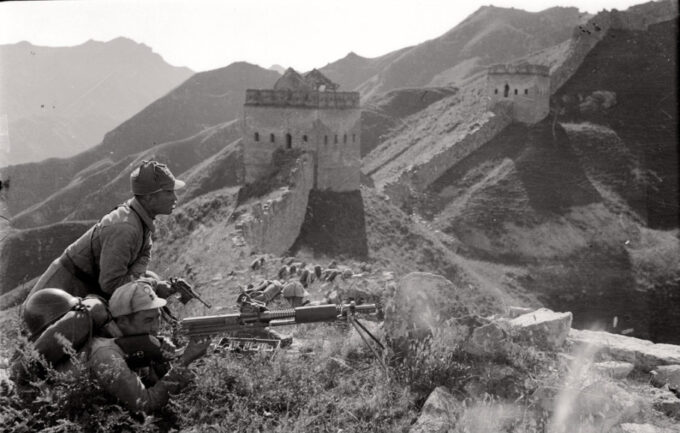
Photograph Source: Sha Fei – Public Domain

As China prepares to commemorate the 80th anniversary of victory over fascism on September 3, 2025, global attention turns to Beijing’s military parade. Speculation swirls about which world leaders will join President Xi Jinping—Putin’s presence is all but certain, though whispers of Trump attending seem far-fetched. Some peace advocates argue this moment offers a chance for global powers to reflect on World War II’s horrors, a sentiment aligned with the UN Charter’s spirit and urgent amid rising global tensions. Yet, European leaders’ refusal to attend, citing concerns about offending Japan, reveals a deeper issue. China’s commemoration closes the cycle of WWII anniversaries, but it begs a critical question: do we truly understand this war’s global scope, or have we allowed vital chapters to fade into obscurity?

A glaring gap exists in our collective memory of World War II—a war we call “global,” yet one where the role of the fourth allied victor, China, is consistently sidelined. China entered the conflict first in 1931, not 1939, and endured until Japan’s surrender in 1945. Over 14 years, it suffered approximately 35 million casualties and tied down a million Japanese troops, enabling the USSR and USA to focus elsewhere. Leaders like Roosevelt, Churchill, and Stalin acknowledged China’s pivotal role in shaping the war’s outcome. So why is this contribution so often ignored and buried under layers of Western-focused narratives?

For many, World War II’s defining tragedy is the atomic bombing of Hiroshima and Nagasaki, horrific acts that serve as a stark warning of humanity’s destructive power, unleashed by the United States. These events deserve remembrance, but the subsequent U.S. occupation of Japan and the imposed peace constitution (also known as the MacArthur Constitution) were less about harmony than securing a strategic foothold in the Indo-Pacific during the Cold War. Today, Japan arms itself under the U.S. nuclear umbrella, ostensibly to counter a “threat” from China. This narrative twist is as convenient as it is misleading.

Like Russia, which fiercely preserves its WW II sacrifices, China now demands recognition for its own. Its resistance to Japanese militarism remains a largely untold saga. A glimpse into this “black hole” of collective memory reveals atrocities that defy comprehension: the Nanjing Massacre of 1937, where 300,000 civilians were killed and mass rapes committed; Unit 731’s chemical and biological experiments on prisoners, including children, so vile they shocked even Nazi observers. German envoys urged Berlin to restrain Tokyo, while Japanese records meticulously documented their brutal chaos. Brave Japanese historians have since exposed these horrors, yet they remain marginal in global discourse. Why the silence?

Uncovering WWII’s history from Asia’s perspective exposes a shameful truth: Western narratives, amplified by Hollywood and media, have selectively glorified some stories while erasing others. The result? Perpetrators are rehabilitated, and victims recast as villains. The West often clings to a biased stance that values some lives over others. Chinese victims have received scant global acknowledgment, their suffering overshadowed by Japan’s post-war redemption narrative. This hypocrisy echoes today in Gaza, where selective outrage, tears for Ukraine but silence for 22 months of Gazan suffering under Israel’s policies, reveals the same double standard. European leaders, shaped by colonial legacies they frame as a “civilizing mission,” are complicit. Meanwhile, the U.S. fuels a trade war with China and, as Kaja Kallas and some media outlets warn, braces for broader conflict, while painting China as “authoritarian and belligerent.” This clashes starkly with China’s anti-fascist history and its modern commitment to global peace.

The adage that victors write history unravels here. China, a clear victor, was denied the platform to showcase its courage, sacrifices, and contributions. Today, it’s unjustly branded as a threat by Western discourse. World War II neither began nor ended in Europe. China, a founding UN member and the first to sign the UN Charter, remains its most steadfast supporter. It rejects the U.S.-dominated narrative, crafted by a latecomer to the war that suffered the least yet unleashed atomic devastation. China’s WWII legacy fuels its modern mission: eradicating poverty, aiding the Global South, building global infrastructure, and championing peace and a shared future for mankind.

Beijing’s commemoration is a bold rebuttal to the West’s monopolization of WWII memory. As Warwick Powell aptly states: “For eight decades, the West has rewritten World War II as an U.S. and European victory, relegating China to footnote status. China’s commemoration this year challenges that amnesia, reclaiming the country’s role as a central force in defeating fascism.” In today’s troubled times, however, remembrance alone isn’t enough. From Gaza to beyond, the fight against inhumanity and fascism demands we confront these historical blind spots and their modern echoes.

This article was produced by Globetrotter