Sunday, August 31, 2025

Banking on Racism? The Blue Jean “War” is Just Beginning


 August 28, 2025



Photo by Ryan Moreno

One of the oldest maxims in advertising is that sex “sells.” But it turns out that race – and racial controversy – “sells,” too. Witness the sprawling controversy over an American Eagle advertising campaign to promote sales of its new line of blue jeans. The campaign features Sydney Sweeney, an aspiring actress who’s considered a rising Hollywood star in some circles. She’s not the first sexy blue-eyed blonde to be treated by advertisers as a shapely “hook” for their hot new brand, but her company’s tag line quickly raised some eyebrows. “Sydney Sweeney has great jeans” – the message in voice over – was meant to be a subtle – and deliberate – double entendre. Did the company mean “jeans,” as the ad actually reads in print, or is it implying that Sweeney also has “great genes,” a not-so-subtle riff on her racial background, and to some, a presumption of racial “privilege” – or worse, “superiority.”  Sweeney herself went on to riff on the genes/jeans connection herself, seemingly amping up the racial innuendo.

Of course, the company still denies any racializing intent – but it wasn’t long before social media posters raged across the Internet.Was American Eagle promoting “White supremacy”? Weeks later, Tik Tokers and You Tubers are still avidly debating the issue. Clearly, the company’s fully aware of what it’s doing – creating buzz and stoking consumer interest in its new apparel line. There’s another old saying in advertising: “Call me anything, just spell my name right.”  Indeed, American has already raked in some $400 million in new sales since the Sweeney ad campaign began. And the company’s doubling-down on its ad campaign, publicly disavowing any need to apologize for any “misunderstanding” – wink, wink – that its edgy tag line has created.

It’s not just thinly-veiled racism that’s being assailed by critics. Some are suggesting that the ads are also highly “sexualized,” with Sweeney cast in some provocative poses, suggestive of a soft-core porn shoot, perhaps. The actress is pushing 30 but she’s made up to look like a pouty and defiant nymphet, maybe even a teenager, in one spot, displaying oodles of skin. American Eagle is getting something of a two-fer here: raising the hackles of conservatives and liberals alike, and creating a feeding frenzy that in theory, could damage the company’s brand – but instead, in today’s amped up sex and often vitriolic racial culture – where every word and inflection is parsed for meaning –  appears to be stoking it to new heights. If few people knew who American Eagle the company was a month ago, virtually the entire country knows now.  

And America Eagle’s competitors are pouncing. Levi’s, one of the largest and most established denim brands, has since expanded its own ad campaign, this one featuring a proud African-American woman at the center. And not just any Black woman, but Beyonce, or Bey, as she’s known to her adoring fans. No one has made the racial connection explicit – but it’s obvious anyway. White supremacy you’re promoting?  Well, how about a heavy dose of Afro-centrism in reply?  Beyonce’s dressed in a full-length blue jeans suit, not the kind of wear you typically might see her in and she’s not the small slender woman Sweeney is. She looks like a Blue Jean Goddess or a Denim Queen, towering over her universe. While Sweeney inspires a certain lasciviousness, Bey commands respect and awe. In other words, game on.

There may be more than one way to look at what’s going on here. One is that these two beleaguered jeans companies cooked up the entire race controversy together to create social media buzz about their respective product lines, and did so cynically to boost sales. But maybe it’s just a timely confluence – or opportunistic piggy-backing – at work: Levis saw an opportunity to counter the “White supremacist” scandal with a “Black pride” response. I favor conspiracy theory. Why? Because it takes considerable advance planning and effort to contract actors, develop and test ad messaging, and organize the actual shoots. The timing here was just a little too perfect, as if American Eagle and Levis were just lying in wait, ready to pounce on unsuspecting consumers, with the roll-out of their consecutive ad campaigns nicely in “sync.”

There’s another reason to believe that the two companies knew what they were doing all along. The jeans industry is actually in trouble, maybe even dire trouble, as blue jeans sales among youngsters especially have declined somewhat sharply over the past two years. The decline was apparent as far back as 2019-2020, but a post-COVID bump seemed like the market might rebound; instead, consumers have grown increasingly cautious about discretionary clothing purchases ever since, and even worse, apparel fashion preferences are evolving; while jeans are still in broadly speaking, it turns out that Gen Z consumers, especially young women, are souring on denim. Big time. 

consumer report published last year tells the story in stark numbers. Young women under 30 are developing new tastes – and with less income are prioritizing their purchases; denim is still great as casual wear but it’s less functional for the office and for the evening night out. And women are clearly becoming more “feminine” – and formal – in their apparel tastes. As a result, a real sense of crisis has begun to set in among the major jeans companies – they’re desperate to capture these rapidly defecting young consumers, ensuring the brand “loyalty” that will make them – and their children –consumers for life. And when you’re down and nearly out, stodgy appeals surely won’t do. Getting those consumers back in the fold requires some bold risk-taking.

So there you have it. The real subtext to this controversy may not be racial at all.  Or even a matter of protecting young consumers – or the rest of us – from “hyper-sexual” messaging. The real subtext is grubby economics – or good-old fashioned capitalism. Jean companies are afraid of losing their market, especially their future market, which relies upon cultivating the apparel tastes of youngsters, especially women, who have always comprised the dominant share of jeans commerce. Sydney and Beyonce may or may not have great jeans – or genes; in fact, neither woman, by most accounts, even wears blue jeans all that much, certainly not in public. Maybe they will more often from now on – but don’t count on it.  Will it even matter?  American Eagle and Levi sales are booming again; by riffing on race, their clever marketing gambit has allowed the two companies to go to war, while appealing across the spectrum, drawing in White and Black Gen-Zers alike, stoking the growth of the overall market. Sydney’s fans are happy – and so are Bey’s. And the two icons – handsomely paid for their willing service as warring sales props – are beginning to make these two beleaguered jeans companies extremely happy.  

Give these two companies some credit. At a time when “DEI” is everywhere under siege, their clever marketing executives have found a way to make America’s unending racial drama bankable. They’ve staged a performance – and attracted a growing audience. Their investors are surely cheering. The rest of us? We barely know what hit us.

There is a danger in this kind of marketing, however – the potential for a sustained backlash. Not just a backlash against the racial innuendo but a backlash from consumers who may not really want to be implicated in the jeans war. While sales of American Eagle jeans are clearly up (online,at least), foot traffic to store outlets is down almost 10%. Not everyone is comfortable, perhaps, being seen shopping for jeans associated with racial innuendo. And Sweeney’s new indie film?  It just bombed at the box office, defying expectations of a windfall. The film may eventually rebound, industry insiders say, but Sweeney’s celebrity aura is taking a hit in Hollywood, leading her diehard fans to denounce the “hate.”

Beyonce’s such a celebrity superstar that her own shiny tiara will likely survive the continuing controversy.  Still, politics – and political controversy – while creating a powerful buzz, can also be a real minefield. Just ask Bud Light about its use of Dylan Mulvaney as a product spokesperson. Companies that play with politics for self-serving ends often find that consumers don’t see the politics involved as a game. In the end, issues of sexism and racism cause real world pain and suffering. To the extent that the comfort and ease that consumers feel wearing blue jeans is diminished, their interest in having them in their wardrobe might also decline. Wait until the first young girl gets denounced at the shopping mall for flaunting her “Nazi” jeans. Could it happen? Time will tell. But the ultimate test will be returns on investment. Unless sales rebound, and denim takes off with youth again, the jeans companies that promoted this thinly-veiled consumer war may not themselves survive.

In fact, the American Eagle/Levi’s jeans “war” is already expanding. GAP and two other companies have just introduced their own new jeans apparel lines aimed once again at Gen Z women. Their sales are booming well beyond American Eagle’s. GAP, it may be recalled, designed a very snazzy ad campaign in the 1980s using African-American urban hop-hop music as a theme.  They weren’t selling jeans – just casual leisure apparel. Today, their jeans models are dancing once again, this time to more modern Afro-centric pop themes. The company’s serving up wholesome fun – and the sex and race politics is not only muted but decidedly PC.

GAP’s even adding insult to injury. Their former top CEO has just penned an op-ed trashing American Eagle and Sydney Sweeney for playing on sexualized racism. Talk about ingratitude! American Eagle got the whole shebang started and now its successor marketers are turning on the upstart. GAP’s really just stirring the pot still further.  After all, in capitalist marketing all’s fair in sex, race – and money.

Stewart Lawrence is a long-time Washington, DC-based policy consultant.  He can be reached at stewartlawrence811147@gmail.com.  

The Business of Schools is Business


 August 28, 2025

Image by David Garry.

It’s that time of year when the days get shorter. The air turns crisp. The shadows stretch longer. And school starts.

It’s also that time when yet another pompous business CEO or ed-tech executive with zero classroom experience trots out a puerile essay declaring what’s wrong with education and how to fix it. Their miracle cure? Some shiny, overpriced gadget or a market-driven ideology dressed up as innovation. School boards and college administrators eat it up—not because it actually improves learning—but because it promises to cut costs by swapping out teachers for tech.

Let’s be clear: American education has real problems. On PISA tests, the U.S. lags behind other advanced nations. (PISA—the Programme for International Student Assessment—is the triennial global exam run by the OECD that measures 15-year-olds in reading, math, and science.) At home, racial disparities across and within districts are massive. Funding gaps create gross inequities in opportunity and outcomes. At the college level, quality varies wildly while costs spiral out of reach for working- and middle-class families. The elite schools? They price themselves like gated communities while clinging to legacy admissions that lock in privilege and perpetuate class stratification.

But here’s the kicker—we’re not listening to the people who actually know what’s going on. Teachers. Professors. The ones in the trenches.

I’ve been teaching for more than forty years. I know what lands in my classroom, and I see firsthand what’s missing. I won’t pretend to have the silver bullet for fixing K-12, but I can tell you that at the college level we’re drowning in goal displacement. Buzzwords like “high-impact” and “experiential learning” get tossed around to mask structural problems. And higher ed isn’t innocent here—it has learned to mimic corporate boardrooms. We sprinkle our strategic plans and mission statements with the same hollow jargon you’d hear at a business retreat: synergy, think outside the box, low-hanging fruit, being proactive, game changer, shift the paradigm. These phrases don’t solve anything. They dress up mediocrity in a glossy suit and distract from the hard, unglamorous work of actually teaching and mentoring students.

Meanwhile, the voices dominating the debate aren’t educators—they’re business executives and ed-tech salespeople peddling miracle cures. Every fall, my inbox fills with vendor emails promising that their platform or gadget will “transform learning.” My LinkedIn feed is littered with ads and think-pieces from self-anointed experts—business leaders who wouldn’t last five minutes in a classroom—proclaiming that their product is the future of education. And the slogans they peddle? They sound like late-night infomercials for the desperate. “Learn Smart, Learn Fast.” “Education Elevated.” “Tech Up Your Learning Experience.” “Innovate Learning, Empower Minds.” “Connect, Create, Educate.” “The Future of Learning is Now.” These aren’t solutions. They’re bright shiny objects meant to dazzle administrators into signing contracts.

Let’s be honest—it’s snake oil. The modern-day Elmer Gantrys of education reform. They push vouchers as a universal cure, even though research shows no consistent evidence that school choice outperforms public education. They sell ed-tech as the savior of teaching, though study after study shows technology alone doesn’t improve learning—and in many cases (cell phones in the classroom) it flat-out distracts and hurts test scores.

What ties all these so-called reforms together is their not-so-hidden agenda: automating education to cut labor costs. Replace teachers with apps. Replace professors with MOOCs. Replace physical schools with online platforms. To administrators under constant budget pressure, it looks tempting. Short-term savings. Efficiency. But in the long run? It guts education.

AI is the next frontier of this scam. Yes, it can be a useful tool, but let’s not kid ourselves. It’s being marketed as the new engine of mass-produced education, the digital equivalent of Henry Ford’s assembly line. At the college level, pair AI with MOOCs and you’ve got a model that can churn out degree-shaped products at scale—cheap, impersonal, and stripped of what makes education transformative. At the K-12 level, AI threatens to replace teachers altogether, turning classrooms into automated learning factories.

For administrators staring down budget deficits, this shift seems logical. But for students? For teachers? For learning itself? It’s a disaster. Education is not, and never will be, about gadgets or buzzwords. It’s about human relationships, critical thinking, mentorship, and the messy, unpredictable process of learning. You can’t automate that. And you sure as hell can’t buy it from the latest ed-tech vendor making the rounds on LinkedIn.

So, as the days grow shorter and the school year begins, let’s tune out the noise from CEOs and ed-tech hucksters. Let’s put the microphone back in the hands of the people who actually know education—teachers and professors. Because the future of learning won’t be saved by snake oil or shiny gadgets. It will be saved by those who live it every single day.

David Schultz is a professor of political science at Hamline University. He is the author of Presidential Swing States:  Why Only Ten Matter.

Civil Society is Playing a Vital Role in Defense of Human Rights


 August 29, 2025

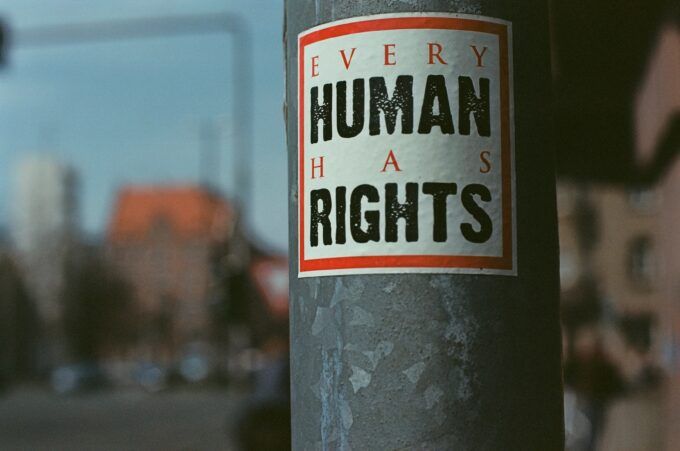
Image by Markus Spiske.

From online news reports to social media platforms, the rise of authoritarianism and the surge in catastrophic armed conflicts are being broadcast in real time. The world has witnessed numerous atrocity crimes, causing many observers to speak out against the violence, but with no clear end in sight.

Sudan is experiencing one of the worst humanitarian disasters to date, with its two-year civil war resulting in more than 150,000 deaths and displacing at least 12 million people from their homes. In addition, the crisis has led to famine, mass starvation, and war crimes, including ethnic cleansing and sexual violence, all of which have received lukewarm condemnation and international neglect.

Similar circumstances prevail in Gaza as the Israeli government continues its crimes against humanity in the region. According to the Human Rights Watch World Report 2025, Israeli authorities have intentionally deprived Palestinians of access to humanitarian aid, including food and water essential for survival. The Israeli Defense Force has also wounded and killed thousands of civilians, destroyed vital infrastructure such as homes and hospitals, decimated schools and camps housing displaced families, and left few or no safe spaces for those caught in their crosshairs.

More atrocities can be found in UkraineHaitiAfghanistanMyanmar, the Democratic Republic of Congo, and beyond. These atrocities range from war crimes to gendered violence to civilians suffering under the oppressive hand of authoritarian regimes.

As these violations mount, the international community is being called upon to demonstrate its commitment to democracy, human rights, and humanitarian action. Many nations, however, have failed to rise to the occasion or have sidestepped those commitments completely.

Even in the case of global governance institutions, such as the United Nations Security Council and the International Criminal Court (ICC), formally established to safeguard human rights and prevent atrocity crimes, their effectiveness is often undermined by structural and political limitations.

The Security Council is frequently paralyzed in its efficacy due to the veto power of its five permanent members (China, France, Russia, the United Kingdom, and the United States), leading to inaction or slowed response to atrocity crimes. Additionally, the ICC has come under intense scrutiny, with some nations accusing the court of targeting weaker states while powerful actors escape its purview. Other nations have sanctioned the ICC for taking action against the powerful or have refused to complywith its arrest warrants.

With both institutions falling short and coming under the attack of politically motivated aggression from countries like the United States and Russia, some practitioners fear that international law is beginning to erode at its edges. For example, in June 2025, former Pakistani law minister Ahmad Irfan Aslam lamented the diminishing capacity of these institutions to deliver real-world justice, cautioning that “[n]o matter what court you approach, you are not going to get justice,” in part due to politicized state behavior.

With mounting global human rights violations and a waning faith in established global governance institutions, there remains a universal feeling of “what next?” or “where do we go from here?” Some may see no path forward.

But there is still hope to be found, especially in civil society organizations, which serve as important counterweights to the gridlocked state-driven systems.

Civil society organizations can act quickly where institutions cannot and can serve multiple roles, such as first responders, watchdogs, pressure builders, and innovators, among others. These organizations have been stepping up to fill gaps where formal aid pipelines are broken, most notably in areas such as Gaza and Sudan.

Sudanese civil society organizations, along with everyday citizens, have established Emergency Response Rooms (ERRs) — grassroots networks that provide shelter, food distribution, education, and medical aid. To date, these networks have assisted over 11.5 million people and earned a nomination for the 2025 Nobel Peace Prize.

In Gaza, local groups, international NGOs, and independent journalists are collaborating to document abuses, distribute aid when possible (although often with limited success), and mobilize global solidarity. Organizations such as Human Rights Watch and Amnesty International have also closely monitored the situation, publicly documenting statistics and personal testimonies of civilians, thereby raising broader awareness (and have kept that same awareness and documentation for Sudan).

In these situations, we see communities and civil society, not bureaucracies with billion-dollar budgets, fighting to save lives while countering attempts to normalize or erase suffering, whether in courts, newspapers, or public spaces.

However, activity by civil society organizations faces significant obstacles. Shrinking civic space, repressive laws, accusations of bias, and dependency on donor funding can undermine their autonomy and impact. According to the CIVICUS Monitor, 118 countries now restrict freedoms of association, assembly, or expression. In addition, activists are often harassed, jailed, or even killed, as documented in the Front Line Defenders Report 2024/2025.

Even so, civil society stands as a beacon of hope against the dysfunctional nature of institutional systems. Although civil society organizations can’t replace these systems completely, they can act as a beating heart to improve the overall circulation of these systems.

Institutions must be placed in a position where they work alongside, rather than above, civil society actors. Funding structures must shift to empower local organizations directly, reducing the crippling dependency on donor-state priorities. And civil society must have formalized roles in peace processes and accountability mechanisms. In short, it needs to be involved in institutional conversations, not left on the outside.

As human rights violations and atrocity crimes continue to unfold in full public view, the question is not whether civil society can fill the void being left by deficient institutions. The question is whether the global community will acknowledge, support, and integrate civil society actors into a truly multi-layered system of protection.

If institutions cannot act and civil society is stifled, then a future where human rights can take root at a global level is no more than a fleeting notion planted in the sand.

Hannah Fields is a publishing and communications professional with over a decade of experience in nonprofit, higher education, and global health, driven by a passion for storytelling that fosters connection and change.