Tuesday, September 02, 2025

New 5.2 quake hits Afghanistan as rescuers scramble to find survivors


Another earthquake hit eastern Afghanistan on Tuesday near to where a 6.0 magnitude quake on Sunday night killed more than 1,400 people. Villagers joined rescue workers in a desperate search for survivors as the disaster threatens to worsen Afghanistan's ongoing humanitarian crisis.


Issued on: 02/09/2025 - 
By: FRANCE 24
An injured person is carried to a military helicopter evacuating victims of an earthquake in Mazar Dara in Afghanistan's Kunar province on September 1, 2025. © Wahidullah Kakar, AP
01:46


A fresh 5.2-magnitude earthquake hit the east of Afghanistan on Tuesday, jolting a region still struggling with the aftermath of a powerful quake at the weekend that killed 1,400 people.

The epicentre of the tremor was close to where a magnitude 6.0 earthquake hit late Sunday night, devastating remote areas in mountainous provinces near the border with Pakistan.

The "quake was felt in the same areas which were affected in Kunar (province) in the first earthquake," Ehsanullah Ehsan, the disaster management spokesman in the hard-hit province, told AFP.

"These aftershocks are constant, but they have not caused any casualties yet."


The quake was reported by the US Geological Survey late Tuesday.

The number of victims from Sunday's earthquake has mounted steadily, with 1,411 people dead and 3,124 injured in Kunar alone, chief Taliban government spokesman Zabihullah Mujahid said on Tuesday, making it one of the deadliest to hit the country in decades.

Read moreEarthquake in eastern Afghanistan kills hundreds, destroys villages

Another dozen people were killed and hundreds injured in neighbouring Nangarhar province.
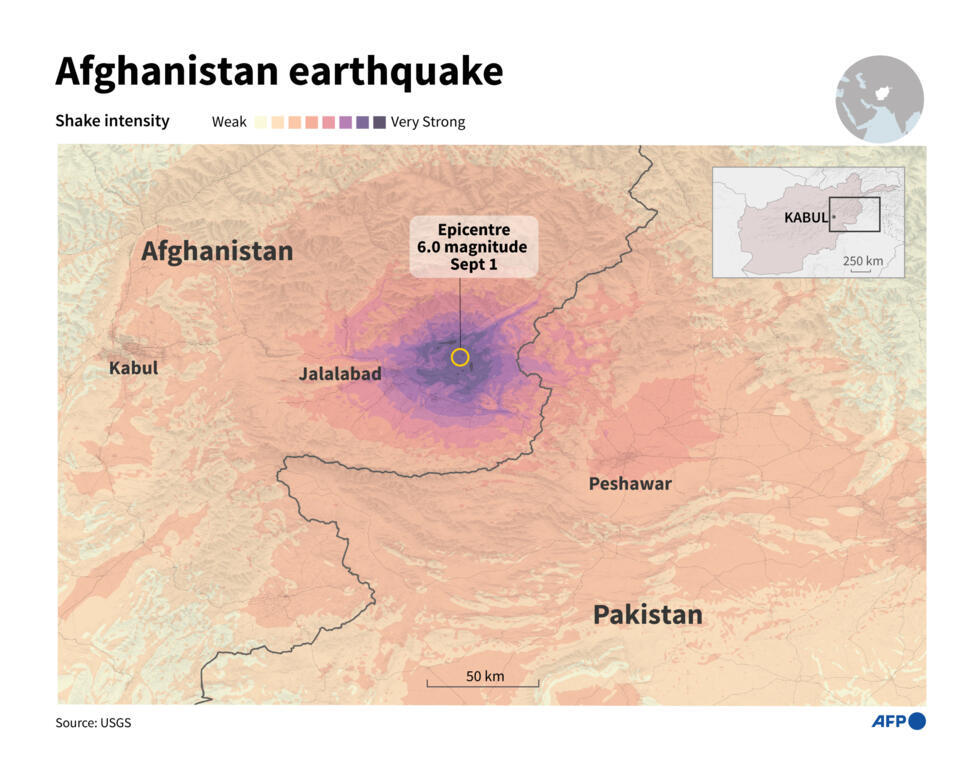
The earthquake struck Afghanistan's eastern provinces. © Jonathan Walter, Jean-Michel Cornu, AFP


Afghanistan is one of the poorest countries in the world, with dwindling aid since the Taliban seized power in 2021 undermining its ability to respond to disasters.

The devastation could affect "hundreds of thousands", said United Nations humanitarian coordinator for Afghanistan Indrika Ratwatte.

Rescuers searched through the night and all day for survivors in the rubble of homes flattened in Kunar, where more than 5,400 houses were destroyed, government spokesman Hamdullah Fitrat said on X.

Many of the worst-affected areas were still unreachable by road, but emergency facilities were being set up and multiple countries had announced they would provide aid, Fitrat said.

The European Union said it was sending 130 tonnes of emergency supplies and providing one million euros ($1.2 million) to help victims of the deadly quake.

The bloc has become one of the key aid donors to Afghanistan after the United States – previously the country's largest aid provider – cut all but a slice of its assistance after President Donald Trump took office in January.

The aid cuts risk impeding the response to the earthquake, sector experts told AFP, in a country already facing one of the world's worst humanitarian crises after decades of conflict.

"The scale of need far exceeds current resources," the International Federation of Red Cross and Red Crescent Societies said in a statement, noting that funding cuts had hit humanitarian air services, "limiting access to remote communities".

© France 24
05:07


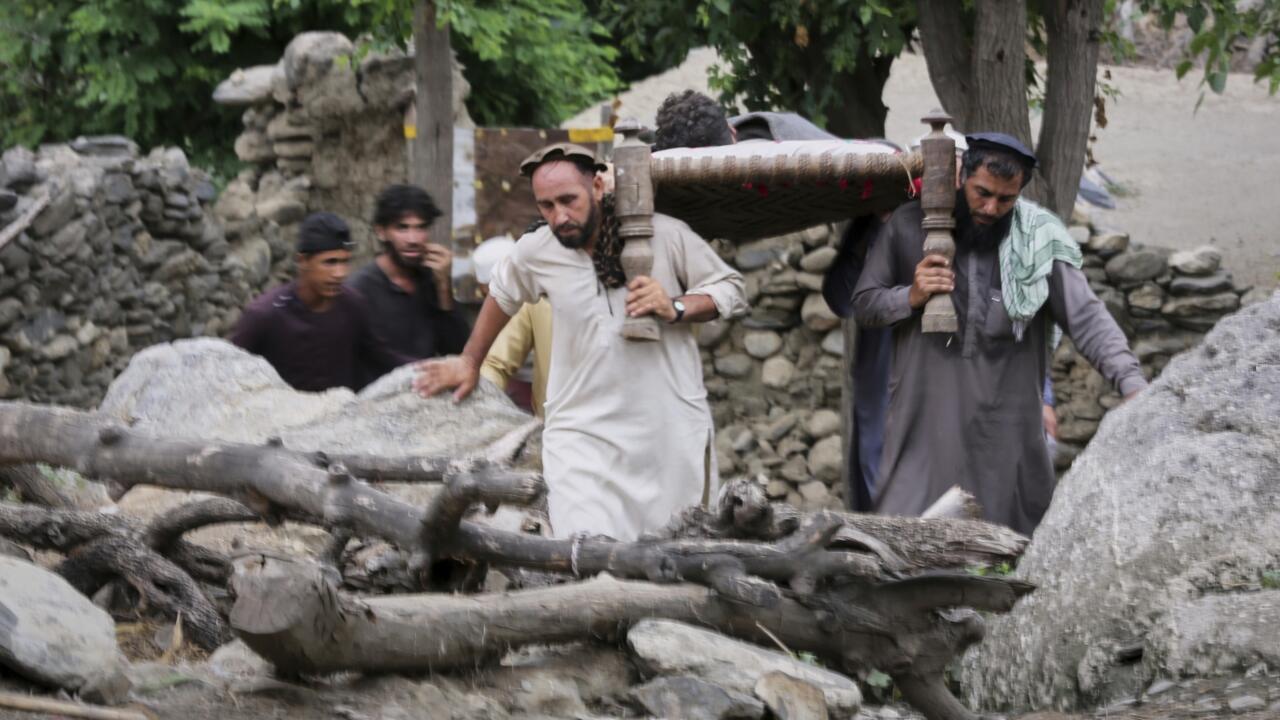
Emergency workers struggled to reach mountainous areas and villagers joined the rescue efforts, using their bare hands to clear debris from mud and stone homes built into steep valleys.

Obaidullah Stoman, 26, who travelled to the village of Wadir to search for a friend, was overwhelmed by the level of destruction.

"I'm searching here, but I didn't see him. It was very difficult for me to see the conditions here," he told AFP.

"There is only rubble left."

The dead, including children, were wrapped in white shrouds by villagers who prayed over their bodies before burying them.
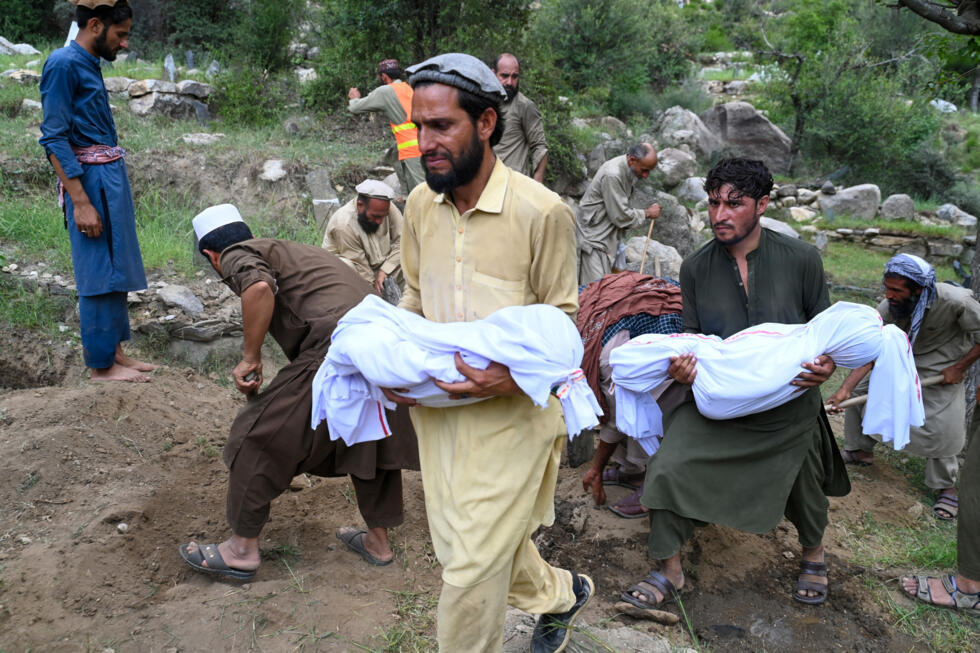
The bodies of two children are taken for burial in Nurgal. © Wakil Kohsar, AFP

'Whole house collapsed'

The earthquake epicentre was about 27 kilometres (17 miles) from Jalalabad, according to the USGS, and struck just eight kilometres below the Earth's surface.

Such relatively shallow quakes can cause more damage, especially since the majority of Afghans live in mud-brick homes vulnerable to collapse.
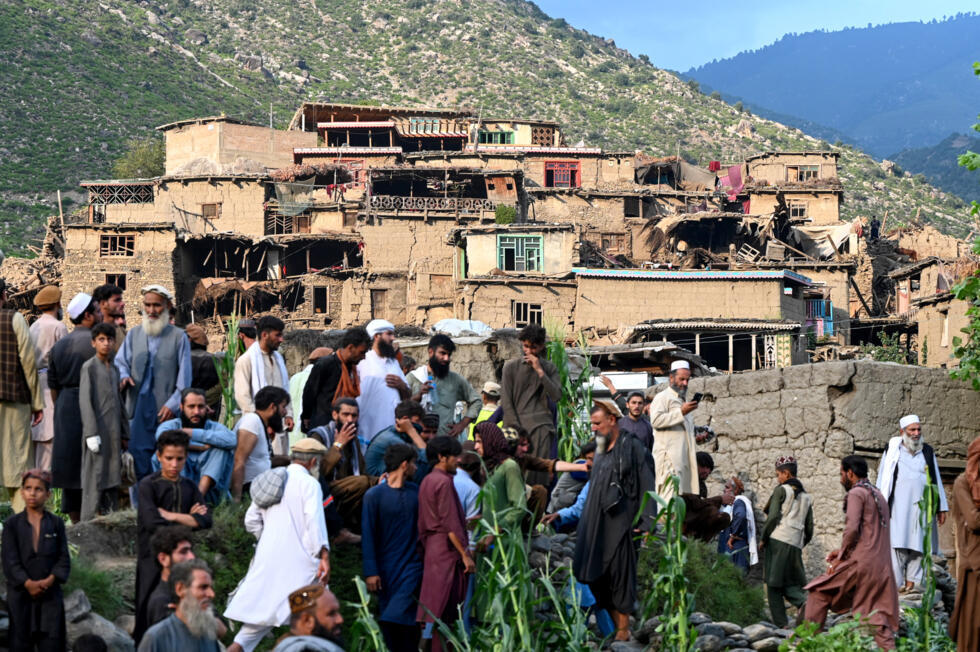
Thousands of mud-brick homes were damaged in the magnitude six quake. © Wakil Kohsar, AFP

Many of those living in the quake-hit villages were among the more than four million Afghans forced back to the country from Iran and Pakistan in recent years, many coming through the Torkham border crossing in Nangarhar province.

Rahmatullah Khaksar, who heads the emergency ward at a hospital in Jalalabad, Nangarhar's provincial capital, said they had received 600 injured since Sunday night.

"Most of the patients were trauma patients. They were hit on the head, back, abdomen and legs," he told AFP, adding they had cleared a ward for unidentified patients "so they will stay there until they find their families".

Afghanistan is frequently hit by earthquakes, especially in the Hindu Kush mountain range near the junction of the Eurasia and India tectonic plates.

Western Herat province was devastated in October 2023 by a 6.3-magnitude earthquake, which killed more than 1,500 people and damaged or destroyed more than 63,000 homes.

A 5.9-magnitude quake struck the eastern province of Paktika in June 2022, killing more than 1,000 people and leaving tens of thousands homeless.

(FRANCE 24 with AFP )


Vietnam marks 80 years of independence from France with parade of 40,000

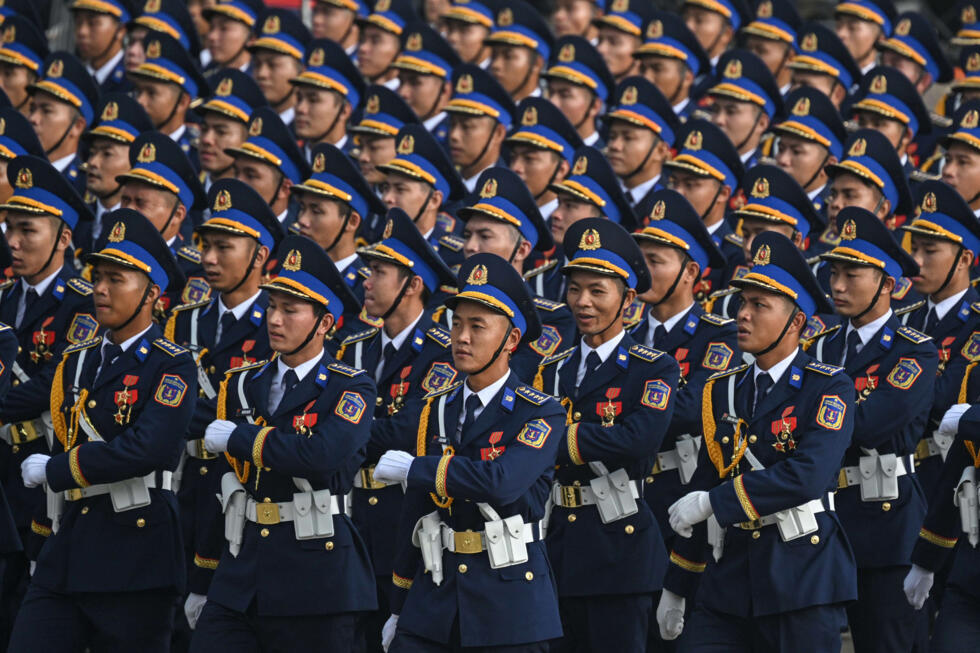
Thousands packed the streets of Hanoi Tuesday to watch around 40,000 troops and civilians march in a military parade to mark Vietnam's 80 years of independence from French colonial rule.


Issued on: 02/09/2025 - 
By: FRANCE 24


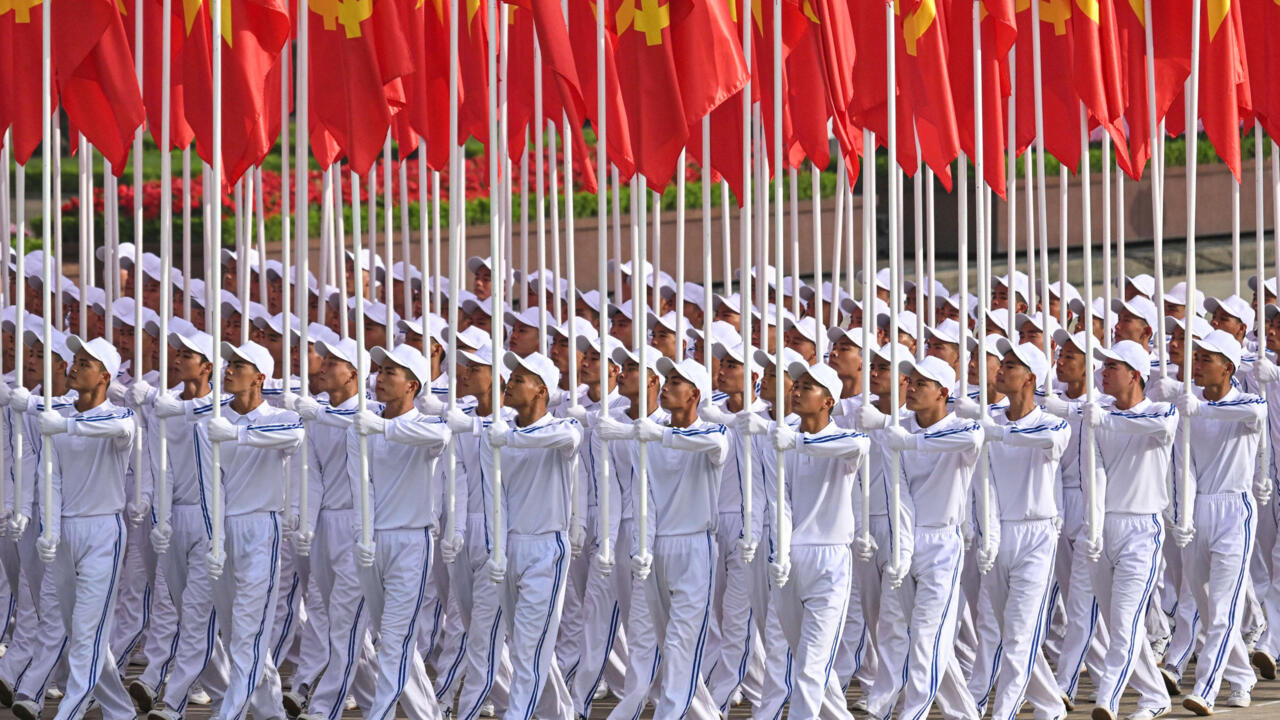
Men carry Vietnamese national and party flags during a parade marking Vietnam's 80th National Day celebrations in Hanoi on September 2, 2025. © Nhac Nguyen, AFP

Vietnam held its largest-ever public celebrations on Tuesday to mark 80 years since the declaration of independence, with legions of lock-stepped patriots marching under fluttering flags.

Around 40,000 troops and civilians began parading in the capital Hanoi after dawn, feting the date when communist revolutionary Ho Chi Minh declared a "Democratic Republic of Vietnam" free from French rule in 1945.

Tanks, drones and missile batteries filed through the streets as helicopters and planes streaked above crowds which were hundreds-of-thousands strong in the sweltering morning sun.

Pham Thanh Van, a 78-year-old veteran, wore his military uniform pinned with medals earned fighting American troops as he watched from a front row seat at the Ho Chi Minh mausoleum.


"This will be my final memory. Don't forget us," he told AFP. "I feel so proud. Independence brought development and prosperity to the country. I felt it worth fighting for."

Hanoi's top leader To Lam marked the top of the parade with a speech as China's number-three official – National People's Congress Chairman Zhao Leji – looked on, alongside influential former Cambodian prime minister Hun Sen and Cuban President Miguel Diaz-Canel.
Tanks, drones and missile batteries filed through the streets as helicopters and planes streaked above massive crowds. © An Pham, AFP
"In this sacred moment, we respectfully remember our ancestors," Lam said.

"Our nation has overcome countless difficulties and challenges. Our country has transformed from a colony into an independent and unified nation, steadily advancing towards modernity and deep integration."

Chinese and Russian troops marched alongside their Vietnamese counterparts in the procession lasting around two hours, beginning with a squadron of helicopters trailing the national yellow-star flag and hammer-and-sickle banners over the capital.

Underneath, youngsters in traditional dress twirled giant floral tributes after artillery fired off a ceremonial salute, and an honour guard of police goose-stepped in pristine dress whites.

"It showcased Vietnam's strength," said impressed spectator 34-year-old Tran Nguyen Trung Chien. "We the people welcomed them all – this showcased Vietnam's high patriotism.

Economic transformation

The tightly-choreographed celebrations out-scaled those staged in April to mark the 50th anniversary of the fall of Saigon, when communist North Vietnam sealed the defeat of the US-backed South.

Read moreFall of Saigon, 50 years on: A tale of war, loss and renewal

Around 40,000 troops and civilians began parading in the capital Hanoi after dawn. © Nhac Nguyen, AFP


The festivities, which state media called "unprecedented in scale", also broke the record 30,000-strong show of force that the one-party state mustered for emancipation celebrations back in 1985.

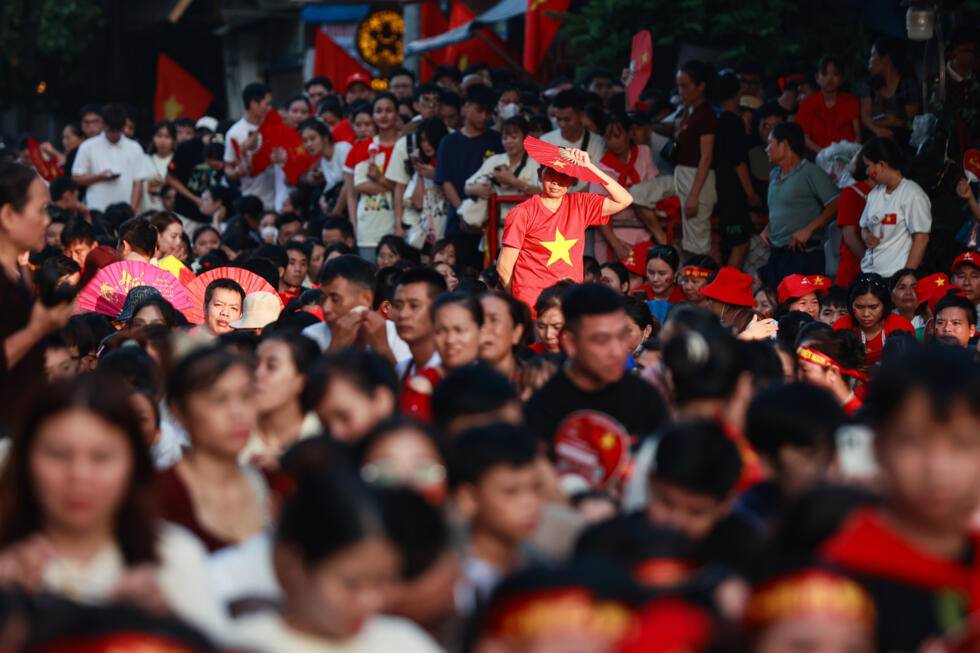
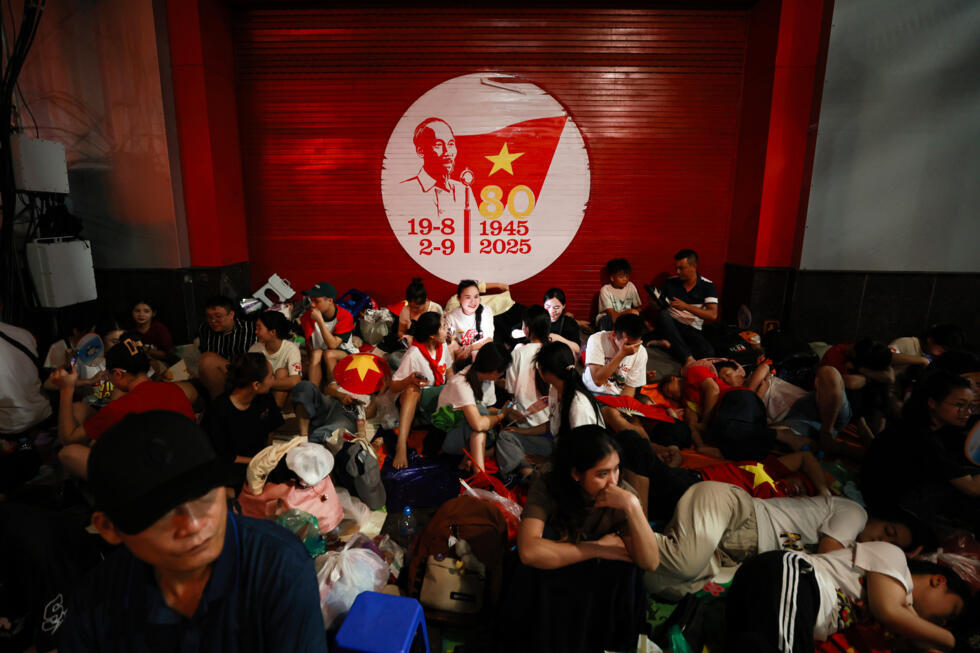
University student Vu Thi Trang staked out her position to spectate from midnight on Sunday – a full 30 hours before the parade's start – her spirits undampened by monsoon season downpours.

"Something inside just pushed me to be here," the 19-year-old told AFP on Monday.

"I am grateful for the sacrifices of the previous generation, so that we have peace and freedom to grow up."

French influence is still visible throughout Vietnam – in the colonial facades of Hanoi's mansions, in its fusion cuisine and schools where the French language is taught as a marker of prestige.

But the celebrations focussed on Vietnam's independent accomplishments, including its economic transformation into a global manufacturing powerhouse.

People waited overnight to reserve their spot in Hanoi for independence celebrations. © An Pham, AFP

Ho Chi Minh's 1945 independence proclamation was not recognised by France, which ruled Vietnam – as well as neighbouring Laos and Cambodia – as colonial assets prized for their rubber, rice and coffee.

But a disastrous military defeat at Dien Bien Phu in 1954 led to France's full-scale retreat from the region.


"We gained independence through the blood and sweat of previous generations," said 36-year-old flag vendor Dang Khoa on Saturday.

(FRANCE 24 with AFP)


Paint thrown at Sagrada Familia in protest of Spanish government's inaction to devastating wildfires

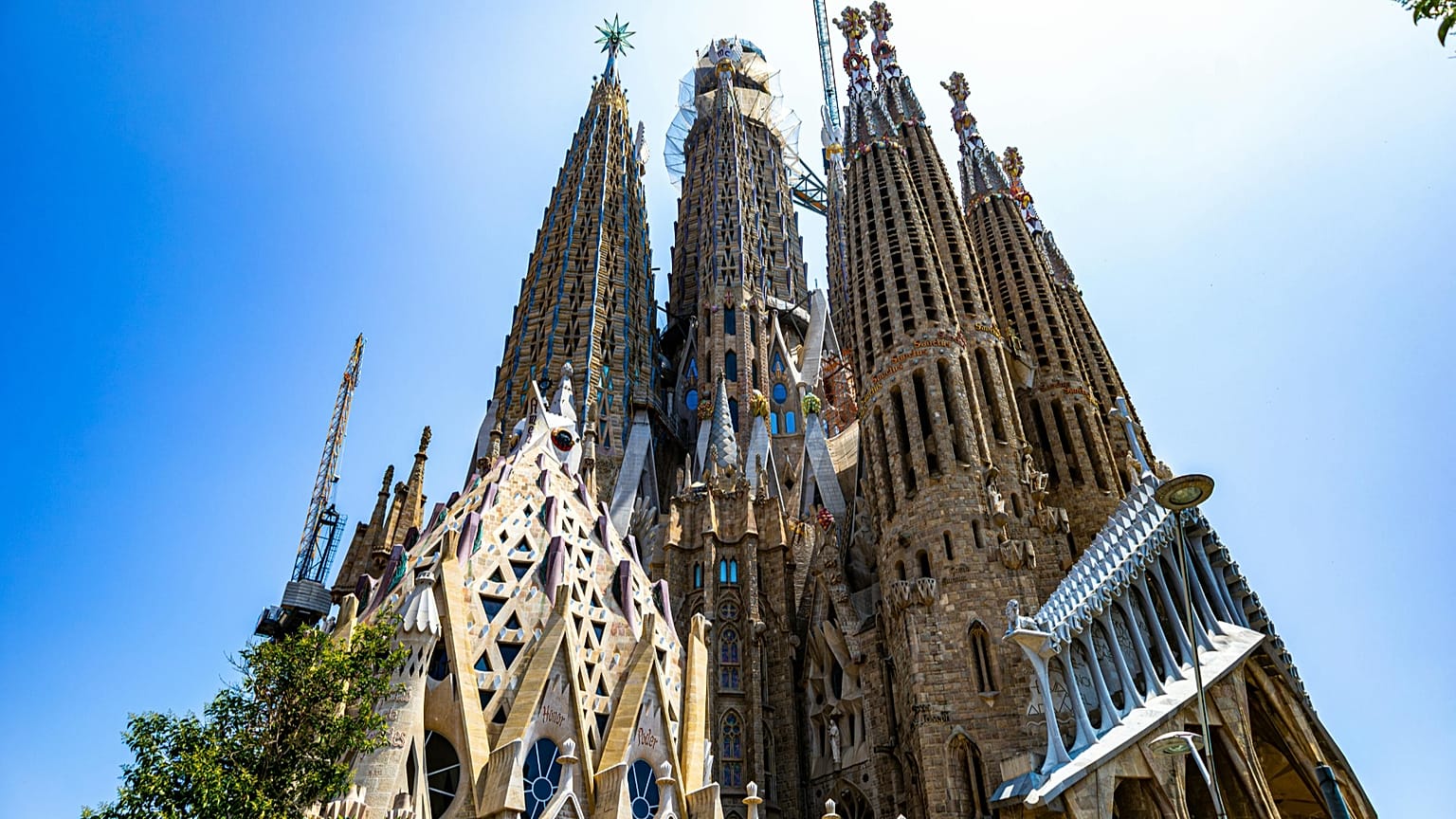
Exterior image of the Sagrada Família.
Copyright Pexels


By Maria Muñoz Morillo
Published on 

Activists from the organisation Futuro Vegetal (Vegetable Future) threw red and black dyed powder against the façade of the Sagrada Familia in Barcelona in protest against the management of politicians during the serious fires that devastated a large part of Spain this summer.

Two activists from the organisation Futuro Vegetal threw red and black powder against the façade of one of Spain's most famous monuments: the Sagrada Familia in Barcelona. The organisation is protesting against the management of the fires that have devastated thousands of hectares of land in Spain this summer.

The protesters were arrested and released after paying a fine of €600.

Check out the moment below:


Futuro Vegetal explained that their action aims to denounce "the complicity of the different governments in the fires that have ravaged the Peninsula this summer" - alluding to the political disputes during the serious fires.

The organisation criticises the "lack of government measures against the climate crisis and its repercussions on the fires that have devastated the Peninsula and a large part of Europe".

Luna Lagos, spokesperson for the association, lamented that "politicians, bankers and CEOs of multinationals continue to gamble our lives to multiply their profits". They also blame industrial livestock farming for being indirectly responsible for around 70% of forest fires.

"Governments are prioritising irrigating livestock farms with public money instead of protecting people who have lost their homes," says Futuro Vegetal. "They subsidise ecocidal industries with our taxes while condemning essential workers such as firefighters and health workers to precariousness."


Nestlé dismisses CEO after undisclosed romantic relationship with subordinate

Copyright Laurent Gillieron/AP

By Doloresz Katanich with AP
Published on 

Freixe, who had been CEO for a year, will be replaced by Philipp Navratil, a longtime Nestlé executive.

Swiss food giant Nestlé said Monday it dismissed its CEO Laurent Freixe after an investigation into an undisclosed relationship with a direct subordinate.

The maker of Nescafé drinks and Purina pet food said in a statement that the dismissal was effective immediately. An investigation found the undisclosed romantic relationship with a direct subordinate violated Nestlé's code of conduct.

"This was a necessary decision," said Chairman Paul Bulcke. "Nestlé's values and governance are strong foundations of our company."

The company did not give any other details about the investigation.

Nestlé leadership


Freixe had been with Nestlé since 1986, holding roles around the world. When Nestlé revamped its geographic structure in January 2022, Freixe became CEO of Zone Latin America.

In August 2024, he was tapped to replace then-CEO Mark Schneider in the top role and started on 1 September 2024.

New CEO, Navratil, began his career with Nestlé in 2001 as an internal auditor and held various roles in Central America.

In 2020, he joined Nestlé's Coffee Strategic Business Unit, and in 2024, he became CEO of Nestlé's Nespresso division.

It's the latest in a string of personnel changes for the company. In June, Bulcke, a former CEO who has been chairman of the board since 2017, said he would not stand for re-election in 2026.

And in April, Steve Presley, an executive vice president and CEO of Zone Americas, said he was retiring after almost 30 years of service.

Based in Vevey in Switzerland, Nestlé has been facing headwinds like other food makers, including rising commodity costs and the negative impact of tariffs. It said in July it offset higher coffee and cocoa-related costs with price increases.

Loopholes in ship flagging system undermine sanctions on Russia, Iran and North Korea – report

In the past year, nearly 700 vessels have been subjected to sanctions.
Copyright Copyright 2022 The Associated Press. All rights reserved.

By Paula Soler
Published on 

As unchecked flagging of ships continues to enable global sanctions evasion, governance must be "radically improved," says a new report by the Royal United Services Institute (RUSI).

Sanctions against Russia, North Korea, and Iran will continue to fail unless the global maritime flagging system is structurally reformed, according to a new report from the Royal United Services Institute (RUSI), a London-based think tank.

The study highlights the increasing reliance of Russia and Iran on evasive tactics, such as hiding ship ownership, disabling identification systems, registering with lenient flag states and flying false flags, in order to evade detection and enforcement.

“The ease with which vessels can obtain flags without scrutiny, avoid ownership transparency and escape enforcement actions has created the conditions for an entire parallel shipping ecosystem,” wrote the report’s authors, Gonzalo Saiz and Tom Keatinge.

Nearly 700 vessels were sanctioned in the past year alone, yet the vessel registration process remains a “critical weakness” in international sanctions enforcement. "Vessels removed from a registry for breaching sanctions can often secure a new flag in a matter of days," RUSI's Saiz and Keatinge noted.

Current measures have proven insufficient, as they mostly react to violations rather than prevent them, the report says. It adds that “diplomatic pressure, enhanced surveillance and national enforcement have yielded results, but such measures remain reactive and uncoordinated."

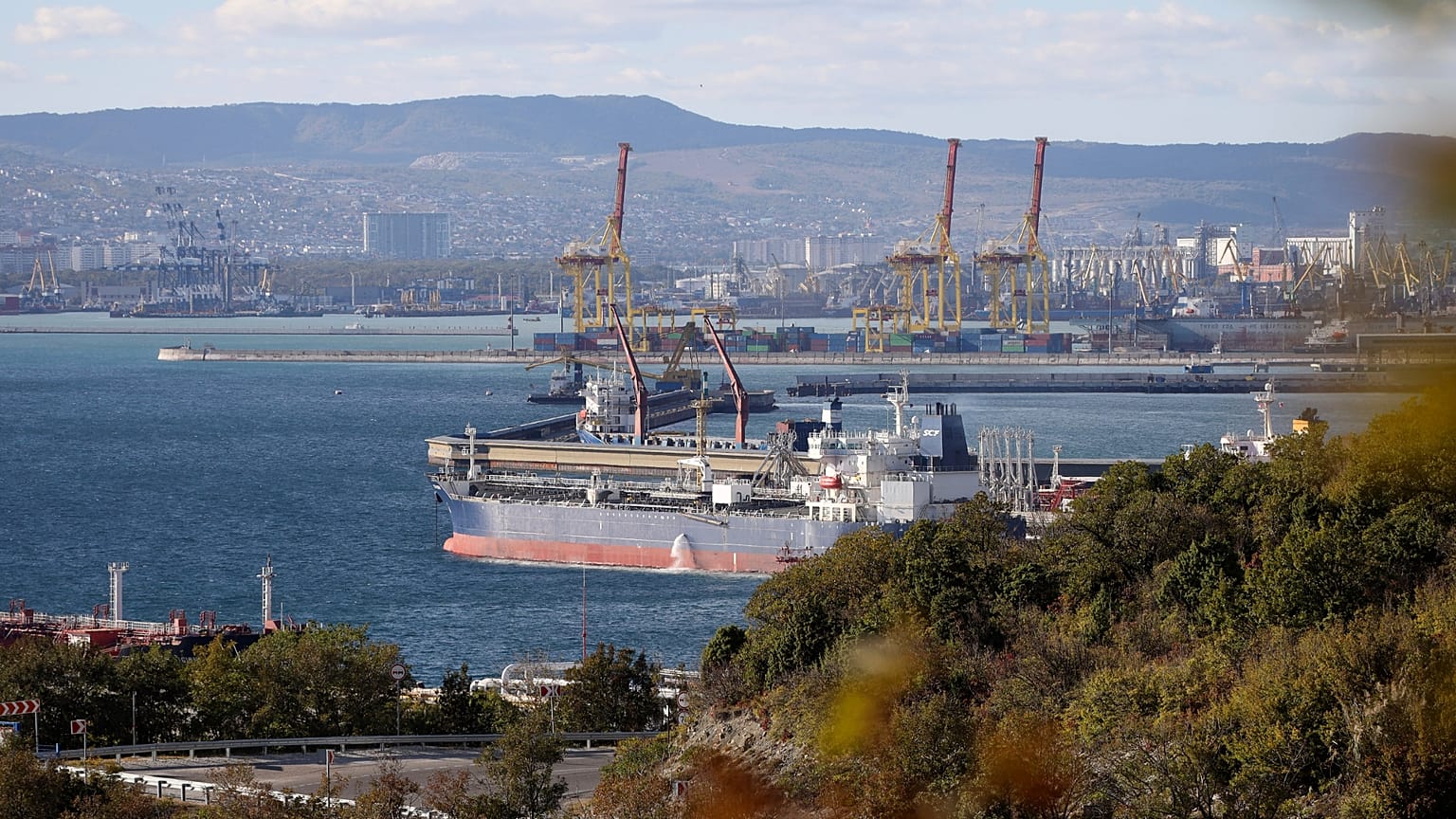
Central to the problem is the so-called shadow fleet—vessels used by the Kremlin to sidestep the Western price cap on Russian oil, a key source of revenue for Moscow’s war in Ukraine.

RUSI analysts argue that maritime governance must be “radically improved,” warning that the International Maritime Organization (IMO) lacks the tools and authority to stop “flag hopping,” a practice where vessels switch national flags to obscure their identity and continue moving sanctioned oil and goods with impunity.

Reflagging is not new, but it has accelerated since Russia launched its full-scale invasion of Ukraine more than three years ago. “Numerous flag states allow registration with minimal due diligence, failing to verify beneficial ownership or assess the risk of sanctions,” the report found.

Some major registries, such as Panama and Liberia, have tightened oversight under diplomatic pressure. Since 2019, Panama has de-registered more than 650 vessels. But these efforts have been undermined by smaller registries—including Cameroon, Gambia, Honduras, Sierra Leone, and Tanzania—that continue to offer flags with little scrutiny.

The system is further weakened by private registration services, which often operate with little oversight and outside the territory of the flag state they represent.

According to RUSI, only systemic reform—supported by the Financial Action Task Force (FATF), the international anti-money laundering watchdog with the power to “name and shame” offenders—offers a credible path forward.

“If the phenomenon of the shadow fleet is not addressed urgently, it will continue to expand, drawing more vessels, cargoes and jurisdictions into a system that rewards opacity over compliance,” the report concluded.

Across several packages of sanctions, the EU has blacklisted a total of 444 vessels belonging to the shadow fleet. All of them are denied access to EU ports and EU services.

Air quality warnings issued in Alberta, Saskatchewan as smoke blankets area

Story by David Boles
• 1d •


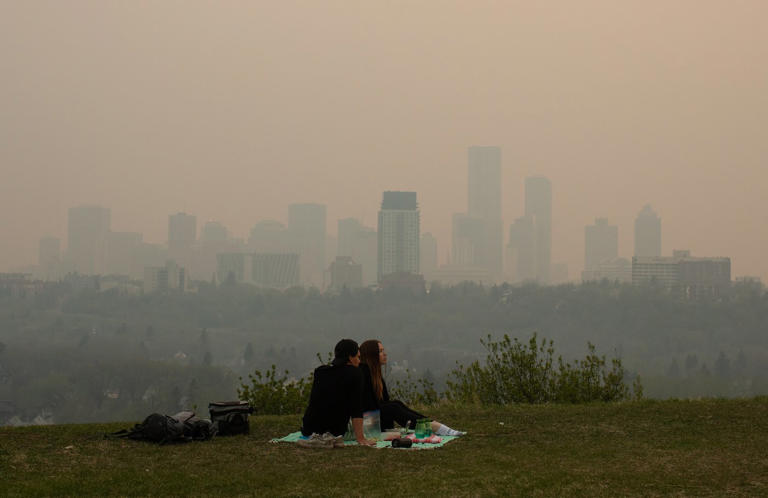
Smoke from wildfires blankets the city as a couple has a picnic in Edmonton Alberta, on Saturday May 11, 2024. THE CANADIAN PRESS/Jason Franson© The Canadian Press

EDMONTON — Air quality warnings are in effect throughout parts of Alberta and Saskatchewan as thick smoke hangs over the region.

Environment Canada says wildfire smoke is causing poor air quality and reduced visibility in central and northern Alberta.

The agency says several cities are expected to see an air quality index of 10 or more throughout Monday and Tuesday, including Edmonton.

The Alberta capital also saw "very high risk" conditions on Sunday.

Several Saskatchewan communities are similarly affected by air quality warnings, including Saskatoon and the northwestern village of Buffalo Narrows, which are also expected to see "very high risk" conditions throughout Monday.

Environment Canada is advising people to limit the time they spend outdoors and consider postponing outdoor sports and activities.

This report by The Canadian Press was first published Sept. 1, 2025.

David Boles, The Canadian Press

New UK employment rights will make defining an employee more important than ever


Columnists
Opinion


'It is now more important than ever to address a surprisingly difficult question: who will be entitled to these employment rights'


Luke Raikes is the Deputy General Secretary of the Fabian Society


The employment rights bill is central to this government’s purpose. It has been described as the ‘biggest improvement in workers’ rights in a generation’. That means it is now more important than ever to address a surprisingly difficult question: who will be entitled to these employment rights – that is, what makes someone an employee?

A person’s employment status is what guarantees them employment rights in the first place. In simple terms, employees have them; self-employed people do not. An employee workforce rightly comes with responsibilities and costs – employers must pay national insurance, and their employees have employment rights, like protection from unfair dismissal. In return, employers may exercise greater control over how they work, for example.

A business may want to undercut their competition, by avoiding these costs while still promising an equivalent level of service to the customer. That leads them to contract a self-employed work force, while trying to manage them as if they are employees. This is what we call ‘bogus self-employment’. A lot of people in this situation are low paid and have few alternatives.

Gig economy businesses have made a lucrative home in this legal grey area between statuses – although there have been issues for decades, from construction to car washing. These days, in any major city, we see a fleet of delivery riders plastered with the familiar logos and names of the platforms that arrange for the delivery. But those platforms don’t treat them like employees – they are, apparently, self-employed.

There is now a risk that a rise in employer national insurance, alongside more employment rights, is a greater incentive for businesses to move to models that allow them to circumvent the cost of employment.

This makes it even more important to progress with the government’s plan to reform employment status, which sits outside of the current bill. The government has said it intends to “consult on moving towards a single status of worker” to address some of these challenges. Uniquely, the UK has three employment statuses. Most will be aware of two main ones – employees, and the self-employed. But there is also an intermediate status, known by the obscure legal term “limb (b)” worker.

This intermediate status was created to provide some protection to self-employed people who have a closer relationship with the business engaging them but aren’t quite employees. Recognising this, they are entitled to a minimum wage and annual leave. Uber drivers were moved into this status following a supreme court judgment in 2021. Last year, Bolt drivers received a similar judgment. The government’s plan is to essentially make all intermediate limb (b) workers full employees to help clarify the situation.

But two-statuses wouldn’t necessary lead to clearer or better outcomes for workers. We don’t even know how big this intermediate group is, let alone the kind of relationship they want with the business they work for. We also don’t know if businesses will react in a way that’s beneficial to those workers. In other countries, businesses have responded to similar measures by bringing in a third party or agency to employ people directly or have switched to a fully self-employed business model.

We therefore have a problem that is both urgent and complicated. While policy makers try to grapple with the nature of the problem, large numbers of people are being denied vital employment rights.

One short-term measure would be to task the government’s new Fair Work Agency to prevent businesses playing games with the current laws – in doing so, establishing precedents that would help clarify the legal situation. They could consider enhancements to the current limb (b) workers’ rights, while they await legislation that may make them employees. And crucially, they could explore how to bring more self-employed people into this intermediate status, so they at least have some employment rights. At the Fabian Society, we have made some suggestions about how this could be done.

The modern labour market is a complicated place – it leaves many people exploited. The government’s employment rights bill will provide security to many of these. But next they will have to tackle some even more challenging areas – including who is entitled to the new protections being created. If they fail to do so, some of the most vulnerable people in the labour market will be left out in the cold.
UK

Actions speak louder


AUGUST 31, 2025


Mike Phipps reviews Don’t Talk About Politics: How to Change 21st Century Minds, by Sarah Stein Lubrano, published by Bloomsbury Continuum.

Is politics a ‘marketplace of ideas’, where the free competition of different political perspectives allows the best ones to win? Or a ‘battle of ideas’, where different viewpoints are debated out until the more superior one triumphs?

Neither, argues Sarah Stein Lubrano, in this intriguing new book. These models are not helpful in explaining how people are likely to change their views. They fail to take account of how we seek confirmation bias for the views we already hold or experience cognitive dissonance when views contradict each other or clash with our behaviour.

Why argue?

In the modern world, our political views are often part of our identity, so changing your mind about something can mean re-thinking who you are, which many people would find difficult. Put like that, it seems obvious: the refusal of some Americans to alter their support for gun ownership relates to their stance being part of their cultural identity.

Worse, political debate functions to polarise positions and force people to pick a side. Nuance is sacrificed along with consensus. The author cites the debate on trans rights: “As writer Shon Faye points out, endless sweat and ink are spilled over s few transgender swimmers or the rare case of a transgender person in a prison or a domestic violence shelter, whereas the most pressing issues facing transgender people are lack of employment, healthcare and housing – all issues that are hardly specific to trans people and are indeed crucial to cis women in particular, whose well-being is often held up as a reason for denying trans people recognition or inclusion.”

Political debate also makes competing views look more ‘even’ than they might be. Broadcasters hold debates about whether climate change is happening, with sceptics platformed in the interests of balance, despite the overwhelming scientific consensus.

Yet as the author herself concedes, in critiquing these ways of doing politics, one must be careful not to reject the whole idea of rational argumentation, even if it may not be the main way people alter their views.

Why protest?

If debate plays little part in changing people’s views, what about protest? Evidence suggests that the biggest impact of protests is on the protesters themselves, rather than politicians or the general public. After two years of demonstrating against Israel’s bombardment of Gaza, it certainly seems that the political class is determined to ignore the largest mass movement in a generation.

But I wouldn’t be so sure. Without the protests, the government would feel no pressure to issue statements of condemnation or reduce their ties with the Israeli apartheid regime, however limited these steps may be. And while the colossal movement against the invasion of Iraq failed to stop that war, it was arguably still in the minds of Labour MPs a decade later when they refused to support the Coalition’s plans to intervene militarily in Syria – which effectively scuppered the whole venture.

The effect of protests on their participants, however, is significant, changing their lives and giving them political agency. Being determines consciousness, and thus attempts to change aspects of government policy give us a clearer understanding about how other parts of the system work – particularly, for protesters, the repressive apparatus of the state.

The threat of a good example

Action versus words: “To change people’s views on the importance of climate change, for example, it may be more effective to provide incentives for them to install a solar panel on their roof than argue with anyone about climate change. Having done something towards the cause of decarbonising, they are far more likely to be receptive to environmentalism as a whole.”

There’s a lesson there for government: do the right things on the environment and people will adjust and approve.

Similarly, our views are more likely to change, less as a consequence of rational discussion, and more because of the relationships and friends we have. The author cites consciousness raising in the early feminist movement and ‘deep canvassing’  as examples of how this process might work.

Sarah Stein Lubrano believes we have to find new ways to connect with people, rebuilding a strong social infrastructure to overcome the degradation of the public sphere and the atomisation of people – wrought, some would say, by neoliberalism – and intensified by the rise of social media and the Covid pandemic.

Social atrophy is on the increase. “Today, more than half of all Americans have no or minimal access to ‘civic infrastructure’. A fifth report no access at all to space where they could meet or talk to neighbours.”

Social trust is lower in countries which have greater inequality and the poorer you are, the more isolated and alienated you may be. The far right’s exploitation of these phenomena via social media is noteworthy here, but the problem is wider. As the author says, “We are facing a choice about whether we allow capitalism to atrophy social spaces, shrink our brains and make us more paranoid and withdrawn from each other.”

The way forward? Rebuild communities. Organise people. The Black Panthers understood that when they organised free school lunches in the community. What’s more, eventually the government started doing the same.

As the author acknowledges, all of this is harder than talking and takes time. But writing on this site earlier this year, she says: “But it’s also very fulfilling, because it permanently orients one in a world of meaning, and connects one back to others.”

After reading this thought-provoking book, I was not entirely convinced.  A recent study showed that the decades-long boycott of the Sun newspaper in Liverpool, which began in the aftermath of the Hillsborough disaster in 1989 when the newspaper vilified the football fans, has resulted in people in the city being more left wing than otherwise. I was left wondering whether these left-wing tendencies were the result of not reading the newspaper, or a shared sense of an active community boycott. Perhaps a bit of both?

Mike Phipps’ book Don’t Stop Thinking About Tomorrow: The Labour Party after Jeremy Corbyn (OR Books, 2022) can be ordered here.

UK

30,000 tell Keir Starmer – We Stand with Diane Abbott!


SEPTEMBER 1, 2025

By Arise – a Festival of Left Ideas volunteers

A grassroots petition standing with Diane Abbott – after the Keir Starmer-led Party machine suspended her from the Labour Party – has reached the landmark of 30,000 signatures.

Expressing her solidarity with Diane, fellow MP Apsana Begum said: “As the first Black woman MP, Diane stood up against racism, so that decades later I could become the first hijab-wearing MP. Diane has stood with communities of all backgrounds for decades against racism, division and hate. We stand on her mighty shoulders against attacks she continues to face for being in public life.”

Welcoming the rising support the initiative is gathering, BFAWU General Secretary Sarah Woolley said, “Working people know the value of solidarity, and over 30,000 have already stood with Diane Abbott against the disgraceful way she is being treated. As trade unionists, we will not be silent while Britain’s first Black woman MP is disrespected — we stand shoulder to shoulder with Diane, just as she has always stood with us.”

Ellen Morrison, Disabled members’ representative on the Labour Party NEC, said:“It’s important we stand in solidarity with Diane as both a respected figure of the labour movement and a tireless campaigner for all, having been a clear voice against the recent proposed punitive cuts.”

Myriam Kane, Co-Founder of the Black Liberation Alliance also expressed their support for Diane and the campaign, saying: “As the far-right go on the rampage in a febrile racist climate against refugees and migrants, it beggars belief that the Labour leadership has turned on Diane Abbott, a trailblazing anti-racist. We stand with Diane. We demand that she is brought back into the Parliamentary and wider Labour Party.”

Sabby Dhalu, Stand up to Racism Co-Convenor added: “Diane Abbott MP’s record on challenging racism is second to none. Labour needs MPs like Diane. Labour must bring back Diane into the Party. Failure to do so could indicate that it does not take seriously racism experienced by black communities and risk losing black voters.”

MP John McDonnell commented: “Diane has worked tirelessly over decades to serve her constituents and to secure Labour in government. She should be treated with respect and have the Labour whip restored.”

Matt Willgress, on behalf of the Arise – a Festival of Left Ideas volunteers who have organised the petition said: “We are sending a clear message to Keir Starmer and co that across our communities, across our movements, and across the country, we stand with Diane Abbott! Let’s keep speaking up, including by passing motions across our labour and social movement local bodies in solidarity with Diane, and by  hitting 35,000 signatures as soon as possible.”

The petition can be viewed at https://actionnetwork.org/petitions/restore-the-whip-to-diane-abbott  A model motion for all local labour and social movement bodies standing with Diane Abbott will be available next week – contact arisefestival@yahoo.com with any queries.

 Image: https://commons.wikimedia.org/wiki/File:Diane_Abbot_MP,_Labour_Party_UK.jpg. Author: Sophie Brown, licensed under the Creative Commons Attribution-Share Alike 4.0 International license.

UK


The left and CND – the history


SEPTEMBER 1, 2025

Ahead of a talk to the Socialist History Society later this month, Martin Shaw introduces some themes from his new book.

As nuclear weapons rise even further up the global agenda – the Israeli-US attack on Iran’s nuclear programme is the latest reminder – it is important to revisit the history of antinuclear activism. My new book, The Campaign for Nuclear Disarmament, is the first to re-examine this history for some time, and brings it up to date. A Socialist History Society (SHS) online session on the book, ‘The Left and CND’, on 16th September at 7 pm, is an opportunity to discuss both the past and present of this important campaign in the UK.

Antinuclear activism has not only been important in its own right. It has also been at the forefront of left-wing politics in Britain since the 1950s; its tactics, especially nonviolent direct action (NVDA), have been seminal for other campaigns. The different emphases within the movement against the Gaza Genocide, which has seen both mass protest and direct action – both of them targeted by the government and the police – recall the debates within the antinuclear movement which I discuss in the book. These will be part of my SHS talk.

Here I give some background. The Campaign for Nuclear Disarmament (CND), Britain’s best-known antinuclear organisation, was established in 1958, after the UK shifted its defence policy to rely on the so-called ‘independent nuclear deterrent’ the previous year. Britain had already tested its own bomb and hosted American nuclear-armed bombers over the previous decade.

To me, one of the most interesting stories I uncovered was that of the US’s Thor missiles, which the Tory government agreed to host in 1957. There were 60 missiles, and unlike the better-known cruise missiles of the 1980s (which were concentrated at Greenham Common and Molesworth), they were installed at no fewer than 20 bases across eastern England. Targeted at the Soviet Union, these put Britain right at the forefront of any American nuclear war, at a time before the US could strike Russia with intercontinental ballistic missiles.

Although the H-bomb aroused most public horror and CND became known for the slogan, ‘Ban the Bomb’, the Thor missiles provoked important protests in 1958, the year the first of the famous Aldermaston marches was held. The Cambridge Labour party and trades council marched to a base at Mepal, Cambridgeshire, after the Ministry of Defence tried to stop them because, under the Official Secrets Act, the base ‘did not exist’! Meanwhile, the Gandhian pacifists of the Direct Action Committee Against Nuclear War (DAC) attempted to block the construction of a Thor base at North Pickenham, Norfolk.

These different styles of action set the scene for conflict within the antinuclear movement and the left. Even the sympathetic Labour MP Stephen Swingler, a veteran of Keep Left (a forerunner of the Socialist Campaign Group), criticised “pacifists making martyrs of themselves” and “adopting IRA tactics” at Pickenham. Canon John Collins, CND’s chairman, for whom Labour was the route to the campaign’s success, also denounced them. In return, the DAC tried to stand independent candidates against Labour candidates who failed to support unilateral nuclear disarmament (this wasn’t successful in the conditions of the 1950s).

Meanwhile, the major unions swung in favour of CND, and Labour famously adopted a unilateralist policy at its 1960 conference. However, the unions soon swung back to the ferociously anti-unilateralist Labour leader, Hugh Gaitskell, and conference reversed its decision in 1961. This took the momentum away from the CND executive and towards a new direct action organisation, the Committee of 100. After it tried to block the RAF/USAF base at Wethersfield – today, notorious for housing asylum seekers – its leaders were arrested and charged under the Official Secrets Act. At their 1962 trial, most received 18-month sentences, considered shocking at the time.

Neither CND nor the Committee of 100 was able to stop Britain’s nuclear weapons policy in the 1960s. Although Labour’s 1964 manifesto criticised the proposed Polaris submarine missile system in CND’s terms – “It will not be independent and it will not be British and it will not deter” – the new Labour leader, Harold Wilson, went ahead anyway with its purchase from the USA. His successor, James Callaghan, started the process of replacing Polaris by the Trident system, also from the USA.

It was only in 1979, after NATO decided to install nuclear-armed cruise missiles in five European countries including the UK, as well as Pershing II missiles in West Germany (these could destroy Moscow in minutes), that the antinuclear movement started to revive. The historian E.P. Thompson and the Bertrand Russell Peace Foundation’s Ken Coates launched the Appeal for European Nuclear Disarmament in 1980, local peace groups spread rapidly, and eventually CND – which incoming general secretary Bruce Kent had found almost moribund – became a powerful national organisation again.

This time, the British antinuclear movement had a target, a deadline – the expected installation of the missiles in 1983 – and powerful allies in every West European country. Women activists began the most important direct action in modern British history, at Greenham Common in 1981; the Special Branch would write in 1983 that NVDA was “without doubt the most influential force within the peace movement.”

However, the movement still needed Labour: with Michael Foot as leader, the Party’s chances in the 1983 election were crucial to a realistic prospect of blocking cruise missiles. It was not to be, and although nuclear policy is widely cited as the reason for Labour’s defeat, that judgment was (I show) too simplistic. Margaret Thatcher’s government installed the cruise missiles in late 1983, but by 1987, Mikhail Gorbachev had persuaded Ronald Reagan to get rid of them. I argue that the peace movement played a crucial role in this turnaround, but you’ll have to read the book to understand why!

I also take the story into the twenty-first century. CND has been a crucial part of coalitions against the Iraq War and the Gaza genocide as well as continuing to campaign against nuclear weapons, and direct-actionists struck at military hardware long before Palestine Action was formed. As for Labour, after the hopes raised by Jeremy Corbyn’s leadership were dashed, David Lammy and John Healey published an article in 2023 proclaiming nuclear weapons part of ‘Labour’s heritage’. Yet nuclear disarmament is still the cause of many in the party, as I’m sure readers of Labour Hub will agree.

Martin Shaw is emeritus professor of International Relations at Sussex University and research professor at IBEI, Barcelona. As well as The Campaign for Nuclear Disarmament, he has written widely on Gaza, including The New Age of Genocide which comes out next month. Both these books can be ordered from Agenda Publishing with a 30 per cent discount, using the code AGENDA30 at checkout. You can also follow Martin on his website and on Twitter.

Image: c/o the author.