Friday, September 05, 2025


Indonesia uncovers over $60mn in Hajj quota corruption

Indonesia uncovers over $60mn in Hajj quota corruption
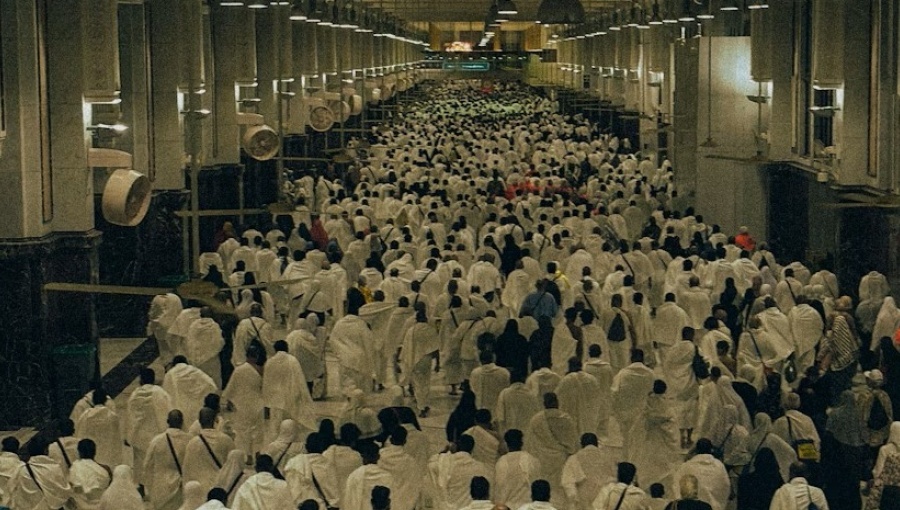
/ Mohammad Mubasher - Unsplash
By bno - Surabaya Office September 4, 2025

The Corruption Eradication Commission (KPK) has intensified its investigation into alleged corruption surrounding Indonesia’s 2023–2024 Hajj quota, with state losses already estimated at more than IDR1 trillion ($60.9mn). According to Tempo.co, the scandal involves the mismanagement of 20,000 additional quotas provided by Saudi Arabia, which were intended to shorten waiting times for Indonesian pilgrims. Instead, the distribution became a lucrative source of abuse, with suspicions that special Hajj candidates were able to depart immediately without enduring the usual years-long queue.

KPK spokesman Budi Prasetyo explained that this allegation is central to the probe. As reported by VOI.id, on September 1, investigators questioned four witnesses at the agency’s Red and White building in South Jakarta: these included Achmad Ruhyudin, a financial staff member of the Mutiara Haji Association; Arie Prasetyo, Manager of Uhud Tour; Asrul Azis Taba, the General Chair of Kesthuri and the Commissioner of PT Raudah Eksati Utama; as well as Eris Herlambang of PT Anugerah Citra Mulia. “They were examined regarding the process of obtaining additional Hajj quotas and the possibility of special Hajj candidates being able to leave immediately without queuing,” Budi said in a written statement on September 3, as cited by Tempo.co.

Seized assets and evidence

The case has already led to the seizure of large assets. VOI.id reported that investigators confiscated $1.6mn, four vehicles, and five parcels of land and buildings linked to parties suspected of profiting from the quota distribution. Budi described these seizures as essential for both strengthening evidence and ensuring recovery of state losses. “This is the KPK’s first step in optimising asset recovery in light of financial losses caused by corruption,” he said.

The investigation has also drawn in prominent figures, including former Minister of Religious Affairs Yaqut Cholil Qoumas, who was questioned regarding the rationale behind the controversial 50:50 distribution of quotas between regular and special Hajj. As Tempo.co highlighted, this allocation violated existing law, which stipulates that 92% of quotas should go to regular pilgrims and just 8% to special Hajj participants.

Money trails and legal grounds

KPK officials emphasised that the probe aims to uncover the flow of illicit funds generated by the alleged buying and selling of quotas. According to VOI.id, the investigation is supported by a general investigation warrant (Sprindik), which grants authority for coercive measures, including witness examinations and searches. The warrant applies Article 2 and Article 3 of the Anti-Corruption Law, alongside Article 55 of the Criminal Code, underscoring that the scandal has inflicted measurable losses on the state.

Early estimates already put those losses above IDR1 trillion, but Tempo.co reported that the figure could rise significantly as KPK continues to coordinate with the Supreme Audit Agency (BPK).

Testimonies and institutional support

Officials from the Hajj Financial Management Agency (BPKH) have also been questioned. Head of BPKH, Fadlul Imansyah, confirmed after a day-long session with investigators on September 2 that he provided information and fully supports the legal process. Speaking to VOI.id, he stressed, “As good citizens and representatives of state institutions, we fully support all efforts to uphold the law.”

Not all figures summoned have complied. Tempo.co noted that preacher and Uhud Tour owner Khalid Zeed Abdullah Basalamah failed to appear for questioning, citing other commitments. His absence adds another layer of complexity to an already sprawling probe that involves government officials, financial managers, and private tour operators.

Implications for pilgrims and institutions

The Hajj quota scandal is more than a financial crime. For millions of Indonesians waiting up to two decades for their turn to embark on the pilgrimage, revelations that some individuals bypassed the queue through corrupt means strike at the heart of fairness and trust in the system. As VOI.id observed, the misuse of Saudi Arabia’s goodwill in providing an extra 20,000 slots undermines both public faith in religious institutions and Indonesia’s international credibility.

As investigations continue, the KPK faces the dual challenge of tracing complex financial transactions and holding powerful figures accountable. With state losses already surpassing IDR1 trillion and the prospect of more revelations to come, this case stands as one of the most significant corruption scandals to hit Indonesia’s religious affairs sector in recent years. Both Tempo.co and VOI.id underline that the outcome will be closely watched, not just for the recovery of state funds but for restoring public trust in the integrity of the Hajj pilgrimage process.

 

SCO summit highlights India’s balancing act

SCO summit highlights India’s balancing act
/ The Shanghai Cooperation Organisation
By bno Chennai Office September 3, 2025

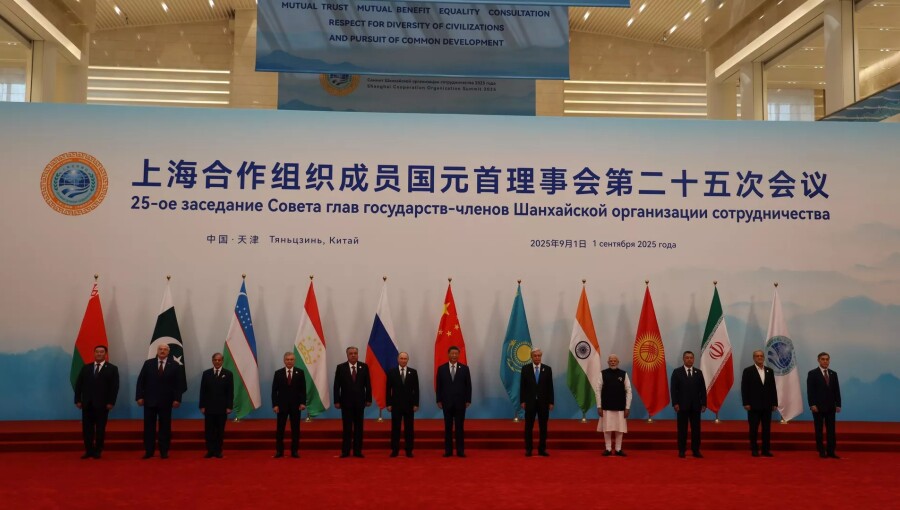
The Shanghai Cooperation Organisation (SCO) summit in Tianjin, held from August 31 to September 1, 2025, reflected India’s careful balancing strategy. On the one hand, New Delhi maintained dialogue with China and Russia, while on the other it reiterated its long-term dependence on the US for its Indo-Pacific strategy. Hosted by China, the summit was the largest in SCO’s history, with leaders from over 20 countries and several international organisations in attendance.

Chinese President Xi Jinping used the platform to announce proposals including an SCO development bank, an energy cooperation mechanism, and a multi-billion dollar loan programme over three years. He also offered member states access to China’s BeiDou satellite system. For India, participation was both a bridge and a shield. It allowed New Delhi to remain engaged with Eurasian institutions while avoiding full alignment with Beijing or Moscow.

Indian Prime Minister Narendra Modi held bilateral meetings with Xi and Putin. With Xi, he underlined the importance of India-China relations for advancing an Asian century and a multipolar world order, while also stressing the need for peace along the border through existing mechanisms.

With Putin, Modi reaffirmed the so-called “all weather” nature of India-Russia ties. Their joint limousine ride and discussions showcased enduring warmth, even as India pressed for progress toward peace in Ukraine. Still, the summit highlighted the SCO’s limits. Observers including US Secretary of the Treasury Scott Bessent noted that it was heavy on symbolism but light on substance. India, for its part, avoided endorsing sweeping anti-Western rhetoric and instead stuck to its principle of strategic autonomy.

Behind the scenes, India’s short-term engagement with SCO partners reflected practical needs. Russia continues to provide discounted energy and spare parts for older military systems. China remains a vital trade partner despite unresolved border tensions. These ties are compartmentalised, energy relations are transactional and territorial disputes remain unsettled, even as SCO membership preserves a channel of communication.

India’s longer-term orientation, however, remains firmly westward. Despite recent frictions under Trump’s tariffs on Indian goods and criticism of Russian oil purchases, the US continues to be India’s key partner in the Indo-Pacific. The relationship is reinforced by US willingness to share advanced technologies, expand defence cooperation, and invest in India’s economic transformation.

A bipartisan consensus in Washington sees India as critical to balancing China. Even so, Washington is uneasy about New Delhi’s insistence on treating Moscow as a privileged partner.

India views Russia as a long-standing supplier of defence equipment and energy, but the US considers this closeness at odds with its sanctions regime and wider strategy. The contradiction is sharper given that the US continues to arm and fund Pakistan, whose security establishment is openly hostile towards India. This double standard fuels scepticism in New Delhi, even as ties with Washington deepen in other areas.

Trump’s constitutional two-term limit means his influence over US foreign policy and by extension India-US relations is approaching its end. This relieves Indian policymakers of the uncertainty that one individual’s style can generate. Although his protectionist measures caused alarm initially, the underlying alignment between India and the US has endured, rooted in Indo-Pacific structural realities rather than personalities.

India’s presence at the Tianjin summit was therefore tactical, not a strategic shift.

Cooperation with the US in defence and technology, maritime coordination through the Quad, and efforts to diversify away from Chinese supply chains remain central to India’s strategy. The SCO forum adds flexibility but does not alter direction.

The challenge for New Delhi is one of perception management, convincing Washington that its SCO participation is transactional, not strategic, while also keeping communication channels open with Beijing and Moscow where necessary. This principle, autonomy within alignment, has been the hallmark of Indian diplomacy for decades.

At the summit, Modi balanced calls for counter-terrorism and peacebuilding with restraint, avoiding the anti-US rhetoric promoted by China and Russia. Displays of bilateral warmth coexisted with caution and compartmentalisation. Ultimately, the Tianjin summit illustrated India’s layered diplomacy.

Engagement with the SCO addresses short-term needs and prevents strategic isolation, while partnership with the US secures long-term momentum in the Indo-Pacific. This dual-track approach represents not a shift in direction but a nuanced balance anchored in the West, yet flexible amid Eurasian turbulence. Trump’s personal influence may fade with his term limit, but America’s need for India will remain. That structural reliance ensures India’s long-term trajectory continues westward, even as its tactical engagements adapt to regional realities.


Storing breast milk for specific times of day could support babies’ circadian rhythm


Labelling expressed breast milk could be a way to ensure babies receive important cues at the right time, helping busy mothers support the development of their baby


Frontiers


Breast milk is the first ‘super food’ for many babies. Full of vitamins, minerals, and other bioactive compounds, it helps build the young immune system and is widely considered the optimal source of infant nutrition. Not all mothers, however, have the opportunity to directly breastfeed multiple times during the day and night, and might use expressed milk stored for later.

Breast milk delivers a variety of cues from the mother to the infant, including signals that are thought to influence babies’ circadian rhythms. The hormones and proteins involved in circadian signaling, however, may vary in breast milk concentration over 24 hours. To learn more about these fluctuations, researchers in the US investigated expressed breast milk samples taken during different times of the day. They published their findings in Frontiers in Nutrition.

“We noted differences in the concentrations of bioactive components in breast milk based on time of day, reinforcing that breast milk is a dynamic food. Consideration should be given to the time it is fed to the infant when expressed breast milk is used,” said first author Dr Melissa Woortman, a recent PhD graduate from the Department of Nutritional Sciences at Rutgers University.

“The timing of these cues would be particularly critical in early life, when the infant’s internal circadian clock is still maturing,” added senior author Prof Maria Gloria Dominguez-Bello, a researcher at the Department of Biochemistry and Microbiology at Rutgers University.

Powerful compounds

The researchers took 10 milliliter breast milk samples from 21 participants at 6am, 12pm, 6pm, and 12am on two different days, which were about a month apart. A further 17 participants provided samples taken at the same times once, resulting in 236 samples included in the analysis. The samples were examined for levels of melatonin, cortisol, and oxytocin – all hormones – as well as immunoglobulin A (IgA), an antibody protein part of the immune system, and lactoferrin, a milk protein. Melatonin and cortisol are involved in the regulation of the circadian rhythm, whereas the other examined components influence intestinal development and gut microbiome dynamics.

They found that some breast milk components, especially melatonin and cortisol, varied over the course of the day. Melatonin peaked at midnight, whereas cortisol was at the highest level in the early morning. “We all have circadian rhythms in our blood, and in lactating mothers, these are often reflected in breast milk,” explained Woortman. “Hormones like melatonin and cortisol follow these rhythms and enter milk from maternal circulation.” The other examined components were mostly stable throughout the day. This might be because they may not be as strongly influenced by signals dictating circadian rhythms.

The team also found that as infants got older, the levels of different compounds in breast milk varied. For example, the levels of cortisol, IgA, and lactoferrin were highest when babies were less than one month old. Higher levels of these compounds likely support immune defense and gut colonization in very young babies.

“When it comes to differences in day/night variations by infant age, this could reflect the stabilizing of the maternal circadian clock that occurs with time after giving birth, as well as the maturing and stabilization of the infant’s circadian rhythm,” Woortman pointed out.

Labels for development

The researchers said their study was not able to account for all potentially relevant demographic factors, including delivery mode and maternal diet, due to sample size. Larger and more diverse cohorts will be needed in the future to ensure the generalizability of these results. In addition, future research should examine how infants respond to the variations observed here.

Still, the findings suggest that feeding expressed milk could be timed to maximize natural biological alignment. This way, circadian signals that support infant sleep, metabolism, and immune development – adaptations shaped through evolution – could be maintained.

“Labeling expressed milk as ‘morning,’ ‘afternoon,’ or ‘evening’ and feeding it correspondingly could help align expressing and feeding times and preserve the natural hormonal and microbial composition of the milk, as well as circadian signals,” Dominguez-Bello pointed out.

“In modern societies where it may not be feasible for mothers to stay with their infants throughout the day, aligning feeding times with the time of milk expression is a simple, practical step that maximizes the benefits of breast milk when feeding expressed milk,” Woortman concluded.


Tiny fish open new horizons for autism research.


The environmental influences social behaviour in autism models.


Niigata University

Ube3a zebrafish mutants demonstrate environment-dependent social behaviour. 

image: 

ube3a mutant zebrafish perceive the environmental signal from the retina as a threat or safe, respectively leading to increased or low anxiety levels. When the output is high anxiety levels, as in an aversive environment, social interaction is altered; however, in case the output is low anxiety levels, as in an incentive environment, social behaviors are restored.

view more 

Credit: Dougnon et al., Molecular Psychiatry, 2025


Niigata, Japan - Researchers from Brain Research Institute, Niigata University, Japan have revealed that environment influences social behaviours in autism. By using zebrafish that have a mutation in ube3a, a gene linked to Angelman Syndrome (AS) and autism spectrum disorders (ASD), they demonstrated that sensory processing of environmental information is determinant in the outcome of socializing or not. The findings suggest that environmental adjustment could hold therapeutic potential in ASD. 

ASD is characterized by difficulties in social interaction and repetitive behaviours. While genetics are known to play an important role, environmental influences are increasingly recognized as crucial modulators of behaviors. Nevertheless, the interactions between environment and genetic predispositions remains largely underexplored.

The team of researchers then used zebrafish carrying a point mutation in the ube3a gene—which shares similarities with AS and ASD—in order to investigate how deep environment affects social behaviours. Social behaviours were investigated in both a custom-made white Styrofoam and a Plexiglass tank environment, alongside conventional anxiety-related tests. Neural activity mapping pre- and post- social interactions, and RNA sequencing were further conducted to uncover underlying mechanisms.

The zebrafish have an aversion to white colours and the Styrofoam environment was designed in white to manipulate their sense of anxiety and stress; at the opposite, the Plexiglass was made similar to the fish breeding tanks, thus appeared more familiar and safer.

In an interview, first author Dr Godfried Dougnon, Assistant Professor at the Department of Neuroscience of Disease, Brain Research Institute at Niigata University said: “ube3a mutant zebrafish displayed less time spent in contact to their conspecifics and higher anxiety levels in the stressful Styrofoam container, but these behaviours improved when the test was conducted in a preferred acrylic tank”. He went on to explain that additional behavioral tests further confirmed higher anxiety-like responses in the mutants. “Brain activity mapping using c-Fos in situ hybridization showed altered neural activity in specific brain regions, and transcriptomic analysis revealed increased expression of genes related to vision and its comorbidities, as well as abnormalities in sensory pathways”, said senior author Dr Hideaki Matsui, Professor at the same department. This suggests that abnormal processing of visual information leads to elevated anxiety levels and reduced social interaction in threatening environments, behaviours that are improved in a more familiar setting.

Prof. Hideaki Matsui went on to conclude that: “These findings are important because they provide new clues for approaches to autism, and moreover, they are intriguing in that they suggest that conditions often thought to be uniquely human, such as autism-like disorders, may also exist in fish”.

This study demonstrates that social behavior could be affected by environment in individuals with ASD-related genetic predispositions. These results open new therapeutic perspectives, indicating that tailoring environmental stimuli could maybe help improve some ASD-related behavioural challenges. Future work will aim to translate these findings into human, and develop environment-based intervention strategies.


How eye-less corals see the light


Reef-building corals use a previously unknown mechanism involving chloride to ‘see’ visible light


Osaka Metropolitan University

Reef-building coral 

image: 

Unlike typical opsins, the anthozoan-specific opsin II group (ASO-II opsins) in reef-building corals use chloride ions (Cl⁻) instead of amino acids as counterions.

view more 

Credit: Osaka Metropolitan University


Corals may lack eyes, but they are far from blind. These delicate animals sense light in ways that continue to amaze and inspire the scientific community.

Researchers from Osaka Metropolitan University’s Graduate School of Science have uncovered a unique light-sensing mechanism of reef-building corals, in which light-detecting proteins, known as opsins, use chloride ions to flip between UV and visible light sensitivity depending on the pH of their surroundings. Their findings suggest a unique functionality that expands our understanding of vision and photoreception across the animal kingdom.

Animal vision relies on opsins, which are proteins that detect light using a small molecule called retinal. Retinal, however, naturally absorbs ultraviolet (UV) light only, meaning it sees shorter light than the visible light that we see. To extend its sensitivity into the visible range, retinal binds to the opsin to form a light-sensitive pigment through a special chemical bond called a Schiff base. This bond carries a positive charge that normally requires a nearby negatively charged amino acid, or counterion, to remain stable.

Anthozoans, such as corals and sea anemones, have opsins belonging to the anthozoan-specific opsins (ASO)-II group, which is a newly discovered opsin group. ASO-II opsins have properties that are different from the opsins of mammals.

“Some ASO-II opsins of reef-building corals lack the usual counterion amino acids found in other animal opsins,” said Akihisa Terakita, a professor at Osaka Metropolitan University’s Graduate School of Science and one of the lead authors of the study.

So, how do these opsins manage to ‘see’ visible light at all without these amino acids?

To understand this question, the team studied ASO-II opsins of the reef-building coral Acropora tenuis.

Using mutational experiments, spectroscopy, and targeted advanced simulation, the researchers found that instead of using amino acids, ASO-II opsins employ chloride ions (Cl⁻) from the surrounding environment as counterions. This is the first time scientists have reported an opsin that uses inorganic ions in this way.

“We found that chloride ions stabilize the Schiff base more weakly than amino acids do,” Yusuke Sakai, a postdoctoral researcher in Terakita's lab and the first author of the study, said, “so the opsin can reversibly switch between visible-light sensitivity and UV sensitivity depending on the pH.”

This suggests a mechanism where the opsin’s sensitivity depends on whether the retinal–opsin bond, Schiff base, is protonated or not, with pH shifting that balance. Low pH conditions increase number of protons, meaning the Schiff base becomes positively charged and absorbs longer wavelengths, including visible light. This is then stabilized by chloride. On the other hand, in high pH conditions, there are fewer protons, making the Schiff base deprotonated and absorbing UV light.

This pH-dependent switching may have ecological importance. Corals live in close symbiosis with algae that produce nutrients through photosynthesis. Since photosynthesis alters the pH inside coral cells, this may then shift opsin sensitivity between visible and UV light. This suggests that coral light sensitivity can adjust according to the algae’s photosynthetic activity — a new insight into their symbiotic relationship.

Beyond a better understanding of coral biology, the discovery could inspire new biotechnology. “The ASO-II opsin of Acropora tenuis was shown to regulate calcium ions in a light-dependent way, hinting at potential applications as an optogenetic tool whose wavelength sensitivity changes with pH,” Mitsumasa Koyanagi, a professor at Osaka Metropolitan University’s Graduate School of Science and one of lead authors of the study, said.

The study was published in eLife.

###

About OMU

Established in Osaka as one of the largest public universities in Japan, Osaka Metropolitan University is committed to shaping the future of society through the “Convergence of Knowledge” and the promotion of world-class research. For more research news, visit https://www.omu.ac.jp/en/ and follow us on social media: XFacebookInstagramLinkedIn.