As 10 September nears, the emerging movement Bloquons Tout – “Let’s Block Everything” – is calling to bring France to a standstill in protest at economic policies. RFI asked political communications specialist Elliot Lepers and sociologist Quentin Ravelli whether online anger will be galvanised into real action.
Issued on: 05/09/2025 - RFI

Posts on social media have called for a general strike in France on 10 September 2025, in protest at planned budget cuts.
AFP - BERTRAND GUAY
Born online, the movement Bloquons Tout – “Let's Block Everything” – is aiming to bring France to a standstill on 10 September.
The movement is a protest against Prime Minister François Bayrou’s 2026 budget, unveiled in mid-July, as well as the proposed scrapping of two public holidays – 8 May and Easter Monday – and the planned pension freeze, as well as wider cuts to public services.
It has also voiced demands for fairer taxation, calling for an economic reset that better supports ordinary workers and middle-class households.
With its origins elusive and its activity so far mostly limited to the online sphere, questions have been raised over whether Bloquons Tout will emerge as a genuine protest movement.
RFI put this question to Elliot Lepers, a political communications adviser who has been following the movement, and Quentin Ravelli, a sociologist at the French National Centre for Scientific Research.
Why does France want to scrap two of its public holidays?
RFI: How would you describe this call to action on 10 September? Is it possible to define the movement at this stage?
Quentin Ravelli: It’s difficult to define a movement that doesn’t yet exist. There is a call, but it hasn’t fully taken shape. For now, it’s ambivalent, shifting – with economic demands and an effort to build consensus beyond political divides. But movements evolve constantly as events unfold. We’ll have to see how, and if, it takes off.
Elliot Lepers: It’s a very “nebulous” movement – no clear hierarchy or organisation is visible. It’s also extremely diverse, with participants coming from varied cultural and political backgrounds. That diversity is something they actively defend. In the Telegram groups, after parties such as France Unbowed expressed support, there were reminders of the need to maintain neutrality – to keep 10 September a non-partisan space, not to be exploited by parties, unions or ideologies.
Yet the movement is said to have started with accounts close to the far right, before being supported by left-wing parties. How do you view this?
EL: It’s true that the first online relays came from so-called “patriot” circles – far-right conservative forums – and some Russian interference has been documented too. But those remain marginal. What’s more significant are the large, spontaneous surges of people self-organising around genuine anger. It’s a space of politicisation, where thousands are trying to turn shared experiences into political action. Yes, there are attempts at manipulation, but they coexist with sincere mobilisation.
Movement calls for September shutdown across France to protest budget cuts
Can a movement really channel anger without aligning with a political side?
QR: Since the 2008 crisis, we’ve seen economic grievances turn into political ones – think of the Indignados [an anti-austerity movement in Spain] or Occupy Wall Street. Many movements avoid being labelled left or right. This isn’t just strategic: participants often feel that consensus around economic demands matters more than political allegiance. Urgent issues like public services, wages or inflation are seen as priorities.
Do you see continuity with the Yellow Vests movement?
EL: The Yellow Vests are often mentioned as both inspiration and something to be distinguished from. They’re part of the political culture, but I don’t see the 10 September groups as direct heirs. For instance, organisers debate whether to use the tricolour flag in visuals, or whether yellow should feature – knowing it evokes the Yellow Vests.
QR: Many former Yellow Vests aren’t mobilising, although some are. Continuity is hard to gauge. The Yellow Vests had clear demands at the start, centred on fuel, and concrete tactics like roundabout occupations. In contrast, “Let's Block Everything” or opposing a budget is much more vague. The 10 September call is strategically blurry, echoing Yellow Vest sentiment in part, while aiming to broaden the scope of the protest.
Is the movement becoming more structured beyond the online sphere?
EL: Yes. Once you join a Telegram group, you find local offshoots by region, department or city, which then organise assemblies. These have multiplied as 10 September approaches. Early on, the focus was symbolic actions – withdrawing money, boycotting consumption. Now the tone has shifted to tangible blockades: road closures, street actions. But the movement is highly diverse, so expressions will vary from city to city.
QR: I have mixed feelings. It does reach different social groups – former Yellow Vests, health workers opposed to cuts, people angry about lost public holidays. But the tactics are unclear. The 2018-2019 roundabout blockades provided structure. Today’s calls for strikes are more vague, and how they’ll translate locally remains uncertain.
Bayrou lays out his budget strategy, one week ahead of no-confidence vote
Does the confidence vote for François Bayrou on 8 September change things?
EL: When that announcement came, I observed a spike in online interaction – people asking about consequences, not about the movement’s legitimacy. If anything, it was seen as validation of the protest mood and rejection of current policies. The challenge now is how the movement adapts – what slogans, what targets – especially if there’s a resignation.
QR: People aren’t just mobilising against Bayrou. He’s just one factor in much wider anger. This goes beyond a showdown between a prime minister and a few activists – the conditions are there for a broader confrontation.
Could 10 September be a turning point?
EL: Like all spontaneous, digital-born movements, there are phases. First comes a vague recruitment drive, then the test in the real world. That’s when ideals meet reality, creating clarification. It’s a trial by fire – either the movement crystallises into something real, or it fragments.
QR: I feel something strong could emerge – but it will all be decided in the coming two weeks, on 8 September and especially on 10 September. The day could either lead to a quick sense of victory and exhaustion, or spark the real take-off of the movement.
(This interview has been adapted from the original French version and edited for clarity)
Born online, the movement Bloquons Tout – “Let's Block Everything” – is aiming to bring France to a standstill on 10 September.
The movement is a protest against Prime Minister François Bayrou’s 2026 budget, unveiled in mid-July, as well as the proposed scrapping of two public holidays – 8 May and Easter Monday – and the planned pension freeze, as well as wider cuts to public services.
It has also voiced demands for fairer taxation, calling for an economic reset that better supports ordinary workers and middle-class households.
With its origins elusive and its activity so far mostly limited to the online sphere, questions have been raised over whether Bloquons Tout will emerge as a genuine protest movement.
RFI put this question to Elliot Lepers, a political communications adviser who has been following the movement, and Quentin Ravelli, a sociologist at the French National Centre for Scientific Research.
Why does France want to scrap two of its public holidays?
RFI: How would you describe this call to action on 10 September? Is it possible to define the movement at this stage?
Quentin Ravelli: It’s difficult to define a movement that doesn’t yet exist. There is a call, but it hasn’t fully taken shape. For now, it’s ambivalent, shifting – with economic demands and an effort to build consensus beyond political divides. But movements evolve constantly as events unfold. We’ll have to see how, and if, it takes off.
Elliot Lepers: It’s a very “nebulous” movement – no clear hierarchy or organisation is visible. It’s also extremely diverse, with participants coming from varied cultural and political backgrounds. That diversity is something they actively defend. In the Telegram groups, after parties such as France Unbowed expressed support, there were reminders of the need to maintain neutrality – to keep 10 September a non-partisan space, not to be exploited by parties, unions or ideologies.
Yet the movement is said to have started with accounts close to the far right, before being supported by left-wing parties. How do you view this?
EL: It’s true that the first online relays came from so-called “patriot” circles – far-right conservative forums – and some Russian interference has been documented too. But those remain marginal. What’s more significant are the large, spontaneous surges of people self-organising around genuine anger. It’s a space of politicisation, where thousands are trying to turn shared experiences into political action. Yes, there are attempts at manipulation, but they coexist with sincere mobilisation.
Movement calls for September shutdown across France to protest budget cuts
Can a movement really channel anger without aligning with a political side?
QR: Since the 2008 crisis, we’ve seen economic grievances turn into political ones – think of the Indignados [an anti-austerity movement in Spain] or Occupy Wall Street. Many movements avoid being labelled left or right. This isn’t just strategic: participants often feel that consensus around economic demands matters more than political allegiance. Urgent issues like public services, wages or inflation are seen as priorities.
Do you see continuity with the Yellow Vests movement?
EL: The Yellow Vests are often mentioned as both inspiration and something to be distinguished from. They’re part of the political culture, but I don’t see the 10 September groups as direct heirs. For instance, organisers debate whether to use the tricolour flag in visuals, or whether yellow should feature – knowing it evokes the Yellow Vests.
QR: Many former Yellow Vests aren’t mobilising, although some are. Continuity is hard to gauge. The Yellow Vests had clear demands at the start, centred on fuel, and concrete tactics like roundabout occupations. In contrast, “Let's Block Everything” or opposing a budget is much more vague. The 10 September call is strategically blurry, echoing Yellow Vest sentiment in part, while aiming to broaden the scope of the protest.
Is the movement becoming more structured beyond the online sphere?
EL: Yes. Once you join a Telegram group, you find local offshoots by region, department or city, which then organise assemblies. These have multiplied as 10 September approaches. Early on, the focus was symbolic actions – withdrawing money, boycotting consumption. Now the tone has shifted to tangible blockades: road closures, street actions. But the movement is highly diverse, so expressions will vary from city to city.
QR: I have mixed feelings. It does reach different social groups – former Yellow Vests, health workers opposed to cuts, people angry about lost public holidays. But the tactics are unclear. The 2018-2019 roundabout blockades provided structure. Today’s calls for strikes are more vague, and how they’ll translate locally remains uncertain.
Bayrou lays out his budget strategy, one week ahead of no-confidence vote
Does the confidence vote for François Bayrou on 8 September change things?
EL: When that announcement came, I observed a spike in online interaction – people asking about consequences, not about the movement’s legitimacy. If anything, it was seen as validation of the protest mood and rejection of current policies. The challenge now is how the movement adapts – what slogans, what targets – especially if there’s a resignation.
QR: People aren’t just mobilising against Bayrou. He’s just one factor in much wider anger. This goes beyond a showdown between a prime minister and a few activists – the conditions are there for a broader confrontation.
Could 10 September be a turning point?
EL: Like all spontaneous, digital-born movements, there are phases. First comes a vague recruitment drive, then the test in the real world. That’s when ideals meet reality, creating clarification. It’s a trial by fire – either the movement crystallises into something real, or it fragments.
QR: I feel something strong could emerge – but it will all be decided in the coming two weeks, on 8 September and especially on 10 September. The day could either lead to a quick sense of victory and exhaustion, or spark the real take-off of the movement.
(This interview has been adapted from the original French version and edited for clarity)
How did 'Block everything' go from Telegram to viral movement in France?
Issued on: 05/09/2025 -
“Bloquons tout” ("Block everything") began in a pro-sovereignty #Telegram group – now it’s a viral slogan on #TikTok, #X and #Facebook. With trending hashtags and left-wing voices amplifying it, the call is to shut #France down on September 10. FRANCE 24's Katrine Lyngsø explains.#Bloquonstout #10septembre #macron #french #protest #strike
Video by: FRANCE 24
French interior minister vows 'utmost firmness' against protesters' planned shutdown
French Interior Minister Bruno Retailleau said Friday he does not expect large-scale protests next week but ordered police to respond firmly to a viral online campaign calling for a protest movement to "block everything". The campaign’s organisers have suggested a range of actions from blocking train stations to picketing oil refineries.
Issued on: 05/09/2025
By: FRANCE 24
French Interior Minister Bruno Retailleau said Friday he does not expect large-scale protests next week but ordered police to respond firmly to a viral online campaign calling for a protest movement to "block everything". The campaign’s organisers have suggested a range of actions from blocking train stations to picketing oil refineries.
Issued on: 05/09/2025
By: FRANCE 24
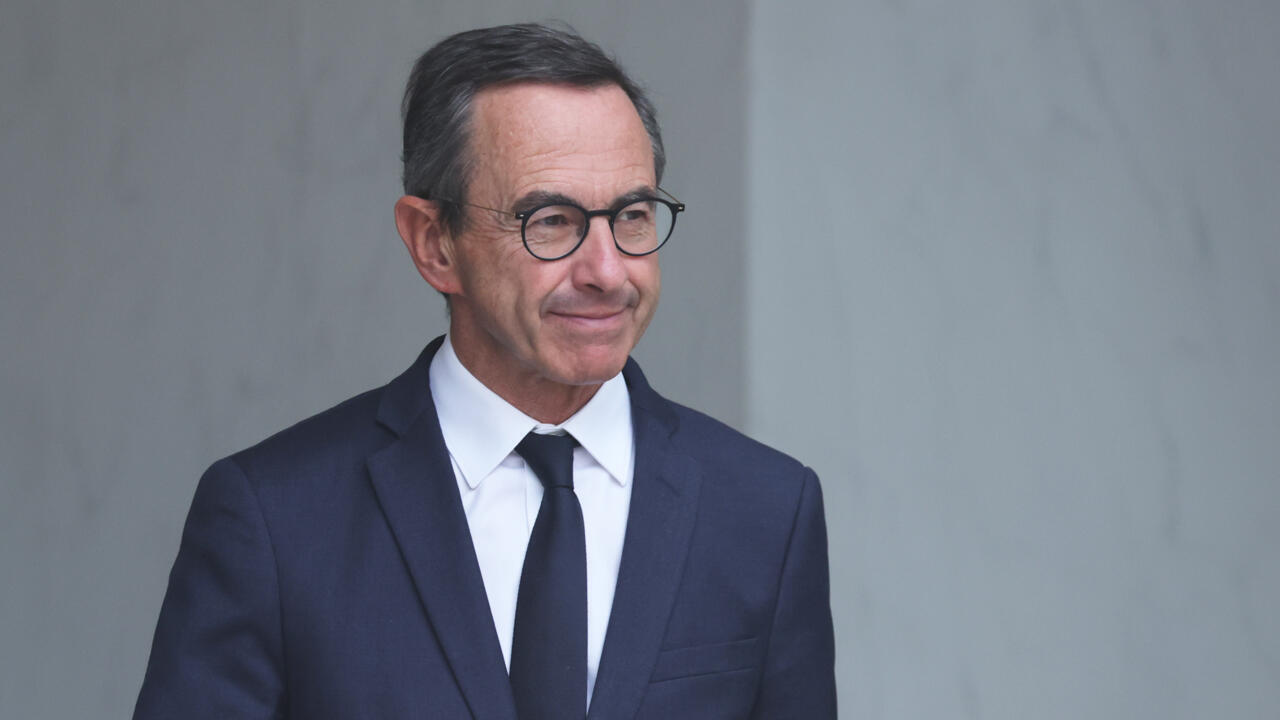
France's Minister of the Interior Bruno Retailleau leaves after a weekly cabinet meeting at the Elysee Palace in Paris on September 3, 2025. © Ludovic Marin, AFP
France's hardline interior minister said Friday he did not anticipate a "large-scale" response to calls for protests next week, but ordered police to "show the utmost firmness" in case of any disorder.
A viral campaign has for weeks urged French people to stage a nationwide "shutdown" next Wednesday, two days after the government of Prime Minister François Bayrou faces a confidence vote in parliament over an austerity budget standoff.
"I don't believe there will be any large-scale movements," Interior Minister Bruno Retailleau said, adding that hard-left forces and some unions have backed the anti-government campaign dubbed "Let's block everything".
"It is very clear that the movement has shifted to the left," Retailleau said. "Given the nature of these movements and their radicalism, there may be some spectacular actions."
Read more
France's hardline interior minister said Friday he did not anticipate a "large-scale" response to calls for protests next week, but ordered police to "show the utmost firmness" in case of any disorder.
A viral campaign has for weeks urged French people to stage a nationwide "shutdown" next Wednesday, two days after the government of Prime Minister François Bayrou faces a confidence vote in parliament over an austerity budget standoff.
"I don't believe there will be any large-scale movements," Interior Minister Bruno Retailleau said, adding that hard-left forces and some unions have backed the anti-government campaign dubbed "Let's block everything".
"It is very clear that the movement has shifted to the left," Retailleau said. "Given the nature of these movements and their radicalism, there may be some spectacular actions."
Read more
‘Block everything’: What we know about the movement to shut down France on September 10
Organisers of the campaign have floated tactics ranging from protests to civil disobedience action such as blocking train stations and picketing oil refineries.
Intelligence officials have warned the movement's decentralised nature makes its scale and impact difficult to predict, with law enforcement preparing for any eventuality.
"I have sent a telegram to the prefects (top local officials) asking them to show the utmost firmness," Retailleau said. "Blocking everything is worse than anything else. The country doesn't need to be blocked."
In the telegram, dated Thursday, Retailleau ordered police to fully mobilise to "manage this crisis".
"No damage to public buildings in general, and landmark buildings in particular, will be tolerated," he said, adding schools and universities must also be protected.
Signs have multiplied that many French people are growing exasperated with political deadlock as well as issues including the cost of living and crime.
Bayrou's government is expected to lose Monday's confidence vote, in a new blow to President Emmanuel Macron, now on his sixth prime minister since taking office in 2017.
French PM Bayrou set to lose no-confidence vote as talks end without breakthrough
Organisers of the campaign have floated tactics ranging from protests to civil disobedience action such as blocking train stations and picketing oil refineries.
Intelligence officials have warned the movement's decentralised nature makes its scale and impact difficult to predict, with law enforcement preparing for any eventuality.
"I have sent a telegram to the prefects (top local officials) asking them to show the utmost firmness," Retailleau said. "Blocking everything is worse than anything else. The country doesn't need to be blocked."
In the telegram, dated Thursday, Retailleau ordered police to fully mobilise to "manage this crisis".
"No damage to public buildings in general, and landmark buildings in particular, will be tolerated," he said, adding schools and universities must also be protected.
Signs have multiplied that many French people are growing exasperated with political deadlock as well as issues including the cost of living and crime.
Bayrou's government is expected to lose Monday's confidence vote, in a new blow to President Emmanuel Macron, now on his sixth prime minister since taking office in 2017.
French PM Bayrou set to lose no-confidence vote as talks end without breakthrough
Several French people who planned to take part in next week's protests said they were frustrated with government policies, including Bayrou's proposal to cut two public holidays, and said they wanted to have a greater say in political matters.
"Taxes on the rich are never voted in, while we are asked to tighten our belts," said 35-year-old Chloe Souske from the village of Monterfil in northwestern France.
"A gap has opened up with the political elite who work for billionaires," added Benjamin Ball, a 41-year-old from the northwestern Paris suburb of Argenteuil.
Separately, trade unions have called for protests on September 18 over France's "horror show" draft budget.
(FRANCE 24 with AFP)
"Taxes on the rich are never voted in, while we are asked to tighten our belts," said 35-year-old Chloe Souske from the village of Monterfil in northwestern France.
"A gap has opened up with the political elite who work for billionaires," added Benjamin Ball, a 41-year-old from the northwestern Paris suburb of Argenteuil.
Separately, trade unions have called for protests on September 18 over France's "horror show" draft budget.
(FRANCE 24 with AFP)