It’s possible that I shall make an ass of myself. But in that case one can always get out of it with a little dialectic. I have, of course, so worded my proposition as to be right either way (K.Marx, Letter to F.Engels on the Indian Mutiny)
Friday, September 05, 2025
Tether expands gold strategy by adding to stake in Canadian firm
Stablecoin issuer Tether Holdings SA is expanding its gold strategy by adding to its stake in a Canadian gold royalty company.
Tether plans to buy approximately $100 million in additional shares of Elemental Altus Royalties Corp., a firm that specializes in buying revenue streams from mining companies, according to a statement. Tether had already amassed a 37.8% stake earlier this year, a filing in June showed.
The Financial Times also reported that Tether has also held discussions with multiple mining and investment firms over opportunities including gold mining, refining, trading and royalties. Representatives for Tether didn’t return a request for comment.
The move comes amid surging interest in gold, with prices soaring to fresh all-time highs above $3,550 an ounce, on speculation that US interest-rate cuts will fan inflation. Bitcoin has been likened to “digital gold” by some investors, including Tether, because it’s seen as a similar store of value and scarce resource.
“Tether’s recent investment in Elemental Altus was based on its strategy of increasing gold exposure,” said Juan Sartori, executive chairman of Elemental Altus. The deal, which is subject to shareholder approval, is expected to close in the fourth quarter.
Tether is the issuer of the world’s largest stablecoin USDT, a cryptocurrency that aims to maintain a one-to-one peg to the US dollar by relying on a reserve of assets, including gold. The company had amassed a stockpile of around $8.7 billion in physical gold bars as of the end of June, stored in a secret Swiss vault.
Tether also offers a 100% gold-backed token, XAUT. Tokens can be redeemed for physical gold, collected directly in Switzerland. The company has issued approximately $1.3 billion worth of XAUT to date, according to its website.
(By Emily Nicolle)
China Escalates Taiwan Tensions With Illegal Oil Drilling in EEZ
China’s state-owned CNOOC has installed vessels and drilling platforms inside Taiwan’s EEZ, marking a sharp escalation in Beijing’s gray-zone tactics.
Taiwan, now nearly 100% reliant on imported energy after shutting its last nuclear plant in May 2025, is highly vulnerable to Chinese coercion and blockades.
Wargames by U.S. think tanks show Taiwan would run out of natural gas within 10 days under a blockade, highlighting the strategic risk of China’s offshore drilling push.
China is now illegally drilling for oil within Taiwan’s exclusive economic zone, ramping up Beijing’s campaign of aggression against the island’s sovereignty. Over the past several years, China has been intensifying performative military displays in the waters around the island, but drilling within Taiwan’s territory is a new development that could signal a new, ultra-aggressive political era for the One China policy.
Over the last two months, “at least 12 oil and gas vessels and permanent structures were detected inside Taiwan’s [exclusive economic zone] – including one within 50km of the restricted-waters border of the Taiwan-controlled Pratas Islands – as well as several steel supports for fixed offshore drilling platforms, called jackets,” reports the Guardian. This infrastructure belongs to the China National Offshore Oil Corporation (CNOOC), one of the world’s largest oil and gas outfits.
A report from the Washington-based think tank the Jamestown Foundation warns that this newly installed equipment could serve as the means for “a full range of coercion, blockade, bombardment and/or invasion scenarios” on the part of China against Pratas or Taiwan.
This newest tactic marks a notable intensification of what experts refer to as China’s “gray-zone” warfare strategy in the waters around Taiwan. “Gray-zone” tactics refer to China’s pattern of ramping up conflict and pushing boundaries with Taiwan for its own strategic benefit without escalating to actual fighting. Over the past several years, China has been increasingly challenging the status quo in the Taiwan Straight, as a means of repeatedly “contesting Taipei and its allies’ readiness to respond to crises, and actively testing the boundaries of state coercive behavior below the threshold of a conventional confrontation,” according to an analysis from the Global Taiwan Institute.
China contends that Taiwan – recognized as a sovereign nation by most global governing bodies – belongs to China as a part of the nation’s One China policy, which seeks to reclaim territories that the Chinese believe have wrongfully defected. China also lays claim to the entirety of the South China Sea, even though international courts in The Hague have ruled against this assertion, and in reality, six countries – China, Taiwan, Vietnam, the Philippines, Malaysia, and Brunei – have legitimate claims to parts of these waters.
In order to advance its soft-launch military campaign against Taiwan and the South China Sea, Beijing is attacking the island’s Achilles heel – its energy industry. Taiwan is extremely dependent on energy imports to sustain its national energy security, rendering it extremely vulnerable to Chinese blockades and in dire need of any oil and gas assets within its exclusive economic zone.
In May of this 2025, Taiwan closed down its last nuclear power plant, making good on a Democratic Progressive Party (DPP) policy promise formulated in the wake of Japan’s 2011 Fukushima nuclear disaster and public disfavor of nuclear energy. Now, as a result, Taiwan imports nearly 100% of its energy supplies, principally in the form of oil and gas.
International security experts have long been warning of intensified conflict between China and Taiwan, and the extreme fragility of Taiwan’s energy systems. Earlier this year, Washington, D.C.-based think tank Center for Strategic & International Studies (CSIS) conducted 26 different wargames to model exactly how a Chinese blockade of Taiwan could play out. While the scenarios vary broadly, there is one clear thread through all of them – the prognosis is grim.
In all 26 scenarios, Taiwan runs out of natural gas in approximately ten days. Natural gas is followed by coal and oil, which run out at 7 weeks and 20 weeks, respectively. “Total electricity production might be reduced to 20 percent of pre-blockade electricity levels,” the Center’s report finds.
By Haley Zaremba for Oilprice.com
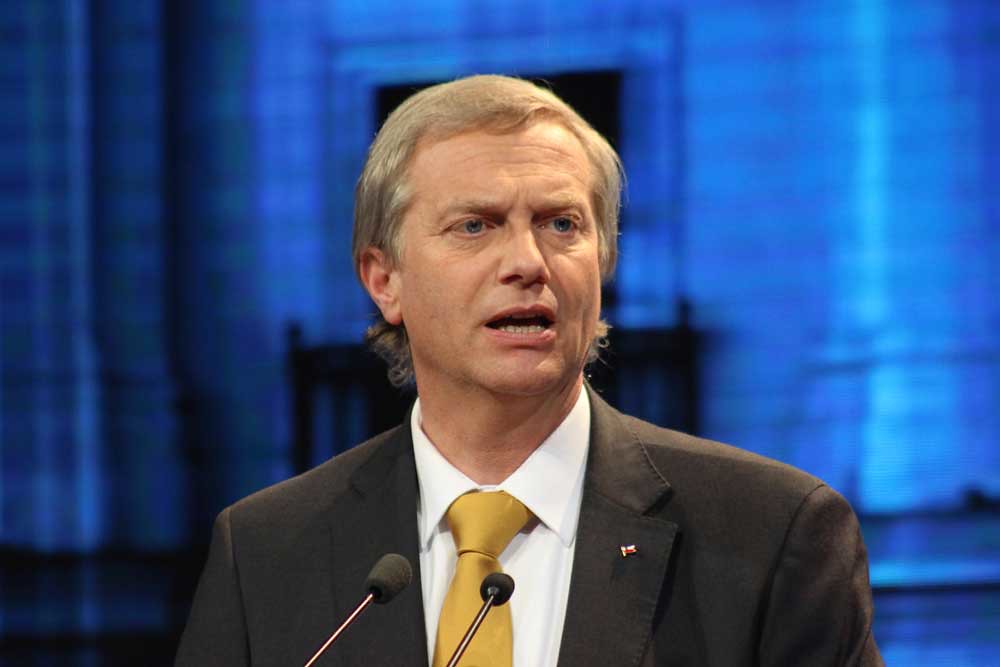
Leading Chile candidate to scrutinize Codelco as debt mounts
The candidate most likely to be Chile’s next president would do a thorough review of struggling state copper behemoth Codelco to determine what’s needed to ensure its financial viability.
While handing over control of Codelco isn’t on the table, engaging in more partnerships with private groups offers a way to ease its financial burden, said an economic adviser to right-wing candidate José Antonio Kast.
“Our main concern for Codelco is that it be a sustainable company,” Tomás Bunster said late on Wednesday at an event hosted by Bloomberg. “But like everything, we must evaluate how it’s developing over time.”
The discussion surrounding one of the most indebted major mining companies in the world is crucial both for Chile’s economy and the global copper market. Codelco’s traditional mantle as the world’s biggest producer is under threat as it grapples with setbacks in its efforts to reverse a years-long slump in output.
Bunster, an engineer and regulatory consultant, didn’t offer other possible measures to prop up Codelco’s finances. Introducing private capital into the company itself or its existing mines would require legislative changes — making it a delicate topic heading into general elections in November. Codelco has been a cash cow for Chilean governments ever since it was formed after the nationalization of US-owned mines in the 1970s.
At the same event, economic advisers to the other main candidates also said privatizing Codelco wasn’t on their agendas, but that joint ventures on future projects was an appealing prospect. The company already has minority stakes in assets operated by private firms and has exploration partnerships with companies including Rio Tinto Group.
Those types of arrangements “seems very appropriate,” Bunster said.
Codelco is striving to recover from a deadly accident at its biggest mine, which threatens its target of a gradual recovery in production over the coming years. Its four main expansion projects have all been coming in well above budget and behind schedule, pushing up debt levels to about six times earnings before interest, taxes, depreciation, and amortization.
In the lead-up to Sebastian Pinera’s first term as president in 2010-2014, he included a proposal to sell a minority stake in Codelco, which led to a public outcry and was later dropped. During that administration, Codelco’s debt levels jumped 84% despite higher copper prices.
Lithium deals
On the same panel, Bunster said a Kast administration would evaluate an agreement for Codelco to enter into SQM’s lithium business if the deal hasn’t already been finalized by the time the new president takes office.
If Communist contender Jeannette Jara wins the presidency, her government would also scrutinize the proposed SQM-Codelco tie-up, adviser Nicolas Bohme said Wednesday. Both candidates would respect the deal if it’s signed before the change of government.
For Gonzalo Sanhueza, who is working with center-right hopeful Evelyn Matthei, the arrangement is already binding and should not be rescinded. “That’s the way we’re going to begin to provide legal certainty in this country,” he said.
Regarding Jara’s proposal to establish a national lithium company, Bohme said such an entity would act, over time, as “an umbrella that brings together all existing state participation in lithium.”
(By James Attwood, Matthew Malinowski and Valentina Fuentes)
China’s giant iron ore trader expands clout selling Vale cargoes
China’s state-run iron ore trader is now selling cargoes for Brazilian miner Vale SA, in a sign of some softening toward the group as it becomes embedded in the Asian country’s $130 billion import market.
China Mineral Resources Group Co. is currently offering Vale’s iron ore on the spot market, and has been selling the miner’s product from at least mid-August, according to documents seen by Bloomberg and people with knowledge of the matter. It’s the first time CMRG has sold Vale’s cargoes, they added.
The giant trader was set up three years ago in an effort to tilt the balance of power from major iron ore producers such as Rio Tinto Group and BHP Group to China’s vast steel industry. Vale had previously eschewed CMRG as the Brazilian miner looked to focus on longer-term contracts directly with the nation’s steelmakers, Bloomberg reported in June.
However, with Vale’s strong production contributing to an already well-supplied market, and with CMRG mainly engaged in Australian cargoes, the Chinese trader has now stepped in to handle Brazilian supplies, said people familiar with the matter who asked not to be identified because the deals are private.
A spokesperson for Vale declined to comment. CMRG couldn’t immediately comment on the matter.
The move highlights how changing market dynamics are reshaping commercial strategies on both sides. For Vale, moving cargoes through CMRG offers some flexibility in the world’s biggest steel producer, while helping it manage high output. For Beijing, the deal strengthens its role as a price-setter and stabilizer in a trade that has long been dictated by global miners.
Iron ore can be transacted via the spot market for individual, up-front cargoes, or by longer-term contracts linked to daily reference prices. CMRG has been in talks with the top miners for long-term supply starting in the second half, but little progress has been made so far, the people said.
Long-term contracts often leave steelmakers with mismatched volumes relative to actual output, creating a need to offload any surplus or purchase additional cargoes to cover shortfalls. CMRG also doesn’t resell iron ore at a premium, meaning the mills view the trader as a relatively fair supplier.
For the miners, long-term contracts offer price stability and easier operation planning.
(By Katharine Gemmell and Alfred Cang)
Ancient rocks in Australia reveal one of world’s most promising new niobium deposits – report
Rare rocks buried deep beneath central Australia have revealed the origins of one of the world’s most promising new deposits of niobium — a metal vital for producing high-strength steel and clean energy technologies.
A new Curtin University-led study has found how the deposit formed during the breakup of an ancient supercontinent, and that the newly discovered niobium-rich carbonatites were emplaced more than 800 million years ago, rising from deep within the Earth through pre-existing fault zones during a tectonic rifting event that ultimately tore apart the supercontinent Rodinia.
The full study, titled ‘Multi-method geochronology and isotope geochemistry of carbonatites in the Aileron Province, central Australia’, was published in ‘Geological Magazine’.
Lead author Dr Maximilian Dröllner, from the Timescales of Mineral Systems Group within Curtin’s Frontier Institute for Geoscience Solutions and the University of Göttingen, said the findings shed new light on how rare, metal-rich magmas reach the surface — and why this particular deposit is so interesting.
“These carbonatites are unlike anything previously known in the region and contain important concentrations of niobium, a strategic metal used to make lighter, stronger steel for aircraft, pipelines and EVs and a key component in some next-generation battery and superconducting technologies,” Dr Dröllner said in a statement.
“Using multiple isotope-dating techniques on drill core samples, we found that these carbonatites were emplaced between 830 and 820 million years ago, during a period of continental rifting that preceded the breakup of Rodinia.
“This tectonic setting allowed carbonatite magma to rise through fault zones that had remained open and active for hundreds of millions of years, delivering metal-rich melts from deep in the mantle up into the crust.”
Curtin co-author Professor Chris Kirkland, also from the Timescales of Mineral Systems Group, said the research shows how using advanced geochronology and isotope techniques can unravel such complex histories.
“Carbonatites are rare igneous rocks known to host major global deposits of critical metals such as niobium and rare earth elements. But determining when and how they formed has historically been difficult due to their complex geological histories,” Professor Kirkland said.
“By analysing isotopes and using high-resolution imaging, we were able to reconstruct more than 500 million years of geological events that these rocks experienced.
“This approach allowed us to pinpoint when the carbonatites formed and separate those original magmatic events from changes that happened later in the rocks.”
The discovery has big implications for clean energy tech, Curtin said.
Burkina Faso seeks to ease worries around mining stake plans
Burkina Faso has moved to reassure investors that its request to acquire an additional 35% stake in West African Resources’ (ASX: WAF) Kiaka gold mine is an option, not a demand, under the country’s new mining framework.
Speaking at a mining conference in Australia, Mamadou Sagnon, director-general of the mining registry, explained that the Mining Code introduced in July last year allows the state to secure a minimum 30% paid interest in mining projects, in addition to its 15% free-carried stake. The paid portion is linked to exploration and feasibility costs rather than the mine’s market valuation.
The Code also gives the government and local investors the right to acquire further equity on commercial terms.
“In the case of West African Resources, the government addressed a letter to solicit the opening of participation up to 35%,” Sagnon said. “For the moment, it is a solicitation – it is not forcing.”
Sagnon stressed that the measure was intended to strengthen confidence in the sector, rather than deter foreign capital.
He argued that state participation would boost confidence rather than drive capital away. “We believe that if the State is in the participation of the company, there will be more confidence to stay in the country and make more investment,” he said.
Shares in West African Resources have been halted since last Thursday. The company had previously announced trading would resume Monday.
Regional changes
Investor unease reflects broader concerns about resource nationalism in West Africa, where governments are revising mining codes to capture more local benefit. Burkina Faso’s neighbours, including Mali, have already shaken investor sentiment with new rules and political instability.
WAF’s general manager of sustainability, Mirey Lopez, declined to comment beyond referring stakeholders to the company’s announcements. “We are in dialogue with the government and we are looking forward to a resolution,” she said during her presentation at the mining conference.
Burkina Faso, Africa’s fourth-largest gold producer, has already moved major assets into its new state-owned mining company, Société de Participation Minière du Burkina (SOPAMIB).
In June, five gold mines and exploration permits, previously held by Endeavour Mining and Lilium, were transferred to SOPAMIB. The push followed the nationalisation of the Boungou and Wahgnion mines in August 2024 for about $80 million, far below their estimated $300 million value.
Newly producing
West African Resources poured first gold at Kiaka in June. The mine is now in production and is expected to average 234,000 ounces annually for 20 years starting in 2025, generating roughly $795.6 million per year at current prices.
Last week, WAF confirmed that it had aligned the equity structure of its Sanbrado, Kiaka and Toega projects with the new Code, raising the government’s free-carried stake in each to 15%.
The company also revealed that Burkina Faso had enforced a mandatory dividend rule. In August, WAF’s subsidiary Somisa, owner of Sanbrado, declared a $98.35 million priority dividend to the government, representing 15% of retained earnings through 2024. WAF expects Somisa, Kiaka SA and Toega SA will all be required to distribute 15% of profits annually, with WAF entitled to repatriate the remainder.
WAF also revealed last week that the Burkina Faso government had enforced a non-discretionary dividend rule.
Strong leader at the helm
The mining reforms reflect the growing influence of Ibrahim Traoré, the 37-year-old military leader who seized power in 2022 and declared himself president. Traoré has pushed for greater state control of resources while casting his rule as part of a Pan-African, anti-Western revival.
His supporters hail him as a defender of sovereignty. In April, thousands rallied in Ouagadougou after an alleged counter-coup attempt failed. Demonstrations spread to London, Kingston and Montego Bay, where diaspora groups praised him as a “Black liberator.”
Meanwhile, Orezone Gold (ASX, TSX: ORE), which operates the Bomboré mine, also halted trading after the news of the government’s request at Kiaka. Following weekend talks, Orezone confirmed Tuesday that authorities have no plans to purchase an interest in Bomboré, calling the Kiaka situation “specific and not a reflection of any broader intent.”
Lloyd’s Register Launches Risk-Based Containership Fire Safety Notation
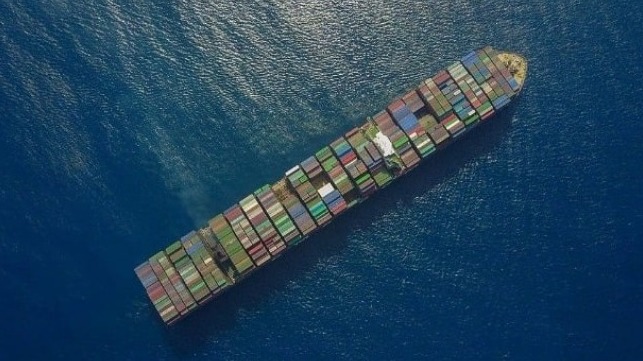
The new notation benefits designers, shipyards, owners, and operators as they plan next-generation container ships or consider retrofits and fleet upgrades.
Lloyd’s Register (LR) has launched Fire (C, Risk), a new risk-based notation developed to enhance the assessment of fire safety arrangements on board container ships.
The notation is accompanied by guidance to support shipowners, designers, and operators in selecting appropriate, best-practice mitigations based on the specific fire risk profile of a vessel.
The new notation, introduced in the July 2025 update to LR’s Rules and Regulations for the Classification of Ships, is the first of its kind to apply the LR ShipRight Risk Based Certification (RBC) methodology to container ship fire safety. This provides a flexible yet robust framework for identifying and validating tailored safety enhancements, from the design phase through to operational deployment.
By aligning with the RBC framework, Fire (C, Risk) also supports LR’s broader goals around innovation and assimilation of new technology, digitalisation and data-driven design verification.
Gabriele Sancin, LR’s Risk Notation Technical Lead, said: “LR understands that there are many options to enhance container ship fire safety, from advanced detection systems to alternative hold arrangements and smart suppression technologies. Our new notation Fire (C, Risk) ensures that tailored, effective fire safety solutions are selected from demonstrated best practice to reduce risk to crew, cargo and operations.”
The notation and accompanying guidance are now available via the latest edition of LR’s Rules and Regulations.
Ends
The products and services herein described in this press release are not endorsed by The Maritime Executive.
President Mulino & Japanese Shipowners Meet to Improve Panama Ship Registry
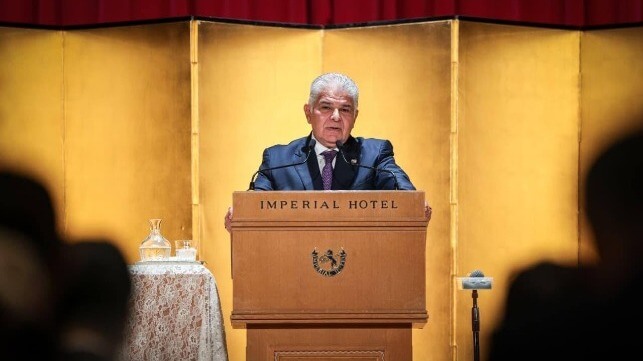
President José Raúl Mulino met with more than 40 representatives of shipping companies from Japan’s Kanto region, where he presented Panama’s new ship registry strategy aimed at safeguarding its global leadership through enhanced safety standards and fully digitalized processes.
Mulino emphasized that Panama’s registry is positioning itself as the flag of the future, driven by new policies aligned with international benchmarks for safety, efficiency, and environmental protection.
The stakes are high for Japan: 7 out of 10 Japanese shipowners already fly the Panamanian flag, and 41% of Japan’s total tonnage is registered under Panama. For Panama, consolidating its role as Japan’s preferred registry is vital, as 66% of new shipbuilding comes from the Japanese market.
Reflecting on the registry’s long history dating back to the 1920s, Mulino stressed that unlike other registries, Panama’s flag is not a maritime franchise but a national emblem backed by the full weight of the state. He also revealed that his administration is pushing forward a comprehensive modernization plan for the registry, framed within a broader maritime and logistics strategy that integrates the Canal and Panama’s port system. “This plan will bring together our entire maritime cluster under what we now call the National Maritime Strategy—the future of our country,” Mulino declared, pledging to see this project through during his presidency. He underscored his vision of a more flexible Maritime Authority and registry that provides streamlined, user-friendly services. “You can count on Panama’s registry to continue working in favor of the global maritime community, especially Japan,” Mulino told the gathered shipowners.
Joining him were Panama Maritime Authority (PMA) Administrator Luis Roquebert and Merchant Marine Director Ramón Franco, both of whom reinforced the president’s message.
“Panama has been the world’s natural bridge since ancient times. The creation of our Ship Registry in the early 20th century, alongside the construction of the Canal, positioned the Isthmus as a global benchmark in ship registration—changing the course of maritime history,” Roquebert noted.
He highlighted that the PMA has successfully diversified its services, now offering integrated solutions in over 50 countries. “Thanks to our broad network of partners and our expertise, we provide unmatched technical, legal, and diplomatic support,” Roquebert said.
For his part, Merchant Marine Director Ramon Franco presented “The Panamanian Ship Registry: Renewing Our Strategy for a New Era,” outlining Panama’s new direction and the competitive advantages it offers.
He explained that the Mulino administration’s guiding principle is quality over quantity, focusing on:
A safer fleet and significant accident reduction.
100% digital, streamlined processes.
A younger fleet, with active policies to phase out high-risk vessels.
Rigorous inspections and enhanced pre-checks to ensure only compliant ships fly Panama’s flag.
Trust from industry leaders—Japanese shipowners choose Panama because its security and reputation protect both investments and cargo.
Franco also underlined Panama’s pioneering role as the first registry to enforce mandatory traceability for ship-to-ship (STS) transfers, part of a strategy to modernize the fleet by gradually phasing out older tonnage and aligning with the IMO’s decarbonization goals for 2050.
As of August 25, 2025, Panama’s ship registry includes 8,812 vessels totaling 241.5 million gross tons (GT), according to IHS Markit—representing 14% of the global fleet, based on Clarksons Research’s World Fleet Monitor.
Franco reported that the new strategy is already delivering results: fewer accidents and a 13% increase in newbuilding registrations compared to the previous year. He closed by reminding Japanese shipowners that Panama’s registry offers more than just a flag—it comes with the full backing of a country that provides political and economic stability, a robust banking system, special economic zones, investment incentives, world-class logistics hubs, and, of course, the Panama Canal.
The products and services herein described in this press release are not endorsed by The Maritime Executive.
Turbines Installed for France’s Pilot Deep Water Floating Wind Project
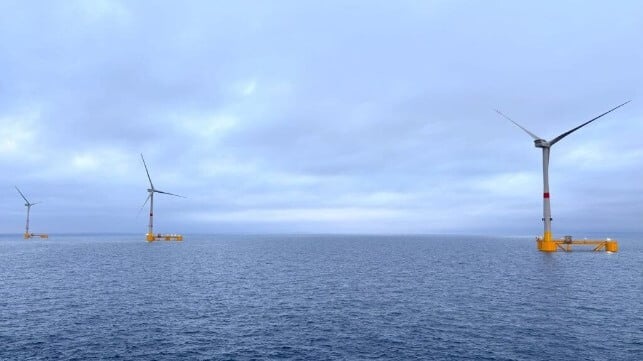
The three floating wind turbines are installed in water depths up to approximately 230 feet as a pilot for the technology (Ocean Winds)
Ocean Winds reports it has successfully completed the third and final turbine installation of its Éoliennes Flottantes du Golfe du Lion (EFGL) project located in southeast France along the Mediterranean. Developed as a pilot project in partnership with Banque des Territoires, EFGL is now the first floating offshore wind farm in the Occitanie region to complete its offshore turbine installation phase.
The company highlights that the project marks a major step for floating wind on a global scale. With three 10 MW turbines installed on floating foundations, EFGL demonstrates the viability of floating offshore wind in deeper waters, unlocking high-wind areas previously out of reach.
The success of EFGL, the company says, demonstrates floating wind’s readiness to scale, both in France and internationally, contributing to the global acceleration of offshore wind energy.
Assembled at Port-La Nouvelle, the turbines were towed 16 km (10 miles) offshore. The turbines are now ready for the final stage of cable and grid connection works done by RTE, before starting to deliver clean energy to approximately 50,000 inhabitants each year. The water depth ranges between 68 and 70 meters (220 to 230 feet).
“EFGL is not only a first for France but a global benchmark for floating offshore wind,” said Marc Hirt, Country Manager France for Ocean Winds. “It showcases the industrial maturity, precision, and collaboration needed to bring floating wind to commercial scale.”
Ocean Winds, an international offshore wind energy company created by EDP Renewables and ENGIE, is at the forefront of the development of floating wind turbines. The company has five years of operating its 25 MW WindFloat Atlantic project in Portugal. It said the successful installation of EFGL paves the way for larger developments, including the Eoliennes Flottantes d’Occitanie (EFLO), a 250 MW floating offshore wind project awarded to OW and Banque des Territoires in late 2024.
India Inaugurates Its Largest Container Terminal as Part of Global Strategy
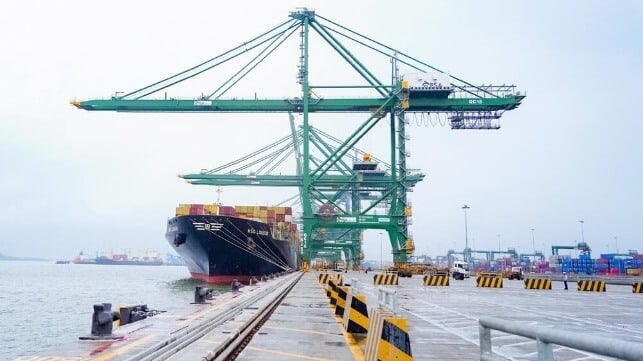
JN Port-PSA Mumbai Terminal becomes the largest container terminal in India (CMO Maharashtra)
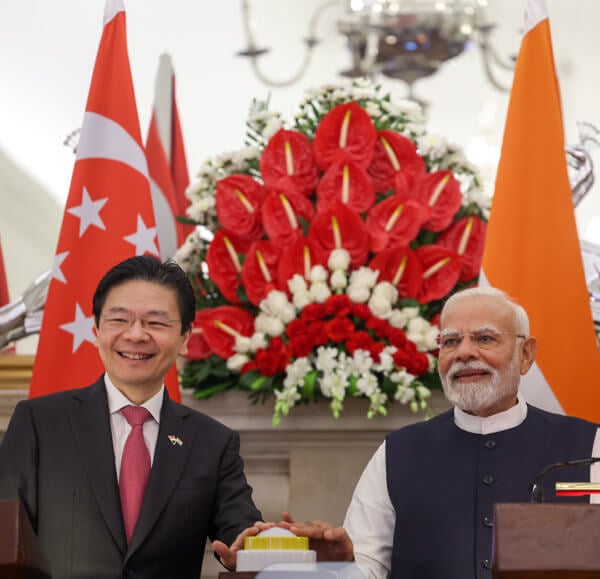
Ceremonies in Mumbai on September 4 marked the completion of the Phase 2 expansion of the JN Port-PSA Mumbai Terminal, which doubled its capacity and became the largest container terminal in the country. The Prime Ministers of India and Singapore joined the ceremony virtually to mark what they said is the largest foreign direct investment from Singapore in India to date.
The Mumbai terminal, which is built on 200 hectares, doubled its annual handling capacity to 4.8 million TEUs. It is designed to accommodate multiple mega container vessels alongside its 2,000-meter (6,560-foot) quay. The project brought together enhanced yard capacity and multimodal infrastructure and adopted the use of electric equipment.
“PSA Mumbai’s Phase 2 expansion brings together capacity, connectivity, and sustainability in a terminal for India — a catalyst for advancing India’s trade ambitions,” said Mr. Ong Kim Pong, Group CEO, PSA International.
Prime Ministers of India and Singapore jointed the inauguration ceremony virtually highlighting it as the largest foreign direct investment from Singapore in India (CMO Maharashtra)
The inauguration of the port was timed to the official visit of Singapore’s Prime Minister and Minister for Finance, Lawrence Wong, and used to highlight the growing cooperation between the two countries. Wong joined Indian Prime Minister Narendra Modi in a virtual appearance from New Delhi to mark the port’s completion. The two leaders were meeting to discuss ways to enhance cooperation in forward-looking areas such as sustainability, digitalization, connectivity, skills development, advanced manufacturing and semiconductors, space, and biotechnology.
The Chief Minister of Maharashtra region hailed the port development as a key step in India’s efforts to become a global maritime superpower. He highlighted the project as an element in Prime Minister Modi’s strategic vision of Port-led Development to drive India’s growth. He noted that the port is emerging as the nation’s largest container hub, poised to handle over 10 million containers annually. They expect Mumbai will secure a place among the world’s 10 largest ports.
Singapore-based PSA International highlights that this development is the result of a $1.3 billion commitment by the company under a public-private partnership. In notes that it made its first investment in India in 1998. Today, PSA India operates container terminals in Navi Mumbai and Chennai, container freight stations in Mumbai and Mundra through its subsidiary PSA Ameya, and collaborates with its affiliate supply chain business PSA BDP.
Philippines Hails Shipbuilding Revival as HD KSOE Starts at Subic Yard
The Philippines and HD Hyundai marked the start of shipbuilding at the yard in Subic Bay (Bongbong Marcos)
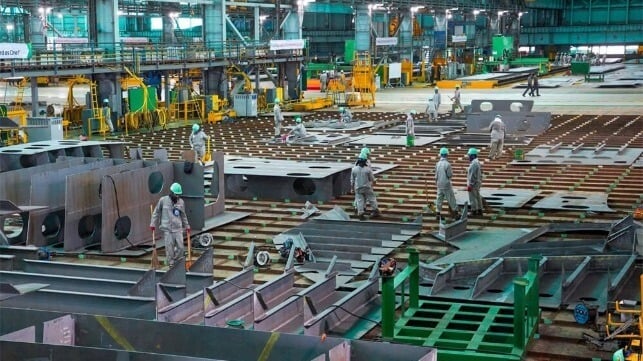
The Philippines is celebrating the revival of its shipbuilding industry after South Korean giant HD Korea Shipbuilding & Offshore Engineering (HD KSOE) commenced the construction of a large bulk carrier at its newly leased facility in Subic Bay, Philippines. It will be the first large ship to be built in the country since 2019.
In a significant move that the Philippines expects will help the country reclaim its position among the world’s leading shipbuilding nations, HD KSOE held a steel-cutting ceremony at Subic Shipyard to mark the start of the building of a 115,000-tonne petrochemical carrier. The vessel will be the first to be built at the HD Hyundai Heavy Industries Philippines (HHIP) and is the first of a four-vessel order placed by an unnamed Asia-based shipping company in December.
The commencement of the project is of significant importance to the Philippines, a country that had a long tradition of shipbuilding until 2019, when the industry melted down during the financial crisis and slowdown in shipbuilding. At its pinnacle, the country used to produce up to two million gross tonnes of ships annually and was one of the major contributors to economic growth and job creation.
With the South Korean giant investing $180 million this year in the revival of the Subic Shipyard and another $50 million expected to be invested by 2030, the Philippines expects massive economic benefits. Currently employing 1,200 people, the yard is expected to employ 4,300 people by 2030.
“Together with our partners, we are reviving shipbuilding in the country to strengthen industries, promote livelihood, and build a better, stronger future for the Philippines,” said President Ferdinand R. Marcos Jr during the ceremonies. “Today, we will begin reclaiming our rightful place among the world’s great shipbuilding nations.”
HHIP, a wholly owned subsidiary of HD KSOE, signed a 10-year lease for Subic Shipyard last year. The U.S. private equity fund Cerberus Capital took rights to the broader facility, as part of a plan to create a manufacturing and industrial park in Subic Bay.
In 2022, Cerberus paid $300 million to acquire the distressed Subic Bay shipyard from the former HJ Heavy Industries, which went bankrupt in 2019. It has invested $40 million to revitalize operations on the 300-hectare facility now known as the Agila Subic Shipyard. Located in Zambales Province on the western coast of Luzon, the facility has become a vital strategic hub for shipbuilding, subsea infrastructure, and logistics operations.
HD KSOE is commencing ship construction in the facility just a week after Cerberus and HD Hyundai announced the formation of a strategic partnership that saw the launch of Cerberus Maritime. Through the partnership, the two companies hope to play an instrumental role in the “Make America Shipbuilding Great Again” (MASGA) projects.
The South Korean company has already announced plans to utilize the Philippines yard as a strategic stronghold for the MASGA project, which is a joint Seoul-Washington shipbuilding cooperation initiative.
“Backed by government support, natural advantages, and a skilled workforce, the Philippines is emerging as a rising shipbuilding nation,” said Kim Sung-joon, HD KSOE CEO. “We will leverage HD Hyundai Subic Shipyard to further enhance our global competitiveness.”
During the site visit in August, reporters were told the goal is to build up to 10 ships a year within the next three to five years. The initial plan is to use the yard to build product carriers measuring 656 to 820 feet (200 to 250 meters) in length. The ships will be built in 16 to 18 months, and they also anticipate using the yard for offshore structures to support the wind energy sector.