Monday, September 08, 2025


New marine survey reveals fragile ecosystems off Cyprus under threat from human activity

These mesophotic habitats act as biodiversity refuges.
Copyright Marine & Environmental Research (MER) Lab

By Rosie Frost
Published on 

A UK-funded expedition maps the hidden reefs of Akrotiri and Dhekelia, revealing fragile ecosystems already bearing the marks of human activity.

Until now, these depths were virtually unmapped. Through the UK government-funded MESOPHOS project, the Marine & Environmental Research (MER) Lab carried out the first exploration of what are known as mesophotic ecosystems at Akrotiri and Dhekelia, two areas of British Overseas Territory on the island of Cyprus.

These ecosystems sit 50 to 200 metres below the surface, where enough light penetrates for light-dependent organisms to survive but where it is too dim for more typical photosynthesis to occur. The term mesophotic literally means ‘middle light’.

They support unique communities of life that may serve as potential refuges for species from degraded coral reefs in shallower waters.

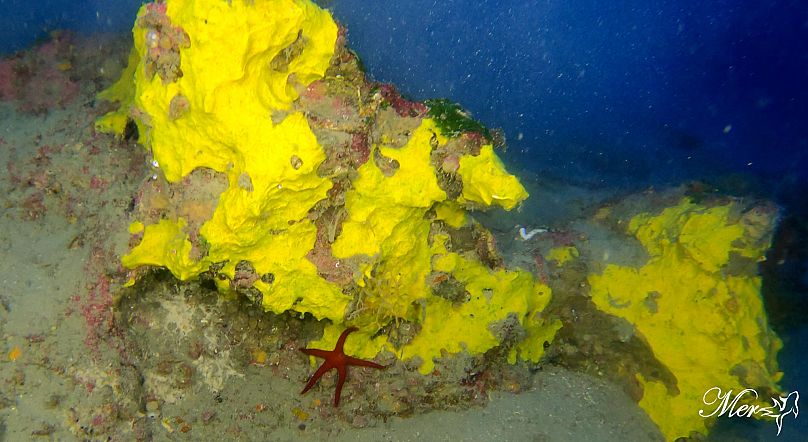
As these ecosystems are beyond scuba diving limits, the team surveyed over 32 sites with remotely operated vehicles, revealing vast areas of sponges, corals, anemones and other organisms that create habitats which support diverse marine life.


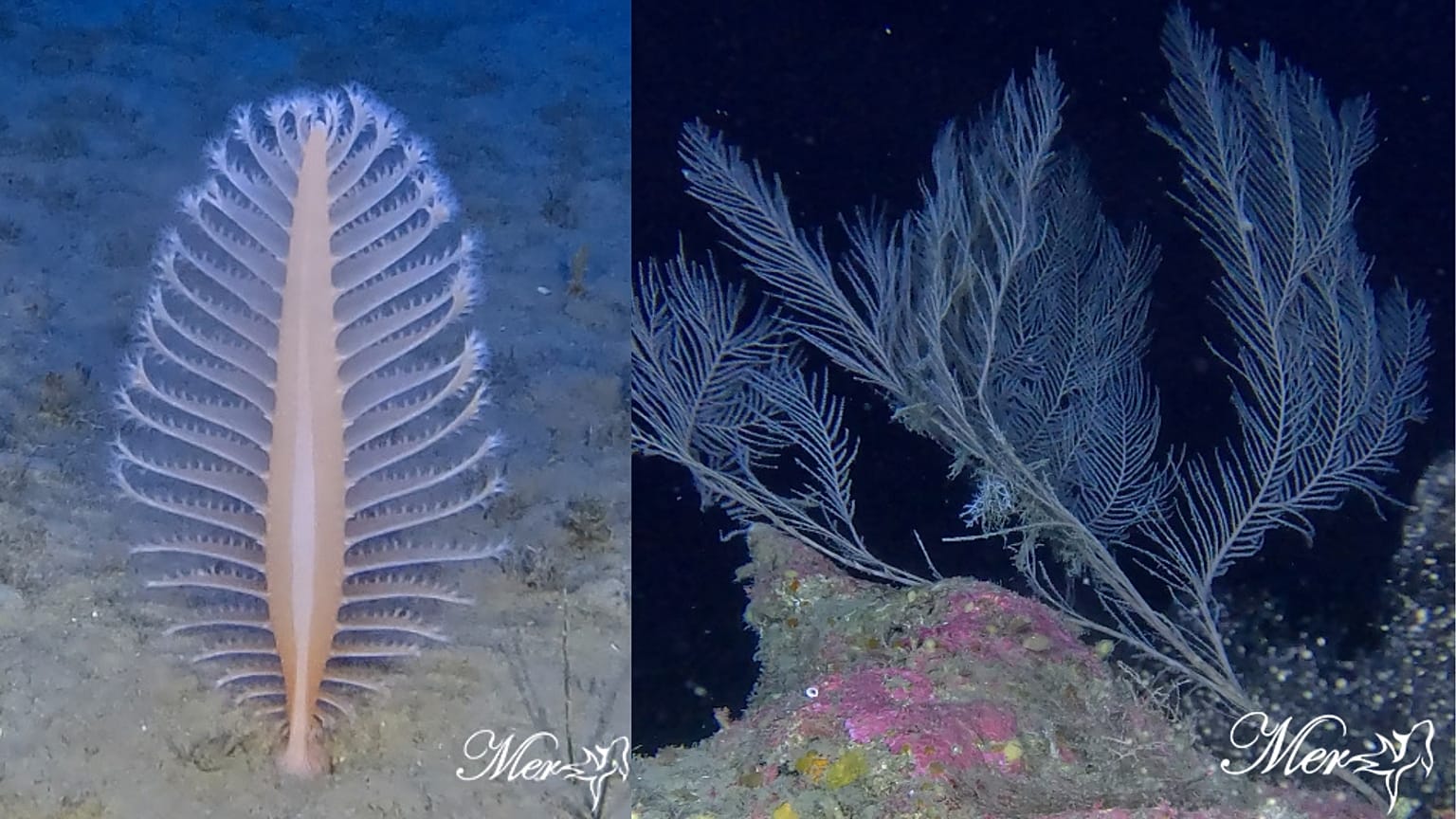
More than 200 species were recorded, including several not previously reported in Cyprus. Marine & Environmental Research (MER) Lab

More than 200 species were recorded, including several not previously reported in Cyprus. Particularly notable were fragile and slow-growing corals, such as gorgonians (Callogorgia verticillata), hydroid corals (Lytocarpia myriophyllum), soft corals, and sea pens, many of which are threatened or protected.

Human footprint clear even deep underwater

These mesophotic habitats act as biodiversity refuges, contributing indirectly to sustainable fisheries by strengthening the resilience of marine resources.

But, despite the depth of the surveyed area, the footprint of human activity was clear. The team found marine litter, including soft drink cans and lost fishing equipment known as ‘ghost gear’. They also saw evidence of bottom trawling, invasive species and coral death likely linked to ocean warming.

“The presence of human impacts at these depths is particularly concerning because habitats such as maerl beds, sponge grounds, and corals are extremely slow-growing and highly vulnerable,” Christina Michail, Biologist and Marine Biologist at the MER Lab, tells Euronews Green.

“Our surveys revealed clear marks from bottom trawling gear, alongside areas where sedimentation and disturbance had reduced both the abundance and diversity of marine life.”

Michail adds that the team’s findings show how even deep or less accessible habitats are not immune to human pressures.

Experts call for urgent protection of rare marine habitats

With MESOPHOS confirming the presence of these sensitive ecosystems and highlighting the pressures they already face, experts say urgent protection measures are needed.

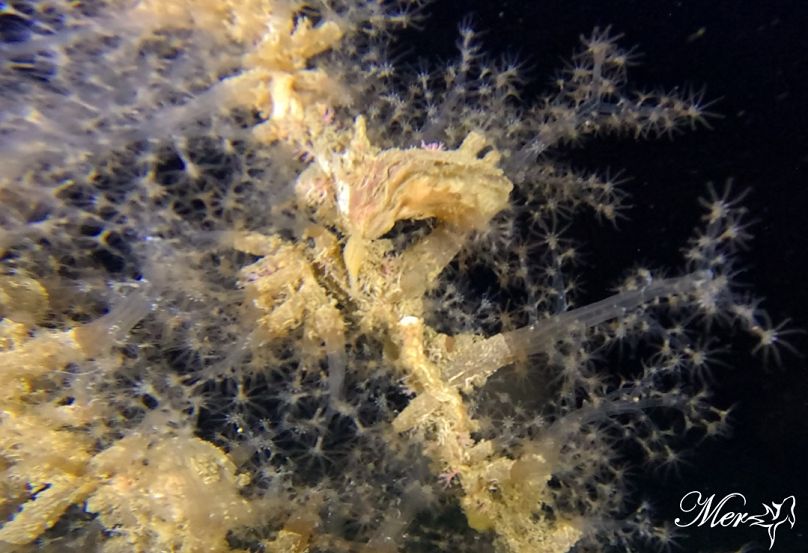
The surveys revealed extensive assemblages of sponges, corals, anemones, and other benthic organisms. Marine & Environmental Research (MER) Lab

“We recommend the immediate protection of sensitive habitats such as maerl beds and coralligenous reefs from destructive fishing activities, particularly bottom trawling,” Michail explains.

“This must go hand in hand with mapping the spatial extent of these critical habitats to guide effective management, while long-term, systematic monitoring will be essential to evaluate progress and adapt measures where needed.”

Michail adds that these findings should also guide future research, encouraging similar surveys around Cyprus to build a more complete picture of these ecosystems and how vulnerable they are.


'The Eastern Shield': How Poland wants to defend its borders from invasion

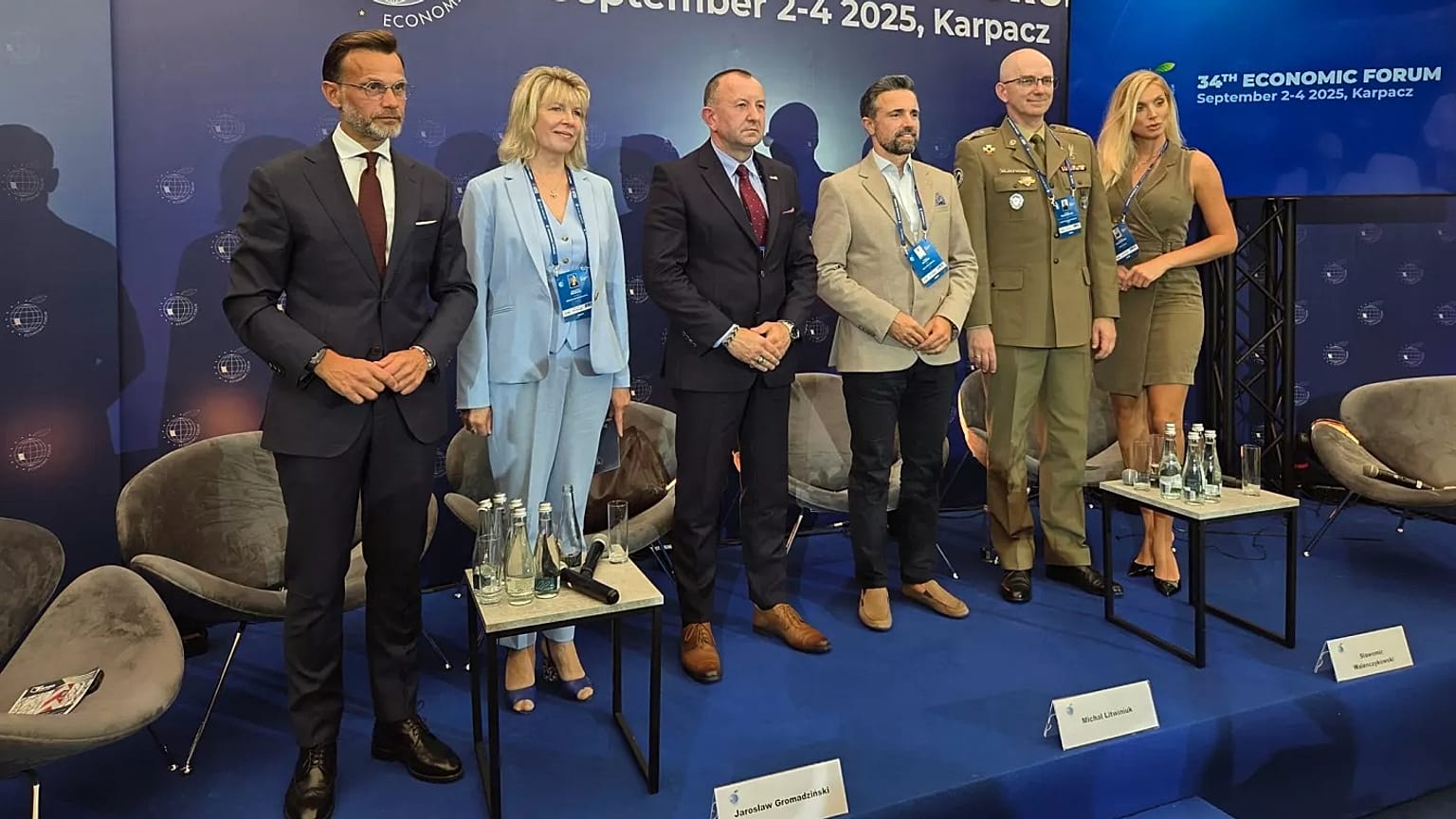
Participants in the debate "Shield East - assumptions and consequences" during the 34th Economic Forum, Karpacz 5.09.2025.
Copyright Jan Bolanowski, Euronews

By Jan Bolanowski
Published on 

"The Eastern Shield", a 700 km defense project near Poland's eastern border, aims to boost state resilience and protect against armed invasion. Experts, however, debate its effectiveness.

Poland, NATO's largest contributor in relative terms and beneficiary of the EU's SAFE (Security Action for Europe) program, which is designed to speed up defense readiness in Member States, is a key center for European and NATO defense. Amid ramped-up defense spending, experts in the country are debating how to best use Poland's resources to gear up for a potential armed invasion.

One of the current defense projects, known as "The Eastern Shield" is to consist of 700 km of defense installations near Poland's eastern border with Russia and Belarus. This is also the eastern border of NATO and the European Union.

This project is sometimes referred to as the 'Tusk Line', in reference to the famous French Maginot Line from the Second World War, built by France in the 1930s to deter invasion by Nazi Germany. However, experts argue that the idea of what the Eastern Shield is actually supposed to be is often misunderstood by the public.

You want peace, get ready for war

"The Eastern Shield is often mistakenly equated with a barrier on the border with Belarus itself, but these are in fact two different things. The shield is a complex project to increase the resilience of the state and its citizens," said Jacek Brzozowski, the local government's representative on the ground.

As he explained, the Eastern Shield project envisages investments in technical and digital infrastructure, but also the use of natural dams. At the same time, he stressed that the whole project is defensive in nature and is not geared towards aggression towards Russia and Belarus. However, he pointed out that these countries present a hostile attitude towards Poland and NATO as a whole, meaning that in order to maintain peace it is necessary to develop the potential for intimidation, according to the ancient maxim: "you want peace, get ready for war".

According to Brzozowski, we are currently living in a "pre-war" world and cannot afford to ignore threats. He recalled that in June 2024, a soldier was killed along the Belarusian border, which has been the site of a migration, security, and humanitarian crisis since 2021.

"This is the first such case since the Second World War. The situation is an emergency and the border is constantly patrolled by 11,000 soldiers and Border Guard officers," - he added.

A 'Death zone' 30 km from the border

Retired military officer and former Eurocorps commander General Jaroslaw Gromadzinski was critical of the Eastern Shield and the government's actions surrounding the program.

"The Eastern Shield is a purely political and PR project, it is a bag into which the government throws everything. In theory the aim is to prepare the eastern part of Poland for war, while in practice anti-tank trestles are being erected on the border. This looks nice on TV, but ut is simply a waste of money. The barriers on the border will be destroyed within 2-3 hours by an artillery attack. This, by the way, applies to the entire area within range of the enemy's conventional artillery, i.e. up to 30 km into the country. This will be a death zone where no troops should be stationed," - Gromadzinski said.

In his opinion, the most important objective of the Eastern Shield should instead be to ensure that troops in the zone up to 100 km from the border can manoeuvre, which means providing a logistical base in the whole area up to the Vistula River flowing through the middle of Poland.

Also important in his view is ensuring the safety of civilians through education and creating protective infrastructure. As a former soldier pointed out, "the military will cope, they will move in and out from under enemy fire, but the population stays put".

Fortifications will not stop a modern army

Colonel Slawomir Walenczynkowski from the General Staff of the Polish Army confirmed that Shield East should not be understood as a line of fortifications or fortifications like the French Maginot Line or Finland's Manerheim Line of 80 years ago.

"Today fortifications have no chance of stopping the enemy. It's about scanning his movement so that he moves where we want him to, because we can affect him with fire measures."

He added that the Eastern Shield goes far beyond Poland's border and even includes the modernization of bridges over the Vistula River to be able to support the weight of modern tanks stationed in western Poland. In addition, the program will also include a so-called "anti-shock system', a set of sensors to monitor activities in Belarus and Russia. This will buy time to act before an enemy offensive is launched, similar to what happened before the Russian invasion of Ukraine.

The colonel also defended the anti-tank barrages on the border itself. "Even if the trestles on the border are destroyed in two hours, they buy us those two hours of extra time to act," he argued.

A stream of money for local authorities

The Eastern Shield also brings in multi-billion dollar investments from the budget of the Ministry of Defense, PLN 10 billion (€2.4 billion) is to go towards it, and Poland may receive up to €20 billion in preferential loans under the European SAFE programme. A significant portion of these funds could go towards dual-use infrastructure, i.e. infrastructure needed by the armed forces in wartime, but performing civilian functions during peacetime.

Michał Litwiniuk, the mayor of Biała Podlaska, a city in Eastern Poland emphasized that the investment in his city's garrison amounts to around one billion zlotys and means a target of 6,000 jobs. "I am grateful to the state budget for the stream of support that flows not only towards Shield East, but also for civil protection," he said.

Professor Aleksandra Skrabacz of the Military University of Technology, however, said that military investment would not necessarily automatically translate into an improvement in the lot of local residents. She pointed out that tourism in Poland's eastern territories had been affected by the unsettled situation on the border, and that the local population might be hostile to having their civil liberties curtailed by military investments and operations in their area.

'We cannot wait for US troops'

Poland's Minister of National Defense, Władysław Kosiniak-Kamysz, has called the Eastern Shield the largest investment in NATO's eastern flank since 1945. Experts agreed that it was a project serving the interests not only of Poland, but of the entire EU and NATO. On the other hand, they argued that the key effort to defend the Polish border falls on the Polish public.

"Building infrastructure is less of a problem than building resilience. We cannot wait 2 weeks for American troops to defend us. The Americans will not defend us, they can help us to defend ourselves. This is our responsibility," argued Skrabacz.

At the same time, she quoted the results of a survey which shows that only 10-15 percent of Poles have declared their readiness to defend the country with arms in hand in the event of war. The majority plan to flee abroad or take care of their own family's safety. In her view, it is necessary to educate the public to take responsibility for the country.

"The resilience of the state and society is a logical fallacy. The state cannot exist without society. It is the people who come first," she argued.

Governor Jacek Brzozowski agreed that the most important thing is to prepare the population and teach the right procedures.

"Throughout our history, Poles have shown that the homeland was the most important thing for them and they were able to fight for it," the government representative argued.

Polls will show if Norway will continue to be a social welfare state or not?

Copyright (AP Photo/Kostya Manenkov)

By Sertac Aktan with AP
Published on 07/09/2025 -


The ruling centre-left bloc wants to keep it to fight inequality, while the right-wing opposition wants it scrapped. General elections will define the new system.

Norwegians are voting in a general election on Monday, with the future of the country's century-old wealth tax dominating the campaign among other issues.

There is expected to be a close outcome between the centre-left bloc led by the Labour Party of Prime Minister Jonas Gahr Støre, Norway’s leader for the past four years, and a right-wing bloc. Voting at polling places got underway Sunday and would run through Monday.

At stake is the social welfare regime, which other European countries have emulated as a comprehensive, universal model that provides tax-funded, publicly accessible services, including healthcare, free education, and income support.

The ruling centre-left bloc, led by Prime Minister Jonas Gahr Støre, wants to keep the tax to combat inequality. But the opposition on the right argues it harms entrepreneurs and is calling for it to be scrapped.

The debate has been fuelled by social media, inspiring many younger voters to oppose the tax. More than 4 million people are eligible to vote and some 310,000 young people are eligible for the first time, and voters with immigrant backgrounds account for 11.5% of the electorate

Official results will be announced on Tuesday, expected to be followed by weeks of coalition talks.

A levy of up to 1.1% on high assets

The wealth tax is a levy of up to 1.1% on assets and shares worth more than 1.76 million kroner (around €150,000), though there are various reductions and discounts, for instance, taking account of debt and property. Labour says that scrapping it would cost 34 billion kroner (€2.8 billion) per year.

The Progress Party, which leads the right-wing coalition, is calling for the wealth tax to be abolished, arguing that it is detrimental to the economy. Party leader Sylvie Listhaug argues that it penalises entrepreneurs who might have taxable stakes in valuable companies, but little real income.

Sunday, September 07, 2025

WATER WAR 

Ethiopia set to inaugurate $4bn mega-dam as Egypt, Sudan renew strong objections

Ethiopia set to inaugurate $4bn mega-dam as Egypt, Sudan renew strong objections
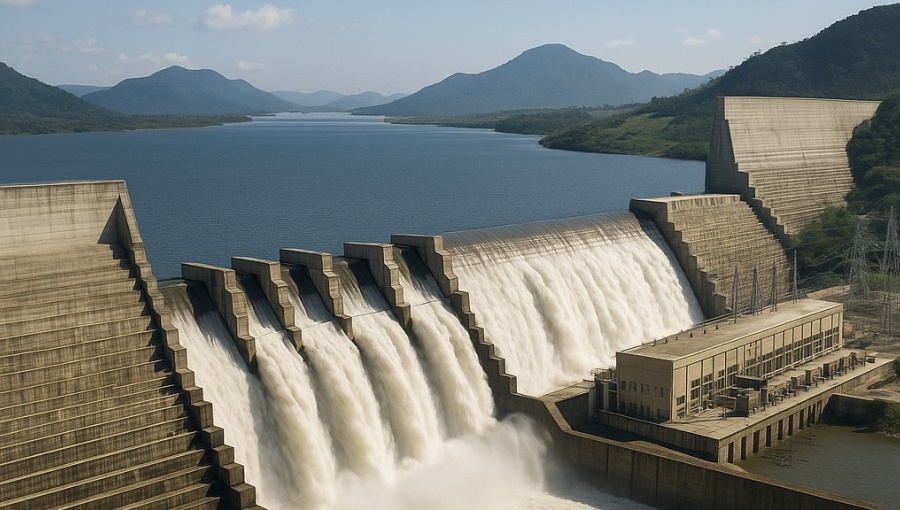
Heavily dependent on the Nile for agriculture and drinking water, Egypt fears the GERD undermines its historic share of the mighty river / bne IntelliNews
By Brian Kenety September 7, 2025

Ethiopia is preparing for a true "watershed moment", with plans to officially inaugurate its $4bn Grand Ethiopian Renaissance Dam (GERD) on September 9, just ahead of the start of the Ethiopian New Year and the end of the rainy season in the landlocked East African country.

Prime Minister Abiy Ahmed in early July declared construction finished on Africa’s largest hydroelectric project – nearly 15 years in the making – hailing it as the "crowning achievement of a generation", and extending invitations to Egypt and Sudan to attend the ceremony.

Hours later on that same July day, Egypt’s Minister of Irrigation reaffirmed Cairo’s categorical rejection of Ethiopia’s continued unilateral actions concerning the Nile River.

Ahead of this week’s ribbon-cutting ceremony on the GERD, Ethiopia’s two downstream neighbours raised fresh objections to the project, calling the mega-dam a “threat” to water security and regional stability erected in “violation of international law”.

Addis Ababa roundly rejects these claims, insisting that regulated releases from the GERD – built on the Blue Nile River in the Benishangul-Gumuz region, about 30km from the Sudanese border – mean it will not substantially reduce the flow of water.

Work on the dam began in 2011, and it has been generating electricity since 2022 through phased commissioning. Once fully operational, it is expected to reach an installed capacity of around 5,150 megawatts (MW), based on its 13 turbines (2 × 375 MW and 11 × 400 MW), roughly doubling current capacity and creating scope for regional power exports to neighbouring countries such as Kenya and Djibouti.

Prime Minister Abiy Ahmed described the GERD as “a symbol of Ethiopia’s resilience and capacity,” according to BBC News. State media referred to the mega-dam as “a monument of Africa’s renaissance,” underscoring its political significance at home, where it is a source of national pride.

According to Capital Ethiopia, about 91% of the project’s financing – which some news outlets estimate cost $5bn or more – came from the state-owned Commercial Bank of Ethiopia (CBE), with the remainder covered by domestic contributions and bond sales. Ethiopian businesses, citizens, and its diaspora, all rallied to fund its construction over the past decade.

Chinese lenders, including the Export-Import Bank of China, contributed targeted financing for turbine and electrical system costs. Ethiopian officials said the bulk was funded domestically as part of a deliberate strategy to limit external debt exposure.

From the start, Ethiopia’s downstream neighbour Egypt was opposed to the GERD being built, citing fears the project threatens its historic and vital share of Nile waters, which underpin agriculture and livelihoods for over 100mn people who live near its shores.

Cairo, which relies on the Nile for 97% of its water needs, argues that Addis Ababa acted unilaterally in constructing and filling the dam, bypassing long-standing treaties (which Egypt considers binding but Ethiopia does not recognise) and ignoring calls for a binding legal framework on water releases, drought management, and reservoir operations.

Egyptian officials say the lack of safeguards creates an existential risk to its water security and undermines the historic order of Nile governance, not least its share of Nile waters set under colonial-era treaties. Sudan, another downstream neighbour, has taken a more ambivalent stance over the years, but often publicly sided with Egypt.

“The Ethiopian dam, in violation of international law, entails serious consequences for the two downstream states and represents a continuous threat to stability in the Eastern Nile Basin,” reads a joint statement from Egypt and Sudan, issued on September 3, during the second round of their 2+2 Consultative Mechanism in Cairo, as quoted by The Reporter (Ethiopia).

Ethiopia secured the support of upstream nations, including Uganda, after the Cooperative Framework Agreement (CFA) on the equitable use of Nile Basin waters entered into force in October 2024. The accord was ratified by six members of the 10-country Nile Basin Initiative — Ethiopia, Rwanda, Tanzania, Uganda, Burundi and South Sudan.

The CFA, first signed in 2010, provides a legal basis for upstream states to pursue water projects without Egypt’s prior approval. Cairo and Khartoum refused to ratify the deal, warning it undermines their historic rights to Nile flows guaranteed under colonial-era treaties.

Diplomatic negotiations, supported at times by the African Union and the United States, have yet to produce a lasting water-sharing deal. Cairo continues to press for a treaty-based arrangement rooted in the 1929 Anglo-Egyptian Treaty and the 1959 Nile Waters Agreement, which Ethiopia does not recognise.

Africa holds some of the world’s richest hydropower resources, yet its vast potential remains largely untapped. According to the International Hydropower Association’s (IHA) 2025 World Hydropower Outlook, the continent has only harnessed about 11% of its technical potential, despite hydropower already contributing around 20% of Africa’s total electricity generation.

GERD at a glance

  • Full name: Grand Ethiopian Renaissance Dam (GERD)
  • Location: Blue Nile, Benishangul-Gumuz region, ~30km from Sudan border
  • Project cost: ≈ $4bn (some estimates $5bn+)
  • Funding: 91% by Commercial Bank of Ethiopia; balance from domestic bonds and contributions; partial turbine/electrical finance from China Exim Bank
  • Construction start: 2011
  • Declared completion: July 2025 (civil works finished; commissioning ongoing)
  • Inauguration: September 9 (ahead of Ethiopian New Year)
  • Capacity: 5,150 MW (phased commissioning since 2022)
  • Significance: Africa’s largest hydroelectric project
  • Regional context: Ethiopia aims to become an energy exporter; Egypt and Sudan warn of risks to Nile water security

WWIII

China accused of escalating Taiwan tensions with oil drilling in disputed waters

China accused of escalating Taiwan tensions with oil drilling in disputed waters
/ FUJIDUDEZ - Unsplash
By bno - Taipei Office September 8, 2025

China has been accused of intensifying its pressure campaign on Taiwan after installing drilling platforms and energy vessels inside the island’s exclusive economic zone (EEZ) Oilprice.com reports. The move, linked to the state-owned China National Offshore Oil Corporation (CNOOC), is being interpreted by analysts both inside and outside the region as a major escalation of Beijing’s “grey-zone” strategy – tactics designed to test Taiwan’s resilience without crossing into outright warfare.

Taiwan already sees daily moves by China to intimidate with flights into Taiwanese airspace and Chinese naval vessels circumnavigating the main island of Taiwan.

In recent weeks, Taiwanese military surveillance has detected at least a dozen CNOOC vessels and fixed structures operating within Taiwan’s EEZ, according to reports cited by The Guardian. Among them is a drilling platform just 50km from waters surrounding the Pratas Islands, which are controlled by Taiwan. Steel “jackets” which serve as the foundations of offshore oil rigs have also been spotted the report adds.

This latest step in an ongoing campaign against Taiwan by Beijing now indicates a shift towards embedding permanent infrastructure in disputed areas, effectively normalising China’s presence in Taiwan’s waters and in turn allowing China to ‘steal’ Chinese energy sources.

The Global Taiwan Institute argues that these “grey-zone” tactics are designed to probe Taipei and its allies, stretching their ability to respond while avoiding a conventional confrontation. The approach also helps Beijing incrementally expand its reach under the cover of ambiguity.

Taiwan’s energy dependence at present leaves it acutely exposed to Chinese coercion. Domestic production of gas and oil is negligible and imports supply virtually all the island’s oil, gas and coal. This vulnerability was only added to in May when the ruling Democratic Progressive Party in Taipei shut down its last nuclear power plant, fulfilling a campaign pledge made after Japan’s 2011 Fukushima disaster.

As such, Beijing now appears to be exploiting this reliance. Taiwan’s EEZ offers some potential hydrocarbon resources, but China’s activity risks blocking Taipei from accessing them.

A think tank in Washington earlier in the year modelled the potential consequences of a blockade. A series of 26 wargames conducted by the Center for Strategic and International Studies (CSIS) concluded that Taiwan’s natural gas reserves would be exhausted within 10 days of maritime disruption the Oilprice.com report adds. Coal stocks would run dry in just seven weeks, and oil supplies in roughly 20 weeks. In short, Taiwan would be crippled by any form of Chinese blockade. It is not an issue on the minds of many in Taiwan however, and rarely features in news or public opinion debates.

But the implications for the island’s grid would be severe, with electricity output potentially dropping to one-fifth of normal levels. To this end, China’s attempted installation of oil and gas rigs so close to Taiwanese territory is seen not only as a challenge to sovereignty but also as a calculated reminder of Taiwan’s energy fragility.

And by placing energy platforms in contested waters, China is signalling both defiance of international rulings and a willingness to tighten the squeeze on Taiwan.

The installation of CNOOC platforms may appear technical – for now - but for Taiwan the strategic risks are stark.


Black youth, especially Black girls, use mental health services less than their White peers


Canadian Medical Association Journal


Black adolescents with mental distress are less likely to use mental health services than their White peers, and Black girls are the least likely to access care, according to new research published in CMAJ (Canadian Medical Association Journalhttps://www.cmaj.ca/lookup/doi/10.1503/cmaj.241733.

“Adolescence is a crucial developmental stage and a critical period for onset of mental health problems,” writes Mercedes Sobers, a PhD candidate in epidemiology at the Dalla Lana School of Public Health, University of Toronto and research coordinator at the Centre for Addiction and Mental Health (CAMH), Toronto, Ontario, with coauthors. “In Canada, Black adolescents disproportionately access services through crisis situations, such as justice system interactions or when intensive care is required, suggesting they are less likely to access mental health care until intense intervention is needed.”

There is a lack of data on mental health services usage in Canada for Black youth and other racialized populations.

The study, which included data on 12 368 middle- and high-school students (grades 7–12) who identified as Black or White from the 2015, 2017, and 2019 Ontario Student Drug Use and Health Survey, encompassed schools from as many as 52 school boards in Ontario. It included students from English and French schools in both the public and Catholic systems from the Greater Toronto Region, Northern, Western and Eastern Ontario.

The researchers found distinct trends for Black males and females. Black females consistently used mental health services less than their White peers, with the gap widening as their distress increased. Although Black males with low distress were more likely to use services than their White counterparts, once their distress increased to moderate levels, their odds of service use dropped significantly. In general, Black youth (both male and female) who were more distressed were less likely to report using services than their White peers.

“Black adolescent mental health must be discussed with consideration of the interaction between being Black, sex, and mental distress,” write the authors.

Many barriers may reduce access to care, such as a lack of culturally competent care, inaccessible services, racism, and cultural stigma that can contribute to misunderstandings, misdiagnoses, and misconceptions that foster mistrust in the system. The shortage of mental health professionals who understand the unique perspectives and challenges of Black adolescents can hinder diagnosis and treatment.

“Black boys are more likely to be perceived as older, less innocent, and more threatening than White peers. When Black males exhibit signs of psychological distress, they are more likely to be met with disciplinary or punitive responses, sometimes with fatal consequences, rather than mental health support. This may also explain why, once they overcome access barriers, their care frequency matches that of White peers,” write the authors.

They call for specific policy and practice changes to help equalize mental health service use.

“Intersectional strategies that tackle racism and the specific mental health challenges faced by Black students are needed. Enhancing mental health service utilization for Black adolescents demands culturally responsive and sex-specific adaptations to care.”