Monday, September 08, 2025

 European carmakers clash over emission targets ahead of Brussels meeting


Over 150 executives from Europe's electric car (EV) sector have urged the EU to maintain its 2035 zero-emission target for cars and vans, countering earlier claims by traditional car manufacturers that the target was "unfeasible". European Commission President Ursula von der Leyen is due to hold talks with automotive industry leaders on Friday.


Issued on: 08/09/2025 - RFI


While the EU slapped 35% tariffs on imports of EV cars from China in October 2024, China's BYD has escaped the tariffs by exporting from its factory in Thailand. REUTERS - Chalinee Thirasupa

In a letter sent to Brussels on Monday, 150 EV executives, including bosses from Volvo Cars and Polestar, warned that any delay to the 2035 target would hand a competitive advantage to global rivals – particularly Chinese manufacturers – and undermine investor confidence in Europe's green transition.

"Weakening targets now would send a signal that Europe can be talked out of its own commitments," said Michael Lohscheller, Polestar's chief executive, in a statement. "That would not only harm the climate. It would harm Europe's ability to compete."

As part of its fight against climate change, the EU requires carmakers to progressively cut carbon emissions produced by new vehicles sold in the bloc, or face steep fines.

In March, the European Commission yielded to pressure from European automakers to give them three years, rather than one, to meet the carbon emission targets.

Two weeks ago, the heads of the European automobile manufacturers' and automotive suppliers' associations sent a letter to Commission President Ursula von der Leyen stressing that a 100 percent reduction in emissions for cars by 2035 was "no longer feasible".

That letter was signed by Mercedes-Benz CEO Ola Kaellenius – a significant endorsement from one of Europe's automotive giants.

EU car industry must speed up electric sales or face billions in fines


Emissions targets on track


On 12 September, Von der Leyen is set to discuss the future of the automative sector with industry players as they face increased competition from Chinese rivals and US tariffs.

A study by transport research and campaign group T&E, published Monday, showed that all European carmakers, except for Mercedes-Benz, are on track to meet the emission targets for 2025-2027. The German luxury manufacturer would need to pool its emissions with Volvo Cars and Polestar to avoid fines, the report said.

It forecast battery electric vehicle sales would surpass a 30 percent share of the EU car market in 2027 from 18 percent this year.

Demand for EVs across Europe has slowed, with consumers increasingly opting for cheaper Chinese-made imports.

Meanwhile, Stellantis CEO Antonio Filosa has called for greater flexibility in the transition to electric vehicles, urging the EU to support hybrid technologies as an interim solution.

"A European policy that encourages the replacement of older cars with new cars and a wider choice of powertrains would have a greater impact on global CO₂ emissions," he argued.


Crash or rescue: European carmakers look to EU for salvation
Euronews illustration
Copyright Euronews

By Stefan Grobe
Published on 

The current crisis affecting the European automotive industry is an acute threat to Europe’s economic future. Will a summit between the auto sector and Ursula von der Leyen on Friday provide a life-line?

Europe's car industry is “in mortal danger”, EU industry chief Stéphane Séjourné said a few months back, not mincing his words.

Stuttering sales, high energy prices, growing global competition and an uncertain regulatory and trade environment have plunged the sector into a spiralling crisis.

“There is a risk that the future map of the global car industry will be drawn without Europe,” Séjourné said back in April.

To tackle the sector’s most pressing challenges, EU Commission President Ursula von der Leyen will host the top car executives in Brussels on Friday.

It’s the third and last crisis meeting of its kind this year, part of what the Commission has billed the “Strategic Dialogue on the Future of the Automotive Industry”.

The meeting is scheduled for three hours – but will it create new momentum for the industry?

Last spring, the EU launched an Industrial Action Plan which includes funds for battery producers, most notably through the €1.8 billion Battery Booster and an additional billion euros allocated for battery research and development under the Horizon Europe programme.

But such initiatives have failed to change the overall gloomy outlook.

“The sense of urgency has not gone away,” Sigrid de Vries, director general of the European Automobile Manufacturers’ Association (ACEA) told Euronews. “We need more actio

The carmakers are particularly frustrated over a lack of a pragmatic policy plan for the industry’s transformation, as expressed in a recent open letter to Ursula von der Leyen by the presidents of ACEA and the European Association of Automotive Suppliers (CLEPA), Ola Källenius and Matthias Zink.

Europe’s transformation plan “must move beyond idealism to acknowledge current industrial and geopolitical realities”, they wrote.

According to the industry representatives, lower energy costs for charging, more purchase subsidies and tax reductions and especially a more even distribution of charging infrastructure are needed to make switching to electric vehicles an obvious choice for a critical mass of European consumers and businesses.

EV market in Europe stagnating

Right now, the market share of battery-electric vehicles in Europe stagnates at around 15% - not enough for a breakthrough of a technology considered all-decisive for the future.

There is a considerable hesitation of many European consumers to buy an electric vehicle because there are still not enough charging stations in Europe, 75% of which are located in only three countries: the Netherlands, France and Germany.

Across the EU, only about 880,000 public charging points are currently available.

But according to estimates from ACEA, 8.8 million charging points will be needed by 2030 – that’s just five years from now.

To achieve this, 1.5 million chargers would have to be installed every year, almost ten times the current rate of growth.

Seeing more economic and legal trouble on the horizon, the car industry wants a review of current CO2 regulations.

“Meeting the rigid car and van CO2 targets for 2030 and 2035 is, in today’s world, no longer feasible,” as the presidents of ACEA and CLEPA wrote to Ursula von der Leyen.

Instead, they demand flexibility and pragmatism regarding drivetrain technologies (aka: the ban of combustion engines) as a crucial rescue rope for the embattled industry.

After all, “you cannot force people into a particular kind of car”, Sigrid de Vries said.

For years, electrification has been the key strategy deployed globally by the industry to produce zero emission vehicles, responding to a key quest of policymakers.
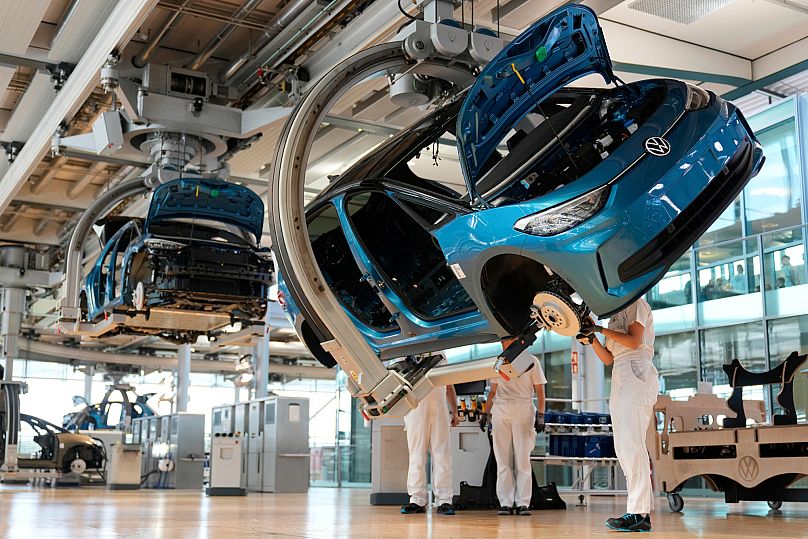
Employees of the German car manufacturer Volkswagen assemble an ID.3 electric car at the transparent factory in Dresden, Germany Copyright 2025 The Associated Press. All rights reserved

These vehicles are also becoming ever more connected and able to exchange information with other cars and roadside infrastructure, tending to become high-performance “computers on wheels”, increasingly dependent on chips and software.

As a consequence, new companies from the battery and tech sectors have entered the automotive market and leapfrogged traditional carmakers.

And here is where most European companies are still lagging behind their Asian rivals in electric car innovation. In 2024, only one electric car made in the EU was among the world’s Top Ten, the Volkswagen ID.3.

In this context, due to its quasi-control of the global battery production and low labour costs, China has risen as the electric vehicle manufacturing hub with Chinese cars becoming increasingly competitive.

And the People’s Republic remains by far the biggest global market.

Last year, according to Germany Trade & Invest, more than 32 million vehicles were sold in China, half of them electric (11 million in the European Union and 15 million in the United States).

At the IAA Mobility industry show in Munich this week, the largest in the world, the number of participating Chinese companies has increased by 40% to the highest level ever.

China's dominance and US tariffs

The growing Chinese dominance together with Donald Trump’s tariffs on European cars put Europe’s automotive industry under heavy pressure to adapt quickly to the new environment and develop industrial resilience to counter China, as the Report on EU competitiveness by the former Italian PM and ECB president Draghi pointed out.

Other experts advocate more cooperation with the Chinese.

“We need closer ties with China, not distancing ourselves. It would be stupid not to cooperate with the Chinese, as they hold all the cards,” Ferdinand Dudenhöffer, an economist and director of the Center Automotive Research (CAR) in Germany told Euronews.

“For this we need political support. What we don’t need is China-bashing.”

What is at stake is nothing less than the survival of the European car industry, widely regarded as the industrial backbone of the European economy, supporting more than 13 million direct and indirect jobs (more than 6% of total EU employment) and contributing roughly one trillion euro to the EU’s gross domestic product.

In Germany, Sweden and some eastern European countries, the car industry accounts for more than 10% of the manufacturing workforce.

So, when Germany, Europe’s biggest economy, lost 50,000 jobs in the car sector last year alone, the shockwaves were felt everywhere.

The country is home to some of the most famous carmakers in history, yet their survival is not guaranteed forever.

Just look at the United Kingdom whose car industry was once dominant, but today only has one 100% British brand left, the family-owned Morgan that makes hand-built sport cars.

“Every job lost, every factory shut down will not come back,” Dudenhöffer said.

“So, if the car industry struggles and declines, the general economic perspectives in Europe could be devastating for years to come.”


Scientists uncover key to decoupling economic growth from pollution in developing countries


New mathematical framework shows the compatibility between economic growth and environmental sustainability in developing countries using the kindergarten rule


Tokyo University of Science

Quantitative analysis of how developing countries reach the kindergarten rule level of pollution abatement 

image: 

This plot, derived using a specific configuration with the public goods model, shows the minimum GDP per capita threshold to implement a zero-emissions policy (in red) and the GDP per capita when the labor income tax rate that maximizes the growth rate of GDP per capita is selected (in blue). The intersection between these two functions implies that the threshold to successfully implement a zero-emissions policy can be reached in finite time.

view more 

Credit: Professor Hideo Noda from Tokyo University of Science, Japan Image link: https://www.worldscientific.com/doi/10.1142/S0217590825500304


Balancing environmental conservation with economic progress is one of the most pressing challenges of our time. This is particularly difficult for many developing countries, which urgently need to lift their populations out of poverty while grappling with the increasing degradation of their environment. Unfortunately, a common belief is that these nations have to choose between economic growth and a clean environment—a situation made more complex by their reliance on foreign aid.

While the United Nations Sustainable Development Goals provide a global roadmap for tackling such issues, a theoretical understanding of how developing countries can actually achieve these goals is missing. Specifically, there’s no robust theoretical framework to analyze how foreign aid can be strategically leveraged to simultaneously achieve economic progress and environmental sustainability.

Now, a recent study published online in the journal The Singapore Economic Review on August 06, 2025, provides this much-needed framework. The research was led by Professor Hideo Noda of the Faculty of Business Administration, Department of Business Economics at Tokyo University of Science (TUS), Japan, and co-authored by Ms. Fengqi Fang, a PhD candidate in Business Administration from the Graduate School of Business Administration at TUS. “This work is related to a 2021 study by Noda and Kano, who demonstrated that zero-emissions policies and sustainable economic growth are theoretically compatible. However, their model assumed developed countries with mature, innovation-driven, knowledge-based economies,” explains Prof. Noda. “Therefore, the motivation for our study was to prove that zero-emissions policies and sustainable economic growth are compatible even in developing countries that rely on official development assistance for a significant portion of their government revenue.” Thus, this study is positioned as a continuation of the study by Noda and Kano (2021).

To explore this complex problem, the researchers constructed two types of economic growth models: a public goods model and a congestion model. The public goods model assumes that government services like infrastructure or education are freely available to everyone without competition. In contrast, the congestion model takes into account how an increase in a country’s population can reduce the effectiveness of public services.

These two models allowed the researchers to analyze and simulate different economic scenarios in developing nations. Their goal was to understand the conditions under which a government could successfully implement a ‘zero-emissions policy’—a policy that reduces net pollution emissions to zero. The study also examined if such a policy could be compatible with sustained economic growth. The researchers then compared the results from both models to see how the presence of congestion in public services might affect a country’s ability to achieve these goals.

Overall, the study’s findings are optimistic and offer a clear path forward. Both models suggest that a zero-emissions policy and sustainable economic growth are compatible in developing countries receiving foreign aid. However, this requires a developing country’s gross domestic product per person to surpass a specific minimum threshold to successfully implement the zero-emissions policy. The researchers called this threshold the ‘kindergarten rule level of pollution abatement,’ referencing a basic principle commonly taught in kindergarten: “if you make a mess, clean it up yourself.”

This important threshold depends on several factors, including the level of clean technology available in the country, population size, the amount of foreign aid received, and how much of that aid is specifically designated for environmental protection. Interestingly, the research shows that countries with better clean technology or larger populations can achieve zero emissions at lower income levels. Notably, the mathematical models revealed that when governments set effective tax policies to boost economic growth, countries can reach the necessary income threshold in finite time. The researchers verified this via numerical simulations, using real-world parameters.

The findings underscore the importance of foreign aid as a catalyst for the transformations needed and suggest ways to accelerate these processes. For example, receiving countries should prioritize using foreign aid to invest in cleaner production technology, whereas donor countries could allocate a larger portion of their aid specifically to environmental programs and clean-tech development.

 “Our research will help people in developing countries who believe that it is difficult to achieve both environmental conservation and economic growth," concludes Prof. Noda. “I hope this will be an opportunity to change the mindset of such people.”


***


Reference                     
DOI: 10.1142/S0217590825500304


About The Tokyo University of Science
Tokyo University of Science (TUS) is a well-known and respected university, and the largest science-specialized private research university in Japan, with four campuses in central Tokyo and its suburbs and in Hokkaido. Established in 1881, the university has continually contributed to Japan's development in science through inculcating the love for science in researchers, technicians, and educators.

With a mission of “Creating science and technology for the harmonious development of nature, human beings, and society," TUS has undertaken a wide range of research from basic to applied science. TUS has embraced a multidisciplinary approach to research and undertaken intensive study in some of today's most vital fields. TUS is a meritocracy where the best in science is recognized and nurtured. It is the only private university in Japan that has produced a Nobel Prize winner and the only private university in Asia to produce Nobel Prize winners within the natural sciences field.

Website: https://www.tus.ac.jp/en/mediarelations/


About Professor Hideo Noda from Tokyo University of Science
Dr. Hideo Noda obtained a PhD and a Master’s degree in Economics from Kyushu University. He joined TUS in 2013, where he currently serves as Professor at the Department of Business Economics, Faculty of Business Administration. His research focuses on the mechanisms of economic growth and business cycles, zero-emissions policies, and work-life balance. He has published over 50 peer-reviewed papers on these topics with more than 100 citations. He has been awarded the “Best Poster Award” in 2015.


Funding information
This work was supported in part by a Grant-in-Aid for Scientific Research (C) (20K01639) from the Japan Society for the Promotion of Science.

Seaweed snare: Sargassum stops sea turtle hatchlings in their tracks


Florida Atlantic University
Hatchlings in Sargassum 

video: 

A sea turtle hatchling crawls over sargassum on Juno Beach in July 2021.

view more 

Credit: Abbey M. Appelt, Florida Atlantic University


Every year, sea turtles hatch on Florida’s beaches and make their way from the sand to the ocean – a critical journey that determines their chances of survival. As these hatchlings navigate obstacles such as artificial lights, beach debris and predators like birds and crabs, a new hazard looms. Sargassum seaweed washing up on Florida’s shores in record amounts is more than just a nuisance for beachgoers – it’s becoming a serious threat to vulnerable sea turtle hatchlings.

While it’s long been known that obstacles on the beach can slow down hatchlings and put them at risk, little research has focused specifically on the impact of sargassum. A new study is beginning to fill that gap. 

Researchers from Florida Atlantic University’s Charles E. Schmidt College of Science set out to explore whether sargassum buildup makes it more physically demanding for hatchlings to crawl to the ocean – and whether that added effort could affect their survival.

The study focused on three common species in Florida: leatherbacks (Dermochelys coriacea), loggerheads (Caretta caretta) and green turtles (Chelonia mydas) from three beaches – Juno Beach, Jupiter and Boca Raton.

Researchers created controlled crawlways on the sand to simulate a hatchling’s natural path to the water, adding loose mats of sargassum up to 19 centimeters high (about 7.5 inches) at the end of a 15-meter path. A dim light was placed several meters ahead to guide the hatchlings forward, simulating the natural light over the ocean that they instinctively follow. This method allowed them to directly measure the physical toll of crawling through sargassum and observe the hatchlings from a distance to avoid interfering with their natural behavior.

After completing the crawl, hatchlings had their blood glucose levels measured to assess energy use. Researchers also tested how quickly each turtle could flip itself upright when placed upside down in water – a simple test of physical condition. To account for environmental factors, researchers also recorded sand temperature at the beginning, middle and end of each crawl. 

Results of the study, published in the Journal of Coastal Research, reveal that all three species of hatchlings took significantly longer to complete their crawl when sargassum was present, and the time it took to climb up and over the seaweed piles was the primary reason. Even with the lower heights (7-9 centimeters) tested in the study, some hatchlings – across all three species – were unable to complete the climb within the time limit.

Based on median values, leatherbacks took 54% longer to crawl through light sargassum and 158% longer through heavy sargassum. Loggerheads were slowed by 91% in the light sargassum treatment and 175% in the heavy treatment. Green turtles also saw delays of 75% in light sargassum and 159% in heavy. The crawl speed decreased sharply for all species in sargassum sections, with loggerheads showing the most significant slowdown.

“The longer a hatchling stays on the beach, the more at risk it becomes – not just from predators like birds and crabs, but also from overheating and dehydration, especially after sunrise,” said Sarah Milton, Ph.D., senior author and chair and professor, FAU Department of Biological Sciences. “When sargassum piles are higher – some can be over a meter high on South Florida beaches in the summer and extend for hundreds of meters down the beach – we can expect more failed attempts, particularly when hatchlings have to cross multiple bands of seaweed just to reach the ocean.”

The study also found that hatchlings often flipped upside down – referred to as “inversions,” while trying to climb the sargassum, especially in the heavy coverage trials. One hatchling flipped more than 20 times in a single trial. These inversions not only extended the time hatchlings spent on the beach but also increased their risk of predation and heat exposure.

Interestingly, despite these delays and the physical challenges of navigating the seaweed, the study found no significant differences in blood glucose levels between the hatchlings that crawled through sargassum and those that didn’t, across all three species. Glucose concentrations remained within expected ranges, suggesting that while the added obstacle increased the effort and risk, it didn’t immediately deplete their measurable energy stores. Only leatherbacks in the no-crawl control group had noticeably higher glucose levels, indicating that the act of crawling in general, rather than the sargassum itself, has the stronger physiological impact – at least in the short term.

“For sea turtle hatchlings, reaching the ocean is already a race against time – and survival. Now, increasingly large mats of sargassum are adding new challenges to this critical journey,” said Milton. “As these seaweed accumulations grow taller and more widespread, they risk blocking hatchlings entirely, draining their limited energy or leaving them stranded. Beyond impeding movement, sargassum may also reduce nesting space and alter incubation conditions.”

This growing issue calls for smarter, more responsive beach management strategies. Without action, these dense mats could quietly undermine hatchling success and, ultimately, long-term conservation goals.

Study co-author is Abbey M. Appelt, a graduate of the FAU Department of Biological Sciences and a sea turtle nesting specialist at Ecological Associates, Inc., a South Florida environmental consulting firm.

- FAU -

About Florida Atlantic University:

Florida Atlantic University serves more than 32,000 undergraduate and graduate students across six campuses located along the Southeast Florida coast. It is one of only 21 institutions in the country designated by the Carnegie Classification of Institutions of Higher Education as an “R1: Very High Research Spending and Doctorate Production” university and an “Opportunity College and University” for providing greater access to higher education as well as higher earnings for students after graduation. In 2025, Florida Atlantic was nationally recognized as a Top 25 Best-In-Class College and as “one of the country’s most effective engines of upward mobility” by Washington Monthly magazine. Increasingly a first-choice university for students in both Florida and across the nation, Florida Atlantic welcomed its most academically competitive incoming class in the university’s history in Fall 2025. For more information, visit www.fau.edu.

How Malawi's first fully solar-powered village became a beacon for energy access

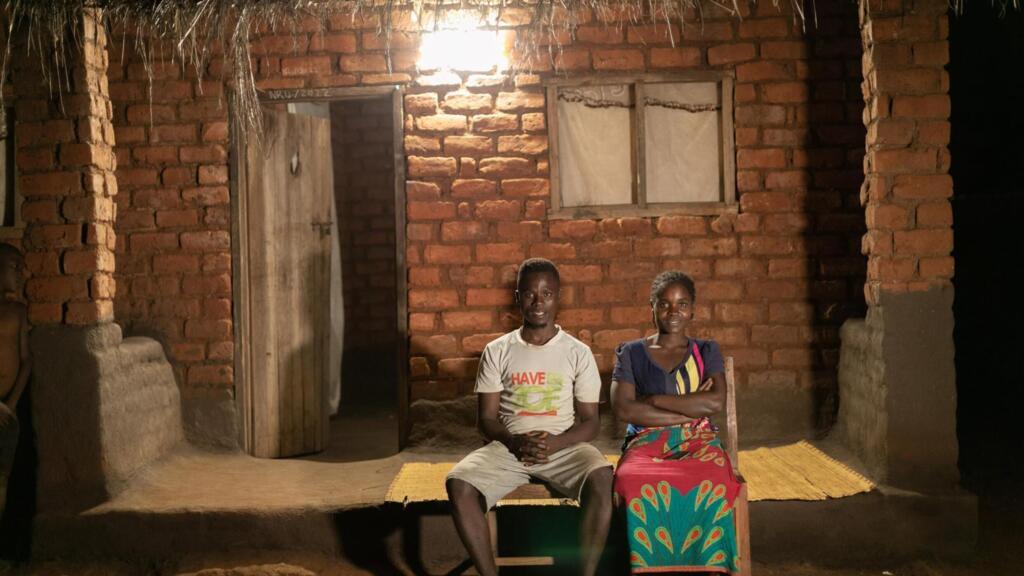
A community of nearly 9,000 homes in rural Malawi last month became the country’s first village to receive 100 percent universal access to solar power – a move that it is hoped could inspire change far beyond the region.


Issued on: 08/09/2025 - RFI

Thauzeni Chibweza lives in the village of Kasakula, Malawi, which has been connected to 100 percent solar power. © SolarAid for RFI

By: Melissa Chemam

Kasakula received universal access to solar power through an award-winning energy model from SolarAid, a small international charity, which chose the remote, low-income village to pilot its Energy-as-a-Service model.

It means that, since the last week of August, it has become 100 percent powered by solar energy, and almost all of its 8 to 9 000 households have access to this solar powered electricity.

Malawi’s government is now keen to roll out access across the country, setting a precedent for Africa.

Kenedy Buleya outside his home in Kasakula, Malawi, enjoying the light provided by SolarAir, on 26 August 2025. © SolarAid for RFI

Kasakula residents used to live off-grid, relying on candles and a few lamps, says Brave Mhonie, SolarAid Malawi general manager and president of Renewable Energy Industries Association of Malawi.

"We are kind of living the dream, a global dream of universal energy access," Mhonie told RFI.

"We're achieving our SDG 7 [Sustainable Development Goal 7] by 2030. [But] as a sector, we are behind our global goals for various reasons, one being poverty. The majority of customers who are being left behind is because they are very poor."

Sustainable Development Goal 7 is one of 17 Sustainable Development Goals established by the United Nations General Assembly in 2015. It aims to "ensure access to affordable, reliable, sustainable and modern energy for all".


SolarAid's Brave Mhonie with Chief Kasakula, in Malawi, in August 2025. © SolarAid for RFI

"What we wanted was to develop a model that enables universal energy access while being sustainable," Mhonie said.

"And realising that dream that we have actually connected the entire community, which will act as a blueprint to others to also learn and understand how it can actually be done. So for us, it's not just a celebration belonging to SolarAid."

The programme has been pushing the grid to go into the remotest areas, but this grid has got limitation as to how many people can be connected to it and how far it can go for proper maintenance.

SolarAid's model started by integrating into what the government is already doing, then by extending power coverage, to connect people and make sure that everyone in the area is actually powered with electricity, according to Mhonie.

"We are talking of about 32,000 individuals," Mohnie said.

They also got involved in this business model.

"We put the community itself at the centre stage of the implementation and delivery of the business activities," he added.

Kasakula, Malawi, is a 3-hour drive north of the capital, Lilongwe. © SolarAid for RFI

Changing lives

These changes impact directly the life of people in the village; they improved the way people work, and security at night, and the way they communicate with each other.

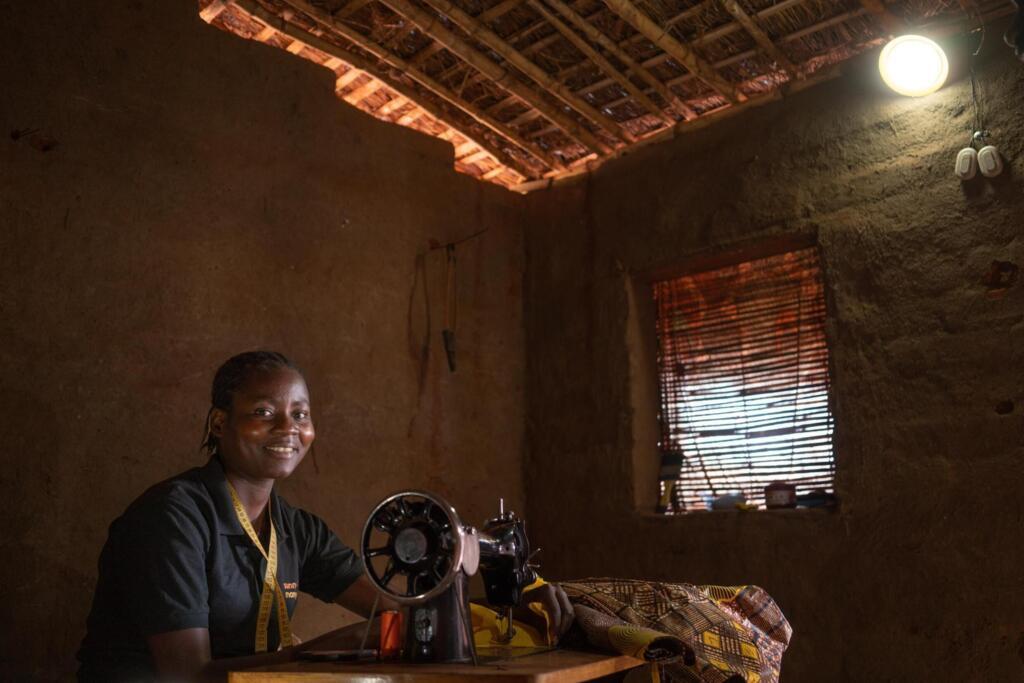
"In general, we can see quite a big shift in terms of impact, on opening business opportunities, for instance," Mhonie said. "We have some people like tailors using the light to continue working at night, which they never used to do before. We have got some people who own small shops. Again, they are connected and they are extending their working hours."

Ethel Botomani, working later in the day at her workshop, thanks to solar lamps in Kasakula, Malawi, in August 2025. © SolarAid for RFI


SolarAid also connected 12 schools in the area, ten primary schools and two secondary schools. "Learners are now coming to the school at night to have extra lessons from their teachers as well as are studying, especially during the exam time.

One of the greatest stories that Mhonie has observed so far is its impact on the girls.

"Previously the area, the performance of girls was very low. When we did a survey, we realised that, when the school organises these extra lessons or night studies at school, before we brought in the electricity, it was very difficult for the girls because they couldn't go to school at night, for obvious reasons, they are so vulnerable."

So, they were forced to stay at home, while boys were going to school at night to have extra lessons and to study.

"Now that we have connected more or less every, household, the girls are having access to electricity in their respective homes don't have to go anywhere. And that also has created them to have opportunity to read at night and putting them at the same level as the boys in terms of opportunities."

There is also one health facility in the area, which is connected to grid, but it is not reliable.

"So at night nurses and midwives were finding it difficult to deliver women at night, when the facility had no electricity. They approached us to connect them to an alternative electricity and a backup to the grid. Now the solar is having more impact on women's health at night."

National expansion

Kasakula's governance structure involves traditional chiefs

Now, the team behind the project is working very closely with the traditional authorities, the chiefs, on consumer education about clean renewable energy and how it actually works, and to teach them about their responsibility in looking after the products.

"We work very closely with the local chiefs to to educate the consumers."

Spotlight on Africa podcast: Malawi’s first solar-powered village

The community is at the centre stage of delivering this work.

"All the success that we are celebrating today is because of a very strong, cohesive, ah, collaboration with the community members themselves."

And other villages could learn from that experience, in Malawi and beyond.

"Our intention is to do something that actually inspires others to also stand up and take action. We know that people want to see solutions coming out, but probably no one has spearheaded with a bold move to take that level of action. So, what we are expecting is that other communities will be inspired by it, and will also take action."

The charity and its partners are now working with the government to make sure that it has a good knowledge of what is happening, so they can take this model and incorporate it into its rural electrification further into the country.

"We have already received requests from other chiefs wanting us to go into their villages as well to do it, from other organisations that are also interested in rural electrification, coming to seek support on how we can work with them to help."

The enterprise SunnyMoney and the Swedish NGO Postcode Foundation are also helping in one of the districts down south in Malawi, where a similar project has also been set up at a smaller scale.

Another community group in the eastern part of the country is also working on making solar power happen, as well as a local Catholic church and church members, willing to receive electricity in their homes.

"So it's something that indeed can be replicated in other areas quite easily," Mhoni concluded.


UN urges nations to submit overdue climate plans 'as soon as possible' ahead of COP30

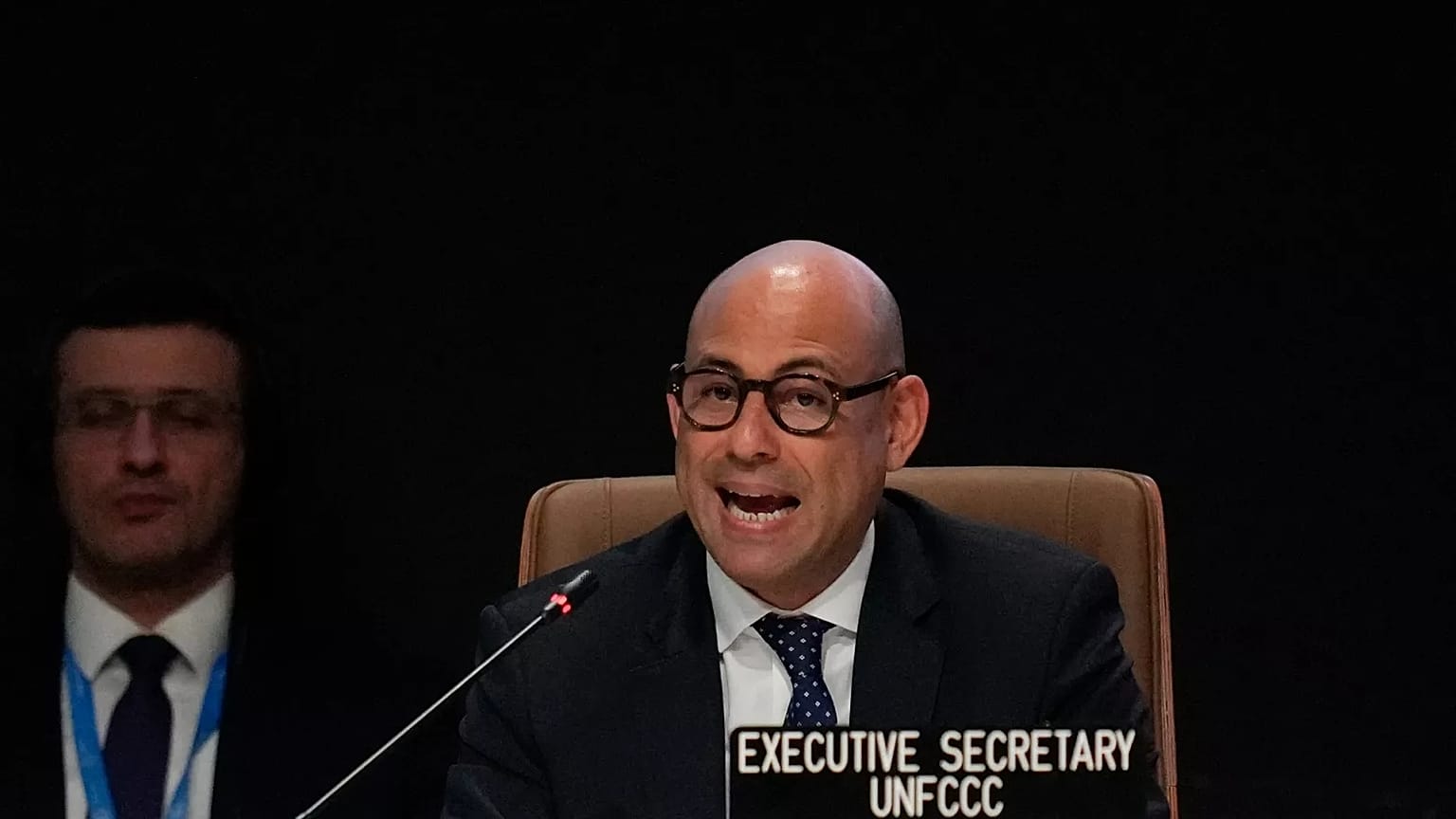
Simon Stiell, United Nations climate chief, speaks during a closing plenary session at the COP29 climate summit in 2024.
Copyright AP Photo/Rafiq Maqbool

By Euronews Green
Published on 

Most parties, including the EU, missed the February deadline to submit new climate plans, and pressure is mounting as the UN climate summit approaches.

The UN has urged countries to submit their already late national climate plans this month.

Known as Nationally Determined Contributions, these national blueprints are required under the Paris Agreement and were due this year. They should outline how each country is expecting to cut emissions by 2035.

In a letter to nearly 200 countries, UN climate chief Simon Stiell urged countries to submit their plans "as soon as possible".

Most countries missed the deadline in February this year, and six months later, many major polluters have yet to submit their updates. This includes the EU, which has delayed its submission due to negotiations around the bloc's 2040 climate target, which will likely shape its plan.

Countries, including France and Poland, have called for delays in approving the legally binding 2040 goal. This week, France demanded that negotiations on the target be escalated to national leaders rather than being decided by climate ministers, which could further stall a deal.

The UN has asked countries to submit their NDCs during September so that their efforts can be assessed before the COP30 climate summit in Brazil in November.

Countries urged to submit climate plans 'as soon as possible'

"These national climate plans are much more than words on paper; they are among this century’s most powerful engines of economic growth and rising living standards, and the cornerstone of humanity's fight against the global climate crisis," Stiell wrote in a letter.

The UN climate chief commended those nations that have already submitted their NDCS, saying that those with strong new plans were "on their way to securing the biggest share of the clean energy boom".

The UN Framework Convention on Climate Change is supposed to conduct its new review of commitments in a report that needs to be ready by COP30.

Plans that are submitted by the end of September will make it into this "important update", Stiell wrote. He encouraged world leaders to use the UN General Assembly on 24 September in New York as a platform to announce their new policies.

Millions hit as London Underground train workers strike

London (AFP) – Rush-hour commuters faced chaos Monday as staff on the London Underground train network staged a five-day strike, shutting stations and forcing people to work from home or use alternative modes of transport.


Issued on: 08/09/2025 - RFI

Pedestrians pass a closed entrance to London Bridge Underground Station
 © CARLOS JASSO / AFP


Thousands queued to try and get on crammed buses while others reluctantly walked or cycled.

Transport for London (TfL), which manages the Underground, also known as the Tube, warned there would be little or no service between Monday and Thursday as a result of the first major strike in more than two years.

Lauren, 53, a construction sector admin worker, told AFP she was having to walk a couple of kilometres to work in central London instead of catching her usual Tube train.

"It's a real inconvenience. I'm not sympathetic (to train drivers). They should get back to work," she said.


The RMT trade union called the strike on the Tube -- which carries up to five million passengers a day -- as they battle to secure better pay and conditions.

Drivers are striking along with signalling and maintenance workers after having rejected TfL's proposal for a 3.4-percent pay rise.

Workers are also demanding a reduction in their hours.

"We are not going on strike to disrupt small businesses or the public," said an RMT spokesman.

"This strike is going ahead because of the intransigent approach of TfL management and their refusal to even consider a small reduction in the working week," he added.
Concert postponed

TfL said it was "bitterly disappointed" that the strikes were going ahead.

Commuters throng London Bridge as most of the city's Underground services were suspended during strike action © CARLOS JASSO / AFP

"We have been clear that their demand for a reduction in the working week is unaffordable and impractical," said Claire Mann, TfL's Chief Operating Officer.

Concert organisers were forced to postpone two shows by American singer Post Malone, scheduled for Sunday and Monday at the Tottenham Hotspur Stadium.

"Without a Tube service, it's impossible to get people to the concert and home again safely," Live Nation UK posted on X.

Trains on other networks were running Monday, but often with disruption as overcrowding concerns meant services did not always stop at stations shared with Underground lines.

Amita, a public sector worker in regulation, said she had taken her usual commuter train to the central London Bridge Station but faced a further 45-minute walk to get to her office.

"We've all got a job to do. I have a public-sector job and I get very minimal pay rises," she told AFP.

Seventeen-year-old student Aida was trying to make her first day at college.

"I'm going to be late and I'm on a disciplinary, which is like if I miss or get a late I'm going to get kicked off my course," she said.

It is the first major Tube strike to take place under the Labour government of Keir Starmer, who became prime minister in July last year.

His government is already languishing in the polls and suffered a serious blow last week when deputy prime minister Angela Rayner was forced to quit after underpaying tax on her new house.

© 2025 AFP
At least 10 killed in Nepal protest over social media ban

Kathmandu (AFP) – At least 10 protesters were killed Monday after Nepal police fired rubber bullets, tear gas and water cannon to disperse demonstrators in Kathmandu demanding the government lift its ban on social media and tackle corruption.

Issued on: 08/09/2025 - RFI

]
Nepal police and demonstrators clashed during protests against a government ban on social media sites © Prabin RANABHAT / AFP

Several social media sites -- including Facebook, YouTube and X -- have been inaccessible in Nepal since Friday after the government blocked 26 unregistered platforms, leaving users angry and confused.


"Until now 10 protesters have died and 87 are injured," Shekhar Khanal, spokesman for the Kathmandu valley police, told AFP.

"The crowds are still in the streets".

Many of the injured were being treated at the nearby Civil Hospital, according to its information officer Ranjana Nepal.

"I have never seen such a disturbing situation at the hospital," she told AFP.

"Tear gas entered the hospital area as well, making it difficult for doctors to work".

Waving national flags, young demonstrators in the capital Kathmandu started the protest with the national anthem before unleashing chants against the social media prohibitions and corruption.

The crowd swelled as it crossed into a restricted area close to the parliament, and pushed through barbed wire.

Violence erupted in the streets as police baton-charged protesters, some of whom climbed over the wall into the parliament premises.

The district administration imposed a curfew in several key areas of the city, including the parliament, the president's residence and Singha Durbar, which houses the prime minister's office.

Similar protests were organised in other districts across the country.

Popular platforms such as Instagram have millions of users in Nepal who rely on them for entertainment, news and business.

"We were triggered by the social media ban but that is not the only reason we are gathered here," said student Yujan Rajbhandari, 24.
'We want to see change'

"We are protesting against corruption that has been institutionalised in Nepal."

Another student, Ikshama Tumrok, 20, said she was protesting against the "authoritarian attitude" of the government.

Protesters gather outside parliament in Kathmandu, with similar demonstrations in other parts of the country © Prabin RANABHAT / AFP

"We want to see change. Others have endured this, but it has to end with our generation," she told AFP.

Since the ban, videos contrasting the struggles of ordinary Nepalis with the children of politicians flaunting luxury goods and expensive vacations have gone viral on TikTok, which is still operating.

"There have been movements abroad against corruption and they (the government) are afraid that might happen here as well," said protester Bhumika Bharati.

The cabinet decided last month to give the affected companies seven days to register in Nepal, establish a point of contact and designate a resident grievance handling officer and compliance officer.

The decision came after a Supreme Court order in September last year.

In a statement on Sunday, the government said it respected freedom of thought and expression and was committed to "creating an environment for their protection and unfettered use".

The government blocked access to the Telegram messaging app in July, citing a rise in online fraud and money laundering.

It lifted a nine-month ban on TikTok in August last year after the platform agreed to comply with Nepali regulations.

© 2025 AFP