Tuesday, September 09, 2025

Obese surpass undernourished youths for first time, UN warns

United Nations (United States) (AFP) – Obesity has skyrocketed among children and adolescents bombarded by "unethical" marketing of junk food, outpacing undernourishment to become the leading form of malnutrition worldwide for the first time among those age five to 19, UNICEF warned Tuesday.


Issued on: 10/09/2025 - FRANCE24

UNICEF, which conducts nutrition programs in developing nations, says obesity in 2025 is surpassing undernourishment as the leading form of malnutrition for youths age five to 19 © Rizwan TABASSUM / AFP/File

In a dire report, the United Nations children's agency projected that nearly one in 10 individuals within that age group will be living with the chronic disease in 2025, fueled by easy availability of ultra-processed foods "even in countries still grappling with child undernutrition."

Today "when we talk about malnutrition, we are no longer just talking about underweight children," UNICEF chief Catherine Russell said in a statement on the report's release.

"Ultra-processed food is increasingly replacing fruits, vegetables and protein at a time when nutrition plays a critical role in children's growth, cognitive development and mental health."

The fight to reduce world hunger is bearing fruit in some areas, with prevalence of underweight youths on a downward trend, falling from 13 percent to 10 percent between 2000 and 2022 among 5-19 year olds, according to data collected in 190 countries.

But over the same period, overweight numbers in the age range have soared, doubling between 2000 and 2022 from 194 to 391 million.

The spike is even more pronounced for obesity, a more serious form of overweight associated with metabolic disorders such as diabetes, certain cancers, anxiety and depression.

In 2022, eight percent of those 5-19 worldwide, or 163 million, were obese, compared to three percent in 2000.

'Failure of society'

Given the distinct trends, UNICEF believes "a historic turning point" was reached this year, with the global prevalence of obesity at 9.4 percent of the age group surpassing that of underweight, at 9.2 percent.

According to the projections, 188 million children and adolescents are obese.

UNICEF bluntly described the primary culprit not as poor nutrition decisions by families, but unethical business practices designed to generate profits.

Children "are being bombarded by... unhealthy food marketing of junk foods," especially at school where they are exposed to sugary drinks and salty snacks, Katherine Shats, a UNICEF legal expert in nutrition, told AFP.

Such products are often cheaper than fresh foods like fruits, vegetables and proteins, which are being steadily replaced in families' diets.

UNICEF stresses the fault lies neither with children nor their families, but "a failure of society to protect the environments that children grow up in."

It also criticized what it called the false narrative that participating in sports can offset unhealthy diets.

"It is impossible to 'outrun' the health consequences of a diet high in free sugars, refined starches, salt, trans-fats, harmful additives and excessive energy through physical activity alone."

Urgent measures

Historically, levels of overweight have been higher in more developed nations. They remain high for example in Chile, at 27 percent in the 5-19 age group, and the United States at 21 percent.

But since 2000, the gap between rich and poor countries has narrowed, with obesity rates soaring in some Pacific islands where imports are replacing traditional products.

In tiny Nieu, the age group's obesity rate has reached 38 percent, with the Cook Islands topping 37 percent.

For some nations, it is a double curse as they grapple with both undernutrition and growing obesity.

Shats laments that in certain conflict zones or areas with humanitarian crises, large food and beverage companies are taking advantage of such situations and donating ultra-processed foods to promote their own image and their marketing tactics.

So while children lack the availability of nutritional food, what they do gain access to is "this very unhealthy food because of these really predatory tactics from the industry," she said.

UNICEF is urging governments to take binding measures, including advertising restrictions, taxes on sugary drinks and unhealthy foods, and policies that encourage production of fresh produce.

© 2025 AFP
Australia approves chlamydia vaccine for koalas

Sydney (AFP) – Australian regulators have approved a chlamydia vaccine for koalas, researchers said Wednesday, as they seek to stamp out a sexually transmitted disease responsible for about half of all deaths of the fluffy marsupial in the wild.


Issued on: 10/09/2025 - FRANCE24

Chlamydia is responsible for about half of all koala deaths in the wild © Saeed KHAN / AFP/File
For a decade, scientists at the University of the Sunshine Coast trialled the chlamydia vaccine in controlled settings.

But approval from the veterinary medicine regulator means the single-dose shot can be nationally rolled out.

Lead researcher Professor Peter Timms said the disease was driving wild koalas to extinction, particularly in southeast Queensland and New South Wales.

In those areas, "infection rates within populations are often around 50 percent and in some cases can reach as high as 70 percent," he said.

Trials of the vaccine showed it reduced the likelihood of the herbivores developing chlamydia during breeding age and decreased deaths in wild populations by at least 65 percent.

Antibiotics were previously the only treatment for the chlamydia-ridden tree-dwellers but it disrupted their digestive abilities and did not protect against future infections.  

Chlamydia was first observed in koalas about 50 years ago.

The bacterial infection causes blindness, bladder infections, infertility and death.

The disease has taken a heavy toll on Australia's koala population.

The native species are shy and notoriously difficult to count, but the government considers the animal as endangered along the east coast.

Australia's official national monitoring programme estimates between 95,000 and 238,000 koalas live in the eastern states of Queensland, New South Wales and the Australian Capital Territory.

Another 129,000 to 286,000 of the marsupials are estimated to be living in Victoria and South Australia.

Expanding cities, land clearance and the spread of chlamydia are devastating the populations of one of Australia's most well-loved animals.

Scientists believe Australia has the highest rate of mammal extinction in the world, with about 100 of the country's unique flora and fauna species wiped out in the past 123 years.

Australia halted logging in a large stretch of the eastern coast on Sunday to create a retreat for koalas and save the local population from extinction.

© 2025 AFP


Kidnapped academic Elizabeth Tsurkov released in Iraq

Baghdad (AFP) – Iraqi Prime Minister Mohammed Shia al-Sudani and US President Donald Trump announced Tuesday the release of Israeli-Russian academic Elizabeth Tsurkov who was kidnapped in Baghdad in March 2023.


Issued on: 10/09/2025 -

A file photo from 2017 of Israeli-Russian academic Elizabeth Tsurkov who was kidnapped in Baghdad in March 2023 
© Ahmad Mohamad / Ahmad Mohamad/AFP/File

While Iraq said a "group of outlaws" kidnapped Tsurkov, Trump announced she was released by the powerful pro-Iran Kataeb Hezbollah group.

"As a culmination of extensive efforts exerted by our security services over the course of many months, we announce the release of the Russian citizen, Elizabeth Tsurkov," Sudani said on X.

Trump posted on his Truth Social platform that Tsurkov "was just released" by Kataeb Hezbollah "after being tortured for many months" and was now at the US embassy in Baghdad.

Sabah al-Numan, the military spokesman for the Iraqi prime minister, said later in a statement that "following extensive and high-level security and intelligence efforts... authorities succeeded, on September 9, in locating and reaching the site of her detention."

Tsurkov was delivered to the US embassy to "facilitate her reunion with her sister, a US citizen," he added.

The former captive's sister, Emma Tsurkov, thanked Trump, his special envoy Adam Boehler, the US embassy in Baghdad and the non-profit group Global Reach for their roles in securing the release.

"My entire family is incredibly happy. We cannot wait to see Elizabeth and give her all the love we have been waiting to share for 903 days," she posted on social media

Numan said Tsurkov was kidnapped by a "group of outlaws" without naming any party, and added that Iraq's security forces "will continue to pursue all those involved in this crime and ensure they are held accountable."
Phd candidate

Tsurkov, a doctoral student at Princeton University and fellow at the New Lines Institute for Strategy and Policy, went missing in Iraq in March 2023.

She had likely entered Iraq on her Russian passport and had travelled to the country as part of her doctoral studies.

She was active on Twitter, where she has tens of thousands of followers and describes herself as "passionate about human rights".

In Baghdad, she had focused on pro-Iran factions and the movement of Iraqi Shiite leader Moqtada Sadr as part of her research on the region.

She was abducted as she was leaving a cafe in the Iraqi capital's Karrada neighbourhood, an Iraqi intelligence source told AFP in 2023.

Israeli authorities blamed Kataeb Hezbollah for her disappearance, but the group implied that it was not involved.

Kataeb Hezbollah?

Kataeb Hezbollah did not claim in 2023 the abduction, but a source in the group told AFP Tuesday Tsurkov was released to spare Iraq any "conflicts".

She "was released according to conditions, the most important of which was to facilitate the withdrawal of US forces without a fight and to spare Iraq any conflicts or fighting," the source said.

"She was released and not liberated. No military operation was carried out to free her," the source added.

Like other armed groups trained by Iran during the war against the Islamic State group (IS), Kataeb Hezbollah were integrated into the regular security forces as part of the Hashed al-Shaabi or the Popular Mobilisation force (PMF).

However, the faction has developed a reputation for sometimes acting on its own.

The group and other Iran-backed Iraqi factions have been calling for the withdrawal of US troops deployed in Iraq at Baghdad's invitation as part of the anti-IS coalition.

US forces in Iraq and neighbouring Syria were repeatedly targeted by Kataeb Hezbollah and other pro-Iran groups following the outbreak of the Gaza war in October 2023.

They have responded with heavy strikes on Tehran-linked targets, and the attacks have halted.

The US and Iraq have announced that the anti-IS coalition would end its decade-long military mission in federal Iraq in 2025, and by September 2026 in the autonomous Kurdistan region in the country's north.

© 2025 AFP
Nepal's parliament burns as PM gives in to protesters' call to resign

Nepal’s prime minister stepped down Tuesday amid escalating protests sparked by a short-lived social media ban, which quickly grew into widespread unrest targeting his government and allegations of corruption within the country’s political elite. Furious protesters, some of them armed, set the parliament ablaze as security forces targeted them with water cannons.


Issued on: 09/09/2025 -
By: FRANCE 

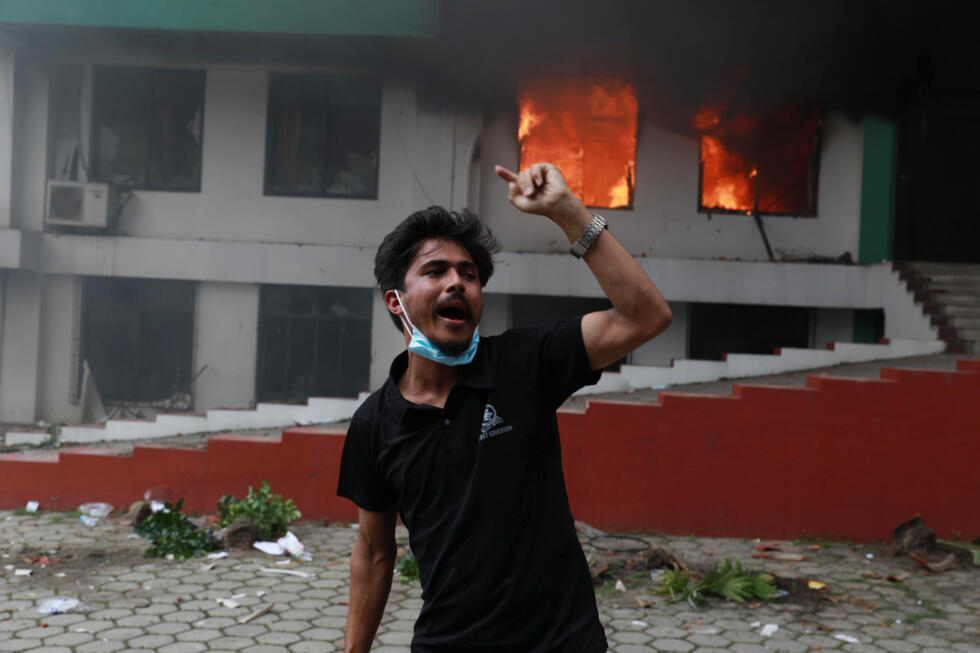
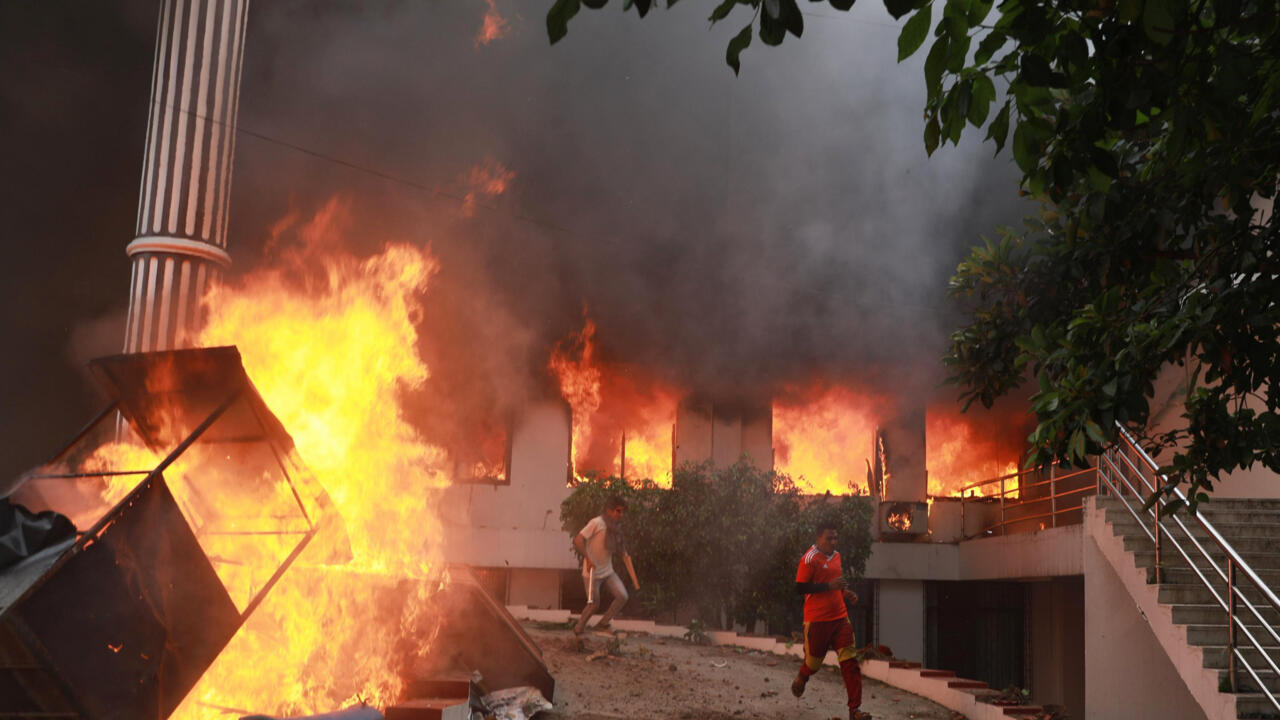
Protesters run from the burning Nepali Congress Party office in Kathmandu on September 9. © Prabin Ranabhat, AFP
01:51


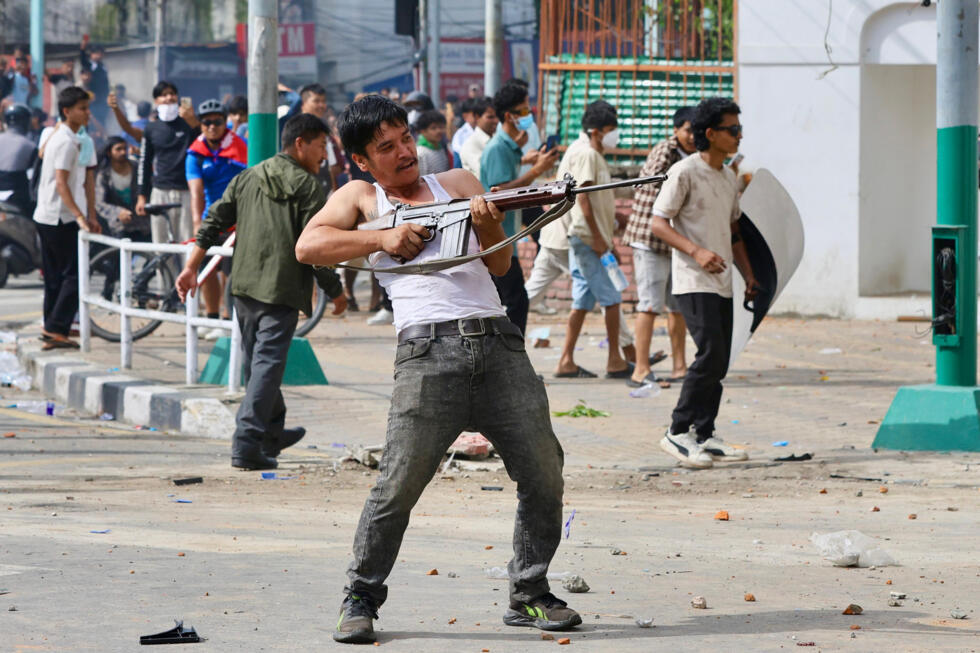
Nepali youth protesters set fire to parliament on Tuesday as the veteran prime minister gave in to furious crowds' calls to quit, a day after one of the deadliest crackdowns in years in which at least 19 people were killed.

The protests, which began on Monday with demands that the government lift a ban on social media and tackle corruption, reignited despite the apps going back online.

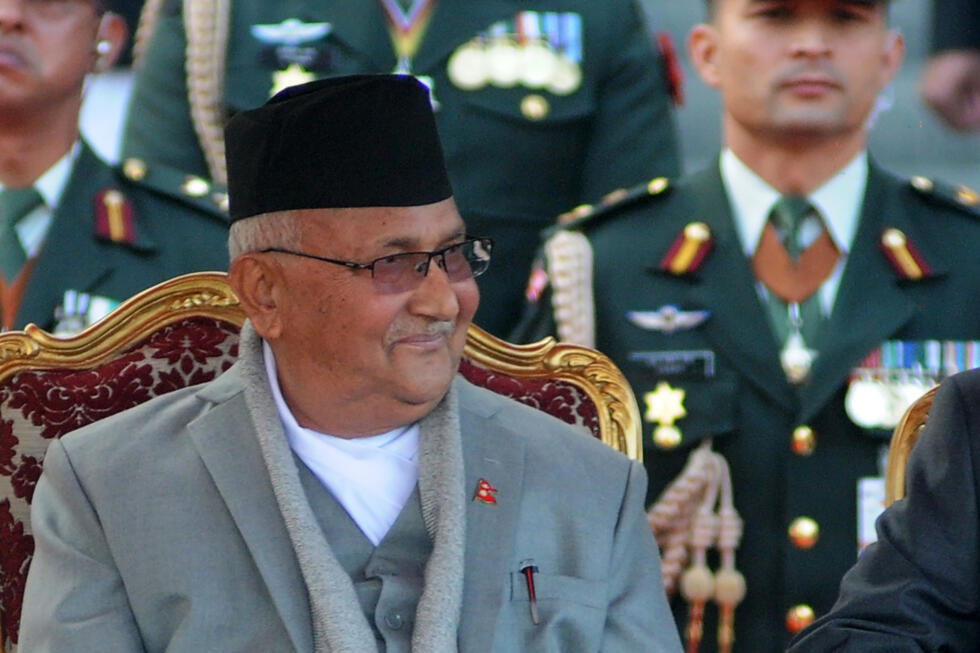
Demonstrators on Tuesday attacked and set fire to KP Sharma Oli's house, the 73-year-old, four-time prime minister and leader of the Communist Party.

Shortly after, chanting protesters – some wielding assault rifles, according to an AFP reporter at the site – gathered outside main government buildings.


Plumes of smoke also covered Nepal's parliament as demonstrators set the building ablaze.

"Hundreds have breached the parliament area and torched the main building," Ekram Giri, spokesman for the Parliament Secretariat, told AFP.

The United Nations rights chief voiced alarm at the escalating violence.

UN High Commissioner for Human Rights Volker Turk is "appalled by the escalating violence in Nepal", and insists that "dialogue is the best and only way to address the concerns of the Nepalese people", he said in a statement.

Protesters, mostly young men, were seen waving the country's national flag as they dodged water cannons deployed by the security forces.

Other demonstrators targeted the properties of politicians and government buildings.

Kathmandu's airport remains open, but some flights were cancelled after smoke from fires affected visibility, airport spokesman Rinji Sherpa said.


An AFP journalist saw some protesters wielding rifles. © Prabin Ranabhat, AFP


"I have resigned from the post of prime minister with effect from today ... in order to take further steps towards a political solution and resolution of the problems," Oli said Tuesday in a statement.

His political career stretched nearly six decades, a period that saw a decade-long civil war, with Nepal abolishing its absolute monarchy in 2008 to become a republic.

First elected as prime minister in 2015, he was re-elected in 2018, reappointed briefly in 2021, and then took power in 2024 after his Communist Party forged a coalition government with the centre-left Nepali Congress in the often-volatile parliament.

His resignation followed that of three other ministers, and came despite the government repealing the ban.

Bringing social media back online "was among the Gen Z's demands", Minister for Communication Prithvi Subba Gurung told AFP, referring to young people aged largely in their 20s.

KP Sharma Oli resigned after days of deadly protests sparked by a ban on social media. 
© Bikash Karki, AFP


The ban fed into existing anger at the government in a country with a youth bulge.

People aged 15-40 make up nearly 43 percent of the population, according to government statistics – while unemployment hovers around 10 percent and GDP per capita is just $1,447, according to the World Bank.


Live ammunition

Slogans demanding accountability from the authorities have been a feature at the protests.


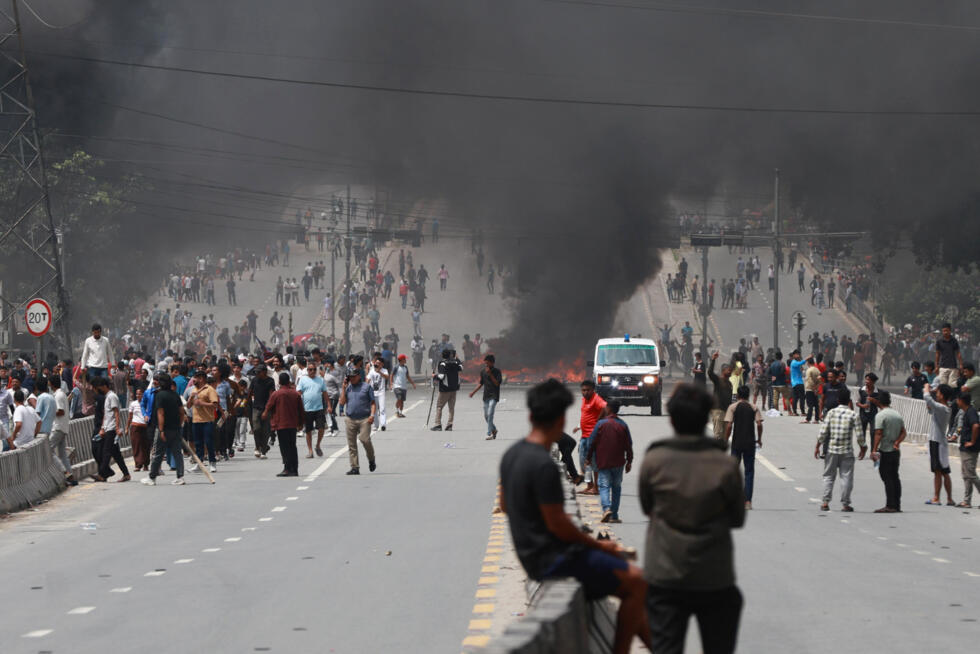
A burning baricade on a road in Kathmandu on September 9. © Prabin Ranabhat, AFP


"Nearly 20 people were murdered by the state – that shows the scale of police brutality," said 23-year-old student Yujan Rajbhandari.

Several social media sites – including Facebook, YouTube and X – were blocked on Friday in the Himalayan nation of 30 million people, after the government cut access to 26 unregistered platforms.

Amnesty International said live ammunition had been used against protesters on Monday, and the United Nations demanded a swift and transparent probe.

Since Friday, videos contrasting the struggles of ordinary Nepalis with the children of politicians flaunting luxury goods and expensive vacations have gone viral on TikTok, which was not blocked.

A protester celebrates outside the burning Nepali Congress Party office in Kathmandu.
 © Prabin Ranabhat, AFP


Popular platforms such as Instagram have millions of users in Nepal who rely on them for entertainment, news and business. Others rely on the apps for messaging.

"This isn't just about social media – it's about trust, corruption, and a generation that refuses to stay silent," the Kathmandu Post newspaper wrote.

"Gen Z grew up with smartphones, global trends, and promises of a federal, prosperous Nepal," it added.

"For them, digital freedom is personal freedom. Cutting off access feels like silencing an entire generation."

It lifted a nine-month ban on TikTok last year after the platform agreed to comply with Nepali regulations.

(FRANCE 24 with AFP)


'Israeli movie industry complicit with genocide', film director says

Issued on: 09/09/2025 - FRANCE24

Over 1,800 actors, entertainers, and producers, including some Hollywood stars, signed a pledge released on Monday to not work with Israeli film institutions that they see as being complicit in the abuse of Palestinians by Israel. FRANCE 24's Yinka Oyetade speaks to film director and producer Mike Lerner, who is among the signatories of the pledge.

Video by:  Yinka OYETADE


MEPs clash over alleged 'genocide' in Gaza

EP Plenary session - Gaza at breaking point: EU action to combat famine, the urgent need to release hostages and move towards a two-state solution
Copyright European Parliament

By Maïa de La Baume
Published on 

The European Parliament doesn’t play any diplomatic role in the current response to the war in Gaza, but its debates and resolutions are likely to add political pressure on the Israeli government.

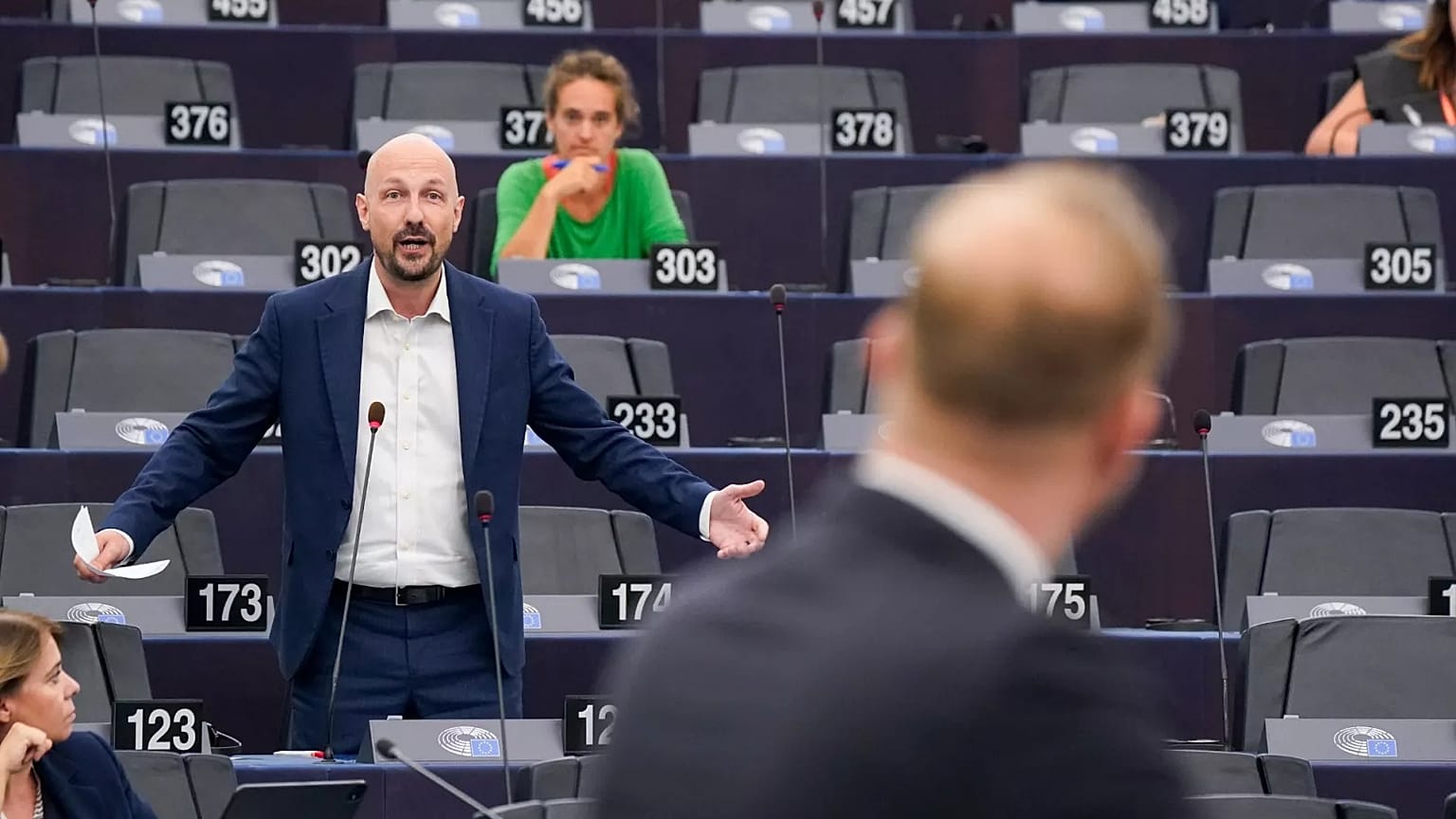
Europe’s ideological divergences over the war in Gaza were laid bare on Tuesday during a heated debate which focused on the word "genocide" and the EU’s paralysis over how to act over the embattled Strip.

The debate, entitled “Gaza at breaking point: EU action to combat famine, the urgent need to release hostages and move towards a two-state solution” took place in the Strasbourg hemicycle, two days before MEPs will vote on their first non-binding resolution on Gaza, the details of which are still being negotiated.

The European Parliament doesn’t play any diplomatic role in the current response to the war in Gaza, but its debates and resolutions are likely to add political pressure on the Israeli government.

So far, the EU as a bloc has recognised that Israel's actions in the Gaza Strip are a breach of the human rights provisions contained in its Association Agreement with the European Union. But it has not sanctioned Israel due to resistance from many countries, which are keen to preserve their relationship with Israel.

During Tuesday’s debate, MEPs clashed mainly over the use of the word “genocide” to designate Israel's actions in Gaza and the current humanitarian disaster there.

Spanish socialist MEP Nacho Sánchez Amor called on the EU to “call out evil”, and “state that this is a genocide”. By contrast, Antonio Tânger Corrêa from the far-right "Patriots for Europe" insisted that it was Hamas, which is widely recognised as a terrorist organisation, that "must be held accountable", and "is an obstacle to peace."

At one point during the debate, Sander Smit, a Dutch MEP from the conservative European People's Party, lashed out against Belgian left-wing MEP Marc Botenga for his “extreme-left way” of using the word genocide in Gaza, and “insulting” the other “real” genocide victims like Armenians.

“Where is the proof of genocide?” Smit asked Botenga, adding: “Israel is providing aid, is evacuating children, if you talk about genocide… it’s antisemitism.”

Botenga replied that “everybody” acknowledged genocide in Gaza, including well-known NGOs like Amnesty International, Human Rights Watch, Doctors Without Borders and even “Israeli genocide scholars.”

“What are your sources?" Botenga asked. “Who are you to deny genocide?”

The war on Gaza began after Hamas-led militants attacked southern Israel on 7 October 2023, killing around 1,200 people, many of them civilians. While Hamas is holding 50 hostages, a subsequent Israeli offensive has killed more than 64,000 Palestinians, mostly women and children, according to the Hamas-run Gaza Health Ministry whose figures do not distinguish between fighters and civilians. 

The word genocide is defined by the 1948 Convention on the Prevention and Punishment of the Crime of Genocide, as a set of five crimes “committed with intent to destroy, in whole or in part, a national, ethnical, racial or religious group.”

Prior to the MEP debate, the EU’s top diplomat Kaja Kallas conceded that the current war was “testing Europe’s resolve because we are not united.”

“We can’t move as a union until member states share the same view on what to do,” Kallas added.

Commission distanced itself from Ribera's use of term

Last week the EU Commission’s Spanish executive vice president, Teresa Ribera, slammed Europe for its failure to act to persuade Israel to stop its military operations in Gaza, using the term genocide for the first time in public.

"The genocide in Gaza exposes Europe’s failure to act and speak with one voice, even as protests spread across European cities and 14 UN Security Council members call for an immediate ceasefire," she told students in a speech at Sciences Po on Thursday.

Her remarks were slammed by the Israeli government, which accused her of being a mouthpiece for the militant group Hamas.

And in a press conference in Brussels late last week, EU spokespeople made it clear they didn't agree with Ribera's comments.

"It's not up to the Commission to judge on this question and definition but really for the courts, and there has been no College [of Commissioners] decision on this particular subject," the Commission's Chief Spokesperson Paula Pinho said.

ISRAEL ATTACKS QATAR
EU leaders condemn Israeli attack on Hamas in Doha, White House calls strike 'unfortunate'
NO MORE NEGOTIATIONS

Middle East

Israel launched an airstrike against the leaders of Hamas in Qatar on Tuesday as they gathered to consider a US proposal for a ceasefire in the Gaza Strip, drawing condemnation from its allies in Europe and a rare rebuke from the Trump administration. UN chief Antonio Guterres said the Israeli attack was a "flagrant violation" of Qatari sovereignty.

Issued on: 09/09/2025 -
By: FRANCE 24
Video by: Olivia BIZOT

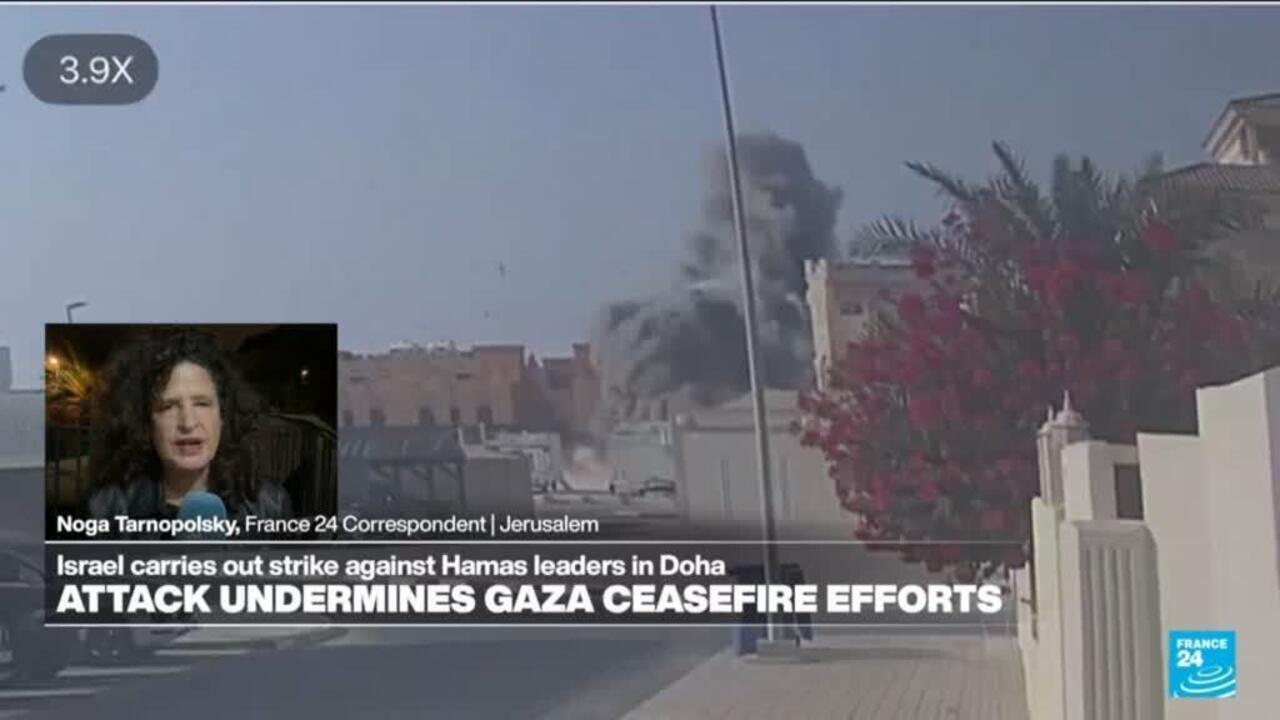
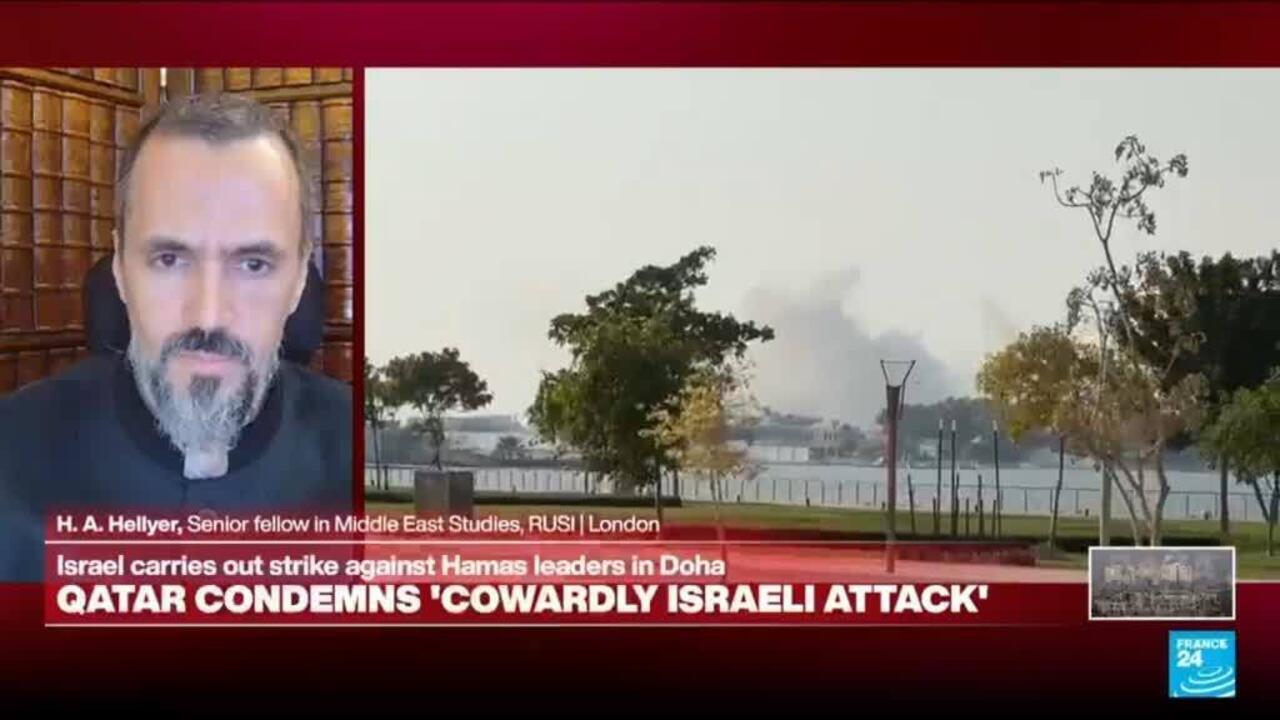
Smoke billows over Doha after Israeli air strikes target Hamas leaders based in the capital of Qatar, a key US ally. © Jacqueline Penney, AFP
01:44


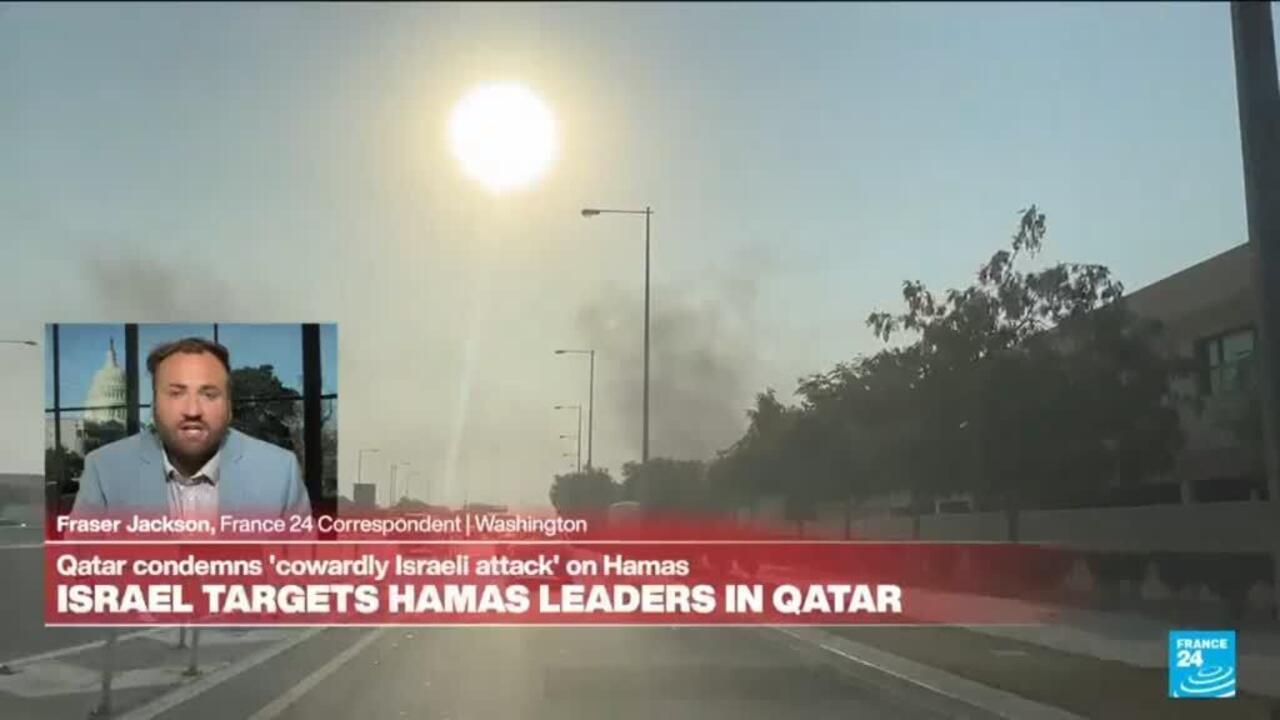
Deadly Israeli air strikes targeted senior Hamas leaders in US ally Qatar, the venue of repeated rounds of Gaza peace talks, on Tuesday, drawing codemnation from Israel's allies in Europe and a rare rebuke from President Donald Trump.

The Palestinian militant group said six people were killed in the strikes, including a son of its top negotiator, but that its senior leaders had survived. Qatar said one of its security officers also died.


The White House said President Donald Trump did not agree with Israel's decision to take military action on the US ally's soil and had warned Qatar in advance of the incoming strikes.


But Qatar, which hosts a large US military base, said it had not received the warning from Washington until the attack was already under way.

© France 24
05:29


Qatar condemned the strikes, which it said targeted the homes of several members of Hamas's political bureau residing in the Gulf country, where the group's leadership is based.

Three bodyguards and negotiator Khalil al-Hayya's aide and son were all killed in the attack, Hamas said, affirming "the enemy's failure to assassinate our brothers in the negotiating delegation".

Qatar's interior ministry said a member of its internal security forces was killed in the strikes and several other security personnel wounded.

Israeli Prime Minister Benjamin Netanyahu said he ordered the strikes in response to a Monday shooting in Jerusalem that killed six people and was later claimed by Hamas.

"Yesterday, following the deadly attacks in Jerusalem and Gaza, Prime Minister Netanyahu instructed all security agencies to prepare for the possibility of targeting Hamas leaders," said a joint statement from Netanyahu and Defence Minister Israel Katz.
'Flagrant violation'

The reaction from Washington to the attack on its ally was a rare personal rebuke for Israel from Trump.

While eliminating Hamas was a "worthy goal," a strike in the Qatari capital "does not advance Israel or America's goals," White House Press Secretary Karoline Leavitt told reporters, reading from a statement.

"The president views Qatar as a strong ally and friend of the United States, and feels very badly about the location of this attack."

Trump had his envoy notify Qatar of the impending Israeli attack, the White House said, adding that the US president spoke with the leaders of both countries after the strikes.

"President Trump immediately directed Special Envoy Steve Witkoff to inform the Qataris of the impending attack, which he did," Leavitt said.

But Qatar said the strikes were already under way when the US official called.

"The call received from an American official came as explosions sounded from the Israeli attack," foreign ministry spokesman Majed al-Ansari posted on X.


© France 24
06:48


It is the first time Israel has carried out air strikes in the Western-backed Gulf state. Since Hamas's October 2023 attack, it has also carried out strikes in Iran, Syria, Lebanon and Yemen, as well as the Palestinian territories.

Speaking at a US embassy event in Jerusalem later, Netanyahu said "terrorist leaders" would no longer be safe anywhere in the world.

Along with the United States and Egypt, Qatar has led multiple attempts to end the Israel-Hamas war, which was sparked by the Palestinian militant group's October 2023 attack, and secure the release of the remaining hostages.

The main Israeli group campaigning on behalf of the hostages expressed "deep concern" following the Israeli attack on Hamas leaders.

"The families of the hostages are following the developments in Doha with deep concern and heavy anxiety. A grave fear now hangs over the price that the hostages may pay," the Hostages and Missing Families Forum said.
'Sledgehammer' to diplomacy

The strikes have drawn condemnation, including from UN chief Antonio Guterres, who condemned Israel's "flagrant violation" of Qatari sovereignty.

French President Emmanuel Macron said they were "unacceptable regardless of motive".

German Foreign Minister Johann Wadephul said the Israeli attack "not only violates Qatar's territorial sovereignty, but also jeopardises all of our efforts to secure the release of the hostages".
© France 24
02:59

The attack came as Israel stepped up a deadly assault on Gaza City, the Palestinian territory's largest urban centre.

It marked a sharp escalation on the territory of a state that has been a driving force in ceasefire efforts.

Netanyahu insisted that a hostage release proposal that US President Donald Trump announced on Sunday without giving any details could yet end the war if Hamas accepted its terms.

"If President Trump's proposal is accepted, the war can end immediately," he said.

But analysts warned that the strikes had likely derailed any potential for a Gaza truce.

"Israel knows exactly what it just did. It just killed the negotiations and any chance of getting its hostages back," said Muhammad Shehada, a political analyst at the European Council on Foreign Relations.

(FRANCE 24 with AFP)

Qatar attack jeopardises regional policy as Netanyahu govt abandons any semblance of negotiations


Issued on: 09/09/2025 - FRANCE24

Israel targeted Hamas leaders in Qatar in an assassination attempt, expanding its campaign to the Gulf state long home to the group’s political base. The White House called Hamas a legitimate target but expressed regret over the strike’s location. Qatar, a key US ally hosting the region’s largest American air base, has also played a central role in Gaza ceasefire talks. For deeper analysis and perspective, Annette Young welcomes French diplomat and former ambassador Bertrand Besancenot.


Israeli strike in Qatari Doha targets Hamas leaders, sparks regional condemnation

Israeli strike in Qatari Doha targets Hamas leaders, sparks regional condemnation
Israeli agents bomb Hamas delegation team in Doha, Qatar. / CC: Social Media Idas
By bna Cairo bureau September 9, 2025

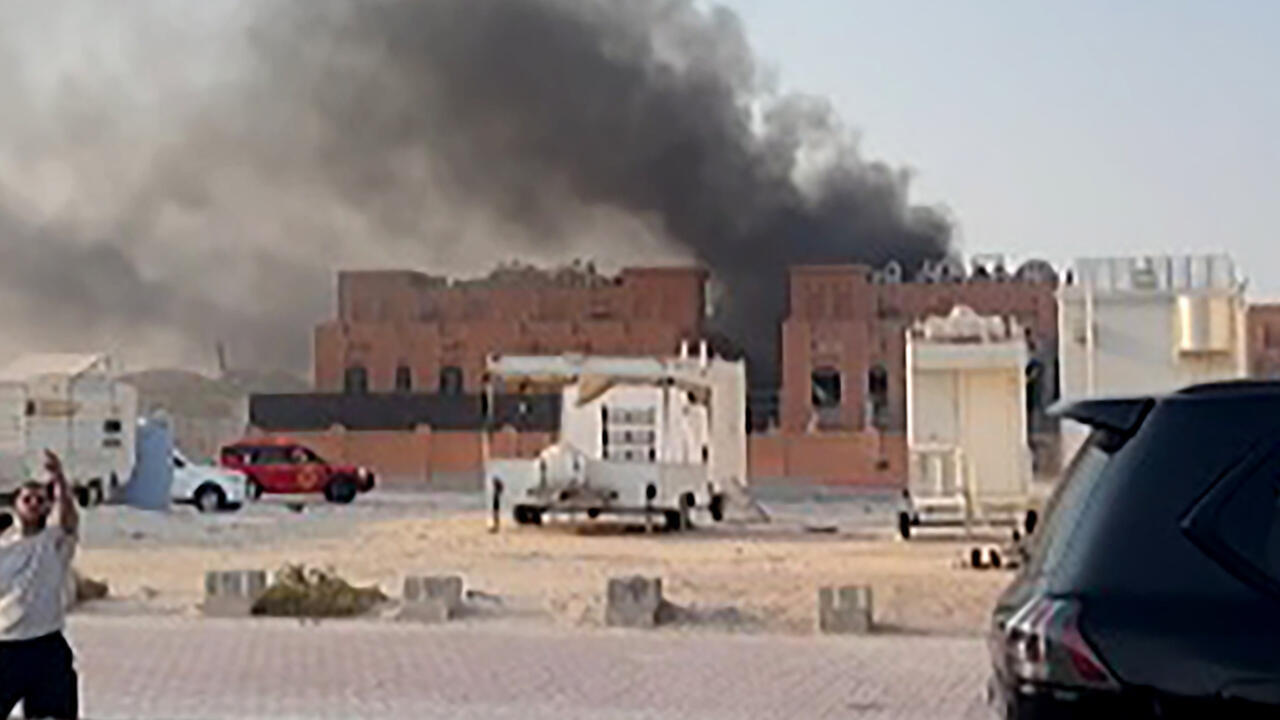
Explosions shook the Qatari capital, Doha, on September 9 after what officials described as an Israeli strike on senior Hamas political leaders, local media reported.

Plumes of smoke were seen rising above the city, prompting sharp condemnation from Qatar's Emir and Iran.

An Israeli military spokesman confirmed the operation, describing it as a “precise strike targeting the senior Hamas leadership,” though without specifying the exact location. A senior Israeli official later told the Walla news outlet that the strike indeed targeted Hamas figures in Doha.

In a statement, the Israel Defense Forces (IDF) and the Shin Bet internal security agency said, “The IDF and ISA conducted a precise strike targeting the senior leadership of the Hamas terrorist organisation. For years, these members of the Hamas leadership have led the terrorist organisation's operations, are directly responsible for the brutal October 7th massacre, and have been orchestrating and managing the war against the State of Israel.”

Prior to the strike, measures were taken in order to mitigate harm to civilians, including the use of precise munitions and additional intelligence. The IDF and ISA will continue to operate with determination in order to defeat the Hamas terrorist organisation responsible for the October 7th massacre.

A senior Hamas official told Al Jazeera that the strike hit while the group’s negotiators were discussing US President Donald Trump’s recent proposal for a Gaza ceasefire and prisoner swap.

Qatar’s Foreign Ministry condemned the attack as a “blatant violation of international law,” 

Iran denounced the strike as a dangerous escalation, with foreign ministry spokesman Esmaeil Baqaei saying, “This action by the Israeli regime is a continuation of the crimes it has committed by violating all norms and international rules," he said.

He added, "This action is extremely dangerous and criminal; a blatant violation of all international laws and regulations, an infringement of Qatar’s national sovereignty and territorial integrity, and an attack on Palestinian negotiators.”

Talks to bring an end to the nearly two-year conflict in Gaza have reached a pivotal point, with US President Donald Trump pressing both Israel and Hamas to strike a deal on a ceasefire and prisoner swap.

During a visit on September 8 to the scene of a bus attack in Jerusalem that left six Israelis dead, Prime Minister Benjamin Netanyahu pledged to pursue those behind the violence and defeat the country’s adversaries.

Since Hamas assaulted Israel on October 7, 2023, Iran and its allied groups across the region have repeatedly come under pressure and sustained heavy losses on the broader confrontation with their long-standing rival.

Trump issues rare rebuke to Netanyahu over Qatar strikes

Washington (AFP) – President Donald Trump gave Benjamin Netanyahu a rare slap on the wrist Tuesday over Israel's strikes against Hamas in Qatar, as he insisted he played no role in the attack by one close US ally against another.


Issued on: 09/09/2025 - FRANCE24

White House Press Secretary Karoline Leavitt says President Donald Trump feels "very badly" about the location of Israel's attack inside Qatar © SAUL LOEB / AFP


Trump said he was not notified in advance of the Israeli attack on the Gulf state, a crucial broker in the negotiations between Israel and Hamas on ending the Gaza war and securing the release of hostages held by Palestinian militants.

"I'm not thrilled about the whole situation," Trump told reporters during a rare outing to a Washington restaurant. "We want the hostages back, but we are not thrilled about the way that went down today."

The Israeli attack on Doha could hardly be more sensitive as Qatar, in addition to its role in the Gaza negotiations, is home to a huge US airbase and hosted Trump during a Middle East swing earlier this year.

The fossil fuel-rich emirate also recently gave the United States a luxury Boeing 747-8 jet for Trump to use as his presidential plane, a move that sparked major ethical questions.

"This was a decision made by Prime Minister Netanyahu, it was not a decision made by me," Trump said in a post on his Truth Social network.

"I view Qatar as a strong Ally and friend of the U.S., and feel very badly about the location of the attack," he said -- although adding that eliminating Hamas was still a "worthy goal."

In a statement that largely echoed one issued earlier by White House Press Secretary Karoline Leavitt, Trump focused on the possible damage to his efforts to end the war in Gaza.

"Unilaterally bombing inside Qatar, a Sovereign Nation and close Ally of the United States, that is working very hard and bravely taking risks with us to broker Peace, does not advance Israel or America's goals," Trump said.
'Too late'

The US president was at pains to point out that Washington was caught unawares by the Israeli attack.

He said the White House was "notified by the United States Military that Israel was attacking Hamas which, very unfortunately, was located in a section of Doha."

"I immediately directed Special Envoy Steve Witkoff to inform the Qataris of the impending attack, which he did, however, unfortunately, too late to stop the attack."

The US president said he had spoken to Netanyahu in the aftermath, and tried to put a positive gloss on the affair.

"The Prime Minister told me that he wants to make Peace. I believe this unfortunate incident could serve as an opportunity for PEACE," Trump said.

Leavitt told reporters earlier that Trump had given Netanyahu a "very clear" message about his "concerns."

Trump's rebuke of Netanyahu was uncommon, as the US president has given the Israeli leader almost unstinting backing since returning to the Oval Office in January.

As Qatar complained about the attack, Trump said he had now directed US Secretary of State Marco Rubio to finalize a defense cooperation agreement with Doha.

Trump added that he had assured Qatari Emir Sheikh Tamim bin Hamad Al Thani in a phone call that "such a thing will not happen again on their soil."

Doha had earlier insisted it had no warning of the attack.

"The call received from an American official came as explosions sounded from the Israeli attack in Doha," Qatari foreign ministry spokesman Majed al-Ansari posted on X.

Qatar has once again found itself caught in the crossfire of the turmoil in the Middle East. Iran fired missiles at the US Al Udeid airbase in June in retaliation for American strikes on Iranian nuclear sites.

© 2025 AFP

'Cracks are showing' in the US-Israel relationship as Israel strikes Doha

Issued on: 09/09/2025 - FRANCE24

US President Donald Trump did not agree with Israel's choice to conduct strikes against Hamas inside US ally Qatar, the White House said Tuesday. While eliminating Hamas was a "worthy goal," a strike in the Qatari capital Doha "does not advance Israel or America's goals," White House Press Secretary Karoline Leavitt told reporters, reading from a statement. FRANCE 24's Noga Tarnopolsky reports from Jerusalem.

Video by: Noga TARNOPOLSKY


Trump could end the war within the next 24 hours, former Israeli diplomat says

Issued on: 09/09/2025 - FRANCE24


Speaking on FRANCE 24, former Israeli diplomat Alon Pinkas says that 'President Trump could end the war within the next twenty four hours if he so desires' adding that 'one phone call to Mr Netanyahu, telling him in no unequivocal terms "End the war now" and the war ends'.


Video by: Alexander AUCOTT


Spain recalls ambassador to Israel amid clash over 'Gaza genocide' measures, anti-Semitism claims


Spain on Monday recalled its ambassador from Tel Aviv after Israel's top diplomat accused Prime Minister Pedro Sanchez of anti-Semitism and barred two Spanish government ministers from entry, according to foreign ministry sources. Sanchez earlier unveiled new measures targeting Israel over its war in Gaza, including an arms embargo and port restrictions, prompting fierce reaction from Tel Aviv.


Issued on: 08/09/2025 
By: FRANCE 24


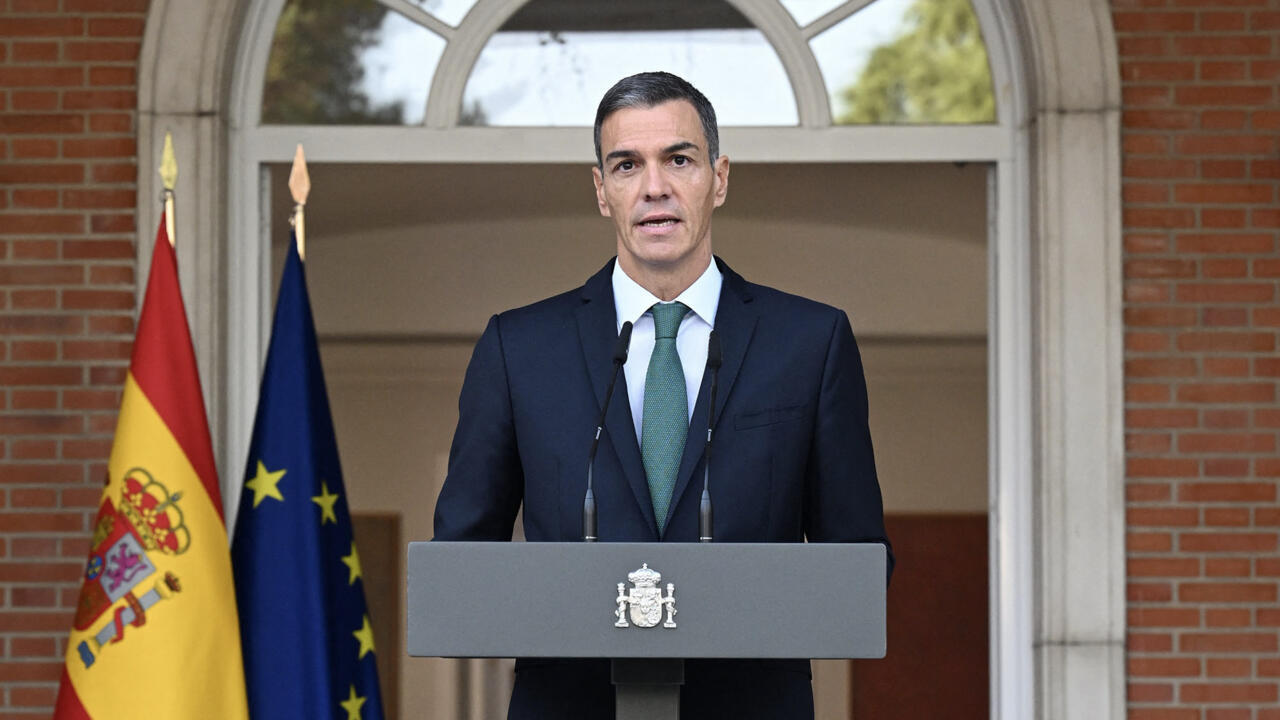
Spanish Prime Minister Pedro Sanchez announcing several measures including an arms embargo on Israel on September 8, 2025.
 © Borja Puig de la Bellacasa, AFP, Handout photo, Moncloa Palace

Spain on Monday recalled its ambassador from Tel Aviv after Israeli Foreign Minister Gideon Saar slammed Spanish Prime Minister Pedro Sanchez over a series of measures targeting Israel.

Stepping up his criticism of Israel, Sanchez announced the measures which are aimed at stopping what he called "the genocide in Gaza".

Israel retaliated by banning two left-wing Spanish ministers from the country.

Spain's foreign ministry condemned Israel's response, saying Madrid "would not be intimidated in its defence of peace, international law and human rights".

Israeli Foreign Minister Gideon Saar said on X that Sanchez's criticism of the war was an attempt "to divert attention from serious corruption scandals through a continuous anti-Israel and anti-Semitic campaign".

Saar also announced entry bans on Deputy Prime Minister Yolanda Diaz and Youth Minister Sira Rego, both members of the far-left Sumar group that is the junior partner of Sanchez's coalition government.

Rego is of Palestinian descent on her father's side and spent part of her early childhood in the occupied West Bank.

Among the measures announced by Sanchez was an arms embargo on Israel and a ban on vessels carrying fuel for the Israeli military from using Spanish ports.

Spain is one of the most outspoken European critics of Israel's devastating war in Gaza, which was sparked by the unprecedented Hamas attack on October 7, 2023, and recognised a Palestinian state last year.

(FRANCE 24 with AFP)


Spain Announces Arms Embargo on Israel and Other Steps 'to Stop the Genocide in Gaza'

"This is not self-defense," Spanish Prime Minister Pedro Sánchez asserted, "it is the extermination of a defenseless people and a violation of every international law."


Brett Wilkins
Sep 08, 2025
COMMON DREAMS

Spanish Prime Minister Pedro Sánchez on Monday announced a series of nine new measures—including a total arms embargo—aimed at pressuring the government of fugitive Israeli Prime Minister Benjamin Netanyahu "to stop the genocide in Gaza."

Sánchez, who leads the Spanish Socialist Workers' Party (PSOE), announced the steps during a speech in which he first acknowledged the historical suffering of the Jewish people, which includes the 1492 ethnic cleansing of Jews from Spain.

"The Jewish people have suffered countless persecutions, deserve to have their own state, and to feel secure," Sánchez said. "That is why the Spanish government has condemned Hamas' attacks from day one."

However, "there is a difference between defending your country and bombing hospitals or starving innocent children," the prime minister continued. "This is an unjustifiable attack on the civilian population, which the [United Nations] rapporteur has described as genocide."

"Sixty thousand dead, two million displaced, half of them children," Sánchez said. "This is not self-defense, it is not even an attack—it is the extermination of a defenseless people and a violation of every international law."


The nine measures—which must be approved by lawmakers and the Cabinet—include:A "legal and permanent prohibition" on the purchase and sale of weapons, ammunition, and military equipment;
A ban on transit through Spanish ports for all ships carrying fuels destined for Israel's military;
Denial of entry into Spanish airspace for all state aircraft carrying military equipment to Israel;
A ban on entry to Spain for "all persons directly involved in genocide, human rights violations, and war crimes" in Gaza;
Prohibition of imported products from illegal settlements in the occupied Palestinian territories;
Limitation of consular services for Spanish citizens residing in illegal Israeli settlements;
Strengthened support for the Palestinian Authority;
An additional €10 million in support for the United Nations Relief and Works Agency for Palestine Refugees in the Near East (UNRWA); and
An increase in overall humanitarian spending for Gaza, to reach €150 million by 2026.

"Spain does not have nuclear bombs. We cannot stop the Israeli offensive alone, but we will not stop trying," Sánchez said, recognizing the limitations of Monday's action.

Spain's new measures come in addition to its earlier steps toward an arms embargo, promotion of several UN ceasefire resolutions, support for the International Criminal Court's (ICC) effort to bring Netanyahu to justice and the International Court of Justice's (ICJ) ongoing South Africa-led genocide case against Israel, and formal recognition of Palestinian statehood.


Individual Spanish politicians have also taken action for Palestine, including former Social Rights Minister Ione Belarra, an early proponent for ICC prosecution of Netanyahu and others; former leftist lawmaker and Palma City Councilmember Lucia Muñoz, a participant in the Global Sumud Flotilla; and former Barcelona Mayor Ada Colau, another flotilla member whose city cut ties with Israel prior to the Gaza genocide over "the crime of apartheid against the Palestinian people."


The Global Sumud Flotilla—whose other members include Mandla Mandela, Susan Sarandon, and Swedish climate activist Greta Thunberg—set sail from Barcelona last month and was warmly welcomed Sunday upon a stopover in Tunis, Tunisia en route to the coast of Gaza, where activists will attempt to break an Israeli blockade and deliver desperately needed humanitarian aid.

The Israeli government responded to Sánchez's announcement with its customary allegation of antisemitism and an entry ban on Deputy Prime Minister Yolanda Díaz and Youth Minister Sira Rego.


"It is a point of pride that a genocidal state is banning me," said Díaz, a member of the Communist Party of Spain and Sumar movement.

Spain subsequently recalled its ambassador from Tel Aviv. The Spanish Foreign Ministry said the government "would not be intimidated in its defense of peace, international law, and human rights."


According to figures from the Gaza Health Ministry—which experts contend are likely a vast undercount—at least 64,522 Palestinians have been killed by Israeli forces in Gaza since October 2023, most of them women and children. More than 163,000 others have been wounded, and thousands more are missing and presumed dead and buried beneath rubble.

Hundreds of thousands of Gazans are starving to death in a famine largely caused by Israel's "complete siege" of the coastal exclave. At least hundreds of Palestinians have starved to death in what hunger experts and every United Nations Security Council member except the United States have called a man-made catastrophe caused by Israeli policies and practices.

The ICC warrants issued last year for Netanyahu and former Israeli Defense Minister Yoav Gallant accuse the pair of crimes against humanity and war crimes, including forced starvation and murder.

On Monday, Spain also condemned what it called a "terrorist attack" that left six people, including Spanish citizen Yakov Pinto, dead in a mass shooting north of occupied Jerusalem.

Sánchez's announcement followed pro-Palestine and anti-genocide protests in cities including the capital Madrid, where demonstrators rallied outside the Israeli Embassy on Saturday and shouted messages including, "It's Not a War, It's a Genocide!" and "Israel Kills, Europe Sponsors!"


On Sunday, demonstrators gathered in Madrid's Callao Square, where participants read aloud the names of many of the more than 18,500 Palestinian children killed by Israeli forces in Gaza, followed by the word "murdered."

According to a June Pew Research Center survey, 75% of Spanish respondents have a negative view of Israel, with 46%—the highest percentage of any non-Muslim nation in the 24 nations polled—having a "very unfavorable" view of the country.

Undistributed aid in Gaza? NGOs dispute claims from pro-Israel influencers


Is undelivered aid piling up in Gaza? Since late July, influencers invited by the Israeli army have been filming the Kerem Shalom border crossing in Gaza. They show what they claim is a stockpile of humanitarian aid, thus supporting the claim that Israel is not responsible for the famine currently under way in the enclave. However, the NGOs we spoke to reject the accusations. They describe the extreme difficulty and danger of delivering aid, which they say is still insufficient.


Issued on: 08/09/2025 -
By: The FRANCE 24 Observers/
Nathan GALLO


Montage of videographers and influencers filming food aid deliveries at the Kerem Shalom crossing, but which was not distributed in Gaza. They all claim that Israel is doing everything it can to limit famine in Gaza. © Cam Highby / Noa Cochva / Selena Ryan

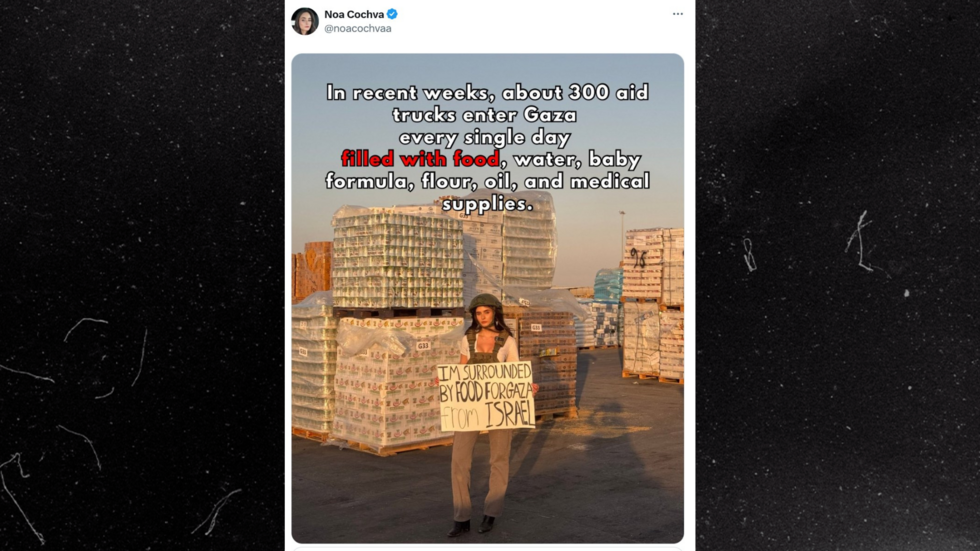
“Biscuits! Rotting in the sun.” On August 27, Noa Cochva, Miss Israel 2021, was in Gaza at the Kerem Shalom crossing.

In several videos posted on her social media accounts, Cochva, who has become a key figure in promoting the official Israeli narrative, filmed herself in front of numerous pallets of food that had not been delivered. In her view, these images prove that there is no famine in Gaza and that Israel is “doing its part” in delivering aid.

“All of this equipment is supposed to be entering Gaza to get to the Palestinians … but the UN never picked them up. Why isn’t the UN collecting this aid?” she asks. “Instead of feeding civilians, the UN is feeding Hamas’s propaganda machine,” she argues in another post.


Post on X by Noa Cochva, former Miss Israel 2021, on August 28, 2025. Her sign reads: “I am surrounded by food for Gaza from Israel.” © Noa Cochva / X
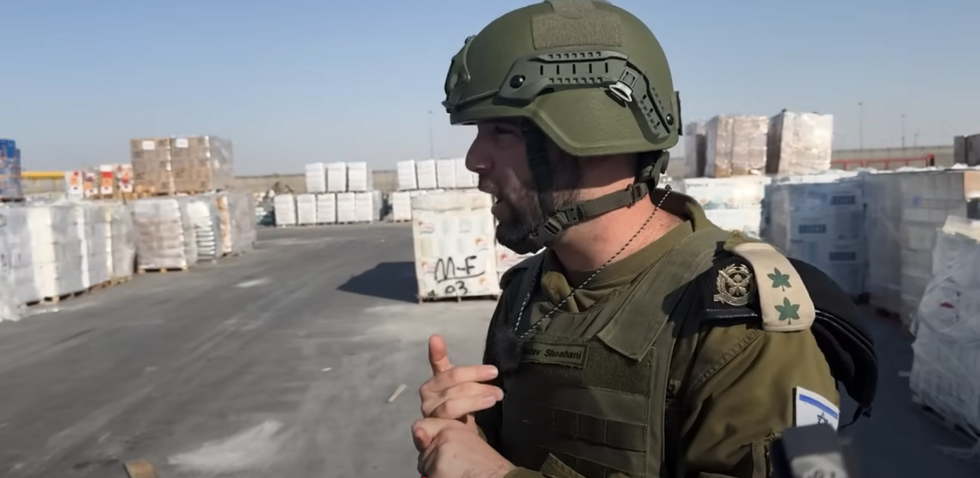
Like her, many other influencers and journalists were brought by the Israeli army – ”embedded”, in journalistic jargon – since July 2025 to visit this humanitarian aid hub. On August 26, pro-Trump American YouTuber Cam Highby also denounced, with supporting images in a 20-minute video report, the “endless amounts of food” stored at Kerem Shalom, showing bags of flour and cans of vegetables. “We could feed so many people,” he said in the video.

‘There is no [humanitarian] system in place anymore​​​​​’

The goal of the visits organised by the Israeli army is clear: to show that some of the humanitarian aid delivered to the enclave is not actually being redistributed and that Israel is therefore not responsible for the famine in Gaza, which was declared in mid-August in the Gaza governorate (in the north of the enclave) by the UN's Integrated Food Security Phase Classification (IPC).

However, this view is rejected and nuanced by four humanitarian organisations we talked to. “Images of supplies piling up inside closed, militarised compounds in fact show what aid workers have not been facilitated in collecting and delivering,” a spokesperson for the UN, the main organisation targeted by these criticisms, told our team.

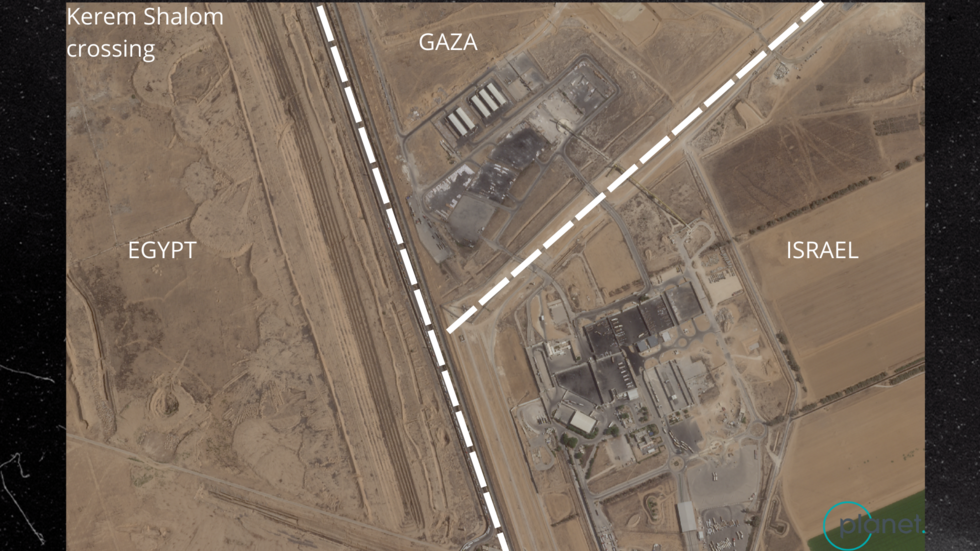
Satellite image from August 26, 2025, showing the Kerem Shalom crossing between Israel and Gaza. Influencers embedded with the Israeli army filmed the stockpiles on the Gaza side. © Planet Labs


On the Gaza side of Kerem Shalom, food and basic necessities are stored awaiting distribution by various humanitarian organisations in different areas of the Gaza Strip.

But all of the organisations involved face significant challenges in delivering this food once it arrives in Gaza.

“There are certain stocks of aid items at the entry of Gaza, but the broader context of these stocks is that of the challenges international organisations face,” said Sarah Davies, spokesperson for the Red Cross, which sends aid trucks through Kerem Shalom whenever possible.

Aid organisations are pointing to numerous problems with the Israeli army's actions, including dangerous deliveries, a collapsing aid system, and administrative hurdles. They say these issues have severely hampered distribution, especially at Kerem Shalom.

Even accessing Kerem Shalom is very complicated for employees: “Kerem Shalom isn’t a walk-up warehouse,” the UN spokesperson told our team. “It’s a heavily guarded, fenced-off military compound. For our drivers to access it, they need multiple approvals, a pause in bombing, and for the iron gates to open. The Israeli authorities decide what gets in or out, when, how much, and by whom.”

An Israeli army spokesperson is interviewed by several influencers and videographers, including Cam Highby, in Kerem Shalom on August 26, 2025. © Cam Highby / YouTube

Aid workers on the ground also stress that the humanitarian distribution system has been “decimated” after two years of war. Davies said: “There are no longer workers able to reach that location. There is no system in place anymore. It is difficult to move around, even to try to reach the civilian population, because people are displaced so often that they keep moving from one area to another.”

According to Davies, Israel's total halt of humanitarian aid deliveries between March and May 2025 had a lasting impact on the distribution system, which took time to “rebuild” in order to become operational again.
Dangerous aid delivery

All the organisations we talked to also highlight the security issues involved in delivering humanitarian aid once it enters Gaza. In late July, the UN reported that 87 percent of aid was intercepted or looted before distribution, either by the starving population or by armed groups, putting drivers in real danger.

Security concerns are also a major factor slowing down aid, according to Davies: “With the ongoing hostilities, coordination is required in certain areas when leaving the crossing, and multiple discussions and coordination efforts are needed to ensure that the chosen route and destination are safe enough.”

When questioned by our team, the World Central Kitchen (WCK) organisation, which brought in 581 food trucks in August to supply its on-site kitchens, referred us to its website, where it explains that “a secured humanitarian corridor is not currently available – that would provide the best opportunity for WCK and other organisations to reliably get food to kitchens”.

The organisation, which suspended its activities at the end of November 2024 after three of its employees were killed by the Israeli army in a drone strike, says that its “supply trucks must adhere to strict direction from the IDF [the Israeli army] on the times, routes, and convoy sizes”.

“Never before have so many humanitarian workers been killed in a contemporary conflict,” said Jean-François Corty, president of the medical charity Médecins du Monde. In November 2023, one of the organisation's doctors, Maysara Rayyes, was killed in a bombing along with his family. Since the start of the war in Gaza, more than 400 humanitarian workers have been killed by the Israeli army.

The organisations we spoke to also pointed out the difficulties of accessing the affected areas. Davies said these obstacles include “rubble on the roads, which are themselves destroyed or damaged” or “areas that you can't go through due to hostilities, or because physically it is impossible”. She also explained that the delivery trucks themselves “are not all four-wheel-drive vehicles” and cannot go everywhere. This is a significant issue, “especially when there are only very specific routes considered to be the safest”.

According to the NGOs interviewed, all these obstacles slow down and prevent the smooth delivery of humanitarian aid. They also point out that securing aid is the responsibility of the Israeli army. “Under international humanitarian law, the occupying force is supposed to ensure the safety of aid workers and the delivery of food and medicine, even during a siege,” Corty said. "More needs to be done, particularly on the Israeli side, as the occupying power in Gaza, to ensure that facilitating aid is a priority," Davies also told us.
Aid still insufficient

Despite these undelivered stocks, all the organisations we contacted report that aid remains insufficient, especially since Israel broke the ceasefire agreement in March 2025.

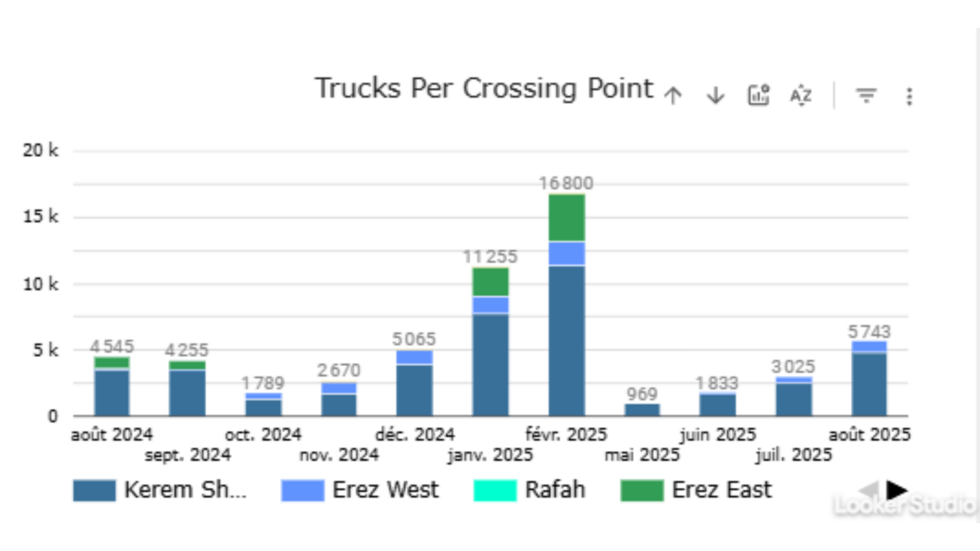
Between March and April 2025, no trucks entered the enclave due to the blockade imposed by Israel. In May, only 31 trucks per day on average entered the Gaza Strip. The following month, an average of 61 trucks per day were allowed to enter. This is a very insufficient total, given that international organisations have been stating since the beginning of the war that 500 to 600 trucks of humanitarian aid are needed every day.
Figures on the number of trucks entering Gaza per month. Figures provided by COGAT, the Israeli body responsible for civil administration in Gaza. © COGAT


It was only on July 27 that Israel agreed to allow more humanitarian aid to enter via Kerem Shalom and to organise tactical pauses under pressure from the international community. In August, an average of 185 trucks entered Gaza each day, according to data from Cogat, the Israeli body responsible for civil administration in Gaza. However, this total is still insufficient given the demands of humanitarian organisations.

This has led to calls for a ceasefire that could help deliver and secure humanitarian aid, and allow for the rebuilding of the distribution system. The UN points out that humanitarian aid was successfully delivered during the ceasefire between January and February, when security and administrative conditions were more favourable. “Whenever Israeli authorities have allowed us to operate at scale, we’ve reached virtually everyone in need with lifesaving support – wherever they were.”