Thursday, September 11, 2025


Panama to weigh First Quantum copper mine restart by early 2026

Cobre Panama mine was First Quantum Minerals’ largest copper operation. (Image courtesy of Cobre Panama.)

Panama is preparing to open talks with First Quantum Minerals (TSX: FM) on the possible restart of its shuttered Cobre Panamá copper mine, with discussions expected to begin late this year or in early 2026.

Commerce Minister Julio Moltó confirmed that a comprehensive environmental audit of the mine will start in the coming weeks. The review, conducted by SGS Panama Control Services, will assess environmental, social and economic impacts, including employment opportunities for Panamanians.

The mine has been closed since November 2023, after Panama’s Supreme Court declared its operating contract illegal. Moltó told local newspaper El Capital Financiero that the audit should take three to four months to complete. Once results are in, the government will begin talks with First Quantum.

President José Raúl Mulino has identified the reopening of Cobre Panamá as a top priority for his administration, following reforms to the country’s Social Security Fund pension system.

Minera Panamá, First Quantum’s subsidiary, and other companies tied to the project have suspended international arbitration proceedings against the government, clearing the way for talks.

Economic pillar

Before its closure, Cobre Panamá ranked among the world’s largest copper producers, yielding 350,000 tonnes in 2022, its final full year of operations. The mine contributed about 5% of Panama’s GDP, and First Quantum estimates the suspension has cost the country up to $1.7 billion in lost economic activity.

Mine workers, contractors, unions and nearby communities have publicly called for a restart, citing its economic importance. The government, however, has stressed that the audit must come first before any decision on reopening. 

First Quantum has maintained the facility to ensure it can resume operations if an agreement is reached.


Fatalities rise among gold miners in 2024, Metals Focus reports

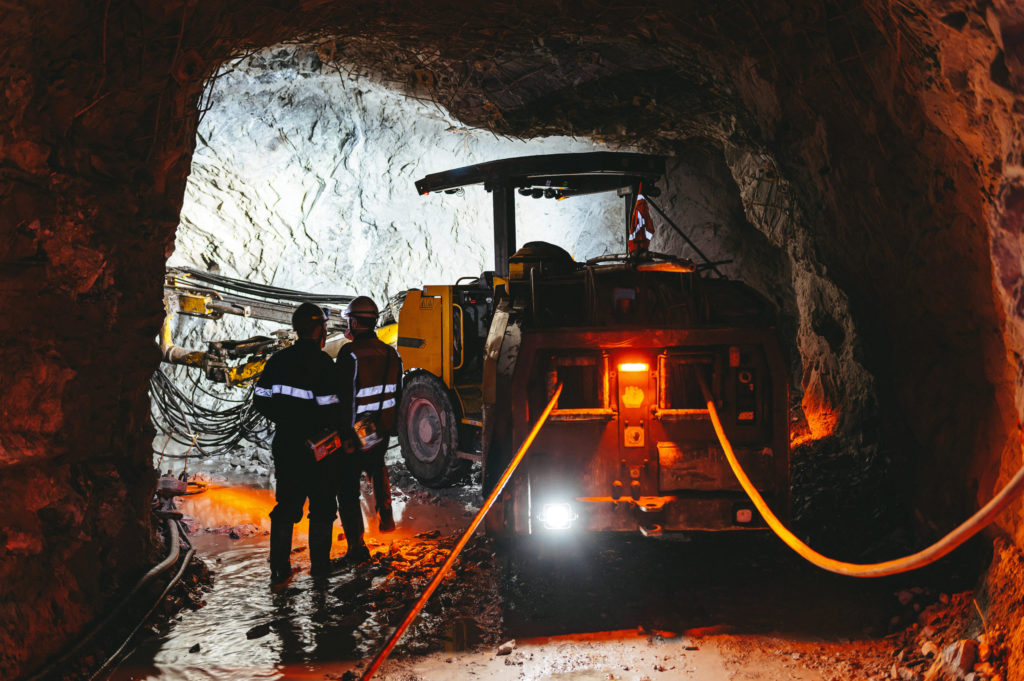
Credit: Adobe Stock

Fatalities reported by gold mining companies rose last year, reversing a recent downward trend, according to a report published by precious metals consultancy, Metals Focus on Thursday.

Eight out of the 14 companies in the report recorded a combined 27 fatalities at mine sites in 2024, up from 24 in 2023.

Mining remains an inherently hazardous industry, with workers facing long-term health issues from noise, vibration and airborne particulates, Metals Focus noted in the report.

“More than half occurred in underground operations in Africa, where seismic and fall of ground incidents are more common due to the deep level nature of South African mining,” the report added.

However, six companies maintained zero fatality records, with Northern Star extending its fatality-free record to 11 years, while B2Gold marked nine years.

(Reporting by Anushree Mukherjee in Bengaluru; Editing by Alexandra Hudson)


Zambia backs Chinese mine’s assessment in acid spill disaster

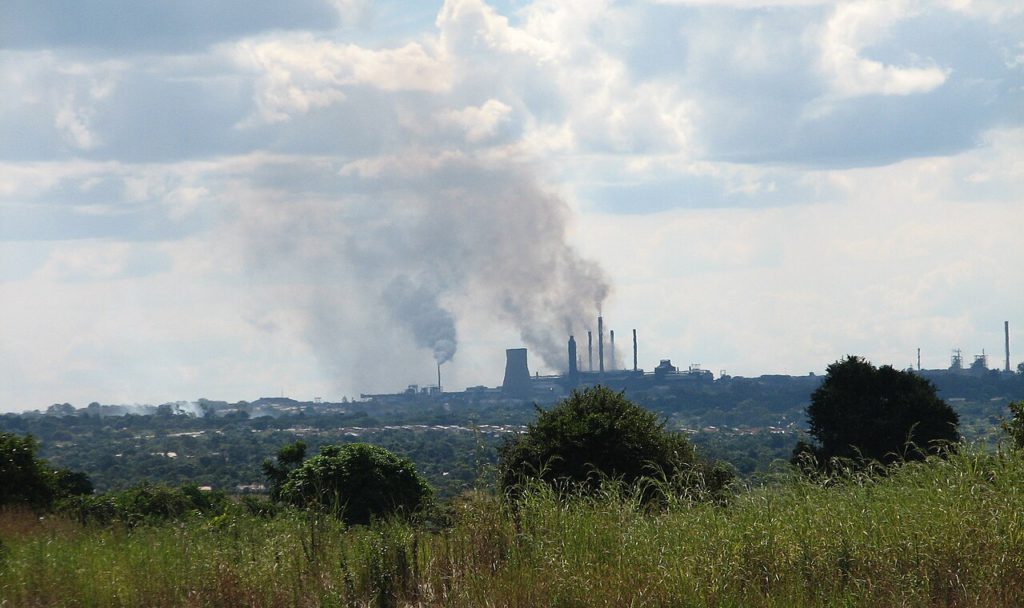
Kitwe, Zambia. Credit: Per Arne Wilson, Norway | Wikimedia Commons, under licence CC BY-SA 3.0

The Zambian government refuted an independent estimate of how much toxic acid spilled from a Chinese state-owned copper mine in the southern African nation in February, and said a cleanup had begun.

Responding to allegations that the disaster may have been 30-times worse than earlier reported, acting Minister of Green Economy and Environment Collins Nzovu backed Sino Metals Leach Zambia Ltd.’s estimate of the spillage volume. He said the government wasn’t trying to cover up the issue and the company has started operations to clean up the waste.

“Based on the records that we have, the estimated amount of the acid waste that was released in the open environment was 51,800 cubic meters (13.7 million gallons),” Nzovu said in a statement on Wednesday. That’s a fraction of what Drizit Zambia had estimated after it was contracted to conduct an environmental assessment. He added that the tailings — or waste — dams “are physical features which no one can hide.”

The disaster has raised concerns among residents in the affected area near Kitwe, Zambia’s second-biggest city, and triggered health warnings from embassies including the US and Finland. While the government has maintained that drinking water is safe for humans, it said last month it found dangerous levels of heavy metals in some samples from natural water bodies.

Sino Metals, in a statement last week, also refuted Drizit’s assessment that as much as 1.5 million tons of toxic material escaped, saying the estimate was “misleading and devoid of factual, scientific and technical basis.”

Sino Metals has begun removing visible pollution, and residue from an area stretching 8 kilometers (5 miles) from “ground zero,” or the point where the waste dam burst, Nzovu said.

Drizit Zambia, which Sino Metals hired to conduct the environmental assessment before terminating its contract, had warned that the communities living nearby faced daily exposure to hazardous materials, including arsenic, cyanide and uranium. Drizit said on Wednesday that it stands by its assessment.

Zambia will select a new environmental impact assessor by Sept. 15, and the company should start work by the third week of the month, Nzovu said.

“Sino Metals has been making all-out efforts to cooperate with the Zambian government in dealing with the tailings dam breach,” the Chinese embassy in Lusaka said in reply to questions. “We oppose any irresponsible and exaggerated narratives based on fabricated figures or ill-intended smear campaigns for geopolitical gains.”

(By Matthew Hill and Taonga Mitimingi)


Barrick executive switches sides to advise Mali president in gold dispute

Tongon gold mine – Côte d’Ivoire Image courtesy of Randgold Resources

A senior Barrick Mining executive who had been representing the company in tense negotiations with Mali’s government has switched sides to become an adviser to Mali’s president, a mines ministry official told Reuters on Wednesday.

Hilaire Diarra was general manager of Barrick’s Tongon gold mine in Ivory Coast before he was named special counsellor to Mali’s president in a decree signed in late August and seen by Reuters this week.

The mines ministry official confirmed the document’s authenticity on Wednesday.

The move represents a further blow to the Canadian mining company’s efforts to negotiate for control of its Loulo-Gounkoto gold mining complex, one of the most high-profile examples of resource nationalism among West African military governments seeking greater control over their gold and uranium wealth.

Diarra and a Barrick spokesperson did not respond immediately to requests for comment.

Mali’s government has been negotiating with Barrick since 2023 over the implementation of a new mining code that raises taxes and gives the government a greater share of its gold mines. It has previously enlisted former senior Barrick executives to try to outmanoeuvre the company.

A Malian court-appointed provisional administrator took control of the Loulo-Gounkoto site in June, six months after Barrick suspended operations there when negotiations reached an impasse. Former Barrick executive Samba Toure is now a member of the provisional administration running operations at the complex.

Loulo-Gounkoto produced 578,000 ounces of gold in 2024, Barrick’s financial statements show. Since the provisional administrator took control, it has sold 1 metric ton of gold, or about 35,274 ounces. Current production levels are about 25% of normal output, said a source close to the matter.

Diarra, a Malian citizen who began his career at the Loulo mine, had flown to Bamako from Ivory Coast this year to negotiate on behalf of the Canadian miner, the same source and two other people said.

(By Portia Crowe and Divya Rajagopal; Editing by Robbie Corey-Boulet, Veronica Brown and David Goodman)

GUINEA

Rio Tinto, partners score major tax break on Simandou


Ore from the Simandou mountains will be shipped overseas. (Image courtesy of Rio Tinto.)

Rio Tinto (ASX, LON: RIO) and its partners in Guinea’s Simandou iron ore project have reportedly secured corporate tax concessions worth more than half off the standard rate for key parts of their $23.5 -billion development, regulatory filings show.

Guinea’s ruling junta has approved a 15% corporate tax rate for the first 17 years of operations at the railway and port that will transport Simandou ore to global markets, the Australian Financial Review reports. That is well below Guinea’s usual 35% rate and less than half the 30% paid by major firms in Australia.

News of the deal come just days after the government signalled Rio Tinto may be required to build a local refinery for the mine, which is designed to produce 120 million tonnes of iron ore annually and ship its first cargo in November.

Rio disclosed its earlier tax agreements with Guinea’s former government in 2014, which included an eight-year tax holiday followed by a 30% rate. The company has not published the revised terms negotiated with the current junta.

Rival partners Winning and Baowu, which control blocks 1 and 2 of Simandou, filed documents in Singapore outlining the incentives for infrastructure they co-own with Rio Tinto, first offered to them in August 2023. The filings indicate the Rio-led consortium will still pay some tax during the first eight years of mining, though the structure remains unclear. Rio has declined to comment.

TransGuinean company

The documents submitted by Winning and Baowu suggest the tax rate for the railway and port companies will remain at 15% for 17 years, then rise to 25%, still below Guinea’s statutory 35%.

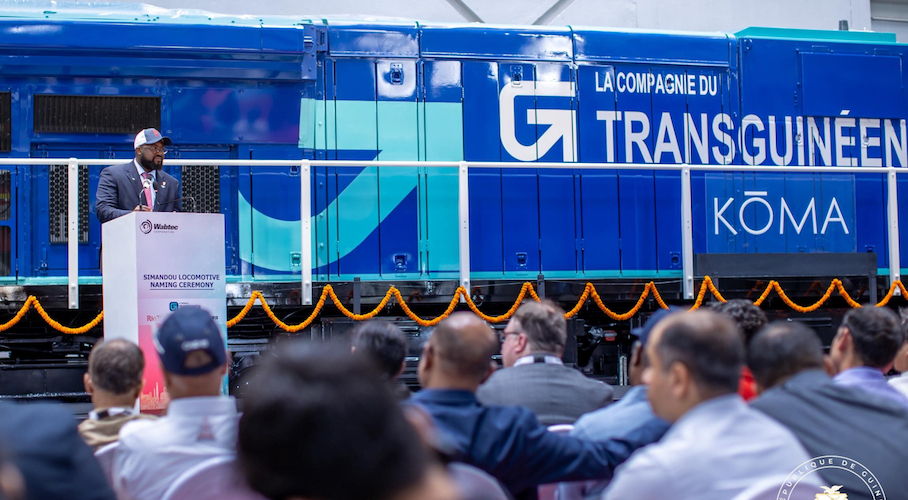
Rio’s consortium, which includes four Chinese partners, holds a 42.5% stake in La Compagnie du TransGuinéen (CTG), the entity managing the 600-kilometre railway and deep-water port on Guinea’s Atlantic coast. CTG was incorporated in March 2022.

Rio Tinto, partners score major tax break on Simandou
Simandou locomotive. (Image courtesy of Government of Guinea.)

Rio Tinto first secured an exploration license for Simandou in 1997. Since then, the project has weathered two coups, four heads of state, and three presidential elections. Development is now advancing, with Rio set to operate one of the project’s two mines.


Remembering 9/11: Lt. Michael Day and the Lower Manhattan Boatlift


Published Sep 10, 2025 9:01 PM by U.S. Coast Guard News


On September 11, 2001, Lieutenant Michael Day was working at Coast Guard Activities New York preparing to leave for a meeting at Tower One of the World Trade Center when the command center alert came in. A plane had hit one of the World Trade Center towers. Then another hit.

“We were unable to get any reports from lower Manhattan since all the communications systems failed. It was chaotic. People from multiple agencies were responding to the scene without any unity of purpose,” he said. “There wasn’t a pre-planned response; there was no CONOP for how to respond to two planes crashing into the Towers.”

Not having a specific response plan for this situation, Day grabbed the closest thing he could think of to help – the OPSAIL 2000 plan.

“I knew it had a lot of ambulance staging areas. We had a lot of evacuation points identified. Although it wasn’t necessarily a full-scale evacuation plan, it had information,” he said.

As Day rushed out the door to head to the waterfront, Andrew McGovern, pilot of the 100-foot pilot boat NEW YORK, showed up for the meeting. They grabbed a bunch of extra lifejackets, the OPSAIL plan, a Coast Guard Ensign and headed for the pilot boat.

“I remember listening to the radio because by this time we were underway on the boat and it was just… chaos. Every channel you clicked to people were screaming, ‘Help, people are here… I’ve got someone hurt here’,” he said.

With a front row seat to the collapsing buildings, frightened people and distressing devastation, Day only momentarily worried about his own safety. With thousands of citizens needing help, he didn’t have time to stop and think about what was happening.

Despite poor radio communication and unreliable cellular reception, Day began dispatching Coast Guardsmen with handheld radios to the piers to help coordinate a more organized evacuation effort. Meanwhile, he hoisted the Coast Guard Ensign on the pilot boat and began broadcasting to all available boats willing to help with the evacuation to assemble off the tip of Governors Island and await further assignment.
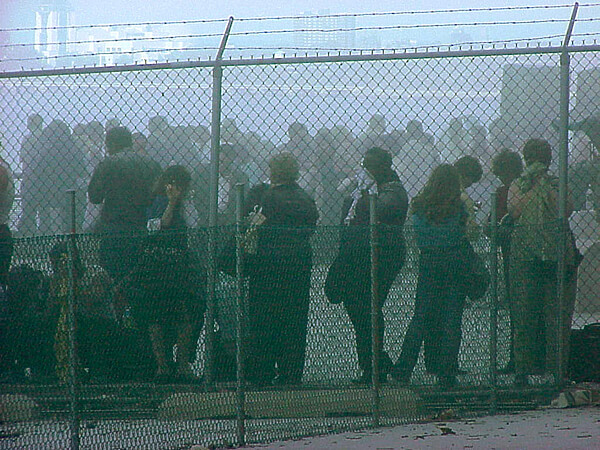
New Yorkers rushed to the Lower Manhattan water front to try to escape the collapse of the World Trade Center towers September 11. They were later evacuated by ferries and tugboats from all over New York harbor. (USCG photo by Chief Brandon Brewer)

The process of transporting the crowds of people from Manhattan to safety, one boat load at a time, continued into the evening. With the pilot boat docked in lower Manhattan, still flying the Coast Guard Ensign, first responders began asking them for help.

Establishing communications with the New Jersey Office of Emergency Management, he was able to start getting some supplies brought over to the pier… first water, then ice and meals. Soon, more specific items like tools, equipment and fuel began to arrive.

“We were quickly overrun with relief supplies,” he said. “It was just such a ‘can do’ effort. Everyone wanted to help.”

In what he called, “hands-on VTS,” Day and a Chief Boatswain’s Mate managed the hundreds of vessels bringing supplies to the pier.

“We set up three different staging areas because the supplies were coming in so fast and furious that we were running out of room, and we couldn’t distribute them fast enough,” he added.

The pure scope of the event and lack of communication with his superiors meant making decisions wasn’t always easy for Day, nor were his actions always by the book, but he looks at the response as great example of initiative and teamwork. Getting more than one hundred boats and dozens of response crews to work together cohesively is not an easy task. But for Day, it just sort of happened under what he describes as a “common purpose.”
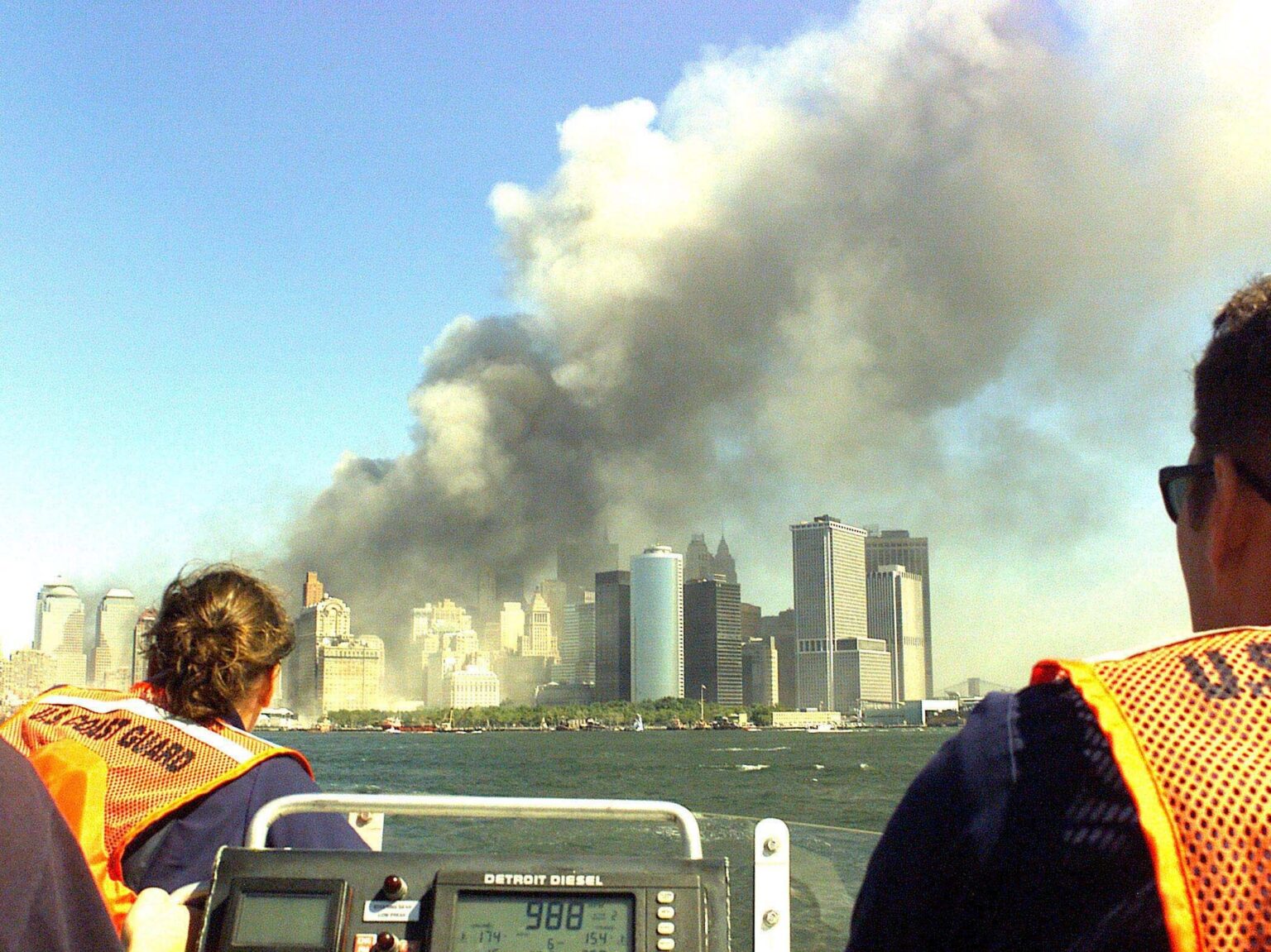
A Coast Guard rescue team from Sandy Hook, NJ, races to the scene of the World Trade Center terrorist attack. (USCG photo by PA2 Tom Sperduto)

Day also learned valuable leadership lessons.

“One is the value of partnering and partnerships, and building your bridges before you need them,” he said. “Two, making your people feel empowered. I really felt when I worked for Admiral Bennis that I was totally empowered to do the right thing. And three, to have faith in your people and the power of the concept of unity of purpose.”

After four days of responding with only about three hours of sleep total, Day finally had some time to reflect on what had happened.

“And it’s when I had quiet time, you know, a little bit alone to myself that it really, really struck home,” he said. “I think being in the Coast Guard we kind of shut things off at times of stress; it’s like a defense mechanism.”

This article originally appeared in Coast Guard Compass and may be found in archived form here

The opinions expressed herein are the author's and not necessarily those of The Maritime Executive.












\


AAPA Continues Push to Expand Counter-UAS Authorities

Unmanned Aircraft Systems 

American Association of Port Authorities (AAPA)

Published Sep 10, 2025 5:16 PM by The Maritime Executive


[By: American Association of Port Authorities]

The American Association of Port Authorities (AAPA) sent a letter last week to House Transportation and Infrastructure (T&I) Committee leaders, urging bipartisan action to expand federal counter-unmanned aircraft systems (C-UAS) authorities and to ensure seaports are explicitly eligible for any pilot program. The letter was addressed to Chairman Sam Graves (R-MO), Aviation Subcommittee Chairman Troy Nehls (R-TX), and Ranking Member Rick Larsen (D-WA).

In the letter, AAPA President and CEO Cary S. Davis wrote, "Understanding that implementation will rely on partnership with SLTT law enforcement, we respectfully request that seaports be explicitly recognized as potential sites for pilot deployment, especially given their DHS-designated status as critical infrastructure."

Ports facilitate over 70 percent of U.S. trade and sustain more than 31 million jobs. Still, they face increasing threats from unauthorized drones flying over hazardous storage areas, sensitive perimeters, and critical operations. Several ports have reported incidents that disrupted activity and posed safety risks. Despite these threats, ports lack the legal authority and technical resources to respond in real-time.

In the letter, AAPA:

  • Expressed strong support for bipartisan counter-UAS legislation, including the reintroduction of the Counter-UAS Authority Security, Safety, and Reauthorization Act.
  • Called for explicit inclusion of seaports in the pilot program, consistent with their DHS-designated status as critical infrastructure and aligned with Executive Order 14305 on protecting U.S. airspace.
  • Encouraged legislative clarity, distinguishing detection technologies from active mitigation, enabling ports to develop lawful layered defense strategies.

AAPA is actively engaged with Congress, in coordination with its Security Committee and Board of Directors, to ensure ports are recognized as critical partners in national airspace security. The letter received positive feedback from professional staff, who noted the importance of industry support and clear operational use cases as the bill text is refined.

AAPA will continue to advocate that ports be included in any expanded pilot program and provide technical assistance to policymakers shaping this legislation.

Read the full letter from AAPA here.

The products and services herein described in this press release are not endorsed by The Maritime Executive.


Rystad Energy New Definitive Study On Marine LNG Well-To-Tank Emissions

Rystad Energy

Published Sep 10, 2025 5:07 PM by The Maritime Executive


[By: Rystad Energy]

Independent research and energy intelligence firm Rystad Energy has published the results of a landmark study on the greenhouse gas (GHG) emissions from the LNG bunker supply chain, commissioned by SEA-LNG. This is the most accurate and up-to-date certified data on LNG as a marine fuel designed to help guide the International Maritime Organization’s (IMO’s) Net-Zero Framework and future fuel policy.

The implications for policy makers developing regulations to decarbonise shipping resulting from this study are:

  1. Regulations should incentivise participants in the LNG bunker supply chain to continue to reduce GHG emissions, particularly in relation to natural gas production and liquefaction.
  2. Policy makers should introduce a process to regularly update WtT default emissions factors used in regulation, in particular those relating to methane emissions.
  3. This report highlights that the EU WtT default of 18.5 gCO2e/MJ (in FuelEU Maritime) is too conservative and a lower number is justified.
  4. The study analyses the emissions originating from the five key fuel lifecycle stages: upstream, transportation & processing, liquefaction, shipping, and distribution & bunkering operations. It was conducted in line with the IMO WtT lifecycle analysis guidelines, the Intergovernmental Panel on Climate Change’s (IPCC) AR5 GHG definitions, and is based on asset-specific 2024 data.

The study finds that the global well-to-tank emissions intensity for LNG bunkering fuel in 2024 is 13.9g CO2e/MJ (LHV). Carbon dioxide dominates global WtT emissions, responsible for 84% of emissions. Carbon dioxide emissions were most prevalent in the liquefaction stage, responsible for 99% of the stage’s 5.9 g CO2e/MJ.  

Methane emissions were responsible for 16% of total WtT emissions, equivalent to 2.2 g CO2e/MJ. They were most prevalent in upstream gas production lifecycle stage, responsible for 38% of total emissions from that stage.

On a global basis, upstream gas production and liquefaction were responsible for the majority of bunker supply chain emissions at 30% and 43% respectively. Consequently, these two stages should be the focus for most future decarbonisation efforts. From the upstream perspective, methane mitigation is best poised to deliver the greatest emissions reduction benefits. Improvements in liquefaction emissions have been observed over recent years, tied to greater utilisation of more efficient technologies. It is likely this trend will continue when coupled with key electrification projects using renewable energy such as hydro and solar power.

With around 95% of vessels still powered by oil-based marine fuels, LNG represents the leading alternative and already accounts for nearly 20% of the vessel orderbook. As the industry transitions toward net-zero and prepares for a rapidly expanding fleet of LNG-fuelled vessels, understanding the real-world lifecycle emissions of LNG is critical to shaping effective regulation and guiding future investment decisions.

Results also show wide variation between regions and cargoes, reflecting differences in gas sources, liquefaction technologies, and shipping distances. In some cases, emissions intensities differed by as much as 6.6 g CO2e/MJ, highlighting that a single global average does not capture the full picture and risks leading to poorly informed regulatory choices.

Patrick King, Vice President Emissions Research, Rystad Energy commented: “Our analysis is based on asset-level data that ties specific gas fields to liquefaction facilities. This approach, supported by satellite-detected methane plume data and reported asset information, gives a more accurate picture of the LNG actually used for bunkering, rather than relying on outdated or overly broad averages.”

Steve Esau, Chief Operating Officer of SEA-LNG, said: “Policymakers must create regulations that reflect the true carbon intensity of marine fuels, rewarding reductions across the supply chain. Marine regulators should incentivise participants in the LNG bunker supply chain to continue to reduce GHG emissions.”

Peter Keller, Chairman of SEA-LNG, concluded: “This landmark report sets the high standards the IMO should demand on such a key topic as alternative fuel emissions and performance within the Net-Zero Framework. Decisions must be based on real and recent data or risk undermining the significant progress already made along the practical and realistic LNG pathway to decarbonisation.”

Download the full Rystad Energy LNG well-to-tank emissions analysis here.

The products and services herein described in this press release are not endorsed by The Maritime Executive.