Saturday, September 13, 2025


USA

Trump’s Lisa D. Cook Firing: Use of Racism in Power Grab


Saturday 13 September 2025, by Malik Miah


Trump’s August 25 late night internet post firing Lisa Cook from the Board of Governors of Federal Reserve System, the country’s central bank, came as a surprise. Why her?

For some time, Trump has been railing against — and threatening to fire — the Chairman of the Board, Jerome Powell. Because the Fed has been setting the basic interest rate not to his liking, Trump’s drive is to take it over and eliminate its independent status.

But he fired Cook, the only Black Governor, instead. She was the first Black woman to serve on the Board of Governors.

The day after Cook was fired the White House released a photo. It showed Trump, his cabinet and other officials giving a thumbs-up to the firing of Cook. Of the 24 people in the photo only one was Black.

Cook sued Trump with her lawyers contesting the firing as political interference. On September 9 a preliminary injunction temporarily blocked Trump’s decision but the administration immediately announced its intention to challenge the injunction at the U.S. Court of Appeals. This swift response is an attempt to see her gone by the time the Fed meets next week.

Black Reaction


Many in the Black community responded angrily. They say Trump’s effort to oust Cook fits a pattern of purging non-white voices from the higher ranks of government leadership.

As LaTosha Brown, co-founder of the organization Black Voters Matter, noted:

“His goal is to get control of the Federal Reserve and for that to no longer be an autonomous, independent body. But what he does recognize is that in America everything is about race. It is as lethal as a nuclear bomb.”

Race and economics (class) always intersect in the United States. That’s the case whether people are buying a home or seeking available job opportunities.

Who Is Lisa D. Cook?

Cook is a former economics professor whose research focused on racial disparities, the history of financial institutions, and crises in financial markets and innovation.

Cook taught economics and international relations at Michigan State University. Previously she was on the faculty of Harvard University’s Kennedy School of Government. She was a Marshall scholar who received degrees from Oxford University and Spelman College, a historically Black women’s college in Atlanta.

Cook dedicated much of her scholarship to examining how racial discrimination and targeted violence created barriers to economic advancement for African Americans. She also advised the Nigerian and Rwandan governments on banking reforms and economic development.

In other words, Cook is a well-respected and qualified economist and scholar. As business and economic experts told CNN, the Fed benefits greatly from having leaders with diverse professional and personal backgrounds.

Saqib Bhatti, co-founder and executive director of the Action Center on Race & the Economy, noted that in making the case for Cook’s nomination, only two of 417 Federal Reserve staff positions were Black while 318 of them were white. He concluded, “That’s a really big problem.”

In 2022 Cook was confirmed to the Fed’s Board of Governors by the Senate in a party-line vote to fill an unexpired term and later appointed for a term ending on January 31, 2038. Republicans have argued that she was unqualified and found her research overly focused on race. Democrats brushed off such critiques but refused to call out the racism of the opposition.

A member of the Board of Governors can only be removed for cause. The alleged “cause” was an error she supposedly made in mortgage applications before she was elected to the Fed. It has nothing to do with her qualifications or performance on the Board.

Powell said Cook remains on the Board unless legitimate cause is validated for her firing. If she is removed, Trump will be in the driver’s seat in taking over the Board. He has two votes already and with the resignation of Governor Adriana D. Kugler on August 8 Trump has nominated Stephen Miran, head of the White House Council of Economic Affairs, to finish out that term. Miran is considered the architect of Trump’s tariff policy. And if the Fed’s decisions on interest rates are dependent on Trump’s (or any subsequent president) wishes, it raises unknown consequences for the U.S. and global economy.

Reporters found that at least two members of the Trump Cabinet have similar discrepancies on their mortgage applications. The charge against Cook not only serves to get rid of someone who didn’t vote the way Trump wanted but pushes back racial justice and undermines the long-term gains of African Americans.

The Fed was established in 1913, but there was not a person of color on the Board of Governors until Andrew Brimmer, a Black man, was appointed in 1966. The first woman to serve on the Fed’s Board was Nancy Teeters, appointed in 1978. Cook, the first Black woman, was appointed almost fifty years later. Like all members, she has a 14-year term.

Hatred for Diversity

Trump’s attempt to fire Cook comes as his administration has more broadly tried to dismantle diversity, equity and inclusion (DEI), efforts across the federal government. Earlier this year, Trump fired Gwynne Wilcox, the first Black woman to serve on National Labor Relations Board, and Gen. Charles Brown Jr., a Black man who was the chair of the Joint Chiefs of Staff of the country’s armed forces.

Trump’s even pressured private-sector companies and institutions — often successfully — to end DEI programs. He is using the government’s purse to bludgeon universities into dismantling attempts to equalize the playing field.

Trump, and other white nationalists argue that merit is the basis on which people should be judged. And then they put their fingers on the scale by launching campaigns of misinformation and even slander. For example, Trump claimed former President Barack Obama, the first Black President, was not born as a U.S. citizen (the “birtherism” lie) and therefore was not eligible for the office. The lie becomes Trump’s truth.


Last In, First Out

Typical for Blacks in all jobs, Cook is the last hired and first fired.

While Cook refused to resign and filed a lawsuit asserting that Trump has no power to remove her from office, Trump’s Justice Department initiated a criminal investigation of her. She is an obstacle to be removed.

Activist LaTosha Brown explained to the Guardian why Trump picked Lisa Cook:


He picked her because he is betting that, in an industry that is probably 90% or more white male, his odds of removing her are greater than the odds for removing others from the board. That in itself is rooted in the history and how insidious racism is built into the fabric of how we see people of color in this country.

Trump also dismissed Carla Hayden, the first Black person to serve as librarian of Congress, after a reactionary advocacy organization accused her of being a “radical.”

Trump says he acts on his instincts no matter the facts. He seeks a return to the founding of the country where only European settlers were “real” Americans. Cook is clearly being fired because of racism.

In defending Cook, racism must be a central part of the argument. But Democrats, who oppose Trump, just want to focus on the independence of the central bank.


In Defense of DEI

While many liberals and even some on the left are quiet about DEI, it is crucial that DEI and wokeness be defended from the right’s racist attacks.


Why is that?

Diversity is a way to say the country is not only white, in fact non-whites will soon be a majority. To say diversity should be reflected in society’s institutions is not complicated. Yet Trump calls it “reverse discrimination” against whites, especially white men.

Equity is a call for fairness and equality. The Black-led civil rights movement saw the fight was to end legal segregation, but much more was necessary. That’s why the 1963 March on Washington was about jobs and freedom. Affirmative action can help close the gap between oppressed minorities and the majority white population.

Inclusion is simple: Let Blacks and others finally be accepted for their skills, knowledge, and abilities as equals. Lisa Cook has incredible expertise, but Trump and other right-wingers deny it.

Trump and his white nationalist base reject DEI (also called “wokeness”) and threaten to criminalize those who support full equality.

In his second term, Trump has managed to pick only one Black person to serve in his cabinet: Scott Turner, secretary of housing and urban development. In fact, in judging the Trump cabinet, we can say it’s one of the most unqualified group of people ever picked. As Rashad Robinson, a civil rights leader and former president of the group Color of Change, explained:

We live in a very diverse country, a country with many different types of people that come from many different backgrounds, and the president exhibits his values by who he puts in office.

“This is not simply that Donald Trump has put only one Black person in his cabinet. It’s that Donald Trump has gone out of his way to find some of the most unqualified and ill-equipped people to put in those jobs as a way to actually avoid having to put Black people in his cabinet.

We should keep in mind that in this country the exploitation of the working class and the oppression of Blacks and other people of color are intertwined aspects of capitalist rule.

The Lisa Cook battle of a successful Black woman who is a professional economist is important for the working class, Black community, labor movement and the socialist left. Trump’s sexism and racism can be defeated by opposing what can be easily seen as a blatantly unfair attack.

Source: Against the Current.

Attached documentstrump-s-lisa-d-cook-firing-use-of-racism-in-power-grab_a9167.pdf (PDF - 916 KiB)
Extraction PDF [->article9167]


Malik Miah is a retired aviation mechanic, union and antiracist activist. He is an advisory editor of Against the Current.


International Viewpoint is published under the responsibility of the Bureau of the Fourth International. Signed articles do not necessarily reflect editorial policy. Articles can be reprinted with acknowledgement, and a live link if possible.

'What an idiot': Trump's attack dog mocked as 'mortgage fraud' allegation crumbles


Matthew Chapman
September 12, 2025
RAW STORY
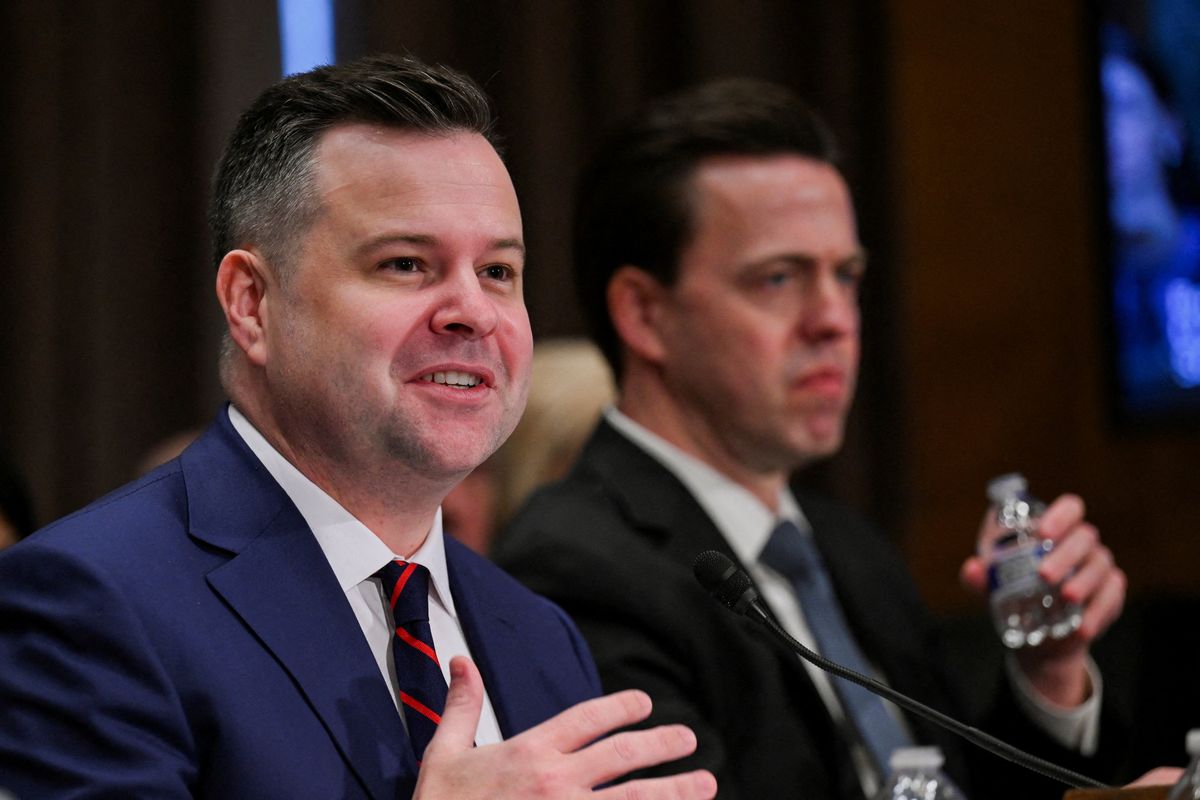

FILE PHOTO: Bill Pulte, nominated to be the director of the Federal Housing Finance Agency, testifies during a Senate Banking, Housing and Urban Affairs Committee confirmation hearing on Capitol Hill in Washington, D.C., U.S., February 27, 2025. REUTERS/Annabelle Gordon/File Photo


President Donald Trump's Federal Housing Finance Agency director Bill Pulte has been on a tear accusing various critics of the administration of mortgage fraud — most recently Federal Reserve governor Lisa Cook, whom he claimed improperly took out mortgages on two separate properties as primary residences. However, a new Reuters report throws this in serious doubt, by revealing that preliminary loan documents indicate she had disclosed to her credit union one would be a vacation home.

The apparent misfire, which could significantly complicate Trump's attempts to fire Cook from the Fed, resulted in an explosion from commenters on social media, who broadly mocked Pulte — particularly since separate reporting suggested his parents had in fact committed the same fraud he tried to pin on Cook.

"Wait, so the entire claim that Cook claimed two primary residences was…false?" wrote Maryville College history professor Aaron Astor.

"I’ve been saying all along, as someone who’s handled extensive mortgage litigation, that these loan files are very complicated and can be thousands of pages," wrote veteran and former trial lawyer John Jackson. "Now it appears Lisa Cook did nothing wrong and was actually defamed by @pulte. What an idiot."

"So the bad faith pretext was also just fake?" wrote Bloomberg columnist Matthew Yglesias.

"Wowow, @pulte!! Is this why even right wingers think you're a loose canon [sic]?" wrote national security journalist Marcy "emptywheel" Wheeler. "Will you go to prison for lying to the FBI?"

"I really do hope she sues every single person possible, so that there is as much discovery as can possibly be provided, and that she keeps right on suing even after that," wrote MSNBC columnist Kali Holloway.

"Catching up on FHFA Director Bill Pulte's efforts, it sounds like Lisa Cook did not claim two primary residences at the same time, but Pulte's dad did?" wrote Mother Jones reporter Dan Friedman. "Tough week for that guy."

" Trump fired a Black woman economist from the Federal Reserve based on a lie pushed by a Twitter influencer, and the documents prove it," wrote investment banker Evaristus Odinikaeze. "Lisa Cook did not commit mortgage fraud. There was no double primary residence. Just another smear campaign used as political cover. Will there be accountability for the people who lied? Or does character assassination now pass as policy?"

"So, the only mortgage fraud discovered in all of this was Bill Pulte's family? May she sue the hell out of everyone," wrote former congressional staffer and Democratic campaign strategist Rhonda Elaine Foxx.

New docs blow hole in Trump admin’s mortgage fraud allegations against Fed official


Matthew Chapman
September 12, 2025 
RAW STORY
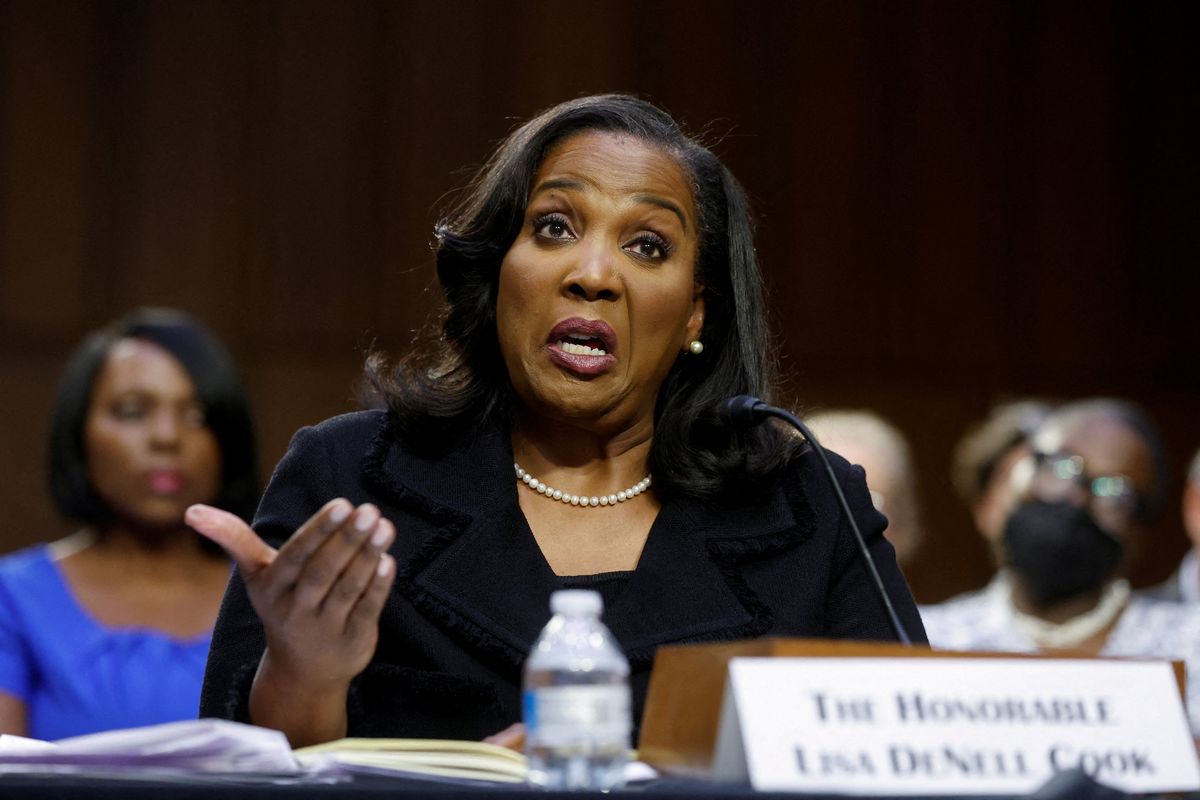

FILE PHOTO: Lisa Cook testifies before a Senate Banking Committee hearing on her nomination to be a member of the Federal Reserve Board of Governors (for a second term), on Capitol Hill in Washington, U.S., June 21, 2023. REUTERS/Jonathan Ernst/File Photo


New documents obtained by Reuters contradict allegations made by a Trump administration bureaucrat that Federal Reserve governor Lisa Cook committed mortgage fraud.

Federal Housing Finance Agency director Bill Pulte had previously claimed to have unearthed documents indicating Cook, who had been unwilling to follow President Donald Trump's demands to lower interest rates, had declared two separate residences as her primary home in mortgage statements, which, depending on the jurisdiction, can be against the law when it causes banks to lend under more favorable terms.

But according to Reuters, "A loan estimate for an Atlanta home purchased by Lisa Cook ... shows that Cook had declared the property as a 'vacation home.'"

"The document, dated May 28, 2021, was issued to Cook by her credit union in the weeks before she completed the purchase and shows that she had told the lender that the Atlanta property wouldn’t be her primary residence," said the report. "The document appears to counter other documentation that Cook’s critics have cited in support of their claims that she committed mortgage fraud by reporting two different homes as her primary residence, two independent real-estate experts said."

The revelation could be an obstacle to Trump's efforts to fire Cook from the Federal Reserve, which he justified by pointing to Pulte's unproven allegations. Cook has filed a lawsuit challenging her dismissal as unlawful.

Pulte, whose agency oversees the government-sponsored housing finance entities Fannie Mae and Freddie Mac, has issued similar mortgage fraud claims against other Trump critics, including Sen. Adam Schiff (D-CA) and New York Attorney General Letitia James, both of whom deny any wrongdoing.

recent report found that Pulte's own father and stepmother may have been pulling that exact scheme on properties in Michigan and Florida. Upon Reuters' investigation into the matter, officials in Bloomfield Township, Michigan, revoked the couple's homestead exemption.

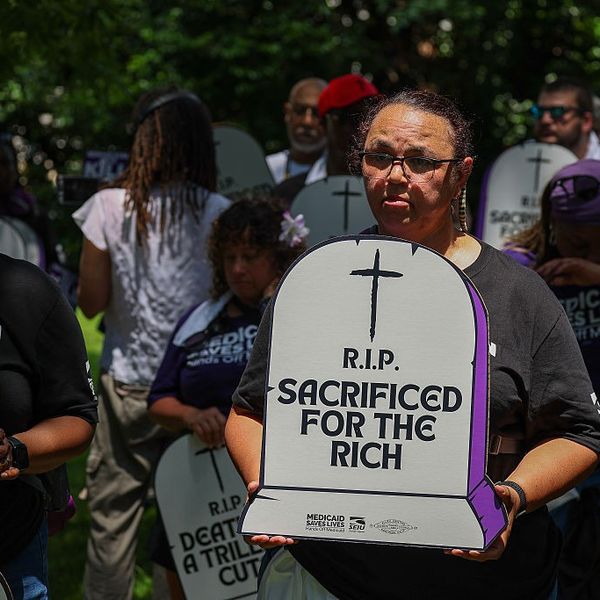
With Premiums Set to Rise, a Reminder: ‘Medicare for All Would Save $650 Billion’ Annually

“Your periodic reminder that health insurance is not healthcare,” said one advocate. “It’s an unnecessary middleman designed to restrict access to healthcare and exploit people for profit.”


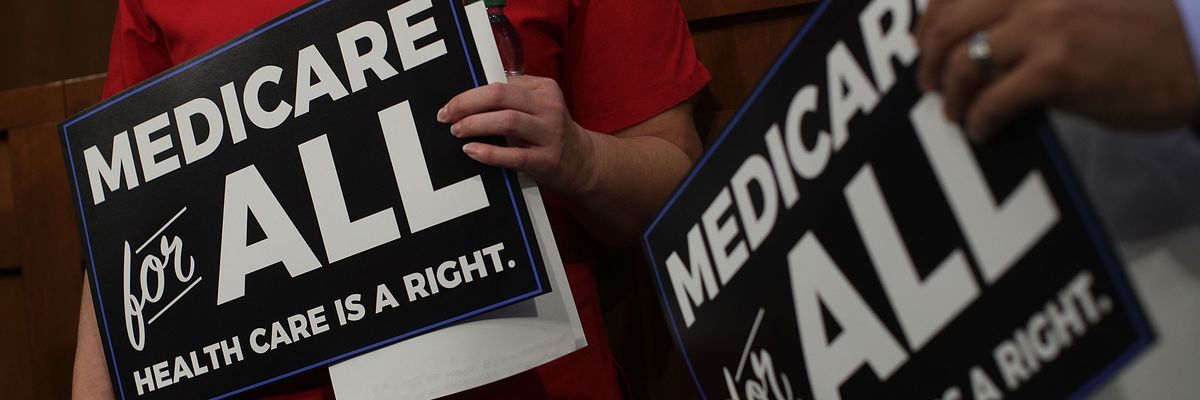
Supporters of US Sen. Bernie Sanders (I-Vt.) hold signs during an event on healthcare September 13, 2017 on Capitol Hill in Washington, DC.
(Photo by Alex Wong/Getty Images)


Brad Reed
Sep 12, 2025
COMMON DREAMS

Health insurance premiums are set to skyrocket in the coming months, which has prompted many progressive advocates to remind Americans that a less expensive alternative is possible.

As The Washington Post reported on Friday, the cost of health insurance is “on track for their biggest jump in at least five years” thanks in part to the actions of congressional Republicans and President Donald Trump.

Dems Say They’ll Stand Firm Against Budget Deal Unless GOP Halts Attack on Healthcare


Healthcare Giants Have Raked in ‘Sick Profits’ From Trump Tax Cuts While Stiffing Patients: Report

Citing new research from KFF, the Post noted that most people who buy insurance through the Affordable Care Act are set to see their premiums rise by over 75% unless Congress steps in and renews enhanced subsidies that had been passed into law under the American Rescue Plan in 2021.

Congressional Democrats have said that they will not vote to fund the government past its current rapidly approaching deadline unless Republicans in Congress agree to an extension of the enhanced health insurance tax credits.

The Post report also pointed to Trump’s trade war threats as a justification being cited by insurers to raise rates. Even though Trump has yet to actually levy tariffs on pharmaceutical imports, his Commerce Department is currently investigating their impact and the president himself has said that the tariffs could be as much as 250%.

“Some insurers, in legal filings with regulators, have said explicitly that the expected tariffs were raising insurance prices,” the paper explained. “A document from United Healthcare of New York states that, to account for ‘uncertainty regarding tariffs and/or the onshoring of manufacturing and their impact on total medical costs, most notably on pharmaceuticals, a total price impact of 3.6% is built into the initially submitted rate filing.‘”

Given all this, longtime supporters of Medicare for All encouraged their fellow Americans to consider a different way of handling healthcare.

“Next year, Americans will see the biggest jump in health insurance costs in 15 years,” commented former US Labor Secretary Robert Reich. “Meanwhile, the six largest health insurers raked in more than $31 billion in net income last year. Still not sure if we need Medicare for All?”

Warren Gunnels, a staffer for US Sen. Bernie Sanders (I-Vt.), cited studies by the Congressional Budget Office and Yale to argue that Medicare for All would be a net money saved.

“Your daily reminder: Medicare for All would save $650 billion and 68,000 lives each and every year while providing comprehensive healthcare to every man, woman, and child with no premiums, no deductibles, and no co-payments,” he wrote.


Melanie D’Arrigo, the executive director of Campaign for New York Health, argued that the best part of Medicare for All is that it would simply make the private insurance industry obsolte.

“Your periodic reminder that health insurance is not healthcare,” she said. “It’s an unnecessary middleman designed to restrict access to healthcare and exploit people for profit. The fiscal and moral path forward is universal healthcare with Medicare for All.”

Rep. Ro Khanna (D-Calif.) reacted to the news of insurance price hikes with a simple message.

“Medicare for All. Now,” he wrote.

The GOP's answer to our gathering health crisis? A eugenicist without the slightest clue

John Stoehr
September 10, 2025
COMMON DREAMS


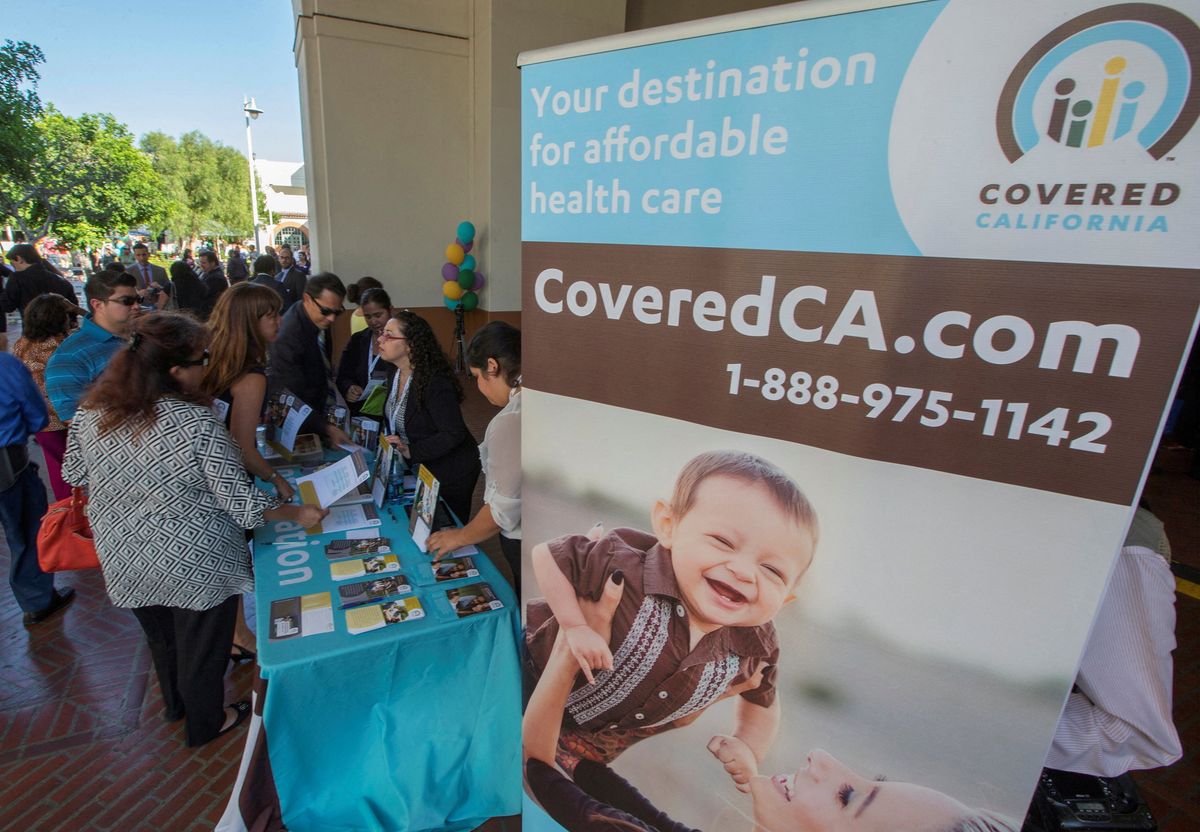
People sign up for health insurance information in Los Angeles. 
REUTERS/Lucy Nicholson/File Photo

If the Republicans cared about the public’s wellbeing, they wouldn’t have confirmed Robert F. Kennedy Jr. as head of the US Department of Health and Human Services. He had no business there, but that didn’t matter. Their top concern has been the wellbeing of Donald Trump.

Kennedy is now giving the Republicans a headache with insane talk of vaccines causing autism and how he had no choice but to fire the Centers for Disease Control and Prevention director because, he said, she told him she was not trustworthy. But that headache isn’t borne of caring about people. It’s borne of concern that people might figure out the Republicans don’t care about them.

The secretary was under pressure before he fell to pieces last week during testimony before a Senate committee. More than a thousand former HHS workers had signed a petition calling on him to resign. The pressure only increased afterward. Kennedy’s sister and her son, a former congressman from Massachusetts, added their voices.

Here’s the New York Daily News reporting on it:

“‘Robert Kennedy Jr. is a threat to the health and well-being of every American,’ Joe Kennedy wrote on X the day after the hearing. As a purveyor of misinformation and sower of confusion, RFK is not adequately ‘protecting the public health of our country and its people,’ the secretary’s nephew said. “At yesterday’s hearing, he chose to do the opposite: to dismiss science, mislead the public, sideline experts and sow confusion.’


The Daily News report added: “The essential values of ‘moral clarity, scientific expertise, and leadership rooted in fact’ required of anyone taking on current challenges to public health in the US are simply ‘not present in the Secretary’s office,’ Joe Kennedy said. ‘He must resign.’”


But even if he resigned today, the fact remains that the Republicans who confirmed him still don’t care about public health. In addition to taking away Medicaid benefits from millions of people over the next decade, there’s the immediate emergency facing anyone who buys their health insurance through state exchanges (aka “Obamacare”).

If the congressional Republicans do nothing, and no one expects them to do anything, there are about 20 million enrollees in the Affordable Care Act marketplaces who will see their monthly premiums jump by an average of 75 percent, according to the Kaiser Family Foundation.

And that’s if they’re lucky.


Charles Gaba, a health policy expert and founder of ACAsignups.net, told me in an interview last week (see below) that some people who are currently getting expanded federal subsidies could see their monthly premiums jump by “100 percent, 200 percent, 300 percent or more.”

Charles explained “there are two main reasons for this: congressional Republicans allowing the improved tax credits which have been in place since 2021 to expire, and the Trump administration changing the underlying ACA tax credit formula to make it even less generous yet.”

The Obamacare crisis won’t happen gradually over 10 years, like the Medicaid crisis will. It will happen over the next four months if congressional Republicans do not act by the end of this month.


Congressional Democrats, meanwhile, are trying to ramp up the pressure on their Republican colleagues by getting insurance providers to inform enrollees in September what’s going to happen.

In a letter, Democratic senators including Minority Leader Chuck Schumer told insurers “individuals and families need clear, direct information from their health plans as soon as possible about their rising premiums and cost-sharing requirements, and worsening coverage.” They said the info should be sent "as early and directly as possible … Under these dire circumstances, annual premium notices set to be released in October will not come soon enough."

Axios said some Republicans are open to extensions “but they're also worried about the projected $335 billion cost over 10 years.”


That, my friend, is the tell.

The Republicans took one trillion dollars away from Medicaid and food stamps to cut taxes for rich people who will never notice their taxes were cut. Before that, the Republicans confirmed a conspiracy theorist, crank and weirdo as secretary of health and human services.

Do you think they’re really concerned about the public’s concern?


“There's still a small chance of Congress extending the tax credits this month, but it's unlikely,” Gaba told me, “and even if they do, I expect them to either weaken them, include a poison pill provision so they can blame a failure to extend them on Democrats, or both.”
JS: Lots of people still don't know they are going to be facing an enormous spike in their premiums. How bad is it going to be?

CG: Very, very bad.


As you know, I've spent the past several months shouting from the rooftops that tens of millions of Americans (around 23 million, give or take) enrolled in individual market health insurance policies are facing massive net premium increases starting January 1, 2026.

The increases will range widely depending on a variety of factors, of course, including where they live, what their household income is, how old they are and what policy they're currently enrolled in.

Overall, I estimate gross premium hikes (for those not currently receiving subsidies) will average around 23 percent, while the healthcare policy analysts at KFF estimate that net increases – that is, what the enrollees actually pay after federal tax credits are applied – will increase by an average of 75 percent nationally.

There's about 1.8 million unsubsidized enrollees on-exchange and 1-2 million off-exchange, who will be hit with the 23 percent average.


Meanwhile, there's around 21 million currently subsidized enrollees who will face the 75 percent average … and again, in many cases it will be much more than that: 100 percent, 200 percent, 300 percent or more for the same policy they're currently enrolled in.

There are two main reasons for this: congressional Republicans allowing the improved tax credits, which have been in place since 2021, to expire, and the Trump administration changing the underlying ACA tax credit formula to make it even less generous yet.

There's still a small chance of the Congress extending the tax credits this month, but it's unlikely, and even if they do, I expect them to either weaken them, include a poison pill provision so they can blame a failure to extend them on Democrats, or both.


Again, this will be happening well before the midterms, starting Jan. 1, 2026 – less than four months from now. And yes, my own family is among those facing this, as are you, as I understand it.
Kennedy testified last week. If you were a Senate Democrat, what would you have asked him about exploding insurance premiums?

To resign.

Seriously.

I thought about another long-winded answer, but there's no longer any point in arguing or debating his justifications for what he's done.

He's a eugenicist without the slightest clue about protecting the public from legitimate health crises and who, in fact, has caused and is causing more of them to happen daily. He needs to resign. Now.
He's going to try phasing out the COVID vaccine. I don't know what better evidence there is that it worked than the fact that we're still alive. Yet here we are, giving this man the benefit of the doubt.

Absolutely. During the depths of the COVID pandemic, conspiracy theorists were making all sorts of absurd claims that they were being "magnetized," that Bill Gates was using the vaccine to implant microchips into our bloodstreams (which is not only insane but ironic, given that Elon Musk is literally installing microchips into people's brains now via Neurolink), that it was supposedly causing Parkinson's-like shaking, etc, etc. All of this was complete garbage.

The boldest claim I heard was that everyone who took the COVID vaccine would shortly be dead, and in the months and years that followed, any time a public figure passed away from any cause (old age, hit by a car, whatever), somehow that "proved" their claim, which is absurd. Over 270 million Americans have received at least one COVID vaccine. Yet the vast majority of us are doing fine four years later.

It's absolute lunacy, doubly so when you consider that Operation Warp Speed — the public-private partnership by the first Trump administration to accelerate the development of the mRNA COVID-19 vaccines — was a massive, legitimate success, which the Trump administration can sincerely claim bragging rights for. Yet somehow, his own base has decided that the very product of that success is some sort of liberal/Democratic conspiracy. Absolute madness.
The press corps can't be let off the hook. I can't count how many times I have read the phrase "vaccine skeptic," as if Kennedy is considerate and thoughtful, rather than liars and scammers. I don't know how to get truth-tellers to privilege facts over lies. Do you?

One of the reasons I've gained whatever respect I have for my healthcare data wonkery over the past decade-plus is that I do my best to use reliable sources. I cite those sources and when I make a mistake (which does happen from time to time), I do my best to own up to it, correct it and explain how I got it wrong.

While there are exceptions, a large portion of the press corps has allowed themselves to become bothsides stenographers who mindlessly repeat whatever drivel comes out of the mouths of Trump, Kennedy, Mehmet Oz and other charlatans in this administration. In many cases they're continuing to do this even as the Trump administration defunds, bullies and extorts their own organizations.

Unfortunately, I don't know how to get them to change their behavior; all I can control is my own, including doing the best I can to get my own data analysis and reporting right.
The erosion of science (vaccines), the erosion of health care (Obamacare), the erosion of the safety net (Medicaid). It's like the Republicans don't care about public health at all unless it affects them personally, and perhaps not even then (in the case of mass shootings). If people die, they die. Thoughts and prayers. Yet they enjoy a reputation for caring about people. How did this happen?

I don't think it was any one thing; racism and misogyny have played a major role, of course, along with decades of attacks on public education and on education in general. Regardless of what got the ball rolling, though, that it gained momentum makes perfect sense to me.

When the Republican Party started to become a slave to its most extreme elements, it started scaring away its genuinely sane, decent members, which, in turn, made those who remain more extreme and awful on average, which scares off more moderates, turning those who remain more extreme yet, and so on.

If this was the only part of the equation, it would be a recipe for the death of the party. However, the other factor is that as it's scaring off more and more moderate voices, it's also attracting more extreme members who had previously been shunned by both major parties.

Once Donald Trump came along, the floodgates were opened – he welcomed in and praised the most awful, racist, bat---- members of society. So here we are — with a Republican Party that seems to consist of almost nothing but the worst dregs of society.


TACO Trump Gets Rejected by Korean Workers Detained in Mass Immigration Raid


Leigh Kimmins
Thu, September 11, 2025 
THE DAILY BEAST


Andrew Harnik / Getty Images


Donald Trump offered to let hundreds of South Korean workers detained during an immigration raid stay in the U.S.—a deal that was overwhelmingly rejected by those affected.

The raid, carried out last week at the $4.3 billion Hyundai Motor battery plant under construction in Georgia, resulted in the arrest of around 300 South Koreans and more than 150 other foreign nationals.

Trump—who touts his hardline approach to immigration—privately offered the workers a chance to remain in the country to help train American staff, South Korean officials said Thursday, Reuters reports. The move delayed the departure of a flight chartered to take the workers home, the officials said.


Only one person chose to remain in the U.S., they added.


News of Trump’s offer comes after he has been dubbed “TACO”—a nickname meaning “Trump Always Chickens Out”—for his policy flip-flopping throughout his second administration.

TV footage aired in South Korea showed the dissenting group boarding buses at 2 a.m. Thursday to head for Atlanta’s airport. They were taken from a detention facility surrounded by barbed wire, though—unlike typical deportations—they were not shackled, following demands from Seoul.

Trump’s offer came after backlash in South Korea over the raid, which involved armored vehicles and heavily armed federal agents.


U.S. immigration officials raided a Hyundai plant just 10 days after President Donald Trump met with South Korean President Lee Jae-myung and pledged closer economic cooperation between the two countries. / Chip Somodevilla/Getty ImagesMore

President Lee Jae-myung said Thursday the arrests had thrown Korean businesses in the U.S. into “serious confusion” and warned it could chill future investment. He had met with Trump at the White House just 10 days before the immigration sweep at the Georgia site.

“Our businesses that are investing in the United States will no doubt be very hesitant,” Lee said at a press conference marking his first 100 days in office.

South Korean Foreign Minister Cho-hyun confirmed that Washington and Seoul have agreed to discuss creating a new visa category to help companies legally send specialists to U.S. plants, amid long-standing complaints that existing work visa channels are too slow and restrictive.

The raid, carried out last week at the $4.3 billion Hyundai Motor battery plant under construction in Bryan County, Georgia, resulted in the arrest of around 300 South Koreans. / Justin Sullivan/Getty

Lawmakers in Seoul acknowledged that some workers may have overstayed the 90-day visa waiver program or entered on short-term B-1 business visas, but said previous U.S. administrations had allowed more flexibility to support high-tech investment projects.

China’s foreign ministry said a smaller number of Chinese nationals were also detained in the raid and urged Washington to “ensure the legitimate rights and interests of the involved Chinese citizens.”

The Guardian, meanwhile, cited leaked documents that reported that at least one of the workers who was collared by ICE was living and working in the country legally.

The Daily Beast contacted the White House for comment.


WSJ editors rip Trump's latest 'blunderbuss raid' and warn of looming repercussions

Daniel Hampton
September 12, 2025
RAW STORY


An activist holds a banner to protest against a huge immigration raid last week at the site of a U.S. car battery project involving Hyundai Motor and LG Energy Solution in the U.S. state of Georgia, at the Incheon International Airport in Incheon, South Korea, September 12, 2025. REUTERS/Kim Hong-ji

The Wall Street Journal's conservative editorial board ripped the Trump administration's mass deportation effort, citing the fallout from last week's "blunderbuss raid" on a Hyundai plant in Georgia.

Last week, U.S. Immigration and Customs Enforcement conducted a major raid on an electric vehicle battery plant under construction in Ellabell. Nearly 500 workers, including over 300 South Korean nationals, were detained for visa and immigration violations.

The raid caught the Journal editors' attention on Friday evening.

"Still think mass deportation has no economic or political consequences? The fallout from last week’s blunderbuss raid on a Hyundai plant in Georgia continues to reverberate in South Korea, and it pays to listen to President Lee Jae Myung’s remarks this week," the editors wrote.

“This could significantly impact future direct investment in the U.S.,” Lee said at a news conference. Companies in the country “can’t help hesitating a lot” about making new investments in the United States, fearing their workers could wind up in detention facilities.

Lee noted the workers were not meant to be in the United States long term.

"When you build a facility or install equipment at a plant, you need technicians, but the U.S. doesn’t have that workforce and yet they won’t issue visas to let our people stay and do the work," he said.

The Journal lamented that statement "may be hard for Americans to hear, but it’s true. The U.S. doesn’t have the workforce to do these jobs."

And while the Trump administration has insisted that some of the workers entered the country illegally and others were working on expired visas, the Journal warned that there will be repercussions.

"Whatever the case, raids like the one in Georgia are a deterrent to the foreign investment Donald Trump says he wants," the said.

The Georgia raid comes as the Trump administration cracks down on both legal and illegal immigration nationwide. In a Chicago suburb, a man was shot dead by ICE during a traffic stop confrontation.


Friday, September 12, 2025

The US-Venezuela Confrontation is a Lose-Lose for Energy Markets


  • U.S. warships are back patrolling the Caribbean.

  • A September 2 U.S. strike escalated tensions with Venezuela.

  • Venezuelan heavy oil provided 13% of Gulf Coast refinery imports in 2024, so any disruption risks higher U.S. fuel prices.

American warships are once again patrolling the Caribbean while Venezuelan fighter jets fly overhead. A boat, alleged to be manned by drug smugglers, although this is now widely disputed, was blown up by the US military on September 2nd. The deployment underscores the volatile state of US-Venezuela relations, which in the past two years have swung from Chevron’s license being revoked to its partial renewal, and now to violent escalation.

The common thread behind these developments is a narrative revived in Washington: the existence of the so-called ‘Cartel de los Soles,’ which the Trump administration accuses Venezuelan President Nicolas Maduro of directing. This narrative, shrouded in doubt, is cited by the State Department as the rationale for directly confronting Venezuela. The energy industry, particularly Gulf Coast refiners, can only watch in fear. The industry and consumers’ best hope is a resolution to the debate over the veracity of narco-trafficking allegations.

A new report by the digital media outlet Guacamaya, ‘The Cartel de los Soles: How a narrative is used to push for regime change’, explores these narratives in depth.  The report concludes that the ‘Cartel de los Soles’ has not been proven to exist as a centralized criminal enterprise. It finds that over time, the term has expanded in use, with some US policymakers using this loose arrangement to suggest Venezuela itself functions as a ‘narco-state’.

This narrative is closely tied to Secretary of State and National Security Adviser Marco Rubio. According to Guacamaya, Rubio and like-minded officials within the State Department have played a central role in amplifying the Cartel de los Soles narrative, framing it as part of broader policy toward Venezuela. His influence has been significant in keeping the issue on Washington’s agenda, even as Chevron continues to operate in the country and supply heavy crude to Gulf Coast refiners.

At the same time, a contradiction in US policy is apparent: sanctions and military deployments raise tensions, yet US energy interests continue to rely on Venezuelan oil output. This dynamic carries significant risks.

Venezuela holds the world’s largest proven oil reserves, estimated at approximately 303 billion barrels. Its heavy crude is uniquely suited for blending in US refineries. In 2024, Venezuelan oil supplied 13% of Gulf Coast refinery imports.  Shortages of heavy Venezuelan crude following Chevron’s licence suspension on 27 May 2025 forced Gulf Coast refiners to buy higher volumes of Middle Eastern and South American crudes.

Any further disruption to these flows threatens US energy security and market stability. It would also likely be felt at the pump by American consumers and businesses through higher gasoline and diesel costs.

Guacamaya’s report also notes how the “Cartel de los Soles” narrative further complicates regional energy disputes. ExxonMobil is heavily invested in Guyana’s Stabroek block, which holds an estimated 11 billion barrels of reserves in waters that Venezuela continues to contest. Warming relations with Caracas could raise the prospect of territorial talks, complicating Guyana’s and, by extension, Exxon’s position. In all, it’s clear that a realist policy would better serve Washington’s interests.

That means focusing resources on the proven epicentres of the regional drug trade, Mexico and Colombia, upholding commitments under international law to counter trafficking, and engaging Venezuela to secure American energy needs. A pragmatic policy approach is the key to navigating these complex geopolitical and energy market dynamics.

By Cyril Widdershoven for Oilprice.com


Puerto Rico Climate Case Against Oil Majors Gets Tossed

A federal judge in Puerto Rico has tossed out a climate lawsuit against a slate of oil and gas majors, ending a challenge brought by nearly 80 municipalities five years after Hurricanes Irma and Maria devastated the island.

US District Judge Silvia Carreno-Coll signed the order on Thursday, dismissing the class-action claims against ExxonMobil, Chevron, Shell, BP, ConocoPhillips, Motiva, Occidental, BHP, Rio Tinto, and the American Petroleum Institute (API). The municipalities alleged the companies colluded to conceal the climate risks of fossil fuels, arguing that manmade warming intensified the 2017 storms.

Carreno-Coll rejected the case on procedural grounds, ruling that the plaintiffs blew past the statute of limitations. Under antitrust law, they had four years from the hurricanes to file. “By September 2021, the 2017 hurricanes’ four-year mark, Plaintiffs knew or should have known they had suffered considerable injury and who to sue,” she wrote. The claims against Exxon, Chevron, Shell, BP, ConocoPhillips, and Motiva were dismissed with prejudice, blocking any refiling. Claims against Occidental, BHP, and Rio Tinto were dismissed without prejudice, leaving the door open for a narrower return.

The ruling is a setback for the broader wave of climate litigation targeting oil companies for allegedly misleading the public on fossil fuel risks. More than two dozen similar cases are moving through state and federal courts, with mixed outcomes. The Puerto Rico case, filed in November 2022, was among the more ambitious, tying specific storm damage to alleged industry deception.

Industry groups hailed the dismissal. API senior vice president Ryan Meyers said the “meritless claims” amounted to a politicized distraction and a waste of taxpayer money, adding climate policy should be left to Congress rather than “a patchwork of courts.” Shell declined to comment.

By Julianne Geiger for Oilprice.com


Researchers find brain region that fuels compulsive drinking


Study by Scripps Research scientists shows how the brain learns to seek alcohol for relief, not just pleasurable effects, in an animal model.


Scripps Research Institute


LA JOLLA, CA—What compels someone to keep engaging in alcohol use, even if it damages their health, relationships and wellbeing? A new study from Scripps Research offers an important clue: a small midline brain region plays a key role in how animals learn to continue drinking to avoid the stress and misery of withdrawal.

In a new study, published in Biological Psychiatry: Global Open Science on August 5, 2025, the Scripps Research team zeroed in on a set of brain cells in the paraventricular nucleus of the thalamus (PVT) in rats. They found that this region becomes more active, driving strong relapse behavior, when rats learn to associate environmental stimuli with the easing of withdrawal symptoms by alcohol. By illuminating this brain pathway, the research sheds light on one of the most stubborn features of addiction—drinking not for pleasure, but to escape pain—and could eventually lead to new treatments for substance use disorders (SUDs) as well as other maladaptive behaviors including anxiety.

“What makes addiction so hard to break is that people aren’t simply chasing a high,” says Friedbert Weissprofessor of neuroscience at Scripps Research and senior author of the study. “They’re also trying to get rid of powerful negative states, like the stress and anxiety of withdrawal. This work shows us which brain systems are responsible for locking in that kind of learning, and why it can make relapse so persistent.”

“This brain region just lit up in every rat that had gone through withdrawal-related learning,” says co-senior author Hermina Nedelescu of Scripps Research. “It shows us which circuits are recruited when the brain links alcohol with relief from stress—and that could be a game-changer in how we think about relapse.”

From behavior to brain maps

An estimated 14.5 million people in the United States have alcohol use disorder, which encompasses a range of unhealthy drinking behaviors. Like other drug addictions, alcohol addiction is characterized by cycles of withdrawal, abstinence and relapse. 

In 2022, Weiss and Nedelescu used rats to study the types of learning that happen in the brain throughout this cycle. When rats initially begin drinking, they learn to associate pleasure with alcohol and seek more. However, that conditioning becomes far stronger during multiple cycles of withdrawal and relapse. After learning that alcohol eased the unpleasant feelings of withdrawal—what scientists call negative reinforcement or a relief of ‘negative hedonic state’—the animals sought out more alcohol and would remain persistent even when uncomfortable.

“When rats learn to associate environmental stimuli or contexts with the experience of relief, they end up with an incredibly powerful urge to seek alcohol in the presence of that stimuli –even if conditions are introduced that require great effort to engage in alcohol seeking,” says Weiss. “That is, these rats seek alcohol even if that behavior is punished.”

In the new work, the team wanted to pin down exactly what networks of cells in the brain were responsible for learning to associate environmental cues with the relief of this negative hedonic state.

The researchers used advanced imaging tools to scan entire rat brains, cell by cell, and pinpoint areas that became more active in response to alcohol-related cues. They compared four groups of rats: those that had gone through withdrawal and learned that alcohol relieves a negative hedonic state, and three different control groups that had not.

While several brain areas showed increased activity in the withdrawal-learned rats, one stood out: the PVT, which is known for its role in stress and anxiety.

“In retrospect, this makes a lot of sense,” says Nedelescu. “The unpleasant effects of alcohol withdrawal are strongly associated with stress, and alcohol is providing relief from the agony of that stressful state.”

The researchers hypothesize that this negative hedonic state, and the activation of the PVT in the brain as a response, is critical for how the brain learns and perpetuates addiction.

A better understanding of addiction

The implications of the new study extend well beyond alcohol, the researchers say. Environmental stimuli conditioned to negative reinforcement—the drive to act in order to escape pain or stress—is a universal feature of the brain, and can drive human behavior beyond substance use disorders such as anxiety disorders, fear-conditioning and traumatic avoidance learning.

“This work has potential applications not only for alcohol addiction, but also other disorders where people get trapped in harmful cycles," says Nedelescu.

Future research will zoom in even further. Nedelescu and colleagues at Scripps Research want to expand the study to females and to study neurochemicals released in the PVT when subjects encounter environments associated with the experience of this relief from a negative hedonic state. If they can pinpoint molecules that are involved, it could open new avenues for drug development by targeting those molecules.

For now, the new study underscores a key shift in how basic scientists think about addiction.

“As psychologists, we’ve long known that addiction isn’t just about chasing pleasure—it’s about escaping those negative hedonic states,” says Weiss. “This study shows us where in the brain that learning takes root, which is a step forward.”

In addition to Weiss and Nedelescu, authors of the study, “Recruitment of Neuronal Populations in the Paraventricular Thalamus of Alcohol Seeking Rats with Withdrawal-related Learning Experience,” are Elias Meamari, Nami Rajaei, Alexus Grey, Ryan Bullard, and Nobuyoshi Suto of Scripps; and Nathan O’Connor of MBF Bioscience.

This work was supported by funding from the National Institutes of Health (Ruth L. Kirschstein Institutional National Research Service Award T32AA007456, K01 DA054449, R01 AA027555, and R01 AA023183).

About Scripps Research

Scripps Research is an independent, nonprofit biomedical research institute ranked one of the most influential in the world for its impact on innovation by Nature Index. We are advancing human health through profound discoveries that address pressing medical concerns around the globe. Our drug discovery and development division, Calibr-Skaggs, works hand-in-hand with scientists across disciplines to bring new medicines to patients as quickly and efficiently as possible, while teams at Scripps Research Translational Institute harness genomics, digital medicine and cutting-edge informatics to understand individual health and render more effective healthcare. Scripps Research also trains the next generation of leading scientists at our Skaggs Graduate School, consistently named among the top 10 US programs for chemistry and biological sciences. Learn more at www.scripps.edu.