Saturday, September 13, 2025


Indonesia cites lack of forestry permits in land seizures from nickel miners
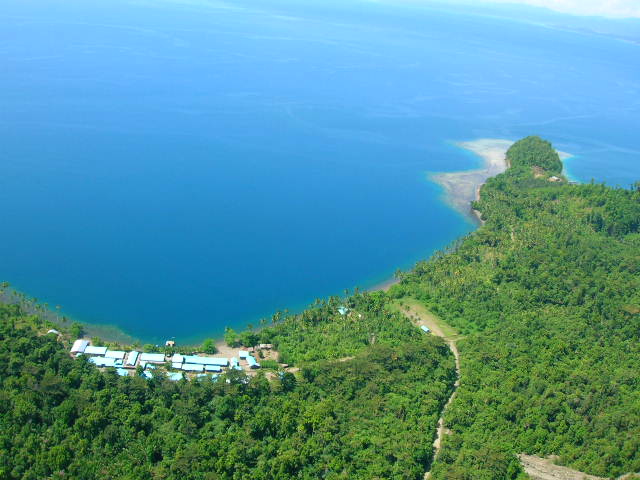

Weda Bay, Indonesia. Credit: Muhammad ECTOR Prasetyo | Flickr, under Creative Commons licence CC BY 2.0.

An Indonesian task force has seized plots spanning hundreds of acres from miners PT Weda Bay Nickel and PT Tonia Mitra Sejahtera for lack of relevant forestry permits, officials said on Friday.

The world’s largest producer of nickel products is cracking down on illegal exploitation of natural resources, with President Prabowo Subianto saying last week that more than 1,000 such mining operations were identified.

The crackdown boosted nickel prices, with benchmark three-month nickel on the London Metal Exchange up 1.32% at $15,350 a metric ton by 0801 GMT.

The most-traded contract on the Shanghai Futures Exchange closed daytime trade up 1.28% at 121,800 yuan a ton.

A 148-hectare (366-acre) area at PT Weda Bay Nickel’s concession has been seized for the lack of a forestry licence needed to exploit the plot, mining ministry official Rilke Jeffri Huwae said.

“They have the mining permit, but they don’t have the borrow-to-use permit for the forest,” Rilke said.

Weda Bay Nickel, controlled by China’s Tsingshan Holding Group, France’s Eramet SA and Indonesia’s Aneka Tambang, spans 45,000 hectares (111,000 acres) on Indonesia’s island of Halmahera.

Weda Bay is trying to seek clarification from the task force, said a company source who sought anonymity in the absence of authorization to speak to media.

Eramet Indonesia said it was fully committed to comply with all applicable rules, while assessing the situation.

“We respect the decisions of the Indonesian authorities and fully support PT WBN in working closely with the authorities to ensure all activities undertaken meet the required legal and regulatory standards,” it said in a statement.

The seized plot was a rock quarry for construction material and did not cover the mining extraction site, Eramet said, adding that it did not expect significant impact on Weda Bay’s operation.

Images from a regional news channel showed authorities, some in military uniform, putting up a sign showing the area was now under government control. The government had closed off the area, Eramet said.

The task force has also seized an area of 173 hectares (427 acres) managed by PT Tonia Mitra Sejahtera in Southeast Sulawesi, said Febrie Adriansyah, a senior prosecutor at the attorney general’s office.

Tonia’s mining permit covers nearly 5,900 hectares (14,580 acres), ministry data showed.

The task force has identified a total of 4.2 million hectares (10 million acres), managed by 51 companies, as lacking proper forestry permits, Febrie added.

(By Bernadette Christina Munthe, Fransiska Nangoy and Amy Lv; Editing by David Stanway and Clarence Fernandez)

Nickel price gains after Indonesia seizes part of giant mine
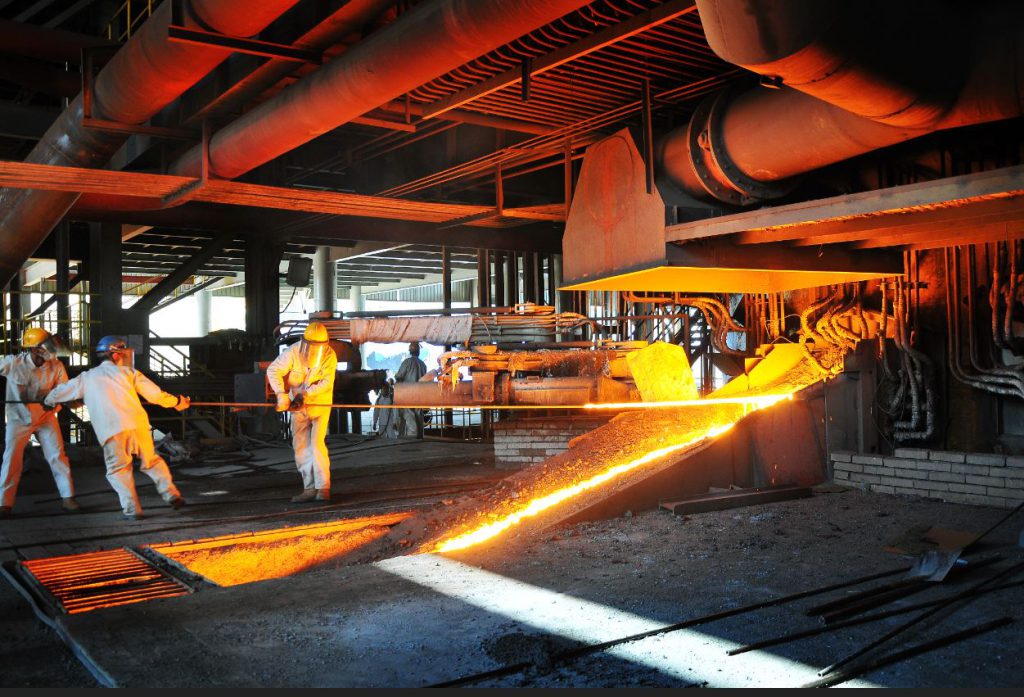
Image: Tsingshan Holding Group.

Nickel rose after Indonesia seized part of a giant mine semi-owned by top Chinese producer Tsingshan Holding Group Co., underlining risks to ore output in the world’s largest supplier.

A government task force on Thursday took control of about 148 hectares of the operation owned by PT Weda Bay Nickel — the world’s largest mine for the battery metal — over an alleged permit violation. France’s Eramet SA, one of the company’s shareholders, has said it sees no impact on operations at this stage.

Still, the seizure highlights ongoing challenges to reliable supply from Indonesia, which accounts for well over half of global nickel output. President Prabowo Subianto, who has outlined bold and costly plans for the nation, has also promised a crackdown on illegal mining, which may disrupt the flows of ore to local processors.

Smelters in Indonesia have been dealing with a tight ore market all of this year, due to high rainfall and low issuance of government mining quotas. At the same time, LME nickel prices have spent months range-trading at low levels, held back by disappointing demand from the electric vehicle battery sector.

Nickel futures advanced 1.6% to settle at $15,391 a ton on the LME. Copper added 0.2% and aluminum rose 0.6%.

(By Eddie Spence)


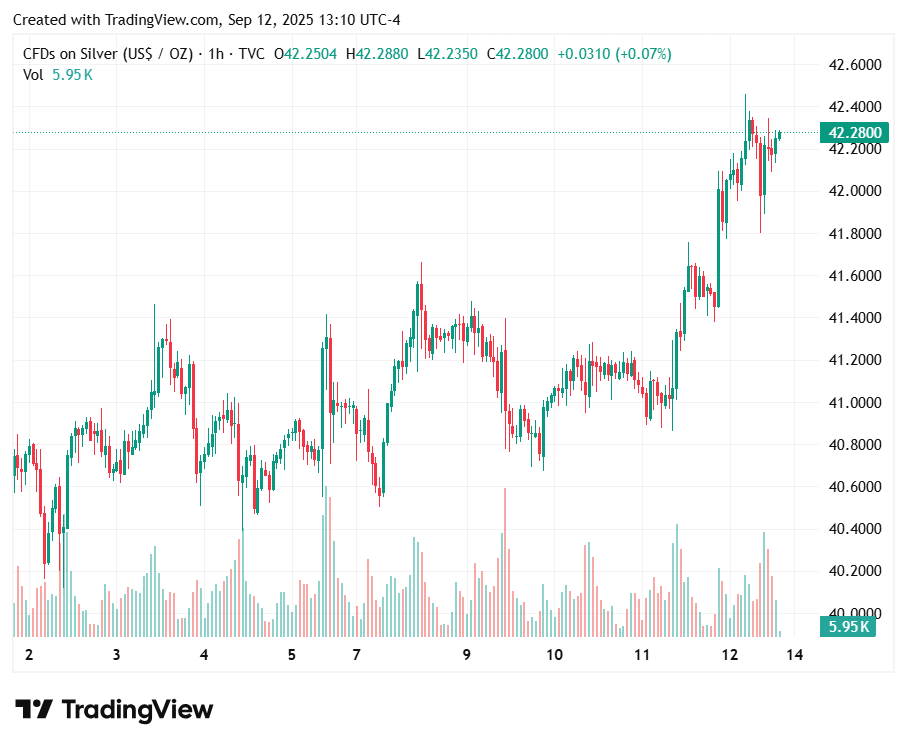
Silver price shoots above $42 for fresh 14-year high


In 2025, the silver price has risen by more than 43%, even surpassing gold, making it one of the best-performing assets of the year.


Stock image.

Silver extended its winning streak for a third straight session on Friday, as an increased likelihood of a Federal Reserve rate cut next week pushed the precious metal higher.

Spot prices rallied another 1.6% to surpass the $42/oz mark. Its intraday high of $42.46 was the highest since 2011.

This takes silver’s weekly gains to over 3%, as a looming Fed decision on interest rates raised the prospects of non-yielding assets like silver.

The latest US jobs data pointing to an economic slowdown further cemented market-wide expectations that a 25-basis-point cut is on the cards.

“Weaker employment and spotty inflation … priced in with the Fed having to cut rates is pushing metals higher because there is the risk of longer-term inflation,” Daniel Pavilonis, senior market strategist at RJO Futures, wrote in a Reuters note.

Over a longer horizon, analysts see further room to run. A new report by Sprott builds a bullish case for precious metals, predicting a strategic shift away from the US dollar and Treasuries under the current environment and into hard assets.

In silver’s case, the case may be even stronger as the metal’s fundamentals are underpinned by powerful structural forces, namely a prolonged supply deficit and a tightening physical market.

In 2025, the silver price has risen by more than 43%, even surpassing gold, making it one of the best-performing assets of the year.


Gold price surpasses inflation-adjusted record high set in 1980


Stock image.

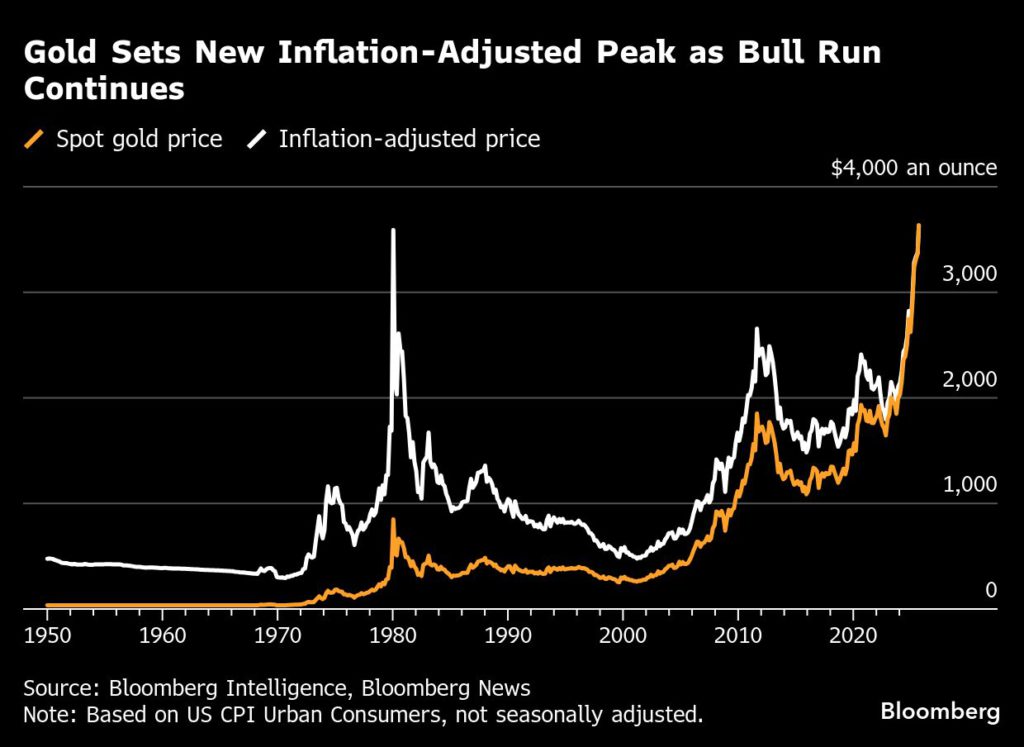
Gold has eclipsed its inflation-adjusted peak set more than 45 years ago, as growing anxiety about the US’s economic trajectory takes bullion’s blistering three-year bull run deeper into uncharted territory.

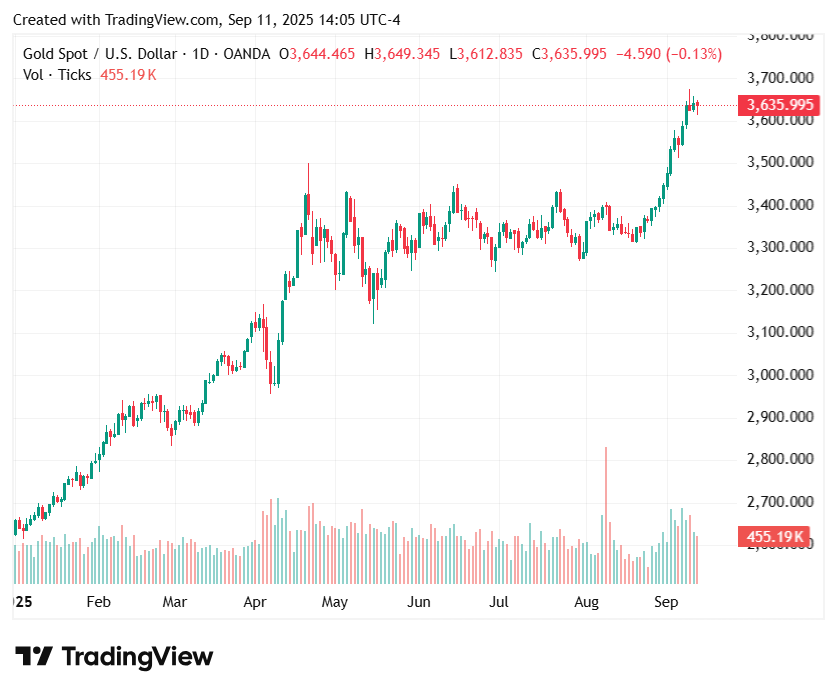
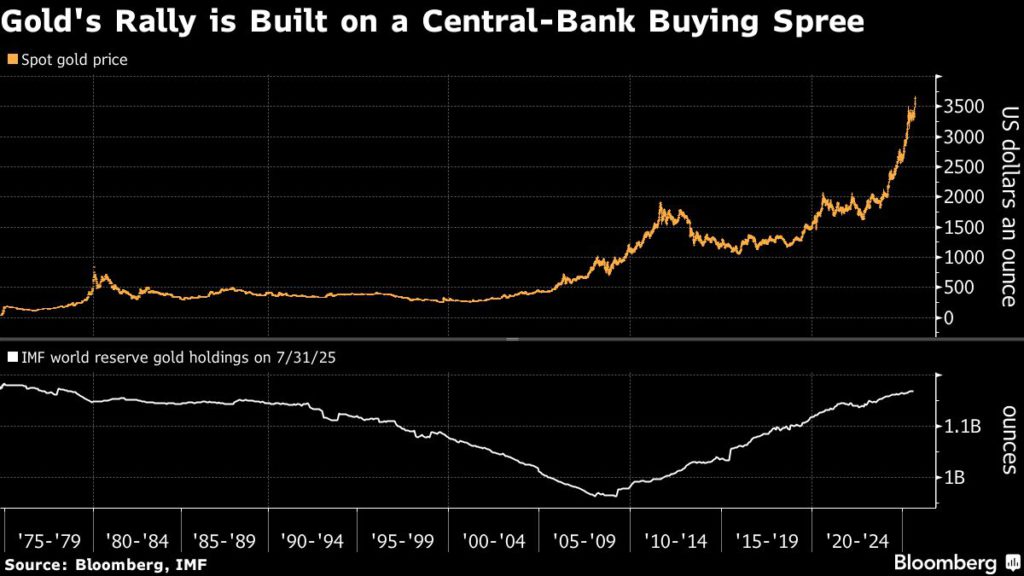
The spot price of gold has surged about 5% so far this month, with prices hitting an all-time high of $3,674.27 an ounce on Tuesday. It’s set more than 30 nominal records already in 2025, but the latest leg of the rally has also taken it through an inflation-adjusted peak set on Jan. 21, 1980, when prices topped out at $850.

Factoring in decades of consumer price increases, that equates to about $3,590 — although there are multiple methods of adjusting for inflation, and some would put the 1980 peak at lower levels. It’s a moving target, but analysts and investors are in agreement that gold has now shot firmly through it, providing a further fillip for gold’s credentials as an age-old hedge against rising prices and weakening currencies.

“Gold is a very unique asset in its historical ability over hundreds — if not thousands — of years to play that role,” said Robert Mullin, portfolio manager at Marathon Resource Advisors. “Asset allocators are entering a period where they are justifiably concerned about the levels of both deficit spending, as well as questioning central banks’ priorities and willingness to truly fight inflation.”

The precious metal has risen nearly 40% this year as President Donald Trump has cut taxes, expanded his global trade war, and sought unprecedented influence over the Federal Reserve. A selloff in the dollar and long-term US government bonds earlier this year highlighted concerns about waning appetite for American assets, and fueling questions about whether the nation’s debt remains a haven in times of turmoil.

When gold hit $850 in January 1980, the US was grappling with a collapsing currency, a spike in inflation and an unfolding recession. The price had doubled over the previous two months, after US President Jimmy Carter issued a freeze on Iranian assets in response to a hostage crisis in Tehran, raising the perceived risk of holding dollar assets for some foreign central banks.

“Gold is only reflecting the renewed awareness that inflation can be and still is a problem, but also uncertainty about the world,” said Carmen Reinhart, a former senior vice president and chief economist at the World Bank Group. Gold’s “role as an inflation hedge was a stamp of its popularity in the 70s and 80s, but you need to look before the 1980s: Gold has always played an important role when there’s uncertainty.”

Compared with the parabolic surge to the peak in 1980 — and a precipitous collapse that followed — today’s rally has unfolded with far less volatility. That’s partly because today’s market is far more liquid and accessible to investors, and also because it’s attracting a broader base of investors who are offsetting weakness in traditional areas of demand.

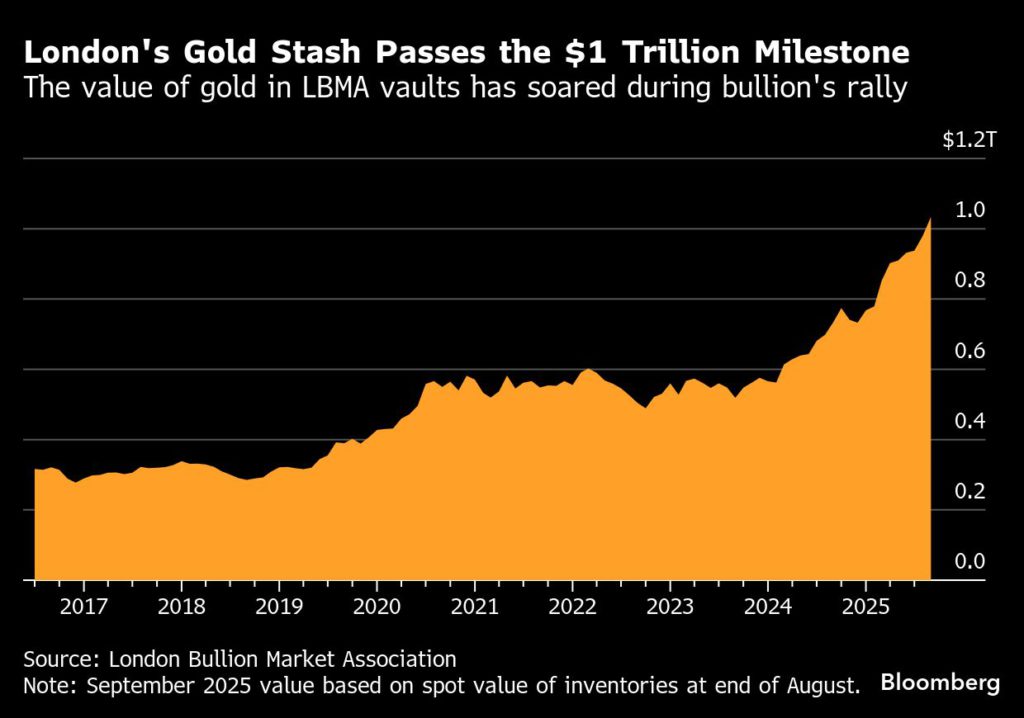
Thanks to the surge in prices, the value of bullion held in London vaults exceeded $1 trillion for the first time last month, and it’s also overtaken the euro as the second-largest asset in global central bank reserves.

Grant Sporre, global head of metals and mining at Bloomberg Intelligence, has overhauled his analytical models to take fuller account of the broad and diverse drivers behind gold’s stellar rally. They suggest gold is over-priced relative to historical norms except in one crucial aspect: Compared to US stocks, gold still looks cheap, and he says prices could vault higher still if equity markets start to creak.

“Gold’s eye-wateringly expensive, but the market is happy to pay the price in order to secure that insurance,” Sporre said.

Gold’s comeback

It’s a striking comeback for an asset that was derided by central bankers throughout the 1990s and 2000s, as the end of the Cold War, the birth of the eurozone, and China’s accession to the World Trade Organization ushered in a new era of globalization underpinned by the dollar. As stock markets took off, many private investors turned their back on gold too.

This time, many central banks are again buying gold to diversify their foreign exchange holdings from the dollar, and insulate themselves from sanctions targeting America’s adversaries. Prices have almost doubled since Russia’s invasion of Ukraine and a resulting freeze on the Kremlin’s overseas assets, with the rally broadening out as institutional investors started loading up in the wake of Trump’s inauguration.

Sporadic buying sprees in China and a resurgence in the popularity of exchange-traded funds — which have made gold more accessible to retail investors — have also lent support along the way.

“The movement from a unipolar world to a multipolar world I think has accelerated the view of gold as being an asset that central banks want to own,” said Greg Sharenow, a portfolio manager at Pacific Investment Management Co. “High net worth individuals have been viewing it similarly, and gold has been a big beneficiary of the broadening and the diversification of assets.”

Over the past two weeks, prices have erupted higher again, shooting clear of all-time nominal highs set in April after a spell of range-bound trading. The latest breakout has come as investors across financial markets bet that the Fed will soon start lowering interest rates off to head off a slowdown in hiring and and a potential economic downturn.

Historically, rate cuts have boosted gold’s appeal relative to yield-bearing assets like Treasuries, while also putting pressure on the dollar. And with Trump staging an unprecedented assault on the Fed’s independence, gold bulls are also increasingly alert to the possibility that the central bank could be compelled to cut rates aggressively even in the face of rising inflation risks.

When similar dynamics took hold in the early 1970s — with the dollar slumping as then-President Richard Nixon pressured the Fed to keep rates low in the face of inflation risks — it helped kick-start a colossal rally in gold, with the twin oil shocks of that decade helping to ultimately lift it to its $850 peak.

“I could read what was happening in the world: Every country was building up huge debt, every country was printing money and debasing their currency,” said Jim Rogers, the co-founder of the Quantum Fund alongside George Soros, who began buying bullion in the early 1970s. “And I also read enough to know that gold and silver were a way to protect yourself in times like that.”


(By Yvonne Yue Li, Yihui Xie, Jack Ryan and Sybilla Gross)

Brazil prosecutors call for halt on lithium mining in Minas Gerais

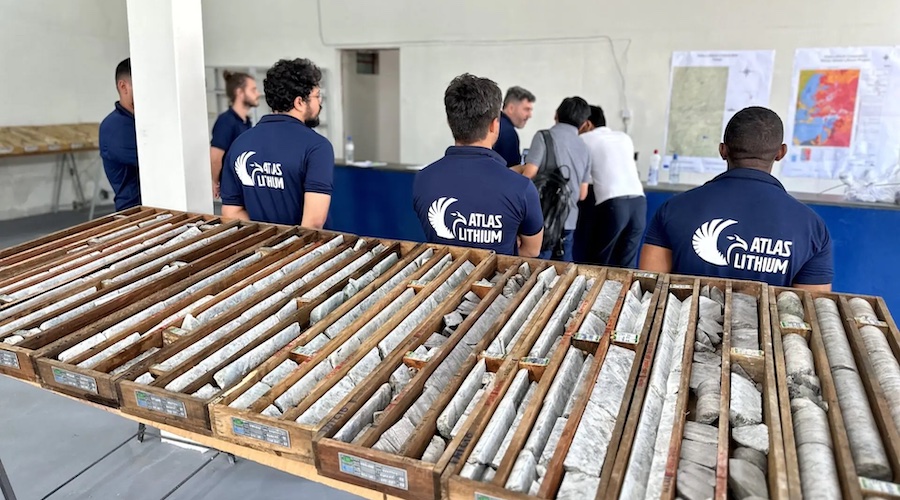
Neves lithium project in Minas Gerais. (Image courtesy of Atlas Lithium.)

Brazil’s federal prosecutors have asked the country’s mining regulator to suspend lithium projects in Minas Gerais, citing inadequate consultation with local communities and environmental risks.

The Federal Public Ministry (MPF) requested that the National Mining Agency (ANM) review exploration and extraction licences in Araçuaí and neighbouring municipalities in the Jequitinhonha Valley, the region that hosts most of Brazil’s lithium developments. The agency has 20 days to assess current permits and stop issuing new ones until proper consultations are carried out.

Prosecutors said indigenous groups, quilombola (Afro-Brazilians descendants of slaves) communities and other traditional residents were not consulted before projects were approved. They stressed that permits must follow principles of free, prior and informed consent, in good faith.

Prosecutors also claim that existing operations have already harmed local communities. Quoting “expert reports” MPF said the Neves project, operated by Atlas Lithium (NASDAQ: ATLX), disrupted water supplies when roadwork damaged community pipelines in Calhauzinho, Passagem da Goiaba and other areas.

“The reports warn that the expansion of mining will increase pressure on infrastructure and water resources,” MPF said in the statement.

Sigma Lithium’s (TSX-V, NASDAQ: SGML) subsidiary, Sigma Mineração, also came under scrutiny. A 2021 technical review identified flaws in the company’s Environmental Impact Study for the Grota do Cirilo project, particularly concerning water management in Araçuaí and Itinga, MPF said. Two planned open pits could affect the Piauí stream, the main water source for residents and rural communities, especially during dry seasons.

“If the ANM does not comply with the recommendation, the MPF may adopt other administrative and judicial measures,” it said.

Atlas and Sigma did not respond to requests for comments by the time this article was posted.

MONOPOLY CAPITALI$M

Anglo-Teck $53B merger may topple Escondida as copper leader

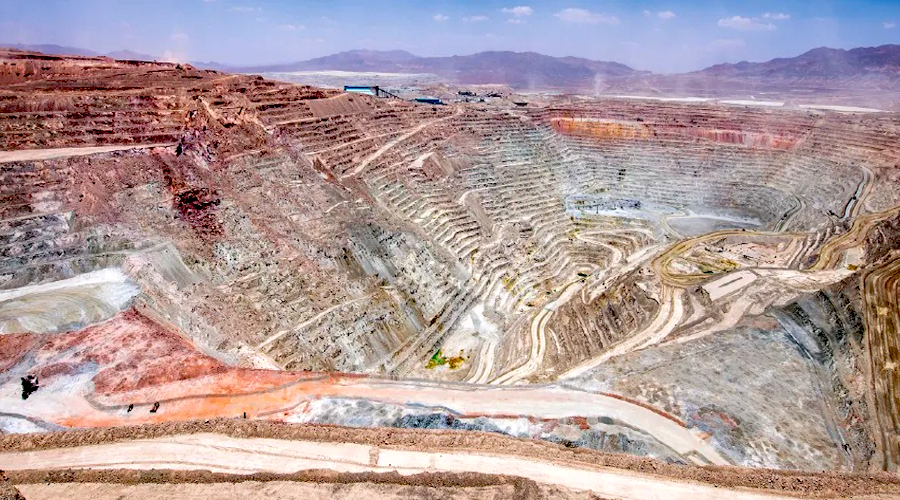
Escondida is, for now, the world’s largest copper mine. (Image courtesy of BHP.)

Anglo American (LON: AAL) and Teck Resources’ (TSX: TECK.A, TECK.B)(NYSE: TECK) planned $53 billion merger could create the world’s largest copper mine by the early 2030s, surpassing BHP’s Escondida in Chile, according to analysts.

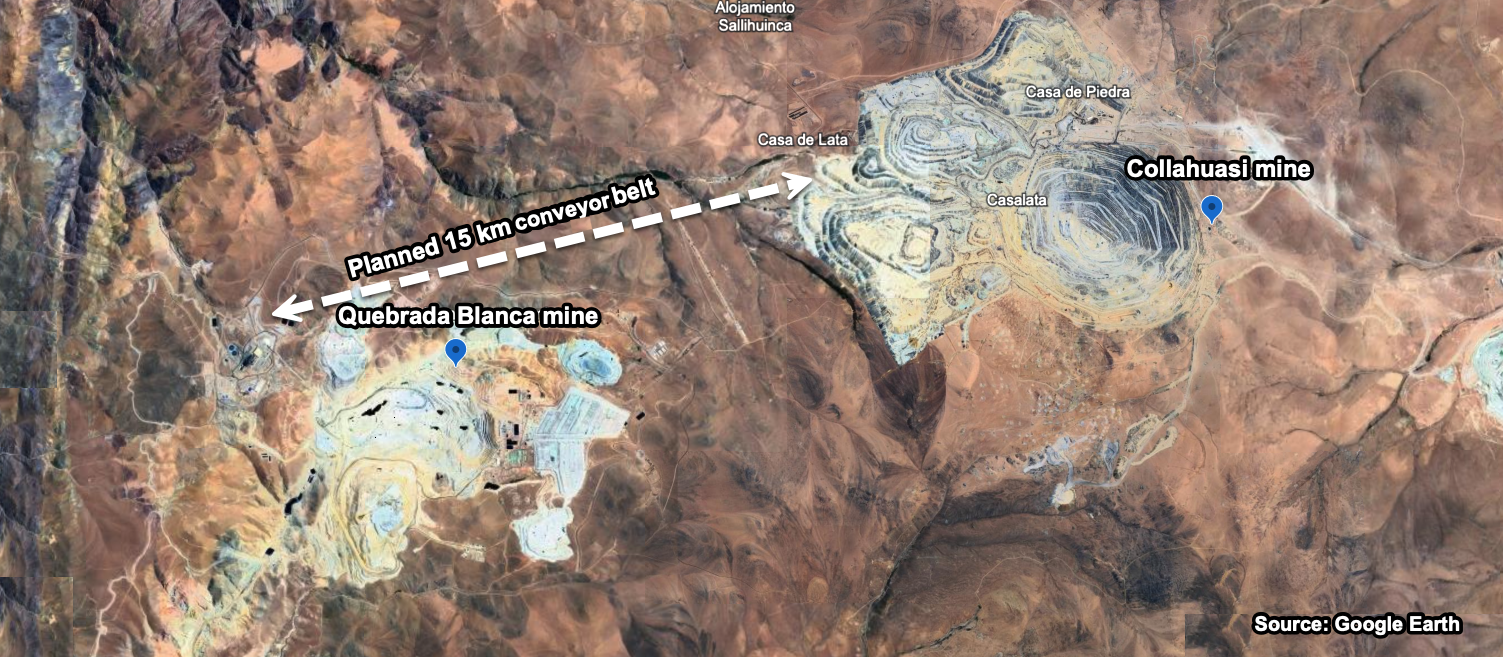
The centrepiece of the deal is the integration of Teck’s Quebrada Blanca (QB) mine with Anglo’s Collahuasi operation. Together, they could generate about one million tonnes of copper annually, industry analysts say.

“It is absolutely feasible that a Collahuasi-QB complex could surpass Escondida’s level of copper out-turn in the early 2030s,” CRU Group analyst William Tankard said in a note.

A proposed 15-kilometre conveyor would link Collahuasi’s high-grade ore to QB’s processing facilities, adding the equivalent of a new mine’s output. The system is projected to deliver an extra 175,000 tonnes of copper per year between 2030 and 2049, at lower costs and shorter timelines than a standalone development.

Anglo-Teck $53B merger may topple Escondida as copper leader
A 15-km (9.3-mile) conveyor would be built to feed Collahuasi’s high-quality ore into QB’s new processing plants. (Click on map to enlarge)

If completed, the combined Anglo-Teck entity would rank among the world’s top five copper producers, with 1.35 million tonnes in output a year. In comparison, Escondida produced about 1.28 million tonnes of copper in 2024. The deal would also mark the mining sector’s biggest transaction of the decade. 

The companies project $800 million in annual pretax synergies, and up to $1.4 billion in additional EBITDA gains from shared procurement and operational efficiencies.

“I think it’s conservative,” George Cheveley, portfolio manager at Ninety One, wrote this week. “The optionality to expand and develop that complex over multiple decades is not in that number.”

Execution risks loom large. Teck’s QB mine has struggled with cost overruns, pit instability, plant outages, and waste-storage issues. Anglo American, meanwhile, does not fully control Collahuasi, where Glencore (LON: GLEN) and other partners hold significant stakes. 

Analysts caution that operational fixes at QB are critical before the combined complex can challenge Escondida.

Wood Mackenzie values Teck at $10.8 billion on a post-tax, sum-of-the-parts basis: $13.8 billion from copper and $1.1 billion from zinc, offset by $4.1 billion in central costs through 2040. That estimate excludes potential synergies with Collahuasi, QB’s growth options and a life extension at the Red Dog mine, but also factors in downside risk from QB’s operational setbacks.

(With files from Bloomberg)


MMG’s $500M nickel deal with Anglo American faces EU doubts 


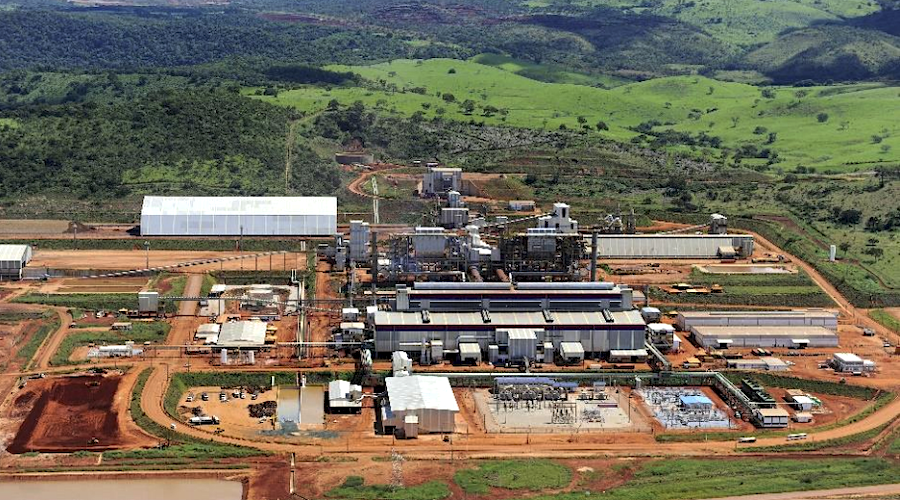
Barro Alto is a nickel-producing mine and processing plant. (Image courtesy of Anglo American.)

China-backed miner MMG expects to secure European approval for its $500 million bid to buy Anglo American’s nickel assets, even as regulators question Beijing’s grip on critical mineral supply chains.

Troy Hey, MMG’s executive general manager of corporate relations, confirmed that European antitrust officials had raised concerns about the company’s Chinese majority ownership, but said the firm is confident the deal will clear.

“From a competition basis, we’re very confident that as new entrants to this market . . . and with very strong demand in Europe, we’re in a good place,” Hey told the Financial Times.

Brazil’s competition authority has already opened a probe, as Anglo’s nickel operations are located there. Although MMG does not currently operate in Brazil, Europe remains a key destination for the ferronickel produced at Anglo’s mines, which primarily supply stainless steel manufacturers.

Steelworkers complain

The deal is also drawing scrutiny in the United States. The American Iron and Steel Institute has urged Washington to block the acquisition, arguing it would hand Beijing direct influence over major nickel reserves. Nickel is a critical material for both electric vehicle batteries and stainless steel.

The proposed sale forms part of Anglo American’s (LON: AAL) wider restructuring. The company spun off its platinum business in May, creating Valterra (JSE: VAL), and in July classified its nickel and steelmaking coal divisions as discontinued operations pending divestment.

Anglo is sharpening its focus on copper, positioning itself to become the world’s fifth-largest producer if its proposed $53 billion merger with Canada’s Teck (TSX: TECK.A TECK.B)(NYSE: TECK) goes ahead.

Anglo-Teck deal hinges on troubled copper mine in Chile


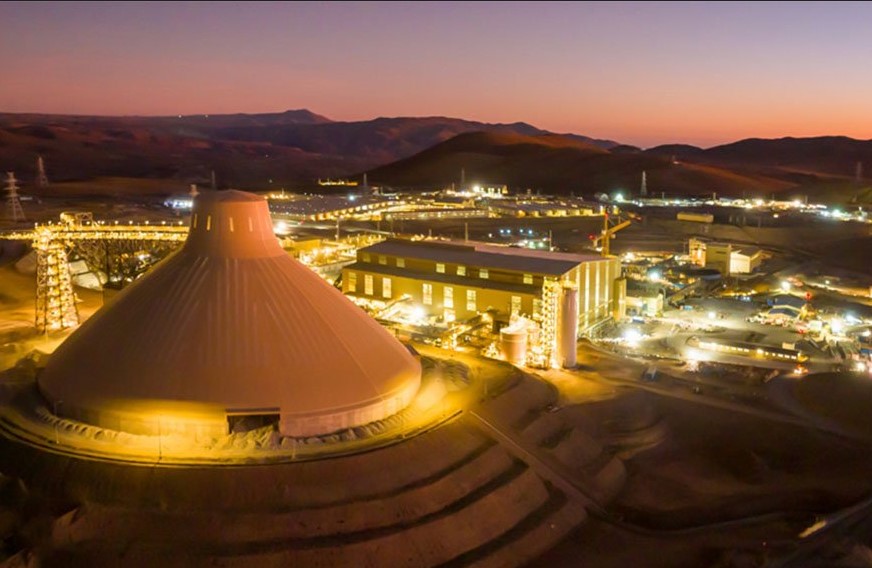
The recently expanded Quebrada Blanca mine in Chile is Teck’s largest copper project is undergoing optimization and debottlenecking. Image courtesy of Teck Resources.

At the heart of one of the mining industry’s most ambitious combinations is a plan to fix a problematic Teck Resources Ltd. copper mine high in Chile’s Atacama desert, and ultimately to integrate it with a vast neighboring operation that has long been a jewel in Anglo American Plc’s crown.

That, however, will require resolving complex operational troubles that have plagued Quebrada Blanca, known as QB — and then navigating relationships with partners in Collahuasi, a mine Anglo doesn’t control.

Teck has staked its growth plans on QB, but a major overhaul of the mine was a headache from its early days, coming in more than 80% over budget and years behind schedule. While delays and overruns are not unheard of in the industry, the operation has also since struggled with instability in the pit and plant, a ship-loader outage and now waste storage.

The travails forced Teck to trim output guidance in July, and earlier this month — just days before announcing a more than $50 billion merger agreement with Anglo — it said it would defer decisions on growth projects to focus on fixing QB.

“Quebrada Blanca has sizable technical challenges to reach capacity,” said Juan Ignacio Guzman, who heads GEM, a mineral consulting firm in Chile. “The synergies it could have with Collahuasi aren’t simple.”

Still, the benefits of a working combination would be hefty, in an industry where vast, usually distant, operations mean substantial synergies are hard to come by. Tying up with Collahuasi, specifically processing its richer ore at QB plants, could mean an average annual boost to Ebitda of $1.4 billion, the two companies said. The revenue synergies would come on top of the $800 million a year in cost savings from more standard areas like procurement and corporate functions in a combined company.

“I think it’s conservative,” said George Cheveley, portfolio manager at Ninety One, referring to the $1.4 billion boost. “The optionality to expand and develop that complex over multiple decades is not in that number.”

Under plans sketched out by the two companies this week, a roughly 15-kilometer (9.3-mile) conveyor would be built to feed Collahuasi’s high-quality ore into QB’s new processing plants. That would generate the equivalent of a new mine’s worth of supply — an incremental annual output of about 175,000 tons of copper from 2030 to 2049 — at a fraction of the time and per-ton cost.

One scenario could see combined annual output approach 1 million tons by the early 2030s, according to industry consultancy CRU Group. That could put it above BHP Group’s Escondida, though not necessarily for the long-haul, as the world’s largest copper mine.

“It is absolutely feasible that a Collahuasi-QB complex could surpass Escondida’s level of copper out-turn in the early 2030s,” said CRU analyst William Tankard.

It’s the kind of cost-saving arrangement the industry has been touting for decades, where neighboring mines gain outsized benefits with relatively small investments, helping to boost global production of a metal vital for the energy transition.

But these deals are slow and challenging. Chilean state-owned giant Codelco and Anglo have held discussions for years over ways to integrate their Los Bronces and Andina mines, and are yet to finalize an arrangement.

Collahuasi and QB have more complicated ownership structures. Collahuasi — jointly owned by Anglo and Glencore Plc, with 44% each, plus a Mitsui & Co.-led consortium holding 12% — is independently managed. At QB, Teck does own the majority share, but still has Japan’s Sumitomo Metal Mining Co. together with Sumitomo Corp. as a 30% partner, and Codelco with a 10% stake.

“Among the challenges will be governance, due to the multiplicity of partners,” said Juan Carlos Guajardo, founder of consultancy Plusmining.

Then there’s the scale of the problems at QB. To grapple with these before committing, Anglo sent technical experts to QB and sat with independent engineers, Anglo chief executive officer Duncan Wanblad told analysts this week.

The troubles are such that some Teck shareholders worry Anglo may be getting a steal by swooping in at a low point — but Anglo’s investors fear it may be getting more than bargained for.

“It’s beyond me why Teck would surrender control of one of the world’s great copper-rich mining companies for nil premium, especially when they’ve inexplicably chosen to price the deal after underperforming Anglo by so much,” said Tim Elliott, head of mining at Regal Funds Management. “Teck should fix their key asset first, then test the market properly from a position of strength.”

Unions at the site say teams have been filling cracks around the tailings dam embankment, while waste is piling up because of the filtering issues and there’s also been pipe corrosion. The slower-than-expected ramp-up, meanwhile, is squeezing production bonuses for workers.

“This hits the wallet,” said David Munoz, an official at one of the main unions at the mine. “We don’t do less work than at other mines but we get less because of these issues.”

QB uses the so-called centerline cycloned sand dam method, which splits coarse material from fines, with the sand used to raise the embankment. The slower-than-expected drainage creates a bottleneck for production.

Earlier this month, Teck stepped up efforts to resolve the tailings issues, bringing in a former senior BHP executive as special adviser. Work is focusing on mechanically raising the dam wall and improving drainage times, the company said in an emailed response, adding that dam and pipe maintenance is normal and doesn’t pose any risk.

The ramp-up troubles are not dissimilar to Anglo’s own at Quellaveco in Peru, Wanblad said, a reminder of the copper industry’s struggles to expand supply just as the world demands more of the red metal. Quellaveco uses a similar tailings system.

“The reality is that these major operations do just sometimes take time,” he said.

(By James Attwood)


Vale CEO sees copper growth driven by project pipeline over M&A


Vale CEO Gustavo Pimenta. (Image courtesy of Vale.)

Vale SA chief executive officer Gustavo Pimenta said the company “fell behind in the copper race” and will seek to regain ground by accelerating the development of its own mining assets, rather than looking at potential deals.

“Our opportunity lies more in developing our mining potential than in possibly making a transaction,” Pimenta said Wednesday on the sidelines of a conference in Sao Paulo. “Our potential for product development is greater than that of our competitors.”

The global mining industry has seen a flurry of dealmaking, driven largely by the desire to expand production of copper — a metal essential to the global energy transition. This week, Anglo American Plc agreed to acquire Canada’s Teck Resources Ltd., creating a more than $50 billion company in one of the biggest mining deals in over a decade.

Pimenta cited the Teck-Anglo combination as highlighting the favorable supply-demand outlook that’s underpinning copper.

Vale will focus on accelerating projects in Brazil’s Amazon rainforest, Pimenta said. The company earlier this year said it was spending 70 billion reais ($13 billion) on Amazon investments for iron ore and copper by 2030.

The Brazilian company produces about 350,000 tons of copper a year and forecasts doubling that amount by 2035. Speeding up copper projects including Alemao and Bacaba is a top priority, Pimenta said.

The Rio de Janeiro-based miner cut its full year capital expenditure guidance for 2025 to a $5.4 billion-$5.7 billion, from a previous $5.9 billion estimate. The reduction is concentrated in the copper and nickel business. Pimenta said the adjustments came from efficiency gains and that Vale isn’t giving up on any projects.

(By Mariana Durao and Dayanne Sousa)


Montrealer plans to sue major grocers over false ‘made in Canada’ labels

By Laurence Brisson Dubreuil
 September 13, 2025 

Canadian flag labels near milk at a grocery store in Sidney, British Columbia, Canada, on Wednesday, Feb. 26, 2025.
(James MacDonald/Bloomberg) 

Ever bought a product thinking it was made in Canada only to find out later it wasn’t?

One Montrealer says it happened to them. And now, they’re taking on major grocery chains.

Provigo, Metro, Sobeys, Walmart, and Giant Tigre are all named in a new class action.

Joey Zukran is one of the lawyers leading the case.

“This is false advertising 101,” he says.

He argues grocers used maple leaves, flags, and tags like “made in Canada” to sell products imported from elsewhere.

“When you’re telling consumers that the product is made in Canada, you’re appealing to their patriotic and moral compasses,” says Zukran.

Zukran says it’s not just about deception — he wants compensation for customers and punishment for the companies targeted.

Food distribution expert Sylvain Charlebois warns the damage goes beyond labels and is likely to further stress a frayed relationship.

“A lot of people don’t necessarily trust grocers, for a variety of reasons- pricing is certainly one of them,” he says.

And shoppers CTV news spoke to agree — this so-called maple-washing isn’t helping.

“Sometimes it’s not true. The other day I bought cheese, le Ptit Quebec, made in the States,” said Monique Langlois.

The trade war sparked a push for many Canadians to boycott American products, and some numbers reflect that.

“In the spring of 2025, American food sales in volume dropped 8-point-5 per cent- we’ve never seen that before,” says Charlebois.

The class action has yet to get the green light. But what’s at stake is more than just labels — it’s how honest Canada’s biggest grocers are with their customers.


Laurence Brisson Dubreuil

CTV News Montreal Videojournalist