Monday, September 15, 2025


U.S. Automakers Navigate Rising Metal Costs and Supply Woes

  • U.S. automakers are facing increased metal costs and potential shortages due to expanded tariffs on imports like steel and aluminum, and geopolitical disruptions affecting critical EV minerals.

  • The 50% tariff on various metal imports can significantly raise vehicle production costs, impacting automakers' margins and potentially increasing car prices for consumers.

  • Automakers are mitigating these risks by securing longer-term fixed-price contracts for metals, diversifying suppliers, increasing local sourcing, redesigning parts, and striking direct deals with mining companies for battery minerals.


The Automotive MMI (Monthly Metals Index) moved sideways, dropping a slight 2.3%. This comes as the US automotive market, manufacturers in particular, are facing a one-two punch of rising costs and potential shortages in their metal supply chains. A big reason for this is steep tariffs on steel, aluminum and other inputs, which are driving up raw material costs.
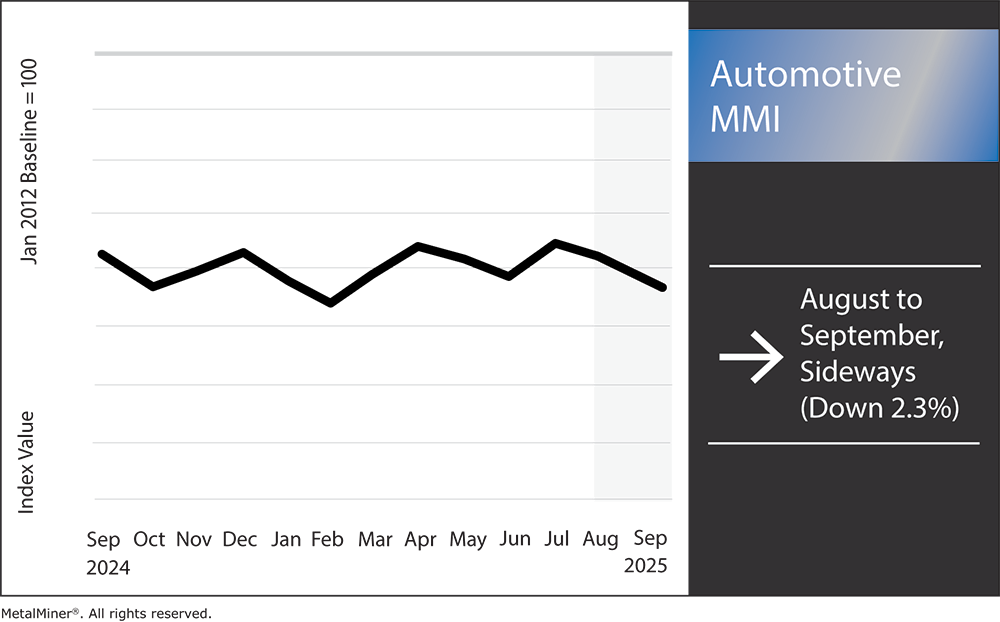
automotive MMI, september 2025

How Are Tariffs Driving Up Costs for the US Automotive Market

The US government has expanded its metal tariff (initially 25%) to a hefty 50% on a broad range of imports, including automotive-grade steel and aluminum. These duties essentially act as a tax on every car built with imported material. Automotive Dive reports that the 25% steel tariff alone could add up to $1,500 to the cost of a typical vehicle, and the burden climbs higher as tariffs double. Industry-wide, that means significant added expenses, which directly threaten automakers’ margins and could eventually push up car prices for consumers.
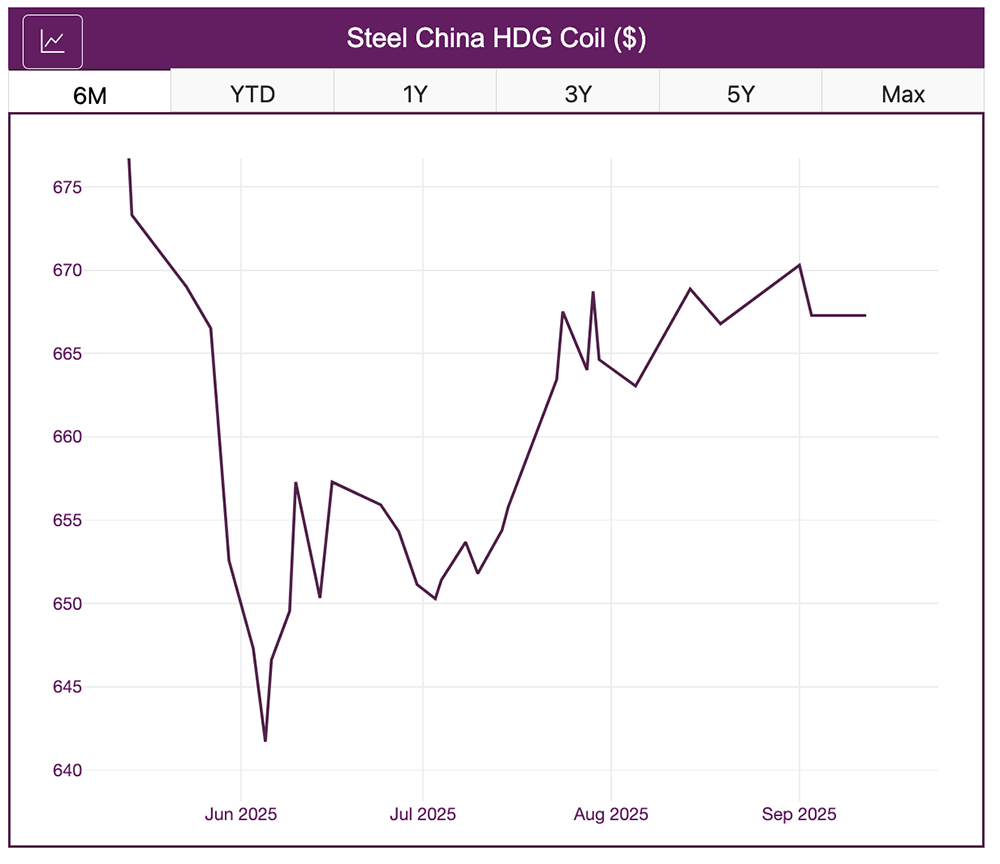
HDG

Hot-dipped galvanized steel prices, September 2025, MetalMiner Insights

Even companies that primarily rely on US-sourced steel aren’t spared, as domestic producers have raised prices in tandem with tariff-fueled market increases. In effect, automakers encounter rising costs even when purchasing “Made in America” steel.

This leaves companies with two choices: absorb the added expense or pass it along to buyers through higher vehicle prices. MetalMiner’s weekly newsletter provides free price updates about tariffs and pass-it-along-to-consumers costs to help manufacturers make proactive purchasing decisions rather than reacting to volatility within its newsletter.

What About Critical Minerals?

Tariffs are not the only issue facing the US automotive market. Critical EV minerals like lithium and rare earth elements have their own supply risks. In early 2025, China halted exports of certain rare earth metals needed for EV motors, which quickly led to significant issues. According to Automotive Logistics, the move underscores how vulnerable the auto supply chain is to geopolitical shocks. And because China controls about 90% of global rare earth refining capacity, automakers now face critical material shortages.

Related: Global EV Sales Growth Slows as Chinese Surge Cools

Amid these changes, firms across the US automotive market are racing to secure more reliable sources for these minerals. For instance, EV maker Lucid Group recently launched a collaboration with several US mining and refining companies, aimed at boosting domestic output of battery metals and reducing reliance on overseas suppliers. The coalition’s members are pursuing new mines and processing facilities to build an American battery-material supply chain.

How Are Automakers Responding to Mitigate These Risks?

So far, automakers are employing several strategies to weather the storm. One approach is locking in longer-term contracts for key metals at fixed prices, which serves as a buffer against cost spikes. For instance, General Motors and others have already signed two- to three-year steel supply deals with Cleveland-Cliffs, providing cost predictability amid tariff volatility.

Manufacturers are also diversifying suppliers and increasing local sourcing where possible, with some firms redesigning parts to use less imported metal and investing in recycling to help reclaim more scrap. As previously mentioned, a few automakers have struck direct deals with mining companies for lithium and other battery minerals, allowing them to secure supply at the source. Another strategy is leveraging better market intelligence. For example, procurement teams are using specialized resources like MetalMiner Select to track price trends, trade actions and forecasts in real time.

What is the Outlook for 2026, and How Can Procurement Leaders Navigate It?

Some analysts predict that metal prices could stabilize or even fall as the initial tariff shock is absorbed, giving buyers a breather. However, with EV demand still growing, volatility isn’t likely to go away.

Success in this environment calls for a proactive strategy. For example, leading firms use forecasting and benchmarking to guide their buying plans, which can provide additional protection. It’s also crucial to stay alert to policy shifts, since trade rules can change on short notice. Internally, US automotive market procurement leaders should stress that building more resilient supply lines through dual sourcing or extra inventory may entail upfront costs, but will ultimately protect the business from disruptions down the road.

US companies sourcing metals in 2025 find themselves at the nexus of trade policy and the clean energy transition, presenting a challenging scenario. However, with solid market intelligence, diversified sourcing and strategic partnerships, procurement leaders can mitigate the turmoil.

By the Metal Miner Team

The Rise of China and the Future of Clean Energy

  • China has significantly outpaced the United States in clean energy spending, manufacturing, and innovation, contributing a record amount to its GDP.

  • Thanks to affordable Chinese clean energy infrastructure, a growing number of emerging economies are now leading the United States in the shift to renewable energy sources.

  • China's established trade relations and massive manufacturing capacity have positioned it at the forefront of global energy trade and the clean energy transition.

China has far outpaced the United States in clean energy spending, manufacturing, and innovation. And now, thanks to cheap and abundant Chinese solar panels and wind turbines, a growing number of emerging economies are joining the ranks of nations outpacing the United States in the clean energy transition. 

“To China’s delight,” writes the Conversation, “the US has simply stopped competing to be the world’s clean energy powerhouse.” While the Trump administration has reversed policies incentivizing clean energy manufacturing in the United States, China has barrelled ahead with its own ambitious programs. 

The 13.6 trillion yuan ($1.9 trillion) that China spent on clean energy manufacturing and development over the past year was roughly equivalent to the entire world’s spending on fossil fuels over the same period, rivalling the size of Saudi Arabia’s entire economy. As a result, China now produces 60 percent of the world’s wind turbines, 80 percent of its solar panels, and one in five lithium-ion batteries. 

“While Trump repeats the tired mantra of ‘drill, baby, drill’, China is building factories, cornering the market for critical minerals such as lithium and nickel, and locking in export partners,” states the Conversation in a recent column. And those export partners are only too delighted to take advantage of Chinese trade, especially in the context of U.S.-imposed tariffs

As a result, a growing number of developing countries including Brazil, Chile, El Salvador, Morocco, Kenya, and Namibia “are now outpacing the U.S. in the shift to renewable energy” according to a recent report from Yale Environment 360. Nearly two-thirds of emerging markets in Africa, Asia, and Latin America now have a higher proportion of solar integration in their energy mixes than the United States. “Since 2018, Kenya, Yemen, Sri Lanka, and Tanzania have imported an amount of Chinese solar equal to roughly half the capacity of their entire power grid,” the report goes on to detail.

The affordability and accessibility of Chinese-made clean energy infrastructure makes solar and wind adoption a no-brainer for emerging economies. A new analysis from Ember shows that 91 percent of new solar and wind projects are even cheaper than the cheapest fossil fuel plants when fuel cost is taken into account. The result is a win-win for China, its trading partners, and global decarbonization goals. 

“China’s investment in the electro-technology revolution is creating choices for every other country, unlocking a clean, more affordable and secure energy future and opening the door to a new diplomacy, moving beyond the geopolitics of oil and gas,” writes Ember. “Most profoundly, China is showing that a highly electrified energy system centred on wind and solar generation is entirely compatible with a modern, growing, highly industrialised economy.”

China’s massive manufacturing capacity and well-established trade relations with emerging economies around the globe have placed it at the helm of global energy trade and at the vanguard of the clean energy transition. The question is whether the West will re-enter the competition, or let Beijing continue to run away with it.

So far, the latter seems more likely. Indeed, many experts view the Trump administration’s policy strategy as one big gift to China. Gutting American clean energy expansion and innovation capacities has been a boon to China’s market share, while global tariffs have only incentivized countries to pivot to increase their trade with China. 

“China doesn’t need to do anything to win,” Samantha Custer, director of policy analysis at AidData, a research group at William & Mary, told the Washington Post earlier this year. China has long worked to “sow seeds of doubt that the U.S. is not a reliable economic and security partner, and unfortunately, people are now seeing the U.S. reinforce those doubts,” she added.

By Haley Zaremba for Oilprice.com


Newmont sells Coffee gold project for $150 million

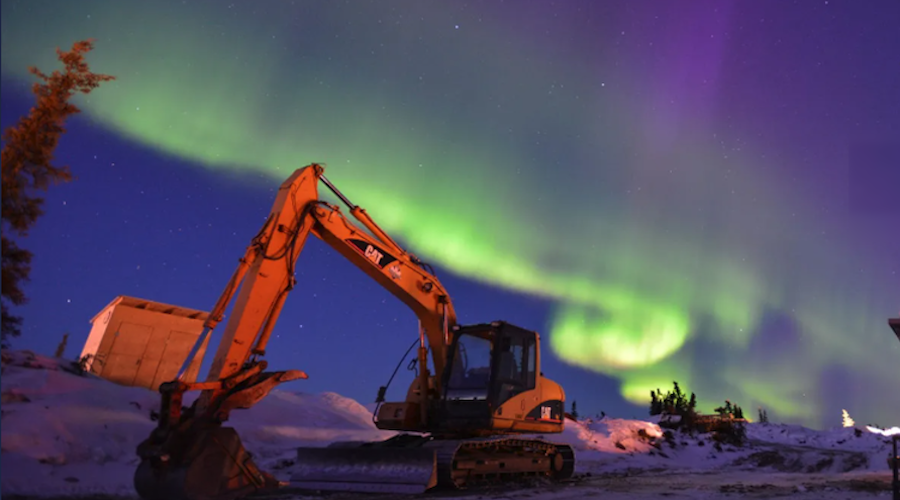
The Coffee project is located in the Yukon, Canada. (Image courtesy of JDS Energy & Mining.)

Newmont Corp (NYSE: NEM) has agreed to sell its Coffee gold project in Canada’s Yukon Territory to Fuerte Metals (TSXV: FMT) for up to $150 million, completing a year-long divestment plan.

Under the deal, Newmont will receive $10 million in cash at closing and $40 million in Fuerte shares. The company will also retain a 3% net smelter return royalty on the project, which Fuerte can repurchase for up to $100 million.

The sale finalizes Newmont’s exit from eight non-core assets it put on the block in early 2024, including the Éléonore mine in Quebecthe Musselwhite and Porcupine mines in Ontario and its 70% stake in the Havieron project in Western Australia. 

Newmont chief executive officer Tom Palmer said the transaction aligns with the company’s strategy to streamline its portfolio and sharpen focus on core operations. He added that Fuerte is positioned to advance Coffee “in a socially and environmentally conscious manner” while maintaining commitments to First Nations and other stakeholders.

Through the deal, Newmont will hold about 27% of Fuerte’s shares via its Goldcorp Canada subsidiary, joining Agnico Eagle, Pierre Lassonde, and Trinity Capital Partners as major shareholders. Lassonde served as Newmont’s president from 2002 to 2007.

The US-based gold giant, which continues to operate the Brucejack and Red Chris mines in Canada, applied last week to voluntarily delist from the Toronto Stock Exchange, citing low trading volumes.

‘Transformational

Fuerte Metals called the Coffee acquisition transformational. CEO Tim Warman said the project is on track to complete permitting and has the backing of strong technical and financial partners. Coffee holds one of the largest and highest-grade heap leach resources globally, with three million ounces of measured and indicated resources at 1.15 g/t gold.

Fuerte said it plans to finish a preliminary economic assessment in the first half of 2026 and a feasibility study later that year.

Erdene pours first gold at Mongolia’s Bayan Khundii mine


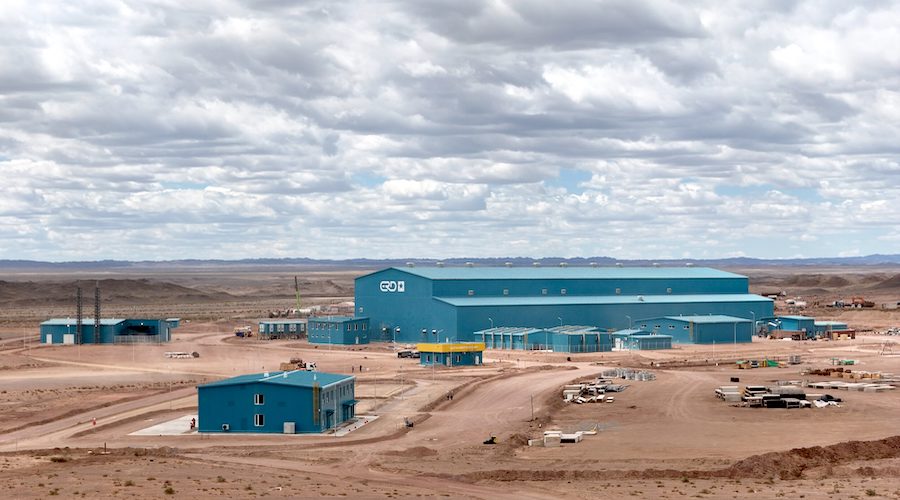
Processing plant as of May 2025. (Image courtesy of Erdene Resource Development.)

Canadian miner Erdene Resource Development (TSX:ERD) has poured its first gold at the Bayan Khundii mine in southwestern Mongolia, marking a major milestone for the project less than a decade after discovery.

Erdene President and CEO Peter Akerley said the deposit, first identified in 2015, has quickly become a cornerstone of the Khundii Minerals District.

“With construction of a 242-kilometre power line, mining underway, the process plant commissioned and first gold doré poured in just 22 months, the team deserves tremendous credit,” he said.

The mine is expected to rank among the highest-grade open-pit operations globally. It is projected to reach nameplate capacity in late 2025, producing about 85,000 ounces annually at a low-quartile all-in sustaining cost. Total reserves stand at 513,700 ounces at an average head grade of 4 grams per tonne, including the Dark Horse satellite deposit.

Gold from Bayan Khundii will be sold to Mongolia’s Central Bank at spot prices, strengthening the country’s foreign currency reserves. 

Record speed

Akerley said the gold pour comes just 10 years after Erdene geologists discovered high-grade surface mineralization and five years after completing a feasibility study. He said this is one of the fastest timelines in recent memory for a mine to move into production.

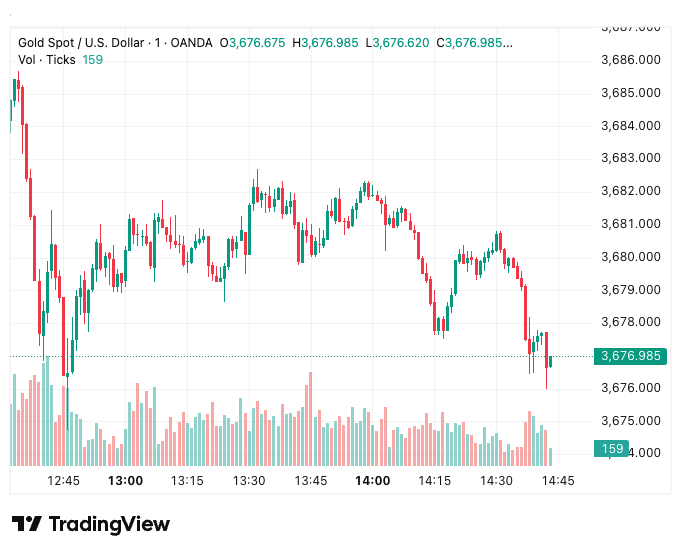
It also comes at times when gold prices are skyrocketing, hitting on Monday a new record high of $3,682.51 per ounce. Year-to-date gold is up to 40%, with geopolitical uncertainty and robust central bank buying providing strong momentum for the safe-haven metal.

Ownership of the project is split between Erdene, which holds a 50% stake and a 5% net smelter return royalty after the first 400,000 ounces, and Mongolian Mining Corporation (MMC), which holds the other half. 

MMC secured its interest through a $40-million investment in 2023, acquiring half of Erdene’s subsidiary, Erdene Mongol LLC, which holds the licences.


Chile predicts growth despite copper mine setbacks


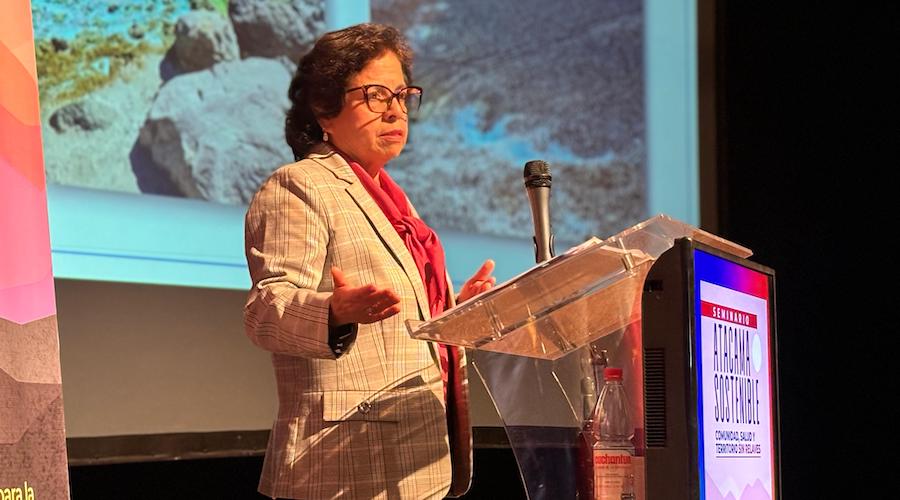
Chile’s Mining Minister Aurora Williams. (Image by MinMineria).

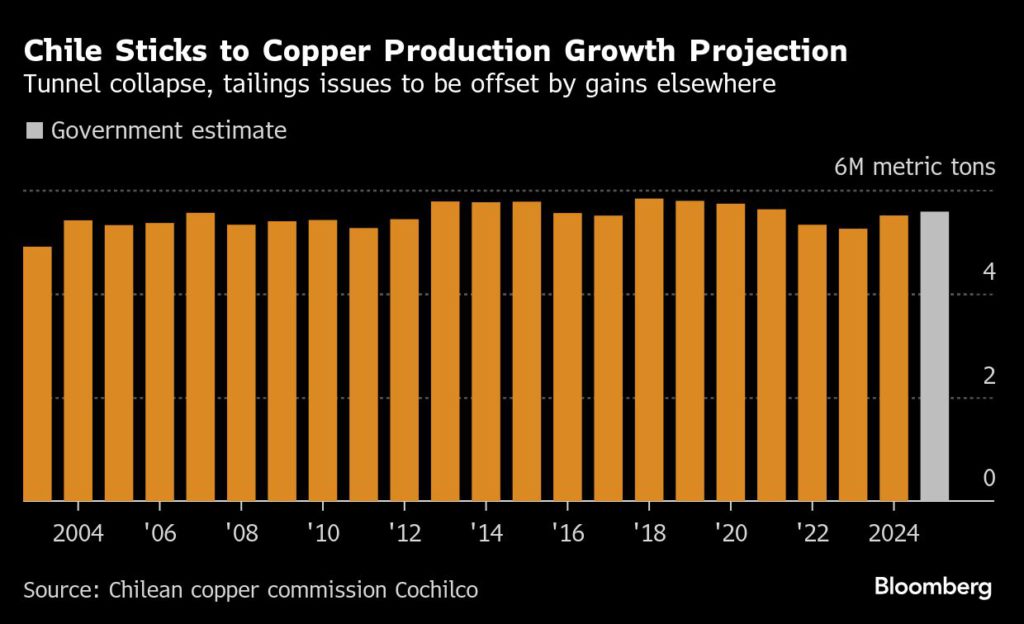
Chile, which accounts for a quarter of the world’s mined copper, expects output to expand this year despite setbacks at two major mines, offering some respite to a tight global market.

A fatal accident at state-run Codelco’s top mine and tailings troubles at a Teck Resources Ltd. operation are obstacles to Chile meeting its annual target of around 5.6 million metric tons. But BHP Group’s giant Escondida mine churned out 11% more in the first half versus the same period last year and the Collahuasi operation is set to emerge from a period of low-quality ore. The overhauled El Salvador mine is starting to ramp up.

As a result, Mining Minister Aurora Williams still anticipates growth this year and next, en route to a record 6 million tons in 2027, she said in an interview. That would be a strong result for a country whose production hit a 20-year-low in 2023 as companies battle to revitalize aging operations and new deposits become tougher to find and develop. The longer-term outlook for the metal is also improving, she said.

“I believe production will increase and Chile will achieve a greater participation in the global market,” Williams said Friday from her downtown Santiago office. “Movements in the market point to more supply in the future.”

The prediction comes as global demand for the wiring metal is increasing due to the energy transition and building of more data centers to power AI.

To be sure, Chile has disappointed the copper market before. Several years ago, the government’s copper agency Cochilco was projecting production to be more than 7 million tons by now. Codelco has been a big part of that, as the state behemoth strives to play catch-up after decades of underinvestment.

But prospects have improved with two so-called adjacency deals that are set to add almost 300,000 tons to the country’s total, according to companies’ estimates. Codelco’s Andina mine and the neighboring Los Bronces operation run by Anglo American Plc are hammering out final details of an integration. Anglo and Teck, which this month announced a tie up, are working on a similar deal for the Collahuasi and Quebrada Blanca mines. Beyond that, BHP and Lundin Mining Corp. have a large project straddling the Argentine border and both BHP and Rio Tinto Group have promising exploration ventures with Codelco.

The merger agreement between Anglo and Teck is a “positive sign” for the dynamism of the industry in Chile and the global copper market, the minister said.

Regarding El Teniente’s recovery from a tunnel collapse that killed six workers, Williams said operator Codelco may have to use other methods — such as more automation — to tap deeper parts of the deposit, depending on the outcome of an investigation by authority Sernageomin.

“Chile has the challenge to actually be able to develop underground mining at an increasingly higher level,” the minister said. “If there are risks, in a country where safety comes first, well we’ll have to look for other mechanisms.”

“We’ll have to challenge ourselves to think how we are going to obtain the geological value that’s there given the results that Sernageomin’s report could potentially have.”

Meanwhile, a landmark lithium tie-up between SQM and Codelco is expected to be finalized before the government’s term ends in March, with China’s antitrust agency likely to sign off given the deal benefits the global lithium market, Williams said.

Besides planned expansions as a result of Codelco’s entry into SQM’s lithium business, Chilean authorities are opening up new production areas for the battery metal.

The goal is to have three or four new contracts signed by the end of the government’s term, although “naturally we aspire to having many more than that,” she said.

(By James Attwood)


Copper price hits 15-month high on US rate cut boost

Captain Copper, Latin American superheroCodelco

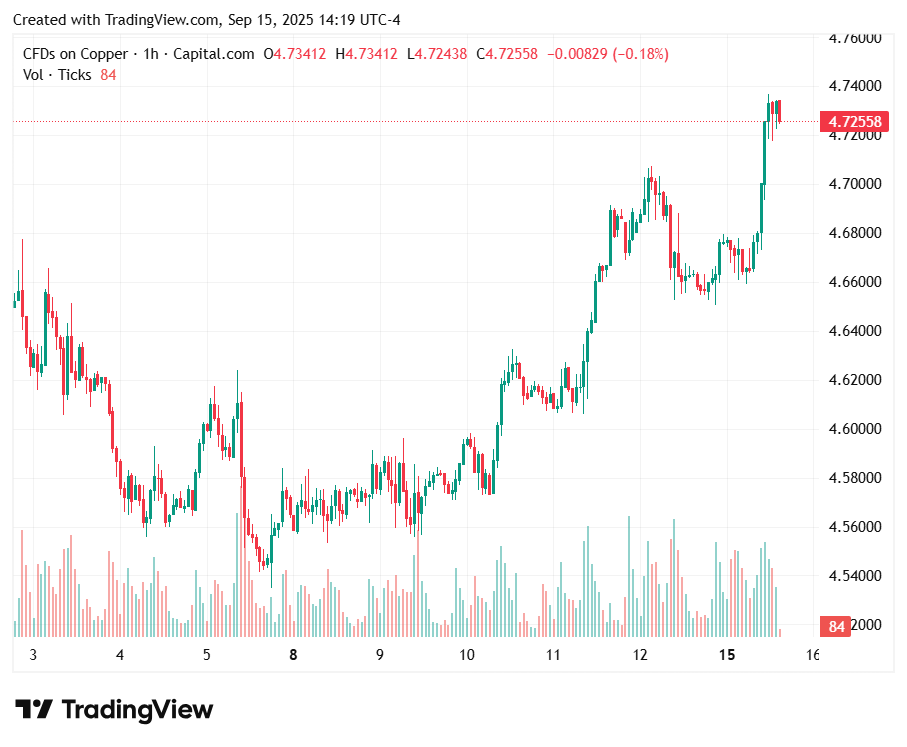
Copper jumped to a 15-month high on Monday amid a broader risk-on rally, as traders prepare for this week’s US Federal Reserve meeting with the expectation of a long-awaited interest rate cut.

Futures on the London Metal Exchange rose by 1% to $10,173 a ton, the highest since June 2024. Those on the COMEX also gained 1.5% to $4.726 a pound, or about $10,419 a ton.

Copper, a bellwether for the health of the global economy, has now risen for six consecutive trading sessions, as a stream of weak US economic data led traders to raise their bets on the Fed cutting rates.

It is widely anticipated that a quarter-point rate cut will come this week, after new data showed signs of labour market weakness. Money markets are also pricing in a high likelihood of two additional cuts by year-end.

Against that backdrop, equities resumed their record-breaking run on Monday, while Treasury yields and the dollar dipped, making commodities such as copper more affordable for buyers using foreign currencies.

In addition to monetary easing, the industrial metal has also been supported this year by strong activity in China. Apparent consumption in the world’s biggest copper market rose by about 10% in the first half, according to Zijin Mining Group.

(With files from Bloomberg)


Indonesia aims to increase ownership of Freeport unit by more than 10%


The Indonesian government is aiming to increase the state share of the copper and gold miner PT Freeport Indonesia by more than 10%, the country’s mining minister Bahlil Lahadalia said on Monday.

Indonesia has flagged its interest in gaining more control over Freeport Indonesia in recent years, with Bahlil saying that it would be a condition for Freeport to extend its mining permit beyond 2041.

(By Stefanno Sulaiman and Fransiska Nangoy; Editing by David Stanway)


NATO Responds to Russian Fishing Vessel Adrift in Danish Straits

Mechanic Stepanov disabled at the southern entrance to the Oresund (Pole Star Global)

Published Sep 14, 2025 10:53 PM by The Maritime Executive


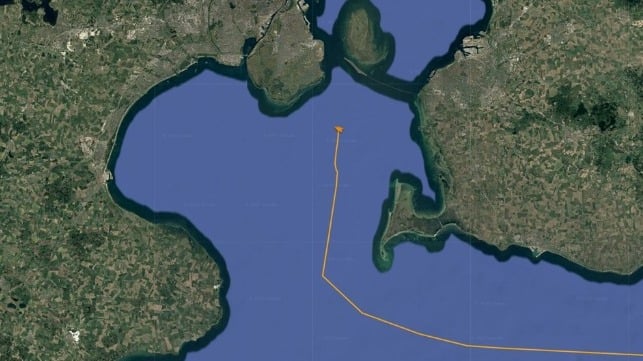
A brand new Russian fishing vessel broke down near the strategic southern entrance of the Oresund over the weekend, drifting in the sea lanes and attracting the attention of NATO member security forces.  

The crab vessel Mechanic Stepanov was built at Otradnoye Shipyard on the Neva River, and it received its RS class certification on September 4. No problems were identified in inspections and sea trials, and the vessel was cleared to depart for the long voyage to its home port in the Kuril Islands.  

The Stepanov got under way from St. Petersburg last Wednesday, but did not make it very far before running into trouble. The crab boat transited westbound through the Baltic and then suffered a blackout on Saturday night, reportedly due to a mechanical casualty. AIS data shows that the Stepanov was adrift in a busy shipping lane at the entrance to the Oresund for an extended period before going to anchor. 

Given heightened tensions between Russia and NATO - and previous incidents in the Baltic and the Danish Straits - a security response from NATO members was inevitable. Photos captured by observer Christian Panton show the Latvian Navy minesweeper LNVS Virsaitis (A53) responding to the scene, along with the Danish patrol boat Bopa (MHV 911). 

Swedish outlet Aftonbladet received an unconfirmed report that the crew of the fishing vessel requested a port of refuge in Sweden and were turned down, though this narrative was disputed by the authorities. After regaining power, Mechanic Stepanov transited north with a security escort and returned to its commercial voyage.