Tuesday, September 16, 2025

EU Commission sued for secrecy over ditched food label plan

Two transparency groups are taking the European Commission to court for refusing to release documents on a shelved plan for an EU-wide nutrition label.


Copyright Romane Lhériau/EPJT

By Marta Iraola Iribarren
Published on 16/09/2025 - EURONEWS


The European Commission faces questions over dropped plans to introduce mandatory food labelling after two food NGOs - foodwatch international and Access Info - filed a case with the EU General Court claiming that the executive refused to disclose reasonable information on the scheme.

The initiative to introduce mandatory front-of-packet labelling was part of the broader Farm to Fork Strategy presented by the Commission in 2020 and aimed to harmonise the nutritional information provided to consumers, but has since been quietly dropped.

“Why has the EU Commission silently buried its plan to present a Europe-wide nutrition label as planned in the Farm to Fork strategy? What influence does the food lobby have?” asked Suzy Sumner, head of foodwatch international's Brussels office.

She said that half a billion European consumers have the right to know, at a glance, what's in their food.


Both organisations have submitted multiple requests for access to documents to the European Commission, seeking clarity on the reasons behind the withdrawal of the proposal. They requested the internal Impact Assessment, the Opinion of the Regulatory Scrutiny Board, and minutes of related meetings concerning the legislative process.
ADVERTISEMENT


The Commission refused to share the information, arguing that even partial disclosure “would seriously undermine its ongoing decision-making due to the external pressure it stated would occur”.

The case was also reviewed by the European Ombudsman, who concluded that the Commission’s refusal constituted maladministration and that the reasoning for withholding the documents was inadequate.

“The requested documents are legislative in nature,” said Carlos Cordero, President of Access Info. “According to case-law of the General Court of the European Union, such documents are subject to the highest level of transparency and the principle of the widest possible access. This standard, however, has not been applied to the Nutri-score documents."

Access Info escalated the case to the EU’s General Court after the Ombudsman’s judgment, aiming to overturn the Commission’s refusal and foodwatch International has now joined the case, which was filed with the court last week.

This case is a new chapter of the long-standing feud over transparency in the European Commission.

Earlier this year, the EU’s top court annulled the Commission’s decision to deny the New York Times access to messages exchanged between President Ursula von der Leyen and Pfizer CEO Albert Bourla about COVID-19 vaccine contracts in what became a pivotal case for institutional transparency.
Why the European Union won't hit China with the 100% tariffs that Trump wants

Donald Trump's request for 100% tariffs on China is unlikely to gather the necessary support among European Union countries.


Copyright Mahesh Kumar/Copyright 2025 The AP. All rights reserved

By Jorge Liboreiro
Published on 16/09/2025 - EURONEWS

Donald Trump has thrown down his gauntlet: he wants European nations to impose 50% to 100% tariffs on China as part of a joint strategy to counter Russia's invasion of Ukraine.

The demand, which had already leaked to the press, became official US policy when the president made it public on a social media post over the weekend.

In his "letter", as he called it, Trump argued the punishing tariffs on China, coupled with an immediate end to all purchases of Russian oil, would be of "great help" to end "this deadly but ridiculous war".

"China has a strong control, and even grip, over Russia, and these powerful Tariffs will break that grip," he wrote.

The timing of the request was eye-catching: it came amid growing coordination efforts between the two sides of the Atlantic to intensify economic pressure on the Kremlin and force President Vladimir Putin to sit at the negotiating table.


Last week, US Treasury Secretary Scott Bessent met with the European Union's sanctions envoy, David O'Sullivan, in Washington, and US Energy Secretary Chris Wright met with High Representative Kaja Kallas and Energy Commissioner Dan Jørgensen in Brussels. On Friday, G7 finance ministers held a call centred on sanctions.

But Trump's message dashed hopes that a new common front might soon emerge.

While Brussels voiced readiness to accelerate the phase-out of Russian fossil fuels, it pushed back rather decisively against the request for the three-digit tariffs.

"Any new measures to be announced in the 19th sanctions package will be fully in line with EU rules and procedures, notably the long-held principle that our sanctions do not apply extra-territorially," said a spokesperson of the European Commission.

Privately, diplomats were franker: no way.

Legal interpretation


Donald Trump's use of tariffs has been contested by courts. Copyright 2025 The Associated Press. All rights reserved.

There are at least three key reasons why the bloc will not go down the go-for-broke avenue suggested by Trump.

First, the EU separates tariffs, a trade tool, and sanctions, a foreign policy tool.

The European Commission, which determines commercial policy for the 27 member states, introduces tariffs to address specific cases of market disturbances, most notably unfair competition. These duties are generally based on the results of an in-depth probe that runs for months and complies with World Trade Organization (WTO) rules.

Even when the executive proposed steep tariffs on Russian agricultural goods, which reinforced the sanctions regime, it did so under the premise of protecting domestic farmers against Moscow's production surplus and illegal seizures of Ukrainian grain.

By contrast, Trump doesn't distinguish between the two. For him, tariffs are sanctions – and vice versa.

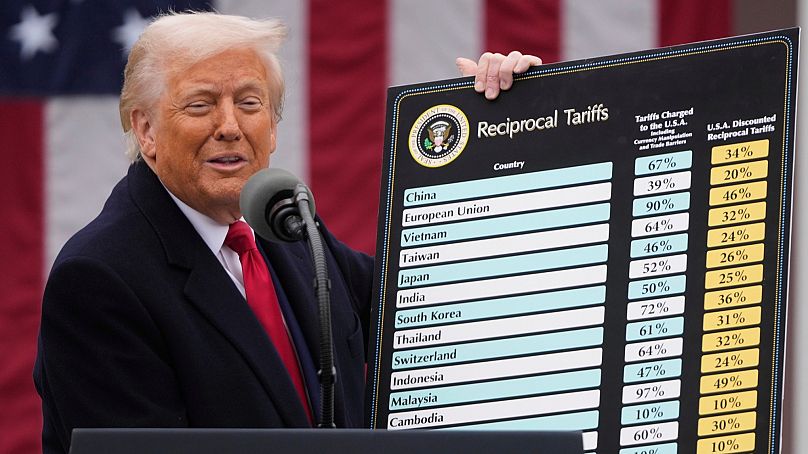
Trump has unleashed duties to accomplish a variety of objectives, such as forcing countries into lopsided deals, encouraging US firms to reshore their production, raising extra revenue for the treasury, castigating India for buying Russian oil and lambasting the judicial case of Brazil's former president Jair Bolsonaro.

Earlier this year, the White House launched an all-out trade war with China which, at its peak, saw tariffs soar to 145% rates, making trade impossible. Feeling the heat, the two sides entered a truce to negotiate a stable agreement. As a result, the US lowered its tariffs to 30%, far below the 100% level that Europeans are now expected to enforce.

Trump's anything-goes approach to tariffs has been widely contested, prompting a legal case that now heads to the Supreme Court and threatens to unravel his entire agenda.

"The EU should avoid blanket punitive tariffs on China of the magnitude proposed by Mr Trump. Such measures would undermine the global trading system and are more likely to harm the European economy than to weaken Russia," said Engin Eroglu, a German MEP who chairs the European Parliament's delegation for relations with China.

"Tariffs that are not compliant with WTO rules are the wrong path forward."


Disparate views


Ursula von der Leyen travelled to Beijing in July. AP Photo

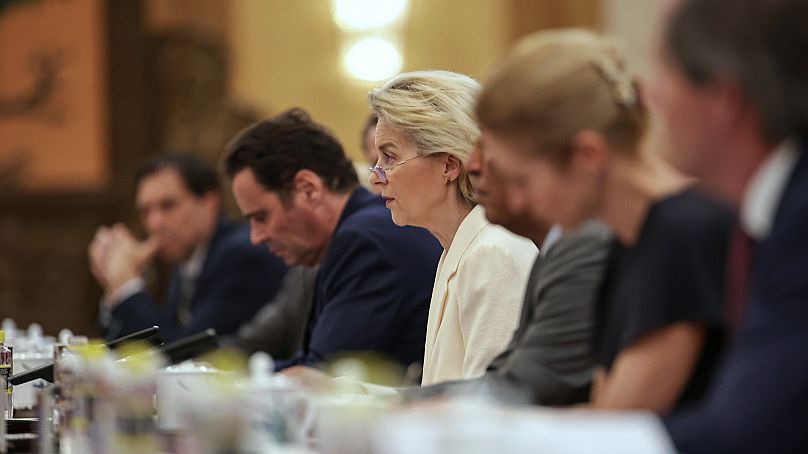
Second, the EU lacks the political consensus to mount such an unprecedented, radical offensive against China, one of its largest trading partners.

Although member states have in recent years hardened their stance on Beijing, frustrated by industrial overcapacity, discriminatory regulations and information manipulation, they have never found themselves on the same page.

The divisions came to the fore in 2024 when Brussels proposed tariffs on China-made electric vehicles to offset the effects of subsidies. The duties, which ranged from 7.8% to 35.3%, were considered the litmus test of Ursula von der Leyen's "de-risking" agenda.

The day of the final decision, 10 countries voted in favour of the measures, 12 abstained and five, including Germany, voted against. (The Commission broke the impasse.)

The headline-making split, which experts linked to Beijing's behind-the-scenes lobbying, encapsulated the bloc's struggle to close ranks.

Despite the EU repeatedly accusing China of being the "key enabler" of Russia's invasion of Ukraine and supplying 80% of the components needed to manufacture weapons, it has never moved forcefully to curb its trade relations as a result.

The "Anti-Circumvention Tool", which can prohibit the sale, supply and transfer of sensitive goods and technology to any country suspected of aiding the Kremlin's war machine, has lain dormant since its introduction two years ago. The tool, effectively secondary sanctions, requires the unanimity of all 27 member states.

Instead, the EU has opted to blacklist a hand-picked number of entities based in mainland China and Hong Kong. Moving from this piecemeal approach to 100% tariffs overnight would be improbable, to say the least.

Tit-for-tat

China has threatened retaliation against countries that impose high tariffs. Xinhua News Agency.All Rights Reserved

Third, the EU is perfectly aware of the risks at play.

China is known for retaliating against any foreign decision that it deems detrimental to its national interests. In the case of the EVs, Beijing opened investigations into EU exports of pork, dairy and brandy, which Brussels dismissed as unjustified.

In spring, China took things further when it restricted exports of seven rare earth elements that are crucial for the automotive, energy, technology and defence sectors. The move coincided with Trump's "reciprocal" tariffs but had a global effect.

Von der Leyen decried the curbs as "blackmail" and eventually negotiated a solution to provide relief for the European industry. Still, the show of force rattled capitals, which saw the ease with which Beijing could inflict economic pain with the stroke of a pen.

Following Trump's proposal, China did not wait long to warn those who might be entertaining the idea of 100% tariffs: do it at your own peril.

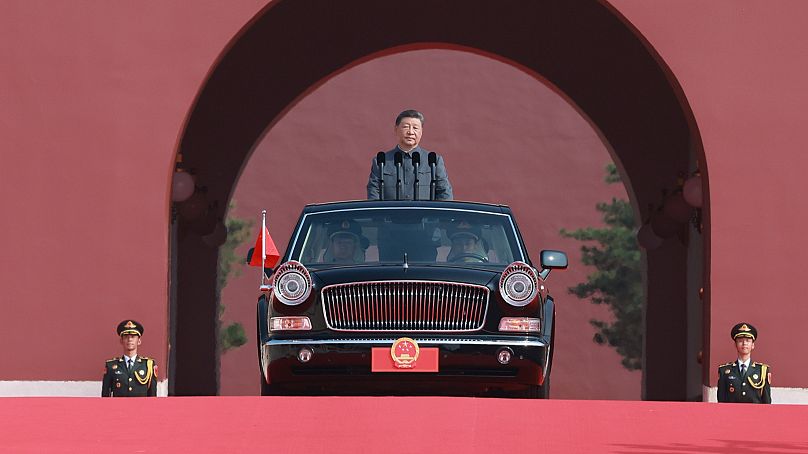
"China firmly opposes the relevant party directing the issue at China and abusing illicit unilateral sanctions and long-arm jurisdiction against China," Lin Jian, the spokesperson of the Chinese foreign ministry, said on Monday.

"If China's legitimate rights and interests are harmed, China will resolutely take countermeasures to safeguard our sovereignty, security and development interests."

With economic stagnation at home and trade tensions abroad, the bloc is unlikely to muster the courage for such a high-voltage policy, particularly given Trump's track record of U-turning on sanctions, which could leave Europeans out in the cold.

"Trump's maximalist demands only serve to highlight that he is not serious about imposing economic pressure on Russia. His self-imposed deadlines have passed with no action being taken," Maria Shagina, a senior fellow at the International Institute for Strategic Studies (IISS), told Euronews.

"By making US sanctions contingent on the participation of all NATO countries, the expectation is that nothing will happen."


Busan: leading South Korea’s green developments, GHG cuts, from the front

Busan: leading South Korea’s green developments, GHG cuts, from the front
Busan, South Korea / Minku Kang - Unsplash
By bno - Taipei Office September 16, 2025

South Korea’s Busan, officially the nation’s second largest city with around 3.5mn residents, in late August hosted the World Climate Industry Expo and Korea Energy Show 2025.

With hundreds of stalls visited by thousands of attendees over three days, the event served both to demonstrate South Korea’s own leading role in all aspects of regional green energy generation, from solar and wind – offshore and on – to nuclear, hydrogen, and more. EPC – engineering, procurement and construction aspects of renewables expansion featured prominently across the two main halls of stalls as did governmental representation in the form of national utility KEPCO (Korea Electric Power Corporation), and major household names from across the peninsula – Doosan, POSCO and more.

One governmental agency with a presence in both halls during the event was the host-city’s Busan Development Institute (BDI). Having positioned itself at the heart of Busan’s low-carbon transition, by supplying the municipal government with evidence-based policy advice as it pursues a greener energy path, the BDI occupies a pivotal space in local energy policy. By linking that which is possible with those who need to work to achieve it, either at the policy level, through agreeing funding or final implementation on the street, BDI plays a major role in turning Busan green.

As such, and playing such a key role in carrying out research on informed planning for distributed renewables, energy efficiency and low-emission transport across the bustling city, the BDI is, as their own literature indicates, behind the city’s seventh Regional Energy Plan (REP). Finalised earlier in the summer, REP 7 lays out set short-term targets for electricity self-sufficiency from renewables by way of 74 projects combining supply-side and demand-management measures.

While the package itself seeks to scale up distributed power - including rooftop solar, fuel-cells and energy storage systems, many of which are evident at sites across the city, according to city literature it also aims to raise local resilience as the national grid adapts to larger shares of intermittent generation.

One all-important number shared with AsiaElec at the event was the city’s goal of reducing greenhouse gas emissions by 45% from 2018 levels by as early as 2030; a number 5% higher than the national goal in GHG reduction, BDI researcher Jaehong Ki said at one of the city’s two exhibition stalls.

To achieve this goal, Ki said the city is working city-wide with the biggest contributor to GHG numbers across Korea – the building sector. At present, and with much of the total in GHG emissions in the sector coming from heating units, air-conditioning and mainframes, if the BDI gets its way, the Busan building sector at least will see a 60% cut in emissions over the next five years.

Other BDI analytical work on local energy systems has also helped frame how a range of green projects in and around the city will eventually play out and be financed.

To this end, public events in the Busan area as well as national-level engagements have combined to promote the city’s green agenda in the eyes of millions.

At the open-to-the-public August “Energy Super Week” at the BEXCO exhibition centre, this was obvious as cleaner transportation options and decarbonisation of the sector was a highly conspicuous element on show. By extension BDI’s wider strategy coupled to central government efforts has seen moves to convert local municipal bus fleets to hydrogen power, with many already operational near BEXCO and in the city centre.

As progress is made on replacing an estimated 1,000 diesel and CNG vehicles in Busan with hydrogen-fuelled buses by the end of the year, the Ministry of Environment (MoE) says the number of CO2 producing buses will only continue to decrease.

Itself just one aspect of the city’s green path, the switch to hydrogen-powered buses does, however, dovetail with Busan’s broader push on low-emission mobility. BDI research into lifecycle emissions and infrastructure needs for hydrogen refuelling is well underway as the agency’s policy notes have reportedly outlined the importance of coordinating bus depot upgrades, vehicle maintenance capability and key hydrogen production or supply logistics facilities, a MoE press release states.

In addition and according to the Busan is good widely seen city slogan and accompanying website, recognition from external bodies has also bolstered the city’s profile: Busan projects won Green World Awards in 2025 for neighbourhood ESG initiatives and ecological restoration, lending an added layer of credibility to the municipality’s claim that locally led, evidence-driven interventions can deliver both environmental and social gains.

BDI’s role in this, despite South Korea as a nation being one of the lowest ranked countries on the OECD renewable energy provision list according to Ki when speaking with AsiaElec, is essentially to serve as as analyst, convenor and evaluator to ensure such gains are measurable and ultimately achievable.

As a city already producing more renewable power than it needs though, Busan currently sends the excess northwest to Seoul – Korea’s capital of just over 10mn and the base for increasing numbers of AI-linked data centres and other tech industry HQs.

For the Busan Development Institute meanwhile, Jaehong Ki, and all those working behind the scenes to make Korea’s second city its number one in green energy production and eventual GHG emission reduction, the group’s continued research and policy engagement at the local level will eventually prove critical nationwide as other cities look to Busan for examples of how to work toward carbon neutrality by 2050. The all-too simple ‘Busan is good’ phrase could and should be applied elsewhere across the peninsula for other cities committed to measurable reductions in emissions, increased use of reliable green transportation options, and an all-round cleaner, greener Korean peninsula.


State of global democracy - Statista

State of global democracy - Statista
Only 6.6% of the world's countries are rated as "full democracies" / bne IntelliNews
By Felix Richter of Statistia September 16, 2025

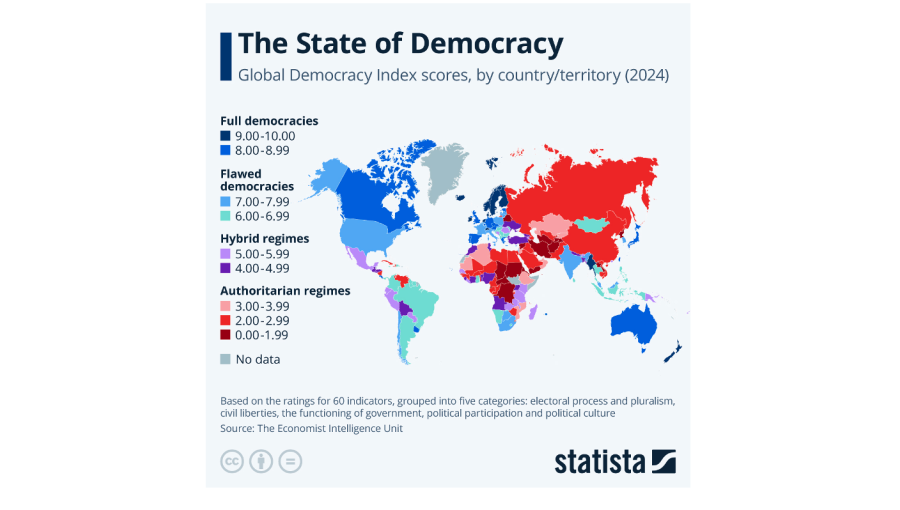
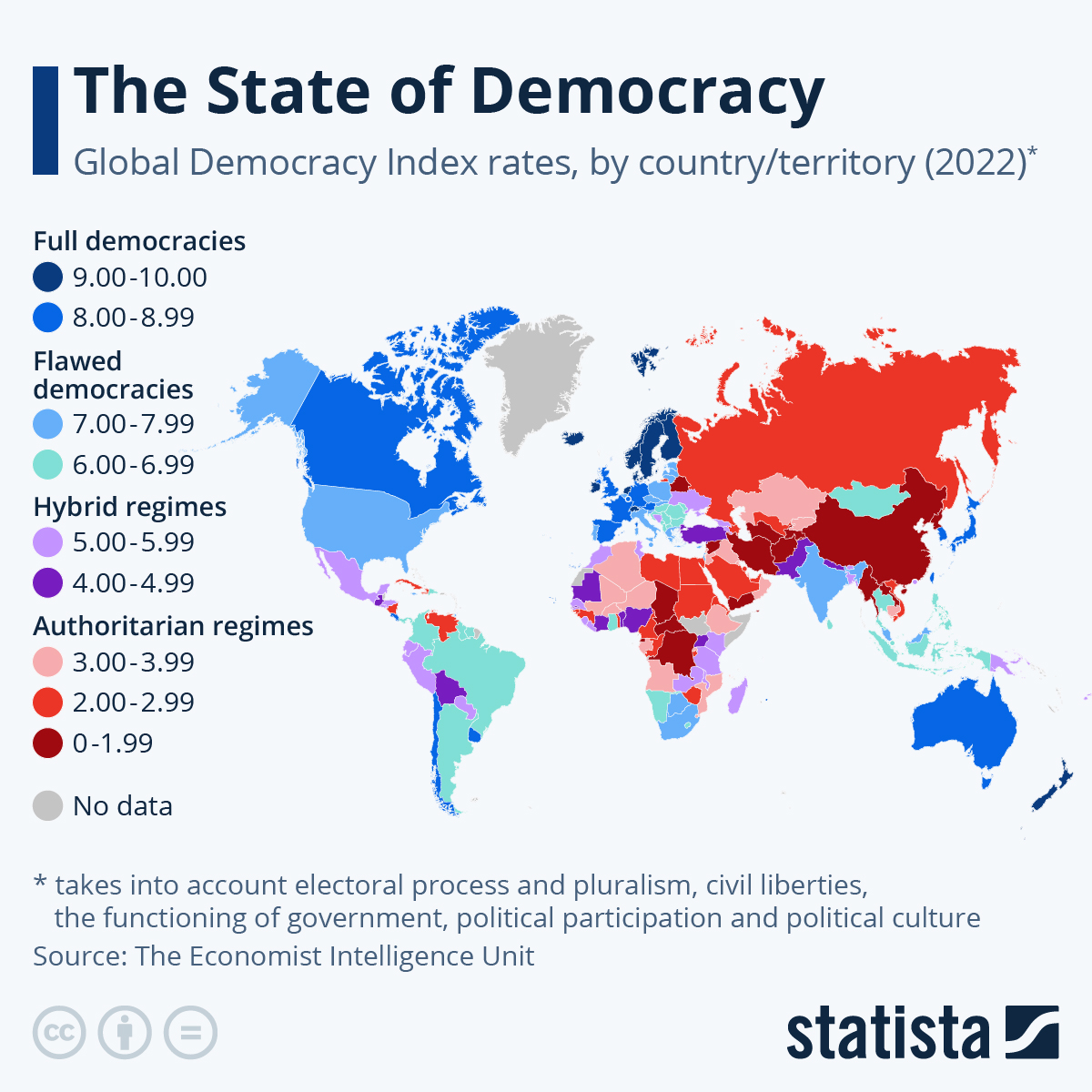
The Economist Democracy Index rates countries on the state of their governing system each year. In the latest edition, corresponding to the year 2024, only 25 countries, representing 6.6% of the world's population, have been rated as "full democracies", Statista reports.  

This category includes all Scandinavian countries, several other European nations as well as Canada, New Zealand, Australia, Mauritius, Taiwan, Japan and Latin American countries Uruguay and Costa Rica.

With an overall average score of 5.17 out of 10, the 2024 index points to a "continuing democratic malaise" as just 37 countries improved their score, mostly marginally, while 83 countries registered a decline in their score. According to the index, almost 40% of the world's population live under authoritarian regimes, with another 16% living in so-called hybrid regimes and 38% living in flawed democracies, one of which is the United States, which scored particularly badly in "political culture" due to intense political and cultural polarization.

Globally, the three worst-rated countries are Afghanistan, Myanmar and North Korea, which scored 0.0 for non-existing civil liberties, electoral process and pluralism. At the other end of the scale, Norway, New Zealand and Sweden are ranked as the most democratic countries in the world, with Norway scoring a perfect 10 for electoral process and pluralism, political participation and civil liberties.

\You will find more infographics at Statista

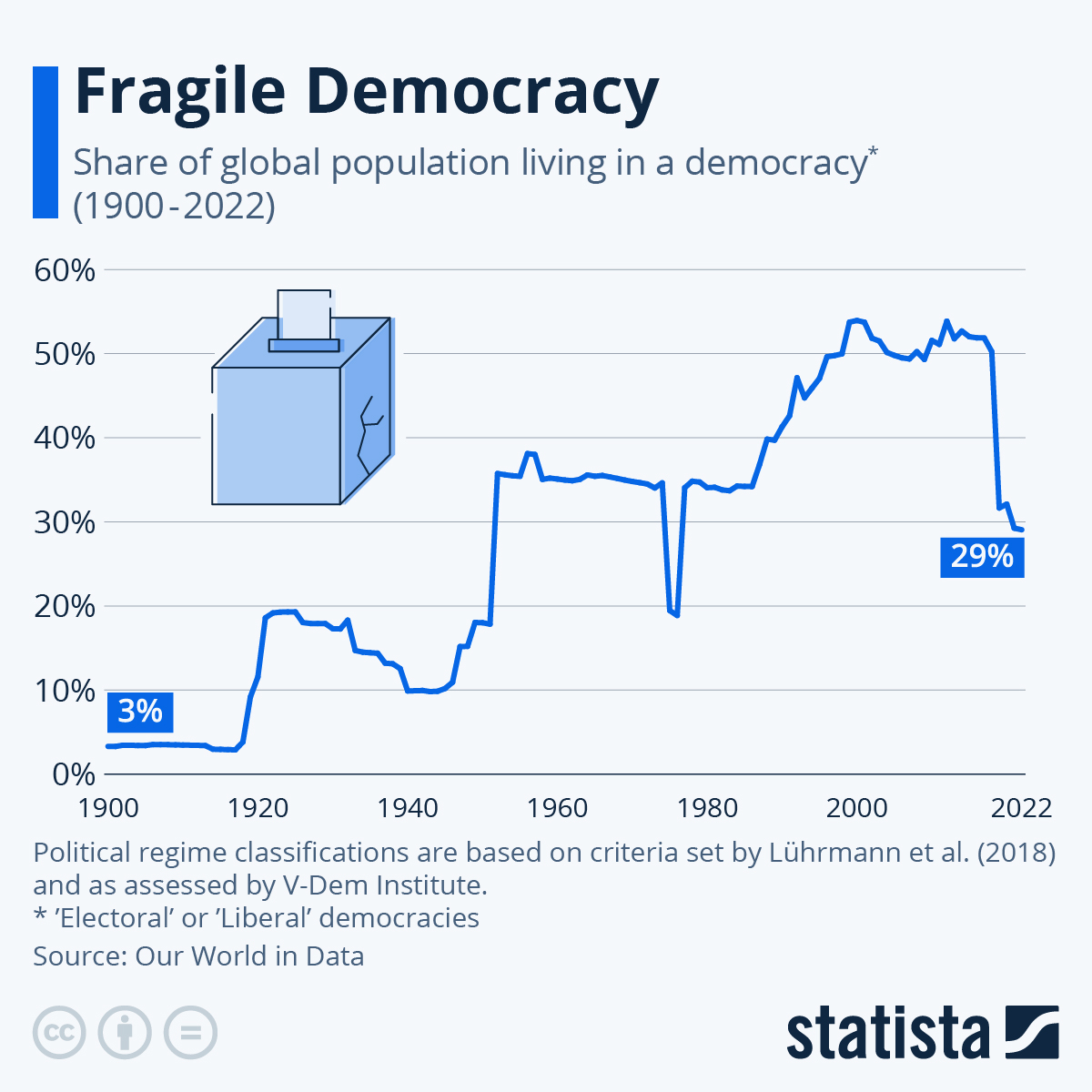
September 15 marks International Day of Democracy - a day dedicated to promoting the principles of democracy and celebrating civic participation. It also provides an opportunity to review the state of democracy in the world at a time when "democracy and the rule of law are under assault from disinformation, division, and shrinking civic space," as UN Secretary-General António Guterres put it.

Our infographic, based on classifications from the Varieties of Democracy (V-Dem) project analyzed by Our World in Data highlights just how fragile democracy can be. The share of the world population living in either an electoral or liberal democracy was at its highest in 2001, when the figure was at 53.5 percent. Over the past decade, there has been a sharp decline though, driven partly by a downgrade of India, which is now considered an electoral autocracy. Even excluding this effect, the population-weighted level of democracy would be back to 1990, V-Dem notes in its 2025 Democracy Report. By 2024, just 28 percent of the world's population, or 2.3 billion people, lived in electoral or liberal democracies, down from almost 4 billion people in 2016.

You will find more infographics at Statista


Skopje residents rise up against landfill fires and toxic pollution

Skopje residents rise up against landfill fires and toxic pollution
/ bne IntelliNews
By Valentina Dimitrievska in Skopje September 14, 2025

Residents of Aerodrom, Skopje’s largest municipality, have been on the streets protesting for days against the choking smoke and foul odour from a fire at the illegal Vardariste landfill.

Although the early demonstrations drew only a handful of participants, each evening from 6pm to 7pm, residents blocked traffic at one of the major intersections in the municipality to express their anger at what they see as the authorities’ failure to tackle one of the capital’s most pressing environmental issues.

The situation worsened dramatically on the night of September 11, when fire also broke out at the Drisla landfill, in the southeastern outskirts of the capital, which authorities suspect may have been deliberately set.

By morning, the Aerodrom district was shrouded in thick smog that made visibility almost impossible. “Nothing could be seen from the window but fog – it looked as if a cataclysm had struck the city,” said one resident.

Outrage in the streets

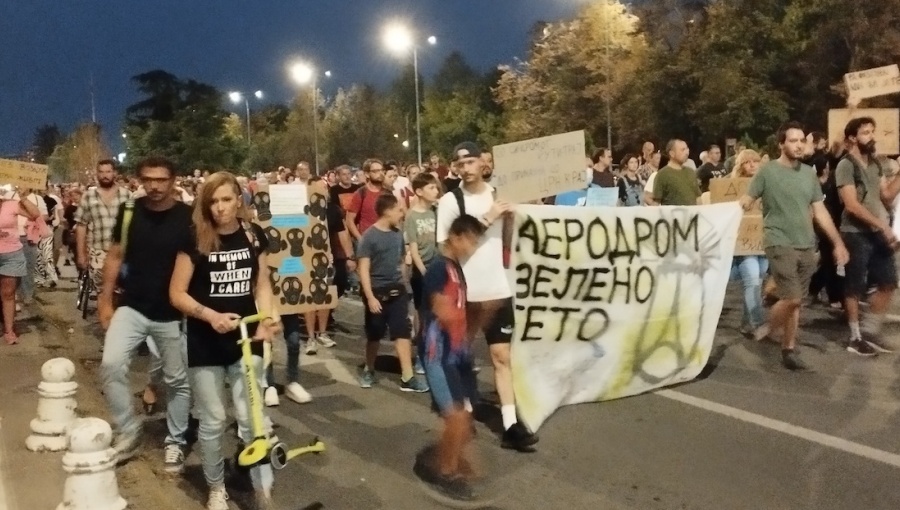
On September 12, the protests amplified as several hundred citizens – many of them parents with small children – poured onto the streets.

“We are protesting because of the pollution coming from the Vardariste landfill, but citizens should come out in larger numbers. Every day we can sense the smoke and unpleasant smell. It is intolerable,” an elderly Aerodrom resident told bne IntelliNews.

Traffic came to a standstill as protesters blocked the main roads. With whistles, sirens and banners, they demanded urgent intervention.

Children sitting on their parents’ shoulders joined in the chants of Air! Air! – we demand clean air!”

Led by a police van, the crowd marched to the Aerodrom municipal building to deliver their demands. But there was no one waiting to receive them, and they left their written messages on cardboard outside the locked doors.

Some of them stated: Wake up, people! If not for yourself, then for your child – stop the landfill now!”, “Enough is enough – bring back our clean air!”, and “Every child has the right to live and grow. The state must protect our future!”

For the protesters, this crisis is no longer just about landfill fires – it is about years of unaddressed environmental neglect and broken promises.

The message from Aerodrom is clear: unless decisive action is taken, the protests will not remain local. They will spread across the capital, and the people of Skopje are prepared to block the entire city until they can breathe clean air again.

The crisis worsened on September 13, when a fire erupted at an electronic waste facility in the village of Trubarevo, near Skopje, sending plumes of black smoke into the air.

Two people were hospitalised and two others received outpatient treatment at the toxicology clinic, the government press office confirmed. The incident added to growing concerns that fires at waste sites are putting residents’ health at serious risk.

‘Don’t take the children outside’

Medical experts have raised alarm over the health risks. Doctor Nenad Lazarov explained in a Facebook post that landfill fires release dioxins, furans and heavy metals such as lead and cadmium, compounds that are highly toxic, carcinogenic and mutagenic.

“These enter through the air, accumulate in fatty tissues and the liver and cause acute and long-term respiratory, neurological and endocrinological disorders, especially in children, the elderly and chronically ill people,” Lazarov warned, stressing that these toxins persist long after the flames are extinguished.

The post drew dozens of comments, including from distressed parents. “Don’t take the children outside. We sit at home closed like prisoners – the child cries in front of the door because we cannot take him outside,” one mother wrote.

The Directorate for Protection and Rescue confirmed that at 7am on September 12, the Lisice monitoring station recorded over 39 micrograms of PM2.5 particles per cubic metre – nearly eight times higher than the World Health Organization’s recommended annual level. PM10 levels were also elevated, at 82.5 micrograms per cubic metre, according to local media.

While Skopje’s winter smog has long been infamous, the fires have triggered extreme pollution even in summer, with temperatures soaring above 30°C. The combination of heat and toxic smoke has left residents feeling trapped inside their homes, fearful for their health.

Government pledges 

North Macedonia’s Prime Minister Hristijan Mickoski sought to reassure citizens, saying that the illegal Vardariste landfill had been secured with the help of private security, and that firefighting and construction machinery had been deployed to Drisla.

He confirmed that eight people had been detained for using the Vardariste site, which spans more than 20 hectares and has long been exploited illegally, news agency MIA reported.

“What has been neglected for decades, we will manage to repair shortly,” Mickoski insisted, adding that he sympathised with residents. But he also hinted at political intrigue, noting that the fires came just weeks before North Macedonia’s local elections on October 19.

“The real question is how much all this suits someone,” he said, promising an investigation into whether the incidents were deliberate.

Orce Gjorjievski, mayor of Kisela Voda and a candidate of the ruling, right-wing VMRO-DPMNE for Skopje mayor, stated on Facebook that there are serious suspicions that these fires are being started to create an artificial crisis ahead of local elections.

“This is not just testing our patience – it is endangering the health of thousands in Skopje,” he said, urging the Ministry of Interior and the Public Prosecutor’s Office to act swiftly to identify those deliberately setting fires at landfills around the capital.

“Citizens are the victims, and this must stop. Institutions must act now to protect public health,” Gjorgjievski said.

Skopje’s winter smog

Skopje’s struggles with pollution are not new. Each winter, the city ranks among the most polluted in the world, as temperature inversions trap toxic air over the valley.

Thick smog is fuelled by a combination of ageing industrial plants, coal- and wood-burning stoves, heavy traffic from old vehicles, and poorly regulated construction dust. These factors, compounded by the city’s geographical position surrounded by mountains, have left residents breathing dangerously high levels of particulate matter year after year.

The air pollution crisis in North Macedonia has serious health consequences. Each year, more than 3,800 people die from exposure to harmful particles, representing 17.7% of all deaths in the country. Among infants under one year old, one in nine deaths is linked to polluted air.

In a report published last October, the World Bank said that North Macedonia will need to invest $6.4bn over the next ten years to protect its people and infrastructure from the escalating effects of climate change.

Across the Balkans, many countries remain dependent on coal and wood for heating. This reliance, combined with a slow shift towards renewable energy, has made tackling environmental problems particularly difficult.

 

Unrest now a regular occurrence in South Asia

Unrest now a regular occurrence in South Asia
/ ling hua - Unsplash
By bno Chennai Office September 16, 2025

India is looking at a rapidly shifting political landscape along its Himalayan frontier, with the dramatic fall of K P Sharma Oli’s government in Nepal and the sudden emergence of youth-driven protests bringing heightened uncertainty for New Delhi’s strategic calculations.

The political earthquake in Kathmandu has profound regional implications, paralleling youth-led movements and the unseating of entrenched leaders in India’s eastern periphery. Yet, for all the fevered speculation of shadowy foreign manipulation circulating among Indian right-wing social media users, the evidence remains circumstantial for a foreign hand at play. Nepal’s Gen-Z-led protests, triggered initially by a sweeping social media ban and spiralling into outrage over elite corruption and economic stagnation, toppled Oli’s administration. Protests and the subsequent police firings left over fifty dead, hundreds wounded, and government buildings torched.

Demonstrators, communicating through niche social media apps such as Discord, operated more like an online forum than a traditional South Asian protest movement. In a striking moment for digital democracy, Nepal’s youth even used online channels to conduct a real-time vote on an interim leader, selecting former chief justice Sushila Karki. The trust deficit with traditional parties in Nepal is bottomless. Since Nepal abolished its monarchy in 2008, no fewer than fourteen governments have cycled through power, often based on fractious coalitions and elite deal-making. This constant political flux has alienated an entire generation. Images of government ‘nepo kids’ flaunting privilege further fuelled public anger, while the police’s heavy-handed response, including live fire, became a rallying cry. Notably absent is clear ideological organisation.

What unites the Gen-Z rebellion is not a party platform but a fierce desire for accountability and an end to entrenchment. For India, Nepal’s turmoil is cause for strategic concern. The countries share an open 1700km border, and unrest in the Terai region which comprises much of Nepal’s southern plains – often sends economic, social and security ripples into northern India.

India’s security and intelligence agencies have issued advisories to its border states such as Bihar and Uttar Pradesh, urging police and border guards to monitor cross-border movement in case instability triggers undocumented migration or militancy. Indian officials, at least publicly, have adopted caution. Delhi has avoided any open endorsement of either the outgoing government or the Gen-Z protesters, wary of being accused of interference in Nepali affairs, a long-standing sore point in Kathmandu.

Yet there is growing unease within India’s security establishment that political collapse in Nepal could embolden anti-India groups, disrupt lucrative cross-border trade, and give China opportunities to expand its influence through relief efforts or development promises. This generational revolt is not unique to Nepal. Patterns echo recent events in Bangladesh, where the youth-led quota movement against perceived government job nepotism exploded into street confrontations.

This ultimately forced Prime Minister Sheikh Hasina to resign in mid 2024 after fifteen years in power. As in Nepal, protesters stormed government buildings, forced an entrenched leader out, and brought a caretaker government headed by Nobel laureate Muhammad Yunus, with promises of sweeping reforms and fair elections. The interim Bangladeshi administration is also navigating sectarian and religion based violence which has led to international pressure on the Yunus administration to quell the abuse against minorities.

Meanwhile, in India’s north-east, Manipur has seen protracted communal violence and deepening alienation from the national mainstream. Here too, new media platforms are central in fomenting and sustaining protest, although the violence is rooted in local ethnic grievances rather than a generational push for anti-corruption or digital participation.

Social media has become not just a vehicle for protest organisation but also for widely divergent narratives and inevitably for conspiracy theories about foreign hidden hands. Across the region and particularly in India, right-wing commentators have speculated loudly about a CIA playbook in Nepal, Bangladesh and India’s Manipur - where widespread violence during 2024 led to major unrest.

Such claims, though titillating for some, are entirely unsubstantiated by credible investigation or official statements. No evidence has yet surfaced linking these uprisings to external intelligence agencies or so-called colour revolution tactics.

Former Nepali and Bangladeshi officials, as well as security analysts in Delhi, broadly dismiss the idea of grand clandestine plots in favour of more plausible explanations such as deep-rooted frustration, the rapid spread of video-driven narratives, and the organisational capabilities offered by encrypted social and gaming chat platforms.

In Nepal, fundamental grievances relate to persistent corruption, unemployment, and a sense of exclusion among youth, not incentives or support from abroad. The result for India is a new strategic headache, adapting to an unpredictable neighbourhood where youth anger, not party machinations, drives political transitions. India’s historic influence in Nepal, exercised through business, open borders and frequent political engagement, may be less effective with Gen-Z networks that see both Indian and Chinese power as equally self-interested and distant.

Delhi is likely to seek stability above all else. Border security will be heightened, and intelligence agencies will closely monitor any sign of spillover instigating migration or unrest. Indian policymakers may need to recognise that the old levers of influence, based on elite-to-elite contacts, must be complemented by new forms of diplomatic engagement with digitally energised, ideologically complex youth movements. The convergence of anti-establishment protest and digital mobilisation signals a new age across South Asia.

Nepal’s Gen-Z have set a precedent. Systemic discontent now overflows in sporadic movements that can unseat long-standing governments. The South Asian political kaleidoscope now also demonstrably turns because of the energy of a digitally empowered, impatient generation who are no longer willing to wait for meaningful accountability.


Monday, September 15, 2025

100 days later, US federal workers navigate post-Musk wreckage


By AFP
September 15, 2025


Elon Musk, former the head of the Department of Government Efficiency (DOGE), holds a chainsaw, a symbol of cost-cutting, as he speaks at the annual Conservative Political Action Conference in February 2025 - Copyright AFP Adrian DENNIS
Alex PIGMAN

Roughly 100 days after Elon Musk’s dramatic departure from the Trump White House, federal workers are still grappling with the lasting damage from his Department of Government Efficiency (DOGE).

The consequences of this unprecedented assault on the federal bureaucracy are expected to reverberate for years.

From his modest office in the executive building adjacent to the White House, Musk orchestrated an aggressive takeover of major government branches.

His strategy was surgical yet devastating: deploy small teams of tech experts to systematically dismantle and disrupt the nation’s more than 2 million-strong civil service.

The shock-and-awe campaign succeeded beyond expectations.

According to the Partnership for Public Service, a nonpartisan Washington-based NGO, nearly 200,000 civil servants have left the federal workforce so far.

For many of these workers — including numerous military veterans — the experience proved profoundly traumatic, with decades-long careers abruptly terminated and their life’s work dismissed as meaningless waste.

Following Musk’s very public falling-out with President Trump this spring, DOGE has been largely dismantled.

“Not much” remains of the original operation, explained Max Stier, president and CEO of the Partnership for Public Service.

“It’s a little bit like Godzilla having flattened the city and left,” Stier told AFP. “Godzilla is gone, but there’s still a flattened city.”

– ‘Unfixable’ –

Musk himself now declares the US government “basically unfixable,” having concluded that lawmakers from both parties will resist spending cuts that could alienate voters and donors.

Most of DOGE’s leadership followed Musk’s exit, including Steve Davis, Musk’s trusted lieutenant who led the teams that infiltrated government offices and computer systems to implement budget cuts.

However, some operatives remain embedded throughout the federal government, working as regular employees while continuing to exert influence: making their activities harder to monitor.

“Don’t misunderstand the lack of the loud face that was Elon Musk to think they have disappeared,” warned one Pentagon worker, speaking anonymously to avoid retaliation. “DOGE is still alive and causing a ruckus.”

Several prominent Musk allies maintain significant positions.

Joe Gebbia, Airbnb co-founder and Tesla board member, now oversees the redesign of government websites.

Aram Moghaddassi serves as chief information officer at the Social Security Administration, though a whistleblower has accused his team of uploading a critical database to a vulnerable cloud server, potentially exposing hundreds of millions of Americans’ personal information to hackers.

Brad Smith, a health startup investor, initially left DOGE after implementing sweeping cuts at the Department of Health and Human Services (now led by Robert F. Kennedy Jr.), but has returned to oversee global health initiatives at the State Department.

Scott Kupor, former managing partner at venture capital giant Andreessen Horowitz, now heads the US Office of Personnel Management — the federal government’s massive human resources operation. His former boss, Marc Andreessen, remains highly influential within the White House.

Other Musk loyalists occupy more junior positions throughout the government.

In a bizarre development, Edward Coristine — who gained media attention under the nickname “Big Balls” — took a regular government job and helped trigger Trump’s decision to deploy the National Guard to patrol Washington’s streets after Coristine was assaulted in the capital.

– Who is DOGE? –

These changes have complicated DOGE’s very definition. “The question of, how do you define DOGE? Who is DOGE? has gotten a lot more complicated,” observed Faith Williams, director of the effective and accountable government program at the Project on Government Oversight.

Officially, Amy Gleeson, a health tech sector veteran, now leads the department as acting chief, but her White House influence is minimal. Federal workers report that DOGE’s mission has effectively been transferred to Russell Vought, a fierce opponent of government who now controls the powerful Office of Management and Budget.

For civil liberties advocate Cindy Cohn, executive director of the Electronic Frontier Foundation, these developments are “extremely worrisome” because DOGE’s work now operates “behind a curtain” and away from public scrutiny.

This hidden operation includes acts of incompetence and questionable decision-making, as reported by whistleblowers and disillusioned employees who have left government to expose wrongdoing.

“My bet is that for every whistleblower you see, there’s some very large multiple of bad things that have happened, which we don’t know about,” Stier warned.

The federal workforce meanwhile must continue to navigate this transformed landscape, dealing with skeleton crews and knowledge gaps while what is left of DOGE operates largely out of public view.