Tuesday, September 16, 2025

Canada’s Ksi Lisims LNG Project Gets Green Light From Regulators

ACTUAL LNG TERMINAL UNLIKE ALASKA

The Ksi Lisims LNG project has received an environmental assessment certificate from the British Columbia authorities that brings it closer to the start of construction. The federal government also granted the project its environmental approval.

CBC reported that, per the certificate, the project will have to comply with a number of strict environmental requirements, including mitigation measures in case local ecosystems are affected by Ksi Lisims LNG operations.

Like all other conventional energy projects in Canada, Ksi Lisims has also experienced loud opposition from environmentalists, but the British Columbia government has decided to go ahead with its approval, perhaps not least because it has at least one First Nation behind it—the Nisga’a Nation is one of the stakeholders in the Kis Lisims project.

The facility will involve a floating production vessel with the capacity to produce some 12 million tons of liquefied natural gas annually. The markets for this LNG will be in the Pacific Basin, per the project’s website, with a focus on Asia, where demand for low-emission fuels is growing.

If built, the Ksi Lisims facility will be the second LNG project to be built in Canada in less than a decade, despite the previous federal government’s stance that there was no business case for building LNG trains. The current government, while still publicly committed to a transition from oil and gas to low-carbon electrification, has signaled eagerness to utilize Canada’s hydrocarbon resources.

Indeed, Prime Minister Mark Carney named the Canada LNG project among five “nation-building” projects for approval that are expected to yield close to $44 billion in income for the Canadian state. The project is Phase 2 of the Kitimat facility that should double its production capacity, which currently stands at 5.6 million tons. The peak capacity of the Canada LNG project is set at 14 million tons.

By Irina Slav for Oilprice.com


Woodside Breaks Ground on $17.5 Billion Louisiana LNG Megaproject

Woodside Energy (ASX: WDS) has marked a major milestone in its $17.5 billion Louisiana LNG Project with a groundbreaking ceremony, celebrating rapid construction progress on what will become one of the largest liquefied natural gas export facilities in the United States.

The project, located in Calcasieu Parish, southwest Louisiana, is advancing swiftly following Woodside’s April 2025 final investment decision. Nearly 900 workers are already on site, with construction on the first of three LNG trains now more than 22% complete. The foundation phase will deliver 16.5 million tonnes per annum (Mtpa) of LNG capacity by 2029, with permits in place to expand output to 27.6 Mtpa across five trains.

A Strategic Bet on U.S. LNG

CEO Meg O’Neill called the venture a “game-changer” for Woodside, positioning the Australian major as a global LNG powerhouse and cementing the company’s biggest-ever U.S. investment. She emphasized the project’s long-term contribution to energy security, shareholder value, and regional economic growth.

The facility, designed and built under EPC contractor Bechtel, will source roughly 85% of its construction spend locally, with tens of thousands of direct and indirect jobs expected over the project lifecycle. The development is projected to generate billions in state and federal revenues.

Investor Partnerships Taking Shape

In June, Woodside sold a 40% stake in Louisiana LNG Infrastructure LLC to New York-based investment firm Stonepeak. The company continues discussions with other potential equity partners to bring in “high-quality” investors to the project company, Louisiana LNG LLC.

Political Backing and Energy Dominance Narrative

The groundbreaking drew senior figures from state and federal government, underscoring the project’s role in advancing U.S. energy policy. U.S. Energy Secretary Chris Wright and Interior Secretary Doug Burgum framed the investment as a cornerstone of President Trump’s “American Energy Dominance” agenda, emphasizing jobs, exports, and geopolitical leverage.

Louisiana Governor Jeff Landry and U.S. Speaker of the House Mike Johnson hailed the project as transformative for Louisiana’s economy, while Senator Bill Cassidy and Congressman Clay Higgins highlighted its role in strengthening U.S. energy leadership.

Local leaders, including Sulphur Mayor Mike Danahay and Port of Lake Charles Executive Director Richert L. Self, welcomed Woodside’s investment as further proof of southwest Louisiana’s status as a global LNG hub. The port, already among the top U.S. LNG exporters, will serve as the terminal’s anchor.

Global LNG Market Context

The Louisiana LNG Project comes as global LNG demand continues to rise, particularly in Europe and Asia, where buyers seek secure, long-term alternatives to Russian pipeline gas. U.S. export capacity is on track to expand significantly through the late 2020s, with Louisiana emerging as the epicenter of America’s LNG boom.

Woodside’s move builds on a wave of Gulf Coast projects that have reshaped global energy trade. With marketing already underway, the company is targeting firm offtake agreements ahead of the first cargoes in 2029.

Bottom Line

Woodside’s Louisiana LNG is set to redefine the U.S. LNG landscape, combining scale, political support, and strategic positioning in global gas markets. For Louisiana, it cements the state’s central role in supplying the world with American energy well into the 2030s.


Suzlon Secures 838 MW Wind Order From Tata Power Renewable Energy

Suzlon Group (NSE: SUZLON) announced it has secured an 838 MW order from Tata Power Renewable Energy Limited (TPREL), marking its largest order of fiscal year 2026 and second-largest ever after a 1,544 MW contract with NTPC Green Energy.

The deal is part of India’s growing Firm and Dispatchable Renewable Energy (FDRE) projects, which combine renewable capacity with grid integration to deliver reliable, round-the-clock clean power. The project will deploy 266 units of Suzlon’s S144 wind turbines (3.15 MW each) across Karnataka (302 MW), Maharashtra (271 MW), and Tamil Nadu (265 MW).

This is Suzlon’s third repeat order from TPREL, underscoring a longstanding partnership. TPREL has pledged to transition to 100% clean power by 2045, making large-scale FDRE deployments central to its strategy.

FDRE projects are increasingly shaping India’s renewable sector by providing dispatchable clean power that reduces reliance on thermal backup. They represent a key step in meeting India’s target of 500 GW of non-fossil fuel capacity by 2030 and supporting the government’s "One Grid" vision for nationwide integration.

Suzlon Vice Chairman Girish Tanti said the order highlights the role of “Made in India” wind technology in building scalable, cost-efficient, grid-stable clean energy solutions. CEO JP Chalasani added that TPREL’s high standards are pushing the industry toward delivering wind power as a core component of India’s 24/7 renewable energy mix.


Global Headwinds Hit Australian Wind Energy

The Australian state of Victoria said on Tuesday it would delay its first offshore wind auction amid challenging investment climate in the sector, in another blow to Australia’s offshore wind ambitions. 

The offshore wind auction in Gippsland, initially slated to be held this month, will be delayed until at least by the end of 2025, by which time the Victoria government would unveil a new timeline. 

“As the global market for offshore wind investment changes, we're making sure the auction is competitive and attractive and will release a new timeline for this process later this year,” Victoria’s Energy Minister Lily D'Ambrosio said in a statement carried by ABC News.  

In recent months, Norwegian energy major Equinor has walked away from a third offshore wind development project in Australia in another blow to the federal government’s plan to build an offshore wind industry. 

Earlier this year, Equinor quietly walked away from the Bass Offshore Wind Energy project near the coast of Tasmania, as the oil and gas giant reduced its investments in renewables to boost returns for shareholders and adapt to an “uneven energy transition.”

Setbacks in the offshore wind sector are not unique to Australia. 

The global offshore wind industry continues to face significant headwinds relating to supply chain, regulatory, and macroeconomic developments. 

Germany’s latest offshore wind auction without government subsidies failed to attract a single bid last month, alarming the local offshore wind sector, which is calling for a fundamental redesign of Germany’s renewable energy auctions.

Ørsted, the world’s biggest offshore wind project developer, in May warned of a continued challenging environment for the industry. 

Ørsted’s shareholders last week approved a proposed $9.4 billion (60 billion Danish crowns) rights issue to raise capital from existing shareholders to cover immediate financing needs amid regulatory uncertainties in the U.S.  

“We’re raising capital to cover immediate financing needs from retaining full ownership of Sunrise Wind, to manage risks from regulatory uncertainty in the US, and to strengthen Ørsted’s capital structure so we can deliver on our growth pipeline and long-term value creation,” president and CEO, Rasmus Errboe, said in a statement on Monday.

By Tsvetana Paraskova for Oilprice.com


Renault Group Joins Sail For Change To Boost UECC Environmental Initiative

United European Car Carriers’ (UECC)
Renault 5 Electric

Published Sep 15, 2025 10:54 PM by The Maritime Executive


[By: United European Car Carriers’]

Renault Group has signed up to participate in United European Car Carriers’ (UECC) Sail for Change fuel-switching programme, making it the fifth automotive manufacturer to join the pioneering initiative that has seen major reductions in emissions through bunkering of liquefied biomethane on UECC vessels.

Pilot shipments of Renault vehicles started on 1 July from Zeebrugge, Belgium to Esbjerg, Denmark under Sail for Change (S4C), which UECC estimates will result in an annual saving of 1 million kilograms (1000 tonnes) of Scope 3 CO2 emissions for the leading French car maker.

“It is great to see that another valued customer has decided to come onboard Sail for Change as the programme has expanded since being launched a year ago, boosting bunkering of liquefied biomethane (LBM) to generate significant emissions reductions to meet the market demand for more sustainable maritime logistics,” said UECC CEO Glenn Edvardsen.

“The programme has gained momentum with the support of our customers, which enables us to step up our sustainability efforts through increased investment in alternative fuel technologies for a greener future.”

Flagship for decarbonisation
The use of high-impact LBM, or bioLNG, as fuel on UECC’s fleet of dual and multi-fuel LNG Pure Car and Truck Carriers (PCTCs) enabled the company to cut its CO2 emissions by more than 107,000 tonnes in 2024 and it expects this reduction to increase by 50% to nearly 155,000 tonnes this year.

Renault Group is looking to reduce emissions from its supply chain and logistics by at least 27% by 2030 as part of its ambition to achieve net zero in Europe by 2040 and worldwide by 2050 under its so-called ‘Renaulution’ strategic plan.

UECC’s Energy & Sustainability Manager Daniel Gent said: “Sail for Change is our flagship product for customers seeking to decarbonise, allowing them to make a direct, meaningful and certified impact on their supply chain emissions by offering marine transport powered by sustainable fuels, complemented by energy efficiency measures in UECC ship operations and onshore electrification.”

Expanding fuel scope
UECC has been able to realise major environmental efficiency gains for its fleet under S4C through the use of both biofuels and LBM, which allows carbon-neutral cargo shipments, as it seeks to expand the scope of the programme to embrace more sustainable fuels such as eLNG.

BioLNG, which is being provided for S4C under a supply agreement with Titan Clean Fuels, is now seen by UECC as the key fuel to achieve its target of a 45% reduction in carbon intensity by 2030 towards its goal of net zero by 2040.

“As a front-runner in decarbonisation of shipping, UECC is in alignment with the needs of the market through low-carbon ship operations and is delivering on our long-term promise to insulate our customers from regulatory penalties under the new green regime,” Gent added.

‘Hitting a sweet spot’
UECC has been able to avoid surcharges for its customers as its eco-friendly fleet is generating a compliance surplus under FuelEU Maritime that can be monetised through the pooling mechanism of the regulation. And this surplus is set to continue long into the future with increasing adoption of alternative fuels that are expected to account for 58% of the company’s fuel use by 2030.

While its fleet retains a C rating or above to remain compliant with the IMO’s CII (Carbon Intensity Indicator), progressive reductions in emissions also enable UECC to minimise financial exposure under the EU Emissions Trading System for the benefit of its customers.

Edvardsen concluded: “The success of the Sail for Change programme shows that it is hitting a sweet spot in the market amid regulatory pressure that represents a commercial driver for sustainability, proving that this is a key competitive differentiator both for UECC and its customers.”

The products and services herein described in this press release are not endorsed by The Maritime Executive.

DEREGULATING SAFETY

OMSA Wants U.S. Coast Guard to End All Type Approvals for Shipboard Gear

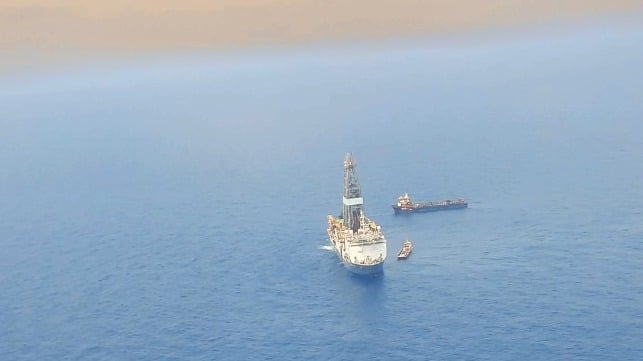
OSVs tending a drillship in the Gulf of America (iStock / Divya Kulkarni)

Published Sep 16, 2025 3:49 AM by The Maritime Executive


The Trump administration has announced ambitious goals to deregulate every industry, and maritime is no exception. That's welcome news for many in the business, including the members of the Offshore Marine Services Association (OMSA), who have proposed a significant rollback in U.S. Coast Guard type approval regulations for safety gear - the familiar standards for flares, ladders, rescue boats, fire doors, ballast water treatment systems, and other shipboard safety gear. Instead, OMSA says, the shipowner should be allowed to buy equipment that is independently tested and certified, without the burden of the Coast Guard type approval process. 

"OMSA respectfully urges the USCG to revoke all regulations which require the U.S. Coast Guard (USCG) to approve a type of equipment before this equipment can be installed or used on a U.S.-flagged vessel.  Adopting this recommendation will eliminate 95 regulations without any adverse impacts to safety, the environment, or property," asserted OMSA President and CEO Aaron C. Smith. 

OMSA held up inflatable liferafts as an example. The USCG’s type approval rule runs to 11,000 words, and it repeats the ISO requirements that the rafts already have to meet on the factory floor, according to OMSA. Meeting the additional review of type approval adds cost and time for equipment manufacturers, and OMSA thinks that safety would be just as good without a Coast Guard type approval review. 

"With all these rules, USCG inspectors are being diverted from critical safety work to duplicate tasks already handled by global standards bodies,” said Smith. “This is about making smart, efficient decisions that support American jobs and industry. Streamlining the system will save time, reduce costs, and keep our fleet competitive.”

According to OMSA, the type approval process also makes it harder for its members to get the equipment they need from vendors. For example, USCG type approved fast rescue boat engines are no longer distributed in Louisiana, so operators have to look far and wide for replacements, causing delays. If the type approval requirement were lifted, the association argues, operators could use locally-available engines without any difficulty. 


DELAYISM IS DENIALISM

IEA Reverses Course on Oil and Gas Investment

The world needs to develop new oil and gas resources just to keep output flat amid faster declining rates at existing fields, the International Energy Agency (IEA) said on Tuesday in a major shift in its narrative from 2021 that ‘no new investment’ is needed in a net-zero by 2050 scenario.

The rates of decline at operating oil and gas fields have accelerated in recent years, largely due to higher reliance on shale and deep offshore resources, said the IEA.

The agency is under pressure from the Trump Administration to return to its core mission to help protect global security of supply, instead of pushing the net-zero agenda it has been doing so far this decade.

A new IEA report, The Implications of Oil and Gas Field Decline Rates, said on Tuesday that if the industry has to maintain current levels of production, more than 45 million barrels per day (bpd) of oil and around 2,000 bcm of natural gas would be needed in 2050 from new conventional fields.

Even with projects ramping up and others approved for development and not yet in production, a large gap still exists “that would need to be filled by new conventional oil and gas projects to maintain production at current levels, although the amounts needed could be reduced if oil and gas demand were to come down,” the IEA said.

“Only a small portion of upstream oil and gas investment is used to meet increases in demand while nearly 90% of upstream investment annually is dedicated to offsetting losses of supply at existing fields,” IEA Executive Director Fatih Birol said.

“Decline rates are the elephant in the room for any discussion of investment needs in oil and gas, and our new analysis shows that they have accelerated in recent years,” Birol added, finally acknowledging what the industry has been saying for years—underinvestment threatens global energy supply.

“In the case of oil, an absence of upstream investment would remove the equivalent of Brazil and Norway’s combined production each year from the global market balance, Birol added. “The situation means that the industry has to run much faster just to stand still.” 

By Tsvetana Paraskova for Oilprice.com


ABS Chairman and CEO Urges IMO to Pause and Rethink the Net Zero Framework

ABS

Published Sep 15, 2025 11:01 PM by The Maritime Executive


[By: ABS]

Shipping and the IMO are on different trajectories. There is no clear pathway for green fuel availability and scalability and infrastructure support. LNG and biofuels are mission critical to any success and should not be overlooked, over penalized or discarded in the Net Zero regulation. Quite frankly, achieving net zero for shipping by 2050 looks like a wildcard.”

That was the message for the industry from ABS Chairman and CEO Christopher J. Wiernicki at the launch of the 2025 ABS Sustainability Outlook, Beyond the Horizon: Vision Meets Reality.

“The industry needs a framework but we need one that marries ambition with reality,” added Wiernicki. “The mechanics need to be thought through. Right now, we are not where we need to be. Emissions remain 121 percent above the 2008 baseline, compliance costs are compounding, and the signals shaping investment - regulation, fuel pricing, penalties, availability, scalability - are moving at different speeds. The IMO needs to take a timeout. We need to get this right.”

Launched at the ABS Sustainability Summit during London International Shipping Week, the seventh edition of the annual industry leading report shows that, despite progress on carbon intensity, shipping’s absolute emissions continue to climb.

“Maritime decarbonization is a three-part calculus: 70 percent fuel selection, 15 percent energy efficiency, and 15 percent performance optimization. That 30 percent beyond fuel is where software plays a pivotal role and, given the current scarcity of green and blue fuel variants globally, is where the most immediate and scalable gains can be achieved,” Wiernicki said. “Getting closer to the 2030s, we need to protect the bridge, which is LNG with methane-slip controls and credible bio-/e-LNG pathways, to extend the runway, which is energy efficiency technologies and onboard carbon capture, to cut well to wake emissions and prepare the endgame: nuclear and zero carbon fuels when they are safe, insurable and investible at scale.”  

The report also highlights the sharply increasing cost of compliance, modelling how a typical vessel trading within the EU could see daily operating costs increase from approximately $15,000 in 2028 to around $45,000 by 2035. Meanwhile, LNG is over-penalized in the early 2030s although it underpins blue fuels, keeps hard-to-abate segments compliant, and buys time for zero-carbon fuels, provided methane slip is addressed and pathways to bio-/e-LNG are opened.

The Outlook, a compilation of ABS research and advanced analysis of progress with respect to sustainability challenges at sea and the readiness of the various solutions, highlights both the important bridging role of energy efficiency technologies and an impending retrofit capacity crunch at shipyards. Finally, the Outlook acknowledges the game-changing potential of nuclear propulsion technology beyond 2035.

A copy of the 2025 ABS Sustainability Outlook, Beyond the Horizon: Vision Meets Reality is available for download here.

The products and services herein described in this press release are not endorsed by The Maritime Executive.