Tuesday, September 16, 2025

Israel attack aimed to halt Gaza talks, Qatar emir tells emergency summit


By AFP
September 15, 2025


The joint Arab League and Organisation of Islamic Cooperation emergency summit in Doha seeks to pile pressure on Israel - Copyright AFP PRABIN RANABHAT

Ali CHOUKEIR

Qatar’s emir accused Israel of trying to derail Gaza ceasefire efforts with its attack on Hamas in Doha, as Arab and Muslim leaders held emergency talks on Monday to discuss a unified response.

The joint Arab League and Organisation of Islamic Cooperation summit was called by Qatar to pile pressure on Israel, which has been facing mounting calls to end the war and humanitarian crisis in Gaza.

Hamas says top officials survived last week’s air strike in Doha, which killed six people and triggered a wave of criticism, including a rebuke from US President Donald Trump.

Qatar has been a key mediator in talks to end the war in Gaza — alongside Egypt and the United States — and the Israeli strike came as Hamas officials were discussing a new US proposal.

“Whoever works diligently and systematically to assassinate the party with whom he is negotiating, intends to thwart the negotiations,” Qatari Emir Sheikh Tamim bin Hamad Al Thani said in his opening remarks.

“Negotiations, for them, are merely part of the war.”

The emir also said Israeli Prime Minister Benjamin Netanyahu “dreams of turning the Arab region into an Israeli sphere of influence, and this is a dangerous illusion”.

A draft final statement from the summit seen by AFP warned that Israel’s “brutal” aggression “threatens all that has been achieved on the path toward establishing normal relations with Israel, including existing and future agreements”.

Israel and its main backer the United States have been trying to expand the Abraham Accords, which established ties with the United Arab Emirates, Bahrain and Morocco in 2020.


– ‘Actions, not just rhetoric’ –


As the meeting opened in Doha, US Secretary of State Marco Rubio was visiting Israel in a demonstration of Washington’s steadfast support.

Rubio will head to Qatar, also a staunch Washington ally, on Tuesday, a US official said.

On Sunday, Qatari premier Sheikh Mohammed bin Abdulrahman Al Thani told a preparatory meeting that “the time has come for the international community to stop using double standards and to punish Israel for all the crimes it has committed”.

According to the draft statement, the nearly 60-country grouping in Doha will also emphasise “the concept of collective security… as well as the necessity of aligning together to face common challenges and threats”.

Crown Prince Mohammed bin Salman, Saudi Arabia’s de facto ruler, was among those present, as were Iranian President Masoud Pezeshkian, Iraqi Prime Minister Mohammed Shia al-Sudani, Turkish President Recep Tayyip Erdogan and Palestinian president Mahmud Abbas.

Jordan’s King Abdullah II and Pakistani Prime Minister Shehbaz Sharif also attended.

Separately, the United Nations Human Rights Council said it would host an urgent debate on Tuesday on Israel’s air strike in Qatar.

And an extraordinary meeting of the six-member Gulf Cooperation Council would also be held in Doha on Monday, according to Saudi state media.

Aziz Algashian, a Saudi-based researcher of international relations in the Middle East, said “many people are looking at actions, not just rhetoric” from the Arab-Islamic meeting in Doha.

“We’ve exhausted all forms of rhetoric. Now it’s just going to have to be actions — and we’ll see what those actions will be,” he said.
Farmers are in Trouble—Restructuring the USMCA Could Turn Things Around

New labeling requirements to ensure the integrity of domestic markets, as well as price guarantees tied to anti-dumping measures, could improve the economic prospects of producers amid our ongoing trade war.


John Williamson harvests a 4-acre field of oats July 25, 2012 using a combine on his 200-acre organic farm in North Bennington, Vermont.
(Photo by Robert Nickelsberg/Getty Images)

Anthony Pahnke
Sep 16, 2025
Common Dreams


Farmers may be the proverbial “canaries in the coal mine” when it comes to the effects of US President Donald Trump’s grand tariff experiment.

Point in fact—corn and soy prices are experiencing precipitous falls in no small part due to tariffs that China has placed on US imports. Cotton prices are dropping for the same reason, as nearly 80% of this crop is destined for export and China slapped a 15% retaliatory tariff on it. Prices for pork and beef appear on a different trajectory, with the latter benefiting from domestic shortages. But even here, trouble is on the horizon as China has cut back on imports from the US. This, as Brazil is exporting more soy, beef, and cotton to China to replace what US farmers once sent. It is no coincidence that the percentage of farm income in 2025 coming from government payments—25%—is approaching the level it was at when the Covid-19 pandemic devastated markets in 2020. The $59 billion dedicated for farmers’ relief payments in the “One Big Beautiful Bill” is testament to the fact that the economic future of rural America appears bleak.

RECOMMENDED...

‘Trump Is Making Your Life More Expensive’: Tariff Chaos Engulfs US Economy

Polling Shows ‘American Families Are Trapped in a Cycle of Debt’

The economic challenges our farmers face places even more pressure on the upcoming United States-Mexico-Canada (USMCA) renegotiations. Even though set for next year, Mexico, Canada, and the US are already staking positions and signaling their intentions. Look no further than Mexico contemplating placing tariffs on Chinese imports, a move clearly meant to stay in the good, however fickle, graces of the Trump administration.

Looking out for US farmers, there are some concrete policies that a renegotiated USMCA could feature. Specifically, new labeling requirements to ensure the integrity of domestic markets, as well as price guarantees tied to anti-dumping measures, could improve the economic prospects of producers as they struggle to weather the uncertainty of our ongoing trade war.

The problem is that in the past, the Trump administration took the wrong approach for how to improve the situation of producers when dealing with our neighbors. Concretely, when Trump renegotiated the North American Free Trade Agreement (NAFTA) last time he was in office, besides rebranding it the USMCA, he also sought to open Canadian markets for US dairy exports.

Eking out marginal increases, those gains ultimately made no real improvement in the prices that farmers received. Proof of this is how dairy farmers have consistently struggled to stay in business, as we have witnessed a 25% nationwide decline from 2017 to 2023 in the number of licensed dairy herds. The recent uptick in dairy prices has nothing to do with USMCA, but instead to a reduction in feed costs and farmers cutting down their herds by selling heifers for beef.

Farmers are known for their resiliency. At the same time, they can only take so much.

Failing to finagle improved prices for farmers from changing exports, this time USMCA negotiations should focus on ensuring the integrity of markets.

The first step toward this would be for the US to reinstate Mandatory Country of Origin Labeling (MCOOL). Originally part of the 2002 Farm Bill before being removed after Canada and Mexico put pressure on the World Trade Organization (WTO), this program would make retailers disclose the origins of their products, including milk, dairy, meat, fish, and fruits, and vegetables. As such, MCOOL allows consumers to make informed purchasing decisions and choose our products instead of picking the cheapest goods of dubious quality that may come from abroad.

Such a change would assist ranchers particularly, as since Trump has taken office, Brazilian beef imports flooded US markets. And since the WTO has been paralyzed since Trump’s first term when he chose not to appoint judges to the institution’s appellate court, now MCOOL can return without opposition.

Next, pricing policies could be put in place to assure a decent income for farmers and prevent dumping.

The US has already made one move in this direction, placing a 17% tariff on tomato imports and accusing Mexican growers of dumping, that is, exporting goods into another market at below cost to drive competitors out of business.

Preventing dumping also cuts both ways, as when NAFTA was first introduced, US corn imports drove Mexican farmers out of business, into poverty, and then to cross the border. Accordingly, if Mexico wants to restrict the flow of some commodity south, such as corn, they should be allowed to.

To avoid a tit-for-tat battle, resolving this issue requires setting floor prices in some capacity. Like what they have already done with wages for automobile workers, negotiators could do the same for grains, as well as for livestock. They could also set limits on what comes from outside the trade bloc, like Mexico appears ready to do with China. The same could be done with Brazil and its beef, or perhaps with the many European countries that send billions of dollars of cheese a year into the US. Cheese is a critical element of dairy pricing, and decreasing imports could lead to more US production and better prices for farmers.

Farmers are known for their resiliency. At the same time, they can only take so much. Export-driven growth may sound like a good idea, but the reality has been different. A renegotiated USMCA that actually puts farmers first could turn things around and give producers a fighting chance to make a decent income and stay on the land.


Our work is licensed under Creative Commons (CC BY-NC-ND 3.0). Feel free to republish and share widely.


Anthony Pahnke is the Vice-President of the Family Farm Defenders and an Associate Professor of International Relations at San Francisco State University; anthonypahnke@sfsu.edu.
Full Bio >
‘Corporate Greed Is Out of Control’: Tlaib-Sanders Bill Would Tax Companies for Excessive CEO Pay

“At a time of record-breaking income and wealth inequality, we must demand that the wealthiest people and most profitable corporations in America finally pay their fair share of taxes,” said Sen. Bernie Sanders.


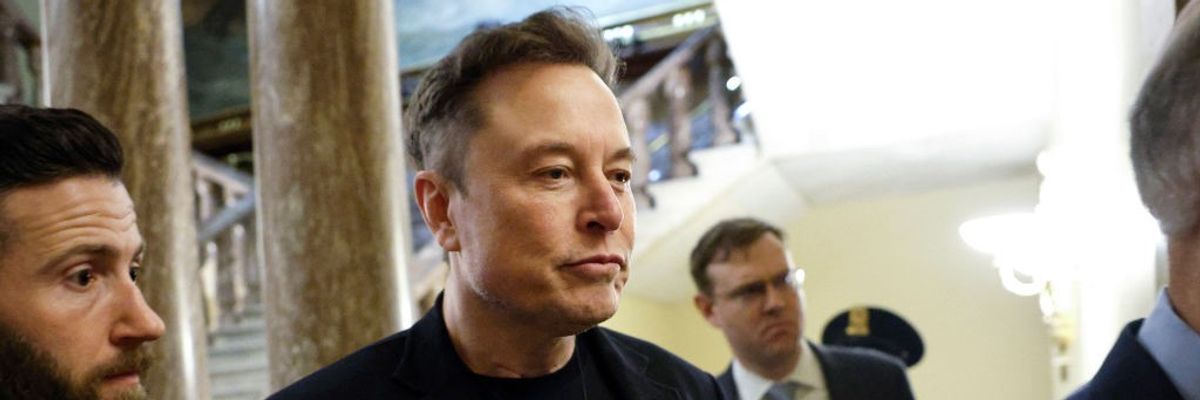
Tesla and SpaceX CEO Elon Musk arrives for a meeting with Senate Republicans at the US Capitol on March 5, 2025 in Washington, DC.
(Photo by Kevin Dietsch/Getty Images)

Julia Conley
Sep 16, 2025
COMMON DREAMS

With the world’s richest person, Tesla CEO and Republican megadonor Elon Musk, on the cusp of becoming the first trillionaire on the planet, two leading progressive lawmakers are calling on Congress to pass a bill to “rein in the obscene salaries of America’s top executives.”

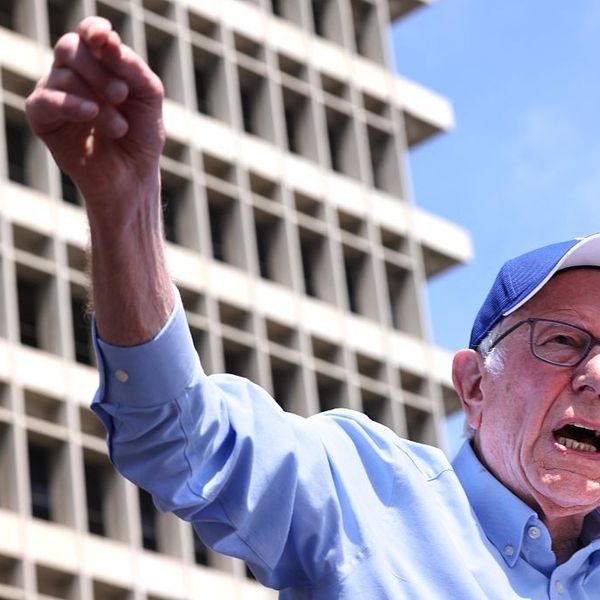
Sen. Bernie Sanders (I-Vt.) and Rep. Rashida Tlaib (D-Mich.) on Monday introduced the Tax Excessive CEO Pay Act with the aim of raising taxes on companies that pay their executives more than 50 times their workers’ wages...


‘Corporate Greed at Its Ugliest’: These 100 Companies Pay CEOs Over 600x What the Workers Get


‘Insane Economics,’ Bernie Sanders Says of Musk’s Trillionaire Potential

The legislation would impose penalties starting at 0.5 percentage points for companies with CEO-to-worker pay ratios between 50-to-1 and 100-to-1. Firms where executives make more than 500 times their workers’ pay would be forced to pay the highest rate.

The bill would also require the US Treasury Department to crack down on tax avoidance, including schemes that disguise pay disparities by outsourcing jobs to contractors.

Sanders said that exorbitant CEO pay and massive pay gaps at corporations are intolerable “while 60% of Americans live paycheck to paycheck and millions work longer hours for lower wages.”

“It is unacceptable that the CEOs of the largest low-wage corporations make more than 630 times what their average workers make,” said the senator, who has been criss-crossing the country this year with his Fighting Oligarchy Tour, galvanizing people in red and blue districts against wealth inequality, political corruption, and corporate power.

“This is not only morally obscene, but also insane economic policy,” said Sanders. “At a time of record-breaking income and wealth inequality, we must demand that the wealthiest people and most profitable corporations in America finally pay their fair share of taxes and treat all employees with the respect and dignity they deserve. That’s precisely what this legislation begins to do.”

The proposal would raise an estimated $150 billion over a decade if tech giants, Wall Street firms, and other large corporations continue their current compensation patterns, and Sanders and Tlaib noted that the largest companies in the US would have paid billions of dollars more in taxes last year had the legislation been in effect.

JPMorgan Chase would have paid $2.38 billion in taxes, while Google would have paid $2.16 billion and Walmart would have paid $929 million.

With 62% of Republican voters and 75% of Democrats supporting a cap on CEO pay relative to worker salaries, the legislation would likely be well received by Americans across the political spectrum—but Republican lawmakers have shown little to no interest in confronting the pay gap, ensuring fair wages for workers, or reining in excessive executive compensation.

With the current CEO-employee pay gap, CEOs at the 350 largest publicly owned firms make 290 times more than the average pay of a typical worker at their companies, with the gap much larger at some corporations.

The median Walmart worker made $29,469 in 2024, while CEO Doug McMillon took home $27.4 million—a 930-to-1 gap.

The median Starbucks worker would have to work for more than 6,000 years to earn the pay CEO Brian Niccol took home in 2024.


“Working people are sick and tired of corporate greed,” said Tlaib. “It’s disgraceful that corporations continue to rake in record profits by exploiting the labor of their workers. Every worker deserves a living wage and human dignity on the job.”

“It’s time,” she added, “to make the rich pay their fair share.”

Tlaib and Sanders introduced the legislation as Pope Leo spoke out against exorbitant CEO pay in his first interview since taking the helm of the Catholic Church, reserving particular condemnation for Musk, for whom the Tesla board proposed a $1 trillion pay package if he grows the company by eightfold over the next decade.

“CEOs that 60 years ago might have been making four to six times more than what the workers are receiving... it’s [now] 600 times more than the average workers are receiving,” the pope told the Catholic outlet Crux.

“Yesterday, the news that Elon Musk is going to be the first trillionaire in the world: What does that mean and what’s that about?” he added. “If that is the only thing that has value anymore, then we’re in big trouble.”

Sanders said Monday that the pope “is exactly right.”


“No society can survive when one man becomes a trillionaire while the vast majority struggle to just survive—trying to put food on the table, pay rent, and afford healthcare,” said Sanders. “We can and must do better.”


‘Incredible Corruption’: Blockbuster Report on Trump Crypto Grift Leaves Observers Stunned

“If this is true, this is the largest public corruption scandal in the history of the United States and it’s not even close,” said one critic.


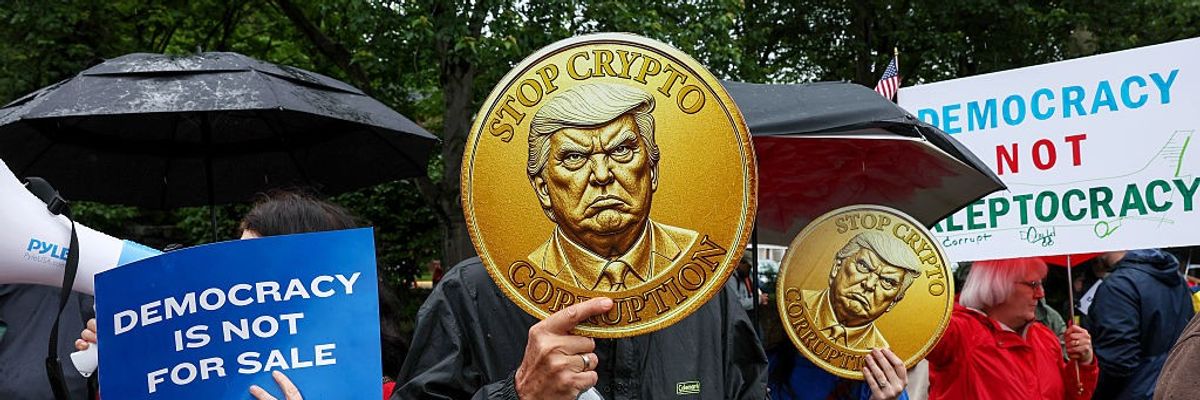
Demonstrators hold up mock cryptocurrency during the “America is Not for Sale” rally at the Trump National Golf Club on May 22, 2025 in Washington, DC.
(Photo by Jemal Countess/Getty Images for Public Citizen)


Brad Reed
Sep 15, 2025
COMMON DREAMS


The New York Times on Monday published a blockbuster report detailing how US President Donald Trump’s administration gave the United Arab Emirates access to high-powered artificial intelligence chips just days after receiving a massive investment in Trump’s cryptocurrency startup.


As the Times report documented, Sheikh Tahnoon bin Zayed Al Nahyan, a member of the United Arab Emirates’ (UAE) ruling family, had one of his investment firms deposit $2 billion into World Liberty Financial, the startup founded by members of the Trump family and the family of Trump Middle East envoy Steve Witkoff.
RECOMMENDED...


‘Greatest Corruption in Presidential History’: Trump Family Reaps $5 Billion More in Crypto Profits


Just two weeks later, wrote the Times, “the White House agreed to allow the UAE access to hundreds of thousands of the world’s most advanced and scarce computer chips, a crucial tool in the high-stakes race to dominate artificial intelligence,” despite national security concerns about these chips being shared with China.

The Times, which interviewed more than 75 people in its investigation of the deals, did not present direct evidence that the two deals were explicitly linked, and the White House denied any connection between the massive investment in the Trump family’s crypto firm and the decision to grant UAE access to the chips.

However, the paper interviewed three ethics lawyers who said that “the back-to-back deals violate longstanding norms in the United States for political, diplomatic, and private dealmaking among senior officials and their children.”

Other political observers were stunned by the Times’ report.


“If this is true, this is the largest public corruption scandal in the history of the United States and it’s not even close,” commented Ryan Cummings, chief of staff at the Stanford Institute for Economic Policy Research.

US foreign policy journalist Laura Rozen questioned whether Witkoff’s dealings with the UAE and other countries were impacting his ability to do his job in other areas.

“Maybe Witkoff is too busy pushing deals to enrich his and Trump’s families to focus on getting an Israel-Gaza hostage deal over the line, recognizing the Russians are not interested in ending the war on Ukraine, etc.,” she speculated.

Alasdair Phillips-Robins, a fellow in the Technology and International Affairs Program at the Carnegie Endowment for International Peace, marveled at the reporting that Trump’s negotiation team appeared to be willing to grant UAE access to the chips without forcing any major geopolitical tradeoffs.

“This sounds like the world’s weakest negotiation: telling the UAE they’ll get unlimited chips before they’ve agreed to a single concession in return,” he wrote.

Independent journalist Jacob Silverman, who has written extensively on the politics of the US tech industry, remarked that the Trump administration’s actions exposed in the Times report were “impeachable” and smacked of “incredible corruption.”

In addition to his cryptocurrency-related dealings with UAE, Trump has also come under scrutiny for accepting a luxury jet from the government of Qatar that he plans to use for the remainder of his term in office and that will be given to his official presidential library after he leaves the White House.

Exposed: How Trump family raked in billions in secret deals brokered by top advisor

Sarah K. Burris
September 15, 2025
  RAW STORY


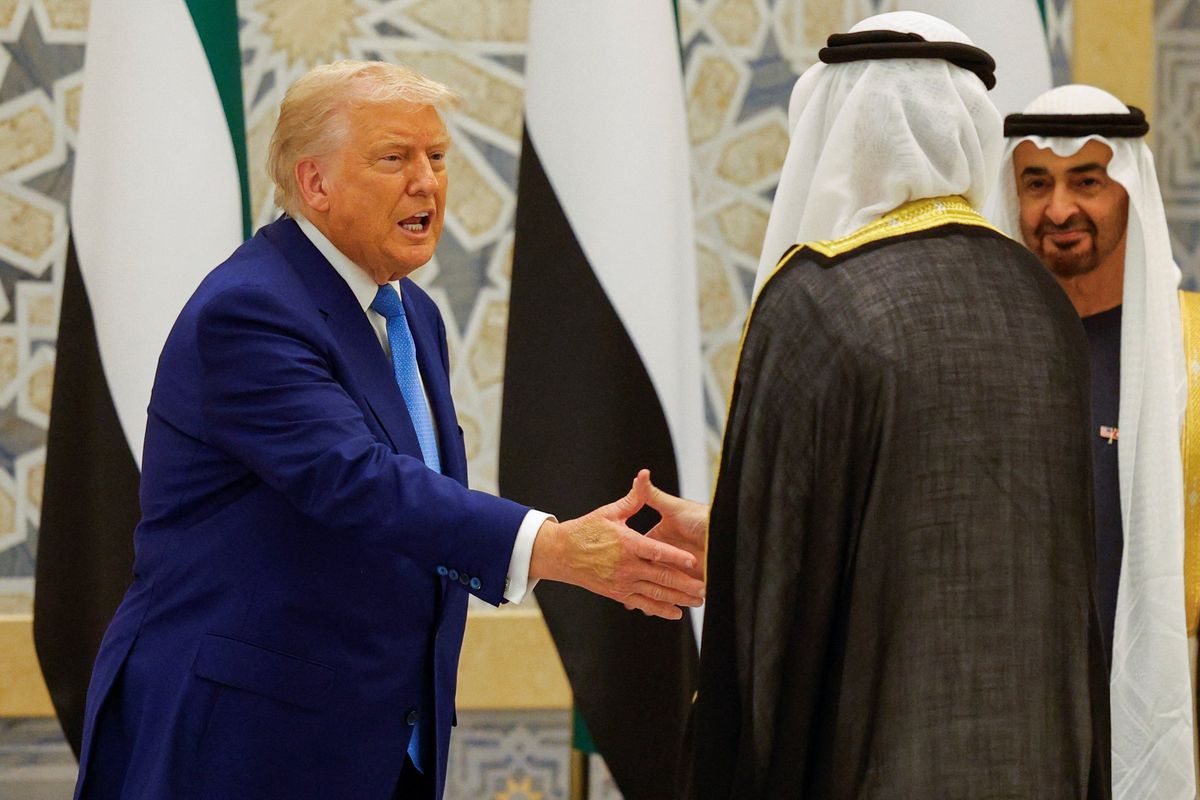
U.S. President Donald Trump greets a member of the United Arab Emirates' delegation, as he stands next to UAE President Sheikh Mohamed bin Zayed Al Nahyan, at Qasr Al Watan, in Abu Dhabi, United Arab Emirates, May 15, 2025. REUTERS/Brian Snyder

In a newly detailed report, The New York Times alleges that President Donald Trump's family secured billions of dollars through a deal orchestrated by his Middle East envoy, Steve Witkoff, and his son Zach Witkoff.

An extensive article by Eric Lipton, David Yaffe-Bellany, Bradley Hope, Tripp Mickle, and Paul Mozur describes how Witkoff and Sheikh Tahnoon bin Zayed Al Nahyan have "become both diplomatic allies and business partners, testing the limits of ethics rules while enriching the president, his family and his inner circle."

According to the report, a series of multi-billion-dollar arrangements involved Witkoff and Trump’s joint crypto company and the sale of computer chips to the UAE, generating significant financial benefits for them.

While administration officials objected to these deals, National Security Council senior director for technology David Feith was notably the main obstacle. The Times notes that far-right activist and Trump confidant Laura Loomer intervened in Feith’s firing, maintaining that it was for a separate issue. Loomer reportedly told Trump that Feith’s father’s political views were problematic, as Feith’s father previously served in George W. Bush’s administration.

After Feith was ousted, UAE negotiations proceeded under the leadership of David Sacks, Trump’s advisor on AI and cryptocurrency. At one point, the White House counsel acknowledged potential ethical concerns.

"Early investors in Craft Ventures, the firm Mr. Sacks helped start in 2017, included the Abu Dhabi Investment Authority, which is now overseen by Sheikh Tahnoon," the report notes. "Until at least March, Mr. Sacks, who is still working at Craft, was also invested in a stock fund that included the Taiwan Semiconductor Manufacturing Co., which builds Nvidia’s chips, and other A.I.-related companies such as Amazon and Meta."

The White House counsel signed a letter granting Sacks a special waiver to make formal decisions for the government—even on matters that affected his own investments. "Without the waiver, those kinds of actions could violate conflict-of-interest law," the Times wrote. Sacks and Craft Ventures then sold off their remaining stake in the AI firm.

As these deals unfolded in the background, Witkoff was simultaneously negotiating with the UAE over a U.S.-backed chip factory. The Times points out that a competing chip factory is also being built in the United States, adding further complexity. Both Witkoff and Sacks pressed to build the factory, with negotiations covering chip shipments to the UAE, expanding from 100,000 chips annually to 500,000.

The benefit would ensure billions in "U.S. industrial growth" and AI deployment. Top officials raised concerns, questioning whether the U.S. was demanding enough from Sheikh Tahnoon for chip sales, suggesting Trump should push the UAE to cancel military exercises with China and halt certain technology transfers.

Meanwhile, Zach Witkoff emerged as "the face of World Liberty," announcing in a post on X that his stablecoin would not fluctuate like Bitcoin, mirroring the steadiness of U.S. currency. In search of investors and expertise, Zach Witkoff traveled to the UAE, hiring one of the Sheikh’s top aides.

While his father handled diplomatic negotiations, Zach arranged for World Liberty to partner with MGX, a company chaired by Sheikh Tahnoon.

"MGX would use World Liberty’s USD1 stablecoin to complete a $2 billion investment in Binance, a giant crypto exchange," the Times reported. "It was the single largest investment in a crypto company ever, according to Binance. The transaction effectively handed World Liberty a $2 billion bank deposit, funds that the company could invest for annual returns in the tens of millions."

The Times describes these events as "the start of a succession of wins for the Witkoffs, the Trumps and the Emiratis."

Read the full report here.


BAN CLUSTER BOMBS
100% of Cluster Bomb Victims Last Year Were Civilians—Nearly Half of Them Children

“Cluster munitions are banned for a reason: Civilians, including children, account for the vast majority of casualties,” said one rights advocate.


The father of a man who was reportedly killed by a cluster rocket mourns over his body in the city of Lysychansk in the eastern Ukrainian region of Donbas on June 18, 2022 amid the Russian invasion of the country.
(Photo by Aris Messinis / AFP)


Julia Conley
Sep 15, 2025
COMMON DREAMS


Human rights leaders on Monday called on the 112 countries that are party to a treaty banning cluster munitions to reinforce the ban and demand that other governments sign on to the agreement, as they released an annual report showing that the bombs only serve to cause civilian suffering—sometimes long after conflicts have ended.

The governance board of the International Campaign to Ban Landmines (ICBL) and the Cluster Munition Coalition (CMC) released the 16th annual Cluster Munition Monitor on Monday, compiling data on the impact of cluster munitions for 2024 and revealing that all reported cluster bomb casualties last year were civilians—and close to half, 42%, were children.

Cluster bombs are particularly dangerous to civilians because after being dropped from aircraft or fired by rockets or other weapon, they open in the air and send multiple submunitions over wide areas—often leaving unexploded bomblets that are sometimes mistaken by children for harmless toys, and can kill and injure people in populated areas for years or even decades after the initial bombing.

The report, which was released as officials prepare to convene in Geneva for the Cluster Munitions Conference, says at least 314 global casualties from cluster munitions were recorded in 202, with 193 civilians killed in attacks in Ukraine—plus 15 who were killed by unexploded munitions.

Since the Convention on Cluster Munitions was adopted in 2008, none of the 112 signatories have used cluster bombs—but countries that are not party to the convention, including Russia and Ukraine, used the munitions throughout 2024 and into this year, and the US has said it transferred cluster bombs to Ukraine at least seven times between July 2023-October 2024.

The report details recent uses of cluster bombs, the impact of which may not be known for years as civilians remain at risk from the unexploded bombs, including by Thailand—by its own apparent admission—in its border conflict with Cambodia and allegedly by Iran, which Israel claimed used cluster munitions in its attack in June. Cluster munitions have also reportedly been used in recent years in Myanmar—including at schools—and Syria.

“Governments should now act to reinforce the stigma against these indiscriminate weapons and condemn their continued use.”

This year, the withdrawal of Lithuania from the Convention on Cluster Munitions—an unprecedented step—garnered condemnation from at least 47 countries. While it had never previously used or stockpiled cluster bombs, the country said it was necessary to have the option of using the munitions “to face increased regional security threats.”

The casualties that continued throughout 2024 and into 2025 “demonstrate the need to clear more contaminated land and to provide more assistance to victims,” said Human Rights Watch, a co-founder of CMC.

“The Convention on Cluster Munitions has over many years made significant progress in reducing the human suffering caused by cluster munitions,” said Mark Hiznay, associate crisis, conflict, and arms director for HRW. “Governments should now act to reinforce the stigma against these indiscriminate weapons and condemn their continued use.”

The report notes that funding cuts by donor states including the US, which under the second term of President Donald Trump has cut funding for landmine and cluster bomb clearance and aid, have left many affected countries struggling to provide services to survivors.

Children, the report notes, are often particularly in need of aid after suffering the effects of cluster munitions, as they are “more vulnerable to injury and frequently require repeated surgeries, regular prosthetic replacements as they grow, and long-term opportunities to access physical rehabilitation and psychological support.”

“Without adequate care for children, complications can worsen, affecting their schooling, social interactions, mental health, and overall well-being,” explained IBCL and CMC.

At the Cluster Munitions Conference taking place from September 16-19, said Anne Héry, advocacy director for the group Humanity and Inclusion, states must “reaffirm their commitment to this vital treaty.”

“Cluster munitions are banned for a reason: Civilians, including children, account for the vast majority of casualties,” said Héry. “Questioning the convention is unacceptable. States convening at the annual Cluster Munition Conference must reaffirm their strong attachment to the treaty and their condemnation of any use by any party.”
Trump’s Venezuela Boat Strikes Are War Crimes, So Where’s The Media?

Why hasn’t the mainstream media pressed the administration on these strikes being illegal and dangerous (and unpopular)?


This image was posted on social media by President Donald Trump and shows a boat that was allegedly transporting cocaine off the coast of Venezuela when it was destroyed by US forces on September 2, 2025.
(Photo: President Donald Trump/Truth Social)


Joseph Bouchard
Sep 16, 2025
Common Dreams

On September 2, the Trump administration shared footage purporting to show a US strike on a Venezuelan fishing boat. Even if we take the incident entirely at face value (and there are a lot of reasons to question the video itself)—the US Navy attacked a fishing boat off Venezuela, killing 11 people. On Monday, another strike was allegedly conducted on a boat, killing three people. The way the media has handled these strikes is an indictment of the state of American neoliberal reporting in a neofascist age.

Why hasn’t the mainstream media pressed the administration on these strikes being illegal and dangerous (and unpopular)? Why has no one in Washington considered the implications of calling a fishing boat carrying civilians a legitimate military target? Why isn’t the media calling the Venezuelan boat strike an abhorrent war crime at every turn?...


It’s simple; they don’t care about defending the truth or holding the powerful accountable–they have no principles to stand on besides profit and access.

Within hours of these strikes breaking, major outlets were repeating the Trump administration’s line that this was a strike on a “drug boat.” According to this framing, the attacks were justified, necessary, and part of a broader war on drug trafficking. Virtually none of these outlets even entertained the obvious legal and ethical questions. Instead, they served as stenographers for the administration. This is not what an objective (not neutral) press in an advanced democracy does.

Would the Marines be greeted as liberators in Caracas?

This is reminiscent of the Iraq War era, when corporate media parroted the Bush administration’s ludicrous arguments, paving the way for invasion and occupation that would kill at least 200,000, maim millions, and destroy American democracy further.

Legal experts across the spectrum have already stood up to say the killings were illegal. Ilya Somin, a professor at George Mason University’s conservative Antonin Scalia Law School, called the strike “unjust and illegal.” Jeremy Wildeman, an adjunct professor of international Affairs at Carleton University and fellow at the Human Rights Research and Education Centre in Ottawa, described it as “part of the dangerous and ongoing erosion of due process and the very basic principles of how we interact with each other in domestic and foreign affairs, regulated by accepted norms, rules, and laws, that the Trump administration has been pointedly hostile toward following and specifically undermining.”

Wildeman added that “this is definitely about regime change and domination.” Even the Atlantic Council hedged, acknowledging that the legality was at best murky and in some cases advancing arguments to justify it. Meanwhile, US Vice President JD Vance bluntly stated that he does not care if the strikes are war crimes at all.

The available evidence does suggest this was an outright criminal massacre. The first boat was, we now know thanks to Sen. Rand Paul (R-Ky.), turning back to shore, not threatening US forces when it was fired upon. Those killed would be civilians. Even if they were transporting drugs, drug couriers are not lawful combatants. They are criminals under domestic law, not combatants in an armed conflict.

Due process was ignored. There was no trial, no arrest, no attempt at interdiction—just summary execution. And the strikes occurred in Venezuelan territorial waters, not in an international conflict zone. If another country did this, say Russia bombing a fishing boat in the Baltic, or China attacking smugglers near Taiwan, the Western media would have declared it a war crime the same day. Add this to the list of Western double standards in the international arena—we are seeing the destruction of the “liberal order” in real time.

These strikes are not a one-off. They fit into decades of US policy toward Venezuela, including economic sanctions, diplomatic isolation, and repeated regime change attempts. For 25 years, Washington has tried to topple the governments of Hugo Chávez and Nicolás Maduro through economic sabotage, coups, and support for far-right opposition. The humanitarian toll of those sanctions has been devastating. They have themselves emboldened the repression brought about by the Maduro government, which has used America as a scapegoat, with reason, for all its faults.

Now, with this attack, we see a dangerous escalation from economic to military means. If the precedent is set that the US can strike targets inside Venezuela (this was in Venezuela’s national waters) with impunity, it opens the door to a broader military campaign. That is exactly what think tanks like the Center for Strategic and International Studies have been preparing for. One CSIS report, now deleted, explicitly laid out “options for regime change” in Venezuela, against the “Maduro narco-terrorist regime.”

So why is the media so unwilling to call this what it is? Major outlets fear losing access to government sources if they challenge the official narrative. They also simply don’t want to admit that America is committing crimes, and may not be the moral actors in every major geopolitical event, as they were taught throughout their lives. Going back to Noam Chomsky’s Manufacturing Consent 101, corporate interests are also important, with companies like Exxon and Chevron having billions at stake in Venezuela’s oil fields (and a US-backed government running things in Caracas). US military action that destabilizes or topples Maduro could directly benefit those firms.

Many of the analysts quoted in media coverage are from think tanks funded by the defense industry or oil companies. They have an interest in exaggerating Venezuela’s threat and downplaying US abuses, to make the US intervention seem justified and good. And reporters too often repackage leaks from US intelligence agencies as fact, without independently verifying. A lot of the “analysis” on the strikes in mainstream news has been from the intelligence agencies, who have a direct incentive to lie and manipulate information in favor of regime change.

Even respected outlets have contributed to this dynamic. The New York Times and Wall Street Journal have both amplified the claim that Venezuela is a “narco-terrorist state.” That claim has been debunked by organizations like InSight Crime and the International Crisis Group, which show that while drugs transit Venezuela, it is hardly unique; Colombia and Mexico play a much larger role in global cocaine markets, yet they remain US allies.

Meanwhile, outlets like the Christian Science Monitor are pushing a narrative that “more Latin Americans welcome US intervention,” based on flimsy and cherry-picked anecdotes that, once again, helps the Trump administration lay the groundwork for more meddling and war. Would the Marines be greeted as liberators in Caracas? The hope is to expand the “War on Drugs” into the “War on Terror,” giving the US military more tools to intervene in Latin America, and then bringing repression to the home front (also called the Imperial Boomerang theory). In reality, the region is increasingly turning away from Washington’s militaristic and blusterous approach, seeking alternative frameworks to the failed War on Drugs.


'He has it wrong': Former CIA officer slams Trump official over new Venezuela attack


'Fired on the spot': How Trump officials caught leaking war plans reacted to Clinton emails


September 16, 2025 
ALTERNET

Retired CIA intelligence service officer and MSNBC security and intel analysis Marc Polymeropoulos slammed President Donald Trump's latest use of the military in its alleged war on drugs.

Speaking with Ali Vitale on "Way Too Early," the career CIA officer criticized Trump's announcement that the U.S. military has carried out another strike on an alleged Venezelan drug boat

Trump announced Monday that, while no U.S. personnel were harmed, three people were killed in that operation, posting a video on Truth Social warning, "if you're transporting drugs that can kill Americans, we're hunting you."

This attack, which comes two weeks after the U.S. struck a different Venezuelan boat in the Caribbean sea under the dubious guise it was carrying drugs and gang members, an allegation Venezuela vehemently denied, is dangerous and reckless, Polymeropoulos said

"So, Secretary of . . Defense . . Of War, however you want to call it, Hegseth has talked about the need to have lethality over legality, but I think he has it wrong," he said. "Because when the United States decides to take lives, to kill people, kinetic action, you know, we have authorities that govern this, whether it's in the Department of Defense or the intelligence community. In essence, Americans have to be at risk . . .So, where are the authorities?"

The 26-year career CIA officer added that "we have to be really careful going down this line," comparing what's going on to the 2015 movie "Sicario," starring Emily Blunt, in which she plays an FBI agent who joins a task force combatting the war on drugs.

"All of this looks like a "Sicario" movie," he said, "And so we can kind of beat our chest saying we're doing something in the war on drugs, but what happens when there are civilian casualties?"

Polymeropoulos pointed to an attack in 2001 in which, "the U.S. did end up in the war on drugs, killing an innocent family," he explained. "I think Congress has totally failed in its duty to hold the [Trump] administration accountable. We need authorities on this. Where are they? Nobody seems to know."

The deaths of three individuals in the latest attack is especially concerning, he says.


"We're not being weak on national security. What we're asking [is], 'do we have the authority to take a life?' That's a really big deal."


Ilhan Omar Slams Latest Trump Attack on Venezuelan Boat as ‘Egregious Violation’

“There is NO legal justification,” the progressive congresswoman said. “It risks spiraling into the exact type of endless, pointless conflict that Trump supposedly opposes.”


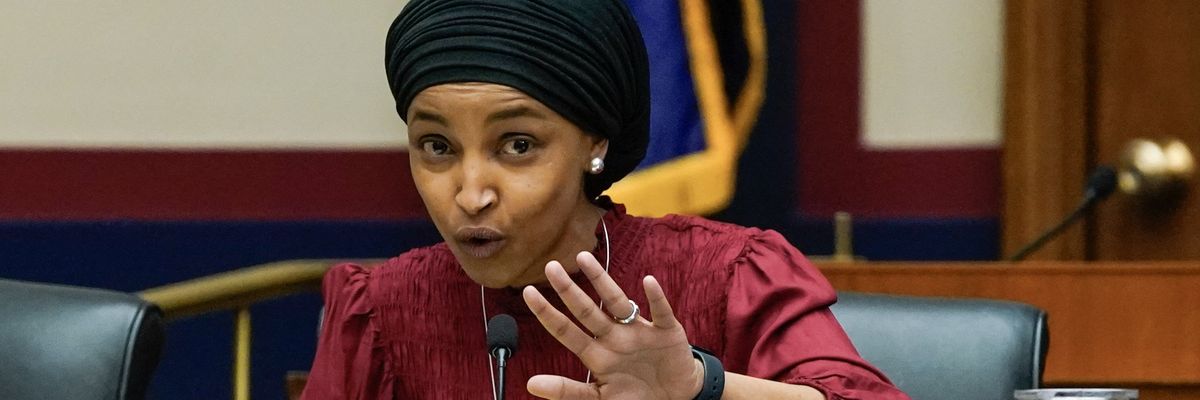
US Congresswoman Ilhan Omar (D-Minn.) speaks during an April 17, 2024 hearing on Capitol Hill in Washington, DC.
(Photo by Drew Angerer/AFP via Getty Images)

Brett Wilkins
Sep 16, 2025
COMMON DREAMS


US Congresswoman Ilhan Omar on Tuesday condemned the Trump administration’s attack the previous day on a second boat allegedly transporting drugs off the coast of Venezuela as blatantly illegal, highlighting her introduction last week of a war powers resolution in a bid to stop the aggression.

President Donald Trump announced Monday that the US destroyed what he said was a boat used by Venezuelan drug gangs, killing three people in what one Amnesty International campaigner called “an extrajudicial execution.”


Omar, Ramirez Among First in Congress to Decry ‘Unconstitutional’ Trump Strike on Boat


Senator Says New Details of Venezuela Bombing Reveal ‘Trump’s Growing Lawlessness’

The strike followed a September 2 US attack on another alleged drug-running boat that killed 11 people, which Omar (D-Minn.) called a “lawless and reckless” action.

Responding to Monday’s attack, Omar said on the social media site X that the Trump administration “is once again using the failed War on Drugs to justify their egregious violation of international law.”


“There is NO legal justification,” she said of the attack. “It risks spiraling into the exact type of endless, pointless conflict that Trump supposedly opposes. I have a war powers resolution to fight back.”

Introduced last Thursday, the measure aims to stop the US attacks, which coincide with Trump’s deployment of a small armada of warships off the Caribbean coast of Venezuela, a country that has endured to more than a century of US meddling in its affairs.


“All of us should agree that the separation of powers is crucial to our democracy, and that only Congress has the power to declare war,” Omar said at the time.

The War Powers Act of 1973—enacted during the Nixon administration at the tail end of the US war on Vietnam, Cambodia, and Laos—empowers Congress to check the president’s war-making authority. The law requires the president to report any military action to Congress within 48 hours and mandates that lawmakers must approve troop deployments after 60 days.

Also last week, Sen. Tim Kaine (D-Va.) led a letter signed by two dozen Democratic colleagues and Sen. Bernie Sanders (I-Vt.) asserting that the Trump administration offered “no legitimate justification” for the first boat strike.

Omar’s condemnation of the US attacks followed Monday’s announcement by US Reps. Nancy Mace (R-SC) and Buddy Carter (R-Ga.) of separate resolutions to strip Omar of her committee assignments and, in the case of Mace’s measure, censure the congresswoman after she reportedly shared a video highlighting assassinated far-right firebrand Charlie Kirk’s prolific bigotry.

Trump also attacked Omar on Monday, calling her a “disgraceful person,” a “loser,” and “disgusting.”


Omar is no stranger to censure efforts, which critics say are largely fueled by Islamophobia—and haven’t just come from Republicans. In 2019, she was falsely accused of antisemitism by leaders of her own party and was the subject of an anti-hate speech resolution passed by House lawmakers after she remarked about the indisputable financial ties the pro-Israel lobbying group American Israel Public Affairs Committee (AIPAC) and members of Congress.

In February 2023, Omar was ousted from the House Foreign Affairs Committee for years-old comments that allegedly referenced antisemitic tropes.

Last year, Congressman Don Bacon (R-Neb.) introduced a censure resolution after Omar said of Jewish students at Columbia University, “We should not have to tolerate antisemitism or bigotry for all Jewish students, whether they’re pro-genocide or anti-genocide.”

The measure failed to pass, as did another put forth earlier last year by Congresswoman Marjorie Taylor Greene (R-Ga.) after she mistranslated remarks Omar made in Somali.
This makeshift Confederate army is not about crime. It's about control

Rev. Earle J. Fisher, 
Tennessee Lookout
September 16, 2025


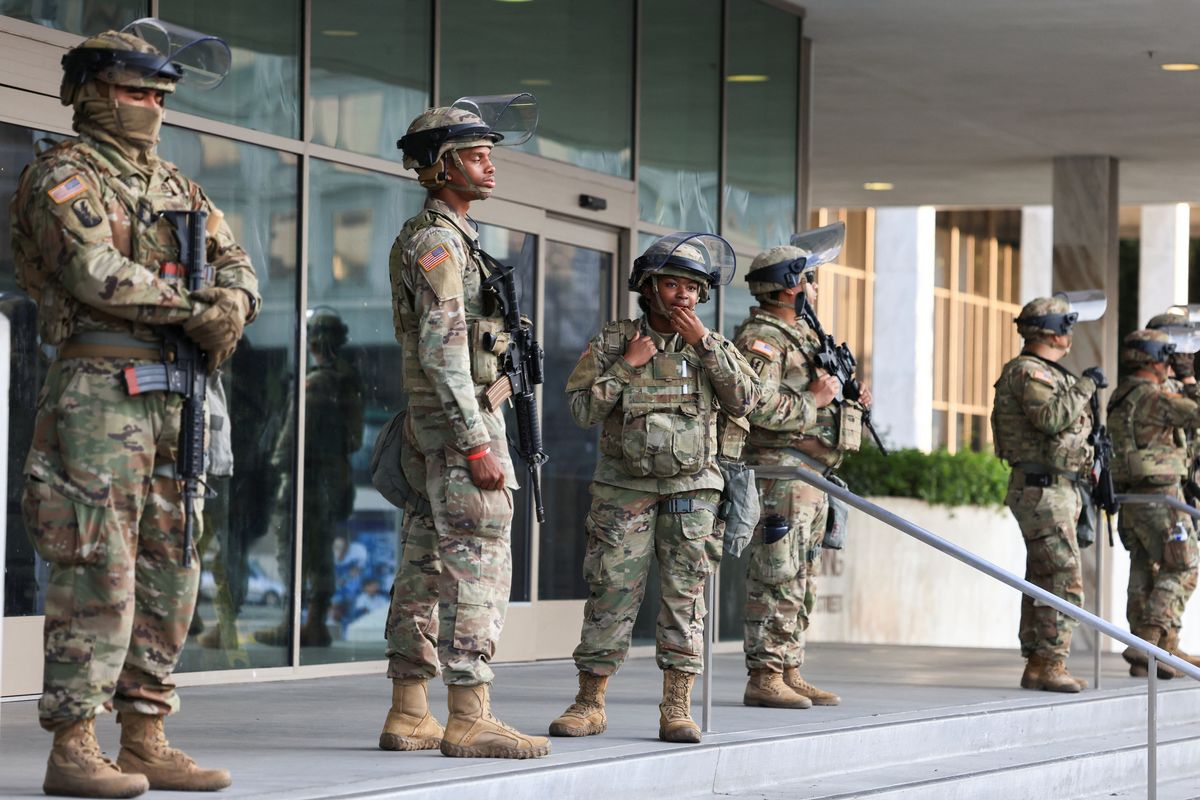
National Guard members stand in Los Angeles, in June. 
REUTERS/David Swanson

This is not about crime. This is about control.

The proposed deployment of the Tennessee National Guard to Memphis is not a response to public safety. It’s a political stunt engineered by a twice-impeached, multi-indicted president exploiting Black suffering and white fear to reclaim political relevance.

It’s a charade rooted in fearmongering, cloaked in the rhetoric of “law and order” but animated by the same authoritarian impulse that called troops to Lafayette Square in Washington, D.C. and cages to the border for immigrants. And Memphis, yet again, finds itself on the night shift of American injustice.

Let’s be clear: according to reports from the Memphis Police Department, violent crime in Memphis is at a 25-year low. That should be headline news. Instead, we’re being sold a spectacle — military trucks rumbling through Black neighborhoods, uniforms in place of understanding and surveillance in place of safety.

This isn’t public protection. It’s political theater.

Manufactured misfortune, misleading metrics

This deployment is not isolated. It’s part of a broader pattern where President Donald Trump and his allies target majority-Black cities, especially those with Black or Democratic mayors, as staging grounds for his white nationalist theatrics.

He’s not sending the National Guard to predominantly white towns with drug epidemics or mass shootings. He’s not showing up where far right groups like Proud Boys and Oath Keepers are organizing. No! He’s only sending troops into the heart of Southern Black communities, where governors like Tennessee’s Bill Lee are all too eager to oblige.

This is a makeshift Confederate army, operating under the guise of public safety, weaponized against the very people it claims to protect.

And when the statistics show that crime was already decreasing before the National Guard landed, Trump will no doubt claim victory for what he didn’t cause. He will take credit for what was already happening. And many will believe him, because authoritarianism always rewrites the facts before it rewrites the laws.
Beware the blowback

Some Memphians, even some Black ones, are applauding the National Guard’s presence. I understand the fatigue. I understand the trauma. But I caution us not to confuse fatigue with clarity, or trauma with truth.

When Latino voters supported Trump in 2024, many assumed his deportation policies would only target “others” — those without papers, those from different countries. But immigration crackdowns don’t ask for green cards before the cuffs come out. Similarly, when some white voters supported anti-DEI policies thinking only Black communities would be impacted, they learned quickly that cruelty rarely stops at the color line.

Memphians who think this military presence will only criminalize “the worst of us” need only look at the ICE detention center in nearby Mason, built on a former prison site and now holding undocumented immigrants caught in the dragnet of “tough on crime” posturing. According to NBC News, 40 percent of the 2,300 people arrested during the National Guard presence in D.C. were undocumented immigrants. This isn’t speculation — it’s precedent.

Hypocrisy in high places

What’s most galling is the hypocrisy of state lawmakers cheering this intervention. The same officials who’ve refused federal aid for healthcare, blocked Medicaid expansion, and lamented “Big Brother” when it suited their politics are now welcoming federal boots on our blocks. They’ve done nothing to stem the flood of guns in Tennessee, passed no meaningful policy to support youth or mental health services, but now demand military muscle as a cure-all?

This is intellectually dishonest at best and unserious at worst.

And those of us who dare to call it out are accused of being anti-police or unpatriotic. But I love Memphis enough to tell it the truth: You cannot incarcerate your way to safety. You cannot militarize your way to peace. You cannot criminalize your children and expect your community to thrive.

We’ve been here before

In my sermon this past Sunday, I reminded my congregation that some of the most liberating work has always been done during the night shift. My mother — Claudia Mae Fisher — worked the literal night shift for decades on a bridge in Michigan. And in the spiritual and political sense, we are on the night shift right now. Just like Jesus encountering the man born blind in John 9, we are being asked who is to blame. But I contend the better question is: What is God trying to reveal through this misfortune?

As I said in that sermon, we are not called to applaud political stunts or submit to scare tactics. We are called to do the work of liberation—day or night, with or without military presence.

We are not blind. We see what’s happening.

A call to action

Now is the time to demand clarity and accountability from our mayors, our state legislators, our governor, and those in the White House. We must push back against political spectacle with principled resistance. The presence of the National Guard is not protection. It’s provocation. It is an occupation of our streets and a betrayal of our dignity.

We deserve policies, not performances.

We demand investments, not intimidation.

We are not pawns in a political war. We are people, and we deserve to be treated as such.

Let this be our charge on the night shift: to shine light, speak truth, and refuse to be silent in the face of spectacle.

Rev. Earle J. Fisher, Ph.D. is the Senior Pastor of Abyssinian Baptist Church in Memphis, Tennessee – The Blackest Church in Memphis and Shelby County. He’s also the founder of #UPTheVote901, a nonpartisan voter empowerment initiative committed to producing political power and increasing voter turnout in Memphis and Shelby County
The GOP Is Waging a War on Democracy

Gerrymandering is just one piece of a much larger democratic breakdown.


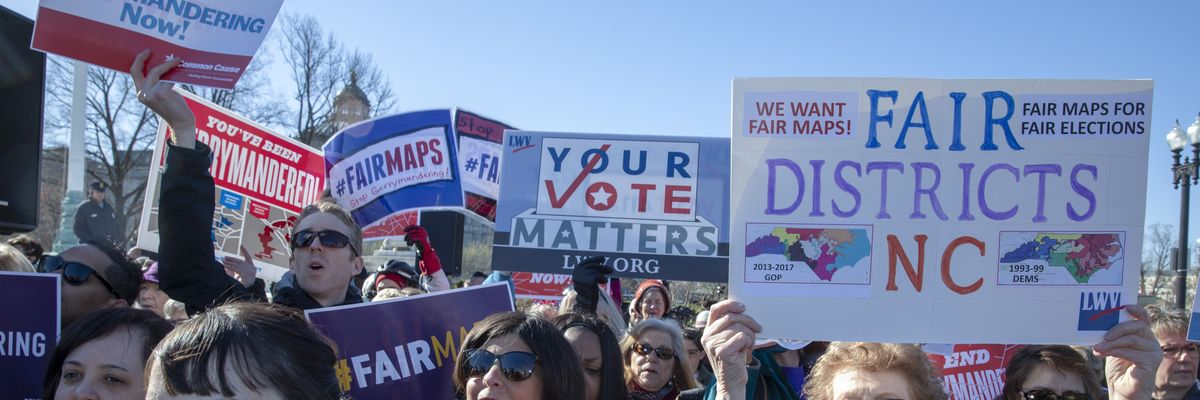
Protesters attends a rally for “Fair Maps” on March 26, 2019 in Washington, DC. The rally was part of the Supreme Court hearings in landmark redistricting cases out of North Carolina and Maryland.
(Photo by Tasos Katopodis/Getty Images)

Richard Eskow
Sep 16, 2025
Common Dreams


A few days before the Charlie Kirk murder, I was invited on the radio show Heroes and Patriots to discuss gerrymandering. It’s still a timely topic. Kirk’s killing has led to a frontal assault on speech and democracy by Trump, Vance, and the MAGA right. While this is a newer phenomenon, however, other assaults on democracy have been underway for quite some time. These fights can’t be won individually. They need to be seen as part of a greater whole.

Gerrymandering, as most people know, is the process of altering electoral maps to favor one party, most visibly in congressional race. a Republicans have been the most aggressive practitioners of this dark art in recent years, although Democrats have certainly also engaged in it. It’s newsworthy today because Trump, fearful of a midterm congressional loss, directed the Texas GOP to redraw that state’s already-contested map to find him five more seats—and because Gavin Newsom, with the help of Nancy Pelosi, is openly attempting to counter-gerrymander the California map in response.

Report Details a Doubling of GOP-Led Attacks on Democracy in 2025

In this rancid historical moment, Newsom’s move makes sense. It’s tilting at windmills to oppose gerrymandering on principle while your opponent openly defies even the pretense of democracy. But it’s also important to point out that Newsom’s response will remain little more than theater, or partisan positioning, as long as our political system fails to respond more effectively to public interest and public pressure.

In a tactical sense, what Newsom is doing makes sense. But all of this is still playing out at the level of theater, rather than values, as long as neither party chooses to confront the real challenges to democracy—along with economic inequality, genocide, climate change, racism, and structural violence—in anything but the most superficial terms.

Things won’t change without major political pressure. That won’t happen until advocates link democratic principles to people’s everyday struggles.

We haven’t had a functioning democracy for a long time. It’s broken, and gerrymandering is one piece of that brokenness.

A few examples out of many:80 percent of voters want Congress to raise the national minimum wage, which hasn’t happened since 2009.
60 percent of voters oppose further aid to Israel, something both parties support, and half of voters believe (correctly, according to experts) that Israel is committing genocide.
Two-thirds of all voters support unions, but Congress has passed no major pro-union legislation since the Civil Service Reform Act of 1978.
More than 60 percent of those polled agree that “reducing the influence of money in politics should be a top goal for the president and Congress.” As Pew Research reports, “While there are wide partisan differences on most policy goals, 65 percent of Democrats and 60 percent of Republicans rate this as a top priority.”

Despite all of this, there are no plans to make this a top priority.

This is not to argue that there are no differences between the two political parties. Rather, the system itself limits political possibility. Gerrymandering is just one piece of a much larger democratic breakdown, alongside systemic issues such as the Electoral College and Senate, media monopolization, the hijacking of the judicial system, and the overall influence of big money (dark, light, and everything in between).

The hosts mentioned several reform proposals, such as Hendrik Smith’s advocacy for AI-assisted independent commissions, which in my opinion could fuel “next-generation” gerrymandering. Newsom and others have expressed interest in commissions or referendums to explore the issue, which they typically describe as “bi-partisan.” I prefer the “non-partisan” approach, since both parties depend on big-money donors.

In any case, things won’t change without major political pressure. That won’t happen until advocates link democratic principles to people’s everyday struggles. The fight against gerrymandering must be part of a larger vision—a truly representative democracy that works for everyone. Until then, I fear that the fight against gerrymandering—important as it is—will remain little more than a tactical skirmish within a broken system.
Why Are America’s Far-Right Leaders So Young?

How social media turned a handful of young provocateurs into the far right’s national vanguard.


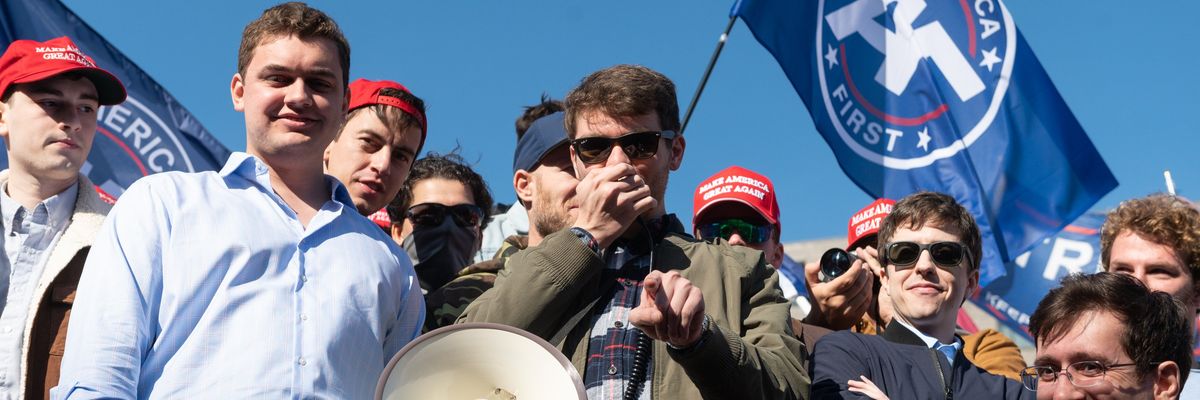
Nick Fuentes, the leader of a Christian-based, extremist white nationalist group, speaks to his followers, ‘”the Groypers,” in Washington DC on November 14, 2020.
(Photo by Zach D Roberts/NurPhoto via Getty Images)


Ryan W. Powers
Sep 16, 2025
Common Dreams

Through the late 2010s, pundits hailed Gen Z as America’s most progressive young cohort. Yet, the truth is more complicated: While many young voters voice support for climate action, racial justice, and reproductive rights, their overall partisan tilt is far less lopsided than early headlines implied. Support for Democrats among under-30 voters has softened since 2020, and young men in particular are drifting rightward on issues like gender equality and LGBTQ+ rights.

That gap between reputation and reality is, in part, due to a rising cadre of young conservatives who are more radical, more visible, and better organized than their progressive peers. From Nick Fuentes to Laura Loomer to the late Charlie Kirk, the figures shaping the far-right agenda have been startlingly young. Why, then, are some of the movement’s most prominent figures in their late 20s and early 30s? How did a political current once defined by veteran politicians and talk-radio personalities come to be led by live-streamers and college-circuit activists?

Consider Fuentes. Only 28, yet he commands a national audience of more than 700,000 followers. He has a dedicated fanbase, connections to GOP congressmen, and once had a private dinner with US President Donald Trump. And Fuentes is not an outlier. From political candidates to campus organizers, the far-right’s most prominent figures are getting younger—and more extreme.

The explanation lies in the internet’s ecosystem. Figures like Mike Cernovich and Jack Posobiec were among the first to show how provocation and relentless online promotion could transform fringe ideas into mass influence. In the years since, news has gone largely digital, with about 86% of Americans getting at least some of their news on phones or computers. The overwhelming bulk of political information now flows through a dense lattice of live-streams, podcasts, and Discord servers, all spaces young people navigate with native ease.

For ambitious young people, each viral provocation can bring a surge of followers and donations, turning radicalism into a fast track to high-profile visibility.

In this landscape, digital platforms have dismantled traditional barriers to political power. Two decades ago, a young ideologue needed gatekeepers—local radio, party donors, sympathetic editors—to build a following. Today, a ring light and an algorithm are enough. YouTube, Twitch, TikTok, and X provide inexpensive infrastructure and frictionless amplification, allowing individuals to raise money, mobilize supporters, and establish a brand long before institutions can react.

Why is this dynamic propelling the far-right in particular? Without much formal representation in elected office, these ideas circulate almost entirely online, where scarcity makes them more alluring. And algorithms reward outrage, propelling the sharpest sound bites and most incendiary claims to the top of every feed. For ambitious young people, each viral provocation can bring a surge of followers and donations, turning radicalism into a fast track to high-profile visibility.

Conservative legacy media compounds the effect. Figures who achieve algorithmic virality are quickly booked on cable programs and high-profile podcasts, which confer legitimacy and feed the next surge of online attention. The result is a self-reinforcing loop: Digital notoriety leads to mainstream exposure, which drives further radical content.

The American left lacks a parallel generation of online, movement-building leaders. Progressive lawmakers such as Sen. Bernie Sanders (I-Vt.) and Rep. Alexandria Ocasio-Cortez (D-N.Y.) have national profiles, but their influence depends on elected office and formal party structures rather than on a grassroots, youth-led network. Yes, young progressives such as Dean Withers and Matt Bernstein have built impressive reputations as digital advocates for progressive causes. But they operate largely as individual voices, not as architects of a nationwide, highly-branded youth movement comparable to Kirk’s Turning Point USA or Fuentes’ America First movement. Comparable grassroots movements on the left, like the emerging 50501, lack visible leaders capable of unifying and sustaining a broad, youth-driven base.

This distinction matters. Without a cohesive, youth-led movement, progressives struggle to match the visibility and narrative power of their far-right counterparts. Every far-right provocation arrives with a spokesperson and a polished national platform, while the left relies on a handful of elected officials and scattered digital voices. The absence of equally prominent, institutionally supported young progressives cedes narrative ground, and gives rising alt-right leaders disproportionate space to break out online.

Addressing this imbalance will not turn on deplatforming extremist voices alone; the internet’s architecture makes that a game of whac-a-mole. Nor will it come solely from established progressive leaders. It requires cultivating and sustaining a cohort of young progressives who can operate effectively online and build movements without succumbing to social media’s darkest ideologies. It also requires a cultural shift on the left: valuing charismatic leadership as a complement—not a substitute—for collective action.

Gen Z was supposed to guarantee a progressive future. Instead, many of its most visible political entrepreneurs are on the far-right. Unless progressives move beyond supporting individual creators and intentionally develop their own social movements, the loudest young voices shaping America’s political future will continue to belong to its most far-right fringes.


Our work is licensed under Creative Commons (CC BY-NC-ND 3.0). Feel free to republish and share widely.


Ryan W. Powers is a Philly native and legal analyst. A Harvard lawyer fired for publishing op-eds critical of the Trump administration, he spends his free time writing opinion pieces on democracy, dissent, and the law.
Full Bio >