Wednesday, September 24, 2025

SPACE/COSMOS

By 

NASA and the National Oceanic and Atmospheric Administration (NOAA) launched three new missions Wednesday to investigate the Sun’s influence across the solar system. 

At 7:30 a.m. EDT, a SpaceX Falcon 9 rocket lifted off from Launch Complex 39A at NASA’s Kennedy Space Center in Florida carrying the agency’s IMAP (Interstellar Mapping and Acceleration Probe), Carruthers Geocorona Observatory, and NOAA’s SWFO-L1 (Space Weather Follow On-Lagrange 1) spacecraft.

“This successful launch advances the space weather readiness of our nation to better protect our satellites, interplanetary missions, and space-faring astronauts from the dangers of space weather throughout the solar system,” said acting NASA Administrator Sean Duffy, “This insight will be critical as we prepare for future missions to the Moon and Mars in our endeavor to keep America first in space.”

These missions will help safeguard both our ground-based technology, as well as our human and robotic space explorers from the harsh conditions known of space weather. 

“As the United States prepares to send humans back to the Moon and onward to Mars, NASA and NOAA are providing the ultimate interplanetary survival guide to support humanity’s epic journey along the way,” said Nicola Fox, associate administrator, Science Mission Directorate at NASA Headquarters in Washington. “Our scientific discoveries and technical innovations directly feed into our know-before-you-go roadmap to ensure a prepared, safe, and sustained human presence on other worlds.”

New science to protect society

Each mission will investigate different effects of space weather and the solar wind, which is a continuous stream of particles emitted by the Sun, from their origins at the Sun all the way outward to interstellar space.

“These three unique missions will help us get to know our Sun and its effects on Earth better than ever before,” said Joe Westlake, Heliophysics Division director at NASA Headquarters. “This knowledge is critical because the Sun’s activity directly impacts our daily lives, from power grids to GPS. These missions will help us ensure the safety and resilience of our interconnected world.”

The IMAP mission will chart the boundary of the heliosphere, a bubble inflated by the solar wind that shields our solar system from galactic cosmic rays — a key protection that helps make our planet habitable. In addition, the spacecraft will sample and measure solar wind particles streaming outward from the Sun, as well as energetic particles streaming inward from the boundary of our solar system and beyond. 

“IMAP will help us better understand how the space environment can harm us and our technologies, and discover the science of our solar neighborhood,” said David McComas, IMAP mission principal investigator at Princeton University in New Jersey.

The Carruthers Geocorona Observatory is the first mission dedicated to recording changes in the outermost layer of our atmosphere, the exosphere, which plays an important role in Earth’s response to space weather. By studying the geocorona — the ultraviolet glow given off by the exosphere when sunlight shines on it — the Carruthers mission will reveal how the exosphere responds to solar storms and how it changes with the seasons. The mission builds on the legacy of the first instrument to image the geocorona, which flew to the Moon aboard Apollo 16 and was built and designed by scientist, inventor, engineer, and educator Dr. George Carruthers.

“The Carruthers mission will show us how the exosphere works and will help improve our ability to predict the impacts of solar activity here on Earth,” said Lara Waldrop, the mission’s principal investigator at the University of Illinois at Urbana-Champaign.

The first of its kind, NOAA’s SWFO-L1 is designed to be a full-time operational space weather observatory. By keeping a watchful eye on the Sun’s activity and space conditions near Earth 24/7, and without interruption or obstruction, SWFO-L1 will provide quicker and more accurate space weather forecasts than ever before.

“This is the first of a new generation of NOAA space weather observatories dedicated to 24/7 operations, working to avoid gaps in continuity. Real-time observations from SWFO-L1 will give operators the trusted data necessary to issue advance warnings so that decision-makers can take early action to protect vital infrastructure, economic interests, and national security on Earth and in space. It’s about safeguarding society against space weather hazards,” said Richard Ullman, deputy director of the Office of Space Weather Observations at NOAA. 

Next steps

In the hours after launch, all three spacecraft successfully deployed from the rocket and sent signals to Earth to confirm they’re active and working well.

Over the next few months, the spacecraft will make their way to their destination — a location between Earth and the Sun, about a million miles from Earth, called Lagrange point 1 (L1). They should arrive by January and, once their instrument checkouts and calibrations are complete, begin their missions to better understand space weather and protect humanity.

David McComas of Princeton University leads the IMAP mission with an international team of 27 partner institutions. The Johns Hopkins Applied Physics Laboratory in Laurel, Maryland, built the spacecraft and will operate the mission. 

The Carruthers Geocorona Observatory mission is led by Lara Waldrop from the University of Illinois Urbana-Champaign. Mission implementation is led by the Space Sciences Laboratory at University of California, Berkeley, which also designed and built the two ultraviolet imagers. BAE Systems designed and built the Carruthers spacecraft.

The Explorers and Heliophysics Projects Division at NASA’s Goddard Space Flight Center in Greenbelt, Maryland, manages the IMAP and Carruthers Geocorona Observatory missions for NASA’s Science Mission Directorate.

The SWFO-L1 mission is managed by NOAA and developed with NASA Goddard, and commercial partners. NASA’s Launch Services Program, based at NASA Kennedy, manages the launch service for the missions.

Eurasia Review

Eurasia Review is an independent Journal that provides a venue for analysts and experts to publish content on a wide-range of subjects that are often overlooked or under-represented by Western dominated media.


Dwarf galaxies linked by massive intergalactic gas bridge


Astronomers have made a groundbreaking discovery of a colossal bridge of neutral hydrogen gas linking two dwarf galaxies


International Centre for Radio Astronomy Research

NGC4532_DDO137.png 

image: 

Caption: (Left) Radio galaxy image of neutral hydrogen in and around the NGC 4532 / DDO 137 using ASKAP.  (RIGHT) An optical image of the galaxy from the Legacy Surveys.

view more 

Credit: Credit: ICRAR and D.Lang (Perimeter Institute).

NGC_4532_and_DDO_137_video.mp4 [VIDEO] 

A rotating pseudo-three-dimensional visualisation of the interacting system of NGC 4532 and DDO 137. A faint bridge of gas extends between the two galaxies.

Astronomers find 'bridge' of gas between galaxies [VIDEO] 

Professor Lister Staveley-Smith explains the discovery of a bridge of gas between two galaxies


Caption

CSIRO’s ASKAP radio telescope on Wajarri Yamaji Country.

Credit

Alex Cherney/CSIRO

HKU researcher and collaborators detect first “heartbeat” of a newborn neutron star in distant cosmic explosion


The University of Hong Kong
artistic illustration 

image: 

An artistic illustration of the magnetar and the gamma-ray burst jet in this work (Illustration: Yuja Tian and Yuting Wu, Nanjing Zhijiao Cloud Intelligent Technology Co., Ltd.; Scientific concept guidance: Runchao Chen and Binbin Zhang, Nanjing University).

view more 

Credit: Illustration: Yuja Tian and Yuting Wu, Nanjing Zhijiao Cloud Intelligent Technology Co., Ltd.; Scientific concept guidance: Runchao Chen and Binbin Zhang, Nanjing University


A discovery involving researchers at The University of Hong Kong (HKU) has, for the first time, unveiled millisecond pulsations hidden within a powerful cosmic explosion known as a gamma-ray burst (GRB).

A collaboration among HKU, Nanjing University, and the Institute of High Energy Physics of the Chinese Academy of Sciences (CAS) detected a brief but highly coherent oscillation in the GRB designated GRB 230307A on 7 March 2023. The signal, spinning nearly a thousand times per second, points to the birth of a “millisecond magnetar”—a rapidly rotating neutron star with an ultra-strong magnetic field. The findings have recently been published in Nature Astronomy, marking a milestone in astrophysics and providing the clearest evidence yet that magnetars can power some of the most luminous explosions in the universe.

Deciphering the “Heartbeat”

Gamma-ray bursts are the brightest explosions known, briefly outshining the entire gamma-ray sky. They are triggered when compact stars—such as neutron stars—collide and merge, or when massive stars collapse, leaving behind exotic remnants. For decades, scientists have debated whether these remnants collapse immediately into black holes or survive as highly magnetized neutron stars.

GRB 230307A detected by China’s GECAM satellites (B and C) and NASA’s Fermi satellite (GBM), was the second brightest GRB ever recorded. Optical follow-up observations confirmed that it originated from a compact star merger. Yet its unusually long, one-minute duration defied standard expectations, which predict less than two seconds of emission from such events.

“This event gave us a rare opportunity,” said Professor Bing ZHANG, Chair Professor of the Department of Physics at HKU and co-corresponding author of the study. “By uncovering its hidden ‘heartbeat’, we can finally say with confidence that some GRBs are powered not by black holes, but by newborn magnetars.”

The research team sifted through more than 600,000 datasets collected by the GECAM satellites—dedicated gamma-ray detectors designed and launched by the Institute of High Energy Physics (CAS) in Beijing. The analysis, led by Nanjing University, revealed a striking 909-Hz quasi-periodic oscillation (QPO) lasting just 160 milliseconds.

“This is the first time humanity has directly observed a periodic signal from a millisecond magnetar inside a gamma-ray burst,” said PhD student Run-Chao CHEN of Nanjing University, the paper’s first author. “It is like hearing the first heartbeat of a newborn star.”

The detection was independently confirmed using data from GECAM-B, GECAM-C, and NASA’s Fermi Gamma-ray Burst Monitor, cementing its astrophysical origin.

Why So Brief?

The fleeting pulse raised new questions. HKU Professor Zhang offered a theoretical explanation, “The magnetar’s rapid spin imprints a periodic signal onto the gamma-ray jet through its magnetic field. However, because the jet evolves quickly, this signal appears only when the emission briefly becomes asymmetric. For just 160 milliseconds, the heartbeat was visible before the jet’s symmetry hid it again.”

This interpretation suggests that GRB 230307A was powered by a Poynting-flux dominated jet—a stream of energy driven primarily by magnetic fields rather than matter. Both the millisecond magnetar and magnetized jet concepts were proposed by Professor Zhang more than a decade ago. This “heartbeat” detection provides the strongest evidence yet linking theory to observation.

Research Impact

Until now, GRB central engines could only be inferred indirectly from afterglow modeling or theoretical assumptions. This study provides the first direct observational imprint of a magnetar’s spin in a gamma-ray burst.

“This discovery transforms our understanding of the most extreme explosions in the cosmos,” Professor Zhang emphasized. “It shows that newly born magnetars can survive compact star mergers and act as powerful cosmic engines. This opens a new frontier in multimessenger astronomy, linking gamma rays, gravitational waves, and the physics of compact stars.”

The team plans to search for similar pulsations in other bright GRBs. Each detection will bring astronomers closer to understanding the life and death of compact stars, the role of magnetars in cosmic evolution, and the origins of extreme astrophysical phenomena.

“As more advanced space observatories come online, we expect to uncover more of these fleeting signals,” Professor Zhang said. “Each one will be a heartbeat from the depths of space, telling us the story of the mysterious universe under the most extreme conditions imaginable.”

The research was carried out jointly by HKU, Nanjing University, and the Institute of High Energy Physics, CAS. Professors Bin-Bin Zhang (Nanjing University) and Shao-Lin Xiong (CAS) are co-corresponding authors alongside HKU’s Professor Bing Zhang. The project received support from the China Ministry of Science and Technology’s Key R&D Program, the National Natural Science Foundation of China, the China Space Station Program, and Jiangsu Province Innovation Programs. The GECAM satellite mission was developed under the Strategic Pioneer Program on Space Science (Phase II) of CAS.

The journal paper can be accessed from here: http://doi.org/10.1038/s41550-025-02649-w

For media enquiries, please contact HKU Faculty of Science (tel: 852-3917 4948/ 3917 5286 ; email: caseyto@hku.hk / cindycst@hku.hk ).

Images download and captions: https://www.scifac.hku.hk/press

 Protests in India's northern Ladakh region turn deadly


Jenipher Camino Gonzalez
DW with AFP, AP, Reuters
 24/09/2025

Violent clashes between police and protesters left at least four people dead in Ladakh, a Buddhist-Muslim enclave in the Himalayas. Demonstrators want statehood, job quotas and better representation for tribal areas.

Authorities reportedly imposed restrictions on gatherings in the territory.
Image: AP Photo/picture alliance

Officials say at least four people were killed in India's remote Himalayan territory of Ladakh on Wednesday, following clashes between police and protesters.

Police said dozens were injured in the clashes, as hundreds of people took to the streets to demand greater autonomy for the northernmost territory.

What local authorities say happened

India's ministry of home affairs said demonstrations were triggered by "provocative" speeches by activist Sonam Wangchuck, who has been on hunger strike since September 10.

According to the ministry a political party office was attacked, during which, a senior councillor's office was set alight.

Officials said a police vehicle was also torched and that more than 30 police and personnel were injured.

"In self-defense, police had to resort to firing in which unfortunately some casualties are reported," the statement added.

In the aftermath, authorities reportedly imposed restrictions on gatherings, banning assemblies of more than four people.

Indian media showed an abandoned police vehicle engulfed in flames, while local media reported some young protesters threw stones at police, who responded with tear gas to disperse them.

Ladakh's lieutenant governor Kavinder Gupta called for an end to violence and restoration of peace in a video message circulated by his office.

Why are people protesting?

Ladakh is a high-altitude desert region home to some 300,000 people, bordering both China and Pakistan.

The territory lost its autonomy in 2019, as it was carved out of Jammu and Kashmir state by Indian Prime Minister Narendra Modi's government and placed under the direct administration of New Delhi.

Roughly half of Ladakh's residents are Muslim, while some 40% are Buddhist.

Protesters are demanding statehood for the federal territory, job quotas for local residents, and also for Ladakh to be given special status that would allow the creation of elected local bodies to protect its tribal areas.

The demonstrations were called in solidarity with Sonam Wangchuk, who has been on hunger strike for two weeks.

"Social unrest arises when you keep young people unemployed and deprive them of their democratic rights," Wangchuk said, in a statement posted on social media.

Edited by: Kieran Burke


Pakistan-India: In Punjab, flooding sparks anger among residents

Asia / Pacific
From the show
Focus
Reading time1 min

Since late June, unusually heavy monsoon rains have hit northern India and Pakistan, killing hundreds of people. The worst-hit province is Punjab, where nearly 4 million people have been displaced. Climate change is mainly to blame. But the floods have also been worsened by the opening of dams in India. FRANCE 24's Shahzaib Wahlah reports from Pakistan.

France rejects asylum claim by anti-whaling activist Paul Watson

Paul Watson’s bid for asylum in France has been turned down, leaving the veteran anti-whaling campaigner in legal limbo.


Issued on: 24/09/2025 - RFI

Paul Watson, Canadian anti-whaling activist and founder and of the Sea Shepherd Conservation Society © ODD ANDERSEN/AFP


France has declined to grant political asylum to anti-whaling activist Paul Watson, dismissing his plea that he would face persecution if returned to Canada or the United States.

Ofpra, the French body charged with asylum decisions, judged his fears “unfounded,” noting that both countries are “democracies governed by the rule of law".

Watson, the founder of the Sea Shepherd conservation group, aged 74, holds dual US and Canadian citizenship.

He was held in Greenland for five months in 2024 before Denmark declined to extradite him to Japan, which accuses him of involvement in damage and injury aboard a Japanese whaling vessel in 2010.

He arrived in France late last year and filed his asylum claim in February.

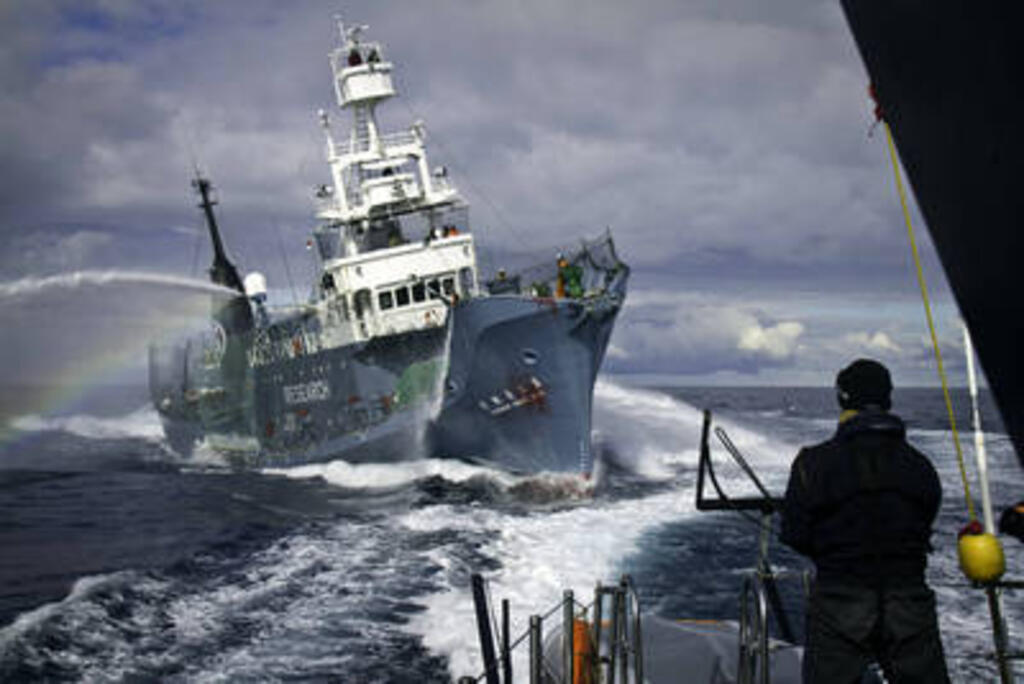
Japanese whaling fleet vessel Yushin Maru No. 3 (C) sprays water cannons at Sea Shepherd vessel ”Gojira” during their clash in the Southern Ocean 4 February 2011. Reuters/Simon Ager/Sea Shepherd/Handout


Furthering the campaign

Speaking to RFI in February, Watson remained unbowed by his ordeal. He described his jail time as “an opportunity to further the campaign” against illegal whaling, adding that he was “overwhelmed by the international response” to his detention.

He said he believed Denmark was “surprised” at the attention his case drew.

He remarked: “International waters are like the wild west, where rules exist but are not respected, often for economic or political motives.”

Watson emphasised that in his decades of activism he has “never hurt anyone” and has always “operated within the framework of the law".

He pointed out that, over the years, his crews had intervened to rescue an estimated 6,000 whales.

When pressed on his motivation, he recalled a harrowing experience in 1975 in which a whale threatened to crush his ship.

He said: “I looked directly in its eye … I could tell it knew what we were doing. … He could have killed us, but he chose not to. I owe my life to this whale. That’s when it hit me … we [humans] are insane. And I said to myself that I would do whatever it takes to protect these animals.”


'Disappointed' but hopeful


Watson, who is still based in France, recently told RFI he tries not to dwell on uncertainty. “You have no control over the future, but you have absolute control over the present. What you do today will define your future.”

For him, that means continuing to use every platform available – from international summits to grassroots campaigns – to highlight threats to the ocean and rally support for whales.

Watson told reporters he is “disappointed" by the rejection of his asylum claim, but remains hopeful that he might ultimately obtain French citizenship.

His lawyer, Emmanuel Ludot, has urged France to reconsider. He said: “France is not honouring itself by refusing political asylum to Paul Watson. Japan maintains its international arrest warrant, so he is still in danger, wherever he may travel."

(with AFP)
UN Climate Summit gathers momentum in New York ahead of Brazil's Cop30

World leaders gathered in New York are putting climate action under the spotlight, using this week’s UN summit to lay the groundwork for November's Cop30 meeting in Brazil.

Issued on: 24/09/2025 - RFI

World leaders gathered in New York are putting climate action under the spotlight, using this week’s UN summit to lay the groundwork for November's Cop30 meeting in Brazil. REUTERS - Eduardo Munoz
With the United Nations General Assembly in full swing in New York this week, world leaders are preparing for a climate summit on Wednesday, aimed at injecting urgency into the faltering global fight against warming.

The meeting is widely seen as a staging post for November’s Cop30 in Belém, Brazil, where nations are expected to deliver the next big leap forward on climate action.

More than 110 heads of state, alongside business leaders and campaigners, are attending the sprawling Climate Week NYC, which boasts over 1,000 events.

The message from the sidelines is clear – progress is happening, but nowhere near fast enough.

“We’re here to power on,” said Helen Clarkson, head of The Climate Group, at the week’s opening. “It’s an uphill struggle, but we know we don’t have a choice. It’s up to us to protect what we love.”

'Building trust' key to solving climate crisis, Cop30 president tells RFI


Moment of contrast

The summit comes amid sharp contrasts. On the one hand, investment in renewables has surged to $2 trillion last year – double the outlay on fossil fuels – with solar now 41 percent cheaper than the cheapest fossil alternative.

“The economic case is clear,” European Commission President Ursula von der Leyen told a renewables gathering. “The momentum is real.”

On the other hand, the United States – host nation and historically a climate heavyweight – has been singled out for what analysts call the “biggest backslide in history” on climate policy.

Climate Action Tracker warned that recent rollbacks under President Donald Trump represent the most aggressive reversal they have ever documented.

Trump himself turned heads with a broadside against climate science during an address to the United Nations on Tuesday, using the moment to claim global warming is “the greatest con job ever perpetrated on the world.”

His stance has left allies dismayed but also galvanised others to press ahead regardless.

“Despair is not leadership. Fear has never built anything,” Australian billionaire Andrew Forrest said in New York.

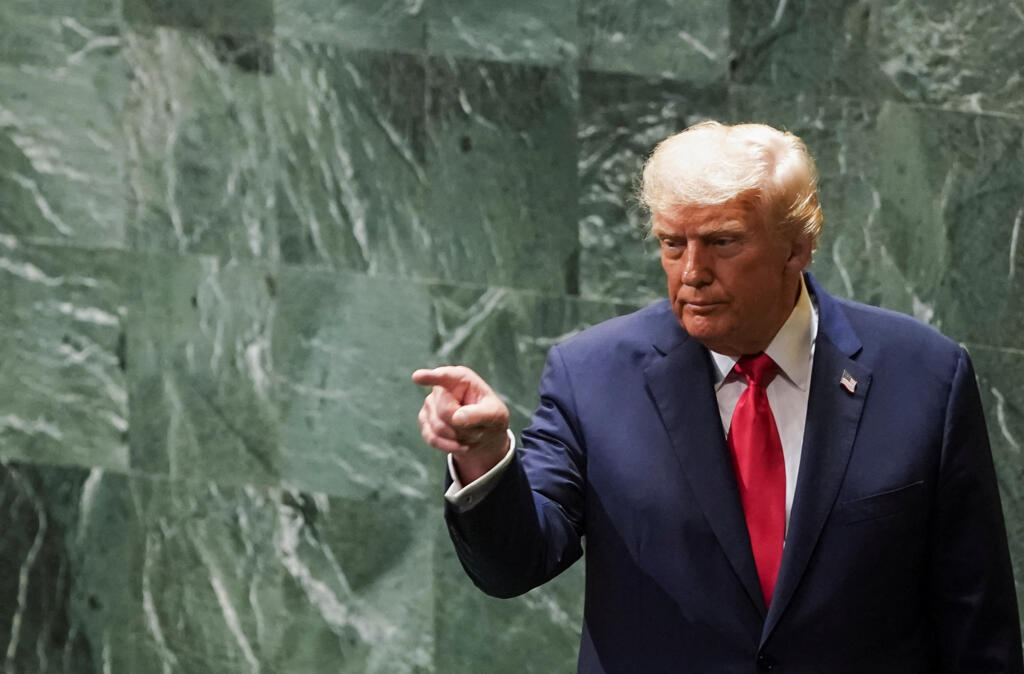
US President Donald Trump gestures after addressing the 80th United Nations General Assembly, in New York City, New York, 23 September 2025. © Alexander Drago / Reuters


Spotlight on China


All eyes, however, are on Beijing, as Chinese Premier Li Qiang will open the summit, with an update expected on his country’s 2035 emissions-cutting plan.

China is the world’s top polluter, responsible for about 30 percent of greenhouse gases, yet it is also racing ahead in green technology, from solar to electric vehicles.

Analysts expect China to pledge a modest reduction – “single digit to low double digit” percentage cuts – which may disappoint campaigners but still signals intent ahead of Cop30.

Crucially, Beijing is on track to peak emissions five years earlier than promised, thanks to its rapid roll-out of renewables.

“China has already become the green tech superpower of the world,” said Li Shuo of the Asia Society, who expects the country to under-promise but over-deliver.


Hope, with caveats

UN climate chief Simon Stiell is trying to keep the mood balanced between warnings and hope.

Without global cooperation, he says, the world is heading for five degrees of warming.

Now the trajectory is closer to three – still dangerous, but progress nonetheless.

“This new era of climate action must be about bringing our process closer to the real economy,” Stiell told delegates, launching a new “Build Clean Now” initiative to fast-track green industries.

Small island states, meanwhile, are making their voices heard.

Antigua and Barbuda’s Prime Minister Gaston Browne reminded leaders that “every degree of warming is an invoice” his Carribbean nation cannot pay.

Vanuatu and its allies in the Pacific are preparing a push at the UN General Assembly to require stronger action, citing this year’s International Court of Justice ruling that governments are legally bound to act.


Setting the stage for Brazil

With just weeks before Cop30 gets underway in Belém, the pressure is on.

Only 47 of 195 countries have submitted their updated national climate plans, even though they were due last February.

China and the EU are expected to show their hands in New York, while others may follow suit.

The idea is to give negotiators in Belém a clearer sense of where the world stands ahead of the summit's opening on 10 November.

The context is sobering, as the planet is already around 1.4°C warmer than pre-industrial levels, just a sliver below the 2015 Paris Agreement’s 1.5°C threshold.

Scientists warn that without sharper cuts, that goal will soon slip out of reach. Yet leaders here are keen to frame the summit as a springboard rather than a dead end.

As Stiell put it, “We are bending the curve. Still too high – but bending.”

(With newswires)


Nations deliver new climate targets ahead of climate summit

Louise Osborne
DW
 24/09/2025


With just weeks to go until the international climate conference, nations are stepping up to submit new climate targets for 2035. But will they be enough to prevent a climate catastrophe?


Rising temperatures are leading to more extreme weather events globallyImage: Johannes P. Christo/Andalou/picture alliance


"The stakes could not be higher," a senior UN official told reporters ahead of the UN Climate Summit in New York. Heavy flooding, drought and ever longer heatwaves are just some of the extreme weather events that have battered communities over the past summer alone.

Climate disasters are "wreaking havoc" on every continent, the UN official added.

Scientists say human-caused global warming is driving the changes in Earth's climate and that rising temperatures will mean worse impacts in the long run.

To try to tackle the climate crisis world leaders agreed to limit the average global temperature rise to well below 2 degrees Celsius (3.6 degrees Fahrenheit), pursuing efforts to cap it at 1.5 degrees.

The deal was sealed under the 2015 Paris Agreement, with countries promising to renew and communicate their commitments via a so-called NDC, or nationally determined contribution, every five years.

The deadline for the 2035 NDC was in February, but few of the 195 parties that have ratified the accord met the date. Pressure is now on for nations to come forward with their commitments this week.

Big climate emitters are falling behind

With less than two months to go before the start of the international COP 30 climate summit, taking place in Belem, Brazil, only 47 countrieshad delivered their climate goals by time of publication — representing just 24% of global emissions.

Big emitters including the European Union, and India are among those yet to submit their national targets. Some nations that have put forward domestic targets, like Australia and Japan, have been criticized for not showing stronger ambition and doing their fair share.

Many countries are expected to come forward with proposals. More than 100 nations have registered to speak at the UN Climate Summit,taking place on the sidelines of the UN General Assembly meeting in New York.

So, what are countries promising? And what does it mean for action on global warming?


European Union: Climate leader?


With a conflict on its borders, economic problems in some member states and a general political shift to the right, agreeing on a united response to the climate crisis has proven difficult for the 27-state bloc.

Just days before the climate summit, the EU indicated that it would not meet a deadline set by the COP30 Brazilian presidency to present its NDC before the end of September, instead issuing a statement of intent.

The document signaled the bloc's commitment to put forward a climate target before the November conference with a 2035 greenhouse gas reduction ranging between 66.25% and 72.5% compared with 1990 levels.

Stientje van Veldhoven, regional director for Europe at the World Resources Institute, said that while the statement showed "scope for progress", it risked "sending a confusing message, eroding investor confidence and undermining jobs, energy security, and competitiveness."

The EU is due to meet in October to discuss its climate targets
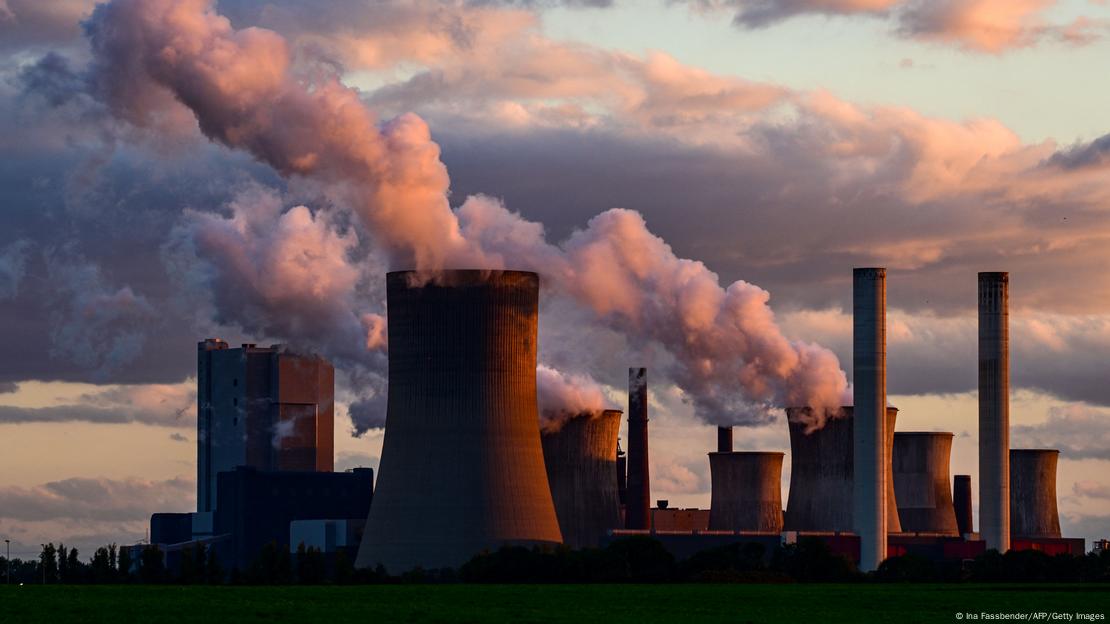
Image: Ina Fassbender/AFP/Getty Images

A proposal to reduce EU greenhouse gas emissionsby 90% by 2040 has been in the works for some time, but has yet to be agreed upon by all member states. Experts say the 2035 target would have an impact on that goal.

"The pathway matters: if the EU lands on the lower end of the range, like 66.3%, the final stretch to 90% just five years later will be a steep and uphill climb. That does not provide the long-term policy credibility that investors and companies need," added van Veldhoven.

China: Green energy giant

The world's biggest emitter, China, produces around a third of all greenhouse gas emissions and is under pressure to set an ambitious domestic reduction target.

However, its pledge to cut emissions by 7-10% from peak is both "underwhelming and transformative," Andreas Sieber, associate director of policies and campaigns at climate group 350.org, said in a statement.

He added that the reduction "falls short of what the world needs" but noted that it "anchors the world’s largest emitter on a path where clean-tech defines economic leadership."

Speaking to DW before the target was announced, Li Shuo, the director of the China Climate Hub at the Asia Society Policy Institute, said that a decision-making factor in China's NDC was likely to be the EU's failure to submit its targets on time and the US withdrawal from the Paris Agreement.

"I think those factors in general will present challenges to high ambition," he said.

The new Chinese target uses the country's peak emissions as a baseline, with all likelihood that the nation has either already reached its peak emissions or will do so soon.

Experts speaking before the announcement, which was made by Chinese President Xi Jinping in a video address to the climate summit, said that while China was likely to make a low pledge, it was a commitment that the country would probably meet and possibly even overshoot.

"In the case of China, when they come up with a target, it's something that they are really committed to, to really fulfill," Sofia Gonzales-Zuniga, senior climate policy analyst with Climate Analytics, told DW. "In a way it could not be that it's not the most ambitious, but we can have a certain level of trust that they will reach what they are promising."

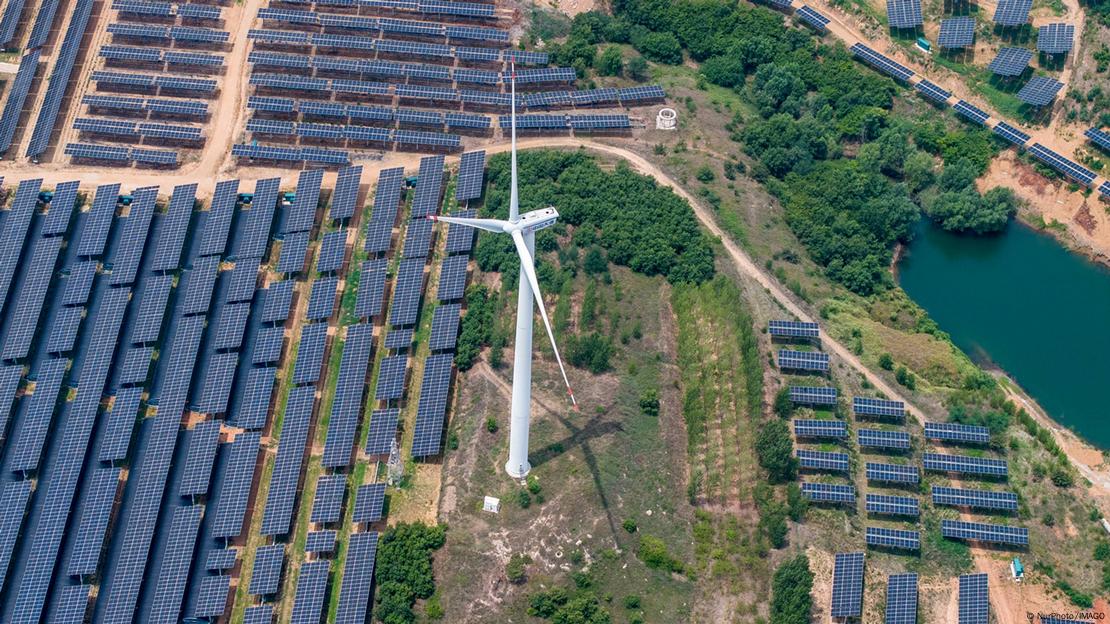
China has invested heavily in green technology in recent years
Image: NurPhoto/IMAGO

China is by far the globe's biggest investor in clean energy, with investment reaching around $625 billion in 2024 alone, according to the global energy think tank Ember,and Shuo said that was unlikely to change.

Brazil: The host with the most?


As host of the COP30 climate conference, Brazil has come under increasing scrutiny over its domestic targets.

Its plans to decrease its greenhouse gas emissions between 59 – 67% from 2005 levels by 2035 were met with criticism by experts who said that such a range created uncertainty and weakened accountability.

The country has also come under fire over plans to expand exploration of oil particularly around the mouth of the Amazon River.

However, Gonzales-Zuniga said that Brazil's recently published national strategy to reduce emissions adds clarity by specifying cuts in more specific sectors, for example, agriculture and deforestation, which account for three-quarters of the country's greenhouse gas emissions.

United Kingdom: The original gangster


Great Britain was the first country to initiate the Industrial Revolution, a period in history dating back to the mid-1700s, when fossil fuels were first burned to power industrial processes.


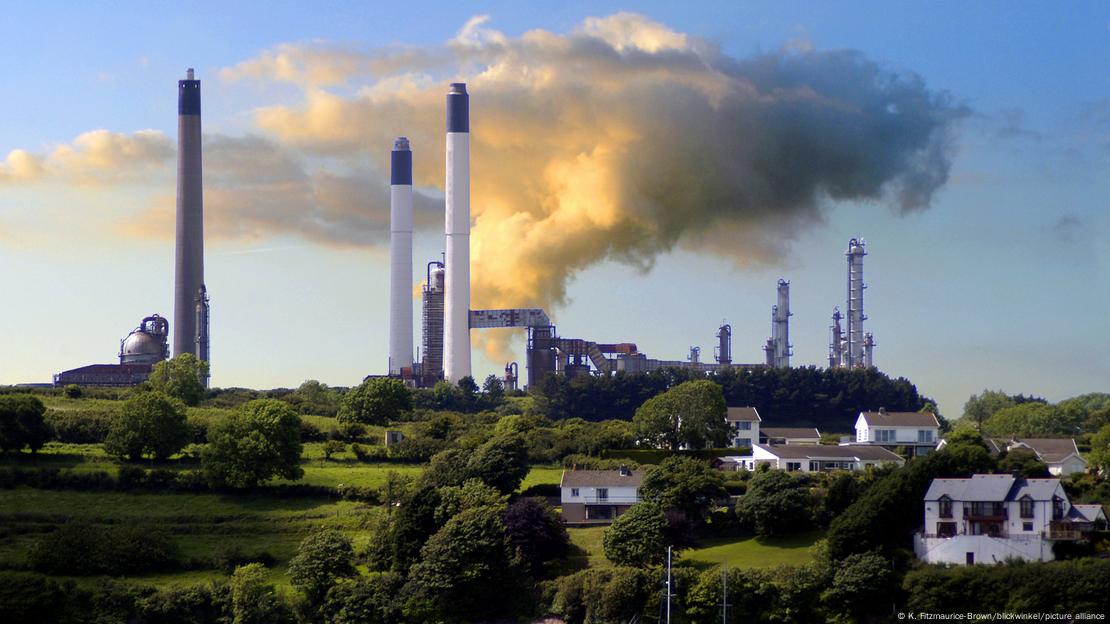
The UK is promising to reduce emissions over the next 10 years, but has still to put in place policy to make its pledge a reality
Image: K. Fitzmaurice-Brown/blickwinkel/picture alliance

As one of the countries with the highest cumulative emissions — having emitted the most overall after the US, EU countries and China — some experts argue it has a particular responsibility to lower its emissions quickly.

And it seems that the former EU country has stepped up. As well as submitting its NDC on time, the UK government has promised to reduce its greenhouse gas emissions by 81% compared with 1990 levels.

"They came up with a target that, in terms of their domestic emissions reductions, would be 1.5-degree aligned. So that was really positive to see," said Gonzales-Zuniga, adding that compared to targets for 2030, it was "definitely an increase in ambition".

However, it's not as simple as that. The UK still needs to bridge the gap between its promises and the policies it needs to put in place to meet those pledges.

And there's more. According to the Carbon Action Tracker website, the UK's responsibility extends further than just domestic cuts.

"They have a responsibility to provide climate finance to developing countries to reduce emissions outside their borders, to be able to say that they're really contributing in a fair way to reduce emissions," said Gonzales-Zuniga.

Indonesia: Phasing out fossil fuels

A high emitter in the Global South, experts say the climate goals due from Indonesia are ones to watch for.

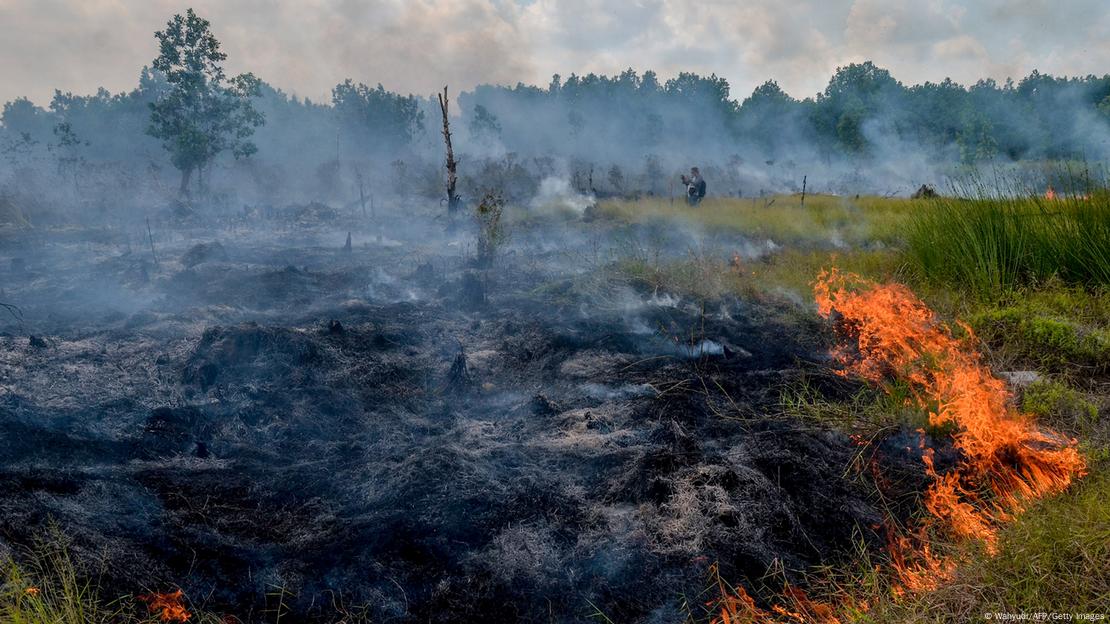
With a reliance on fossil fuels and significant deforestation contributing to emissions, the island nation produces more than 3% of all global greenhouse gases, but that could be about to change.
From 2001 to 2024, Indonesia lost around 20% of its tree cover
FROM BURNING FOR PALM OIL PLANTATIONS
Image: Wahyudi/AFP/Getty Images

President Prabowo Subianto has promised to phase out fossil fuel and coal-power plants within the next 15 years and wants to reach net zero by 2050, a full decade earlier than previously planned.

The country has not yet submitted its new domestic targets.

United States: The dropouts


Former US President Joe Biden submitted a climate target for the United States last year, pledging to reduce carbon emissions by 61% and 66% by 2035 compared to 2005 levels.

Since then, however, President Donald Trump has withdrawn the US from the Paris Agreement, essentially voiding the commitment. In a recent report, experts said the country had experienced its "most abrupt shift in energy and climate policy in recent memory".

Still, despite the policy U-turn, the report forecasts that the US is still on a path to reduce its greenhouse gases by 26 – 35% by 2035.

Speaking about the Paris Agreement, Gonzales-Zuniga said there had been some success, with the projected temperature rise by the end of the century having fallen.

However, she added: "We have always stressed that it was never in line with the actual goal of 1.5, so there is still that emissions gap that we are dealing with."

This article was changed to update China's announced climate targets

Edited by: Sarah Steffen


Louise Osborne DW's Chief climate reporter provides expertise on the defining crisis of our time.
Malawi's ex-president Mutharika returns to power in crushing vote win

Lilongwe (Malawi) (AFP) – Malawi's ex-president Peter Mutharika was re-elected to head the impoverished southern African country with nearly 57 percent of votes, the election authority announced Wednesday, following polls dominated by soaring living costs.


Issued on: 24/09/2025 - RFI

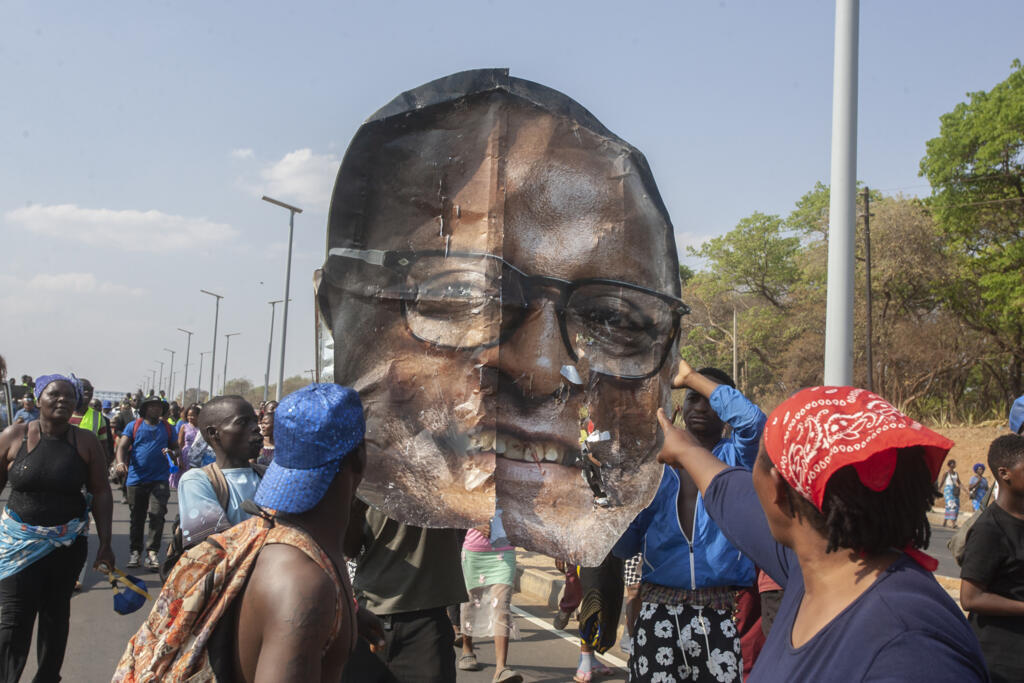
Supporters of Peter Mutharika, 85, and his Democratic Progressive Party (DPP) took to the streets in celebration © Amos GUMULIRA / AFP
President Lazarus Chakwera came second with 33 percent of ballots in the September 16 vote, the electoral commission said, hours after the incumbent had conceded defeat admitting his rival had an "insurmountable lead".

Supporters of Mutharika, 85, and his Democratic Progressive Party (DPP) took to the streets in celebration after Chakwera acknowledged in an address to the nation earlier Wednesday that he had lost his bid for a second term.

Mutharika, president between 2014 and 2020, campaigned on pledges of a "return to proven leadership" that criticised Chakwera's handling of the battered economy during his term, when Malawi also suffered drought and cyclones.

"A moment ago, I called Professor Mutharika directly to congratulate him on his historic victory and to wish him well," Chakwera said.

Even ahead of the official announcement of results, "it was clear that my main rival Peter Mutharika had already secured an insurmountable lead over me," said Chakwera, 70, a former pastor who heads the Malawi Congress Party (MCP).

The charismatic Chakwera came to power in the 2020 polls that ended the first term of Mutharika, a reserved constitutional law expert who spent decades out of Malawi including working as law professor in Washington.

Costs soared in the agriculture-dependent nation under his watch, with inflation reaching 33 percent and the prices of the staple food, maize, and of fertiliser skyrocketing.

Unofficial tallies carried by local media showed Mutharika, known by his supporters as 'father', had a strong lead © Amos GUMULIRA / AFP


He also failed to deliver on promises to create a million jobs and tackle corruption in the nation of 21 million people, more than 70 percent of whom live in poverty, according to the World Bank's benchmark.

Almost as soon as results started coming in from polling stations last week, unofficial tallies carried by local media showed Mutharika, known by his supporters as "father", had a strong lead.

Among the hundreds of party supporters who celebrated Mutharika's comeback in the capital Lilongwe, Mary Duncan said: "We hope that 'father' will bring food security and the price of fertiliser price will go down and civil servant salaries will improve."

The MCP, Malawi's oldest political party, claimed to have evidence of irregularities in the vote, including tallies that did not match and alleged ballot stuffing. Chakwera urged the High Court Tuesday to compel the Malawi Electoral Commission to delay the results, but the bid was rejected.

"The anomalies do not necessarily mean that the election result projecting Professor Mutharika as the winner is not credible or a reflection of the will of the people," he said in his address.


State of the economy

Mutharika has to be sworn into office between seven and 30 days of the announcement of his victory.

Voters who backed Mutharika were swayed by the relatively better state of the economy during his 2014-2020 term, analysts said, when he had assembled a strong economic team and brought inflation down to single digits, even though his tenure was also marred by allegations of corruption, food shortages and growing national debt.

During campaigning, he pledged economic growth and an end to a foreign exchange shortage that has restricted imports of fuel and fertiliser, saying: "I want to rescue this country."

"Malawians are longing for a better past," said Mavuto Bamusi, political analyst with the Malawi Political Science Association.

Chakwera "was a very good leader of the opposition and I think the expectation was that was going to translate into a very good and effective president," political science professor Boniface Dulani told AFP.

"But unfortunately, if you look at the economy, it's tanked. A lot of the things that they promised to do, they failed to do," he said.

© 2025 AFP


Uganda electoral commission clears Museveni and Bobi Wine to run for president

Uganda’s Electoral Commission has cleared octogenarian President Yoweri Museveni to seek re-election in polls scheduled for early next year, potentially extending his rule in the East African nation to nearly half a century. His rival, Bobi Wine, was also cleared on Wednesday afternoon.


Issued on: 24/09/2025 - RFI

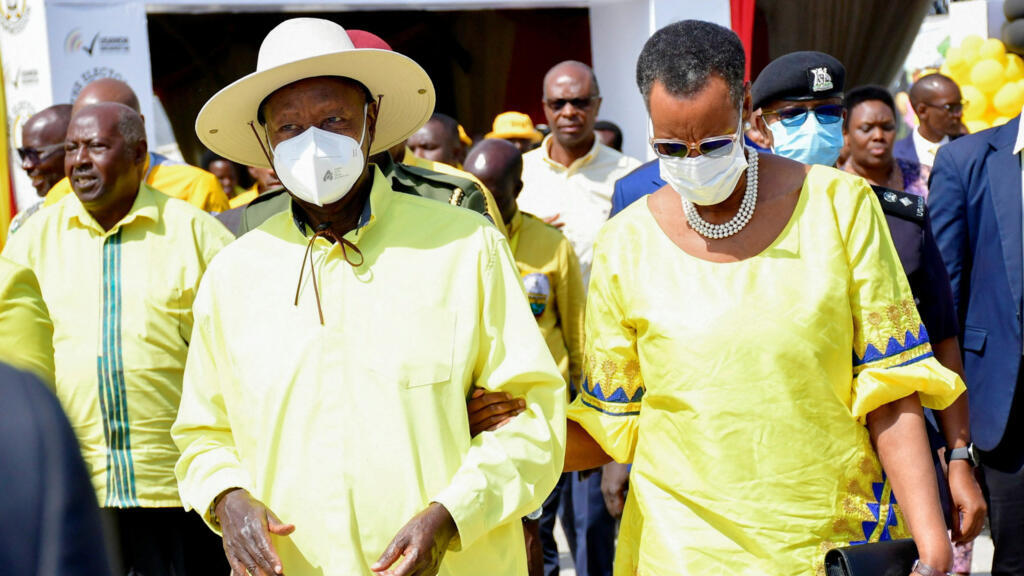
Uganda's President and the leader of ruling National Resistance Movement (NRM) party Yoweri Museveni and first lady Janet Museveni arrive at a ceremony for his nomination as presidential candidate at the Electoral Commission offices in Kampala, Uganda, on 23 September 2025. REUTERS - Abubaker Lubowa


The Electoral Commission made the announcement on Tuesday, near the capital, Kampala.

Uganda’s long-time President Yoweri Museveni will thus stand in the January 2026 elections, despite his nearly 40-year rule in the East African country, having been in power since 1986.

After the announcement, he urged supporters to back his vision for the future.

His party, the governing National Resistance Movement (NRM), had officially confirmed him in June as its presidential candidate.

Readied programme

In posts on social media, he thanked the NRM members for entrusting and electing him as their "Presidential flag bearer for the 2026-2031 term."

"In this economy, the GDP of Uganda has doubled currently in the recent Kisanja from $34 billion to $66 billion," he wrote. "You have everything today that you lacked in the past: electricity, roads, telephones, manpower, the educated people, and peace. That’s why we are being flooded by many investors because they are looking for a peaceful and profitable area where to invest."

He named among his priorities for this term wealth creation, education, infrastructure, the fight against crime and against corruption, and improvement in health and water provision.

Supporters of Uganda's President and leader of ruling National Resistance Movement (NRM) party Yoweri Museveni attend his nomination rally at the Kololo ceremonial grounds in Kampala, Uganda, on 23 September 2025. REUTERS - Michael Muhati

Controversial figure

A former rebel, Museveni came to power as he was seen as a hero who brought back peace to Uganda.

After seizing power in 1986 through force, Museveni said the problem facing Africa was not its people but "leaders who want to overstay in power".

For the next ten years Uganda had no multiparty elections. The country operated under what he called the “Movement system”.

In 1996, Museveni organised Uganda’s first presidential election under this system, standing as the candidate of the Movement, and won with around 75 percent of the vote.

Multiparty politics was only restored in 2005, after a referendum, while , under pressure from Museveni, the parliament scrapped presidential term limits.

Museveni is now Africa's fourth longest-ruling leader, and his government has amended the constitution twice to remove age and term limits, allowing him to remain in office.

Since coming to power, has been credited with stabilising Uganda, promoting economic growth, and combating HIV/AIDS.

But critics denounce his government's suppression of political opponents, human rights abuses and corruption scandals.

Ugandan opposition denounces brutal crackdown ahead of 2026 elections


Towards January 2026 polls


Museveni's was the first candidacy to be cleared by the elections body, which is charged with evaluating whether those seeking office meet legal requirements.

The body assessed this Wednesday the candidacy of Bobi Wine, 43, real name is Robert Kyagulanyi, a singer who has leveraged his pop stardom to galvanise a large support base among young voters.
Robert Kyagulanyi, also known as Bobi Wine, of the National Unity Platform (NUP) party, and his wife Barbara Itungo Kyagulanyi, attend a ceremony for his nomination as a presidential candidate at the Electoral Commission offices in Kampala, Uganda, on 24 September 2025. REUTERS - Abubaker Lubowa

Museveni defeated Wine in 2021 by a wide margin, though Wine said his victory was stolen through ballot stuffing, intimidation by security forces and other irregularities.


The president's opponents have long accused him of using state patronage and the military to maintain his grip on power, and of using kidnappings and torture against adversaries, claims he denies.

In May, Museveni's son, who is also Uganda's military chief Muhoozi Kainerugaba, admitted to holding a missing opposition activist in his basement while threatening that Wine would be next.

(with Reuters)


Trump pushes link between Tylenol use and autism despite no scientific evidence


US President Donald Trump on Monday urged pregnant women to 'tough it out' and shun Tylenol over an unproven link to autism, while also calling for major changes to childhood vaccines. Medical experts say the sweeping advice is unsupported by evidence and risks undermining decades of public health consensus.


Issued on: 23/09/2025 
By: FRANCE 24

Tylenol packages and caplets are displayed, in Los Angeles, California, on September 22, 2025. © Valérie Macon, AFP


US President Donald Trump on Monday vehemently insisted that pregnant women should "tough it out" and avoid Tylenol over an unproven link to autism, and urged major changes to the standard vaccines administered to babies.

The Republican leader's announcement rife with sweeping yet unsubstantiated advice came as the White House has vowed to revolutionise health in the United States, and as experts across medicine and science voice broad concern over the administration's initiatives that appear intent on unravelling decades of medical consensus.

Medical groups including The American College of Obstetricians and Gynecologists have long cited acetaminophen – the primary ingredient in Tylenol – as among the safest painkillers to take during pregnancy.

But Trump, who hammered on his message in increasingly emphatic terms, insisted that "taking Tylenol is not good" and to "fight like hell not to take it."


He said pregnant women should "tough it out," and that only an "extremely high fever" would justify taking the over-the-counter medicine.

That's not true: fever and pain can pose serious threats to both the mother and the developing fetus.

Arthur Caplan, the head of NYU's medical ethics division, called Trump's display "dangerous," "unscientific" and "full of misinformation."

"I worry that pregnant women are going to feel guilty if they took Tylenol. They're going to feel they let down their babies. They're going to feel that they were unethical in terms of trying to treat fever. That's just not fair, and it's not anything that anybody should be feeling," Caplan told AFP.

Debate ongoing

The Food and Drug Administration was far more muted than Trump on the topic, saying in a letter to physicians that "a causal relationship has not been established" and that scientific debate was ongoing.

A literature review published last month concluded there was reason to believe a possible link between Tylenol exposure and autism existed – but many other studies have found an opposite result.

Researchers behind the August report cautioned that more study is needed and that pregnant women should not stop taking medication without consulting their doctors.

David Mandell, a psychiatric epidemiologist at the University of Pennsylvania, told AFP that research suggests the possible risks posed by taking Tylenol while pregnant seem "to be lower than the risk of having an uncontrolled infection during pregnancy."
Anti-vax 'threat' to children

Identifying the root of autism – a complex condition connected to brain development that many experts believe occurs for predominantly genetic reasons – has been a pet cause of Trump's health chief, Robert F. Kennedy Jr.

Kennedy for decades has spread debunked claims that vaccines cause autism.

On Monday he touted the drug leucovorin, a form of vitamin B first used to alleviate chemotherapy side effects, as an "exciting therapy" that could help children with the disorder whose symptoms vary widely across a spectrum.

The FDA on Monday said it was approving the drug's tablet form to help a subset of children who have "cerebral folate deficiency".

Vaccines were also on the rambling agenda of Trump's conference.

He ardently repeated anti-vax movement talking points as top figures in the administration, including Kennedy, nodded along.

He sowed doubt over standard vaccines including the MMR shot – which covers measles, mumps and rubella – and implied he would end the common use of aluminium in vaccines, the safety of which has been widely studied.

And the president pushed for a major change to the routine vaccine schedule given to infants, insisting without evidence that there's "no reason" to vaccinate newborns against the incurable, highly contagious Hepatitis B.

That statement stands in direct contradiction of broad medical consensus formed over decades. Many experts say the best way to prevent maternal transmission of the disease, which can cause liver damage and cancer, is to vaccinate babies within the first day of life.

Trump's push comes days after an influential advisory panel handpicked by Kennedy stopped short of advising to delay the first dose of Hepatitis B vaccine by one month.

They deemed more discussion was necessary – offering temporary relief to many experts across public health who said postponing that shot could have dire results.

"Spacing out or delaying vaccines means children will not have immunity against these diseases at times when they are most at risk," said Susan Kressly, president of the American Academy of Pediatrics, on Monday.

"Any effort to misrepresent sound, strong science poses a threat to the health of children."

(FRANCE 24 with AFP)

Fact-checking Trump's claims of a link between Tylenol and autism


Issued on: 23/09/2025 - FRANCE24


Donald Trump made sweeping statements urging Americans not to use the over-the-counter painkiller Acetaminophen during pregnancy, saying it had links to autism. But he provided little scientific evidence to back this up. He also made sweeping statements about there being "virtually no autism" amongst the Amish or in Cuba. Most dangerously, he also repeated disproved claims about vaccines causing autism. Vedika Bahl fact-checks these claims in Truth or Fake.


European Medicines Agency refutes Trump's link between paracetamol (TYLENOL) and autism


Copyright ASSOCIATED PRESS

By Marta Iraola Iribarren
Published on 23/09/2025 - EURONEWS


The European Medicines Agency (EMA) joined a chorus of medical opinion stating on Tuesday that paracetamol is safe to use during pregnancy and that there is no evidence linking it to autism, contrary to claims made this week by the US president.


On Monday, the White House stated that it had identified a connection between the use of paracetamol in pregnancy – marketed in the US as Tylenol – and autism in children.

US President Donald Trump went further, claiming that Tylenol "is no good" and that pregnant women should "fight like hell" to avoid taking it. He had teed up the news over the weekend, saying “I think we found an answer to autism”.

The EMA stated that there is no evidence to support these claims. “There is no new evidence that would require changes to the current EU recommendations for use,” an agency spokesperson told Euronews.

In 2019, the Agency reviewed studies on the neurodevelopment of children exposed to paracetamol during pregnancy and concluded that the findings were inconclusive, with no evidence of a link to neurodevelopmental disorders.

The EMA now states that extensive data from pregnant women who used paracetamol during pregnancy shows no increased risk of malformations in the developing foetus or in newborns – information already included in product labelling in the EU.

“When needed, paracetamol can be used during pregnancy. However, the advice is to use it at the lowest effective dose, for the shortest possible time and as infrequently as possible,” the spokesperson added.

As with all medicines, the EMA and national competent authorities in the EU carry out continuous safety monitoring of products containing paracetamol.

The announcement from the Trump administration followed a pledge by US health secretary Robert F. Kennedy Jr in April to identify the cause of autism by September.

As Euronews previously reported, the United States’ announcement also prompted backlash from child health experts.

Researchers widely believe autism is caused by a combination of genetic and environmental factors, including advanced parental age, prenatal exposure to air pollution, and low oxygen levels around the time of birth.
BE AFRAID, BE VERY AFRAID
YouTube to reinstate creators banned over misinformation


YouTube's move to reinstate users previously banned for misinformation marks a victory for Donald Trump's conservative allies 


Washington (AFP) – YouTube is set to reinstate creators previously banned for promoting Covid-19 misinformation and false election-related content, according to a letter sent Tuesday by parent company Alphabet to a Republican lawmaker.

Issued on: 24/09/2025 


The policy reversal marks a victory for the conservative allies of US President Donald Trump, who have long accused tech platforms and professional fact-checkers of a liberal bias and of using anti-misinformation policies as a pretext for censorship.

"Reflecting the company's commitment to free expression, YouTube will provide an opportunity for all creators to rejoin the platform if the company terminated their channels for repeated violations of Covid-19 and elections integrity policies that are no longer in effect," Alphabet's legal counsel said in the five-page letter to Jim Jordan, the Republican chair of the House Judiciary Committee.

"YouTube values conservative voices on its platform and recognizes that these creators have extensive reach and play an important role in civic discourse."

The full impact of the policy reversal was yet to be determined, and it was not immediately clear which creators would be reinstated and when.


In recent years, figures such as FBI Deputy Director Dan Bongino, White House counterterrorism chief Sebastian Gorka and podcast host Steve Bannon were among those previously banned from the platform, according to US media.

Alphabet accused former president Joe Biden's administration of pressuring the company to impose the bans.

"Senior Biden Administration officials, including White House officials, conducted repeated and sustained outreach to Alphabet and pressed the company regarding certain user-generated content related to the COVID-19 pandemic that did not violate its policies," the letter said.

"While the company continued to develop and enforce its policies independently, Biden administration officials continued to press the Company to remove non-violative user-generated content," it added.
Policy rollback

After Biden took office in 2021, his administration urged platforms to purge what it identified as harmful misinformation –- including content that encouraged people to inject bleach and other disinfectants to cure Covid-19, a suggestion once echoed by Trump.

Jordan, who has spent years probing what Republicans have blasted as a coordinated effort by Biden's administration to suppress conservative voices online, celebrated Alphabet's announcement as a "victory in the fight against censorship" and a "massive win" for the American people.

"To make amends to the American people, and because of our work, YouTube is rolling back its censorship policies on political speech, including topics such as Covid and elections," Jordan wrote on X.

"No more telling Americans what to believe and not believe," he added.

Alphabet's letter stressed that "YouTube has not and will not empower fact-checkers to take action on or label content across the company's services."

Instead, it allows users to add notes of context to user content, adopting a community-driven approach to combating online misinformation that was popularized by Elon Musk's platform, X.

The decision to reinstate previously banned users also mirrors Musk's move to welcome back prominent purveyors of misinformation on Twitter, which he rebranded as X after acquiring it in 2022.

© 2025 AFP
Recognition of Palestine 'distracting attention' from Gaza war, UN's Albanese says

Issued on: 23/09/2025 -
FRANCE24


The UN's Special Rapporteur on Palestine has told FRANCE 24 that France's recognition of a Palestinian state marks a real shift in European policy. Francesca Albanese points out that only a few European countries have now not recognised the state. However, she also said she is concerned that the recognition distracts attention "from what is needed" amid the humanitarian catastrophe in Gaza. Albanese adds that "we cannot use Hamas as an excuse to hijack the Palestinians' self-determination". She spoke to us in Perspective.


Video by: Stuart Norva


13:22 min


West Bank residents have mixed feelings over France's recognition of Palestinian state

As France officially recognised the state of Palestine, residents of the Israeli-occupied West Bank expressed doubt over the move’s impact amid ongoing conflict and economic struggles. While some see symbolic value in the recognition, many say it does little to change their daily reality under occupation and war.


Issued on: 23/09/2025 - 
By: FRANCE 24

People walk along a street in the centre of Ramallah in the occupied West Bank on September 22, 2025. © John Wessels, AFP


Despite widespread global anticipation of France's recognition of a Palestinian state, residents of the Israeli-occupied West Bank felt the move would have little tangible effect on their daily lives.

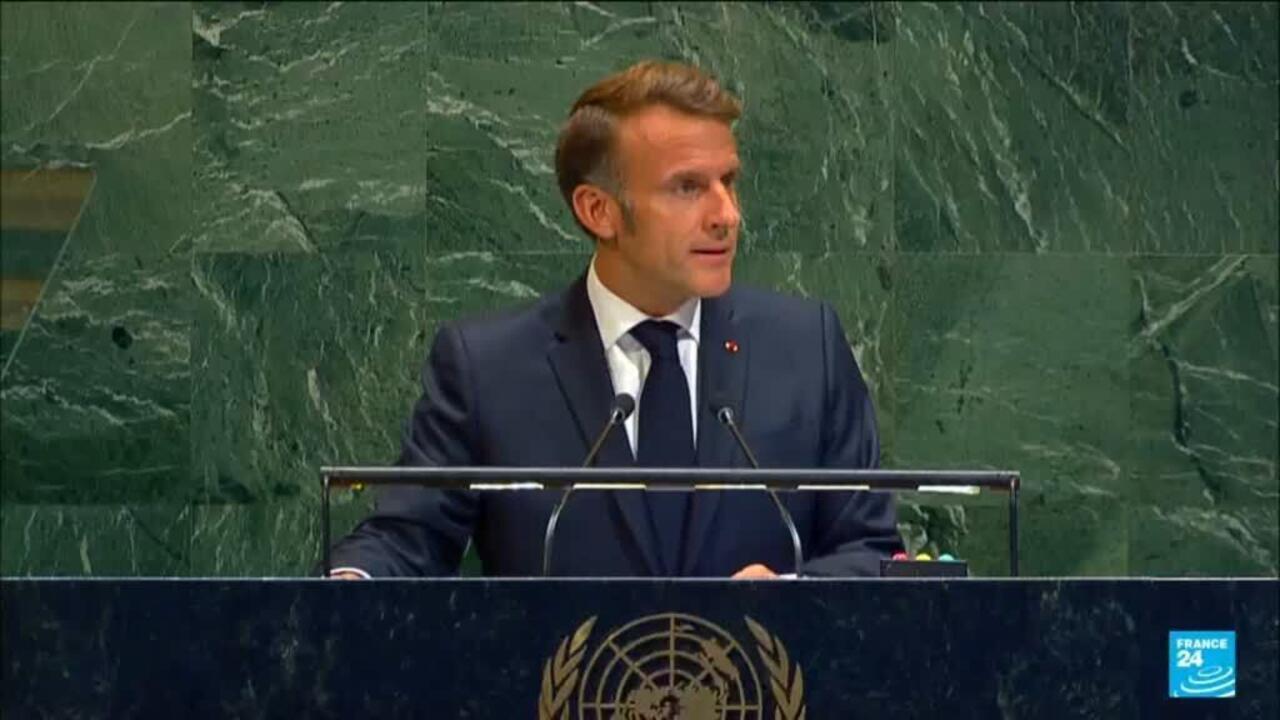
In the streets of Ramallah – seat of the Palestinian Authority – screens were not showing the UN gathering where French President Emmanuel Macron announced the recognition, and most said they would not tune in to watch it.

"Of course (recognition) is a good thing, but even if the whole world recognises it, Palestine's situation will not improve," said Zain Abdel Wahab, 18, on a quiet shopping street in Ramallah.

"The war on Gaza has lasted two years. What will this recognition bring us? Will the war end? No, it will continue," he said, adding that economic conditions in the West Bank were deteriorating.

‘The time has come’: France recognises the state of Palestine at UN summit
© France 24
01:35


Many Palestinians expressed disinterest in the wave of countries recognising their state.

Rasha, a 37-year-old who gave only her first name, said she did not care about the move. "The West... is making a big deal out of it but it does not make any difference for Palestinians, it does not make any change in our daily life."

"It's too risky (to go to Jenin) because of all the settlers that are attacking us, and... there are too many checkpoints now," she continued.

"So much for their Palestinian state that they are recognising."
'Somebody cares'

Following the move by Britain, Canada and Australia to recognise the Palestinian state, Israeli Prime Minister Benjamin Netanyahu vowed to expand settlements in the West Bank, adding that no such state would exist.

The move by the Western leaders moreover comes as Israel presses its war in Gaza, where famine has taken root and the vast majority of the territory has been devastated by two years of war.

For some, recognition of a state of their own was a positive step, but it still fell short.

"We are happy with this recognition, but we want additional steps from the countries that recognised the state of Palestine," said Ibrahim Salam Abdullah, 18.

"We want the countries that recognised the State of Palestine and gave us their love to work on improving the situation in the West Bank, ending the war in our beloved Gaza Strip, and ending the famine that is afflicting the children and all of our people in Gaza."

At a cafe in downtown Ramallah, men smoked and clapped occasionally during Macron's speech, with some praising him for addressing equality between Israelis and Palestinians.

Abu Elias, 63, who was watching the speech said he was optimistic but felt nothing would change in the short term.

"You don't go to the moon in one day," he said, adding, "nothing has been happening for 80 years and now I have a feeling something good for Palestinians will happen".

Bisan, a 25-year-old architecture student, admitted she didn't really understand what the recognition would mean.

"I don't understand what this recognition entails, and I don't know what to think about it because I don't know what is the future of a Palestinian state," she said.

"I don't know what the European countries mean when they say they want to recognise Palestine.

"We don't see the reality of it. But I think for my parents, it's important, it makes them feel that somebody cares."

(FRANCE 24 with AFP)