Wednesday, September 24, 2025

Please Don’t Step In It! 💩


I gotta get back to doing stand-up comedy. I mean the **** is so smelly and deep no matter where you look. Don’t you just love those countless television and radio commercials showing Americans how those lovely corporations are there to help you? I mean, everything being sold, even healthcare and medicines, is there to make our lives better. Thank God they haven’t yet taken away the listing of side effects on most of the drugs Big Pharma insists we need to take in order to live. (Of course, there are cases when a [slight] percentage of us are in quite dire straits, in actual life and death struggles). How about those commercials where everyone taking the newest miracle drug dances around with each other like they did on VE Day 1945?

The car commercials are great. Especially when the average price of a new car or SUV or pickup truck is well over $50k, or with a BMW or Mercedes well over $70k. Factor in the overwhelming number of working stiffs out there, duh, like 90% of us, who have trouble affording a $20k used car. The bandits in corporate Amerika have the whole deck rigged when $20k a year covers about six month’s rent for so many families. We haven’t even gotten to health care costs yet:

A few years ago my wife, who was not yet eligible for Medicare, was  costing us $7k a year in hospitalization insurance premiums.  For the first time in her life she gets a kidney stone. Knowing how much an ambulance costs ($ 600-700 for the ride over to the ER) she was in so much pain she could not literally get out of bed. Between the ambulance and the ER charge ( and let me say that everyone involved in caring for her, from the paramedics to the nurses and doctor, were top shelf human beings). The next month we get a bill for over $2500 as Blue Cross only paid like $400 or $500 of the $3000 visit to the ER. You see, technically she was not admitted to the hospital, only to the ER. Blue Cross was shrewd enough to call their plan Hospitalization, so we got squat!

It seems like the politicians, from both parties, have copied the accident attorneys with their mantra: “I’m out there fighting for you!” No boxing gloves needed for these jokers. We should know by now that the Republicans are only out there fighting for YOU when they send undocumented laborers away from their **** jobs. They are fighting to keep the top bracket of Americans (duh, like less than one percent of us) from paying their fair share, as the rest of us pay through the nose for housing, food, clothing, doctor bills etc. Let’s call a spade a spade (No pun intended). The Republican Party has a history of making sure that people with black (and now brown) skin don’t live near us white people or go to school with our kids… except the high school football and basketball stars who they find a way in. Now, the Democrats, who say they “Feel your pain,” with 10% few exceptions suck up to their corporate or billionaire donors and turn a blind eye to the needs of us working stiffs. Instead of fighting to stop funding phony wars and other foreign interventions, they go right ahead with this empire. Lip service is what they decide to give us.

So, that is why this writer says you must be careful where you step when you walk outside of your little cocoon.

Philip A Farruggio is regular columnist on itstheempirestupid website. He is the son and grandson of Brooklyn NYC longshoremen and a graduate of Brooklyn College, class of 1974. Since the 2000 election debacle Philip has written over 500 columns on the Military Industrial Empire and other facets of life in an upside down America. He is also host of the It’s the Empire… Stupid radio show, co produced by Chuck Gregory. Philip can be reached at paf1222@bellsouth.netRead other articles by Philip.


Supremely Courting Authoritarian Rule


Perhaps the degradation of our rule-of-law regime would happen anyway,” Jackson wrote. “But this Court’s complicity in the creation of a culture of disdain for lower courts, their rulings, and the law (as they interpret it) will surely hasten the downfall of our governing institutions, enabling our collective demise.
— Supreme Court Justice Katanji Jackson, July 10, 2025

Eight months into Trumpist/MAGA rule, the broadly-based resistance to that rule is standing strong. There is no question that the Trumpist plan was to so overwhelm us within six or so months, “flooding the zone” with one attack and lie after the other, such that, by now, they would be well on their way to their objective of permanent, authoritarian rule of the USA with all that this would mean for the world.

Early in February I wrote a column which listed five areas of focused work which, together, could make it possible for us to successfully prevent this objective of the regime: street heat, local/state/federal government pressure, legal action/the courts, media and publicity and outreach. Overall, I think we’ve done well in all these areas. We are clearly still on the defensive and will be until at least the November 2026 elections, but we have also clearly won a number of victories, among them the political fact that Trump’s polling numbers are way down. Much of what the MAGA’s are trying to do is very unpopular.

What about the legal challenges to Trump’s many (321) Executive Orders? Here’s what the Associated Press reports as of yesterday as far as what has happened to them: 321 have been filed. 138 have been partial or full victories for the democratic forces. 91 were losses; the EO’s were “left in effect.” And 92 are pending.

An optimist would look at these numbers and correctly say that 71.5% were either victories of some kind or still pending. A pessimist would say that 57% were either losses or still pending. But there’s a deeper issue that needs to be assessed: the shadow docket, where the Court majority makes “emergency” decisions without explaining publicly why they are doing so.

An NBC article yesterday reported on the results of this deeply concerning—and un-American—way that this particular Supreme Court, dominated by MAGA supporters and conservatives, has been advancing the Trumpist agenda:

“So far, the Trump administration has asked the Supreme Court to weigh in on an emergency basis 28 times, according to an NBC News tally. It has lost only two. Four cases are pending, although the court issued temporary wins to the government in one of them while it decides the next steps to take. Three others resulted in no decision.

“The limited number of emergency requests compared with the total number of cases indicates the administration has been wary of rushing to the justices on issues where even a conservative majority receptive to some of its aggressive assertions of executive power may push back.”

Emergency requests and decisions have dramatically increased under the Roberts Supreme Court, and it is certain that there will be more going forward.

Katanji Jackson, in a 15 page dissent to an “emergency” decision on the issue of birthright citizenship, said this:

“The Court has cleared a path for the Executive to choose law-free action at this perilous moment for our Constitution—right when the Judiciary should be hunkering down to do all it can to preserve the law’s constraints.” she wrote. “I have no doubt that, if judges must allow the Executive to act unlawfully in some circumstances, as the Court concludes today, executive lawlessness will flourish.”

So what can the progressive resistance movement do about this?

I think we can do a lot, if a critical mass of organizations steps forward and develops a plan to go public and visible calling out the undemocratic and dangerous reality of what the Supreme Court majority is doing, particularly these shadowy, opaque, undemocratic “emergency” decisions. Just like we have had and will be having, on October 18, successful mass actions of millions in the streets around the country calling for No Kings, worker justice, women’s rights, climate justice, racial justice and more, it is time for such a nationally coordinated action sometime this fall focused on this issue.

Resistance activists and supporters in the mass media and social media should be all over this one. It’s fundamental to all that we are fighting for. Elected officials need to be speaking up. Every way that we have to educate and activate should be used.

It’s time to bring Supreme Court allowance of “executive lawlessness” out into the open as a major issue.

Ted Glick has been a progressive activist and organizer since 1968. He is the author of the recently published books, Burglar for Peace and 21st Century Revolution, both available at https://pmpress.org. Read other articles by Ted, or visit Ted's website.


Venezuela: Surgentes condemns US interference and extrajudicial execution of 17 Venezuelans


Venezuela boat

First published in Spanish at Surgentes. Translation by Federico Fuentes for LINKS International Journal of Socialist Renewal.

Faced with the United States’ hostile military presence in the Southern Caribbean since August 2025, the human rights collective Surgentes declares the following:

1. We condemn the US military presence off Venezuela’s coast as an act of hostility that violates Article 2.4 of the United Nations Charter, which states “All Members shall refrain in their international relations from the threat or use of force against the territorial integrity or political independence of any State…”

2. We condemn the extrajudicial executions carried out by US soldiers of at least 17 Venezuelans traveling in speedboats from Venezuela. Such acts constitute a violation of the right to life, which must be investigated and punished.

3. We denounce that this new interventionist action comes on top of the long list of unilateral coercive measures that have negatively impacted upon the human rights of the Venezuelan population and have facilitated the de facto Maduro government's imposition of a state of emergency in violation of the Constitution and human rights.

4. We condemn a potential US military occupation of Venezuela or any other act of aggression on our territory, as such actions would violate the human right of peoples’ self-determination, enshrined in Article 1 [of the UN Charter], and the two main UN human rights conventions. US interests in relation to Venezuela prioritise: a) control over oil and other resources; b) reducing immigration; and c) minimising the presence of China, Russia, and Iran on the continent. The Trump administration has no real interest in democracy or respect for the Constitution and human rights in Venezuela, despite the fact that these are rhetorically raised by some in their alliance. It is worth remembering this is the same government that supports Israel’s genocide in Gaza; has been responsible for serious human rights violations during the occupations of Afghanistan, Iraq, and Syria (which continue to experience episodes of violence and destruction); and systematically disrespects the constitution and human rights in its own country.

5. We deplore the acquiescence of the opposition sector led by María Corina Machado in the face of the US’ hostile acts against Venezuela. Venezuela’s problems must be resolved by Venezuelans, in a sovereign, democratic, negotiated and peaceful manner, with the support and involvement of countries in our region, particularly our brothers and neighbours in Colombia and Brazil. Any president who attempts to govern the country by arriving on US warships will govern in favour of that country's interests and prolong the authoritarian and exclusionary tragedy that Maduro's de facto government represents today.

6. We denounce that the de facto Maduro government is using this US aggression to again escalate repression against the popular majority and the different opposition groups, with the aim of generating terror and immobilising the population. It is also using the situation to facilitate the unification of its forces around a patriotic discourse that aims to obscure the serious human rights violations that underpin its governance.

7. We reject the warmongering rhetoric of the Maduro government’s leaders and its negative impact on the internal conflict, as well as the coercion suffered by public employees to enlist in the militias. We recall that the Constitution guarantees the right to freedom of conscience, which includes the right to conscientious objection (Article 61), prohibits forced recruitment, and establishes the possibility of performing civilian service as an alternative to military service (Article 134).

Requests and demands

1. We request that Latin American countries promote, within the framework of the United Nations, a debate on the hostile US military presence in the Caribbean, as it relates to Article 2.4 of the UN Charter.

2. We demand that the Public Ministry initiate an investigation into the intentional homicide of the 17 people attacked by US military forces.

3. We offer our support to the families of these 17 people to help them in lodging their cases with international human rights organisations and request the solidarity of US human rights organisations to initiate criminal proceedings for these acts in the courts of that country.

4. We demand an end to all unilateral coercive measures by the US against Venezuela.

5. We join with all popular and democratic sectors that, while denouncing the de facto government of Maduro, its repressive policies and violations of human rights, mobilise to condemn all forms of US interference in Venezuela.

6. We ask that the governments of Colombia and Brazil facilitate a genuine political negotiation in Venezuela that can allow us, in a peaceful manner, to recuperate democracy, stop the repression and reduce poverty and inequality.

Green capitalism is not dead yet


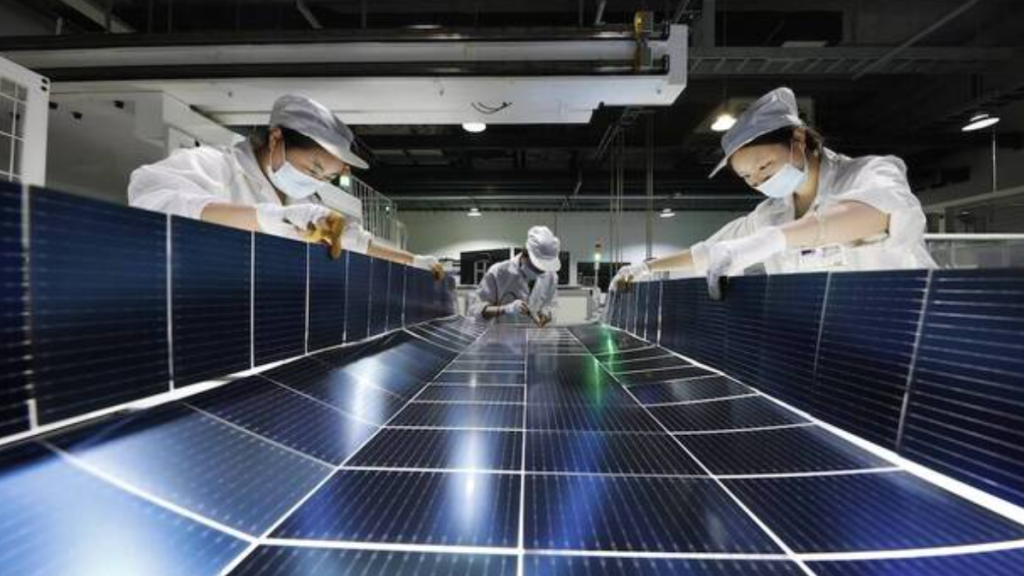
Workers assemble solar panels at a factory of Jiangsu DMEGC New Energy Co. in Suqian, China, 22 July 2025. Photo: IMAGO / VCG

First published at Rosa-Luxemburg-Stiftung.

In the EU, the Green Deal has collapsed. By contrast, China is continuing to invest massively in ecological modernization. How did the country become a technological leader and what geopolitical tensions have resulted?

Germany’s automobile industry is in crisis, as the export-oriented growth model is eroding. Green-capitalist modernization efforts are now blocked. Meanwhile, the trade war among the “new triad competition” — the US, Europe, and China — is escalating. The tariff war is above all the expression of a rearrangement of power relations within global capitalism.

For while the West is in danger of failing to create “green capitalism”, China is managing a rapid rise in “green” technologies. The three so-called new industries — E-cars, batteries, and renewable energy — already contribute an estimated 40 percent to China’s GDP growth. China’s “green” capital dominates not only the country’s important domestic market, adding significantly to the crisis of Germany’s automobile industry, but is also pushing its way into Western markets with full force: corporations such as CATL are already producing in Europe, BYD is starting production in Hungary and is even already considering another European plant.

China shows that “green” capitalism is not dead yet. However, the reshuffling of power relations is not ending with e-cars, but reaching into the heart of “green” capitalism — the energy sector.

Shifting winds

In terms of the West, the best one can say is that the energy transition has been slow. In the US, it is true, the share of renewables — spurred on by the subsidies of the Inflation Reduction Act — has increased slightly. Nevertheless, fossil fuels and nuclear energy still represent almost 80 percent of the electricity mix.

The share of renewables has grown in Europe as well, especially through wind power. However, fossil fuels and nuclear energy still account for half of all electricity production. Investments in gas and oil infrastructure increased massively after Russia’s invasion of Ukraine, while coal phase-out has been slowed in countries like Germany or France. In addition, there is a danger of fossil backlash due to the undiminished power of fossil capital, the radicalization of conservatism, and the rise of far-right parties: Trump’s energy policy with the motto “drill, baby, drill” is focused on the promotion of domestic oil and gas production through offshore drilling and fracking, with its attendant damage to health and the environment.

But even in Germany, Chancellor Friedrich Merz of the Christian Democrats (CDU) sees wind turbines as a transitional technology, for “they are ugly and do not fit into the landscape”. Alice Weidel of the far-right Alternative für Deutschland (AfD), at her party’s congress in Riesa, added her voice to the anti-wind power chorus: “We’ll demolish all wind-power plants! Down with these windmills of shame!”

While renewables in the West are thus developing into the terrain of a (right-wing) Kulturkampf, China, as the “system rival” is unrestrained as it pushes its build-out forward, the tempo of which is unparalleled. If the global market for solar and wind energy was still dominated by the US and the EU up to the 2010s, it is now firmly in Chinese hands: in 2024, at 358 gigawatts (GW) in newly installed wind and solar energy capacity, China surpassed EU increases by a factor of five. In 2024 alone, China’s build-out surpassed the entire wind and solar energy production capacity of the US. Seven of the top ten global solar module producers and six of the top ten wind turbine producers are based in the People’s Republic. They dominate entire value chains: 85 percent of all solar cells and 60 percent of rotor blades for wind farms are made in China. This means that even if solar electricity’s share of the electricity mix in Europe increases, the solar modules themselves come from China. Value creation and profits thus stay in the People’s Republic, and the systemic rival’s “green” capital continues to expand.

“Green” party-state capitalism drives investment

How did this global market dominance emerge in such a short span of time? The investment boom in solar and wind energy is the result of the party-state capitalist model.

To be sure, the leading solar module producers (LONGi Green Energy Technology, Trina Solar, JinkoSolar) and wind-power producers (Goldwind, Envision, Windey) are predominantly private property, but they do not act free of party-state influence: wind-turbine producers such as Goldwind and Mingyang, as well as solar module producers such as LONGi, JinkoSolar, or Astronergy have established so-called party cells in their corporate headquarters, which control the companies’ strategic decisions. The Communist Party is thus institutionalized at company level and can steer central investment decisions. Moreover, the biggest energy producers — above all the “Big Five’” Huaneng Group, Huadian Group, China Energy, State Power Investment Corporation, and Datang Group — are all state property. Through them, the party state has been able to systematically steer coordinated and large-scale investments.

Pricing policy was another central driving force in renewables investments. Financed by the Renewable Energy Development Funds, the government paid generous feed-in compensations for wind (onshore from 2009, offshore from 2014) and solar electricity (from 2011). These compensations exceeded the costs of electricity production and thus guaranteed secure and predictable profits. The party-state also determined the final consumer price and the network charges for the grid operators. This reduced price volatility and produced stable, predictable profit expectations, and in so doing attracted massive investment capital that drove the rapid construction of renewable energies.

Added to this was comprehensive industrial policy support: Since the eleventh Five-Year Plan (2006–2010), the solar and wind sectors have played a central role and received massive subsidies — among other things for research and development, the installation of wind and solar parks (for example, in the “Golden Sun Programme”), and for the internationalization of the solar-module and wind-turbine producers, promoted through inexpensive loans by state-controlled commercial and development banks.

With these pricing and industrial policy measures, the party-state turned renewable energies into green “capital sinks” — large-volume investment projects in which “green” capital can be reliably and profitably reproduced. This model catapulted China to the forefront of the global solar and wind industry.

Liberalization and crisis

Nevertheless, the functioning of this “green” party-state capitalism is by no means static: starting with the 2015 electricity sector reforms, the Chinese state-class has been pursuing a policy change primarily aimed at liberalizing prices and marketizing electricity trading.

At the end of 2017, when the energy authorities assessed the deficit of the Renewable Energy Development Fund at 15.6 billion US dollars, feed-in rates and subsidies were massively cut. Electricity trading was gradually marketized, with “planned electricity sales” giving way to market mechanisms. Electricity trading was increasingly converted to medium- to long-term direct purchase agreements between producers and end customers, with prices largely negotiated autonomously.

In addition, the party-state is increasingly introducing spot markets based on the Western model. In spot markets, electricity is traded on a short-term basis. Electricity producers are exposed to high price fluctuations, with corresponding uncertainties in price and profitability trends. The system of fixed feed-in rates is also being gradually replaced by an auction system in which projects are awarded to those solar and wind power producers offering the lowest electricity production costs. Since then, electricity producers have been engaged in a relentless price war, passing on the cost pressure to solar module and wind turbine manufacturers and their suppliers.

This liberalization and marketization intensifies competition. Price and cost pressures increase immensely. The overcapacities that have been accumulating for some time now are having a major impact on prices. Prices for solar modules and wind turbines are in free fall, and the profits of the largest producers are collapsing. By the third quarter of 2024, the largest solar module producers such as LONGi, Trina Solar, and Tongwei were suffering losses. Prominent industry representatives have been calling on the party-state to take measures against price deflation and falling profits. Gao Jifan, chairman of Trina Solar, appealed to the central government to better coordinate the industry and cool down the overheated competition: “Under the current bidding prices, there is no profit across the entire supply chain, and there is no way that this is sustainable.”

The contradictions of liberalization are becoming increasingly apparent: the continuing downward spiral of prices and profits — even among the largest producers — seems to be intensifying without targeted intervention by the party-state. It remains questionable whether the industry can be profitable in the long term without government price controls, given the high level of overcapacity. Although the largest producers still have high retained earnings and cash reserves, it remains to be seen how the current profit crisis will affect the industry’s medium-term investment capacity.

Ecological contradictions

Will China's “green” party-state capitalism — despite its economic contradictions — ultimately save the world’s climate? Hardly. The flip side of state support for renewable energies is the continued promotion of fossil fuels. The “green” coexists with a persistent “brown” party-state capitalism.

This is evident in Chinese capitalism’s continued dependence on coal, as China is the world’s largest producer and consumer of coal. The number of newly approved coal-fired power plants quadrupled in 2022–2023 compared to 2016–2020. In 2024, China began construction of 94.5 GW of new coal-fired power plants — the largest annual expansion rate since 2015. This means that China alone accounted for 93 percent of all new coal-fired power plants built worldwide in 2024.

In addition to coal, China is also pushing ahead with the expansion of nuclear power: between 2014 and 2024, installed capacity tripled from 19 to 57 GW. The simultaneous expansion of renewable energies, coal, and nuclear power shows that the ecological modernization of the energy sector is not taking place as a break with the fossil fuel (and nuclear) energy regime, but as an addition to it. In a sense, coal is cannibalizing the decarbonization effect of renewables. Despite the rapid expansion of renewable energies, China's CO2 emissions continued to rise in 2024 due to high coal consumption, albeit at a slower rate.

Furthermore, “green” party-state capitalism is closely linked to extractive investments in the mining of raw materials and minerals: a significant proportion of Chinese capital flowing to the countries of the Belt and Road Initiative goes to the metal and mining industries. This includes investments in the extraction of copper, lithium, iron ore, nickel, and cobalt — key raw materials for the “green economy” (lithium-ion batteries, electric vehicles, wind turbines, solar cells). Mining takes place predominantly in (semi-)peripheral countries such as Chile, Bolivia, Indonesia, and numerous African countries. It has destructive effects on soil and water quality, biodiversity, and local ecosystems. Chinese investment in raw material extraction recently reached new record highs: in 2023 alone, a total of 19.4 billion US dollars were invested in metal and mining along the Belt and Road Initiative.

China’s exploding energy demand — itself the result of the capitalist growth imperative — thus creates fossil fuel (and nuclear) dependencies and is closely linked to the exploitation of raw materials and ecological destruction in (semi-)peripheral countries. This stands in stark contrast to the ecological necessity of seriously advancing the global energy transition and is an expression of the ecological contradictions of “green” party-state capitalism.

When your energy transition depends on your systemic rival

And how is the EU responding to China’s rise as a leading green-capitalist power? China’s dominance in one of the key sectors of “green” capitalism, Europe’s decline, and the demands of its own energy transition are creating an area of (geo-economic) tension. This is because the implementation of Europe’s environmental goals depends on technology from its “systemic rival” China — lending new impetus to the European debate on strengthening protectionist and techno-nationalist economic policies, which are primarily directed against state-driven Chinese producers and have been gaining momentum since 2019.

In the name of energy security, the EU is attempting to reduce its dependence not only on Russia (oil, gas) but also on China (solar modules, wind turbines). It is responding with a combination of protectionist foreign trade policy and industrial policy measures aimed at Chinese competitors: anti-subsidy investigations against Chinese solar module and wind turbine manufacturers and the Forced Labour Regulation are intended to restrict their access to the EU market. This strategy is flanked by vertical industrial policy: measures such as the REPowerEU plan and the Green Deal Industrial Plan provide subsidies and other investment incentives to bring “green” value chains “back to Europe”. These measures are part of a broader EU strategy to curb the rise of Chinese “green” capital, as recently reflected in the punitive tariffs imposed on Chinese electric car manufacturers.

But China is not standing idly by, either. The party-state is exploiting not only its dominance in the production of solar modules and wind turbines, but also in the extraction and processing of strategic raw materials (e.g., rare earth metals, gallium, germanium, cobalt, and lithium). The EU and the US are highly dependent on China for these raw materials, which in turn strategically exploits this dependence and is responding with export restrictions — for example, on gallium, germanium, and rare earth magnets.

The eco-imperial tensions aimed at re-territorializing “green” value chains are therefore coming to a head. The EU and the US are fighting to get or regain control of global value chains in strategic sectors from their “systemic rival” China. However, Chinese party-state capitalism has greater geo-economic power resources at its disposal: through its dominance in the production of solar modules and wind turbines and its control over strategic raw materials, China has succeeded in creating critical dependencies.

Despite its successes in expanding renewable energy capacities, even “green” party-state capitalism fails to meet the requirements of a sustainable and ecological solidarity-based energy transition. Once again, it is clear that it is ultimately the structural barriers of capitalism itself (profit motive, pressure to grow, competition between individual capitals, international competition between states) that are blocking the radical cooperative and eco-solidarity transitions we so badly need.

Philipp Köncke is a sociologist and research assistant at the University of Erfurt. This article first appeared in LuXemburg. Translated by Eric Canepa.

Mexican churches mark the anniversary of deadly quakes with remembrance and lessons for the future

“We raised awareness among priests that we need to take care of our churches,” he said. “An expression that we now frequently use is ’preventive maintenance’.”


MEXICO CITY (AP) — There is no official consensus on the overall death toll from the 1985 and 2017 earthquakes. Some estimates put the total figure at more than 12,000, but the real number remains unknown.


MarÍa Teresa HernÁndez
September 22, 2025

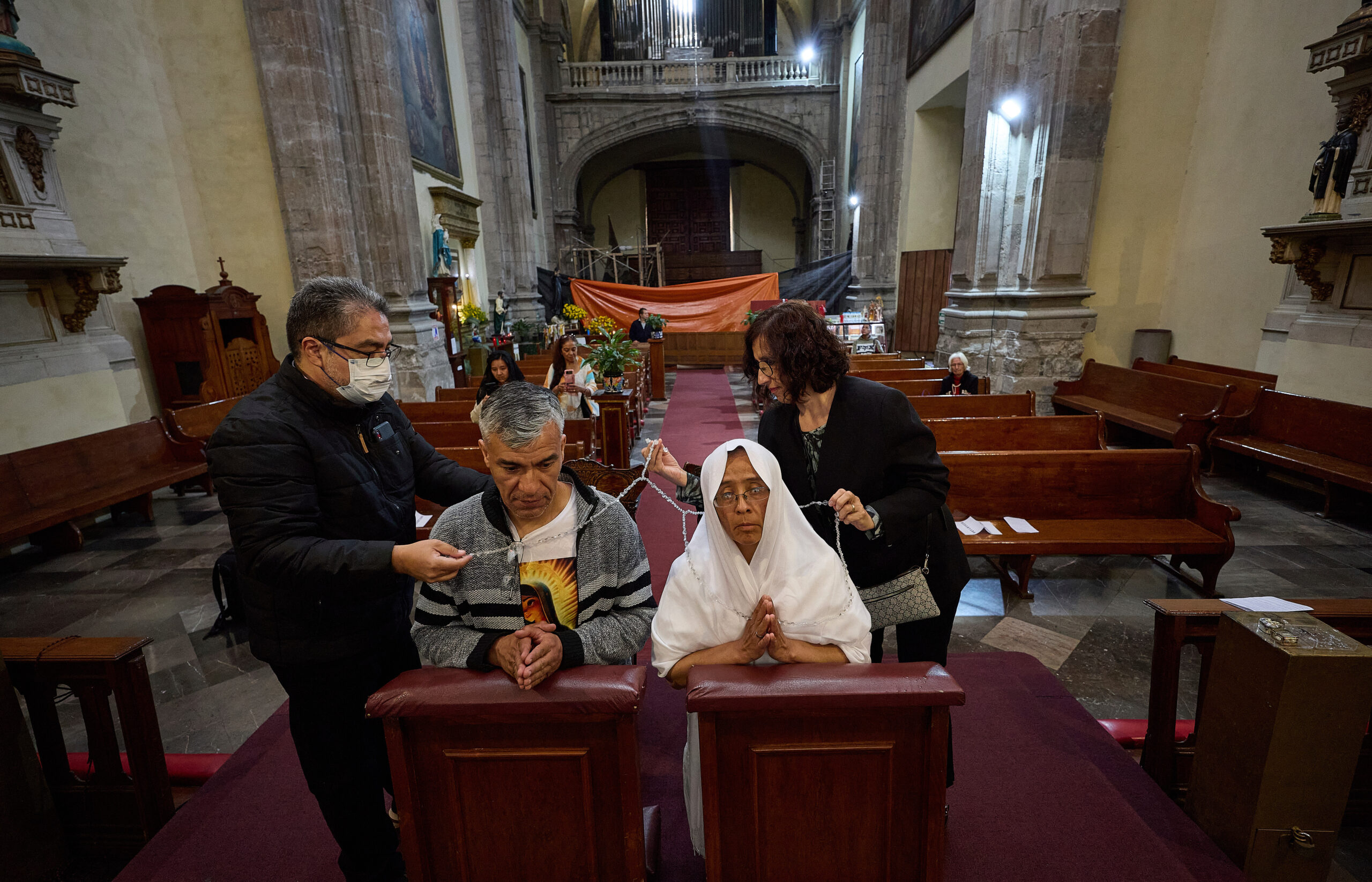
MEXICO CITY (AP) — Carmen Chávez has a clear answer for those wondering why she and her partner chose to get married on Sept. 19 — the anniversary of two deadly earthquakes that struck Mexico 32 years apart.

“This was a tragic date for me,” said Chávez, who remembers how buildings collapsed in downtown Mexico City 40 years ago. “So I want to give this day a new meaning. From now on, it will mark the beginning of our life together.”

There is no official consensus on the overall death toll from the 1985 and 2017 earthquakes. Some estimates put the total figure at more than 12,000, but the real number remains unknown.

The coinciding dates fuel anxiety for many, especially after a third, less damaging quake hit the country on Sept. 19, 2022. But seismologists and researchers say there is no physical reason for the concurrence of major earthquakes on a specific date.

As Chávez’s wedding ceremony ended Friday morning, police closed off nearby streets to traffic for an earthquake drill. Meanwhile, exhibits, lectures and Masses took place all over the city to remember the quakes’ victims.

Mexico’s flag was flown at half staff outside Mexico City’s cathedral. A message was posted on its social media channels: “Those days left us wounded, but they also taught us that solidarity is greater than fear.”

Some churches still bear scars from quakes

The Catholic venue that Chávez and her partner chose for their wedding carries a deep significance on this particular date.

The San Juan de Dios church withstood the 8.1 magnitude earthquake of 1985. However, its structure was severely damaged in 2017, forcing it to shut down. It reopened in late 2024, after most of its restoration was completed, though some interior work is still pending.

Across the plaza, another sanctuary, Santa Vera Cruz, remains closed to the public. No reopening date has been announced, but Monsignor Juan Carlos Guerrero, in charge of both parishes, hopes it can welcome visitors again by the end of this year.

“We need to keep up the restoration of our buildings,” Guerrero said. “The life of these monuments is closely linked to the people’s identity.”

Chávez said she and her partner chose San Juan de Dios as a wedding venue because her late grandmother used to attend frequently.

“It’s a parish full of history and it’s so beautiful,” she said. “Its paintings, its architecture, I love being here.”

Learning from tragedy

The Rev. Salvador Barba, who became an intermediary between the Catholic church and officials in charge of restoring federal buildings after 2017, said more than 150 churches were damaged by that earthquake in Mexico City alone. Forty were forced to shut down due to structural damage.

Nationwide, more than 3,000 churches were affected. By late 2024, nearly 90% had been restored, along with 4,000 pieces of sacred art, a government press release said.

Barba suggested that the 2017 earthquake was groundbreaking for the Catholic Church. “We raised awareness among priests that we need to take care of our churches,” he said. “An expression that we now frequently use is ’preventive maintenance’.”

That means priests nationwide can reach out to him to report cracks or any details that call for professional attention. Barba then forwards the report to the experts at the federal government and the buildings are inspected.

“We must not wait until it becomes worse,” he said. “That is what caused so much harm.”

____

Associated Press religion coverage receives support through the AP’s collaboration with The Conversation US, with funding from Lilly Endowment Inc. The AP is solely responsible for this content.
Sikh leaders urge India to lift ban on pilgrims traveling to Pakistan shrine

ISLAMABAD (AP) — The decision by India's federal government to bar pilgrims from traveling to Pakistan to visit the shrine on Guru Nanak's birth anniversary has sparked condemnation from Sikh organizations and opposition leaders.


Munir Ahmed
September 18, 2025

ISLAMABAD (AP) — Sikh community leaders urged New Delhi to lift a ban recently imposed on pilgrims traveling to Pakistan to visit the shrine of Guru Nanak, the founder of their faith. They said the move violates international norms and moral values.

The appeal came from Mahesh Singh, vice president of the Pakistan Sikh Gurdwara Parbandhak Committee, the official body that manages Sikh shrines in Pakistan, where many holy places of Sikhs are located.

His remarks followed the Indian government’s Sept. 12 decision to deny permission for Sikhs to cross into Pakistan for Guru Nanak’s birth anniversary, citing security concerns. There was no immediate comment from New Delhi.

The decision by India’s federal government to bar pilgrims from traveling to Pakistan for the event has sparked condemnation from Sikh organizations and opposition leaders.

The Shiromani Gurdwara Parbandhak Committee, a group that manages Sikh places of worship in India, said the decision hurt the religious sentiments of the Sikh community.

Bhagwant Mann, Punjab state’s chief minister, accused the Indian central government of double standards. Speaking at a press conference on Monday, he said New Delhi had allowed a recent cricket match between the two countries while simultaneously prohibiting a Sikh religious pilgrimage

The dispute highlights broader tensions between the nuclear-armed rivals, who downgraded diplomatic ties and suspended visas after tit-for-tat missile strikes in May and an earlier deadly attack in disputed Kashmir. Though a U.S.-brokered cease-fire has held, travel between the countries remains heavily restricted.

Despite the strained ties, Pakistani officials say Sikh and other religious pilgrims from India are still welcome to visit shrines in Pakistan under existing arrangements. Many of Sikhism’s holiest sites ended up in Pakistan after the partition of British India in 1947.

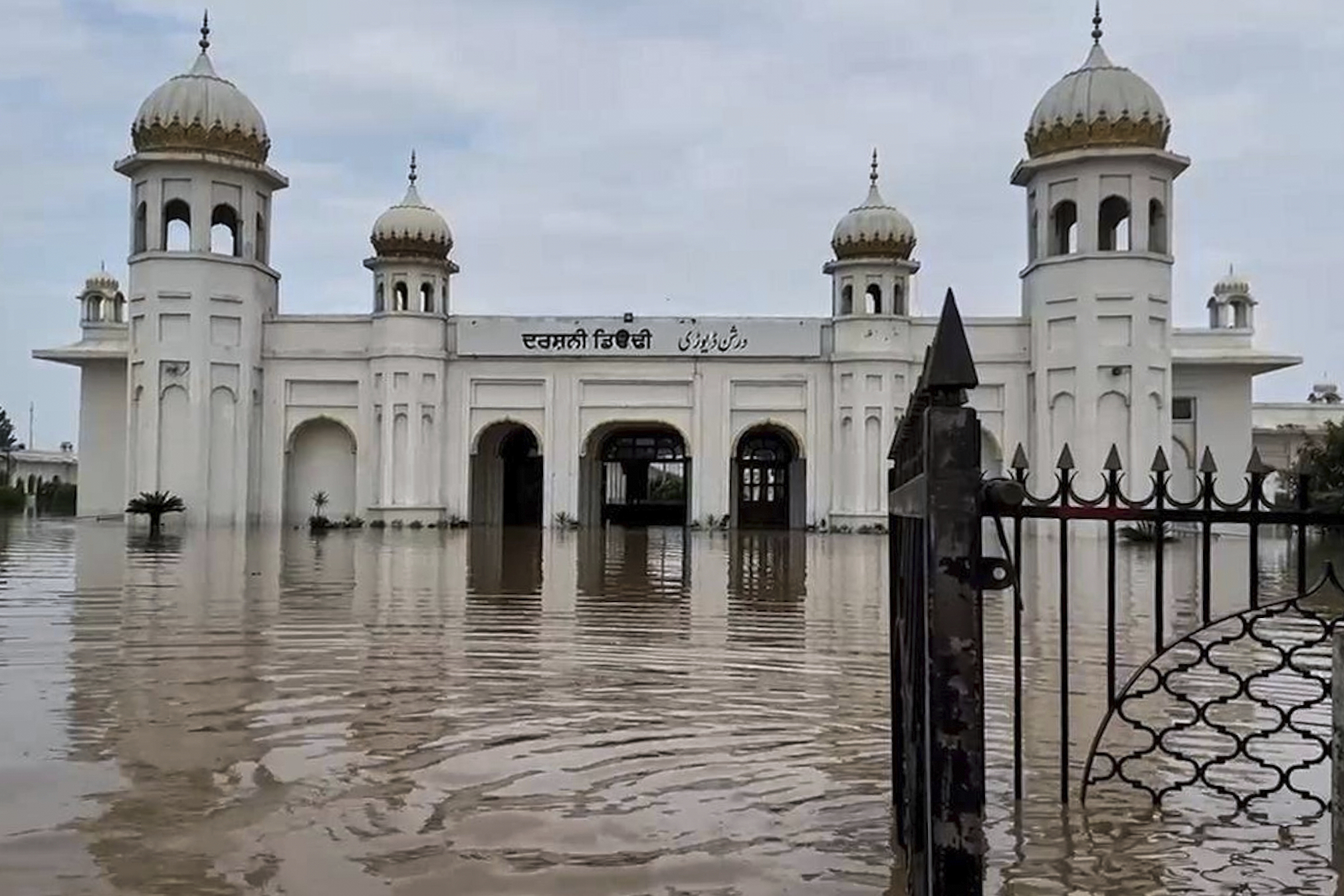
But Pakistani officials said they were still making arrangements to facilitate Indian pilgrims at the Kartarpur shrine, which is located in eastern Punjab’s recently flood-hit Narowal district, about 4.5 kilometers (2.8 miles) from the border.

The shrine is considered the second-holiest site in Sikhism.

The Kartarpur Corridor, inaugurated in 2019, created a visa-free border crossing for Sikh pilgrims from India, allowing thousands to visit the shrine daily. The shrine and surrounding villages were inundated last month when heavy rains and water released from overflowing Indian dams caused flooding across Narowal, affecting more than 100,000 people.

At one point, water stood 20 feet (6 meters) deep inside the shrine.

Punjab’s Chief Minister Maryam Nawaz Sharif ordered the water to be drained and the site restored, and the shrine reopened for worship and visits within a week.

Pakistani official Ghulam Mohiuddin said arrangements for lodging and food were being finalized for Sikh pilgrims traveling from India and abroad. He said if New Delhi lifts its ban, a record number of Indian Sikhs could visit Kartarpur this year.

Singh said thousands of Sikhs from India had hoped to take part in November’s weeklong celebration marking 556 years since Guru Nanak’s birth. He said Pakistan’s government has assured the committee that “the doors of Pakistan are open for Indian Sikh pilgrims,” and that visas would be granted through Pakistan’s high commission in New Delhi.

Another Sikh leader, Gyani Harpreet Singh, questioned the Indian government’s decision on X, noting that if India and Pakistan can play cricket matches, Sikhs should also be allowed to visit Pakistan for religious observances.

He appealed to New Delhi “not to play with the emotions of Sikhs.”

___

Associated Press writer Aijaz Hussain contributed to this story from Srinagar, India.
AMERIKAN PROTESTANTS

Sourdough and submission in the name of God: How tradwife content fuses femininity with anti-feminist ideas


(The Conversation) — Tradwives influencers’ throw-back aesthetics mask a divisive ideology about women’s roles, two scholars of extremism explain.


Tradwives' content, from recipes to makeup tips, often appeals to a wider audience than their views on religion, politics and gender.
 (shironosov/iStock via Getty Images Plus)

Catherine Jarry and Arie Perliger
September 22, 2025
(The Conversation)


When people think about online misogyny, they probably envision forums and video game chat rooms filled with young men using lewd language, promoting sexist stereotypes and longing for the good old days when women “knew” their place. Arguably the most popular anti-feminist content today, though, is produced by women: tradwives.

The term “tradwife” is an abbreviation of “traditional wife” – often portrayed on these platforms as a white, married, stay-at-home mother. Since the mid-2000s, tradwives have developed a substantial online presence and following, introducing their lifestyle and views to masses of women.

Many viewers are introduced to tradwife content through videos on cooking or decorating – posts that could appeal to a wide audience. But at the core of the tradwives movement are more divisive beliefs: that women are meant to “submit” to their husband’s leadership, for example, or are not meant to work outside the home.

We define misogyny as hatred, prejudice or hostility directed toward women as a group. Many tradwives argue that their lifestyle empowers women to fulfill their true role. Yet some content in the tradwife landscape is indeed rooted in misogynistic beliefs that women are, in some ways, less capable than men. And much more “trad” content is directly opposed to feminist ideas, such the importance of women’s economic independence and sexual freedom.

A growing number of academics and news reports have highlighted tradwives’ growing cultural influence. There’s been less attention, however, on one of the most prominent features distinguishing them from other misogynist online movements: the role of religious beliefs.

As researchers of extremism, we have been working on a new book about the contemporary landscape of misogyny, examining movements such as “incels” and “men’s rights” activists, as well as chauvinist far-right groups such as the Proud Boys.

As part of our research, we analyzed hundreds of tradwife social media posts, videos and blogs. We assert that tradwife culture is not just aiming to restore “traditional” gender roles. It is also an important force in formulating a new model of womanhood: one that incorporates strong religious identity, a specific feminine aesthetic, and far-right ideas.

Filtered femininity

Tradwives create content that fuses what they call “traditional” and “feminine” lifestyles. Specifically, they tend to emphasize the importance of a wife’s submissiveness to her husband, immersion in conservative Christian values, and support for causes such as anti-abortion advocacy. Yet “tradwife’ content spans a broad spectrum: Some influencers focus on relatively apolitical topics like baking and parenting, while others combine those with more ideologically charged content.

In addition, tradwives stress self-sufficient homemaking skills, such as eating homemade and unprocessed food. At times, that emphasis on “wholesomeness” or living “naturally” includes skepticism about mainstream health care, as well as touting “naturopathic” or alternative medicine.

One of the main reasons so many viewers are attracted to the tradlife content is their nostalgic and calming aesthetic, including a focus on cottage-core content: quaint scenes that evoke life on the prairie, capitalizing on viewers’ nostalgia and desire for escapism.


Influencers’ cozy aesthetic masks the hours of work behind posts and clips.
Galina Zhigalova/Moment via Getty Images

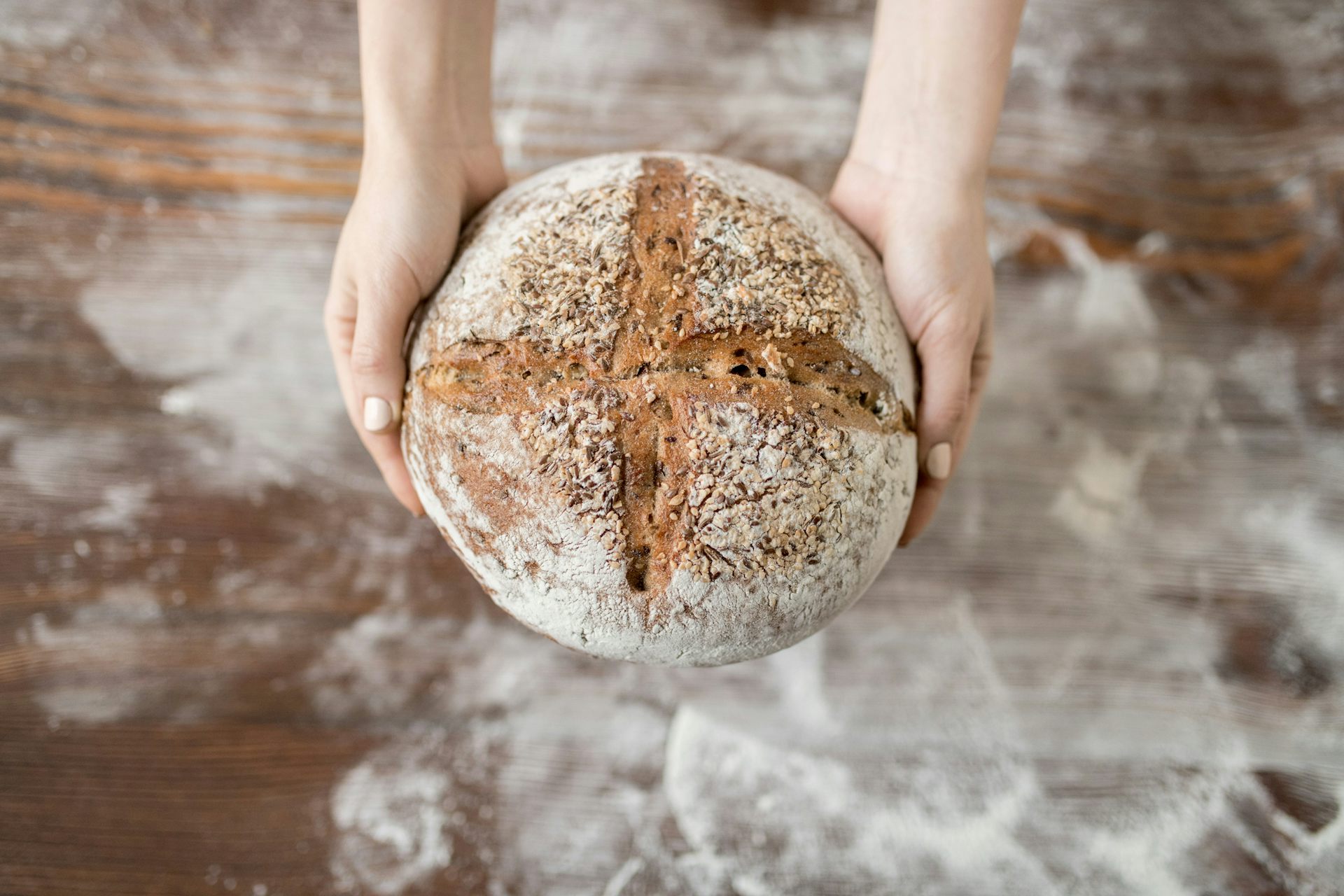
This type of soft-living content is inviting and relaxing. Loose wavy hair, fresh homemade cooking and a farmhouse aesthetic bring to mind “Little House on the Prairie” and help viewers forget the crises of the world outside. We can’t help but feel like we are in the influencer’s kitchen, smelling freshly baked bread and hearing the laughter of children frolicking about.

Yet nothing about tradlife content is effortless. The filters and glamour of Instagram never reflect the hours influencers spend setting up their homes, testing recipes, buying filming equipment and fixing up their appearance for these videos, as shown in countless “get ready with me” videos.

Nevertheless, tradwives often glorify the idea of women’s helplessness,. Some encourage women to focus on what tradwives call “pink jobs,” such as homemaking or child-rearing tasks, not physically demanding “blue jobs,” such as house repairs or extensive landscaping.

In tradwives’ narrative, women aren’t “wired” or “made” to be in the workforce or to be the breadwinner. It is not only too demanding, some of these influencers argue, but actually against nature and God’s intentions to try to “have it all.”

Faith and submission

Most tradwife influencers who talk about faith are Christians of one denomination or another, including Catholics and members of the Church of Jesus Christ of Latter-Day Saints. During analysis for our forthcoming book, we analyzed language in a sample of 23 videos from the seven most popular influencers and found that “God” was the fourth-most popular term – following “women,” “life” and “husband.”

For many influencers, religious piety is a crucial component of their views on gender and convincing viewers to embrace them – particularly their belief that a wife’s fundamental role is to let God and her husband lead the way. Thus, while they don’t necessarily see men and women as unequal, they believe men and women have different roles and different abilities.

Insisting that God is on their side also enhances influencers’ sense of community with their followers, making some platforms almost seem like a parish. They will emphasize specific biblical verses supporting the norms they advocate – such as Titus 2:5, which they interpret as advising women to stay at home; and Genesis 1:28, in which God commands humans to “be fruitful, and multiply.”

“Womanhood is not a man-made idea constructed from ancient traditions and cultural trends,” the sisters behind the YouTube channel “Girl Definedwrite in their book, “Made to be She: Reclaiming God’s Plan for Fearless Femininity.” “It’s a God-designed reality that He established from the beginning of time.”

Political voice

Some tradwife influencers focus on household management and religious content, while others are bolder in their political commentary – from simple TikToks to hours of live-streamed podcasts with guest speakers discussing hot-button issues. One frequent theme is opposition to abortion, especially since the overturning of Roe v. Wade in 2022.

The LGBTQ+ rights debate and related questions about how to define a woman have also become a focus for many tradwives, who argue only God can assign gender, and that it is synonymous with biological sex.


Conservative Christian teachings are often key in how tradwife influencers explain their view of gender roles.
SDI Productions/E+ via Getty Images

In some cases, tradwives’ advocacy extends to white nationalism and nativism. For example, some tradwives will justify the virtue of a large family by alluding to the importance of maintaining a white, Christian majority in the United States.
Modern anxiety

Much of tradwives’ messaging revolves around cultural flash points, problems that underscore anxiety about modern womanhood: challenges in forming stable relationships, providing nutritious meals, and building a career while trying to raise a family. One popular video on the Girls Defined channel, less than a minute long, warns viewers about birth control, Planned Parenthood, feminism and mood stabilizers. “Women, through all the years of feminism, through all the years of freedom, women are more depressed, more anxious, hurting more than ever,” one of the sisters says, “and what we are being told to do is not working.”

These challenges are presented as inevitable consequences of abandoning divinely ordained feminine roles – positioning religious tradwives’ messages as not merely personal opinions, but sacred truths. Any effort to counter misogynist messaging on these platforms, we argue, cannot just rely on facts, but exposing followers to other visions of what it means to be a religious woman.

(Arie Perliger, Director of Security Studies and Professor of Criminology and Justice Studies, UMass Lowell. Catherine Jarry, Doctoral Student in Criminology and Criminal Justice, UMass Lowell. The views expressed in this commentary do not necessarily reflect those of Religion News Service.)


The Conversation religion coverage receives support through the AP’s collaboration with The Conversation US, with funding from Lilly Endowment Inc. The Conversation is solely responsible for this content.
CRIMINAL CATHOLICISM
Witness-tampering allegations turn spotlight from Becciu to Vatican prosecutor

(RNS) — The Vatican appeals court admitted a defense bid to recuse prosecutor Alessandro Diddi, shifting the spotlight from Becciu to the conduct of the prosecution itself.


Cardinal Angelo Becciu attends a consistory inside St. Peter’s Basilica, at the Vatican, on Aug. 27, 2022. (AP Photo/Andrew Medichini, File)

Claire Giangravé
September 23, 2025

VATICAN CITY (RNS) — Cardinal Angelo Becciu, who was convicted of fraud and embezzlement and sentenced to 5 ½ years in prison by a Vatican court, appealed his case on Monday and Tuesday (Sept. 22-23).

Becciu, formerly the third-highest-ranking prelate at the Vatican, and eight others were found guilty in a 2023 Vatican megatrial revolving around a controversial purchase of real estate in London using Catholic funds that were partially destined for the pope’s charitable causes. As they brought their case before the six judges of the Vatican Court of Appeal this week, the defense moved to recuse the Vatican prosecutor Alessandro Diddi, accusing him of judicial meddling during the original trial.

On Monday, the Vatican appeals court accepted the motion of admissibility of the recusal. Diddi will have three days to respond, or his case will be brought before the Vatican’s highest court of appeal, the Court of Cassation, composed of four cardinal members. Until then, Diddi said he will not attend the hearings.

“Finally, I have the possibility to defend myself from a series of insinuations,” Diddi told the court. “I want to take advantage of the three-day period to express my considerations calmly, in order to dissolve the doubts that in these months have been raised about the conduct of the investigation.”

More than 3,200 pages of WhatsApp messages between Francesca Chaouqui and Genevieve Ciferri suggest the two conspired to coach Monsignor Alberto Perlasca, the prosecution’s star witness, on his testimony. Chaouqui, a former member of the Vatican’s commission for economic reform, was previously accused in 2015 of leaking sensitive documents.

Perlasca, who had been a longtime aid for Becciu when the cardinal was head of the Vatican Secretariat of State’s administrative office, offered key testimony during the trial. According to the defendants, Diddi operated behind the scenes through Chaouqui and Ciferri to manipulate Perlasca. According to the defendants, the messages raise doubt about Diddi’s impartiality.

“With his intervention this morning, Professor Diddi has personalized the Becciu trial, transforming it into a matter that involves his office and perhaps the entire judicial institution,” said Cataldo Intrieri, the lawyer of the financier Raffaele Mincione, after Monday’s hearing. “Does he not realize he risks turning the Becciu trial into the ‘Diddi affair’?” he added.

The “Diddi affair” also risks becoming a catalyst for the broader accusations that have been made against the Vatican judicial system, with defendants criticizing its lack of transparency, its dated legal norms and the ways it is subject to the pope. During the investigations into the controversial London property deal, Pope Francis intervened at least four times with decrees to strengthen the power of the prosecutors and reform financial oversight.

If the Court of Cassation upholds the recusal it would be a significant blow to the prosecution and it would also call into question the validity of the initial trial. Diddi has been involved with the Becciu trial for years and is familiar with the history and legalities of the case. In a 2021 decree, Pope Francis updated the code of criminal procedure to clarify that the office of the promoter of justice is present at all three levels of judgment, including appeal.

During the second day of trial, the court focused on procedural objections raised by the defense and prosecution. Discussions centered on the Vatican’s 1913 Code of Criminal Procedure, along with email and paper findings. The defense also argued that the prosecutor’s office mishandled the deadlines and format of its own appeal, meaning that if the judges agree, the prosecutor’s appeal might be considered invalid. This would make the appeal trial much shorter, focusing solely on the convictions.

The next trial date has been scheduled for Thursday.

Texts reveal behind-the-scenes maneuvering of the Vatican’s ‘trial of the century’

VATICAN CITY (AP) — Their four years of conversations, from 2020-2024, provide a parallel, behind-the-scenes version of one of the most tumultuous periods in Vatican history, when Pope Francis authorized a trial of 10 people, including a cardinal, into alleged financial misconduct.


Nicole Winfield
September 22, 2025

VATICAN CITY (AP) — In the last two years, defense lawyers have acquired 3,225 pages of WhatsApp messages between two women who were tangential to the Vatican’s “trial of the century,” but were actually intimately aware of the investigation and in some ways involved.

Their four years of conversations, from 2020-2024, provide a parallel, behind-the-scenes version of one of the most tumultuous periods in Vatican history, when Pope Francis authorized a trial of 10 people, including a cardinal, into alleged financial misconduct.

The chats, written in Italian and translated here by The Associated Press, suggest that these two women helped persuade one of the original prime suspects in the case, Monsignor Alberto Perlasca, to change his story and turn on his former boss, Cardinal Angelo Becciu. Perlasca was spared indictment; Becciu was convicted.

According to the chats, first reported on by Domani newspaper and published by other Italian media, public relations specialist Francesca Chaouqui implied to Perlasca family friend Genevieve Ciferri that she enjoyed close contact with Vatican investigators and Francis, and wanted to help Perlasca. She assured Ciferri that everyone from the pope on down knew and approved of their maneuvering to help Perlasca feel supported so he would implicate Becciu.

Key text exchanges

Ciferri feared that Chaouqui was just boasting and on May 19, 2024, she demanded Chaouqui reassure her that police, Prosecutor Alessandro Diddi and Francis all “knew and agreed on your collaboration with the investigations, and in particular had direct knowledge of the collaboration you established with me.”

Chaouqui assures her they were in agreement but warned: “If it gets out that we all agreed, it’s the end.”

Ciferri: “Please be clear, you understand how important it is for me to be fully convinced. Because you know the doubts and skepticism to which, due to my weakness and insecurity, I have always been subject during our relationship, which has now turned into affection. Are you confirming that all the people I mentioned, including the Holy Father, were in agreement and aware of everything? And are you confirming that you have never lied to me about anything? And do you also make me understand how serious it could be for the trial if both you and Prof. Diddi are found to have lied shamelessly during the proceedings? Because then I too would agree that for the good of the church, it would be better to put a tombstone on it!”

Chaouqui: “You have to distinguish between two levels.”

Ciferri: “I don’t understand …”

Chaouqui: “The level of truth where everyone from the pope down knew what we were doing. And the other level, which is the trial level. Where we have to claim that no one knew, because if we all knew, the trial is null and void and it’s a conspiracy. Understand?”

Ciferri: “Okay, now I understand. I will act accordingly, nothing to fear. Thank you, Francesca, that’s all.”

In a text message to The Associated Press, Diddi declined to comment on the chats. “The trial is the venue where the adversarial process must take place,” he wrote. Chaouqui declined to comment.

In a statement to AP, Ciferri said the chats were of no importance to the appeals trial itself. She said they were instead a “collateral” affair that is being investigated separately, after she filed complaints with Vatican prosecutors against Chaouqui for what she called “psychological manipulation and suffering.”

“Continuing to exaggerate the importance of the chat messages makes no sense and is only a useless pretext, while the appeal will be based on the actual crimes and the individual responsibilities of each person for each count,” Ciferri wrote.

An audio file reveals more

In April, Italy’s Domani newspaper produced an audio file purportedly of the Vatican’s police commissioner, Stefano De Santis, giving instructions to Chaouqui about what Perlasca should say in his revised round of questioning, in August 2020. At the time, Perlasca was still a suspect and had submitted to a first round of questioning in which he defended Becciu.

After he turned on Becciu, he became a key prosecution witness.

In the audio, De Santis suggests Perlasca discuss two other defendants who were eventually convicted: money manager Enrico Crasso and Perlasca’s deputy, Fabrizio Tirabassi.

“Francesca, given that he is in possession of the interrogation report, because he had a copy of it, he should read it and underline all the points where, in light of recent events, in light of recent facts, in light of the introspective work he has done within himself, he needs to clarify, just to qualify facts and acts that do not concern him, but concern others; just to say, once and for all, how the system of Crasso and Tirabassi in the years when he was head of the office developed in a way that he certainly found, having arrived after Crasso and after Tirabassi, but which he cannot fail to know about. In other words, he should take inspiration from that interrogation, from those questions, and clarify all those points and all the ‘I don’t knows’ he said at that time.”

The Vatican hasn’t disputed the authenticity of the audio or commented on its contents.
__
Associated Press religion coverage receives support through the AP’s collaboration with The Conversation US, with funding from Lilly Endowment Inc. The AP is solely responsible for this content.