Thursday, September 25, 2025


By 

By Katrinia Gulliver


On September 15, 1922, Harry Oldbaum was walking near 116th St and Lexington Avenue in Manhattan. He was suddenly surrounded by a crowd of teens who grabbed at him and stole his hat. Oldbaum was in good enough shape to give chase and apprehend one of his attackers, and haul the perpetrator to a nearby police station. Morris Sikeowitz, 16, was charged with disorderly conduct. It sounds like a minor street incident in a big city, but Oldbaum was just one of many victims that night.

In New York at the time, there were social rules about when to wear straw hats (and at a time when almost all men wore hats, such rules were more visible than today). Much like wearing white after Labor Day, sporting a boater after the end of the summer was seen as inappropriate—at least by people of means. The end-day for straw hat season had originally been September 22, but by the 1920s crept forward to September 15.

However, unlike other fashion solecisms, this one suddenly came with physical enforcement.

CITY HAS WILD NIGHT OF STRAW HAT RIOTS

ran the headline in the New York Times of September 16, 1922.


“Gangs of Young Hoodlums With Spiked Sticks Terrorize Whole Blocks.”

According to the report, gangs of young men set about smashing straw hats in the street, having snatched the hats from their wearers. At one point a mob of 1,000 had to be dispersed on Amsterdam Ave. Police had to put down incidents across the city.

Along Christopher Street, “the attackers lined up along the surface car tracks and yanked straw hats off the heads of passengers as the cars passed.”

At least one victim required hospital treatment. He fought back against hat grabbers and was beaten and kicked.

This was not the first instance of straw hat melees, and those participating had planned ahead (and indeed jumped the gun on the “official” end of summer). The papers reported attacks starting on September 13, when the (appropriately named) magistrate Peter Hatting convicted 7 and fined them $5 each for their part in a “hat smashing saturnalia” at Bowery and East Houston that night. It clearly wasn’t spontaneous (at least for all participants), as some had come prepared with spiked sticks to hook hats off people’s heads.

In another report, the night of the 14th saw “hundreds of boys in Grand, Mulberry and adjacent streets, armed with long sticks to which were fixed long wires, hid in doorways and unhatted all who passed sporting straws.” The reporter noted these hats were accumulated as trophies, jammed onto the handles of the sticks, some of the more “successful” attackers carrying 25 or 30. One hat-smashing group made the tactical error of going after a group of longshoremen, who were not soft targets; police broke up the brawl.

There had been earlier instances of straw hat riots, as in Pittsburgh in 1910. A newspaper there stated that “It is all right for stock brokers on the exchanges to destroy one another’s hats if they like, on the principle that everything goes among friends,” but presumably not all right for random hoodlums to play the game themselves. Apparently smashing up a chap’s straw hat if he wore it too late in the season was a custom with stockbrokers and white-shoe lawyers. As intra-group pranking, it would seem to fit squarely in the category of college hijinks and other WASP male shenanigans.

However, the teenagers who started attacking boater-wearing citizens in the street in 1922 were very much not of that social group. The names of the arrested teens display New York’s immigrant diversity, and few whose names would be in an Episcopal parish register. It seems these teens were working class, attacking men who outranked them in age and social standing, but not necessarily of society’s elites. Some of the victims on the Lower East Side were buttonhole makers and machine operators leaving work.

Interestingly, the claims from the victims don’t state any element of robbery. The hat snatching was the main goal. But hats themselves were expensive, as one of the magistrates involved noted. The working men under attack probably didn’t consider the loss of a hat trivial, as swells at the Yale Club might. They were poor targets if the hat riot was an attempt at class uprising. (Meanwhile, hat shops stayed open late during the fracas to allow potential victims to buy something more autumnal.)

Some police might not have rated the incidents of high importance, until patrolmen became victims themselves. “The police of the East 104th Street station were inclined to regard their activities lightly in spite of numerous complaints at the police station, until detectives and patrolmen in plain clothes began to fall victims to the hat crashers.” It would have been easy to see a hat theft as some kind of general roughhousing, until one was in the crowd and under attack.

The undercurrent of malice is clear from the sticks prepared with a nail sticking out. Supposedly such a stick would be all the better to knock the hats off passers-by, but it doesn’t take particularly deep analysis to say that this was a weapon.

As the arrests continued, the New York Tribune told of an impatient desk lieutenant who came up with his own solution. The parents of some arrested boys (all under 15) were summoned to the station to spank their misbehaving sons. Many of the mob were very young indeed: one ten-year-old suffered a broken leg, having run into the path of a car.

The age of many participants explains the light sentences received by those brought in front of a judge, and also the challenge for police in how to respond. New York’s penal code of 1909 made children aged 7–16 who committed an act that would have been a crime for an adult, instead guilty of “juvenile delinquency.”

The first decades of the twentieth century saw the creation and spread of children’s courts aimed at diverting law-breaking children early (rather than labeling them as criminals). Juvenile reform institutions were created, to avoid putting children into prisons with adult convicts.

This system, depending on one’s political sympathies, either coddles budding felons, or brutalizes children who are victims of their environment. The pendulum on how to respond to underage criminality continues to swing. Perhaps confident that they would face little or no punishment, attacking hats became a trend (which like other teenage fads, also disappeared).

The hat riot boys represented something new in another way. The decades prior to 1922 had also seen social reformers try to eradicate child labor, long a key part of New York’s industrial economy. The horror of the Triangle Shirtwaist fire had spurred legislators to action. Bills were passed at a state (and less successfully, federal) level, to protect children under 14 from working. Although not always followed, these laws represented a societal sea change: the hat wreckers were the first generation of New York children it was illegal to employ. They were at the forefront of a new sociological group: the teenager.

September 1922 was warm, with temperatures in New York City well into the ’80s on the 14th and 15th. An Indian Summer tends to contribute to crime—and to some men, preferring to continue wearing their straw hats and seersucker rather than layer on wool and a felt topper.

But what prompted these boys to riot over hats? To go vigilante in the enforcement of a social code none of them were likely to live by? The arbitrary hat rule created an out-group, a category of “approved” victims for bored teens to attack.

Most scholarship on riots discusses a flashpoint, or simmering grievance, as the motivation. In the hat riots, it is hard to parse a real motive. An early study on boys in gangs (published a decade before the hat riots), offers some insights. J. Adams Puffer described a typical gang practice of “plaguing people.” This meant singling out individuals to harass and attack, with victims often selected by societal prejudice (race being an obvious example).

Such gang behavior towards designated targets occurs regularly to this day, whether directed at neighborhood outgroups or randomly, in the appalling “knockout game.” But these activities don’t involve large crowds. The huge numbers allegedly involved in the hat attacks made it more characteristic of an urban riot.

This makes the hat riots something of an anomaly. If the men attacked had shared a racial identity, different from their attackers, then the assaults would have fit a clearer pattern (and chimed with episodes of racial violence taking place that year). Conversely, if the hat snatching had been part of a riot triggered by a wider sense of outrage, it would have involved a range of participants beyond just teenage boys.

At a century’s distance, the hat riots seem bizarre or faintly amusing. But they demonstrate the power of group dynamics, and how even the strangest thing can become a trigger for violence. New York largely forgot the hat riots: even as occasional hat stompings happened in September over successive years, none rose to the level of 1922. Eventually, men stopped wearing hats; fashion stopped having rules. But if we see hat smashing as a viral “meme,” first practiced among the elites, then copied in a frenzy as it filtered out among working-class teens, the phenomenon is still going on today.

  • About the author: Katrina Gulliver is Editorial Director at FEE. She holds a PhD from Cambridge University, and has held faculty positions at universities in Germany, Britain and Australia. She has written for Wall St Journal, Reason, The American Conservative, National Review and the New Criterion, among others.

IN THE EIGHTEENTH CENTURY GANGS OF YOUTH PLAGUED LONDON BY PRICKING PEOPLE IN PUBLIC WITH NAILS IN STICKS. THE GANGS BEGAN USING COLORFUL MONIKERS SUCH AS THE 'DEAD RABBITS'.


Sahel Countries: ICC Withdrawal Endangers Civilians, HRW Warns


By 

The decision of Burkina Faso, Mali, and Niger to withdraw from the International Criminal Court (ICC) will jeopardize access to justice for victims of atrocity crimes, putting all civilians at greater risk, Human Rights Watch said today. On September 22, 2025, the military leaders of the three Sahel countries signed a joint statement announcing their countries’ withdrawal from the ICC.


The announced withdrawal comes during a period of turmoil in the Sahel region. Increasingly repressive military juntas in the three countries have been engaged in armed conflicts with Islamist armed groups. Both government and insurgent forces have carried out war crimes and possible crimes against humanity against civilians. The victims of serious abuses and their families have struggled to obtain redress through national and regional courts.

“The leaders of Burkina Faso, Mali, and Niger, in announcing their departure from the International Criminal Court, are depriving their populations of an important international avenue for justice and redress,” said Liz Evenson, international justice director at Human Rights Watch. “The ICC is a global court of last resort, when victims have nowhere else to turn, with investigations in countries around the world.”

Under the Rome Statute, the ICC’s founding treaty, countries can withdraw by depositing a notification with the United Nations secretary-general. The three Sahel countries have not yet taken this step. Withdrawals take effect one year later. Until then, countries remain bound by their ICC obligations.

For over a decade, Burkina Faso, Mali, and Niger have faced insurgencies from Islamist armed groups linked to Al Qaeda and the Islamic State. These armed groups have committed widespread atrocities against civilians, including killing and executing villagers; attacking schools, mosques, and humanitarian convoys; and besieging towns. The militaries of the three countries, assisted by abusive militias and foreign mercenaries, have engaged in brutal counterinsurgency operations, killing, unlawfully detaining, and forcibly displacing tens of thousands of civilians.

The military juntas that have taken power in Burkina Faso, Mali, and Niger in a wave of coups since 2020 have cracked down on the political oppositionmedia, and dissent, shrinking civic and political space. They have consolidatedtheirpower without elections, delaying the return to democratic civilian rule.


The authorities in these countries have not met their international legal obligations to investigate serious violations of the laws of war by their security forces and by Islamist armed groups, allowing impunity to fester and emboldening abusers. In January, the three countries officially left the Economic Community of West African States (ECOWAS) regional bloc, having served notice a year earlier, depriving victims of abuses of redress in the West African regional court.

The ICC has 125 member countries. The court has opened investigations into alleged crimes in 17 situations, including in Afghanistan, Darfur in Sudan, Democratic Republic of Congo, Libya, Palestine, Ukraine, and Venezuela.

Following a referral by the Malian government in 2012, the ICC prosecutor opened an investigation into the situation in Mali that has played a crucial role in checking impunity. The cases brought thus far before the ICC involved three commanders of the abusive Islamist armed group Ansar Dine.

In September 2016, the court sentenced Ahmad al-Faqi al-Mahdi to nine years in prison after he pleaded guilty to participating in the destruction of religious and historic buildings in Timbuktu, northern Mali, in June and July 2012. In November 2024, the court sentenced Al-Hassan Ag Abdoul Aziz to 10 years in prison following his conviction for war crimes and crimes against humanity, including torture, committed between April 2012 and January 2013 in Timbuktu.

In June 2024, an ICC pretrial chamber unsealed an arrest warrant against Iyad Ag Ghaly for war crimes, including sexual violence, and crimes against humanity in northern Mali between January 2012 and January 2013. Ag Ghaly, currently the head of the Al Qaeda linked Group for the Support of Islam and Muslims(Jama’at Nusrat al-Islam wa al-Muslimeen, JNIM) remains at large.

The ICC is facing politicized threats from those opposed to accountability. The administration of United States President Donald Trump has authorized sanctions against ICC officials, a UN human rights expert, and three Palestinian human rights groups to thwart the court’s work in Palestine. 

Russia has issued arrest warrants against the ICC prosecutor and eight of the court’s current and former judges in retaliation for the court’s March 2023 warrant against Russian President Vladimir Putin for alleged war crimes in Ukraine. ICC member countries and civil society organizations have spoken out against efforts to obstruct the court’s work.

Two countries with active ICC investigations have left the ICC: Burundi in 2017 and the Philippines in 2019. On March 11, 2025, Philippine authorities acting on an ICC arrest warrantarrested former Philippine President Rodrigo Duterte and transferred him to the ICC, where he has been charged with crimes against humanity in relation to alleged extrajudicial killings between 2011 and 2019.

“The announced withdrawal from the ICC treaty by Burkina Faso, Mali, and Niger will undermine accountability and deprive people in the Sahel of a critical layer of human rights protection when national courts are unable to check impunity for the worst crimes,” Evenson said. “The African Union and ICC member countries should urge Burkina Faso, Mali, and Niger to uphold justice and the rule of law and remain members of the court.”

Wastewater Treatment Plants A Major Source Of Pharmaceutical Pollution


By 

Municipal wastewater treatment plants are ineffective at removing Prozac (fluoxetine) and other common pharmaceuticals in wastewater, causing the drugs to be discharged into lakes, rivers and streams where they pose a risk to aquatic organisms. Paulina Chaber-Jarlachowicz of the Institute of Environmental Protection – National Research Institute in Warsaw, Poland, and colleagues reported these findings in a new study published in the open-access journal PLOS One.


Most wastewater treatment plants break down organic compounds in wastewater using microbes, which are then removed as activated sludge. Existing research, however, suggests these methods do not remove pharmaceuticals effectively, causing them to be released into waterways. While some drugs do break down eventually, most persist in the environment, where they continue to be active, even at extremely low concentrations.

In the new study, researchers collected samples from six municipal wastewater treatment plants in Poland to investigate their ability to remove more than a dozen common pharmaceuticals. They measured the levels of drugs coming into the plant in the wastewater, determined how much is discharged to the environment in the treated water and sludge, and estimated the associated ecological risks.

The researchers found that all six wastewater treatment plants released pharmaceuticals into the environment. Only the pain reliever drugs naproxen (Aleve) and ketoprofen and the antihistamine salicylic acid were effectively removed during treatment.

For some pharmaceuticals, including the antidepressant fluoxetine (Prozac), the pain reliever diclofenac, and the anti-seizure drug carbamazepine, the treatment processes actually led to higher levels of the compounds in the discharged water than in the original wastewater. Fluoxetine and the allergy drug loratadine (Claritin) posed the greatest risk to aquatic organisms, due to their ability to disrupt hormone signaling and development at the levels seen in the treated water.

The new results add to the growing body of evidence demonstrating that conventional methods used by municipal wastewater treatment facilities are unable to remove many common drugs, making the plants a source of pharmaceutical pollution. These findings will lay the groundwork for further research into the inactivation of pharmaceutical compounds and their breakdown products in sewage and sludge.


The authors add: “The study’s findings demonstrated that municipal wastewater treatment facilities using conventional mechanical-biological processes (CAS) are ineffective at removing pharmaceuticals from wastewater. The annual emissions of pharmaceuticals to rivers from wastewater treatment plants in the study area amounted to at least 40 Mg. Ketoprofen, sulfamethoxazole, carbamazepine and fluoxetine were identified as the primary contributors to the total mass load and emissions of pharmaceuticals.”

Scientists Show How To Grow More Nutritious Rice That Uses Less Fertilizer

Farmer Harvest Agriculture Rice Harvesting Asia


By 

The cultivation of rice—the staple grain for more than 3.5 billion people around the world—comes with extremely high environmental, climate and economic costs. But this may be about to change, thanks to new research led by scientists at the University of Massachusetts Amherst and China’s Jiangnan University.


They have shown that nanoscale applications of the element selenium can decrease the amount of fertilizer necessary for rice cultivation while sustaining yields, boosting nutrition, enhancing the soil’s microbial diversity and cutting greenhouse gas emissions. What’s more, in a new paper published in the Proceedings of the National Academy of Sciences, they demonstrate for the first time that such nanoscale applications work in real-world conditions.

“The Green Revolution massively boosted agriculture output during the middle of the last century,” says Baoshan Xing, University Distinguished Professor of Environmental and Soil Chemistry, director of UMass’ Stockbridge School of Agriculture, and co-senior author of the new research. “But that revolution is running out of steam. We need to figure out a way to fix it and make it work.”

Part of what made the Green Revolution so revolutionary was the invention of synthetic, nitrogen-heavy fertilizers that could keep agricultural yields high. But they’re expensive to make, they create an enormous amount of carbon dioxide, and much of the fertilizer washes away.

Most crops only use about 40–60% of the nitrogen applied to them, a measurement known as nitrogen use efficiency, or NUE, and the NUE of rice can be as low as 30%—which means that 70% of what a farmer puts on their fields washes away into streams, lakes and the oceans, causing eutrophication, dead zones and a host of other environmental problems. It also means that 70% of the cost of the fertilizer is likewise wasted.

Furthermore, when nitrogen is applied to soils, it interacts with the soil’s incredibly complex chemistry and microbes, and ultimately leads to vastly increased amounts of methane, ammonia and nitrous oxide—all of which contribute to global warming. Furthermore, synthesizing fertilizer itself is a greenhouse-gas-heavy enterprise.


“Everybody knows that we need to improve NUE,” says Xing—the question is how?

What Xing and his co-authors, including lead author Chuanxi Wang and another senior author, Zhenyu Wang, professors of environmental processes and pollution control at Jiangnan University discovered, is that nanoscale selenium, an element crucial for plant and human health, when applied to the foliage and stems of the rice, reduced the negative environmental impacts of nitrogen fertilization by 41% and increased the economic benefits by 38.2% per ton of rice, relative to conventional practices.

“We used an aerial drone to lightly spray rice growing in a paddy with the suspension of nanoscale selenium,” says Wang. “That direct contact means that the rice plant is far more efficient at absorbing the selenium than it would be if we applied it to the soil.”

Selenium stimulates the plant’s photosynthesis, which increased by more than 40%. Increased photosynthesis means the plant absorbs more CO2, which it then turns into carbohydrates. Those carbohydrates flow down into the plant’s roots, which causes them to grow. Bigger, healthier roots release a host of organic compounds that cultivate beneficial microbes in the soil, and it’s these microbes that then work symbiotically with the rice roots to pull more nitrogen and ammonium out of the soil and into the plant, increasing its NUE from 30 to 48.3%, decreasing the amount of nitrous oxide and ammonia release to the atmosphere by 18.8–45.6%.

With more nutrients coming in, the rice itself produces a higher yield, with a more nutritious grain: levels of protein, certain critical amino acids, and selenium also jumped.

On top of all of this, Xing, Wang and their colleagues found that their nano-selenium applications allowed farmers to reduce their nitrogen applications by 30%. Since rice cultivation accounts for 15–20% of the global nitrogen use, this new technique holds real promise for helping to meet the triple threat of growing population, climate change, and the rising economic and environmental costs of agriculture.


Resilient Harvests: The Promise And Debate Around India’s Gene-Edited Rice – Analysis


September 25, 2025
By Observer Research Foundation
By Lakshmy Ramakrishnan

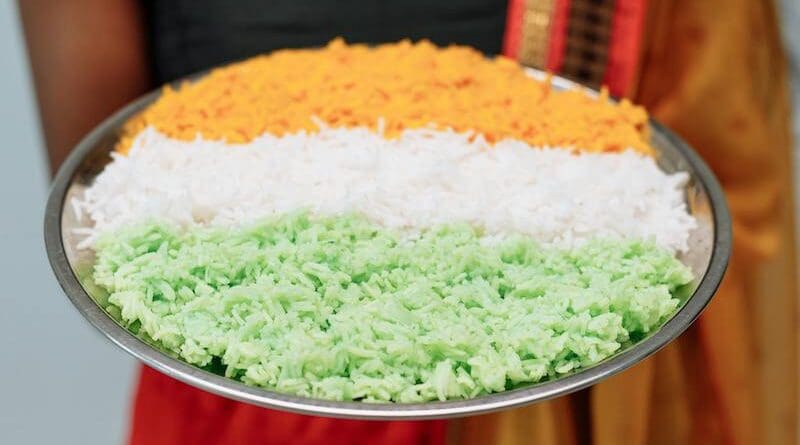
In a notable milestone for India’s agri-biotechnology sector, the Indian Council of Agricultural Research (ICAR) announced the development of two gene-edited rice varieties that display climate resilience and enhanced productivity, achieved without any introduction of foreign DNA.

Despite marking a tremendous step towards sustainable agriculture and food security, the release sparked public debate over biosafety, ethics, and consumer acceptance, necessitating a nuanced assessment of gene-edited food crops in the Indian context.
Food Security and Climate Change

India is the largest producer of rice globally and relies on rice for its food and nutritional security. Rice cultivation, however, is hampered by low yield, drought, and soil salinity, which are ubiquitous in Indian farming regions, but exacerbated by climate change. States in the Indo-Gangetic Plains, which contribute to over 50 percent of India’s agricultural production, face unpredictable rainfall patterns and drought conditions, damaging agricultural output. Reduced rice production led India to curb its rice exports in 2022 and 2023 and renewed calls to develop resilient varieties of rice, wheat, and millets for long-term sustainability.

Conventional breeding is time-consuming, while genetically modified (GM) techniques are subject to intense regulatory and safety scrutiny. In contrast, gene-editing (GE) technologies enable an accelerated, precise, and affordable method for plant breeders. Several GE crops are in laboratory studies, field trials, or are approved for commercial cultivation globally.

Japan’s Sanatech Seed’s GABA-enriched tomato (GABA or γ-aminobutyric acid is a neurotransmitter that has health-promoting effects), which lowers blood pressure, was the first CRISPR-edited foodstuff to enter the market. Bayer, along with South Korean biotech company G+FLAS, is working on producing Vitamin D3-fortified tomatoes to address Vitamin D deficiency, while Corteva is developing waxy corn for the food manufacturing industry.

Scientific Breakthrough


The development of two GE rice varieties – RR Rice 100 (Kamala) and Pusa DST Rice 1 – was announced by ICAR in May 2025. Using a CRISPR/Cas9 gene-editing platform, scientists carried out precise gene edits through Site-Directed Nuclease-1 (SDN-1), enhancing yield and improving adaptation to salt, drought, and climate stressors. In contrast to GM crops, gene editing does not involve the introduction of foreign DNA but instead targets small changes in an organism’s own DNA.

The DRR Rice 100 (Kamala) variety, developed by ICAR-IIRR, is based on the popular Samba Mahsuri (BPT 5204). Gene-editing of cytokinin oxidase (OsCKX2), an enzyme that regulates plant growth, resulted in a variety that displays greater yield, early maturity, and reduced reliance on fertilisers. The Pusa DST Rice 1 variety, developed by ICAR-IARI, is based on MTU1010 and was engineered by knocking out the gene (DST) responsible for suppressing stress resistance. The edited crop displays salt and drought tolerance, with yield potentially increasing up to 20 percent. Researchers are already investigating the application of gene-editing technologies in other crops, including wheat, pulses, oilseeds, cotton, tobacco, tomato, banana, and tea.

India’s GMO Legacy and Public Scepticism

The development of GE rice varieties in India is a significant stride in closing the gap between innovation and policy. However, the announcement sparked public debate and protest with concerns over biosafety, ethics, farmer access, and intellectual property rights (IPR). For these crops to be adopted and accepted by consumers, policies must address the issues that have complicated India’s experience with GMOs to garner public trust.

Much of the scepticism stems from India’s experience with GM crops. Since the release of Bt cotton in 2002, India’s agri-biotechnology sector has been marred by controversy and policy uncertainty.

Despite the widespread cultivation of Bt cotton, the moratorium on Bt brinjal in 2010, delays in the commercial cultivation of GM mustard, and the absence of a comprehensive national GM crop policy have created public mistrust. Dwindling private sector investment, reduced public sector momentum, and farmers – especially smallholders – being left to face climate and pest infestation volatilities without access to the latest technologies have further deepened this mistrust.

Global Regulatory Landscape

Globally, the regulatory landscape of gene-editing technologies in agriculture is highly fragmented. Countries such as the United States (US), Canada, Japan, Australia, Chile, Brazil, Kenya, and Ecuador place crops modified through SDN-1 and SDN-2 outside the ambit of stringent GM regulations. This is because, molecularly, the gene edits that occur by SDN-1 and SDN-2 are indistinguishable from changes that would occur naturally or through conventional mutagenesis. Japan, a pioneer of GE food products, follows a similar framework but allows GE foods to be sold to consumers without any safety or environmental testing.

Recognising the potential of gene-editing, India’s Department of Biotechnology (DBT) issued guidelines in 2022 that distinguish SDN-1 and SDN-2 edits from GMOs, placing them on an accelerated regulatory pathway. Further, GE-crops developed using SDN-1 and SDN-2 are exempted from the stringent GM approval process put in place by the Food Safety and Standards Authority of India (FSSAI). Thus, India’s GE rice varieties will now undergo extensive trials for multiple seasons across the country and will eventually be commercialised. In contrast, the European Union (EU), South Africa, and New Zealand continue to place GM and GE crops under strict GMO rules. However, this stance may change, with intense momentum in Europe and in New Zealand to reduce the regulatory oversight over GE crops, potentially enabling fast-tracked cultivation.

Fragmented global regulatory guidelines on GE crops impede global trade, innovation, and competitiveness. While India permits only the cultivation of Bt-cotton and strict regulations do not permit the import of GMOs, the imports of GM soyabean and maize were central to India’s ongoing trade spat with the US.

This illustrates how agri-biotechnology regulations shape global trade, signalling that GE crops may soon be part of trade negotiations. Beyond India, China is heavily invested in adopting GE tools for food security and recently adopted new regulatory guidelines for GE crops, while the UK, in June 2025, introduced legislationpermitting the release and marketing of GE crops.


Policy Coherence in India

There exists an urgent need for a comprehensive and transparent regulatory policy on GE crops in India. Political polarisation and weak science communication fuel public mistrust, often framing agri-biotechnology as a threat rather than an opportunity.

For GE crops to achieve their full potential, stakeholders, including scientists, government regulators, farmers, civil society, intellectual property rights (IPR) experts, and academia, must responsibly communicate the science and regulatory aspects of GE crops. Transparency in risk assessment data, field trial results, and biosafety considerations must be ensured to minimise the scope for misinformation. Public trust in biotechnology governance must simultaneously be fostered, and consumer awareness must be raised.
Safety and Environmental Considerations

Farmer unions and civil society organisations have voiced concerns that GE crops may out-compete native species, reduce biodiversity, or cause other ecological damage. Risk assessment measures would need to consider reproductive capacity, spread, and impact on native species and insects. Post-market environmental monitoring will also need to be conducted to assess long-term impacts.

With regard to food safety, gene-edited crops are considered to pose fewer safety risks compared to GMOs. However, off-targets or unintended edits made on a genome remain a challenge and necessitate detailed molecular characterisation and screening over multiple generations before commercial release. Computational tools that minimise the likelihood of off-targets are increasingly being developed, while established breeding and selection practices ensure off-target plants are eliminated. Further, analysesshould also incorporate the post-harvest phase, as food processing, such as high-temperature cooking, could have unintended effects.

Intellectual Property and Farmer Access

Intellectual Property Rights (IPR) will be another decisive factor in shaping the accessibility of GE food crops. Globally, the approach to patents varies. The US and Japan have broad patent protections, while the EU is considering banning patents for GE crops as a means to ensure seed sovereignty or the collective right of farming communities to control their seeds.

Further, the original innovators of CRISPR are embroiled in a patent dispute, and this has kept licensing costly and fragmented. In India, the Patent Office granted rights to ERS Genomics in 2022 for research-use only. Commercial deployment will require separate and expensive permissions, making the translation of GE crops into farm-ready crops uncertain.

The challenge for India will be to balance a patent-centric approach that could attract research and development (R&D) with one that supports its Protection of Plant Varieties and Farmers’ Rights framework (PPVFR), which gives primacy to accessibility. For Indian smallholder farmers, if high licensing costs are passed down the seed value chain, then farmers may be excluded, and a scenario where farmers bear the costs of the new technologies but do not reap the benefits may arise. Equitable benefits can be ensured through mechanisms such as pooled licensing, compulsory licensing, or investments in developing indigenous CRISPR platforms.

Way Forward


Rapid advances in GE technologies offer tremendous scope to address the unabating need for resilient food crops to adapt to changing climate realities. The recently adopted framework, issued by DBT in 2022, distinguishing SDN-1 and SND-2 edits from GMOs, enables a faster approval route for GE food crops. Thus, India’s gene-edited rice varieties signify the convergence of scientific innovation with policy. Establishing concrete guidelines for GE crops that incorporate advanced computational techniques to address safety risks and post-harvest analyses aligns with global advances in IPR. This can also ensure that responsible science communication will foster an environment where scientific advances, ecological stewardship, and food security coexist.


About the author: Lakshmy Ramakrishnan is an Associate Fellow with the Health Initiative at the Observer Research Foundation.
Source: This article was published by Observer Research Foundation.

Observer Research Foundation

ORF was established on 5 September 1990 as a private, not for profit, ’think tank’ to influence public policy formulation. The Foundation brought together, for the first time, leading Indian economists and policymakers to present An Agenda for Economic Reforms in India. The idea was to help develop a consensus in favour of economic reforms.


CAPPLETALI$M

Apple presses EU to drop competition law, raises consumer concerns

Apple on Thursday urged the European Union to scrap its Digital Markets Act (DMA), the competition law that came into force last year to curb the power of big tech firms.

 25/09/2025 - RFI

The European Union has imposed new rules on global tech companies. AFP - NIC COURY

The company said the regulation is harming European consumers and weakening the quality of its services.

"The DMA should be repealed while a more appropriate fit for purpose legislative instrument is put in place," Apple said in a formal submission to the European Commission. The statement was filed as part of a public consultation on the law.

EU competition officials say the DMA will make the digital sector in the 27-nation bloc fairer and more open. The legislation targets firms seen as "gatekeepers" with dominant control over online services.

Apple pushes back


Apple has fought the DMA since it was drafted. It argues that the law forces changes that reduce security and limit innovation.

The company, based in Cupertino in California, said it has been forced to remove features from new products released in Europe. Apple said this goes against its mission of giving consumers the most advanced tools possible.

The company also called for the creation of a new independent regulatory agency, separate from the Commission, to enforce the rules if repeal is not possible.


Earphones restricted


Apple gave several examples in its Thursday statement. It said its new wireless earphones, the AirPods Pro 3, had to be released in the EU without the automatic live translation function, one of their headline features. The firm blamed the DMA for the restriction.

Apple also repeated its opposition to opening up its devices to rival app stores and alternative payment systems, which the DMA requires. It argued that these systems do not match the privacy and security standards of its own App Store.

Apple has long relied on a closed ecosystem in which it controls all aspects of its products. It says this model protects users and offers better performance. But EU competition authorities see it as a way of blocking rivals and limiting consumer choice.

Heavy penalties


The Digital Markets Act was adopted in 2022 and took effect in March 2024. It allows the EU to fine companies up to 10 percent of their global turnover, or up to 20 percent for repeat offences.

In April, the European Commission fined Apple €500 million for unfair terms imposed on developers in its App Store. The penalty, which Apple has appealed, was the first handed out under the new law.

Apple also faces a separate EU probe under the Digital Services Act, another flagship law that requires online platforms to protect users from illegal and harmful content.


England unchanged for Women's Rugby World Cup final against Canada

London (AFP) – England coach John Mitchell has named an unchanged starting XV and replacements' bench for Saturday's Women's Rugby World Cup final against Canada at Twickenham.


Issued on: 25/09/2025 - RFI

England's Ellie Kildunne comes into the match in fine form after scoring two tries against France © Paul ELLIS / AFP/File

Mitchell kept faith with the team that beat France 35-17 in the semi-final -- a result which meant that England have won 62 of their past 63 matches, with the Red Roses' last defeat coming in the 2022 World Cup final.

England have not won the tournament since beating Canada in the 2014 final and have lost five of the past six finals to New Zealand, who lost to the Maple Leafs in the semi-finals.

Mitchell's selection, announced on Thursday, means that centre Megan Jones, who has been shortlisted for world player of the year, and wing Jess Breach will have started all six of the Red Roses' games in the tournament.

Full-back Ellie Kildunne, the reigning world player of the year, comes into the match in fine form after scoring two tries against France.

Natasha Hunt and Zoe Harrison remain as first-choice half-backs, with Zoe Aldcroft again captaining the team from blindside flanker.

"Our staff and players have worked hard to reach this stage of the tournament," said Mitchell.

"Playing a World Cup final at Allianz (Twickenham) Stadium in front of a record 82,000 crowd is a significant milestone for the sport.

"We are well prepared for the challenge against Canada. It is number one versus number two in the world, and we know the contest will demand a full 80 minutes.

"Our focus remains on staying in our process and executing effectively."

England (15-1)

Ellie Kildunne; Abby Dow, Megan Jones, Tatyana Heard, Jess Breach; Zoe Harrison, Natasha Hunt; Alex Matthews, Sadia Kabeya, Zoe Aldcroft (capt); Abbie Ward, Morwenna Talling; Maud Muir, Amy Cokayne, Hannah Botterman

Replacements: Lark Atkin-Davies, Kelsey Clifford, Sarah Bern, Rosie Galligan, Maddie Feaunati, Lucy Packer, Holly Aitchison, Helena Rowland

Coach: John Mitchell (NZL)

© 2025 AFP
Iran 'has never sought and will never seek' nuclear weapons, president tells UN

Iran's President Masoud Pezeshkian told the UN Wednesday his country has "never sought and will never seek to build a nuclear bomb", as new European sanctions loom. He accused Israel and the US of destabilising the region and betraying diplomacy with recent military strikes on Iran.


Issued on: 24/09/2025 
By: FRANCE 24

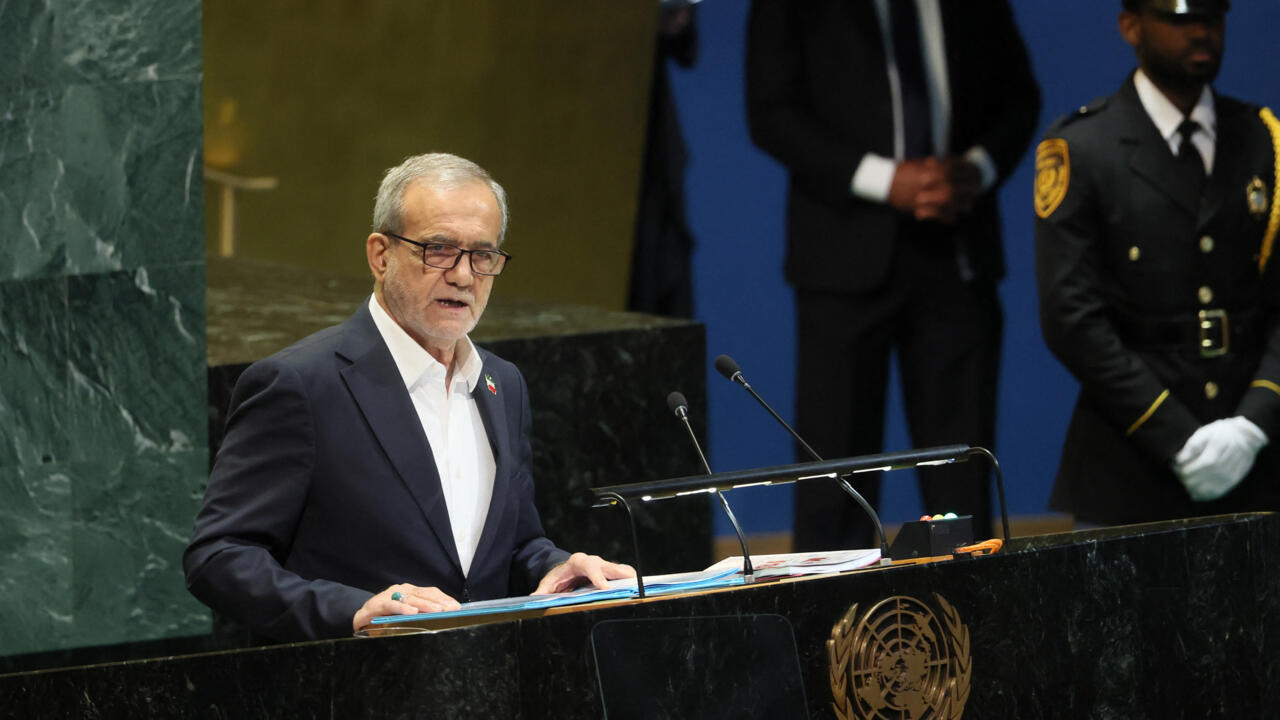
President of Iran Masoud Pezeshkian speaks during the United Nations General Assembly (UNGA) at the United Nations headquarters on September 24, 2025 in New York City. © Michael M. Santiago, Getty Images via AFP

Iran's president repeated Wednesday that his country is not seeking nuclear weapons, after military strikes by Israel and the United States earlier this year, and impending sanctions triggered by European powers.

"I hereby declare once more before this assembly that Iran has never sought and will never seek to build a nuclear bomb," President Masoud Pezeshkian told the United Nations General Assembly.

"The one disturbing peace and stability in the region is Israel, but Iran is the one that gets punished," he said.

Iran has long contended that it is not seeking nuclear weapons, pointing to an edict by Supreme Leader Ayatollah Ali Khamenei, and US intelligence has not concluded that the country has decided to build a nuclear weapon.

But Israel, the United States and European countries have long been sceptical due to the country's advanced nuclear work, believing it could quickly pursue a bomb if it so decided.

Britain, France and Germany have moved to reimpose UN sanctions that had been suspended under a 2015 nuclear deal that was negotiated by the United States and then torn up by US President Donald Trump.

Read moreSnapback: what would renewed UN sanctions mean for Iran’s struggling economy?

The sanctions are set to go into effect on Saturday. Iranian Foreign Minister Abbas Araghchi met Tuesday with his European counterparts, leading to no clear headway other than an agreement to keep talking.

Pezeshkian accused the Europeans of bad faith, saying that Iran's lack of cooperation was in response to Trump's withdrawal from the nuclear deal, formally known as the Joint Comprehensive Plan of Action (JCPOA).

"They falsely presented themselves as parties of good standing to the agreement, and they disparaged Iran's sincere efforts as insufficient," Pezeshkian said.

"All of this was in pursuit of nothing less than the destruction of the very JCPOA which they themselves had once held as a foremost achievement."

Standing at the General Assembly rostrum, Pezeshkian showed pictures of people killed in the Israeli military campaign against Iran, which Tehran says killed more than 1,000 people.

"Aerial assaults of the Zionist regime and the United States of America against Iran's cities, homes and infrastructure at the very time we were treading the path of diplomatic negotiations constituted a grave betrayal of diplomacy," he said.

(FRANCE 24 with AFP)

Iran Signs MoU For Russian Small Nuclear Modular Reactors


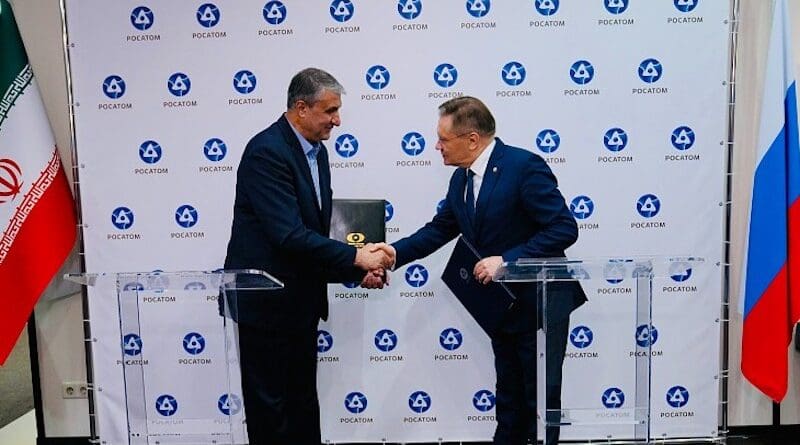
Iran signs MoU for Russian small nuclear modular reactors. Photo Credit: Rosatom

September 25, 2025 0 Comments
By World Nuclear News

Russia’s Rosatom and Iran’s Atomic Energy Organisation have signed a memorandum of understanding for cooperation in the building of small modular reactors in Iran.

According to Iran’s Atomic Energy Organisation “this agreement was concluded to expand cooperation in the field of peaceful uses of atomic energy to promote sustainable development, energy security, and technological advancement, in accordance with the national laws and international obligations of the two countries”.

It said the memorandum of understanding (MoU) paves the way for contracts to be drawn up for the design and construction of small modular reactors (SMRs) in Iran, adding that “these reactors will play an important role in the development of nuclear technical knowledge and technology and industries related to the manufacture of power plant equipment and instruments in the country.”

The MoU was signed by Rosatom CEO Alexei Likhachev and the President of the Atomic Energy Organisation of Iran Mohammad Eslami.

Rosatom said they also discussed the progress of ongoing projects – a Russian-designed VVER unit with a capacity of 915 MWe is already in operation at Bushehr, on the Persian Gulf coast. Two further units featuring VVER-1000 reactors are under construction.

The meeting, Rosatom said, “took place in an atmosphere of mutual trust, openness, and constructiveness” and was part of the Iranian delegation’s visit to Moscow to participate in the World Atomic Week forum, which runs from 25-28 September.


World Nuclear News is an online service dedicated to covering developments related to nuclear power. Established in 2007, WNN has grown rapidly to welcome over 40,000 individual readers to the website each month, while its free daily and weekly emails both reach more than 16,000 people. These figures represent a broad audience that includes not only nuclear professionals but also journalists, researchers, opinion leaders, policy-makers, and the general public.