Thursday, October 02, 2025


New PEN America report reveals Stephen King is the most banned author in US schools
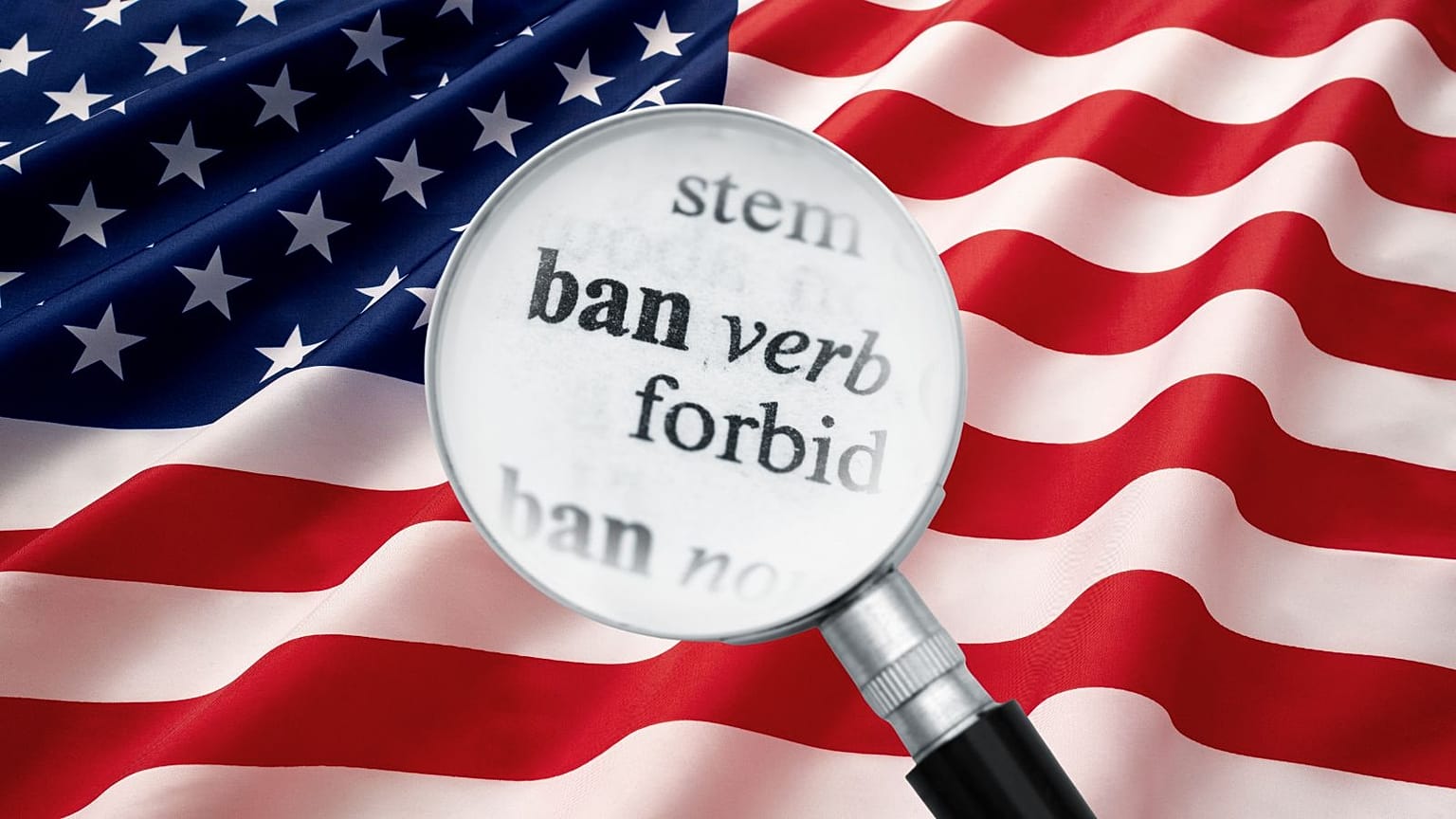
New report reveals who the most banned author is in US schools
Copyright Canva

By David Mouriquand
Published on 


The alarming new report by PEN America, titled "The Normalization of Book Banning - Banned in the USA, 2024-2025", offers a window into the extensive climate of censorship in the US.

It’s official – and very depressing: Stephen King is the most banned author in US schools, according to a new report on book bans.

PEN America’s "The Normalization of Book Banning - Banned in the USA 2024-2025”, published today, tracks 6,870 instances of books being temporarily or permanently pulled for the 2024-2025 school year across 23 states and 87 public school districts.

The report, which examines the climate of censorship between 1 July 2024 through 30 June 2025, states that in 2025, book censorship in the US is “rampant and common” and that “never before in the life of any living American have so many books been systematically removed from school libraries across the country”. 

The report adds: “Never before have so many states passed laws or regulations to facilitate the banning of books, including bans on specific titles statewide. Never before have so many politicians sought to bully school leaders into censoring according to their ideological preferences, even threatening public funding to exact compliance. Never before has access to so many stories been stolen from so many children.” 

Some 80% of the bans originated in just three states that have enacted or attempted to enact laws calling for removal of books deemed objectionable: Florida, Texas and Tennessee. 

The campaign to censor books is increasingly routine as individuals and boards capitulate to rapidly expanding pressures to remove books.
 PEN America report "The Normalization of Book Banning" - Banned in the USA 2024-2025 

Reasons often cited for pulling a book include LGBTQ+ themes, depictions of race and passages with violence and sexual violence.

PEN finds that an ongoing trend has only intensified: thousands of books were taken off shelves in anticipation of community, political or legal pressure rather than in response to a direct threat. 

“This functions as a form of ‘obeying advance,’” the report reads, “rooted in fear or simply a desire to avoid topics that might be deemed controversial.”

PEN America has also identified “a new vector of book banning pressure”: the federal government. 

“Since returning to office, the Trump Administration has mimicked rhetoric about “parents’ rights”, which, in Florida and other states, has largely been used to advance book bans and censorship of schools, against the wishes of many parents, students, families, and educators.” 

The report highlights that “under the guise of “returning education to parents,” President Trump has released a series of Executive Orders (EOs) mainly: 'Ending Radical Indoctrination in K-12 Schooling', 'Defending Women From Gender Ideology Extremism', and 'Ending Radical And Wasteful Government DEI Programs And Preferencing'.”

In addition to the efforts from the White House, the Department of Education ended an initiative by the Biden administration to investigate the legality of bans and has called the whole issue a “hoax”.

Th report was preceded by horror icon Stephen King taking to X and sharing: “I am now the most banned author in the United States – 87 books. May I suggest you pick up one of them and see what all the pissing & moaning is about?” 

He added: “Self-righteous book banners don’t always get to have their way. This is still America, dammit.” 

Indeed, King’s books were censored 206 times, according to PEN, with “Carrie” and “The Stand” among the 87 of his works affected. 

Ellen Hopkins, Sarah J. Maas and Jodi Picoult were some of the other most banned authors, with 167, 162 and 62 censored times respectively.  
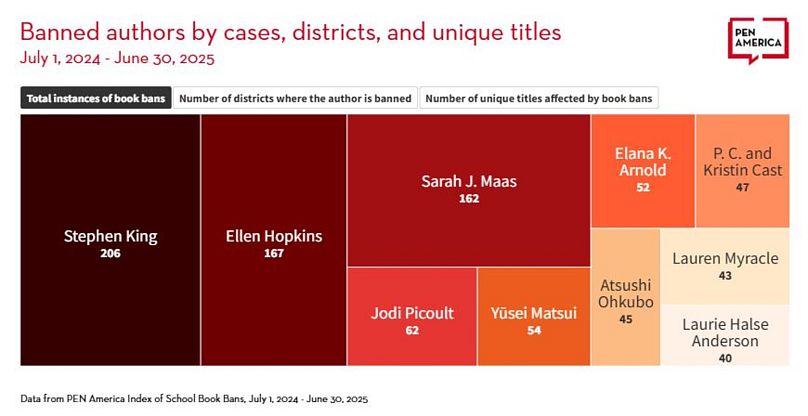
PEN America’s report
PEN America’s report Screenshot "The Normalization of Book Banning - Banned in the USA 2024-2025”

The most banned work of any author was Anthony Burgess’ dystopian classic “A Clockwork Orange,” for which PEN found 23 removals.  

Other books and authors facing extensive restrictions include Jennifer Niven’s “Breathless” (20), Patricia McCormick’s “Sold” (20), Malinda Lo’s “Last Night at the Telegraph Club” (19) and Sarah J. Maas’ “A Court of Mist and Fury” (18). 

The full and very alarming PEN America “Banned in the USA” report can be found here.
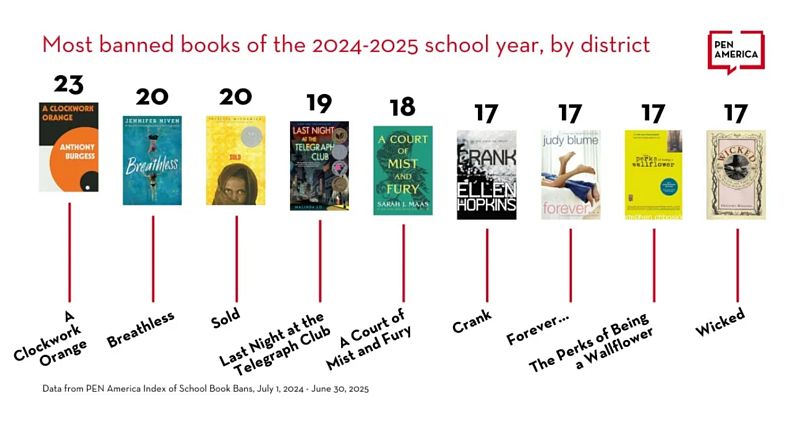
PEN America report
PEN America report Screenshot "The Normalization of Book Banning - Banned in the USA 2024-2025”
These attacks on students’ rights and educational institutions are the symptoms of a much larger disease: the dismantling of public education and a backsliding democracy.
 Extract from "The Normalization of Book Banning - Banned in the USA, 2024-2025" report 

King, who is having a big screen year in 2025, has overtaken Agatha Christie as the most adapted author. The prolific writer’s works have been transposed to both the big screen and the small screen for decades, with more than 55 book-to-feature adaptations since 1976’s Carrie. When also accounting for TV shows and miniseries, his stories have been brought to the screens well over 100 times. 

He is also a vocal critic of Donald Trump, and recently, in a new interview with The Guardian, compared Trump’s presidency to “a horror story”.

Answering a fan question “If you had to invent an ending for Trumpian America, what would it be?”, King answered: “I think it would be impeachment – which, in my view, would be a good ending. I would love to see him retired, let’s put it that way.”

He added: “The bad ending would be that he gets a third term and takes things over completely. It’s a horror story either way. Trump is a horror story, isn’t he?”


 

Jane Fonda joined by more than 550 stars as she relaunches McCarthy-era free speech committee

Jane Fonda joined by more than 550 stars as she relaunches McCarthy-era free speech committee
Copyright AP Photo

By David Mouriquand
Published on 


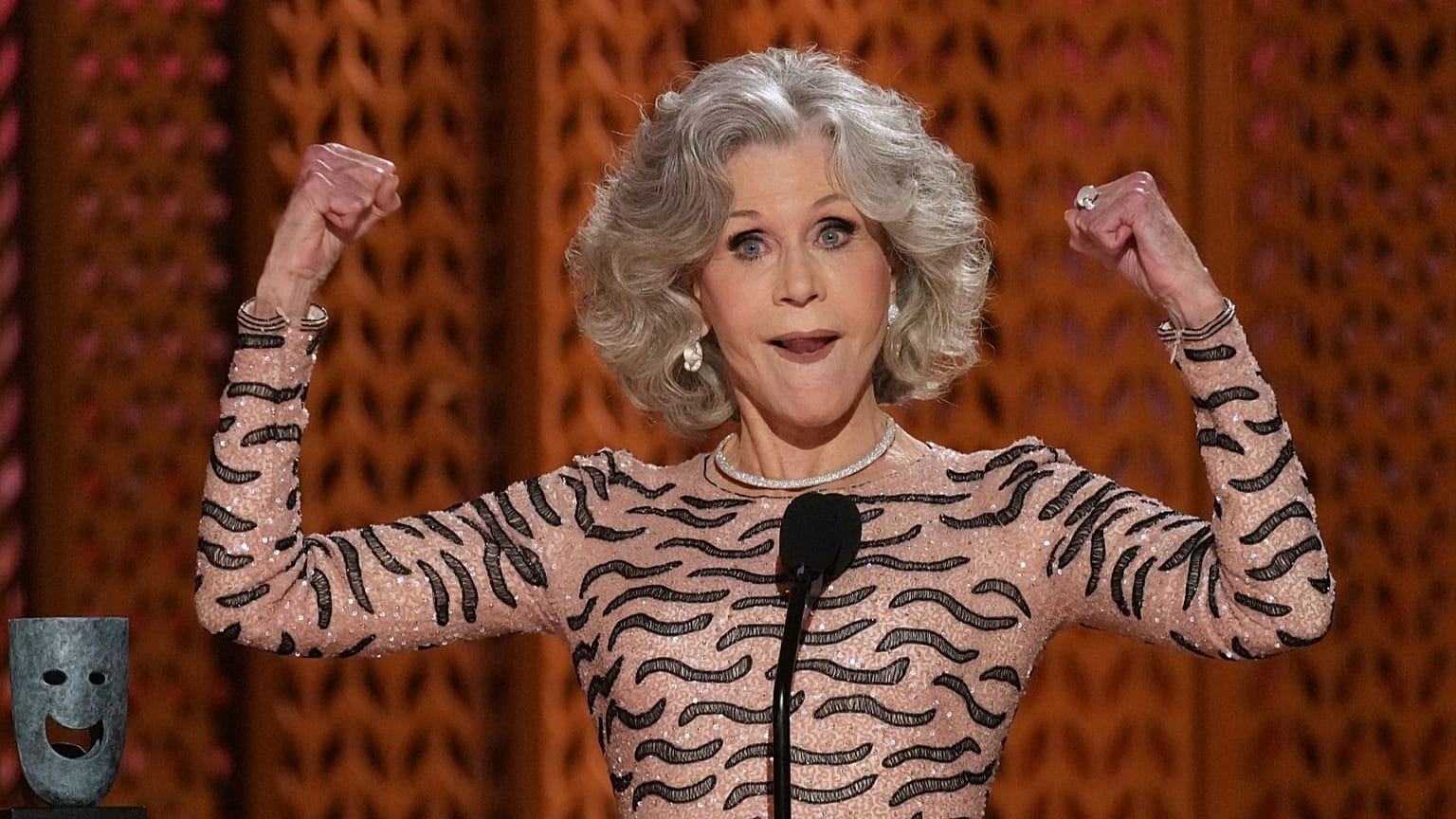
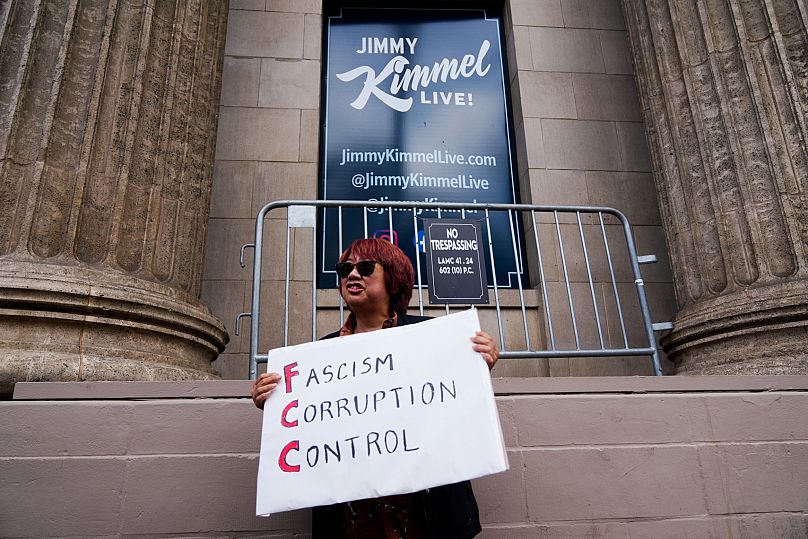
Jane Fonda has relaunched the Committee for the First Amendment, which was founded by her father Henry Fonda in the late 1940s, in order to protect free speech from government censorship. This comes in the wake of Jimmy Kimmel's suspension under pressure from the Trump administration.

Hollywood legend Jane Fonda has relaunched the Committee for the First Amendment, in the wake of the Trump administration’s censorship threats. The McCarthy-era initiative was started by her father, Henry Fonda, in the late 1940s.

The revival of the committee has been met with celebrity support. A lot of celebrity support.

More than 550 entertainment figures to join Fonda in opposing the recent government intervention in the media include: Spike Lee, Natalie Portman, Florence Pugh, Pedro Pascal, Michael Keaton, Viola Davis, Sean Penn, Billie Eilish, Julia Louis-Dreyfus, Barry Jenkins, Ethan Hawke, Patrick Stewart, Nicolas Cage, Aaron Sorkin, Julianne Moore, Janelle MonĂ¡e, Gracie Abrams, Barbra Streisand and Whoopi Goldberg.

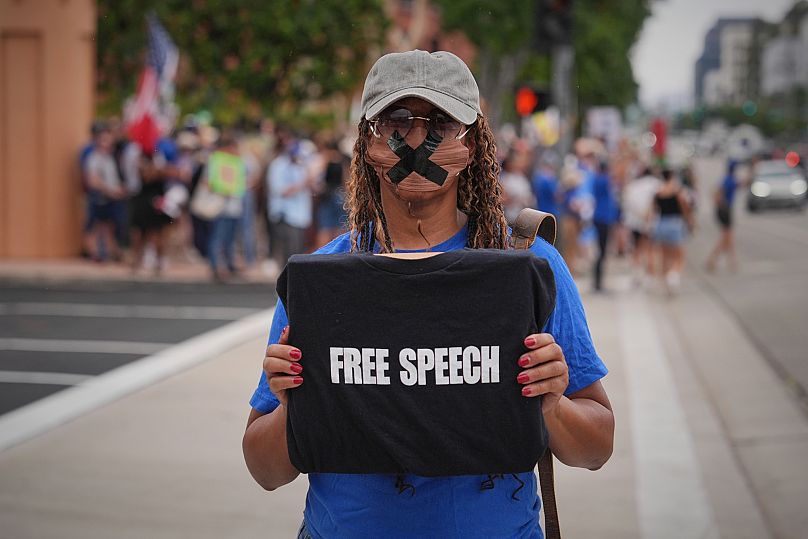
Protests after Jimmy Kimmel's suspension
Protests after Jimmy Kimmel's suspension AP Photo

The committee’s official statement reads: “This Committee was initially created during the McCarthy Era, a dark time when the federal government repressed and persecuted American citizens for their political beliefs. They targeted elected officials, government employees, academics, and artists. They were blacklisted, harassed, silenced, and even imprisoned.” 

“The McCarthy Era ended when Americans from across the political spectrum finally came together and stood up for the principles in the Constitution against the forces of repression. Those forces have returned. And it is our turn to stand together in defence of our constitutional rights. The federal government is once again engaged in a coordinated campaign to silence critics in the government, the media, the judiciary, academia, and the entertainment industry.“ 

“We refuse to stand by and let that happen. Free speech and free expression are the inalienable rights of every American of all backgrounds and political beliefs – no matter how liberal or conservative you may be. The ability to criticize, question, protest, and even mock those in power is foundational to what America has always aspired to be.” 

The statement continued: “We know there is power in solidarity and strength in numbers. We will stand together—fiercely united—to defend free speech and expression from this assault. This is not a partisan issue. That is why we urge every American who cares about the First Amendment—the cornerstone of our democracy—and every artist around the globe who looks to the United States as a beacon of freedom to join us.” 

“And to those who profit from our work while threatening the livelihoods of everyday working people, bowing to government censorship, and cowering to brute intimidation: we see you and history will not forget. This will not be the last you hear from us.” 

Protests following Jimmy Kimmel's suspension
Protests following Jimmy Kimmel's suspension AP Photo

The original committee was founded in response to the House un-American activities committee, led by senator Joseph McCarthy, which accused entertainment figures of being communist sympathizers.

This infamously created a climate of suspicion - “Red Scare” paranoia defined by repression - and derailed careers.

After the mid-1950s, McCarthy lost public popularity and credibility after many of his accusations were found to be false. 

“I’m 87 years old,” said Fonda. “I’ve seen war, repression, protest, and backlash. I’ve been celebrated, and I’ve been branded an enemy of the state. But I can tell you this: this is the most frightening moment of my life.” 

“When I feel scared, I look to history. I wish there were a secret playbook with all the answers – but there never has been. The only thing that has ever worked – time and time again – is solidarity: binding together, finding bravery in numbers too big to ignore, and standing up for one another.” 

Fonda’s initiative follows Disney’s suspension of Jimmy Kimmel Live! - under pressure from the Trump administration.

The move was met with protestscondemnation on both sides of the political aisle, and worries that the Trump administration was threatening First Amendment rights.  

Meanwhile, Trump celebrated the suspension of Kimmel’s show, calling it “great news for America.” He repeatedly praised FCC (Federal Communications Commission) Chairman Brendan Carr for his actions, telling reporters last month that Carr should revoke broadcasters’ licenses for unfavourable coverage

“After years of complaining about cancel culture, the current administration has taken it to a new and dangerous level by routinely threatening regulatory action against media companies unless they muzzle or fire reporters and commentators it doesn’t like,” former President Barack Obama wrote on X at the time.

“This is precisely the kind of government coercion that the First Amendment was designed to prevent — and media companies need to start standing up rather than capitulating to it.” 

Ultimately, ABC brought back Kimmel. Trump threatened to “test ABC” after the broadcaster reinstated the comedian.  

Brendan Carr, the pro-Trump chair of the FCC, will reportedly testify before a Senate Commerce Committee panel in November after the bipartisan backlash regarding his role in Kimmel’s suspension.


Eiffel Tower closed as nationwide strikes held across France against spending cuts

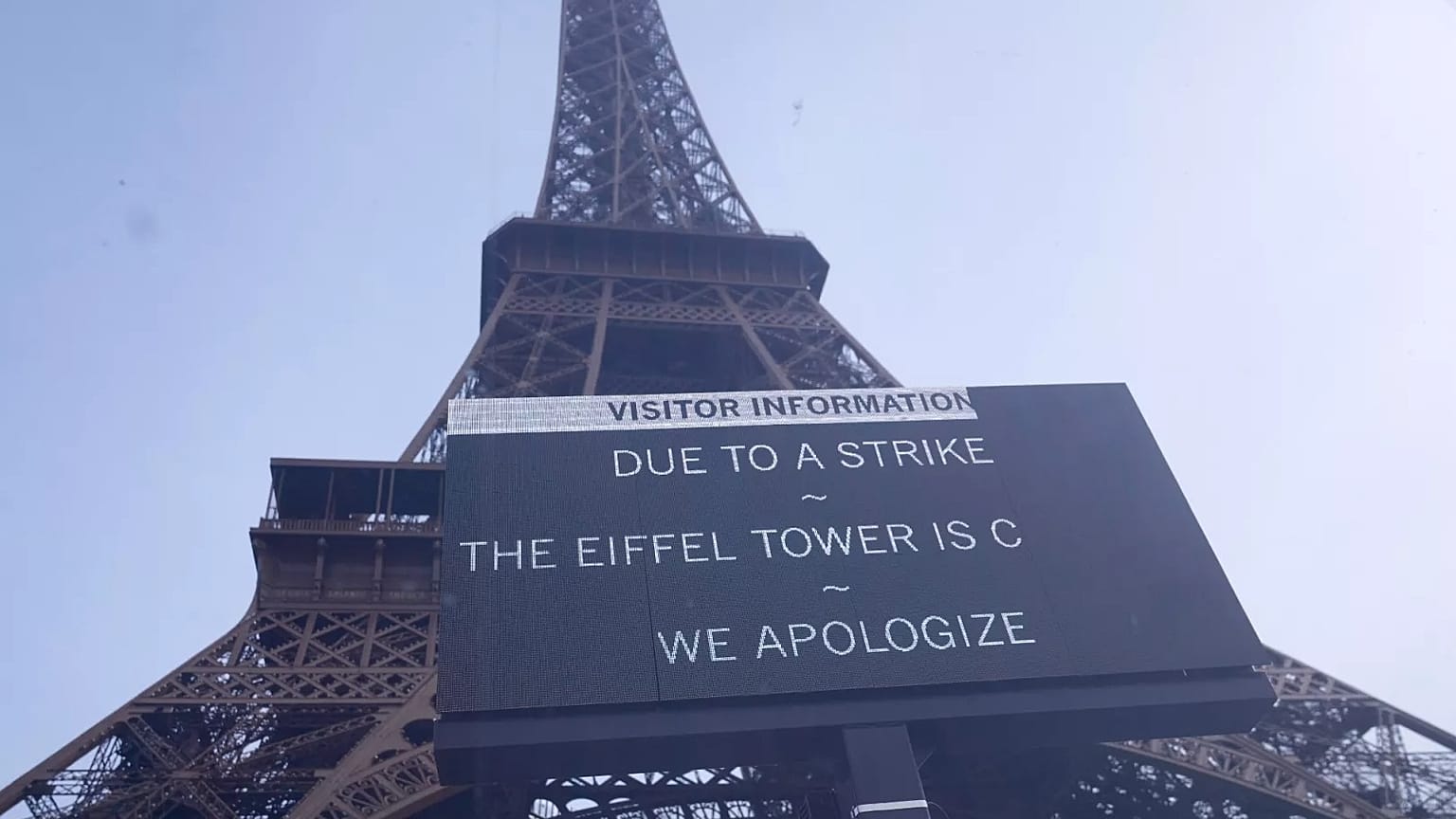
A board at the closed Eiffel Tower during a new round of strikes and protests to denounce spending cuts and demand higher taxes on the rich, 2 October, 2025
Copyright AP Photo

By Sophia Khatsenkova & Gavin Blackburn
Published on 

The nationwide strike, called by France's major unions, is the latest in a series of protests that started last month amid political turmoil and heated budget talks.

Protesters took to the streets of more than 200 towns and cities across France on Thursday to denounce spending cuts and demand higher taxes on the rich.

In Paris, at least 24,000 workers, retirees and students started marching on Thursday afternoon from Place d'Italie with the Eiffel Tower informing visitors in a statement it was closed due to the strike.

The nationwide strike, called by France's major unions, is the latest in a series of protests that started last month amid political turmoil and heated budget talks.

The CGT, the country’s largest union, put the figure at 600,000, but its own leaders admitted momentum was fading compared to protests in September which drew between half a million people.

Unions are urging Prime Minister Sébastien Lecornu to abandon draft budget measures proposed by his predecessor, which include social welfare freezes and austerity measures that many say will further erode the purchasing power of low-paid and middle-class workers.

They also call for higher taxes on France's wealthiest citizens.

“The social anger is extremely strong,” CGT leader Sophie Binet told French TV BFMTV, adding that unions were demanding “social justice" and guarantees that sacrifices required by the new budget would be fairly distributed.

Lecornu, appointed last month, has not yet unveiled the details of his budget plans and has yet to appoint his government ministers, which is expected in the coming days.

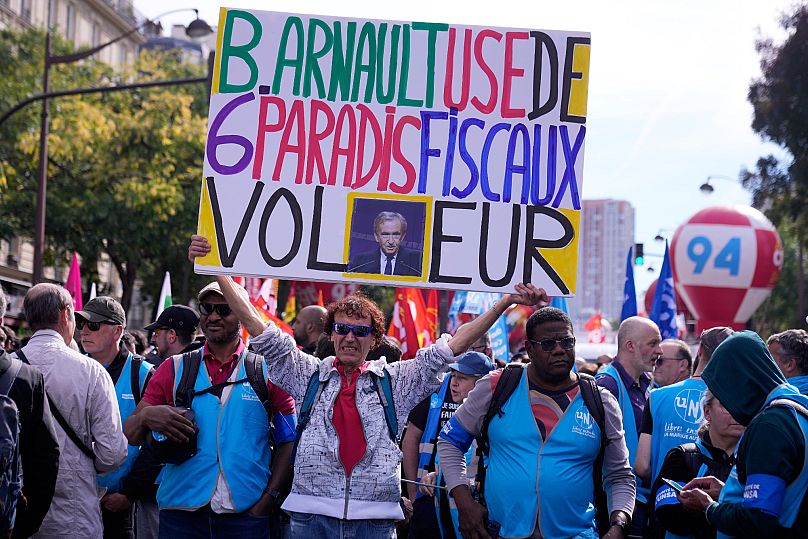
A demonstrator holds a poster of LVMH CEO Bernard Arnault reading "B Arnault uses 6 tax havens, thief" in Paris, 2 October, 2025
A demonstrator holds a poster of LVMH CEO Bernard Arnault reading "B Arnault uses 6 tax havens, thief" in Paris, 2 October, 2025 AP Photo

He is due to deliver his general policy speech in parliament and finalise the government's budget plan. On Friday, he will host a series of meetings with opposition leaders, including Marine Le Pen of the far-right National Rally and representatives from the Socialist Party, the Greens, and the Communists

Their support — or potential threats of a no-confidence vote — will be critical in the upcoming budget vote.

According to aides cited by French media, the prime minister is weighing measures to ease the cost of living for workers, including a possible income tax cut for low-paid couples and reduced payroll charges on overtime hours.

Government collapse

The previous minority government, led by François Bayrou, collapsed in early September after losing a crucial confidence vote in parliament.

Bayrou had proposed a series of unpopular measures in a bid to reign in France’s fragile public finances.

Last year's deficit reached 5.8% of GDP, nearly double the EU ceiling of 3%, while national debt now stands at more than €3.3 trillion, roughly 114% of economic output. 

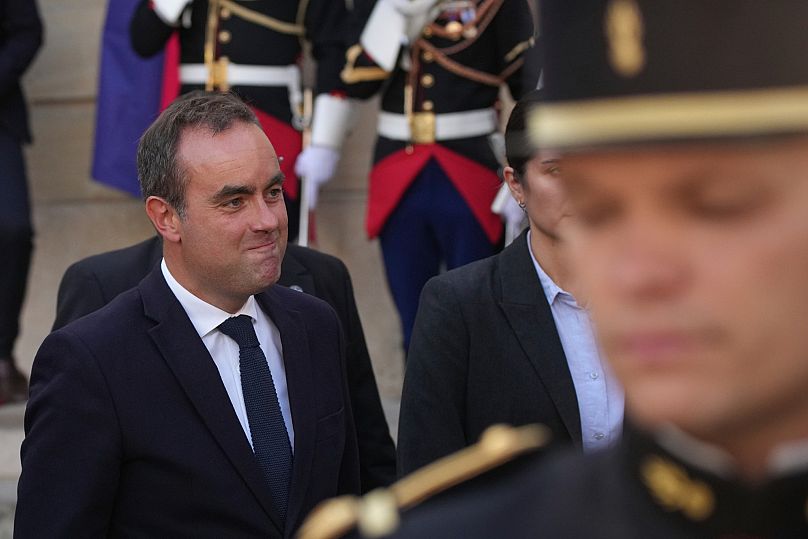
Newly named Prime Minister SĂ©bastien Lecornu after a handover ceremony at the Prime Minister’s residence in Paris, 10 September, 2025
Newly named Prime Minister SĂ©bastien Lecornu after a handover ceremony at the Prime Minister’s residence in Paris, 10 September, 2025 AP Photo

Bayrou had argued that drastic cuts were unavoidable, putting forward a plan to slash €44 billion in spending by 2026, partly by scrapping two public holidays

Binet said on Thursday: "It's true, it’s the first time that there are three days of strikes and protests in a month without a government or budget."

Speaking to BFM TV, she was asked about the timing of the latest action.

"Why are we protesting now? Because we feel that it's now that the decisions are being made and we want to be heard."

The French Interior Ministry said 85 000 protesters had taken to the street by midday outside Paris.

SNCF, the national rail company, said high-speed train services were running normally on Thursday while some regional lines were affected by partial disruptions.

In Paris, metro traffic was close to normal but many commuting trains were running at reduced capacity.

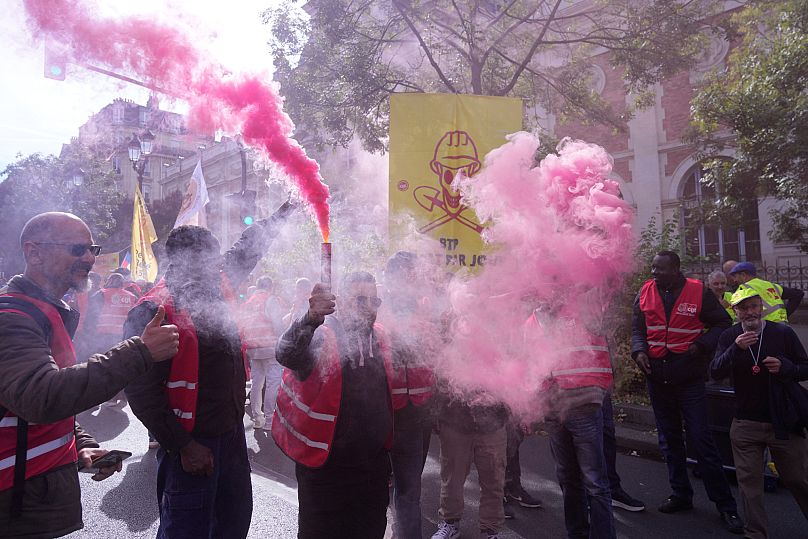
Unionists use flares during a new round of strikes and protests against the caretaker government and cost-cutting in Paris, 2 October, 2025
Unionists use flares during a new round of strikes and protests against the caretaker government and cost-cutting in Paris, 2 October, 2025 AP Photo

Some teachers and healthcare workers have also joined the strike, but overall, early figures appeared to show less people responded to the unions’ call than last month.

On 18 September, more than 500,000 demonstrators marched in France’s towns and cities, including Paris, according to figures from police and interior ministry. Unions reported more than 1 million strikers and protesters nationwide.

The week before, a day of anti-government action across France saw streets choked with smoke, barricades in flames and volleys of tear gas amid the "Block Everything" campaign.

Additional sources 

'Time is running out' for Europe’s steel workers as sector calls for protective measures

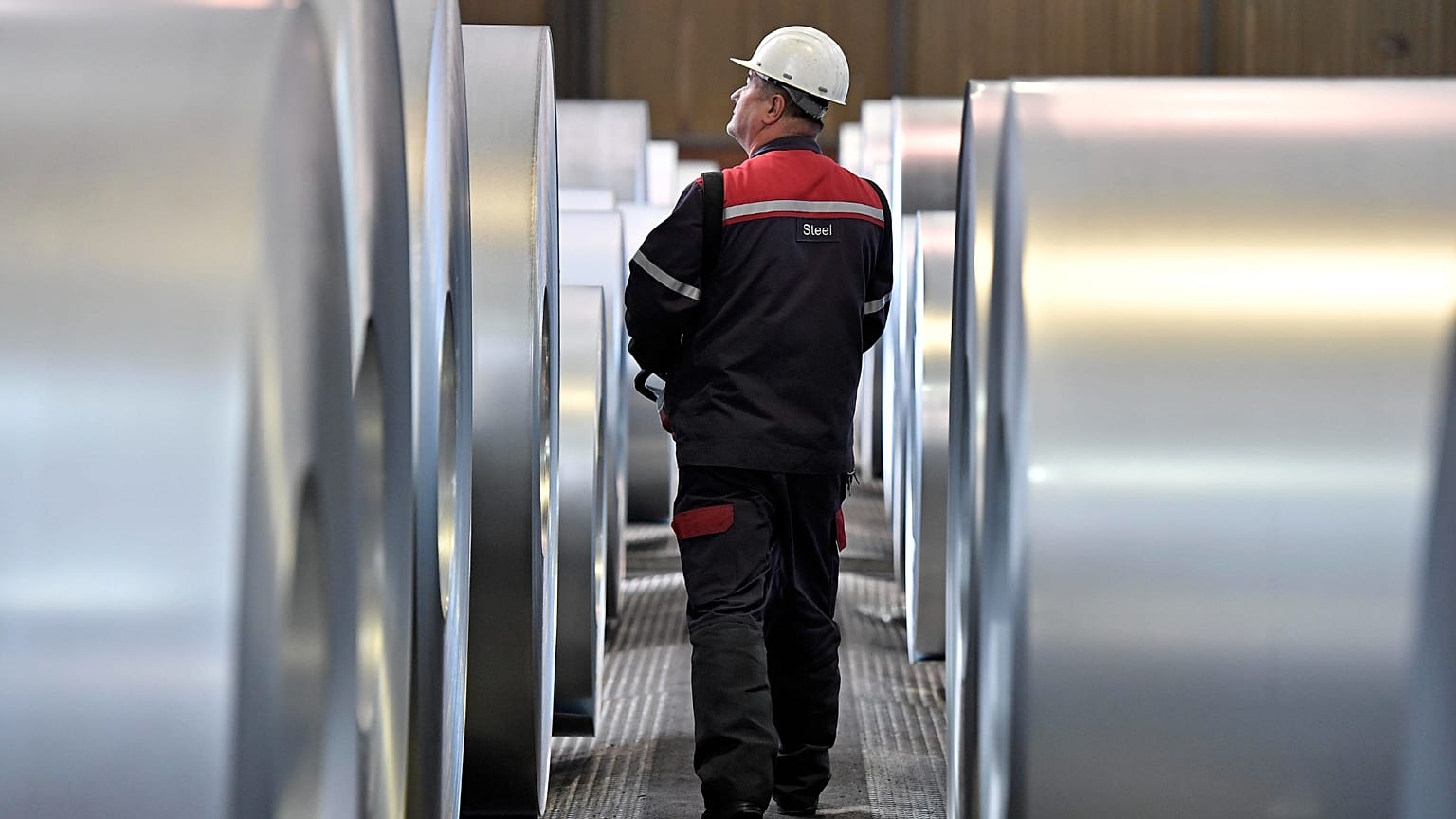
A worker controls steel coils at the thyssenkrupp steel factory in Duisburg, Germany, 27 April 2018.
Copyright AP Photo

By Peggy Corlin
Published on 


Suffocated by Chinese overcapacities and US tariffs, the European steel industry says its very survival is at stake, urging the European Commission to introduce strong protective measures.

The steel sector raised the alarm on Wednesday over the fate of Europe’s steel jobs due to the dual impact of Chinese surplus entering the EU market and punitive US tariffs targeting European steel production.

“Europeans have to do something. They have to find strong answers against these overcapacities because if they don't we will lose all our jobs and all our confidence,” Manuel Bloemers, from the powerful German union IG Metall, told Euronews.

"In Germany, the steel industry is heavily impacted from these imports. Thyssenkrupp has a lot of layoffs planned," he added.

European Commission Vice-President Stéphane Séjourné convened an emergency summit in Brussels with both steel industry leaders and unions to explore urgent solutions.

The European steel industry currently supports around 2.5 million direct and indirect jobs across the EU, with Germany, Italy and France being the main producers in 2024, according to data by EUROFER, a lobby that represents Europe’s leading steel producers.

Thyssenkrupp Steel alone has announced plans to cut up to 11,000 jobs — around 40% of its German workforce — by 2030. Across Europe, thousands of jobs are also under threat at ArcelorMittal, the world’s second-largest steel producer.

The past year was a challenging one for the sector, which saw a loss of 18,000 jobs in the EU, according to IndustriAll, the European steel union.

The situation may worsen with the new trade policy implemented by US President Donald Trump, industry representatives believe.

Since June, the US has imposed 50% tariffs on steel imports and an influx of heavily subsidised Chinese steel is diverted from the US to the EU market, lowering prices and revenues of the EU industry.

EUROFER has called for measures to slash foreign steel imports by half.

“The big risks we have as Europeans is that not only our exports into the US are being limited, but also the imports which are directed to the US usually are landing in an unprotected Europe,” Henrik Adam, president of EUROFER said.

After weeks of transatlantic trade tensions, the EU and the US reached a trade deal in July, which includes a 15% US tariff on all EU imports, while maintaining 50% tariffs on steel and aluminium — a bitter setback for the sector.

The Commission has told Euronews it will unveil new measures of protection for the market at next week's European Parliament plenary session in Strasbourg.

'Time is running out'

“Time is running out,” warned German MEP Jens Geier (S&D), describing the outlook as “anxious” for workers across the continent.

“This is a worthwhile timely initiative by the commission to propose this defence instruments since we all are eager to see action from the Commission,” the MEP said.

To respond to the crisis, the steel industry is proposing a tariff rate quota system: imports above a certain threshold would be subject to a 50% tariff. The threshold remains to be determined.

The quota aligns with a proposal launched in July by France, backed by 10 other EU member states, which notes that the new system “must apply to all third countries without exception.”

Since 2019, the European Commission has implemented safeguard measures to limit imports of foreign steel. However, those are set to expire in 2026, and EUROFER argues the current rules have already proven insufficient, with foreign steel imports doubling over that period.

The OECD published data in April showing that global steel overcapacities stood at 600 million tonnes in 2023 and are expected to rise to 720 million tonnes next year.

To stand its ground, the EU hopes the US will agree to lower its tariffs.

Negotiations between Brussels and Washington are expected to resume once the Commission has finalised its approach to protecting the sector.

The White House will then assess what it is willing to grant the Europeans. But talks are expected to be difficult, as Trump is pushing to bring production capacity back to US soil.

"Our steel and aluminum industries are coming back like never before. This will be yet another big jolt of great news for our wonderful steel and aluminum workers. Make America great again," Trump wrote on his Truth Social platform in May.

Uzbekistan: Prisoners Of Conscience Pressured To Implicate Others, Banned From Reading Quran – Analysis


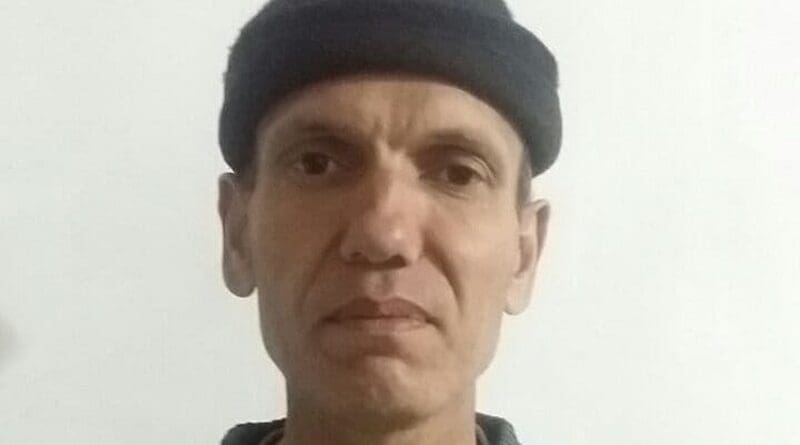
Khayrullo Tursunov, February 2022 Photo Credit: Private

October 3, 2025 
 F18News
By Mushfig Bayram


LONG READ


Qorovulbozor Prison officials threatened prisoner of conscience Khayrullo Tursunov to further implicate seven fellow Muslims jailed alongside him. “We are not sure, but others arrested with him may have been threatened to do the same,” Muslims told Forum 18. Zarafshon Prison administration banned Khasan Abdirakhimov from calling his family. Police pressured relatives not to speak publicly about him. Prisoner of conscience Faryozbek Kobilov hoped for early release in September 2024. But after days in the punishment cell, he was transferred to a harsher prison, which banned him from reading the Koran.

Several Muslim prisoners of conscience jailed for exercising freedom of religion or belief are facing further pressure in prison. In August, officials of Qorovulbozor Prison No. 17 in Bukhara Region threatened prisoner of conscience Khayrullo Tursunov to write statements to further implicate his fellow-believers who were jailed at the same time. “We are not sure, but others arrested with him may have been threatened to do the same,” Muslims who know him told Forum 18.

The 50-year-old Tursunov was among eight now-jailed Muslim prisoners of conscience from Karshi who attended a meal in June 2024 to discuss their faith at the home of a man known to have worked with the regime to entrap others. Karshi Criminal Court handed him an 8-year strict regime jail term (see below).

Calls to Rustam Tursunov, Head of the Chief Inspectorate of Execution of Punishments in the capital Tashkent, or the duty officer went unanswered each time Forum 18 called (see below).

Damir Sultanov, an inspector at the foreign relations section of the Chief Inspectorate of Execution of Punishments in Tashkent, refused to say why prisoner of conscience Tursunov was threatened in prison to further implicate those jailed in the same case. “No one will answer you from the Chief Inspectorate. You need to write a letter to the Foreign Ministry, and then we will see how we can answer,” Sultanov told Forum 18 (see below).


Another of the seven Muslim men from Karshi jailed with Tursunov has faced pressure. The administration of Prison No. 12 in Zarafshon in Navoi Region did not allow 43-year-old Khasan Abdirakhimov to make phone calls to his family since late June. His wife Iroda Nekboyeva appealed to the authorities, including President Shavkat Mirziyoyev, to pardon Abdirakhimov since the family considers that he is innocent. However, the authorities have not responded to her appeals, Muslims familiar with his case told Forum 18 (see below).

The duty officer at Prison No. 12 wrote down Forum 18’s questions why Abdirakhimov was not allowed to call his family and why prison officers had earlier insulted and mocked him by refusing to allow him properly to pray the namaz prayer. The duty officer consulted other officers before refusing to answer. He also refused to put Forum 18 through to the Governor of the prison, Farkhod Kobilov (see below).

Kashkadarya Regional Police summoned prisoner of conscience Abdirakhimov’s relatives during the summer, Muslims from the region complained to Forum 18. Colonel Abduvokhid Ismoilov, Chief of the Regional Police, warned them not to complain to the state authorities or the public about his imprisonment. The duty officer at the Regional Police wrote down Forum 18’s questions why it had summoned and warned Abdirakhimov’s relatives. He claimed that Colonel Ismoilov is “busy at the moment, call back in one hour.” Called back the same day, the officer did not answer the phone (see below).

The local mahalla Committee in Karshi similarly warned Abdirakhimov’s wife not to make public complaints. Sanjar Khudoyberdiyev, Director of the Karshi school which Abdirakhimov’s daughter and son attend, summoned the two children to his office. “He scolded [his daughter] for wearing a hijab to school. He also warned the son not wear hair longer than 1 cm,” Muslims told Forum 18 (see below).

The 27-year-old Muslim prisoner of conscience Faryozbek Kobilov had been hoping for early conditional release in September 2024. But a month before, the administration of the prison sent him to the punishment cell for several days in an apparent move to prevent him being eligible for early conditional release or to make it easier to transfer him back to a harsher-regime prison. In August 2025, the prison authorities transferred Kobilov from Akhangaron’s Labour Camp No. 48 to strict regime Prison No. 5 in Kyzylteppa District of Navoi (see below).

“We wrote many complaints early this year to President Shavkat Mirziyoyev, to the Chief Inspectorate of Execution of Punishments and to the Ombudsperson’s Office but have not received any answers until now,” Kobilov’s parents told Forum 18. “Our son was on purpose given extra punishments while in Akhangaron prison in order to extend his prison stay and move him to a stricter prison.” The administration of the new prison has banned him from reading the Koran. Forum 18 was unable to reach Kyzylteppa prison (see below).

Muslim former prisoner of conscience Fazilkhoja Arifkhojayev – given conditional release in December 2023 – has to pay 15 per cent of his income via the probation service. His bank cards remain blocked and he has been banned from selling his Tashkent flat to support his family. “I have looked for jobs and often they refuse to give me a job because of my age. And a few places where they could have employed me also refused when I told them that I am a former prisoner,” Arifkhojayev complained to Forum 18 (see below).

Another prisoner of conscience, released after a shorter criminal prison term for teaching children the Koran without state permission, complained to Forum 18 that he also has difficulty in finding a job, that he is paying fines to the state, and that the authorities also blocked his bank cards. He did not wish to give more details for fear of state reprisals (see below).
Banning exercise of freedom of religion or belief

Without state registration, religious communities do not have state permission to exist and it is illegal for them to exercise freedom of religion and belief collectively. Among Muslims, the regime allows only communities subject to the state-controlled Sunni Muslim Muftiate (Muslim Board) to exist.

Muslims in particular who meet for worship or to discuss their faith without state permission can face harsh prison terms. Accusations can be extremism- or terrorism-related (typically against devout Muslims) without any credible evidence. A symptom of this attitude is the long-standing involvement of police “Struggle with Extremism and Terrorism Department” officers in human rights violations against people of all beliefs.

The State Security Service (SSS) secret police are continuing to investigate Shia Muslim Anvar Aliyev, Shia Muslims from Samarkand told Forum 18 on 29 September. On 14 July, Samarkand City Police arrested the 35-year-old Aliyev. SSS secret police investigators then opened a criminal case against him on charges of “Production, storage, distribution or display of materials containing a threat to public security and public order” when carried out by a group. He remains in pre-trial detention.
Tursunov: Prisoner of conscience threatened to further implicate his fellow-believers

Khayrullo Turdievich Tursunov (born 4 April 1975) was among eight now-jailed Muslim prisoners of conscience from Karshi who attended a meal in June 2024 to discuss their faith at the home of a man known to have worked with the regime to entrap others. Police officers – some armed with machine guns – were dressed in military camouflage and used violence when they arrested the eight in their homes later that day.

On 18 December 2024, Karshi Criminal Court jailed the eight Muslim men. It jailed Tursunov for 8 years in a strict regime prison. Kashkadarya Regional Court rejected the eight men’s appeal on 30 April 2025.

In August, officers of Qorovulbozor Prison No. 17 in Bukhara Region threatened prisoner of conscience Tursunov to write statements to further implicate his fellow-believers who were jailed at the same time, Muslims from Kashkadarya region, who know Tursunov and his family and asked not to give their names for fear of state reprisals, complained to Forum 18. Reportedly Tursunov refused to do so.

“We are not sure, but others arrested with him may have been threatened to do the same,” the Muslims added. “Their families are afraid to speak to the public or with us.”

Forum 18 was unable to reach Qorovulbozor Prison.

Damir Sultanov, an inspector at the foreign relations section of the Chief Inspectorate of Execution of Punishments in the capital Tashkent, on 24 September refused to answer why prisoner of conscience Tursunov was threatened in prison to write statements to further implicate his fellow-believers who are also prisoners of conscience.

“No one will answer you from the Chief Inspectorate. You need to write a letter to the Foreign Ministry, and then we will see how we can answer,” Sultanov said.

Officials at the Office of the regime-appointed Oliy Majlis Human Rights Commissioner or Ombudsperson in Tashkent refused to talk to Forum 18 about the treatment of the prisoners of conscience. Asked on 25 September about the cases of Tursunov and another of those sentenced with him Abdirakhimov (see below) as well as others, one official, who answered the phone of Aziz Yuldashev, asked it to call back the same number to reach him. When Forum 18 called back the same number, no one answered the phone.

The phones of Feruza Eshmatova, the Ombudsperson, and other numbers also went unanswered. One official, who answered one of the numbers, switched on a pre-recorded message with a female voice saying in Russian that “you have reached a pig farm”. Then the same voice said: “Sorry, I was joking, you have called a wrong number.”

Tursunov’s address in prison:

Uzbekistan
200900 Bukhara viloyati
Qorovulbozor tumoni
Istiklol kuchasi 1
17 sonli Jinoyati Ijro Etish Koloniyasi
Abdirakhimov: Prisoner of conscience banned from calling family, pardon appeals ignored

Khasan Doniyorovich Abdirakhimov (born 18 October 1981) was among eight now-jailed Muslim prisoners of conscience from Karshi who attended a meal in June 2024 to discuss their faith at the home of a man known to have worked with the regime to entrap others. Police officers – some armed with machine guns – were dressed in military camouflage and used violence when they arrested the eight in their homes later that day.

On 18 December 2024, Karshi Criminal Court jailed the eight Muslim men. It jailed Abdirakhimov for 8 years and 3 months in a labour camp. Kashkadarya Regional Court rejected the eight men’s appeal on 30 April 2025.

Abdirakhimov has been held at Prison No. 12 in Zarafshon in Navoi Region. The prison administration did not allow him to make phone calls to his family since late June 2025, Muslims from Kashkadarya told Forum 18. On 26 August his wife Iroda Nekboyeva was finally able to visit him in prison.

Nekboyeva earlier appealed to the authorities, including President Shavkat Mirziyoyev, to pardon Abdirakhimov since the family considers that he is innocent. However, the authorities have not responded to her appeals, the Muslims told Forum 18.

The duty officer at Prison No. 12 (who refused to give his name) confirmed to Forum 18 on 24 September that Abdirakhimov is an inmate in the prison. He wrote down Forum 18’s questions why he was not allowed to call his family since June and why prison officers had earlier insulted and mocked him by refusing to allow him properly to pray the namaz prayer. The duty officer consulted other officers before refusing to answer the questions. He also refused to put Forum 18 through to the Governor of the prison, Farkhod Kobilov.

Calls to Rustam Tursunov, Head of the Chief Inspectorate of Execution of Punishments in Tashkent, or the duty officer went unanswered each time Forum 18 called between 23 and 29 September.

Damir Sultanov, an inspector at the foreign relations department of the Chief Inspectorate in the capital Tashkent, on 24 September refused to answer why officials refused prisoner of conscience Abdirakhimov phone calls from the prison to his family.

“No one will answer you from the Chief Inspectorate. You need to write a letter to the Foreign Ministry, and then we will see how we can answer,” Sultanov responded.

Abdirakhimov’s address in prison:

Uzbekistan
Navoi viloyati
Ichki ishlar boshqarmasi
Zarafshan shaxri
Sharq ko’chasi, uy No. 1
Jinoyati Ijro Etish Bo’limi
12-sonli Jinoyati Ijro Etish Koloniyasi
Abdirakhimov: Regional and local authorities pressure, attack relatives

Kashkadarya Regional Police summoned prisoner of conscience Khasan Abdirakhimov’s relatives during the summer, Muslims from the region complained to Forum 18. Colonel Abduvokhid Ismoilov, Chief of the Regional Police, warned them not to complain to the state authorities or the public about his imprisonment.

The duty officer at the Regional Police on 29 September wrote down Forum 18’s questions why it had summoned and warned Abdirakhimov’s relatives. He claimed that Colonel Ismoilov is “busy at the moment, call back in one hour.” Called back the same day, the officer did not answer the phone.

The local mahalla Committee (state-controlled smallest residential administration), where the family lives in the city of Karshi, have pressured Iroda Nekboyeva, Abdirakhimov’s wife, not to complain to the authorities or the public about his prison conditions. The mahalla Committee also instructed her to ensure that her daughter, who attends a public school in Karshi, does not wear to school a hijab or any headcover that covers her neck.

Zokir Avazov, who chaired the Mustakillik mahalla Committee, answered the phone on 29 September but passed it to his wife to answer the questions “since he is sick and cannot talk”. Avazov’s wife, on his instructions, told Forum 18 that they “know of the family” but declined to comment since “He is no longer the Chair of the Committee since last May. We cannot comment, and please talk to the new Chair.”

The new chair of the Mahalla Committee, Sherzod Sultonov, insisted to Forum 18 on 29 September that “we are not against her or her daughter wearing hijab. If the school is against it then you can talk to the school.” He also denied that he or his subordinates pressured the family not to make complaints.
Abdirakhimov: School which daughter and son attend also pressure them

Sanjar Khudoyberdiyev, Director of the Karshi school which prisoner of conscience Khasan Abdirakhimov’s daughter and son attend, summoned the two children to his office several times. “He scolded [his daughter] for wearing a hijab to school. He also warned the son not wear hair longer than 1 cm,” Muslims told Forum 18.
Kobilov: Prisoner of conscience transferred to stricter regime prison, not allowed to read Koran

Muslim prisoner of conscience Faryozbek Vosiljon ugli Kobilov (born 21 November 1997) was a student at Andijan State University at the time of his March 2022 arrest. In July 2022, Markhamat District Criminal Court of Andijan Region sentenced him to a seven-year jail term for attending one shared meal with five other Muslims where religious themes were discussed. His sentence was reduced to five years’ imprisonment on appeal.

In August 2024, the administration of Akhangaron’s Labour Camp No. 48 put prisoner of conscience Kobilov in the punishment cell for several days in an apparent move to prevent him being eligible for early conditional release or to make it easier to transfer him back to a harsher-regime prison. His family said he had been hoping for early release on 29 September 2024. Akhror Mirzokarimov, Governor of the prison, refused to talk to Forum 18. Asked about Kobilov’s case in August 2024, he put the phone down.

In August 2025, the prison authorities transferred Kobilov from Akhangaron’s Labour Camp No. 48 to strict regime Prison No. 5 in Kyzylteppa District of Navoi. Initially on 4 August they took him for a “few days” to Tashkent’s Temporary detention prison before transferring him to the Navoi prison, his parents complained to Forum 18 on 24 September.

“We wrote many complaints early this year to President Shavkat Mirziyoyev, to the Chief Inspectorate of Execution of Punishments and to the Ombudsperson’s Office but have not received any answers until now,” Kobilov’s parents told Forum 18. “Our son was on purpose given extra punishments while in Akhangaron prison in order to extend his prison stay and move him to a stricter prison.”

Kobilov’s parents told Forum 18 that the prison authorities do not allow Kobilov to read the Koran, “but are compelling him to read books for his correction”. The officers claim to Kobilov that if he reads these books they may transfer him to a prison closer to where his parents live. “We do not know what these books are and whether they are against Muslim morals,” his parents lamented. “The last time we talked with him was when he called in mid-August. He said that he is in severe depression.”

Kobilov’s new prison address:

Uzbekistan
Navoi viloyati
Kyzylteppa tumani
5-sonli Jazoni ijro etish bulimi

Forum 18 was unable to reach Kyzylteppa prison.
Arifkhojayev: Post-prison life difficult for former prisoner of conscience

Police arrested Fazilkhoja Talipjanovich Arifkhojayev (born 25 November 1980), a Muslim known for his criticisms of the regime’s religious policies, in June 2021. At a closed trial in January 2022, Tashkent’s Olmazor District Criminal Court jailed him for seven and half years in a labour camp.

Prisoner of conscience Arifkhojayev was given conditional early release and transferred to his home in Tashkent in December 2023. He is serving the rest of his sentence under restrictions.

Arifkhojayev is officially registered in Tashkent at Chilanzar District Police, but because he lives in Yunusabad District he gets invited regularly for talks to both District Police Departments. “They usually ask me who I talk to and whether I am publishing anything critical on the government,” he told Forum 18 on 25 September. “They check my cell phone.”

Arifkhojayev has been placed under total financial and physical control of the authorities, Muslims told Forum 18 in September 2025. He cannot find a suitable salaried job to support himself and his family, his wife and new born child, both of whom are dependent on him. Nor can he use his bank cards to which his friends and family living outside Uzbekistan would like to transfer money. He also cannot travel abroad for work.

“I have looked for jobs and often they refuse to give me a job because of my age. And a few places where they could have employed me also refused when I told them that I am a former prisoner,” Arifkhojayev complained to Forum 18. “I have three bank cards, all of which were blocked by the authorities. I cannot withdraw money from them.”

Arifkhojayev also complained that when he tried to sell his flat in Tashkent to use the money to support his family, the notary’s office told him that officials had blocked it from being sold.

Arifkhojayev complained that it is difficult for him to live in Uzbekistan. “I would like to travel abroad to work and support my family but the authorities have confiscated my travel passport so I cannot leave Uzbekistan. I am trying to be as quiet as possible and not criticise the government, but it has become unbearable for me to live here.” He said that he feels “emotionally and morally tired of all the pressure. I feel like I will break down from stress.”
Arifkhojayev: Paying 15 per cent of his income in exchange for his pardon

Former prisoner of conscience Fazilkhoja Arifkhojayev complained to Forum 18 that “I have to pay 15 per cent of my income to the state, under the control of the probation authorities. The authorities handed down this payment in exchange for my pardon and early release from prison. But I do not know for how long I will have to pay this.”

In November and December 2024, Arifkhojayev’s lawyer, Sergei Mayorov sent requests to the President Shavkat Mirziyoyev, his Advisor responsible for pardons, to the Chief of Prison No. 5 in Kyzylteppa in Navoi Region (where Arifkhojayev was serving his sentence), and to the local Probation Offices at Chilanzar and Yunusabad Districts of Tashkent (where Arifkhojayev lives). Mayorov asked them to inform him and his client Arifkhojayev in writing of the exact details of the pardon, including how long he would have to pay the penalties and the end date of his punishment.

The only written answer up till now came from Zhobir Azimov, Deputy Advisor to President Mirziyoyev. The 14 December 2024 letter – seen by Forum 18 – merely states that Arifkhojayev was pardoned on 4 December 2023 under Decree No. U11-202. “By this Decree, Arifkhojayev was pardoned in the form of replacing the unserved part of his imprisonment with correctional labour, with a 15 per cent deduction of his salary for the benefit of the state.” Azimov’s letter does not give the end date of the penalty payments.

Officials of the Chief Probation Office of the Interior Ministry in Tashkent refused to answer Forum 18’s questions on Arifkhojayev’s case on 25 September or refer it to Sharof Uralov, its head. Umida (she refused to give her last name), Chief of the Chancellery, also refused to discuss the case with Forum 18 the same day.
Freed prisoner of conscience similarly obstructed post-prison

Another prisoner of conscience, who was imprisoned for a shorter criminal prison term for teaching children the Koran without state permission and who was released in 2025, complained to Forum 18 that he also has difficulty in finding a job, that he is paying fines to the state, and that the authorities also blocked his bank cards. He did not wish to give more details for fear of state reprisals.


F18News

Forum 18 believes that religious freedom is a fundamental human right, which is essential for the dignity of humanity and for true freedom.