Morocco protest leaders demand government dismissal after deadly unrest
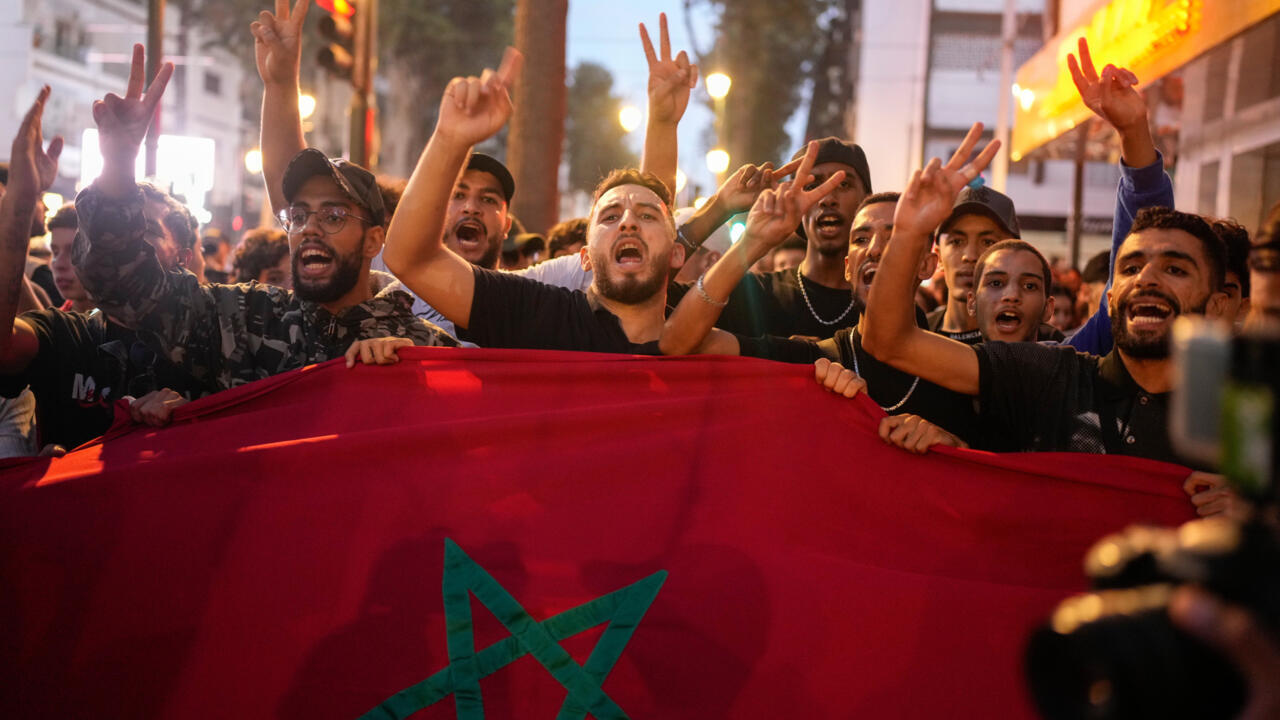
The group leading Morocco’s mass protests demanded the government resign on Friday after days of unrest left three people dead. “We demand the dismissal of the current government for failing to protect rights and meet social demands,” GenZ 212 said in a statement.
Issued on: 03/10/2025 -
By: FRANCE 24
'Dialogue'
Earlier on Thursday, Prime Minister Aziz Akhannouch said in his first public address since the unrest started that his government was willing to "engage in dialogue" and "respond to the (protesters') demands".
The premier also said three people had been killed during protests the night before, describing the events as "regrettable".
An interior ministry spokesman said that all three demonstrators were killed after attempting to storm a local law enforcement station on Wednesday night.
The authorities had initially said two protesters were killed when officers opened fire on a group of demonstrators that they accused of wielding "bladed weapons" and said had attempted to "storm" the station near Agadir.
Health minister Amine Tehraoui said in a speech to parliament on Wednesday that several reforms were underway but acknowledged that they were "still insufficient to close the sector's gaps".
Since the demonstrations started, hundreds of mostly young people have been arrested.
GenZ 212 has urged demonstrators against violence and had called for Thursday's protests to be peaceful "as part of a civilised and responsible expression of our demands".
As of Wednesday night, more than 400 people had been arrested during the rallies, with nearly 300 people -- mainly from the security forces -- injured, according to the interior ministry.
The ministry also said 80 public and private establishments have been vandalised, adding that demonstrators had also damaged hundreds of cars.
Some 134 people, six of whom are in detention, are set to be tried in Rabat soon, according to lawyers.
'Dignity, social justice'
Demonstrators have called for "the fall of corruption" as well as "freedom, dignity and social justice".
Despite its calls for protests, GenZ 212 has also asserted its "love for the homeland and king", referring to Morocco's monarch Mohammed VI.
However, it says it stands against some political parties.
Clashes have erupted in some cities, including in Sidi Bibi, near Agadir, where demonstrators set offices of the local commune headquarters on fire, according to media reports and videos on social media.
In the city of Sale, north of the capital Rabat, an AFP journalist saw hooded demonstrators set fire to two police cars and a bank branch.
"The young people I saw vandalising and breaking things in Sale have nothing to do with GenZ 212," said resident Hicham Madani.
"They are young thugs who came with the intention of vandalising."
The group leading Morocco’s mass protests demanded the government resign on Friday after days of unrest left three people dead. “We demand the dismissal of the current government for failing to protect rights and meet social demands,” GenZ 212 said in a statement.
Issued on: 03/10/2025 -
By: FRANCE 24
People protest against corruption and calling for healthcare and education reform, in Rabat, Morocco, Thursday, Oct. 2, 2025. © Mosa'ab Elshamy, AP
The group leading Morocco's mass protests called on Friday for the government's dismissal, following days of unrest that have seen the deaths of three people.
The demand came after fresh demonstrations demanding reforms to the health and education sectors took place across the kingdom on Thursday, a sixth consecutive day of largely peaceful protests pockmarked with spates of violence.
"We demand the dismissal of the current government for its failure to protect the constitutional rights of Moroccans and respond to their social demands," protest group GenZ 212 said.
The group, whose organisers remain unknown, also demanded the "release of all those detained in connection with the peaceful protests".
The rallies across the usually stable country have been fuelled by anger over social inequality, particularly following reports last month of the deaths of eight pregnant women at a public hospital in the city of Agadir.
Many Moroccans feel that the public health and education sectors should be improved as the kingdom pushes forward with major infrastructure projects to host the Africa Cup of Nations in December and part of the 2030 World Cup.
GenZ 212 said it was basing its demand for the firing of the government on an article in the constitution that "grants His Majesty the King the power to appoint and dismiss the Prime Minister and members of the government".
The group has largely used the Discord online messaging platform to spread its calls for protest, and has repeatedly distanced itself from the violence and vandalism seen in some cities.
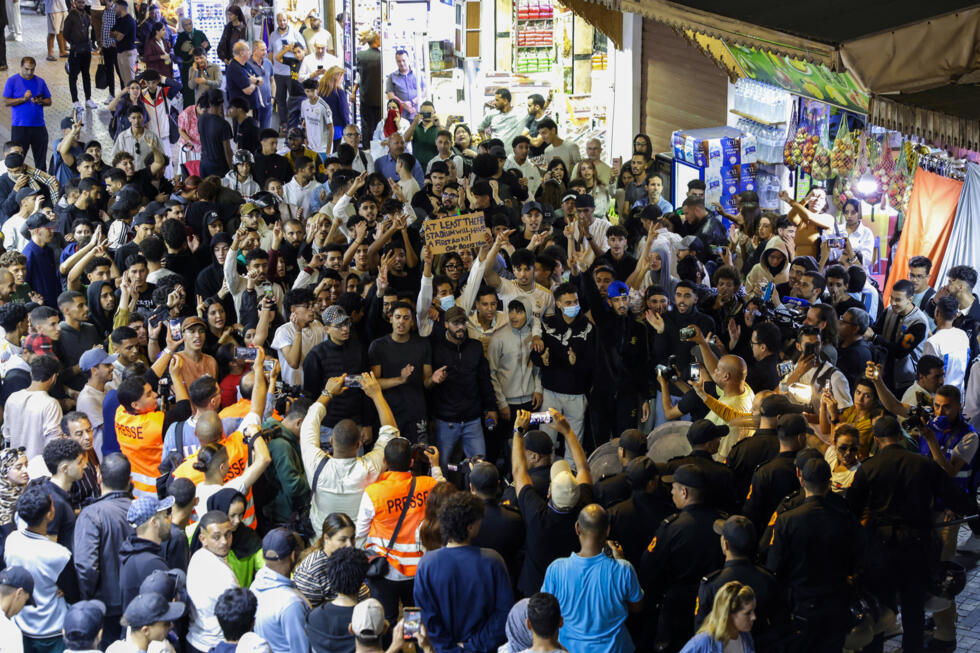
In the capital Rabat on Thursday, demonstrators carrying Moroccan flags demanded "health and not just stadiums", according to an AFP journalist, who said there were no violent incidents.
Other rallies were reported in Casablanca, Marrakech and Agadir, also with no sign of unrest.
The group leading Morocco's mass protests called on Friday for the government's dismissal, following days of unrest that have seen the deaths of three people.
The demand came after fresh demonstrations demanding reforms to the health and education sectors took place across the kingdom on Thursday, a sixth consecutive day of largely peaceful protests pockmarked with spates of violence.
"We demand the dismissal of the current government for its failure to protect the constitutional rights of Moroccans and respond to their social demands," protest group GenZ 212 said.
The group, whose organisers remain unknown, also demanded the "release of all those detained in connection with the peaceful protests".
The rallies across the usually stable country have been fuelled by anger over social inequality, particularly following reports last month of the deaths of eight pregnant women at a public hospital in the city of Agadir.
Many Moroccans feel that the public health and education sectors should be improved as the kingdom pushes forward with major infrastructure projects to host the Africa Cup of Nations in December and part of the 2030 World Cup.
GenZ 212 said it was basing its demand for the firing of the government on an article in the constitution that "grants His Majesty the King the power to appoint and dismiss the Prime Minister and members of the government".
The group has largely used the Discord online messaging platform to spread its calls for protest, and has repeatedly distanced itself from the violence and vandalism seen in some cities.
In the capital Rabat on Thursday, demonstrators carrying Moroccan flags demanded "health and not just stadiums", according to an AFP journalist, who said there were no violent incidents.
Other rallies were reported in Casablanca, Marrakech and Agadir, also with no sign of unrest.
'Dialogue'
Earlier on Thursday, Prime Minister Aziz Akhannouch said in his first public address since the unrest started that his government was willing to "engage in dialogue" and "respond to the (protesters') demands".
The premier also said three people had been killed during protests the night before, describing the events as "regrettable".
An interior ministry spokesman said that all three demonstrators were killed after attempting to storm a local law enforcement station on Wednesday night.
The authorities had initially said two protesters were killed when officers opened fire on a group of demonstrators that they accused of wielding "bladed weapons" and said had attempted to "storm" the station near Agadir.
Health minister Amine Tehraoui said in a speech to parliament on Wednesday that several reforms were underway but acknowledged that they were "still insufficient to close the sector's gaps".
Since the demonstrations started, hundreds of mostly young people have been arrested.
GenZ 212 has urged demonstrators against violence and had called for Thursday's protests to be peaceful "as part of a civilised and responsible expression of our demands".
As of Wednesday night, more than 400 people had been arrested during the rallies, with nearly 300 people -- mainly from the security forces -- injured, according to the interior ministry.
The ministry also said 80 public and private establishments have been vandalised, adding that demonstrators had also damaged hundreds of cars.
Some 134 people, six of whom are in detention, are set to be tried in Rabat soon, according to lawyers.
'Dignity, social justice'
Demonstrators have called for "the fall of corruption" as well as "freedom, dignity and social justice".
Despite its calls for protests, GenZ 212 has also asserted its "love for the homeland and king", referring to Morocco's monarch Mohammed VI.
However, it says it stands against some political parties.
Clashes have erupted in some cities, including in Sidi Bibi, near Agadir, where demonstrators set offices of the local commune headquarters on fire, according to media reports and videos on social media.
In the city of Sale, north of the capital Rabat, an AFP journalist saw hooded demonstrators set fire to two police cars and a bank branch.
"The young people I saw vandalising and breaking things in Sale have nothing to do with GenZ 212," said resident Hicham Madani.
"They are young thugs who came with the intention of vandalising."
Demonstrations have convulsed Morocco for several days, urged on by the GenZ 212 group, a recently formed collective based on the Discord web platform whose organisers remain unknown
© Abdel Majid BZIOUAT / AFP
(FRANCE 24 with AFP)
(FRANCE 24 with AFP)
Morocco pledges reforms as death toll from anti-government protests rises to three
By Gavin Blackburn
Published on 02/10/2025
The demonstrations, organised by a leaderless movement dominated by internet-savvy youth, have taken the country by surprise and emerged as some of Morocco's biggest in years.
Morocco's government said on Thursday that it would address grievances fuelling youth-led protests, a day after security forces killed three people during the unrest.
Prime Minister Aziz Akhannouch said he was saddened by the deaths, praised law enforcement for its efforts to maintain order and indicated that the government was prepared to respond favourably to the protestors demanding better public healthcare and education.
Speaking before a council of government ministers, he did not detail the reforms under discussion, but said he was "ready for dialogue and debate within institutions and public spaces."
"The approach based on dialogue is the only way to deal with the various problems faced by our country," Akhannouch said.
Authorities updated the death toll from this week's unrest to three on Thursday, saying that armed rioters had stormed public buildings and disrupted public order as the youth-led anti-government demonstrations showed few signs of abating.

By Gavin Blackburn
Published on 02/10/2025
EURONEWS
The demonstrations, organised by a leaderless movement dominated by internet-savvy youth, have taken the country by surprise and emerged as some of Morocco's biggest in years.
Morocco's government said on Thursday that it would address grievances fuelling youth-led protests, a day after security forces killed three people during the unrest.
Prime Minister Aziz Akhannouch said he was saddened by the deaths, praised law enforcement for its efforts to maintain order and indicated that the government was prepared to respond favourably to the protestors demanding better public healthcare and education.
Speaking before a council of government ministers, he did not detail the reforms under discussion, but said he was "ready for dialogue and debate within institutions and public spaces."
"The approach based on dialogue is the only way to deal with the various problems faced by our country," Akhannouch said.
Authorities updated the death toll from this week's unrest to three on Thursday, saying that armed rioters had stormed public buildings and disrupted public order as the youth-led anti-government demonstrations showed few signs of abating.
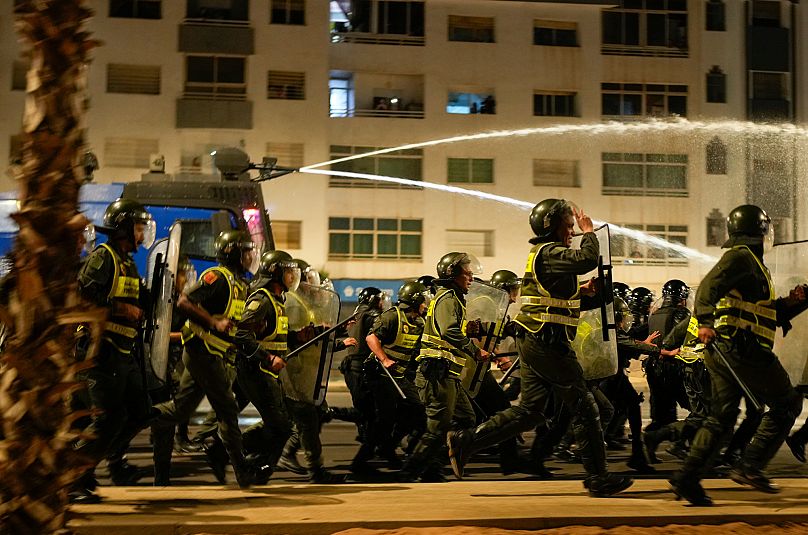
Security forces disperse a gathering as youth led protests calling for healthcare and education reforms turned violent in Sale, 1 October, 2025 AP Photo
Security forces opened fire at demonstrators on Wednesday, killing three people in Leqliaa, a small town outside the coastal city of Agadir.
Morocco's Interior Ministry said the three were shot and killed during an attempt to seize police weapons, though no witnesses could corroborate the report.
The ministry said 354 people, mostly law enforcement, had sustained injuries. It said hundreds of cars were damaged, as well as banks, shops and public buildings in 23 of the country's provinces.
Throughout the country, roughly 70% of the demonstrators were minors, according to ministry estimates.
The demonstrations, organised by a leaderless movement dominated by internet-savvy youth, have taken the country by surprise and emerged as some of Morocco's biggest in years
By midweek, they appeared to be spreading to new locations despite a lack of permits from authorities.
Security forces opened fire at demonstrators on Wednesday, killing three people in Leqliaa, a small town outside the coastal city of Agadir.
Morocco's Interior Ministry said the three were shot and killed during an attempt to seize police weapons, though no witnesses could corroborate the report.
The ministry said 354 people, mostly law enforcement, had sustained injuries. It said hundreds of cars were damaged, as well as banks, shops and public buildings in 23 of the country's provinces.
Throughout the country, roughly 70% of the demonstrators were minors, according to ministry estimates.
The demonstrations, organised by a leaderless movement dominated by internet-savvy youth, have taken the country by surprise and emerged as some of Morocco's biggest in years
By midweek, they appeared to be spreading to new locations despite a lack of permits from authorities.
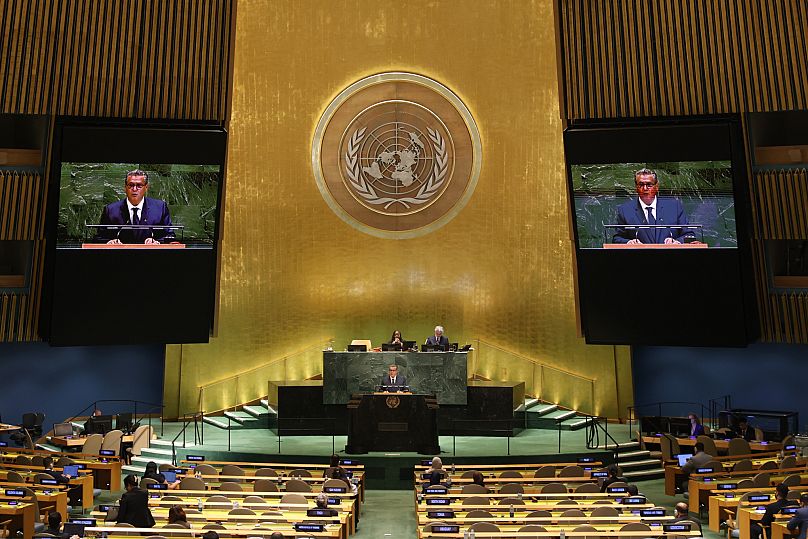
Morocco's Prime Minister Aziz Akhannouch addresses the United Nations General Assembly in New York, 23 September, 2025 AP Photo
Those taking part in the so-called Gen Z protests decry what they see as widespread corruption.
Through chants and posters, they have contrasted the flow of billions in investment toward preparation for the 2030 World Cup, while many schools and hospitals lack funds and remain in a dire state.
But chants were fewer as violence broke out in several cities on Wednesday evening, following days of mass arrests in more than a dozen cities, particularly in places where jobs are scarce and social services lacking.
The chaos came despite warnings from authorities, political parties in government and the opposition and the organizers themselves.
In a statement published on Discord, the Gen Z 212 protest movement earlier on Wednesday implored protesters to remain peaceful and blasted "repressive security approaches."
Those taking part in the so-called Gen Z protests decry what they see as widespread corruption.
Through chants and posters, they have contrasted the flow of billions in investment toward preparation for the 2030 World Cup, while many schools and hospitals lack funds and remain in a dire state.
But chants were fewer as violence broke out in several cities on Wednesday evening, following days of mass arrests in more than a dozen cities, particularly in places where jobs are scarce and social services lacking.
The chaos came despite warnings from authorities, political parties in government and the opposition and the organizers themselves.
In a statement published on Discord, the Gen Z 212 protest movement earlier on Wednesday implored protesters to remain peaceful and blasted "repressive security approaches."
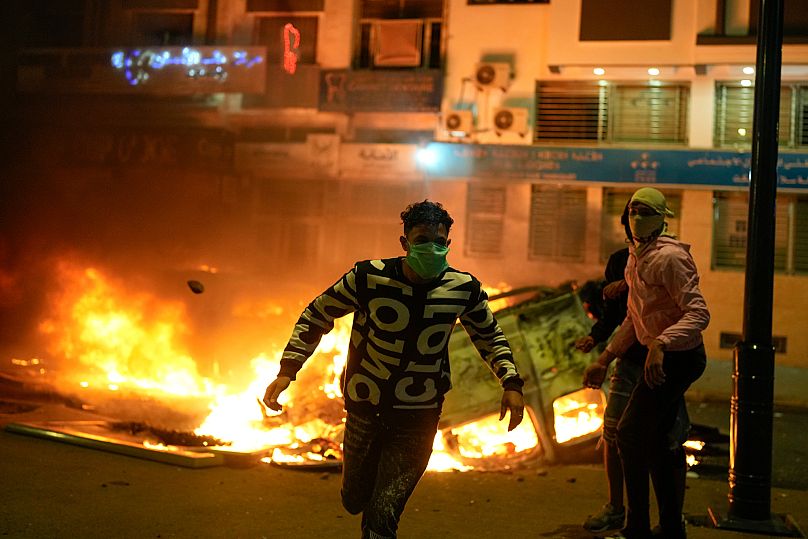
A person runs past a torched police vehicle as youth led protests calling for healthcare and education reforms turned violent in Sale, 1 October, 2025 AP Photo
"The right to health, education and a dignified life is not an empty slogan but a serious demand," the organisers said.
Still, the protests have escalated and become more destructive, particularly in cities far from where development efforts have been concentrated in Morocco.
Local outlets and footage filmed by witnesses show protesters hurling rocks and setting vehicles ablaze in cities and towns in the country's east and south.
The Moroccan Association for Human Rights has said that more than 1,000 people have been apprehended, including many whose arrests were shown on video by local media and some who were detained by plainclothes officers during live television interviews.
The Gen Z protests mirror similar unrest sweeping countries like Nepal, Kenya and Madagascar. Demonstrators have harnessed anger about conditions in hospitals and schools to express outrage over the government's spending priorities.
"The right to health, education and a dignified life is not an empty slogan but a serious demand," the organisers said.
Still, the protests have escalated and become more destructive, particularly in cities far from where development efforts have been concentrated in Morocco.
Local outlets and footage filmed by witnesses show protesters hurling rocks and setting vehicles ablaze in cities and towns in the country's east and south.
The Moroccan Association for Human Rights has said that more than 1,000 people have been apprehended, including many whose arrests were shown on video by local media and some who were detained by plainclothes officers during live television interviews.
The Gen Z protests mirror similar unrest sweeping countries like Nepal, Kenya and Madagascar. Demonstrators have harnessed anger about conditions in hospitals and schools to express outrage over the government's spending priorities.
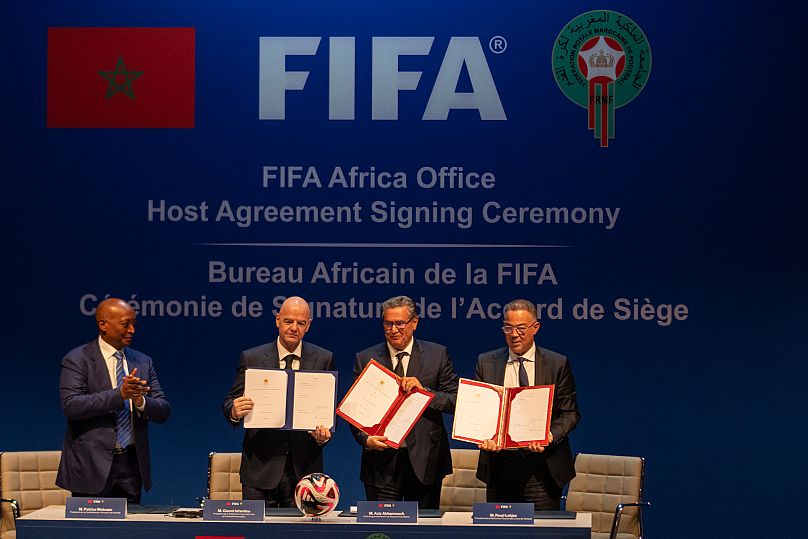
Morocco's prime minister Aziz Akhannouch, third from left, during a signing ceremony of FIFA Africa office in Marrakech, 16 December, 2024 AP Photo
Pointing to new stadiums under construction or renovation across the country, protesters have chanted, "Stadiums are here, but where are the hospitals?" and alleged rampant corruption at everyday people's expense.
As Morocco prepares to host soccer's Africa Cup of Nations later this year and politicians gear up for a parliamentary election in 2026, the link has drawn attention to how deep disparities endure in the North African kingdom.
Despite rapid development, according to some metrics, many Moroccans feel disillusioned by its unevenness, with regional inequities, the state of public services and lack of opportunity, particularly for youth, fuelling discontent.
Pointing to new stadiums under construction or renovation across the country, protesters have chanted, "Stadiums are here, but where are the hospitals?" and alleged rampant corruption at everyday people's expense.
As Morocco prepares to host soccer's Africa Cup of Nations later this year and politicians gear up for a parliamentary election in 2026, the link has drawn attention to how deep disparities endure in the North African kingdom.
Despite rapid development, according to some metrics, many Moroccans feel disillusioned by its unevenness, with regional inequities, the state of public services and lack of opportunity, particularly for youth, fuelling discontent.

Two killed as Morocco protests escalate into clashes with police
Two people were shot dead when police opened fire on a crowd attempting to storm a police station in southern Morocco on Wednesday, state media said, as nationwide protests, fuelled by anger over corruption and inequality, entered their fifth day.
Issued on: 02/10/2025
By: FRANCE 24
Two people were shot dead when police opened fire on a crowd attempting to storm a police station in southern Morocco on Wednesday, state media said, as nationwide protests, fuelled by anger over corruption and inequality, entered their fifth day.
Issued on: 02/10/2025
By: FRANCE 24
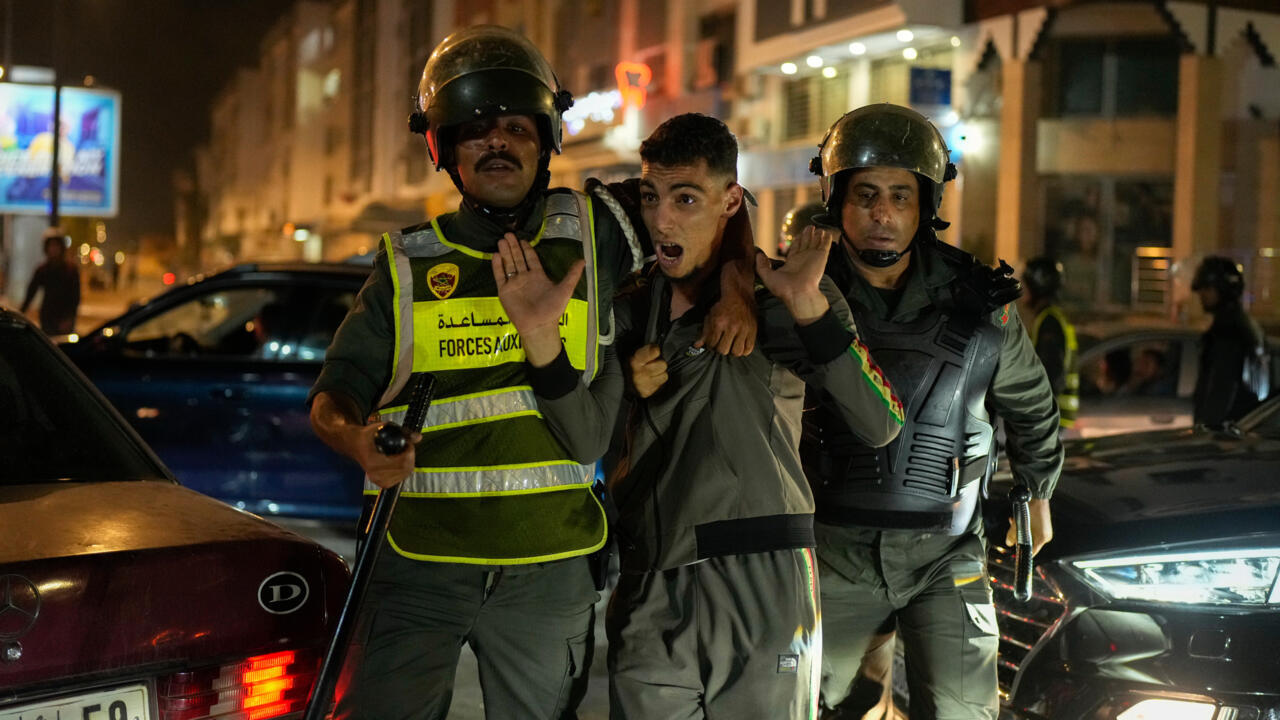
A boy is detained as youth led protests calling for healthcare and education reforms turned violent, in Sale, Morocco. © Mosa'ab Elshamy, AP
12:45
Two people were killed when officers opened fire on a group attempting to “storm” a police station in Morocco on Wednesday, state media said, as protests – sometimes violent – roil the North African nation.
Demonstrations have convulsed Morocco for several days, urged on by the Gen Z 212 group, a recently formed collective based on the Discord web platform whose organisers remain unknown.
Morocco’s interior ministry said on Wednesday that more than 400 people had been arrested and nearly 300 injured during rallies demanding reforms to the public health and education sectors.
Later that evening, a group tried to “storm” a police station in Lqliaa, near the coastal city of Agadir, the government-owned MAP news agency reported, citing local officials.
Officers “were forced to use their service weapons, in legitimate self-defence, to repel (the) attack”, which aimed to “seize ammunition, equipment and service weapons”, MAP quoted the unnamed officials as saying.
The officials said police beat back an initial attack, but the group came at them again, wielding “bladed weapons”, MAP reported.
“During this attempt, two people died from gunshot wounds, while others were injured during their participation in the attack,” the officials said.
A judicial investigation into the incident has been opened, MAP reported.
Hundreds of protesters gathered on Wednesday in several Moroccan cities, including Casablanca, Tangier and Tetouan.
The rallies were taking place with official authorisation for the first time since their outbreak on Saturday.
Demonstrators called for “the fall of corruption” as well as “freedom, dignity and social justice”, and some demanded that Prime Minister Aziz Akhannouch step down.
Many, though not all, of the protests have been peaceful.
An AFP journalist in Salé, a city near the capital Rabat, witnessed hooded individuals setting fire to police cars and a bank branch.
Local media also reported incidents of vandalism in Sidi Bibi near Agadir, and in small towns that Gen Z 212 had not designated as protest sites.
Clashes
On Tuesday, unauthorised protests turned violent in cities including Oujda and Inezgane.
Ministry spokesman Rachid El Khalfi said the clashes involved protesters using knives, Molotov cocktails and stones.
A total of 263 police officers were wounded to varying degrees, along with 23 protesters, including one hospitalised in Oujda.
El Khalfi said 409 people were detained following the unrest, during which more than 140 police vehicles and 20 private cars were set ablaze.
“Protesters also stormed government offices, bank branches and shops, looting and vandalising them,” especially in Inezgane and Oujda, he said.
AFP footage showed tense confrontations lasting several hours along a main avenue in Inezgane.
In Rabat, prosecutors decided on Wednesday that a group of 97 people, including three in detention, would face trial, according to their lawyer, Souad Brahma. Another 26 people were released without charge, she said.
Prosecutors had already said an initial group of 37 people, including three in detention, would face trial on Tuesday, Brahma added.
Gen Z 212, which expressed “regret” over Tuesday’s violence, describes itself as a “discussion space” focused on issues affecting all citizens, such as health, education and fighting corruption.
Social inequality remains a major issue in Morocco, with sharp regional disparities and a significant gap between the public and private sectors.
(FRANCE 24 with AFP)
12:45
Two people were killed when officers opened fire on a group attempting to “storm” a police station in Morocco on Wednesday, state media said, as protests – sometimes violent – roil the North African nation.
Demonstrations have convulsed Morocco for several days, urged on by the Gen Z 212 group, a recently formed collective based on the Discord web platform whose organisers remain unknown.
Morocco’s interior ministry said on Wednesday that more than 400 people had been arrested and nearly 300 injured during rallies demanding reforms to the public health and education sectors.
Later that evening, a group tried to “storm” a police station in Lqliaa, near the coastal city of Agadir, the government-owned MAP news agency reported, citing local officials.
Officers “were forced to use their service weapons, in legitimate self-defence, to repel (the) attack”, which aimed to “seize ammunition, equipment and service weapons”, MAP quoted the unnamed officials as saying.
The officials said police beat back an initial attack, but the group came at them again, wielding “bladed weapons”, MAP reported.
“During this attempt, two people died from gunshot wounds, while others were injured during their participation in the attack,” the officials said.
A judicial investigation into the incident has been opened, MAP reported.
Hundreds of protesters gathered on Wednesday in several Moroccan cities, including Casablanca, Tangier and Tetouan.
The rallies were taking place with official authorisation for the first time since their outbreak on Saturday.
Demonstrators called for “the fall of corruption” as well as “freedom, dignity and social justice”, and some demanded that Prime Minister Aziz Akhannouch step down.
Many, though not all, of the protests have been peaceful.
An AFP journalist in Salé, a city near the capital Rabat, witnessed hooded individuals setting fire to police cars and a bank branch.
Local media also reported incidents of vandalism in Sidi Bibi near Agadir, and in small towns that Gen Z 212 had not designated as protest sites.
Clashes
On Tuesday, unauthorised protests turned violent in cities including Oujda and Inezgane.
Ministry spokesman Rachid El Khalfi said the clashes involved protesters using knives, Molotov cocktails and stones.
A total of 263 police officers were wounded to varying degrees, along with 23 protesters, including one hospitalised in Oujda.
El Khalfi said 409 people were detained following the unrest, during which more than 140 police vehicles and 20 private cars were set ablaze.
“Protesters also stormed government offices, bank branches and shops, looting and vandalising them,” especially in Inezgane and Oujda, he said.
AFP footage showed tense confrontations lasting several hours along a main avenue in Inezgane.
In Rabat, prosecutors decided on Wednesday that a group of 97 people, including three in detention, would face trial, according to their lawyer, Souad Brahma. Another 26 people were released without charge, she said.
Prosecutors had already said an initial group of 37 people, including three in detention, would face trial on Tuesday, Brahma added.
Gen Z 212, which expressed “regret” over Tuesday’s violence, describes itself as a “discussion space” focused on issues affecting all citizens, such as health, education and fighting corruption.
Social inequality remains a major issue in Morocco, with sharp regional disparities and a significant gap between the public and private sectors.
(FRANCE 24 with AFP)
Violent clashes broke out in several Moroccan cities for a fourth straight night over health and education reforms, local media reported. More than 260 security officials and 23 civilians were injured in the clashes and 409 people were arrested, Morocco's interior ministry said Wednesday.
Issued on: 01/10/2025
By: FRANCE 24
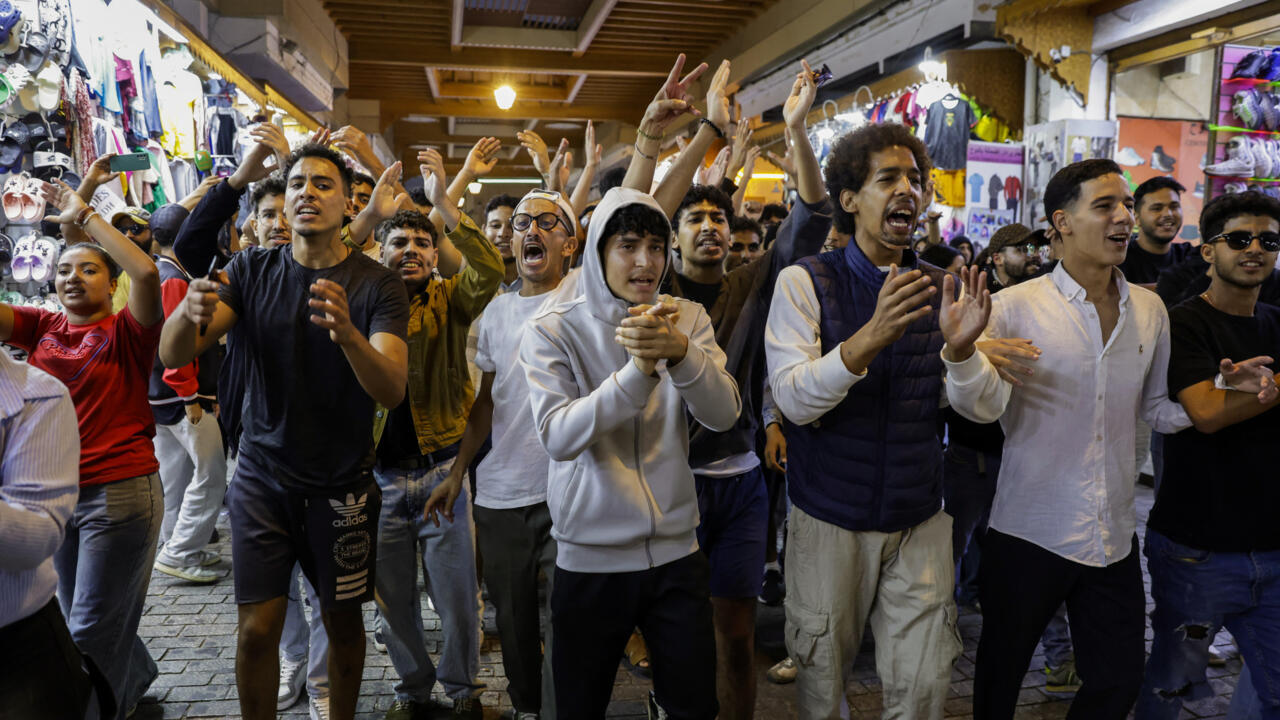
Protesters gather at a market area in Rabat, Morocco on September 29, 2025.
© Abdel Majid Bziouat, AFP
Violent clashes erupted in several Moroccan cities late Tuesday between youths and security forces, local media reported, after days of protests calling for reforms in the public health and education sectors.
Videos published by news outlets which AFP was unable to verify showed masked demonstrators in Inezgane, near Agadir, hurling stones at police, setting fires near a shopping center and damaging a local post office.
Similar scenes were reported in nearby Ait Amira, in central Morocco's Beni Mellal and in Oujda in the northeast.
Violent clashes erupted in several Moroccan cities late Tuesday between youths and security forces, local media reported, after days of protests calling for reforms in the public health and education sectors.
Videos published by news outlets which AFP was unable to verify showed masked demonstrators in Inezgane, near Agadir, hurling stones at police, setting fires near a shopping center and damaging a local post office.
Similar scenes were reported in nearby Ait Amira, in central Morocco's Beni Mellal and in Oujda in the northeast.
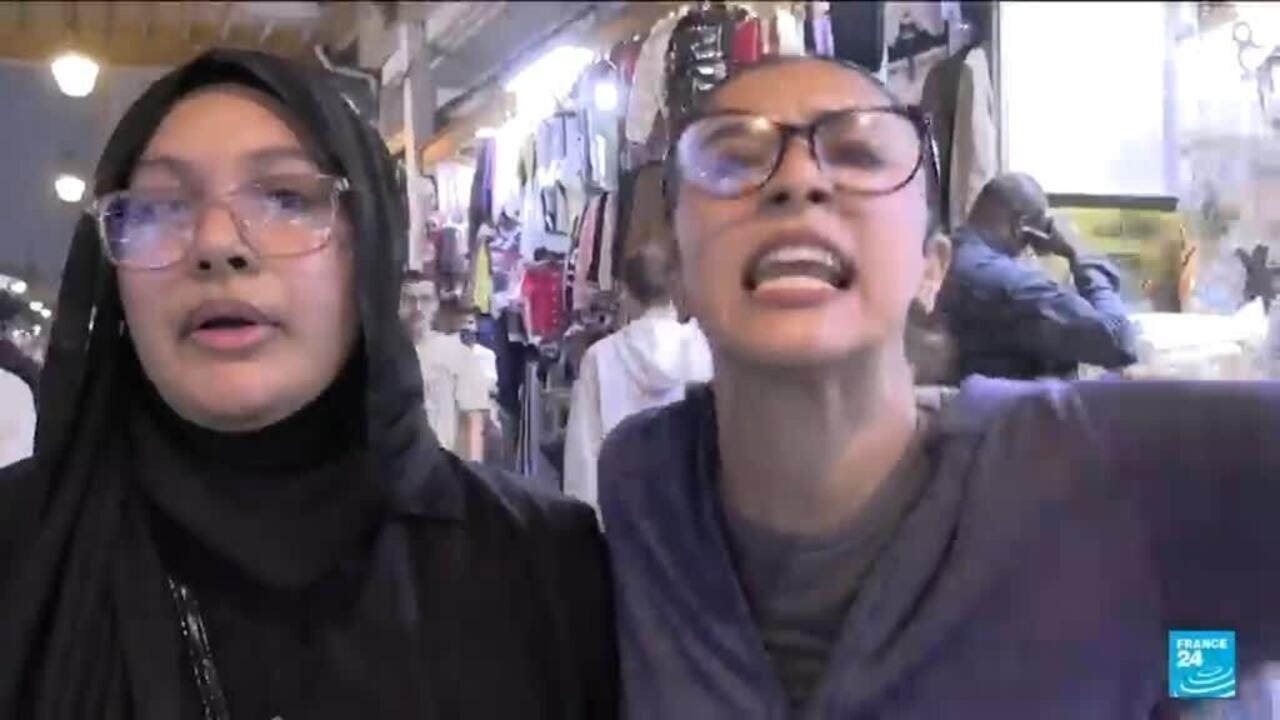
© France 24
01:17
01:17
Morocco's interior ministry said 263 members of the country's security forces and 23 civilians were injured in the clashes.
Protesters used knives and threw Molotov cocktails and stones, with 409 people taken into police custody, the ministry's spokesperson said in a statement.
GenZ 212 calls for peaceful protests
The youth-led protests were initiated by a collective known as "GenZ 212", whose founders remain unknown.
In a statement posted late Tuesday on its Facebook page, the group expressed "regret over acts of rioting or vandalism that affected public or private property".
It also urged participants to remain strictly peaceful and avoid any behaviour that could "undermine the legitimacy of our just demands".
The new protests marked the fourth consecutive day of demonstrations, though there were no reports of violence before today.
The “Gen Z” protests mirror similar unrest sweeping countries such as Nepal, Bangladesh and Madagascar. In some of Morocco's largest anti-government protests in years, the leaderless movement has harnessed anger about conditions in hospitals and schools to express outrage over the government’s spending priorities.
Pointing to new stadiums under construction or renovation across the country, protesters have chanted, ‘Stadiums are here, but where are the hospitals?’ Additionally, the recent deaths of eight women in public hospital in Agadir have become a rallying cry against the declie of Morocco’s health system.
The movement, which originated on platforms like TikTok and Discord popular among gamers and teenagers, has won additional backing since authorities began arresting people over the weekend, including from Morocco's star goalkeeper Yassine Bounou and its most famous rapper El Grande Toto.
Officials have denied prioritising World Cup spending over public infrastructure, saying problems facing the health sector were inherited from previous governments. In Morocco’s parliament, the governing majority said it would meet on Thursday to discuss healthcare and hospital reforms as part of a meeting headed by Prime Minister Aziz Akhannouch.
(FRANCE 24 with AFP, AP and Reuters)