Saturday, October 04, 2025


With ‘Enemies’ Like These, Who Needs Friends?: Trump’s China Diplomacy – Analysis
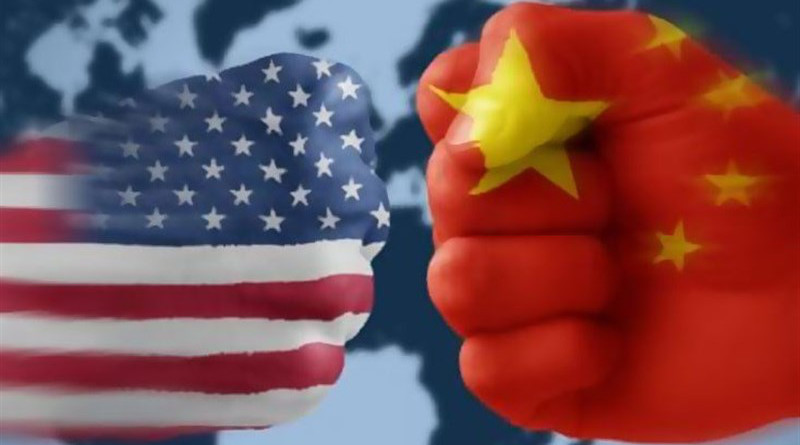
United States and China. Photo Credit: Tasnim News Agency


By 

By Amrita Narlikar


Not yet even a year into his second term, President Donald J. Trump seems to be on a mission to prove the late Henry Kissinger right: it may be dangerous to be America’s enemy, but to be America’s friend is fatal.

The Trump administration has already managed to disappoint and alienate several of its closest allies and strategic partners. But continue along the current trajectory, and Trump 2.0 might surpass Kissinger’s warning with a new twist: to be in the bad books of the United States (US) may ironically offer some advantages. And if it now pays to be America’s rival, and hurts to be a friend, then something fundamental is going wrong with Trumpian diplomacy.

The US Narrative on China

China is an illustration of the muddle that American diplomacy has become.

The first Trump administration dealt with China as a threat; the Biden administration, too, did not let its guard down. Despite some turnarounds, the direction of travel was clear: diversification away from China, as well as intensified cooperation with partners in minilateral settings (such as the Quad). Slowly but surely, European narratives expressing concern about the geoeconomic threats posed by China also intensified, and transatlantic coordination grew. From the perspectives of Asian countries caught up in border and maritime disputes with China, these were welcome and timely moves.

China continued to be in the firing line as part of candidate Trump’s election campaign for the 47thPresidency. Although Agenda 47 announced that all foreign producers would face universal baseline tariffs, China was singled out in several ways. Trump promised that if he were re-elected, he would “reclaim our economic independence from China… revoke China’s Most Favoured Nation trade status and adopt a four-year plan to phase out all Chinese imports of essential goods–everything from electronics to steel to pharmaceuticals. This will include strong protections to ensure China cannot circumvent restrictions by passing goods through conduit countries”.


New rules would be put in place to prevent US companies from investing in China, and federal contracts would be banned for companies that outsource to China. With his return to power, Trump seemed to be holding course with his anti-China promises. His choice of appointees in the administration pointed to “a new hawkish China policy”.

Pete Hegseth, Secretary of Defence, was unambiguous in his NATO speech, identifying the “Communist Chinese with the capability and intent to threaten our homeland core national interests in the Indo-Pacific. The US is prioritising deterring war with China in the Pacific, recognizing the reality of scarcity, and making the resourcing tradeoffs to ensure deterrence does not fail”. So seriously was the Trump administration taking the China threat that it argued for a “division of labour” with European members of NATO “leading from the front” in Europe, and the US concentrating on the Pacific. The new administration’s message was loud and clear: China was a threat to American prosperity and security, and would be treated as such.

Unintended Consequences of Trump’s Diplomacy: China accrues benefits

The gamble against China could have paid off, had it been accompanied by the use of carrots elsewhere. Swift and deep trade, investment agreements with like-minded partners, which shared America’s concerns about the geopolitical and geoeconomic threats emanating from China, would have been useful for the task of realigning global supply chains and setting high standards on new technologies. Besides, efforts to close off Chinese access to the US market would be difficult to implement in isolation: Chinese products would make their way back into the US economy using loopholes and other conduits, unless major economies were on board with the US.

But the Trump administration did not follow this approach. Instead, it chose to apply its highly distributive bargaining behaviour not only towards China, but also towards trusted allies and strategic partners. Public admonitions, punitive tariffs, and other punishing measures, imposed indiscriminately on friends and foes alike, became a new norm in American diplomacy emanating from the President’s office. Some partners agreed to concessions that the US demanded, and received some respite from the initially announced tariffs. But irrespective of subsequent exemptions and carve-outs (or not), the delicate lines of trust that take decades to build were frayed: the US has shown itself to be an unreliable friend.

Against this background, China appears in a new light. While the US reprimands and insults its partners, China’s “wolf-warrior” diplomacy has taken a sweet turn. While the US tramples on the multilateral institutions that it had once led, China presents itself as their upholder and protector. While the US insists on “America First”, China stresses multi-polarity and offers a plethora of apparently inclusive initiatives such as the Global Civilisation Initiative, Global Security Initiative, and Global Development Initiative. Even if many do not buy into these narratives, they are turning out to be more influential globally than the American hardline MAGA narrative. Anti-China narratives seem to be softening.

Academic and policy debates on reforming the World Trade Organization (WTO) provide an illustration of the changing perceptions. Previous discussions had tended to raise questions about Chinese violations of the rules and the spirit of the organisation (e.g failure to uphold intellectual property rights, forced technology transfers, subsidies), while also looking askance at the US (particularly over its decision to block appointments in the Appellate Body, thereby paralyzing the WTO’s Dispute Settlement Mechanism–a Trump 1.0 move, which was also not rectified by the Biden administration). Today, the focus is far less on China’s trade transgressions, and the blame for the WTO’s dysfunctionality is being placed much more squarely on the US.

recent paper has even made the case that the US and the WTO should part ways, and that “On the choice of whether the US should or should not be a member, the burden of proof should fall on those who argue in favour of retaining the US as a member”. This is an astonishing shift in scholarly debate and displays a steep decline in American smart power.

The Trump administration’s readiness to antagonise America’s friends is also having geopolitical repercussions. The thaw in India-China relations is motivated by several factors and has been in the works for some time now. The timing, however, is interesting: an explicit show of camaraderie between the two Asian giants comes despite China’s military and defence support to Pakistan during Operation Sindhoor, just a few months ago.

Powerful catalysts enabling this development include Trump’s tariff hikes against India, singling out India over Russian oil purchases (and turning a blind eye to Chinese and European purchases), new H1B visa fees that hit India severely as a supplier of skilled immigration to the US, all accompanied by rhetoric from key figures (e.g. Peter Navarro and Howard Lutnick) that is anything but diplomatic. If the US has been serious in eyeing China as a threat and genuine in its concerns about the balance of power in the Indo-Pacific, then even the cautious warming of India’s relations with China marks a failure in American diplomacy.[1]

It is worth mentioning that, in addition to the indirect gains that the US is now handing to China on a plate, it is further offering direct gains to boot. The tendency of Trump 1.0 to do “flip-flops” over China persists under Trump 2.0. The deal over TikTok is arguably not a win-win for both parties, but a win for China. The roller-coaster of American diplomacy today, replete with acerbic denunciations and sharp turnarounds, is one of the reasons why the #TALC (“Trump Always Chickens Out”) is trending on social media.

It did not have to be this way. There was much potential in what President Trump started out with in his second Presidency. This could have been an opportunity to strengthen partnerships with democracies, have serious conversations (and consequent policies) on legal versus illegal immigration, and secure global supply chains. Some element of surprise and reversals could have been used effectively as part of a grand strategy. Not all is yet lost; there is still concern in the world regions about other threats besides the US, and there are still problems that could be more effectively addressed were the US to return as a judicious player in the diplomatic game.

But as things stand, the US is rewarding its rivals and punishing its friends. This is not American exceptionalism at work; rather, it is an exceptional muddle.


  • About the author: Amrita Narlikar, Distinguished Fellow, Observer Research Foundation and Honorary Fellow, Darwin College, University of Cambridge


[1] The same could be said of the Trumpian effect in other settings too: the President’s denunciation and ridicule of the BRICS (and its member countries) seems to have injected new momentum into the grouping.



Observer Research Foundation

ORF was established on 5 September 1990 as a private, not for profit, ’think tank’ to influence public policy formulation. The Foundation brought together, for the first time, leading Indian economists and policymakers to present An Agenda for Economic Reforms in India. The idea was to help develop a consensus in favour of economic reforms.



 

The Regional Fallout Of Trumpian Chaos: APEC And East Asia – Analysis

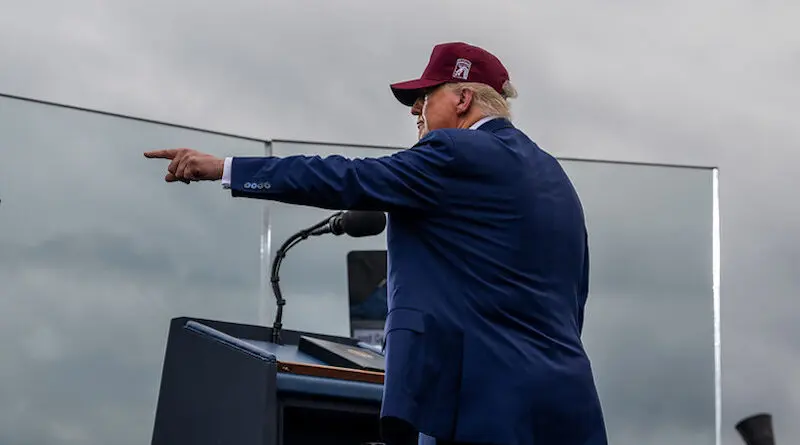
US President Donald Trump. (Official White House Photo by Daniel Torok)


By 

By Dr. Sandip Kumar Mishra 


The leaders of the Asia-Pacific Economic Cooperation (APEC) will meet in Gyeongju, South Korea, in late October 2025 to deliberate on “Building a Sustainable Tomorrow.” As per speculations, trade, innovation, sustainability, and digital transformation, among other pressing issues, will be part of the agenda.

The big question however is whether there should be any expectation of substantial conversations and big breakthroughs in the shadow of the US administration’s chaotic conduct, along with other disrupters, in trying to dismantle the liberal international order.

In the past thirty six years of its journey, APEC has never seen such uncertainty and pessimism in the region as a fallout of global tumult. Though APEC consists of 21 member economies, the host country, South Korea, is concerned about whether the top leaders of the US, China, Russia, and other important countries are even going to show up. Because of this, there is little expectation from the APEC joint statement, though one remains hopeful that at least a few important bilateral meetings of some consequence will nevertheless take place.

The US under Trump 2.0 has created huge uncertainty within already existing regional rivalries. Its unilateral tariff measures have created concerns among both US friends and foes about their future as well as the future of the region. In fact the US’ allies and friends are perhaps even more uncomfortable than its rivals due to these extreme measures. Japan is one such example.

Despite being one of its closest allies in the region, the US imposed a 15 per cent tariff on it, in addition to asking for investments of US$ 550 billion in the US. The Japanese leadership, which has been going through a transition, is trying its best to meet these stipulations, such as by setting up an investment facility as announced by the Japanese Finance Ministry.


The US has also imposed a 15 per cent tariff on South Korea and asked for investments worth US$ 350 billion. These aren’t easy targets. As South Korean President Lee Jae-myung explainedto US Treasury Secretary Scott Bessent in New York on the sidelines of the UNGA, “…a $350 billion investment is 85 percent of Korea’s Forex reserves ($411 billion) and it is not a feasible target.” Further, South Korea thought that the US$350 billion investment would be in the form of loans, guarantees, and partial investments, but the US has instead demanded ‘cash payments’.

Further still, US Commerce Secretary Howard Lutnick said that 90 per cent of the profits from South Korea’s investments would go to the US. In addition to these complications, the manner in which South Korean workers in the Georgia Hyundai plant were treated and deported has created huge anxiety in the country. Other pressures include the US demanding US$10 billion for its troops stationed in South Korea, and handing over ownership of the land that US bases are on (they are leased).

Taiwan, which is the US’ seventh largest trading partner, has also been at the receiving end of these harsh measures, with Trump imposing 20 per cent tariffs on it. Further, he has recently announced that roughly US$ 400 million in military assistance to Taiwan will be withheld. The US has also of course imposed 50 per cent tariffs on India, one of its strategic partners and a member of the Quad, which is collectively working to curb China’s revisionist tendencies in the region. Other measures targeting allies and partners include an increase in H1B visa fees to US$ 100,000.

Notably, H1B visas are largely held by skilled labour from India (74 per cent), China (16 per cent), Canada (3 per cent), Taiwan (1.3 per cent), and South Korea (1.3 per cent). Meanwhile, 100 per cent tariffs have been announced on foreign pharmaceutical products. For context, the US imports around US$ 50 billion pharmaceuticals from Ireland, US$ 19 billion from Switzerland, US$ 15 billion from Singapore, US$ 17 billion from Germany, US$ 12 billion from Belgium, US$ 4 billion from South Korea, and US$ 12 billion from India. 

Clearly the US is targeting its own friends most aggressively. Against this background, Trump’s conciliatory approach to the Chinese social media platform, TikTok, becomes even more significant. Trump has also rejected proposals of new sanctions on Russia. While he may be sending these signals in the interest of a trade deal with China, it is clear that US rivals have far less to fear than its allies and partners.

It is no wonder then that these actors are all seeking to diversify their options beyond the US, whether covertly or overtly. What this means is that contrary to the US’ intent of isolating China and Russia, there is in fact more traction now for China as a viable partner, as evident from the meetings of the Shanghai Cooperation Organization (SCO) and BRICS. Over these past few months, long-established consensus between the US and its friends—on free trade, multilateralism, security alliances and alignments, and other such ideas that underpin the liberal international order—have all been severely affected. In such a scenario, any expectation of a breakthrough even from regional meetings would be exceedingly naïve.

  • About the author: Dr. Sandip Kumar Mishra is Professor at the Centre for East Asian Studies in SIS, JNU, and Distinguished Fellow, IPCS.


IPCS

IPCS (Institute for Peace and Conflict Studies) conducts independent research on conventional and non-conventional security issues in the region and shares its findings with policy makers and the public. It provides a forum for discussion with the strategic community on strategic issues and strives to explore alternatives. Moreover, it works towards building capacity among young scholars for greater refinement of their analyses of South Asian security.


Laser-Guided Rockets Are Reshaping Global Air Defense – Analysis

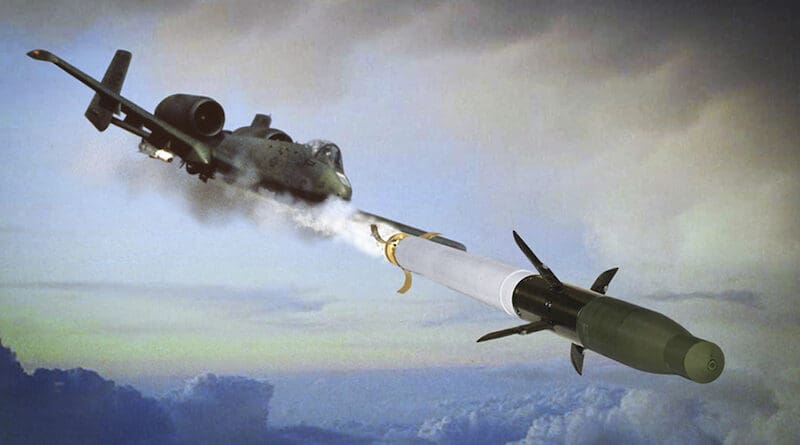
Illustration of an A-10 Thunderbolt II firing a laser guided APKWS rocket. Credit: Samuel King, Wikimedia Commons


By  and 

The air war in the Middle East is being quietly re-armed with inexpensive precision. Over the past year, laser-guided 70mm APKWS II rockets — originally designed to turn unguided rockets into pinpoint air-to-surface weapons — have emerged as the US Air Force’s workhorse against small, inexpensive aerial threats. What began as a field expedient is now established doctrine: fighters and attack aircraft are routinely equipped with salvoes of guided rockets to counter drone swarms and slow cruise missiles.


The rationale is straightforward. High-end air-to-air missiles are costly and limited in number. An AIM-120 Advanced Medium Range Air-to-Air Missile (AMRAAM) can cost around a million dollars; and the AIM-9X Sidewinder several hundred thousand. By contrast, the APKWS II guidance section costs only in the mid-five figures — commonly reported at $15,000–$20,000, with some estimates up to $35,000 — and the complete 70 mm round (guidance plus motor and warhead) adds only a few thousand dollars more. This converts an unguided rocket into an inexpensive precision intercept. In skies increasingly saturated with loitering munitions and small UAVs, the cost-exchange decisively favors defenders who can unleash many accurate shots instead of a handful of million-dollar interceptors.

Operational Impact

First deployed on F-16s, APKWS II later expanded to F-15EsA-10 Thunderbolt IIs, and AH-64 Apaches. While UH-60 and MH-60 variants tested the system for precision strikes over a decade ago, modern integration continues to focus on fixed-wing and attack helicopter platforms. Fired from seven-shot pods that can be stacked on a single pylon, the rockets give platforms like the Strike Eagle the ability to carry dozens of rounds while preserving stations for other missiles. This loadout flexibility enables a single sortie to handle both conventional air combat and mass UAV defense, reducing reliance on scarce, high-value interceptors.

Tactically, APKWS II fills a dangerous capability gap. During the April 2024 Iranian barrage against Israel — when fighters reportedly depleted missile stocks chasing waves of drones — commanders faced a stark dilemma: risk exhausting high-value missiles or attempt improvised strikes with bombs poorly suited to agile aerial targets. Laser-guided rockets provided an intermediate option: precision against small, maneuvering targets at a fraction of the cost, with deeper magazines and simpler logistics.

Yet APKWS II is no panacea. Its laser guidance requires line-of-sight or an external designator, complicating engagements at range or in degraded weather. Development efforts — including dual-mode seekers with infrared sensors — aim to expand engagement envelopes and reduce reliance on forward designators. Even with such upgrades, rockets remain inherently short-range. Traditional missiles and networked sensor architectures will remain essential for countering contested, beyond-visual-range (BVR) threats.

Strategic Implications

APKWS II’s success accelerates a broader democratization of air defense: relatively low-cost, precision-guided munitions make layered, distributed defensive architectures more feasible for allies and partners. This carries significant export and interoperability consequences. Navies and air arms observing US practice — with several allied platforms already considered for integration — are surely going to follow suit, raising the defensive baseline across coalitions while simultaneously altering adversarial threat calculations.


Industrially, the shift benefits agile suppliers and sensor–seeker firms as much as rocket-motor manufacturers. Upgrades such as proximity fuses, refined guidance algorithms, and infrared seekers will be critical in transforming a short-range expedient into a robust, reliable air-to-air capability. For the U.S. and its partners, scaling production and integrating these systems across platforms will be the next test of operationalizing the concept.

Rules of engagement and legal doctrines will also require recalibration. Employing air-to-ground munitions in an air-to-air role raises questions of ordnance certification, collateral planning, and safe employment — particularly in congested airspaces where civil aviation and non-combatant infrastructure are present. Training regimes, command-and-control structures, and integration with wider air-defense networks must evolve in parallel.

The APKWS phenomenon underscores a broader lesson from recent conflicts: asymmetric aerial threats demand creative adaptation. As adversaries proliferate cheap, disruptive tools, defenders must either expend costly interceptors or innovate with more affordable counters. APKWS II exemplifies the latter — an economical, rapidly fielded solution that reshapes operational calculus and buys time for more systemic advances, from enhanced sensors to layered interceptors and resilient networks.

Global Counter-Drone Efforts

This trend is far from unique to the United States Air Force. Across multiple theatres, militaries — and increasingly, civilian operators — are improvising or repurposing technology to meet the rising challenges posed by drone warfare.

Military Examples

  • Ukraine’s air defenses: jury-rigged systems combining Cold War–era radar, anti-aircraft guns, and repurposed missiles to counter Iranian-made Shahed drones.
  • Ukraine’s electronic warfare: jamming GPS and command links to neutralize drones mid-flight, bypassing kinetic interceptors altogether.
  • Israel’s Iron Dome: initially designed for rockets, now adapted to intercept small UAVs at short range.
  • Saudi Arabia and the Gulf states: frequently forced to fire $3 million Patriot interceptors against $20,000 Houthi drones — a striking illustration of cost asymmetry.
  • US Navy shipboard lasers: deployed experimentally to disable drones at a fraction of missile costs, with the added benefit of deep magazines.
  • India’s anti-drone doctrine: devised after the 2021 Jammu air base attack, combining jamming, small arms, and indigenous laser prototypes.
  • China’s counter-drone batteries: integrating radar, electronic warfare, and low-cost missiles into layered defenses, now marketed to foreign buyers.

Civilian Applications

  • Airports: Major hubs like London’s Gatwick and Heathrow have rolled out counter-drone radars, jammers, and capture systems after repeated shutdowns from rogue UAVs. What began as ad hoc fixes a few years ago is now becoming standard practice. Similar systems are being tested at Amsterdam Schiphol, Dubai International, and several large US airports.
  • Sports stadiums and large venues: From NFL and NBA arenas in the U.S. to major concerts and football finals abroad, venues are deploying anti-drone surveillance, nets, and geofencing to block UAVs carrying cameras, banners, or hazardous payloads — lessons driven home by the 2023 Champions League final and a Green Day show in 2024.
  • Energy and critical infrastructure: French nuclear plants, US refineries, and European power grids have invested in drone-detection and interdiction systems to guard against espionage, sabotage, or accidental intrusion. Recent cases highlight the scale of these efforts: Estonia’s grid operator Elering is spending €200 million on drone countermeasures for substations and transmission lines; Ukraine has secured €86 million from the European Investment Bank to build anti-drone shelters for its grid; and Électricité de France (EDF) has investigated repeated drone overflights of nuclear plants that occurred in 2014, prompting further protective upgrades.
  • Urban policing and public events: Law enforcement in cities such as New York, Tokyo, and London are experimenting with nets, interceptors, and electronic jamming during high-security events, festivals, and government operations.
  • Commercial aviation and airspace management: The FAA and EASA are testing systems to integrate drones safely into controlled airspace, using technologies such as Unmanned Traffic Management (UTM), remote identification, and geofencing to balance innovation with security.
  • Ports and maritime facilities: Some seaports and naval bases, including Rotterdam and Singapore, have begun testing counter-UAV technologies to protect shipping lanes, cargo operations, and sensitive naval assets.

Cheap guided rockets will not supplant high-end missiles, but they are reshaping the mission set of tactical aircraft and offering a scalable, cost-effective tool against the drone threat. Their growing role signals a doctrinal shift: precision is no longer the exclusive domain of million-dollar munitions but can be delivered in volume at a fraction of the cost. This democratization of air defense is likely to ripple outward, influencing procurement choices, alliance structures, and adversarial swarm strategies.

What lies ahead is less about any single weapon system than the balance between cost, adaptability, and resilience. Should adversaries continue to flood the skies with cheap, expendable drones, the decisive edge may rest not with the side wielding the most sophisticated missiles, but with the one that innovates most rapidly and spends most wisely. The APKWS story is thus only one chapter in a broader evolution of air defense — a reminder that military advantage in the drone age is measured as much in fiscal prudence and ingenuity as in range and lethality.

The pressing question, then, is whether militaries and civilian sectors alike can scale such adaptations quickly enough — before drone technology itself advances further and again transforms the cost equation.

About the authors:

  • Scott N. Romaniuk: Senior Research Fellow, Centre for Contemporary Asia Studies, Corvinus Institute for Advanced Studies (CIAS), Corvinus University of Budapest, Hungary
  • László Csicsmann: Full Professor and Head of the Centre for Contemporary Asia Studies, Corvinus Institute for Advanced Studies (CIAS), Corvinus University of Budapest, Hungary; Senior Research Fellow, Hungarian Institute of International Affairs (HIIA)

Source: This article was also published at Geopolitical Monitor.com