Saturday, October 04, 2025


Belgium Police End Greenpeace Blockage of LNG Terminal After 29 Hours
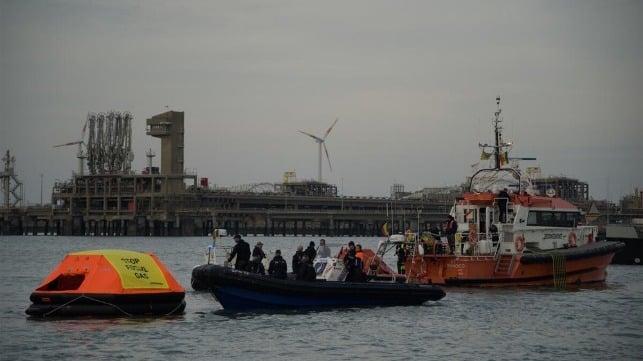
Belgian police end protest
Belgian police ended the blockade of the LNG terminal in Zeebrugge (© Alvaro Lagos / Greenpeace)

Published Oct 3, 2025 2:03 PM by The Maritime Executive


The Belgian police ended the blockade by Greenpeace protestors of the Zeebrugge LNG terminal. The group confirmed its activists have been removed and arrested after 29 hours while its sailboat was moved to a dock in the port, and the flow of LNG carriers has resumed.

As many as 70 Greenpeace activists took to the harbor on Wednesday, October 1, in a flotilla of small boats, kayaks, and inflatables surrounding the Greenpeace sailing vessel Witness (74 feet/22.5 meters). Reports said they had timed the protest and hidden at various points around the port, so that it began just after an LNG carrier departed the terminal operated by Fluxys.

The group included a large inflatable with images of Vladimir Putin and Donald Trump and a large banner reading “They love gas, you pay the price.” It was timed to the ongoing talks regarding the EU’s 19th sanction package against Russia, which calls for an end to Russian gas imports. Greenpeace, however, is also calling for an end to U.S. LNG imports, saying Europe must halt all supply contracts for fossil gas with a phase-out by 2035.

“By ending this action, law enforcement is allowing major polluting industries to continue business as usual. It’s fossil fuel companies, and their supporters, who should be held to account. But we won’t give up,” said Lisa Göldner, Fossil Fuel Campaigner, Greenpeace Germany.

A police boat was standing by near the protest on Wednesday, but initially took no action. After about 24 hours, Greenpeace said more than 40 protestors were still blocking the terminal, including with their kayaks and inflatable boats. They were determined to stay despite cold temperatures, humidity, and lack of sleep. The Witness was positioned in the inner harbor, blocking the entry to the terminal.

The LNG carrier Arctic Voyager (75,485 dwt) operated by K Line was inbound from Norway and deferred its arrival till Friday, October 3. Knutsen OAS Shipping’s vessel Rias Baixas Knutsen (96,354 dwt) was also reporting that it was drifting off Spain. Reuters, also citing LSEG data, reported that the Megara (95,452 dwt), coming from the U.S. operating for Shell’s STASCO, and MOL’s LNG carrier LNG Phecada (91,712 dwt) coming from Russia were also delaying their trips. MOL’s vessel is now due in Zeebrugge on October 5, while the STASCO vessel’s last AIS signal showed it mid-Atlantic waiting for orders.

Fluxys’ terminal is one of the largest in Europe and serves both imports and for transshipment of LNG. The company told Reuters that it was operating normally, although vessel traffic was disrupted. They were expecting the blockade to last possibly till Sunday, October 5.

The police and military undertook the effort to clear the blockade. Greenpeace said it took several hours to dismantle the blockade and that the protestors had been arrested.

 

Shadow Tanker is Back Underway Having Again Eluded Authorities

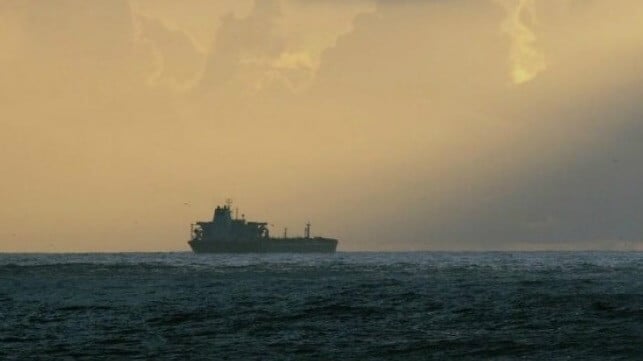
tanker sailing into the sunset
Boracay left France and is heading likely to India after being detained since last Saturday (file photo)

Published Oct 3, 2025 5:12 PM by The Maritime Executive


The shadow tanker Boracay got back underway late on Thursday, October 2, having yet again eluded the grasp of the authorities. The French had been detaining the vessel since Saturday, September 27, and before that, the same vessel was held for 15 days in Estonia. Despite multiple reports of a false flag and sanctions by the EU and UK, the vessel continues to sail.

Boracay, an 18-year-old crude oil tanker, has become the definition of the shadow fleet. Over the past 16 months, it has been sailing with multiple reports of false flags, name changes, obfuscation of its ownership, and multiple managers. The vessel is 115,577 dwt and reported to be fully laden yet again with a shipment of Russian crude bound for India.

While the media reports have been linking the ship to the drone incidents over Denmark, French authorities are confirming off the record, it was stopped because of “inconsistencies in where it was officially registered.” The vessel left Primorsk, Russia, on September 20, likely still using the name Pushpa, and seven days later was stopped displaying the name Boracay. It has been claiming registry in Benin since September 1, but most sources list that as a false flag. Before that, it claimed registry in Malawi and Gambia in 2025, after losing its flag in Djibouti at the end of 2024.

French authorities have not made an official comment on the vessel’s status, and Reuters and AFP (Agence France-Presse) noted that they did not receive a response to questions about the release of the vessel. AFP reports the Chinese captain and the Chief Officer were released by the French authorities on Thursday and returned to the ship, which was anchored off Saint-Nazaire. 

The captain is under orders to return to France in February to appear in court on charges that he did not respond to orders by the French authorities when the vessel was boarded. The authorities confirmed they could not hold the captain responsible for the opaque details on the ship’s nationality and ownership. The first officer was not charged and was released.

Boracay is underway, making approximately 9 to 10 knots, having crossed the Bay of Biscay. Its AIS signal, which had shown a destination of India due on October 20, was changed to show the Suez Canal. It shows an arrival at the canal on October 14.

Asked about the incident, a press spokesperson for the Kremlin denied knowledge of the ship and its cargo. Russian President Vladimir Putin, however, told reporters he was aware of the ship and called the efforts “piracy.” He said the ship was in “neutral waters,” and the seizure was “without any justification.”

French President Emmanuel Macron, however, said Europe is adopting a new “policy of obstruction” regarding the shadow fleet. He said even holding the tankers for hours or days could undermine the business model and announced a European-led “coalition of the willing” would meet to plan strategies to disrupt the shadow fleet.

The European Union, earlier this year, authorized members to challenge vessels to confirm their registry and provide proof of insurance. Estonia challenged this same tanker in April and held it based on a belief that its registry in Djibouti was false, as well as numerous deficiencies in a port state inspection. The ship, then using the name Kiwala, escaped on a technicality when Djibouti said it was providing registry, so the ship would have days to transition to a new flag.

AFP is quoting French military sources that highlight the transit of shadow fleet tankers along the coast is a common occurrence. It says between 10 and 15 shadow fleet vessels are sailing off the French coast each day.


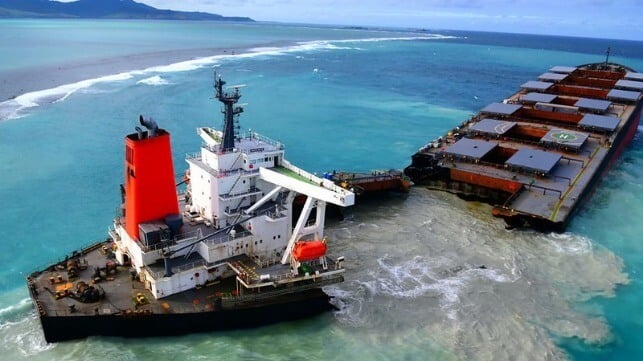
Mauritius Cites Lack of Safety Culture and Local Failure in Wakashio Report

Wakashio broken apart in Mauritius
Wakashio broke apart causing a large oil spill resulting in a $2.5 billion cost the report find (IMO)

Published Oct 3, 2025 7:47 PM by The Maritime Executive


The Court of Investigation convened by Mauritius released a new report into the 2020 casualty of the bulker Wakashio, which broke apart after grounding and caused significant environmental damage. While much of the report covers details previously released in a preliminary report as well as investigations by Panama as the flag state and the ship’s operator, it also provides new insights into institutional failures and a “culpable omission” by the local authorities.

The 223-page report was completed in August 2025, but was just released on October 2. In the Preamble, the court said the purpose was not to duplicate previous efforts but to look at the underlying causative factors of the accident. Its mandate was to also look for safety deficiencies affecting the overall management and to make recommendations, including future preparedness and response protocols.

While nothing new, it details the efforts to find an internet signal and the birthday party the day of the grounding, where the captain consumed alcohol along with the crew. The report, however, cites the culture aboard the vessel and a “series of breaches of maritime discipline.” It says the officers were “absorbed” in the search for an internet signal and their cell phones. 

The report acknowledges that the crew, due to the COVID-19 pandemic, was overdue for leave and waiting for a “convenient port” for a crew change. Going through the Malacca Strait, the captain also permitted a course deviation to find an internet signal so the crew could communicate with family and friends at home. As they approached Mauritius, the report says the chief officer was focused on his phone and neglected his duties on the bridge to oversee the navigation. They conclude there was a ”total failure to comply with basic navigation rules.”

They cite “insufficient route planning,” noting the captain deviated course days earlier to avoid a storm but did not tell the chief officer. They failed to properly plan the passage near Mauritius, lacked a large-scale nautical chart of the area, and were overly dependent on an “over-zoomed small-scale Electronic Navigation Chart on the Electronic Chart Display Information System.” When the ship came dangerously close to shore, company rules called for the master to take command, and despite being on the bridge, he did not, possibly because he had consumed four alcoholic drinks by that point and was waiting for the chief officer to provide a cell phone link.

The master permitted the cadet lookout to remain at the party. There was no qualified lookout on the bridge. They also cite failures in the management systems and coordination with the vessel’s owners.

The report, however, also turns to what it concludes was a failed and confused response by the local authorities. They find that despite the ship being on a clearly dangerous course, the Mauritian surveillance system failed, and no alert was sounded even fifteen minutes before impact. The authorities failed to react in time, and there was a slow, poorly coordinated response afterward. 

The report finds Mauritian institutions worked in silos, and sometimes in complete confusion. There is a contention that the ship could have been pulled off the reef in the first days if the response had been properly organized. Instead, they find that 96 square km of coral reefs and marine habitats were destroyed. They estimate the cost at $2.5 billion.

The court believes the accident was entirely preventable had there not been failures both on the ship and onshore. They are making recommendations for far-reaching reforms. This includes the contingency plan, as well as training and equipment, and critically improved coordination between institutions.

The conclusion is that Mauritius cannot afford a second Wakashio. There are still calls in the country for a police investigation into the National Coast Guard. The Mauritian newspaper L’Express concludes that the report opens a new era of accountability and decision-making. 


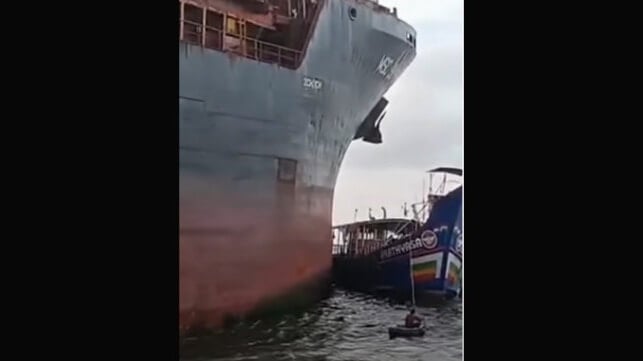
Video: MSC Containership Hits Indian Fishing Boat

containership and fishing vessel
MSC containership hit an Indian fishing boat (YouTube)

Published Oct 3, 2025 6:07 PM by The Maritime Executive


India’s fishing community is again complaining about merchant ships sailing too close to the coast and hitting the commercial fishing vessels working off Kerala on the Arabian Sea. In the latest instance, a smaller MSC Mediterranean Shipping Company containership collided with one of the fishing vessels, causing damage and a loss of the day’s catch, but luckily, there were no injuries.

The fishing vessel reports it was hauling in the day’s catch, approximately $11,000 of mackerel, at around 5:30 pm local time on October 1, when the MSC Silver II was spotted bearing down on the community of fishing vessels. The boat, which was ultimately hit by the containership, said it tried to radio the MSC vessel to get it to change course. Other fishing vessels working in the area said they raised an alarm, and the MSC vessel responded, but it was too late for the one boat that was grazed by the MSC vessel.

The reports indicate the fishing boat sustained approximately $5,600 in damage, as well as the loss of its net, but that none of the 45 people working aboard the boat were injured. They, however, are saying they have lost their livelihood while the vessel is repaired and that they will have to buy a costly new net.


MSC Silver II, built in 2002, is a 37,500-dwt vessel with a capacity of 1,700 TEU. It has been sailing for MSC since 2022.

The fishing union complains that the IMO regulations require the vessels to operate just 27 nautical miles from the shore, and they assert that many ships sail closer. They report eight ship accidents resulting in the deaths of 15 workers and say that many of the larger ships do not stop after a collision. The group says its demands to double the distance from shore for the sea lane to 50 nautical miles have been ignored by the Indian authorities.

Luckily, MSC Silver II responded so that it was not a fatal collision or the loss of the vessel. The police report that they have not received a complaint, and the fishermen’s association says MSC’s agent settled privately with the fishing vessel after the incident.


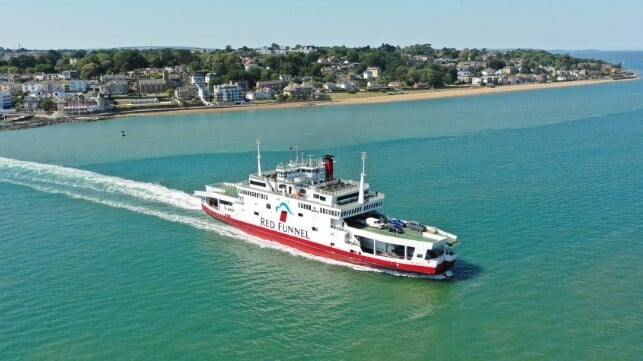
Historic UK Red Funnel Ferries Sold to Private Equity Firm

UK Red Funnel ferry
Red Funnel has run between Southampton and the Isle of Wight in the UK since 1861 (Red Funnel)

Published Oct 3, 2025 9:38 PM by The Maritime Executive


One of the most historic names in ferry operations, the UK’s Red Funnel, which traces its origins to 1820, reported that as of the end of September, the firm was sold to the UK-based investment firm Njord Partners. While the firm has been owned by a consortium of British and Canadian pension funds since the early 1990s, there are still concerns over maintaining the service, which is called a “lifeline” for the Isle of Wight.

In announcing the acquisition, the firms admitted that Red Funnel has faced “challenges” over the past five years. Njord said “significant indebtedness has severely limited Red Funnel’s ability to invest,” while residents and the representing members of parliament talk of “inflated prices,” saying the islanders are facing “extortionate fares for an unreliable service.”

Further compounding the challenges for Red Funnel was its 2024 acquisition of the Hythe Ferry, a short service crossing Southampton waterway between Hythe and Southampton Town Quay. Just months after the service was acquired, it surfaced that “essential repair works were required on the Hythe Ferry berth at the pier.“ Service was suspended in August 2024 and remains sidelined with the last update in August 2025.

The CEO of Red Funnel, Fran Collins, called the acquisition by Njord a “new chapter” for the company. Njord Partners, they said, gives them “the confidence and platform to support our ambitious future plans.” 

Njord Partners highlights its “strong track record investing in, and supporting, growth at UK businesses, helping companies excel by strengthening their operations, improving products and services, and delivering for customers and communities.” The company says it “has particular expertise in the hospitality and maritime sectors,” with portfolio companies including Ambassador Cruise Line, Geoquip Marine, and the Valiant Pub Company.

Red Funnel was formed in 1863 and for over 164 years has provided transportation crossing the Solent, connecting the Isle of Wight with Southampton. The company has purpose-built Ro-Pax ferries and also introduced the Red Jet Hi-Speed passenger catamarans. It operates year-round with over 30,000 sailings, including 18,600 on the Red Jets and 11,800 with the passenger vehicle ferries. It reports transporting over 2.3 million passengers and over 857,000 vehicles to East Cowes and another 1.1 million passengers to West Cowes on the high-speed ferries. The company also operates Red Funnel Holidays to promote trips to the Isle of Wight. 

Wightlink is a competitor operating routes from Lymington and Portsmouth to the Isle, while Hovertravel offers only passenger service from the Portsmouth area. A group of Isle of Wight businessmen, however, also launched Vectis Ferries and made an unsuccessful bid for Red Funnel. They had committed to an every-30-minute service and proposed smaller, aluminum ferries built by the Wight Shipyard.

Njord says it is committed to restoring financial health to Red Funnel. The Isle of Wight’s two MPs, BBC reports, however, fear the service will be treated as “a cash machine” for private equity.

France sees third day of strikes amid budget impasse


Nearly 600,000 protesters join marches across France, CGT union says

SHARE

French government considers tax relief measures for workers: PM's office

SHARE


How Gen Z is taking the fight for their rights from TikTok to the streets

After sweeping away the Nepalese government in early September and shaking up the Philippines, a wave of protests initiated by Generation Z has now spread to Madagascar and Morocco. In each case, the demands are similar, with a sense of injustice informed by images on social media.


Issued on: 02/10/2025 - RFI

Young Nepalese people protest in front of the government headquarters in Kathmandu, 9 September. AP - Niranjan Shrestha

A surge of rebellion led by young people born between 1997 and 2012 is rewriting the rules of protest, with the smartphone the new megaphone.

Over the past three years, the pace at which these movements are changing the status quo has accelerated.

In 2022, it took five months for Sri Lankan students and activists to topple the Rajapaksa dynasty, which had clung to power for nearly two decades. In 2024, Bangladeshi Prime Minister Sheikh Hasina was ousted in just six weeks. In Nepal last month , it took a mere 48 hours for protests to bring down the government of Khadga Prasad Sharma Oli.

The profile of these movements is strikingly consistent, with the crowds overwhelmingly young and hyper-connected. They are members of Generation Z – the first cohort to grow up entirely in the digital age, with social media seen not as an accessory but the lens through which they interpret the world

Young Nepalese people take selfies in front of the Nepalese government headquarters, set on fire by protesters in Kathmandu on 9 September. AP - Niranjan Shrestha

'They see everything'

If the grievances vary by country – from corruption to education to basic services – the underlying themes are universal: anger at injustice, impatience with inequality and frustration at hypocrisy.

“These young people today are acting on demands that go beyond the purely political. They have a radical need for consistency, a need for authenticity,” says Elodie Gentina, a professor at the IESEG School of Management and a specialist in Gen Z.

"They want to compare everything, they judge everything, they see everything, because they have constant access to social media. They are also very aware of the contradictions between the promises made by leaders promises and their actions. They detest institutional hypocrisy – as seen in Nepal, where leaders talked a lot about modernity but at the same time blocked access to 26 social networks."

Anger that had been building online over the privileged offspring of the political elite flaunting their wealth on Instagram, in a country where 20 percent of 15 to 25-year-olds are unemployed, spilled over on to the streets.

The 'amplifier' effect

“Social media plays the role of emotional and political amplifier. It allows the sharing of images that can be inspiring, but also shocking. Gen Z are constantly comparing themselves to others, and that creates emulation. The viral logic of social networks transforms isolated frustrations into collective movements that become extremely powerful,” Gentina told RFI

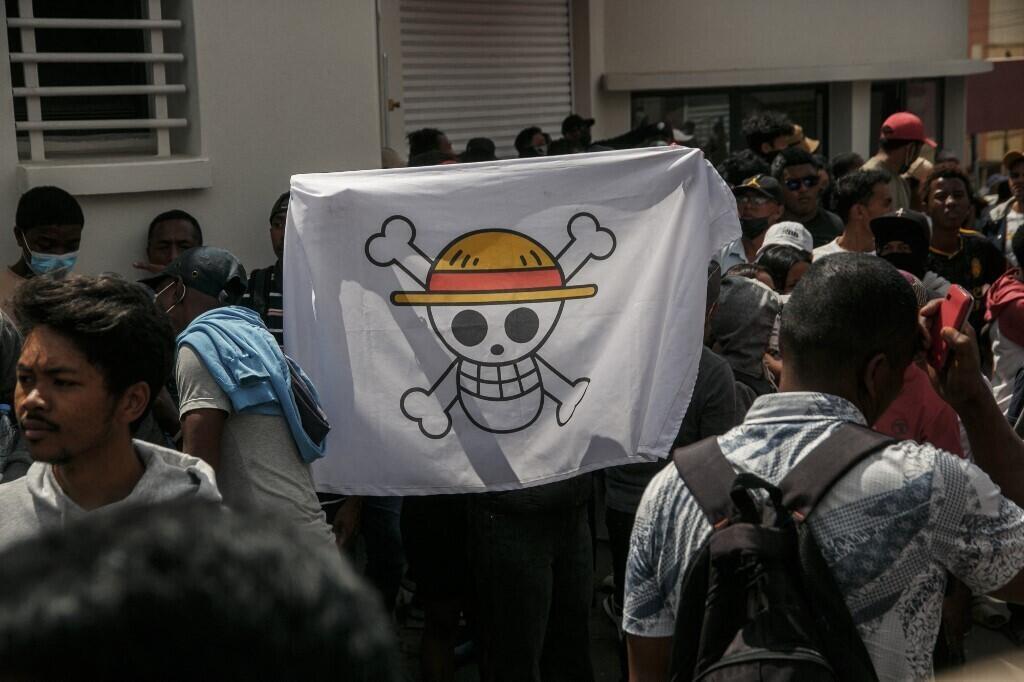
In Indonesia, student protests earlier this year adopted an unlikely banner: the pirate flag from One Piece, a manga series in which the hero, Luffy, fights a corrupt and tyrannical world government.

A pop culture reference quickly became a unifying symbol, with the same imagery being adopted in Madagascar and Morocco.

In Madagascar, the triggers for the unrest were blackouts, water shortages and demands for basic freedoms. In Morocco, a collective calling itself "Gen Z 212" emerged online, calling for education and healthcare reform, and questioning the billions poured into hosting the 2030 World Cup while everyday needs go unmet.

“These are purely social demands,” says Souad Brahma, president of the Moroccan Association for Human Rights, speaking to RFI. “The right to a dignified life – that means education, healthcare, decent housing. And through certain slogans, they also call for an end to corruption.”

Protesters wave the flag of the Japanese manga series ‘One Piece’ in the streets of Antananarivo on 30 September. AFP - RIJASOLO

Demographic weight

“More than against [individual] governments, Generation Z is rebelling against a model of governance that no longer works for them,” explains Gentina.

"They deem it too top-down, too opaque, too slow. These young people demand transparency and concrete results. They can no longer tolerate inconsistency between words and actions."

With more than a third of the world’s population belonging to Gen Z, demographics are on their side. In parts of Asia, they account for half the population, making their voices impossible to ignore.

As for where they might rise up next, all eyes are on India. The world's most populous nation also has the largest Gen Z population on the Asian continent, and those hundreds of millions of young people have not been spared by the mass unemployment, inequality and corruption that plague the country.

This article has been adapted from the original version in French.


Morocco Gen Z protests enter sixth day with calls to oust government

Mass protests in Morocco entered a sixth day on Friday, with the youth-led movement GenZ 212 demanding that the government be removed. The group said the authorities had failed to protect citizens’ constitutional rights and respond to basic social needs.


04/10/2025 - RFI

The group which has been organising demonstrations in Morocco has called for the dismissal of the government. AFP - ABDEL MAJID BZIOUAT


By: Paul Myers


Three people have died since the demonstrations began. Hundreds have been arrested and nearly 300 people – mostly members of the security forces – have been injured in clashes and scuffles, the interior ministry said.

It added that 80 public and private buildings and hundreds of cars had been vandalised.

GenZ 212 also called for the release of all those detained in connection with what it described as peaceful protests.

The group, whose main organisers remain unknown, said its demand for the government’s dismissal was based on a constitutional article that gives the king the power to appoint and dismiss the prime minister and cabinet.

Social inequality

The rallies have been driven by anger over social inequality and failing public services. Protests swelled after reports last month of the deaths of eight pregnant women at a public hospital in the southern city of Agadir.

“Moroccan youth are taking to the streets to call for functioning hospitals, quality schools and decent jobs. They’re rejecting billions being spent on stadiums for the World Cup, while basic services are collapsing," Tahani Brahma, a researcher and secretary general of the Moroccan Association for Human Rights, told RFI.

Most importantly, Moroccan youth do not want promises, they want their rights.”

Morocco was chosen last October, along with Portugal and Spain, to host the 2030 centenary edition of the World Cup. Six venues will be in Morocco, three in Portugal and 11 in Spain.

Spending on new stadiums and refurbishing existing ones for the World Cup and the upcoming Africa Cup of Nations is estimated to exceed €5 billion.

Online forums


GenZ 212 has mainly used the online messaging platform Discord to mobilise protests. It has repeatedly said it rejects the violence and vandalism reported in several towns and cities.

Prime Minister Aziz Akhannouch, head of the National Rally of Independents, chaired a meeting on Tuesday attended by coalition partners Fatima Zahra Mansouri, Mohamed Mahdi Bensaid and Nizar Baraka.

“After reviewing the developments linked to youth expressions in online and public spaces, the government affirms that it listens carefully to and understands the social demands,” the politicians said in a communique.

"We are ready to respond positively and responsibly through dialogue and discussion within institutions and public forums, and by finding realistic, implementable solutions that serve the interests of the nation and citizens.”

Reforms underway

Health Minister Amine Tehraoui on Wednesday told parliament several reforms were underway, but acknowledged that they were still insufficient to close the gaps in the sector.

Since the demonstrations started, hundreds of mostly young people have been arrested.

The interior ministry said more than 400 people had been arrested since the demonstrations began, most of them young.

A spokesperson added that 80 public and private buildings as well as hundreds of cars had been vandalised.


Japan’s ruling party elects Takaichi, paving way for first woman prime minister


Japan’s ruling Liberal Democratic Party on Saturday elected Sanae Takaichi as its new leader, positioning her to become the country’s first female prime minister. Takaichi, a former economic security minister, defeated Agriculture Minister Shinjiro Koizumi in a runoff vote, as the party seeks to recover from recent electoral losses and restore public trust.


Issued on: 04/10/2025
By: FRANCE 24

Newly-elected leader of Japan's Liberal Democratic Party (LDP) Sanae Takaichi delivers a speech after winning the LDP leadership election in Tokyo, Japan, October 4, 2025. © Kim Kyung-Hoon, Reuters


Japan’s governing party on Saturday elected former Economic Security Minister Sanae Takaichi as its new leader, making her likely to become the country’s first female prime minister.

In a country that ranks poorly internationally for gender equality, Takaichi would make history as the first female leader of Japan's long-governing conservative Liberal Democratic Party. She is one of the most conservative members of the male-dominated party.

Takaichi beat Agriculture Minister Shinjiro Koizumi, the son of popular former Prime Minister Junichiro Koizumi, in a runoff in an intraparty vote by the LDP on Saturday.

Takaichi replaces Prime Minister Shigeru Ishiba as the party hopes to regain public support and stay in power after major election losses.

She is likely to be Japan’s next prime minister because the party remains by far the largest in the lower house, which determines the national leader, and because opposition groups are highly splintered.

The LDP, whose consecutive losses in parliamentary elections in the past year have left it in the minority in both houses, wants to select a leader who can quickly address challenges in and outside Japan, while seeking cooperation from key opposition groups to implement its policies.

Five candidates – two currently serving and three former ministers – were vying for the LDP presidency.

Saturday’s vote only involved 295 LDP parliamentarians and about 1 million dues-paying members. It only reflected 1 percent of the Japanese public.

A parliamentary vote is expected in mid-October. The LDP, which has been criticized by opposition leaders for creating a prolonged political vacuum, needs to hurry because the winner will soon face a diplomatic test: a possible summit with US President Donald Trump, who could demand that Japan increase its defense spending.

A meeting is reportedly being planned for late October. Trump will travel to the Asia-Pacific Economic Cooperation summit in South Korea starting October 31.

The LDP also needs help from the opposition, which it has long neglected. The party will likely look to expand its current coalition with the moderate centrist Komeito with at least one of the key opposition parties, which are more centrist.

All five candidates have called themselves “moderate conservatives” to show their willingness to work with the opposition.

Japan’s ruling party elects Sanae Takaichi as new leader, likely to become first female PM
© France 24
04:25


They all campaigned for measures to combat rising prices and achieve larger salary increases, to strengthen defense and the economy, and for tougher measures on foreign workers. They stayed away from divisive liberal social issues such as gender equality and sexual diversity.

Experts say they avoided discussing their usual political views on historical issues, same-sex marriage and other contentious topics, including the party’s political funds scandal, which was the biggest reason for their election losses, and anti-corruption measures. Their avoidance of these subjects raised doubts over the party's ability to regain public trust, analysts said.

Earlier polls had Koizumi, Takaichi and Chief Cabinet Secretary Yoshimasa Hayashi, a moderate veteran politician as front-runners. Two others, Trade Minister Toshimitsu Motegi and Economic Minister Takayuki Kobayashi, were seen as less likely contenders. Koizumi would have been the youngest prime minister in more than a century if he had won.

(FRANCE 24 with AP)


Warming Oceans May Pose A Serious Threat To American Lobsters

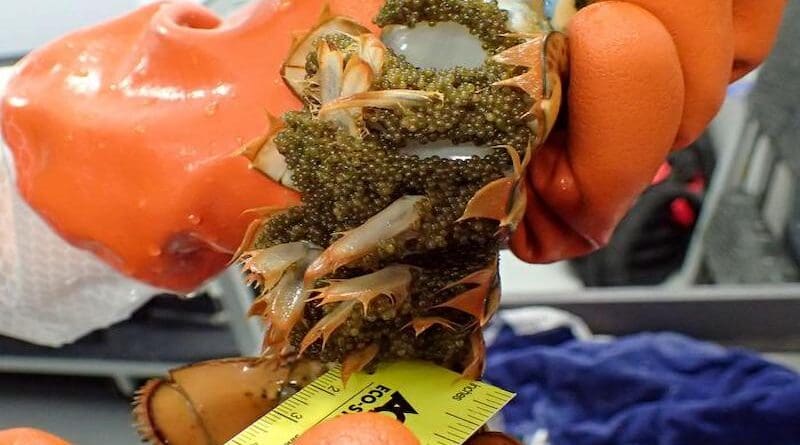
A researcher inspects a clutch of fertilized eggs, which are carried externally under the lobster’s tail for several months until they hatch into larvae. Photo by Virginia Sea Grant.


By 

The Gulf of Maine is warming faster than 99% of the world’s oceans, raising concerns for its $2 billion-a-year American lobster fishery. Scientists at William & Mary’s Batten School & VIMS have been studying the impacts of ocean acidification and warming on lobster reproduction, and the results of their most recent research suggest the rising temperatures pose the greatest risk.


Utilizing a purpose-built experimental facility designed by Professor Emily Rivest and housed in the Batten School of Coastal & Marine Sciences & VIMS’ Seawater Research Laboratory, the researchers exposed egg-bearing lobsters from the Gulf of Maine to water temperature and pH conditions that mimic those predicted for 2060. Published in the journal Marine Ecology Progress Series, the results revealed that the embryos can handle ocean acidification surprisingly well, but increased temperatures led to distinct stress responses that ultimately resulted in smaller larvae.

“American lobsters are dynamic creatures that have been shown to tolerate highly variable conditions as they move from coastal waters to the deeper ocean,” said the study’s lead author Brittany Jellison, who conducted the research as a postdoctoral scholar at the Batten School & VIMS. “However, as we observe rising ocean temperatures, increased acidification and more frequent marine heat waves, it’s important to understand how future environmental changes might impact this economically and culturally important species.”

Turning up the heat

Supported by a National Sea Grant American Lobster Initiative grant awarded to Rivest and Professor Jeffrey Shields, the study is the third publication by the research team, which also includes Jellison and former student collaborator Abigail Sisti. The team’s first study found limited impacts on maternal grooming behaviors in response to increased warming and acidification, while their second study found evidence of stress responses and cellular damage in lobster embryos exposed to acute, short-term drops in pH levels.

This most recent study investigated the long-term, interactive impacts of ocean acidification and warming on the development and physiology of brooded lobster embryos. Using 24 egg-bearing lobsters collected by the Maine Department of Marine Resources and the Massachusetts Division of Marine Fisheries, the team conducted experiments involving four different combinations of water temperature and acidity levels to determine how the changes affected embryo and larval development.

“Our experiment was unique in that we were able to study the animals over a period of five months to determine how treatment effects accumulated over multiple life stages,” said Rivest. “We measured overall development, metabolic rate, biochemical composition and enzyme activity and found the embryos tolerated increased acidification quite well, but they were much more sensitive to heat.”


Water temperature was set to mimic seasonal temperatures in the Gulf of Maine, with experimental temperatures increasing by 4 degrees Celsius to 2060 projections. The warmer water led to increased metabolic rates and faster embryo development. However, when the larvae hatched, they were measurably smaller than those that developed in cooler temperatures despite their faster initial development.

“Their ability to withstand increased acidification may be in part due to the varying pH levels found in their natural environments. However, the larvae hatched in warmer waters were noticeably smaller, which may result in decreased survival in the wild,” said Jellison, who noted this may be why female lobsters tend to release their larvae in batches as they migrate through different marine environments.

The study also found that the biggest changes in embryo activity happened during the warmest months, which correlates with seasonal patterns but also raises concerns about what might happen as marine heatwaves become more frequent.

Implications for the fishery

Understanding how early life stages are affected by predicted environmental changes is critical for protecting the future of the American lobster fishery. While landings in the Gulf of Maine have increased in recent years, harvests in Southern New England are in decline — an indication that populations may be migrating north to cooler waters. However, as temperatures continue to rise with more frequent marine heat waves, even lobsters in the Gulf of Maine may eventually feel the impact.

“Additional research is needed to better understand how these changes extend to influence the performance and success of free-swimming larval stages,” said Rivest. “These negative carryover effects have been found in other crustaceans, and this knowledge will help determine the impacts on future recruitment and the overall success of the fishery.”

The team would also like to explore whether lobsters can pass on resilience to their young and how different offshore environments might help or hurt development. For now, their results stand as a warning that rising ocean temperatures could pose a serious challenge.