Sunday, October 05, 2025

South Korea legalizes tattoo industry after unanimous vote

Ryan General
Fri, October 3, 2025 
NEXT SHARK


Tattoo artists in South Korea will soon be able to work legally for the first time after lawmakers voted 195 to zero on Sept. 25 to pass the Tattooist Act.

The measure replaces decades of criminal penalties with a government-run licensing system designed to regulate hygiene and training standards. The unanimous vote comes a month after over 70 artists from across the country gathered outside the National Assembly in Seoul to call for its approval.

The Tattooist Act redefines tattooing and semi-permanent makeup as recognized services and allows non-medical practitioners to apply for licenses under official oversight. Tattooists will be required to comply with hygiene protocols and may need to complete regular training at state-approved institutions. The law will take effect two years after presidential promulgation, during which existing tattooists can register provisionally until full licensing becomes available. Tattoo removal will remain limited to licensed medical professionals, and tattooing minors without parental consent will continue to be banned.

For years, South Korea maintained one of the strictest stances on tattooing in the developed world, with unlicensed artists facing penalties of up to five years in prison or fines of 50 million won ($35,500). Despite this, demand for tattoos grew rapidly, pushing the practice into an unregulated underground economy.

Doy, a union leader representing 1,100 tattooists, said, “Tattooists in Korea, each working in their own spaces, overcame the isolating nature of our profession and built a solidarity of 1,100 members.” Another tattooist welcomed the changes, saying, “With legalization, card payments will become possible, meaning taxes can be paid properly, and as a result, the financial burden of tattoos may even decrease.”

Marineland asks Canadian government for emergency cash to feed whales — or euthanasia imminent

Associated Press
Fri, October 3, 2025


Police officers block protestors from an entrance to Marineland grounds in Niagara Falls, Ontario, Canada, on May 20, 2023. (Alex Lupul/The Canadian Press via AP)(ASSOCIATED PRESS)

Marineland is shown in Niagara Falls, Ontario, Canada, Aug. 14, 2017. (Tara Walton/The Canadian Press via AP)(ASSOCIATED PRESS)

Visitors watch as a beluga whale swims in a tank at Marineland amusement park in Niagara Falls, Ontario, Canada, June 9, 2023. (Chris Young/The Canadian Press via AP)(ASSOCIATED PRESS)

Beluga whales swim in a tank at Marineland amusement park in Niagara Falls, Ontario, Canada, June 9, 2023. (Chris Young/The Canadian Press via AP)(ASSOCIATED PRESS)

A beluga whale surfaces from a tank to be fed by an employee at Marineland amusement park in Niagara Falls, Ontario, Canada, June 9, 2023. (Chris Young/The Canadian Press via AP)(ASSOCIATED PRESS)


OTTAWA, Ontario (AP) — The Marineland park near Niagara Falls asked the Canadian government on Friday for emergency funding to feed and care for its whales, saying euthanasia is otherwise imminent.

Fisheries Minister Joanne Thompson earlier this week denied Marineland’s request to export 30 belugas to Chimelong Ocean Kingdom, an aquarium in China. Thompson said then the decision is consistent with a 2019 law making it illegal to use whales and dolphins in entertainment shows or keep them in captivity.

The tourist attraction says Chimelong was the only option for the belugas as no sanctuary that could help exists and there is no other marine park with enough room.


Marineland, in a letter to the government, says it’s fully indebted and quickly running out of money, and has asked Thompson if she can help find another place to send the whales.

The park says the only option is to relocate the whales or else it will be forced to euthanize them.

Twenty whales — one killer whale and 19 belugas — have died at the park since 2019, according to a database created by The Canadian Press news agency based on internal records and official statements.

Thompson’s office did not immediately respond to a request for comment.

Marineland announced it was for sale in early 2023 and closed to the public in late summer 2024. It did not open this year as it looks to sell the park and the vast swath of land it owns near Horseshoe Falls. No sale has yet been announced.

The law that banned whale captivity did not apply to the existing population of captive whales at Marineland, but the park had to comply with another part of the law that forbade breeding.
Illegal trade in rare insects on the rise

Issued on: 03/10/2025 - 
05:13 min
From the show


The illegal trade in rare insects is booming across Africa, Asia and Latin America. Exotic ants, spiders and beetles are collected and sold as pets. Some species are worth a fortune on the global black market. But scientists are raising alarm bells, as many of these insects are vital to local ecosystems. Our France 2 colleagues report.

By: FRANCE 24
Asian golden cat: The 'feline of many costumes' that plucks birds before eating them

Sascha Pare
Sat, October 4, 2025 


Asian golden cats are found in several countries in South and Southeast Asia. | Credit: imageBROKER.com GmbH & Co. KG via Alamy

QUICK FACTS

Name: Asian golden cat (Catopuma temminckii)

Where it lives: China, Nepal, Southeast Asia and northeastern India

What it eats: Birds, reptiles, small mammals like rodents and larger mammals like young deer

The Asian golden cat, also known as the Asiatic golden cat or Temminck's cat, is a feline endemic to some of Asia's densest forests. It comes in a wide palette of colors, plucks birds before eating them and — despite weighing no more than 35 pounds (16 kilograms), or two to three times as much as a domestic cat — is bold enough to kill prey such as buffalo calves, small muntjacs and baby deers.

Asian golden cats are elusive creatures rarely seen in the wild. Camera trap images indicate that the most common coat colors for the species are golden-brown and reddish-brown, but gray, melanistic, pale cinnamon and patterned, ocelot-like forms also exist, explaining why the species is sometimes described as a "feline of many costumes." According to the International Society for Endangered Cats (ISEC), there is no known link between coat color and the geographic distribution of Asian golden cats.

Although it prefers to hunt on the ground, the Asian golden cat can also climb trees. It kills larger prey with a strong bite to the neck, prowling sub-tropical and tropical forests at various times of day. While researchers long thought that Asian golden cats are nocturnal, more recent evidence suggests these cats have irregular activity patterns that may peak at twilight.


The species can live up to 20 years and at altitudes ranging from sea level to 14,050 feet (4,282 meters), according to a 2016 biodiversity survey in Bhutan. This survey and others showing Asian golden cats living at very high elevations suggest highlands may be important habitat for the species.

Asian golden cats have also been spotted in open areas with rocky tracts, and they are even known as "rock cats" in parts of China, according to the ISEC. Their ranges are about 20% larger than those of the clouded leopard (Neofelis nebulosa), despite the two species exhibiting similar behaviors and overlapping in their distribution.

But as a result of their preference for forest habitats, Asian golden cats are especially vulnerable to deforestation, which has caused a huge loss of habitat for the species. Southeast Asian forests have some of the highest deforestation rates in the world due to the expansion of crops like oil palm, coffee and rubber, according to the ISEC.

Asian golden cats are also threatened by illegal hunting for their pelts and bones, which are used in traditional medicine, and for their meat, which is considered a delicacy in some regions, according to the ISEC. Where Asian golden cats come into contact with livestock such as sheep and goats, the predators sometimes kill farmers' animals, leading to retribution killings, the society says.
A Metal Detectorist Found a Bunch of Ancient Gold Coins. It Turned Out to Be ‘Devil’s Money’

IN SOME COUNTRIES IT WOULD BE KNOWN AS FAIRY GOLD


Tim Newcomb
Sat, October 4, 2025 
POP MECH


A Metal Detectorist Just Found ‘Devil’s Money’ Daniel Megias - Getty Images


Here’s what you’ll learn when you read this story:

A metal detectorist discovered ancient gold coins in the Netherlands that turned out to be a cult ritual offering.


Experts believe the money left at the location was “devil’s money,” an offering to pagan gods.


The worship site likely had ties to summer and autumn equinoxes thanks to the discovery of seasonally aligned post holes.


A metal detectorist recently came across a cache of more than 100 gold and silver coins buried underground in the Netherlands, prompting archaeologists to come further investigate the site. But knowing now what the coins were there for, perhaps the archaeologists should’ve left them alone.

According to a study published in Medieval Archaeology, the coins, which sat buried for 1,300 years in the Netherlands, were likely used in cult rituals, and further around the site, archaeologists uncovered the remains of a seventh-century open-air cult site. It’s more than plausible that the cache of coins was what was known as “devil’s money,” coin offerings common at pagan cult sites.

The metal detectorists made the find near Hezingen, a hamlet near the Netherland’s border with Germany. The coins are from around 700 A.D.—including some rare finds from the mints of the Frankish Empire—and were found along with metal jewelry in 2020 and 2021.

There were a number of clues that helped the archaeologists deduce that the site where the coins were found was once the stomping grounds for a cult. There were rows of posts, evidence of a large residence in a clearing near an ancient road junction on a prominent elevated landscape, remnants of animal sacrifices, and more. They also determined that the gold coins and jewelry were placed there in intervals over 100 years and interspersed with the animal sacrifices, making it clear that the site once served as a ritual sacrifice location for pagan gods.

The archaeologists, led by Jan-Willem de Kort of the Cultural Heritage Agency of the Netherlands, located the signs of an old structure, likely from the sixth century, as well as 17 postholes for wooden posts that aligned with spring and autumn equinoxes, which tied the site to seasonal harvest rituals.

“The cult site was probably linked to a nearby high-status settlement with an enclosed cult house or ceremonial building,” the study authors wrote. “The offerings may have been linked to fertility rites as the posts were aligned with the rising and setting of the sun during the spring and autumn equinoxes.”

In all, the gold and silver coins were discovered in three areas. One site had a single gold coin, while another had 24 fragmented or complete gold coins, along with silver and gold jewelry. The third site featured gold coins and jewelry. “I think that this cult site was mainly used by local elites to emphasize their own status, and of course, you do that preeminently with valuables,” de Kort said, according to Phys.org. “The finds at the other cult sites are probably more the result of personal offerings and thus less precious.”

The use of the site by elites and the timing of it all raises questions about the rise of Christianity in the area. The site’s use curtailed in the 700s A.D., the study claims, earlier than the rise of Christianity in the region, leading the study authors to theorize that the area’s leaders could have turned to Christianity earlier than others.

As prominent missionary texts spelled out, to have pre-Christian groups convert to Christianity, they would need to stop worshiping pagan gods and cease the sacrifice of the so-called “devil’s money.” Since Hezingen was abandoned by the early eighth century when Christianity began to spread, the study authors suggest the leaders of the town—wealthy, as shown by the value of the gold and silver—were some of the first in the area to convert to Christianity.


Archaeologists Identify Meaning of 12,000-Year-Old Rock Art

Declan Gallagher
Sat, October 4, 2025 

A new study, published in the journal Nature Communications, has identified the meaning behind 12,000-year-old rock art found in Saudi Arabia’s Nefud desert.
Researchers Identified Nearly 200 Engravings

Researchers positively identified 60 rock art panels in addition to 176 engravings located in areas which were previously unexplored. Of the engravings, 130 images are life-sized depictions of animals such as aurochs, camels, donkeys, gazelles, and ibex. Some of the engravings are as long as nine feet and as tall as six feet. Scientists determined that the images were used to mark water sources in the exceptionally dry and harsh environment, which shows the remarkable resourcefulness of ancient people.


Michael Petraglia/Sahout Rock Art and Archaeology Project

Michael Petraglia/Sahout Rock Art and Archaeology Project
Artifacts Were Also Recovered from the Site

Luminescence dating confirmed that the rock art was 12,000 years old, while further analysis of the site uncovered a collection of artifacts from the same era. These included a tool which researchers hypothesize was used to make the engravings, as well as tiny arrowheads and beads. Also discovered was a small bead which appears to have been crafted from seashells.

Through the engravings, researchers were able to determine that the ancient community was part of a wide-reaching trade network which all used the same stone tools and wore the same jewelry. Without exception, the artwork was placed adjacent to seasonal lakes which are estimated to be roughly 15,000 years old. These provide the first-known evidence of surface water flowing back into Saudi Arabia after a period of extreme dryness. This then offered an opportunity for the region’s dwellers to settle inland. The decision was subsequently made to mark the path to water with a variety of engravings of animals which were synonymous with flowing springs, such as camels.
MONOPOLY CAPITALI$M

Disney officially shuts down Hulu after 20 years

The Hulu brand will replace the Star brand abroad while the U.S. app will be totally phased out

Stefan Milovanovic
Fri, October 3, 2025 


Hulu’s days as a standalone platform are officially numbered. ©Image Credit: BoliviaInteligente / unsplash.com


After more than two decades as one of the key names in streaming, Hulu’s days as a standalone platform are officially numbered.

Disney confirmed this week that the service will be folded entirely into Disney+ by 2026, with the transition beginning as early as October. Starting Oct. 8, Hulu will replace the Star brand in Disney+’s international markets, becoming the general entertainment hub for adult-oriented programming abroad.

The company said subscribers in the U.S. will start to see more Hulu integration across the Disney+ app “as part of an ongoing and iterative slate of product updates.” The long-term goal: a single app that houses both Disney and Hulu content in one place.

Hulu launched in 2007 and grew into one of the most recognizable names in streaming, known for carrying current-season TV shows and originals like The Handmaid’s Tale. Disney acquired full control of the service this summer after completing its long-anticipated deal with Comcast.

While Hulu as an app will disappear, the brand itself isn’t going away. Disney plans to market “Hulu on Disney+” globally, betting that the name carries stronger recognition with international audiences than Star.

The shift comes at the same time Disney is raising rates across its streaming lineup. Beginning Oct. 21:

Disney+ with ads will rise from $9.99 to $11.99 per month.


Disney+ Premium (no ads) will jump from $16 to $19.


Hulu with ads increases to $11.99, while the ad-free version stays at $18.99.


Hulu + Live TV with ads jumps $7 to $90 per month.


ESPN Select (formerly ESPN+) will increase by $1 to $12.99.


Disney says the changes reflect both the expanded catalog that will come with a unified Disney+/Hulu experience and ongoing investment in original programming.
What it means for subscribers

For now, customers can still subscribe to Disney+ and Hulu as separate services. But by 2026, all Hulu content will live inside Disney+, with the app and platform phased out entirely.

The move caps a major reshaping of Disney’s streaming strategy. After years of running multiple brands in parallel, the company is betting consolidation will make it easier for subscribers to find shows — and easier for Disney to compete in a crowded streaming market.
Pakistan Sends First Batch Of Rare Earth Elements To US In $500 Million Deal

Namrata Sen
Fri, October 3, 2025 
Benzinga 


Pakistan has shipped its first batch of enriched rare earth elements and critical minerals to the United States, kicking off a $500 million partnership signed last month.

The shipment, which was delivered to U.S. Strategic Metals (USSM) on Thursday, is expected to bring about a significant shift in the Pakistan-U.S. relationship.

A $500 million Memorandum of Understanding (MoU) was signed in September between Pakistan's Frontier Works Organisation (FWO) and USSM, a Missouri-based company, to establish a poly-metallic refinery in Pakistan.

Pakistan's Prime Minister Shehbaz Sharif praised the event as a step toward establishing secure and diversified supply chains that benefit both countries.

Stacy W. Hastie, CEO of USSM, described this as the first step toward supplying critical minerals to the United States while enhancing economic ties and fostering friendship between the two nations.

The inaugural shipment contained antimony, copper concentrate, and rare earth elements, including neodymium and praseodymium, the countries said in a statement.

US Boosts Critical Minerals Supply For Security, Growth

The U.S. has been taking steps to strengthen its domestic critical minerals supply chain and reduce dependence on China. In August 2025, the Department of the Interior proposed a significant overhaul of its critical minerals list, adding six new commodities, including copper and silver. This was seen as vital to national security and economicstability.

Furthermore, the U.S. Department of Energy announced a plan to issue nearly $1 billion in funding to scale mining, processing, and manufacturing for critical minerals and materials. This move was in line with President Trump’s Unleashing American Energy executive order, which aimed to strengthen domestic supply chains essential for energy, defense, and industrial competitiveness.

Rare Earth Stocks In Focus


Micro-cap explorer Lithium Corp (OTC:LTUM), valued at just $5 million, announced a significant find at its British Columbia fluorspar project, revealing enriched deposits of neodymium, dysprosium, and other rare earth elements. The news sent its shares soaring over 900% to close at $0.44 on Thursday.

Meanwhile, USA Rare Earth Inc. (NASDAQ:USAR) will acquire U.K.-based Less Common Metals to accelerate its mine-to-magnet strategy, creating an end-to-end rare earth supply chain and supporting its planned magnet manufacturing facility in Oklahoma.

 Massive system of rotating ocean currents in the North Atlantic is behaving strangely — and it may be reaching a tipping point


Sascha Pare
Fri, October 3, 2025 


The North Atlantic subpolar gyre is a system of currents located to the south of Greenland. | Credit: NASA’s Scientific Visualization Studio

A massive system of rotating ocean currents in the North Atlantic is behaving extremely strangely, possibly because it is approaching a tipping point, a new analysis of clam shells shows.

The North Atlantic subpolar gyre plays a key role in transporting heat to the Northern Hemisphere, and it is a part of a much larger network of ocean currents called the Atlantic Meridional Overturning Circulation (AMOC). But new evidence suggests the subpolar gyre has been losing stability since the 1950s, meaning the gyre's circulation could weaken substantially in the coming decades, researchers report in a study published today (Oct. 3) in the journal Science Advances.

"It's highly worrying," study lead author Beatriz Arellano Nava, a postdoctoral research fellow in physical geography at the University of Exeter in the U.K., told Live Science. "The subpolar gyre was recently acknowledged as a tipping element. We still need to understand more of the impacts of a subpolar gyre abrupt weakening. But what we know so far with the few studies that have been published is that it would bring more extreme weather events, particularly in Europe ... and also changes in global precipitation patterns."


Currents in the North Atlantic subpolar gyre are also part of the AMOC, but the subpolar gyre can destabilize and cross tipping points independently of the AMOC. | Credit: Beatriz Arellano Nava

The North Atlantic subpolar gyre is a limb of the AMOC, but it can cross a tipping point independently from the giant network of currents. The climate outcomes for Europe, in particular, would be similar to those that would be triggered by a collapse of the AMOC, although they may be less intense because the AMOC is so much bigger, Arellano Nava said. However, "even if the consequences are not as catastrophic as for an AMOC collapse, a subpolar gyre weakening can bring substantial climate impacts," she warned.

Previous research suggests the AMOC could collapse in the near future because its main engine — a cascade of dense water from the surface of the North Atlantic and Arctic oceans to the seabed — is failing. This cascade, which until now was made of extremely cold and salty water, is being diluted by meltwater and warmed by rising global temperatures, meaning the water in some places is no longer dense enough to sink properly. (Cold, salty water is denser than warmer, less-salty water.)

A similar fate is expected for the North Atlantic subpolar gyre, which also relies on surface water sinking to the ocean floor. A cascade of dense water at the core of the gyre keeps the rotating currents moving, Arellano Nava said. But the system is also partly driven by wind, so a complete collapse is unlikely, she said.

The North Atlantic subpolar gyre is a branch of the AMOC, so an AMOC collapse necessarily involves a dramatic weakening of the gyre. Conversely, a weakening of the subpolar gyre doesn't automatically mean that the AMOC has collapsed, Arellano Nava said.

"The subpolar gyre can weaken abruptly without the AMOC collapsing," she explained. "That's what happened during the transition into the Little Ice Age, which happened in the 13th and 14th centuries."

The Little Ice Age, which lasted from about 1250 to the late 1800s, is one of the coldest periods on record in the Northern Hemisphere since the end of the last ice age. Average temperatures dropped by about 3.6 degrees Fahrenheit (2 degrees Celsius), freezing rivers and harbors across Europe and North America solid in the winter, triggering agricultural crises and broadly throwing medieval society into chaos, according to The New Yorker. Although factors like volcanic eruptions and reduced solar activity contributed to the initiation of the Little Ice Age, the North Atlantic subpolar gyre is thought to have played a major role in strengthening it.

With climate change, conditions are dramatically different now than they were in the 13th century, so scientists don't know if another Little Ice Age is possible, Arellano Nava said. Nonetheless, it illustrates some of the climate impacts that could be coming our way.

Clues in clams

For the new study, Arellano Nava and her colleagues analyzed existing datasets derived from the shells of two clam species living in the North Atlantic: Arctica islandica and Glycymeris glycymeris. Clams record information about the ocean in their shells as they grow; for example, they absorb different forms of elements like oxygen that can give researchers clues about oceanic processes over time.

"With clam records, we have that nice dating for each of the layers," Arellano Nava said. "They are like the tree rings of the ocean."


A close-up image of growth bands on a dog cockle (Glycymeris glycymeris) shell. | Credit: David Reynolds

The researchers compiled 25 datasets to build a high-resolution picture of the North Atlantic subpolar gyre over the past 150 years. They found two strong signals of instability. The most recent is ongoing and suggests the subpolar gyre is approaching a tipping point as a result of global warming, which supports previous observations and research, Arellano Nava said.

But the other signal was a total surprise, she said. The clam data revealed that the subpolar gyre was unstable for a few years in the run-up to the 1920s North Atlantic regime shift. This previously described event was characterized by the strengthening of currents in the gyre. Instability in the subpolar gyre likely caused the 1920s regime shift, and the timeline suggests the period of instability may have reflected the subpolar gyre's recovery from its Little Ice Age collapse, Arellano Nava said.

"It had to restrengthen at some point, but that's not something we have full evidence for because we didn't dive into those mechanisms," she said.

Regardless of whether instability in the early 20th century was actually a signal that the subpolar gyre was returning to its full strength, the overlap between the signal in the clam data and the 1920s North Atlantic regime shift shows that the results are robust, Arellano Nava said.

"If you observe a loss of stability followed by a rapid change, then you are confident that these are early warning signals for an abrupt change," she said.

However, another expert was less convinced. "The datasets are very useful because they are very well dated and allow insights into climate changes on a year-by-year basis," David Thornalley, a professor of ocean and climate science at University College London who was not involved in the study, told Live Science in an email.

But the analysis did not link the patterns observed in the clam data directly to physical features in the ocean, nor provide strong support for a shift in the subpolar gyre's mode of operation, Thornalley said. "I am sceptical about the interpretation," he said.

Regarding the ongoing destabilization of the North Atlantic subpolar gyre, Arellano Nava said she and her team have moved on to map potential climate trajectories that this could unlock.

"We don't know exactly what the tipping point is," she said. "It could be the AMOC, … but we may be observing a subpolar gyre weakening first, and that's worrying, definitely."
Why Africa's oceans bear brunt of planet's environmental crisis

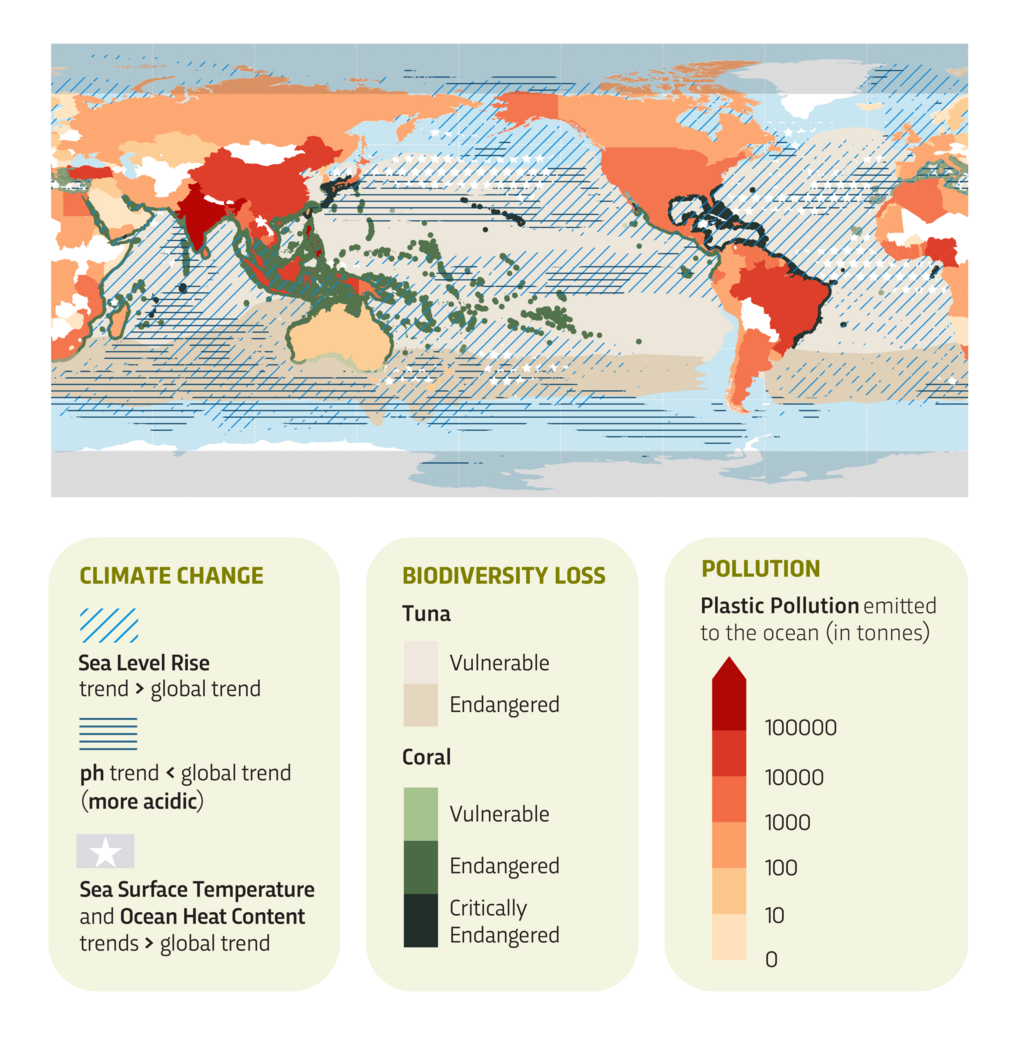
The world's oceans are bearing the brunt of a triple environmental crisis, according to the European Union's Earth monitors: global warming, pollution and declining biodiversity. The EU Copernicus programme warns that Africa's coasts, buffeted by marine heatwaves and rising sea levels, are especially vulnerable.


Issued on: 04/10/2025 - RFI

Clownfish swimming amongst coral reefs off the coast of the French overseas territory of Mayotte, in the Comoros Archipelago of the Indian Ocean. © AFP - ALEXIS ROSENFELD

"The ocean is changing rapidly, with record extremes and worsening impacts," said Karina von Schuckmann, lead author of the programme's latest Ocean State Report, which was released this week.

"This knowledge is not just a warning signal – it is a roadmap for restoring balance between humanity and the ocean."

The world's oceans are facing numerous threats: warming waters, rising sea levels and pollution, all of which are contributing to a decline in marine biodiversity.

Surrounded by oceans on two sides, the African continent is particularly affected, explains Simon van Gennip, an oceanographer at French research centre Mercator Ocean International, which contributed to the Copernicus report.

"Like South America, Africa is exposed to different climatic stressors depending on its western and eastern fronts," he told RFI.
A map showing the state of key indicators for climate change, biodiversity loss and pollution in the world's oceans. © Mercator Ocean International/OSR9


To the north, the Mediterranean is overheating. Between May 2022 and January 2023, surface temperatures rose by up to 4.3 degrees Celsius.

It is experiencing an increase in marine heatwaves – periods of above-average temperatures lasting more than five days in a row.
Stronger, longer heatwaves

In the North Atlantic, which is warming twice as fast as the global average, the waters off Morocco and Mauritania accumulated 300 days of marine heatwaves in 2023.

Mercator counted 250 days of marine heatwaves off the coasts of Senegal and Nigeria.

"We have never seen heatwaves of such intensity, duration and extent," said van Gennip. "There is no part of the North Atlantic that was not affected by a heatwave in 2023. It is truly extraordinary."

The phenomenon continued in 2024 and 2025, he noted, adding that new monitoring tools had allowed scientists to form a clearer picture of warming waters.

"We looked beneath the surface and also observed this phenomenon at depths of 50 and 100 metres," he said.

Warmest oceans in history drive mass bleaching of world's corals

Researchers are still trying to understand the causes. One suggestion is a dip in vast dust clouds from the Sahara, which can help cool the ocean by reflecting the Sun's radiation.

"What worries me most is that these marine heatwave episodes are becoming more and more recurrent, stronger and longer. This trend is unsustainable and there is an urgent need for action," warned van Gennip.

For marine organisms, prolonged thermal stress can lead to problems with growth and reproduction, or even death, he explained.

"Ecosystems are declining or fragmenting as species migrate to more favourable waters. This has consequences for the maritime economy, tourism, fisheries and aquaculture."
Shrinking habitats

Researchers also investigated changing conditions for micronekton – small organisms that are able to swim independently of ocean currents, such as crustaceans, squid and jellyfish.

These species, ranging in size from 2 to 20 centimetres, are an essential link in the food chain. They feed on smaller zooplankton and in turn form prey for larger predators including tuna, marlins and sharks.

Researchers studied micronekton habitats across the world's oceans, dividing them into "provinces" with comparable temperature patterns and richness in phytoplankton, the microalgae that constitute the first link in the food chain.

French scientists map plankton, the ocean’s mysterious oxygen factories

Like the Pacific coast of South America, the west coast of Africa is rich in phytoplankton because it is subject to "upwelling", the rise of cold water that brings nutrients to the surface.

As water temperatures increase, the concentration of phytoplankton decreases, scientists found. African coasts are among the most affected, along with parts of South America.

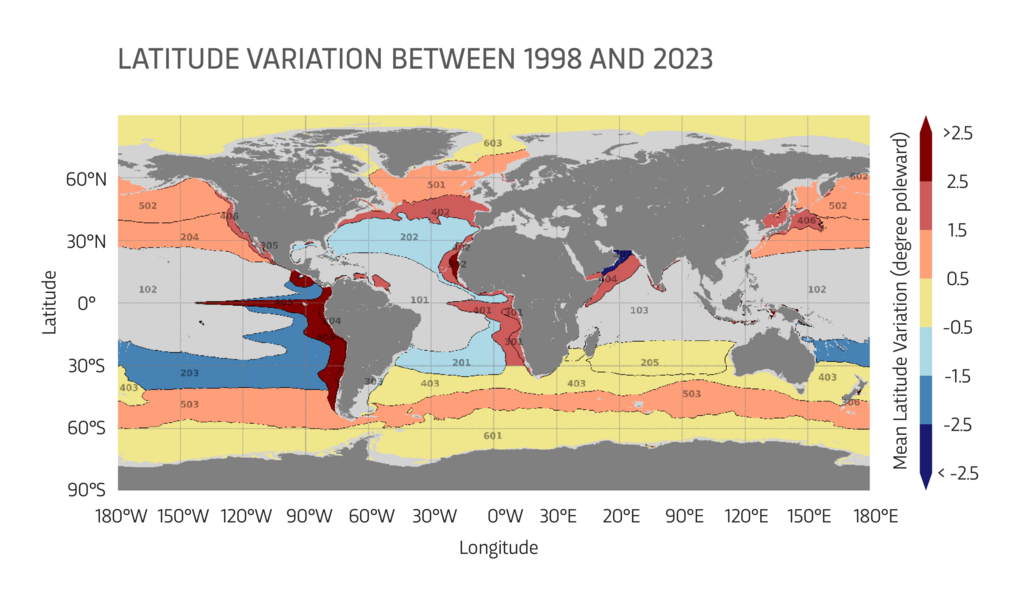
"We observed, across all oceans, that the most productive provinces – characterised by significant production of phytoplankton and micronekton, such as upwelling regions – decreased in size between 1998 and 2023," said researcher Sarah Albernhe.

The regions off the coast of Africa decreased by 20 to 25 percent.
Map of the movement of the "productive provinces" of phytoplankton and micronekton between 1998 and 2023, published as part of the latest EU Copernicus Ocean State Report. © S. Alberhne et al/OSR


Conversely, warmer habitats that are unfavourable to micronekton have expanded over the past 26 years, Albernhe said. Some have increased by more than 25 percent of their initial size.

At the same time, remaining productive zones are moving towards the poles, where cooler waters can still be found.

The province off the coast of Mauritania – which has shrunk by about 20 percent – has shifted about 2.5 degrees northward, or the equivalent of about 300 kilometres.
Carbon exporters

Over time, these trends could lead to "either the relocation of micronekton populations that follow their preferred habitat to new latitudes, or the extinction of species that can no longer find the habitat that suits them", Albernhe warned.

"This will have consequences for the food chains that depend on this phytoplankton, and potentially for the structure of the ecosystem."

Fishing would be affected as boats travel ever further to fish more intensively in smaller areas.

How Europe’s appetite for farmed fish is gutting Gambia's coastal villages

Micronekton is also a powerful carbon pump. It stores at least 15 to 30 percent of the carbon captured by the ocean, making it the largest CO2 sink on the planet.

It helps bury carbon deeper in the ocean as organisms swim from the surface, where they feed on smaller prey at night, down to the depths during the day to hide from predators.

As they descend, they deposit excrement, scales or other carbon-laden parts of themselves. "They are responsible for a very high export of carbon to the depths. They really help us regulate the climate," said Albernhe.
Rising sea levels, acidic oceans

Global warming has also left Africa's coasts buffeted by fast rising waters.

Due to the Earth's rotation, "it's the western edges of the oceans that are generally affected by rising sea levels", explained oceanographer van Gennip.

"In the case of the African continent, it's the east coast of Africa – Kenya, Tanzania and Mozambique – that is experiencing a much faster-than-average rise in sea levels.

"The global increase is 3.7mm per year, and in these regions, we see values ​​around 5mm per year."
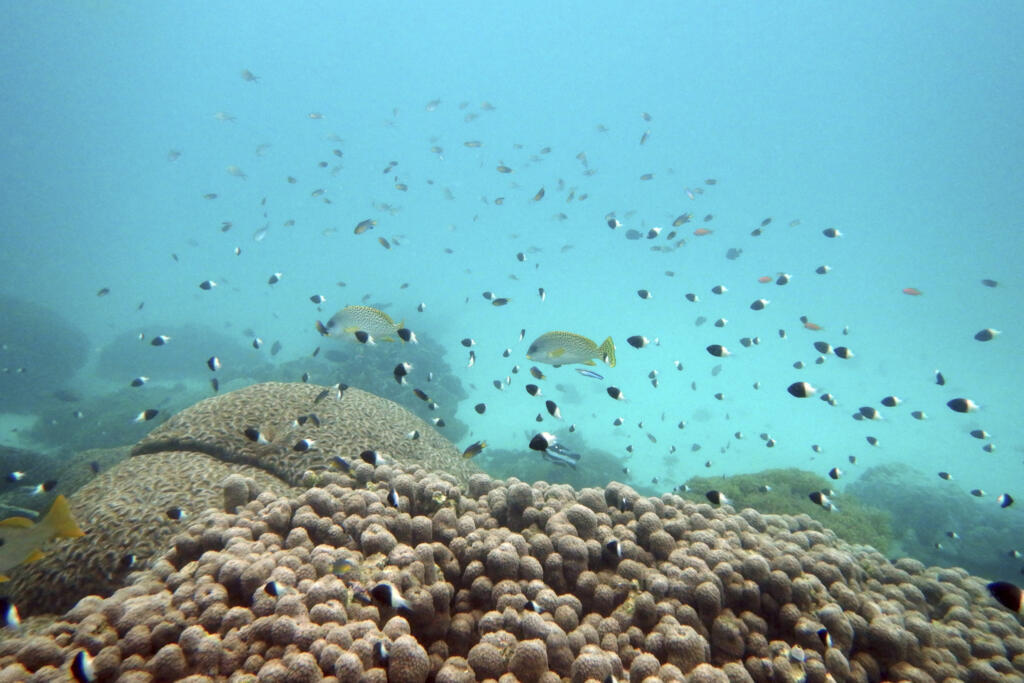
Fish swim near bleached coral in Kisite Mpunguti Marine park, Kenya, on 11 June 2022. 
@ AP - Brian Inganga


The acidity level of oceans has also increased by 30 to 40 percent in the past 150 years, according to the Copernicus report.

In Africa, this trend is especially noticeable in the Indian Ocean, particularly the area south of Madagascar and South Africa, van Gennip said. But waters off Morocco and Mauritania are also registering significant declines in pH.

More acidic waters have direct consequences for corals, havens of vital biodiversity: all African reefs, located mainly around Madagascar and as far as South Africa, are in danger or vulnerable.

This article was adapted from the original in French by Géraud Bosman-Delzons.