Sunday, October 05, 2025

Kilmar Abrego Garcia may have been charged because of Trump administration’s vindictiveness, judge finds

Katelyn Polantz, CNN
Fri, October 3, 2025 

Kilmar Abrego Garcia, a Maryland man who was deported to El Salvador earlier this year, arrives for a check-in at the Immigration and Customs Enforcement (ICE) field office in Baltimore, Maryland, US, on Monday, August 25, 2025. - Graeme Sloan/Bloomberg/Getty Images/FileMore

A federal judge says he believes the immigrant defendant Kilmar Abrego Garcia, whom the administration wrongly sent to El Salvador, may have been targeted with a criminal charge by the Justice Department this year out of vindictiveness.

“The Government had a significant stake in retaliating against Abrego’s success” suing the Trump administration after his wrongful removal to El Salvador in March, Judge Waverly Crenshaw Jr. of the Middle District of Tennessee wrote on Friday. “The Court finds Abrego has sufficiently presented some evidence that the Government had a stake in retaliating against him for exercising his rights in the Maryland suit and deterring him from continuing to exercise those rights.”

The finding sets up another round of court proceedings where Abrego Garcia’s lawyers will be able to dig into the Justice Department’s decision-making this year. They are attempting to have two criminal charges he faces in the Tennessee federal court dismissed and seek evidence that may show the Trump administration’s approach has been improper.

Crenshaw, an Obama appointee, hasn’t made a final ruling yet on the allegations of it being a wrongfully vindictive prosecution, and said on Friday he would allow for evidence-gathering and a hearing, which could include testimony from witnesses and potentially even administration officials.

Federal criminal defendants arguing vindictive prosecution rarely succeed.

Yet if Abrego Garcia does gather the evidence to convince the judge to toss his case, it would bring an embarrassing end to the Maryland man’s saga during the Trump administration’s aggressive and high-profile approach to immigration deportations.

The Trump administration initially resisted returning Abrego Garcia to the US, after it sent him on a plane in March to a prison for terrorists against previous immigration proceeding orders.

Abrego Garcia was only returned to the US when he was indicted for transporting undocumented immigrants this summer, based on a 2022 traffic stop where he was pulled over for speeding and police say he was driving several Spanish-speaking men across state lines.

Crenshaw noted on Friday that Abrego Garcia’s was the only federal case involving a traffic stop in Tennessee and surrounding states where the Justice Department brought charges significantly after the date of the stop.

“This supports his contention that there may be an improper motive for his prosecution,” Crenshaw wrote, noting the time between traffic stop and indictment was 903 days.

Crenshaw also noted on Friday how administration officials, including Homeland Security Secretary Kristi Noem and Attorney General Pam Bondi, “celebrated the criminal charges against him” in public statements and social media posts.

The most problematic statement for the Justice Department, however, came from Deputy Attorney General Todd Blanche, Crenshaw wrote.

The judge noted how Blanche said in a TV appearance the day of Abrego Garcia’s arrest that the Justice Department started investigating him after another court looked into his deportation. He called those comments from Blanche “remarkable.”

“He further stated that Abrego was not returned ‘for any other reason than to face justice,’” Crenshaw wrote.

“This could be direct evidence of vindictiveness,” he added.

A Justice Department official declined to comment to CNN.

Prior Justice Department arguments that Abrego Garcia was a danger to the public and should remain in criminal detention had also fallen flat in court, yet he continues to be in immigration detention in the US.

Abrego Garcia’s defense lawyers and two judges have also cast significant doubt on some of the evidence the Justice Department has from the traffic stop, according to the prior court proceedings.

For more CNN news and newsletters create an account at CNN.com
US judge temporarily blocks Trump administration from deploying national guard in Portland

By Dietrich Knauth
Sat, October 4, 2025 
REUTERS

Steel protective doors remain open at Mark O. Hatfield Federal Courthouse in Portland, Oregon, U.S., October 3, 2025. REUTERS/John Rudof

(Reuters) -A federal judge on Saturday temporarily blocked U.S. President Donald Trump from deploying 200 Oregon National Guard troops to the city of Portland while a lawsuit challenging the move plays out.

The ruling by U.S. District Judge Karin Immergut in Portland is a setback for Trump, a Republican, as he seeks to dispatch the military to cities he describes as lawless over the objections of their Democratic leaders.

Democratic Oregon Attorney General Dan Rayfield’s office filed the lawsuit on September 28, a day after Trump said he would send troops to Portland to protect federal immigration facilities from “domestic terrorists.”

The case was initially assigned to U.S. District Judge Michael Simon, an appointee of Democratic President Barack Obama. He recused himself after the Trump administration raised concerns about comments made by his wife, a congresswoman, criticizing the troop deployment. The case was reassigned to Immergut, who was appointed by Trump during his first term in office.

Oregon asked the court to declare the deployment illegal and block it from going forward, saying Trump was exaggerating the threat of protests against his immigration policies to justify illegally seizing control of state National Guard units.

While Trump described the city as "War ravaged," Oregon said that Portland protests were "small and sedate," resulting in only 25 arrests in mid-June and no arrests in the three-and-a-half-months since June 19. Oregon's lawsuit said that Trump announced the troop deployment after Fox News showed video clips from "substantially larger and more turbulent protests" in Portland in 2020.

The stark divide in how the two sides described the situation on the ground in Portland was evident at a Friday court hearing before Immergut.

U.S. Department of Justice attorney Eric Hamilton said that "vicious and cruel radicals" had laid siege to the Portland headquarters of U.S. Immigration and Customs Enforcement. The decision to send 200 troops - just 5% of the number recently sent to respond to Los Angeles protests - showed restraint, Hamilton said.

Caroline Turco, representing Portland, said that there had been no violence against ICE officers for months and that recent ICE protests were "sedate" in the week before Trump declared the city to be a war zone, sometimes featuring less than a dozen protesters.

"The president's perception of what is happening in Portland is not the reality on the ground," Turco said. "The president's perception is that it is World War Two out here. The reality is that this is a beautiful city with a sophisticated police force that can handle the situation."

Immergut asked attorneys how much deference she should give to Trump's description of Portland in social media posts, and seemed skeptical about treating those posts as an official legal determination.

"Really? A social media post is going to count as a presidential determination that you can send the National Guard to cities?" Immergut asked. "I mean, is that really what I should be relying on as his determination?"

Oregon's lawsuit argued that Trump's deployment violates several federal laws and the state's sovereign right to police its own citizens. Trump's decision to send troops only to "disfavored" Democratic cities like Portland also violates the state's rights under the 10th Amendment of the U.S. Constitution, according to the lawsuit.

The lawsuit is the latest legal challenge to Trump's deployments of military forces to Democrat-led cities, including Los Angeles and Washington, which he says were overrun with crime and hostile to immigration enforcement.

State and local Democratic leaders have disputed those claims and accused Trump of violating longstanding U.S. laws and norms against using the military for domestic law enforcement.

A federal judge blocked the Trump administration from using the military to fight crime in California on September 2, but that ruling is on hold while the administration appeals.

Washington D.C.'s Democratic attorney general filed a lawsuit on September 4 to end Trump's deployment of National Guard troops in the nation's capital. A judge has yet to rule on the request.

(Reporting by Brendan O'Brien and Dietrich Knauth in New York, Editing by Alexia Garamfalvi, Lincoln Feast and Rosalba O'Brien)

Judge Blocks Trump Oregon Plan as Guards Ordered to Illinois

Madlin Mekelburg, Erik Larson and Zoe Tillman
Sun, October 5, 2025 
BLOOMBERG


Federal agents clash with protesters outside an ICE facility in Portland on Oct. 4.


(Bloomberg) -- A federal judge temporarily blocked President Donald Trump from sending military forces to Portland, Oregon, to quell protests against his immigration crackdown, even as 300 National Guard troops were ordered to Illinois over the objection of state officials.

US District Judge Karin Immergut, a Trump appointee, said in an order Saturday that the National Guard deployment to Portland did not appear to be justified due to the limited nature of the protests and the ability of local law enforcement to handle the situation.

“The president’s determination was simply untethered to the facts,” the judge wrote. She said the temporary restraining order will apply for 14 days, blocking the federalization of 200 Oregon National Guard members to Portland.

The Trump administration is appealing the judge’s ruling, according to a court filing.

“I wasn’t served well by the people that pick judges, I can tell you,” Trump told reporters at the White House on Sunday, adding the judge should be “ashamed” for her ruling.

Separately on Saturday, Trump authorized the Illinois deployment over the objections of Governor JB Pritzker, a Democrat, who called the move “un-American.”

The cases are the latest in a series of fights over Trump’s use of National Guard troops to quell protests against his administration’s policies, and to fight crime and help federal officials enforce immigration laws in Democratic-run cities.

State National Guard troops are under the control of individual governors, but the administration has argued that the president has the authority to federalize the troops in the event of a “rebellion” or “invasion.”

In the Oregon case, the judge said there were no facts to support Trump’s claims on social media that Portland was ravaged by war and that anarchists and professional agitators were trying to burn down federal property and other buildings.


The White House indicated it would likely pursue appeals.


Trump says American flag burners will be ‘immediately arrested’ under executive order

“President Trump exercised his lawful authority to protect federal assets and personnel in Portland following violent riots and attacks on law enforcement,” White House spokeswoman Abigail Jackson said. “We expect to be vindicated by a higher court.”

The judge agreed the legal precedent requires the courts to give great deference to the president in making such decisions, but she disagreed that Trump had made his determination about Portland in good faith and ruled that deference “is not equivalent to ignoring the facts on the ground.”

An immediate temporary restraining order was justified, she added, because Oregon “will suffer an injury to its sovereignty” as soon as federal troops are deployed, while local law enforcement can continue to protect the ICE facility as they have been even with a TRO in place.

“This country has a longstanding and foundational tradition of resistance to government overreach, especially in the form of military intrusion into civil affairs,” Immergut wrote. “This historical tradition boils down to a simple proposition: this is a nation of constitutional law, not martial law. Defendants have made a range of arguments that, if accepted, risk blurring the line between civil and military federal power — to the detriment of this nation.”

Chicago Tension

The Illinois fight heated up on Saturday as well. Immigration and Customs Enforcement officers have stepped up activity and tensions have flared between federal agents and protesters outside an immigration processing center in suburban Broadview, Illinois.

A Department of Homeland Security spokeswoman said federal officers on Saturday fired defensive shots at a woman who then drove herself to the hospital. Chicago police said they responded to the scene but weren’t involved in the incident or the investigation.

Federal prosecutors in Chicago charged three people related to the incident, saying they used their vehicles to impede the work of federal officers. Two of the three people allegedly used their cars to strike those being driven by federal agents, while the third person allegedly rear-ended a federal law enforcement vehicle, according to a statement by the US Attorney’s office.

“This morning, the Trump administration’s Department of War gave me an ultimatum: call up your troops, or we will,” Pritzker said earlier Saturday. “It is absolutely outrageous and un-American to demand a governor send military troops within our own borders and against our will.”

Broader Plan

Trump has deployed guard troops in Washington, DC, Memphis and Los Angeles. A federal judge in California said the deployment in Los Angeles violated federal laws limiting the authority of the US military to enforce civilian law, but the White House is appealing the ruling.

Oregon officials sued after the Trump administration ordered National Guard troops to respond to protests in Portland and protect immigration officials and federal property in the area.

When he mobilized the troops, Trump wrote that he was directing the Department of Defense to “provide all necessary Troops to protect War ravaged Portland.” The president said US Immigration and Customs Enforcement facilities are “under siege from attack by Antifa, and other domestic terrorists.”

At a hearing Friday, Oregon lawyer Scott Kennedy blasted Trump’s public statements about Portland on Truth Social, saying they are not based in reality. In a post earlier this week, the president called the city “a NEVER-ENDING DISASTER.”

Kennedy described the protests at the ICE facility Portland in the days leading up to Trump’s post as “dwindling, relatively sedate.” The biggest protest was in June and was handled without federal troops, he said.


“The defense has not identified any inability to enforce the laws,” Kennedy said.


Federal law enforcement officers disperse protesters near an ICE facility in Portland on Oct. 4.Photographer: Spencer Platt/Getty Images

Eric Hamilton, a Justice Department lawyer, said the 200 proposed troops were appropriate for the level of violence in Portland, which was less than that seen in Los Angeles earlier this year.

In court filings, law enforcement leaders in Oregon argued that federal forces would probably create more problems than they would solve.

In response, the Trump argued the state’s request for court intervention was premature “before any Guardsmen have begun the mission.” But Justice Department lawyers also claimed that federal immigration agents have faced physical violence and death threats from “cruel activists,” including by erecting a guillotine outside of the Portland ICE office.

On Thursday, the judge initially assigned to the case recused himself from handling it after government lawyers alleged he may have a conflict of interest because of comments made by his wife, Democratic Congresswoman Suzanne Bonamici, that were critical of the deployment.

US District Judge Michael Simon said in a written order he didn’t believe he was required under the circumstances to have the case re-assigned, but agreed to it because “it is necessary that the focus of this lawsuit remain on the critically important constitutional and statutory issues presented by the parties.”

The case is State of Oregon vs. Donald Trump, 3:25-cv-01756, US District Court, District of Oregon (Portland).

--With assistance from Anthony Aarons, Catherine Lucey, Miranda Davis and Kate Queram.


Federal appeals court rules Trump administration can't end birthright citizenship


MICHAEL CASEY
Fri, October 3, 2025 


President Donald Trump gestures as he arrives at the White House, Friday, Sept. 26, 2025, in Washington. (AP Photo/Julia Demaree Nikhinson)

BOSTON (AP) — A federal appeals court in Boston ruled on Friday that the Trump administration cannot withhold citizenship from children born to people in the country illegally or temporarily, adding to the mounting legal setbacks for the president’s birthright order.

A three-judge panel of the 1st U.S. Circuit Court of Appeals became the fifth federal court since June to either issue or uphold orders blocking the president’s birthright order. The court concluded that the plaintiffs are likely to succeed on their claims that the children described in the order are entitled to birthright citizenship under the Citizenship Clause of the 14th Amendment.

The panel upheld lower courts' preliminary injunctions, which blocked the birthright order while lawsuits challenging it moved ahead. The order, signed the day the president took office in January, would halt automatic citizenship for babies born to people in the U.S. illegally or temporarily.

“The ‘lessons of history’ thus give us every reason to be wary of now blessing this most recent effort to break with our established tradition of recognizing birthright citizenship and to make citizenship depend on the actions of one’s parents rather than — in all but the rarest of circumstances — the simple fact of being born in the United States,” the court wrote.

California Attorney General Rob Bonta, whose state was one of nearly 20 that were part of the lawsuit challenging the order, welcomed the ruling.

“The First Circuit reaffirmed what we already knew to be true: The President’s attack on birthright citizenship flagrantly defies the Fourteenth Amendment of the U.S. Constitution and a nationwide injunction is the only reasonable way to protect against its catastrophic implications,” Bonta said in a statement. “We are glad that the courts have continued to protect Americans’ fundamental rights.”

A second appeals court ruling on Friday also found in favor of several organizations that challenged the birthright citizenship order. The plaintiffs, including New Hampshire Indonesian Community Support and League of United Latin American Citizens, were represented by the American Civil Liberties Union.

“The federal appeals court today reinforced that this executive order is a flagrant violation of the U.S. Constitution — and we agree,” said SangYeob Kim, senior staff attorney at the ACLU of New Hampshire. “Our Constitution is clear: no politician can decide who among those born in this country is worthy of citizenship.”

In September, the Trump administration asked the Supreme Court to uphold its birthright citizenship order. The appeal sets in motion a process at the high court that could lead to a definitive ruling from the justices by early summer on whether the citizenship restrictions are constitutional.

“The court is misinterpreting the 14th Amendment. We look forward to being vindicated by the Supreme Court,” White House spokesperson Abigail Jackson said in a statement.

In July, U.S. District Judge Leo Sorokin in Boston issued the third court ruling blocking the birthright order nationwide after a key Supreme Court decision in June. Less than two weeks later, a federal judge in Maryland also issued a nationwide preliminary injunction against the order. The issue is expected to move quickly back to the nation’s highest court.

The justices ruled in June that lower courts generally can’t issue nationwide injunctions, but they didn’t rule out other court orders that could have nationwide effects, including in class-action lawsuits and those brought by states.

A federal judge in New Hampshire later issued a ruling prohibiting Trump’s executive order from taking effect nationwide in a new class-action suit, and a San Francisco-based appeals court affirmed a different lower court’s nationwide injunction in a lawsuit that included state plaintiffs.

At the heart of the lawsuits challenging the birthright order is the 14th Amendment to the Constitution, which includes a citizenship clause that says all people born or naturalized in the United States, and subject to U.S. jurisdiction, are citizens.

Plaintiffs in the Boston case — one of the cases the 1st Circuit considered — told Sorokin that the principle of birthright citizenship is “enshrined in the Constitution,” and that Trump does not have the authority to issue the order, which they called a “flagrantly unlawful attempt to strip hundreds of thousands of American-born children of their citizenship based on their parentage.”
Justice Department attorneys argued the phrase “subject to United States jurisdiction” in the amendment means that citizenship isn’t automatically conferred to children based on their birth location alone.

In a landmark birthright citizenship case, the Supreme Court in 1898 found a child born in San Francisco to Chinese parents was a citizen by virtue of his birth on American soil.
Almost 1,000 trapped on Tibetan side of Mount Everest by blizzard

Reuters
Sun, October 5, 2025


Almost 1,000 trapped on Tibetan side of Mount Everest by blizzard

SHANGHAI (Reuters) -Rescue efforts were underway on Sunday to clear access to campsites on Tibet's eastern slope of Mount Everest, where nearly 1,000 people have been trapped by a blizzard that has blocked roads, according to Chinese state media reports.

Hundreds of local villages and rescue teams have been deployed to help remove snow blocking access to the area, which sits at an altitude above 4,900 metres (16,000 feet), according to a report in Jimu News.

Some tourists on the mountain have already been brought down the mountain, it added.

The snowfall began on Friday evening and continued throughout Saturday, according to notices on the official WeChat accounts of the local Tingri County Tourism Company, which said ticket sales and entry to the Everest Scenic Area were suspended from late Saturday.

Just over the border, in Nepal, 47 people have been killed by heavy rains and flash floods since Friday.

(Reporting by Casey Hall; Editing by Lincoln Feast.)


Mount Everest trekkers rescued after blizzard slams Tibet days after deadly flooding in Nepal

Emilee Speck
Sun, October 5, 2025 


Mount Everest trekkers rescued after blizzard slams Tibet days after deadly flooding in Nepal
Yahoo is using AI to generate takeaways from this article. This means the info may not always match what's in the article. Reporting mistakes helps us improve the experience.Generate Key Takeaways


A rare winter storm hit the Tibetan side of Mount Everest, stranding hundreds of mountaineers during peak season, just days after heavy rainfall triggered flooding in Nepal, killing dozens, according to local media and mountain guide groups.

Heavy snow and rain blasted the Himalayas over the weekend, prompting rescues near the eastern face of Mount Everest in Tibet, according to CCTV, a Chinese state media outlet.

Reuters reported hundreds of Mount Everest trekkers were stranded by the sudden blizzard on Sunday, with at least 350 guided down by rescuers, and more awaiting rescue.

October is peak time for those who make the trek to Mount Everest from the Tibetan side.

On the south side of Tibet, in Nepal, heavy rain caused damaging flooding, killing at least 47 people over the weekend, Reuters reported.


Water level rises in the Bagmati river during the rainfall in Kathmandu, Nepal on October 4, 2025. The National Disaster Risk Reduction and Management Authority has announced, vehicle movement in and out of the Kathmandu valley has been suspended for three days from October 4 to 6 due to the forecast of floods and landslides from the Department of Hydrology and Meteorology. (Photo by Sunil Pradhan/Anadolu via Getty Images)More

October is typically toward the end of monsoon season for Nepal, which is heavily influenced by activity over the Bay of Bengal.

This week's flooding was caused by a low-pressure system developing over the Bay of Bengal, according to meteorological officials with Nepal's Department of Hydrology and Meteorology.

Original article source: Mount Everest trekkers rescued after blizzard slams Tibet days after deadly flooding in Nepal


Hundreds of trekkers on Tibetan side of Mount Everest rescued

Reuters
Sun, October 5, 2025 


The summit of the world's highest mountain Mount Everest, also known as Qomolangma, is covered in cloud, May 8, 2008. REUTERS/David Gray

REUTERS/Purnima Shrestha/File Photo

A woman wearing a raincoat wade through a flooded street along the bank of overflowing Bagmati River following heavy rains, in Kathmandu, Nepal, October 4, 2025. REUTERS/Navesh Chitrakar

A man carries a bag as he wades through a flooded street along the bank of overflowing Bagmati River following heavy rains, in Kathmandu, Nepal, October 4, 2025. REUTERS/Navesh Chitrakar

SHANGHAI/BEIJING (Reuters) -Hundreds of trekkers stranded by a blizzard near the eastern face of Mount Everest in Tibet had been guided to safety by rescuers, Chinese state media reported on Sunday, as unusually heavy precipitation including rain pummelled the Himalayas.

As of Sunday, 350 trekkers had reached the small township of Qudang, while contact with the remaining 200-plus trekkers had been made, China Central Television (CCTV) reported.

Visitors to the remote valley of Karma, which leads to the eastern Kangshung face of Everest, were in the hundreds this week, taking advantage of an eight-day National Day holiday in China.

Snowfall in the valley, which lies at an elevation averaging 4,200 metres (13,779 feet), began on Friday evening and persisted throughout Saturday.

The remaining trekkers will arrive in Qudang in stages under the guidance and assistance of rescuers organised by the local government, CCTV reported.

Hundreds of local villagers and rescue teams had been deployed to help remove snow blocking access to the area, according to an earlier report by state-backed Jimu News.

Jimu News estimated that nearly 1,000 people had been trapped.

The CCTV report did not say if local guides and support staff of the trekking parties had been accounted for.

It was also unclear if trekkers near the north face of Everest, also in Tibet, had been affected or not.


The north face of Everest, due to its easy access by paved road, regularly draws large numbers of tourists. October is a peak season, when skies clear with the end of the Indian monsoon.

Ticket sales and entry to the entire Everest Scenic Area were suspended from late Saturday, according to notices on the official WeChat accounts of the local Tingri County Tourism Company.

To the south of Tibet in Nepal, heavy rains triggered landslides and flash floods that have blocked roads, washed away bridges and killed at least 47 people since Friday.

Thirty-five people died in separate landslides in the eastern Ilam district bordering India. Nine people were reported missing after being swept away by floodwaters and three others were killed in lightning strikes elsewhere in the country.


Over 100 injured after memorial march in Mexico City turns violent

DPA
Fri, October 3, 2025 


Crowds gather and slash with police at Tlatelolco’s Plaza de las Tres Culturas, marching to Mexico City’s Zócalo to honor the Tlatelolco Massacre’s tragic anniversary, seeking justice for those killed for peacefully opposing President Gustavo Díaz Ordaz’s government. Josue Perez/ZUMA Press Wire/dpa


More than 100 people were injured in Mexico City after demonstrators clashed with police officers on Thursday following a march to mark the anniversary of the 1968 massacre of students in the capital's Tlatelolco neighbourhood.

According to official figures, 123 people were injured during the riots in the historic centre of the Mexican capital on Thursday. Three of the 94 injured police officers were seriously hurt.

Police said around 350 people participated in Thursday's riots. Around 1,500 police officers were deployed.

Masked demonstrators threw incendiary devices at police officers and attacked them with hammers and stones. Shop windows were smashed, and stores were looted.

Earlier, some 10,000 people had marched peacefully in a memorial for the Tlatelolco massacre, which saw government forces suppressed a peaceful rally of thousands of students in 1968.

According to human rights organizations, more than 300 people were killed. However, the official death toll is 37.

The massacre occurred just days before the 1968 Olympic Games in Mexico City.


Fifty-seven years after the massacre of students in Plaza Tlatelolco, students, and civil society at large march toward Mexico City's Zocalo. The event included demonstrations in solidarity with the
Behind the Gen Z protesters who want to force Madagascar's president from power


Omega Rakotomalala - BBC Monitoring
 and Wycliffe Muia -
Fri, October 3, 2025 


[Gamma-Rapho via Getty Images]

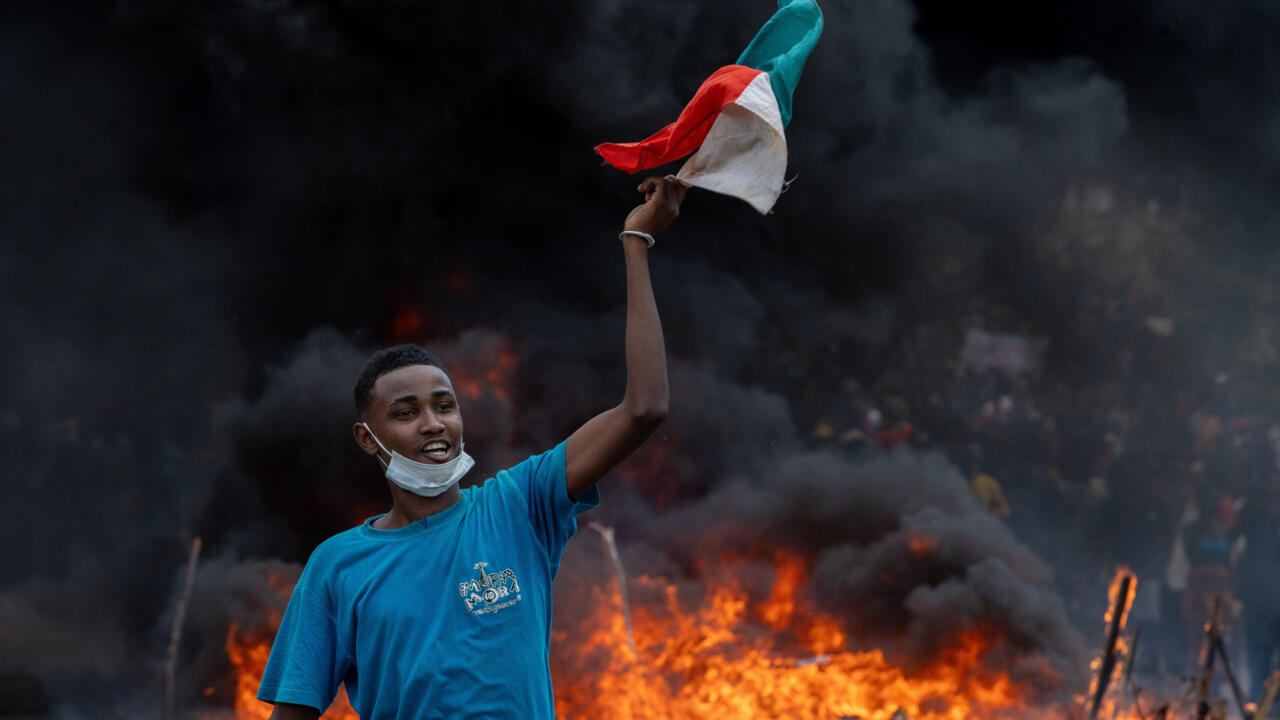
Thousands of people in Madagascar have taken to the streets in different parts of the country for the past week in the largest wave of protests the Indian Ocean island nation has witnessed in more than 15 years.

What began as anger over shortages of basic necessities has rapidly escalated into one of the most serious challenges facing President Andry Rajoelina, who has been in power, for the second time, since 2018. On Monday, in response, he sacked his government but that did not placate the protesters, who now want him to go as well.

At least 22 people have been killed and more than 100 others injured in the unrest, according to the UN, although the Malagasy government has dismissed those figures and described them as based on "rumours and misinformation".
What sparked the protests?

Pressure started to build following the arrest on 19 September of two leading city politicians, who had planned a peaceful demonstration in the capital, Antananarivo, over chronic power and water supply problems

There have been hours-long daily outages of the services run by state-owned utility company Jirama.

Many saw their detention as an attempt to silence legitimate dissent leading to public outrage, with the cause taken up by civil society groups and the formation of a youth-led online movement known as Gen Z Mada.

The protests have since spread beyond Antananarivo, gripping eight other cities across the island, with no signs of subsiding.

Waving banners, protesters have denounced the blackouts and accused the government of failing to guarantee basic rights.

Activists have also blamed widespread corruption within the power company for the electricity crisis.

Who is demonstrating?


Gen Z protesters have now been joined by others [Getty Images]

Initially, Gen Z Mada was co-ordinating what was going on through social media sites such as Facebook and TikTok. A committee was created to organise further demonstrations following a meeting between Gen Z Mada, civil society groups and local politicians.

Other groups got involved once the protests started. Several labour unions, among them the country's largest, the Malagasy Trade Union Solidarity, have thrown their weight behind the youth-led movement.

Civil society organisations have called for church-led talks to "prevent Madagascar from sinking into chaos or civil war".

Opposition leader Siteny Randrianasoloniaiko and former President Marc Ravalomanana voiced their support for the protests in a rare joint statement on Wednesday.

The two have declined offers to join Rajoelina's government, saying the move would be a "betrayal" of the Malagasy people.
What do the protesters want?

The demonstrators have not issued a manifesto but what started with anger over public services has evolved into broader demands for political change.

Many young people, facing insecure and poorly paid jobs, have called for the president's resignation, blaming him for the problems they are facing.

On Wednesday, the demonstrators in the capital were seen waving flags and banners with the words "Rajoelina out".

A spokesperson for Gen Z Mada told the AFP news agency that they wanted the president to step down and "the cleaning up of the National Assembly".

They also want Rajoelina to take responsibility for those who were reportedly killed by security forces.

Some social media users have also called for the dissolution of the election commission and the country's top court.

What is the government's response?


The UN says at least 22 people have died - a figure disputed by the authorities [AFP via Getty Images]

Security forces have maintained a heavy presence across Antananarivo and other major cities, with police using tear gas and water cannon to disperse the protesters.

A dusk-to-dawn curfew was imposed in the capital after reports of violence and looting, including the torching of the finance ministry's offices.

Rajoelina initially made attempts to placate the protesters, such as sacking his government, calling for dialogue with young people and pledging that the World Bank would fund efforts to address the power outages.

But when these steps failed to put a stop to the demonstrations, his tone changed.

In an address livestreamed on his Facebook page, Rajoelina alleged that the protesters had been "exploited to provoke a coup" and that foreign forces were financing the movement to oust him.

Schools across the capital and nearby districts were closed last week, for fear of escalating violence.

Authorities maintain that gatherings without formal authorisation pose risks to public order.
What is life like in Madagascar?

Madagascar is one of the poorest countries in the world, with 75% of people living below the poverty line, according to the World Bank.

Only about one-third of Madagascar's 30 million people have access to electricity, according to the International Monetary Fund.

One demonstrator told AFP that "living conditions of the Malagasy people are deteriorating and getting worse every day".
Is the president under threat?

Political scientist and human rights activist Ketakandriana Rafitoson told the AFP news agency the demonstrations risked dragging on and intensifying if authorities rely on force to suppress dissent instead of prioritising accountability.

She said the "outcome risks political fragmentation, stronger nationalist rhetoric against perceived external interference, and possible economic fallout".

But in imposing curfews and dismissing UN casualty reports, the government could be signalling that it may double down on repression rather than compromise.

Analysts say control over state media and key institutions could allow Rajoelina to outlast the immediate wave of dissent.

Governance experts say a critical tipping-point would be whether the military refuses orders to crack down on protesters.

Presidential spokesperson Lova Ranoromaro said on social media that "we do not want a coup d'etat, because a coup d'etat destroys a nation, because a coup d'etat destroys the future of our children".

Madagascar has been rocked by multiple uprisings since it gained independence in 1960, including mass protests in 2009 that forced former President Ravalomanana to step down and saw Rajoelina come to power for the first time.

Rajoelina was voted back into office in 2018 and re-elected in 2023 in contested polls boycotted by the opposition.

Rival rallies pop up amid ongoing anti-government Gen Z protests in Madagascar


Supporters of Madagascar’s embattled government, challenged by intense youth-led protests since September 25, took to the streets in rival rallies across the capital Antananarivo on Saturday.


Issued on: 04/10/2025 - 
3 minReading time

By: FRANCE 24


Demonstrators are calling for President Andry Rajoelina to step down. © FITA via AFP

Backers and foes of Madagascar's cornered government staged rival rallies in the capital Antananarivo on Saturday following days of fatal youth-led protests the president has termed a coup bid.

Inspired by similar movements in Bangladesh, Nepal and Indonesia, the protests led by an online youth movement known as Gen Z Mada, have tapped into widespread frustration over poor governance, with demonstrators calling for President Andry Rajoelina to step down.

At least 22 people have been killed and hundreds injured, according to the United Nations, a toll the government has dismissed as based on rumours or misinformation.

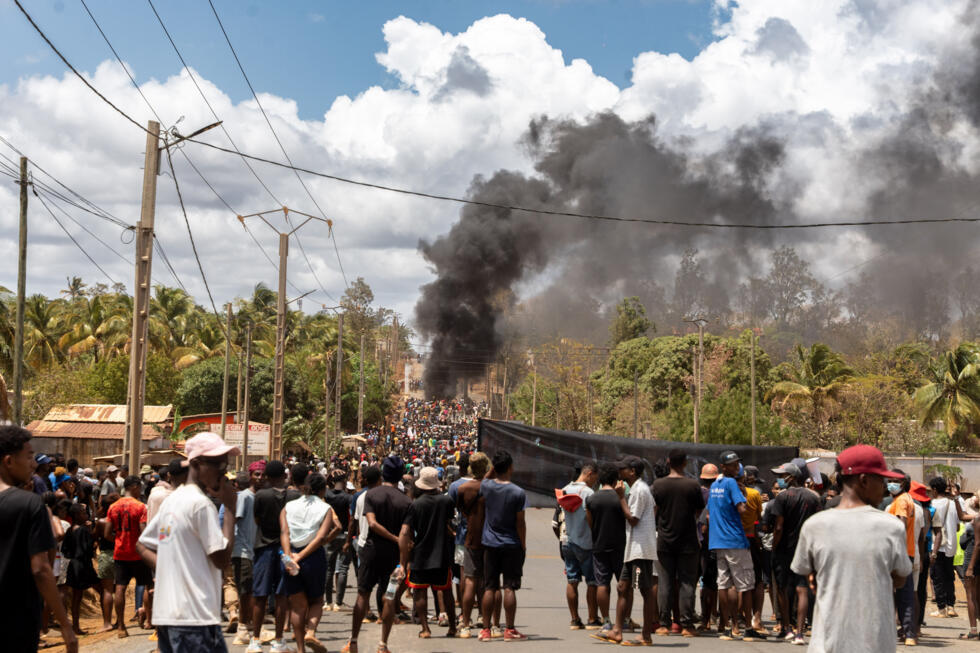
The anti-government protesters attempted to converge in the centre of Antananarivo but were prevented by a heavy police presence.

Officers erected roadblocks, including in the Ambondrona neighbourhood.

"It's the shortest route to Ambohijatovo," said 18-year-old student Ilan Randrianarison, referring to their planned meeting point.

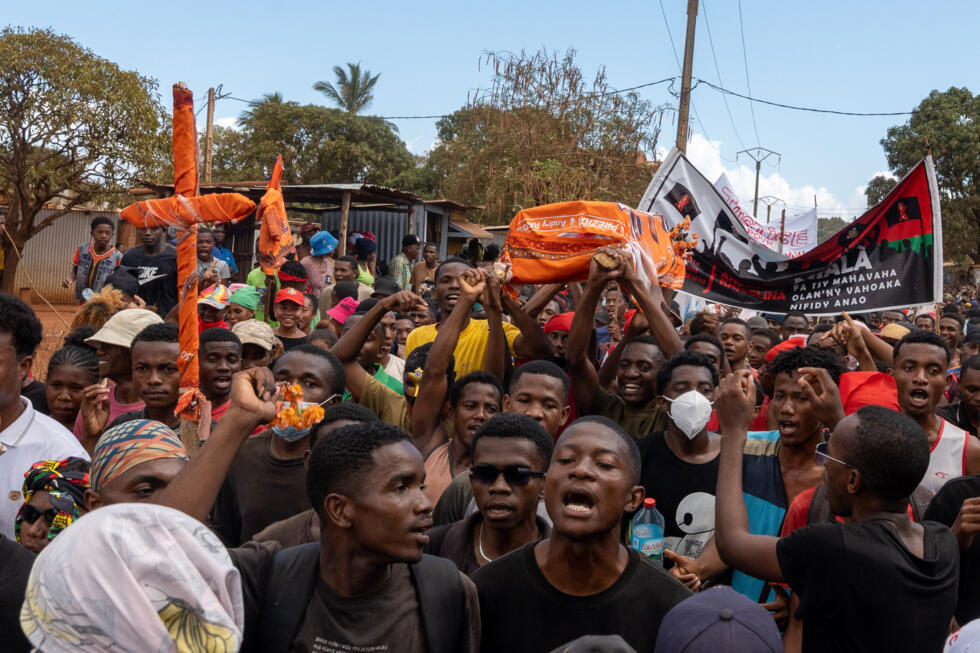
Hundreds of students marched in the northern city of Antsiranana. 
© FITA via AFP


"Given the massacres, the protesters are getting angrier and angrier. We're here for our comrades," he said, wearing a straw hat that has become a symbol of defiance.

In the capital's main Independence Avenue, armoured vehicles and military police stood guard.

Some officers killed time on their phones, played cards or napped in the shadow of city hall.

Supporters of the embattled government meanwhile met at the Coliseum – a Roman-inspired amphitheatre inaugurated by Rajoelina after he was first installed in power by the military in 2009 following a popular uprising.

That rally attracted fewer people than the anti-government protests.

In the northern city of Antsiranana, hundreds of students also marched, waving placards and carrying a mock coffin covered with orange fabric emblasoned with the image of Rajoelina, AFP journalists saw.
'Out of touch'

Rajoelina, who has rejected calls to resign, on Saturday shared footage of a meeting with trade unions.

The 51-year-old former mayor of Antananarivo said on Friday he was ready to listen in order to find solutions to problems facing the poor island nation.

He condemned what he said was an attempt to topple his government, without naming who he alleged was behind the move.

Gen Z Mada has rejected Rajoelina's overtures, saying his remarks were "completely out of touch with the gravity of the situation our country is facing".

"You claim to invite dialogue, yet your words stigmatise precisely those you claim to be listening to," the group said in a joint statement with some 20 other organisations.

The protests were sparked by public anger over constant water and power cuts 
© FITA / AFP


The Council of Christian Churches in Madagascar, known by its Malagasy acronym FFKM and led by Catholic Archbishop Jean de Dieu Raoelison, said on Friday it was ready to mediate between the government and demonstrators.

The protests, sparked by public anger over constant water and power cuts, forced Rajoelina to sack his government on Monday but that was not enough to placate the anger.

The rallies, which began on September 25, are the latest bout of unrest in Madagascar since it gained independence from France in 1960, posing the most significant challenge to Rajoelina's tenure since his 2023 re-election.


Gen Z: How social media fuel this generation's global revolt
EN Gen Z thumbnail © France 24
02:18


The Gen Z movement demanded on Friday to be "consulted and heard" in the choice of a new premier and called for an investigation into the police response to the demonstrations.

"We are giving the president 24 hours to respond favourably to these demands," said the group, vowing to take "all necessary measures".

Rajoelina first came to power in 2009 following a coup sparked by an uprising that ousted former president Marc Ravalomanana.

Despite its natural resources, Madagascar remains among the world's poorest countries.

Nearly three-quarters of its population of 32 million were living below the poverty line in 2022, according to the World Bank.

Corruption is widespread. The country ranks 140th out of 180 in Transparency International's index, which ranks countries by their perceived level of public sector corruption.

(FRANCE 24 with AFP)


Morocco sees eighth straight day of protests organised by online Gen Z group

Members of Moroccan online youth collective GenZ 212 protested for the eighth consecutive day on Saturday, demanding better public health and education services. The online group, which has more than 180,000 members on Discord, insists on the nonviolent nature of its protests, and the gatherings since then have been largely peaceful.


Issued on: 05/10/2025 -
By: FRANCE 24

People take part in a youth led protest against corruption and calling for healthcare and education reform, in Rabat, Morocco, Saturday, Oct. 4, 2025. © Mosa'ab Elshamy, AP

Members of a Moroccan online youth collective protested for the eighth consecutive day on Saturday, demanding better public health and education services.

The demonstrations in the usually stable North African kingdom have bucked the perception of young Moroccans as being politically disengaged, and have been organised since last Saturday by GenZ 212, a group active on the web platform Discord.

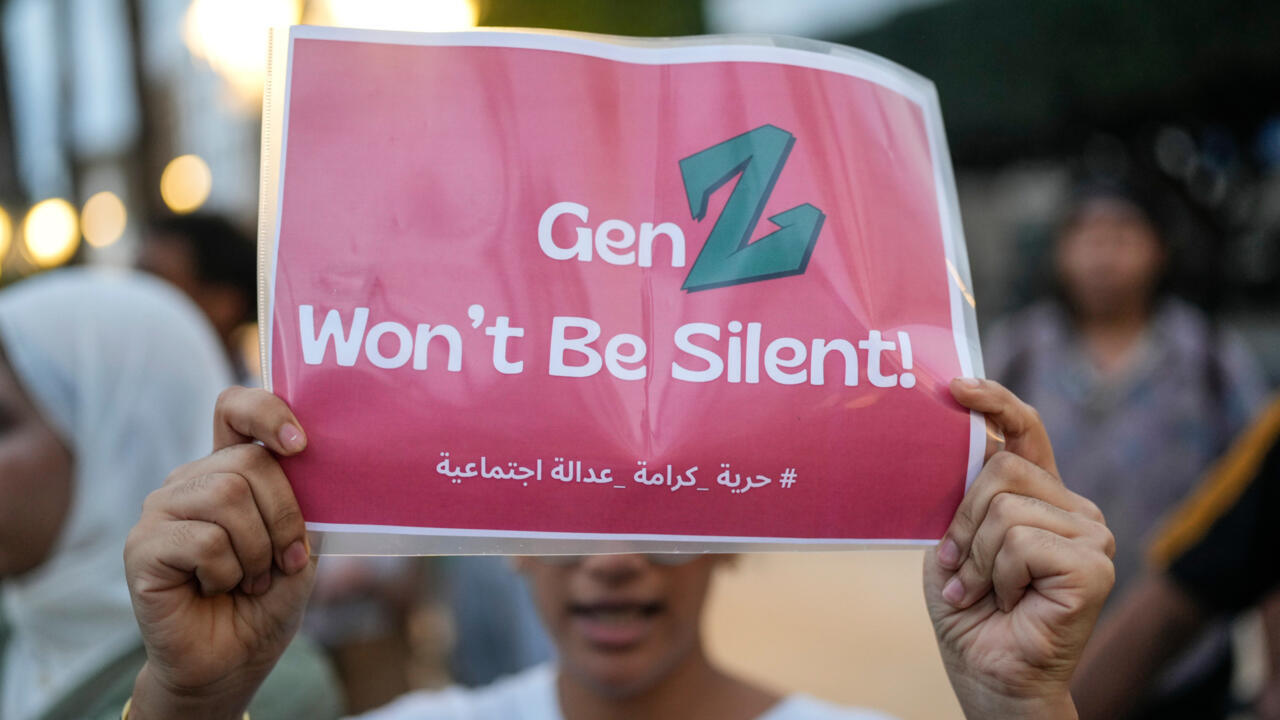
In Tetouan, in the north of the country, hundreds of people gathered, chanting slogans such as "The people want an end to corruption" and "Freedom, dignity and social justice", local media reported.

Read more
Unlike Arab Spring, today’s Moroccan youth are demanding dignity, justice, and accountability

In the western city of Casablanca, protesters shouted "The people want education and health", while in the capital, Rabat, a dozen people gathered in front of parliament, an AFP photographer said.

GenZ 212, whose founders remain anonymous, earlier on Discord called for protests in 14 cities between 6:00 pm (1700 GMT) and 9:00 pm.

They want reforms to social services, particularly healthcare and education, as well as an end to corruption and the resignation of Prime Minister Aziz Akhannouch, whose tenure ends next year.

On Friday evening, hundreds of people rallied in numerous cities, including Rabat and Agadir.

Two days earlier, there were reports of violence in several smaller towns, with three people killed by police "in legitimate defence" after they allegedly tried to storm a station in the village of Lqliaa, near Agadir, the authorities said.

GenZ 212, which has more than 180,000 members on Discord, insists on the nonviolent nature of its protests, and the gatherings since then have been largely peaceful.

The rallies follow on from isolated protests that broke out in mid-September in several cities after reports of the deaths of eight pregnant women at the public hospital in Agadir who had been admitted for cesarean sections.

Demonstrators have seized on the deaths as evidence of the public health sector's shortcomings, feeding wider discontent over social inequalities.

(FRANCE 24 with AFP)


We need hospitals more than football stadiums, say Morocco's young protesters

Hajar Chaffag -
Sat, October 4, 2025 
BBC


[Anadolu via Getty Images]
Morocco is currently building what will be the globe's largest football stadium in preparation for co-hosting the 2030 World Cup.

But for the demonstrators who have taken to the streets each night across the country since last Saturday, this 115,000-capacity showpiece and all the other football infrastructure in development, costing a reported $5bn (£3.7bn), are an affront - an example of a government that has got its priorities wrong.

"I am protesting because I want my country to be better. I don't want to leave Morocco, and I don't want to resent my country for choosing to stay," says Hajar Belhassan, a 25-year-old communications manager from Settat, 80km (50 miles) south of Casablanca.

A group called Gen Z 212 - the number is a reference to the country's international dialling code - has been coordinating the demonstrations through the gaming and streaming platform Discord, as well as TikTok and Instagram.

Apparently taking inspiration from Nepal's recent Gen Z protests, the young Moroccans want the authorities to act with the same urgency and passion when it comes to addressing these issues as with hosting one of the world's premier sporting events.

Starting on 27 September with protests across 10 cities, the crowds have been building through the week, chanting slogans such as: "No World Cup, health comes first" and "We want hospitals not football stadiums".

The police have responded with seemingly arbitrary mass arrests and in certain places things have turned violent, leading to the death of three protesters.


Prime Minister Aziz Akhannouch said on Thursday that he was open to dialogue, but the leaderless movement has vowed to keep going until there is concrete change.

A list of their demands has been shared on social media. They include:

Free and quality education for all


Accessible public healthcare for everyone


Decent and affordable housing


Better public transport


Lower prices and subsidise basic goods


Improve wages and pensions


Provide job opportunities for youth and reduce unemployment


Adopt English as the second language instead of French (after Arabic)

Anger had been growing, but what galvanised the movement was the death over a number of days in mid-September of eight women in a maternity ward of a hospital in the southern city of Agadir. There were some reports that the deaths could have been prevented if there had been better care, proper equipment and enough medical staff.

In 2023, it was estimated that there were 7.8 doctors per 10,000 Moroccans, way below the World Health Organization recommendation of 23 per 10,000.

Having read about the protests on social media and inspired by a friend, Ms Belhassan decided to join on Monday.

The day before, that friend had been sending her videos from a demonstration in Casablanca that she was taking part in and Ms Belhassan was immediately uploading them onto her social media accounts.


Hundreds of people have been arrested [AFP via Getty Images]

Then, her friend called to say her brother had been arrested. He was not released until the early hours of the following morning. This, Ms Belhassan says, is what pushed her to go out on to the streets.

"We are making reasonable, basic demands. Health and education are necessities that should already be prioritised," she tells the BBC in a passionate voice.

"It breaks my heart to see young, educated and peaceful people faced with arbitrary arrests."

When Ms Belhassan went out she noticed that the police were trying to stop people gathering and were making arrests.

She says she was scared of making eye contact with officers in case she attracted their attention.

"I was afraid for my safety but I still went out," she says.

On Wednesday, interior ministry spokesman Rachid El Khalfi said that 409 people had been detained up to that point.

He also announced in a press release that 260 police officers and 20 protesters had been injured and 40 police vehicles and 20 private cars were torched in violent clashes.

Twenty-three-year-old Hakim (not his real name) was one of those arrested.

He says he went out onto the streets of Casablanca to protest peacefully but ended up in a police cell with around 40 people.

"This government has been abusing their power too much," Hakim says. "My father had a stroke a little while ago. If we didn't have some savings to get him treated in a private hospital he would've died. What am I gaining from a country that is not providing healthcare for my ageing parents or educating me?"

He describes the state-funded education system as being "far behind" what is available in the private sector.

"We deserve a dignified life," says Hakim. "We want to host the Fifa World Cup, but we want to do that with our heads up high, not while hiding behind a façade."


The protest organisers have distanced themselves from the violence [AFP via Getty Images]

The police response has been heavily criticised by several Moroccan human rights organisations, protesters and the opposition.

The Gen Z 212 protests are not the first time that young Moroccans have taken to the streets.

Many commenters online have been drawing parallels with the country's violent 1981 riots, where those who died became known as the Bread Martyrs as they were protesting against the soaring price of basic foods. A 2004 commission appointed by the king to investigate the country's past human rights abuses verified 114 deaths but did not disclose how exactly they died. Reparations were then made to victims of human rights abuses and families of deceased ones.

The country has seen other youth-led movements, notably in 2011 and 2016.

The events of 2011 were part of the larger Arab Spring and led to reform of the constitution through a national referendum called by King Mohamed VI.

For the first time in Moroccan history, the monarch strengthened the role of the government by ceding executive power to the prime minister and parliament. The king remains the legitimate head of state, military and religious affairs, holding the power to appoint and remove ministers if necessary.

What makes Gen Z 212 different is that those demonstrating say they are not tied to a political party and do not appear to have a formal structure.

"We are not a political movement. We have no leader," Ms Belhassan says.

"Maybe that's why the police were arresting people, and why the government kept silent – because, in their eyes, we didn't follow the traditional path of organisations and political parties."

But there is some disquiet about the violence.

On the night of 1 October, three protesters died in the town of Lqliaa after people attempted to storm a police station. The local authorities said security forces opened fire after protesters tried to start a fire and steal weapons from the station, then subsequently released supporting CCTV footage to disprove emerging false narratives online.

Protesters have condemned the rioting and looting that have happened in certain areas and have organised clean-up groups. They have also repeatedly called for peace and dialogue, but it seems they are not convinced by the prime minister's apparent willingness to talk.

On Friday, calls began to emerge for the king to dissolve the government. That may be a step too far, but the protesters do not seem to be in the mood to pull back.

Looking ahead to 2030, protester Ms Belhassan says that "of course" Moroccans are "excited to host the World Cup".

"We love football, it is in our blood. But we are missing the foundations. Sure, let's build stadiums, but let's also build our education and health systems. Let's take care of our people."


[Getty Images/BBC]

Go to BBCAfrica.com for more news from the African continent.


Gen Z protests are shaking Morocco. Here's what to know

SAM METZ and AKRAM OUBACHIR
Sat, October 4, 2025 


People take part in a youth-led protest against corruption and calling for healthcare and education reform in Rabat, Morocco, Friday, Oct. 3, 2025. The sign reads, "Dignity before stadiums." (AP Photo/Mosa'ab Elshamy)(ASSOCIATED PRESS)

People observe as security forces detain a man taking part in a youth led protest calling for education and health reforms, in Casablanca, Morocco, Monday, Sept. 29, 2025. (AP Photo/Mosa'ab Elshamy)(ASSOCIATED PRESS)

A boy is detained as youth led protests calling for healthcare and education reforms turned violent, in Sale, Morocco, Wednesday, Oct. 1, 2025. (AP Photo/Mosa'ab Elshamy)(ASSOCIATED PRESS)

RABAT, Morocco (AP) — Demonstrations in more than a dozen cities have jolted Morocco for a week straight, with the young people behind them showing they can translate digital discontent into a real-world movement that authorities can’t ignore.

The North African nation is the latest to be rocked by “Gen Z” protests against corruption, lack of opportunity and business as usual.

Similar movements have risen in countries such as MadagascarKenyaPeru, and Nepal. They differ in origin but share in common a refusal to go through institutions like political parties or unions to be heard.

In Morocco, anger has boiled over contrasts between government spending on stadiums in the lead-up to the 2030 FIFA World Cup and a subpar health system that lags behind countries with similarly sized economies.

Here’s what to know:

Meet the protesters

A leaderless collective called Gen Z 212 — named after Morocco’s dialing code — is the engine behind the protests. Members debate strategy on Discord, a chat app popular with gamers and teens. The core group has about 180,000 members, but spinoffs have also sprouted, organizing demonstrations in towns independently.

Like other nations swept by Gen Z protests, Morocco is experiencing a youth bulge, with more than half of the population under 35. Yet as the country pours billions into infrastructure and tourism, unemployment for Moroccans ages 15-24 has climbed to 36%. And with opportunity lacking, more than half of Moroccans under 35 say they have considered emigrating, according to a June survey from Afrobarometer.

When midweek demonstrations turned violent, officials said most participants were minors and rights groups say many detained were under 18.

What they are protesting

Morocco is Africa’s most visited country, appealing to tourists from around the world with its medieval palaces, bustling markets, and sweeping mountain and desert landscapes. But not far from tourist routes, the daily reality for most of Morocco’s 37 million people includes soaring costs of living and stagnating wages.

The North African Kingdom has made significant strides in lifting standards of living, but development has been uneven and critics say it has even exacerbated inequities.

Morocco boasts Africa’s only high-speed rail line and is constructing seven new stadiums and renovating seven others in preparation for the 2030 FIFA World Cup. It plans to spend more than $5 billion on infrastructure for the event, some from the private sector. Yet with a monthly minimum wage of around $300, many languish in poverty in areas where roads are unpaved, hospitals lack doctors and classrooms are underfunded and overcrowded.

Morocco has only 7.7 medical professionals per 10,000 inhabitants and far fewer in parts of the south and east where protests have become most heated. The public health system provides more than 80% of care, but accounts for only 40% of spending, with the rest coming from private or out-of-pocket costs.

Before Gen Z 212, localized protests against regional inequities and government priorities erupted, including in Al Haouz, where many remain in tents more than two years after a deadly 2023 earthquake. Anger boiled over in September after eight women died giving birth in a public hospital in the coastal city of Agadir. Despite its renovated airport and reputation as a destination for tourists, the city is the capital of one of Morocco’s poorest provinces, Sousse-Massa, where residents have decried a lack of doctors and quality medical care.

Protesters, angry over corruption, have likened the government to a mafia and targeted Prime Minister Aziz Akhannouch and Health Minister Amine Tahraoui, his former business associate. Akhannouch, one of Morocco’s richest men, controls most of the country’s gas stations, and one of his companies recently won controversial government contracts for new desalination projects.

Morocco’s business interests, including the royal family’s investment fund Al Mada, have also projected substantial profits from World Cup-related developments, including new stadiums, train lines and hotels, according to the magazine Jeune Afrique.

Gen Z's key chants

“Stadiums are here, but where are the hospitals?" A jab at Morocco’s spending on spectacle projects for the World Cup and what many see as the government's blindness to everyday hardship.

“Freedom, dignity and social justice" is a slogan carried over from past movements denouncing limited political freedoms and economic exclusion, without offering specific demands for reform.


The protesters' demands

After officials called on Gen Z 212 to clarify its demands, the group on Thursday published a letter addressed to King Mohammed VI, asking him to dismiss the government and corrupt political parties, release detainees and convene a government forum to hold officials accountable.

The series of political demands diverged from the nebulous calls for dignity and social justice, reflecting a broad sentiment of how Morocco has not made serious strides to overcome what King Mohamed VI described as the “paradoxes” of living conditions during the 2017 mass demonstrations. At the time, he acknowledged development had not adequately trickled down to benefit all and promised progress was underway.

Though the king is the country’s highest authority, Gez Z protesters directed their ire at government officials and called on him to oversee reforms. Many on the streets shouted: “The people want the King to intervene,” underscoring his image among Moroccans as an anchor of stability.

How the government has responded

Security forces have alternated between crackdown and retreat.

Riot police and plainclothes officers arrested demonstrators en masse on the weekend of Sept. 27 and 28. Police in a small town outside of Agadir fired on demonstrators they claimed were storming one of their posts on Wednesday, killing three, and a police van rammed into protesters in the eastern city of Oujda, injuring one, the night before. But elsewhere, security forces eased their presence, standing aside as rioters and looters set cars ablaze and smashed storefronts.

After days of protests, Akhannouch and several of his Cabinet members said the government was open to dialogue with protesters and suggested fortifying existing hospitals with additional staff and opening new medical facilities.

“The government launched a comprehensive plan from the beginning, and today we are accelerating its pace so that citizens can feel the improvements more clearly,” Tahraoui told the outlet Hespress on Friday.

But as Moroccans watch stadiums built in a matter of months, promised changes have rung hollow to many demonstrators, for until now, no official has proposed redirecting stadium funds to social services.

“The government is taking patchwork measures to ease the pressure," Youssef, a 27-year-old demonstrator, said. "Their reforms will take years.”

How football mega tournaments became a lightning rod for Morocco protesters

Paul Myers
Sun, October 5, 2025 


Mainly young demonstrators have been on the streets of towns and cities in Morocco calling on the government to spend as lavishly on schools and hospitals as it does on stadiums for the 2030 World Cup.

Two years on from Morocco's selection as one of the co-hosts for the 2030 football World Cup, the government's multi-billion-euro investment in the tournament has become a focal point for protesters now leading their second weekend of demonstrations to demand better public services.

Rallied by online collectives including GenZ 212 and Morocco Youth Voices, thousands of mainly young Moroccans took to the streets in a dozen towns and cities last weekend waving placards and shouting slogans including: "Stadiums are here, but where are the hospitals?"

Although the estimated €6 billion costs of building and revamping stadiums and roads for the World Cup appear to be the main conductor for their anger, the month-long Africa Cup of Nations that starts on 20 December could bear the brunt.

"Football is much more than entertainment or sport," said Abderrahim Boukira, professor of the sociology of sport at Hassan 1 University in Settat.

"It’s a vehicle for national pride and identity and a perfect tool for social cohesion and inclusion – if it is used in the right way.

"But also football exposes structural weaknesses such as inequality, lack of spaces and social exclusion."

Double hosting duties

The Confederation of African Football (Caf), which organises the biennial Cup of Nations, declined to comment about the protests which, according to the Moroccan Interior Ministry, have left at least 589 police officers as well as 50 civilians injured and led to nearly 500 arrests.

The 35th Africa Cup of Nations was handed to Morocco in September 2023, a year after Guinea was stripped of hosting duties due to its lack of progress on revamping stadiums and roads.

A week later, Morocco's football administrators were celebrating anew. The bosses at Fifa, world football's governing body, awarded them co-hosting duties with Portugal and Spain for the centenary edition of the World Cup in 2030.

Two years on, with protests in their second week and GenZ 212 calling for the resignation of Prime Minister Aziz Akhannouch, a poser has emerged for Moroccan politicians and football tournament organisers.

Now that they have been questioned, how can they effectively appease the disaffection to ensure a friction-free Cup of Nations and show the demonstrators that they are responding?

Young and angry

Tahani Brahma, a researcher and secretary general at the Moroccan Association for Human Rights, told RFI: "Moroccan youth are taking to the streets to call for functioning hospitals, quality schools and decent jobs.

"They're rejecting the reality of billions being spent on stadiums for the World Cup while basic services are collapsing.

"Most importantly, Moroccan youth do not want promises, they want their rights."

People born between 1995 and 2010 make up a fifth of Morocco's population of 38 million. In August, Morocco's national statistics office reported unemployment rates of 35.8 percent for 15- to 24-year-olds and 21.9 percent for the 25 to 34 cohort.

The demographic's ability to mobilise swiftly and vocally on the streets via online platforms such as TikTok and Discord has transformed them into an unpredictable mass with palpable reasons for anger – such as a string of deaths on a maternity ward in Agadir that they say are evidence of the public health sector's shortcomings

Akhannouch, who is also mayor of Agadir, responded to protests outside that hospital in early September by acknowledging that the centre had been facing problems for decades.

The billionaire fuel and media tycoon insisted that the government was in the process of building and upgrading hospitals across all the country's regions.

Data from the World Health Organisation suggests that quest could be long.

In 2023, WHO statistics showed Morocco having 7.7 medical professionals per 10,000 inhabitants and far fewer in certain regions, including Agadir, with 4.4 per 10,000. The WHO recommends 25 per 10,000.
Spending priorities

The government has also been accused of failing to adequately help victims of the earthquake that struck Morocco's Atlas Mountains on 8 September 2023.

More than 2,900 people were killed and 5,500 people injured during the 6.8-magnitude tremor and its aftershocks.

Just over two years on, Crown Prince Moulay El Hassan inaugurated the 68,000-seat Prince Moulay Abdellah Stadium in Rabat. Amid the pomp and ceremony for the heir to the throne, officials cooed over how the old stadium was demolished and replaced within two years with a state-of-the art venue that will host the first match at the Cup of Nations as well as the final.

A few days later, dozens of quake survivors congregated in front of Morocco's parliament as part of a public plea to the government to take reconstruction aid as seriously as the World Cup projects.

Brandishing banners with the names of villages destroyed during the earthquake, they chanted: "Quake money, where did it go? To festivals and stadiums."


Tourism concerns

While GenZ 212 and other organisers are urging peaceful protests, there have been reports of violence in several smaller towns over the past week, including three deaths in the village of Lqliaa near Agadir on Wednesday night.

Officers fired on protesters "in legitimate defence" after they allegedly tried to storm a police station, the authorities said.

In Sale, near Rabat, groups of young men hurled stones at police, looted shops, set banks ablaze and torched police vehicles. Security forces in Tangier faced a barrage of stones, and in Sidi Bibi, masked youths burned the commune headquarters and blocked a main road.

Gatherings since then have been largely peaceful, but the shadow of unrest may be enough to worry tourism chiefs.

Tourism contributes significantly to Morocco's economy, accounting for 7 percent of its GDP. Between January and the end of August 2025, Morocco welcomed 13.5 million visitors, a 15 percent rise on a similar period in 2024, said the Ministry of Tourism.

The 2025 Cup of Nations is expected to improve those figures. But the numbers arriving in Rabat, Agadir, Casablanca, Fez, Marrakech and Tangier for the tournament could be affected if a threat of protests and violence were to stalk the nine venues.

Sports sociologist Boukira suggested it was the opposite of the image the Moroccan administration hopes to project.

"Football is also a tool of soft power," he said. "Hosting big tournaments, improving infrastructure and attracting global attention shows that football functions beyond sport: it’s a way to project a modern image and to engage internationally."

He also pointed out the potential benefits at home: "Events like the Cup of Nations and the World Cup also create employment, bring in more tourists and investments. And all that helps in our socio-economic development."

But with young protesters demanding fundamental reform, there is no guarantee that logic will convince them.

"Young people in Morocco have been suffering for a long time, and not only young people, but the entire population," said human rights campaigner Brahma.


Asians face highest risk of early death from oil and gas air pollution, study shows


via CGTN America


By Ryan General
2 days ago

Air pollution from oil and gas operations causes about 91,000 premature deaths in the United States each year, with Asians, Black, Hispanic and Native American communities bearing the greatest health burdens, a new study found.
The research, based on 2017 data and published Aug. 22 in Science Advances, links oil and gas emissions to more than 200,000 new cases of childhood asthma, over 10,000 preterm births and 1,600 lifetime cancer cases annually. The team noted that their estimates are likely conservative given a 40% increase in U.S. oil and gas production and an 8% rise in consumption between 2017 and 2023.

Disproportionate health outcomes
The study found that Asian and Black populations are disproportionately affected by downstream refining and end-use combustion, while Native American and Hispanic communities face the greatest impacts from upstream activities such as drilling and extraction.

The analysis also showed that Black and Asian groups experience the largest overall health disparities from exposure to particulate matter and ozone.

Asians were found to be uniquely vulnerable to nitrogen dioxide and hazardous air pollutants produced during fuel processing and combustion. The findings align with the 2023 Female Asian Non-Smoker (FANS) study, led by the University of California Davis Comprehensive Cancer Center, which found that 57% of Asian American women diagnosed with lung cancer had never smoked.

Where Asian communities are exposed
California and Texas account for a significant share of the national health burden from oil and gas air pollution, where Asian and Black residents were found to be especially vulnerable due to their proximity to refineries and petrochemical plants.

California’s San Joaquin Valley, a hub for oil production, agriculture and warehouse distribution, suffers some of the nation’s worst fine-particle pollution. Texas has over 1,300 major methane leak sites identified statewide, with counties Reagan, Howard, Loving and Midland found to have the highest concentration of emissions, affecting more than 126,000 people living within two miles of these sources.

Things could get worse
The study’s release comes as the Trump administration moves to expand fossil fuel production while rolling back regulations on renewable energy. Environmental advocates have raised concerns that such policies could worsen the health and environmental impacts already identified in the research.

Marais said she hoped the findings would be “picked up by the kinds of community leaders and advocacy groups that are pushing for exposure to cleaner air.” She added, “If there was a move away from reliance on oil and gas, we would experience the climate change benefits 50, 100, 200 years from today because the greenhouse gases stay in the atmosphere so long. But communities would experience the health benefits immediately.”