Monday, October 06, 2025

A Market Economy Coexisted With Totalitarianism Under Stalin, An Arrangement That Continues In Putin’s Russia – OpEd
STATE MONOPOLY CAPITALI$M

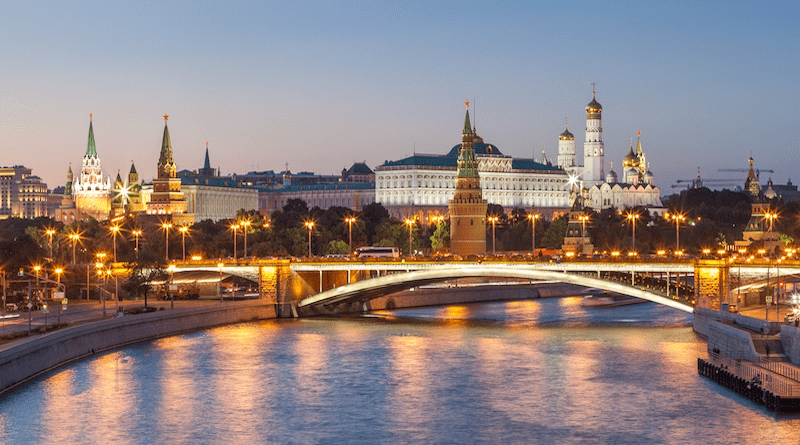
Moscow, Russia. Photo Credit: step-svetlana, Pixabay

By 

Most people see a market economy and totalitarianism as antithetical phenomena and believe that where one exists, the other cannot. But in fact, even in the darkest days of Stalin’s totalitarian system, a kind of market economy existed albeit not in its own name; and a similar arrangement now exists in Putin’s Russia, Dimitry Savvin says.


The editor of the Riga-based conservative Russian portal Harbin points to the case of Nikolay Pavlenko who created a private construction firm which operated in the USSR between 1948 and 1952, a case described by Russian historian Oleg Khlevnyuk in a 2023 Moscow book, The Corporation of Imposters (harbin.lv/algoritm-rynochnogo-pererozhdeniya).

What Pavlenko did was criminal “only” in the official Soviet understanding, Savvin says. In fact, what he did was to “establish a private construction enterprise masked as a military institution and over the course of several years successfully conduct commercial activity” in a totalitarian state.

As “phantasmagorical” as that may seem, he continues, “in essence, the mechanisms of coexistence with a totalitarian state and a private commercial enterprise which Pavlenko developed are in many respects typical” and were later employed “not only in the Soviet Union” but also in North Korea and since the 1990s by entrepreneurs in Russia.

Shortly after the German invasion of the USSR in 1941, Pavlenko, “suddenly discovered” that if one had the write papers and stamps, one could operate as a kind of covert free market player. He ran one such business during the war and established a second in 1948, when he was routinely sought out by officials because of his good and speedy work.

Eventually the party leadership caught up with him; and in 1952, hie operation was shut down and he was shot. But his operation, which was certainly far from unique, dis played four characteristics that help to explain why such things reemerged in some other communist countries, the post-Soviet USSR, and especially in Putin’s time.


First of all, Pavlenko’s organization was not political but commercial in the purest sense. Second, his organization mimicked state institutions; third, he did nothing criminal except for operating as a private firm in a system that denied that possibility; and fourth, if the leadership hadn’t been obsessed with defending socialism, what he did might have continued.

            “We see that little islands of market arrangements are natural for man and humanity” and emerge in communist and other totalitarian states, Savvin says, a pattern that requires us to recognize that with the proper masking, free market phenomena can and will exist under totalitarianism rather than being totally excluded by it.  

Savvin’s observation carries with it another implication that he doesn’t discuss but that is critical for those who want to overcome totalitarianism. In the 1990s, many Western leaders believed that if they got the economy right in the Russian Federation, totalitarianism would be precluded. But in fact that was not true.

Had such leaders focused more on democratic procedures and laws and worried somewhat less about the economy which they expected would do all the heavy lifting Russians and the world might have been spared the rise of the new totalitarianism under Vladimir Putin now.


Paul Goble

Paul Goble is a longtime specialist on ethnic and religious questions in Eurasia. Most recently, he was director of research and publications at the Azerbaijan Diplomatic Academy. Earlier, he served as vice dean for the social sciences and humanities at Audentes University in Tallinn and a senior research associate at the EuroCollege of the University of Tartu in Estonia. He has served in various capacities in the U.S. State Department, the Central Intelligence Agency and the International Broadcasting Bureau as well as at the Voice of America and Radio Free Europe/Radio Liberty and at the Carnegie Endowment for International Peace. Mr. Goble maintains the Window on Eurasia blog and can be contacted directly at paul.goble@gmail.com .


Russia’s Most Powerful Weapon: Lies – OpEd
 Spreading disinformation. Photo Credit: Phạm Nhật, Unsplash fake news propaganda

By 


The Kremlin’s Disinformation War  

The recent discovery of a massive, foreign-linked telecom network in New York—packed with over 100,000 SIM cards and capable of crippling cell service across the city—is a stark reminder of how modern conflict is waged. This new frontier of warfare operates not with bombs, but with invisible threats that target the very infrastructure of society.


Yevhenii Dorohanov, from the National Police of Ukraine, has a good idea of what may be the reason.

“The disinformation you see online,” he says, “is well-planned, carefully targeted, and meant to sow division and anger. The goal is to destroy the fabric of society.”

Dorohnov’s job is to track how the Kremlin pushes propaganda and also to counter the disinformation that has almost certainly reached you, likely without your knowing it.   Read on for an unusually candid look at how Russia’s disinformation machine works.

Russia’s Strategy: Divide and Distract

Here’s an example of how Russian information warfare works in Ukraine. The Russians post a false report on Facebook or Telegram that a village has been captured by Russian troops. Since the people in the area are avid for information, the report will spread to all the surrounding towns and villages within minutes.

 “The result is panic,” Dorohanov explained. “Civilians from the neighboring towns now believe that the front line of the war is about to come to their village. They flee from their area, with the result that supply chains freeze, and commanders waste time correcting what never happened. The disruption ripples across every layer of society.”


The same tactics work in the West, only the narratives differ. “Before elections,” he says, “Russian propagandists focus on spreading false information on corruption or misuse of funds, or anything that undermines people’s faith in their leaders.”

Yevgeniy didn’t comment on the assassination of Charlie Kirk but he did say that the purveyors of Russian disinformation will move instantly in cases of a national tragedy.  They’ll swing into action, spreading conspiracies and amplifying distress and anger. “The point isn’t persuasion,” he said. “The point is to create discord, anger, and chaos.”

I pressed him on the mechanics. “How,” I asked, “do Russian operatives spread their messages?” 

The answer is fake accounts on social media. They use SIM cards to create fake identities.  A SIM card, by the way, is the small chip in your smartphone that stores a mobile phone’s subscriber identity and allows it to connect to a cellular network. With a SIM card, you can open an account on Facebook or TikTok, or other social media.

The Russians use SIM cards on an industrial scale to create fake identities on social media. In a recent operation, Ukrainian police confiscated over 150,000 fraudulent SIM cards that were used to create fake identities on social media.  

“One SIM card can register multiple accounts,” Yevgeniy explained. “And with e-SIMs, which are contraband, entire farms of fake accounts can be created automatically. In the Russian-occupied areas of Ukraine, there’s even a market where thousands of ordinary people are recruited to buy SIMs in bulk.”

“The fake accounts are trained to act like humans,” Yevgeniy continued. “The fake accounts will do things like click on memes, leaving harmless comments. Facebook’s algorithms see them as real people. Then, when those same bots choose to like or share disinformation, the system thinks the disinformation is popular and pushes it to the top of your feed.”

It doesn’t take thousands of bots. Sometimes a few dozen, deployed strategically, are enough to convince the algorithm that a topic is trending. “The goal is to make disinformation unavoidable and everywhere,” he said.

The Russians who do this work are called “trolls,” and the areas where they work are called “troll farms.” We in the West don’t know how many troll farms Russia has, but estimates are that there are thousands of them, and they’re there to spread disinformation.  

Online, some pose as patriots, others as critics. It’s a full-time job, and it’s guided by intelligence services that study exactly which communities are most vulnerable, whether it’s people angry about police violence, fearful about immigration, or suspicious of elites. It’s a good guess that Russian troll farms are doing everything they can right now to get Americans at each other’s throats over Charlie Kirk’s memorial service.

The troll farms have a rapid response approach. As Dorohanov says, “When a major event breaks, they mobilize within minutes. Multiple narratives appear at once, each designed to inflame a different group.”

I asked how effective this kind of information campaign is compared to bombs. His answer surprised me. “In democracies, once citizens stop trusting their leaders-or each other-you don’t need to fire a shot.”

As our interview drew to a close, I asked what advice he would give to people in the West who want to protect themselves.

“Be skeptical,” he said. “Ask yourself: who benefits if I believe this? Check with reliable sources. And above all, don’t share unless you know it’s true.”

Yevgeniy’s final words lingered with me: “The danger isn’t that you’re lied to. The danger is that you stop believing in truth at all.”


Mitzi Perdue

Mitzi Perdue is a public policy advocate and co-founder of Mental Help Global.

Babis’s Czech Election Victory Poses Potential Headache For Brussels, Kyiv – Analysis

ANOTHER ANTI-EU FASCIST OLIGARCH


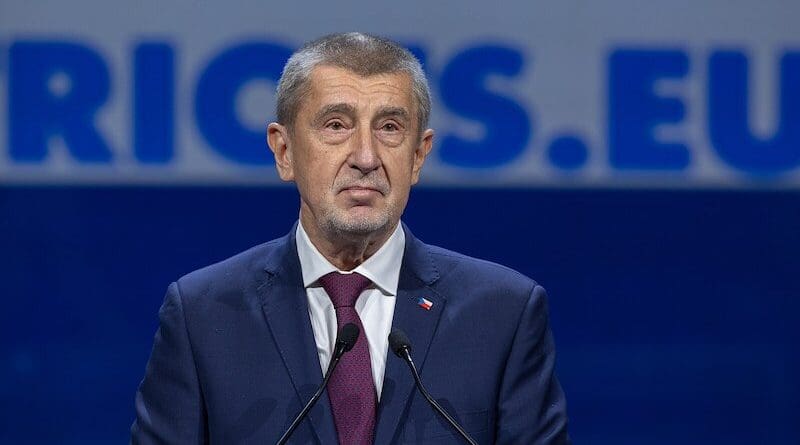
File photo of Czech Republic’s Andrej Babiš. Photo Credit: Vox España, Wikimedia Commons


October 6, 2025 
By RFE RL
By Rikard Jozwiak


The election victory this weekend of right-wing populist Andrej Babis risks turning the Czech Republic into another Central European problem child for Brussels after he campaigned on vows to slash support for Ukraine and confront the EU over immigration and environmental policies.

Babis, a former prime minister and billionaire sometimes referred to in the media as the Czech Donald Trump, easily took the most votes with his ANO (YES) party garnering 35 percent.

A triumphant Babis said after the results came in that he would seek a one-party minority government, though he would hold talks with two small parties including the far-right SPD that could give him a majority in parliament.

There is no panic yet in the corridors of power in Brussels with some officials assessing that Babis is “no Robert Fico or Viktor Orban.”

That’s a reference to the leaders of Slovakia and Hungary, who in recent years have caused the bloc all sorts of headaches by watering down or holding up sanctions on Russia, pausing both military aid, economic support, and EU accession negotiations for Ukraine and undermining the rule of law in the club in general.

Still, Orban was the first leader in Europe to congratulate Babis, who was Czech prime minister from December 2017 to December 2021.

Filip Nerad, who has followed Czech-EU politics for the think-tank Globsec, told RFE/RL that the Babis government will be more critical toward big EU initiatives such as the “Green deal” that aims to make the bloc climate neutral by 2050.

He also said Babis opposes the migration pact, which enters into force next year and is aimed to create a common EU asylum system.

Still, the 71-year-old leader may not totally align with Budapest and Bratislava, giving some hope Brussels may be able to work with Prague on some level.

“Overall the Czech Republic will be less in the mainstream in Brussels and cooperate more with Hungary and Slovakia, but don’t expect that Prague will follow Budapest and Bratislava on everything,” Nerad said.

The assumption, speaking to both European and Czech officials, that Babis indeed is different from his two Visegrad peers is based on three observations.

Firstly, the nature of his election win.

While his ANO party clearly came out on top, the three other populist parties — the SPD, Motoriste sobe (Motorists for Themselves) and Stacilo (Enough) — fared poorer than expected.

Stacilo failed to clear the 5 percent threshold to gain seats in parliament, removing a potential coalition partner for Babis.

While the Slovak-born Babis may aim to form a minority government of just ANO ministers with the political backing of the Motorists and SPD, analysts said talks between the parties are likely to prove difficult.

And his government might end up wobbly and weak. He might even eventually turn to the more mainstream parties in the outgoing government.

Second, while his rhetoric on the campaign trail often was anti-EU, he may be forced to move toward the middle to work along side pro-West President Petr Pavel, who is popular among Czechs and a likely counterbalance to Babis.

Pavel doesn’t have many levers of power, but one he does possess is approving cabinet ministers. And he’s already said he won’t accept any “anti-systemic” candidates if he is to sign-off on Babis’s government.

It is also worth noting that many other senior ANO officials such as Karel Havlicek and Adam Vojtech are considered moderate and even were well-regarded in Brussels during their previous stints as government ministers.

Finally, there is Babis himself, who despite having sharpened his criticism of the European Union in recent years and is in the same European political group that has challenged the mainstream direction of Europe’s policies, has practical reasons to remain Western-oriented.

His business interests in agriculture and media are linked to both Austria and Germany and dependent on generous EU funds.

He has sought close political ties with Italian Prime Minister Giorgia Meloni and with France. On top of that, he has promised to honor the Czech Republic’s commitment to NATO.

“We want to save Europe…and we are clearly pro-European and pro-NATO,” Babis told reporters after his election win.

Pavel Havlicek, who follows Czech-EU relations for the think tank AMO, notes that “Brussels most likely is looking at the Czech vote with skepticism and worry.”

But, he adds, “it will be important for Brussels to stay merit-based and judge Babis on his deeds and not necessarily his rhetoric” as he could prove to be “more pragmatic and willing to negotiate than Fico and Orban.”

One EU official, speaking to RFE/RL on condition of anonymity, said Babis’s election is likely to remove the Czechs from their leadership role in some parts of the bloc.

Concretely, the Czechs have spearheaded an “ammunition initiative” that has been key in getting millions of rounds of mainly desperately needed ammunition to Kyiv as it fights to repel invading Russian forces.

Babis has been a sharp critic of the initiative, though he has left the door open for it to fall under NATO auspices.


Czech soldiers in any possible future peace-keeping mission in Ukraine can likely be ruled out and weapons might not be transferred to the war as readily as before.

There are other projects driven by the Czechs that may quietly might die out too.

The country has been pushing Brussels for over a year to limit the movement of Russian diplomats in EU countries and to impose EU-wide sanctions on the current ruling regime in Georgia as it backslides on democratic reforms and veers toward Moscow.

Prague was also instrumental in creating a new sanctions framework for Russian hybrid action around the globe and encouraging Kosovo to apply for EU membership.Rikard Jozwiak is the Europe editor for RFE/RL in Prague, focusing on coverage of the European Union and NATO. He previously worked as RFE/RL’s Brussels correspondent, covering numerous international summits, European elections, and international court rulings. He has reported from most European capitals, as well as Central Asia.


RFE RL

RFE/RL journalists report the news in 21 countries where a free press is banned by the government or not fully established.


Babiš pledges loyalty to Europe as Czech coalition talks begin

HIS FINGERS WERE CROSSED


By Euronews
Published on 

Billionaire former prime minister Andrej Babiš won the Czech Republic's parliamentary elections according to partial results on Saturday.

Leader of the ANO movement and former Czech Prime Minister Andrej Babiš vowed loyalty to Europe as talks to form a coalition government began.

"We were very reliable partner. And we are patriots for Europe. And we want to win next elections because Europe is suffering," Babiš said in response to questions from reporters on Sunday.

On Saturday, Babiš' ANO party won parliamentary elections with 34.5% of the vote and 80 seats in a 200-member parliament. He soundly beat the Together conservative coalition of Prime Minister Petr Fiala, who received 23.2%

The major anti-migrant force, the Freedom and Direct Democracy party, got 7.9% while a right-wing group calling itself the Motorists collected 6.8%.

Babiš has said his aim was to form a one-party government and he will have to seek tolerance from the two groups. Electoral math dictates he will have to join forces with additional parties in order to reach a majority.

If he wants to govern alone, his minority Cabinet would need at least tacit support from the Freedom party and the Motorists to win a mandatory parliamentary confidence vote to rule.

Babiš joined forces with his friend, Hungary's Viktor Orbán, last year to create a new alliance in the European Parliament, the “Patriots for Europe,” to represent hard-right groups, a significant shift from the liberal Renew group that Babiš previously belonged to.

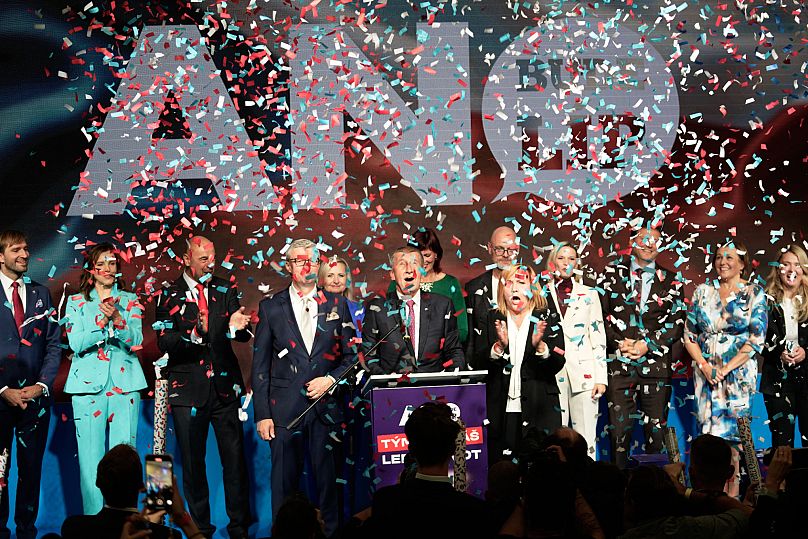
Chairman of opposition "ANO" (YES) movement Andrej Babis addresses the media after most of the votes were counted in the parliamentary elections in Prague, Oct. 4, 2025. AP Photo

The Patriots are united by anti-migrant rhetoric, a critical stance toward EU policies tackling climate change, and the protection of national sovereignty.

The Motorists, who are backed by former EU-skeptic President Václav Klaus, share these views while the Freedom party wants to lead the country out of the EU and NATO and plans to expel almost all of some 380,000 Ukrainian refugees from the country.

Babiš declared his party "clearly pro-European and pro-NATO" after his victory. At a press conference on Sunday, he said that "negative information is constantly being spread abroad, which I think is unfair."

"After all, I was prime minister, and our orientation was clear. I am simply concerned that Europe should function, because its economic development is not going in the right direction."

The billionaire campaigned on a platform of prioritising domestic issues over international ones such as Russia's war in Ukraine.

Babiš said he was planning to abandon an internationally recognised Czech initiative that acquires artillery shells for Ukraine on markets outside the EU.

“We don't like it,” Babiš said about that initiative. “We have a different view of it,” he added.

He also said he opposed a NATO commitment to significantly increase defence spending and criticised a deal to purchase 24 US F-35 fighter jets.

President Petr Pavel is scheduled to meet with Babiš and other party leaders on Sunday. The head of the strongest political force usually gets a chance from the president to form a new government.


Pakistan As A Consequence Of The Partition Of British India In 1947 – Analysis

India Pakistan Map South Asia Bangladesh

By 


Pakistan as a country

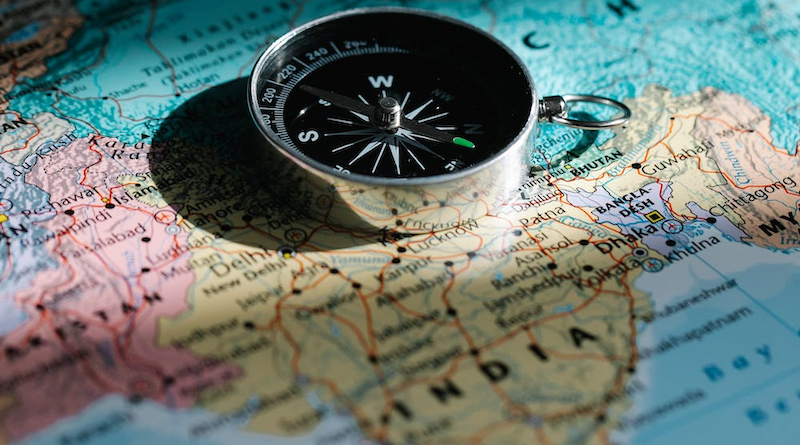
Pakistan is a country located in the northwest of the Indian sub-continent. It borders Iran on the west, Afghanistan on the north-west, China on the north-east, and India on the east, with the direct exit to the Arabian Sea. 


Physically, from the rest of Asia, Pakistan is separated in the north by the Hindu Kush, Karakoram, and the Himalaya high ring of mountain chains. Other mountain ranges are going down on the Pakistani western side to the Arabian Sea. Below them is the long and broad valley of the Indus River. The Province of the North-West Frontier contains the strategically very important Khyber Pass, which is very high. Toward the south is the Punjab plateau. It is watered by the tributaries of the Indus River, where wheat is grown. However, to the east is the Thar Desert. It is important to stress that between the Sind Desert, which covers part of the Indus delta, and Baluchistan in the western hills, there are large reserves of natural gas and, to a certain extent, oil, which is also found in Punjab.  

Pakistan has a predominantly agricultural economy. The focal export goods are raw and processed cotton, cotton fabrics, and rice. Other agricultural products include sugar cane, wheat, and maize. Livestock-raising is important too. Textiles are an important part of the Pakistani industry and are substantially contributing to Pakistani exports. Other industries include chemicals, cement production, fertilizer, and food processing. 

Population

The inhabitants of Pakistan are about 88% Pakistani Muslims, while there are about 11% Indians (Hindi). Of all the other ethnic groups, Baluchistanis are the most numerous. Baluchistan, as a province, is the least populated. With the partition of British India in 1947 into Pakistan and India, Pakistan received a predominantly Muslim population as well as a larger number of Indians, and vice versa. In the period from 1947 to 1950, population exchange between Pakistan and India, including ethnic cleansing, reached the scale of several million inhabitants in both directions. In Pakistan, the official language is Urdu (the Muslim variant of the Hindi language), which in 1972 replaced English as the official language. However, several other local/regional languages ​​are in use. In 1970, 80% of Pakistan’s inhabitants were illiterate, which caused a lack of professional and educated staff, and this was especially felt in the administration and economy. 

For the sake of more comprehensive education and the reduction of illiteracy, in September 1972, 176 private colleges were nationalized. There were three universities in Pakistan then. About 15% of the population lived in cities, while there were 10 cities with over 100,000 inhabitants. The capital of Pakistan was Rawalpindi from 1959, while today it is Islamabad. Until 1959, the largest city in Pakistan was Karachi. Today, Pakistan has a population of 251 million in an area of ​​881,913 sq. km. The GDP is 373 billion dollars, while the GDP per capita is almost 1500 dollars.

State organization

With the division of the British colony of (British) India into two states, India and Pakistan, on August 15th, 1947, Pakistan received the status of dominion, and according to the constitution of February 29th, 1956, it became a republic – the Islamic Republic of Pakistan, composed of two federal units: West and East Pakistan.


By the military coup of October 1958, the constitution was abolished, and a new one was adopted in March 1962. This new constitution provided for a federal system of government, a presidential system of government (the president must be a Muslim and is elected for 5 years), a National Assembly of 156 deputies (78 deputies from each of the two federal units) and two capital cities: Islamabad in West Pakistan (seat of the central government) and Dhaka in East Pakistan (seat of the National Assembly). However, the constitution from 1962 was repealed on March 25th, 1969, and only partially reinstated on April 4th, 1969. 

A turning point in Pakistan’s history was the separation of East Pakistan from West Pakistan in December 1971, when East Pakistan declared itself an independent state under the name Bangladesh. Thus, the new state of Pakistan included only the territory of the former West Pakistan. In January 1972, Pakistan left the British Commonwealth.

A modern history of Pakistan up to the Partition in 1947

Pakistan is a country that came under British colonial control in the first half of the 19th century, when it became part of (a Greater) British India. Interestingly, its name is derived from the word “pak” (ritually pure) in the Urdu language. In other words, it means “Land of the Pure”. However, it is as well as an acronym for its most important component peoples: Punjabis, Afghans, Kashmirs, Sindhis, and the peoples of Baluchistan.

At the beginning of the 20th century, there were only a several moves towards independence. One of the reasons was that those people living in the north in Punjab and Kashmir have been great beneficiaries of the British Raj, and occupied important posts in the administration and army of British India. It was among the more disadvantaged Muslim minority in north-central India that a Muslim cultural and political identity began to form, mainly due to several reformers and organizations like the Muslim League, a party founded on December 30th, 1906, in Dacca. Originally, the party fought for separate Muslim representation at all levels of government. The party claimed to represent the grievances and demands of the entire Muslim community within British India. 

Under its leader, Jinnah, the Muslim League issued several requirements for greater rights of Indian Muslims in a vast country of British India in which Muslims at that time accounted for some ¼ of the total population. Nevertheless, this political demand became all the more urgent with the increasing momentum of the Indian National Congress (the INC) under M. Gandhi, which made self-government or even independence under a Hindu-dominated government all but inevitable during the 1930s. In the first decades of its existence, the Muslim League pursued the dual aim of winning greater rights of self-government from the British colonial power and of winning greater rights for Muslims within such a British system. In order to achieve the first aim, the Muslim League cooperated with the INC, with which it allied itself in the Lucknow Pact of December 1916. However, the League was largely ineffective in the 1920s, when it claimed to have some 1.000 members in the whole of British India. This led to a decade in the 1930s of a major revision of the political goals of the Muslim League and the organization itself for the sake of appealing to the disparate Muslim community. 

The League, in 1930, addressed its annual conference to demand, for the first time, a separate Muslim state in the western portion of British India. This demand became gradually accepted, particularly after the Muslim League’s catastrophic showing in the 1937 elections, when it gained only 104 out of 489 Muslim seats. Therefore, its leader, Jinnah, now sought to broaden its popular base. On March 23rd, 1940, the requirement for a separate Muslim state became accepted as the official party’s policy in the coming years. It was known as the Pakistan Resolution or the Lahore Resolution, which, in fact, warned that if conditions for Muslims, especially in areas with a Muslim minority, did not improve, Muslims would lay claim to separate states as their homelands. The very idea of separate Muslim states referred to the western provinces of British India and East Bengal. The Muslim League in 1944 claimed over 2.000.000 members. The League got in the 1945−1946 elections 75% of the Muslim vote. Therefore, the Muslim League got a popular mandate for the creation of a separate Muslim state in the western regions of British India. This task was finally achieved by the creation of an independent Pakistan on August 15th, 1947. However, initially dominant in Pakistani politics, after the death of its party’s leader, Jinnah, the Muslim League lacked an integrative force and soon dissolved into various groups in the coming decade.  

All the countries of South Asia have been troubled by the special position of minorities and of regional groups. The Indian government’s attempt to foster Hindi was soon faced by demands for a new structure of states on linguistic lines, and from the 1950s onward, state boundaries have been rearranged. However, the linguistic feeling remained strong, especially in South India in Madras State, which was renamed Tamil Nadu. Before 1947, Pakistan formed part of British India, but following the British withdrawal from the Indian sub-continent in 1947, Pakistan was created as a separate state, comprising the territory to the north-east and north-west of ex-British India in which the population was predominantly Muslim. In Pakistan, linguistic and regional demands were initially resisted, and the separate provinces of West Pakistan were amalgamated as One Unit. However, regional loyalties forced a return to the old provinces, representing linguistic regions, in 1970. In East Pakistan, the strength of Bengal culture and grievances against the dominant West Pakistan elite fostered a demand for autonomy and later for independence.  

The Partition in 1947

For the reason that no agreement could be reached on a unified form of independence, a decision was required about the partition of the Indian sub-continent. The areas in the northwest with a Muslim majority were allowed to choose separation and the formation of a new state of Pakistan. The provinces of British India, which were affected, voted either through their elected representatives or by plebiscite. The rulers of the princely states within British India chose whether to join the independent state of India or where their boundaries marched with the new partition line, Pakistan. Punjab and Bengal were separately partitioned. Independence came to India and Pakistan in August 1947, to Burma in January 1948, and to Ceylon in February 1948. 

In India, it was fraught with problems from the beginning. The major part of the Indian sub-continent wished to remain united under the leadership of Nehru and the Indian National Congress. However, the explosive situation and the impossibility of securing agreement between Congress and the Muslim League led by Jinnah forced the hand of the Viceroy, Lord Mountbatten, and on August 14th, 1947, the sub-continent became partitioned and the new state of Pakistan (physically composed of two parts) came into existence. The princely states (500+) have been left to the individual decisions of their rulers, who could, in effect, join either India or Pakistan if their boundaries marched with the new partition lines.

For both India and Pakistan, the first question was the delimitation of frontiers between the new states. However, this question particularly affected the provinces of Punjab and Bengal, where the populations were so mixed that partition seemed the only feasible solution (like in Bosnia-Herzegovina in the 1990s). But the boundary award cut through areas which in Punjab were occupied by rich farmlands populated by Sikhs, Muslims, and Hindus as neighbors.   

Nevertheless, the partition of British India soon led to the high rank of violence between Hindus and Muslims as communal riots followed, and a two-way exodus started, with Muslims moving west and Sikhs and Hindus moving east, with more than 1 million people killed. Around 7.5 million Muslim refugees fled to both parts of Pakistan from India, and around 10 million Hindus and Sikhs left Pakistan for India. The partition of Bengal produced similar results. Overall, some 500.000 people lost their lives. Muhammad Ali Jinnah, President of the Muslim League, became Pakistan’s first governor-general (President). The new state was composed of the western provinces of Baluchistan, Sind, Punjab, and North-West Frontier (or known as West Pakistan). Separated by Indian territory was the eastern half of Bengal, which also belonged to the newly proclaimed independent Pakistan (or known as East Pakistan).

In addition to the resettlement of the refugees, the governments had to integrate the 500+ princely states. Most princes were persuaded to accede, promptly, to either India or Pakistan. Hyderabad resisted and became absorbed only after the action by the security forces (police). The ruler of Kashmir as well as hesitated, and an invasion of tribesmen from the Pakistani North West Frontier Province followed. The Maharaja then acceded to India, subject to a plebiscite of the Kashmir people, but Pakistan supported the tribal invaders. The situation was only stabilized by the mediation of the UN in 1949. 

The new state of Pakistan was, from the very beginning, confronted by plenty of problems. The most immediate of these was extensive migration (around 17.5 million people), as a consequence of the partition of British India into a Hindu and Muslim state. In addition, Pakistan contested its borders, as it competed with India over control of Kashmir. This confrontation has led to hostile relations with India up to today and the conduct of three Indo-Pakistani Wars. Moreover, Pakistan suffered as well from the tension between the majority of the population living in East Pakistan and the important posts in government, administration, and the military being occupied by officials from the wealthier and better-educated West Pakistan. These problems have been compounded by the total lack of any tradition or history as a single, unitary state. On one hand, East Pakistan (or East Bengal) was relatively homogeneous, but on the other hand, West Pakistan was composed of regions with widely different economies and ethnicities and with different degrees of religious observance. Some tribes of the North-West Frontier had devout observance of Islam and a history of autonomy within the former British colonial system. They have been contrasted with the more secular elite of Punjab, which had been well integrated into the British colonial administration.   

A contemporary history of Pakistan since the Partition in 1947 up to 9/11

The problem of finding a compromise that would create a viable, integrated, and constitutional entity bedeviled Pakistan during its existence. Pakistan continued to be formally ruled by the 1935 Government of India Act until 1956. The country’s liberal constitution became opposed by the fundamentalist Muslims, and in 1951, the Prime Minister Liaqat Ali Khan was assassinated by an Afghan fundamentalist. In 1954, a state of emergency was declared, and a new constitution was adopted in 1956. However, the new political settlement failed to stabilize the country sufficiently to prevent the 1958 army coup, led by Ayub Khan. It was an attempt to adopt a multiparty system, but it failed, and consequently, Ayub Khan imposed martial law in 1958. He, in fact, abolished the recently established democracy but without much resistance, and devised a second constitution in 1962. 

On the other hand, Ayub Khan’s decade of power produced economic growth, followed, however, by political resentment as the two parts of the Pakistani state have been physically separated by a thousand kilometers of the territory of the independent and hostile Republic of India. Allegations by the Bengalis in East Pakistan against West Pakistan’s disproportionate share of the state’s assets led to demands by the Awami League, led by Mujibur Rahman, for regional autonomy. Nonetheless, in the following civil war in 1971, the Bengali dissidents defeated the Pakistani army, with help from India. It resulted in the establishment of the new state of Bangladesh in the same year. 

In 1965, Pakistan attempted to infiltrate troops into Kashmir. In the fighting which ensued, India made some gains, but in the agreement afterward reached in Tashkent under Soviet auspices, both countries agreed to return to the status quo. His precipitation of a costly and unsuccessful war with India over Kashmir in 1965, and increasing economic difficulties in Pakistan, finally led to his resignation in 1969. Relations between Pakistan and India continued to be tense, however, and rapidly worsened in 1971 when Pakistani military President, Yahya Khan, cruelly repressed the demands for autonomy in East Pakistan (East Bengal, later Bangladesh), which led to 10 million refugees crossing over into India. 

In 1970, the first-ever general democratic election has been organized, which brought to power in Pakistan Zulfikar Ali Bhutto, leader of the Pakistan People’s Party. However, these elections were won by the Awami League in East Pakistan. Therefore, the West Pakistani political establishment, led by Yahya Khan, refused to hand over power and sent military troops to secure control in East Pakistan. This action caused a short but extremely violent civil war, and led, after Indian military intervention in December 1971, which supported the Bangladesh guerrilla with powerful military forces, which defeated the Pakistani army within two weeks, to the independence of East Pakistan as Bangladesh. Zulfikar Bhutto, as the new President since 1971, created a populist and socialist regime. His program of nationalization, public works, and independence from US financial help failed to overcome the negative effects of the oil price shock of 1973, leading Pakistan into an economic crisis. He introduced constitutional, social, and economic reforms, but in 1977 was deposed in an army coup led by Zia-ul-Haq and later executed.   

Zia-ul-Haq improved Pakistani relations with the USA after the Soviet invasion of neighboring Afghanistan in 1979, when Pakistan came to host up to three million Afghan refugees, followed by bases for Afghan guerrillas. US military and civilian assistance led to high economic growth in the 1980s. However, Zia-ul-Haq died in a 1988 plane crash. His successor, Ishaq Khan, supervised the transition back to democracy, with the 1988 elections won by Zulfikar Ali Bhutto’s daughter, Benazir Bhutto. She failed to establish control over the country and was dismissed by Khan in 1990 on charges of corruption. However, she became re-elected in 1993, but once again struggled to maintain control in a country plagued by crime, the international drugs trade, and the growing assertiveness of some of the Pakistani provinces (Baluchistan and Sind) and tribes (North West Frontier Province). 

Benazir Bhutto became dismissed by President Leghari once again on formal charges of corruption and mismanagement in 1996 and was finally succeeded by Mian Muhammad Nawaz Sharif (leader of the Islamic Democratic Alliance) in 1997, who proceeded to strengthen his position by changing the constitution, which limited the power of the Prime Minister (the PM). Nevertheless, he as well as confronted the judiciary, which he sought to conciliate towards his policies. Ultimately, in 1999, he sought to introduce Islamic law in Pakistan, but this attempt led to widespread demonstrations, while at the same time, the deteriorating economic situation had already eroded Sharif’s popular support, and for the reason of his pro-Western position during the First Gulf War/Desert Storm, 1990‒1991. His order to the army to withdraw forces from Kashmir and his dismissal of Musharraf led to a successful army coup, headed by Musharraf himself, who suspended the constitution, moved to put Pakistani political and judicial institutions under military control, and tried to stabilize the economy to placate international creditors. After establishing control, Musharraf’s regime became more liberal. However, it happened only after 9/11 (in 2001) that his regime became welcomed in the Western international arena. His decisive support of the US War on Terrorism brought great foreign policy benefits and enabled him to gain very much-needed Western international loans. Nevertheless, his pro-US stance was criticized by many Islamic fundamentalists and radicals in Pakistan, so that needed to temper by a moderate stance towards radical Islamist groups in Kashmir. In 1998, Pakistan carried out a series of underground nuclear tests in response to a similar program by the focal regional enemy – India. 

The political situation in Pakistan remained turbulent, including intra-ethnic violence in Karachi, followed by national economic problems. Pakistani industrial expansion emphasized the private sector and consumer goods. Nonetheless, unemployment rose more rapidly than new production, and up to 70% of the population is still dependent on agriculture. Both governments of India and Pakistan have been putting greater emphasis on better yields from the soil. Though the rate of growth remains slow, both India and Pakistan have succeeded in attaining self-sufficiency in food. Yet some 40% of the rural population remains undernourished because their income is very low.  

Finally, from 1947 up to 1971, there were three Pakistani-Indian Wars: the First (1947‒1948); the Second (September 1st‒23rd, 1965); and the Third (December 3rd‒16th, 1971). These Pakistani-Indian wars were the result of unresolved issues, but especially border-territorial ones, between Pakistan and India that appeared after the British division of the Indian subcontinent, i.e., of British India, in August 1947 between these two states. As a consequence of the Third War, Pakistan lost its eastern territories, on which the new state of Bangladesh was formed. After the war, the general balance of power on the Indian subcontinent changed in India’s favour. India, also improved its strategic and geopolitical position. Nevertheless, the region of Kashmir has been left to be he apple of discord between Pakistan and India to our da

Dr. Vladislav B. Sotirovic is an ex-university professor and a Research Fellow at the Center for Geostrategic Studies in Belgrade, Serbia.

Venezuela accuses US of flying combat jets near its waters

Venezuela accuses US of flying combat jets near its waters
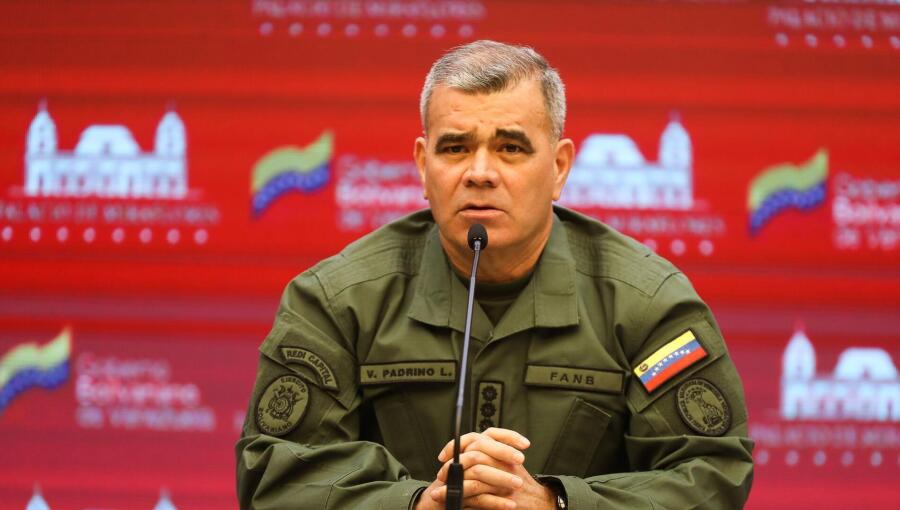
Venezuelan Defense Minister Padrino Lopez warned Washington against military attacks against his country. "Don't make that mistake," he said. / bne IntelliNews
By bnl editorial staff October 3, 2025

Venezuelan authorities have condemned what they describe as an unauthorised US military operation near the country's Caribbean waters, with officials in Caracas calling the incident a serious breach of international aviation law.

Defence Minister Vladimir Padrino said on October 2 that radar systems had tracked five American F-35 combat aircraft at high altitude approximately 75 kilometres off earlier the same day.

"They are combat aircraft. Combat aircraft that US imperialism has dared to approach the Venezuelan coast," Padrino said in remarks broadcast on state television.

The incident comes just days after Venezuela activated extraordinary constitutional measures granting President Nicolás Maduro sweeping security powers amid escalating tensions with Washington over an American military build-up in the Caribbean.

Caracas invoked a "State of External Commotion" on September 29, empowering Maduro to mobilise armed forces nationwide and assert control over critical infrastructure, including the vital oil industry. The emergency decree, valid for 90 days with a possible extension, followed reports that the Pentagon may be considering military strikes inside Venezuela targeting alleged drug-trafficking operations.

Foreign Minister Yván Gil said on social media that the jet incursion "constitutes a provocation that threatens national sovereignty" and violates international law and the Convention on International Civil Aviation. He added that the operation "put at risk" aviation safety in the Caribbean Sea.

Venezuelan officials said the jets were flying at 35,000 feet at speeds of 400 knots when they were picked up by monitoring equipment covering the Maiquetía flight information region, which extends northward over the Caribbean into international airspace.

According to Padrino, pilots aboard a commercial aircraft also informed air traffic control that they had visually identified the American warplanes during the incident.

The confrontation marks the latest flashpoint between the two governments following Washington's decision to increase its naval footprint in Caribbean waters. Whilst American officials justify the deployment as part of anti-narcotics efforts, Venezuelan authorities contend it represents an attempt to unseat the Chavista regime.

In recent operations, US forces have attacked at least four vessels, resulting in the deaths of more than a dozen individuals identified as suspected drug traffickers, though Washington has not released evidence to substantiate the characterisations.

The Trump administration has repeatedly accused Maduro of leading the alleged "Cartel de los Soles" criminal group and collaborating with Mexican cartels to supply cocaine to the United States. In August, Washington doubled its bounty for information leading to his arrest to $50mn.

Padrino described the F-35 deployment as unprecedented, noting the aircraft are based in Puerto Rico.

According to the Pentagon, at least five F-35s were sent to Puerto Rico in mid-September. White House sources cited by CNN previously indicated plans to station 10 of the advanced fighters on the island, where US Marine units have been practising amphibious assault techniques.

The Venezuelan defence minister issued a stark warning to American officials. "Don't make that mistake," he said, adding, "We are watching you. And I want you to know that this does not intimidate us."

Venezuelan military forces have already begun conducting training exercises with civilian militia members in preparation for what officials describe as a possible American invasion. 

Caracas announced plans to lodge formal protests with multiple international bodies, including the UN Security Council, the International Civil Aviation Organisation, and the Community of Latin American and Caribbean States.

In its official statement, Venezuela demanded that US Defence Secretary Peter Hegseth halt what it termed dangerous actions that threaten regional peace in Latin America and the Caribbean.

Venezuelan forces will maintain heightened readiness to protect the nation's airspace and territorial waters, the defence ministry said.

Despite the military brinkmanship, Maduro has privately sought reconciliation with the Trump administration. In a letter dated September 6 to Special Envoy Richard Grenell, the Venezuelan leader called for a meeting with the US diplomat and denied involvement in drug trafficking, calling the allegations "fake news" and proposing "direct and frank conversations."

Grenell, who has met with Maduro several times this year to negotiate prisoner exchanges and migrant repatriations, has publicly advocated for de-escalation. However, influential administration hawks spearheaded by Secretary of State Marco Rubio reject dialogue and are said to be pushing for regime change, potentially through military means.