Monday, October 06, 2025


Researchers At University Of Agder Call For Better Protection Of Europe’s Last Flat Oysters


Flat oysters. Photo Credit: University of Agder

By 

Researchers at UiA warn that Europe’s last healthy populations of flat oysters are at risk. They are now calling for better protection to safeguard these stocks.

“Flat oysters form reefs that serve as vital habitats for other species. In Europe, these reefs have nearly vanished. We still have intact populations in Agder and Rogaland, so we must protect them better,” says UiA doctoral candidate Molly Reamon.


Alongside Johanna Marcussen and Professor Ane Timenes Laugen from UiA, Reamon has submitted their consultative response to the Directorate of Fisheries’ proposal to protect flat oysters in Norway. The researchers stress that Norway and Sweden are home to Europe’s last healthy populations, so Norway has a unique international responsibility to conserve them.

Survey shows unique oyster findings

UiA researchers conducted the first major survey of flat oysters in Norway from 2020 to 2022, looking at 373 locations. Flat oysters were found at just one in three sites, and only one per cent of locations had dense populations.

Reamon explains that these findings show that dense populations are rare and vulnerable.

“Although flat oysters were reclassified from ‘near threatened’ to ‘least concern’ on the Norwegian red list in 2021, strong protection is needed. Particularly because the classification is based on weak data. We believe the precautionary principle should apply,” she says.

Researchers recommend temporary harvesting ban

UiA researchers suggest a national or regional harvesting ban for three to ten years. This should be coupled with research monitoring flat oyster populations. They emphasise the potential risk of unregulated recreational fishing. Flat oysters are also being harvested for restoration projects in Europe.

Johanna Marcussen researches recreational fishing. She explains that flat oysters are often mistakenly collected when people clear Pacific oysters.

“This shows that we need stricter rules and more knowledge,” she says.


Protection must be strengthened – not weakened

The researchers explain that a fishing ban in the Oslofjord is an essential first step in protecting vulnerable ecosystems, such as flat oyster beds. However, they find the Directorate of Fisheries’ proposal for Agder and Rogaland too weak.

“A partial ban in two small areas isn’t enough. It doesn’t ensure connectivity between populations in Agder and Rogaland. The researchers also warn that the proposal might actually weaken current protections in Sørlandsleia,” says Ane Timenes Laugen, professor of marine ecology at UiA.

“As stewards of Europe’s last healthy populations, increasing harvesting now would be a step in the wrong direction,” she adds.

Need for better cooperation

The researchers call for closer cooperation between the Directorate of Fisheries, the Norwegian Environment Agency and other authorities to ensure holistic management of coastal ecosystems. Under the OSPAR agreement, Norway has pledged to protect flat oyster beds.

“Strengthened protection is crucial for keeping flat oysters as a key species in Norwegian coastal areas and for safeguarding Europe’s last disease-free populations for the future,” says Timenes Laugen.


Why The West Fights Against China’s Green Technology – OpEd

sustainable sustainability nature climate

By 


“This ‘climate change,’ it’s the greatest con job ever perpetrated on the world, in my opinion,”  — US President Donald Trump, UN General Assembly speech, September 23, 2025


Western commentators often point to what they claim to be the key, if not foundational, role that Western nations have played in setting up a new green-based world order. ​This is because the post-WWII international system has been dominated by institutions like the UN, World Bank, and IMF, which were largely designed by Western powers. Although not initially “green,” these institutions have been the main vehicles through which global environmental and climate governance has developed.

It is also indisputable that the West is primarily responsible for the environmental and climate change challenges found in the world. The development and dominance of the West was built on systems of exploitation of natural resources and raw materials following the advent of the Industrial Revolution in the mid nineteenth century. This in turn ushered in the new era of colonialism which exploited the land, natural resources and labour of the South in Asia, Africa and Latin America.

Today we have to deal with the aftermath of this continuing epoch of resource exploitation and environmental degradation; and its impact on ecosystems and human society. These repercussions manifest as habitat destruction and air and water pollution, while their global reach can be seen in climate change effects including sea level rise, the retreat of glaciers and ice caps, and increased natural disasters. 

The West’s progress and prosperity built on carbon-intensive development and the unprecedented enhanced exploitation of other countries means that they have a moral and historical obligation to lead the transition to a green order. 

But there is also no dispute that the transition to a truly “green world order” has to be a global collective challenge and action problem that requires the full commitment of all nations including emerging economic powers.


West Rebuffs China’s Green Technology 

Among countries in the global South seen as key to the emergence of the new green world order,  China has received special attention due to its position as the second largest economy by nominal GDP and largest by purchasing power parity (PPP), making it a major player in industry, trade and innovation. The fact that China is a major contributor to global warming as well as a world leader in manufacturing and deploying green technology like solar panels, wind turbines, and electric vehicles is undeniable. 

However, its positive contributions continue to be framed negatively or downplayed in Western media and political discourse. .

These are the geopolitical reasons why China’s green technology contribution is not highlighted and appreciated :

  • Strategic Competition and Rivalry: The overarching context is the US-China strategic competition. In this framework, technology leadership is not just an economic issue but perceived as a core national security interest.
  • Zero-Sum Game Perception: The West, led by the US, often views technological dominance as a zero-sum game. If China leads in green tech, it means the West is falling behind. Acknowledging China’s success is seen as conceding a critical strategic advantage in the industry of the future.
  • Control over Supply Chains: Green technology is essential for energy independence. Relying on China for solar panels, batteries, and critical minerals is seen as a vulnerability. Highlighting China’s dominance underscores this dependency, which is a politically defeatist narrative for Western policymakers.
  • National Security Threat: Chinese technology, particularly from companies like Huawei and DJI, is often labeled a security risk. This attempt to “securitization” of technology taints the entire sector, making it difficult to separate legitimate security concerns from competitive economic advantages.
  •  “Overcapacity” Narrative:  The US and EU have accused China of creating “overcapacity” in green tech, arguing that massive state subsidies lead to overproduction. They claim this floods global markets with cheap products, unfairly undermining and bankrupting Western companies. This framing paints China not as a contributor but as a market disruptor even though state policies of support to industries have been pioneered by the West and continue to be ongoing. 

China as Alternative to Western Ideological Model 

What is also evident in the new green world order is that China’s success challenges the Western ideological model.

  • State Capitalism vs. Free Markets: China’s model, which involves significant state planning, subsidies, and support for national champions, is viewed as antithetical to the Western ideal of free-market competition, though the latter is only practiced in rhetoric. Acknowledging that this model can produce world-leading, innovative technology would legitimize it, which is ideologically unpalatable to many Western leaders.
  • The “China Threat” Narrative: For decades, a powerful narrative has portrayed China as an authoritarian, and now existential, threat. It is cognitively dissonant to simultaneously portray a country as a threat and a positive contributor to a global public good like climate change. The “threat” narrative is so deeply entrenched that it erases the “contributor” narrative.

Control of Global Media and Narrative Platforms

The institutions that shape global public opinion are largely Western-dominated.

  • Agenda-Setting by Western Media: Major global news agencies (Reuters, AP), newspapers (NYT, FT, The Guardian), and broadcasters (BBC, CNN) are based in the West. Their reporting reflects Western perspectives, priorities, and geopolitical bias. Stories about China’s green tech are often framed through the lens of job losses in the West, alleged intellectual property theft, or overcapacity, rather than its net positive impact on climate change cvand global decarbonization.
  • Think Tanks and Academia: While not monolithic, influential think tanks in Washington D.C., Brussels, and elsewhere are often funded by and focused on Western interests. Their reports and policy briefs emphasize the challenges and threats posed by China’s rise, which filters into media and political discourse.

Conclusion

The under-highlighting of China’s green technology contribution is not an oversight. It is an outcome of the current geopolitical landscape as defined by the West. It is a classic case where objective facts (China’s massive production and deployment of green tech) are filtered through a powerful subjective lens of strategic competition, ideological difference, and narrative control.

For the West, acknowledging China’s achievements in this critical field would mean conceding to a rival’s superior strategy, legitimizing a different governance model, and admitting a loss of technological leadership. All of these are politically unacceptable.  Hence, the narrative focuses on the threat posed by China’s green tech dominance rather than its contribution to the global struggle to ensure a more sustainable world through a new green world order.  


Lim Teck Ghee

Lim Teck Ghee PhD is a Malaysian economic historian, policy analyst and public intellectual whose career has straddled academia, civil society organisations and international development agencies. He has a regular column, Another Take, in The Sun, a Malaysian daily; and is author of Challenging the Status Quo in Malaysia.

China’s Occupation Of Tibet Is Not Just Illegal: It’s An Environmental And Security Catastrophe In The Making – OpEd

Tibet Buddhist Monk Buddhism Meditation Enlightenment

By 

As 7 October marks seventy-five years since China’s invasion of Tibet, the consequences of that act of aggression continue to unfold across Asia. What began in 1950 as Mao Zedong’s military conquest has hardened into a decades-long occupation—one that threatens not only the cultural survival of the Tibetan people, but also the region’s strategic stability and fragile Himalayan ecology.


In October 1950, the People’s Liberation Army crossed the Jinsha River under Mao’s command, claiming to “liberate” Tibet from feudalism. In reality, it was the beginning of an illegal annexation that dismantled a sovereign nation, redrew South Asia’s strategic geography, and set off environmental changes whose effects now extend far beyond the plateau.

However, relations soured, and by 1954, discontent among Tibetans grew, leading to armed resistance. A brutal crackdown by Chinese forces followed the uprising in 1959, resulting in significant human rights abuses, including the destruction of monasteries and forced relocation of Tibetans. The Chinese government’s efforts to modernise Tibet involved substantial infrastructural changes, yet these often benefited Han Chinese settlers disproportionately, leaving many native Tibetans in poverty.

The geopolitical significance of Tibet, particularly regarding its proximity to sensitive areas like Sinkiang and India, influenced China’s actions. The resistance to Chinese rule persisted, highlighted by the Dalai Lama’s exile and international condemnation of China’s policies in Tibet. The Tibetan struggle has drawn global attention, emphasising issues of cultural preservation, human rights, and environmental impact.

The forceful incorporation of Tibet by the People’s Republic of China (PRC) violated international norms against the use of force for territorial acquisition. The invasion ended Tibet’s decades of de facto independence and subjugated its government through a treaty signed under duress.

The invasion directly violated the fundamental international norm that prohibits the use of force against another state. While China claims historical ties to the region, most international legal scholars agree that Tibet had the status of a sovereign state in 1950, making the military takeover an act of aggression.


After capturing eastern Tibet, the PRC forced Tibetan delegates to sign the Seventeen-Point Agreement in Beijing in May 1951. This agreement officially made Tibet a part of China. However, many scholars and the Tibetan government-in-exile consider the treaty invalid because it was signed under duress, and the Tibetan delegates lacked the authority to sign it. The Dalai Lama later repudiated the agreement.

The annexation also ran contrary to the principles of the newly formed United Nations. The UN Charter, established in 1945, bans the use or threat of force by member states for territorial gain. By invading Tibet in 1950, the PRC committed an internationally wrongful act from which no rights could be derived.

The PRC has long referred to the events of 1950–1951 as the “Peaceful Liberation of Tibet,” framed as a reclamation of its rightful territory and an effort to free Tibetans from a feudal system. This narrative is heavily contested, especially in light of the invasion of eastern Tibet and the human rights abuses that followed. China justifies its claim by citing historical relationships between ancient Chinese and Tibetan rulers.

While many in the international community reacted with shock to the invasion, Tibet was largely diplomatically isolated and received little foreign support. The global context of the Cold War and a desire by nations like India and the United States not to jeopardize relations with China limited official responses.

The UN General Assembly discussed the issue in the late 1950s and 1960s, passing resolutions condemning China’s human rights violations.

The International Commission of Jurists (ICJ) found that China had violated the terms of the Seventeen-Point Agreement and committed human rights abuses.

Following a brutal crackdown on a 1959 Tibetan uprising, the 14th Dalai Lama and tens of thousands of Tibetans fled into exile. The Tibetan government-in-exile continues to maintain that Tibet is an independent state under illegal occupation.

This illegal occupation of the Tibet Autonomous Region (TAR) has also led to rapid militarisation of the region. A major aspect of this militarization is the expansion of dual-use infrastructure and troop deployment, which enhance China’s strategic capabilities. China’s military build-up is primarily seen as a threat to India, particularly along the disputed Himalayan border known as the Line of Actual Control (LAC).

India has still not forgotten the 1962 humiliation. But it has given a bloody nose to the PLA whenever it has indulged in any misadventure. In 1967 India and the PLA soldiers clashed in Nathu La and Cho La along the Sikkim-Tibet border. Triggered by India’s attempt to demarcate the border with a barbed wire fence, the conflict escalated into artillery duels and intense machine gun fire, resulting in significant casualties on both sides. India ultimately prevailed, inflicting heavy losses on the Chinese forces and establishing a period of peace in the region for a long period.    

Again in 2020, the armies of the two countries clashed on Galwan Valley in Ladakh, where both sides suffered heavy casualties. The clashes intensified China’s determination to strengthen its military control over high-altitude areas and infrastructure. In response, India has also expanded its own military infrastructure in the region.

Beijing’s 14th Five-Year Plan includes an $11.2 billion investment in TAR infrastructure by 2035, with major strategic implications for India. Construction of new and upgraded airports, including military and dual-use facilities, with some located close to the India-China border. Expansion of all-weather road and rail networks is happening to facilitate the rapid movement of troops and heavy equipment.

China’s military construction and infrastructure development threaten the Himalayan glaciers that feed major rivers in South and Southeast Asia, raising concerns about future water shortages for downstream populations. The construction of dams on rivers like the Yarlung Tsangpo (Brahmaputra) could also threaten India and other riparian states.

Threats to the local environment

In August 2025, the Institute for Security and Development Policy (ISDP) released a report on the ecological damage caused by China’s military expansion in Tibet. Military construction and movement of troops are accelerating the thawing of permafrost on the Tibetan Plateau, which contains vast amounts of sequestered carbon. This process releases greenhouse gases and disrupts the region’s hydrological systems.

The report noted that extensive construction of roads, airstrips, and bases has led to land degradation and damage to glaciers. This disrupts local biodiversity and affects water resources.

China’s illegal occupation of Tibet is not only a threat to regional security but also to the ecology. Unless the international community intervenes and puts pressure on China to stop the anarchy and environmental destruction in Tibet, there will be destruction of unimaginable proportions. A region with almost half of the world’s population can’t afford destruction of such dangerous proportions.



Ashu Mann

Ashu Mann is an Associate Fellow at the Centre for Land Warfare Studies. He was awarded the Vice Chief of the Army Staff Commendation card on Army Day 2025. He is pursuing a PhD from Amity University, Noida, in Defence and Strategic Studies. His research focuses include the India-China territorial dispute, great power rivalry, and Chinese foreign policy.
The Japanification Of China – OpEd

TWO COMPETING FORMS OF STATE CAPITALI$M


October 6, 2025 
Liberty Nation
By Andew Moran

No country for old yen, or big trouble in little China? While the world’s two economic powerhouses can share movie title puns, they are also experiencing comparable economic conditions, albeit three decades apart. In the aftermath of the pandemic, there have been increasing signs of the Japanification of China, which could threaten not only Beijing’s influence but also President Donald Trump’s efforts to rebalance international trade.

Japanification in the 1990s

The 1990s will forever be etched in time as the “lost decade” for Japan.

During this period, which coincided with the Asian Crisis, Tokyo suffered a tsunami of economic challenges, including deflation, slowing growth, near-zero interest rates, soaring public debt, weak consumer demand, and zombie companies (indebted businesses that survived on cheap credit). Back then, Japan also grappled with an aging population and a shrinking workforce, issues that remain prevalent in today’s economic climate.

Economists have identified several contributing factors to the resulting mess, including the collapse of asset prices, financial institutions exposed to bad loans, and misguided fiscal and monetary policies. The chaos, of course, forced consumers to close their wallets and businesses to refrain from investing.

Has Japan ever fully recovered from this horrendous period? Not quite. Fast forward to the present, and Japan is facing a plethora of old and new problems, primarily inflation, rising interest rates, and an aging population. The annual inflation rate is hovering around 3%, long-term government bond yields are above 2%, and the Bank of Japan has raised interest rates to their highest levels in nearly two decades. Additionally, almost one-third of Japan’s population consists of individuals aged 65 and older, a result of a combination of declining birth rates and increasing life expectancy.

While Japanese officials have become less gloomy about the nation’s prospects, the damage has been done, and its ranking as an economic superpower has gradually slipped. Germany is now the world’s third-largest economy, and Japan is struggling against India for number four.

In 2025, an economic malaise – a Japanification, if you will – is incrementally seeping into China.

No Yuan Saw It Coming

Will the 2020s be the lost decade for China? Depending on who is being asked, some will say that China is mirroring Japan’s 1990s, while others will pontificate that the nation’s problems differ from what unfolded in Tokyo.

Concerns about price deflation have been mounting in China amid deteriorating consumer demand, with monthly rates coming in below 0%. Moreover, the producer price index, which measures prices paid for goods and services by businesses early in the supply chain, has been stuck in deflation since September 2022.

The People’s Bank of China and the central government have continually eased monetary and fiscal policy, with officials accelerating their efforts amid trade strife with the United States. From Beijing’s stimulus tools to the central bank’s interest rate cuts and reserve requirement reductions, policymakers are throwing everything but the kitchen sink to support the economy.

Red ink has flooded the country. While the central government maintains a mountain of IOUs, it is the local governments that have a noose hanging around their necks. Beijing has stated that it will not bail them out, which poses a challenge because the appetite for muni-bonds has severely eroded. Like Japan decades ago, China has long suffered from a zombie apocalypse, with local firms struggling to stay afloat and barely surviving. In many cases, these companies are acquired by large corporations at the government’s behest.

On the real estate front, who could ever forget about Evergrande? The collapse of China’s property market – both residential and commercial – continues to impact the country’s growth prospects.

Finally, there’s an issue afflicting the rest of the world: a shrinking population. In recent years, China has reversed its policies aimed at containing the population, whether by abandoning its one-child policy or implementing measures to stimulate the birth rate. China’s population numbers reached their zenith in 2021 and have been steadily declining, emulating Japan’s aging crisis.

As the saying goes, if China catches a cold, the global economy contracts pneumonia. It makes sense, considering that Beijing accounts for approximately one-third of the worldwide GDP growth. Emerging markets, particularly commodity exporters, rely heavily on China’s demand for raw materials. Should investors lose confidence in China, a collapse in equities would materialize, triggering capital flight and market instability.

President Trump’s vision for the international marketplace would also be harmed.

Trumponomics 2.0 at Risk

A chief objective behind the president’s tariff agenda is to rebalance global trade, transforming the United States into a lead producer and the rest of the world, including China, into a consumer. If Chinese consumers are not buying anything now, then why would they if their economy slows or contracts? Treasury Secretary Scott Bessent even stated during his confirmation hearing earlier this year that China is in a recession, if not a depression.

This is a double-edged sword, of course. On the one hand, the Japanification of China would make officials more vulnerable, potentially forcing them to accept trade terms that favor the United States. On the other hand, if the lost decade – or decades – come to China, it would disrupt the global economy. At this point, the only thing economic observers and investors can do is wait, hold their families close, and determine if the 1990s will be repeated in the 2020s or 2030s.


About the author: Economics Editor at LibertyNation.com. Andrew has written extensively on economics, business, and political subjects for the last decade. He also writes about economics at The Epoch Times and financial markets at FX Daily Report. He is the author of “The War on Cash.” You can learn more at AndrewMoran.net.

Source: This article was published by Liberty Nation

Liberty Nation is a project of One Generation Away, a non-profit 501(c)(3) organization. Liberty Nation is true to the OneGen organizational mission: to apply America’s founding principles to the issues of today. Liberty Nation does not endorse political candidates, nor endorse specific legislation, but offers commentary, analysis and opinions – the good, the bad and the ugly — on all things related to the American political discourse.


Japan’s new ‘Iron Lady’ Sanae Takaichi – a win for Taiwan, a slap in the face for China

Japan’s new ‘Iron Lady’ Sanae Takaichi – a win for Taiwan, a slap in the face for China
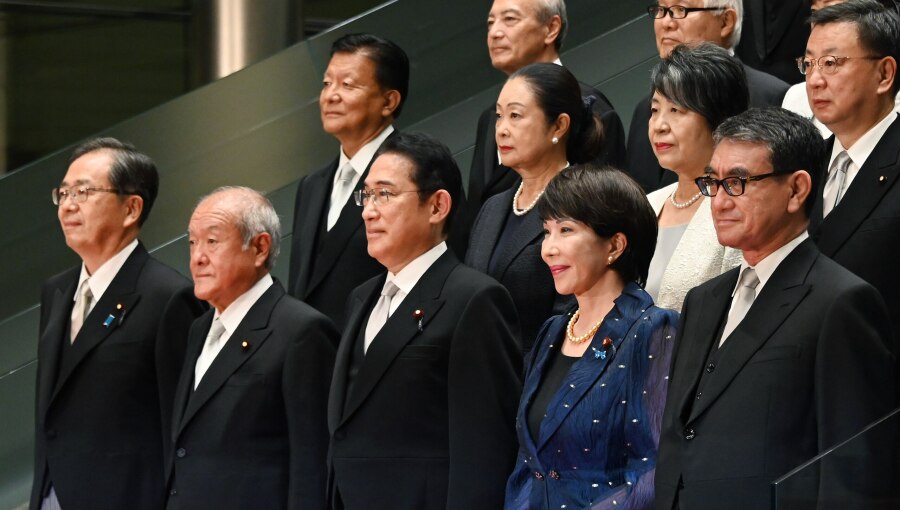
The Cabinet of PM Kishida - Takaichi front row, second from right / Japan PM Office - https://japan.kantei.go.jp/
By bno - Taipei Office October 6, 2025

After weeks of political manoeuvring and internal party turbulence, Japan’s ruling Liberal Democratic Party (LDP) has chosen Sanae Takaichi as its new leader, setting her on course to become Japan’s first female prime minister. Her victory marks not only a symbolic break in Japan’s patriarchal political order, but also a return to a more hard-line, national security-driven posture - especially toward Beijing.

Takaichi’s ascent comes amid a period of acute disruption for the LDP. In 2024, her centrist rival Shigeru Ishiba had won the party leadership, edging her out in a run-off, only to preside over a rough electoral cycle. The LDP and its coalition partner Komeito lost their majority, forcing Ishiba to cling on to power for as long as he could.

By the middle of this year, however, mounting internal pressure and a plunging popularity rate forced Ishiba to announce his resignation as party leader and thus prime minister. That in turn opened the door to a new leadership contest, and one pitting Takaichi as representing the LDP’s more right leaning of members, against the more middle-of-the-road contenders.

As a result, Takaichi prevailed over Agriculture Minister Shinjiro Koizumi, in a victory greeted by a notable rally in financial markets: Japan’s Nikkei index leapt 4.5 %, reflecting investor expectations of renewed fiscal stimulus and continuity with the pro-business policies of Shinzo Abe’s era.

That Takaichi was at various times described as an heir of Abe is a fact not lost on many Japanese voters.

She held a number of important posts during Abe’s period as prime minister, serving most notably as Minister for Internal Affairs and Communications. More recently she served as Minister of State for Economic Security under then-PM Fumio Kishida.

And on October 15, she will be confirmed as Japan’s next prime minister.

Aged 64, Takaichi has long been associated with Japan’s staunch conservative wing. She openly cites Margaret Thatcher as a source of inspiration: strong character, conviction, and national resolve tempered by “womanly warmth” multiple sources in the British media have pointed out over the weekend.

At home, her domestic and economic agenda is not too dissimilar to that of Thatcher and leans toward a revival of Abenomics which saw a mix of fiscal stimulus, tax cuts, and monetary easing with the ultimate goal of of jump-starting growth in Japan, while at the same time controlling deflation, and most importantly appearing to reach out to the LDP’s core backers.

Yet Takaichi’s more contentious territory lies in defence, security, and especially foreign policy.

She is an outspoken advocate for revising Japan’s postwar pacifist constitution and formalising the role of the Self-Defense Forces as a military force Reuters and the FT have reported.

She has also referred to a Taiwan emergency – should China invade – as a Japan emergency.

That the original Iron Lady from Grantham in Lincolnshire, stood firm against an Argentine threat when the Falkland Islands were invaded in 1982, and ordered a task force to go and liberate the islands will not be lost on Japan’s new Iron Lady over the issue of defence of Taiwan – itself a former Japanese territory and a hugely popular holiday spot for modern day Japanese.

Similarly galling to China, Takaichi is said to be a regular visitor to Yasukuni Shrine, which, given its enshrinement of Japan’s war dead, including a number of convicted war criminals, is seen as a political slap in the face by Beijing.

More specifically on the subject of China, Takaichi’s posture is markedly hawkish. She has repeated criticisms of Beijing’s regional assertiveness and has urged Tokyo to take a tougher line on issues ranging from Taiwan to the East China Sea, and is expected to follow up on her political leanings despite Politico earlier in October saying Takaichi “called herself a “moderate conservative” during the run-up to the election.” 

To say Takaichi’s time as prime minister of Japan could lead to rising tensions with Beijing would, long-time Japan watchers have already noted, be a major understatement.

And while at home she must face economic pressures centred on inflation, stagnating wages, and an ageing demographic, on the foreign affairs front, Takaichi will need all the diplomatic nimbleness she can muster, especially as US–Japan ties work to take a tougher stance on China.

Her inclination toward Taiwan has already been noted on the island and welcomed by many.

Beijing has as expected already reacted cautiously, calling her election an internal Japanese matter while urging Tokyo to honour previous commitments on issues including history - and Taiwan - according to the SCMP; China-speak for ‘don’t rock the boat on issues directly affecting Chinese claims over the already independent and self-governing island’.

To this end, Takaichi’s election and her attitude towards China in recent years places Tokyo at a sensitive diplomatic inflection point. How she calibrates assertiveness and restraint vis-a-vis China in the coming months will test Japan’s ability to maintain strategic balance between Washington and Beijing

For now though, the biggest winner in Sanae Takaichi coming to power is Taiwan.