Monday, October 06, 2025


Pusan National University researchers reveal how forest soil properties influence arsenic mobility and toxicity in soil organisms


Arsenic contamination in forest soils poses stage-specific risks, as juveniles respond more strongly to mobile arsenic than adults


Pusan National University

Arsenic Pathways and Soil Interaction in Forest Ecosystems 

image: 

Soil type and chemistry determine arsenic mobility and organism sensitivity 

view more 

Credit: Professor Yun-Sik Lee from Pusan National University, Korea


Soil contamination is a global environmental concern, with toxic metals and metalloids from industrial activities persisting as long-term pollutants. Arsenic (As), although naturally occurring, becomes widespread when mobilized by mining. Abandoned gold mines are major sources, releasing arsenic-rich minerals into surrounding environments through erosion and leaching. Forest soils, essential for ecosystem health and biodiversity, are particularly vulnerable. Despite arsenic’s mobility under specific soil conditions and known toxicity, its behavior in forest soils and impacts on soil organisms remain poorly understood.

In a recent study, a research team led by Professor Yun-Sik Lee from Pusan National University, Korea, investigated how arsenic interacts with different forest soils and how these interactions influence its toxicity to soil-dwelling organisms. As Prof. Lee explains, “Our goal was to determine how soil properties affect arsenic binding, mobility, and bioavailability, and how these factors in turn impact the survival and reproduction of the springtail Allonychiurus kimi (A. kimi), an important indicator species for soil health.” The findings were made available online on 1 September 2025 and was published in Volume 497 of the Journal of Hazardous Materials on 5 October, 2025.

The study collected four uncontaminated forest soils and characterized their physicochemical properties, including pH, cation exchange capacity (CEC), phosphorus content, organic matter, metal oxides, clay content, and total arsenic. Soil samples were spiked with arsenic at 20–100 mg/kg and aged under wet-dry cycles to simulate environmental contamination. Using the Wenzel sequential extraction method, arsenic was fractionated into F1 and F2 (weakly bound, highly mobile), F3 (bound to amorphous Fe/Al oxides, potentially bioavailable), F4 (bound to crystalline Fe/Al oxides), and F5 (residual, strongly bound). Adult and juvenile A. kimi were exposed to these soils for 28 days to assess arsenic accumulation, survival, and reproduction.

Results showed that newly introduced arsenic primarily accumulated in mobile fractions (F1–F3), making it bioavailable to soil organisms. Prof. Lee notes, “Even at the same total arsenic concentration, contamination levels and biotoxicity varied markedly depending on soil properties. CEC, phosphorus, and aluminum oxides strongly influenced arsenic binding and mobility.” Life stage strongly affected toxicity: adults accumulated arsenic without significant impacts on survival, with body burdens correlating more with F3 and total arsenic levels. Juveniles were highly sensitive, with reproduction strongly reduced by mobile arsenic fractions, highlighting vulnerability during early development.

This research improves understanding of arsenic bioavailability and toxicity in forest soils. “The findings support the development of more accurate ecotoxicological assessments that account for differential sensitivity between juveniles and adults,” explains Prof. Lee. He adds, “Moreover, the study emphasizes the need for soil-specific risk evaluations based on bioavailable arsenic fractions rather than total concentrations, providing a stronger foundation for targeted ecosystem management and remediation strategies.”

In conclusion, the study demonstrates that arsenic behavior in forest soils is controlled by soil properties and that toxicity varies according to chemical fraction and life stage. These insights provide a basis for soil-specific management and remediation strategies to protect ecosystems from arsenic contamination.


***


Reference
DOI: 10.1016/j.jhazmat.2025.139737


About Pusan National University
Pusan National University, located in Busan, South Korea, was founded in 1946 and is now the No. 1 national university of South Korea in research and educational competency. The multi-campus university also has other smaller campuses in Yangsan, Miryang, and Ami. The university prides itself on the principles of truth, freedom, and service and has approximately 30,000 students, 1,200 professors, and 750 faculty members. The university comprises 14 colleges (schools) and one independent division, with 103 departments in all.

Website: https://www.pusan.ac.kr/eng/Main.do


About Prof. Yun-Sik Lee
Prof. Yun-Sik Lee is an Assistant Professor in the Department of Biology Education at Pusan National University, specializing in environmental ecology research focused on soil ecosystem health and disturbance impacts. His laboratory uses soil microinvertebrates, including springtails (Collembola), to analyze multi-faceted effects of toxicity, natural disasters, and climate change on soil ecosystems. After earning his Ph.D. in Environmental Science and Ecological Engineering from Korea University, he served as a research scientist at Baylor University and research professor at OJEong Resilience Institute, Korea University, before coming to Pusan National University to conduct innovative research in soil ecotoxicology.


HealthFORCE, AAPA, and West Health release “Aging Well with AI” – first in a two part series on AI and the healthcare workforce


Report outlines five use cases for artificial intelligence to support older adults and calls on policymakers to act


West Health Institute


Alexandria, Va. — October 6, 2025 — HealthFORCE, a national alliance of leaders dedicated to addressing the root causes of America’s healthcare workforce crisis, along with the American Academy of Physician Associates (AAPA) and West Health, today released “Aging Well with AI: Empowering Care through Innovation,” the first in a two-part white paper series exploring how artificial intelligence (AI) can strengthen the U.S. healthcare workforce and improve access to care. The paper was commissioned by the three organizations and authored by The LINUS Group, a healthcare strategy and research firm.

As the nation confronts a historic shortage of healthcare workers alongside a rapidly aging population, the report outlines specific ways AI can reduce strain on clinicians and improve outcomes for older adults, without eroding the human relationships that are essential to high‑quality medicine.

“By 2034, older adults will outnumber children in the U.S. for the first time in history,” said Lisa M. Gables, CEO of AAPA and founder of HealthFORCE. “This shift, combined with record-high workforce shortages, demands immediate innovation. This report shows how AI can be part of the solution, giving clinicians back time to focus on what matters most – their patients.”

Five Use Cases Identified in the Report

The paper highlights five opportunities for AI to extend the healthcare workforce and improve care for older adults:

  1. Home Care Optimization – Automating scheduling, synthesizing health data, and supporting family caregivers to reduce gaps and delays.
  2. Care Continuity – Enabling seamless transitions between hospitals, homes, and community services to prevent readmissions and duplicative care.
  3. Personalized Care Plans – Using whole-person data, not just age, to develop individualized treatment plans and avoid age-based bias.
  4. Early Detection – Leveraging remote monitoring and predictive analytics to identify risks before they escalate into costly crises.
  5. Immersive Clinical Education – Using AI-powered VR and simulations to train clinicians in aging-related care and improve empathy, adherence, and compliance.

“Our healthcare system deserves more than a model that’s constantly playing catch-up,” said Zia Agha, MD, Chief Medical Officer of West Health. “AI can help us get ahead by navigating growing complexity, coordinating care more seamlessly, and extending clinicians’ capacity to deliver the continuous, compassionate, and affordable care all seniors deserve. But without bold policy changes to modernize care delivery and payment models, we risk leaving these innovations on the shelf instead of putting them to work where they’re needed most.”

The white paper calls on policymakers, health systems, and innovators to:

  • Invest in geriatric-focused tech innovation and prioritize AI tools that serve older adults
  • Incentivize cross-specialty training in aging care and AI use for all frontline providers
  • Establish national standards for AI integration across state lines and care settings
  • Promote interoperability and support value-based payment models that reward continuity, efficiency, and prevention.

This is the first paper in a two‑part series aimed at examining how artificial intelligence can strengthen the U.S. healthcare workforce. The upcoming second report will focus on how AI can augment care delivery across all patient populations and help address the projected shortfall of 3.2 million healthcare workers by 2026. It is set to be released later this month.

“AI is not a silver bullet, but it is a powerful tool,” added Gables. “Used wisely, it can protect access to care and improve outcomes for those who need it most, beginning with older adults.”

Download report here: Aging Well with AI_Empowering Care through Innovation_West Health_HealthFORCE_AAPA_10032025

TOMB ROBBERY IS CRIMINAL CAPITALI$M
UNESCO's virtual museum is a window on the world of artefact trafficking

The United Nations' cultural agency UNESCO this week announced the launch of a virtual museum showcasing hundreds of looted artefacts – a bid to educate the public about the consequences of trafficking cultural property.


Issued on: 05/10/2025 - RFI


The UNESCO Virtual Museum of Stolen Objects, unveiled on 29 September. © UNESCO

A Zambian ritual mask, a pendant from the ancient Syrian site of Palmyra and a painting by Swedish artist Anders Zorn are among nearly 250 stolen objects displayed on Unesco's new interactive platform.

But that's just a fraction of the some 57,000 stolen items Interpol estimates are in circulation, in a criminal trade for which the international police organisation's database is the sole reference point.

Unesco director general Audrey Azoulay said she hoped the Virtual Museum of Stolen Cultural Objects would draw attention to this vast illegal trade network.

The initiative will inform "as many people as possible" about "a trade that damages memories, breaks the chains of generations and hinders science," Azoulay told French news agency AFP, describing the virtual museum as "unique".


How an RFI investigation helped return an ancient treasure to Benin


UNESCO director general Audrey Azoulay. @ AFP - ALAIN JOCARD

'Identity and memory'

The online space, designed by renowned Burkina Faso-born architect Diebedo Francis Kéré, allows visitors to explore the lost objects and trace their origins and purpose through accompanying stories, testimonies and photos.

"Each stolen object takes with it a part of the identity, memory and know-how of its communities of origin," said Sunna Altnoder, head of Unesco's unit for combating illicit trafficking.

The initial collection will grow as more stolen artefacts are 3D-modelled, using artificial intelligence.

Interpol says 11,000 stolen artefacts seized in Europe crackdown

But the goal, Altnoder said, is for it to one day close, as Unesco hopes the pieces will instead move to a Returns and Restitutions section showcasing items recovered or sent back to their countries or communities of origin.

The initiative also aims to bring together sectors involved in tackling the trafficking of cultural property, Altnoder added.

"We need a network – involving the police, the judiciary, the art market, member states, civil society and communities – to defeat another network, which is the criminal network."

(with AFP)

The notion of primitive accumulation is based on the notion of capital as class relation, rather than capital as “stock”: The capital-relation presupposes a ...

Primitive Accumulation · of capital as a social relation · the encounter as industrial capitalist relation. ·

significance of primitive accumulation does not lay in primitive accumulation as an ... (2002), 'Capital, Labour and Primitive Accumulation. On Class and.


Capital is thus the governing power over labour and its products. The ... forged in the so-called primitive accumulation of English enclosures. r11r ...

“Primitive accumulation of capital” was the term. Marx used to describe the accumulation of the social and economic conditions from which capitalism arose ...

appears as 'primitive' because it forms the pre-history of capital, and of the mode of production corresponding to capital. (874-5). As a matter of ...

But the accumulation of capital presupposes sur- plus-value; surplus ... a primitive accumulation (the 'previous accumulation' of Adam. Smith*) which ...


Several still missing as Indonesian school collapse death toll rises to 37

37 students, mostly boys between the ages of 12 and 19, have died and dozens more still missing after a prayer hall at an Islamic boarding school that collapsed in Sidoarjo on the eastern side of Indonesia’s Java island almost a week ago. 

The tragedy has triggered widespread anger over illegal construction in Indonesia.


Issued on: 05/10/2025 - 
By: FRANCE 24

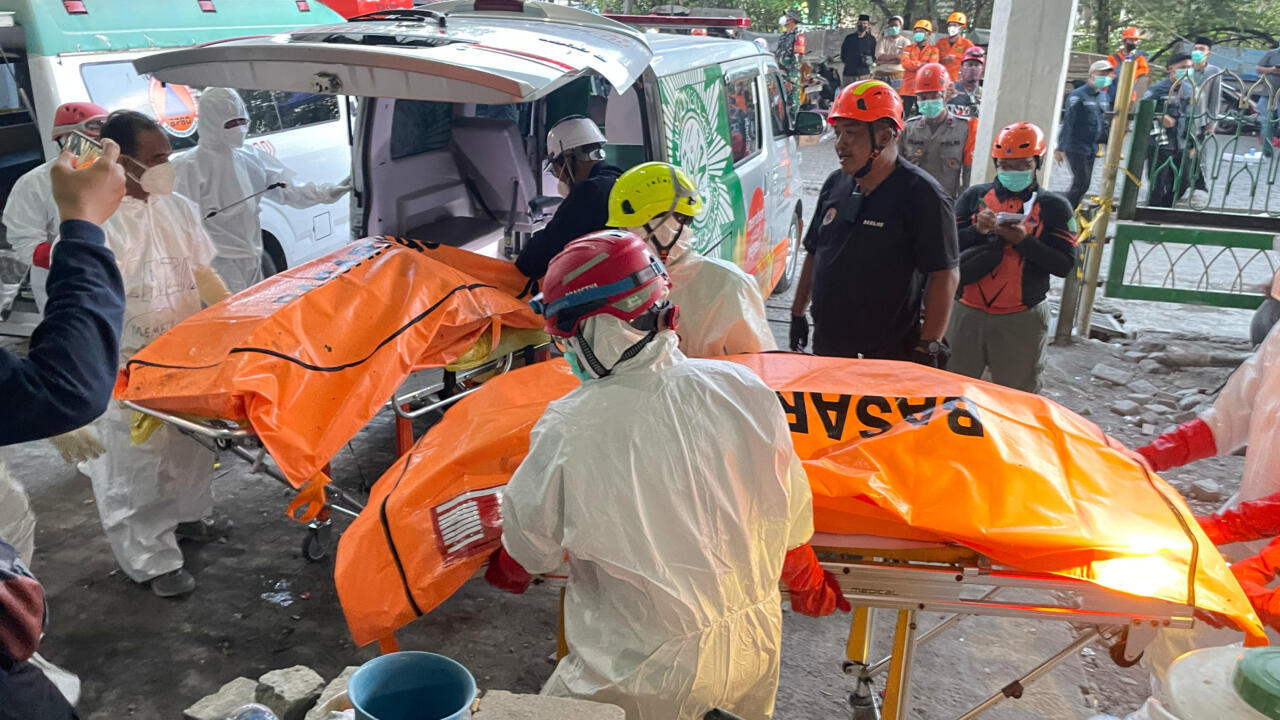
Rescuers put bodies of victims from a collapsed building at an Islamic boarding school into an ambulance in Sidoarjo, East Java, Indonesia, Friday, October 3, 2025. © Trisnadi, AP

Indonesian rescuers are searching on Sunday for missing students after a prayer hall at an Islamic boarding school collapsed almost a week ago. They have recovered 23 bodies over the weekend search, bringing the death toll to 37.

Using jackhammers, circular saws and sometimes their bare hands, rescue teams diligently removed rubble in an attempt to find the 26 missing students.

The structure fell on top of hundreds of students, mostly boys between the ages of 12 and 19, on September 30 at the century-old Al Khoziny school in Sidoarjo on the eastern side of Indonesia’s Java island. Only one student escaped unscathed, authorities said, while 95 were treated for various injuries and released. Eight others suffered serious wounds and remained hospitalized Sunday.

Police said two levels were added to the two-story building without a permit, leading to structural failure. This has triggered widespread anger over illegal construction in Indonesia.

“The construction couldn’t support the load while the concrete was pouring (to build) the third floor because it didn't meet standards and the whole 800 square meters (8,600 square feet) construction collapsed,” said Mudji Irmawan, a construction expert from Tenth November Institute of Technology.

Irmawan also said students shouldn't have been allowed inside a building under construction.

Sidoarjo district chief, Subandi, confirmed what the police had announced: The school’s management had not applied for the required permit before starting construction.

“Many buildings, including traditional boarding school extensions, in non-urban areas were built without a permit," Subandi, who goes by a single name, told The Associated Press on Sunday.

Indonesia's 2002 Building Construction code states that permits have to be issued by the relevant authorities prior to any construction, or else face fines and imprisonment. If a violation causes death, this can lead to up to 15 years in prison and a fine of up to 8 billion rupiah (nearly $500,000).

The school's caretaker is Abdus Salam Mujib, a respected Islamic cleric in East Java. He offered a public apology in a rare appearance a day after the incident.

“This is indeed God’s will, so we must all be patient, and may God replace it with goodness, with something much better. We must be confident that God will reward those affected by this incident with great rewards,” he said.

Criminal investigations involving Muslim clerics remain sensitive in the world’s most populous Muslim-majority nation.

There has been no comment from school officials since the collapse.

“We will investigate this case thoroughly,” East Java Police Chief Nanang Avianto said Sunday. “Our investigation also requires guidance from a team of construction experts to determine whether negligence by the school led to the deaths.”

(FRANCE 24 with AP)
ICE; TRUMPS GESTAPO

Trump authorizes troops to Chicago as judge temporarily halts Portland deployment


US President Donald Trump authorized deployment of 300 national guardsmen to Chicago after a federal agent shot an allegedly armed motorist there on Saturday, while a judge blocked the attempt to send the military into Portland, another Democratic-run city. Chicago and Portland are the latest flashpoints in the Trump administration's rollout of raids, following the deployment of troops to Los Angeles and Washington.


Issued on: 05/10/2025 
By: FRANCE 24
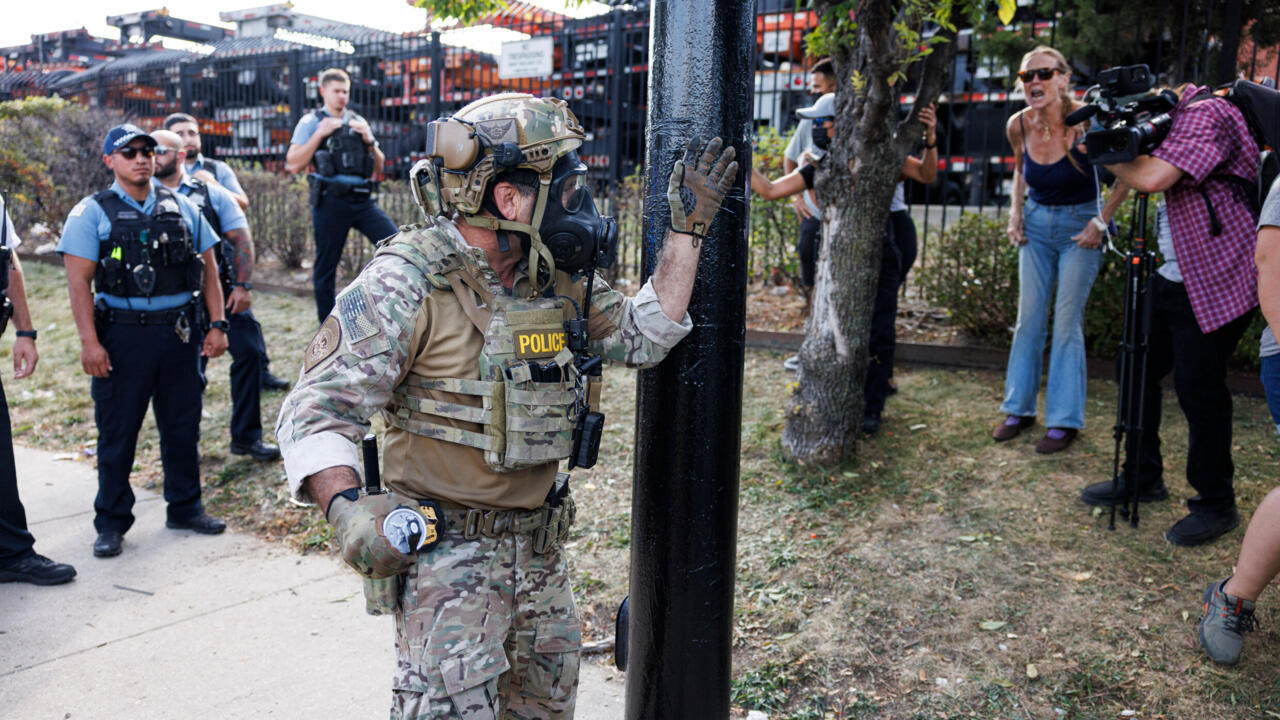
A DHS officer prepares to throw a gas canister in the Brighton Park neighborhood of Chicago, on Saturday, Oct. 4, 2025. © Anthony Vazquez, AP

US President Donald Trump authorized deployment of troops to Chicago after a federal agent shot an allegedly armed motorist there on Saturday, while a judge blocked the Republican leader's attempt to send the military into Portland, another Democratic-run city.

The escalating crisis across the country pits Trump's increasingly militarized anti-crime and migration crackdown against opposition Democrats who accuse him of an authoritarian power grab.

"President Trump has authorized 300 national guardsmen to protect federal officers and assets" in Chicago, White House spokeswoman Abigail Jackson said in a statement, after weeks of the Republican threats to send troops to the Midwestern city over the wishes of local leaders.

"President Trump will not turn a blind eye to the lawlessness plaguing American cities."

Illinois Senator Dick Durbin called the move a "shameful chapter in our nation's history," adding that the "President is not intent on fighting crime. He is intent on spreading fear."

Read more‘I couldn’t breathe’: ICE agents fire tear gas at peaceful protesters in Chicago suburb

Chicago and Portland are the latest flashpoints in the Trump administration's rollout of raids, following the deployment of troops to Los Angeles and Washington.

The raids have seen groups of masked, armed men in unmarked cars and armored vehicles target residential neighborhoods and businesses, sparking protests.

Trump has repeatedly called Portland "war-ravaged" and riddled with violent crime, but in Saturday's court order, US District Judge Karin Immergut wrote "the President's determination was simply untethered to the facts."

Although the city has seen scattered attacks on federal officers and property, the Trump administration failed to demonstrate "that those episodes of violence were part of an organized attempt to overthrow the government as a whole," Immergut wrote in granting a temporary restraining order.

Protests in Portland did not pose a "danger of rebellion" and "regular law enforcement forces" could handle such incidents, Immergut said.

Watch more Trump's Martial Plan? US military encouraged to embrace 'warrior ethos'

Oregon Senator Ron Wyden applauded the order, saying the "victory supports what Oregonians already know: we don't need or want Donald Trump to provoke violence by deploying federal troops in our state."

White House Deputy Chief of Staff Stephen Miller wrote on social media that the judge's order was "legal insurrection" and accused local leaders in Oregon of conducting an "organized terrorist attack on the federal government."
'Operation Midway Blitz'

Earlier Saturday, a federal officer in Chicago shot a motorist after law enforcement agents were "boxed in by 10 cars," the Department of Homeland Security (DHS) said.

"Agents were unable to move their vehicles and exited the car. One of the drivers who rammed the law enforcement vehicle was armed with a semi-automatic weapon," DHS assistant secretary Tricia McLaughlin said in a statement.

"Law enforcement was forced to deploy their weapons and fire defensive shots at an armed US citizen," she said.

AFP could not independently verify the DHS version of the event.

The agency said the motorist "drove herself to the hospital to get care for wounds," but Chicago Fire Department spokesman Larry Merritt told the Sun-Times newspaper that she was found in fair condition and taken to a local hospital.

McLaughlin also accused Chicago police of "leaving the shooting scene" with officers refusing "to assist us in securing the area."

Read more Trump addresses US military leaders, says country faces 'war from within'

Chicago police told local broadcaster Fox 32 that officers responded to the scene but the department "is not involved in the incident or its investigation. Federal authorities are investigating this shooting."

Following the shooting, protesters who had gathered chanting "ICE go home!" were met with tear gas and pepper balls, temporarily dispersing before returning, the Sun-Times reported.

Protesters left after federal agents vacated the scene.

Trump's "Operation Midway Blitz" was launched in Chicago last month, and Saturday's shooting is not the first time federal agents have opened fire.

Department of Homeland Security officials said ICE officers shot and killed 38-year-old immigrant Silverio Villegas Gozalez during a traffic stop on September 12, accusing him of allegedly trying to flee the scene and dragging an ICE officer with the vehicle.

(FRANCE 24 with AFP)


Egypt opens Amenhotep III's tomb to public, after over 20 years of renovation


Issued on: 05/10/2025 - FRANCE24

Egypt on Saturday (October 4) opened a tomb of a pharaoh for visitors after more than two decades of renovation in the southern city of Luxor, as it prepares for the official opening of the Grand Egyptian Museum in Cairo.

French prosecutors launch war-crimes probe into photojournalist’s death in Ukraine


French prosecutors have launched a war-crimes probe into the death of French photojournalist Antoni Lallican, who was killed in a drone strike earlier this week in Ukraine’s eastern Donbas region. Lallican was embedded with Ukrainian forces at the time of the attack, which President Emmanuel Macron has blamed on Russia.


Issued on: 05/10/2025
By: FRANCE 24

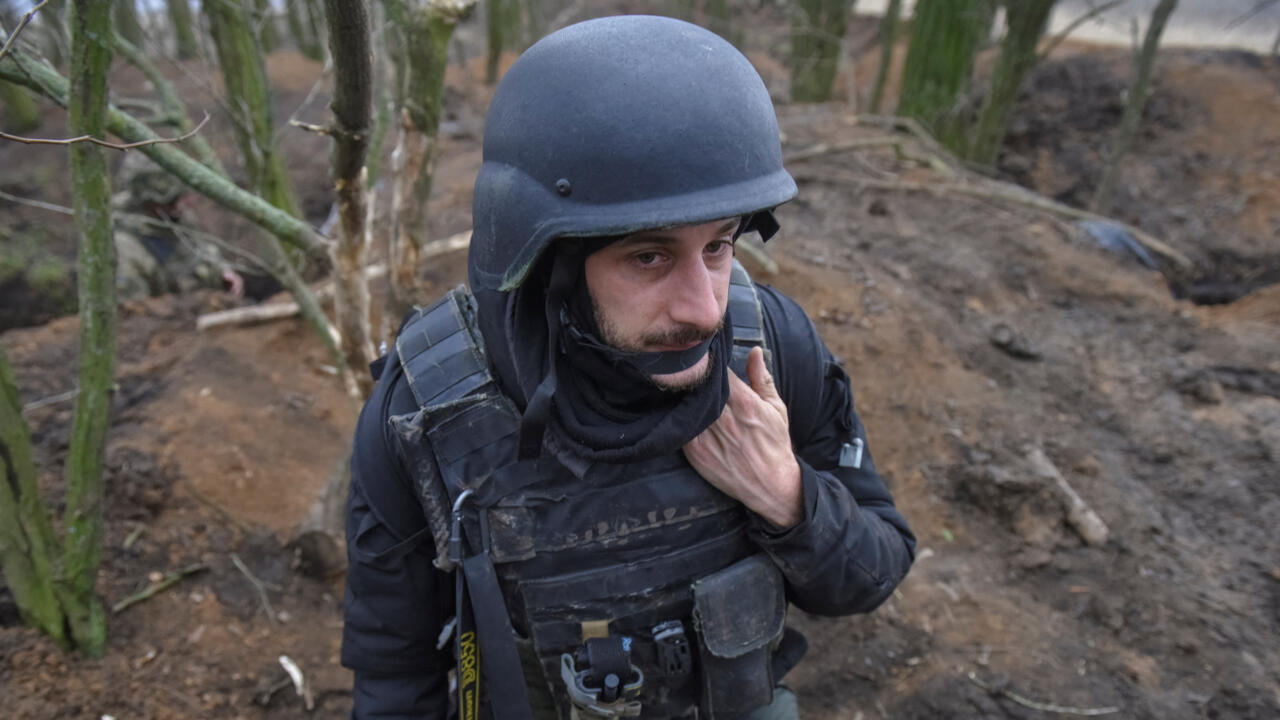
French photojournalist Antoni Lallican photographed in the Donetsk region, in Ukraine, amid Russia's attack on Ukraine, on February 26, 2023. © Reuters/ File picture

French prosecutors said Sunday they had opened a “war crimes” investigation after a drone killed a French photojournalist on assignment in war-torn eastern Ukraine.

Antoni Lallican, 37, was embedded with Ukraine’s Fourth Armoured Brigade near the front line in the Donbas region of eastern Ukraine when he was killed on Friday, Ukrainian authorities said.


Ukrainian journalist Georgiy Ivanchenko was wounded in the same attack, which Ukraine’s military and French President Emmanuel Macron blamed on Russia.

The investigation has been entrusted to the Central Office for the Fight against Crimes against Humanity and Hate Crimes, France’s anti-terror unit PNAT said.

A “war crimes” charge falls under PNAT’s remit and consists of “deliberate attacks on the life and physical or mental integrity of a person protected by international humanitarian law”.

Lallican, an award-winning photojournalist whose work had appeared in leading French and international media, is the first journalist to be killed by a drone in Russia’s war against Ukraine, according to the European and International Federations of Journalists.

At least 17 journalists have been killed in Ukraine since Russia launched its full-scale invasion in February 2022, the groups said, while UNESCO, had as of late June this year, put the number at 22.

They include AFP video journalist Arman Soldin, who was killed by rocket fire in 2023.

(FRANCE 24 with AFP)


Ukraine says Russia intensifying railway strikes to isolate frontline communities


Issued on: 05/10/2025 - FRANCE24

The head of Ukraine's railways said Saturday (October 4) that Russia was intensifying a campaign of air strikes on the network in an attempt to isolate frontline communities ahead of winter. Russia launched drones at two passenger trains in Ukraine's northeastern Sumy region, killing one person and wounding dozens, according to Ukrainian officials.

Video by:  Eliza HERBERT


Landslides and floods kill 64 in Nepal, India

Kathmandu (AFP) – Landslides and floods triggered by heavy downpours in Nepal and neighbouring India have killed more than 60 people, officials said Sunday, as rescue workers raced to reach cut-off communities in remote mountainous terrain.

Issued on: 05/10/2025 -  FRANCE24

Nepal has deployed helicopters and security personnel to assist rescue efforts 
© - / Nepalese Army/AFP

Torrential downpours have lashed Nepal since Friday, leaving rivers in spate and many areas in the Himalayan nation inundated.

At least 44 people have died in rain-triggered disasters and five are missing, Shanti Mahat, spokeswoman for Nepal's National Disaster Risk Reduction and Management Authority, told AFP.

At least 37 were killed by landslides in the worst-affected eastern district of Illam.

"Heavy rains overnight caused the landslides," said local district official Sunita Nepal.

"Rescue workers have reached the affected areas. It was difficult because many roads were blocked."

Rivers in the capital Kathmandu have also swelled, inundating settlements along their banks.

Security personnel were deployed to assist rescue efforts with helicopters and motorboats.

"There is some damage, but thanks to the authorities' prior flood alert, we were able to move some belongings to a safe place," said vegetable seller Rajan Khadga, 38.

Landslides have blocked several highways and disrupted flights, leaving hundreds of travellers -- many returning after celebrating the Hindu festival of Dashain -- stranded.

At least five people are still missing, according to federal disaster officials.

Prime Minister Sushila Karki said government agencies were "fully prepared for rescue and relief".

"Your safety is our utmost concern. Do not hesitate to seek necessary assistance," she said in an address, adding that the government has declared Sunday and Monday public holidays and urged people not to travel unless necessary.
'Red alert'

Across the border in India, at least 20 people were killed in the tea-growing hill district of Darjeeling in West Bengal state after heavy overnight rain unleashed flash floods and landslides that destroyed homes and infrastructure.

"In the wake of last night's heavy cyclone in the Darjeeling hills, over 20 people have lost their lives," said Harsh Vardhan Shringla, a lawmaker in India's upper house.

Footage on Indian television news showed rescue workers using cables to access cut-off regions as raging waters smashed into bridges and caved in roads.

Prime Minister Narendra Modi said he was "pained by the loss of lives".

"The situation in Darjeeling and surrounding areas is being closely monitored in the wake of heavy rains and landslides," he said in a statement on social media.

India's weather department on Sunday issued a red alert for "extremely heavy rainfall" in sub-Himalayan areas, including Darjeeling, until Monday.

Relentless downpours also swelled rivers in neighbouring Bhutan, prompting the Indian army to join rescue efforts.

Military helicopters were deployed to evacuate several civilians stranded in the border town of Phuentsholing, the army said in a statement.

Monsoon rains, usually from June to September, bring widespread death and destruction every year across South Asia, but the number of fatal floods and landslides has increased in recent years.

Experts say climate change has worsened their schedule, frequency and intensity.

The Kathmandu-based International Centre for Integrated Mountain Development warned in June that communities faced heightened disaster risks this monsoon season.

"Rising temperatures and more extreme rain raise the risk of water-induced disasters such as floods, landslides, and debris flows," it said.

© 2025 AFP