It’s possible that I shall make an ass of myself. But in that case one can always get out of it with a little dialectic. I have, of course, so worded my proposition as to be right either way (K.Marx, Letter to F.Engels on the Indian Mutiny)
Tuesday, October 07, 2025
Sail-Powered Neoliner Origin Prepares for Maiden Voyage
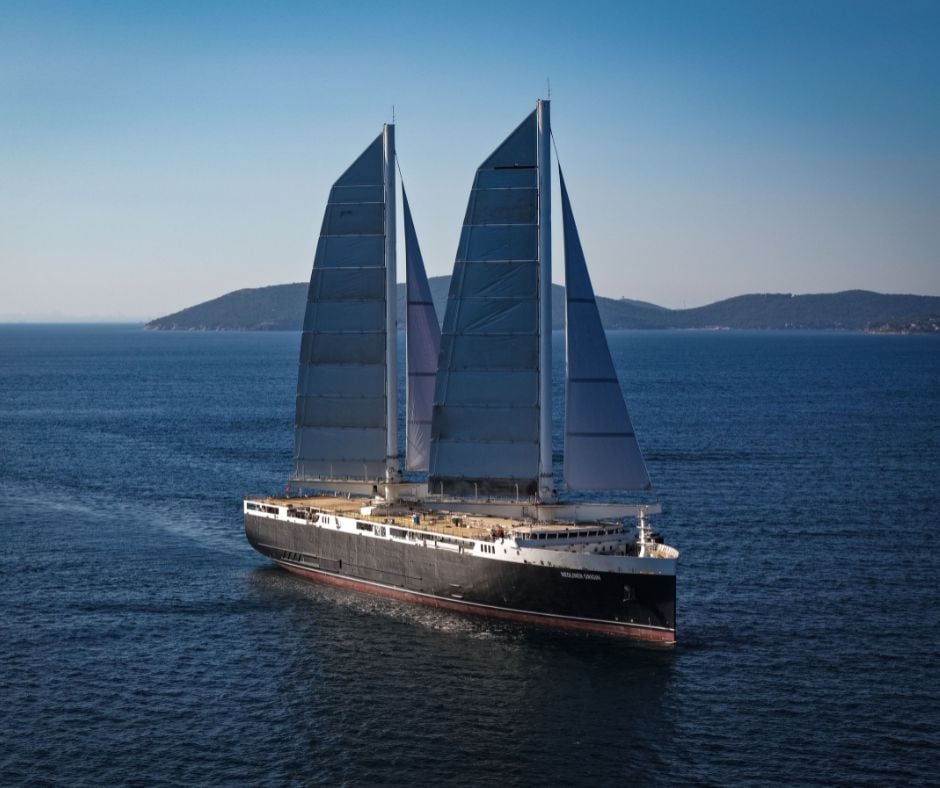
Neoliner Origin is a sail-powered commercial cargo ship for Atlantic crossing (Neoline)
The Neoliner Origin, which is billed as the first large, mostly sail-powered cargo ship, has been delivered by its builders, RMK Marine in Turkey, to its owners in France. The vessel departed the shipyard in Tuzla, Turkey, on September 29 and, after interim port calls in the Mediterranean, arrived in Marseille today, October 6, before proceeding to its homeport of Saint-Nazaire and its first Atlantic crossing.
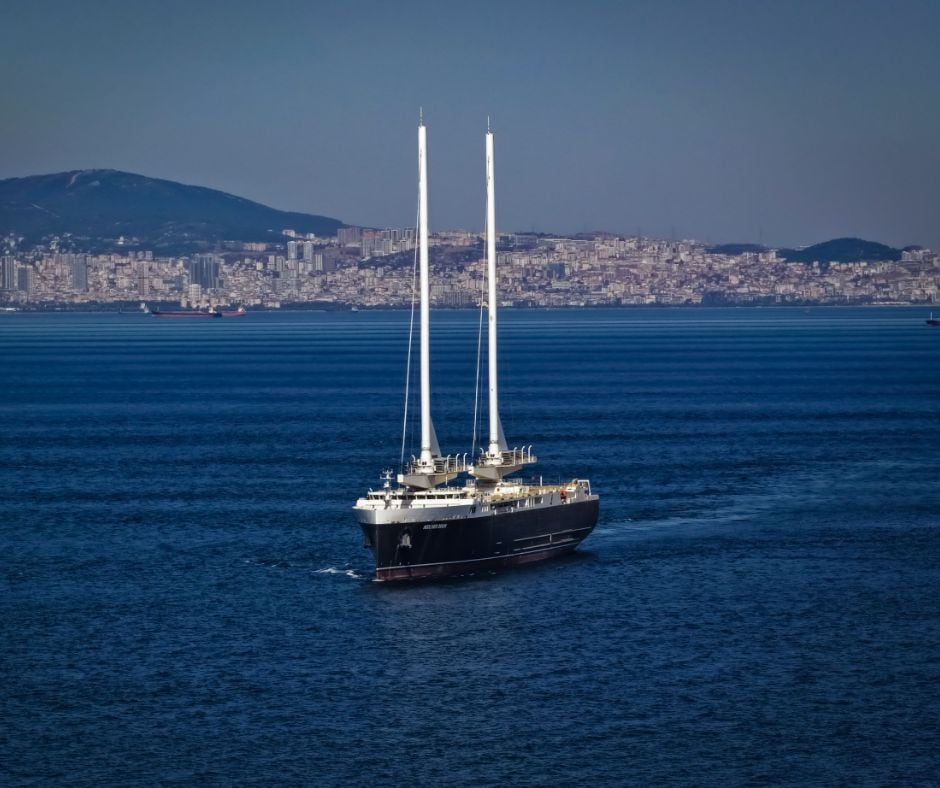
At 446 feet (136 meters) in length, the vessel has 3,000 square meters (over 32,000 square feet) of sail area with two rigid sails mounted on Solidsail rigs designed by Chantiers de l’Atlantique, and which will fold down for maneuvering in port. The plan calls for the vessel to operate mostly on wind power with a commercial speed of 11 knots. The design also incorporates anti-drift plans, designed by Fouré Lagadec.
The air draft is nearly 289 feet (88 meters) or reduces to approximately 138 feet (42 meters) when the rigs and sails are tilted. It also has a supplemental 4000 kW diesel-electric motor, which would give it a maximum speed of 14 knots. They expect to cut fuel use by 80 percent compared to conventional vessels. Neoliner Origin is 6,300 dwt and 13,278 gross tons.
The company considers the vessel a pilot for its long-term plan to develop a fleet of sail-powered cargo ships. The Neoliner Origin is scheduled to maintain monthly service departing from Montoir de Bretagne, France. The crossing is scheduled to take eight days to St-Pierre & Miquelon, French islands off the coast of Canada’s Newfoundland. The vessel will then proceed to Baltimore, Maryland, a 13-day trip from France. On the return, she will make stops in Halifax, Canada, St-Pierre & Miquelon, and Cork, Ireland.
Neoliner Origin during sea trials in Turkey (RMK Marine)
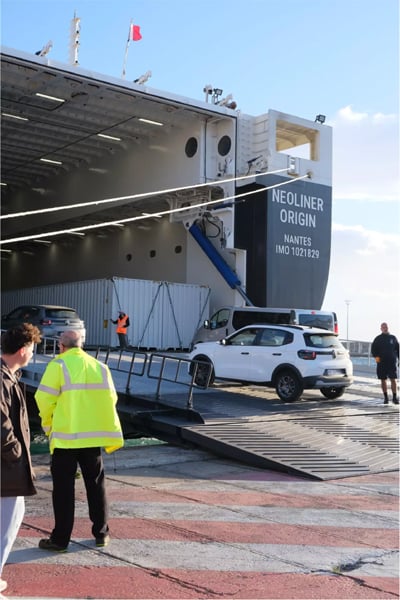
The Neoliner Origin is a Ro-Ro cargo ship with 1,200 lane meters for cargo, across three areas. The primary area is 1,150 square meters. The vessel can take light vehicles, including cars, as well as commercial vehicles, and farm, construction, or industrial equipment. Containers are loaded on trailers supplied by Neoline, which can carry up to two 40-foot or four 20-foot containers, including the ability to transport refrigerated containers. It can also transport oversized and bulky goods as well as pallets, boxes, and bags. The total cargo capability is 11,000 tonnes.
In addition to the cargo, the vessel has six double cabins (290 square feet each) to carry up to 12 passengers. The passenger cabins have a private balcony, and facilities aboard include large common areas (77 square meter passenger lounge and sun deck), and also including a gym and Wi-Fi connection. Meals will be in the officer’s wardroom. Neoliner Origin has a crew of 13.
As part of this first sailing, the Neoliner Origin stopped at the port of Bastia on the island of Corsica on Saturday, October 4. There she loaded 315 cars and transported them to Marseille as the vessel's first cargo.
First cargo going aboard the Neoliner for transport between Corsica and Marseilles (Neoline)
Neoline was started a decade ago and has drawn support from Renault, which will be a shipper, as well as CMA CGM as an investor. Steel cutting for the vessel began in November 2023 at RMK Marine in Turkey, and assembly of the ship began in 2024. The launch took place in January 2025.
The first sea trials in the Sea of Marmara were completed at the beginning of July, giving them the first opportunity to test maneuvering under real conditions. The second sea trials were completed at the beginning of September, and they reported that the vessel has excellent maneuverability and flexibility.
The maiden voyage was delayed by last-minute fine-tuning of the vessel, but the final sea trials were completed on September 22 and 23, and the handover on September 26. The maiden Atlantic departure is scheduled for October 15.
Dutch Coast Guard Stops Drifting Tanker Before It Hits Wind Farm
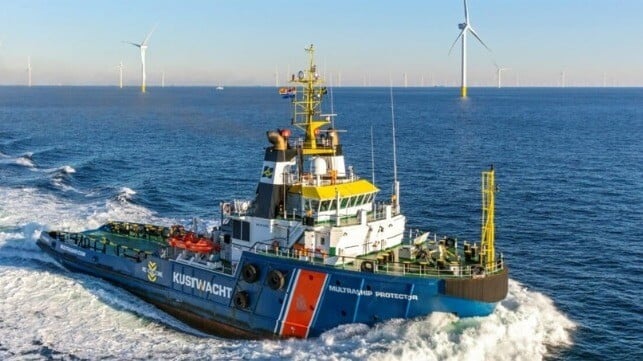
Multipship Protector is part of the monitoring effort for offshore wind farms and platforms (Kustwacht)
The Dutch Coast Guard is reporting a close call on Saturday night, October 4, as a product tanker lost propulsion and was drifting dangerously close to the Netherlands’ largest offshore wind farm. A Multiship emergency tug under contract to the Coast Guard ultimately was able to stop the drifting vessel at about two-thirds of a mile (1 km) from the turbines and held it in position until repairs could be completed.
The product tanker Eva Schulte (16,621 dwt) managed by Berhard Schulte and registered in Singapore reported at 1930 on October 4 that it had lost propulsion due to a problem with its main engine. The vessel, which was built in 2010, was loaded with a fuel oil cargo coming from Sweden.
Complicating the situation was a strong storm over the region west of the Netherlands in the North Sea area. According to the reports, winds were Force 7 to 8 (30 to 40 mph) with gusts over 50 mph in the area of the wind farm. Seas were running at around 16 feet (5 meters). Due to the weather conditions, the tanker was unable to anchor.
The vessel was more than 22 miles from the Dutch coast at Ijmuiden and drifting towards Vattenfall’s Holland Kust Zuid wind farm. It is a 139-turbine installation with a capacity of 1.5 GW.
The tanker had a crew of 21 aboard, but according to the Coast Guard, the captain never requested an evacuation. The Coast Guard put two helicopters on standby in case assistance was required.
The Multiship emergency tug Protector was moored near the Holland Kust Zuid wind farm as a precaution. It was ordered to respond to the drifting tanker, but three hours after the first call was received, it still had not been able to get a line secured due to the weather conditions. They were, however, continuing to attempt to establish a tow connection as the vessel drifted close to the wind farm.
Shortly after 2300, the tug reported it had finally been able to secure a line to the vessel, which by that point was only 0.6 miles from the wind farm. The priority was to tow the vessel away from the wind farm and hold it in a more secure location.
Overnight, the crew was able to repair the main engine, but the Coast Guard was still working to determine if the vessel would need to be towed into port. Also, because of the weather conditions, it was decided that the tug needed to continue to secure the tanker, an operation which continued till at least 1500 on Sunday afternoon. They were finally able to release the tanker, and on Monday, the tanker proceeded into Ijmuiden.
It was not the first incident with this wind farm. While it was under construction in 2022, the bulker Julietta D also lost power in the region. It drifted into the site, hitting one of the monopoles and the base of a substation. The monopole was sufficiently damaged that it needed to be removed.
The Coast Guard reports that only days earlier, on October 1, it launched a new monitoring operation for the wind farms and offshore platforms. With the offshore industry continuing to grow, a special 24-hour desk was launched at the Vessel Traffic Monitoring Center. They are monitoring for traffic approaching the assets and will contact a vessel, wind farm, or platform when a vessel is approaching. It is manned by specially trained staff to work with the Coast Guard Center to reduce the dangers.
Hijacker" in Mysterious Arctic Sea Case Has Been Captured After 16 Years
A suspect who has been wanted by Russia for 16 years in connection with an alleged hijacking off Sweden has been arrested at last, according to authorities in Cyprus.
In July 2009, the freighter Arctic Sea got under way from Jakobstad, Finland with a cargo of $1.8 million worth of lumber aboard, bound for Algeria. On July 24, the ship was in Swedish waters off Gotland when it was intercepted by a group of men in a rubber boat, according to the master. The vessel carried on its normal voyage, and the crew continued conversing over VHF and broadcasting AIS as usual until July 30, when the ship went dark off Brest. It was presumed hijacked, and a search warrant was issued for its capture and detention.
For reasons undisclosed, the Russian Navy tasked five ships to locate and pursue the Arctic Sea in the Atlantic. On August 17, the Russian frigate Ladny intercepted and seized the vessel at a position off the Cape Verde Islands. The crew - all Russian nationals - were all alive and well; eight "hijackers" - Estonian, Latvian and Russian nationals - were arrested.
From here, the story took an unusual turn. The shipowner claimed that they never received a ransom demand for the hijacking. The ship's Russia-based insurer said that it had received a demand, and that the alleged criminals wanted about $2 million.
For their part, the accused claimed that they were environmentalists, and that their boat had run out of fuel - and, further, that the captain had held them hostage and diverted the ship towards West Africa. The judges were not swayed, and six were convicted and sentenced to long jail terms. The crew were interrogated, then released under a gag order and instructed never to talk about their experience.
Speculation about the nature of the Arctic Sea affair has circulated for years, and in diplomatic circles it was not considered an act of "piracy" as Russia claimed.
"It would seem that these acts, such as they have been reported, have nothing in common with 'traditional' acts of piracy or armed robbery at sea," said EU Commission spokesman Martin Selmayr at the time.
One popular theory has it that the vessel was carrying an illicit and unauthorized cargo of Russian arms, loaded earlier in the voyage, and that the "hijackers" were a team sent by another nation (or by a disgruntled commercial partner) to intercept the weapons shipment. A senior Russian Navy officer confirmed this account to Komsomolskaya Pravda at the time. "I think that if [Arctic Sea's] journey had been successful, Russia could have ended up in a huge international scandal," the officer said. "We caught the boat to make sure we didn't end up in a nasty situation." (These suggestions were not welcomed by the Russian government: one Russian journalist who reported on the story had to flee the country after receiving threats for his coverage.)
Russia had an arrest warrant active for one more suspect in connection with the case - a man who had been released on bail while awaiting trial and had disappeared. Investigators had Interpol "red notice" open for his capture since 2009. The suspect, a Russian-Israeli national, walked off a cruise ship in Larnaca, Cyprus last weekend and was swiftly arrested after 16 years on the run. He had made no attempts to conceal his identity, and it is unclear how he had evaded capture until now. The man is being held pending extradition hearings to determine if he can be sent to Russia to stand trial.
Fisherman Killed in Capsizing at Harbor Entrance in Hanstholm
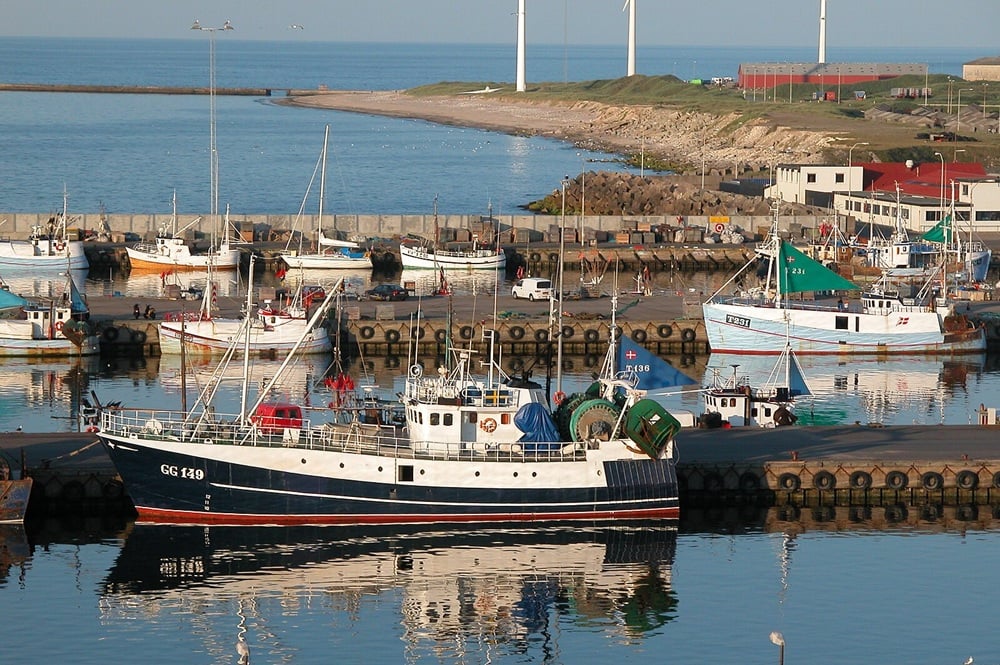
Fishing vessels in the harbor at Hanstholm (file image courtesy Erik Christensen / CC BY SA 3.0)
A fisherman lost his life in a tragic grounding at the small Danish port of Hanstholm last night, according to local media accounts.
The fishing vessel Flipper was under way Sunday on a routine trip when the crew noticed issues with their steering gear, West Jutland's police department told Nordjyske. In foul weather and high waves, the crew returned to port at Hanstholm, a tiny port on the exposed northwestern tip of Jutland. While attempting to enter the harbor, they allided with the northeastern breakwater. The boat began to flood just yards away from safety, and in waves of up to 25 feet, it capsized.
The weather was so rough that the local rescue station was unable to launch its lifeboat, according to Maritime Danmark. Instead, the rescue crew rushed to the pier to attempt to help from shore, while a Danish Navy helicopter aircrew attempted to effect a rescue.
Three fishermen made it to shore alive and uninjured; the fourth man, aged 55, did not survive. He passed away soon after he was retrieved from the water, officials told DR. In addition, two shoreside rescuers needed hospital treatment for minor injuries, Maritime Danmark reported.
The Danish Maritime Authority will be investigating the cause of the casualty.
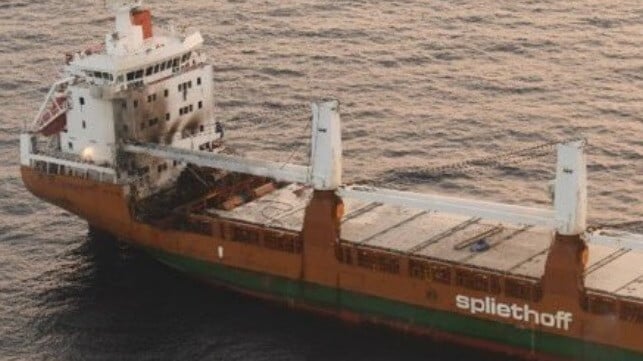
Dutch shipping company Spliethoff issued a statement today, October 6, confirming that one of the two seriously injured crewmembers from its vessel Minervagracht passed away in a hospital in Djibouti. The individual had been evacuated from the ship after the attack on September 29, with the French forces having reported that the most seriously injured person was flown directly to Djibouti for medical care.
Spliethoff extended its condolences to the family of the seafarer and said it was assisting the family. No additional details were released on the individual other than that they had sustained “critical injuries” during the attack. Previous reports had said the crew was made up of individuals from Russia, Ukraine, the Philippines, and Sri Lanka. After being evacuated by the Greek frigate HS Spetsai and a French frigate, the other 18 members of the crew were taken to Djibouti.
Most of the crew of Minervagracht, Spliethoff reports, have now been repatriated to their home countries. One crew member remains under medical care in Djibouti. His condition is reported to be stable, and the company expects he will be able to return home later this week.
The 10 Filipino crewmembers aboard the Minervagracht reached the Philippines on October 4. The Department of Migrant Workers (DMW) reported their return while saying two others were still in Djibouti.
“The events of last week have left a profound impact on everyone at Spliethoff. Today’s news has deeply saddened everyone at the company, as we mourn the loss of a respected and valued seafarer,” the company wrote reporting the death.
This adds to the death toll of seafarers from the attacks by the Houthis. Four deaths were confirmed from the bulker Eternity C after it was sunk in July 2025 in the Red Sea. The first deaths came in 2024, with one seafarer reported missing after another cargo ship, Tutor, was attacked. Several other seafarers have sustained injuries during the attacks.
Spliethoff reported last week that it was engaging with international authorities and towage experts to safeguard and secure the vessel. The ship was abandoned on September 29 after the missile strike caused a fire that damaged the accommodation block on the ship. The UK’s monitoring operation UKMTO had reported the vessel as a hazard to navigation.
Hanwha Hires Former Top U.S. Navy Shipbuilding Officer
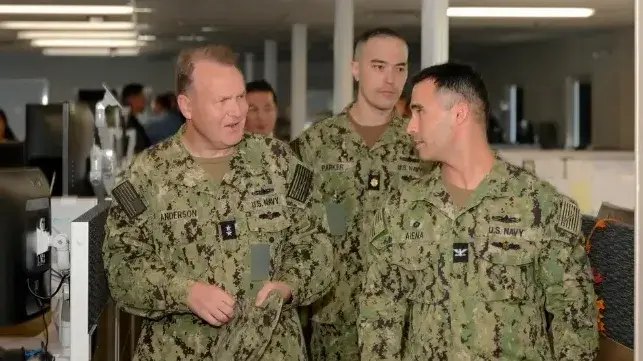
Rear Adm. Thomas Anderson, left, during his time as PEO Ships (USN file image)
Hanwha Ocean's U.S. defense division has hired a former leader of the U.S. Navy's shipbuilding enterprise to oversee its American operations. The decision is a strategic boost for Hanwha's bid to become a significant player in U.S. defense shipbuilding, which is dominated by two prime contractors.
Rear Adm. Tom Anderson (USN, ret'd) served in the U.S. Navy for 34 years, including time at the helm of Program Executive Office Ships and as acting commander for all of Naval Sea Systems Command (NAVSEA), the service's sprawling acquisition directorate. At sea, his tours included USS Capodanno (FF 1093) and USS Arleigh Burke (DDG 51). He picked the engineering duty community and held commands across the shipbuilding and repair enterprise, including head of the Littoral Combat Ship shipbuilding office; commander of a Naval Surface Warfare Center; and commander of surface ship maintenance. He took over as head of PEO Ships in 2020, and was selected to be acting commander of NAVSEA from 2023-4.
In his new role as President of U.S. Shipbuilding at the Hanwha Defense USA division, Anderson will hold responsibility for Hanwha's U.S. shipbuilding programs and yard operations; program strategy; and infrastructure and workforce improvements. The portfolio is a significant one: Hanwha purchased Philly Shipyard last year and has pledged to invest $5 billion in its expansion. Naval vessels, starting with auxiliaries, are square in Hanwha's sights for contracting opportunities.
Hanwha wants to increase its operations at Philly tenfold in ten years, and to get there it is investing in technological improvements to increase Philly's efficiency. It also has an active training program and it plans to create thousands of new jobs. To kickstart its book of business, it has announced a plan to order 10 Jones Act medium range tankers from itself - the largest commercial vessel order in the United States in 20 years.
Hanwha and "Big Three" brethren Samsung Heavy Industries and Hyundai Heavy Industries have all developed an interest in breaking into the U.S. market, and not just for their own business purposes. Korean shipbuilding expertise is valued by the Trump administration, and Korea's pledge to invest in American shipyard capacity was a major part of the recent trade deal that Seoul agreed with Washington. That deal secured competitive U.S. tariff rates for mission-critical Korean exports, like cars and computer chips.
USCG’s New Icebreaker Storis Completes First Arctic Patrol
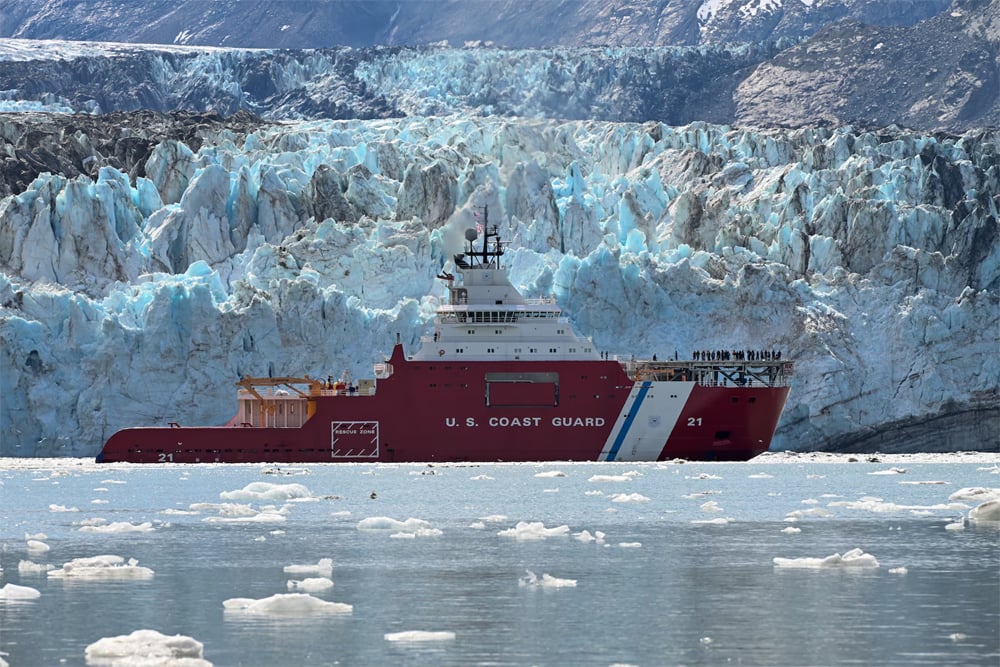
Storis compelted her first deployment of 112 days crossing for the first time into the Arctic for the USCG (Coast Guard photos)
The U.S. Coast Guard’s newest commissioned icebreaker, USCG Cutter Storis, returned to Seattle on October 3, completing its inaugural patrol. The medium polar icebreaker is still undergoing a number of upgrades in its first year with the USCG.
Storis entered the ice for the first time in September as a Coast Guard cutter to relieve USCG cutter Healy. She undertook a 112-day inaugural patrol, which saw her sail north of the Bering Strait. During her time, one of her tasks was to monitor the Chinese-flagged research vessels Jidi and Xue Long 2, which were operating in the Arctic this season. A total of five Chinese-affiliated research vessels were operating in the Arctic over the summer, and Storis was one of several vessels the USCG deployed to monitor activity.
USCG reports that throughout the cutter’s inaugural deployment, the crew conducted helicopter operations, gunnery exercises, established numerous operational and administrative programs, and organized multiple community outreach events throughout six port calls, providing tours to over 1,500 people. Storis is manned by a hybrid crew of military cuttermen and civilian mariners.
“In the span of a few months, this?crew has gained proficiency in the basics of operating the ship, and we were ready to challenge ourselves,” said Capt. Corey Kerns, commanding officer of the new icebreaker. “Storis is different from most Coast Guard cutters, and this crew is proud and excited to demonstrate its value to the service and the nation.”
The vessel is unique in that she is the first polar icebreaker acquired by the Coast Guard in over 25 years. She joins the USCG Polar Star and Healy as the polar fleet until the new polar security cutters can be built.
Storis was built in 2012 by Edison Chouest as Aiviq as an icebreaking anchor-handler for Shell's Arctic offshore drilling program. She saw limited operations, and the idea of acquiring her for the USCG dates back to 2016. The deal was finally progressed in 2024, and she was officially acquired on December 20, 2024. An initial modification was undertaken to enhance her communications and defense capabilities before she departed from Pascagoula, Mississippi, on June 1. She transited the Panama Canal and proceeded to Juneau, Alaska, where she was officially commissioned on August 10.
Now that the vessel has returned to Seattle after its patrol, Storis will enter a six-week training period where the ship and the crew will undergo major training evolutions, system and program recapitalization. A two-week underway phase is also planned with a visit to Victoria, Canada.
Captain Kerns said they were pleased to have arrived in Seattle and to be at a USCG base. He, however, also confirmed “we still have a lot of training to do for our USCG crew to be ready to take full responsibility of the ship and will continue to work closely with our civilian shipmates to get us ready.”
Storis is temporarily berthed in Seattle, alongside the service's other polar icebreakers. She will continue to receive modifications and eventually will be permanently homeported in Juneau, Alaska, once necessary infrastructure improvements are completed.
Bipolar disorder heterogeneity decoded: transforming global psychiatric treatment approaches
World-renowned geneticist Martin Alda reveals how personalized psychiatry revolutionizes patient outcomes internationally
HALIFAX, Nova Scotia, CANADA, 7 October 2025 -- In a compelling Genomic Press Interview published today in Genomic Psychiatry, Dr. Martin Alda illuminates how decoding psychiatric heterogeneity holds the key to revolutionizing mental health treatment worldwide. The interview reveals how this internationally acclaimed researcher transformed our global understanding of bipolar disorder by proving that what appears as one condition actually represents multiple genetically distinct disorders, fundamentally changing how clinicians across continents approach treatment selection.
The conversation explores Dr. Alda's remarkable journey from Czechoslovakia to becoming the prestigious Killam Chair in Mood Disorders at Dalhousie University while maintaining senior scientist status at the Czech Republic's National Institute of Mental Health. His development of the Alda scale has become the international gold standard for measuring lithium treatment response, adopted by researchers and clinicians worldwide to identify patients who will benefit from this remarkably effective yet selective medication.
Revolutionary Discovery Transforms Global Treatment Paradigms
Dr. Alda's research validated lithium-responsive bipolar disorder as a genetically distinct condition, a discovery that reshaped psychiatric practice internationally. This finding sparked the creation of major global research consortia, including the International Consortium on Lithium Genetics (ConLiGen), which Dr. Alda helps lead. The interview reveals how his unique ability to bridge molecular genetics with compassionate clinical care exemplifies the future of precision psychiatry.
With over 420 influential publications, Dr. Alda's work demonstrates how genetic insights translate directly into improved patient outcomes worldwide. His research addresses a fundamental challenge in psychiatry: why lithium works exceptionally well for some patients while providing no benefit for others. This heterogeneity puzzle extends beyond bipolar disorder to virtually all psychiatric conditions, making his findings relevant to the entire field of mental health.
The Genomic Press interview captures Dr. Alda's philosophy that combining basic research with clinical observations remains essential for advancing psychiatric care. He emphasizes the importance of ensuring trainees spend time in clinical settings, maintaining the vital connection between laboratory discoveries and patient experiences. This approach, shaped by exceptional mentors throughout his career, continues to influence the next generation of psychiatric researchers globally.
International Collaborations Drive Precision Psychiatry Forward
Dr. Alda's leadership of international research initiatives demonstrates how collaborative science transcends borders to improve mental health outcomes worldwide. Through founding the Maritime Bipolar Registry and Halifax's Mood Disorders Program, he created lasting infrastructure supporting innovative research into at-risk populations, metabolic dysregulation, and suicide prevention that serves as a model for programs internationally.
The interview reveals how Dr. Alda's early experiences in Czechoslovakia, shaped his sensitivity to academic freedom and open scientific discourse. His father's career as a scientist and mathematician, combined with exposure to a community of researchers, initially pointed him toward mathematics before neuroscience captured his imagination during high school.
His first three papers, published while still in Czechoslovakia, focused on pharmacogenetics, lithium pharmacokinetics, and family studies of schizophrenia. This early work presaged a career dedicated to understanding how genetic variation influences treatment response, ultimately improving lives of people with mental illness worldwide.
Bridging Molecular Insights with Clinical Reality
The interview showcases Dr. Alda's exceptional talent for identifying connections across disparate research domains while maintaining deep clinical engagement. This integrative approach has proven crucial for advancing personalized psychiatry, where understanding both molecular mechanisms and clinical heterogeneity enables more precise treatment selection.
Dr. Alda's receipt of the field's highest honors, including the Colvin Prize from the Brain and Behavior Research Foundation, the Heinz Lehmann Award from the Canadian College of Neuropsychopharmacology, and the prestigious Mogens Schou Award for Research from the International Society for Bipolar Disorders, reflects the global impact of his contributions. These accolades recognize not just scientific excellence but also his role in transforming how the international psychiatric community approaches treatment optimization.
The conversation reveals Dr. Alda's ongoing commitment to solving heterogeneity challenges that plague psychiatric conditions globally. His work on lithium serves as an example of effective psychiatric treatment while highlighting the urgent need to develop equally effective alternatives for patients who do not respond to this medication. The dual focus on understanding mechanisms and addressing clinical heterogeneity positions his research at the forefront of precision medicine initiatives worldwide.
Personal Insights Illuminate Scientific Philosophy
Beyond professional achievements, the Genomic Press interview explores personal dimensions that shape Dr. Alda's approach to science. His love of outdoor activities, from hiking in Nova Scotia's landscapes to cross-country skiing in Norway, provides essential balance to intensive research endeavors. Dividing time between Halifax and Prague offers what he describes as an excellent mix of nature and culture, though he wishes for more time to enjoy these pursuits.
When asked about perfect happiness, Dr. Alda cites good dinners with family or friends after mountain hikes, revealing how personal connections and natural experiences fuel his scientific creativity. His characterization by colleagues as overly optimistic emerges as a driving force behind ambitious research programs that tackle psychiatry's most challenging questions.
The interview captures Dr. Alda's philosophy through his chosen motto: "Gods help those who help themselves," reflecting his belief in combining effort with opportunity to advance scientific understanding. His greatest professional pride lies in developing a productive clinical academic program at Dalhousie University and mentoring exceptional researchers who continue advancing the field globally.
Dr. Martin Alda's Genomic Press interview is part of a larger series called Innovators & Ideas that highlights the people behind today's most influential scientific breakthroughs. Each interview in the series offers a blend of cutting-edge research and personal reflections, providing readers with a comprehensive view of the scientists shaping the future. By combining a focus on professional achievements with personal insights, this interview style invites a richer narrative that both engages and educates readers. This format provides an ideal starting point for profiles that explore the scientist's impact on the field, while also touching on broader human themes. More information on the research leaders and rising stars featured in our Innovators & Ideas -- Genomic Press Interview series can be found on our publications website: https://genomicpress.kglmeridian.com/.
The Genomic Press Interview in Genomic Psychiatry titled "Martin Alda: Deciphering heterogeneity: The key to personalized psychiatry," is freely available via Open Access on 7 October 2025 in Genomic Psychiatry at the following hyperlink: https://doi.org/10.61373/gp025k.0095.
About Genomic Psychiatry: Genomic Psychiatry: Advancing Science from Genes to Society (ISSN: 2997-2388, online and 2997-254X, print) represents a paradigm shift in genetics journals by interweaving advances in genomics and genetics with progress in all other areas of contemporary psychiatry. Genomic Psychiatry publishes peer-reviewed medical research articles of the highest quality from any area within the continuum that goes from genes and molecules to neuroscience, clinical psychiatry, and public health.
Martin Alda in the Pirin Mountains, Bulgaria, in the summer of 1977, early in his career, when he was developing his research interests in pharmacogenetics and lithium treatment, while maintaining his passion for hiking, an activity he continues to treasure decades later.
Credit
Martin Alda
Martin Alda enjoying cross-country skiing in Norway, March 2013, exemplifying the outdoor pursuits he values as essential counterpoints to his intensive research on bipolar disorder heterogeneity and personalized psychiatry.