Tuesday, October 07, 2025

The Singularity Myth: Unpacking AI's Future

  • Sam Altman, CEO of OpenAI, has made and subsequently shifted predictions regarding the achievement of Artificial General Intelligence (AGI), moving the timeline from 2023 to 2025 and now to 2030, while others predict 2026.

  • The article argues that current AI approaches, particularly those relying on large language models (LLMs), will never achieve AGI due to the inherent imprecision of language, the lack of lived experience and judgment in machines, and the fact that AI models are merely "maps" not "territory."

  • While AI, such as ChatGPT, offers viable and profitable applications and can be useful to experts for routine tasks, it cannot replace human generalized skills, expertise, or the nuanced understanding derived from lived experience and context.


Sam Altman is the CEO of the most visible artificial intelligence (AI) organization on the planet, OpenAI, the purveyors of the popular ChatGPT AI interface. His job is to keep the investment dollars flowing into OpenAI, tens of billions of them. So, it's pretty important for Altman to keep investors interested and to promise them breakthroughs...and also, apparently, to reschedule those breakthroughs when they don't occur.

Now, something that most people don't understand about OpenAI is that despite being recently valued at $500 billion, OpenAI loses money, reportedly $5 billion last year on sales of $3.7 billion. Back in 2023 Altman was telling the public that OpenAI had achieved artificial general intelligence (AGI). For those who don't know, AGI means intelligence capable of learning and executing all the tasks that humans can do. No one appears to know how exactly to measure whether a machine can do the totality of things a human can do, but it sounds very cool to talk about it. And, it's the kind of talk that keeps investors excited. The implication, of course, is that the investor class won't have to put up with pesky employees much longer for most jobs.

The moment when this happens, when machines become smarter than humans and start running everything for us —as if they don't already—is sometimes called the singularity, usually with a capital "S." Now, singularity has a specific meaning in physics. In this context it refers to a nonreligious, tech version of the rapture in which technological advancement becomes very rapid as machines take over and iterate on technical innovation. We know what happens to people in the religious version of the rapture—some ascend to heaven and others are left behind. But we aren't exactly sure what is to become of humans after the so-called singularity version of the rapture since supposedly there won't be much work to do. AI will be doing it.

But we may not have to concern ourselves with such things for the moment. Apparently, Altman's 2023 proclamation that AGI had been achieved didn't stick. But Altman was back in December 2024 telling the public that AGI would be achieved in 2025. Admittedly, 2025 isn't over, so I suppose AGI could be achieved by December 31. But Altman apparently sees the writing on the wall and isn't waiting for the end of the year to move the goalposts once again, this time to 2030. However, 2026 remains a popular prediction among many others.

Just so you know, predictions of this momentous event are all over the place, some reaching out to 2060, and, not surprisingly, the predictions change over time. But I'm willing to make the following outlandish prediction that under current approaches which rely on so-called large language models (LLMs), AGI will happen never.

There are several reasons I say this—apart from the difficulty of defining what "intelligence" means which would require an entire essay by itself. Before getting to those reasons let me say that I believe current AI development will result in some viable and possibly profitable applications. Clearly, people are using AI interfaces such as ChatGPT and gaining some benefit from them. But that is a far cry from LLMs taking on the lion's share of tasks currently performed by humans. I remember when people said the introduction of the automated bank teller would lead to the extinction of tellers. It's been 50 years and I can report that bank tellers are still working in the lobby of my bank. Machines, even machines directed by AI, are good at specific tasks. But they are unlikely anytime soon to replace the generalized skills of humans.

So, here's why the LLMs that power current AI are limited in what they can do. First, they are based on language. Language is an inherently imprecise tool of communication. Words have multiple meanings. Just look in any dictionary. And those meanings drift over time based on actual usage. That's why dictionaries are constantly updated.

And, words are always understood in context. Context means the entire cultural and physical setting to which the words apply. Humans have a natural talent for language and they learn language within specific cultural and physical settings, relating that language to all five senses and placing the meaning of specific words and sets of words in the context of gestures and attitudes which accompany their utterance.

Machines don't have the chance to learn language in this way; nor do they have the full set of senses (and it's not clear what it would mean if they did). In fact, LLMs simply hoover up a lot of text from a so-called "training set" and use that text to predict what the next word will be regarding the subject about which someone requests information.

Humans can put language and other symbols in the context of their own lived experience. Machines by definition are not capable of lived experience in the manner of humans. Humans' lived experience becomes the basis for judgement, something machines cannot develop. Within judgement I include hunches, intuitions and vague remembrances and connections that often inform human decisions and sometimes form the basis for new ideas and discoveries.

Second, the language of computers is code. Code is a seriously pared down version of language and so much more limited in the ways it can represent reality. I can tell from the current discourse that the biggest boosters of AI almost certainly read few novels (except perhaps some science fiction novels). If they did read more serious non-science fiction novels, they would understand what a monumental task it is to try to describe reality to a reader in words and why the attempt will always fail.

Instead, what great authors do is provide enough of just the right details about settings, characters, dialogue and action to ignite the imagination and lived experience of readers who then create in their minds a version of the world that the author is trying to convey. In other words, humans can create models of the world in their minds and consider possible meanings and trajectories that flow from those models. That's a very complex task. Machines, no matter how sophisticated, cannot imagine a world based on such clues as an author might give them because they do not "live" in the world the way humans do.

Third, there is a very important corollary to points one and two, namely, the map is not the territory. It's a simple concept really. But it is easy to forget when you are a person who is marooned in the land of bits and bytes and computer animation and believe that computers are somehow giving you an accurate representation of the reality we live in. What AI tells us is based on models, not lived reality, models based on imprecise and ever changing language. AI may provide some useful information because of its ability to synthesize huge amounts of text, but it cannot convey understanding. It is merely giving us a map and a very partial and often mistaken one at that.

Fourth, AI is not going to replace human expertise. The idea that AI is going to become expert at every topic is already being shown to be nonsense. Humans embody expertise and share some of that in books, articles, recorded speeches and interviews, and graphics. But we could not produce the next generation of chemists using only books about chemistry.

Knowledge is not just words on a page. Knowledge is something that is embodied in those who have it in the inflections they use in speech, the physical moves they make in the lab, the relationships they develop with their students and colleagues, the ideas they choose to emphasize in their work, and the overall style of their lives. Try learning how to operate in a restaurant kitchen without ever actually going into one. The same goes for a laboratory, both for students and expert researchers. In addition, there are many bits of knowledge that might have been written down but which never make it to the page. Written documents are an outline or prompt to knowledge. They cannot be all-inclusive.

A friend who is a practicing attorney uses AI to compose routine contracts and agreements, models for which abound on the internet and which are therefore available for AI to sweep into its databases. And, of course, the law generally prescribes narrow parameters for such documents. That makes AI less error-prone in composing them. Nevertheless, this attorney has to correct things which are wrong and, of course, modify text where the AI engine has not quite gotten the nuance right. AI is useful to her, but it cannot replace her expertise; and someone who has no expertise and yet uses such raw output, presenting it as authoritative, is a positive danger to society. AI will be useful to experts, but it cannot replace them.

Many investors are betting that Sam Altman will be right about the advent of AGI. When they figure out that he's not, the curtain will come down on the AI stock bubble and probably take the whole economy with it. That's usually what happens when it becomes clear that the new era prophesied by the industry gurus of the latest "big thing" is just like old eras; there may be some genuine progress, but the value of the progress has been poorly understood and greatly overestimated.

"Trees do not grow to the sky" is an old German proverb. Nor do AI stocks rise forever. Every generation must learn the hard way that financial manias always end badly even if the underlying companies provide some value that must be marked down to its actual contribution to society.

By Kurt Cobb via Resource Insights

First Phase Of Game-Changing Iraq Project To Start Early Next Year

  • TotalEnergies’ $27 billion mega-project in Iraq has entered full execution, with first output expected by early 2026.

  • The gas capture initiative aims to curb Iraq’s reliance on Iranian gas and electricity by processing associated gas from five major southern oilfields.

  • The Common Seawater Supply Project (CSSP) will inject treated seawater into southern oilfields to maintain reservoir pressure and free freshwater for agriculture.

The foundation stone for the re-entry of several major Western energy firms into Iraq was the US$27-billion four-pronged mega-project finally ratified by France’s TotalEnergies in 2023. The project was particularly aimed at addressing two critical issues that had dogged Iraq’s development for decades and whose resolution had been stymied by bureaucracy and corruption at senior levels across several governments in Baghdad, as analysed in full in my latest book on the new global oil market order. One of these crucial issues was dramatically increasing the amount of gas captured during the process of drilling for oil (‘associated gas’). And the other was stabilising and then boosting the pressure at Iraq’s key oil wells through the treatment and redirection of seawater to these sites through the ‘Common Seawater Supply Project’ (CSSP). The two other projects of the four are the full redevelopment of the Ratawi oil field and the construction of a 1.25 gigawatt-peak solar complex. In recent days, TotalEnergies chief executive officer Patrick Pouyanné announced the start of the construction of the CSSP and the Ratawi development. This means that all four major prongs of the US$27 billion project are now in their execution phase and, according to Pouyanné, the mega-project is on track to deliver its first oil, gas and solar output as soon as early 2026.

By far the most geopolitically important of the four projects is that which will capture associated gas. This might sound overblown to some outside the energy sector, or even within it, but because Iraq did not address this issue seriously earlier it was unable to use the gas for its own domestic power generation. This meant that for years that it has relied on neighbouring Iran to bridge that gap, which it did through increasingly large imports of gas and electricity. This reliance on Tehran for its power needs made Baghdad even more willing to cooperate with its neighbour on supporting pro-Shia militia groups across the Middle East and beyond, and in enabling Iran to continue to export its oil despite long-running international sanctions. The former was often focused on an anti-U.S. and anti-West insurgency that claimed dozens of military and related personnel over the years, even after the formal end of Washington’s mission in Iraq in December 2021. The latter has been achieved through a combination of shared oil fields between the two countries, forged documents, and illegal shipping practices. In turn, these elements were also part of the wider Iran-Iraq alliance that drove the influence of the ‘Shia Crescent of Power’ through the region, as also detailed in my latest book.  This alliance held an extraordinary sway up until very recently over the political, economic, and security trajectories of the Middle East. With Iran at its ideological centre, the Crescent comprised key strategic assets in Iraq, Syria, Lebanon, and Yemen, with inroads being made in Azerbaijan (75% Shia and a Former Soviet Union state), Turkey (25% Shia and still furious at not being accepted fully into the European Union), Bahrain (75% Shia), and Pakistan (up to 25% Shia and a home to multiple terrorist groups antagonistic to the West). Key elements in this Shia Crescent alliance were also instrumental in Iran’s plan to build a ‘land bridge’ that would run via Iraq all the way to the Mediterranean coast, which would then be used by Tehran to increase arms shipments to its militant proxies for use against Israel. The gas capture part of TotalEnergies’ mega-project is aimed at cutting this particular strand of Iraqi reliance on Iran. It involves collecting and refining gas that is currently burned off during oil drilling at the five southern Iraq oilfields of West Qurna 2, Majnoon, Tuba, Luhais, and Ratawi.

If the gas capture programme is the most geopolitically important of TotalEnergies’ four projects then the CSSP is the most important for the energy sector. The basic plan was always that the programme would be used initially to supply around six million bpd of water to at least five southern Basra fields and one in Maysan Province and then built out for use in further fields. Both the longstanding stal­wart Iraq fields of Kirkuk and Rumaila – the former beginning production in the 1920s and the latter in the 1950s, with both having produced around 80% of Iraq’s cumulative oil production – require major ongoing water injection. The reservoir pressure at the former dropped signifi­cantly after output of only around 5% of the oil in place (OIP). Rumaila, in the meantime, produced more than 25% of its OIP before water injection was required because its main reservoir forma­tion (at least its southern part) connects to a very large natural aquifer that has helped to push the oil out of the reservoir. Although the water requirements for most of Iraq’s oilfields fall between these two cases, the needs for oilfield injection are highest in south­ern Iraq, in which water resources are also the least available, according to the International Energy Agency (IEA). To reach and then sustain Iraq’s future crude oil production targets over any meaningful period, the country will have total water injection needs equating to around 2% of the combined average flows of the Tigris and Euphrates rivers or 6% of their combined flow during the low season. These demands might not appear too onerous, but these water sources will also have to continue to satisfy other, much larger, end-use sectors, including agriculture. The first phase of TotalEnergies’ CSSP programme will be built on the coast near the town of Um Qasr and is set to process and transport 5 million barrels of seawater per day to the main oil fields in southern Iraq, according to the French firm. Treated seawater will replace freshwater withdrawals from the Tigris, Euphrates, and aquifers to maintain pressure in the oil wells, freeing up to 250,000 cubic metres per day of freshwater for irrigation and local agriculture needs in the water-stressed region.

The CSSP is also crucial to ensuring the longevity of additional reserves due to be brought online in the coming years, which could make Iraq the world’s top crude oil producer. Back in 2012, as also examined in full in my latest book on the new global oil market order, then-Iraq Prime Minister Nouri al-Maliki received a confidential report (the ‘Integrated National Energy Strategy’) showing exactly how Iraq could increase its oil output from just over 3 million bpd at that point to a plateau of 13 million bpd in the ‘High Production’ scenario by 2017. The ‘Medium Production’ scenario plotted a course to 9 million bpd plateau by 2020, while the ‘Low Production’ scenario planned for 6 million bpd by 2025. The key to achieving this was a fully functioning CSSP. The output involved might also be sustained and boosted by the programme with the addition of new reserves that remain as yet untapped but have long been thought to dwarf official 145 billion barrels of proved crude oil reserves held by Iraq.  In fact, in October 2010, Iraq’s Oil Ministry stated that Iraq’s undiscovered resources amounted to around 215 billion barrels. However, even this figure did not include the parts of northern Iraq in the semi-autonomous region of Kurdistan. As highlighted by the IEA, most of these had been drilled during a period before the 1970s began when technical limits and low oil prices gave a narrower definition of what constituted a commercially successful well than would be the case now. Overall, the IEA projected that the level of ultimately recoverable resources across all of Iraq (including the Kurdistan region) was around 246 billion barrels (crude and natural gas liquids).

By Simon Watkins for Oilprice.com

Battery Storage Boom Faces Its Biggest Test Yet

  • A fire at Vistra Corp’s 300-MW Moss Landing battery facility has triggered widespread safety concerns, prompting local moratoriums on new large-scale battery energy storage systems (BESS) in several U.S. states.

  • Public opposition is rising, with officials warning that lithium-ion systems pose unacceptable fire risks — even as experts argue these are growing pains in a rapidly maturing technology.

  • The controversy coincides with new legislation (OBBBA) that could slash U.S. battery output by 75% and EV sales by 40% by 2030.

Back in January, a massive fire ripped through Vistra Corp’s (NYSE:VST) giant battery storage facility in Moss Landing in Northern California, leading to the evacuation of hundreds of people after toxic fumes polluted the air. While the cause of the fire is still under investigation, a key factor that has so far been identified is the failure of the fire suppression system, which allowed the fire to spread rapidly. The building that housed 300 megawatts of battery capacity was completed five years ago, around the time the U.S. utility scale lithium-ion battery storage sector was taking off, with battery safety standards having been updated multiple times since. And now the sector is having to deal with the fallout of the accident, with a growing number of leaders now strongly opposed to the construction of battery storage facilities in their localities.

We’re not guinea pigs for anybody ... we are not going to experiment, we’re not going to take risk,” said Michael McGinty, the mayor of Island Park, New York, after passing a moratorium in July for a battery storage system proposed near the village line. In August, Environmental Protection Agency (EPA) Administrator Lee Zeldin visited New York and complained that the state was rushing approvals to meet “delusional” clean energy goals. New York has set an ambitious goal to add 6,000 megawatts of energy storage over the next five years, equivalent to half of its large-scale systems

This is more than a fire, this a wake-up call for the industry. If we’re going to be moving ahead with sustainable energy, we need to have a safe battery system in place,” said Glenn Church, Monterey County Supervisor.

Battery moratoriums refer to a temporary halt on the approval and construction of new Battery Energy Storage Systems (BESS), often a local or state measure enacted to address public safety concerns related to fires and other hazards associated with lithium-ion batteries. These moratoriums gained traction starting in 2023 and 2024, driven by community opposition to proposed BESS projects near homes and schools, high-profile fires, and a perceived lack of comprehensive safety standards for the technology.

However, the experts have pointed out that BESS detractors could be overreacting, and the nascent industry is merely going through teething problems. “This is a relatively immature technology that is maturing quickly, so I think that there are a lot of really thoughtful researchers and other stakeholders who are trying to improve the overall safety of these systems,” Ofodike Ezekoye, a mechanical engineering professor and combustion expert at the University of Texas at Austin, said.

Fire risks and growing opposition are just some of the headwinds facing the U..S. battery storage sector. A recent analysis by the International Council on Clean Transportation found that the One, Big, Beautiful Bill Act (OBBBA), coupled with cuts to other climate policies, could slash U.S. battery production by ~75% by 2030 to 250 GWh from the previously projected 1,050 gigawatt-hours, and EV sales by 40%. According to the report, the new policies could eliminate 130,000 potential jobs in the EV sector by 2030, with the majority in battery manufacturing. Following the passing of the IRA in 2022, companies have announced a total of 128 U.S. facilities for battery manufacturing, with more than half yet to begin construction. Red and purple states including Texas, Michigan, Nevada, Tennessee, Kentucky and Georgia, would be the most adversely impacted.

Interestingly, even Rep. Buddy Carter of Georgia, home to Hyundai’s  new $5.5B EV and battery manufacturing plant, threw his weight behind the bill, calling it “fantastic.” According to estimates by the experts, the project will create $4-5 billion in fresh investments in Bartow County as well as 3,500 new jobs. Over the past five years, EV-related projects in Georgia have created ~$17 billion in investments and more than 22,800 new jobs.

Meanwhile, the pivotal solar sector would face setbacks under OBBBA. According to a study by the Rhodium Group and Massachusetts Institute of Technology, the solar sector has recorded more than $160B in large solar and battery storage projects since the IRA was passed three years ago, marking one of the sector’s most productive periods in recent times. Solar and battery storage have been the fastest growing energy source in the U.S., with the pair expected to account for 81% of new power additions to the grid in the current year.

OBBBA favors solar manufacturing through provisions that incentivize domestic production and streamline the tax credit process, while also setting deadlines for construction and placement in service of solar projects. Specifically, it maintains and clarifies the tax credits for solar projects under Sections 48E and 45Y, while also phasing them out for wind and solar projects placed in service after December 31, 2027, unless construction began within 12 months of the Act's enactment.

By Alex Kimani for Oilprice.com

Who Will Build Armenia’s New Nuclear Plant?


  • Prime Minister Nikol Pashinyan confirmed that Armenia’s next nuclear plant will be a small modular reactor.

  • Yerevan is in talks with five countries—Russia, the U.S., China, France, and South Korea—to secure the best economic deal.

  • The Metsamor plant is nearing the end of its lifespan, making replacement plans increasingly urgent.

The Armenian government is playing the field in search of the best deal to construct a new nuclear power plant to replace the aging Metsamor facility.

Prime Minister Nikol Pashinyan announced during a question-and-answer session in parliament that negotiations are ongoing with several nations. He added that the government had already decided that Metsamor’s replacement will be a “small modular” reactor.

“Now the next question is: with whom will we build, with whom will we cooperate?” he said.

Pashinyan went on to list five countries that have been engaged in discussions – Russia, the United States, China, France and South Korea. He asserted that the government will award the contract purely on the basis of economic considerations.

“We absolutely do not put a political component into it. We must focus on which of the proposals will suit us best in terms of commercial and economic benefits, and based on this, make a choice,” he said.

When Pashinyan was in Moscow in late September, Russian officials, including Kremlin kingpin Vladimir Putin, lobbied the prime minister hard for Rosatom, the Russian nuclear entity, to get the job. Just a few days later, Armenian officials announced they are striving to finalize a “123 agreement” with the United States to enable nuclear cooperation and the transfer of sensitive technologies.

Armenia’s existing Metsamor nuclear plant is on its last legs and has a maximum extended lifespan of about another decade. 

By Eurasianet


Fico signals Slovak-US agreement on Bohunice unit

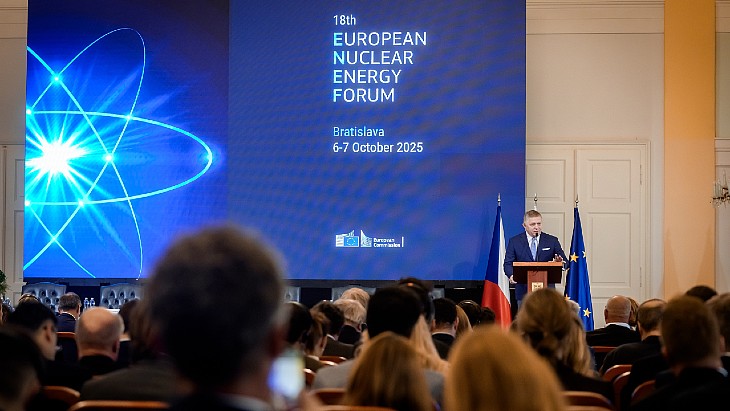
Slovakia’s Prime Minister Robert Fico says his government has approved a proposed intergovernmental agreement with the USA on the construction of a new unit at the Bohunice nuclear power plant.
 
(Image: Slovakia Government website)

Speaking at the European Nuclear Energy Forum in Bratislava, Fico spoke about European Union energy policy, saying there must be "common sense" and "it simply will not work without nuclear energy. If we want stable, affordable and ecological energy sources, we must not only preserve nuclear energy, but also further develop it".

According to the government website's report of the speech, ministers approved in September the wording of an intergovernmental agreement with the US "on the construction of a new nuclear unit in Jaslovské Bohunice, which will be state-owned and will have an output of more than 1,000 MW". 

It quoted him as saying: "This project will be important not only for Slovakia, but also for the whole of Central Europe. We need new energy sources if we want to remain competitive and respond to growing consumption."

The Slovak government officially approved plans in May 2024 for a 1.2 GWe unit near the existing Bohunice nuclear power plant, with South Korea, the USA and France at the time seen as potential partners.

In August Fico said the European Commission had "positively assessed" a draft agreement between the governments of the Slovak Republic and the USA on cooperation in the field of nuclear energy, which he added was a prerequisite for the conclusion of an intergovernmental agreement on the construction of a new Westinghouse unit in Bohunice.

According to the country's energy department, negotiations with the USA continued after the Slovak government approved the wording of the agreement on 10 September. On 16 September it quoted Deputy Prime Minister Denisa Saková as saying: "Negotiations are progressing and we are gradually approaching the signing of the agreement. I believe that nuclear energy can be a great opportunity for both countries - in addition to helping us strengthen energy security, it will advance research and open the door to new projects and cooperation."

During his speech Fico also highlighted cooperation between Slovakia’s JAVYS and Newcleo on the latter's lead-cooled small modular reactors which are powered by reused nuclear fuel: "If we succeed in this project, Slovakia will become a leader in innovations in the nuclear field," he said.

He also criticised the European Union’s RePowerEU proposals, which are designed to "end dependency on Russian energy", saying that "if nuclear fuel is included in RePowering, it will threaten the energy security of the entire European Union".

Slovakia currently has five nuclear reactors - three at Mochovce and two at Bohunice - generating half of its electricity, and it has one more at Mochovce under construction. Both plants are operated by Slovenske Elektrarne.

Cold testing of second San'ao unit completed


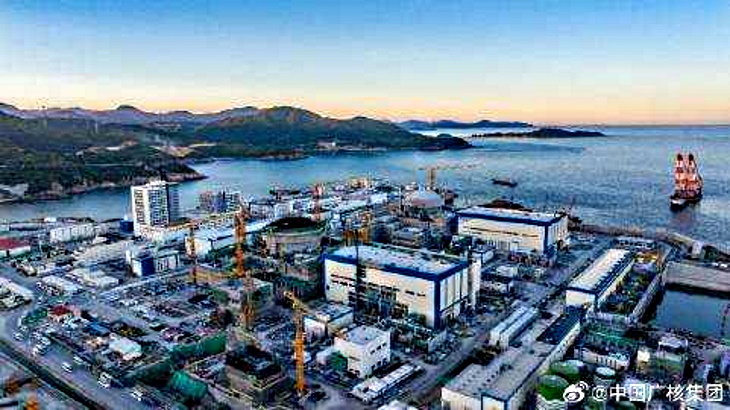
Cold functional tests have been completed at unit 2 of the San'ao nuclear power plant in China's Zhejiang province, China General Nuclear has announced. The unit is the second of six HPR1000s (Hualong Ones) planned at the site.
 
(Image: CGN)

Cold functional tests are carried out to confirm whether components and systems important to safety are properly installed and ready to operate in a cold condition. The main purpose of these tests is to verify the leak-tightness of the primary circuit and components - such as pressure vessels, pipelines and valves of both the nuclear and conventional islands - and to clean the main circulation pipes. The tests mark the first time the reactor systems are operated together with the auxiliary systems.

"At 20:25 on 5 October, on the occasion of the Mid-Autumn Festival, the cold performance test of Unit 2 of the CGN Zhejiang Sanmao Nuclear Power Project was successfully completed," China General Nuclear (CGN) said. "The primary circuit pressure boundary of the unit was intact and well sealed."

Cold testing will now be followed by hot functional tests, which involve increasing the temperature of the reactor coolant system and carrying out comprehensive tests to ensure that coolant circuits and safety systems are operating as they should. Carried out before the loading of nuclear fuel, such testing simulates the thermal working conditions of the power plant and verifies that nuclear island and conventional equipment and systems meet design requirements.

In September 2020, the executive meeting of China's State Council approved the construction of units 1 and 2 as the first phase of the San'ao plant. China's National Nuclear Safety Administration issued a construction permit for the two units on 30 December that year and first concrete for unit 1 was poured the following day. The first concrete for San'ao 2 was poured on 30 December 2021.

San'ao 1 and 2 are scheduled to begin supplying electricity in 2026 and 2027, respectively. Colding testing of unit 1 was completed in November 2024, with hot tests completed in June this year.


The construction site on San'ao 1 and 2 (Image CGN)

The San'ao plant is the first nuclear power project in China's Yangtze River Delta region to adopt the Hualong One reactor design. A total of six Hualong One units are planned for the San'ao site. In August last year, the State Council approved the construction of San'ao Phase II (units 3 and 4).

The San'ao project marks the first Chinese nuclear power project involving private capital, with Geely Technology Group taking a 2% stake in the plant. CGN holds 46% of the shares of the project company Cangnan Nuclear Power, with other state-owned enterprises holding the remainder.

Costain to reduce height of Trawsfynydd reactor buildings


Infrastructure solutions company Costain has been awarded a GBP70 million (USD94 million) contract to halve the height of the two reactor buildings at the shut-down Trawsfynydd Magnox nuclear power plant in Gwynedd, North Wales, UK.
 
How the reactor buildings will change during the project (Image: Costain)

The contract was awarded by Nuclear Restoration Services (NRS), a subsidiary of the Nuclear Decommissioning Authority (NDA). Set to begin later this year, the project will reshape the site's iconic skyline through the partial removal of the upper sections of both reactor buildings, lowering them from about 54 metres to 25 metres.

The work will recover about 15,000 cubic metres of concrete and brickwork and remove about 10 overhead cranes, including two which weigh more than a Boeing 747.

Costain previously delivered enabling works at Trawsfynydd to facilitate the decommissioning process, including the installation of a new capping roof on both the reactor buildings, major de-planting of the primary boiler sections, and rerouting of electrical supplies.

The company will also deliver civils and remedial works to ensure that the buildings are in a safe and stable condition for the commencement of subsequent decommissioning activity on the site.

The programme is expected to take around four years.

Costain is also working with NRS on a six-year decommissioning programme across 11 UK sites, and delivering decommission and asset care work for Sellafield as part of the Decommissioning Delivery Partnership.

"This is a pivotal moment for Trawsfynydd," said NRS CEO Rob Fletcher. "After years of careful planning and preparation, we're now moving into the delivery phase of one of the most complex and ambitious decommissioning projects in the UK. We're delighted to be working with our supply chain partners to shape this next stage in the site's journey, ensuring the work is undertaken safely, securely and sustainably for all our futures."

NDA group CEO David Peattie added: "This is a tangible step forward in one of the most significant projects in the NDA group's portfolio and really embodies our commitment to delivering on a safer, cleaner future for generations to come. Reduction of the reactor buildings will not only advance our mission but also create first-of-its-kind opportunities for Wales, showcasing innovation and leadership in nuclear decommissioning."

Sam White, managing director, natural resources at Costain, said: "Whether it's designing the infrastructure that will produce the next generation of advanced nuclear fuel, plant optimisation or managing large-scale decommissioning programmes, Costain has decades of experience delivering predictable, best-in class solutions across the entire nuclear energy lifecycle.

"This work is all part of creating a sustainable future, and we're looking forward to deepening our relationship with NRS and working collaboratively with our local supply chain to complete this complex decommissioning project to the highest safety and quality standards."

The 392 MWe Trawsfynydd Magnox nuclear power plant began operation in 1965 and was retired in 1991, with defueling completed by 1997. In July 2020, the NDA announced its intention to pursue a rolling programme of decommissioning aimed at accelerating Magnox reactor sites decommissioning with Trawsfynydd identified as the 'lead and learn' site.

GVH, Samsung C&T form BWRX-300 strategic alliance


The two companies will work together to advance the deployment of BWRX-300 small modular reactors in strategic global markets outside North America, with a focus on developing the supply chain and project delivery solutions. They will also work together in the potential deployment of five BWRX-300s in Sweden.
 

Jason Cooper (CEO Advanced Nuclear, GVH), Se-chul Oh (Samsung C&T CEO), Maví Zingoni (CEO Power, GE Vernova) and Jung E. Kim (SVP, Nuclear Sales & Business Development, Samsung C&T) at the signing ceremony (Image: GVH)

GE Vernova Hitachi Nuclear Energy (GVH) is GE Vernova's nuclear energy business, and is a GE Vernova-led joint venture with Hitachi Ltd. Its first BWRX-300 small modular reactor (SMR) is under construction at Ontario Power Generation’s Darlington site in Canada, with completion expected by the end of the decade.

Korean-headquartered multi-business company Samsung C&T’s Engineering & Construction Group has more than 40 years of engineering and construction experience operating throughout the world including in the nuclear energy sector with expertise across all areas of the nuclear industry, including delivery of the Barakah Nuclear Power Plant in the United Arab Emirates.

"With the first unit of our BWRX-300 under construction in Canada, we are well positioned to lead the deployment and scale of the SMR industry," said Maví Zingoni, CEO Power, GE Vernova. "This collaboration with a leading player like Samsung C&T, which has a solid track record of helping to deliver nuclear projects safely, on-time and on-budget, will further strengthen the BWRX-300 position among the most advanced, deployment-ready, and lowest-risk SMR technology available today."

Samsung C&T CEO Se-chul Oh said Samsung C&T and GVH aim to become global leaders in the nuclear power segment through strategic collaboration. "The collaboration will capitalise on Samsung C&T's extensive experience in nuclear power and infrastructure project execution, combined with GVH's validated technological expertise," he said.

The BWRX-300 is a 300 MWe water-cooled, natural circulation SMR with passive safety systems that leverages the design and licensing basis of GE Hitachi's ESBWR boiling water reactor, and has been earmarked for potential construction projects in several countries. The Tennessee Valley Authority has submitted an application to US regulators to construct a unit at Clinch River in Tennessee, while Orlen Synthos Green Energy has selected Włocławek as the site for Poland’s first SMR.

It is one of two SMR designs shortlisted by Vattenfall for new nuclear capacity to be built adjacent to its Ringhals plant site on the Värö Peninsula in Sweden: the other is the Rolls-Royce SMR.

In April, Samsung C&T's Engineering & Construction Group signed a teaming agreement with Estonia's Fermi Energia to collaborate on the deployment of two BWRX-300 small modular reactors in Estonia.

Arkansas to consider nuclear new-build


The US State of Arkansas has formally engaged consultancy firm Excel Services Corporation to conduct a comprehensive feasibility study on the development of new nuclear energy generation within the state.
 
The Arkansas Nuclear One plant (Image: Entergy)

The scope of the study encompasses a rigorous evaluation of the advantages and disadvantages associated with nuclear power in Arkansas, including economic, environmental, and workforce considerations. The assessment will further address optimal siting, safety protocols, advanced technology options, including large, small modular, and micro reactors.

Other areas of consideration include critical infrastructure requirements, such as transmission and transportation capabilities. Rockville, Maryland-based Excel Services will provide interim findings, a draft report, and a final report within a ten-month period.

"We are honoured by the confidence placed in us by the Arkansas legislature," said Excel Services founder, President and CEO Donald Hoffman. "Nuclear power presents a significant opportunity to enhance the state's energy independence, support industrial growth, and foster long-term workforce development. We are committed to delivering an assessment that is both practical and forward-looking."

Representative Jack Ladyman commented: "Arkansas is committed to exploring every avenue to secure our energy future. This feasibility study will ensure that our decisions are informed by the best available expertise and analysis. We selected Excel because of its experience and expertise and look forward to reviewing the findings on how nuclear energy can contribute to our state's prosperity and resilience."

Arkansas is currently home to two pressurised water reactors at the Arkansas Nuclear One plant - near Russellville in Pope County - which is owned and operated by Entergy. The plant provides about 24% of the state's electricity. Arkansas Nuclear One units 1 and 2 are licensed to operate until 2034 and 2038, respectively.


Peru minister touts Saudi mining interest and Chevron offshore potential


Jorge Luis Montero. Credit: Ministerio de Energía y Minas | Instagram

Peru is pursuing major investments from Saudi Arabia and US oil giant Chevron to develop its mining and energy resources, part of a broad strategy to revitalize the sector, a top minister said on Tuesday.

The push comes as Peru, the world’s third-largest copper producer, seeks to jumpstart investment, which has slowed in recent years amid political uncertainty and persistent social conflicts.

In an interview with Reuters, Energy and Mines Minister Jorge Luis Montero said he expected to sign a memorandum of understanding with Saudi Arabia in November to develop projects for lithium and other strategic minerals.

He described the Middle Eastern kingdom as seeking a “reliable strategic partner” in Peru.

Montero said he would travel to Saudi Arabia next month with Peru’s foreign minister to also sign broader economic agreements with Gulf countries.

He added the Saudi interest extended to “investing in mining and energy activities… even in seawater desalination plants for the mining sector in the future.”

A parallel effort is underway to overhaul Peru’s energy sector. A key component involves Chevron, which is set to begin drilling early next year in three offshore blocks.

“The expectation is for production that could reach 250,000-300,000 barrels per day or more,” Montero said, assuming the potential reserves in those blocks are confirmed.

He projected such a volume could allow Peru, currently a net oil importer, to cease imports within three years, saving the country around $5 billion annually.

To further bolster its energy strategy, Peru is finalizing a commercial and infrastructure agreement with neighboring Ecuador. State-owned oil companies Petroperu and Petroecuador are scheduled to sign the deal on October 24.

The agreement will link oil fields in southern Ecuador with Peru’s underutilized Norperuano pipeline, allowing Ecuadorean crude to be transported to and processed at Petroperu’s recently modernized Talara refinery.

Montero said the deal would be a lifeline for financially troubled Petroperu, ensuring a steady supply to keep reservoirs full and the Talara refinery “working 24 hours a day.”

(By Marco Aquino; Editing by Sarah Morland and Jamie Freed)