Tuesday, October 07, 2025


Study highlights risks of Caesarean births to future pregnancies


University College London


Women who have Caesarean births at an advanced stage of labour are about eight times more likely to develop scars in the womb which are known to increase the likelihood of premature births in future pregnancies, UCL researchers have found.

The study, published in the American Journal of Obstetrics & Gynecology, looked at how the stage of labour when the operation is performed affects where the scar forms and how well it heals. More than 40 per cent of all births in high-income countries including England are now by Caesarean.

As labour progresses, the baby moves further down the woman’s womb towards the vagina. In preparation for giving birth, the woman’s cervix – the opening of the womb – opens or ‘dilates’ up to 10 centimetres.

In some cases, doctors may need to intervene and perform a Caesarean procedure for safety reasons. It is a major operation and leaves a scar in the womb.

An earlier study by the same team of UCL researchers found that when this internal scar was close to the cervix, the risk of the woman having a preterm birth (before 37 weeks) in future pregnancies was significantly increased.

In their new study, they wanted to better understand the factors that influence where in the womb these scars are located by scanning women after a Caesarean birth.

They found that women who had a Caesarean at an advanced stage of labour (when the cervix was almost fully (around 8cm) or completely open) were about eight times more likely to have scars that formed within or near the cervix.  In addition, a low position of the baby in the womb increased the chance of a low scar.

The researchers also found that scars lower down the womb healed less well than those higher up the womb.

They say their findings will help better plan follow-up care for women in future and ways for them to avoid preterm births with future pregnancies. The results should also allow doctors to explore ways to improve surgical techniques to reduce risks in the future, they add.

They are calling for more research into the impact of Caesarean scars on gynaecologic symptoms and future pregnancies and to help develop techniques to improve Caesarean-scar healing.

Lead author Dr Maria Ivan (UCL EGA Institute for Women’s Health) said: “We knew that having a Caesarean birth can damage the cervix. Our study is the first to look at where that damage in the womb is depending on how advanced the labour is when the operation takes place.

“Our findings have significant implications for women who have a Caesarean late in their labour and want to have more children.

“This is particularly relevant given the huge increase in the number of women who are having Caesarean births over the last decade.

“These fresh insights can help shape the future care for women having advanced labour Caesarean births, helping doctors better prepare women for giving birth and hopefully also leading to improved surgical techniques which reduce the risk of future complications that Caesarean delivery scars can cause.”

Ninety-three women who had a Caesarean delivery during active labour (defined as the cervix being at least four centimetres dilated) took part in the study.

The researchers examined them using transvaginal ultrasound between four and 12 months after birth to see if the Caesarean operation had left a scar and if so, where it was in the womb.

Almost all of the 93 women – 90 – were found to have a visible internal scar.

The researchers found that for each one-centimetre increase in cervical dilatation during labour, the scar was positioned 0.88mm lower down the womb and closer to the cervix.

Fifty-two of the women’s scars (57.8 per cent) were in the higher part of the womb, with the scars in the rest of the women located either close to the cervix (19 women or 21.1 per cent) or within it (also 19 women or 21.1per cent).

From this, the researchers worked out that having an advanced labour Caesarean birth was associated with an eightfold higher risk of the scar being located near or within the cervix compared to Caesarean births at an earlier stage of labour.

The researchers also looked at the impact the position of the scar had on how well it healed.

Indicators of impaired scar healing included the presence of a scar “niche” – a gap or defect in the wall of the womb at least two millimetres deep. These niches form a pouch where blood can accumulate and may be associated with infertility, irregular menstrual bleeding or complications in future pregnancies.

Based on these indicators, they found that scars which formed close to or within the cervix did not heal as well as scars higher up the womb, posing a greater risk of complications in future pregnancies.

Co-author Professor Anna David, EGA Institute for Women’s Health,
National Institute for Health Research University College London Hospitals Biomedical Research Centre and Deputy Director of charity Tommy’s National Centre for Preterm Birth Research, said: “Caesarean birth in advanced labour is known to be linked with preterm birth. Our findings highlight the importance of healing of the Caesarean scar in the womb and that the stage of labour and low position of the baby can impact how this happens.”

Dr Jyotsna Vohra, Director of Research, Programmes and Impact at Tommy’s, the pregnancy and baby charity, said: “Unplanned Caesarean births can be very stressful, especially when carried out in an emergency to make sure baby arrives safely. Women who have experienced this may already be feeling anxious going into their next pregnancy, and to be then told they’re at increased risk of giving birth early will only add to the anxiety.

“This new research paves the way for better prediction and prevention of preterm birth following a previous Caesarean birth. We’re working closely with healthcare professionals to make sure this research breakthrough translates to improvements in care for women and birthing people whose babies are most at risk of being born too soon.”

The number of women having Caesarean births has risen sharply in England in recent years to 42% (225,762, of which 99,783 were elective and 125,979 registered as emergency Caesareans) of all deliveries in 2023/24 compared with 26% (166,081 deliveries) in 2013/14. ¹

Ends


Once dominant, US agricultural exports falter amid trade disputes and rising competition


University of Illinois College of Agricultural, Consumer and Environmental Sciences


A combine harvester moves through a large, golden field under a blue sky; farm buildings are visible in the background 

image: 

Row crops are the backbone of U.S. agriculture, but export markets are shrinking.

view more 

Credit: University of Illinois


URBANA, Ill. – The U.S. has traditionally been an agricultural powerhouse with a healthy trade surplus. But global dynamics are changing due to a confluence of political and economic factors. U.S. agricultural imports now exceed exports, and the trade deficit is projected to worsen in the coming years. In a new study, researchers from the University of Illinois Urbana-Champaign and Texas Tech University discuss recent developments affecting the U.S. trade in row crops such as corn, soybeans, wheat, and cotton.

“For most of recent history, the U.S. was a net agricultural exporter. But in the last couple of years, that has reversed, and what used to be a persistent surplus has turned into a persistent and growing deficit, where we're importing much more than we export. Current projections estimate that the agricultural trade deficit will reach $49 billion by the end of 2025,” said lead author William Ridley, associate professor in the Department of Agricultural and Consumer Economics, part of the College of Agricultural, Consumer and Environmental Sciences at U. of I. He conducted the study with Stephen Devadoss, professor of agricultural and applied economics at Texas Tech.

The researchers noted that imports have increased considerably, particularly fruits and vegetables, such as avocados from Mexico, and canola oil from Canada. The U.S. continues to be a major producer of agricultural commodities, like corn, oilseeds, and cotton, but exports are stagnant or declining.

“Row crops are the backbone of U.S. agricultural exports, but markets are shifting as trade conflicts create uncertainty and instability. One of the main factors causing exports to nosedive is the ongoing trade dispute with China,” Ridley said.

As the U.S. imposed tariffs on Chinese imports, China retaliated with tariffs on U.S. agricultural commodities such as soybean, wheat, corn, and cotton. These products were strategically targeted by China due to their importance for U.S. exports, and because they are primarily produced in states that support the Republican administration, the researchers noted.

From 2017 to 2018, the trade dispute resulted in U.S.–China export values declining by $9 billion (73%) for soybeans, $431.7 million (67%) for wheat, $92.6 million (61%) for corn, and $312.5 million (37%) for sorghum. The total value of lost agricultural exports amounted to around $14 billion.

The Phase One trade deal that was negotiated in 2020 briefly increased Chinese agricultural imports from the U.S., but trade quickly collapsed again, and China has effectively stopped buying soybeans, corn, cotton, and sorghum from the U.S., after finding trade partners elsewhere.

At the same time, the U.S. is losing its competitive edge to other big grain producers like Brazil, Canada, Australia, and Ukraine.

In their study, Ridley and Devadoss estimate the comparative advantage of major crop producers, taking into account factors such as productivity growth, export and trade infrastructure, and government support for agriculture. They find that while U.S. agricultural productivity has remained stable, other countries have been catching up.

For example, Brazil’s soybean production has rapidly evolved due to expansions in farmland, dramatic improvements in productivity, and government investments in transportation infrastructure, and they have solidly surpassed the U.S. as the world’s leading soybean producer and exporter.

Furthermore, China is not only buying from other suppliers; the country is undertaking massive efforts to bolster its self-sufficiency, including major investments in research and development and expanding the use of genetically modified crop varieties.

“U.S. row crop exports are trending in a negative direction, and forecasts predict the downward trend will continue. Producers may look to other markets, but there’s only one China, and they're not coming back tomorrow. Even if you pulled these tariffs back right now, sales would not resume. And other markets have barriers to trade; for example, the EU has tight restrictions on imports of genetically modified crops,” Ridley stated.

The researchers also highlight other factors influencing agricultural production and exports, including cuts in public funding for university research.

“There's a strong link between research funding and productivity, and productivity affects the position of the U.S. agricultural sector globally. That also includes funding of research to mitigate the effects of climate change on the agricultural industry,” Ridley said.

If there is a glimmer of hope on the horizon, he added, it is that the U.S. is working on new bilateral trade agreements with different countries.

“Economists view expanded access for our exports as a good thing to strive for if you want to ensure the viability of U.S. agriculture. Negotiating trade agreements isn't an easy thing to do, but it's something we should continue to pursue.”

The paper, “Row Crops and the U.S. Agricultural Trade Deficit: Recent Trends and Policy Issues,” is published in Applied Economic Perspectives and Policy [DOI:10.1002/aepp.70022].

This work was supported by the National Institute of Food and Agriculture, Agricultural and Food Research Initiative Competitive Program, Agriculture Economics and Rural Communities, grant no. 2022-67023-36382.

Trump reverses Biden block on Alaska project; US takes 10% stake to unlock critical minerals

Trump admin aims to reduce  dependence on China for critical industries
FOXBusiness


NioCorp CEO Mark Smith told 'Mornings with Maria' the Pentagon’s $10M grant will boost Nebraska’s rare earth project as the U.S. races to rebuild supply chains vital for security and the economy.

The Trump administration on Monday announced two major steps aimed at boosting domestic access to critical minerals, including reversing a Biden-era decision, and taking a stake in a Canadian mining company.


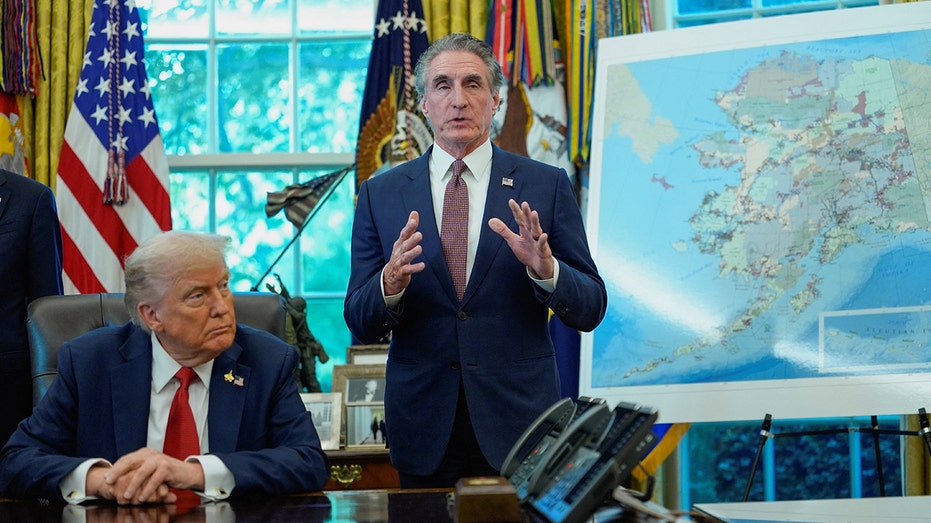
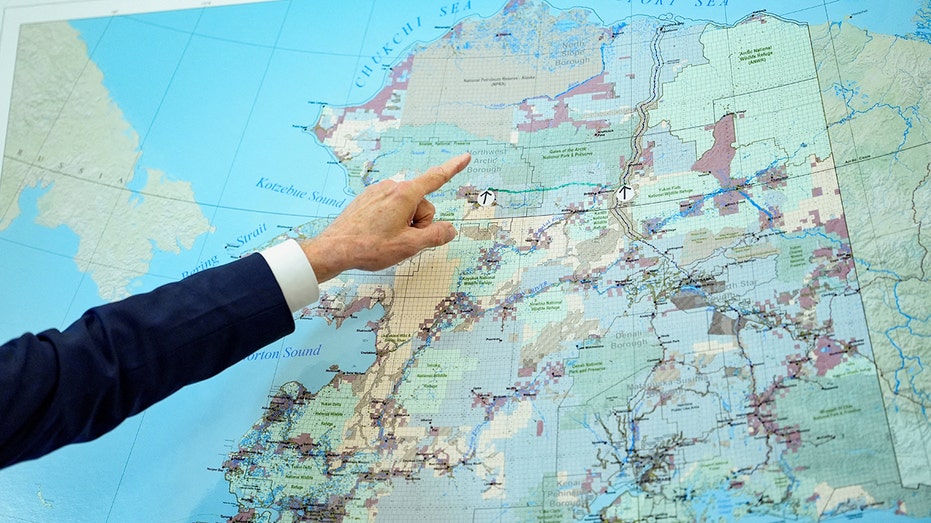
President Donald Trump said he signed an executive order to overturn President Joe Biden’s decision to block construction of a 211-mile access road to Alaska's Ambler mining district. The road is considered key to unlocking U.S. reserves of copper and other essential minerals.

"This is something that should have been long operating and making billions of dollars for our country and supplying a lot of energy and minerals and everything else that we are talking about," Trump said during the signing ceremony in the Oval Office.

Alongside the executive order, the White House announced a $35.6 million investment in Trilogy Metals, a Canada-based company potentially developing part of the Ambler district. The deal gives the U.S. a 10% equity stake, with warrants to purchase another 7.5%.


President Donald Trump listens to Secretary of the Interior Doug Burgum speak during the signing of an executive order related to mining operations in Alaska, at the White House, in Washington, D.C., Oct. 6, 2025. (Kent Nishimura / Reuters Photos)

Biden had blocked the road in 2024 over his Interior Department’s concerns that mining could threaten caribou and fish populations that provide subsistence to dozens of Native communities.


A geographic map of northern Alaska is shown in the Oval Office as President Donald Trump signs an executive order authorizing the construction of an access road to the Ambler mining district on Oct. 6, 2025. (Kent Nishimura / Reuters Photos)

The move is part of Trump’s broader push to reduce U.S. reliance on China for vital materials across industries such as energy, semiconductors and defense.


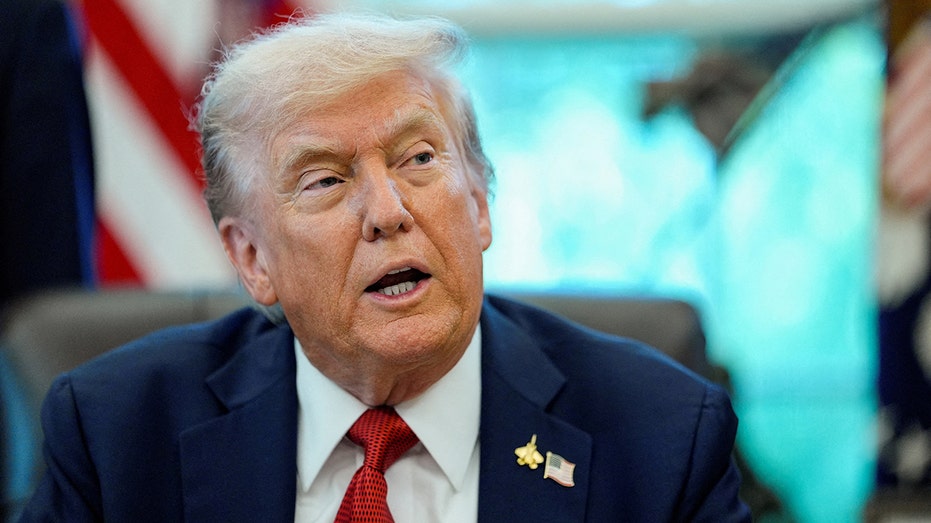
President Donald Trump delivers remarks during an event at the White House on Oct. 6, 2025. (Kent Nishimura / Reuters Photos)

Last month, the Department of Energy restructured a deal with Lithium Americas to receive penny warrants for a 5% stake in the company and warrants for a 5% economic stake in the Thacker Pass lithium project joint venture with General Motors.

In August, the U.S. government acquired a 9.9% stake in chipmaker Intel through a warrant and common stock agreement worth about $8.9 billion.

The Pentagon invested $400 million of preferred stock in MP Materials in July to build an end-to-end U.S. rare-earth magnet supply chain. The company owns the only operational rare earth mine in the U.S., located at Mountain Pass, California.


Federal Court Throws Out Biden's Offshore E&P "Withdrawal" Areas

The ruling could make it possible to expand the reach of future drilling activity to include more areas off the West Coast and Alaska (USCG file image)

Published Oct 6, 2025 8:20 PM by The Maritime Executive


A federal judge has thrown out the Biden administration's sweeping ban on offshore oil and gas lease sales outside of the Gulf of Mexico and the North Slope of Alaska, allowing future lease sales to proceed in new geographies. 

The "withdrawal," released in the final weeks of Biden's time in office, covered all of the lease planning areas of the West and East Coasts of the lower 48 states, parts of the Bering Sea, the Straits of Florida, and the eastern Gulf of Mexico. In all, more than 625 million acres of federal seabed were withdrawn from leasing using the president's authority under the U.S. Outer Continental Shelf Lands Act (OCSLA), and Biden's memorandum claimed that this status would last "indefinitely."

The declaration was the largest lease area withdrawal in U.S. history; however, it only covered areas without active E&P activity. All of the regions with significant oil and gas interest - the central U.S. Gulf, Cook Inlet, and Alaska's Arctic coastline - were not withdrawn. 

Multiple oil-producing states joined the American Petroleum Institute in a lawsuit to reverse the withdrawal, but faced a hurdle in the form of an earlier precedent. In 2019, a federal judge ruled that based on the text of the law, a sitting president cannot reverse a previous OCSLA withdrawal once made. The plain language of the statute is mute on this question: unlike several comparable laws governing onshore federal land, it does not explicitly address the question of reversals. 

On Thursday, US District Court Judge James D. Cain, Jr. - a Reagan appointee in the Western District of Louisiana - disagreed with the 2019 court opinion and ruled in favor of E&P interests, striking down Biden's declaration. 

"The language of [OCSLA] itself establishes that withdrawals must be subject to reversal or modification. The statute specifies that the president may exercise this authority 'from time to time,' which courts have recognized as encouraging an ongoing duty to revisit and amend regulations," he wrote. "Presidents have exercised this authority to modify the withdrawals of prior administrations. The orders of President Obama and President Biden, on the other hand, purported to apply for 'a period of time without specific expiration,' i.e., indefinitely. To the extent these were indeed supposed to overcome the power of subsequent executives to revoke or modify their withdrawals, they constituted a departure from the executive branch’s longstanding practice and exceed the authority granted under § 12(a)."

In a statement, the American Petroleum Institute said that the court's ruling would be positive for the energy economy. 

"We welcome the court’s decision to vacate this politically motivated decision and ensure our nation’s vast offshore resources remain a critical source of affordable energy, government revenue and stability around the world. This ruling marks another important step in advancing a robust new five-year offshore leasing program and ensuring the U.S. can meet rising energy demand," said API SVP and General Counsel Ryan Meyers.


EU Plans to Sanction Providers of False Flags to Russia’s Shadow Fleet

The EU plans to impose sanctions on three companies that have provided false flags to tankers of the Russian shadow fleet, Bloomberg reported on Tuesday, citing documents it has reviewed. 

The companies have provided false flags of Aruba, Curacao, and Sint-Maarten to at least eight tankers sanctioned by the EU, according to the documents.  

The potential sanctions against the entities enabling the shadow fleet are part of the European Union’s 19th sanctions package, which the EU member states are currently discussing. 

Earlier this year, the Netherlands warned the International Maritime Organization (IMO) that companies were providing “fraudulent certificates” on behalf of Sint Maarten, Bloomberg notes. 

The sanctions on the suppliers of false flags would come into effect when the EU adopts the whole sanction package, which needs unanimous approval from all 27 member states. 

The European Commission’s proposed sanctions package also accelerates the timeline for phasing out Russian LNG imports into the bloc—from the end of 2027 to January 1, 2027, one year earlier than planned.

The sanctions package also removes all remaining exemptions on Russian oil producers Rosneft and Gazprom Neft, and expands sanctions on Russia’s shadow fleet and its enablers, including on 118 new vessels. 

European Commission President Ursula von der Leyen said upon proposing the new sanctions package that “Russia's war economy is sustained by revenues from fossil fuels. We want to cut these revenues.”

“It is time to turn off the tap. We are prepared for this. We have been saving energy, diversifying supplies and investing in low-carbon sources of energy like never before,” von der Leyen added.

While the EU debates the sanctions package, some individual member states are tightening controls and inspections to intercept shadow fleet vessels. 

Denmark on Monday said it is intensifying inspections on oil tankers passing through its waters, which are the gateway to and from the Baltic Sea, in a move to counter Russia’s shadow fleet movements.   

By Michael Kern for Oilprice.com


Denmark Increases Inspections of Shadow Fleet’s “Old and Worthless” Ships

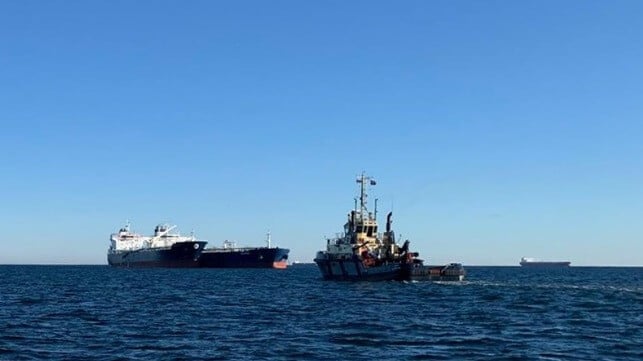
tankers anchored off Denmark
Denmark will be inspecting vessels in the Skagen Red anchorage which it calls the gateway to the Baltic (DanPilot)

Published Oct 6, 2025 6:49 PM by The Maritime Executive


Denmark announced that it will be taking further steps to reduce the dangers from “old and worthless” ships navigating through its busy sea lanes by targeting environmental inspections at one of the key anchorages in the region. It extends Denmark’s previous efforts to monitor high-risk vessels and is part of the emerging effort across the EU to target the shadow tanker fleet.

"We know that there is a lot of traffic consisting of older ships sailing through Danish waters, and they pose a particular risk to our marine environment,” said Environment Minister Magnus Heunicke. “That is why we are now tightening controls with very basic environmental rules so that we can take more effective and consistent action against tankers and the Russian shadow fleet."

Denmark highlights that several thousand ships pass through its waters each year, and a large number of them anchor in an area known as Skagen Red, at the northern tip of Denmark, as the North Sea ends on the passage toward the Baltic. It is one of the largest and busiest anchorages in the Nordic region.

The Danish Maritime Authority, in collaboration with the Danish Environmental Protection Agency, will carry out more environmental inspections of the ships to ensure that they comply with environmental regulations. They will be looking at elements including waste management, scrapping certificates, ballast water management, discharge of scrubber water, and follow fuel requirements. 

The report that more ships will be boarded while they are in the anchorage, Environmental inspections will be carried out together with port state controls. The EU has already authorized member countries to inspect documentation and demand proof of insurance from passing vessels.

"We must put an end to Putin's war machine. This also applies to the Russian shadow fleet,” said Minister of Industry and Trade Morten Bødskov. “We are using all tools. We know from our safety checks at Skagen Red that among these ships, there are old and worn-out ships sailing around. That is why our authorities are now intensifying the controls so that we look after Denmark and Danish waters."

Another part of the effort will use the so-called “sniffer” on the Great Belt Bridge. Till en end of the year, they will be measuring sulfur content in the ship’s emissions to ensure compliance with the rules of the IMO-designated SOx (Sulphur Oxide) and NOx (Nitrogen Oxide) Emission Control Area (ECA). In the past, countries in the region worked with the European Maritime Safety Agency for enforcement using sniffer drones.

The new effort follows calls last week by France’s President Emmanuel Macron to interfere with the operations of the shadow fleet. France detained a vessel suspected of operating under a false flag, holding it for nearly a week before it was released.

Russia continues to react strongly to the efforts, calling them piracy. It began escorting tankers in the Gulf of Finland and the Baltic in response to the Baltic countries' efforts to inspect shadow fleet tankers.