Clean energy surpasses coal but policy headwinds threaten 2030 goals, IEA warns
This year, solar and wind farms generated more electricity than coal for the first time. But United States and Chinese policy shifts are slowing growth, making it unlikely that the global 2030 clean energy goals will be met, according to a report released by the International Energy Agency.
Issued on: 08/10/2025
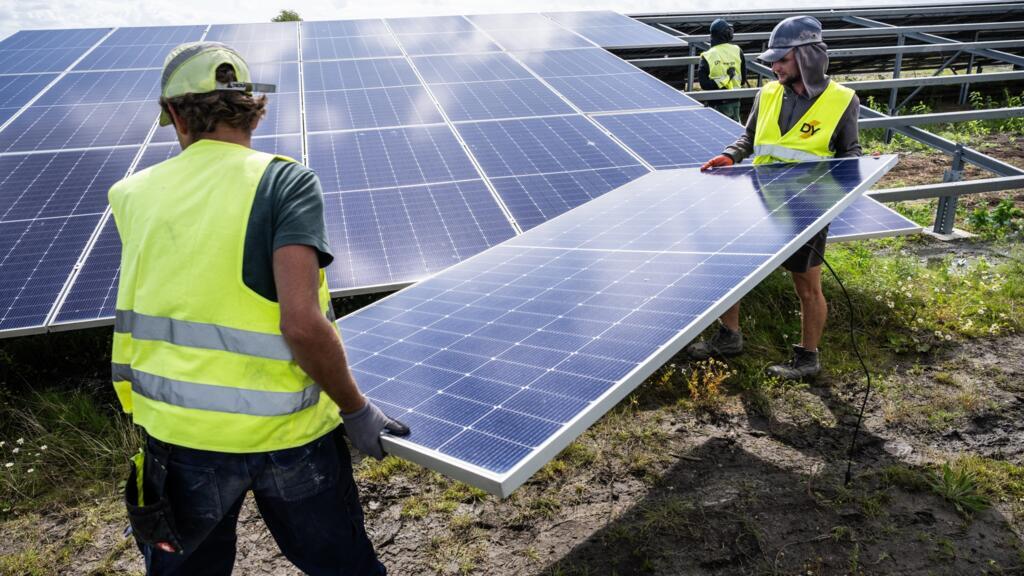
The rise in renewable energy marks a key milestone in moving away from fossil fuels, which are responsible for most of the greenhouse gas emissions that are driving climate change.
Renewables made up 34.3 percent of global electricity in the first half of 2025, overtaking coal’s 33.1 percent, while gas stayed at 23 percent, according to Ember, a UK-based energy think tank.
"We are seeing the first signs of a crucial turning point," said Malgorzata Wiatros-Motyka, senior electricity analyst at Ember.
"Solar and wind are now growing fast enough to meet the world's growing appetite for electricity. This marks the beginning of a shift where clean power is keeping pace with demand growth."
While solar power surged 31 percent in early 2025, far outpacing wind, which grew 7.7 percent, coal and gas slightly declined.
Also over the past five years, solar panels have driven about 80 percent of global renewable energy growth, followed by wind, hydro, biomass, and geothermal power, according to a report published Tuesday by the International Energy Agency (IEA).
Solar overtakes coal in EU's energy mix as renewables continue to rise
UN climate summit objectives
At the 2023 UN climate summit in Dubai, countries pledged to phase out fossil fuels and triple renewable capacity by 2030.
However, the IEA said on Tuesday that the world will "fall short" of reaching this target.
Last year, the Paris-based agency had forecast that the world would come close to the Dubai target with the addition of 5,500 gigawatts of renewable power.
The IEA now sees only a 4,600 GW increase by 2030 due to "policy, regulatory and market changes since October 2024."
Renewables on the rise in India and Europe
The IEA cut its forecast for the United States by nearly 50 percent due to the Trump administration’s early end to renewable tax credits and tighter regulations.
Trump called climate change "the greatest con job ever" at a UN speech last month and renewables an expensive "joke" that "don't work."
China’s shift from fixed tariffs to auctions "has shaken up the profitability of the projects" but China remains the biggest growth driver, on track to meet its 2035 wind and solar power target five years ahead of schedule.
Meanwhile, India is expected to become the second-largest market for renewable energy, with capacity expected to increase 2.5 times in five years.
The IEA also raised growth forecasts for the Middle East, North Africa, and several European countries including Germany, Italy, Poland, and Spain.
(with AFP)
Solar and wind power overtake coal as world’s biggest generator of electricity, report finds
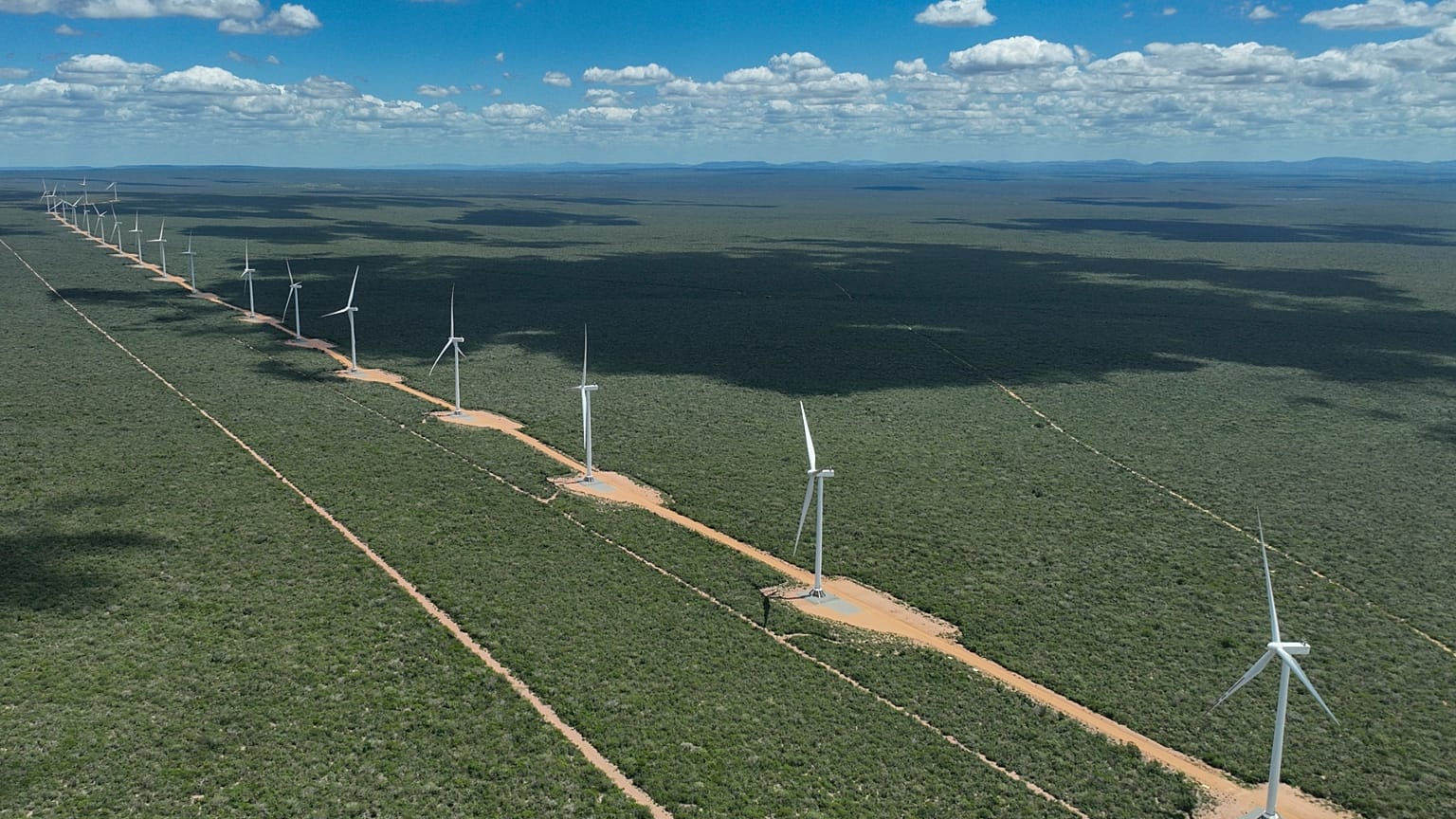
The authors say it's a sign that renewables can keep up the pace with the growing appetite for electricity worldwide.
Worldwide solar and wind power generation has outpaced electricity demand this year, according to a new analysis.
Plus, for the first time on record, renewable energies combined generated more power than coal.
Global solar generation grew by a record 31 per cent in the first half of the year, while wind generation grew by 7.7 per cent, the report by the energy think tank Ember found.
Solar and wind generation combined grew by more than 400 terawatt hours, which was more than the overall global demand increase in the same period, it found.
Renewables can keep pace with growing appetite for electricity
The findings suggest it is possible for the world to wean off polluting sources of power - even as demand for electricity skyrockets - with continued investment in renewables, including solar, wind, hydropower, bioenergy and geothermal energies.
“That means that they can keep up the pace with growing appetite for electricity worldwide,” said Małgorzata Wiatros-Motyka, senior electricity analyst at Ember and lead author of the study.
At the same time, total fossil fuel generation dropped slightly, by less than 1 per cent.
“The fall overall of fossil may be small, but it is significant,” said Wiatros-Motyka. “This is a turning point when we see emissions plateauing."
The firm analyses monthly data from 88 countries representing the vast majority of electricity demand around the world.
Reasons that demand is increasing include economic growth, electric vehicles and data centres, rising populations in developing countries and the need for more cooling as temperatures rise.
Meeting that demand by burning fossil fuels such as coal and gas for electricity releases planet-warming gases, including carbon dioxide and methane. This leads to more severe, costly and deadly extreme weather.
EU lags behind in renewable energy generation
Ember also dedicated part of its report to an analysis of China, India, the European Union and the US. Combined, they account for nearly two-thirds of electricity generation and carbon dioxide emissions from the power sector globally.
In the first six months of the year, China added more solar and wind than the rest of the world combined, and its fossil fuel generation fell by 2 per cent, the report said
India saw record solar and wind growth that outpaced the growth in demand. India's fossil fuel generation also dropped.
In both nations, emissions fell.
“It’s often been said by analysts that renewable energy doesn’t really lead to a reduction in fossil fuel use,” said Michael Gerrard, founder and director of the Columbia University Sabin Centre for Climate Change Law, who was not involved in the report. “This report highlights an encouraging step in the opposite direction.”
But in the US, demand growth outpaced the growth of clean power generation. In the EU, sluggish wind and hydropower generation contributed to higher coal and gas generation, the report said. In both markets, fossil fuel generation and emissions increased.
Challenges face renewables in the US
The US clean energy market faces challenges as President Donald Trump's administration shifts federal policy away from renewables and toward boosting coal, oil and gas production.
The administration has terminated Biden-era funding that supported clean energy projects, repealed policy underpinning climate-related regulation and halted wind energy developments.
Meanwhile, the administration has lifted barriers to coal mining, granted two years of regulatory relief to coal-fired power plants and other polluting industries and dedicated millions of dollars to these coal plants.
Renewables “still have an opportunity to make inroads into displacing fossil fuels, even with some demand growth,” said Amanda Smith, senior scientist at research organisation Project Drawdown, who also wasn't involved in the report.
But, she added: “I am very cautiously optimistic that renewables can continue to grow and continue to displace fossil fuels in the US. I am more optimistic on the world scale.”
Fossil fuel companies control a mere 1% of renewable energy projects worldwide
The fossil fuel industry is falling far short of its pledge to lead the energy transition, according to new research from the Institute of Environmental Science and Technology at the Universitat Autònoma de Barcelona (ICTA-UAB). The study shows that the world’s largest oil and gas companies are responsible for only 1.42% of renewable energy projects worldwide.
The research, recently published in Nature Sustainability, challenges the dominant narrative promoted by the fossil fuel industry that positions itself as a key player in tackling climate change through “green” energy projects.
Drawing on data from Global Energy Monitor, the study analyzes the world’s 250 largest oil and gas producers—responsible for 88% of global hydrocarbon output—and identifies 3,166 unique wind, solar, hydro and geothermal projects in which these companies have a stake, whether directly, through subsidiaries, or via acquisitions.
The results show that only 20% of these 250 companies own a renewable energy project in operation, with renewable energy representing a mere 0.1% of their primary energy extraction.
This failure to invest in renewables contrasts starkly with the industry’s repeated claims about playing a central role in cutting emissions. For the top 100 oil and gas companies, almost a quarter have set greenhouse gas reduction targets for 2030, with an average commitment of 43% cuts in their own operations, according to Zero Carbon Analytics.
Marcel Llavero-Pasquina, researcher at ICTA-UAB and lead author of the study, said: “Oil and gas companies' renewable deployment is anecdotal at best. Their contribution to the fight against the climate crisis should be judged solely by how much fossil fuel they leave in the ground.”
The findings raise serious doubts for institutions and organizations that continue to engage with fossil fuel companies under the assumption that they are key players in the energy transition.
Llavero-Pasquina added: “After decades of empty words, it is time for governments, universities and public institutions to recognize that the fossil fuel industry will always be part of the problem, not the solution to the climate crisis. Oil and gas companies should not have a seat at the table where the future of climate and energy policy is decided.”
Julia Steinberger, professor at the University of Lausanne, Switzerland, said the study confirms what is already known about the oil, gas and coal industries: that despite their green slogans, they are failing entirely in their transition to clean energy. “Despite slogans like ‘Liar, liar, planet on fire,’ fossil fuel lobby groups and think tanks continue to influence our politicians,” she warned.
Kasandra O'Malia, Project Manager for the Global Solar Power Tracker at Global Energy Monitor, said: “Oil and gas companies simply aren’t investing in renewables like they’ve pledged. Claims to the contrary are greenwashing.”
Journal
Nature Sustainability
Method of Research
Data/statistical analysis
Subject of Research
Not applicable
Article Title
Oil and gas industry’s marginal share of global renewable energy.
Article Publication Date
9-Oct-2025
BP Launches Sixth Oil and Gas Project in 2025 at North Sea Field

BP has started up the Murlach oil and gas field in the UK North Sea, the sixth major project the supermajor has launched so far this year, as part of its goal to have ten new oil and gas fields operational by 2027.
Murlach adds a peak net production of around 15,000 barrels of oil equivalent per day (boed) to the BP-operated Eastern Trough Area Project (ETAP) in the central North Sea, a hub that has been operating for 27 years, the supermajor said on Thursday.
The Murlach project received government and regulatory approvals in 2023 and involved the redevelopment of a field originally in operation in the early 2000s. BP has acquired the field license after it was relinquished by the previous operator.
The six projects that BP has launched this year add around 150,000 boed combined peak net production and will help BP reach its target to deliver an additional 250,000 boed combined peak net production by the end of 2027.
“These projects reflect bp's strength in safely increasing production to supply energy to meet global demand, while maintaining a relentless focus on shareholder returns. They also highlight our focus on efficient delivery, with four starting up ahead of schedule,” said Ewan Drummond, BP’s senior vice president of projects.
In the North Sea, BP looks to identify opportunities that can be developed using existing infrastructure to effectively manage established oil and gas hubs for the entirety of their lifespan, said Doris Reiter, senior vice president of BP North Sea.
Earlier this year, BP announced a major strategy reset to slash investments in renewables and focus on its core business of producing oil and gas, pressured by investors to boost returns to shareholders.
Under the new strategy, BP will aim for 10 new major upstream projects to start up by the end of 2027, and a further 8–10 projects by the end of 2030. Production is also expected to grow to 2.3–2.5 million boed in 2030, with capacity to increase to 2035.
Last week, BP decided to proceed with its estimated $5 billion Tiber-Guadalupe project in the U.S. Gulf of Mexico, as part of its strategy to grow upstream production and boost its U.S. output to more than 1 million boed by 2030.
By Tsvetana Paraskova for Oilprice.com