Thursday, October 09, 2025

World Bank nudges up Latin America growth forecast to 2.3% but warns of skills shortage

World Bank nudges up Latin America growth forecast to 2.3% but warns of skills shortage
“Creating more dynamic economies in Latin America and the Caribbean will require strengthening our pipeline of entrepreneurial talent, while undertaking the systemic reforms necessary for them to thrive," said William Maloney, WB Chief Economist for Latin America and the Caribbean. / unsplash
By bnl editorial staff October 8, 2025

The World Bank expects Latin America and the Caribbean’s economy to expand 2.3% in 2025, a slight uptick from 2.2% in 2024, with growth projected to reach 2.5% in 2026, the multilateral lender said in a report. Despite this marginal improvement, the region remains the world’s slowest-growing, hobbled by persistent inflation, high debt and a critical deficit in the dynamic businesses needed to spur development.

This meagre performance conceals a patchy outlook among the region's largest economies and underscores deeper structural impediments that continue to deter robust capital formation.

Argentina is undergoing a notable economic rebound, with growth forecast at 4.6% in 2025, decelerating to 4.0% in 2026. The rebound is being driven primarily by a recovery in agricultural exports following the severe 2023 drought.

Conversely, Mexico’s growth is expected to slow to just 0.5% this year before accelerating to 1.4% in 2026, as the impetus from major public infrastructure projects fully wanes and escalating US trade restrictions begin to weigh on external demand. Brazil’s growth is also projected to decelerate to 2.4% in 2025 and 2.2% in 2026, with restrictive monetary policies and limited fiscal support weighing on investment.

The region’s growth trajectory continues to be shaped by persistent structural challenges and a more constrained global environment, leaving it once again among the world’s slower-growing regions.

“Governments in the region have steered their economies through repeated shocks while preserving stability. Now is the time to continue building on that foundation—accelerating reforms to improve the business climate, invest in enabling infrastructure, and mobilise private capital,” said Susana Cordeiro Guerra, Vice President for Latin America and the Caribbean at the World Bank.

The disinflation process slowed as core inflation remained high, largely due to increased labour costs affecting the prices of services. This downward resistance has become more pronounced since the first quarter of 2025, with some economies even showing nascent signs of an uptick in inflation rates.

This complicates the monetary policy landscape. Fiscal deficits persist at stubbornly high levels across Latin America’s largest economies. Despite efforts to address primary deficits, many nations struggle to achieve overall fiscal balance, primarily due to the growing burden of debt service.

The report identifies a central paradox: high entrepreneurial enthusiasm in the region fails to translate into economic dynamism. The roots lie in a deeply rooted inability to “learn how to learn” about new technologies and opportunities.

"Firms want to hire more people, but they cannot get the workers," said William Maloney, chief economist for Latin America and the Caribbean at the World Bank, as quoted by Reuters.

"And it's some combination of the school system and the training system that's not doing that right."

The region appears to get little “kick” out of the entrepreneurial process of experimentation. The vast majority of LAC’s entrepreneurs are found in micro firms, dominated by single-person firms with low education and income who have no employees.

By contrast, a much smaller group of more “modern” or “transformational” firms grow and create jobs. But LAC has a relatively low share of these firms. This does not seem to be the result of a lack of enthusiasm—LAC has a higher share of its tertiary graduates in entrepreneurship than the United States; however, the region has many fewer tertiary graduates.

Even the region’s best-prepared entrepreneurs face challenges that can hinder their growth and job creation. The report focuses on two particularly binding constraints.

The first is shallow financial markets. Over a quarter of firms in LAC report being financially constrained (more than twice the rate of firms in the OECD and the United States). The second is difficulties in hiring qualified workers, affecting firms of all sizes, but especially larger firms.

These two impediments appear to be widespread. In Chile, more than 70% of firms report being limited by either financing, human capital, or both.

The persistent lack of fiscal space underlines the continuing importance of improving the efficiency of government spending, as well as rethinking the ways governments raise revenue. For the foreseeable future, the region’s potential for transformative growth remains hampered by these familiar, yet unresolved, challenges.

Political and fuel crises push Bolivia into lonely Latin American recession

Political and fuel crises push Bolivia into lonely Latin American recession
The World Bank’s regional report places Bolivia’s crisis within a broader slowdown across Latin America and the Caribbean, where growth is expected to reach just 2.3% in 2025 and 2.5% in 2026, the slowest globally. / unsplash
By Alek Buttermann in Berlin October 9, 2025

Bolivia faces one of its most severe economic crises in decades, with the World Bank projecting a three-year recession stretching until 2027. The lender’s latest report predicts contractions of –0.5% in 2025, –1.1% in 2026, and –1.5% in 2027, making Bolivia and violence-ridden Haiti the only economies in Latin America expected to shrink in the coming years. The forecast starkly contrasts with President Luis Arce’s 2025 state budget, which anticipates growth of 3.51%.

The downturn marks the definitive end of Bolivia’s commodities-driven boom. The collapse of the hydrocarbon industry, long the main source of fiscal revenue, has left the state struggling to maintain its costly fuel subsidies. As of this week, the state oil company YPFB confirmed it can meet only 70–80% of domestic demand for diesel and petrol due to a shortage of dollars required for imports.

YPFB President Armin Dorgathen said that unless the Ministry of Economy releases sufficient funds for weekly imports, estimated at around $60mn, the country will continue to suffer from fuel shortages. These deficits have triggered nationwide queues at petrol stations and pushed the Confederation of Drivers’ Unions to declare a state of emergency.

The government blames the crisis on external factors such as the pandemic, the war in Ukraine and internal political blockades. Economy Minister Marcelo Montenegro insists there is “stability in several sectors”, denying that Arce is leaving behind a “broken” economy. Yet independent economists paint a different picture. Alberto Bonadona told EFE that Arce “has taken Bolivia to the gates of hell”, while political analyst Franklin Pareja described the leftist MAS administration as leaving the state “practically bankrupt and looted”.

The depth of the crisis exposes chronic structural flaws. Bolivia imports 90% of its diesel and more than half its petrol, selling them below market prices through state subsidies. Meanwhile, its reserves of natural gas, once the country’s export engine, have plunged from 22.2bn cubic metres in 2014 to just 11.9bn in 2024, according to government data.

Arce’s flagship policy of “industrialisation” has also failed to deliver. Major projects, including lithium extraction plants and urea or sugar production facilities, remain paralysed or incomplete. Contracts with Chinese and Russian firms to develop lithium resources through direct extraction technology (DLE) are stalled in parliament amid court rulings and internal divisions within the ruling Movimiento al Socialismo (MAS).

The government’s “import substitution” strategy, promoted as a path toward self-sufficiency, has been criticised for serving political patronage rather than genuine development. “These factories were built for electoral propaganda, not productivity,” Bonadona told Infobae.

The economic collapse now dominates the agenda ahead of the October 19 presidential runoff, which marks the end of two decades of uninterrupted rule by the hard-left MAS party founded by former president Evo Morales. The contest pits centrist senator Rodrigo Paz Pereira against conservative former president Jorge “Tuto” Quiroga (2001–2002). Both have pledged to reverse the economic deterioration, but through radically different approaches.

Quiroga, candidate of the Alianza Libre, told El Deber he will seek $12bn in international financing from the IMF, World Bank, IDB, CAF and other lenders. The programme would fund immediate fuel imports, stabilise inflation, and inject much-needed US dollars into the domestic market. “We will guarantee from the first day that there are no more queues for petrol and diesel,” he said, claiming the support of the United States for his recovery plan.

Rodrigo Paz, leading the Partido Demócrata Cristiano (PDC), advocates a moderate course aimed at attracting disillusioned MAS voters. According to The Independent, Paz rejects IMF austerity plans and instead proposes “capitalism for all”, promising to retain social welfare programmes while phasing out fuel subsidies except for vulnerable sectors. Critics argue, however, that his economic agenda remains vague and that his alliance with vice-presidential candidate Edman Lara, a populist ex-police officer, adds uncertainty to his campaign.

The World Bank’s regional report places Bolivia’s crisis within a broader slowdown across Latin America and the Caribbean, where growth is expected to reach just 2.3% in 2025 and 2.5% in 2026, the slowest globally. While Argentina is forecast to rebound by 4.6%, Peru and Chile are expected to see moderate expansion. Bolivia stands out as an outlier, forecasted to contract.

According to World Bank economist William Maloney, Latin America’s enduring weakness stems from “shallow financial markets and shortages of skilled labour”, which prevent firms from expanding. These structural shortcomings, combined with Bolivia’s deep-rooted political turmoil and fiscal mismanagement, suggest that any future administration will inherit a fragile state with limited capacity for recovery.

As Arce prepares to step down, the next government will face a near-impossible task: stabilising an economy drained of reserves, paralysed by political division and dependent on a vanishing gas industry while convincing an increasingly sceptical public that recovery is still possible.

Trump’s attendance at ASEAN Summit hinges on Cambodia–Thailand peace deal

Trump’s attendance at ASEAN Summit hinges on Cambodia–Thailand peace deal
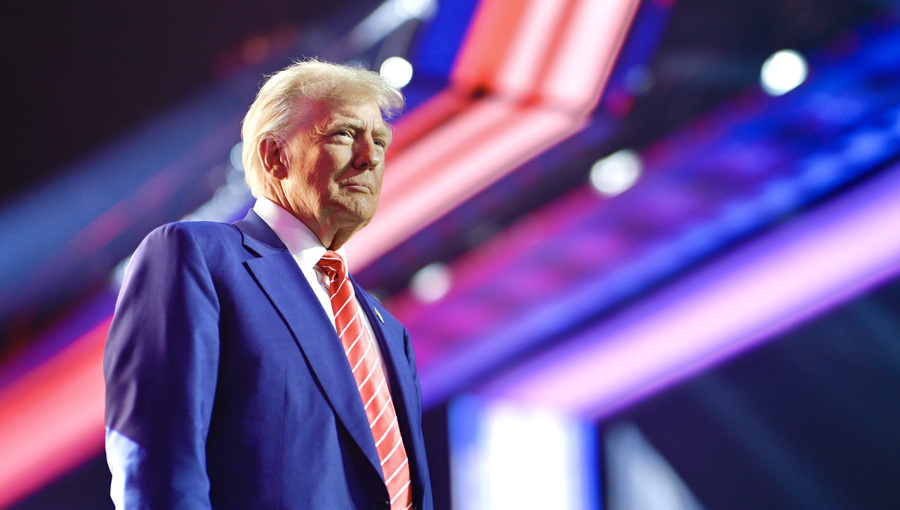
/ The White House
By bno - Surabaya Office October 9, 2025

US President Donald Trump will only attend the upcoming ASEAN Summit in Malaysia later this month if he is allowed to preside over a symbolic peace deal signing between Cambodia and Thailand, according to reports by Politico and the South China Morning Post (SCMP).

Politico, citing three unnamed sources familiar with the discussions, said the White House informed Malaysia that Trump’s participation depends on his role in a ceremonial event marking the ceasefire agreement between the two Southeast Asian neighbours. The report also noted that Washington has asked summit organisers to exclude Chinese officials from the ceremony, placing Malaysia in a “difficult position.”

Although Prime Minister Anwar Ibrahim previously confirmed Trump’s attendance, the latest conditions have cast uncertainty over the visit. Trump, who remains unpopular in Malaysia due to his strong pro-Israel stance, reportedly views the event as an opportunity to claim credit for brokering the truce. Last month, he declared that it would be a “big insult” if he did not win the 2025 Nobel Peace Prize.

The SCMP corroborated the reports, citing diplomatic and Malaysian government sources who said Trump wants a special side event during the ASEAN Summit to highlight his role in facilitating the peace process. “That is one of his reasons for coming to Kuala Lumpur,” one of the four sources told the Hong Kong-based outlet.

Neither Anwar’s office nor Malaysia’s foreign ministry has commented on the reports. Analysts say the Malaysian leader faces a delicate balancing act between accommodating Washington’s requests, particularly amid ongoing negotiations for a US–Malaysia trade deal, and maintaining stable relations with China, the country’s largest trading partner.

Malaysian officials believe Trump may still attend if the trade negotiations are finalised, even without the Cambodia–Thailand ceremony. However, US officials have reportedly described Malaysia’s status as “up in the air” due to both the trade and peace deal remaining unresolved.

The peace deal between Thailand and Cambodia has been largely credited to regional diplomatic efforts, with Bangkok previously stating that “Cambodia’s actions, not Trump’s mediation,” were the key to sustaining peace.

Russia’s ‘false flag’ claims spark fears of pre-war posturing

Analysis


In a series of escalating statements, Russia’s foreign intelligence service has accused Western countries of plotting “false flag” operations to discredit Moscow. While the claims lack evidence, analysts warn they may reflect something more serious: an intensifying hybrid warfare strategy – and signs that the Kremlin is preparing the narrative ahead of a potential conflict with NATO.


Issued on: 08/10/2025 
FRANCE24
By: Sébastian SEIBT

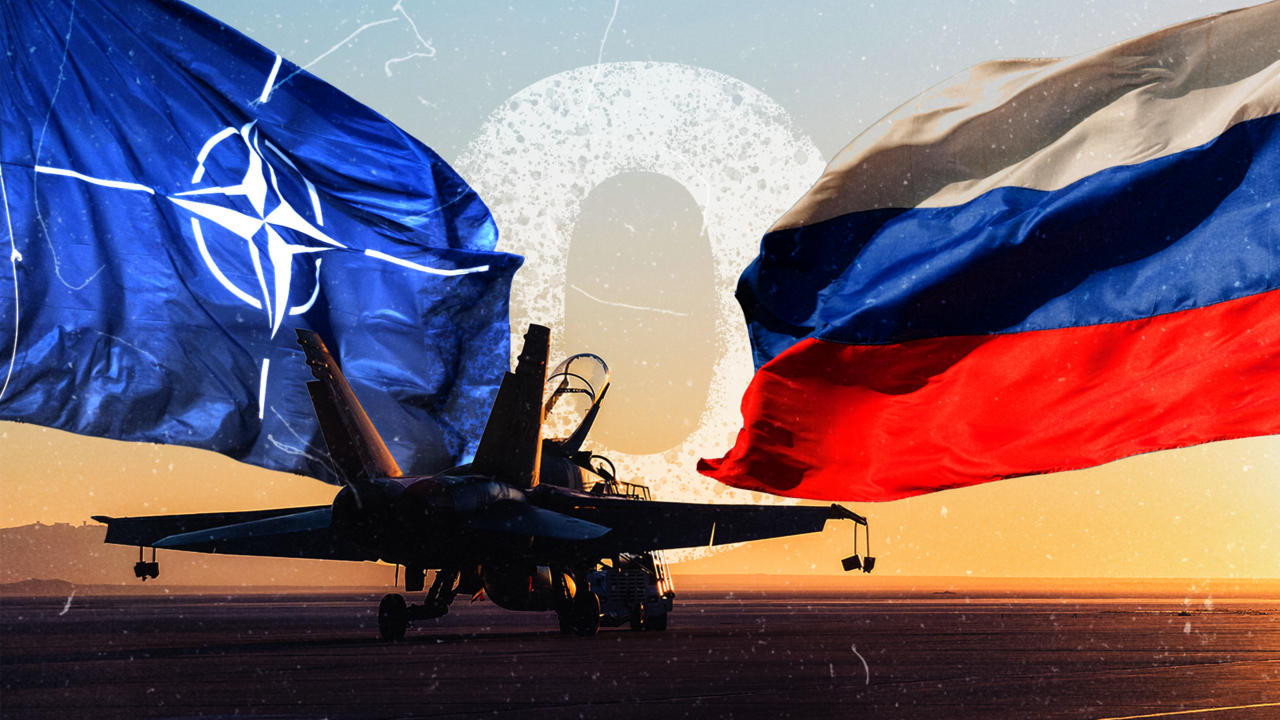
Russia recently accused several NATO countries of "false flag" operations in order to pin the blame on Moscow. © France Médias Monde graphic studio

Russia’s foreign intelligence service (SVR) has ramped up accusations against the European Union, the UK and Poland in recent weeks, claiming they are orchestrating covert operations designed to frame Moscow for acts of sabotage.

The allegations – largely dismissed by Western officials as disinformation – have led some analysts to warn that the Kremlin may be laying the groundwork for a future escalation with NATO.

The SVR alleged on October 6 that the UK was recruiting Ukrainian agents to stage a maritime attack that would appear to have been carried out by Russia. The supposed plan included the use of Chinese equipment, which the SVR said was intended to implicate Beijing as well. The agency claimed the operatives were instructed to get arrested by Western authorities and then claim they had acted on orders from Moscow.

That was one in a rapid series of accusations. Russia accused Polish intelligence on September 30 of working with Ukrainian agents to create a fake Russian-Belarusian special forces unit aimed at attacking Polish infrastructure. A week earlier, the SVR claimed that NATO and EU officials were planning provocations in Moldova’s pro-Russian breakaway region of Transnistria.

While Western governments have largely dismissed or mocked these unverified claims, experts say their frequency – and timing – warrant close attention.

“There’s clearly been a surge in Russian claims of false flag operations by NATO countries, especially since late September,” said Patrick Rene Haasler, an intelligence analyst at the International Team for the Study of Security Verona.
Pre-war signalling?

According to the Washington-based Institute for the Study of War, Russia’s recent wave of accusations may signal that the Kremlin has entered what military analysts call “Phase 0” – a stage marked by covert operations, psychological warfare and disinformation that precedes open conflict.

Read more Drones, sabotage, surveillance: Moscow’s hybrid warfare takes to the high seas

“Phase 0 is Western terminology,” said Kevin Riehle, an intelligence expert at Brunel University in London. He explained that in Russian military doctrine, it corresponds to a “special period” – a concept inherited from the Soviet era – describing a phase of heightened tensions immediately before war breaks out.

During this “special period”, Russian doctrine focuses on sowing confusion, justifying future military actions and solidifying domestic support.

“It’s part of the broader Russian modern warfare doctrine, which is based on that kind of fog-of-war confusion, hybrid operations,” said Jeff Hawn, a Russia specialist at the London School of Economics.

He said it is a time used to “create a legal justification, or legal cover, for some kind of conflict – but also bolster domestic support”.
Familiar patterns

For many observers, these recent false flag claims echo tactics seen ahead of previous Russian military actions.

“The narrative that was used to justify Russia’s actions after the successful 2014 annexation of Crimea was that the Russian population was threatened by Ukrainian Nazis – literally,” said Yevgeniy Golovchenko, a researcher on Russian propaganda at the University of Copenhagen. Russia claimed that a group of Ukrainian Nazis was on its way to Crimea to kill anyone who spoke Russian.

In reality, such supposed threats were staged by Russian mercenaries or soldiers who carried out aggressive acts themselves.

Read more' Drone wall': Can Europe shield itself from Russian threats?

A similar storyline unfolded just before Russia’s full-scale invasion of Ukraine in 2022.

“A few days before the full-scale invasion, there were multiple explosions and other events in Donbas, which were used by Russia to say, ‘See? Ukrainians are aggressive, Donbas is threatened.’ So we have to carry out the special military operation to protect Russians defensively,” said Golovchenko. “They were trying to create an urgent threat against Russia that had to be dealt with – not tomorrow, but today.”

Moscow has tried to blame the West for staging false flag operations in the past. After the 2018 attempted poisoning of former double agent Sergei Skripal in the UK, Russian officials accused British intelligence of staging the attack to blame Moscow.

“Russia called that a false flag operation, saying that was MI6 trying to kill Skripal so it could blame Russia,” said Riehle.
Domestic audience

While these accusations are directed at Western governments, their primary audience appears to be domestic.

The target audience for such claims is the Russian population, Riehle said, noting that they are broadcast primarily through Russian media outlets to shape public opinion at home.

Golovchenko explained that these narratives are also designed “to vilify NATO” and portray the alliance as “threatening and aggressive” – in contrast to Russia, which is depicted as merely “trying to defend itself”.

Watch moreExclusive investigation: Is the Russian Orthodox Church in Sweden a platform for espionage?

This messaging strategy – portraying Russia as perpetually under siege – helps maintain internal support and frame any future military action as a necessity.

“Russia always invariably claims to be on the defence. It never accepts any allegations that it is being offensive. It’s always the other guy who started it,” Riehle added.

At the same time, the Kremlin remains sensitive to how it is perceived globally.

“Believe it or not, [Russia] actually does care very deeply about international legitimacy, even now,” said Hawn. “It’s all part of the hybrid warfare playbook – meant to sow confusion and blur the line between peace and wartime.”

Escalation or intimidation?

While the rising number of accusations could suggest that Russia is laying the groundwork for an escalation, some analysts say that the Kremlin is likely posturing rather than preparing for immediate military action. 
“One of the foundations of hybrid warfare is the ability to deny responsibility,” Haasler said. “These false flag claims could be part of a strategy to pre-emptively discredit Western narratives – or to justify real acts of sabotage later on.”

According to Riehle, Moscow’s objective may be less about striking first and more about signalling the potential cost of any future confrontation. Instead of planning an outright offensive, Russia appears to be shaping the narrative – offering the West a preview of what open conflict with Moscow might look like, while positioning itself to deny accountability if escalation occurs.

This article has been translated from the original in French by Natasha Li.
One in 10 Gazans killed or wounded in two years: the war in numbers

One in 10 Gazans has been killed or wounded since the war in Gaza began two years ago, with four out of every 100 children having lost at least one of their parents.

Issued on: 07/10/2025 
By: 
FRANCE 24

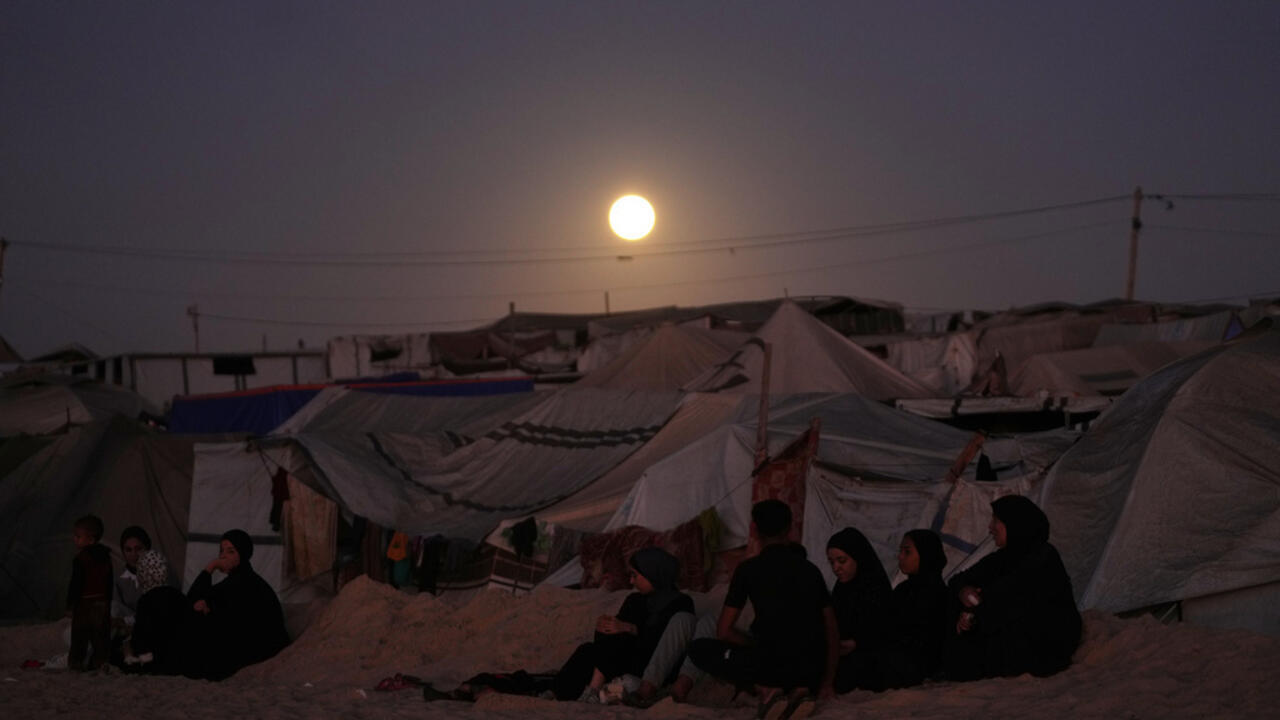
The moon rises behind a tent camp for displaced Palestinians in Khan Younis in the southern Gaza Strip on October 7, 2025. © Jehad Alshrafi, AP

Numbers alone cannot capture the toll the Israel-Hamas war has taken on the Gaza Strip.

But they can help us understand how thoroughly the conflict has upended the lives of 2.1 million Palestinians living in the territory and decimated the territory’s 365 square kilometres.

Here’s a closer look at the devastation in numbers.

One in 10 killed or injured

Out of every 10 people, one has been killed or wounded in an Israeli strike.

Nine are displaced. At least three have not eaten for days. Out of every 100 children, four have lost either one or both parents. Out of every 10 buildings that stood in Gaza prewar, eight are either damaged or flattened. Out of every 10 homes, nine are wrecked. Out of every 10 acres of cropland, eight are razed (more than three out of every four hectares).

Read moreWhat to know as Israel and Hamas begin talks on Trump's Gaza peace plan in Egypt

The war began when Hamas militants launched a surprise attack on Israel on October 7, 2023, killing some 1,200 people, mainly civilians, and taking 251 hostages back to Gaza.

In response, Israeli leaders promised a punishing offensive on the strip to annihilate Hamas and free the hostages.
More than two thousand people killed while seeking food

Cemeteries are overflowing. Mass graves dot the strip. Israeli airstrikes have killed entire families in their homes. More than 2,000 people seeking food have been killed, according to Gaza's health ministry. In some cases, Israel has acknowledged firing warning shots at chaotic crowds attempting to obtain desperately needed aid.

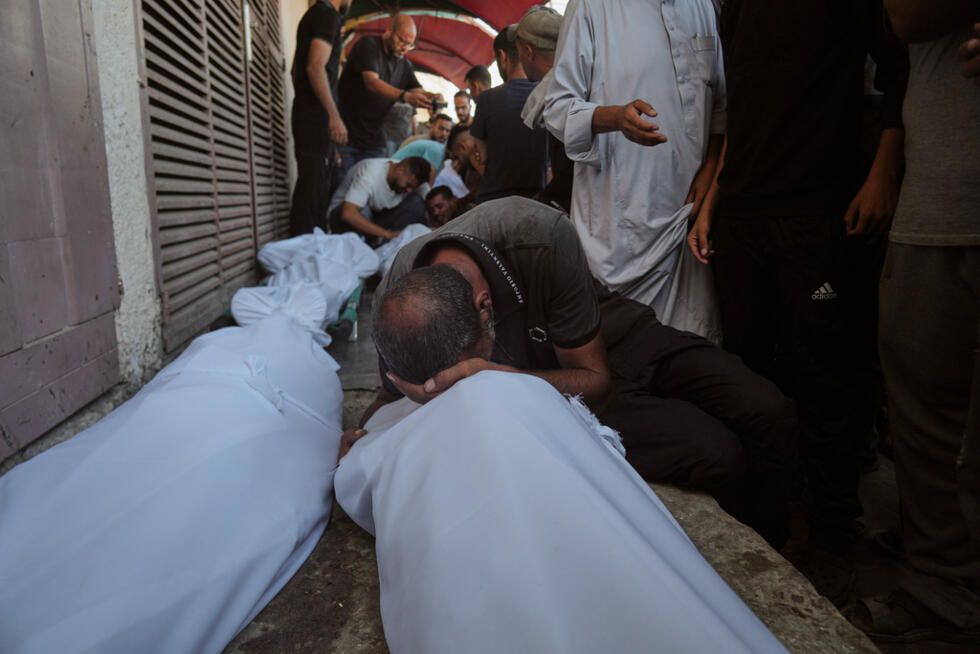
Mourners attend the funeral of Palestinians killed in an Israeli army strike, outside Al-Aqsa Hospital in Deir al-Balah, central Gaza Strip, Saturday, October 4, 2025. © Abdel Kareem Hana, AP


Israeli attacks on health care facilities and limitations on the entry of medical supplies have left overwhelmed doctors to treat advanced burn victims with rudimentary equipment. Israel says it strikes hospitals because Hamas operates in them and uses them as command centres, though it has offered limited evidence. Hamas security personnel have been seen in hospitals and have kept some areas inaccessible. Israel has said restrictions on imports are needed to prevent Hamas from obtaining arms.
Deadliest conflict for journalists

The war is the deadliest conflict for journalists, health workers and UN aid workers in history, according to the Committee to Protect Journalists and the UN The British Medical Journal says the prevalence of patients with injuries from explosives in Gaza compares to data on injured US combat forces in Iraq and Afghanistan.

Experts commissioned by a UN body and major rights groups have accused Israel of genocide, charges it vehemently denies.

In all, Israel’s campaign has killed more than 67,000 Palestinians and wounded nearly 170,000, according to Gaza’s health ministry. More than 40,000 of those wounded have life-altering injuries, according to the World Health Organization.

The death toll does not include the thousands of people believed buried under the rubble. The ministry – part of the Hamas-run government and staffed by medical professionals – does not distinguish between civilians and combatants in its count. But its figures are seen as a reliable estimate by the UN and many independent experts.

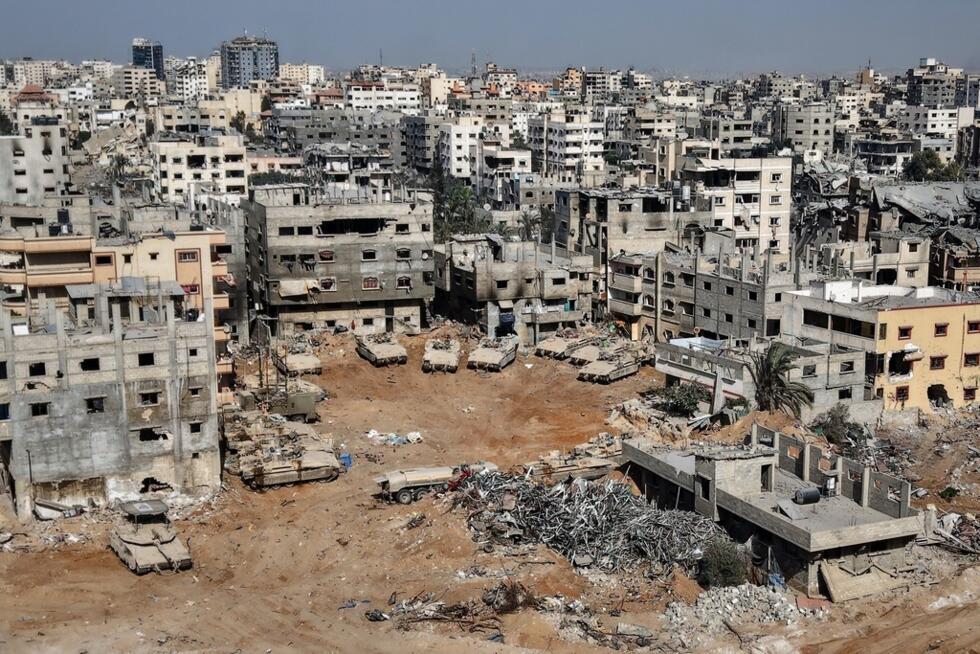
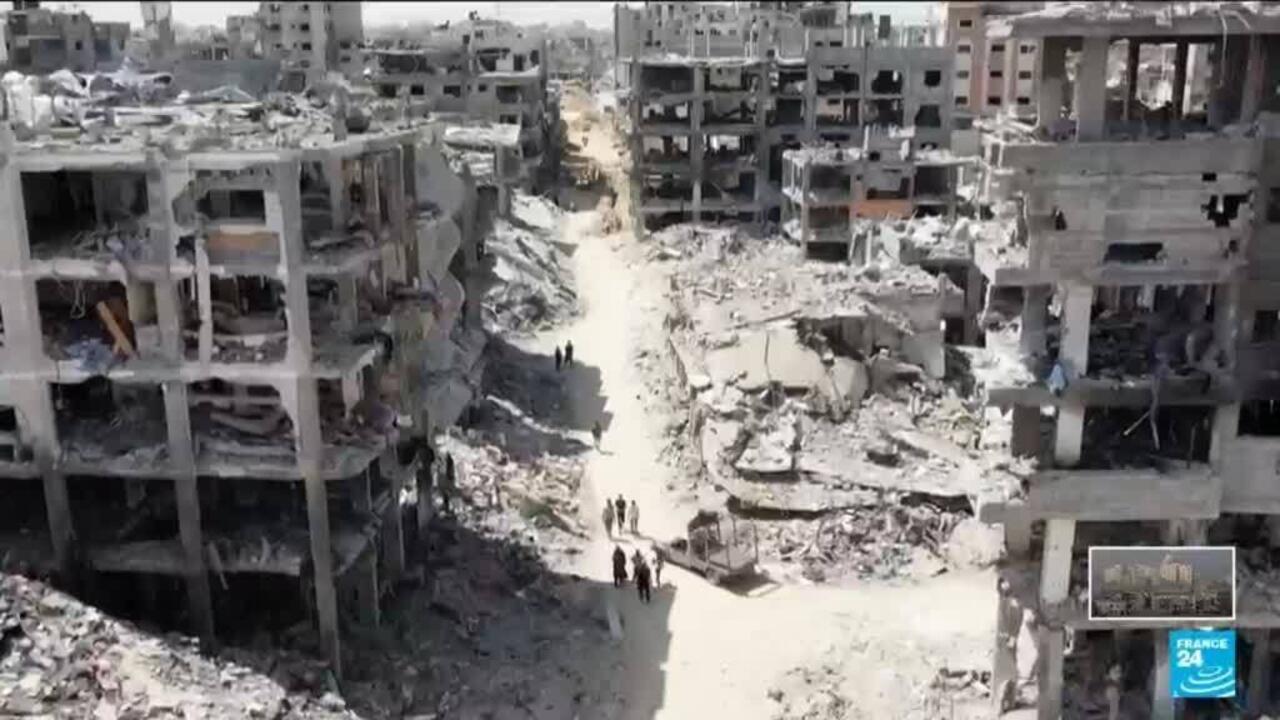
This aerial picture taken during a media tour organised by the Israeli army, shows war-damaged buildings in the vicinity of the Jordanian Field Hospital in Gaza City on October 3, 2025. © Jack Guez, AP


Israel blames Hamas for the high civilian toll, saying the group’s presence in residential areas has turned the population into human shields. Still, its strikes often hit homes, killing many inside with no word of who the target was.

Countless Palestinian families have fled the length of Gaza and back, forced to move every few months to dodge successive Israeli offensives. Many have been displaced multiple times, moving between apartments and makeshift tent camps as they try to survive. Squalid tent cities now sprawl across much of Gaza’s south.

Displacements have separated families. Heavy bombardment has left thousands buried under the rubble. Troops round up and detain men, from dozens to several hundreds at a time, searching for any they suspect of Hamas ties. The result is families split apart.
At least 102,067 buildings destroyed

Israel’s military has gained control of the vast majority of Gaza, pushing most of the Palestinian population to a small zone along the southern coast. Under Israeli control, Gaza’s land has been transformed. Forces have flattened or bulldozed entire neighbourhoods of Gaza City and small agricultural towns dotting the border, carved new roads across the territory and built up new military posts.

Bombardment has carpeted the Gaza Strip in a blanket of rubble roughly 12 times the size of the Great Pyramid of Giza. Using imagery of Gaza from space, the UN's Satellite Center says that at least 102,067 buildings have been destroyed. In the wreckage lie the ruins of grade schools and universities, medical clinics and mosques, greenhouses and family homes.

Hundreds of Palestinians crowd charity kitchens jostling for a bowl of lentils. Babies are so emaciated they weigh less than at birth. After months of warnings from aid groups, the world’s leading authority on food crises said in August that Gaza City had fallen into famine. Israel disputes the determination.

Towns scattered across the strip, where Palestinian farmers used to plant strawberries and watermelons, wheat and cereals, are now emptied and flattened. Between May and October 2025, Israeli bombardment and demolitions virtually erased the town of Khuzaa, whose rows of wheat and other cereals made it a breadbasket for the city of Khan Younis.

With the war entering its third year, Israel has launched an offensive to take over Gaza City and kill the Hamas militants it says are hiding there.

Israel says it also aims to free the 48 hostages who remain in Gaza, about 20 of whom the government believes are alive. Since the war began, 465 Israeli soldiers have been killed in Gaza.

A new US peace plan is on the table, even as Israeli tanks and ground troops threaten the heart of Gaza City.

(FRANCE 24 with AP)

Israel-Hamas ceasefire set to begin on the evening of October 9

Israel-Hamas ceasefire set to begin on the evening of October 9
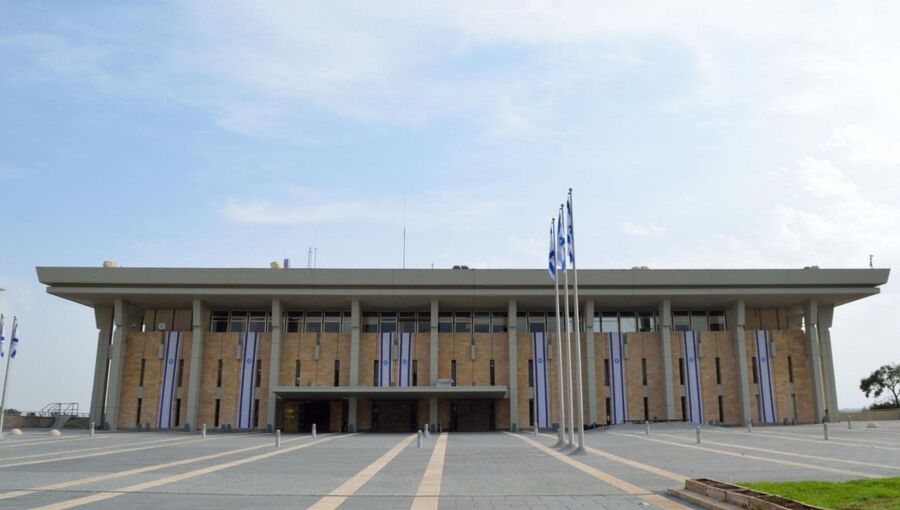
Israeli parliament building. / CC: Cohen
By bnm Tel Aviv bureau October 9, 2025

A ceasefire agreement between Israel and Hamas is scheduled to take effect on the evening of October 9, pending Israeli government ratification, an official from Prime Minister Benjamin Netanyahu's office told Reuters. The implementation timeline involves multiple stages, with the final hostage releases potentially occurring on October 13.

This comes after Netanyahu met with US President Donald Trump at the White House to discuss the American president’s Gaza peace deal.

Following government approval, a 24-hour period will allow for potential appeals to the High Court of Justice, the source claimed. Once that window closes, Hamas will have 72 hours to fulfill its obligations under the agreement and release all hostages, both living and deceased.

The window for appeal could extend the final release date to October 13 rather than October 12, with Israel and Hamas reaching an informal understanding without a signed document.

Living Israeli hostages are expected to be released first without "release ceremonies," a source familiar with the agreement told Israel's Knesset News on October 9. The release schedule for deceased hostages remains uncertain.

Negotiations continue regarding the identities of Palestinian prisoners to be released. Hamas is demanding the release of individuals Israel has not yet approved, according to sources.

A local source told Israeli state broadcaster Kan 11 that the release mechanism will mirror previous deals: "Murderers will not be released to the West Bank, and the issue of the third state has not yet been determined."

Hamas has informed mediators and Israel that it does not know the whereabouts of several hostages. Consequently, an Israeli-Egyptian-Qatari-Palestinian mechanism will be established to locate and facilitate the release of remaining hostages. Israel maintains that the release of all hostages is an essential component of the agreement.

“The end of the war will come as a relief to us,” Israeli cemical engineering student Shani told bne IntelliNews. “The thing we’re most worried about is the release of the hostages and knowing whether they are alive.”

Noam, a software engineer, told bne IntelliNews: “The end of the war hasn’t sunk in yet. I think it’s because many are worried that Hamas could still abandon the deal. Still, I hope that they wil abide by it as we do not want to continue living under the threat of missiles. There aren’t as many from Gaza anymore but the Houthis from Yemen remain persistent.”

By 

US President Donald Trump announced Wednesday that Israel and Hamas have signed the first phase of his proposed peace plan, calling it “a great day for the Arab and Islamic world, Israel, and the United States.”

Trump said the agreement includes the imminent release of all Israeli hostages and a withdrawal of Israeli forces to an agreed-upon line as “the first steps toward a strong and lasting peace.”

In a post on Truth Social, the US president thanked the mediators from Qatar, Egypt, and Turkey, stressing that “all parties will be treated fairly.”

For its part, Hamas confirmed that it had reached an agreement to end the war on Gaza, ensure the full withdrawal of Israeli occupation forces, allow the entry of humanitarian aid, and implement a comprehensive prisoner exchange.

In a detailed statement, Hamas said that “after responsible and serious negotiations conducted by the movement and the Palestinian resistance factions regarding President Trump’s proposal in Sharm El-Sheikh, aiming to reach a ceasefire to stop the genocidal war against our Palestinian people and the withdrawal of the occupation from the Gaza Strip, (…) Hamas announces reaching an agreement to end the war on Gaza, the withdrawal of the Israeli occupation forces from it, the entry of aid, and the exchange of prisoners.”

Hamas expressed “deep appreciation for the efforts of the brotherly mediators in Qatar, Egypt, and Turkey,” and also “valued the efforts of US President Donald Trump seeking to permanently stop the war and ensure the full withdrawal of the Israeli army from Gaza.”

Hamas called on “President Trump, the guarantor countries of the agreement, and various Arab, Islamic, and international parties to force the occupation government to fully implement the agreement’s clauses and not allow it to renege on its promises or delay the implementation of what has been agreed upon today.”

The statement also paid tribute to the steadfastness of the Palestinian people, saluting “our great people in the Gaza Strip, Jerusalem, the West Bank, and in exile, who displayed unprecedented stances of dignity, heroism, and honor in confronting the fascist occupation project targeting them and their national rights.”

Hamas affirmed that “the sacrifices of our people will not be in vain, and we will remain committed to the pledge and will not abandon our people’s national rights until freedom, independence, and self-determination are achieved.”

Israeli Channel 12 reported that the agreement will be formally signed on Thursday, with the first exchange of detainees expected over the weekend.

During a live roundtable at the White House, US Secretary of State Marco Rubio was seen handing President Trump a memo, which CNN later reported contained details suggesting that “an agreement on Gaza was very close.”

Agence France-Presse reported that Washington was already drafting the text of Trump’s expected speech to announce the deal.

Trump told reporters that he might “head to the Middle East before the hostages are released,” possibly visiting Egypt. When asked whether he would consider visiting Gaza, he replied, “I might, but I haven’t made a specific decision yet.”

The White House later announced that Trump would undergo a routine annual medical checkup on Friday and was considering traveling to the region afterward.


Palestine Chronicle


The Palestine Chronicle publishes news and commentary related to the Middle East Peace Conflict.

Prisoner-hostage swap, aid surge: What we know about the new Gaza deal

The first phase of the Gaza peace plan, which is set to be signed Thursday in Egypt, entails the release of 20 living Israeli hostages from Hamas captivity while Israel will release nearly 2,000 Palestinian prisoners, most of whom were detained at the start of the war, according to sources. Here are more details on the latest US-backed Gaza ceasefire deal.


Issued on: 09/10/2025 -
By: FRANCE 24

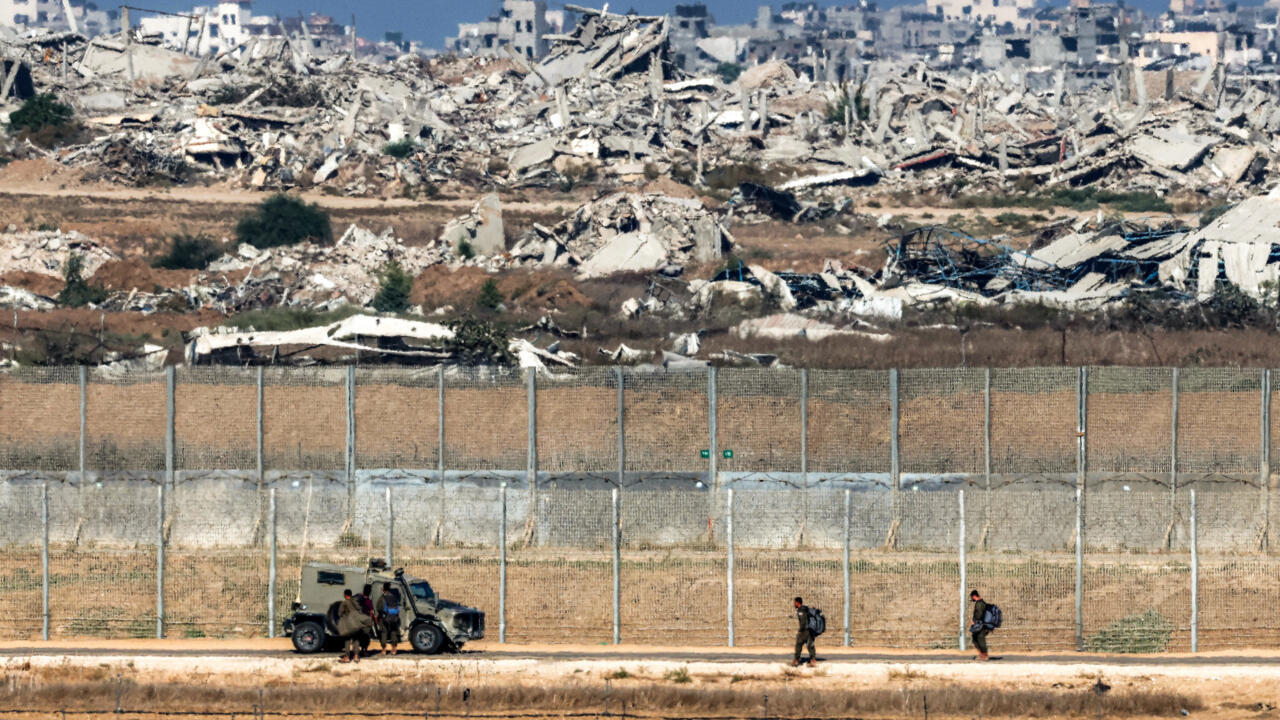
Israeli troops at a position along the border fence with the Gaza Strip in southern Israel. © Jack Guez, AFP

US President Donald Trump announced on Wednesday that Israel and Hamas have agreed to the first phase of a ceasefire in Gaza, after days of indirect talks in Egypt.

Qatar, which helped broker the deal along with Egypt, the United States and Turkey, said the deal was the "first phase of the Gaza ceasefire agreement, which will lead to ending the war, the release of Israeli hostages and Palestinian prisoners, and the entry of aid".

"ALL of the Hostages will be released very soon, and Israel will withdraw their Troops to an agreed upon line as the first steps toward a Strong, Durable, and Everlasting Peace," Trump wrote on his Truth Social network.

Here is what is known so far about the agreement, which is set to be signed Thursday in Egypt.

What does it include?

Hamas will release 20 living hostages at the same time as part of the first phase of the deal, a Palestinian source close to the negotiations said.

A top official within Hamas told AFP Israel will release nearly 2,000 Palestinian prisoners: 250 among those serving life sentences and 1,700 others detained since the start of the war.

Read more  How Donald Trump engineered the Gaza deal

The exchange should take place within 72 hours of the implementation of the deal, which was also "agreed with Palestinian factions", another source within Hamas said.

A daily minimum of 400 trucks of aid will enter the Gaza Strip for the first five days of the ceasefire, to be increased in following days, according to the same source.

It also provides for the "return of displaced persons from the south of the Gaza Strip to Gaza (City) and the north immediately," they added.

The deal stipulates "scheduled withdrawals" of Israeli troops, the Hamas top official said, and includes "guarantees from President Trump and the mediators".

Hamas called in an official statement on Trump to compel Israel to fully implement the agreement and "not allow it to evade or procrastinate in implementing what has been agreed".
What's next?

Qatari foreign ministry spokesman Majed al-Ansari said both sides have already agreed "on all the provisions and implementation mechanisms of the first phase of the Gaza ceasefire agreement".


© France 24
03:22


Israeli Prime Minister Benjamin Netanyahu said he will convene his government on Thursday to approve the agreement.

The deal will be formally signed on Thursday around midday in Egypt, a source with knowledge of the agreement told AFP on condition of anonymity.

A Hamas official said negotiations for the second phase of the ceasefire would begin "immediately".

Trump said Wednesday he believed all the hostages, including the deceased will be "coming back" Monday.

Trump's 20-point plan for Gaza had called for a ceasefire, the release of all the hostages held in Gaza, Hamas's disarmament and a gradual Israeli withdrawal from the territory.

(FRANCE 24 with AFP)
Two years after Hamas attack, Israel's economy weakened by international isolation

Having long sold itself as the ‘start-up nation’, Israel is now in economic turmoil, with the war it is waging in Gaza resulting in the withdrawal of long-standing partners. Declining growth, a brain drain and diplomatic isolation are diminishing a model that was considered exemplary.


Issued on: 07/10/2025 -  RFI

The closed Israel Aerospace Industries stand at the International Paris Air Show on 16 June – Israel called France’s decision to block off Israeli stands at the show a form of ‘segregation’ against Israeli companies. AFP - ALAIN JOCARD

Israel has established itself one recent years as a major player in technological innovation. The country is home to large companies in the sector and is a major exporter of software, medical devices and cybersecurity technology.

But since the start of the war in Gaza and amid rising tensions with Iran, the country has entered a new economic era – and the figures speak for themselves.

In the last quarter, Israel's GDP contracted sharply. Household consumption is falling, private investment is slumping and production is slowing down.

The outlook is not encouraging. Growth is forecast to be no more than 1 percent in 2025, and was just 0.9 percent last year. This is in stark contrast to 2022, when the Israeli economy grew by 6.5 percent.

Inflation is around 3 percent and the budget deficit is skyrocketing. To support the Israeli currency, the shekel, the Central Bank has had to inject more than $30 billion into foreign exchange markets.

On a human level, nearly 170,000 people have left the country since 2023 – many of them young graduates representing a highly skilled workforce. This brain drain is exacerbating the sense of economic and financial instability.

Investor flight and diplomatic isolation

There has also been a notable loss of confidence among foreign partners. Foreign direct investment is falling, international financing is freezing up and several major contracts are being called into question.

The European Union, Israel's largest trading partner, is considering reducing certain collaborations – a worrying sign for an economy that depends heavily on trade with the 27 member states.

NGOs call on EU to stop doing business with Israel's 'illegal' settlements

The Norwegian sovereign wealth fund withdrew from several Israeli defence companies this summer.

In the United States, some tech giants such as Microsoft are reviewing their commitments in Israel under pressure from public opinion.

Even long-standing allies such as Colombia are seeking to do without Israeli equipment. Bogotá has just unveiled its first locally produced assault rifle, having put an end to its orders from Israel.

These withdrawals are creating a domino effect, with the loss of this support and capital weakening Israeli growth and threatening its position on the international stage.

France pays tribute to victims of Hamas attack, two years on

Beyond the figures, the effects are being felt in everyday life. The cost of living remains high, and taxation is likely to increase to finance military spending and fill the budget deficit.

In the medium and long term, the loss of attractiveness and talent could lead to business closures and rising unemployment.

For Israel, the challenge is now clear: to regain the trust of its partners and halt this spiral of isolation before it permanently undermines its economic model.

Israel still has undeniable assets – recognised technological expertise and a diversified economy – but its future depends more than ever on the political and diplomatic choices of its leaders.

This article has been adapted from the original version in French by Stéphane Geneste.
French woman faces genocide trial over enslavement of Yazidi girl

A French woman accused of holding a Yazidi teenager in slavery in Syria in 2015 will stand trial in Paris on charges of genocide.


Issued on: 08/10/2025 - RFI

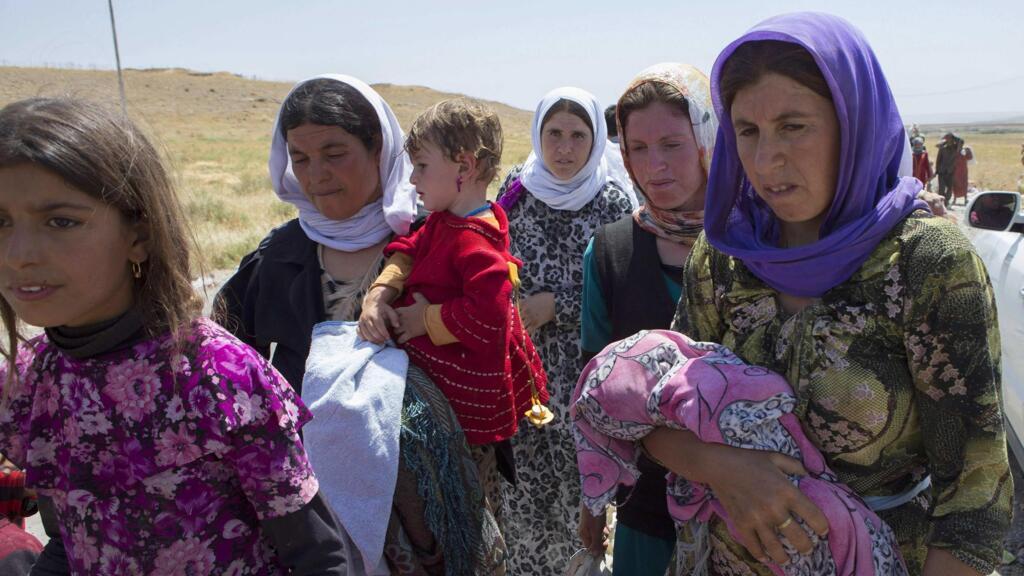
Displaced people from the Yazidi minority flee violence in the Iraqi town of Sinjar at the Iraqi-Syrian border crossing in Fishkhabour on 13 August, 2014. © Reuters - Youssef Boudlal
Sonia Mejri, 36, will be the first French citizen ever tried for genocide and the first French returnee from Syria to face this charge in connection with the Islamic State (IS) group.

The crime carries a maximum sentence of life imprisonment.

Mejri, a former wife of an IS commander, also faces charges of complicity in crimes against humanity and other terrorist offences. She will appear in custody before the special assize court in Paris, which has a panel of professional judges instead of a jury, on a date still to be set.

“The innocence of my client will be recognised by the judges,” her lawyer Nabil Boudi said ahead of the trial.

Accusations of enslavement

An anti-terrorism investigating judge ordered the trial in September 2024 for Mejri and her then husband, Abdelnasser Benyoucef, accusing them of enslaving a 15-year-old Yazidi girl in Syria in the spring of 2015.

The magistrate said Benyoucef “knew that by acquiring” the teenager and subjecting her to confinement, repeated rapes and severe deprivation, “he was participating in the attack directed by IS against the Yazidi community”.

Mejri was described as the “guarantor of the confinement” of the girl. She reportedly held the apartment key and carried a weapon to prevent her from escaping.

Prosecutors accused her of “serious attacks on the physical and psychological integrity” of the teenager, who was forced to live under “conditions of existence likely to bring about the destruction” of her community.

Former wife of IS commander to stand trial in France on Yazidi genocide charges
'Coordinated Plan'

In January the Paris Court of Appeal partly overturned the referral, saying there had to be multiple victims for the crime to qualify as genocide.

“The appeal judges could not agree on the charges, which demonstrates the fragility and weakness of the prosecution,” Boudi said.

But in May the Court of Cassation, France’s highest judicial authority, ruled that genocide charges can be brought even if only one person is targeted, provided the act forms part of “a coordinated plan aimed at the group’s total or partial destruction”.

The court approved the genocide proceedings on 1 October.

The lost childhood of traumatised Yazidi children abducted by IS
Victim’s testimony

Sexual violence was used by IS as a weapon to break Yazidi resistance and spread fear, including through the creation of slave markets.

The victim’s testimony is central to the case. Her lawyer, Romain Ruiz, declined to comment.

The young woman said she was held captive for more than a month in spring 2015 in Syria and could not drink, eat or bathe without Mejri’s permission. She accused Mejri of assaulting her and of knowing that her husband raped her daily.

Her account matches evidence gathered by human rights organisations that have documented IS’s use of sexual slavery and the creation of a “war booty department”.
Defence and civil parties

Mejri has denied wrongdoing in relation to the Yazidi girl, telling investigators that her ex-husband was the “owner” and that she had “no rights” over her.

“The defence lodged multiple appeals. Licra is pleased that this genocide trial... can finally take place,” said Ilana Soskin, lawyer for the French anti-racism group.

“The charges are neither weak nor fragile; they are well-founded, factual and legally sound,” added Inès Davau, lawyer for the NGO Free Yezidi Foundation. She said that given the “persistent impunity”, it was "time for justice to be served”.

Benyoucef, who has been the subject of an arrest warrant and is presumed dead since 2016, is expected to be tried in absentia for genocide, crimes against humanity and terrorist offences.

(with AFP)
Nepal's youth vow to keep up pressure, one month after unrest

Kathmandu (AFP) – Nepalis lit candles outside the fire-damaged parliament on Thursday, marking one month since anti-corruption protests toppled the government, with fresh vows to keep up pressure ahead of elections.

Issued on: 09/10/2025 - 

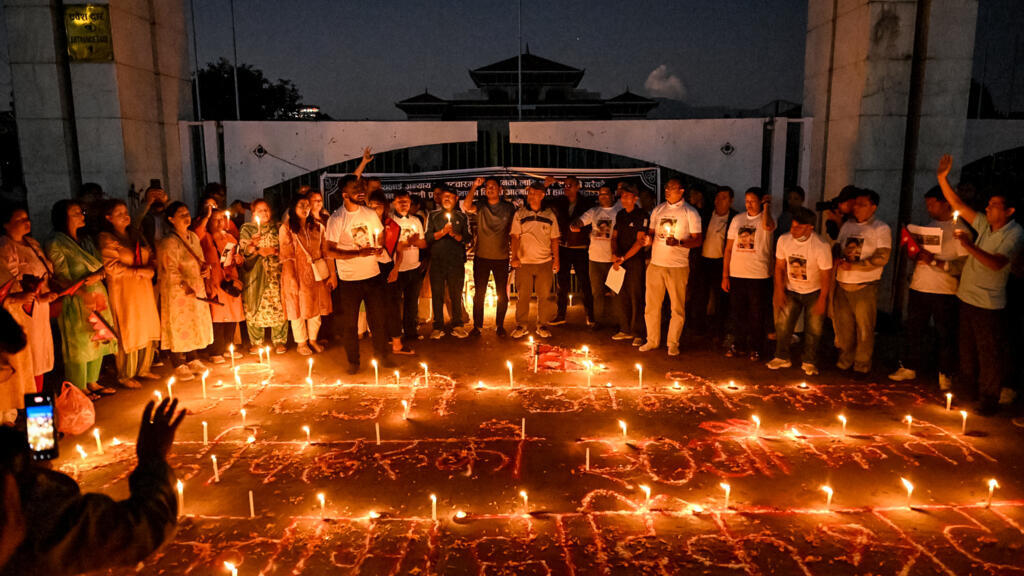
Nepalis lit candles outside the fire-damaged parliament building on Thursday, one month after anti-corruption protests toppled the government and left dozens dead 
© Prakash MATHEMA / AFP

The vigil in Kathmandu, attended by dozens -- many of whom were participants in the demonstrations -- honoured those killed during the protests.

Youth-led demonstrations that began on September 8 over a brief social media ban, economic hardship and corruption quickly escalated into nationwide fury after a deadly crackdown.

Two days of violence left at least 73 people dead, with parliament and government offices torched, forcing the collapse of KP Sharma Oli's government.

"I hope for a better future," Anjila Basnet, 25, told AFP. "The sacrifice of so many people should not go to waste."

Within days of the government's collapse, 73-year-old former chief justice Sushila Karki was appointed interim prime minister to steer the Himalayan nation until elections on March 5, 2026.


'We will not stop'

"We are now in the second phase of the movement, until the election," said protester Yujan Rajbhandari.

"We will not stop... The issues we raised about corruption and good governance are the priority."

Many of those injured are still receiving treatment.

Protester Nimesh Shrestha has been visiting the wounded and raising funds for their care.

"When I think of the people we lost, those still in bed... I just hope we never have to do this again," he said.

Oli, the ousted 73-year-old Marxist leader, who had served as prime minister four times, also addressed supporters Thursday.

"To put the country in the right direction, there is no alternative but to move forward with a demand to reinstate the parliament that was unconstitutionally dissolved," Oli told supporters.

The government has imposed travel bans on Oli and four former senior officials as a commission investigates the unrest.

Karki has pledged to restore order, address calls for clean governance, and prepare for elections.

"The time has come for us to work day and night to address their expectations -- we are facing opportunities and challenges," she said Wednesday, speaking to Nepal's diplomatic missions abroad.

"This government has the responsibility to firmly establish the country on the path of democracy and equitable prosperity."

© 2025 AFP


Global press freedom at 'tipping point', media watchdog RSF warns

The world is at a “tipping point” for press freedom, the French NGO Reporters Without Borders (RSF) warned as it marked its 40th anniversary ahead of unveiling a memorial stone in Bayeux, Normandy, in honour of journalists killed in the line of duty.

Issued on: 09/10/2025 - RFI

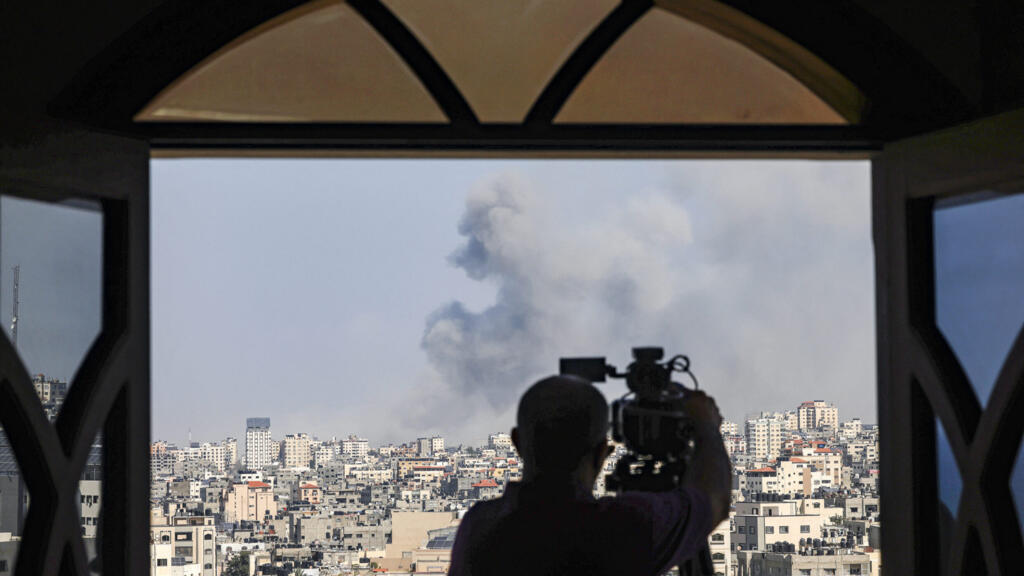
An AFP cameraman films Israeli air strikes in Gaza City on 12 October, 2023 – an image used in the documentary 'Inside Gaza’ which will be premiered at the Prix Bayeux event. AFP - MOHAMMED ABED

By:Ollia Horton

Since 1985, Reporters Without Borders (RSF) has been defending journalists and press freedom around the world.

For RSF director Thibaut Bruttin, who took over the reins of the Paris-based organisation in July 2024, press freedom has never been in greater peril, on an international scale.

This "tipping point" is the result of an "economic crackdown" on global media, coupled with "the biggest hate campaign against journalism, triggered by the Trump administration," Bruttin told RFI.

'Alarming deterioration' of US press freedom under Trump, warns RSF

United States President Donald Trump has cut funding for public service media, cracked down on visas for journalists and filed legal complaints against news outlets.

Around the world, including in Ukraine, the Middle East and Latin America, the profession of field reporter has become more dangerous, and more deadly.

"If you look back, journalists back in the 1960s and 70s were privileged witnesses of history. They were welcomed, or at least tolerated, by most of the forces present in war zones. Then they became collateral victims, then they became hostages and persons of value, who are now being silenced," Bruttin said.

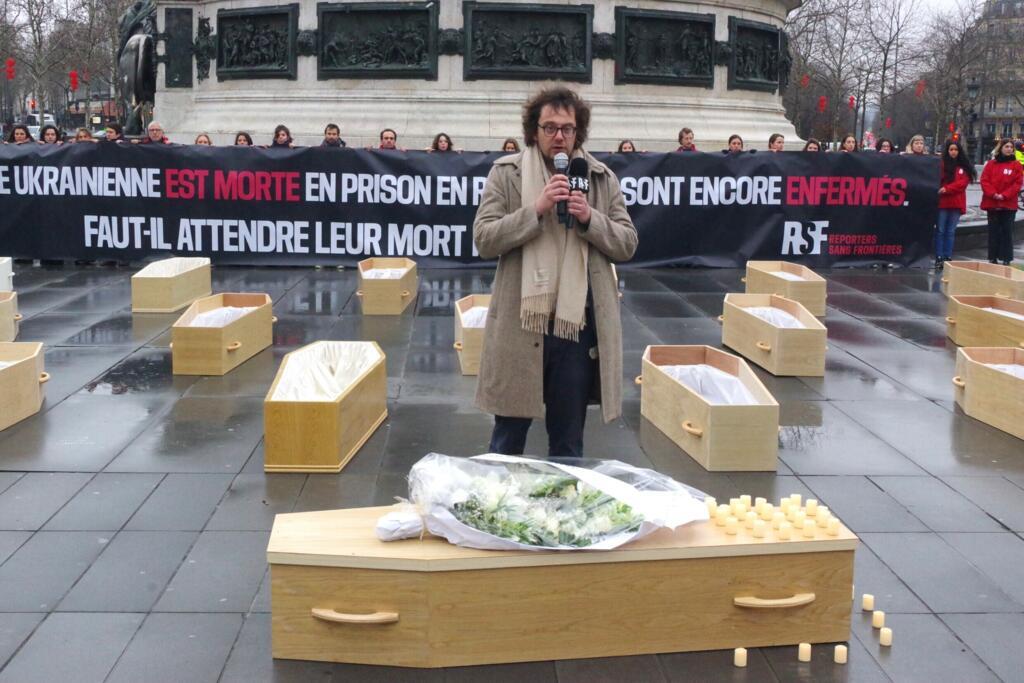
Thibaut Bruttin at a protest in support of Ukrainian journalists being held in Russia, at Paris's Place de la République, 20 February, 2025. © Y.SAFRONOV

'Bloody pages of history'

On Thursday, Bruttin will represent RSF in the Normandy town of Bayeux for the annual war correspondents’ prize week (Prix Bayeux), an event that includes free public exhibitions, round tables, conferences and screenings.

It is also a time for mourning and remembering.

At a ceremony in the war memorial park, Bruttin will unveil a stone engraved with the names of 73 journalists killed in the line of duty in the past year.

"It's the only place, as far as I know, in the world where there is a list of all the journalists killed in action since the end of World War Two," he said, adding that the families of journalists killed in Ukraine, Mexico and Syria will be present.

"It's a deeply moving moment, and it's very important to remind [people] that freedom of the press is not a given. It's something that has been conquered. The history of the press is full of bloody pages," he said.

"The primary safeguard for civilians is the action of the press. If there is no press on the ground, who is going to be giving the facts?"

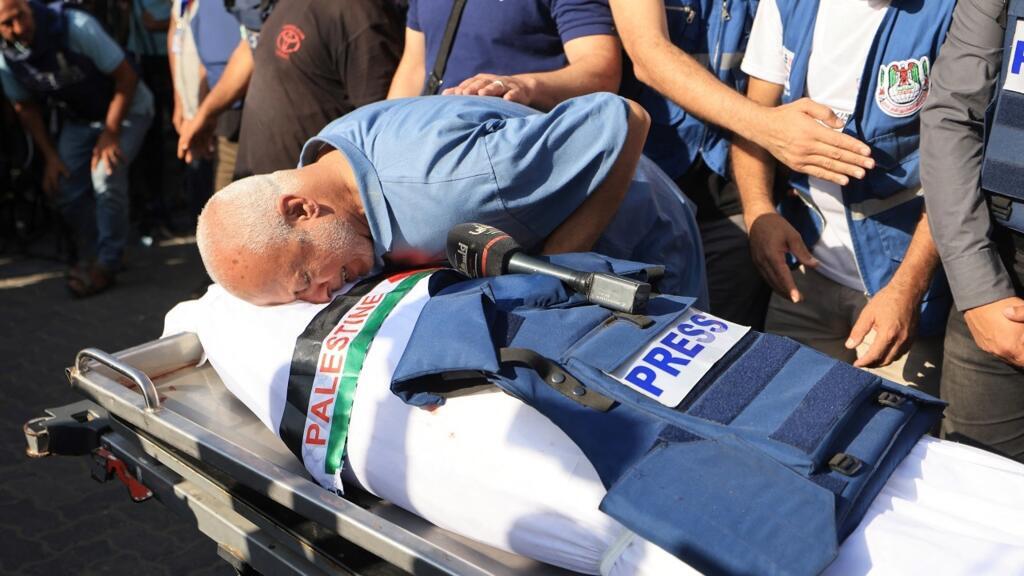
The funeral of Palestinian journalist Mohamed Abu Hatab and 11 of his family members, whose home was hit in the Israeli bombardment of Khan Yunis in Gaza, 3 November, 2023. AFP - MAHMUD HAMS

The particularly heavy death toll of journalists between 2024 and 2025 is attributed to the Israeli operation against Hamas militants in Gaza, where foreign media is forbidden and only Palestinian journalists have been operating, at their peril.

RSF reported that Israel is responsible for the killing of more than 200 journalists in Gaza, and found evidence that in 56 cases those journalists were deliberately targeted.

New documentary shows life in Gaza for AFP journalists

This openly flouts article 2222 of the United Nations Security Council (signed in 2015), which explicitly outlines the importance of protecting journalists in conflict zones, and a mechanism for accountability in this regard.

"For the first time in history, we have the army of a democratic government [Israel] actively pursuing a smear campaign against journalists, plus targeting them and claiming that they target them," Bruttin said.
'Smear campaign'

For RSF, collective strength and international solidarity are instrumental in highlighting such situations.

The NGO launched a petition on 1 September in support of Palestinian journalists, which has been signed by more than 250 media organisations.

Following that, on 24 September RSF obtained the support of 21 UN member states who called for the opening of Gaza to foreign media and the evacuation of Palestinian journalists.

"If you use social media tools today, you will see that the smear campaign of the Israeli Defense Forces against Palestinian journalists has almost disappeared. It wasn’t easy to do, but we managed," said Bruttin.

French photojournalist Antoni Lallican killed in Ukraine drone attack

Bruttin says RSF was also instrumental in getting the French prosecutor’s office to launch an investigation into war crimes over the death of French photojournalist Antoni Lallican, who was killed by a drone attack attributed to Russia in Donbas, Ukraine on 3 October.

RSF was able to present evidence to the Ukrainian prosecutor's office to prove that Lallican was deliberately targeted.
The future of journalism

To mark their anniversary, RSF has teamed up with the Japanese animation studio Studio Ghibli, also founded in 1985, to publish a special album of drawings and photos, which goes on sale in France on 6 November.

For Bruttin, Studio Ghibli shares many of RSF's values, such as integrity and authenticity.

This includes a shared belief in the need for regulation when it comes to artificial intelligence – something Studio Ghibli has been vocal about after AI was used to copy and recreate their trademark drawing style.
The 40th anniversary album published jointly by Reporters without Borders and Studio Ghibli, to be released on 6 November. © Reporters sans frontières / Studio Ghibli

RSF says the press cannot afford not to keep up with technological advances, and has been building an ethical charter for AI and the newsroom and conducting a pilot project to help journalists build their own tools.

French press take on digital databases to defend journalist copyright against AI

For Bruttin, RSF's goal is to be "a driving force for change within the industry, to build a coalition between media professionals, policymakers and the general public".

He said: "Our primary focus today is both the safety of journalists, but also the future of journalism, because sometimes you can save the individuals but fail to address the systemic problems of the media ecosystem.

"We are very keen on demonstrating that it's not about journalists at the end of the day, it's about the people's relationship to facts."