Moldova's separatist Transnistria faces deepening budget crisis after Russia cuts gas supplies
The Supreme Council of Transnistria, Moldova’s separatist region, adopted amendments aimed at mitigating the impact of reduced Russian gas supplies in the first reading on October 8, a statement from the council announced.
The measures follow a sharp fall in gas volumes from Russia since January 2025, which has triggered a growing budgetary shortfall despite the region’s continued access to subsidised energy.
Under the previous arrangement, revenues from gas payments by households and industrial consumers were directed to the regional budget. The arrangement was likely maintained. However, the new supply regime and reduced amounts — supported partly through Russian loans — have proved insufficient to cover budgetary expenditures. The authorities in Tiraspol are now exploring ways to tap financial reserves held by state-controlled banks.
According to the draft legislation, the government plans to use profits accumulated by Transnistrian Sberbank and Eximbank, in which the state holds partial ownership. Nearly 90% of the profits from other state-owned enterprises are already channelled into the regional treasury.
Viktor Guzun, chairman of the Supreme Council’s Committee on Economics, said that “under current circumstances, it is essential to mobilise all possible resources to overcome the consequences of the financial crisis and fulfil social obligations.” He added that the proposed amendments would also allow the banking sector to redirect available resources and profits to the republican budget to sustain essential services, including healthcare and education.
The budgetary crisis comes despite Transnistria’s long-standing practice of not paying for gas supplied by Russia. The developments suggest that the region’s dominant conglomerate, Sheriff, continues to benefit financially from its control over energy and trade, although at reduced margins due to lower gas availability.
Guzun said further consultations would take place before the second reading of the bill to identify a compromise acceptable to the regional central bank, commercial banks, and the government, which remains responsible for salary and pension payments.

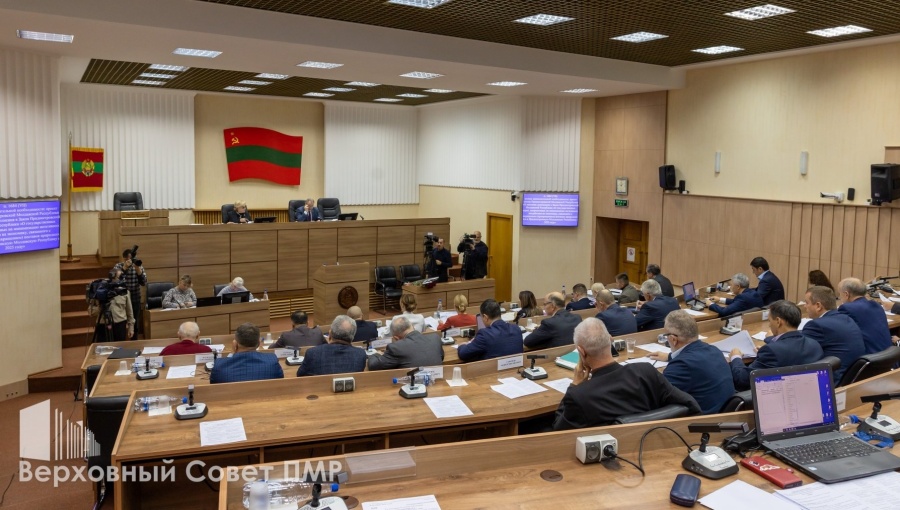
The Supreme Council of Transnistria, Moldova’s separatist region, adopted amendments aimed at mitigating the impact of reduced Russian gas supplies in the first reading on October 8, a statement from the council announced.
The measures follow a sharp fall in gas volumes from Russia since January 2025, which has triggered a growing budgetary shortfall despite the region’s continued access to subsidised energy.
Under the previous arrangement, revenues from gas payments by households and industrial consumers were directed to the regional budget. The arrangement was likely maintained. However, the new supply regime and reduced amounts — supported partly through Russian loans — have proved insufficient to cover budgetary expenditures. The authorities in Tiraspol are now exploring ways to tap financial reserves held by state-controlled banks.
According to the draft legislation, the government plans to use profits accumulated by Transnistrian Sberbank and Eximbank, in which the state holds partial ownership. Nearly 90% of the profits from other state-owned enterprises are already channelled into the regional treasury.
Viktor Guzun, chairman of the Supreme Council’s Committee on Economics, said that “under current circumstances, it is essential to mobilise all possible resources to overcome the consequences of the financial crisis and fulfil social obligations.” He added that the proposed amendments would also allow the banking sector to redirect available resources and profits to the republican budget to sustain essential services, including healthcare and education.
The budgetary crisis comes despite Transnistria’s long-standing practice of not paying for gas supplied by Russia. The developments suggest that the region’s dominant conglomerate, Sheriff, continues to benefit financially from its control over energy and trade, although at reduced margins due to lower gas availability.
Guzun said further consultations would take place before the second reading of the bill to identify a compromise acceptable to the regional central bank, commercial banks, and the government, which remains responsible for salary and pension payments.

From Success To Strategy: Three Lessons From Moldova’s Election – Analysis
By ECFR
By Leo Litra and Gabrielė Valodskaitė
In just under a year, pro-EU forces in Moldova enjoyed quite a shift in their electoral fortunes. The autumn 2024 presidential election saw incumbent Maia Sandu scrape an 11-point win in the run-off largely thanks to diaspora votes. In the concurrent referendum on whether to enshrine EU accession as a goal in the country’s constitution, “yes” won by the narrowest of margins.
But the 2025 parliamentary election told a different story. Surpassing even the most hopeful expectations, Sandu’s Party of Action and Solidarity (PAS) swept to victory with more than 50% of the votes—one of the strongest incumbent wins in Europe since 2022. This is striking given the severe economic shock in the country since the start of Russia’s war on Ukraine; it is perhaps even more so given the backdrop of massive Russian support for the opposition—which officials and experts estimate amounted to around €200m–€300m (around 2-3% of Moldova’s GDP).
Moldova’s leaders should take this success as a starting point for continued efforts to protect their democracy. But the country is hardly alone in experiencing Russian interference in its elections. The EU, member states and aspiring EU members can all learn lessons from Moldova’s remarkable turnaround—and build them into their own strategies for democratic resilience in the future.[1]
By ECFR
By Leo Litra and Gabrielė Valodskaitė
In just under a year, pro-EU forces in Moldova enjoyed quite a shift in their electoral fortunes. The autumn 2024 presidential election saw incumbent Maia Sandu scrape an 11-point win in the run-off largely thanks to diaspora votes. In the concurrent referendum on whether to enshrine EU accession as a goal in the country’s constitution, “yes” won by the narrowest of margins.
But the 2025 parliamentary election told a different story. Surpassing even the most hopeful expectations, Sandu’s Party of Action and Solidarity (PAS) swept to victory with more than 50% of the votes—one of the strongest incumbent wins in Europe since 2022. This is striking given the severe economic shock in the country since the start of Russia’s war on Ukraine; it is perhaps even more so given the backdrop of massive Russian support for the opposition—which officials and experts estimate amounted to around €200m–€300m (around 2-3% of Moldova’s GDP).
Moldova’s leaders should take this success as a starting point for continued efforts to protect their democracy. But the country is hardly alone in experiencing Russian interference in its elections. The EU, member states and aspiring EU members can all learn lessons from Moldova’s remarkable turnaround—and build them into their own strategies for democratic resilience in the future.[1]
1. Pre-empt election fraud and foreign interference
Moldova’s leaders were vocal in denouncing Russia’s meddling during the 2024 presidential election and EU referendum campaigns. Less clear at the time was the scale of the interference and the techniques Russia was using to conduct it. It was only when the first‑round presidential results arrived that this began to come out into the open: besides extensive influence campaigns online and via figures in the Orthodox Church, Russia had run a massive vote‑buying scheme that involved distributing bank cards and transferring money to about 130,000 Moldovan citizens—roughly 10% of the voting population.
Moldova’s authorities had no such blind spots in 2025. They tasked various branches of government and state agencies with uncovering the vote-buying network and keeping it under constant pressure through disruption and disorientation. Over the course of the election campaign and the election itself, 25,000 people were fined for selling their vote. The maximum sentence for vote-buying linked to organised crime rose from a warning to seven years in prison. In the final weeks of the campaign police conducted targeted searches and arrests and confiscated money. These measures exposed the network, disrupted its operations and gave voters concrete evidence that vote‑buying was real and punishable. Authorities coupled this with a large‑scale public awareness campaign—including messages on billboards, television and social media, and even reminders in churches—which stressed the criminal nature of selling one’s vote. This combination of pre-empting election fraud, ensuring timely accountability for those involved and communicating all this to the public seems to have paralysed most of network.
But this required orchestrated domestic action and international cooperation, as did Moldova’s measures to counter other forms of interference such as extensive cyber-attacks. The government solicited support from financial intelligence units, cyber-security specialists and domestic and foreign law enforcement. International cooperation in cyber-defence, financial investigations and intelligence sharing was also instrumental in managing the phenomenon. This all helped enable the exposure and proactive prevention that were vital in safeguarding the country’s election. Indeed, the cross-institutional cooperation was such that the government was able to time the disruption of the networks to just days before the vote—so they had no chance of reconstituting—and then launch its pre-prepared publicity campaign to counter disinformation regarding the measures.
EU teams working on Moldova, both in Brussels and on the ground, providedassistance across the information, cyber and financial domains. This was a prime example of how cross-border cooperation can help small democracies defend their electoral integrity. They will need to build on this in the coming years in Moldova and apply it to other partner countries facing similar threats. Moreover, governments other democracies of interest to Moscow can learn from Chisinau’s preparedness in 2025 ahead of their own elections.
Moldova’s leaders were vocal in denouncing Russia’s meddling during the 2024 presidential election and EU referendum campaigns. Less clear at the time was the scale of the interference and the techniques Russia was using to conduct it. It was only when the first‑round presidential results arrived that this began to come out into the open: besides extensive influence campaigns online and via figures in the Orthodox Church, Russia had run a massive vote‑buying scheme that involved distributing bank cards and transferring money to about 130,000 Moldovan citizens—roughly 10% of the voting population.
Moldova’s authorities had no such blind spots in 2025. They tasked various branches of government and state agencies with uncovering the vote-buying network and keeping it under constant pressure through disruption and disorientation. Over the course of the election campaign and the election itself, 25,000 people were fined for selling their vote. The maximum sentence for vote-buying linked to organised crime rose from a warning to seven years in prison. In the final weeks of the campaign police conducted targeted searches and arrests and confiscated money. These measures exposed the network, disrupted its operations and gave voters concrete evidence that vote‑buying was real and punishable. Authorities coupled this with a large‑scale public awareness campaign—including messages on billboards, television and social media, and even reminders in churches—which stressed the criminal nature of selling one’s vote. This combination of pre-empting election fraud, ensuring timely accountability for those involved and communicating all this to the public seems to have paralysed most of network.
But this required orchestrated domestic action and international cooperation, as did Moldova’s measures to counter other forms of interference such as extensive cyber-attacks. The government solicited support from financial intelligence units, cyber-security specialists and domestic and foreign law enforcement. International cooperation in cyber-defence, financial investigations and intelligence sharing was also instrumental in managing the phenomenon. This all helped enable the exposure and proactive prevention that were vital in safeguarding the country’s election. Indeed, the cross-institutional cooperation was such that the government was able to time the disruption of the networks to just days before the vote—so they had no chance of reconstituting—and then launch its pre-prepared publicity campaign to counter disinformation regarding the measures.
EU teams working on Moldova, both in Brussels and on the ground, providedassistance across the information, cyber and financial domains. This was a prime example of how cross-border cooperation can help small democracies defend their electoral integrity. They will need to build on this in the coming years in Moldova and apply it to other partner countries facing similar threats. Moreover, governments other democracies of interest to Moscow can learn from Chisinau’s preparedness in 2025 ahead of their own elections.
2. Be bold and creative in promoting the EU
After the weak referendum showing in 2024, EU institutions and Moldovan NGOs improved and escalated their strategic communications. A large‑scale EU information campaign explained the benefits of integration to counter decades of Russian propaganda. It engaged television stars, social media influencers, YouTubers, musicians, comedians, NGOs, volunteer networks, door‑to‑door magazines and engagement with the church and its priests. To reinforce the message, the EU enlargement commissioner and Germany’s foreign minister paid the country high-profile visits. This multi‑platform, multi‑stakeholder effort seems to have helped minimise political attacks against the EU during the campaign—and even forced the opposition to acknowledge that Moldova would face economic collapse without EU support.
This campaign was a response to Moldova’s polarised media and social‑media environment. It also focused on institutions like the church that enjoy high levels of public trust (unlike the political class). The lesson is that classic elite-led debunking cannot match massive disinformation in Moldova; effective engagement has to co‑opt social media influencers, religious leaders, local administrations and youth networks. The EU has learned from Moldova as a testing ground for the Russian playbook inside the bloc. But this know‑how is also applicable in other countries—in the Western Balkans, South Caucasus and elsewhere—where proactive, innovative promotion of EU values and partnership offers is necessary even when direct cooperation with governments may be more difficult than in Moldova.
After the weak referendum showing in 2024, EU institutions and Moldovan NGOs improved and escalated their strategic communications. A large‑scale EU information campaign explained the benefits of integration to counter decades of Russian propaganda. It engaged television stars, social media influencers, YouTubers, musicians, comedians, NGOs, volunteer networks, door‑to‑door magazines and engagement with the church and its priests. To reinforce the message, the EU enlargement commissioner and Germany’s foreign minister paid the country high-profile visits. This multi‑platform, multi‑stakeholder effort seems to have helped minimise political attacks against the EU during the campaign—and even forced the opposition to acknowledge that Moldova would face economic collapse without EU support.
This campaign was a response to Moldova’s polarised media and social‑media environment. It also focused on institutions like the church that enjoy high levels of public trust (unlike the political class). The lesson is that classic elite-led debunking cannot match massive disinformation in Moldova; effective engagement has to co‑opt social media influencers, religious leaders, local administrations and youth networks. The EU has learned from Moldova as a testing ground for the Russian playbook inside the bloc. But this know‑how is also applicable in other countries—in the Western Balkans, South Caucasus and elsewhere—where proactive, innovative promotion of EU values and partnership offers is necessary even when direct cooperation with governments may be more difficult than in Moldova.
3. Show people the value of belonging to the “European village”
But just telling people about the value of a European future is not enough. The Sandu government’s pro‑EU orientation could have rung hollow amid serious economic hardship in Moldova. In 2022, Russia’s war in Ukraine and rising energy prices led to a GDP contraction of over 5%; growth has stuttered upwards at less than 1% year-on-year thereafter. But by 2024, citizens had begun to see the results of international assistance and EU ties: the country’s road infrastructure had become noticeably better, for example. Crucially, the government’s EU‑funded “European Village” programme (and its fast‑track sibling “European Village Express”) had begun to fulfil its goal of building small but tangible local projects.
By mid-2025, most Moldovan villages had at least a couple of government-supported projects—a park or playground, for example, or a waste‑collection truck, a school or kindergarten renovation, or a community centre in a repurposed building. The programme also covers canal building and projects to improve access to running water, thereby benefiting people across society, from the young and economically active to pensioners. The 2024 European Village budget was about €30m, with €256m planned for 2024–2028. These funds are spread thinly but have still shown the public that progress is possible and tangible. One official close to the government said campaigners found rural voters more receptive than in 2024 because people could actually see the improvements.
The lesson is that speed and visibility matter. In early 2025, the EU and Moldova agreed a new growth plan to boost the country’s economy and prepare it for accession. As they roll it out, they should deploy some funds quickly and visibly through projects similar to those pursued under the European Village. They should also apply this principle in the Western Balkans, for example, via the EU’s growth plan for those aspiring member states. Such quick, highly visible “wins” complement long, expensive infrastructure projects (such as electricity interconnectors, renewables projects and building insulation) that bring structural benefits but are slow to show results. Implementation tracks that progress at multiple speeds—addressing both structural needs and immediate quick wins such as water projects—help sustain public support for long‑term alignment with the EU.
*
Moldova’s experience shows that proactive exposure of interference tactics—disinformation, vote‑buying networks and cyber threats—combined with modern strategic communications and rapid, visible social and infrastructure wins—can preserve democratic processes even under intense external pressure. To maintain this momentum, Moldova, the EU and its other partners need to build on these lessons. This will enable them to work together to continue protect not only Moldova in the future, but also other vulnerable democracies in Europe and beyond.
About the authors:
- Leo Litra is a visiting fellow with the European Security Programme at the European Council on Foreign Relations. He is also a senior fellow at New Europe Center in Kyiv, Ukraine and a Marshall memorial fellow at the German Marshall Fund of the United States.
- Gabrielė Valodskaitė is the European Security programme coordinator at the European Council on Foreign Relations, based in the Berlin office.
Source: This article was published by ECFR
[1] ECFR undertook a study trip to Moldova in September 2025 to take stock of Moldova’s political landscape ahead of the election, and Russia’s aims and actions in the country. During the study trip, the authors met with the president and prime minister of Moldova, government policy stakeholders, the Ministry of Foreign Affairs, intelligence services, the Central Electoral Commission, the president’s office, opposition parties, media, civil society, think-tanks, foreign diplomats, international institutions and the EU mission to Moldova. This commentary is largely based on the findings from that trip.
The European Council on Foreign Relations does not take collective positions. ECFR publications only represent the views of their individual authors.
The European Council on Foreign Relations (ECFR) is an award-winning international think-tank that aims to conduct cutting-edge independent research on European foreign and security policy and to provide a safe meeting space for decision-makers, activists and influencers to share ideas. We build coalitions for change at the European level and promote informed debate about Europe’s role in the world
But just telling people about the value of a European future is not enough. The Sandu government’s pro‑EU orientation could have rung hollow amid serious economic hardship in Moldova. In 2022, Russia’s war in Ukraine and rising energy prices led to a GDP contraction of over 5%; growth has stuttered upwards at less than 1% year-on-year thereafter. But by 2024, citizens had begun to see the results of international assistance and EU ties: the country’s road infrastructure had become noticeably better, for example. Crucially, the government’s EU‑funded “European Village” programme (and its fast‑track sibling “European Village Express”) had begun to fulfil its goal of building small but tangible local projects.
By mid-2025, most Moldovan villages had at least a couple of government-supported projects—a park or playground, for example, or a waste‑collection truck, a school or kindergarten renovation, or a community centre in a repurposed building. The programme also covers canal building and projects to improve access to running water, thereby benefiting people across society, from the young and economically active to pensioners. The 2024 European Village budget was about €30m, with €256m planned for 2024–2028. These funds are spread thinly but have still shown the public that progress is possible and tangible. One official close to the government said campaigners found rural voters more receptive than in 2024 because people could actually see the improvements.
The lesson is that speed and visibility matter. In early 2025, the EU and Moldova agreed a new growth plan to boost the country’s economy and prepare it for accession. As they roll it out, they should deploy some funds quickly and visibly through projects similar to those pursued under the European Village. They should also apply this principle in the Western Balkans, for example, via the EU’s growth plan for those aspiring member states. Such quick, highly visible “wins” complement long, expensive infrastructure projects (such as electricity interconnectors, renewables projects and building insulation) that bring structural benefits but are slow to show results. Implementation tracks that progress at multiple speeds—addressing both structural needs and immediate quick wins such as water projects—help sustain public support for long‑term alignment with the EU.
*
Moldova’s experience shows that proactive exposure of interference tactics—disinformation, vote‑buying networks and cyber threats—combined with modern strategic communications and rapid, visible social and infrastructure wins—can preserve democratic processes even under intense external pressure. To maintain this momentum, Moldova, the EU and its other partners need to build on these lessons. This will enable them to work together to continue protect not only Moldova in the future, but also other vulnerable democracies in Europe and beyond.
About the authors:
- Leo Litra is a visiting fellow with the European Security Programme at the European Council on Foreign Relations. He is also a senior fellow at New Europe Center in Kyiv, Ukraine and a Marshall memorial fellow at the German Marshall Fund of the United States.
- Gabrielė Valodskaitė is the European Security programme coordinator at the European Council on Foreign Relations, based in the Berlin office.
Source: This article was published by ECFR
[1] ECFR undertook a study trip to Moldova in September 2025 to take stock of Moldova’s political landscape ahead of the election, and Russia’s aims and actions in the country. During the study trip, the authors met with the president and prime minister of Moldova, government policy stakeholders, the Ministry of Foreign Affairs, intelligence services, the Central Electoral Commission, the president’s office, opposition parties, media, civil society, think-tanks, foreign diplomats, international institutions and the EU mission to Moldova. This commentary is largely based on the findings from that trip.
The European Council on Foreign Relations does not take collective positions. ECFR publications only represent the views of their individual authors.
The European Council on Foreign Relations (ECFR) is an award-winning international think-tank that aims to conduct cutting-edge independent research on European foreign and security policy and to provide a safe meeting space for decision-makers, activists and influencers to share ideas. We build coalitions for change at the European level and promote informed debate about Europe’s role in the world

_200324_0.jpg)