SPACE/COSMOS
Frozen clues: Mars’ crater deposits reveal a history of shrinking ice volumes through ages
A new study uncovers repeated ice ages on Mars, showing how its icy reservoirs decreased over millions of years
Okayama University
image:
Changes in Mars’ axial tilt (obliquity) drive shifts between polar ice caps at low obliquity and widespread mid-latitude glaciation at high obliquity. These cycles result in ice accumulating inside craters, from thin and localized deposits to thick, extensive fills. Such ice-rich deposits not only record Mars’ past climate variations but may also mark potential zones of past habitability.
view moreCredit: Associate Professor Trishit Ruj from Institute for Planetary Materials, Okayama University, Japan.
For decades, scientists have been curious about how much water Mars once had and what led to its gradual transformation into the dry planet we see today. A new study published online on September 2, 2025, in the Geology journal, sheds light on this mystery by looking deep inside martian craters, which act like “ice archives” that store a frozen record of the planet’s past. These craters reveal that Mars went through repeated ice ages over hundreds of millions of years; however, with each cycle, the amount of remaining ice decreased steadily.
The study was led by Associate Professor Trishit Ruj from Institute for Planetary Materials, Okayama University, Japan, along with Dr. Hanaya Okuda from Kochi Institute for Core Sample Research, Japan, Dr. Hitoshi Hasegawa from Kochi University, Japan, and Professor Tomohiro Usui from Institute of Space and Astronautical Science, Japan. By studying the glacial landforms preserved in craters between 20°N and 45°N latitude, the team was able to reconstruct how Mars stored and lost its water through time.
Dr. Ruj explains, “Mars went through repeated ice ages, but the amount of ice deposited in craters steadily shrank over time. These icy ‘time capsules’ not only reveal how Mars lost its water but also mark places where future explorers might tap into hidden ice resources.”
To investigate this, the researchers analyzed high-resolution images from NASA’s Mars Reconnaissance Orbiter. They focused on craters with indicative signs of glaciation, such as ridges, moraines (piles of debris left behind by glaciers), and brain terrain (a pitted, maze-like surface formed by ice-rich landforms). By comparing the shapes and orientations of these features with climate models, they found that ice consistently clustered in the colder, shadowed southwestern walls of craters. This trend was consistent across various glacial periods, ranging from approximately 640 million to 98 million years ago.
The results show that Mars didn’t just freeze once—it went through a series of ice ages driven by shifts in its axial tilt, also known as obliquity. Unlike Earth, Mars’ tilt can swing dramatically over millions of years, redistributing sunlight and triggering cycles of ice build-up and melting. These changes shaped where water ice could survive on the planet’s surface. Over time, however, each cycle stored less ice, pointing to a gradual planetary drying.
The team highlights the significance of these findings: “By tracing how Mars stored and lost its ice, this study guides future explorers to water supplies and offers insights that can be applied to Earth’s changing environment.”
The implications of this work extend far beyond understanding martian climate. Hidden ice deposits could be important for future human missions to Mars. Buried ice can be used for drinking water, converted into oxygen for breathing, and split into hydrogen and oxygen to make rocket fuel—a process known as in-situ resource utilization (ISRU). This would allow astronauts to live off the land rather than carry all their supplies from Earth, making long-term missions more practical and affordable.
“Knowledge of long-lived ice deposits helps identify safe and resource-rich regions for future robotic and crewed landings,” notes Prof. Usui.
Beyond space travel, the study also offers lessons for our own planet. The shrinking ice on Mars is a planetary-scale example of climate change, showing how water systems respond to long-term environmental shifts. The same imaging and modeling tools used in this research can also help scientists monitor glaciers, permafrost, and hidden water reservoirs on Earth, where the effects of climate change are already visible. “Mars serves as a natural laboratory for understanding how ice behaves over vast timescales. The insights we gain here can sharpen our understanding of climate processes on Earth as well,” emphasizes Dr. Hasegawa.
In conclusion, the discovery of multi-stage glaciations paints a picture of Mars as a planet that once cycled through periods of icy abundance, only to see its frozen reserves steadily diminish. These findings not only enrich our understanding of Mars’ past but also help chart a path forward for its exploration. By learning from the red planet’s icy history, humanity may one day unlock the resources needed to survive and thrive on another world.
About Okayama University, Japan
As one of the leading universities in Japan, Okayama University aims to create and establish a new paradigm for the sustainable development of the world. Okayama University offers a wide range of academic fields, which become the basis of the integrated graduate schools. This not only allows us to conduct the most advanced and up-to-date research, but also provides an enriching educational experience.
Website: https://www.okayama-u.ac.jp/index_e.html
About Associate Professor Trishit Ruj from Okayama University, Japan
Dr. Trishit Ruj is an Associate Professor at the Institute for Planetary Materials, Okayama University, Japan. He earned his Ph.D. in 2018 from Università "G. d'Annunzio", Chieti-Pescara, Italy, and holds a Master of Science from Presidency College, University of Calcutta, India. With over 6 years of research experience, Dr. Ruj has authored 13 publications, focusing on planetary surface processes, martian ice deposits, and tectonics. He leads the Planetary Geology & Surface Simulation Lab, employing experimental simulations to study planetary environments. Dr. Ruj is a member of the Japanese Society for Planetary Sciences and the Japan Geoscience Union.
Journal
Geology
Method of Research
Imaging analysis
Subject of Research
Not applicable
Article Title
Long-term and multi-stage ice accumulation in the martian mid-latitudes during the Amazonian
Discovery of binary stars the first step in creating "movie of the universe"
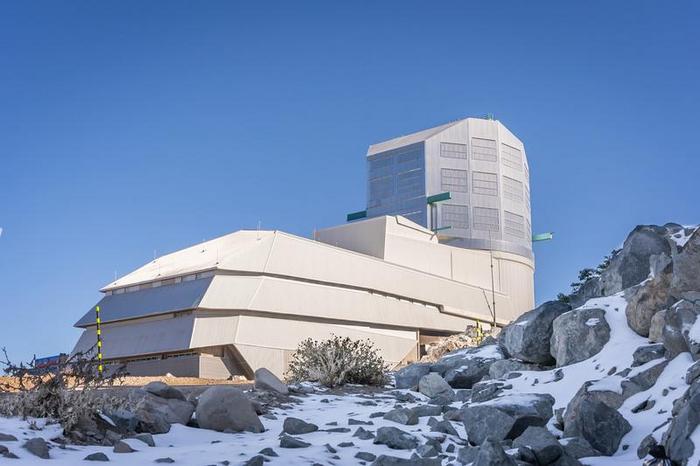
image:
NSF–DOE Vera C. Rubin Observatory. Credit: RubinObs/NOIRLab/SLAC/NSF/DOE/AURA/A. Pizarro D.
view more Credit: RubinObs/NOIRLab/SLAC/NSF/DOE/AURA/A. Pizarro D.
A world-first discovery of binary stars could be the first step in building a more complete picture of how our galaxy formed, according to astronomers from The Australian National University (ANU).
The discovery is part of an ambitious 10-year program to scan the entire southern sky every few nights.
The study's lead author, ANU researcher Dr Giacomo Cordoni, said the Legacy Survey of Space and Time (LSST) will build an extraordinary “movie of the universe".
“This survey—run from the Vera C. Rubin Observatory in Chile—will allow us to track billions of stars and galaxies as they change over time. It’s designed to unravel the history of star clusters, galaxies and the Milky Way itself,” Dr Cordoni said.
“One thing we're looking at is globular clusters—among the oldest and most crowded star systems in the universe. Each one holds hundreds of thousands of stars packed into a relatively small space, making them natural laboratories to study how stars evolve and interact.
“Our own Milky Way contains over 150 of these clusters, including the spectacular 47 Tucanae, which is visible to the naked eye from the Southern Hemisphere and often used as a benchmark for models of cluster evolution.”
Within these clusters, binary stars—pairs of stars orbiting a common centre of gravity—play a key role. They exchange energy with their neighbours, influence whether a cluster survives for billions of years, and can give rise to exotic objects such as luminous blue stars known as blue stragglers.
Using Rubin’s first public dataset, Data Preview 1, ANU astronomers detected binary stars across the outer regions of 47 Tucanae for the first time. They found that the frequency of binaries in the outskirts of the cluster is about three times higher than in the dense central regions, which had previously been studied with the Hubble Space Telescope.
The results suggest that while binaries are gradually destroyed or disrupted in the crowded centre, those living in the quieter outskirts can survive—preserving something closer to the cluster’s original population.
“This is remarkable because 47 Tucanae has been studied for over 100 years, but only now, thanks to Rubin, we can map its outskirts in detail and understand what’s really happening there, and how these mysterious clusters assembled,” study co-author Professor Luca Casagrande said.
This discovery is a crucial new piece of the puzzle of how globular clusters—some of the Milky Way’s oldest inhabitants—formed and evolved.
According to the researchers, it also highlights the transformative power of the Rubin Observatory.
"Even in its first test data, LSST is already opening a new window on stellar populations and dynamics," study co-author Professor Helmut Jerjen said.
"Over the coming decade, Rubin will map binaries and other stars across the entire sky, providing the first complete census of these systems and delivering a decisive test for theories of how clusters and galaxies came together to build the universe we see today."
The study will be published in PASA Letters. An early copy is available via arXiv.
Australia has access to Rubin through Astronomy Australia Ltd (AAL), the Australian Government’s LIEF scheme, and contributions from partner institutions. More information is available at https://astronomyaustralia.org.au/blog/portfolio/vera-c-rubin-observatory/
image:
NSF–DOE Vera C. Rubin Observatory. Credit: RubinObs/NOIRLab/SLAC/NSF/DOE/AURA/A. Pizarro D. |
Credit: RubinObs/NOIRLab/SLAC/NSF/DOE/AURA/A. Pizarro D.
A world-first discovery of binary stars could be the first step in building a more complete picture of how our galaxy formed, according to astronomers from The Australian National University (ANU).
The discovery is part of an ambitious 10-year program to scan the entire southern sky every few nights.
The study's lead author, ANU researcher Dr Giacomo Cordoni, said the Legacy Survey of Space and Time (LSST) will build an extraordinary “movie of the universe".
“This survey—run from the Vera C. Rubin Observatory in Chile—will allow us to track billions of stars and galaxies as they change over time. It’s designed to unravel the history of star clusters, galaxies and the Milky Way itself,” Dr Cordoni said.
“One thing we're looking at is globular clusters—among the oldest and most crowded star systems in the universe. Each one holds hundreds of thousands of stars packed into a relatively small space, making them natural laboratories to study how stars evolve and interact.
“Our own Milky Way contains over 150 of these clusters, including the spectacular 47 Tucanae, which is visible to the naked eye from the Southern Hemisphere and often used as a benchmark for models of cluster evolution.”
Within these clusters, binary stars—pairs of stars orbiting a common centre of gravity—play a key role. They exchange energy with their neighbours, influence whether a cluster survives for billions of years, and can give rise to exotic objects such as luminous blue stars known as blue stragglers.
Using Rubin’s first public dataset, Data Preview 1, ANU astronomers detected binary stars across the outer regions of 47 Tucanae for the first time. They found that the frequency of binaries in the outskirts of the cluster is about three times higher than in the dense central regions, which had previously been studied with the Hubble Space Telescope.
The results suggest that while binaries are gradually destroyed or disrupted in the crowded centre, those living in the quieter outskirts can survive—preserving something closer to the cluster’s original population.
“This is remarkable because 47 Tucanae has been studied for over 100 years, but only now, thanks to Rubin, we can map its outskirts in detail and understand what’s really happening there, and how these mysterious clusters assembled,” study co-author Professor Luca Casagrande said.
This discovery is a crucial new piece of the puzzle of how globular clusters—some of the Milky Way’s oldest inhabitants—formed and evolved.
According to the researchers, it also highlights the transformative power of the Rubin Observatory.
"Even in its first test data, LSST is already opening a new window on stellar populations and dynamics," study co-author Professor Helmut Jerjen said.
"Over the coming decade, Rubin will map binaries and other stars across the entire sky, providing the first complete census of these systems and delivering a decisive test for theories of how clusters and galaxies came together to build the universe we see today."
The study will be published in PASA Letters. An early copy is available via arXiv.
Australia has access to Rubin through Astronomy Australia Ltd (AAL), the Australian Government’s LIEF scheme, and contributions from partner institutions. More information is available at https://astronomyaustralia.org.au/blog/portfolio/vera-c-rubin-observatory/
Journal
Publications of the Astronomical Society of Australia
Publications of the Astronomical Society of Australia
DOI
Method of Research
Data/statistical analysis
Data/statistical analysis
Subject of Research
Not applicable
Not applicable
Article Title
Rubin Data Preview 1: Extending the view of unresolved binary stars in 47 Tucanae
Rubin Data Preview 1: Extending the view of unresolved binary stars in 47 Tucanae
Article Publication Date
9-Oct-2025
9-Oct-2025
Astronomers find mystery dark object in distant universe
University of California - Davis
image:
The black ring and central dot show infrared image of a distant galaxy distorted by a gravitation lens. Orange/reg shows radio waves from the same object. The inset shows a pinch caused by another, much smaller, dark gravitational lens (white blob).
view moreCredit: Devon Powell, Max Planck Institute for Astrophysics
Using a global network of telescopes, astronomers have detected the lowest-mass dark object yet found in the universe. Finding more such objects and understanding their nature could rule out some theories about the nature of dark matter, the mystery substance that makes up about a quarter of the universe. The work is described in two papers published Oct. 9 in Nature Astronomy and Monthly Notices of the Royal Astronomical Society.
Because the object does not emit any light or other radiation, it was detected by the way its gravity distorts light passing through or near it. This effect is called gravitational lensing. Based on the distortion, astronomers can infer the amount of matter in the unseen object.
In fact, the new object is so small that it was detected by inducing a small pinch in the distorted image caused by a much larger object, like a flaw in a funhouse mirror.
“It’s an impressive achievement to detect such a low mass object at such a large distance from us,” said Chris Fassnacht, professor in the Department of Physics and Astronomy at the University of California, Davis, who is a co-author on the Nature Astronomy paper. “Finding low-mass objects such as this one is critical for learning about the nature of dark matter.”
The mystery object has a mass about 1 million times that of our Sun. Its nature is unknown: It could be a clump of dark matter 100 times smaller than any previously detected, or it might be a very compact, inactive dwarf galaxy.
Although imperceptible except for its gravitational effects, dark matter is thought to shape the distribution of galaxies, stars and other visible bodies across the sky. A key question for astronomers is whether dark matter can exist in small clumps without any stars. This could confirm or refute some theories about the nature of dark matter.
Using telescopes worldwide
The team used instruments including the Green Bank Telescope (GBT), West Virginia; the Very Long Baseline Array (VLBA), Hawaiʻi; and the European Very Long Baseline Interferometric Network (EVN), which includes radio telescopes in Europe, Asia, South Africa and Puerto Rico to create an Earth-sized super-telescope, to capture the subtle signals of gravitational lensing by the dark object.
It is by a hundred-fold the lowest mass object yet found by this technique, suggesting that the method could be used to find other, similar objects.
“Given the sensitivity of our data, we were expecting to find at least one dark object, so our discovery is consistent with the so-called ‘cold dark matter theory’ on which much of our understanding of how galaxies form is based,” said lead author Devon Powell at the Max Planck Institute for Astrophysics (MPA), Germany. “Having found one, the question now is whether we can find more and whether the numbers will still agree with the models.”
The team is further analyzing the data to better understand the nature of the dark object, and also looking for more examples of such dark objects in other parts of the sky.
Additional authors are: John McKean, University of Groningen, the Netherlands, South African Radio Observatory and University of Pretoria; Simona Vegetti, MPA; Cristiana Spingola, Istituto di Radioastronomia, Bologna; and Simon D. M. White, MPA.
The work was supported in part by the European Research Council, the Italian Ministry of Foreign Affairs and International Cooperation and the National Research Foundation of South Africa. The National Radio Astronomy Observatory is a facility of the U.S. National Science Foundation.
Journal
Nature Astronomy
Method of Research
Observational study
Subject of Research
Not applicable
Article Title
A million-solar-mass object detected at a cosmological distance using gravitational imaging
Article Publication Date
9-Oct-2025
Microreactor to be tested in Space Ocean satellite

Under the terms of the Letter of Intent, Texas-based Space Ocean intends to test Space Nuclear Power's (SpaceNukes') 10-kilowatt nuclear reactor aboard its ALV-N satellite. If performance criteria are met, SpaceNukes will become a core supplier of nuclear power units for future Space Ocean missions focused on lunar and planetary operations.
The Letter of Intent also includes mutual objectives to: explore integration of fluid delivery systems with reactor modules; collect operational data to support Technology Readiness Level 9 certification; form a joint working group to pursue additional space infrastructure and commercial opportunities.
"Space Ocean's vision aligns with our belief that small, scalable and extremely reliable nuclear power is essential for long-duration missions," said Andrew Phelps, CEO of SpaceNukes, which is commercialising Kilopower space fission reactor technology under licence from Los Alamos National Laboratory. "Together, we're laying the groundwork for a future where spacecraft can generate, manage and distribute energy far beyond Earth orbit."
"Power is mission-critical, especially when you're operating in the deepest parts of space," said Paul Mamakos, CEO of Space Ocean. "This collaboration gives us the opportunity to pair our fluid logistics and delivery infrastructure with nuclear technology that can scale, sustain and energise orbital and planetary missions."
Pete Freeland, president and CTO of Space Ocean, added: "This strategic alliance between SpaceNukes and Space Ocean is a game changer for not only our programmes, but for planetary exploration missions yet to launch. Our collaborative efforts will mature an essential technology for future spaceflight, and we are excited to be aligned with this groundbreaking organisation."
