Thursday, October 16, 2025


BHP eyes revival of long-closed copper mines in Arizona
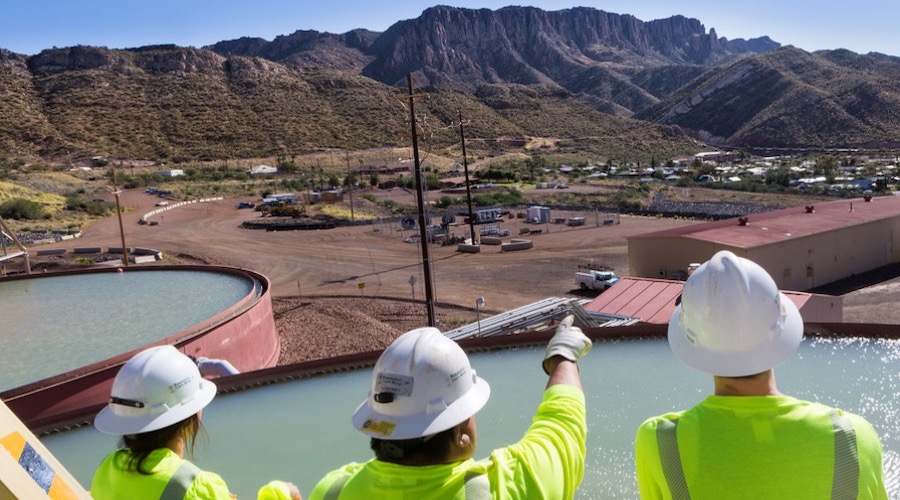
Resolution copper project in Arizona. (Image courtesy of Rio Tinto via Flickr.)

BHP (ASX: BHP), the world’s largest miner, is considering reopening four long-closed copper mines in Arizona, the centre of the copper industry in the United States.

Chief executive officer Mike Henry said that policy changes introduced by president Donald Trump encouraged BHP to expand its exploration efforts and review dormant assets in the state.

The potential restart would focus on the Globe–Miami region, where BHP also intends to reprocess tailings from the shuttered operations. Among the sites is the Magma mine, acquired through BHP’s 1996 purchase of Magma Copper. The mine was later shut down, with its surface area converted into the base for the Resolution joint venture with Rio Tinto (ASX: RIO).

Henry credited the renewed push to what he described as a “breathtaking level of ambition and urgency” in the US drive to secure supplies of critical minerals and reduce its reliance on China.

“The more supportive attitude towards mining and the urgency behind getting mining up and going, is a very welcome shift,” Henry told the Financial Times. “The sector has never been more in the spotlight.”

The state’s most significant copper project remains Resolution Copper, held by BHP and Rio Tinto. The $2-billion development has been stalled for more than two decades while awaiting court rulings and final permits. Once operational, it could produce up to 1 billion pounds of copper a year, enough to meet roughly 25% of US demand.

Rio Tinto, which holds a 55% stake in Resolution, remains confident that Trump’s administration will grant the necessary approvals to move the project forward.

Demand to soar

Henry’s comments come as copper demand is forecast to surge 24% by 2035, rising 8.2 million tonnes per annum (Mtpa) to 42.7 Mtpa, according to Wood Mackenzie. The consultancy’s new Horizons report warns that several powerful disruptors could amplify both demand and price volatility beyond expectations.

Among these disruptors, data centres represent the most unpredictable variable in copper demand forecasting. Beyond AI-driven demand, the broader energy transition is fundamentally reshaping copper consumption patterns. India and Southeast Asia are emerging as key growth engines, with their rapid industrialization expected to add 3.3 Mtpa of demand by 2035.
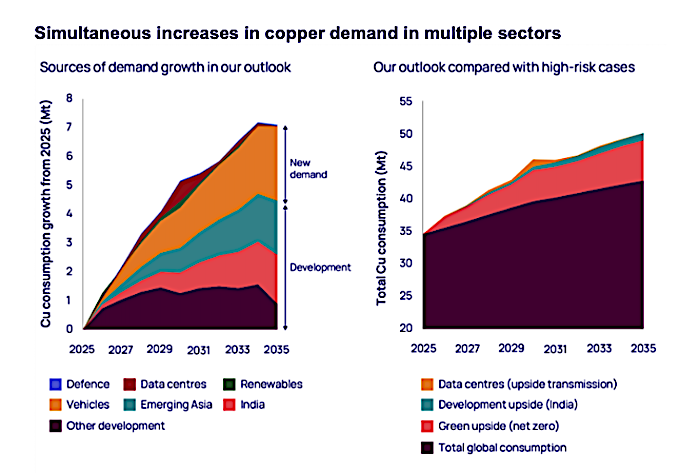
A fourth disruptor lies in shifting geopolitical priorities. Europe’s decision to raise defence spending to 3.5% of gross domestic product (GDP) in response to Russia’s invasion of Ukraine adds a modest direct copper demand of 25,000 to 40,000 tonnes per year over the next decade. However, the broader impact will be felt through infrastructure resilience and modernization.

Together, these factors could add an extra 3 Mtpa, or about 40% of total copper demand growth, by 2035, Wood Mackenzie says.


Japan, Spain and South Korea warn over unsustainable copper processing fees
Stock image.

Japan, Spain and South Korea issued a rare joint statement on Wednesday expressing deep concerns over tumbling copper treatment and refining charges (TC/RCs), warning both smelters and miners cannot develop sustainably under current conditions.

Copper smelters worldwide are grappling with falling processing fees and shrinking margins amid tight concentrate supply and expanding smelting capacity in China. In June, some Chinese smelters agreed to process copper for Chilean miner Antofagasta at no charge.

“We are deeply concerned that this deterioration in TC/RCs is prompting a reassessment of copper smelting operations worldwide, with several companies already indicating intentions to scale down or withdraw from copper concentrate smelting,” the three countries’ industry ministries said after an online meeting.

TC/RCs, a key source of revenue for smelters, are fees paid by miners when they sell concentrate, or semi-processed ore, to be refined into metal. But in some spot deals this year, TC/RCs have turned negative, forcing smelters to pay miners to provide smelting services.

The ministries said the current market environment prevents copper smelting from developing sustainably alongside mining in resource-producing countries and warned that growing dependence on specific countries is undesirable for both resource-producing and smelting countries.

“We hope TC/RCs will return to sustainable levels for copper concentrate trading,” they said, adding they will continue engaging with relevant countries and stakeholders to establish a resilient and sustainable copper supply chain.

Naoki Kobayashi, deputy director of the mineral resources department at Japan’s industry ministry, said the three countries — all importers of copper concentrate with domestic smelting operations — wanted to raise the issue during the metals industry gathering LME Week in London.

Japan’s major copper smelters, JX Advanced Metals and Mitsubishi Materials, have said they plan to scale back copper concentrate processing as declining fees erode margins.

(By Yuka Obayashi; Editing by Sharon Singleton)


Supply problems may force Freeport Indonesia to halt Manyar smelter
Freeport’s Indonesia copper smelter. (File image.)

Freeport Indonesia may be forced to suspend operations at its Manyar smelter at the end of October due to a lack of copper concentrate following a mud-flow incident at its Grasberg mine, media outlet Kontan reported on Tuesday, citing an energy ministry official.

Freeport Indonesia did not immediately respond to a request for comment.

Tri Winarno, an official at the country’s mining ministry, estimated that copper concentrate supplies from Grasberg would only be sufficient until the end of this month, Kontan reported.

“(Freeport) will face a lack of supply by the end of October. Temporarily halted,” Tri told reporters.

The mud-flow disaster had killed seven workers and operations at the Grasberg mine have been halted for nearly a month.

Grasberg may not return to its pre-accident operating rates until at least 2027, the company had said.

The $3.7 billion Manyar smelter only resumed operations in May after a fire broke out in October last year, damaging the plant.

(By Bernadette Christina and Ananda Teresia; Editing by John Mair and David Stanway)


Top 50 mining companies surge to new record near $2 trillion valuation


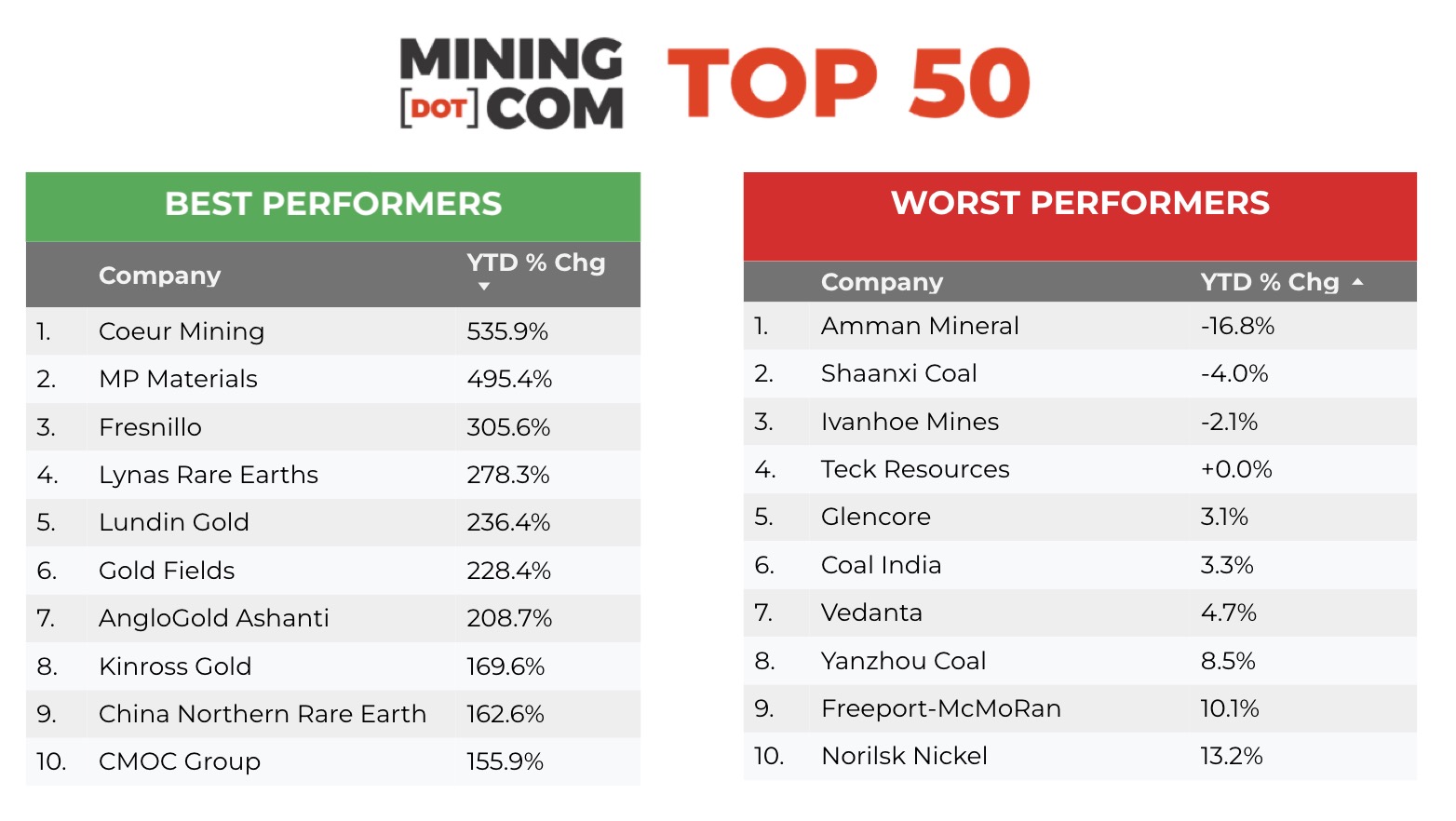
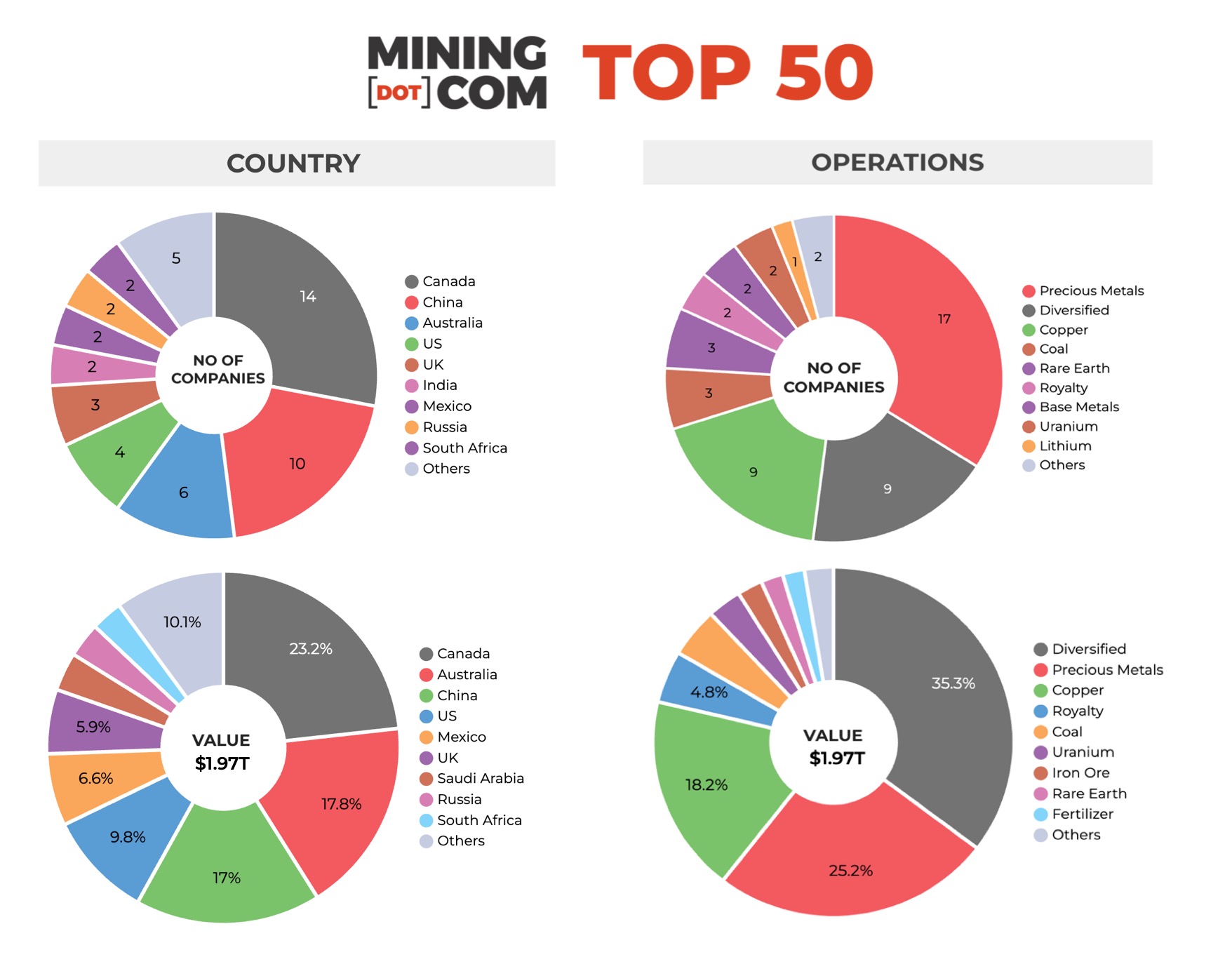
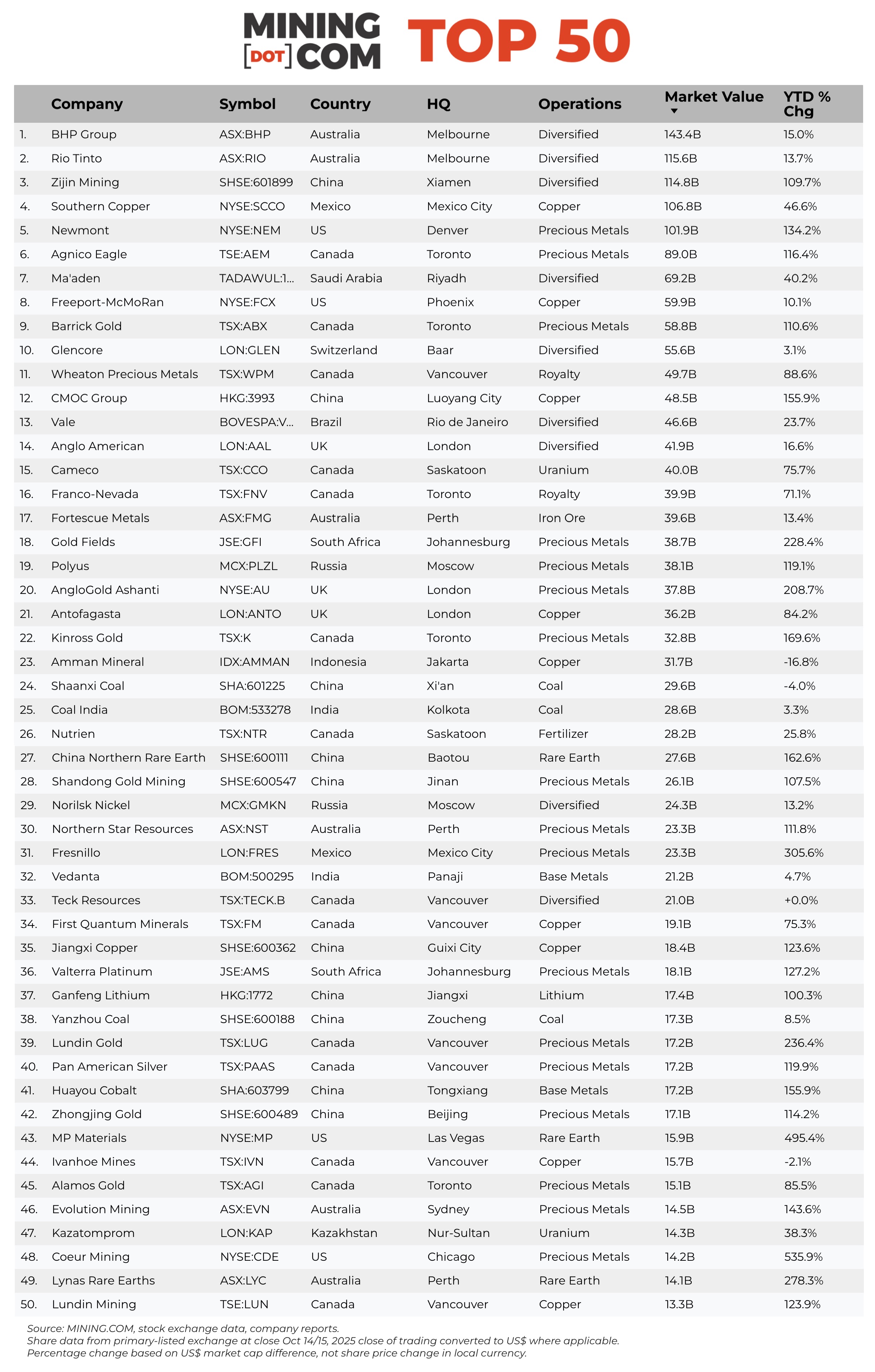
At the end of the third quarter the MINING.COM TOP 50* ranking of the world’s most valuable miners had a combined market capitalization of just under $1.97 trillion, up nearly $700 billion so far in 2025 with most of the gains accumulated in the third quarter. 

The total stock market valuation of the world’s biggest mining companies has finally surpassed the previous record high reached more than three years ago and in the process transformed the ranking of the upper echelons. 

Trends in the global mining industry that have been documented in these pages for more than a decade have finally broken through to the mainstream with critical minerals suddenly on everybody’s lips – from the US president down to the proverbial taxi driver sharing stock picks.

The weakness in the greenback played a part in the blowout quarter – the ranking is based on a company’s market capitalization in local currency on its primary exchange and then converted to USD where applicable. 

Rampant precious metals prices, including the thoroughly revived platinum group metals, can take much of the credit, although amid the general buoyancy the 60-plus percentage gains in PGM prices were not enough to see producers re-enter the ranking.

The best performing list shines with gold and silver counters, including an eye-popping six-fold increase for erstwhile minnows like Coeur Mining (which timed its acquisition of Mexican silver mines to perfection) and a 305% jump for Fresnillo, the London-listed silver miner controlled by Mexico’s PeƱoles.

Apart from gold and silver, rare earths have been the standout sector. Squeaking in at no. 49 after soaring by 280%, Perth’s Lynas Rare Earth joins Las Vegas-based MP Materials, which rocketed up the charts in Q2 after a groundbreaking deal with the Pentagon. 

MP Materials is now up nearly 500% and China Northern Rare Earth, the only rare earth stock to ever feature in the top 50, in sympathy is up 160% since the start of the year. 

Changes in the top tier dominated by diversified giants and gold and copper specialists have also seen a thorough reshuffle. 

The global mining industry is trying to consolidate to attract more large-scale investors to the sector but so far the results have been mixed at best. 

Since inception, the MINING.COM TOP 50 was headed by two firms  – BHP and Rio Tinto – the only miners with consistent market capitalizations above $100 billion (with a wobble here and there).  Now there are five firms with the distinction and likely more to come. 

Attempted combinations by the two Melbourne-based companies (including of the two of them in 2008) have gone nowhere.  BHP’s failure to buy Anglo American last year saw the company pivot to organic copper growth with up to $10B being spent on Escondida alone, the world’s largest copper mine (for now).  

The chances of Rio Tinto’s off-again on-again love affair with Glencore being consummated, looks slim and new CEO Simon Trott’s restructuring looks more like preparation for spin-offs than company level M&A, particularly after the head-scratching Arcadium Lithium buy.  The now 20-year old Alcan deal probably also still haunts boardrooms in Melbourne.

While BHP still has a clear lead of nearly $30 billion to the nearest competitor, Rio Tinto was for a few trading sessions this week pushed from its usual slot by Chinese champion Zijin Mining.

The diversified giant gained 61% in value over the course of the third quarter alone and is now worth $114.8 billion compared to Rio’s $115.6 billion.  In a less frenzied environment Rio Tinto’s more than respectable 14% advance over three months would’ve drawn praise. Now it’s a laggard.

Xiamen-based Zijin, with a string of investments in gold, copper and more recently lithium made over the last few years became only the fourth company to top $100 billion in market value (Vale climbed above that level – briefly – in 2022). 

Southern Copper, the NYSE-listed mining arm of Grupo Mexico, also joined the rarified atmosphere of triple digits during the quarter thanks to a 38% jump in Q3.  

Like other copper majors Southern Copper is looking to add to its operating assets with an aggressive investment strategy north of $10 billion in Mexico alone, but the company’s valuation is probably now too rich for any would-be acquirer. 

Newmont also joined the triple digit club this week. Unlike its acquisitive peers, shortly after swallowing Australia’s Newcrest Mining at the end of 2023 for $17 billion, Newmont embarked on a multi-billion dollar divestiture program.

Agnico Eagle and Kirkland Lake Gold combined in 2022 and the Toronto-based group continues to bolt on assets, making it a candidate for the $100 billion mark should gold continue its death defying rally. Agnico has doubled in value this year and is worth $89.0 billion. 

Of the recent mega-deal announcements, the one between Anglo and Teck Resources looks most feasible, but this agreement has also run into trouble, even before regulators get a hold of it.  

Teck Resources sharply lowered its 2025 copper guidance due to operational hiccups at its Quebrada Blanca and Highland Valley mines, testing Anglo’s commitment. Particularly after Anglo’s careful concession on headquarters for the merged entity under pressure from Ottawa.  

Teck is one of the worst performers for the quarter and as of now, an Anglo-Teck would hardly crack the top 10 with a combined value of a shade under $63 billion, placing it just ahead Freeport-McMoran at number eight.  

Freeport, often mentioned as a takeover target, has run into its own copper production problems. Last month a catastrophic mud rush at its Grasberg mine in Indonesia released approximately 800,000 tonnes of material into underground workings, forcing the Phoenix-based company to slash production forecasts. 

Freeport is now relatively cheap for a 1.3 million attributable tonnes of copper per year operation (before Grasberg suspension) after being one of only a handful of stocks showing declines over the three months. But companies that have kicked tires, may wait until operations in Indonesia get back on track.

Glencore, which tried and failed to acquire Teck a couple of years ago and only ended up with its coal assets, has also been another perennial underperformer and ended up on the worst performer table again this quarter.

The Swiss miner and commodities trader and no. 4 copper producer behind Freeport, just holds onto the top 10 but is still trading well below its 2011 IPO price in London.  

Since the transformative 2013 Glencore–Xstrata merger of equals that was anything but  – still the biggest mining deal in history  – Baar has always been the bridesmaid but never the bride

No mining M&A conversation is complete without Glencore.  The Ivan Glasenberg and Mick Davis boardroom brawl born out of the mean streets of Johannesburg, was also one of the most entertaining in and outside mining. 

Will Glencore and Rio Tinto finally tie the knot? You’d love to see it.   

NOTES:

Source: MINING.COM, stock exchange data, company reports. Share data from primary-listed exchange on October 14/15, 2025 close of trading converted to US$ where applicable. Percentage change based on US$ market cap difference, not share price change in local currency.

As with any ranking, criteria for inclusion are contentious. We decided to exclude unlisted and state-owned enterprises at the outset due to a lack of information. That, of course, excludes giants like Chile’s Codelco, Uzbekistan’s Navoi Mining (the gold and uranium giant may list later this year), Eurochem, a major potash firm, and a number of entities in China and developing countries around the world.
Another central criterion was the depth of involvement in the industry, and how far upstream is the bulk of its revenue, before an enterprise can rightfully be called a mining company.

For instance, should smelter companies or commodity traders that own minority stakes in mining assets be included, especially if these investments have no operational component or even warrant a seat on the board? This is a common structure in Asia and excluding these types of companies removed well-known names like Japan’s Marubeni and Mitsui, Korea Zinc and Chile’s Copec.

Levels of operational or strategic involvement and size of shareholding were other central considerations. Do streaming and royalty companies that receive metals from mining operations without shareholding qualify or are they just specialised financing vehicles? We included Franco Nevada, Royal Gold and Wheaton Precious Metals on the basis of their deep involvement in the industry.

Vertically integrated concerns like Alcoa and energy companies such as Shenhua Energy or Bayan Resources where power, ports and railways make up a large portion of revenues pose a problem. The revenue mix also tends to change alongside volatile coal prices. Same goes for battery makers like China’s CATL which is increasingly moving upstream, but where mining will continue to represent a small portion of its valuation.

Another consideration is diversified companies such as Anglo American with separately listed majority-owned subsidiaries. We’ve included Angloplat in the ranking but excluded Kumba Iron Ore in which Anglo has a 70% stake to avoid double counting. Similarly we excluded Hindustan Zinc which is listed separately but majority owned by Vedanta.

With other groups like Mexico’s Penoles where refining and chemicals make up a substantial part of the business where possible the Top 50 would include separately listed operating subsidiaries that are dedicated to mining. This is also why Southern Copper represents Grupo Mexico in the ranking.
Many steelmakers own and often operate iron ore and other metal mines, but in the interest of balance and diversity we excluded the steel industry, and with that many companies that have substantial mining assets including giants like ArcelorMittal, Magnitogorsk, Ternium, Baosteel and many others.

Head office refers to operational headquarters wherever applicable, for example BHP and Rio Tinto are shown as Melbourne, Australia, but Antofagasta is the exception that proves the rule. We consider the company’s HQ to be in London, where it has been listed since the late 1800s.

Please let us know of any errors, omissions, deletions or additions to the ranking or suggest a different methodology: email Frik Els at fels@mining.com with Top 50 in the subject line.


Carnegie Mellon researchers develop customizable finger brace for injury recovery


Carnegie Mellon University
Finger braces 

image: 

A team in the Interactive Structures Lab developed a fully customizable finger brace that can easily switch from stiff to flexible with the push or flex of a finger. It can also be 3D printed and requires no assembly.

view more 

Credit: Carnegie Mellon University


A friend's struggles with arthritis and the finger braces used to manage it inspired research by a Carnegie Mellon University student that could make it easier for patients to follow rehabilitation plans, speed up recovery times and help people manage chronic conditions.

Yuyu Lin, a Ph.D. student in the School of Computer Science's Human-Computer Interaction Institute (HCII), worked alongside her friend during an internship and noticed she had to remove the finger braces she wore to relieve arthritis in her knuckles when she used a computer. She couldn't bend her fingers with the braces, but she needed the braces to treat her condition. 

Lin wondered if she could make a finger brace that could easily toggle between stiff and flexible — without removal— to help people facing similar challenges.

With her colleagues in the Interactive Structures Lab (ISL), Lin did just that. The team developed a fully customizable finger brace that can, with the push or flex of a finger, easily switch from stiff to flexible. Along with its versatility, the brace can be 3D printed and requires no assembly.

"For this work, we were trying to think from the perspective of the patient, and how to get them to wear this brace and complete their rehabilitation routine more easily," Lin said.

Researchers designed the brace as two rigid pieces connected by an elastic band. The band can easily be released when a patient pushes down on the brace and curls or bends their finger to a certain point, allowing easy movement of the finger. When the patient extends their finger, pushing it up, the elastic band snaps back into place through a similar process and the finger becomes immobilized. Think of a snap bracelet — it's rigid until it's bent to a certain point, then it curls around the wrist.

Researchers worked with medical professionals and identified the tendons on the second knuckle of the hand where the brace could be useful. This area, known as the proximal interphalangeal joint, can be challenging to treat because post-injury stiffness can occur without adequate early mobilization.

Current finger orthoses are often static, leaving the digit immobile, and doctors usually ask that the patient remove the brace for rehabilitation exercises. Patients struggle to maintain the balance between immobility and movement, and researchers realized they needed a simple, pain-free solution to this problem. The answer was allowing the finger to move without removing the brace.

"We wanted to understand how we could help people, and what patients needed right now," said Alexandra Ion, an assistant professor in the HCII and director of the Interactive Structures Lab. "We wanted to add our expertise to build this new, unexpected thing."

The brace is customizable as well as flexible. In this initial work, the ISL researchers envision customization through software, allowing patients to easily generate a custom brace and either 3D print it themselves or have the completed device sent to them, ready to wear.

The patient needs to collect certain dimensions to customize their brace: their finger dimensions, which can be measured with a ruler; finger strength, which is measured with a force gauge; and their finger's extension angle, which can be measured with a protractor. Using these metrics, a computational design tool simulates a version of the brace. This step determines how much force, or torque, is required to safely switch the device from stiff to flexible. Based on the simulation, the tool generates a 3D design, allowing the patient to tweak it before printing.

Along with Ion and Lin, the CMU research team included Anoushka Naidu, a senior in the Computer Science Department; Dian Zhu, a senior majoring in mathematical sciences; Kenneth Yu, a junior in the HCII and School of Design; Deon Harper, a student at Pennsylvania State University who was part of the HCII's Summer Research Experience for Undergraduates program; Eni Halilaj, an associate professor in the Mechanical Engineering Department who directs CMU's Musculoskeletal Biomechanics Lab; and Douglas Weber, the Akhtar and Bhutta Professor of Mechanical Engineering. Deborah Kenney from Stanford University and Adam Popchak and Mark Baratz from the University of Pittsburgh Medical Center were also part of the team.

Lin plans to continue developing braces and inventing adaptive devices that can be easily and comfortably worn for more users with limited mobility.

The National Science Foundation and CMU's Center for Machine Learning and Health funded this research, which will be presented at the Association for Computing Machinery's Symposium on User Interface Software and Technology conference. You can learn more about this work at the ISL's website.


Tree canopy cover linked to lower risk of pedestrian falls, study finds


Columbia University's Mailman School of Public Health


October 14, 2025-- Higher levels of tree canopy cover may help prevent injurious pedestrian falls, according to a new study led by researchers at Columbia University Mailman School of Public Health. The research found that during summer months, locations on streets and sidewalks where pedestrians fell and suffered an injury were less likely to be shaded by trees than matched control locations.  The protective effect of tree canopy cover is potentially due to the cooling effects of shade from trees. The results are published in the American Journal of Epidemiology.

While indoor falls have been well studied, outdoor pedestrian falls have received far less attention, despite accounting for about half a million injurious incidents in the U.S. each year. Walking has multiple health benefits and the findings provide new evidence that urban greenery, perhaps through cooling the local ambient environment, contributes to pedestrian safety.

“Many cities have tree planting campaigns, particularly street trees, but these campaigns are controversial because street trees can cause sidewalk damage, and building owners worry that this damage will put people at risk of falls,” said lead author Katie Burford, PhD, a postdoctoral research scientist in the Department of Epidemiology at the Columbia Mailman School of Public Health and a postdoctoral research scholar in the Department of Parks, Recreation and Tourism Management at North Carolina State University. “And in many areas home/building owners are responsible for sidewalk maintenance and are liable if someone falls on the sidewalk in front of their building.”

Researchers analyzed data on tree canopy cover at 497 locations where Emergency Medical Services attended to pedestrians injured in a fall between April and September 2019 and at 994 carefully matched control locations. Tree canopy cover at each location where an injurious fall occurred and at matched control locations was measured using the 2019 National Land Cover Database—the national gold standard for canopy assessment.

Average tree canopy cover at fall locations was 8 percent, compared with 14 percent at control sites. Higher tree canopy cover was strongly inversely associated with locations where a pedestrian fall occurred after controlling for neighborhood socioeconomic factors and proxy measures for pedestrian volume.

“Sidewalk-related injuries represent a substantial public health burden,” said Andrew Rundle, DrPH, professor of Epidemiology at Columbia Mailman School of Public Health and senior author. “Unlike indoor falls, which are often linked to personal health factors, outdoor falls are shaped by environmental conditions. Our findings suggest that tree cover, by lowering ambient temperatures, may help reduce fall risk.”

The researchers note that while outdoor fall risk is well known to be associated with snow and ice, emerging data suggest that high temperatures can increase fall risk.  High temperatures can increase fall risk by adversely affect human physiology and by degrading road and sidewalk surfaces. High heat softens asphalt and causes sidewalk pavers to pop out of alignment creating trip and fall hazards.

 “Our work demonstrates how emergency medical services data can be leveraged to study pedestrian falls on a large scale,” said Rundle. “Future studies should examine how the cooling effects of tree canopy directly influence fall risk.”

Co-authors are Alexander X. Lo, Northwestern University Feinberg School of Medicine; James W. Quinn, Columbia Mailman School of Public Health; Remle P. Crowe, ESO Solutions LLC, Austin; Allan C. Just, Brown University; Michelle C. Kondo, United States Department of Agriculture; and John R. Beard, Columbia Mailman School and Butler Columbia Aging Center.

The study was supported by the National Institute of Environmental Health Sciences (5T32ES007322-21, R01 ES031295), the National Institute on Alcohol Abuse and Alcoholism (R01AA028552), the Columbia Center for Injury Science and Prevention (CDC R49CE003094), and the National Institute on Aging (P20 AG089308).

Columbia University Mailman School of Public Health

Founded in 1922, the Columbia University Mailman School of Public Health pursues an agenda of research, education, and service to address the critical and complex public health issues affecting New Yorkers, the nation and the world. The Columbia Mailman School is the third largest recipient of NIH grants among schools of public health. Its nearly 300 multi-disciplinary faculty members work in more than 100 countries around the world, addressing such issues as preventing infectious and chronic diseases, environmental health, maternal and child health, health policy, climate change and health, and public health preparedness. It is a leader in public health education with more than 1,300 graduate students from 55 nations pursuing a variety of master’s and doctoral degree programs. The Columbia Mailman School is also home to numerous world-renowned research centers, including ICAP and the Center for Infection and Immunity. For more information, please visit www.mailman.columbia.edu.