Thursday, October 16, 2025


GM Faces $1.6 Billion Loss as EV Demand Slows

  • General Motors will incur a $1.6 billion loss to scale back its electric vehicle (EV) operations, citing weaker expected demand due to recent U.S. policy changes, including the end of federal EV tax credits and loosened emissions rules.

  • The decision follows the expiration of the $7,500 federal EV tax credit on September 30, which was a key driver of EV sales and was terminated as part of a broader policy rollback under President Trump.

  • Despite the planned cutbacks in EV investments, GM reported strong overall U.S. vehicle sales through the first three quarters of 2025, with certain electric models like the Chevrolet Equinox EV and Cadillac Lyriq performing well.

General Motors said on Oct. 14 that it will bear a $1.6 billion loss to scale back its electric vehicle (EV) operations, citing weaker expected demand following recent U.S. policy changes that ended federal EV tax credits and loosened emissions rules.

The Detroit-based automaker said its Audit Committee approved the loss on Oct. 7, covering the three months ended Sept. 30.

The company noted that the loss is part of its plan to realign EV production and factory operations to better match customer demand.

The decision was made after the expiration of the $7,500 federal EV tax credit on Sept. 30, part of a broader policy rollback under President Trump.

The credit, officially started under the Energy Improvement and Extension Act of 2008, revised under The American Recovery and Reinvestment Act of 2009, and expanded under former President Biden’s 2022 Inflation Reduction Act, had been a key driver of EV sales in the United States. Trump signed the One Big Beautiful Bill Act on July 4, which set Sept. 30 as the final date for receiving EV purchase credits, effectively terminating the benefit.

“Following recent U.S. government policy changes, including the termination of certain consumer tax incentives for EV purchases and the reduction in the stringency of emissions regulations, we expect the adoption rate of EVs to slow,” GM said in a filing.

GM shares fell 2.5% in premarket trading, but have rebounded since as the broad market recovered...
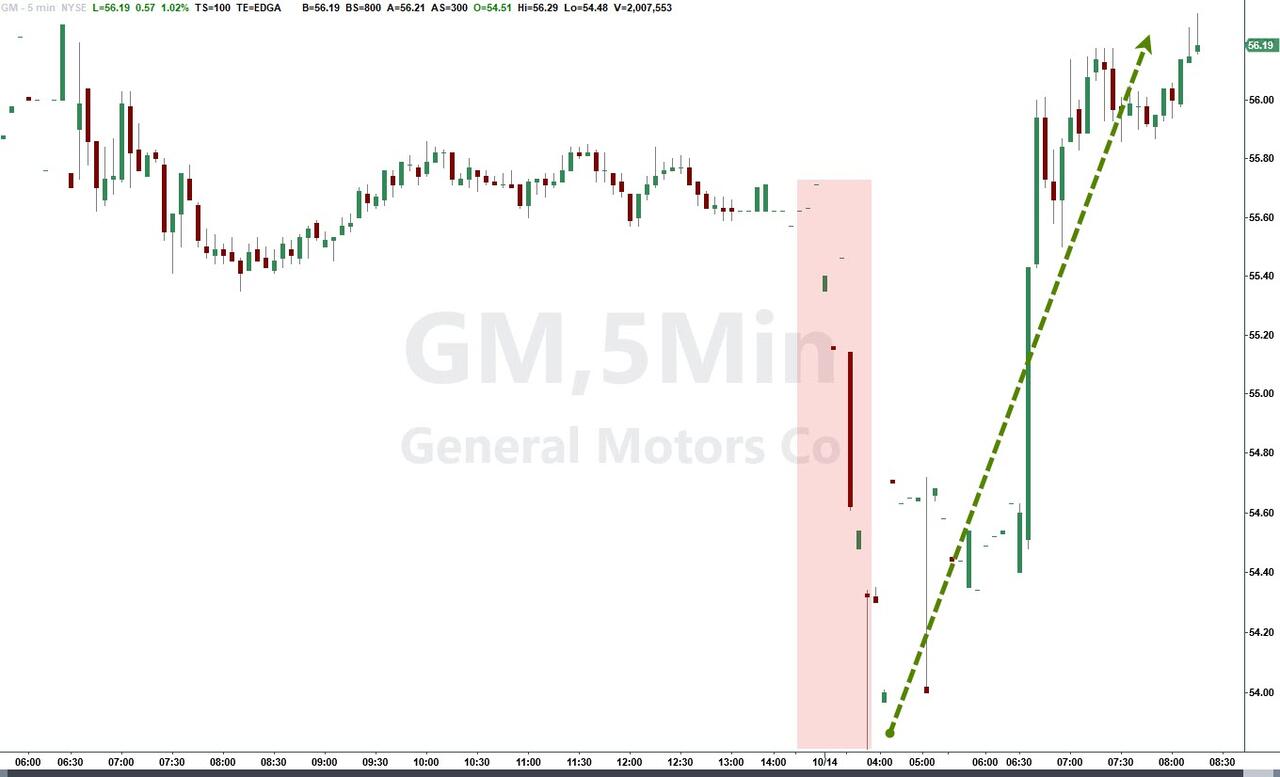
As Evgenia Filimianova details below for The Epoch Times, according to the filing, $1.2 billion of the loss is related to non-cash impairments, mostly write-downs of EV assets.

The remaining $400 million will be paid in cash for contract cancellations and commercial settlements tied to EV investments.

The company said its review of EV manufacturing and battery component investments is ongoing.

“It is reasonably possible that we will recognize additional future material cash and non-cash charges that may adversely affect our results of operations and cash flows in the period in which they are recognized,” GM added.

GM noted that the costs, along with several smaller ones this quarter, will be recorded as adjustments in its non-GAAP results, which exclude one-time items from the company’s official earnings reported under generally accepted accounting principles (GAAP).

The automaker also said its EV realignment will not affect current Chevrolet, GMC, and Cadillac electric models, which “remain available to consumers.”

The all-electric F-150 Lightning from Ford is displayed at the Los Angeles Auto Show in Los Angeles on November 18, 2021. Frederic J. Brown/AFP via Getty Images

Industry Changes

GM had previously pledged to invest up to $35 billion in electric and autonomous vehicles through 2025, aiming to transition most of its portfolio to zero-emission models later in the decade.

However, slower-than-expected consumer adoption, high production costs, and uncertain government policy have made that goal more difficult to achieve.

GM joins other automakers reassessing the EV market, including rival Ford Motor Co. Last year, Ford said it would take a $1.9 billion hit from plans that included canceling an all-electric SUV and delaying an electric pickup truck.

Despite the planned cutbacks, GM said this month that its overall sales remain strong. The automaker reported total U.S. vehicle sales of 2.2 million through the first three quarters of 2025, its fastest pace in a decade.

GM said the Chevrolet Equinox EV was the best-selling electric model outside Tesla, while its Cadillac Lyriq, Optiq, and Vistiq models all ranked among the top 10 in U.S. EV sales.

Analysts have said that the end of the federal EV tax credit “will test whether the electric vehicle market is mature enough to thrive on its own fundamentals or still needs support to expand further.”

In a Sept. 2 report, Duncan Aldred, GM’s North America president, said the company expects lower EV sales next quarter after the tax credits end on Sept. 30. He added that it may take a few months for the market to steady.

“Still, we believe GM can continue to grow EV market share,” he wrote. “We are seeing marginal competitors dramatically scale back their products and plans, which should end much of the overproduction and irrational discounts we’ve seen in the marketplace.”

By Zerohedge


The LNG Boom That’s Pricing Out American Consumers

  • Exports of U.S. liquefied natural gas have been breaking records since the start of this year.

  • Higher prices for U.S. natural gas seem to be inevitable as the main shale gas basins experience the same trends as oil basins.

  • Industry executives: gas drillers need prices of $5 per mmBtu to invest in drilling in less lucrative, costlier parts of the shale patch.

U.S. natural gas prices this week hit a two-week low on forecasts of a milder weather ahead. At $3.03 per mmBtu, natural gas was the lowest since late September—but it was significantly higher than in October 2024. Surging LNG exports may have something to do with this. The situation poses something of a dilemma for President Trump.

When he came into office, Trump vowed to make energy cheap and make America energy dominant globally. In oil, this means low prices at the pump and ever-growing exports. In natural gas, the goal is identical—and equally tricky to achieve due to the mutual exclusivity of the two elements of that goal.

Exports of U.S. liquefied natural gas have been breaking records since the start of this year. The latest data, for September, shows a total of 9.4 million tons, up from the previous record-breaking monthly total, exported in August, at 9.3 million tons. Chances are that as Europeans rush to stock up on gas ahead of winter, another record will be broken this month. The question now is whether gas drillers will keep up with the export growth—and whether they would want to.

Like crude oil drillers, natural gas producers in the United States are quite sensitive to price changes. When gas prices trend lower for long enough, drillers start cutting production. But now, there does not seem to be a reason to do that – gas prices are up by about $1 per mmBtu over the past year, and the demand outlook is absolutely bullish, with data centers driving construction of new natural gas power plants at home and Europe’s commitment to buy a lot more U.S. energy driving export growth. One point to Trump’s energy dominance agenda—but at the expense of his cheap energy at home goal.

The United States became a gas superpower thanks to the shale industry. However, shale basins are maturing, the Wall Street Journal noted in a recent report on the status of President Trump’s energy agenda. Just like with oil, it would become costlier to get more natural gas out of the ground in the coming years—and this would make gas more expensive for both consumers at home and buyers overseas.

“If you want to export all this LNG, if you want data sector growth, all the power demand growth, you’re going to need higher prices,” Eugene Kim, analyst at Wood Mackenzie, told the Wall Street Journal. “And that goes in contradiction to what Trump wants, which is lower energy.”

Norway found this out a couple of years ago when it boosted gas and electricity exports to struggling Europe, only to discover this meant higher electricity prices for Norwegians, which Norwegians did not particularly like. The government promptly set curbs on energy exports to keep costs affordable at home.

“Upgraded forecasts show that the world will need more gas for power generation, heating and cooling, industry and transport to meet development and decarbonisation goals,” the head of Shell’s LNG trading division, Tom Summers, said earlier this year, with the release of the company’s LNG demand outlook, which saw said demand soaring by 60% by 2040. The U.S. Energy Information Administration, meanwhile, says that LNG exports in July this year came in at 14 billion cu ft. This could rise to 27 billion cu ft, according to analysts cited by the Wall Street Journal. It looks like a best-case, dream-grade scenario for U.S. LNG producers during an administration that is eager to help them boost export capacity. For consumers, not so much.

Higher prices for U.S. natural gas seem to be inevitable as the main shale gas basins experience the same trends as oil basins—some of which, by the way, produce a solid portion of the country’s gas total as associated gas released from oil wells. These trends include depletion of the so-called sweet spots, or in other words, the lowest-cost, highest-yield parts of the reservoirs. This means higher production costs going forward, and higher production costs mean higher end prices.

According to industry executives mentioned by the WSJ in its report, gas drillers need prices of $5 per mmBtu to invest in drilling in less lucrative, costlier parts of the shale patch. That would be double the price increase for U.S. gas over the past 12 months. Yet it’s either that or tighter supply due to less drilling, which would also push final gas prices higher. This, however, is not something producers want—because it destroys demand.

“We want to see a stable, long-term price for the commodity,” the chief executive of Aeton Energy Management said earlier this year. “What we don’t want to see is demand destruction because of price volatility.” Long-term stability in energy commodity prices is an elusive dream, but on the flip side, both oil and gas demand are rather inelastic. This would suggest everyone should brace for more expensive gas.

By Irina Slav for Oilprice.com

NORTH American Clean Energy Under Pressure from Foreign Patent Fronts

  • U.S. clean energy growth has slowed sharply, with solar, wind, and battery additions expected to rise only 7% in 2025.

  • China has overtaken the U.S. in clean energy innovation, unveiling the world’s first operational thorium reactor and dominating global supply chains for solar, wind, and batteries.

  • U.S. firms remain active in clean tech patenting, though legal battles like Tigo Energy’s settlement with SMA and Maxeon Solar’s lawsuit against Canadian Solar highlight growing competition and IP tensions in the sector.

The U.S. clean energy drive has slowed down markedly in the current year,  with solar, wind and battery capacity additions on track to climb a modest 7% in 2025 from 2024 levels, the slowest clip in over a decade. The wind sector is particularly badly hit, with projections of a mere 1.8% in capacity growth in the current year, the lowest since 2010, largely due to policy headwinds by the Trump administration including the cancellation of hundreds of millions in offshore wind funding as well as freezing permitting for offshore wind projects. However, the transitory nature of the U.S. government is likely to keep clean energy innovation in the country alive and well.

Whereas the exact total number of clean energy patents issued in the U.S. is not readily available in a single, up-to-date figure, global trends show a large and growing number over the past decade. Between 2017 and 2021, there were 78,000 patent families in low-carbon energy technologies, with the United States contributing significantly to this global total. Some specific areas, like photovoltaic energy, have shown high patent activity in the U.S. between 2015 and 2025, with over 3,200 filings. However, the U.S. Patent Office now has its work cut out, given the stiff competition in the global clean energy sector and the fact that many countries, particularly China, are out-innovating the U.S. in cleantech.

China is the global leader in clean energy innovation, including in the manufacturing, large-scale deployment, investment, and the development of new technologies like fast-charging electric vehicles. The country's dominance in the supply chain for key clean energy technologies like solar panels, wind turbines, and batteries is significant, supported by decades of strategic planning and massive government and private investments. In April, Chinese scientists unveiled the world’s first operational thorium reactor.  According to Guangming Daily, the 2-megawatt experimental reactor is located in the Gobi Desert, and the latest milestone puts China at the forefront in the race to build a practical thorium reactor–long considered a more abundant and safer alternative to uranium. More significantly, China relied heavily on long-abandoned American research in the field.  In the 1960s, American scientists built and tested molten salt reactors, but Washington eventually shelved the program in favor of uranium-based technology. “The US left its research publicly available, waiting for the right successorWe were that successor,” project chief scientist Xu Hongjie said. “Rabbits sometimes make mistakes or grow lazy. That’s when the tortoise seizes its chance,” he added.

U.S. based companies and startups are still pursuing patents near historically high levels, including in the battery and electric vehicle sectors. These companies use these patents as tools or corporate assets to achieve various business objectives such as creation of barriers to entry,  protection of competitive differentiators and protection of market share, among other important uses. The fact that the vast majority of cleantech innovations are now happening outside the United States makes it harder to find non-U.S. prior art especially for overbroad patent portfolios. Prior art documents are any publicly available information that existed before the filing date of a patent application, such as patents, publications, websites, and products, that can be used to determine if an invention is novel and non-obvious. Patent examiners use prior art to decide if an invention meets the criteria for being new and not an obvious modification of what already exists. Patents experts are increasingly advising their clients to prepare at least a part of their patent portfolio in a more narrow manner to lower the risk of future litigations airing from unconsidered prior art arising that can result in significant legal costs.

Recent patent cases involving U.S. energy companies include Tigo Energy's (NASDAQ:TYGO) settlement with SMA over solar technology and Maxeon Solar's (NASDAQ:MAXN) lawsuits against competitors like Canadian Solar (NASDAQ:CSIQ) and REC Solar for allegedly infringing on its TOPCon solar panel technology. Tigo Energy reached a multi-year settlement with SMA in May 2025 to end a patent infringement lawsuit concerning Tigo's rapid shutdown technology for solar systems. Tigo filed the lawsuit in July 2022, alleging that SMA infringed on several of its patents related to rapid shutdown features required by the U.S. National Electrical Code (NEC). The settlement concluded the legal dispute, though the specific terms remain confidential. Meanwhile, Maxeon Solar sued Canadian Solar in March 2024 for infringing on its patents for TOPCon solar cell technology, alleging that Canadian Solar's n-type solar panels with TOPCon cells violate its intellectual property. This lawsuit was filed in the U.S. District Court for the Eastern District of Texas and is part of a broader effort by Maxeon to protect its patents against companies that make, import, or sell TOPCon products. Canadian Solar has indicated it will defend itself against the claims.

By Alex Kimani for Oilprice.com


Oil Chiefs See $60 Oil as Breaking Point for Shale Growth

  • Oil executives remain bullish long term, agreeing that while a short-term glut looms due to surging supply and weak demand, tightening fundamentals and slowing non-OPEC growth will eventually rebalance the market.

  • TotalEnergies and ConocoPhillips warn that U.S. shale output will plateau or decline if WTI stays near $60 a barrel.

  • ExxonMobil and Aramco stress sustained demand from emerging economies and call for continued investment in conventional oil.

Top executives from supermajors, the U.S. shale patch, and national oil companies remain bullish about the oil market in the medium and long term, expecting growing demand and the downturn in oil prices to eventually rebalance supply and demand from the looming glut.

At the Energy Intelligence Forum in London this week, the oil bosses acknowledged the bearish short-term fundamentals as supply growth outpaces the increase in demand. But they also see the market rebalancing in the medium term and supply struggling to catch up with demand in the long term.

Everyone concurs that there will be a glut in the short term; projections vary only about how big the oversupply will become later this year and early next year.

The International Energy Agency (IEA) this week warned, again, that soaring supply and “subdued” demand would bloat the oversupply to record levels.

Surging Middle East supply, combined with robust flows from the Americas, boosted oil on water in September by a massive 102 million barrels, equivalent to 3.4 million barrels per day (bpd), which is the largest increase since the pandemic, the agency said in its monthly report.

Related: North Sea Oil: Booming in Norway and Doomed in the UK

“Looking ahead, as the significant volumes of crude oil on water move onshore to major oil hubs, crude stocks look set to surge while NGLs start to drop,” the IEA noted.

Oil executives may be concerned about falling oil prices and declining profits in the short term, but they have seen their fair share of periods of oversupply and remain upbeat about the medium and long term.

“Fundamentally, the short term market is a little bearish,” Patrick Pouyanne, the chief executive of TotalEnergies, said at the forum.

“But we are quite bullish on the medium-term,” the executive added, pointing out to production decline rates and continued growth in global oil demand.

Non-OPEC crude production will begin to decline when oil prices are at $60 per barrel and lower, Pouyanne noted.

“There is a point at $60 per barrel where we'll see the shale industry beginning to slow down,” Pouyanne said on the sidelines of the forum, as carried by Reuters.

“Our view is that from mid-2026 non-OPEC supply will be much lower, no growth, and then OPEC will be regaining control of the market,” TotalEnergies’ top executive said.

Ryan Lance, chairman and CEO of ConocoPhillips, said that “At $60-$65 a barrel WTI oil prices, the US is probably plateau-ish.”

U.S. oil output could grow by between 300,000 bpd and 400,000 bpd this year, Lance said.

“But if prices stay at $60 or go into the $50s, you probably are plateauing or slightly declining,” the executive added.  

ExxonMobil’s CEO Darren Woods believes the glut will be just a short-term issue in markets, and the bigger issue will be how supply will meet demand in the medium and long term.

“Oil market oversupply is likely to be a short-term issue, with demand from emerging economies set to make meeting global energy demand more challenging in the medium to longer term,” Woods said at the forum in London.

“We continue to do the same thing under the Biden administration and under the Trump administration,” Exxon’s top executive said.

Exxon “look beyond political cycles and think fundamentally about the long-term fundamentals of economic growth around the world.”

Amin Nasser, the chief executive of the Saudi state oil giant Aramco, said in a speech at the forum that the energy transition faces a reality check and reality on the ground points not to an energy transition, but to “an energy addition which requires all hands on deck.”

“We also see resilient demand, and the pressing need for long-term investments in supply is now widely accepted. So, our growth potential in oil remains large,” Nasser said.  

Despite the bearish short-term fundamentals, the long-term prospects and the need for more supply years from now remain intact, according to the executives.

“The key strategic question for companies like mine and others is, where is the conventional oil going to come from to satisfy the demand in the face of plateauing or peaking U.S. unconventional supply, as demand continues to grow,” ConocoPhillips’ Lance said.

By Tsvetana Paraskova for Oilprice.com


Ship Movements Resume at Belgian Ports After Pilots Suspend Job Action

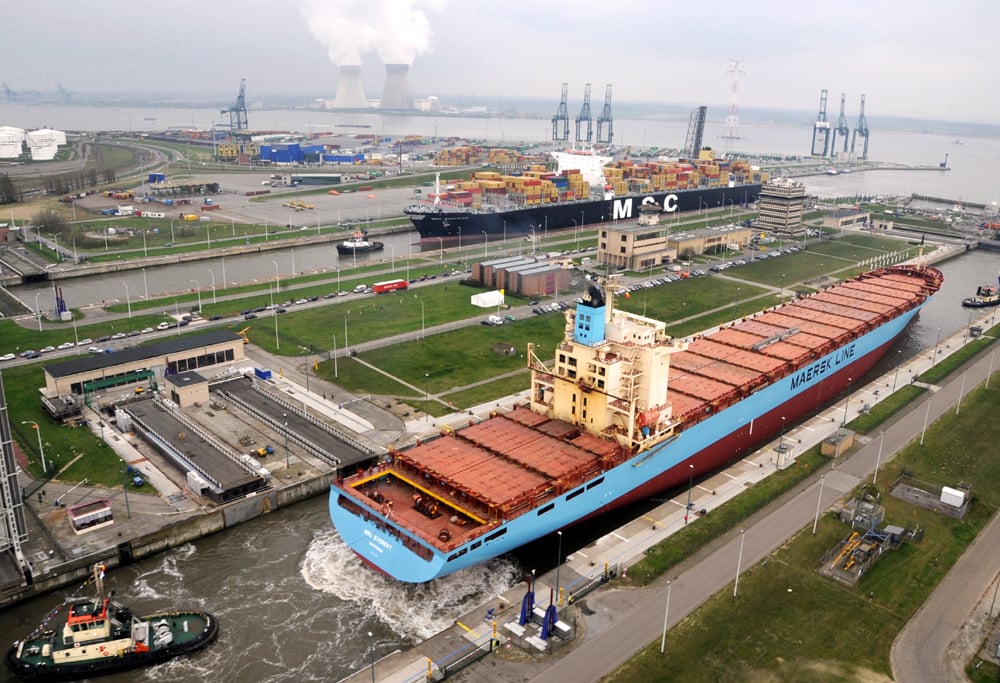
Sea locks to Port of Antwerp
Ship movements resumed after a day-long national strike and Belgian maritime pilots suspended their job action (Port of Antwerp)

Published Oct 15, 2025 4:39 PM by The Maritime Executive


Shipping has begun to move again at Belgium’s ports after a 10-day job action by the unions representing the pilots in protest of government pension reforms. The return to a normal work schedule came a day after a national strike brought large parts of Belgium, including the seaports, to a stop.

The unions representing the pilots said they were giving the government 10 days, until October 24, to demonstrate concrete progress through mediation. The job action came after the union accused the government of not proceeding with a framework that had been agreed in June, which called for resolving the pension reforms by the end of November and better alignment of the pensions for pilots with other government workers. The unions said they were giving “negotiations another chance.”

Pilots had been adhering to work rules and limiting their available hours since October 5. The effect was to create a massive backlog of ships stuck at the dock without an assigned pilot or waiting in the offshore anchorage. 

Further adding to the delays was a national strike called by the public unions on October 14. By midday, the police reported there were 80,000 protestors in Brussels calling for the government to relax its plans for pension reforms and spending cuts. The strike impacted operations at the country’s airports and saw the Port of Antwerp and others closed to inbound and outbound vessels due to understaffing in the maritime control center. The Port of Antwerp said there was activity inside the port, but no vessels could transit due to the national strike. In the capital of Brussels, reports said buses, trams, and the subway were all suspended.

The Port of Antwerp reported, as of late on Wednesday, October 15, more than 180 vessels remained backlogged (60 outbound and 128 inbound vessels), but operations were moving again. They, however, said the logistics chain is at only about 70 percent of capacity as the pilots are continuing to enforce 12-hour rest periods. They expect it will take days to clear the backlog of ships at both Antwerp and Zeebrugge.

The other major port, Rotterdam, also reported that container vessels were again moving after a week-long strike by lashers for better pay. A court ordered the lashers responsible for securing and releasing containers on docked vessels back to work as of Monday morning. Negotiations were due to resume, while the court said that if there was no progress, the strike could resume on Friday.

Congestion had been building at two of Europe’s busiest North Sea ports, with the potential for impacts along the routes of many carriers. Some vessels were already skipping the port while Maersk, for example, told customers it was contingency planning and monitoring the situation. The hope is that the backlogs can ease while the negotiations resume.


U.S. Coast Guard Rescues 45 People From a Catamaran Off Guam

USCG boat crews evacuate a catamaran
Courtesy USCG

Published Oct 15, 2025 1:13 AM by The Maritime Executive


[Brief] On Friday, the U.S. Coast Guard conducted a mass rescue from a passenger vessel off the coast of Guam after the crew reported a fire on board. 

At about 0930 hours on Friday morning, Coast Guard Station Apra Harbor received a Channel 16 distress call from the Princess Guam, a 45-foot vessel that was operating off Agat Bay. The watchstanders dispatched three boat crews to the scene to assist and notified Guam Fire Rescue. The fire department's responders arrived to help at about 1000 hours. 

After a short transit south from their base at Apra Harbor, the Coast Guard boat crews successfully retrieved 45 people from the catamaran, including elderly passengers and young children. All were returned safely to the pier at Agat Marina. 

“Strong teamwork with the Guam Fire Department was a critical component of today’s mission,” said Lt. Cmdr. Derek Wallin, search and rescue mission coordinator, U.S. Coast Guard Forces Micronesia/Sector Guam. “Through our joint efforts, we successfully rescued 45 people, demonstrating the strength of our partnership and unwavering commitment to mariner safety.” 


Second Fire on Tanker in Indonesian Shipyard Kills 10 and Injures 21

fire on tanker in shipyard
A second fire on the same tanker in a shipyard has killed 10 workers after four were killed in June (Batam TV)

Published Oct 15, 2025 1:45 PM by The Maritime Executive


Indonesian authorities are raising strong concerns after a second fire aboard a tanker undergoing repairs has killed 10 shipyard workers, less than five months after another fire killed four workers. The police are at the shipyard collecting evidence and interviewing witnesses after the overnight fire on the tanker Federal II.

The fire started at approximately 0430 local time on October 15, with witnesses reporting billowing smoke that was spreading over an industrial area of Batam. The police said it took firefighters about an hour to extinguish the fire.

The latest reports are that 10 shipyard workers were killed, mostly from smoke inhalation. Dozens of workers were also taken to four local hospitals. Initial reports said 18 were injured, but a police commander has now raised the number to 21. He said some were “heavily injured.”


The tanker, which was built in Japan in 1990, is 95,759 dwt and 761 feet (232 meters) in length. It has been at the ASL Shipyard for several months, with reports in June that it was being converted to an FSO. It had completed a 10-year charter to China’s CNOOC operating in the Widuri region.

The fire in June killed four shipyard workers and injured nine others. Police said today that the first fire was due to a buildup of gas that had not been properly vented and was ignited by sparks from welding. According to the report, two shipyard workers were suspects in the June fire, cited for failing to follow safety procedures. The police said today’s fire was in another part of the vessel.


Ships React to Fees as China Calls for U.S. to “Correct its Wrongdoings"

Maersk Line containership
Maersk and Hapag rerouted ships while Matson appears to be facing hefty port fees (Maersk Line LTD. file photo)

Published Oct 15, 2025 3:22 PM by The Maritime Executive


China’s reciprocal port fee program launched yesterday,  October 14, and is having an immediate impact as carriers report they are diverting ships, and others are receiving hefty bills. China continues its attacks in the media as it calls on the U.S. to meet it halfway in the current trade talks.

Carriers Maersk and Hapag-Lloyd were the first to react, announcing “temporary changes” for two U.S.-flagged vessels on Asian routes. Maersk writes in a customer advisory, “We will be making changes to the TP7 rotation to make sure your supply chains continue to run as smoothly as possible, if you are utilizing this service.”

Hapag appears to be the first to divert a vessel, with its Potomac Express (7,323 TEU) having proceeding to Busan, South Korea after omitting a scheduled call in Ningbo, China. Cargo bound for China, Maersk reports, is being discharged in Korea and will be delivered to its final destination by the existing Maersk network. Cargo that was to have been loaded in China was instead placed on the Maersk Luz (7,450 TEU). The two vessels are scheduled to meet in Kwangyang, South Korea, on October 24, where, subject to availability and capacity, containers will be transferred to the Potomac Express.

The Maersk Kinloss (6,200 TEU) is currently crossing the Pacific from Los Angeles. The vessel was also scheduled to go to Ningbo, but the call has been canceled. It is proceeding directly to Busan, where it will discharge its China-bound containers. The company says an unspecified shuttle will be used to lift containers from China and transship them to South Korea. The steps were taken to avoid the $56 per net ton port fee China introduced on U.S. ships.

Other vessels, however, seem not to have been as lucky. Matson’s U.S.-flagged Manukai (2,378 TEU) reached Ningbo and has gone on to Shanghai. China’s Xinde Marine News calculates that the vessel with a net tonnage of 11,149 tons has a fee of nearly $630,000. Chinese officials had not confirmed the fee was collected because the ship tied up early on October 14, shortly after the fee program began.

China’s Caixin Global cites another vessel operating under charter to Matson, Matson Waikiki, which officials from China’s Ministry of Transport told the outlet was liable for the fees, after it arrived in Shanghai on October 14. The vessel, built in 2003, has German ownership but has been chartered to Matson since late 2023 and sails under the Liberian flag. Carrying 4,870 TEUs, Caixin writes that with a net tonnage of 30,224, the ship is subject to a charge of about $1.7 million in additional port fees under China’s new fee schedule.

“China on Tuesday expressed strong dissatisfaction and firm opposition to the U.S. move of imposing port fees and other restrictive measures on China's maritime, logistics, and shipbuilding sectors, a spokesperson of China's Ministry of Commerce (MOFCOM) said,” writes the Global Times, which is controlled by the Chinese Communist Party's flagship newspaper. The long article goes on to detail the growing trade tensions and China’s mounting response to the USTR Section 301 probe. The article says the U.S. should “correct its wrongdoings, show sincerity for talks, and meet China halfway.”

The repercussions continue to mount in both China and the United States, with shipping caught in the middle. The BBC quotes an analyst who says, “Ships carrying dry bulk cargoes like coal and other raw materials could have to pay up to $3 million in port fees,” according to freight analyst Claire Chong from shipbroker Thurlestone Shipping. She estimates that with the escalating fees China announced, by 2028, some of the biggest vessels that carry nearly 200,000 tonnes in dry bulk could have to pay more than $10 million in fees.

Maritime intelligence technology company Pole Star reports it has seen a sharp dropoff in interest in ships. “We are seeing Chinese vessels that are being screened by our customers nearing zero. This is a concerning drop from the number we saw in January 2025, where 1,678 Chinese vessels entered the U.S. and were screened by our customers,” says Saleem Khan, Chief Data & Analytics Officer, Pole Star Global.

Khan believes the new port fees have already started to change behavior in the shipping market. He expects short term, there will be more route changes like those seen today from Maersk and Hapag, as well as void sailing. After that, the expectation is that carriers will begin to pass along the fees in their freight rates.


Ports Call for U.S. to Reverse Course Saying Equipment Tariffs Delay Growth

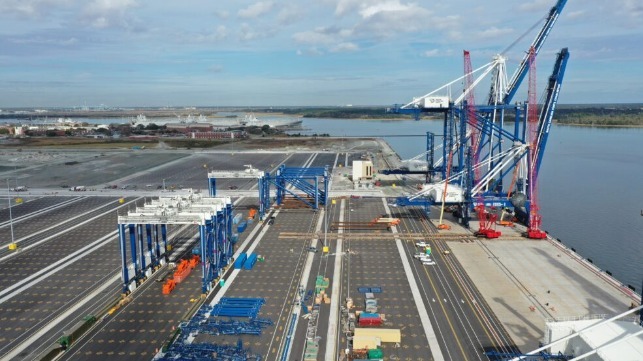
cargo handling equipment
USTR seeks to expand the tariffs to include more cargo handling equipment with a 150 percent tariff (Charleston file photo)

Published Oct 15, 2025 5:47 PM by The Maritime Executive


The American Association of Port Authorities quickly responded to last week’s proposed revisions by the U.S. Trade Representative to the port fee program. It said the new tariffs will only serve to delay port modernization and expansion in the United States without encouraging the reshoring of equipment manufacturing.

AAPA, which represents public port authorities, has been fighting the proposed fees on Chinese-manufactured cranes since the accusations first emerged a few years ago that China could use the cranes to spy on American ports and potentially interrupt port operations. The group supports the efforts to restore manufacturing in the United States, but says the fees must be tied to incentives to restart domestic manufacturing. It notes that there are still minimal or no options for ports other than the Chinese manufacturers.

“AAPA remains opposed to the 100 percent tariff, which will only make cranes delivered from allied nations more expensive. There is still not a single American producer of STS cranes,” said AAPA President and CEO Cary Davis.

The group highlights one small concession from the Trump administration, in the tariffs on Chinese-manufactured ship-to-shore cranes. AAPA fought against making the fees retroactive to existing equipment orders and says it appreciates that the Trump administration has not applied the tariff to cranes ordered before the publication of the USTR’s Section 301 ruling on China’s shipbuilding and maritime industry, which includes the tariffs on cranes. The 100 percent tariff went into effect with the port fees on October 14, but it is not retroactive to orders placed before April 2025, as long as the equipment is delivered by April 2027.

The USTR, however, in the revisions to the program released on October 10, proposed adding a new 150 percent tariff on a broad range of cargo handling equipment from China. This includes gantry cranes, reach stackers, terminal tractors, and other critical equipment. The group asserts that by effectively pricing out these equipment types for U.S. ports, the tariffs mean ports will delay expansion and modernization plans for years.

“AAPA supports efforts to bring maritime industry manufacturing back to America. However, these ill-advised trade policy changes will cause America’s ports to slow modernization and fall further behind competitors, when the maritime industry has emerged as a key focus of national and economic security,” the group writes in a statement in response to the USTR.

It contends that the increase in the cost of equipment will have to be offset elsewhere in the ports’ operations. It suggests expenses will have to be lowered by steps such as by reducing workforce training or capital investment.

AAPA is urging the Trump administration to “reverse course on these tariffs.” It is calling for support for efforts such as targeted tax credits and funding for port infrastructure, while also creating incentives for domestic production of STS cranes and other cargo handling equipment.

The USTR is taking comments through November 12 on the changes to the fee program, including the proposed fees on cargo handling equipment. The goal is to finalize those portions of the fees to go into effect in December 2025.


RWE Dumps its Australian Offshore Wind Project

offshore wind farm
iStock

Published Oct 15, 2025 5:28 PM by The Maritime Executive


German utility RWE has decided to dump its giant Kent offshore wind project off the coast of Victoria, Australia, the latest in a long series of blows for the non-China offshore wind industry. 

Kent would have supplied two gigawatts of power to consumers in Gippsland, Victoria, but it was proposed in an earlier era when project economics were more favorable. In an announcement, RWE cited issues with "the project's competitiveness in current market conditions," as well as uncertainty around supply chain costs and plans for future auctions off Victoria. Initial projections for construction cost were in the range of AUD$8-10 million. 

"We want to be clear that this decision relates solely to the Kent offshore wind project," RWE emphasized. "We are continuing to develop, build and operate a diverse pipeline of renewable energy projects across Australia, including large-scale battery storage and onshore wind." The firm is currently working on three one-gigawatt onshore wind farms and a grid-scale battery storage farm, and says that it sees Australia as a "key growth market" for renewables going forward. 

Australia's nascent offshore wind industry has had several setbacks this year. In July, BlueFloat Energy abandoned a nearby planned facility off Victoria after it failed to secure a project partner for development. The cancellations are a setback for the state's ambitions to get to 95-percent renewable power on its grid by 2035, including nine gigawatts of offshore wind by 2040. 

Others may be coming. Danish offshore wind leader Orsted has two giant wind farms planned off Gippsland, and for now these are still progressing. However, the company recently announced that it is pulling back from overseas markets to refocus on its core European business, where it sees more favorable conditions for development. It is also laying off about one quarter of its workforce and has raised $9 billion in a rights issue in order to offset serious financial setbacks in the U.S. and other markets.