Friday, October 24, 2025


LATAM BLOG: Will Argentines give austerity more time to work?

AUSTERITY IS TOXIC, FIGHT BACK!
LATAM BLOG: Will Argentines give austerity more time to work?
While Milei's core supporters remain loyal, he must also win over centre-right voters who backed rival parties in 2023 but have since grown disillusioned with austerity and stagnant wages. Pollsters say turnout among wavering supporters will be decisive.
By Marco Cacciati October 23, 2025

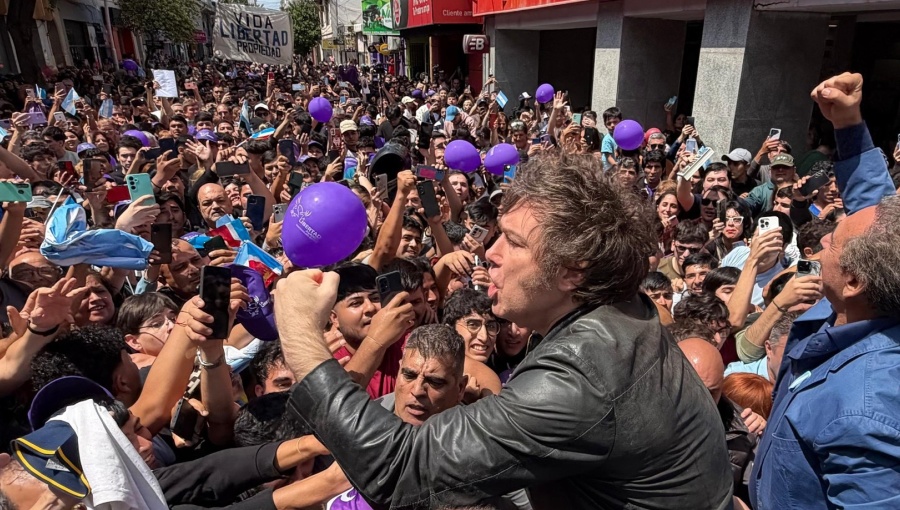
Argentines vote on October 26 in midterm legislative elections that will decide whether President Javier Milei can sustain his radical economic overhaul or face paralysis in Congress.

Nearly two years into office, the libertarian leader can point to commendable gains. Inflation has fallen from triple digits to 31.8% annually, while the economy has posted two consecutive quarters of growth for the first time since 2022.

But the adjustment has been brutal, particularly for low-income households, pensioners and welfare recipients. Industrial production contracted 4.4% year on year in August, and poverty rates have risen as subsidies were slashed and public sector hiring frozen. A series of graft allegations against his sister and confidante Karina and a crushing defeat in a Buenos Aires city election have further weakened Milei's position, triggering a sharp sell-off in local assets and pushing the peso to record lows.

The contest will reshape Congress, with 127 lower house seats and 24 Senate seats at stake. Milei's La Libertad Avanza (LLA) right-wing coalition currently holds just 40 deputies and six senators against the Peronist opposition's larger bloc. Victory in Buenos Aires province, a Peronist stronghold where the bulk of seats are concentrated, will prove critical.

Peronism, the leftist populist movement founded by Juan Domingo PerĂ³n in the mid-20th century and now led by former president Cristina Kirchner, has dominated Argentine politics for decades through state intervention, generous welfare and union power. That model has arguably undermined stability: large spending commitments, wage indexation and protectionist policies have fuelled chronic deficits and inflation. Institutional weakness has meant social promises lacked fiscal discipline, favouring short-term redistribution over competitiveness and trapping Argentina in cycles of boom, bust and currency crisis.

The Economist Intelligence Unit (EIU) forecasts four scenarios for the upcoming high-stakes election, each with starkly different implications for Argentina's fragile recovery.

The most likely outcome, with a 45% probability, sees LLA winning roughly one-third of the lower house. Political analysts view a third of the national vote as the minimum needed to preserve Milei's ability to block opposition attempts to override his vetoes – a power he has deployed repeatedly in recent months. The EIU expects modest improvement in market confidence, a stronger peso and reviving business investment through 2026-27.

A narrower Peronist victory, deemed 35% likely, would prove far more disruptive. The opposition could reclaim dominance in Buenos Aires province, erasing Milei's legislative leverage and creating gridlock. The EIU warns this could eliminate Argentina's nascent fiscal surplus and trigger contraction next year.

Two tail risks frame these central scenarios. An LLA landslide, just 10 % probable, could enable Milei to accelerate structural reforms including privatisations and much-needed labour market liberalisation. Conversely, an equally unlikely Peronist sweep could reverse fiscal discipline, restore subsidies and derail the IMF-backed programme, reigniting currency depreciation and inflation.

Milei must now square an awkward circle. While his core supporters remain loyal, he must also win over centre-right voters who backed rival parties in 2023 but have since grown disillusioned with austerity and stagnant wages. Pollsters cited by Reuters say turnout among wavering supporters will be decisive.

Meanwhile, financial markets are already pricing in volatility. The peso briefly rallied this week after reports that the US Treasury and Wall Street banks intervened to support the currency. People familiar with the matter told Bloomberg that JPMorgan and Citigroup bought pesos, while traders estimate Washington sold as much as $500mn.

The operation is part of a broader US rescue package. Treasury Secretary Scott Bessent has announced a $20bn swap line for dollar liquidity, plus plans for an equivalent facility to purchase sovereign debt. Bessent called it "a bridge to a better economic future", though analysts warn defending the exchange rate could rapidly drain reserves if pressure persists.

Argentina also enjoys the backing of the IMF, with a $44bn programme renegotiated last April which granted a further $20bn Extended Fund Facility (EFF). Bloomberg estimates Buenos Aires' current exposure to the fund to be around $55bn.

Washington's unprecedented intervention speaks to Milei's geopolitical value as the Trump administration seeks to fend off growing Chinese influence in Latin America. When announcing the $20bn swap line, Bessent hailed Argentina as a "systemic ally of the US". But economists caution that support hinges on policy continuity.

And President Donald Trump himself laid out blunt conditions for continued backing last week, rattling investors with the prospect of a Milei defeat. "We're not going to let somebody get into office and squander the taxpayer money from this country. I'm not going to let it happen," Trump said. "If [Milei] loses, we are not going to be generous with Argentina."

Economy minister Luis Caputo insists the managed-float currency regime agreed with the IMF will not change, reaffirming this week that "the peso bands will remain" despite investor concerns the currency is overvalued. Since April, authorities have allowed the peso to drift within pre-set trading limits: a system traders expect will be loosened regardless of the October 26 outcome. Currency strategists are pricing in a sharper adjustment once the political uncertainty clears.

Yet the peso's weakness may reflect political jitters more than economic fundamentals. Argentina's real effective exchange rate has gained 31% since April and now sits close to its long-term average – hardly the stuff of currency crisis. The country has run consistent trade surpluses under Milei, and its current account remains manageable. Many traders expect the peso to recover once electoral uncertainty lifts, particularly if the president can demonstrate he retains enough support to govern.

That will require moving swiftly. Sunday's result will reveal whether Milei has built the political coalition his reforms need to survive. For now, investors and voters alike are hedging their bets in the only currency they trust: the dollar. Even if that means continuing to stash greenbacks under the mattress.

Marco Cacciati is the regional editor for Latin America at bne Intellinews.


Malaysia–Vietnam offshore wind project to deliver 2,000 MW by 2034, strengthening regional green energy links

Malaysia–Vietnam offshore wind project to deliver 2,000 MW by 2034, strengthening regional green energy links
/ Jesse De Meulenaere - Unsplash
By bno - Surabaya Office October 23, 2025

Malaysia’s upcoming offshore wind project connecting Vietnam to Peninsular Malaysia is expected to generate up to 2,000 megawatts (MW) of clean energy by 2034, marking a major step in the nation’s renewable energy expansion, Deputy Prime Minister Datuk Seri Fadillah Yusof told Parliament on October 23, Bernama reports.

Of the total capacity, 700 MW will be allocated for domestic consumption, while the remaining 1,300 MW will be exported to Singapore via Malaysia’s national transmission grid, Fadillah said.

The first phase will focus on developing the 2,000 MW offshore wind farm and constructing an undersea power cable between Vietnam and Peninsular Malaysia. Completion is targeted for 2034. The second phase, to be considered after assessing demand and financial viability, will involve a broader regional connection through Cambodia, Laos and Thailand.

Fadillah added that transmission network upgrades are already underway in Peninsular Malaysia, starting from the cable landing point in Kelantan and extending through Terengganu, Pahang, Negeri Sembilan and Johor. “This project will not only enable electricity exports to Singapore but also benefit the participating states through enhanced energy reliability and investment opportunities,” he said.

The offshore wind project is part of Malaysia’s broader effort to integrate into the ASEAN Power Grid and expand its role in cross-border green energy trade. Singapore has set a target to import up to 4 GW of low-carbon electricity by 2035, and Malaysia’s project could become a key contributor.

In response to a supplementary question, Fadillah noted that ongoing green energy developments are primarily designed to serve domestic needs and are subject to factors such as commercial feasibility, technical suitability and grid readiness.

He clarified that the government has not designated fixed sites for renewable energy projects, as location choices depend on geography, land cost, grid connection distance and project viability. Collaboration between federal and state governments, he said, remains critical to ensuring smooth implementation and accelerating Malaysia’s renewable energy transition.


The man who sank Iran's Ayandeh Bank

The man who sank Iran's Ayandeh Bank
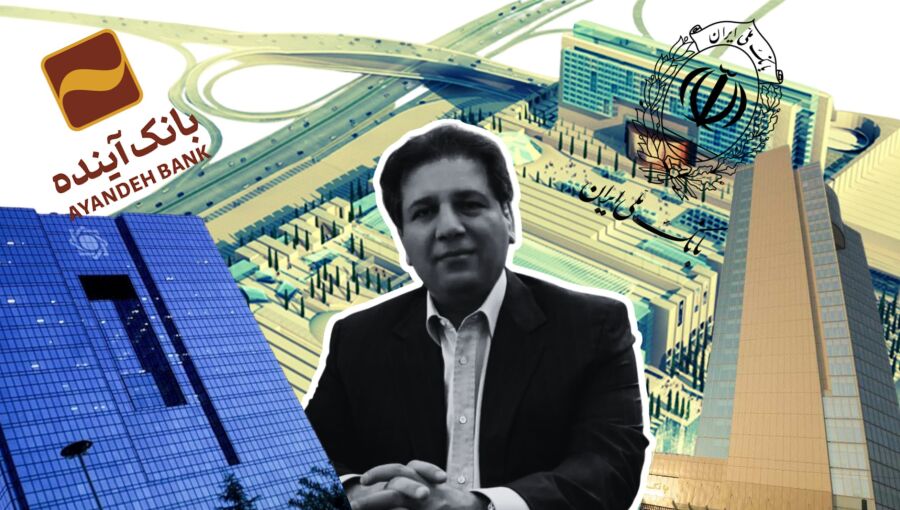
Management used the funds from Bank Ayandeh for world's biggest mall. / bne IntelliNews
By bnm Gulf bureau October 23, 2025

Following the collapse of Iran's troubled Ayandeh (Future) Bank and its absorption into Bank Melli Iran, attention has now turned to the bank's former management after years of difficulties.

Ali Ansari seemed to have the Midas touch. Born in Tehran in December 1962 to a construction family, he rejected the family business of residential building to strike out on his own. With his father's support, he obtained a licence from Zanjan's heavy industries department to manufacture pipes and profiles. In 1993 he opened a factory in Mahdash, Karaj — the foundation of his fortune.

Success bred ambition. Ansari entered the fruit and dried fruit trade, eventually exporting to the Caucasus and Azerbaijan. In 1994 he established Bazar Ahan Shadabad, a distribution centre for iron and steel in Tehran's Shadabad district that became one of Iran's largest metals trading hubs. The facility later changed its name to Behadaran Commercial Complex.

When mobile phones became widespread in Iran during the mid-2000s, thanks to credit lines from Irancell and Mobile Communications Company of Iran (MCI), Ansari spotted another opportunity. In 2006 he opened Iran Mobile Market. The public rushed to buy handsets, swelling his wealth to the point where he appeared on lists of Iran's richest individuals, Etemad newspaper reported about the banker on October 23.

He applied the same formula to furniture retail, opening Bazar Meubles. The venture transformed the area's economy, spawning hundreds of shops and independent businesses. Ansari became chairman of the furniture and decoration trade association. Yaft Abad market is now considered among Tehran's most luxurious shopping centres.

His involvement with popular Esteghlal Football Club's board during the 2000s, and his appointment as chairman of Iran's cycling federation in August 2009 with 39 votes, raised his public profile further. He owned Iran Mall, confirmed as the world's largest shopping centre, near Lake Chitgar, which houses car showrooms, cinemas, hotels, restaurants, waterfalls, ice rinks and tennis courts. He refused to sell units, only leasing them.

Yet Ansari's banking ventures would prove disastrous. In 2009 he co-founded Bank Tat with former managers from Kesharvazri Bank and Export Bank. Regulators accused the founders of failing to provide required capital, allegedly submitting just one-tenth of the legal minimum through property collateral rather than cash. Three years later Bank Tat declared bankruptcy.

The wreckage was hurriedly swept together. Bank Tat merged with Saleheen Credit Institution and Ati Credit Institution to form Ayandeh Bank in 2014, with Ansari as principal shareholder. But the new lender replicated its predecessor's failings. From establishment, Ayandeh Bank allocated over 90% of deposits to related parties and projects under the bank's own management, according to Hamidreza Ghani-Abadi, director-general of banking supervision at the Central Bank of Iran. Iran Mall, Mashhad Mall, Rotana Hotel and Farmaniyeh Mall were among the main projects Ayandeh Bank financed.

The funds never returned. To pay interest on existing deposits, Ayandeh Bank attracted fresh deposits by offering rates six to seven percentage points above the banking system average, what regulators described as a Ponzi scheme, criminal in other jurisdictions. When the network average stood at 18%, Ayandeh paid 26-27%. When competitors offered 23%, Ayandeh paid 31-32%. The strategy poisoned the entire banking sector, forcing rival lenders to breach central bank regulations to retain deposits.

The authorities removed management in late 2019 and launched a reform programme. Transparency efforts revealed the bank's true ownership structure, which had previously been concealed through proxies. But the damage was irreversible.

In 2022, the Iranian criminal court indicted dozens of individuals including senior bank executives including Ansari, government officials and businessmen on charges of disrupting the economic system through banking fraud and embezzlement, according to a court document leaked at the time. Accordingly it said, Branch 1059 of Tehran's Criminal Court issued the indictment against officials from the Ministry of Economic Affairs and Finance, Police Intelligence and Security, Bank Ayandeh (Future Bank), Bank Melli and various other entities.

The indictment accused the defendants of using their positions to obtain illegal loans through manipulation of the banking system, creating disruption in the banking sector, and interfering in the land registration system. The charges also included embezzlement through various fraudulent schemes and money laundering operations designed to disrupt the banking system.

By October 2025, Ayandeh Bank had accumulated IRR550 trillion ($503mn) in losses against registered capital of just IRR1.6 trillion. Overdrafts from the central bank reached IRR500 trillion. The capital adequacy ratio, legally required to reach 8%, had plunged into negative territory, according to local outlet Didban.

On October 23, regulators placed Ayandeh Bank into resolution. Bank Melli Iran, the state lender, will absorb IRR267 trillion in deposits and all employees. Unaffiliated shareholders can settle at the highest share price over the past year, or wait for asset liquidation. Ansari's projects, those monuments to ambition, will be liquidated to repay creditors, Tasnim previously reported.

To add insult to injury to the depositors of Ayandeh, Ansari was not sentenced despite the string of failures of the banking system, unlike counterpart billionaires like Babak Zanjani at one point facing the death penalty for his dealings in oil exports which earned him his fortune. Like his counterpart, his level of impunity has caused trouble for the government following successive administrations and local city municipality mayors backing his activities.

Unfortunately for the CBI, the Ansari scandal continues to raise questions over the entire banking system which has suffered from years of poor management and shocks from US and EU sanctions. The Iranian rial remains historically low against the dollar, while the entire economy remains on life support with interest rates stubbornly high making loans almost impossible to attain.

Serbian president accuses EU of backing “colour revolution” after European Parliament adopts harsh new resolution


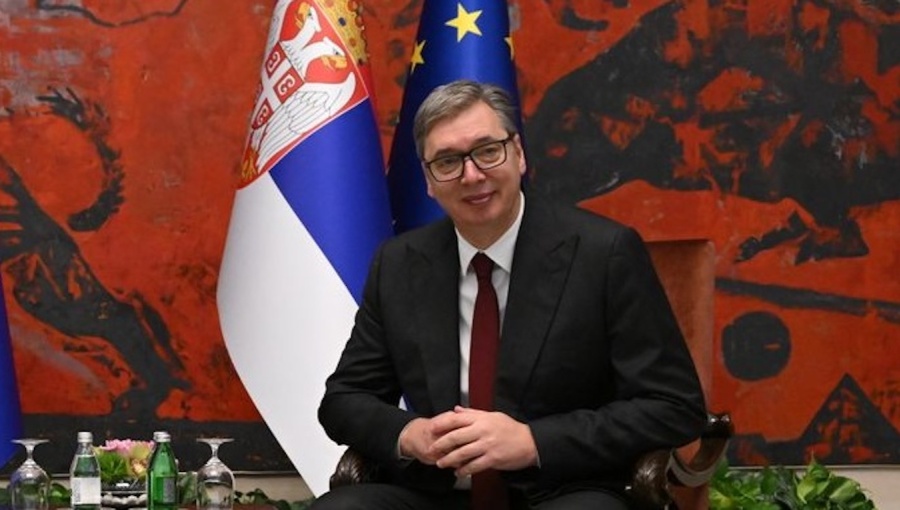
The European Parliament has adopted a sharply worded resolution criticising Serbia's government, prompting an angry response from Belgrade, where President Vucic accused the EU of supporting a “colour revolution”. / Presidency of Serbia/Dimitrije Goll


By Tatyana Kekic in Belgrade October 23, 2025


The European Parliament adopted a sharply worded resolution on October 22 criticising Serbian President Aleksandar Vucic’s government, prompting an angry response from Belgrade, where Vucic accused the EU of supporting a “colour revolution”.

The resolution passed with 457 votes in favour and 103 against, marking the strongest rebuke yet from Brussels towards Serbia in over a decade of EU candidacy. It comes nearly a year after the deadly collapse of a renovated train station canopy in Novi Sad that killed 16 people and ignited a nationwide protest movement.

Lawmakers in the European Parliament cited “deep concerns” over human rights violations, restrictions on press freedom and the alleged deployment of crowd-control weapons, including the reported use of a long-range acoustic device—commonly referred to as a “sound cannon”—against peaceful protesters on March 15.

“The Serbian leadership is politically responsible for the escalation of repression, the normalisation of violence and the weakening of democratic institutions,” the resolution claimed, calling for targeted EU sanctions and a potential suspension of Serbia’s trade privileges with the bloc.

It also urged a freeze on Serbia’s accession talks unless Belgrade aligns its foreign policy with EU positions, particularly regarding sanctions on Russia.

Protest movement turns violent

What began as a wave of peaceful student-led protests over the Novi Sad tragedy has, over nearly a year, evolved into a broader anti-government movement calling for accountability, early elections and an end to corruption.

Tensions escalated in August when clashes between protesters and police turned violent. Demonstrators across the country vandalised offices of the ruling Serbian Progressive Party (SNS), while the opposition condemned an excessive police response.

The resolution expressed alarm at these developments, accusing the government of using state-aligned media to smear dissenters, undermining judicial independence and enabling “pro-government disinformation campaigns.”

Particular concern was raised over claims that individuals with criminal records were mobilised by the SNS to confront protesters and suppress opposition gatherings.

Vucic dismisses EU resolution as “politically charged”

In Belgrade, President Vucic dismissed the resolution as “expected and logical” given what he described as an attempt to instigate a “colour revolution” — a term widely used by Russian officials to describe Western-backed uprisings.

“They condemned the use of a sound cannon that didn’t even exist,” Vucic said during a televised address. “They don’t mind 25,000 criminal gatherings or dozens of occupied faculties. They are bothered by one park [referring to a pro-government encampment in the capital’s Pioneerski park]. That tells you everything about the political nature of this resolution.”

Vucic accused the European Parliament of selectively ignoring disruptions caused by protesters, who have blocked streets, occupied university buildings and staged sit-ins in front of key government institutions.

The term “colour revolution” has gained traction among Vucic’s allies in recent months. Serbian officials have echoed narratives suggesting foreign orchestration of unrest, despite the grassroots nature of much of the mobilisation.

EU-Serbia relations at a crossroads

Serbia has held EU candidate status since 2012 but has made little progress in recent years amid concerns over democratic erosion and growing ties with Russia and China.

While the EU has traditionally viewed Vucic as a stabilising force in the Balkans, the tone in Brussels has hardened. The resolution calls for a genuine domestic dialogue on student demands, early elections and stricter oversight of security forces.

The document also raised flags over recent reports that government officials sought to influence independent media, including United Media — parent company of broadcaster N1. If confirmed, MEPs warned this would constitute a “serious attack” on already fragile media pluralism in Serbia.

Nonetheless, Vucic remains a key interlocutor for Western powers, particularly on issues like Kosovo, regional stability and strategic resources. Serbia holds one of Europe’s largest untapped lithium reserves, and Vucic’s government has chosen an Anglo-Australian company, Rio Tinto, to open the mine—an arrangement seen by critics as an attempt to curry favour with EU stakeholders despite domestic opposition.

As Serbia nears one year of unrest, the European Parliament’s resolution signals a shift in Brussels' approach, with growing willingness to tie political reform to concrete incentives or penalties.

Whether Vucic’s government engages with protest leaders or continues to dismiss external criticism as foreign interference may determine the trajectory of Serbia’s stalled EU path, or put the final nail in the coffin.
NESTLE IN IRAQ

Switzerland reopens Baghdad embassy after 30-year closure


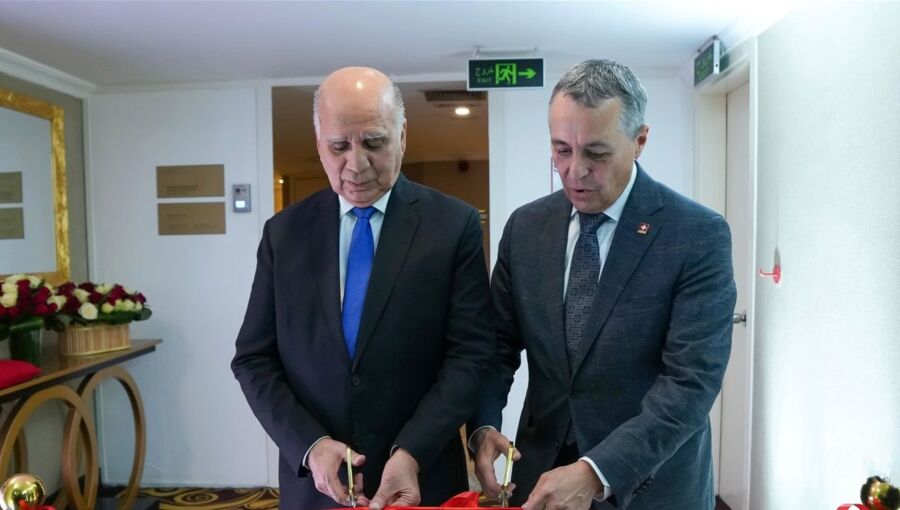
Iraq's Deputy Prime Minister Fuad Hussein (L) officially opened the Swiss embassy in Baghdad alongside Swiss Foreign Minister Ignazio Cassis (R). / bne IntelliNews


By bnm Gulf bureau October 23, 2025


Iraq's Deputy Prime Minister and Foreign Minister Fuad Hussein officially opened the Swiss embassy in Baghdad alongside Swiss Foreign Minister Ignazio Cassis, following a 30-year closure, the Iraqi Foreign Ministry reported on October 23.

The embassy had initially resumed operations in September 2024 following improvements in Iraq’s security situation and as part of Switzerland’s Middle East and North Africa (MENA) Strategy.

The opening ceremony took place in the presence of several senior officials from the Foreign Ministry and members of the Swiss delegation, according to the ministry statement.

Hussein said the reopening of the Swiss embassy in Baghdad represents an important step reflecting the depth of relations between the two countries and embodies the international community's confidence in the safe and stable environment Iraq is witnessing today.

He said the move would strengthen political and economic cooperation, open new horizons for Swiss companies to invest in the Iraqi market, and expanding areas of cooperation.

Swiss Foreign Minister Ignazio Cassis expressed his pleasure at reopening the embassy in Baghdad, noting that the event reflects the strength of bilateral relations and the shared will to develop them in various fields.

He said the return of Swiss diplomatic representation to Baghdad is evidence of his country's confidence in Iraq's regional role and its promising future as an active state contributing to stability and development in the region.

Parliament Speaker Mahmoud al-Mashhadani welcomed the Swiss delegation and praised what he described as strong relations between the two countries. He highlighted the importance of enhancing cooperation in political, economic, and social sectors.

He said the reopening of the Swiss Embassy in Baghdad represents “a positive step toward expanding bilateral partnership,” adding that Iraq seeks to attract Swiss companies to invest in the Iraqi market, boost economic activity, create jobs for young people, and increase trade and development between both nations.

The embassy, led by Ambassador Daniel Hunn, focuses on political and diplomatic engagement, while consular services and visa processing for Iraqi citizens remain managed through the Swiss embassy in Amman, Jordan.

What’s The West Up To In Its Talks With Iraq Over Building Out An LNG Sector?

  • Western energy majors including ExxonMobil, Shell, BP, Chevron, and TotalEnergies are re-engaging in Iraq to build its first LNG import terminals.

  • The LNG push aims to reduce Iraq’s dependence on Iranian gas and electricity.

  • Washington’s strategy seeks to diminish Russian and Chinese influence in Iraq’s energy sector, curb Moscow’s Arctic LNG ambitions, and strengthen U.S. energy and security leverage in both Baghdad and the Kurdistan Region

There is a lot more than meets the eye to a series of meetings by U.S. and European firms recently to talk to Iraq’s leadership about opportunities in the liquefied natural gas (LNG) sector. Since Russia invaded Ukraine in 2022, LNG has become the world’s emergency energy source, as unlike pipelined gas or oil, it can be secured and shipped very quickly to wherever it is needed. Iraq does not have an LNG sector to speak of, but it is now planning to build  

its first LNG import terminal at Khor Al-Zubair port, with a second offshore LNG terminal also now planned for Faw port. In recent months, several major Western oil and gas firms with top-flight LNG capabilities – including ExxonMobil, Chevron, Shell, BP, and TotalEnergies, among others – have either re-established or expanded their presence in Iraq. And just over a week ago, Iraq invited U.S. firm Excelerate -- the global leader in LNG floating storage and regasification units and downstream LNG infrastructure -- to take a key role in developing these LNG import terminals. So, what is the U.S. and Europe really up to here?

One part of the answer in the zero-sum game of global fossil fuel demand and supply is that they want to further marginalise Iran. The Islamic Republic has long held a strong grip over Iraq through its political, economic, and military networks, as seen for example in its continued supply of gas and electricity to its neighbour. Up to 40% of Iraq’s power supplies have come from Iraq over the years, with the trade-off being that Iran can use Iraq’s oil sector as a mechanism to avoid international sanctions. This is done very simply in the first instance by rebranding (non-sanctioned) Iraqi oil as (sanctioned) Iranian oil by dint of the fact that much of Iran and Iraq’s oil is drilled from the same reservoirs, albeit from different-named fields on either side of the border. These shared fields include Iran’s Azadegan (the same reservoir as Iraq’s huge Majnoon site), Yadavaran (Iraq’s Sinbad), Azar (Iraq’s Badra), Naft Shahr (Iraq’s Naft Khana), Dehloran (Iraq’s Abu Ghurab), West Paydar (Iraq’s Fakka), and Arvand (Iraq’s South Abu Ghurab). Once re-branded, Iran’s oil can then be moved to anywhere in the world through various methods analysed in depth in my latest book on the new global oil market order. This long-running critical enabling by Iraq of Iran’s crucial gas and oil income flows has been the foundation stone for the survival of the current Iranian regime.

Washington has increased pressure against this collaboration since Donald Trump’s re-election as president by increasing sanctions on Iraq. However, as now seems to be the very clear international relationship template emerging in his second term -- alongside the threat is a reward on offer too, although this comes with its own caveat. To begin with, having funnelled vast amounts of U.S. oil and gas firm investment into Iraq – with several U.K. firms and France’s TotalEnergies too – Washington put itself in a prime position to build the key infrastructure related to the primary emergency energy source in the world currently, LNG. It has also put itself in the best position to be the major supplier of LNG into the terminals that its firms are building. It is no secret that Trump wants a trade-off for the U.S. in such situations, with a notable one being the importation of more American gas and/or oil by the countries in receipt of such investment largesse. This is the same concept that he has indirectly – but directly enough to be noticed and acted upon -- promulgated with Europe. To wit, having said that the U.S. might not stand by the NATO Article 5 commitment for members that do not increase their defence spending, he then added that the continent should substitute ongoing supplies of gas and oil from Russia with those from the U.S. The result was the July pledge by the European Union to buy US$750bn worth of U.S. energy in the next three years. That said, fossil fuel deals bring with them a greater benefit than just the income made by the supplier. Specifically, it brings with it extensive legal rights for the foreign companies operating such gas and oil developments on the ground. Most notably, such firms are entitled to protect these sites with their own security staff to whatever number they think is required, provided this is accepted by the host country. These firms can also build out support infrastructure, again with government acceptance, including transport routes and telecommunications structures.

The U.S.’s endgame in this LNG strategy is not just to boost its own supplies into Iraq and its own geopolitical influence there, nor simply to marginalise Iran’s hold over its neighbour, but it is also to reduce China and Russia’s influence in Iraq. For Russia again, part of this is related to Washington’s strategy to keep reducing its ability to fight wars, including the one in Ukraine, by cutting off its financing from gas and oil sales, especially LNG in the short term. Russian President Vladimir Putin has long seen LNG – particularly from the country’s huge gas resources in the Arctic – as the key to Russia’s next major phase of energy growth, in a similar way to the way shale oil and gas have been for the U.S. The Russian Arctic sector comprises over 35,700 billion cubic metres of natural gas and over 2,300 million metric tons of oil and condensate, the majority of which are in the Yamal and Gydan peninsulas, lying on the south side of the Kara Sea. According to comments by Putin, the next few years will witness a dramatic expansion in the extraction of these Arctic resources, and a corollary build-out of the geopolitically strategic Northern Sea Route. Moscow also has extensive oil and gas development and exploration interests across Iraq, which provide it with oil recovered at the joint lowest cost in the world (along with that from Iran and Saudi Arabia) at US$1.3 per barrel.

Given this, the U.S. has specifically been targeting Russia’s huge LNG industry since its 2022 invasion of Ukraine, as it was an early beneficiary of the war in this regard and remains so to this day. Moscow has also played a major role in the ongoing schism running through Iraq between its Federal Government based in the south, and the government of the semi-autonomous region of Kurdistan in the north, as also analysed in depth in my latest book on the new global oil market order. Up until Trump secured a second term as president, the broad geopolitical stance of the Federal Government of Iraq aligned perfectly with that of its key sponsors, China and Russia. This was relayed to OilPrice.com some time ago by a senior energy source who works closely with Iran’s Petroleum Ministry: “By keeping the West out of energy deals in Iraq, the end of Western hegemony in the Middle East will become the decisive chapter in the West’s final demise.” On the other hand, the Kurdistan Region of Iraq’s view equally reflected those of its principal sponsors – the U.S. and its key allies. This is that they want the Kurdistan Region to terminate all links with Chinese, Russian and Iranian companies connected to the Islamic Revolutionary Guards Corps over the long term. The U.S. and Israel also have a further strategic interest in utilising the Kurdistan Region as a base for ongoing monitoring operations against Iran.

By Simon Watkins for Oilprice.com

Low reservoir water levels mean tough winter for hydro-dependent Kyrgyzstan

Energy minister says government taking measures to prevent blackouts.


Alexander Thompson Oct 23, 2025

The Toktogul hydropower plant generates up to 40 percent of Kyrgyzstan’s electricity, but the low water level in the reservoir that feeds it could mean a hard winter awaits the country this year, the energy minister warned last month. (Photo: Wikimedia Commons)

A harsh winter awaits Kyrgyzstan. That was Kyrgyz Energy Minister Taalaibek Ibraev’s message to the country, as he recently revealed that the volume of water in the Toktogul Reservoir, which feeds many of the country’s hydroelectric plants, is at its lowest level for this time of year in more than a decade.

“With every year, we’re feeling the water shortage more and more acutely, and this trend is observed around the world,” the Ibraev said, adding that in mid-September, there were 10.8 cubic kilometers of water in the reservoir.

Toktogul feeds five major hydroelectric plants that generate about 97 percent of the country’s hydroelectricity. That includes the Toktogul Hydropower Plant, which alone generates up to 40 percent of the country’s power. Over 90 percent of the country’s generation comes from hydro.

In 2008, the only time in recent memory Toktogul’s September water level was lower than this year, it triggered an energy crisis. By September of that year, the reservoir had only refilled to 9.6 cubic kilometers of water. The ensuing power shortage plunged Bishkek into darkness up to 10 hours a day that fall.

Ibraev assured that Kyrgyzstan will not experience a repeat of 2008. “Regulatory measures,” including the use of smart meters that will cut power to major users once they exceed their contracted amount of electricity, will help prevent prolonged blackouts, he said in an interview with local news agency 24KG. The country, which previously subsidized energy, is also raising bills by between 10 percent and 15 percent a year through 2030 to promote more efficient use of electricity.

The low water level will reduce power generation by 1.6 billion kilowatt hours this winter, Ibraev said. To help offset that shortfall, the country has signed contracts with Uzbekistan, Kazakhstan and Turkmenistan to supply a little over 4.2 billion kilowatt hours of power this winter, up from 3.8 billion kilowatt hours last winter.

Ibraev attributed the drop in water level to lower-than-average precipitation this year in the 24KG interview.

Kyrgyz reservoirs accumulate water during the spring and summer mainly from snow and glacier melt, and Kyrgyz authorities then release water during the winter to generate power when it is needed most. The reservoir’s high water mark usually comes around early fall when glacial melt stops and before power consumption rises.

The Toktogul Reservoir, Kyrgyzstan’s largest, can hold about 19.5 cubic kilometers of water, but below about 5.5 cubic kilometers, the hydroelectric cascade that depends on it cannot operate. Kyrgyzstan came close to crisis in spring 2024 when the water level almost crossed that threshold.

Toktogul’s September level has been on a downward trend in recent years. It filled to its maximum level last in 2017 before falling to 15.2 cubic kilometers in September 2020, 13.5 cubic kilometers in 2022, and 12.9 cubic kilometers in 2024, according to local media outlet Kaktus.

The link between climate change and runoff into Central Asia’s mountain rivers is complex. In the short-term, accelerated glacial melt and more precipitation may increase or maintain the flow of rivers like the Naryn, on which the Toktogul Reservoir is located. But the science is mixed. Global warming could also accentuate climate extremes in the Tien Shan and bring more boon years like 2017 and more lean years like this one.

Kyrgyzstan is working to increase its generation capacity. Seventeen or 18 small hydroelectric stations will come online this year, and repairs are underway at Bishkek’s coal-fired coal plant. Last week, the governments of Kyrgyzstan, Uzbekistan and Kazakhstan said they would accelerate work on the Kambarata-1 hydroelectric station upstream from Toktogul, which, when completed, could generate more than 5.5 billion kilowatt hours.

Ibraev claimed Kyrgyzstan may “get out of this crisis by 2028,” but urged people to save energy this winter. “We save energy. Our little grandson has learned this too. When he leaves a room, he turns off the light. He’s quite used to it,” Ibraev said.


Alexander Thompson is a journalist based in Bishkek, Kyrgyzstan, reporting on current events across Central Asia. He previously worked for American newspapers, including the Charleston, S.C., Post and Courier and The Boston Globe.

Central Asian Nations Seek Digital Independence from Russia

Kazakhstan and Uzbekistan are striving to reduce their digital dependence on Russia and tilt their economic attention a bit more to the West. The two countries are moving forward with a plan to lay a fiber-optic cable beneath the Caspian Sea to establish a connection with Azerbaijan.

At present, virtually all Kazakhstan’s and Uzbekistan’s Internet traffic passes through Russian-controlled systems. Uzbekistan’s Internet connections to the outside world even must pass through Kazakhstan before reaching Russia, where the Kremlin has significantly tightened its control over Internet traffic since launching its unprovoked attack on Ukraine in 2022. Kazakhstan already has two fiber-optic cable connections with Chinese networks, but Kazakh authorities are reportedly hesitant to expand in that direction, given China’s well-known reputation for monitoring and controlling the flow of digital information.

Uzbekistan apparently is engaging a Saudi-based firm, DataVolt, to help build out a fiber-optic connection. In comments broadcast October 21 on a state-controlled television channel, DataVolt CEO Rajit Nanda described the cable project as vital for the country’s economic modernization program. He added that DataVolt was striving to forge partnerships with American tech giants, such as Oracle and Amazon, to expand Uzbekistan’s digital economy.

“It's important for us to create alternative [data transmission] routes,” he said, adding that a trans-Caspian fiber-optic line was of “strategic and economic importance for Uzbekistan,” offering “limitless potential.”

The project “will not only ensure secure communications but can also generate multi-billion-dollar benefits,” Nanda added. He did not provide details on when or how Uzbekistan would plug into a pending undersea fiber-optic line that will connect Kazakhstan to Azerbaijan. The three countries are also collaborating on an ambitious plan to lay a power-transmission line beneath the Caspian. 

Azerbaijani leader Ilham Aliyev, in an interview published by the Kazinfom news agency ahead of his October 21 visit to Astana, described a trans-Caspian digital connection as a “significant infrastructure project,” indicating it will provide a major boost for development of the US- and European Union-backed Middle Corridor trade network.

“Transport and logistics cooperation between Azerbaijan and Kazakhstan is a strategically important area, opening up new opportunities for economic growth and the integration of regional markets,” Aliyev said. “The Middle Corridor plays a key role in ensuring sustainable and efficient communications between our countries.”

Aliyev went on to say that construction of the undersea cable between Azerbaijan and Kazakhstan is proceeding under an agreement signed this past spring. The project is scheduled for completion in late 2026.

In Astana, Aliyev and Kazakh President Kassym-Jomart Tokayev toured an artificial intelligence lab, where they were briefed on an initiative to use an AI application to assist in the laying of the fiber-optic line along the Caspian seabed. 

Tokayev made special reference to the fiber-optic cable project in a statement issued following his formal talks with Aliyev. “We underlined the importance of accelerating projects to lay a Caspian subsea fiber-optic communication line,” adding that relevant government officials “have been instructed to make sure that it is completed as soon as possible.”

Tokayev indicated that the fiber-optic connection with Azerbaijan was a foundational element of his blueprint to ensure Kazakhstan’s future economic competitiveness, as outlined in his early September state-of-the-nation address.

“Given the rapid development of artificial intelligence, vast opportunities are emerging in the IT sector,” the October 21 presidential statement noted. “Kazakhstan has gained experience in the digitalization of public services and the development of IT technologies, and we are ready to implement joint projects in this area.”

Commentary: Russia trying to build a digital iron curtain

Blocked calls and Internet blackouts disrupt daily life, fueling annoyance.

Katherine Spencer Oct 22, 2025

Russia has banned Facebook, Instagram, X and YouTube, and placed restrictions on WhatsApp and Telegram. (Photo: gov.ru)

As Russia’s war against Ukraine grinds on, Moscow is waging another battle at home against the Internet, resulting in widespread digital blackouts and, more recently, restrictions on WhatsApp and Telegram calls.

The Kremlin’s growing capabilities to throttle the web may establish a disconcerting precedent for other authoritarian-minded governments in the region. At the same time, the Russian government’s actions raise questions about whether there are limits to Russians’ tolerance for daily inconveniences and increasing constraints.

For over 10 years, Russian president Vladimir Putin has tried to tighten control of the country’s Internet. The full-scale invasion of Ukraine only accelerated this trend. Since the beginning of the war, Russia has banned Facebook, InstagramX (formerly known as Twitter) and YouTube. According to a report from Human Rights Watch, Russia has also blocked thousands of websites including those operated by independent media outlets, human rights organizations, and political opposition entities and individuals.

Most recently, Russia’s state communications agency Roskomnadzor restricted calls on WhatsApp and Telegram, two of the most popular messaging apps in Russia. According to Mediascope, Telegram and WhatsApp have around 89 million and 96 million users respectively in the country.

While authorities billed the move as an “anti-fraud measure” to protect citizens, it appears to be an attempt to increase monitoring of Russians. WhatsApp and Telegram have end-to-end encryption, theoretically meaning that no third party, including the Russian government, can access messages or listen to calls. Officials in Russia maintain this violates Russian law because the apps will not store users’ data in the country.

Concurrently, the government is attempting to push users to replace these platforms with Russia’s new super-app, dubbed “Max,” launched by VKontakte, a Russian media company that is influenced by the state. The app, which is now required to be pre-installed on all phones in Russia, contains extensive tracking capabilities for surveillance, including real-time location data. The new app project has been compared to China’s WeChat, one of the world’s largest social media platforms that has many different functions to go along with broad concerns about privacy.

Russian restrictions extend much further than targeting individual platforms and sites. For four months now, every Russian region has experienced mobile Internet blackouts, the BBC reports. Authorities claim these cutoffs are precautionary measures to minimize the potential damage done by Ukrainian drone attacks. But such claims remain debatable, as many drone systems do not rely on mobile networks, and instead operate using satellite communication, autonomous navigation, other radio frequencies, or even fiber optics.

The mobile network shutdowns can last for a few hours to several days, but some districts in Nizhny Novgorod have gone without mobile Internet access for over two months. Despite the supposedly preemptive rationale for the measure, the city has endured continued drone attacks. GPS signals are not jammed, according to locals who worry that the shutdowns are more of an attempt at censorship than a public safety initiative.

While the shutdowns have occurred on a regional basis, Russia is preparing to centralize this ability through a single state body that would manage mobile network blackouts.

The Internet shutdowns and call restrictions have had tangible consequences. The Russian Internet Protection society estimates that a single day of nationwide Internet shutdowns can cause losses up to hundreds of millions of dollars, disrupting commercial banking, businesses, and everyday services.

Beyond inconvenience, it can be life-threatening. In the Volga region in July, a drone attack killed three people after the factory’s alarm failed to alert workers due to an Internet blackout.

WhatsApp and Telegram call bans have also frustrated Russian citizens who could not contact friends and family or conduct business over the messenger platforms. One resident of Bashkortostan wrote on social media. “This is torture, we are like blind. We can’t do anything, we can’t contact our relatives, teachers, or doctors. Don't we have the right to communicate?”

Popular frustration reached the point in September where multiple Russian cities saw the first government-tolerated protests in years, during which citizens voiced opposition to the restrictions. While the protests were relatively small, it is not a stretch to believe many more Russians share the same sentiments.

As Russia fine-tunes its snooping and censoring techniques, a dark cloud looms ahead for other Eurasian countries with authoritarian-minded governments that may be tempted to enact similar restrictions. At home, Internet blackouts and blocked calls disrupt daily life, how families and friends communicate, how people order taxis, shop or simply get through the day. If they continue to expand, these digital restrictions may turn out to be the wartime burden ordinary Russians increasingly refuse to bear.

Katherine Spencer is a program assistant at the Atlantic Council’s Eurasia Center. Prior to joining the Atlantic Council, she interned at the American Enterprise Institute, where she focused on domestic developments in Russia and Russia’s war against Ukraine.