Friday, October 24, 2025


Trump reverses Biden-era rules on copper smelters

Bingham Kennecott mine, Utah, site of one of the only copper smelters in the US. Credit: Adobe Stock

US President Donald Trump on Friday reversed a Biden-era air pollution rule that had imposed stricter limits on emissions from copper smelters.

The copper rule, finalized in May 2024, had required smelters to curb pollutants including lead, arsenic, mercury, benzene and dioxins under updated federal air standards.

Trump’s proclamation grants a two-year exemption from compliance for affected stationary sources, which the White House said would help promote American mineral security by reducing regulatory burdens on domestic copper producers.

“Imposing these requirements on such a limited and already strained domestic industry risks accelerating further closures, weakening the Nation’s industrial base, undermining mineral independence, and increasing reliance on foreign-controlled processing capacity,” the White House said in announcing the changes.

The proclamation specifically referenced the only two copper smelters in the United States, one operated by Freeport-McMoRan and the other by Rio Tinto. It stated the order would apply to Freeport’s smelter, but it was not immediately clear how it would affect Rio Tinto’s facility.

The two companies did not immediately respond to a request for comment.

Trump signed an executive order earlier this year that identified copper as a critical material for defense, infrastructure and emerging technologies, including clean energy and electric vehicles.

It led to a Section 232 investigation to determine whether copper imports threaten US national security, particularly due to dependence on a small number of foreign suppliers.

Following the review, the administration imposed a 50% tariff on certain imported copper and mandated that an increasing percentage of high-quality scrap copper produced in the US be sold domestically.

(By Jasper Ward; Editing by Costas Pitas, Sam Holmes and Tom Hogue)


Harvey Gulf Sells MPSV Fleet to Otto Candies to Focus on PSVs

MPV
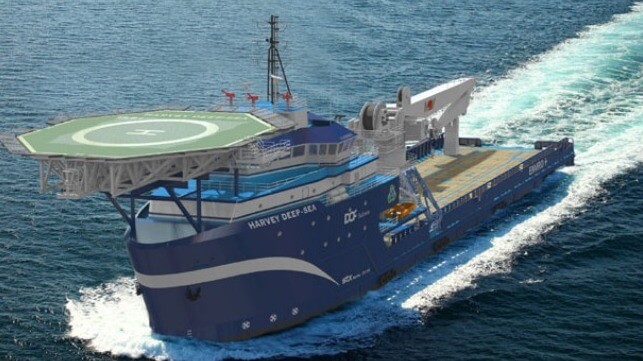
Harvey sold its four older MPSVs to Otto Candies to focus on its PSV fleet (Harvey Gulf International Marine)

Published Oct 23, 2025 10:51 PM by The Maritime Executive


Otto Candies, a Louisiana-based maritime transport and support services company, announced that it has acquired the MPSC fleet from Harvey Gulf International Marine. It is a fleet expansion for the company, while Harvey reports it will be focusing on its OSV fleet going forward.

Four ships were involved in the transaction, and they officially became part of the Otto Candies fleet on October 23. The ships include the 2012-built Harvey Intervention (3,912 GT), the 2013-built Harvey Deep-Sea (4,645 GT), and the sister ships Harvey Blue-Sea and Harvey Sub-Sea (8,417 GT), each built in 2017.

The acquisition represents a “meaningful step forward,” Otto Candies said, in its continued growth and commitment to support the evolving needs of the offshore energy industry. They highlighted that the four vessels bring proven subsea capabilities and operational versatility, which align with the company’s mission to deliver safe, reliable, and efficient marine services.

Otto Candie, which traces its origins to the 1940s, serves the offshore oil and gas and gas industry in the Gulf of Mexico. The company has also expanded to provide services to the offshore wind/new energy industries on the U.S. East Coast. Its website lists a fleet of 16 vessels in the inspection maintenance and repair, supply, Service Operation Vessels, dive support, and deck barge sectors.

“As we move into this next chapter, we remain grounded in the values that have guided our company for generations,” said Otto Candies, commenting on the acquisition. “The addition of these vessels strengthens our ability to meet the highest standards of performance while expanding our service offerings in both traditional and emerging offshore markets.”

Harvey, which lists a fleet of 28 PSVs on its site, said it remains focused on new vessels and supporting the oil and gas industry. The company in recent years has pioneered in the U.S. industry, adding PSVs powered by LNG and batteries. In 2022, it completed the refit of its third vessel to become a tri-fueled platform supply vessel, while highlighting that the plan was to operate primarily utilizing the LNG and battery power.


MSC Required to Divest of Ferry Operator Moby by Antitrust Regulators

Moby ferry
Moby operates a large fleet of cargo and passenger ferries in the Mediterranean (Moby)

Published Oct 24, 2025 2:42 PM by The Maritime Executive


In a rare setback for the Mediterranean Shipping group and the Aponte family, the company is being forced to divest its investment in Moby, an operator of ferries between Italy and the islands of the Mediterranean. The Italian Competition Authority announced on October 24 that it has accepted and made binding a commitment offered by MSC’s Shipping Agencies Services, Moby, and Grandi Navi Veloci that sets the terms of the divestment. 

The Competition Authority had announced in November 2024 that it was investigating the investment made into Moby by SAS, which also owns the ferry operator GNV. At the time, they said the market for ferries operating between Italy, Sardinia, Corsica, Sicily, and Elba is highly concentrated, with most of the cargo and passenger services provided by Moby or GNV, and occasionally a third company. They also noted that there were significant barriers to entry into these routes. Moby also operates under the brands of Tirrenia and Toremar which it acquired years ago.

The Aponte family had emerged in March 2022 as the savior for financially troubled Moby, which was controlled by the Onorato family. Under the terms of the deal that was finalized in 2023, SAS would acquire 49 percent of Moby for approximately €150 million while providing a loan for an additional €243 million. In January 2024, MSC also acquired two Moby RoPax ferries, Moby Vinci and Moby Sharden, for a further €109 million. The company also had a commitment to acquire the remaining 51 percent of the company from the Onoratos.

Under the terms of the settlement with the Competition Authority, SAS will transfer the 49 percent share, without consideration, to Onorato’s company and will relinquish its rights to the other 51 percent of the company. It has also agreed to provide compensation to consumers who purchased tickets on the Moby ferries.

It is also a setback for Moby, which has been ordered to repay the loan provided by the Apontes. Moby reports it will undertake a financial restructuring that will include the sale of assets. The proceeds will be used to repay the loan, while to maintain its services, the company will enter into charter-back agreements for some of the assets that are to be sold. If the proceeds are not enough to cover the debt, the remaining amount will be transferred to independent third parties on terms that safeguard Moby’s economic and financial stability.

The divestiture is a win for the Grimaldi group, which challenged the investment in Moby on competition grounds. However, a further appeal by Grimaldi on the terms of the settlement was rejected by the Competition Authority. 

Moby said after the announcement of the agreement that the commitments from SAS would establish a path that could be used for “capital strengthening and reorientation of the business model.” Its goal is to reduce the company’s debt to zero. While it will be selling assets, which it is calling non-strategic assets, it said the refinancing would put the company on solid financial ground. However, Moby admitted it would require some consolidation of services, mostly to Sardinia. It said the company’s focus would be on larger capacity vessels and providing higher levels of customer service.

MSC, so far, has been able to proceed with its large-scale growth and acquisition. It grew to be the largest container carrier, building and acquiring ships as well as expanding into other operations. It bought a car carrier company, made investments in railroads, and took a key role in the Port of Hamburg. Recent reports even said MSC was looking at an investment in one of Europe’s budget airlines, something the Apontes denied in media reports. 


NOAA’s $95M Investment in Oscar Dyson: A New Era for Ocean Science

 Siemens Energy

Published Oct 23, 2025 9:54 PM by The Maritime Executive

[By:  Siemens Energy]

The National Oceanic and Atmospheric Administration (NOAA) awarded a $95 million contract to JAG Alaska, Inc., a shipyard based in Alaska, for a mid-life renovation of the Oscar Dyson. This investment reflects NOAA’s commitment to modernizing its research fleet, extending vessel service life, and embracing technologies that promote sustainable maritime operations.

This project not only enhances NOAA’s operational readiness but also boosts Alaska’s economy by creating skilled jobs.

JAG Alaska, Inc. stated that it is proud to be awarded the Oscar Dyson mid-life extension program (MEP) and excited to complete expanded upgrades and maintenance to maximize the service life of the Vessel. “We appreciate all the efforts to bring a project of this magnitude and importance to the State of Alaska and look forward to working together with NOAA and our partner Siemens Energy, the single source vendor selected for the Oscar Dyson MEP propulsion upgrades,” said Charles Minton, Senior Vice President and Chief Administrative Officer for the JAG Marine Group.

Advanced Propulsion Technology

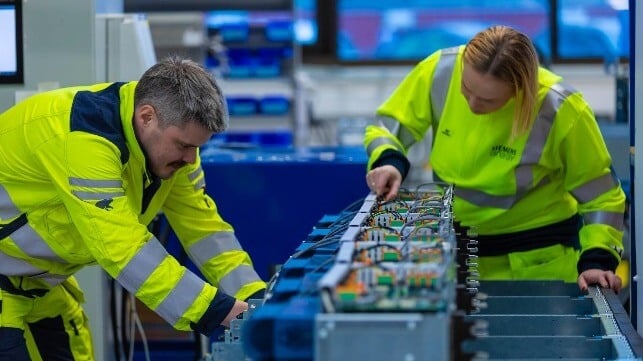
A highlight of the upgrade is Siemens Energy’s SISHIP BlueDrive PlusC™ low-voltage direct current (LVDC) propulsion system, which dramatically improves fuel efficiency and reduces emissions. The system minimizes specific fuel consumption (g/kWh) during operations, aligning with NOAA’s sustainability goals and setting a new standard for energy-efficient research vessels.

Retired Rear Admiral Bryant Fuller, Head of Federal Maritime Programs at Siemens Energy, emphasized the company’s longstanding partnership with NOAA, stating, “The Oscar Dyson’s upgrade with our BlueDrive PlusC propulsion system is a testament to our shared commitment to sustainability, innovation, and operational excellence in the maritime sector.”

Oscar Dyson: Enhancing NOAA’s Scientific Mission

Commissioned in 2005, the Oscar Dyson plays a vital role in fisheries surveys and ecosystem assessments in Alaskan waters. The upcoming upgrades will include advanced, Tier 4 variable-speed generators, quiet air conditioning motors, improved fire detection systems, new pumps, fans, cranes, and radars, as well as additional single-occupancy staterooms, all designed to enhance operational efficiency, scientific capabilities, and crew comfort.

To ensure uninterrupted data collection during Oscar Dyson’s yearlong maintenance period, NOAA is modifying the NOAA Ship Bell M. Shimada for operations in colder climates. This proactive approach ensures uninterrupted data collection for Alaska’s critical fisheries.

A Vision for the Future

NOAA’s investment in the Oscar Dyson is more than a renovation – it is a blueprint for the future of sustainable maritime science. By combining local shipyard expertise with global propulsion innovation, NOAA is reinforcing its leadership in ocean research and demonstrating the power of collaboration between government, industry, and regional economies.

The vessel is expected to be ready for the 2028 field season.

The products and services herein described in this press release are not endorsed by The Maritime Executive.


Continuing Interceptions of Houthi Contraband Cargoes Highlights Weaknesses

Pakistani warship
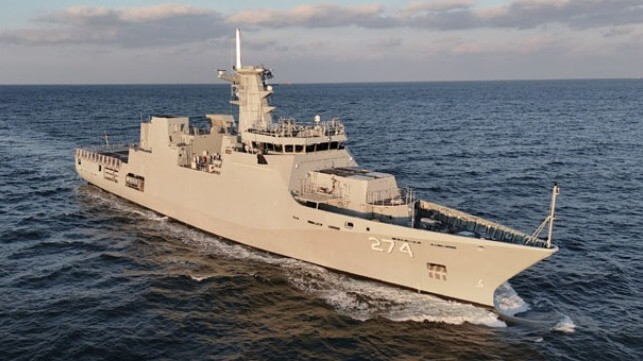
One of the Pakistani warships involved in the recent seizures (CTF 150)

Published Oct 23, 2025 9:43 PM by The Maritime Executive


The recent increase in successful interdictions of cargoes being smuggled to the Houthis continues. A closed examination of the news appears to show the hand of Unit 190, the export logistics unit of the Islamic Revolutionary Guard Corps (IRGC), in most of these interceptions, versus a combined effort of the opposition forces to the Houthis.

On October 18, the Pakistani corvette PNS Yarmook (F271) intercepted the first of two consignments of crystal methamphetamine in the Arabian Sea. The first dhow had two tons aboard, the second, intercepted two days later, had 350kg and also 50kg of cocaine aboard. The combined street value of the consignments was estimated by Combined Maritime Forces to be over $972 million. PNS Yarmook was part of Combined Task Force 150’s Operation Masmak, currently commanded by Commodore Fahad Al Joiad of the Royal Saudi Naval Forces, and which is also deploying French, Spanish, and U.S. naval assets.

A seizure of this size and value suggests that a state actor may have been involved. The IRGC is known to use shipments of drugs as a means of subsidizing Axis of Resistance allies, with forces such as the Houthis organizing the onward shipments of drugs to consumer markets and keeping the proceeds of sales.
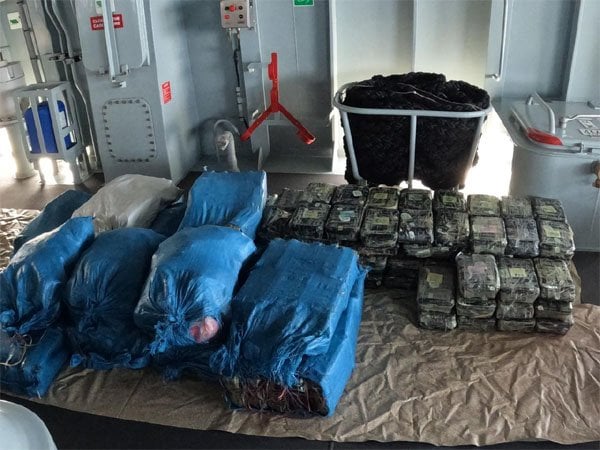
 

Portion of the drugs seized by the Pakistani Navy in October (CTF 150)


These latest seizures were only the latest in a series of efforts. The opposition forces, including the Southern Transitional Council (STC), highlighted some of their successes, both with seizures of drug smuggling as well as arms shipments. 

On October 22, a court in Mukalla, in Hadramawt province of Yemen, sentenced six Iranians to death. They had been crewing a dhow intercepted at sea and brought into Mukalla, which had been carrying a three-ton cargo of hashish and crystal methamphetamine with a street value of $6,000,000. Political control of Mukalla is disputed, but the interception is likely to have been carried out by STC-affiliated forces. The court in Mukulla is controlled by the internationally recognized government.

Earlier this month, the Giants Brigade, affiliated to the STC, made another interception at sea off Al Bahiyah, on the Lahj coast west of Aden. On board the intercepted dhow was a mixed cargo of prescription medicines, as well as Iranian-manufactured anti-tank missiles and components for drones.

The dhow had loaded its cargo at Bandar Abbas, where the IRGC’s Unit 190 has dockside warehousing. Giants Brigade interrogators ascertained that the eight-strong crew were known soldiers in a Houthi-controlled smuggling operation.

The continuing increase in interceptions of cargoes en route to the Houthis provides further evidence that STC-sponsored militias, payrolled by the UAE, are being provided with higher-quality intelligence. Because the interceptions are made off both the Red Sea and the Gulf of Aden coastlines, the source of intelligence is not a local leak. If the smuggling is being coordinated by the IRGC Qods Force Unit 190, then a breach of security, either at the Iranian or the Houthis end of the communications chain, would account for multiple interceptions in different places.

Leaders in Iran and the Houthis are presently displaying a high degree of nervousness about their own personal safety, and are not, for example, attending funerals and political meetings which they have been accustomed to, and are expected to attend. This nervousness has been particularly apparent in Sana’a, where Houthi forces detained 20 UN local and international staff and confiscated radio equipment necessary for aid operations, a situation resolved on October 20 once again by Omani intervention. In recent days, the Houthis have also raided the offices and Danish and Norwegian aid distributors and of Oxfam, all in the continued but apparently fruitless search for the source of security leaks. 

 

Maersk Becomes Second Major Container Carrier to Reflag Ships in India

Maersk naming ceremony in Mumbai
Maersk in February named one of its large methanol ships in India and has now moved two smaller ships into the Indian registry (Maersk)

Published Oct 24, 2025 12:35 PM by The Maritime Executive


Maersk has followed the lead set by CMA CGM and reflagged to containerships into the Indian register, according to reports in the local media. It follows the company’s statements earlier in the year about its plans to invest up to $5 billion in India to realize opportunities in the growing economy.

The official announcement of the reflagging is expected next week as India Maritime Week kicks off, but the media reports one vessel was reflagged last week and the second earlier this week. The Maersk Vilnius (29,145 dwt), built in 2009 in China, has a capacity of 1,810 TEU and is currently sailing to China, the Philippines, and South Korea. She was transferred into the Indian registry and classed in India as of October 13. The second ship, transferred on October 21, is Maersk Vigo (23,338 dwt), built in 2010 in China. She was acquired by Maersk in 2022 and has a capacity of 1,710 TEU. She is currently operating between India, China, and the Philippines. Both ships had been registered in Singapore.

In February 2025, Maersk named one of its new dual-fuel methanol containerships in India to emphasize the importance the company placed on the Indian market. At the time, Maersk CEO Vincent Clerc detailed the investment plans that included a focus on logistics and the inland operations of the company. Maersk also formed a relationship with Cochin Shipyard for future repairs and potentially the construction of ships in India.

The media reports indicate that Maersk has selected the first ships for repairs at the Indian shipyard, but it is waiting owing to capacity constraints at the yard, due to ongoing work. Currently, Cochin can only accommodate containerships up to a capacity of 7,000 TEU at its berths and 4,000 TEU in its dry docks. The first repair assignments are expected to be for wet dock overhauls.

CMA CGM became the first major container carrier to reflag a ship to India in April 2025. It has reflagged two additional ships and will complete one more likely next week, tied to Maritime Week. It has also announced its intention to build containerships at the Cochin yard.

It was reported last week that MSC Mediterranean Shipping is also considering registering containerships in India. The media reports expect a possible announcement also next week.

The carriers are responding to the Indian government’s drive to expand its domestic shipping and shipbuilding industries. The country is making changes to its cabotage regulations, which will make it more desirable to have ships registered in India, and the government is launching financial programs to encourage investment in Indian shipping.

The news outlet ETInfra reports that India only had three containerships operated by Shipping Corporation of India before the current moves. The government has expressed concern over the fact that only between 5 and 7 percent of the country’s exports move on Indian shipping. They report the country is spending as much as $75 billion annually to move goods on foreign ships.

The Shipping Corporation, ETInfra reports, has made four attempts to purchase secondhand vessels over the past two years. The latest, they write, is looking for two vessels in the 12,000 to 18,000 TEU range. The secondhand market, however, has been very tight with carriers such as MSC and CMA CGM snapping up available vessels.

The Indian government has stated its goal is to move as much as 40 percent of exports in the future on Indian flagged ships. The move is also good for employment, as Indian regulations require Indian crews. CMA CGM has reportedly already hired over 1,000 Indian seafarers and plans to hire an additional 500 in 2026.


Sail Cargo Ship Neoliner Completes Difficult First Atlantic Crossing

sail cargo ship
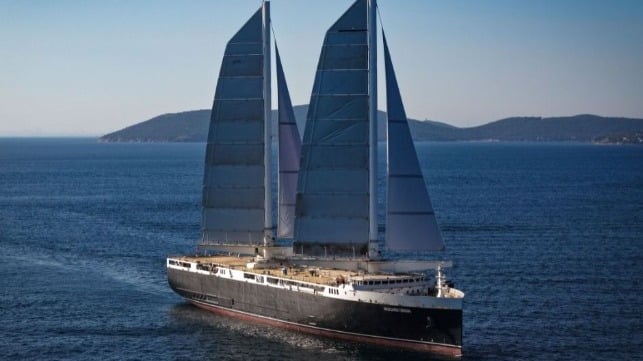
Neoliner Origin under sail during sea trials (Neoline)

Published Oct 24, 2025 5:00 PM by The Maritime Executive


The world’s first large, commercial wind-propelled cargo ship, the Neoliner Origin, completed its first Atlantic crossing during the evening on October 24 after what is being described as a “challenging one” for the unique ship. The 6,300 dwt /13,278 gross ton ship is behind schedule and sustained some damage to one of its sails as it encountered powerful Atlantic storms.

Neoline reported that the ship, which departed Saint-Nazaire, France, on October 16 with its first Atlantic cargo, sustained damage two days into the crossing. The company said that the top panel on the aft main sail mast was damaged. The forward mast sails were still fully functional. However, the vessel was underway in a hybrid mode combining the sails with its engine.

The weather caused the vessel to arrive off the coast of Canada at the French outpost of Saint Pierre and Miquelon after dark on Friday, October 24. The company was livestreaming the event and invited residents to line the shoreline to see the historic sail in. The ship is due to move on to the commercial dock on Saturday to offload its first cargo, but the company told residents it would be a brief stop for commercial and technical reasons.

Media reports indicate that technicians were flown to the island to aid with repairs to the sail. The ship will proceed to Baltimore. It had been originally scheduled to arrive on October 29, and it was later delayed to October 30, and may be later still. A welcoming event in Baltimore has been postponed till the second trip, and in the French colony, they were told there would be a celebration on the second rotation as the vessel begins its trip back to France.

There was still great excitement in the colony as it restored a direct link to France after many years of having to move all cargo via Halifax, Canada. With the ship’s speed and ability to carry refrigerated cargo, the hope is that it could be used to transport fresh fruits and produce to the islands.

Company officials highlight during the launch ceremonies in France that it was the culmination of ten years of work, but they view the vessel as a prototype for a larger service. The ship is expected to reduce emissions versus a traditional cargo ship by up to 80 percent.

The vessel has two rigid sails mounted on Solidsail rigs designed by Chantiers de l’Atlantique, which gives it 3,000 square meters (over 32,000 square feet) of sail area and a speed of 11 knots. The Neoliner Origin is a Ro-Ro cargo ship with 1,200 lane meters for cargo, across three areas, and the ability to transport containers. It also has accommodations for 12 paying passengers as well as 13 crew.


Tanker Damaged in North Sea Collision Sold and Reaches Turkey for Repairs

fire-damaged tanker
Stena Bulk reports the vessel was sold and the new owners plans repairs (Havariekommando photo)

Published Oct 24, 2025 5:31 PM by The Maritime Executive


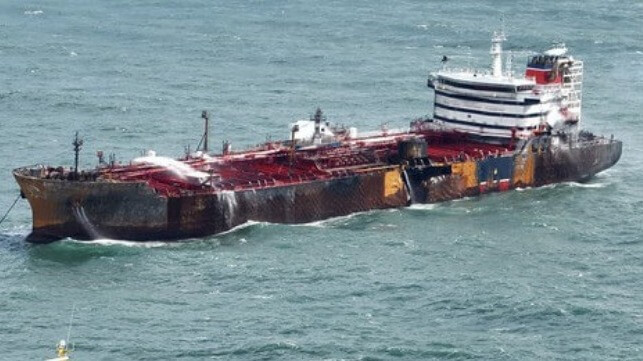
Stena Bulk confirmed today, October 24, in a brief statement that the company has sold the fire-damaged tanker Stena Immaculate, which was involved in a fiery collision in the North Sea in March 2025. The 49,729-dwt tanker burned for days after being hit by a small containership while it was anchored off the English coast.

The tanker had been laid up in the UK for months before departing in late September, with reports that it was being towed to Malta. Earlier this week, on October 21, it was spotted arriving in Tuzla, Turkey. The company responded to inquiries with a brief statement.  

Stena Bulk denied speculation that the Stena Immaculate was being recycled, saying that the tanker has been sold to a buyer who will undertake repairs at Desan Shipyard. Around the time the vessel left the UK, it had been reflagged from the United States to Malta. Crowley replaced it in the U.S. tanker program with another chartered tanker.

President & CEO of Stena Bulk, Erik HÃ¥nell, again thanked all the parties involved in the salvage and cargo transfer operations. One of the ship’s tanks was ruptured when the containership Solong struck it nearly broadside, but the crew’s fast action saved a large portion of the cargo. Stena Bulk and operator Crowley arranged for the repatriation of the crew, which survived without serious injury, and chartered another vessel to offload the jet fuel cargo. HÃ¥nell noted that the authorities continue to investigate the circumstances of the incident.

The Solong also burned for days and was finally towed to Scotland for the first phase of a salvage operation. It was sold for recycling and arrived in Belgium in August.

UK officials have been critical of the lack of lookouts on the containership, noting that there was patchy fog at the time of the incident. Stena Bulk and Crowley asserted that the tanker had the appropriate watches for a vessel at anchor. One crewmember aboard the Solong was missing after the containership struck the tanker, but while the others were successfully rescued in part by crew transfer vessels operating in the area for the offshore wind farms.


China Rolls Out Subsidy for Green Marine Fuels Production

Hydrogen storage
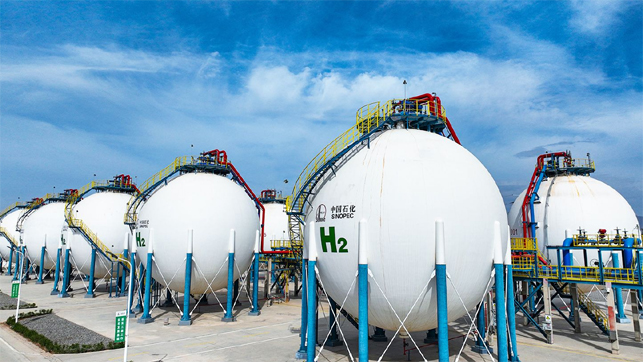
Sinopec and Longi launched in 2023 the first 10,000-ton green hydrogen project (Longi)

Published Oct 24, 2025 7:09 PM by The Maritime Executive


China announced a green hydrogen policy last week, which will see the country’s state budget offer subsidies for the production of green fuels. Interestingly, the initiative came in the week that IMO member states failed to adopt a Net-Zero Framework for the global shipping industry. China’s National Development and Reform Commission (NDRC) developed the decarbonization subsidy program. The goal is to mainstream low-carbon investment into national planning.

A key incentive offered by the policy is a 20 percent subsidy on capital expenditure for five groups of decarbonization investments. These include net-zero demonstrations such as green methanol, sustainable aviation fuels (SAF), and carbon capture, utilization, and storage (CCUS). The subsidy will also cover projects advancing carbon market mechanisms. According to some experts, a 20 percent subsidy on green fuel investments could reduce the overall costs by about 5 to 8 percent. 

“For years, China’s green hydrogen and e-fuels projects ran on ambition. Subsidy is limited to fuel cell manufacturing, mainly, and fuel cell electric vehicles. This has now changed with a national subsidy for green hydrogen investment,” said Kai Yu, a researcher in China’s clean energy.

As the world’s largest producer of clean energy, China sees green hydrogen production as an important offtake sector for the renewable electricity. Unfortunately, the sector is still riddled with a lot of risks, ranging from distribution infrastructure to high capex costs. Most importantly, demand for green hydrogen and its derived fuels is not yet stable, leading to project delays.

A recent report by China’s National Energy Administration (NEA) showed that as of 2024, over 600 green hydrogen projects had been planned in China, but only 90 had been completed, with 80 having started construction. The report highlighted that it is important to stimulate demand for green hydrogen, especially in the transportation sector, including shipping. A key component of this goal is to accelerate hydrogen trading across Chinese boundaries.

The subsidy policy released last week has been interpreted as an important step to unlock some of these demand barriers. Other observers see the policy as a gesture of China preparing for a net-zero future. China’s domestic shipping sector has made significant steps towards this direction.

“While some nations oppose multilateral carbon frameworks as ‘taxes,’ China is quietly building a domestic incentive system that rewards the same goal (industrial transition toward net-zero). Policy leadership comes in many forms, sometimes through action, not abstention,” commented Chris Chatterton, Managing Director & Partner at Green Marine Group.


Video: Coast Guard Rescues Family from Deserted Farmhouse After Boat Burns

USCG helicopter rescue
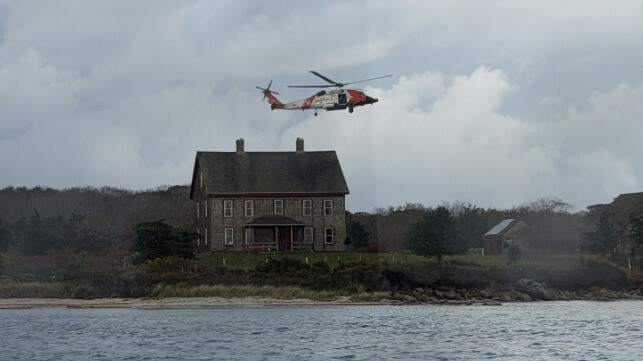
The family was rescued by a USCG helicopter from the empty farmhouse (USCG)

Published Oct 24, 2025 6:29 PM by The Maritime Executive


The U.S. Coast Guard is recounting the harrowing experience of a family rescued after their boat burned, and they hastily swam to shore. Tragically, although they were saved, the wife-mother of the family, a 73-year-old woman, succumbed to her injuries days later.

A search operation had been launched on Tuesday night, October 21, after another family member reported that the three people, a father aged 72, his 73-year-old wife, and their 37-year-old son, were overdue from a weekend boating expedition. They had departed on October 17 on a 30-foot motorboat named Third Wave and were planning to anchor between Massachusetts and Martha’s Vineyard before returning on October 21.

The USCG and local police were having no success in locating the family. They reported that calls to the cellphones were going to voicemail, and they were getting undetermined, non-specific positions from the pings of the phones.

Wednesday morning, the Coast Guard received a call, “mayday, mayday” with the son frantically telling them that they were stranded in a deserted farmhouse on Tarpaulin’s Cove, Naushon Island. He said the boat had burnt, and they had escaped by swimming to shore and were suffering from burns.

The son had gone out foraging along the coast on Wednesday when he happened on the vessel’s marine radio, which had somehow washed ashore when the boat sank. He described a chaotic scene of awakening on Monday night to find the boat on fire and rescuing his parents. The three of them were somehow able to get off and swim to shore, where they found the empty building for shelter. The island is reported to be sparsely populated after having been privately owned by the Forbes family for many years.


The Coast Guard airlifted the three individuals from the island, and they received emergency medical care. They were taken to a hospital on Cape Cod, and the father was later transferred to a Boston hospital burn unit. Another family member told the local news on Friday that their mother had passed away.

A Coast Guard spokesperson said that quick thinking and having quality equipment allowed the family to escape the vessel and ultimately obtain assistance. Another family member said the son, Tyler Sullivan, was a hero for rescuing his parents from the burning boat. 

The Coast Guard and the Massachusetts State Police are investigating the incident and what happened with the pleasure boat.