Saturday, October 25, 2025

Is Kazakhstan building a digital utopia, or a China-style surveillance state?

Is Kazakhstan building a digital utopia, or a China-style surveillance state?
Kazakhstan's government is building a vast surveillance and data-collection apparatus. / EFF-Graphics, cc-by-sa 3.0
By Nizom Khodjayev in Astana October 24, 2025

Kazakhstan's leader Kassym-Jomart Tokayev has repeatedly vowed to “turn Kazakhstan into a fully digital nation within three years”. The economy will be modernised and governance will be streamlined, he says.

Official sources claim some tangible results: since 2021, digital reforms have purportedly pulled tens of billions of tenge out of the shadow economy and saved public funds by delivering faster, more transparent services. Public services in Central Asia's largest economy today operate largely online – reportedly, 92% of government services are available digitally, cutting red tape and accelerating transactions. Moreover, officials claim that a recent focus on e-health, online schooling and other digital services has yielded large fiscal benefits. 

Officials paint the digital strategy as a win-win that leverages artificial intelligence (AI), blockchain and e‑government tools to boost economic growth and turn Kazakhstan into a regional tech hub. The government’s strategy encompasses everything from AI labs and supercomputers to expanded connectivity and a proposed national digital currency. Foreign and domestic investment has flowed into projects like the Alem.AI research centre and Kazakh-language large-language models (LLMs), and even a planned national “digital tenge” currency. 

But here's the double-edged sword – many of these initiatives rely on centralising citizen data. The assembled infrastructure is shaping up to be a vast surveillance and data-collection apparatus.

Digital surveillance state

Tens of thousands of facial-recognition cameras are already deployed nationwide, feeding government databases as part of what officials describe as “smart policing” and “predictive monitoring”.

Domestic companies such as Target AI, which developed the TargetEYE facial-recognition system now used by police in eight regions, have been promoted as local innovators. “In most cases, our company has no information about for what purposes or how the platform’s technical functions are applied,” Target AI told RFE/RL.

Commercial capital and largest Kazakh city Almaty alone has more than 128,000 cameras connected to Target AI systems, while the northeastern Pavlodar region is expanding its network with thousands more. The Defence Ministry has installed around 14,000 cameras in state buildings. The Interior Ministry, meanwhile, talks about all video data as being “protected by modern means” within a “closed contour.”

The surveillance technology has been extended into Kazakhstan’s experimentation with smart-city models. Sergek, an AI-based traffic monitoring network, has expanded beyond the capital Astana, while Smart Aqkol — a pilot “safe city” launched in partnership with Kazakhtelecom, Eurasian Resources Group and Tengri Lab — connects AI-powered cameras with police terminals and command centres for real-time monitoring.
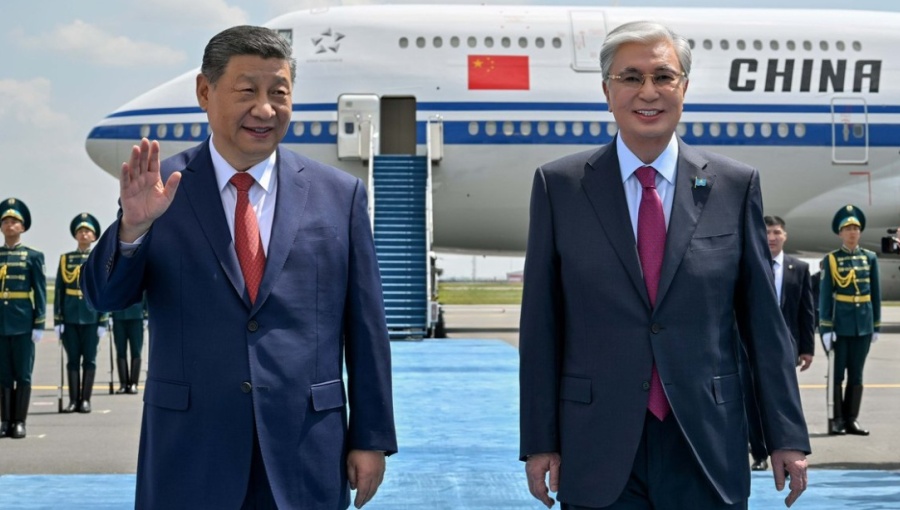
Chinese President Xi Jinping, left, and Kazakh counterpart Kassym-Jomart Tokayev say only good things are coming down the Digital Silk Road. Privacy advocates are not so sure (Credit: Kazakh presidency).

Coda Story reported on how Smart Aqkol’s hardware “came through an agreement under China’s Digital Silk Road initiative,” and that the system uses surveillance cameras from Chinese firms Dahua and Hikvision. The broader Sergek network is also based on Chinese technology, according to a report by Civicidea.ge, with CCTV networks in major cities installed by Kazakh company Korkem Telecom with Dahua as the technical partner. Hikvision equipment has likewise been used in Almaty’s unified video-monitoring system with facial and licence-plate recognition functions. Analysts note that “Chinese products are mainly used” across Kazakhstan’s smart-city CCTV systems, according to Civicidea.ge’s report.

In a similar vein, Huawei and ZTE have partnered with Kazakhtelecom, Kcell and Beeline to develop 5G and smart-city networks. Civicidea.ge noted that “leading Chinese video surveillance companies such as Hikvision, Dahua and Huawei are among the main providers of surveillance services and technologies in developing countries, including Kazakhstan.”

The worry is that digital states of the future will obtain AI-based powers that no-one should have (Credit: bne IntelliNews).

Leaked documents have also exposed the extent of Chinese involvement in online monitoring. Exclusive.kz reported on analysis by InterSecLab that showed Kazakhstan was the first foreign client of China’s Geedge Networks in 2019 for an Internet surveillance system modelled on Beijing's Great Firewall. By 2020, Geedge nodes were reportedly operating in 17 cities across Kazakhstan. In late 2024, Politik.uz reported new shipments of Chinese optical bypass filters for internet traffic under the Geedge/TJJ-Company “Cybershield of Kazakhstan” project.

In September 2024, InterSecLab researchers analysed over 100,000 internal files from Geedge and concluded that Kazakhstan’s internet filtering system originated in China. RFE/RL’s report said that the Committee for National Security referred its questions about the findings to the Ministry of Artificial Intelligence and Digital Development. It dismissed the reports, stating that the information “does not correspond to reality.” 

InterSecLab analyst Marla Rivera told TengriNews that Geedge’s system “gives the government a power that in principle no one should have. It’s very frightening”.

'China not a model for democratic society'

Kazakhstan’s cooperation with Beijing continues under the Belt and Road Initiative’s “Digital Silk Road.” This year the government announced a $21mn joint AI laboratory with China, deepening technical and financial ties.

Malikova told RFE/RL that “China, both politically and socially, is not a model for how technology should be used in a democratic society.” 

While Chinese suppliers dominate the Central Asian state’s surveillance tech, other foreign firms are also entering Kazakhstan’s market. Swedish Axis Communications, South Korea’s Hanwha Vision and UAE-based Presight AI have signed recent contracts. Presight AI, a state-backed Emirati company, secured a deal to replace the Sergek system in Astana with 22,000 cameras linked to its own software.

At the same time, biometric systems are expanding into daily life. Residential complexes now use Face ID entry systems, and a national biometric authentication platform is being rolled out across banks, telecoms and public services. Since August 2024, banks have been required to verify online loans through biometric data. 

In the financial sector, partnerships between Kazakh firms and foreign tech (such as Bybit and Biometric.Vision) are pushing biometric know-your-customer/anti-money laundering (KYC/AML) checks for crypto and even cash transactions.

AInvest.com cited cybercrime consultant David Sehyeon Baek as saying that, while these measures tighten oversight of illicit finance, they risk creating a “total financial visibility” for authorities if proper safeguards are not in place. 

RFE/RL cited King’s College London researcher Oyuna Baldakova who warned that centralised biometric databases pose security risks: “Over time, you will have a level of data where the state can get involved and track people.”

Civic activist Assem Zhapisheva of the Oyan, Qazaqstan movement offered a sardonic view of biometric ticketing to Eurasianet: “How do you quickly assemble a database with biometric data and avoid getting flak for it? … Make payments on the bus with your face, of course!”

Security hawks take lessons from "Bloody January"

Though most developments described are relatively recent, Kazakhstan’s embrace of high-tech surveillance intensified after the "Bloody January" 2022 unrest when protests over fuel prices escalated into violent clashes across parts of the country, leaving more than 230 people dead. In a February 2022 address, Tokayev said: "We not only need to restore public order but also to increase the number of cameras. The issue is not full surveillance or monitoring of our citizens’ actions; this is a security matter.”
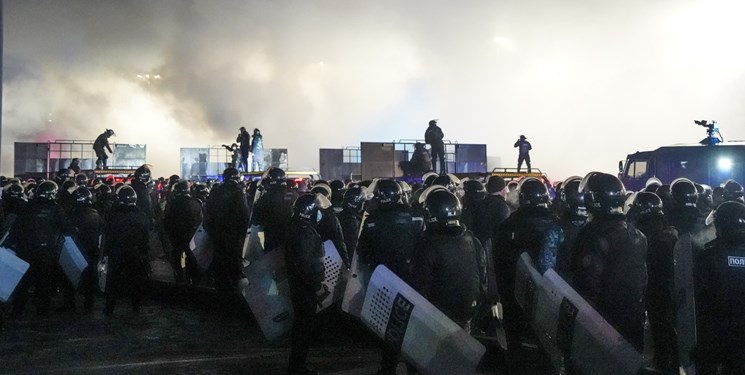
There are claims that during the "Bloody January" major social unrest and violence of 2022, 7,000 people were detained on the basis of data collected by street surveillance cameras (Credit: Fars news agency).

During the unrest, Kazakh sources described widespread use of Chinese surveillance technology. Bitter Winter reported in 2022, citing confidential information, that “all street cameras in Kazakhstan were made by the Chinese company Hikvision,” and that “China has sent a special team to Kazakhstan to help with face recognition and identify the protesters” using Chinese AI systems. 

Coda Story similarly reported that “China had sent a video analytics team to Kazakhstan to use cameras it had supplied to identify and arrest protesters.” Human rights lawyer Danil Bekturganov said about 7,000 people were detained “based on data from street surveillance cameras” during the unrest, questioning official claims that no AI facial-recognition systems were used: “Given the scale of the protests … this is hard to believe,” he told Civicidea.ge.

Is a fully digital state even possible?

While the expansion of surveillance tech is likely to continue throughout Kazakhstan, questions remain open over the possibility of building a fully digital state, as desired by Tokayev.

Baldakova told RFE/RL that Kazakhstan still faces a digital divide between urban and rural regions, thus lacks capacity for a wholly digital state.

Though there are efforts to expand internet access via satellite constellation services, such as Elon Musk’s Starlink, which recently officially started operating on the territory of the ex-Soviet country, Kazakhstan faces deeper infrastructural issues. One of these is ageing Soviet infrastructure that appears to be on its last legs, as demonstrated during a citywide electricity and heating shutdown in Ekibastuz in December 2022. The power outage lasted for 10 days, but Ekibastuz is subject to routine power outages throughout the year nearly every year. Tokayev’s government is mostly betting on nuclear energy to deliver Kazakhstan from its energy woes, but that is only expected to happen from the mid-2030s.

Without sufficient energy capacity, the dream of running an efficient digital state seems unrealistic. It also does not help that the quality of internet services in Kazakhstan is rather lacking, despite the country ranking 45th globally in terms of mobile internet speed and 84th in terms of fixed broadband speed, according to Ookla’s August 2025 speed test. This issue is often felt by Kazakh citizens during working hours on weekdays and is often a topic of ridicule on the country's social media.

Indeed, can a truly efficient digital state, whether a surveillance state or not, even be possible without proper energy and internet infrastructure to sustain it and back it up – especially, in a country with a stark digital divide between rural and urban regions?  


Palestinian ambassador pledges Iraqi embassy in Jerusalem

Palestinian ambassador pledges Iraqi embassy in Jerusalem
/ bne IntelliNews
By bnm Gulf bureau October 24, 2025

Palestinian Ambassador to Iraq Ahmad al-Ruwaydi pledged to open an embassy in the "Palestinian capital Jerusalem" as Iraq laid the foundation stone for the Palestinian ambassador's residence in Baghdad on October 24, Shafaq News reported.

Iraqi Foreign Minister Fuad Hussein placed the foundation stone for the residence in the capital Baghdad with al-Ruwaydi in attendance as part of a city redevelopment plan.

The outright public rejection of Israel by Iraq and other Persian Gulf countries is part of growing confidence that Tel Aviv has lost the military and public high ground with global audiences. The overt support for Palestinian sovereignty of Jerusalem (Al Quds, "The Holy" in Arabic) comes as other Gulf countries continue to support people in Gaza, including Qatar and Saudi Arabia.   

Hussein said at a joint press conference following the ceremony that the area where the foundation stone was placed is vital and will include embassies and missions for several other countries.

"Iraq is one of the supporters of the Palestinian cause, and our movements throughout the previous period have been within the framework of diplomacy, working to stop the war, sending aid to the sector, promoting stability and peace, and allowing the Palestinian people to determine their own fate," Hussein said, Dijlah News recorded him as saying.

The Iraqi Foreign Minister thanked the Palestinian ambassador on the occasion of the end of his work duties for his efforts in strengthening bilateral relations between the two countries.

The new Palestinian ambassador's residence building is located within the diplomatic quarter in Baghdad, where work began at the end of October 2024. The quarter covers approximately 78 plots, with 40 plots already occupied by embassies of some countries operating in Iraq.

Iraq has consistently refused to recognise Israel and participated in the 1948, 1967, and 1973 Arab-Israeli wars against it. In a strange situation, Iraq was the only Arab country that did not sign the 1949 ceasefire agreement, meaning the two nations remain technically in a state of war.

Hussein said the project represents an important step reflecting the Iraqi government's efforts to provide a modern and safe working environment for embassies accredited in Iraq, and embodies the Foreign Ministry's commitment to developing the infrastructure of Iraqi diplomacy and making it more organised and effective to serve the country's interests, according to the statement.

Hussein also laid the foundation stone for the rehabilitation and development project of the quarter on October 24. He said the project represents an important step reflecting the Iraqi government's efforts in providing a modern and safe working environment for embassies accredited in Iraq.

In the recent Hamas-Israel war, Iraqi paramilitary groups aligned with Iran used Iraqi territory to fire rockets and drones towards Israel and Palestine. 

In May 2022, Iraq's parliament passed a law criminalising normalisation with Israel, known as the "Criminalising Normalisation and Establishment of Relations with the Zionist Entity" law.


Bill Gates makes surprise Indian TV debut

Bill Gates makes surprise Indian TV debut
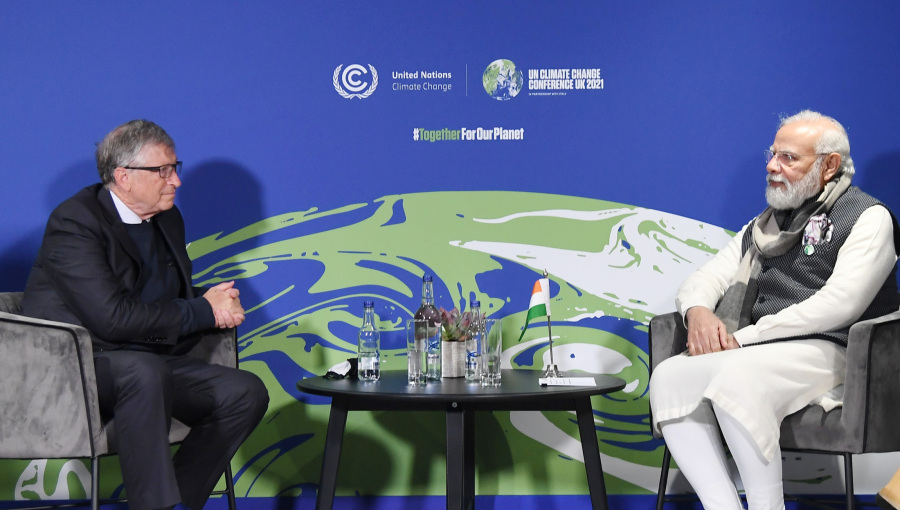
Bill Gates in his pre-acting life on the sub-continent / Prime Minister's Office - Government of India
By bne IntelliNews October 24, 2025

In a move set to spark both intrigue and curiosity, Microsoft co-founder and philanthropist Bill Gates has made a cameo appearance on Indian television, entering the iconic drama series Kyunki Saas Bhi Kabhi Bahu Thi 2 via video call, The Express Tribune reports.

The appearance, broadcast in a new promotional segment released by broadcaster Star Plus, sees Gates speaking with the matriarch character Tulsi Virani, played by Smriti Irani. “Thank you, Tulsi ji,” Gates says in the scene, the paper adds.

The promo, signalling a collaboration between popular entertainment and the Bill Gates social mission as a charitable theme is not incidental: the campaign is aligned with the efforts of the Bill & Melinda Gates Foundation in South Asia, focusing on issues such as maternal and child health, nutrition and access to care, The Express Tribune continues.

It is not the first time Gates has appeared in a TV drama having appeared in Frasier in 2001 when Gates guest-starred as himself in an episode titled “The 200th Episode.” he also appeared in The Big Bang Theory in 2018, again as himself visiting the characters’ office in the episode “The Gates Excitation.”

According to The Tribune, while it remains unclear whether Gates’s involvement will extend beyond this special promo, industry observers say the initiative reflects a growing trend of social-impact organisations leveraging mainstream media to reach broader audiences.


Asian economies weigh their options amid fears of over-reliance on Chinese rare-earths


Asian economies weigh their options amid fears of over-reliance on Chinese rare-earths
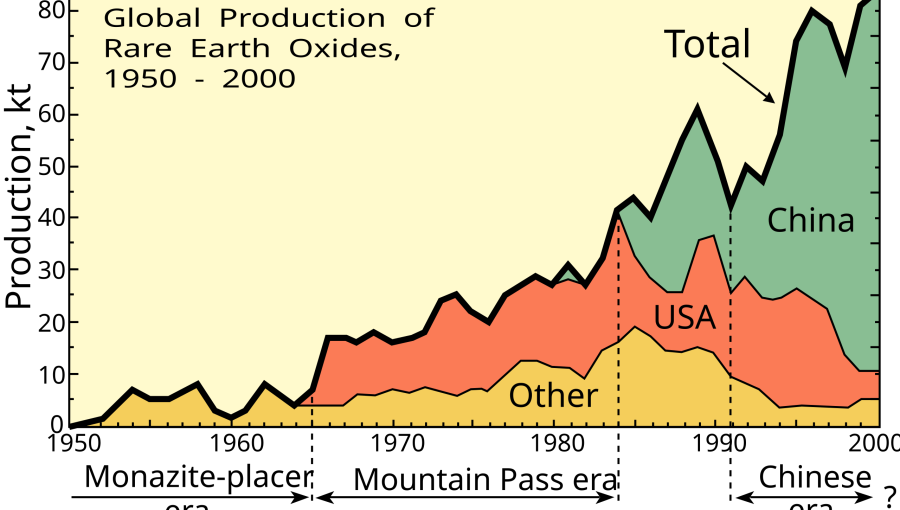
Global Production of rare earths / USGS - PD
By bno - Mark Buckton - Taipei October 25, 2025

Beijing’s tightening control over the export of critical minerals has set off alarm bells across Asia, the BRICS nations and beyond, signalling a new front in the global contest for industrial and technological sovereignty.

China’s dominance in the production and processing of rare-earth elements (REEs) - essential for electric vehicles, wind turbines, defence systems and high-end electronics - has long been viewed as a strategic concern. So much so that at the last BRICS summit, Indian Prime Minister Narendra Modi warned fellow member states of the need for cooperation in ensuring access to supply chains for critical minerals, so that no one country can use such resources for individual gain or as a weapon to limit industrial progress elsewhere. His unnamed ‘one country’ was of course a reference aimed at China.

As such, Beijing’s recent decision to impose export controls on a broad range of rare-earth elements and related technologies, including materials used in high-performance magnets vital to EVs and defence systems, has deepened unease within the region and the bloc. That China could one day also use its access to rare earths to somehow limit renewable energy expansion across Asia only compounds the problem as the region moves away from coal use at breakneck speed.

Increasing numbers of governments around Asia now see these moves as a reflection of China’s near-total dominance of the refining process. By some estimates, Chinese firms control around 90% of the world’s heavy-rare-earth processing capacity. But by couching its export controls in national-security terms, Beijing has positioned itself not just as a supplier but as a gatekeeper of global industrial development. This has not gone down well – even with traditional allies.

Broader Asian concerns

Beyond the BRICS framework, China’s dominance in rare earths reverberates across Asia, where several countries are racing to establish or expand their own capacity in mining, refining and downstream manufacturing. The structural imbalance in which China not only mines but also refines most of the world’s rare-earth ores, has prompted a renewed search for alternatives and soul searching by China’s neighbours.

Myanmar as one of the few other Asian nations with notable reserves of heavy rare earths, particularly dysprosium and terbium already exports much of its output to China for processing, underscoring Beijing’s grip over the value chain. Environmental degradation and informal mining practices in Myanmar have also raised sustainability concerns, complicating efforts to formalise the sector, especially at a time the ruling junta is engaged in a costly civil war.

Vietnam, meanwhile, has emerged as a potential regional counterweight. Its Lai Chau and Dong Pao deposits are seen as among the largest outside China. To this end, despite ideological similarities to its northern neighbour, Hanoi has been courting Japanese, Korean and Western investors to develop refining capacity, though progress remains slow due to high capital costs and the technological sophistication required for processing.

India too possesses considerable reserves of monazite sands - a source of light rare earths - primarily along its southern and eastern coasts. Yet the country’s processing and magnet-manufacturing infrastructure remains underdeveloped and thus very limited. As a result, India still imports refined materials from China. New Delhi has, however, now launched initiatives under its “Atmanirbhar Bharat” (self-reliant India) campaign to promote domestic refining, but progress will take time.

Elsewhere in AsiaMalaysia hosts the only significant rare-earth processing facility outside China – albeit operated by Australia’s Lynas Rare Earths. Despite local opposition over radioactive waste concerns, the facility demonstrates the importance of diversifying the refining network.

Indonesia and Thailand have also identified potential reserves, while Japan and South Korea are investing in recycling technologies and strategic stockpiles to hedge against supply shocks – but this too, like the efforts in India, will take time.

Necessary recalibration

For the BRICS bloc too, the rare-earth question goes to the heart of industrial sovereignty. The group’s collective challenge is not merely to mine more but to process and manufacture more.

India’s emphasis on securing partnerships and avoiding the “weaponisation” of resources signals a shift towards cooperative industrial policies among emerging economies. Brazil and South Africa, both with untapped mineral reserves of their own, are now exploring joint ventures with Asian partners to develop refining capabilities, while Russia - already a significant producer of some critical minerals - is already thought to be looking eastwards to deepen collaboration.

Yet the road to diversification is steep. Rare-earth processing involves complex chemical separation and high environmental costs. Even if new mines are developed across Asia tomorrow, refining capacity and technological know-how remain heavily concentrated in China. As such, any short-term disruption in Chinese supply chains could – and is already in some sectors - sending shockwaves across global industries.

The wider concern right now, as analysts note, is that such long-term dependencies cannot suddenly be reversed. Asia and the world is only now learning to live with, and hedge against, China’s rare-earth dominance.

Just how control over these critical minerals plays out will be a long fought battle lasting decades, and one that will increasingly define Asia’s industrial future.


Common jobs held by immigrant women may put them at increased risk of breast cancer


Study sheds light on chemical hazards in U.S. workplaces and overlooked risks for female workers.


Silent Spring Institute


Many immigrant women in the U.S. work in jobs that may expose them to chemicals linked to breast cancer, according to a new study led by Silent Spring Institute. The study is among the first to examine how job-related chemical exposures may contribute to breast cancer risk among foreign-born workers, especially in jobs with fewer health and safety protections.

Published in the Journal of Exposure Science & Environmental Epidemiology, the findings could help inform policies to reduce harmful exposures for women workers, while also deepening understanding of how certain occupations put women at increased risk of breast cancer. 

“Most occupational health research has focused on men, leaving a significant knowledge gap in what we know about the risks for women, especially immigrant women,” says lead author Dr. Kristin Knox, a research scientist at Silent Spring. “We wanted to explore whether the types of jobs immigrant women hold could help explain why some groups experience higher breast cancer rates after moving to the U.S.”

Silent Spring researchers and their colleagues at University of California, Berkeley and University of California, San Francisco, analyzed U.S. Census data to identify the most common occupations held by immigrant women. They then matched those jobs with data from the Women’s Occupations and Risk from Chemicals Project, which tracks occupations in California involving exposure to chemicals relevant to breast cancer. 

Key findings:

  • The most common jobs held by immigrant women include house cleaners, nurses, cashiers, janitors, and care aides.
  • Among those jobs, house cleaners and nurses face the highest potential chemical exposures.
  • Common chemicals include fragrances, cleaning agents, pesticides, phthalates, antimicrobials, and alkylphenols, many of which are endocrine disruptors that interfere with hormones in ways that could lead to breast cancer.

“Immigrant women are overrepresented in many of the jobs we identified as high-risk,” says Knox. “This means they are not only more likely to be exposed to hazardous substances, but also more likely to experience long-term health consequences tied to their work.”

The research team also found disparities based on language and education. Immigrant women with higher levels of education and stronger English skills were more likely to work in lower-exposure jobs, such as accountants, customer service representatives, and software developers. Those with less education and limited English were more often employed in high-exposure occupations. 

“Immigrant women face unique barriers to avoiding toxic exposures at work—including language barriers, and fear of speaking out due to undocumented status or job insecurity,” says co-author Erin Carerra, a registered nurse at UCSF. “It’s important to understand the health risks they face so we can ensure all workers, regardless of background, are protected from harmful chemicals that could make them sick.”

The study is the first phase of a broader initiative. Next, the researchers will be collecting exposure measurements from women in these high-risk occupations. Participants will wear silicone wristbands that track chemicals in the air, provide urine samples for chemical analysis, and participate in interviews to share their experiences with workplace hazards and understand their challenges.

Knox and her team hope the project will lead to stronger workplace protections. For instance, hospitals could change practices to reduce exposures to harsh disinfectants and harmful materials. Domestic workers and their employers could benefit from information on safer products and how to access non-toxic alternatives.

This project is funded by the California Breast Cancer Research Program (Grant #10941) and charitable contributions to Silent Spring Institute.

Resources or References

Reference:

Knox, K.E., J.L. Ohayon, E. Carrera, R. A. Rudel and R. Morello-Frosch. 2025. Breast cancer-related occupational exposures facing immigrant women. Journal of Exposure Science & Environmental EpidemiologyDOI: 10.1038/s41370-025-00808-9