Saturday, October 25, 2025


New biochar-powered microbial systems offer sustainable solution for toxic pollutants


Biochar Editorial Office, Shenyang Agricultural University

Biochar-supported microbial systems: a strategy for remediation of persistent organic pollutants 

image: 

Biochar-supported microbial systems: a strategy for remediation of persistent organic pollutants

view more 

Credit: Haowei Wu, Yuxin Huo, Fengyuan Qi, Yuqi Zhang, Ran Li & Min Qiao


Researchers from the Chinese Academy of Sciences and the University of Chinese Academy of Sciences have unveiled a promising strategy to address persistent organic pollutants—dangerous substances found in industrial waste, pesticides, and contaminated soils that threaten environmental and human health. Their latest review highlights how biochar-supported microbial systems can revolutionize the remediation of these contaminants.

Persistent organic pollutants (POPs), including polycyclic aromatic hydrocarbons, pesticides, and chlorinated solvents, are notorious for their cancer-causing effects and resistance to natural degradation. Traditional methods such as chemical treatment and excavation are often expensive, disruptive, and inefficient. Biological remediation is safer, but survival and effectiveness of microbes in harsh contaminated environments remain limited.

The new approach leverages “biochar”—a carbon-rich material produced from pyrolyzed biomass. Biochar’s porous structure and surface chemistry are ideal for trapping pollutants and creating microhabitats for beneficial microbes. When loaded with pollutant-degrading microbes, biochar acts as both a protective carrier and an adsorbent, allowing microbes to persist and perform while efficiently removing toxins from water and soil. Recent advances include nutrient-enriched biochar and engineered microbial communities that further expand remediation potential.

The authors detail progress in adapting biochar-supported systems to tackle pollutants in industrial wastewater, agricultural soils, and domestic environments. These integrated strategies have already achieved impressive results, including rapid breakdown of pesticides, dyes, and petroleum-based pollutants. While rigorous field-scale testing and long-term analysis are still needed, the technology represents a significant step towards scalable, sustainable pollution control.

“Biochar-supported microbial systems mark an important milestone toward a circular economy and healthier ecosystems,” says lead author Haowei Wu. “By combining advanced materials science with microbial ecology, this strategy offers new hope for restoring polluted environments and protecting public health.”

The paper is published in Biochar and is available open access under a Creative Commons license.


=== 

Journal Reference: Wu, H., Huo, Y., Qi, F. et al. Biochar-supported microbial systems: a strategy for remediation of persistent organic pollutants. Biochar 7, 113 (2025). https://doi.org/10.1007/s42773-025-00506-7  


=== 

About Biochar

Biochar is the first journal dedicated exclusively to biochar research, spanning agronomy, environmental science, and materials science. It publishes original studies on biochar production, processing, and applications—such as bioenergy, environmental remediation, soil enhancement, climate mitigation, water treatment, and sustainability analysis. The journal serves as an innovative and professional platform for global researchers to share advances in this rapidly expanding field. 

Follow us on FacebookX, and Bluesky.  

Microbial iron mining: turning polluted soils into self-cleaning reactors


Biochar Editorial Office, Shenyang Agricultural University
Microbial iron mining: a nature-based solution for pollution removal and resource recovery from contaminated soils 

image: 

Microbial iron mining: a nature-based solution for pollution removal and resource recovery from contaminated soils

view more 

Credit: Sha Zhang, Dong Zhu


A team of scientists from the Chinese Academy of Sciences has introduced a groundbreaking nature-based solution to tackle global soil pollution—a crisis threatening ecosystems, agriculture, and human health. Their new research demonstrates that harnessing the natural power of microbes and iron minerals can remove toxic substances from soils efficiently and sustainably.

Soil pollution has reached alarming levels worldwide due to industrial activity, agricultural chemicals, and improper waste management. From heavy metals and persistent organic pollutants to microplastics and antibiotic resistance genes, these contaminants pose serious risks to food safety and the environment. Conventional cleanup methods are costly, energy-intensive, and often harm the natural structure of soils.

The scientists present "microbial iron mining," a process where soil microbes activate natural iron cycling. Microbes reduce and mobilize iron minerals, producing tiny iron nanoparticles that act as powerful traps for a variety of pollutants. These particles can capture and transform metals such as arsenic, lead, and mercury, as well as organic pollutants and even microplastics.

What makes this approach unique is its reliance on nature’s own strategies for self-purification. By adding agricultural residues like rice straw and carefully managing soil moisture, researchers can boost microbial iron activity and accelerate pollutant removal, all without disruptive excavation or aggressive chemicals. The resulting iron-rich minerals can be harvested for safe disposal or further resource recovery, minimizing the cost and environmental footprint.

Early studies in rice paddies and wetlands, landscapes naturally rich in iron and organic matter, show that microbial iron mining can immobilize toxic substances and transform persistent pollutants into less hazardous forms. This strategy even opens the door to recovering rare earth elements, which are critical for clean energy technologies.

While practical field-scale applications are still being developed, microbial iron mining represents a major leap forward in sustainable land management. By transforming polluted soils into self-cleaning biogeochemical reactors, this process supports the United Nations Sustainable Development Goals for clean water, safe food, and healthy ecosystems.

“Our work shows that soil can be engineered to clean itself through natural microbial and geochemical processes,” explains co-author Dong Zhu. “Microbial iron mining combines environmental harmony with practical resource recovery, offering hope for a cleaner, healthier future.”


=== 

Journal reference: Zhang S, Zhu D. 2025. Microbial iron mining: a nature-based solution for pollution removal and resource recovery from contaminated soils. Environmental and Biogeochemical Processes 1: e006  https://www.maxapress.com/article/doi/10.48130/ebp-0025-0002  


=== 

About the Journal:

Environmental and Biogeochemical Processes is a multidisciplinary platform for communicating advances in fundamental and applied research on the interactions and processes involving the cycling of elements and compounds between the biological, geological, and chemical components of the environment. 

Follow us on FacebookX, and Bluesky


Cockroach infestation linked to home allergen, endotoxin levels


North Carolina State University
Female German cockroach 

image: 

More endotoxins are shed from the fecal matter of female cockroaches.

view more 

Credit: Photo courtesy of Matt Bertone, NC State University.


Researchers at North Carolina State University have shown a link between the size of cockroach home infestations and the levels of both allergens and endotoxins in those homes, with lowering roach infestation numbers through pest control triggering significant declines in the levels of allergens and endotoxins. The study’s findings suggest that eliminating cockroach infestations could help improve indoor environmental health by greatly reducing allergens and endotoxins.

Endotoxins are bacterial cellular components that get released when bacteria die. As omnivores that will eat just about anything, cockroaches have a rich and diverse gut microbiome. Previous research has shown that cockroaches shed a lot of endotoxins through their fecal matter, although house pets – and humans – can also shed endotoxins. The researchers in this study found that a large amount of the endotoxins found in household dust was associated with cockroach feces. 

“Endotoxins are important to human health, as inhalation of these components has been shown to provoke allergic responses,” said Coby Schal, the Blanton J. Whitmire Distinguished Professor of Entomology at NC State and co-corresponding author of a paper describing the research. “Past surveys in U.S. homes found endotoxin levels much higher in homes with self-reported evidence of cockroaches; that association is stronger in low-income homes than in single-family homes.” 

The study, held in multi-unit apartment complexes in Raleigh, N.C., compared estimated cockroach infestation sizes as well as allergen and endotoxin levels in homes infested by cockroaches. These baseline levels were tabulated by capturing settled and airborne dust in homes.

The researchers found significant amounts of endotoxins in infested homes, with female cockroaches excreting about twice the amount that males excreted. 

“Female cockroaches eat more than males, so more endotoxins are shed from their fecal matter,” said Madhavi Kakumanu, an NC State research scholar in Schal’s lab and co-corresponding author of the paper. She added that more endotoxins were found in kitchens than in bedrooms, as more cockroaches live in kitchens where they find more food.

Infested homes were then divided into untreated homes and homes receiving an extermination intervention to eliminate cockroaches. The researchers also included a control group of homes that had no cockroaches. Cockroach counts and floor and airborne dust samples were taken three months and six months into the study.

The results showed that infested homes without extermination had very large amounts of both endotoxins and allergens at all timepoints. 

Meanwhile, in most cases, infested homes that received the extermination intervention were rid of both cockroaches and their allergens, and experienced significant declines in endotoxins. 

“When you eliminate cockroaches, you eliminate their allergens. Small decreases in cockroaches don’t lower allergen levels because the remaining live cockroaches deposit more allergens,” Schal said. “Endotoxins significantly decreased in homes where cockroaches were eliminated. This paper shows that the cockroach is the most important depositor of endotoxin in infested homes.”

“We also saw that allergens and endotoxins can be airborne,” Kakumanu said.

Schal added that next steps include further examining interactions between cockroach allergens and endotoxins in animal models of asthma, such as mice.

“There exists the implication that asthma can be worse due to interactions between allergens and endotoxins,” Schal said. “We want to see if that is the case in mice.”
 
The study appears in The Journal of Allergy and Clinical Immunology: Global. NC State’s Richard G. Santangelo, Zachary C. DeVries at the University of Kentucky and Jeffrey Siegel of the University of Toronto co-authored the paper.

Funding for the work came from the U.S. Department of Housing and Urban Development Healthy Homes program (NCHHU0053-19, NCHHU0081-24); the Alfred P. Sloan Foundation (2013-5-35 MBE); a Pilot Project awarded by the Center for Human Health and the Environment under P30ES025128 from the National Institute of Environmental Health Sciences; the National Institute of Allergy and Infectious Diseases of the National Institutes of Health (award number 1R21AI187857-01); Research Capacity Fund (HATCH) (project NC02639) from the U.S. Department of Agriculture National Institute of Food and Agriculture; and the Blanton J. Whitmire Endowment at North Carolina State University.

- kulikowski -

Note to editors: The abstract of the paper follows.

“Indoor Allergens and Endotoxins in Relation to Cockroach Infestations in Low-Income Urban Homes”

Authors: Madhavi L. Kakumanu, Richard G. Santangelo and Coby Schal, North Carolina State University: Zachary C. DeVries, University of Kentucky; Jeffrey Siegel, University of Toronto

Published: Oct. 23, 2025 in The Journal of Allergy and Clinical Immunology: Global

DOI: 10.1016/j.jacig.2025.100571

Abstract: 
Background: Cockroach allergens are well recognized as important risk factors in the development and prevalence of allergic rhinitis and asthma in children, especially in low-income urban households. The German cockroach gut hosts a diverse community of highly abundant microbes, including Gram-negative bacteria that shed large amounts of endotoxins in cockroach feces. 
Objective: To delineate the causal relationship between the presence of cockroaches in homes and levels of household endotoxins.
Methods: In laboratory-assays, we measured the amount of endotoxin produced by cockroaches. In-home monitoring estimated the size of the cockroach population in each home and quantified cockroach allergen Bla g 2 and endotoxin levels in household dust and on HVAC filters. An environmental intervention was implemented in a subset of the infested homes to eliminate cockroaches. Bla g 2 and endotoxin levels were quantified for 6-months post intervention.
Results: Large amounts of endotoxin are excreted by female (2,900 EU/mg feces) and male (1,400 EU/mg) cockroaches. At baseline, household dust and HVAC filters in infested homes had significantly higher levels of allergen (Bla g 2) and endotoxin than in uninfested homes. Environmental intervention resulted in significant declines in cockroaches as well as allergen and endotoxin levels. In contrast, cockroach numbers and allergen and endotoxin concentrations remained high in infested-control homes.
Conclusion: Cockroaches are a significant source of both endotoxins and potent allergens, potentially resulting in co-exposure of asthmatic children to both. 

A Mahdi-Messianic Era Or A Hot As Hell Climate Disaster – OpEd


October 26, 2025 
By Rabbi Allen S. Maller


Electricity consumption from data centers will more than double globally by 2030, according to the International Energy Agency. The U.S.A. accounts for by far the largest share of the projected increase, followed by China.

Our planet has entered a ‘new reality’ as it hits its first climate tipping point. Humans have pushed up temperatures so far they risk triggering a series of climate ‘tipping points,’ which would bring catastrophic changes and could be irreversible on human timescales. First in a series of catastrophic and potentially irreversible climate tipping points is the widespread death of coral reefs, according to a landmark report produced by 160 scientists across the world.

As humans burn fossil fuels and ratchet up temperatures, it’s already driving more severe heat waves, floods, droughts, and wildfires. But there are even bigger impacts on the horizon. Climate change may also be pushing Earth’s crucial systems — from the Amazon rainforest to polar ice sheets — so far out of balance they collapse, sending catastrophic ripples across the planet.

“We are rapidly approaching multiple Earth system tipping points that could transform our world, with devastating consequences for people and nature,” said Tim Lenton, a professor at the Global Systems Institute at the University of Exeter and an author of the report.

Warm water corals are the first, according to the report. Since 2023, the world’s reefs have been enduring the worst mass bleaching event on record as oceans reach record high temperatures, with more than 80% affected. “We have now pushed (coral reefs) beyond what they can cope with,” said Mike Barrett, chief scientific advisor at the World Wildlife Fund UK and co-author of the report. Unless global warming is reversed “extensive reefs as we know them will be lost.”

The impacts will have far-reaching consequences. Coral reefs are an essential habitat for marine species, vital for food security, contribute trillions to the global economy and buffer coastal areas from storms. There’s even worse to come if temperatures continue to rise. Our planet is on the brink of several more tipping points as it’s all but certain to breach the globally agreed goal of limiting warming to 1.5 degrees Celsius above pre-industrial levels, according to the report.


One of the most alarming of these is the potential collapse of the Atlantic Meridional Overturning Circulation, a crucial network of ocean currents. This would have catastrophic global consequences, pushing parts of the world into a deep freeze, heating up others, disrupting monsoon seasons and rising sea levels.

The target of keeping long-term global warming within 1.5 degrees Celsius (2.7 Fahrenheit) is moving out of reach, climate experts say, with nations failing to set more ambitious goals despite months of record-breaking heat on land and sea. Countries agreed in Paris in 2015 to try to keep long-term average temperature rises within 1.5C, but there is now a 66% likelihood the annual mean will cross the 1.5C threshold for at least one whole year between now and 2027, the World Meteorological Organization predicted in May.

Global average sea surface temperatures hit 21C in late March and have remained at record levels for the time of year throughout April and May. Australia’s weather agency warned that Pacific and Indian ocean sea temperatures could be 3C warmer than normal by October.

A warming world is transforming some major snow falls into extreme rain over mountains instead, thus worsening both dangerous flooding like what devastated Pakistan last year, as well as long-term water shortages, a new study found.

Using rain and snow measurements since 1950 and computer simulations for future climate, scientists calculated that for every degree Fahrenheit the world warms, extreme rainfall at higher elevation increases by 8.3% (15% for every degree Celsius), according to lead author Mohammed Ombadi, a Lawrence Berkeley National Laboratory hydrologist and climate scientist in a study in the journal Nature.

Since 1992, global temperatures have increased on average almost 1.1°F (0.6°C), shattering the annual high-temperature record eight times, resulting in extreme weather disasters. Worldwide there have been nearly 8,000 climate, water and weather disasters, killing 563,735, according to the EMDAT disaster database.

NatureServe, a leading conservation research group, found that 40% of animals and 34% of plants in the United States are at risk of extinction, because 41% of ecosystems are facing collapse. Everything from crayfish and cacti to freshwater mussels are in danger of disappearing.

And sperm quality appears to be declining around the world, reported the BBC on the 27th of March 2023. Male infertility contributes to approximately half of all cases of infertility and affects 7% of the whole male population. For most men with fertility problems, the cause remains unexplained and stigma means many men suffer in silence.

Insects pollinate more than 80% of plants and are a major source of food for thousands of vertebrate species—but insect populations are collapsing all around the globe, and they continue to be overlooked by conservation efforts.

And the rate of ground-breaking scientific discoveries and technological innovation is slowing down despite an ever-growing amount of scientific knowledge, according to an analysis of 45 million scientific research papers and patents seeking disruptive discoveries that “break away from existing ideas” and “push the whole scientific field into new territory.” according to results published in the journal Nature.

For Muslims, who especially during Ramadan despair about the terrible state of the modern world, Allah has revealed that prior scriptures were guides for the societies to which they were sent: “He has sent down the Book to you with truth, confirming what was there before it. And He sent down the Torah and the Gospel, previously, as guidance for mankind.” (Qur’an 2:3-4)

“Allah reveals this in another verse about the Torah: “We sent down the Torah containing guidance and light, and the Prophets who had submitted themselves gave judgment by it for the Jews–as did their scholars and their rabbis–by what they had been allowed to preserve of Allah’s Book to which they were witnesses. (Qur’an 5:44) For that reason, Muslims can find in this book, the passages relating the End Times from the Torah and the Gospels as well as the Qur’an.”

“The subject of the Mahdi” has occupied an important place in the Islamic world. Hoping that Hazrat Mahdi will be instrumental in making the afflictions Muslims suffer, the intellectual systems based on denial, unfair and unjust practices, conflicts and wars pervading the world will come to an end, believers have always awaited the coming of this blessed individual in their own times.”

As a Reform Rabbi who also believes that the world wide upheavals we see are part of the birth pains of the Messianic Age, I offer Muslims some insights from the Jewish Prophets and Rabbinic Sages. Many Jews, Christians and Muslims believe the war of Gog and Magog (Gog u-Magog in Hebrew and “Yajuj and Majuj” in Arabic) is coming in the 21st century.

It is true that human society changed more rapidly, violently and fundamentally in the last 150 years than ever before in history. Doctors saved the lives of millions. Dictators sacrificed the lives of millions. Populations are exploding in Africa and populations are declining in Europe. Technology produces both worldwide prosperity and worldwide pollution at the same time.

Should we look upon the future with optimistic hope or with fatalistic trepidation? Is the world and our society heading towards a wonder-filled new age, or toward a doomsday? Or are both occurring almost concurrently because breakdown is always a prelude to breakthrough?

Jews, whose Biblical prophets were the ones who first wrote about a future Messianic Age, recognize that the birth of a Messianic Age must be preceded by its birth-pangs. But the prophets of Israel also emphasize the glories of a future world living in peace and prosperity with justice for all.

Ancient Jewish prophecies did proclaim that there would be an end to the world as we know it. But they did not prophesy that the world will come to an end, nor did the Prophets of Israel offer an exact date for the transition. The exact advent of the Messianic Age is not knowable because humans have free will and thus the exact time and manner of redemption cannot be determined in advance. Much depends on what we humans do.

The beginning of the Messianic Age is a time of transition from one World Age into another. How we move through this transition, either with resistance or acceptance, will determine whether the transformation will happen through cataclysmic changes or by a gradual reform of human society; which will lead to a world filled with peace, prosperity and spiritual tranquility.

The Prophets of Israel conceived redemption as a transformation of human society that would occur through the catalyst of the Jewish community.

This transformation, which will take place in this world at some future time, is called the Messianic Age. The transition to the Messianic Age is called the birth pangs of the Messiah. The birth of a redeemed Messianic world may be the result of an easy or difficult labor. If everyone would simply live according to the moral teachings of his or her religious tradition, we would ourselves have helped bring about the Messianic Age.

But, if we do not do it voluntarily, it will come about through social and political upheavals, worldwide conflicts and generation gaps. The Messiah (Mahdi) refers to one or more human agents of God who help bring about this positive transformation.

The Jewish tradition teaches that this agent of God (together with several forerunners and many disciples) will be a human being, a descendant of Prophets Abraham and David, with great qualities of national leadership similar to Prophet Moses and Prophet Mohammed. The arrival of the Messianic Age is what’s really important, not the personality of the agents who bring it about, since they are simply the instruments of God, who ultimately is the real Redeemer.

The Islamic 1400s we are now living in, is the age of the coming of Hazrat Mahdi. Prophet Jesus will also return to Earth in this century, Hazrat Mahdi will appear, and the moral values of Islam will rule the world. As Prophet Micah proclaims: “In the last days the mountain of the LORD’s temple will be established as the highest of the mountains; it will be exalted above the hills, and peoples will stream to it. Many nations will come and say, “Come, let us go up to the mountain of the LORD, to the temple of the God of Jacob. He will teach us his ways, so that we may walk in his paths.

“The Torah will go out from Zion, the word of the LORD from Jerusalem. He will judge between many peoples and will settle disputes for strong nations far and wide. They will beat their swords into plowshares and their spears into pruning hooks. Nation will not take up sword against nation, nor train for war anymore. Everyone will sit under their own vine and under their own fig tree, and no one will make them afraid, for the LORD GOD has spoken. All the nations may walk in the name of their gods, but we (Jews, Christians and Muslims) will walk in the name of the LORD our God for ever and ever.” (Prophet Micah 4:1-5)

And Prophet Malachi states: “See, I will send Prophet Elijah to you before that great and dreadful [Judgement] day of the Lord comes. He will turn the hearts of the parents to their children, and the hearts of the children to their parents; or else I will come and strike the land with total destruction.”(Malachi 4:5-6)

One of the signs of the End of Days is the arrival and defeat of Gog and Magog (Ya’juj and Ma’juj or Ajuj and Majuj). Gog and Magog appear in the Hebrew Bible, the Christian Bible, and the Islamic Quran as individuals, tribes, or lands.

The Quran mentions Gog and Magog twice: “He said: “This (barrier) is a mercy from my Lord: but when the warning of my Lord comes to pass, He will reduce it to dust (and Gog and Magog—the Colonialist Empires, the Nazis, and the Communists would be released into the world); and the promise of my Lord is true.” (18:98) So Gog and Magog are destructive groups like the Colonialist Empires, the Nazis, and the Communists, who near the time of the end of days will penetrate into every part of the world.

And Prophet Ezekiel states: “God says to Gog (of the land of Magog ), “You will come from your place in the far north, you and many nations with you, all of them riding on horses, a mighty army. You will advance against my people Israel like a cloud that covers the land.” (38:15–16)

Prophet Joel (2:20) provides further details about the demise of the northern alliance of Iran, Iraq, Syria. Lebanon and most of northern Russia. The Lord promises to repel the northern army and have the defeated northern army face the east sea (the Dead Sea) and its rear end towards the utmost sea (the Mediterranean Sea): “But I will remove far off from you (Israel) the northern army, (of the northern alliance of Iran, Iraq, Syria. Lebanon and most north of all, Russia) and will drive him into a land barren and desolate, with his face toward the east sea, and his rear end toward the utmost sea, and his stink shall come up, because he has done great (destructive) things.” (Joel 2:20)

The other mention of Gog and Magog in the Quran is: “But there is a ban on a town which We have destroyed: that they (the people of the town) shall not return (to reclaim that town as their own); until Gog and Magog are let through (the barrier), and swiftly spread out in every direction.” (21:95-96)

This verse refers to Jerusalem, destroyed by the Romans in 70 CE, and only reclaimed 18 1/2 centuries later as the State of Israel’s capital, during the era of the defeat of of the Nazis, the Communists, and the Colonialist Empires, who had been Gog and Magog for generations.

Thus, humanity has so far passed through the most devastating era of human history. However, we have not yet reached the goal of the Messianic Age when “They (all nations) will beat their swords into plowshares and their spears into pruning hooks. Nation will not take up sword against nation, nor will they train for war anymore. Everyone will sit under their own vine and under their own fig tree, and no one will make them afraid, for the LORD GOD has spoken.” (Prophet Micah 4:2-4)

This era will come about when Israelis and Palestinians make a long lasting two state partnership peace; thus fulfilling the 2700 year old vision of Prophet Isaiah: “In that day there will be a highway from Egypt to Assyria. The Assyrians will go to Egypt, and the Egyptians to Assyria. The Egyptians and Assyrians will worship together. On that day Israel will join a three-party alliance with Egypt and Assyria, a blessing upon the heart. The LORD of Hosts will bless them saying, “Blessed be Egypt My people, Assyria My handiwork, and Israel My inheritance.” (Isaiah 19:23-5)

Then, an ancient Jewish legend predicts that when the Messiah-Mahdi comes and resurrection day occurs; the Kaab’a in holy Mecca, will go to join the Temple Mount’s Foundation Stone in holy Jerusalem, bringing with it the inhabitants of Mecca, and they shall all be joined together.

When the Foundation Stone sees the Kaab’a approaching, it shall cry out, “Peace be to the great guest”. (Zev Vilnay, Legends of Jerusalem)
.


Rabbi Allen S. Maller

Allen Maller retired in 2006 after 39 years as Rabbi of Temple Akiba in Culver City, Calif. He is the author of an introduction to Jewish mysticism. God. Sex and Kabbalah and editor of the Tikun series of High Holy Day prayerbooks.
China-Pakistan Economic Corridor (CPEC)

Agricultural Modernization And Food Security In The Era Of CPEC – OpEd


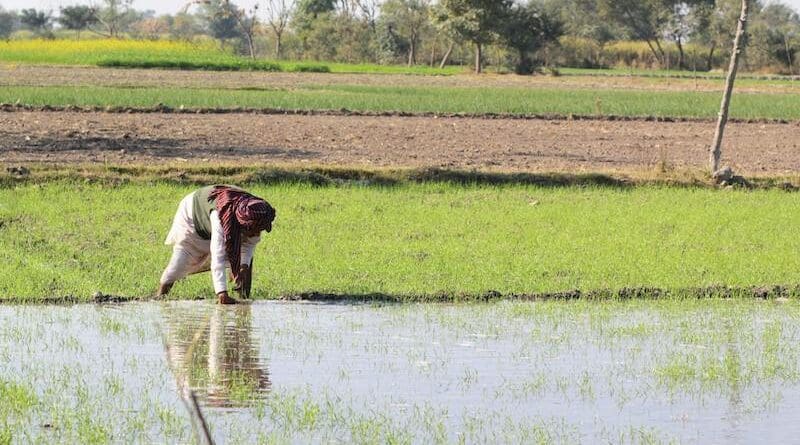
A farmer in Pakistan
By Dr. Hamza Khan


Pakistan has never experienced any other economic field other than agriculture as the primary source of its economy, and sustenance to millions of its population and also feeding an ever-growing population. Nevertheless, the industry has not been on the forefront of the world in terms of technology, productivity and sustainability decades ago.

The introduction of Phase 2 of China-Pakistan Economic Corridor (CPEC) has brought it to a crossroad now. It is one of the essential shifts of the priorities of the development of infrastructure to the industrial and agricultural development. Not only the Pakistani lands are transforming due to the partnership between China in terms of technological transfer, irrigation control, seed production and smart agriculture, but the food security policy of the country and its contribution to the world agriculture is also re-invented.


The essence of this transformation is the introduction of the modern technologies into the farming. The farmers in Pakistan have been applying the outdated ways of production that limit their production and divert their resources like water. It is changing that fact with the introduction of the Chinese knowledge in smart irrigation systems. Through precision irrigation e.g., drip and sprinkler irrigation, farmers are now able to reduce water wastage to bare minimum, and at the same time regulate crops to the brim of their water supply. This is a game changer to a nation that is water stressed like Pakistan and proper management of water can be the difference between excesses and deficits.

Along with using the agricultural irrigation, there has also been the introduction of better varieties of seeds which has brought a hope to the agricultural scene. Chinese research centres and Pakistani agricultural education institutions are active on hybrid kinds of seeds, which are even more resistant to disease, pests and climate stress. Harvest of these seeds are already being experienced: wheat, rice and cotton output per acre are growing in huge quantities. Farmers who were barely able to make ends meet are now reaping the benefits of their labour that are being compared to that of their peers in the region. Pakistan is also becoming a competitive nation in the global market particularly when it comes to its principal export like rice and cotton where the quality and quantity holds the greatest significance.

Besides the technical modernization, there are other socio-economic consequences of the modernization of agriculture with CPEC. The Chinese-Pakistani co-operative agricultural activities are not just the Chinese and Pakistani equipment and technological synergy, but turned out to be a reflection of long-term cooperation which has a beneficial impact on the two nations. China will be enjoying a stable supply of agriculture and a safe food chain in the market, whereas Pakistan will be enjoying a one trillion Chinese food market. The exports of rice, fruits and vegetables have already started to increase, and it is one of the signs that the diversified foreign exchange portfolio is starting. Agricultural produce is the sole means of getting out of the improvement of forex to any country experiencing balance-of-payments strains.

In the rural heartlands of Pakistan there is also trickle-down effects of modernization. Poverty is gradually eliminated in the rural region as farmers adopt the application of new technologies and achieve high yields. Rise in income levels will lead to more education means, healthcare, and infrastructure in villages. The transformation is not only economic, but to a large number of smallholders, the transformation is very personal. This was a region that used to be seen as a tedious and unstable source of livelihood is being reinstated to its pride and stability. The growth of the income is raising the living standards since there is a new dawn of hope among the rural communities that were left behind a long time ago.


One of the most positive transformations in this change is the increased involvement of the youth in the agribusiness in Pakistan. New entrepreneurs are infiltrating the agriculture sector with new concepts, such as digital solutions to connect farmers with markets, start-ups to offer precision tools, data analytics, and e-commerce platforms. Smart farming is no longer an abstract idea that is present in policy documents: it is being implemented. This is vital power and creativity to the existence of the industry. It is also revitalizing agriculture to be something worth to desire not as an ancient business but as a modern business worth venturing into.

Modernization does not apply to crops only. The cattle and dairy sectors which equally contribute to the Pakistani GDP are also evolving. Improved breeding, disease control programs, and advanced dairy management systems are also improving milk and meat production and most of these are of Chinese origin. Pakistan is making a step in the right direction of achieving food security to its rapidly growing population as the livestock is becoming more productive. These also help in stabilizing the prices of food such that when the demand is the highest still the basic commodities will not be denied to the poor.

The provincial cooperation can be considered another positive venue. The Sindh and Khyber Pakhtunkhwa and the state of Punjab are aligning their projects in agricultural development to a unified vision. Regional disparities are being minimized by applying concerted actions and knowledge exchange. Where Punjab is leading in regard to mechanization, Sindh in water management and KP in experimenting with high value crops and green house farming. This balance will ensure that development is not concentrated in one region but rather it will be spread uniformly all over the country.

The short run economic profit is not the only way to consider modernisation in Agriculture, but a long-term future of Pakistan. As the disruption of food supply chains and climate patterns continue to be more unpredictable in the world, a modern, robust agricultural system is emerging as a national security issue. The newly acquired technologies will make it easy to ensure that Pakistan will be in a position to feed its people, resist environmental shocks, as well as manage to compete in exports. In that aspect, modernization is not a luxury but it is a survival need.

Dr. Hamza Khan has a Ph.D. in International Relations, and focuses on contemporary issues related to Europe and is based in London, UK

When Indian Royalty Spoke Up For Communism – Essay


Historic speech in 1969 gave Udaipur’s new Foundation its mojo


At a simple ceremony in the City Palace on 20 October 1969, Maharana Bhagwat Singh Mewar announced the establishment of the Maharana of Mewar Charitable Foundation. Photo-credit: MMCF archives (Accession no: 2009.10.0246-00026)

October 26, 2025
By Raju Mansukhani


In today’s time and age the term ‘communism’ is used as a slur, often an outright abuse for political opponents not toeing the neo-liberal line of capitalist development. In 1969, on October 20th, Maharana Bhagwat Singh Mewar of Udaipur spoke up for communism when announcing the formation of the Maharana of Mewar Charitable Foundation, a public charitable trust to which he donated large portions of The City Palace along with cash donation of Rs 11 lakhs. “By changing the colour of our cap or ‘ism’ no benefit can be derived,” he said, “if Communism be any solution for our present precarious condition, we should not be afraid to accept Communism.” He spelt out words of caution when accepting Communism, “provided it is Indian oriented; it is not an imported inspiration and commodity; the sustenance of our life is not in foreign hands.” In his speech, at the simple ceremony, the Maharana underscored the importance of promoting self-reliance and self-respect through the new Foundation in the Republic of India.

Coming from an Indian Royal, who traced his ancestry to the 8th century CE, these thoughts and words may seem contrarian, difficult to understand and place in the context of a newly-independent India facing scarcity, shortages on various fronts. By 1969, the Indian National Congress under Prime Minister Indira Gandhi was raising slogans of ‘Garibi Hatao’ (Remove poverty) to whip up popular support among the masses. The Maharana, in contrast, was focusing on ‘national character’. He said, “since our Independence the biggest casualty has been that of our character. Without character no nation can keep its country independent.” Being conscious of India’s ancient culture and its traditions, he observed “the West is trying to evolve a media for peace within and prosperity outside from our literature. Can we not evolve an ‘ism’ of our own wherein the respect and freedom of Mankind is considered sacred and individual aspiration is respected?”

Sharing the objectives behind establishing the Maharana of Mewar Charitable Foundation (MMCF), Maharana Bhagwat Singh Mewar consistently used the word ‘temple’, a place of worship when referring to it. “This temple, the inspiration centre of self-respect and self-reliance should inspire the people,” he said adding, “and assist activities and institutions which promote self-reliance and self-respect.”
Focused on the vision

“I am honoured to commemorate the vision of my illustrious grandfather, our Founder-Chairman and Managing Trustee His late Highness Maharana Bhagwat Singh Mewar and my father, His late Highness Maharana Arvind Singh Mewar,” said the young Dr Lakshyaraj Singh Mewar, the present Chairman and Managing Trustee of MMCF. On the occasion of 56th founding day of MMCF, he said, “Under their leadership, MMCF has grown as a ‘temple of inspiration’ dedicated to nation-building tasks, generating employment through tourism-led activities, education and philanthropic programs since 1969. As a result of their collective pioneering efforts, the city of Udaipur has emerged on the global map of tourism, giving the state of Rajasthan a new progressive identity, besides several additional benefits. Today I reaffirm my pledge to build on the platforms created by my forefathers. On this auspicious anniversary, my best wishes to visitors and stakeholders working towards the sustainable development of Udaipur and Rajasthan in the 21st century.”

Undoubtedly the MMCF has been at the forefront of giving the heritage-city of Udaipur opportunities to develop centres of excellence and consistently working to ensure The City Palace Museum provides its million-strong visitors a world-class cultural experience, year after year. Explained Dr Lakshyaraj, “Our Foundation manages The City Palace Museum and its affiliate bodies and trusts. Philanthropy is integral to the Foundation, and I am proud to say, that they continue to enhance their work, and are making a significant difference in the lives of the people they connect with.”

In its sixth decade of operations, the Foundation has grown and collaborated with the world’s leading museums, institutions and global agencies: the Getty Foundation, USA; UNESCO India Office; Ministry of Culture, Government of India; Rajasthan Tourism, Government of Rajasthan; Udaipur Municipal Corporation; Embassy of France in India; Domaine National de Chambord, France; ICOMOS; the Indian Heritage Cities Network Foundation; Oxford eResearch Centre, Oxford University; Smithsonian’s National Museum of Asian Art in Washington, DC; The Cleveland Museum of Art, Ohio, USA; Victoria and Albert Museum, London; Museum Rietberg, Zurich; Pinacothèque de Paris and Maharaja Fatehsingh Museum, Vadodara, India. “We have merited their support as we keep alive the heritage of Mewar and India,” he said with considerable pride. “The challenge is to perpetuate our legacies through holistic heritage management in our globalized world of the 21st century. This is where MMCF is making its mark,” he said.

In a recent publication of CII-FBN India chapter, Dr Lakshyaraj Singh Mewar wrote: “Yes, heritage management is quite a challenge. What is important to realize is that our heritage and value systems are our identity. These are the pillars on which our Family and our Businesses are built upon. I often refer to it even in financial terms by stating: it is our equity. We can say it with pride and honour that we bring our centuries-old heritage and values to the table. With time, equity needs to grow; it cannot be diluted. We can invite other like-minded individuals and organisations to contribute to this equity; we are open-minded about this invitation.” The focus on heritage management, hospitality, education and environmental protection is steadfast. “In each of these domains there are new opportunities and challenges; it adds to the excitement of making our commercial and non-commercial enterprises grow,” he said.
Vignettes of history

The years 1969 to 1971 were filled with political turbulence across India, just 22 years after Independence. Not only was the Congress Party facing internal dissensions, Prime Minister Indira Gandhi was pursuing a socialist programme to nationalize major industries, the banking sector. She had been a strong opponent of the Princely States who had merged into the Union of India but were still granted several privileges and retained their titles.

Readers may not be aware that in India till 1947, there were 565 Independent Princely States, the richest and largest among them were the States of Baroda, Gwalior, Hyderabad, Jammu and Kashmir and Mysore. On account of its illustrious history, the State of Udaipur-Mewar was considered the foremost amongst all the Princely States of India. The Sisodia Dynasty of Suryavanshi Rajputs governed the State of Udaipur-Mewar, with its capital for the last five centuries at Udaipur in Rajasthan. At the time of India’s Independence in 1947, the State of Udaipur-Mewar was the first to amalgamate with the Indian Union. His late Highness Maharana Bhupal Singh, the Custodian of Mewar in 1947 said, “India’s Independence brings to fulfillment the 1400 years’ struggle and endeavour of my forefathers.” With the accession to India, Mewar ceased to exist as a sovereign State. Its economy, polity, administration, judiciary, lands and resources were now merged with, or handed over to, the Government of India.

Members of the former Royal families were now citizens of the free democratic Republic of India. In Udaipur these historical changes were seen as a challenge to the ongoing process of modernisation. The Maharanas, as heads of the House of Mewar, continued to work on socially relevant projects which meaningfully involved the community. They also realised the need to be prepared for the challenges ahead. Sure enough, in 1971 came the 26th Amendment Act of the Constitution of India. The Constitutional Amendment 1971 abolished the titles and special privileges of former rulers of Princely States. While it affirmed Parliament’s power to amend Constitution, the Abolition of the Princely Privileges by the Government of India dealt a severe blow to the former Princely States, most of whom had been governing their states for centuries.

It is in this context that Maharana Bhagwat Singh’s decision to establish the Maharana of Mewar Charitable Foundation, and several other charitable trusts, proved to be visionary beyond doubt. He could now continue working on developmental projects in Udaipur’s City Palace, keeping the focus on education, welfare, philanthropy and heritage management. Moreover, these endeavours were resulting in revenue generation from otherwise ‘immovable’ assets like palaces and buildings.
Building institutions

The City Palace Museum of Udaipur is today an iconic must-see Museum for visitors who marvel as they walk-through the palaces of the Mardana Mahal and Zenana Mahal, with over a million visitors each year. Said Dr Mayank Gupta, CEO of the Foundation, “our Museum offers cultural experiences across almost 20,000 square metres. Our galleries include: Asia’s first silver gallery titled ‘Splendour of Silver: Reflecting the finest of Silversmithy’; an exhibition dedicated to Architecture and Conservation; the sculpture gallery titled ‘Divine Gesture: The Magnificence of Mewar Spirituality’; ‘Symphony of Mewar: A Royal Collection of Musical Instruments’; Bhagwat Prakash Gallery of Mewar Miniature paintings; Fateh Niwas Gallery of archival photographs and maps; Salehkhana Gallery: Arms and Armoury Exhibition; ‘The Mewar Regalia’ dedicated to Royal Textiles and Costumes and ‘The Regal mode of Transport’ exhibition.”

He highlighted the establishment of a best-in-class conservation laboratory and the utilization of The Museum System (TMS) software as the ‘firsts in India’. “We are providing professionals from India and overseas a fine opportunity to hone their skills in Udaipur,” he said. Besides the Museum, the Maharana Mewar Special Library, Maharana Mewar Research Institute and Maharana Mewar Historical Publications Trust are the associate institutions carrying forward the vision of His late Highness Maharana Bhagwat Singh Mewar.

Fifty-six years seems like a blink of an eye in the long glorious history of Udaipur-Mewar dating back to pre-modern eras. Yet the establishment of the Maharana of Mewar Charitable Foundation in 1969 has set new benchmarks in the domain of heritage management in contemporary India. The Nobel Laureate Sir V S Naipaul, during his visit in 2001 to receive a prestigious award from MMCF, had remarked, “Mewar and Udaipur may have lost political battles in recent times. But I can clearly see that they have won the war.”


Raju Mansukhani

Raju Mansukhani, based in New Delhi, is a researcher-writer on history and heritage issues; a media consultant with leading museums, non-profits, universities and corporates in India and overseas. Contributing regular columns, book reviews and features in the media he has drawn attention of the new generations to critical issues and personalities of Indian and Asian history. Over the last three decades he has authored books on diverse subjects including the media, palace architecture, sports and contemporary history. Through in-depth documentaries, he has profiled leading Asian public figures highlighting their research and publications.
AIPAC has become so politically toxic that even centrist Democrats are abandoning the group

As support for Israel plummets among U.S. voters, Democrats are distancing themselves from AIPAC, and the Israel lobby group is on the defensive.
 October 22, 2025 
MONDOWEISS

Rep. Seth Moulton speaks a Massachusetts Patriots Day event on April 13, 2024. (Photo: Joshua Qualls/Governor’s Press Office)


Last week, Rep. Seth Moulton (D-MA) announced that he will stop accepting political donations from the American Israel Public Affairs Committee(AIPAC) and will return all the money that he has received from the lobbying group thus far.

“In recent years, AIPAC has aligned itself too closely with Prime Minister Netanyahu’s government,” said the Congress member in a statement. “I’m a friend of Israel, but not of its current government, and AIPAC’s mission today is to back that government. I don’t support that direction. That’s why I’ve decided to return the donations I’ve received, and I will not be accepting their support.”

“Rep. Moulton is abandoning his friends to grab a headline, capitulating to the extremes rather than standing on conviction,” said AIPAC spokesperson Marshall Wittmann in response to the move. “His statement comes after years of him repeatedly asking for our endorsement and is a clear message to AIPAC members in Massachusetts, and millions of pro-Israel Democrats nationwide, that he rejects their support and will not stand with them.”


Moulton, who is attempting to oust Ed Markey from his Senate seat, is certainly no dove. In 2022, the Marine veteran led a letter calling on then-President Biden to designate the Houthis as a terrorist organization. When the Trump administration bombed three Iranian nuclear facilities earlier this year, he refrained from criticizing the action.

Moulton’s been a consistent supporter of Israel, not just abroad, but at home too. He voted for the Antisemitism Awareness Act and other resolutions that conflate antisemitism with anti-Zionism, and he condemned his alma mater, Harvard University, over a student letter that blamed the October 7 attack on Israeli policies.

In short, Moulton is not the kind of Congress member one would expect to criticize an Israel lobby organization. Criticism of AIPAC generally emerges from the left flank of the Democratic Party, from lawmakers like Rashida Tlaib and Ilhan Omar.

However, that has changed in recent weeks. Moulton is the fourth politician to reject AIPAC money after previously accepting it, joining Reps. Morgan McGarvey (D-KY), Valerie Foushee (D-NC), and Deborah Ross (D-NC).

These developments come amid a slew of recent polls showing that support for Israel is plummeting among U.S. voters. A September survey from The New York Times and Siena University found that only 34% of U.S. voters back Israel, compared to the 47% who did shortly after October 7. A New York Times article on the poll referred to the shift as a “seismic reversal.”

“Disapproval of the war appears to have prompted a striking reassessment by American voters of their broader sympathies in the decades-old conflict in the region,” noted the paper.

Democratic consultant Peter Feld says such moves clearly show that the lobbying group has become a pariah among the public, but notes that voters want more than opposition to AIPAC from their elected officials. They’re looking for lawmakers who will actually oppose Israel’s actions.

“Some of the candidate polling lately misconstrues AIPAC for the core issue, when it’s really the continued support for arming Israel that has alienated so many Democratic voters,” Feld told Mondoweiss.

However, he also noted that Moulton’s move shows how AIPAC is now “radioactive.”

That reality hasn’t just been reflected in polling on Israel, but also through recent media appearances by pro-Israel lawmakers.

For years, the Israel lobby was seemingly regarded as a third rail issue that couldn’t be acknowledged, but now politicians are being consistently pressed on the issue.

In a recent episode of The Breakfast Club, host Charlamagne tha God challenged Governor Josh Shapiro (D-PA) on AIPAC, asking him whether U.S. foreign policy is shaped by lobbying groups as opposed to national interest.


Governor Gavin Newsom was left tongue-tied and fidgeting on a recent episode of The Ringer’s Higher Learning podcast, after host Van Lathan told the presidential hopeful that he wouldn’t vote for a 2028 candidate who accepted AIPAC money.


AIPAC has adopted a more defensive posture as its reputation has declined. The group recently put out an ad insisting that its work benefits Americans, a clear rebuttal to recent criticisms it has faced from the U.S. right, which have only increased in the wake of Charlie Kirk’s murder.

“Funded by Americans. Directed by Americans. Strengthening an alliance that benefits America!” reads the organization’s pinned tweet, which promotes the ad.

It’s unclear whether AIPAC’s toxicity will impact its ongoing ability to influence U.S. elections, especially because it already conceals its role in many races.

“Candidates’ rejecting AIPAC money will probably be a growing theme of the 2026 midterm elections, but that doesn’t mean AIPAC will become entirely marginalized,” Eli Clifton, a senior advisor at the Quincy Institute for Responsible Statecraft told Mondoweiss.

“While some candidates may reject AIPAC’s money, others will see the group’s enormous funding capabilities as a means to finance primary and general election campaigns that otherwise might not be viable,” he added, noting the vast sums that AIPAC’s United Democracy Project Super PAC spent on Democratic primaries.

No matter what happens, it’s clear that AIPAC will face a level of backlash during the upcoming midterms that it hasn’t previously encountered.

One race where it will presumably take center stage is Missouri’s 1st District, where former U.S. House member Cori Bush announced that she was running to take back her seat. Bush was defeated by current Rep. Wesley Bell (D-Mo.) in a 2024 primary, and AIPAC spent $8.5 million backing the challenger.

At a town hall event in August, Bell was confronted by constituents over his AIPAC support.

“There’s a lot of folks who don’t want to have the conversation,” Bell told the crowd, while denying that Israel is committing a genocide in Gaza. “They just want to spew what they think is important, but they don’t want to have an actual debate because these are tough issues.”

“Wesley Bell wanted to argue for semantics so that he can have some ethical, moral standing ground that his complicitness isn’t perpetuating the genocide, and he really failed on showing the community that he cared about it,” an attendee told NPR after the meeting.

“I ran for Congress to change things for regular people,” declared Bush in her first 2026 campaign ad. “I’m running again because St. Louis deserves leadership that doesn’t wait for permission, doesn’t answer to wealthy donors, and doesn’t hide when things get tough.”

Braxton Payne, a Missouri political strategist, told Jewish Insider that this election would be Bush’s best chance to reclaim her seat.

“Her strongest place is inside the city [of St. Louis] and you’re seeing… a strong pendulum swinging in regards to the conflict in Gaza and Palestine, and I think that is going to be probably one of her main narratives that she’ll lead with,” said Payne.