Monday, October 27, 2025

If it walks like a fascist, talks like a fascist and jokes like a fascist, it's likely a…


Kyle Schmidlin,
 Common Dreams
October 26, 2025 
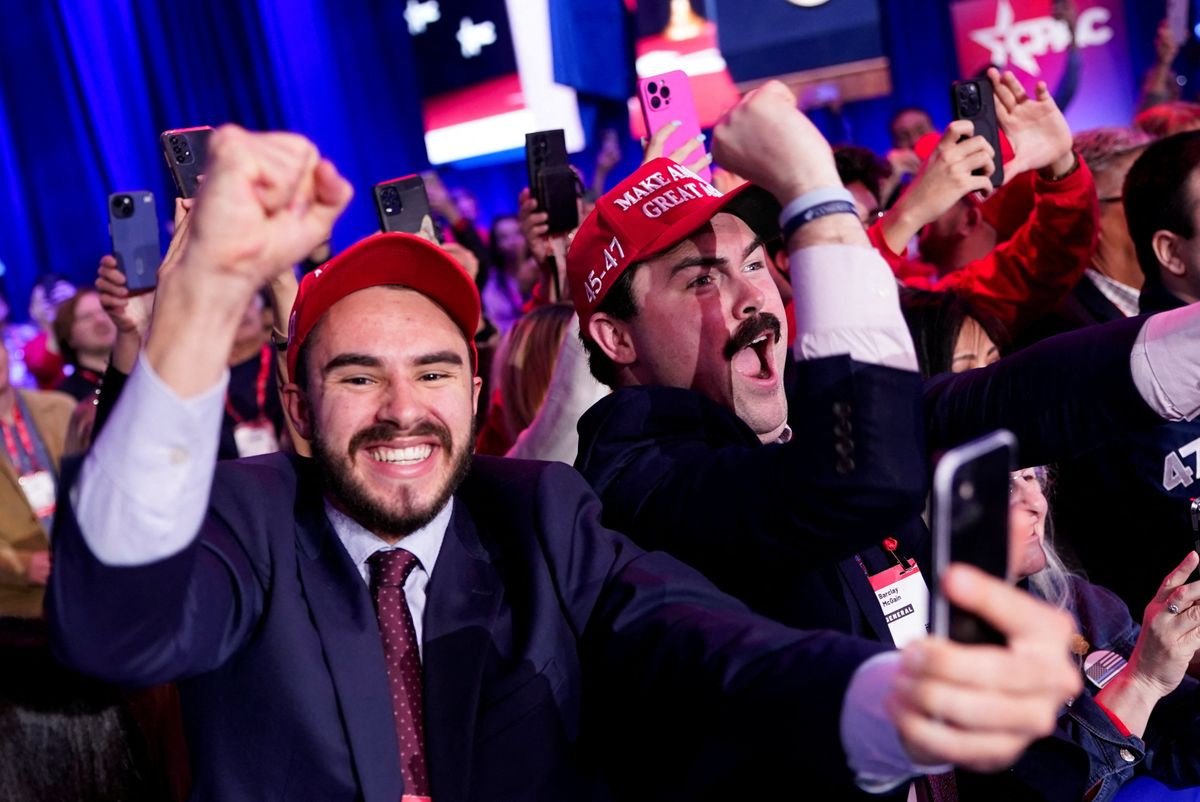

People react as U.S. President Donald Trump (not pictured) addresses the Conservative Political Action Conference (CPAC) annual meeting in National Harbor, Maryland, U.S., February 22, 2025. REUTERS/Nathan Howard

For the last few weeks, Republican Party leadership has been carrying out a campaign to, essentially, classify the word “fascist” as hate speech against right-wingers. But while some Republicans shy away from the term, plenty of others, particularly among their base and their influencers, find it edgy and hip. Some have even begun to wear it as a badge of honor.

Most notably, last week, members of the Republican Youth — er, Young Republicans — were caught in a group chat declaring their love of Adolf Hitler and expressing fondness for his policy of mass extermination in gas chambers.

The incident caused some drama and led to some repercussions, but not as much as you might hope. Vice President JD Vance dismissed the story, saying, “Kids do stupid things, especially young boys … They tell edgy, offensive jokes. And I really don’t want us to grow up in a country where a kid telling a … very offensive, stupid joke is cause to ruin their lives.” By and large, that seems to be the tack most Republicans are taking, certainly from the top down.

Vance’s attempt to downplay the chats as just kids being edgy may work for some, but the truth is that many members of the chat were grown men well into their 30s, nearly Vance’s age, who occupied positions of political influence. Maybe they were joking, but it’s not clear where the irony or the punchlines were — and it’s a poor choice of comedic material if the party wants to shake the fascist label.


'Fascist' as hate speech


Ever since Donald Trump’s takeover of the GOP, Republicans have struggled with this fascist comparison. Actually, the left has used the term to describe far-right policies since long before Trump, but Trump’s Mussolini-like mannerisms, dictatorial ambitions, and cult of personality have made the term feel like a natural fit and brought it into more common use, especially in his second term.

After the assassination of Charlie Kirk in September, Republicans like Trump and Speaker Mike Johnson (R-La.) blamed the casual use of the word for inspiring Kirk’s murder and other acts of violence.

Johnson said: “Calling people Nazis and fascists is not helpful … There are some deranged people in society, and when they see leaders using that kind of language … it spurs them on to action. We have to recognize that reality and address it appropriately.”

It was also around this time that they began to escalate their campaign against “antifa,” characterizing it as a political organization and threatening to go after its organizers and funders. In truth, though, there is no formal group called antifa. Antifa is short for anti-fascism, and it exists only as an opposition to fascism. So Trump’s position of anti-anti-fascism, if you reduce the double negative, is simply fascism.

Maybe the most dramatic step so far in this anti-antifa campaign was Trump’s issuance of NSPM-7, a presidential memo that accuses people of using the word “fascist” as an excuse to “justify and encourage acts of violent revolution,” and further identifies “anti-Americanism, anti-capitalism, and anti-Christianity; support for the overthrow of the United States Government; extremism on migration, race, and gender; and hostility towards those who hold traditional American views on family, religion, and morality” as indicia of potential terroristic inclinations and activities.

One can only guess how the administration is defining these terms, but if their actions to date are anything to go by, simple compassion might, in fact, be regarded as an unlawful, anti-fascist, terrorist thoughtcrime, and anyone who holds such views can be subject to, at a minimum, investigation, surveillance, and harassment by law enforcement — all of which sounds like anti-anti-fascism, to be sure.


Fascism defined


At this point, it’s important to examine just what fascism is. The term has certainly been abused in America. For many, “fascist” has just become shorthand for “someone I don’t like,” or, more specifically, “someone who’s making me do something I don’t want to do.” To wit: Speed limits are fascism. No-smoking signs are fascism. Mask mandates during a pandemic are fascism. Taxes are fascism. And so on.

Alas, few historians would describe such basic laws or civic norms as fascism. While the word doesn’t have any one universally agreed upon definition, and even self-identified fascist societies differ in significant ways, there are a few hallmarks that distinguish fascism from other philosophies. The more of these qualities a government or a society has, the more fascistic it is:The merger of state and corporate power. Italian dictator Benito Mussolini, who coined the term fascist, said this was the philosophy’s most defining tenet.
Authoritarian rule. Power concentrated in a leader with a devoted cult of personality, in whom people see a living embodiment of the nation.
Police state. A militarized society, including citizen militias and police suppression of protests, speech, and other forms of dissent.
Propaganda. Rampant propaganda that is rife with lies, conspiracy, and dehumanizing language.
Censorship. Dissent or open disagreement with official narratives and state policies may be outlawed and punished violently.
In-group vs. out-group. Hatred of “others,” especially immigrants, religious minorities, and the LGBTQ community, as well as any leftists and academics who support them.
National and cultural mythology. Desire to preserve or attain “purity” of culture, language, or race and ethnicity, often through appeals to a mythical past.
War. Jingoism and an aggressive foreign policy.
Obsession with aesthetics. From architecture to attire, everything intends to give an air of magnificence, superiority, and national pride, no matter how superficial.


Any honest observer can see how much of the definition fits. Not all of it is unique to Trump, but he does tick more boxes than the average politician. Soon enough, though, simply pointing that out might land you in a heap of trouble. Unless, of course, Republicans shift gears and decide to embrace the term, as at least some of them are beginning to do.


Reclaiming fascism

Back in July, before Trump ratcheted up his campaign against antifa, Fox News comedian Greg Gutfeld went on a revealing rant about his feelings on the word Nazi and how it relates to him. Gutfeld said on his show:

“The criticism doesn’t matter to us when you call us Nazis. Nazi this and Nazi that … We need to learn from the Blacks. The way they were able to remove the power from the n-word by using it. So from now on it’s, ‘What up, my Nazi?’”

Gutfeld’s show is intended as a comedy, though you might not recognize it as one. Still, it’s a peculiar joke to make, and frightening to consider who it might resonate with. And this attitude on the right is being more openly embraced: that fascism is hip or edgy and that all the progress made on freedoms and rights for gays, trans people, minorities, and women needs to be rolled back. For instance:The successful far-right influencer Matt Walsh calls himself a “theocratic fascist.” While Walsh has claimed it’s an ironic label used to troll his critics, if you pay any attention to what he says and compare it to what a “theocratic fascist” might say, you’ll find he fits the term quite comfortably.

Another growing voice on the right, especially among the young, is Nick Fuentes, simply an unapologetic, loud and proud neo-Nazi who has dined with Trump at Mar-a-Lago.
Trump’s recent nominee to lead the Office of Special Counsel, Paul Ingrassia, recently had his text messages leaked where he espoused racist attitudes and said, “I do have a Nazi streak in me from time to time, I will admit it.” Ingrassia’s nomination has since been pulled, a relatively rare rebuke from this administration of that kind of conduct.

A cadre of right-wing influencers have also been trying to sanitize, justify, and even push for the return of chattel slavery. Chief among these is Joshua Haymes, a former pastor who counted among his congregation Secretary of War Pete Hegseth. Haymes recently said, “The institution of slavery is not inherently evil. It is not inherently evil to own another human being. It is very important that every Christian affirm what I just said.”

Republican influencers and the MAGA base are racing to the bottom, fast. It’s known as vice signaling: Each one trying to outdo the next in depravity to prove they are as un-woke and un-PC as possible, even if it reverts them back to plain-old KKK and neo-Nazi hatred and barbarism.

It’s hard to say what abuse, constitutional violation, or act of violence they won’t enthusiastically push for, as long as it’s coming from the right side and being inflicted on an enemy. These aren’t ideas we have to debate. This is fascism, and civilized society already won the argument against it in World War II.


Fascism in the USA

Sadly, fascism is probably appealing to a lot of Americans, even if most are still hesitant to embrace the term. It’s in our national DNA. Our Jim Crow laws and citizenship standards even provided a model for Hitler’s antisemitic campaigns. There have always been bigoted, violent people in this country, and they appreciate a ruler who reflects them. And just as they were in the 1930s, the giant industrialists who shape our politics and society are all too happy to ally themselves with fascist forces, because they know a repressive state can protect their own power from being challenged.


But there are also strains of anti-fascism in our DNA. My grandpa, a veteran of World War II, was antifa, as were many members of the Greatest Generation. And it’s heartening to see older folks and veterans declare themselves antifa, even in the face of Trump’s threats.

It should be a source of pride that we’ve overcome many of our bigotries and xenophobias. Despite all the loud fascist voices in right-wing media and social platforms, I still believe the vast majority of people believe in basic human rights for all. The No Kings protests on Oct. 18 were a good showing of this solidarity.

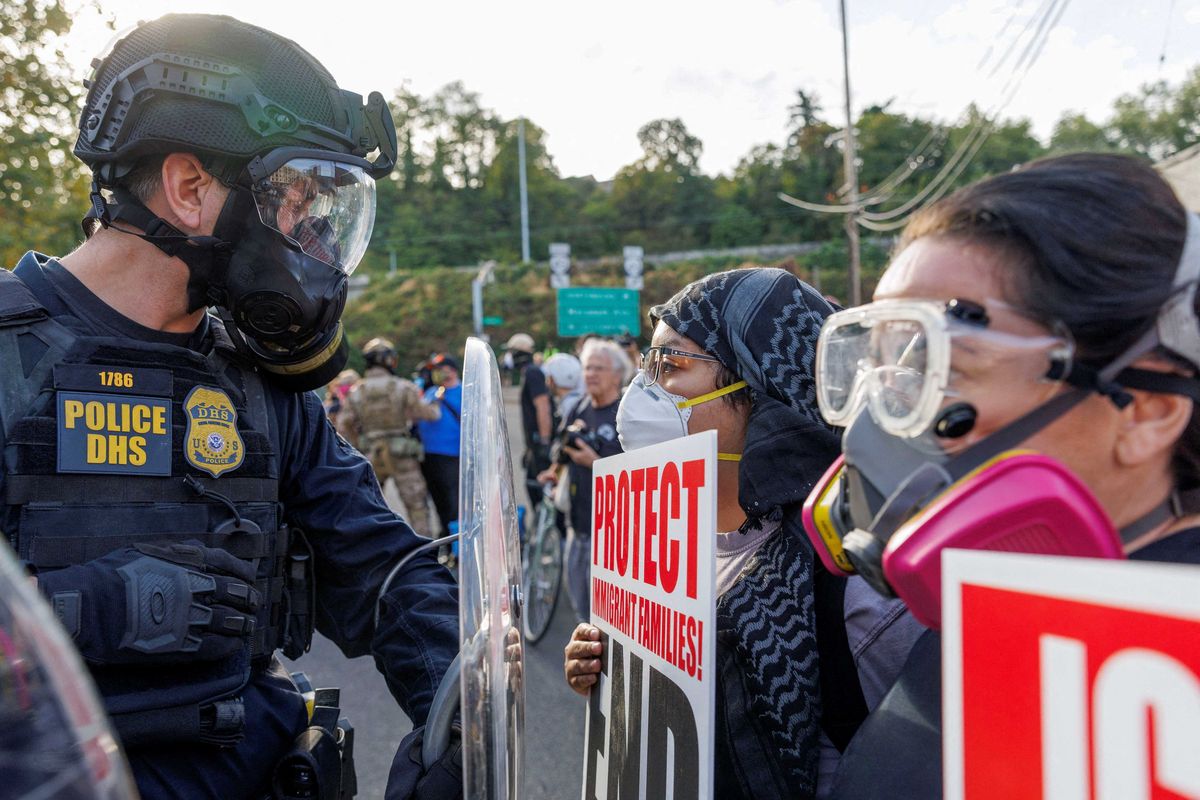
As this administration goes further off the deep end — deploying the military against American citizens; sending masked Immigration and Custom Enforcement agents to terrorize poor and immigrant communities; profiling, detaining, and abusing people, including American citizens, on mere suspicion of being “illegal;” and disappearing people with no trial to God-knows-where — it’s no accident that they have declared anti-fascism their greatest enemy.


Maybe those 38-year-old kids in the Young Republicans chat were just joking about gas chambers and loving Hitler. But given everything else this administration is doing and everything their propagandists are saying, it falls a bit too close for comfort to, “It’s funny because it’s true.”

Kyle Schmidlin is a freelance writer who also runs the Third Rail News blog.


Leading US Muslim Group Demands ICE Release British Journalist Sami Hamdi

Jessica Corbett,
 Common Dreams
October 26, 2025 


A Federal Protective Service officer stands guard in front of demonstrators as protests against Immigration and Customs Enforcement (ICE) draw hundreds to the ICE headquarters in south Portland, Oregon, U.S., September 28, 2025. REUTERS/John Rudoff

The largest Muslim civil rights organization in the United States is calling for the release of British journalist and political commentator Sami Hamdi, who was detained by immigration officials at San Francisco International Airport on Sunday while on a US speaking tour.

“Abducting a prominent British Muslim journalist and political commentator on a speaking tour in the United States because he dared to criticize the Israeli government’s genocide is a blatant affront to free speech,” said the Washington, DC-based Council on American-Islamic Relations in a statement. Hamdi was in California to speak at CAIR’s annual gala on Saturday. On Sunday, he was heading to Florida to speak at another of the group’s events.

US Department of Homeland Security spokesperson Tricia McLaughlin confirmed on social media Sunday that “thanks to the work of” DHS chief Kristi Noem and Secretary of State Marco Rubio, “and the men and women of law enforcement,” Hamdi’s visa was revoked and he is in US Immigration and Customs Enforcement (ICE) custody pending removal.

Under President Donald Trump, McLaughlin said, “those who support terrorism and undermine American national security will not be allowed to work or visit this country. It’s common sense.”

McLaughlin also linked to a social media post from Amy “Mek” Mekelburg, the founder and editor-in-chief of Rise Align Ignite Reclaim (RAIR), which CAIR identifies as “a hate organization and website that regularly publishes anti-immigrant and anti-Muslim conspiracy theories.” Both Mekelburg and far-right conspiracy theorist Laura Loomer publicly celebrated ICE’s detention of Hamdi.

Meanwhile, CAIR said that “our attorneys and partners are working to address this injustice. We call on ICE to immediately account for and release Mr. Hamdi, whose only ’crime’ is criticizing a foreign government that committed genocide.”

“Our nation must stop abducting critics of the Israeli government at the behest of unhinged Israel First bigots,” the group added. “This is an Israel First policy, not an America First policy, and it must end.”

Throughout Trump’s second term, his administration has provided the Israeli government with diplomatic and weapons support—like his Democratic predecessor—while targeting foreign scholars critical of Israel’s genocide in the Gaza Strip for deportation. The administration has also engaged in a broader crackdown on dissent.

Blasting Hamdi’s detention and potential deportation, Yasir Qadhi, a Pakistani American Muslim scholar and dean of the Islamic Seminary of America in Texas, said on social media Sunday: “Our government is doing this on behalf of and as Israel’s proxy, because he is a vocal critic of that genocidal regime. Our country is heading towards a fascist dictators
hip in which any speech that goes against the official narrative is going to be criminalized.”


“This is happening within the context of the most hate-filled, blatant, anti-Muslim bigotry we’ve seen in our lifetimes,” he continued, pointing to the New York City mayoral race. “Disagree with Sami’s message all you want, but do so with facts and evidence, not by banning and deporting. Unless they come back to their senses, these same people who are being whipped up into such hysteria will happily and willingly become the very embodiments of evil that they claim to fight, and that inhumane evil will be directed against multiple minorities, not just Muslims.”

Hamdi is “the managing director of the International Interest, a global risk and intelligence company,” according to his LinkedIn profile. He advises governments on the geopolitical dynamics of Europe and the Middle East and North Africa region, and “has significant expertise in advising companies on commercial issues related to volatile political environments.”

Hamdi has bachelor’s and master’s degrees from the prestigious SOAS University of London, and has provided commentary on Al Jazeera, BBC, TRT World, and other outlets. In response to Hamdi’s detention, Drop Site News shared his recent interview on Sky News about the ceasefire in Gaza after two years of US-backed Israel’s genocidal assault.

This past summer, Hamdi took a speaking tour in South Africa, where he spoke with The Voice of the Cape, the country’s first Muslim radio station. In an interview, he credited his father, Mohamed Hechmi Hamdi, for his political awareness.

“My father was very active in politics; he was the head of the student movement in Tunisia, head of the Islamist Tunisian Student Movement, sentenced at 20 years of age, imprisoned at 19, imprisoned at 20, had to flee Tunisia, went to Algeria and then Sudan, and then ended up in London,” Hamdi explained. “He then became a prominent voice in trying to push back against dictatorial regimes in Tunisia, and I grew up under that sort of umbrella, even if it was not something I wanted to embrace, as I wanted to be a footballer.”

“One day my father, when I was 17 or 18, put a book in my hand titled Road to Mecca by Mohammad Asad,” Hamdi continued. “The book is about an Austrian Jew who travels across the Middle East, becomes Muslim, and ends up contributing to many of the seismic events that take place in the region. He becomes an adviser in Saudi Arabia, goes and meets Omar al-Mukhtar in Libya, goes to India, meets Muhammad Iqbal, and ends up helping to write the Pakistan Constitution. I remember reading that book and saying, ‘Allah, I want to have a life like this guy.’”


Ten stand trial in Paris over sexist cyberbullying of Brigitte Macron

RIGHT WING TRANS SLANDER

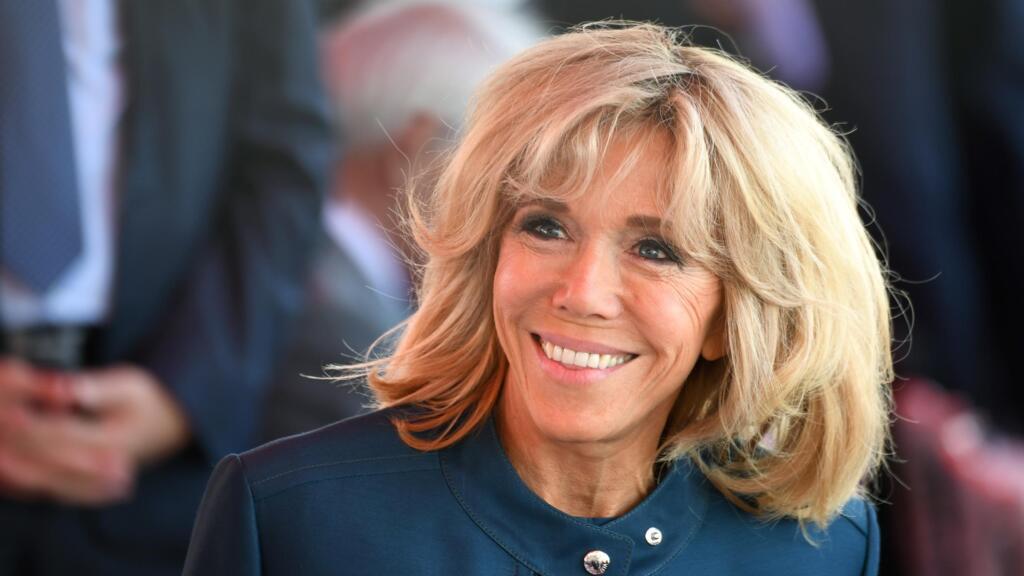
Eight men and two women go on trial in Paris on Monday and Tuesday, accused of sexist online bullying of France’s first lady Brigitte Macron.


Issued on: 27/10/2025 - RFI

Brigitte Macron, pictured in July 2017, has struggled to shake off accusations she was born a man.
 ALAIN JOCARD / AFP

The defendants are aged between 41 and 60. They include an elected official, gallery owner, teacher, medium and IT specialist.

They are accused of posting malicious comments online about Brigitte Macron’s “gender” and “sexuality”, and of comparing her age gap with her husband to “paedophilia”, the Paris prosecutor’s office said.

The investigation followed a complaint lodged by Brigitte Macron on 27 August 2024. It led to several waves of arrests in December 2024 and February 2025.


Trial over online abuse

Investigators said they selected “only the most virulent” offenders. If convicted, the accused face up to two years in prison.

Brigitte Macron’s lawyer, Jean Ennochi, has not confirmed whether she will attend the hearing.

Among the accused is 41-year-old advertising executive Aurélien Poirson-Atlan, known on social media under the pseudonym “Zoé Sagan”.

His X account, since suspended, has been the subject of several complaints and is often described as being linked to conspiracy circles.

Another defendant is 51-year-old medium, self-styled journalist and “whistleblower” Delphine J, known online as Amandine Roy.

She played a major role in spreading the rumour that Brigitte Macron, born Trogneux, was a transgender woman whose birth name was Jean-Michel, referring to her brother.

Delphine J was convicted of defamation by a French court in September 2024 alongside independent journalist Natacha Rey. She was ordered to pay several thousand euros in damages to Brigitte Macron and €5,000 to Jean-Michel Trogneux.

She was later acquitted on appeal on 10 July this year.

Brigitte Macron and her brother have lodged an appeal before the Court of Cassation against that ruling.

Disinformation targeting Brigitte Macron spreads beyond France
Claims spread to US

The trial comes a few days after a BFMTV documentary revealed that the first lady’s online tax file had been hacked in September 2024 and her name changed to Jean-Michel.

“Mrs Macron filed a lawsuit to find out where the change had come from and investigators identified two people,” Tristan Bromet, her chief of staff, said.

The claim that the French first lady was born a man first surfaced in 2021 in far-right magazine Faits et Documents. It then went viral in the United States. Far-right podcaster and pundit Candace Owens released a video series titled Becoming Brigitte.

In March, Owens said she “would stake [her] entire professional reputation” on the claim that Brigitte was born male. In late July, the presidential couple launched legal action in the US against Owens for defamation.

Several of those on trial in Paris are accused of amplifying content from Owens.

A doctored Time magazine cover showed Brigitte Macron as “Man of the Year” with the caption “Excellent”.

In another post, a defendant shared claims that “2,000 people” were ready to go “door to door in Amiens to get to the bottom of the Brigitte affair”, promising the involvement of American bloggers.

President Emmanuel Macron has called the accusations against his wife “false and fabricated”. On International Women’s Day this year he said: “The worst thing is the false information and fabricated scenarios. People eventually believe them.”
Brazilian Researchers Warn Against Commodification Of Climate Agenda

Deforestation in Brazil's Amazon forest. Photo Credit: Agencia Brasil/ABr


October 27, 2025 
By ABr
Rafael Cardoso


Manganese is extracted in Rio Preto, a region in the municipality of Marabá, southeastern Pará, and sold to countries such as the United States, Mexico, Norway, China, and India. The metal is highly sought after because it is considered a strategic mineral for the energy transition – the shift from fossil fuels to energy sources that produce fewer greenhouse gas emissions, which drive climate change.

Manganese is found, for example, in hybrid and electric car batteries. However, a study by researchers Ailce Alves and Larissa Santos shows that behind the discourse of sustainability lies a trail of environmental and social impacts on the local population.

Dust, mud, accident risks, tailings dam failures, and internal conflicts are among the impacts of mining in Rio Preto. According to the researchers, this suggests that the energy transition may be used merely as a cover for mining companies to continue perpetuating practices that harm nature, disrupt socio-environmental relations, and deepen inequalities.

The study is part of the book series Politicizing the Climate: Power, Territories, and Resistance. The first three printed volumes were launched Monday (Oct. 20) in Rio de Janeiro. The fourth volume is scheduled for release at the end of the month.

The work is the result of a partnership between the Rosa Luxemburg Foundation; the Graduate Program in Social Sciences in Development, Agriculture, and Society at the Federal Rural University of Rio de Janeiro (CPDA/UFRRJ); the Environmental Inequality, Economy, and Politics Research Collective; and Funilaria Publisher.

The collection offers reflections on disputes over energy policy, land management, and the commodification and financialization of nature. Its goal is to strengthen alliances in the defense and promotion of socio-environmental justice, combating environmental racism and green colonialism – the interference of wealthy countries in environmental preservation efforts in developing nations.

“We aim to analyze and problematize the policies, projects, and actors involved in discussions on climate change and the solutions proposed by dominant agents. We also highlight the territorial, class, racial, and gender implications, as well as the historical asymmetries between the Global North and South,” explains one of the collection’s organizers, social scientist Elisangela Paim.

“It is worth noting that these policies do not operate without resistance. On the contrary: in the various contexts analyzed and experienced, multiple forms of struggle emerge. It is with these forms of resistance that the collection engages, offering theoretical and political support to strengthen proposals and re-existences,” adds Paim.

The debates presented in the books aim to go beyond the hegemonic narratives on climate change and the energy transition – topics that will be featured at the 30th United Nations Climate Change Conference (COP30), to be held in Belém next month. Among these narratives, the authors note, are the strategies of governments and companies in agribusiness, mining, and fossil fuel production, which fail to promote structural change and depoliticize the climate debate.

“The texts in the collection show the impacts of a supposed green transition, which has resulted in a form of colonial continuity worldwide. Two conditions are created, driven by wealthy countries: within their own territories, green is prioritized, while the resulting damage is sent abroad,” says David Williams, director of the Global Climate Justice Program at the Rosa Luxemburg Foundation in New York.

“Industrialized countries, historically responsible for most emissions, are obliged to fund mitigation, adaptation, and reparations for losses and damages in the Global South. But this promise has never been fulfilled. What we call ‘climate finance’ continues to rely on loans rather than justice,” she adds.


ABr

Agência Brasil (ABr) is the national public news agency, run by the Brazilian government. It is a part of the public media corporation Empresa Brasil de Comunicação (EBC), created in 2007 to unite two government media enterprises Radiobrás and TVE (Televisão Educativa).
What’s at stake as Brazil welcomes the COP30 climate change summit


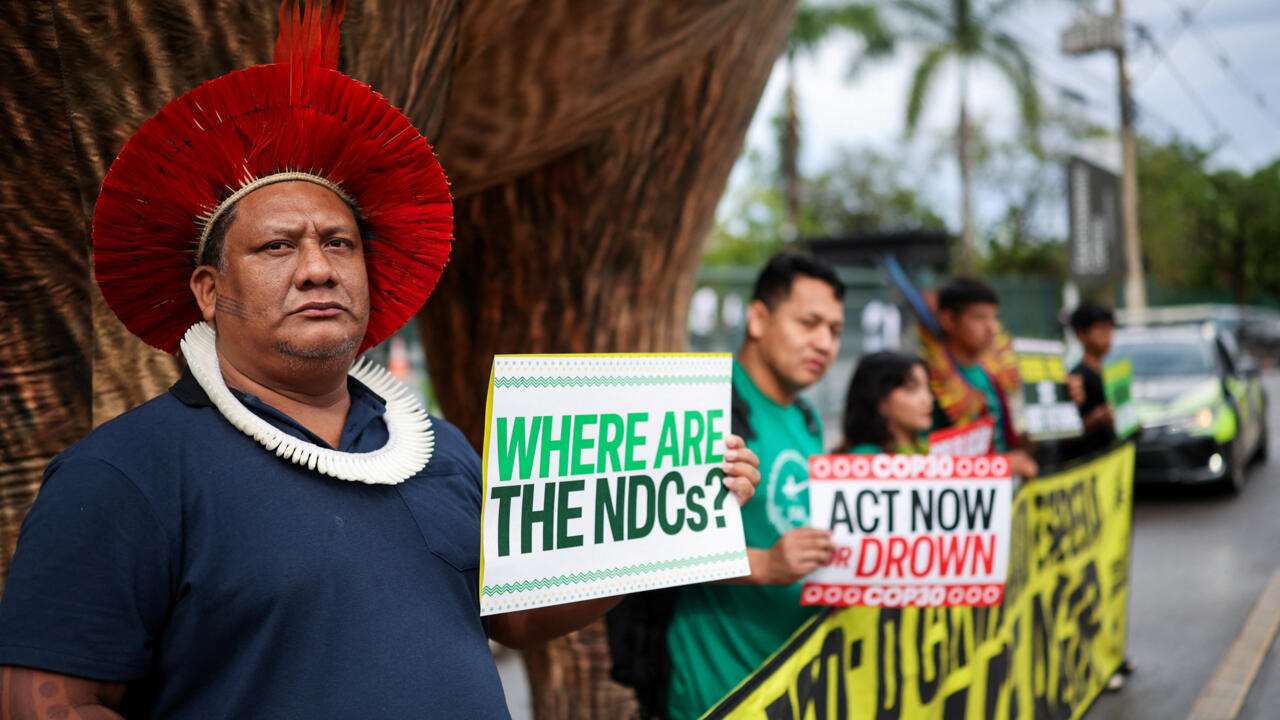
The UN Climate Change Conference (COP30) will be held in Belem, Brazil, from November 12-16, with issues like deforestation and financing climate action in developing countries expected to loom large.


Issued on: 26/10/2025
By: Cyrielle CABOT

Activists from the Brazilian Amazon stand next to an inflatable capybara during a protest calling on COP30 negotiators to protect Amazonian forests, October 2025. © Mateus Bonomi, Reuters


Each COP summit picks a primary theme for the talks to focus on; at COP28 in the United Arab Emirates in 2023, the contentious subject was fossil fuels. After hours of heated debate, the attendees – including representatives of all UN member states – finally reached an agreement calling for “reducing” the use of oil and coal after dropping an initial pledge to “phase out” their use.

The following year, the COP29 in Baku, Azerbaijan, was billed as the “finance” conference and ended with a promise to provide $300 billion per year (about €257 billion) by 2035 to help countries in the Global South tackle climate change.

But no overriding theme has emerged ahead of the COP30. “No single major issue is likely to dominate the debates and negotiations this year. On the contrary, a myriad of very diverse topics will be on the agenda,” says Gaïa Febvre, head of international policy at the Climate Action Network NGO.

Taking stock, 10 years after Paris

COP30 will also provide an opportunity to take stock 10 years after the landmark Paris Agreement of 2015.

Under the accord, each country pledged to submit a climate roadmap every five years detailing its strategy for reducing greenhouse gas emissions.

The collective goal is to keep global warming below the critical threshold of 1.5°C above pre-industrial levels.

Read moreRecord annual rise in atmospheric CO2 levels alarms UN climate body

While these emission-reduction roadmaps – or Nationally Determined Contributions (NDCs) – were due by the end of September, many countries have yet to submit theirs. The European Union, for example, is deeply divided on the issue and is not expected to submit its contribution until November 4, just a few days before the summit begins.

As for the conscientious countries who submitted their NDCs on time, even their efforts have fallen short. By mid-October, only Norway and the United Kingdom had submitted NDCs that complied with the Paris Agreement.

Conversely, China submitted a roadmap that fell well short of expectations, with a target of cutting its greenhouse gas emissions by a very modest 7 to 10 percent by 2035

“We are under no illusions. When these NDCs are reviewed, this COP will conclude that we are not in line with the Paris Agreement,” Febvre says.

"The big challenge in Belem will therefore be to see how countries respond collectively and politically to this gap in ambitions.”

In other words, how do world leaders intend to bridge the gap between their current pledges and the need to limit global warming to below 1.5°C?

Despite everything, Febvre notes, “the Paris Agreement is working. Before, we were on track for around +4°C. Since 2015, the curve has flattened and we are now heading for warming of between +2.6° and +2.8°C,” she says.

“But that's not enough to keep our planet habitable. Staying on this trajectory cannot be a viable political strategy.”

Read more‘Overshoot’: As planet crosses 1.5°C global warming limit, can we still reverse course?
Establishing a roadmap from ‘Baku to Belem’

Providing financial support for developing countries will be back at the centre of discussions. “COP30 will also be a COP on finance, continuing on from Baku,” says Lorelei Limousin, climate campaigner at Greenpeace.

In Baku, developed countries promised to pay at least $300 billion per year by 2035 to vulnerable nations to help them adapt to the effects of climate change and begin their energy transition. But the agreement was quickly deemed inadequate. The countries concerned were demanding four times the sums proposed and, above all, complained that the terms for implementing the plan were too vague.

Indeed, a year later, uncertainties remain. “We don't know who is going to finance what. Whether it will be public or private funding, whether it will be allocated to mitigation, adaptation, or losses and damages related to climate change. Everything is still very unclear,” says Limousin.

“We now need a real, concrete action plan to move forward,” she adds.

The effort to scale up financing for developing countries – to at least $1.3 trillion per year by 2035 – has been dubbed “From Baku to Belem” at COP30.

At the same time, discussions will focus on private sources of funding that could supplement the billions that have been pledged. Among the options being considered are “solidarity taxes” on stock and bond transactions, on emissions from fossil fuels or on airline tickets.

However, Limousin warns that private funding is unlikely to make up the shortfall. “We cannot rely solely on private finance, because its purpose is to generate money, not save the climate.”

"Especially since we know where to find the money. By taxing the profits of fossil fuel industries, we could generate €400 billion per year to be repaid in public funding to countries in the Global South,” she says. “This idea has been discussed for several years. It is time for COP30 to send a strong message: The fossil fuel industry must pay for the climate damage it causes."
Protecting the forests

Belem, a port city and gateway to the Amazon River, is an ideal venue for Brazil’s President Luiz Inacio Lula da Silva to shine a spotlight on Brazil's forests while pushing for the creation of a new fund to combat deforestation, the Tropical Forests Forever Facility.

"The fund would aim to raise $125 billion, which would then be invested in the financial markets. The profits would be paid back to countries with tropical forests in the Amazon, the Congo Basin and Southeast Asia," says Clément Helary, forest campaigner at Greenpeace. Brazil has already announced that it will contribute $1 billion, as have China and the United Arab Emirates.

“This is presented as a comprehensive solution to combat forest deforestation and as a means of providing direct funding to indigenous peoples,” says Helary. “But there are still many issues to be discussed. Safeguards are needed on how this money will be reinvested. For example, investments in mining or agribusiness, which contribute to deforestation, must be excluded.”

The need for action is real. In 2014, an alliance of governments, companies, indigenous peoples and NGOs pledged to halt natural forest loss by 2030 as signatories of the New York Declaration on Forests.

The goal to curb deforestation was reaffirmed in Glasgow at COP26 in 2021, but the initiative is now stalling.

In 2024, 8.1 million hectares of forest were lost, according to a study coordinated by the NGO Climate Focus. Primary tropical forests, which are rich in biodiversity and crucial in absorbing and storing carbon, were the most affected, with 6.7 million hectares lost.
Making this COP a ‘COP of the people’

After three previous COPs held in authoritarian countries – Egypt, the United Arab Emirates and Azerbaijan – and events disrupted by the Covid-19 pandemic, the 2025 climate summit must truly be “a COP of the people”, says Fanny Petitbon, France manager of the 350.org renewable energy NGO.

“Belem must be seen as a gateway where the general public can reclaim its freedom of expression,” she says. “This is an opportunity to boost a strong citizen movement and give a voice back to those most vulnerable to the impacts of global warming, particularly indigenous peoples, the poorest populations and women.”

With this in mind, a concurrent “people's summit” is being organised from November 12-16, with the aim of calling for greater consideration of indigenous peoples’ needs and know-how in the negotiations. There is a walk through the city scheduled for November 15 aimed at mobilising civil society in favour of action on climate change.

Read more🌟The Bright Side: Brazil's Indigenous filmmakers showcase fight for rights

“But it's not just about reclaiming outdoor spaces at the COP,” says Petitbon. For the past year, a coalition of indigenous peoples called “The Answer is Us”, with representatives from across Latin America, has been campaigning to be included in the official negotiating spaces. “They want to be represented in the debates and working groups, and have a voice on an equal footing with the national delegations. They no longer want to be there as mere observers,” says Petitbon.

“It's not about holding a COP for indigenous peoples, but a COP with them,” she concludes.

This article has been translated from the original in French.
Côte d'Ivoire's Ouattara set for fourth term, early results suggest

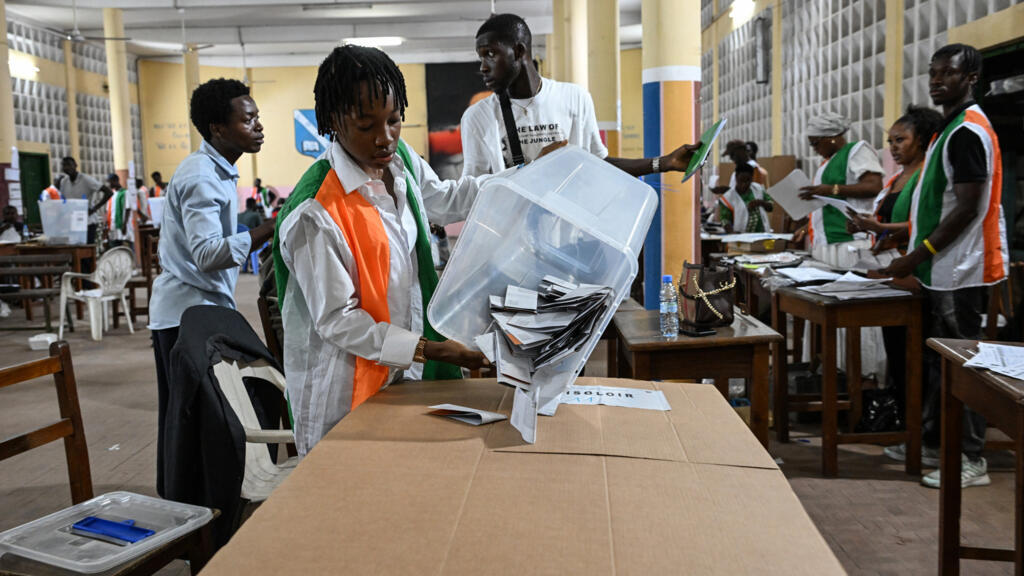
Alassane Ouattara looked likely to win a fourth term as Côte d'Ivoire president on Sunday, with early results suggesting a landslide victory in a poll where two of the main hopefuls were barred from standing.


Issued on: 26/10/2025 - RFI

Incumbent President Alassane Ouattara is set to win a fourth term © Sia KAMBOU / AFP
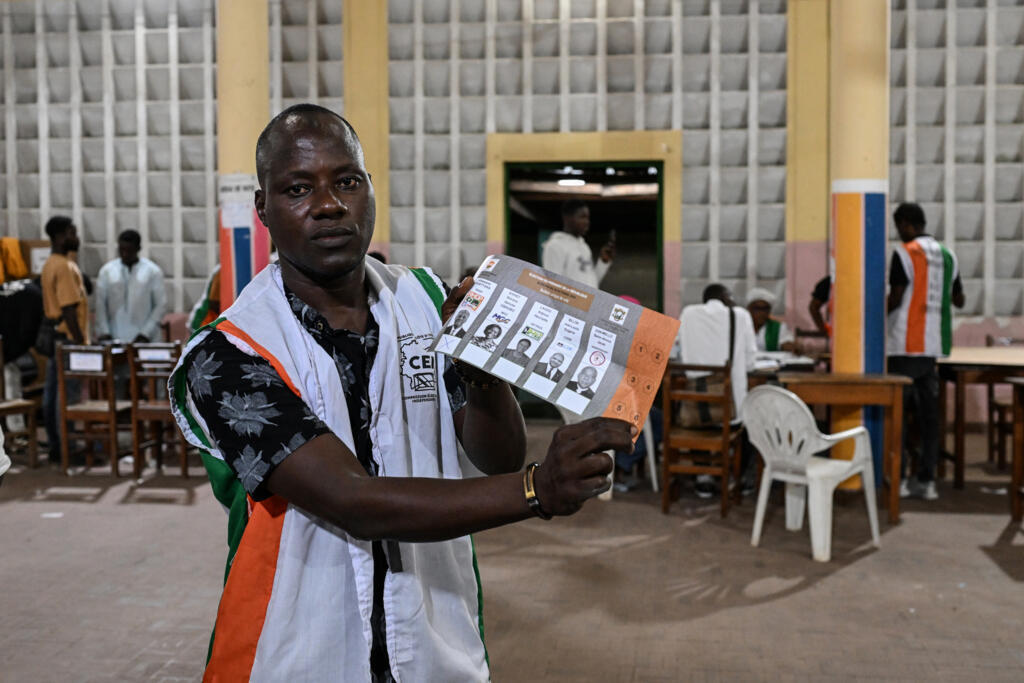
Ouattara, 83, has led the world's top cocoa producer since 2011, when the country began reasserting itself as a west African economic powerhouse.

Official results from some of Ouattara's northern strongholds showed him winning upwards of 90 percent of the vote with turnout close to 100 percent.

The veteran was also ahead in traditionally pro-opposition areas in the south and parts of the economic hub Abidjan, where polling stations had been almost empty on Saturday.

The electoral commission is set to publish results from all regions by the end of the day, with a compiled tally expected late on Sunday or early Monday.

"We are seeing a very clear divide between the north and the south," Simon Doho, leader of the opposition Democratic Party of Cote d'Ivoire (PDCI) told AFP, also highlighting a low turnout.

"Doubts can be raised about the legitimacy of a president elected under these conditions," he added.

Electoral commission president Ibrahime Coulibaly-Kuibiert put turnout at around 50 percent – a similar level to 2020, when Ouattara won 94 percent of the vote in an election boycotted by the main opponents.
Poll violence

This time around, Ouattara's leading rivals – former president Laurent Gbagbo and Credit Suisse ex-CEO Tidjane Thiam – were both barred from standing, Gbagbo for a criminal conviction and Thiam for having acquired French nationality.

With key contenders out of the race, Ouattara was the overwhelming favourite to secure a fourth term.

None of the four candidates who faced Ouattara on Saturday represented a major party, nor did they have the reach of the ruling Rally of Houphouetists for Democracy and Peace (RHDP).

While election day was generally calm, incidents were reported at 200 polling stations across the country, according to security forces.

Clashes broke out in several localities in the south and west, but these incidents had "no major impact on the voting process", according to Interior Minister Vagondo Diomande.


None of the four candidates who faced Ouattara had the backing of a major party © Sia KAMBOU / AFP


On Saturday, a 13-year-old boy was killed by a shot fired in the centre-west town of Gregbeu and a Burkinabe national died during clashes in the Gadouan region, security sources told AFP.

Twenty-two others were injured by gunshots or stab wounds, one of whom is in critical condition.

Six people have died this month during the election period.

With the opposition calling for protests and unrest turning deadly in recent days, the government declared a night-time curfew in some areas and deployed 44,000 security forces.

The government also banned demonstrations, and the courts have sentenced several dozen people to three-year jail terms for disturbing the peace.

A smiling Ouattara was met with cheers from activists at his party's headquarters in Abidjan after polls closed on Saturday evening.

(AFP)
Murder, kidnap, censorship: the 'new normal' of Tanzania politics

Nairobi (AFP) – A priest attacked after a meeting about democracy with faith leaders, an opposition official's corpse found doused in acid, an ex-ambassador missing from his blood-stained home -- this is the "new normal" in Tanzania, say critics.


Issued on: 27/10/2025 - RFI

President Samia Suluhu Hassan is said to want nothing less than total victory © - / AFP

The grim assessment comes as the country readies to hold presidential and parliamentary elections on Wednesday, amid what Amnesty International has called a "wave of terror".

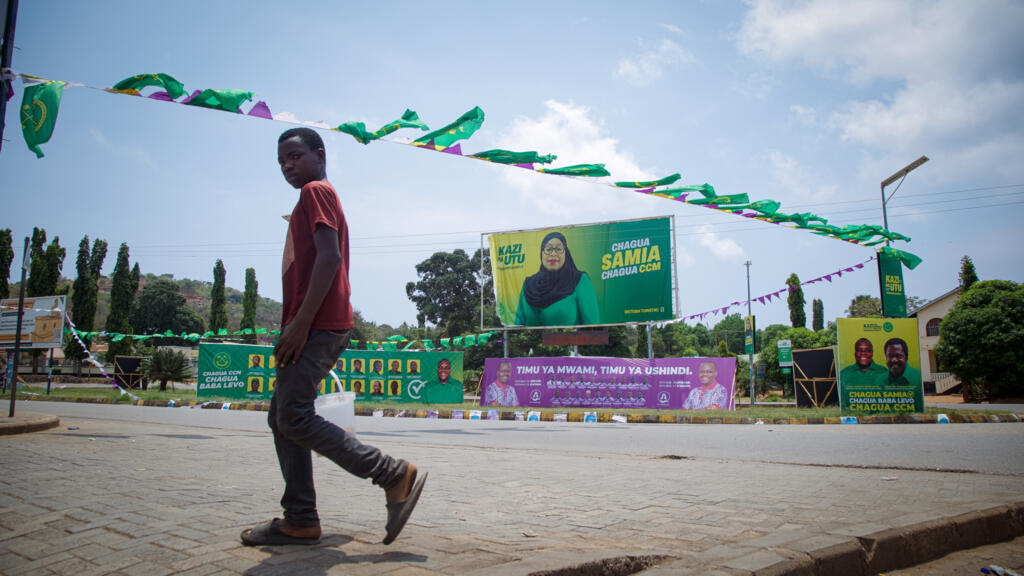
President Samia Suluhu Hassan, 65, is said to want nothing less than total victory, similar to the 99 percent her party Chama Cha Mapinduzi won in local polls last year.

Her main opponent, Tundu Lissu, is on trial for treason, facing a potential death penalty. His party, Chadema, is barred from running.

The only other serious candidate, Luhaga Mpina of ACT Wazalendo, was disqualified on technicalities.

"We see abductions, disappearances, killing of politicians but there is no condemnation from the government," said Father Charles Kitima, the priest attacked in April, who suffered severe head injuries.

"The police know who attacked me but there has been no report. Whoever criticises the ruling party is not safe," said Kitima, speaking by phone to AFP's bureau in Nairobi as foreign journalists have been largely barred from covering the elections in mainland Tanzania.

'Let them kill me'

AFP also spoke by phone with Abdul Nondo, youth leader for ACT Wazalendo, who was abducted after an opposition rally last December.

"You talk so much -- we're going to kill you," was the threat he said he was told.

He was dumped on a beach after hours of beatings, with a warning to stop criticising the government -- an instruction he has ignored.

The Tanganyika Law Society says it has confirmed 83 abductions since Hassan came to power © - / AFP


"If they want to kill me, let them kill me, but I cannot keep quiet. This is my country," he told AFP.

The Tanganyika Law Society says it has confirmed 83 abductions since Hassan came to power in 2021, with another 20 reported in recent weeks.

Some show up dead, like Chadema senior official Ali Mohamed Kibao whose body was found doused in acid in September 2024.

Humphrey Polepole, ex-ambassador to Cuba, went missing on October 6, a few months after resigning in a letter criticising Hassan's government.

His family found broken doors and blood over the floor of his home.

The government did not respond to multiple AFP requests for comment for this article. It has repeatedly stated its commitment to human rights, good governance and the rule of law.


'Like a coup'


Tanzania has known repression in the past.

After independence in 1961, leader Julius Nyerere established a one-party state, whose authoritarianism lived on after democracy was introduced in 1992.

There were high hopes when Hassan took over in 2021 following the sudden death of her iron-fisted predecessor, John Magufuli, as she made early moves towards freeing the media and civil society.

They proved short-lived.

Despite calls for election-day protests, few expect the sort of youth-led unrest seen lately in nearby Kenya or Madagascar © - / AFP

She has done nothing to remove the "thugs" with which Magufuli stacked the intelligence service, says an analyst in Dar es Salaam, requesting anonymity for fear of reprisals.

They are laser-focused on any sign of internal dissent and throttled the opposition ahead of the last election in 2020.

"We thought Magufuli was a blip and the 2020 elections were an abnormality. My worry is that this is the new normal," the analyst said.

"It's like a coup where the military have tasted power and now refuse to go back to the barracks."

Progress

Agriculture, mining and tourism have kept the economy ticking along, with 5.5-percent growth last year, the World Bank says.

On the campaign trail, Hassan has promised big infrastructure projects and universal health insurance.

"Citizens are still willing to bet on the ruling party as long as they keep delivering a level of progress," said the analyst.

Some sympathise with Hassan, who faced an "extremely patriarchal" establishment when she took over, possibly explaining her desire for an emphatic victory.

Boniface Mwabukusi, president of the law society, hopes such a win can lead to a truce with the opposition.

"They need to open the door and be ready to sit at the table to find an amicable solution," he said.

© 2025 AFP
Cameroon’s Biya re-elected despite deadly protests and claims of fraud

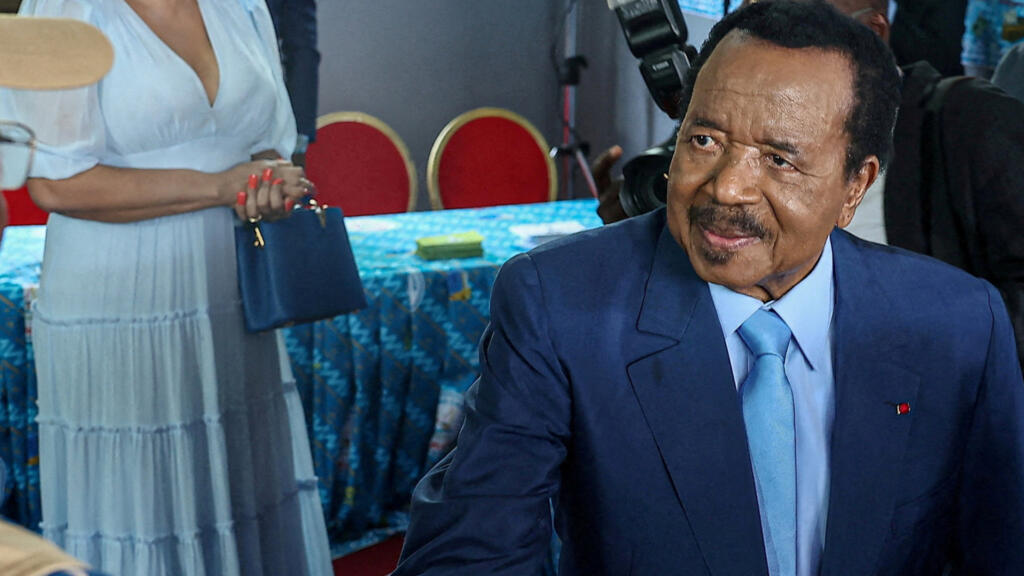
President Paul Biya has won an eighth term in Cameroon, keeping the 92-year-old leader in power until he is almost 100, according to results announced on Monday by the Constitutional Council.


Issued on: 27/10/2025 - RFI

Cameroonian President Paul Biya, 92, shakes hands with election observer after casting his ballot while his wife Chantal looks on in Yaounde on 12 October 2025.
 REUTERS - Zohra Bensemra


"Hereby proclaimed President-elect: the candidate Biya Paul," Clement Atangana, president of the Constitutional Council, said during the announcement in the capital Yaoundé.

The results were delivered region by region. Ambassadors from Europe and the United States did not attend the event.

Biya has ruled since 1982 and removed presidential term limits in 2008. He has never lost an election. His new seven-year mandate will allow him to govern until 2032.

Results showed his closest rival, former government minister Issa Tchiroma Bakary, won 35.19 percent of votes. The council said Biya took 53.66 percent, with more than 2.4 million votes.

Bakary quickly denounced the announcement of Biya's win, telling French news agency AFP that "there was no election; it was rather a masquerade. We won unequivocally".

Deadly unrest as Cameroon awaits presidential election result
Deadly unrest

Bakary once served as Biya’s spokesperson and employment minister.

He broke away earlier this year and drew large crowds during his campaign. Before results were released he declared himself the winner and urged his supporters to protest.

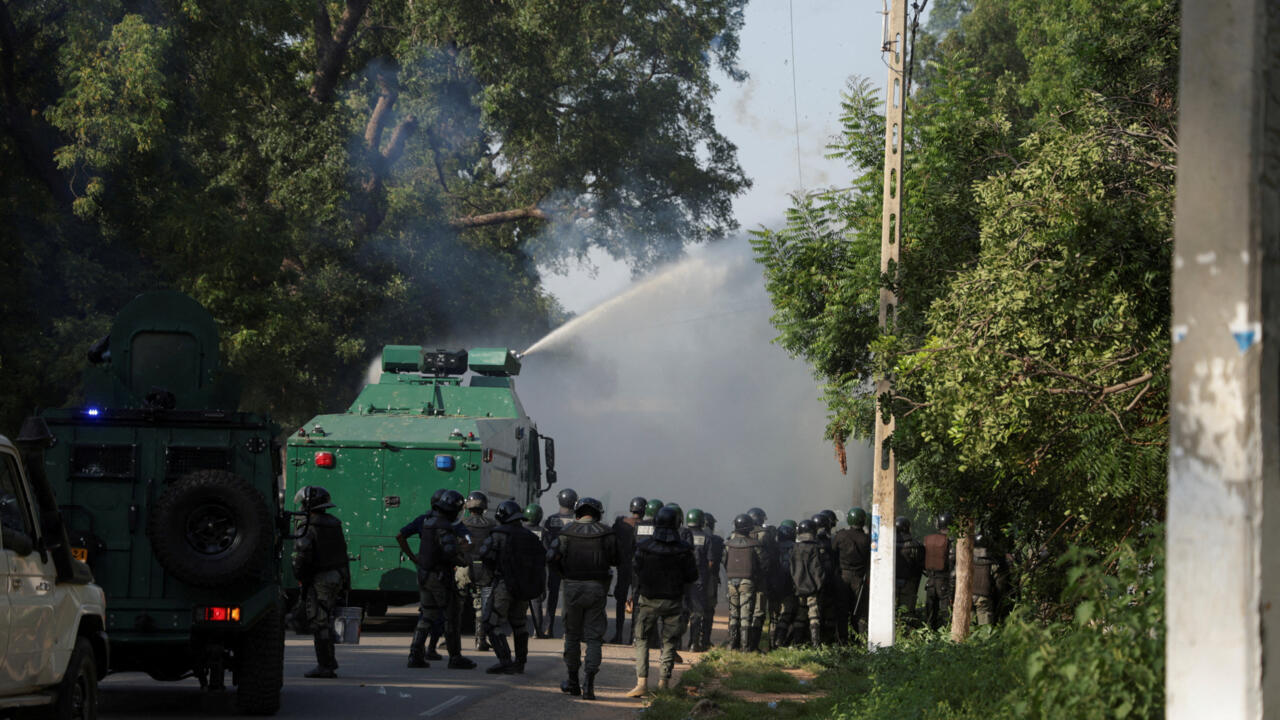
Authorities say at least four people were killed in clashes with security forces ahead of the announcement. The deaths happened on Sunday in Douala, the economic capital, as hundreds of people took to the streets in several cities including Garoua and Maroua.

"I am ready to stake my life to defend my vote. I voted for Tchiroma because I want change," Oumarou Bouba, a 27-year-old trader in Maroua, said.

Samuel Dieudonne Ivaha Diboua, governor of the Littoral Region, said several members of the security forces were injured and at least 105 protesters were arrested in Douala.

Videos shared online showed police firing tear gas as protesters barricaded streets.

Cameroon opposition leaders arrested as protests erupt over contested elections
Fraud claims

Dozens of opposition supporters, activists and leaders have been detained in recent days.

Cameroon’s Minister of Territorial Administration, Paul Atanga Nji, said on Saturday that the government had arrested several people plotting violent attacks. The government said the protests were illegal.

Bakary and his supporters accuse Biya of fraud and gross irregularities. The opposition has also claimed that the president used "state machinery" to manipulate the election in his favour and had a hand in disqualifying his strongest rival.

Biya and his party deny this.

Opposition groups in Europe strongly backed Bakary. He took 62.79 percent of votes cast overseas, compared to Biya’s 22.63 percent. But the winner is the candidate with the most votes nationwide.

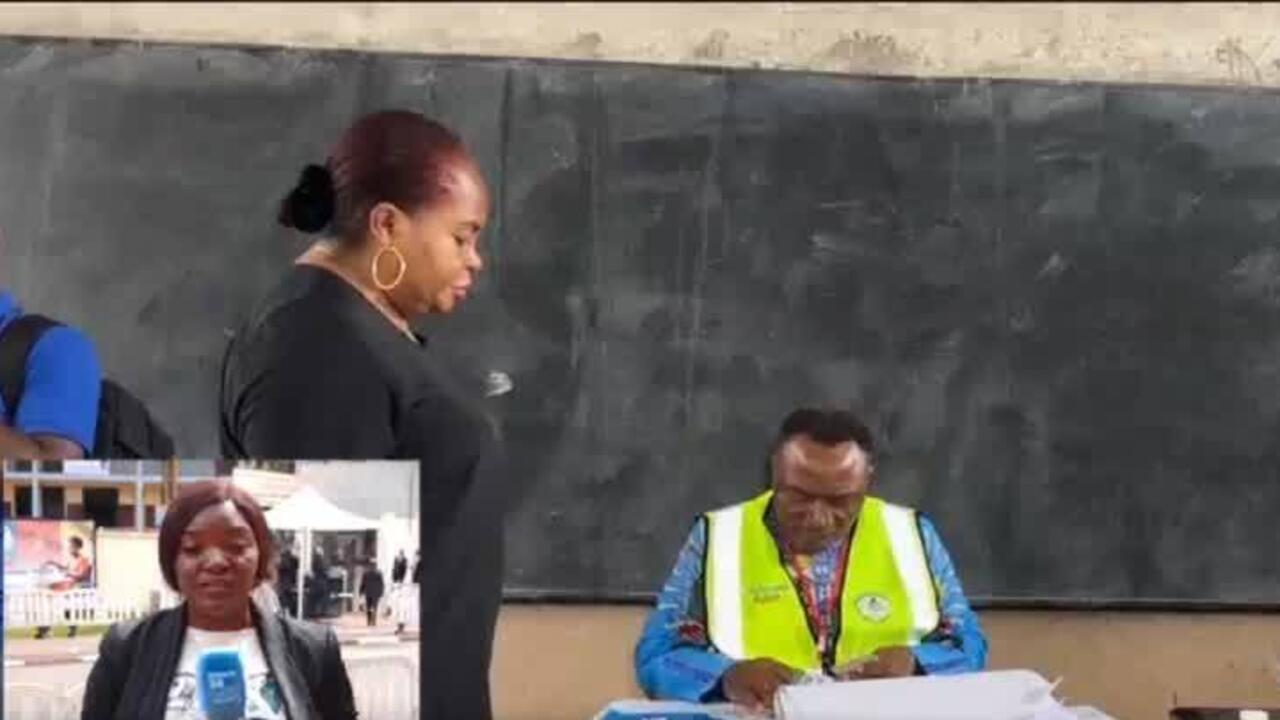
Voter turnout stood at 46.3 percent, according to the official results announced 15 days after the election.

Cabral Libii came in third place with 3.4 percent, followed by Bello Bouba Maigari with 2.5 percent, and Hermine Patricia Tomaino Ndam Njoya, the only woman candidate, with 1.7 percent.

The other eight candidates each received less than one percent of the vote.

Analysts warned that Cameroon, once seen as stable, could face deeper political turmoil if many citizens believe the result does not reflect their votes.

Biya remains the world’s oldest head of state. He faced criticism for only appearing at one campaign rally. At that event, he told voters that "the best is still to come".

Cameroon protests turn deadly ahead of presidential election r
esults


Four people were killed on Sunday in clashes between security forces and opposition protesters in Cameroon’s largest city, Douala, the regional governor said. Supporters of opposition candidate Issa Tchiroma defied a protest ban in several cities ahead of Monday’s expected announcement of presidential election results.


Issued on: 27/10/2025 
By: FRANCE 24


Riot police use tear gas and water to break up an opposition protest in Garoua, Cameroon, October 26, 2025. © Desire Danga Essigue, Reuters

Four people were killed in clashes between supporters of a Cameroon opposition leader and security forces who claims to have won recent presidential elections a regional governor said, ahead official results announced Monday.

Issa Tchiroma, who challenged President Paul Biya's 43-year grip on power in the October 12 vote, had called on his supporters to march peacefully on the eve of the announcement, despite a ban on public gatherings.

Tchiroma says he won 54.8 percent of the vote, but most analysts expect the 92-year-old Biya to win an eighth term in a system his critics say has been increasingly rigged.

In Cameroon's largest city Douala, the regional governor said demonstrators "attacked" a gendarmerie brigade and police stations in two districts.

"Four people unfortunately lost their lives," said Samuel Dieudonne Ivaha Diboua, adding that several members of the security forces were also injured.

Incumbent Biya looking for 8th term
© FRANCE 24
01:27


Earlier, police had fired teargas to disperse hundreds of people in Tchiroma's northern stronghold of Garoua, where activists carried Cameroonian flags and banners reading "Tchiroma 2025" and chanted "Goodbye Paul Biya, Tchiroma is coming".

For several days, dozens of supporters have gathered around the home of the opposition leader, who claimed in a video Sunday that military personnel had tried to take him away.

In the capital Yaounde, the call to protest did not seem to have been followed amid a heavy police presence.

But in Douala, prior to the reported clashes, an AFP journalist observed several dozen people gathered near the airport, defying the ban on demonstrations ordered by the department's prefect.

Djeukam Tchameni, president of the Movement for Democracy and Interdependence in Cameroon (MDI), and Anicet Ekane, president of the African Movement for the New Independence of Cameroon (Manidem), were arrested at their homes in Douala on Friday, according to a coalition of parties that had nominated Tchiroma as the consensus opposition candidate.

Minister of Territorial Administration Paul Atanga Nji said on Saturday the protests "create the conditions for a security crisis" and contribute to "the implementation of an insurrectionist project".

(FRANCE 24 with AFP)
US-backed Milei scores surprise midterm win, revives Argentina reform  AUSTERITY drive

Turnout at four-decade low


Argentina’s libertarian President Javier Milei scored a surprise victory in Sunday’s midterm elections, bolstering his embattled reform drive. His La Libertad Avanza party won 40.84% of votes for Congress, far outpacing the opposition and marking a rebound for the US-backed right-winger after months of economic turmoil and political resistance.


Issued on: 27/10/2025 
By: FRANCE 24
Video by:Charlotte HUGHES/Catherine VIETTE


Argentina's President Javier Milei celebrates after winning the midterm election in Buenos Aires, October 26, 2025. © Cristina Sille, Reuters
01:58


Argentine President Javier Milei hailed his party's runaway victory in Sunday's midterm elections as a "turning point" for the country and vowed to charge ahead with his agenda of shrinking the state and deregulating the economy.

Milei's small La Libertad Avanza (LLA) party rebounded from a series of setbacks to win 40.84 percent of the votes cast for members of Congress, far outpacing the opposition in an election closely watched by jittery investors.

"Today we reached a turning point, today begins the construction of a great Argentina," the 55-year-old president told supporters at a victory party in Buenos Aires.

He promised to continue on the reform path with what he predicted would be "the most reformist Congress in Argentina's history."

US President Donald Trump, a close ally, congratulated Milei and said his Argentine counterpart was doing a "wonderful job!"

Half of the seats in the Chamber of Deputies and one-third of the Senate seats were up for grabs on Sunday.

Milei said LLA had more than tripled its seat count, winning 101 seats in the lower house Chamber of Deputies, up from 37, and 20 seats in the Senate, up from six.

© FRANCE 24
04:53


'Forward, not backwards'


The center-left Peronist movement, in power for much of Argentina's post-war history, trailed in second place with 31.64 percent.

"Far more Argentines want to move forward than go backwards," Milei said on the demise of the opposition.

The elections were the first national test of Milei's support since he won office two years ago on a promise to revive the long-ailing Argentine economy through a series of painful reforms.

The run-up to the vote was marked by a run on the national currency, the peso, that forced Milei to seek a bailout from US President Donald Trump, a close ally.

Washington promised an unprecedented $40 billion package of aid, but the assistance came with a warning from Trump to Argentines that he would not "be generous" if the election did not go Milei's way.

"Our confidence in him was justified by the People of Argentina," the US president said Monday.

At the LLA election party, hundreds of Milei's supporters celebrated the results with cheers, hugs, chants and even tears.

"I'm very happy and excited; I didn't expect such a large number," Facundo Campos, a 38-year-old marketing consultant, told AFP, comparing the joy to the "last goal of the last World Cup won by Argentina!"

Maria Jesus Galan, a 45-year-old health official, said that while there "some room for improvement" in Milei's government, "it has a great future."


Turnout at four-decade low

Ahead of the election, several Milei voters had spoken to AFP about their disappointment with his leadership, particularly the corruption scandals involving members of his inner circle.

But they remained viscerally opposed to the Peronist movement, whose figurehead, former president Cristina Kirchner, is under house arrest after being convicted of corruption.

At 67.9 percent, turnout was the lowest in a national election in four decades, reflecting disillusionment with the entire political class.

The most surprising results were in Buenos Aires province, a Peronist stronghold, where LLA clawed its way back from a defeat by the Peronists in last month's local elections to a toss-up.

Adriana Cotoneo, a 69-year-old pensioner voting in Buenos Aires, told AFP she backed Milei's party "not because I believe it's the best option, but because I'm clear about who I want to be gone."


Former TV pundit Milei, 55, has cut tens of thousands of public sector jobs, frozen public works, cut spending on health, education and pensions and led a major deregulation drive since taking office in December 2023.

His reforms were blamed for initially plunging millions of Argentines deeper into poverty. They did however slow inflation by two-thirds -- to the relief of many -- although at the expense of faltering economic growth, consumption and manufacturing.

Investors began dumping the Argentine peso last month amid concerns over the economy and support for Milei, but Trump stepped in to shore up his closest Latin American ally.

The US Treasury has intervened several times in the market in recent weeks, buying up pesos to help keep it afloat.

Ahead of the election, expectations were high that the government could depreciate or devalue the peso, widely seen as too strong, immediately after the vote.

But questioned about the possibility on Sunday, Economy Minister Luis Caputo replied with an emphatic: "No."

"Monday is just another day, nothing changes to the economic program or the band system," he said, referring to the peso-dollar exchange rate band set by the government in April.

(FRANCE 24 with AFP)


Thai-Cambodia Border Resolution Eludes ASEAN – Analysis

The Ta Moan Thom Temple (Prasat Ta Muen Thom) on the Cambodia–Thailand border. Photo Credit: Ddalbiez, Wikipedia Commons


By 

By Dipannita Maria Bagh


The decades-old dispute of the Thai-Cambodia border that erupted on July 24, displacing 172,000 people within both countries internally[1] is still on-going, with no resolution in sight.

The Prasat Ta Muen Thom, a Khmer-era Hindu temple, now rejoins the list of five others along with Chong Bok, Ta Krabey, Ban Hat Lek-Cham Yeam and the Prasat Preah Vihear. Despite several international dispute resolution mechanisms and regional institutional frameworks, Thailand and Cambodia’s difference on the means of resolving the dispute reflects their respective political ambitions. For Thailand, it advances the cause of reunifying former Thai territories to its modern state, potentially adding heritage sites to its tourist destinations. For Cambodia, it is crucial for retaining its sovereign territorial rights on heritage sites and preserving public trust.

The present territorial conflict with Cambodia dates back to 1954, when Thailand took control of Cambodian territories based on the Franco-Siamese treaty of 1904. This was one of the several Franco-Siamese treaties to resolve the 1893 crisis between the Siamese (Thai) kingdom and French colony in Indochina encompassing present-day Laos, Cambodia, and Vietnam.

The contestation is the outcome of significant territorial concessions made by Siam to neighbouring European colonial powers in the 1890-1900s. To preserve its independence, it ceded Battambang, Siem Reap, and Sisophon provinces to the French colony in the east, while transferring Kedah, Perlis, Kelantan, and Terengganu to the British colony in the south. These historical territorial adjustments have established the foundation for two of modern Thailand’s most persistent border challenges: territorial disputes with Laos and Cambodia along its eastern frontier, and ongoing separatist tensions along its southern border with Malaysia.

In 1962, the matter of contestation over Prasat Preah Vihear was brought to the International Court of Justice (ICJ) by Cambodia. The ICJ awarded territorial rights of the temple to Cambodia[2] based on Thailand’s longstanding ‘recognition and acquiescence’ of maps that followed the 1904 treaty and subsequent Siam-French Mixed Commissions for border settlement. In international law, ‘recognition and acquiescence’ refer to the unilateral discretionary act or implied consent to a situation of claim through diplomatic recognition. The state’s silence or lack of protest on border settlements is reflected as its tacit consent and interpreted as acceptance.


In stark contrast to its verdict, the ICJ additionally acknowledged that the border demarcated by the commissions failed to fully comply with the territorial settlements as per the 1904 treaty. This is what bears full responsibility for the festering of the border issues.

For nearly two decades, tensions have resurfaced periodically on the Thai-Cambodia border, exacerbated by domestic leadership challenges and nationalism. This included street demonstrations in Bangkok in 2008 in response to Cambodia seeking UNESCO World Heritage status for Preah Vihear, with border skirmishes following from 2008 to 2011. In 2013, Cambodia requested the ICJ to interpret the 1962 judgement,[3] this time securing the territory surrounding the Preah Vihear to Cambodia,[4] as a concrete step towards preventing future conflicts.

The present conflict has since evolved beyond a bilateral territorial dispute; it underscores the limitations of existing international legal frameworks and institutions in resolving complex historical boundary questions, particularly those involving cultural and religious heritage sites.

Southeast Asia’s latent territorial contestation requires a political resolution through a regional mechanism, whilst observing international norms. Cambodia holds the ICJ ruling at the core of its argument, and backs the July 2025 U.S-initiated ceasefire mediated by the Association of Southeast Asian Nations (ASEAN) as the way forward. Thailand rejects the ICJ award and ASEAN mediation, insisting on resolving it bilaterally. Therefore, a major hurdle in resolving the border issue is modern Thailand’s political will to rectify its own historical concessions.

The border tension serves as a critical test for ASEAN’s regional dispute resolution. Malaysia has iterated ASEAN centrality, mediating the conflict to contain potential spillover effects on other regional cross-border disputes.[5] However, it has failed in forging a durable consensus among the conflicting parties, thereby weakening ASEAN’s conflict resolution mechanism. A successful resolution could have established a precedent for managing similar regional and global conflicts on heritage sites, and elevated Malaysia’s role as a power-wielding member in Asia. The burden has now been shifted to the Philippines as new chair.

The inability to move beyond short-term stabilisation to resolution underscores the ongoing challenges facing the ASEAN, including its capacity, and the individual political will of member states over the collective. It raises questions about the organisation’s ability to address contentious bilateral conflicts that threaten regional stability and cohesion.

Unless resolved, the present conflict will keep evolving beyond flashpoints of nationalist sentiments and bilateral territorial disputes. Political use of history will continue to override treaty mechanisms, underscoring the shortcomings of existing international legal frameworks and regional institutions in resolving complex historical boundary questions, particularly in implementation and enforceability of norms in situations involving cultural and religious heritage sites.

References:

[1] World Health Organization, “Cambodia: Conflict on Thai border: Public Health Situation Analysis,” August 19, 2025, https://cdn.who.int/media/docs/default-source/2021-dha-docs/phsa-cambodia-190825.pdf

[2] International Court of Justice, Temple of Preah Vihear (Cambodia v. Thailand), 1962, https://www.icj-cij.org/case/45

[3] International Court of Justice, “Request for Interpretation of the Judgment of 15 June 1962 in the Case concerning the Temple of Preah Vihear (Cambodia v. Thailand),” 2011, https://www.icj-cij.org/case/151

[4] United Nations, “UN court rules for Cambodia in Preah Vihear temple dispute with Thailand,” November 11, 2013, https://news.un.org/en/story/2013/11/455062#

[5] Association of Southeast Asian Nations, “ASEAN Foreign Ministers’ Statement on Thailand-Cambodia Border Dispute,” July 28, 2025, https://asean.org/asean-foreign-ministers-statement-on-thailand-cambodia-border-dispute/


GatewayHouse

Gateway House: Indian Council on Global Relations is a foreign policy think-tank established in 2009, to engage India’s leading corporations and individuals in debate and scholarship on India’s foreign policy and its role in global affairs. Gateway House’s studies programme will be at the heart of the institute’s scholarship, with original research by global and local scholars in Geo-economics, Geopolitics, Foreign Policy analysis, Bilateral relations, Democracy and nation-building, National security, ethnic conflict and terrorism, Science, technology and innovation, and Energy and Environment.